The Islas Ballestas is a group of rock formations about 6 miles off the coast of Paracas. They are an important sanctuary for native birds and marine animals, and are often called “the Peruvian Galápagos” or “the Mini Galápagos.” It is not permitted to walk on the Ballestas, but visitors can see plenty of wild animals on a two-hour boat tour.
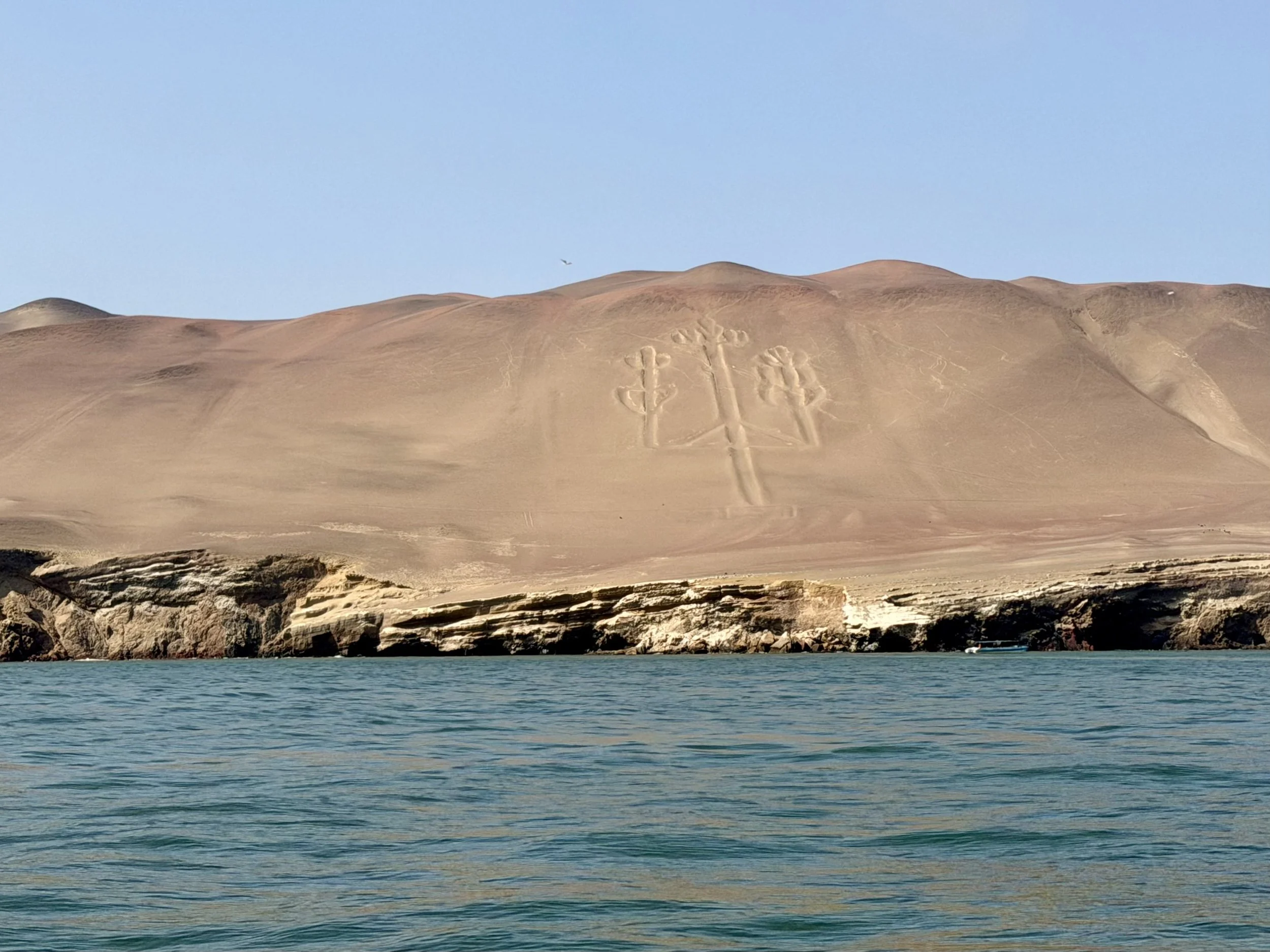
The ride to the Ballestas took about 30 minutes. We passed by a mysterious geoglyph known as El Candelabro, which may have been for helping sailors (or pirates?) navigate.

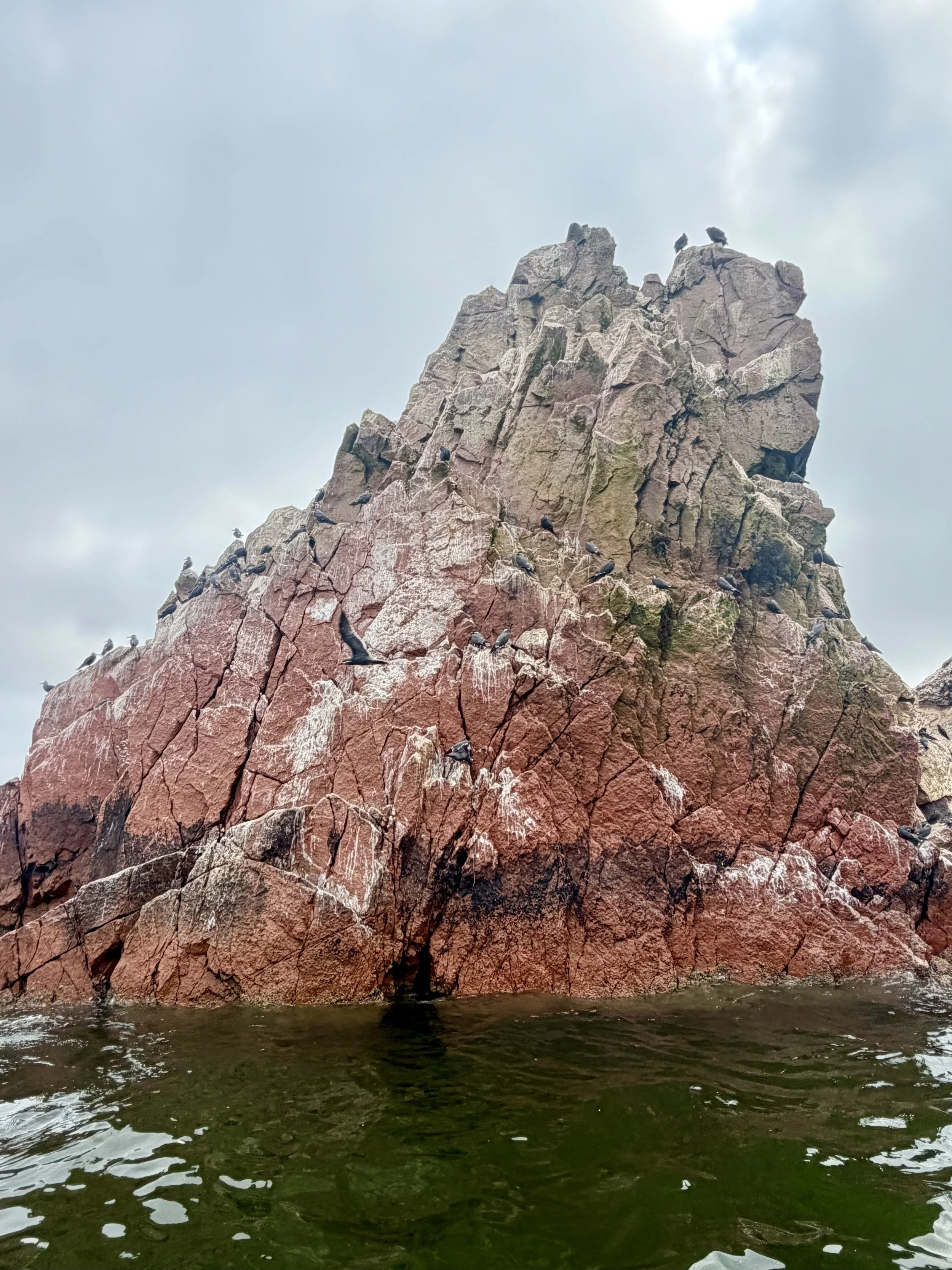
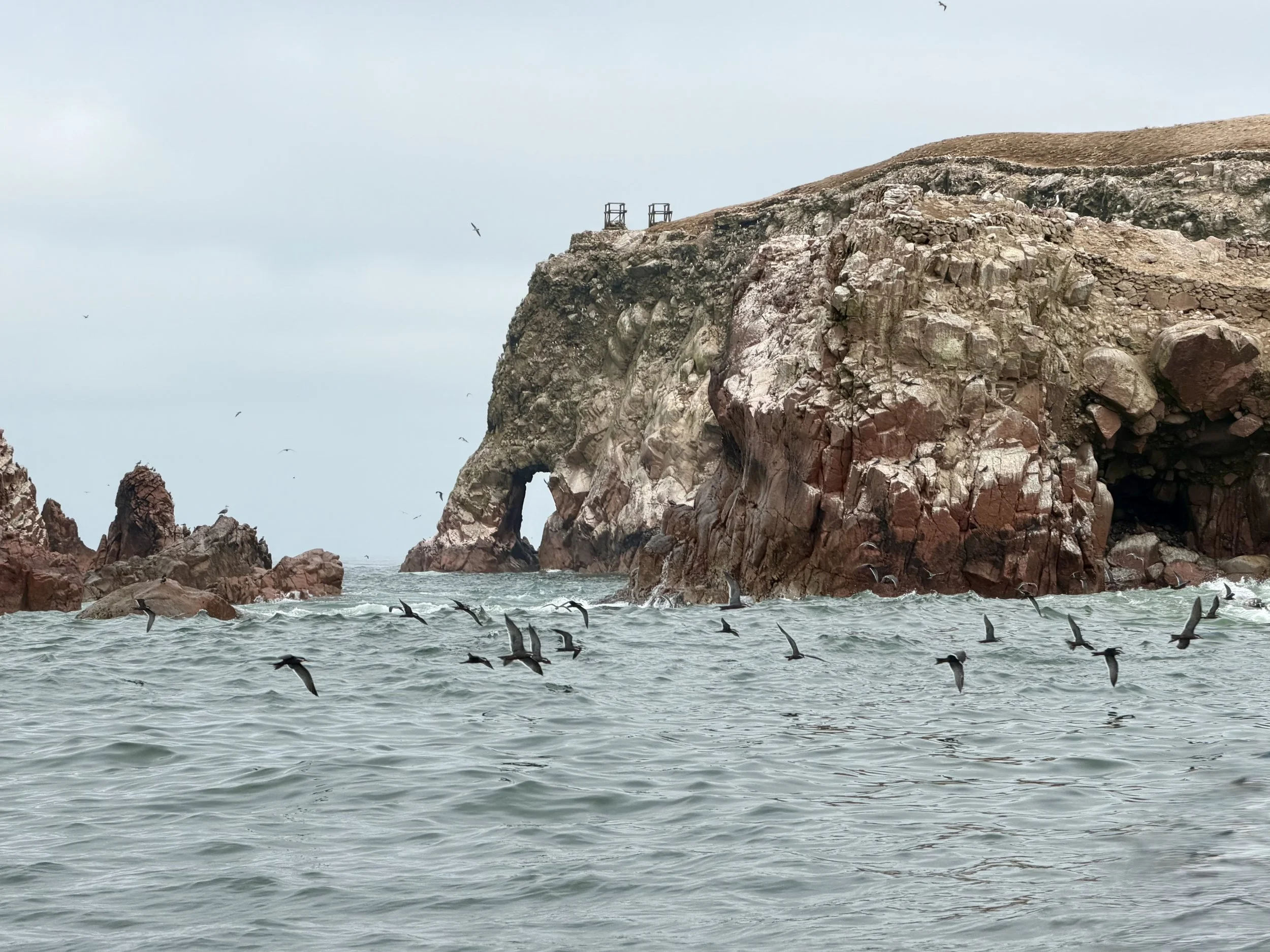
For the next hour, we sailed around islands and rock formations of many shapes and sizes. The boat stopped several times and rotated so that all passengers could get a good look at the wildlife on the rocks.
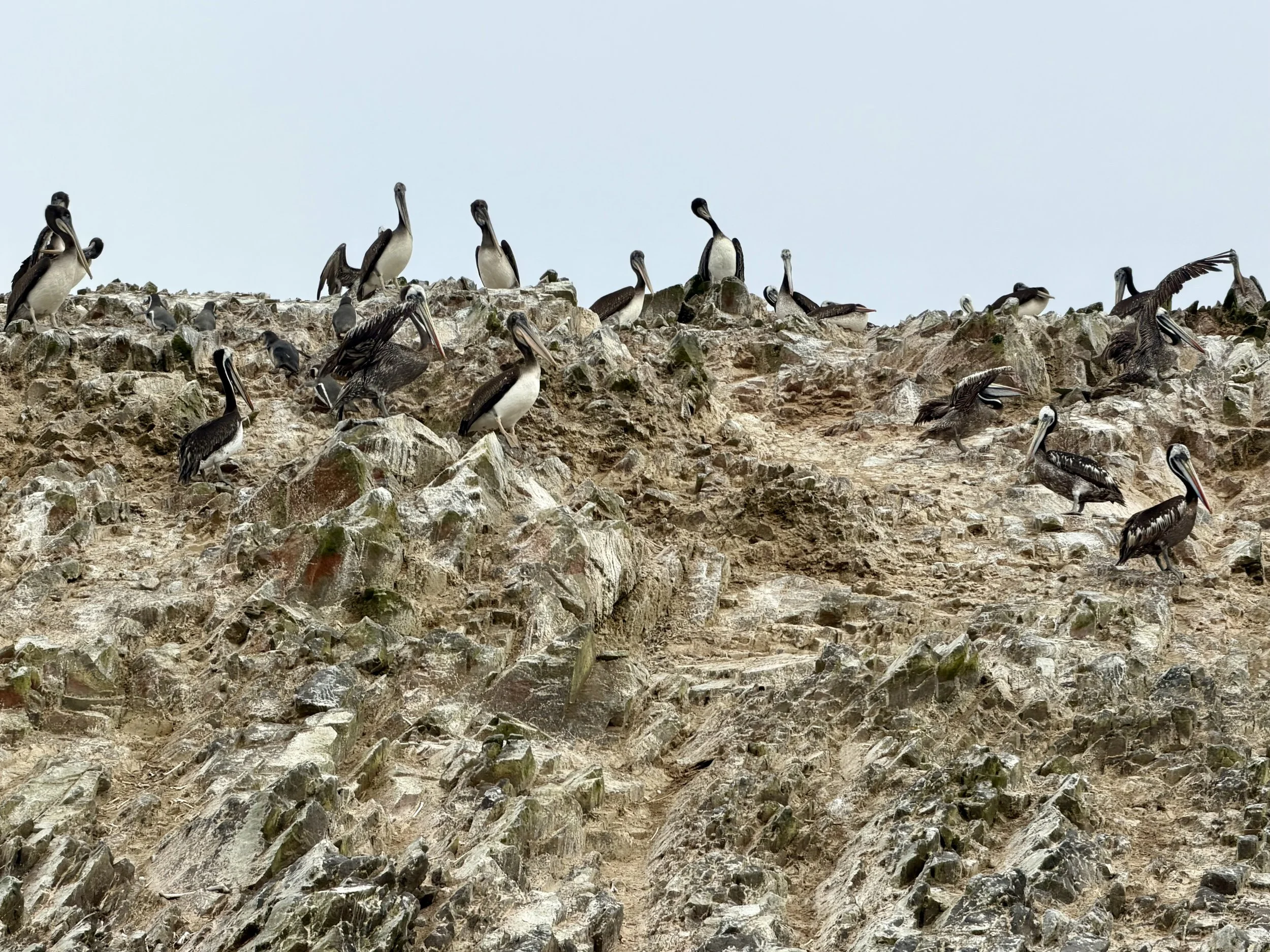
The Humboldt penguins were fun to watch! Two adults canoodled while the juvenile decided he was too old for hugs. Soon, two more adults marched down from the top of the rock to see what was going on. These medium-sized penguins are very shy around humans, and their population is declining.
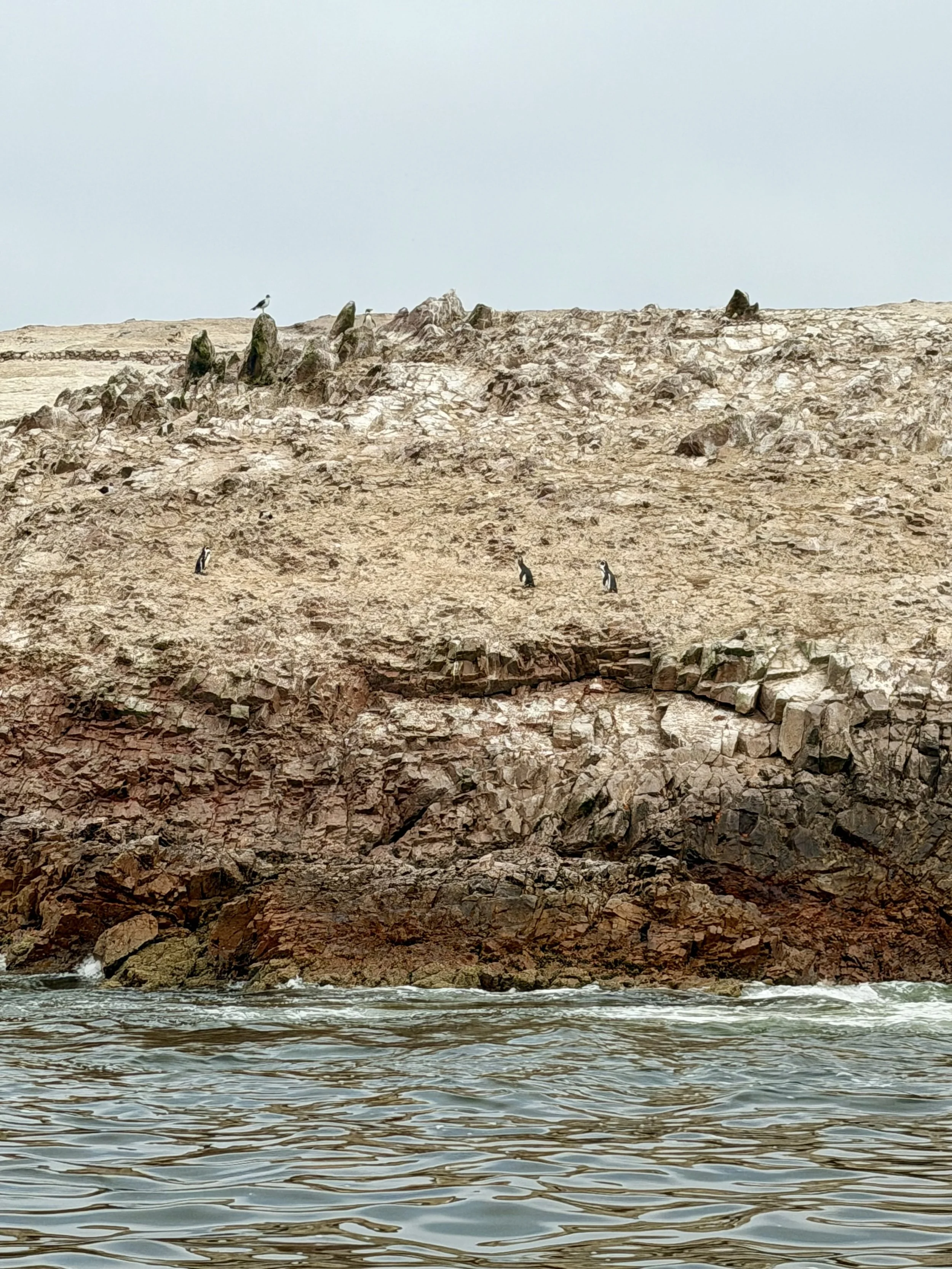
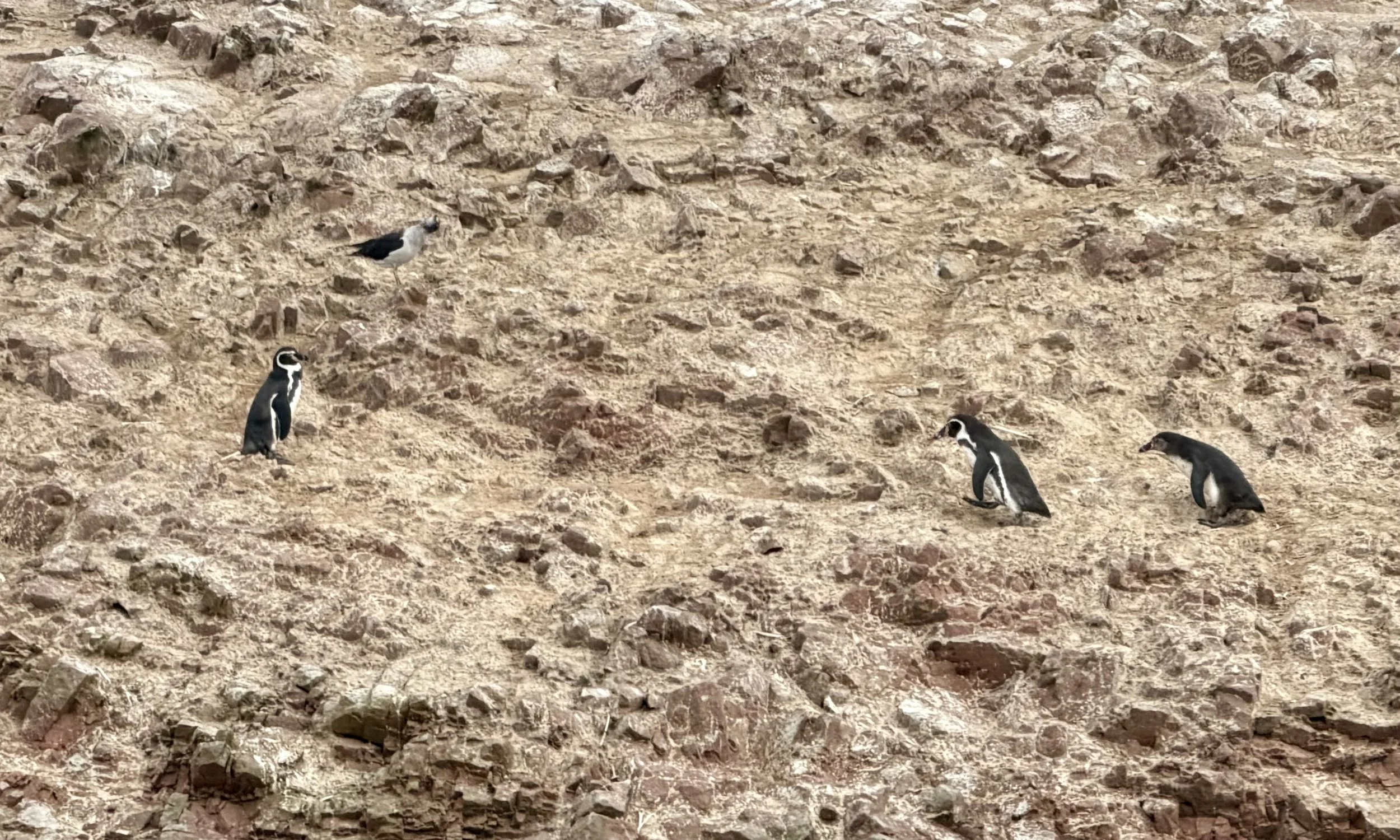
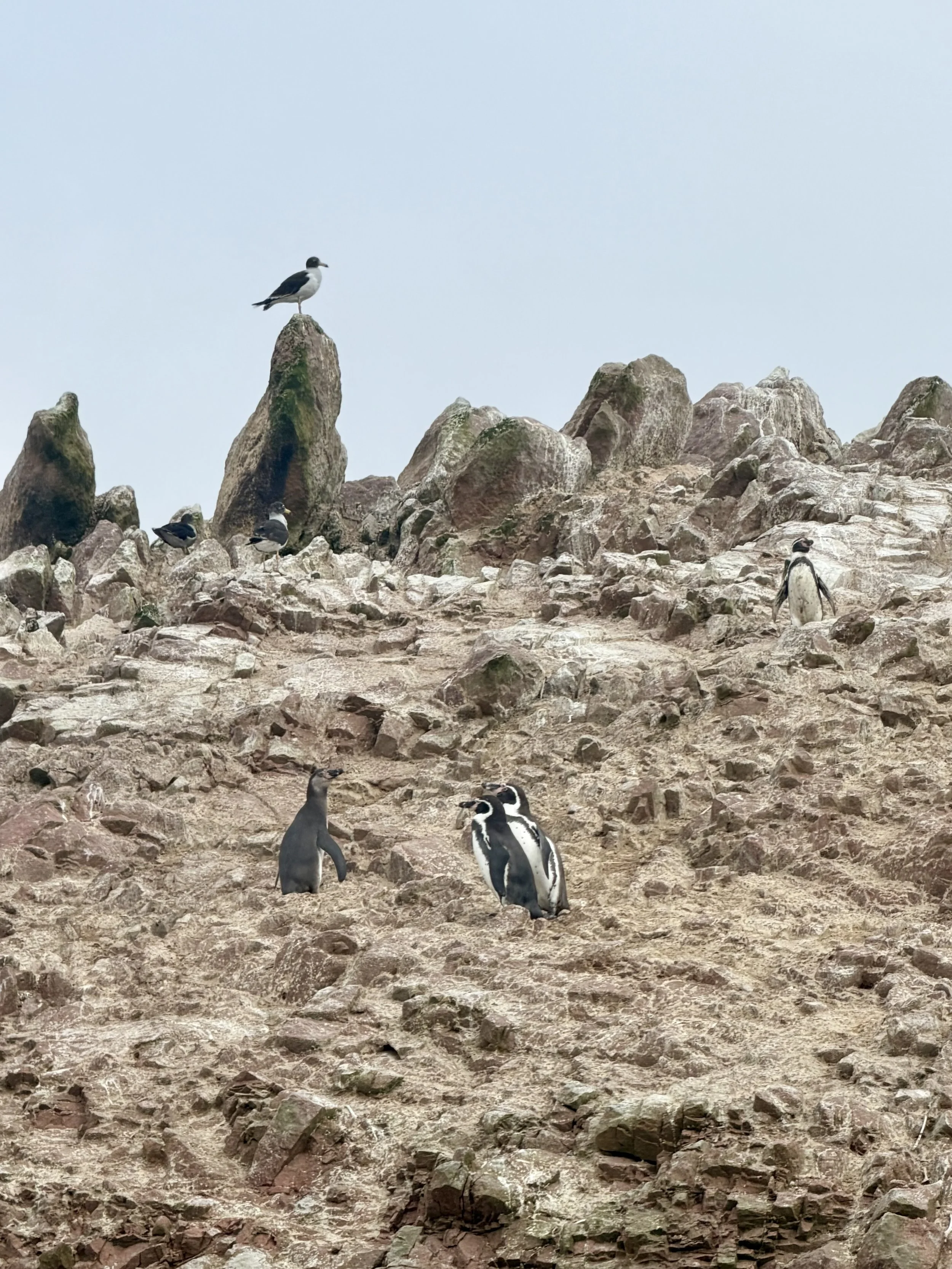
There were natural rock arches carved out by waves, and rock formations of varying shapes and colors, one resembling the head of a bird. Speaking of birds, they were everywhere! Flocks of cormorants flew in mesmerizing, shifting patterns. On one large rock, more penguins paraded confidently through a crowd of indifferent Peruvian pelicans. I was hoping to see a blue-footed booby, but had no luck. I did see plenty of black Inca terns with bright orange beaks and feet.
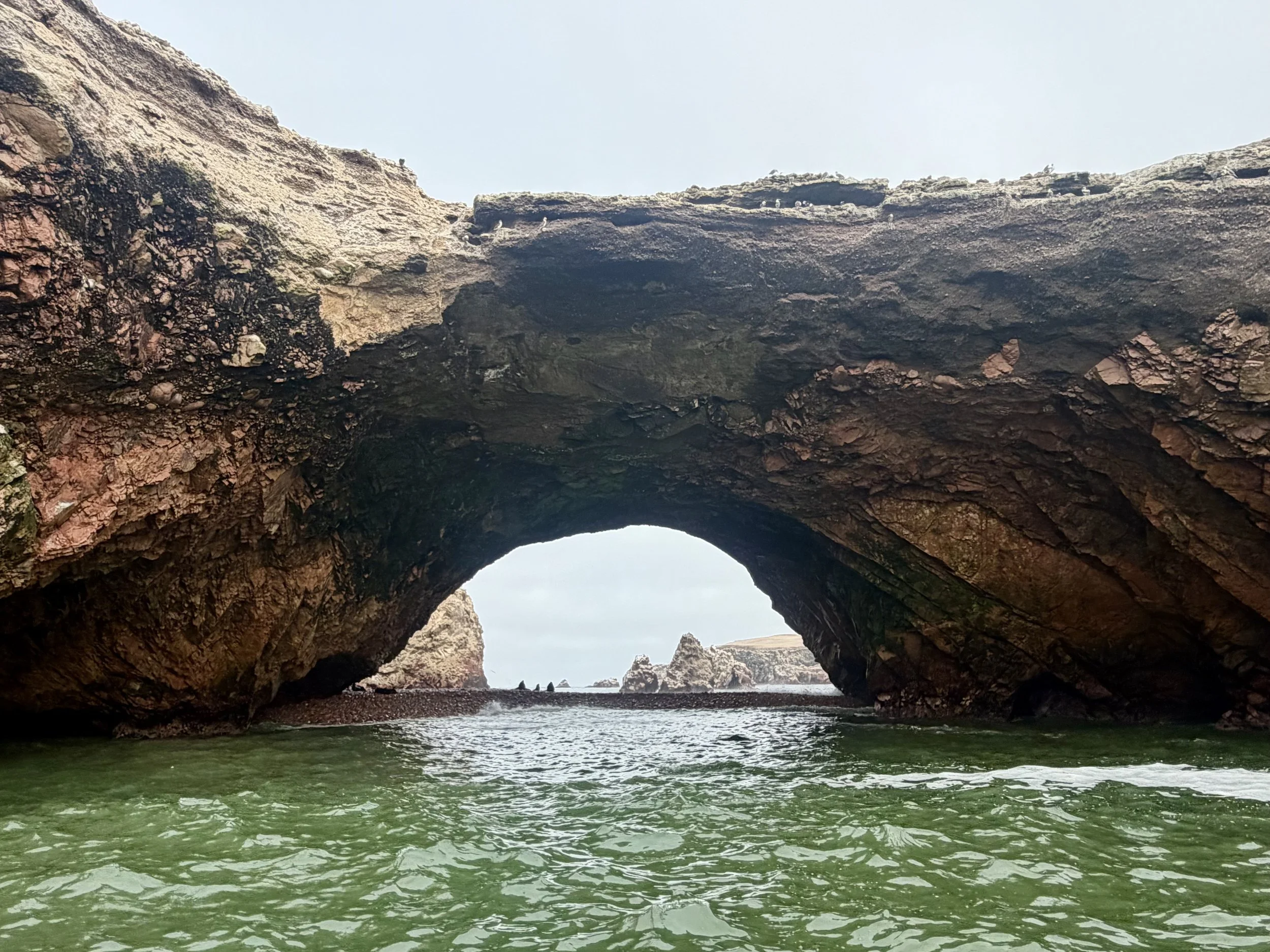
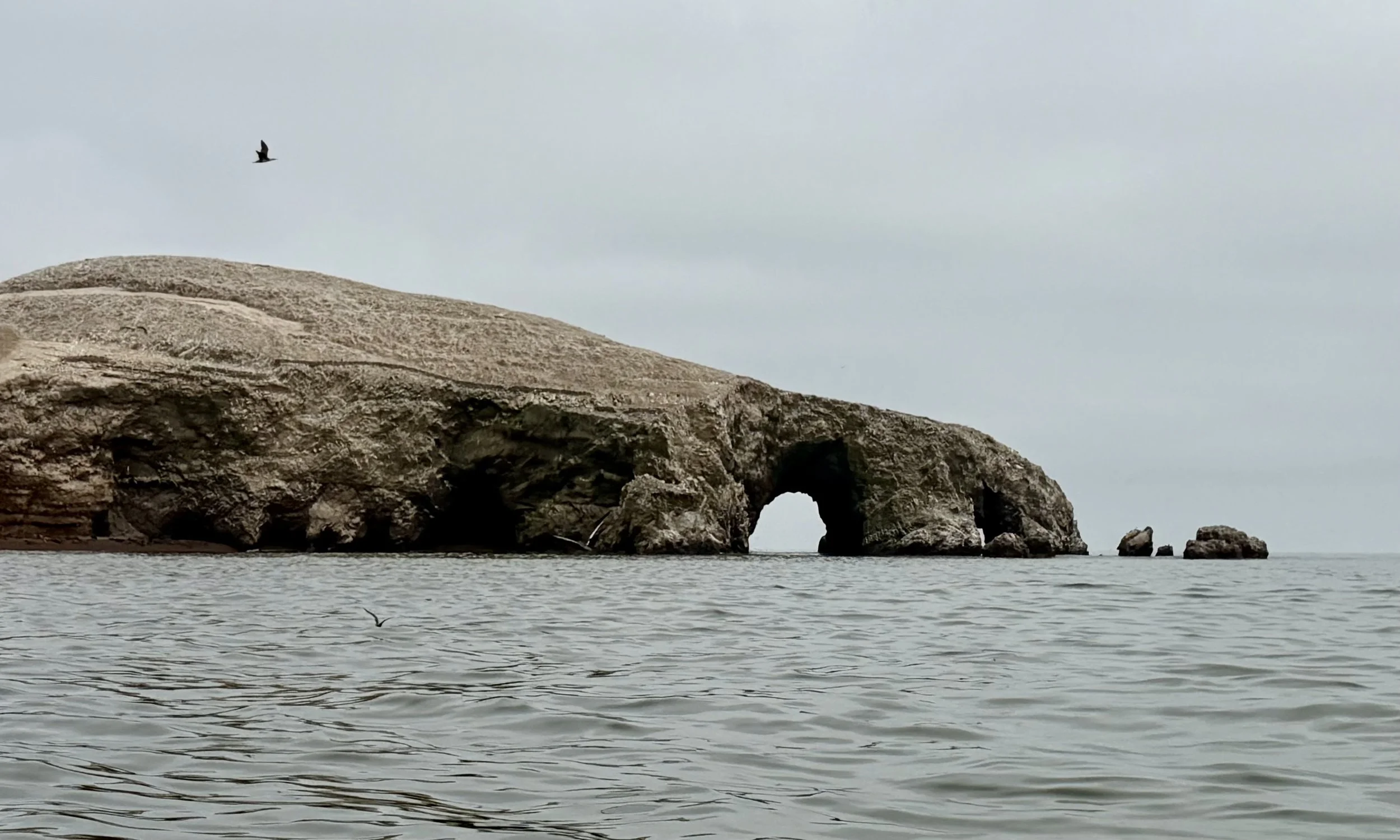
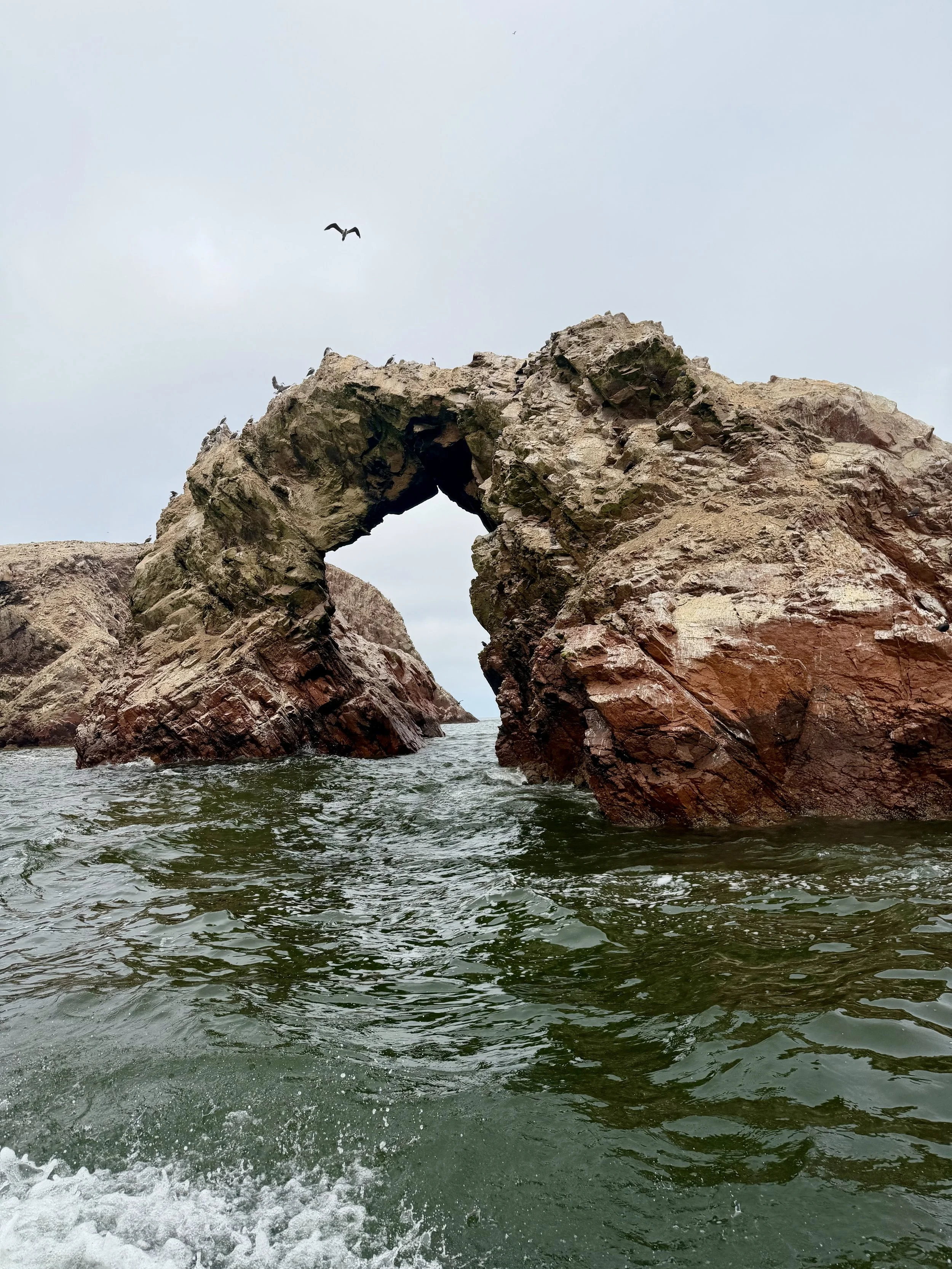
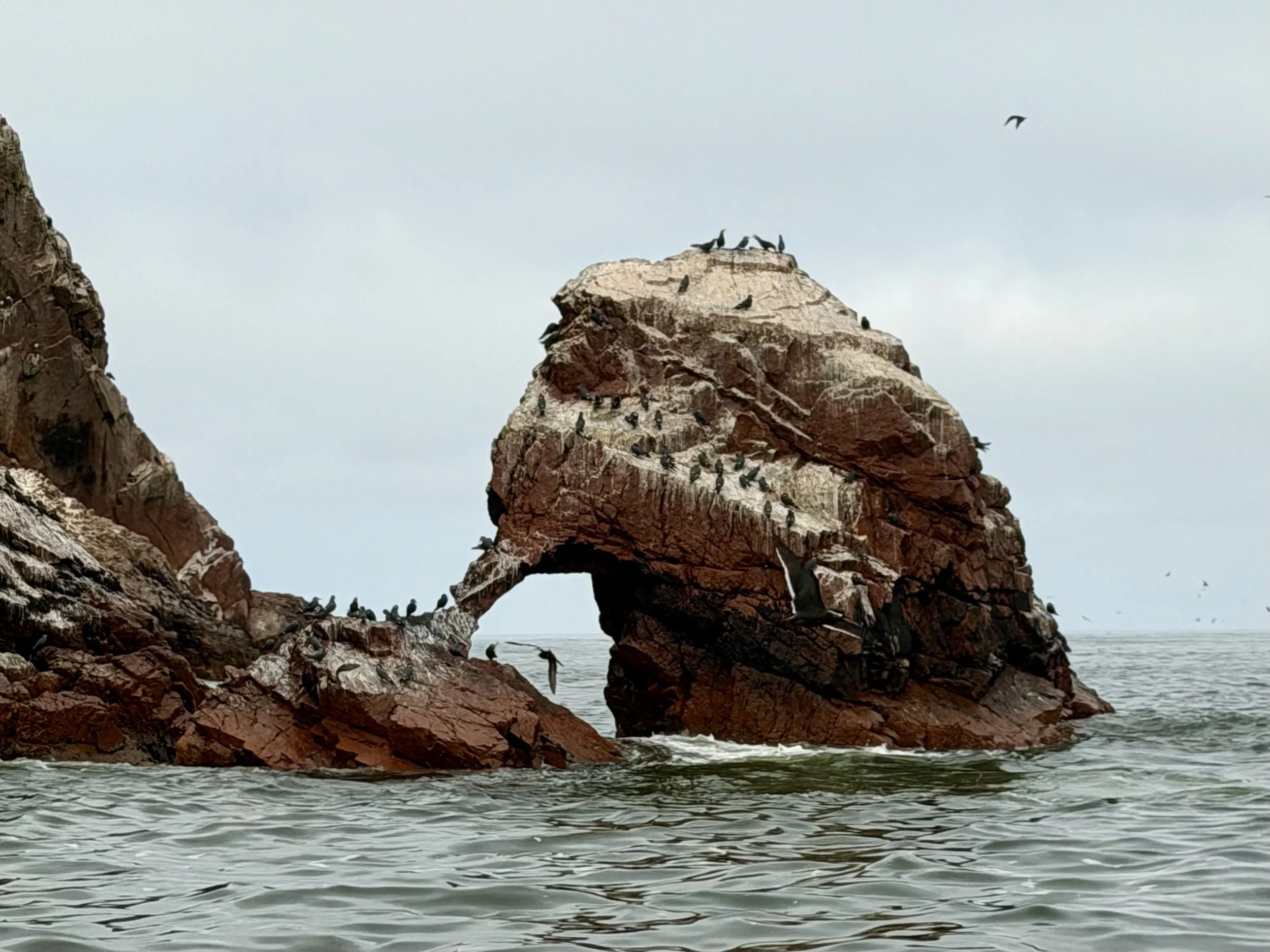
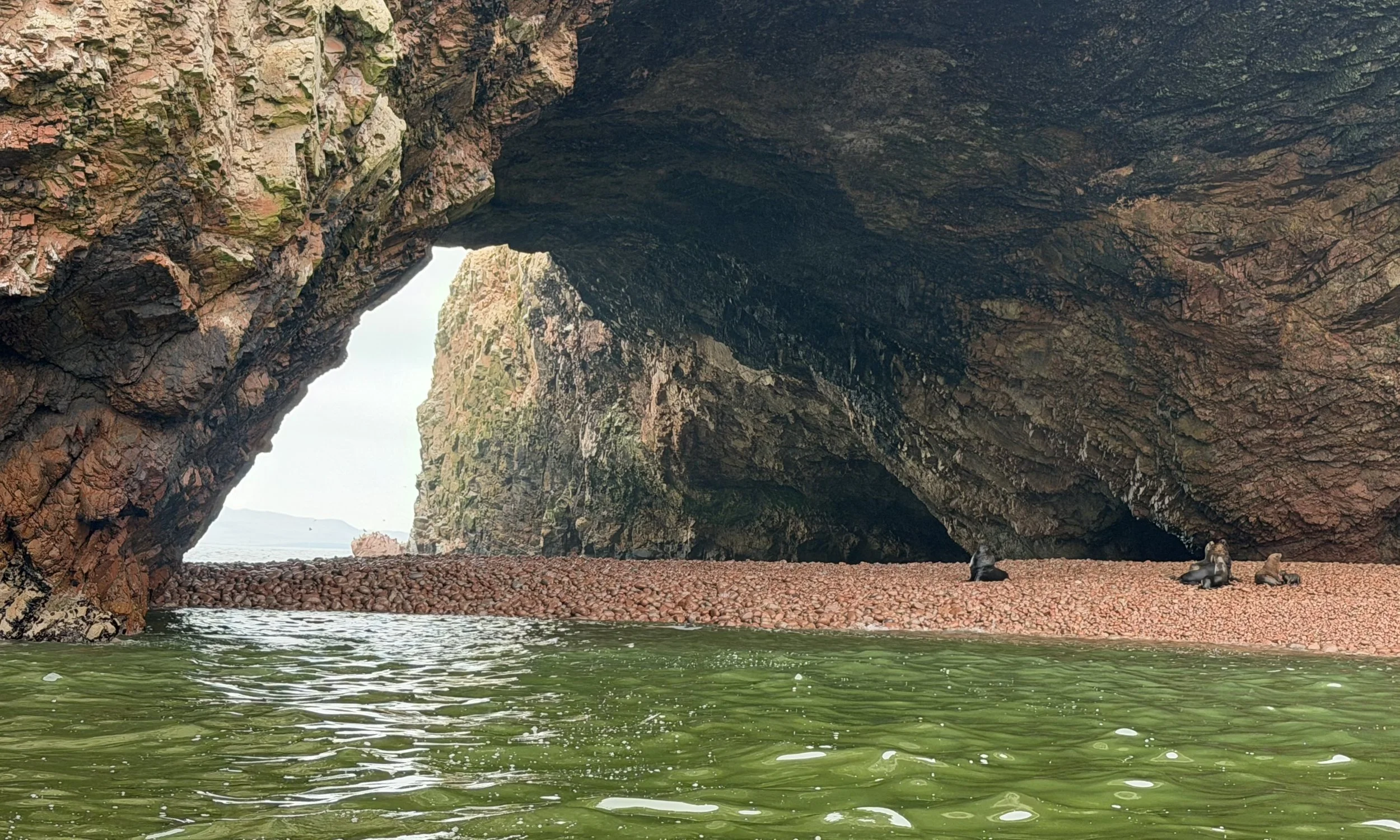
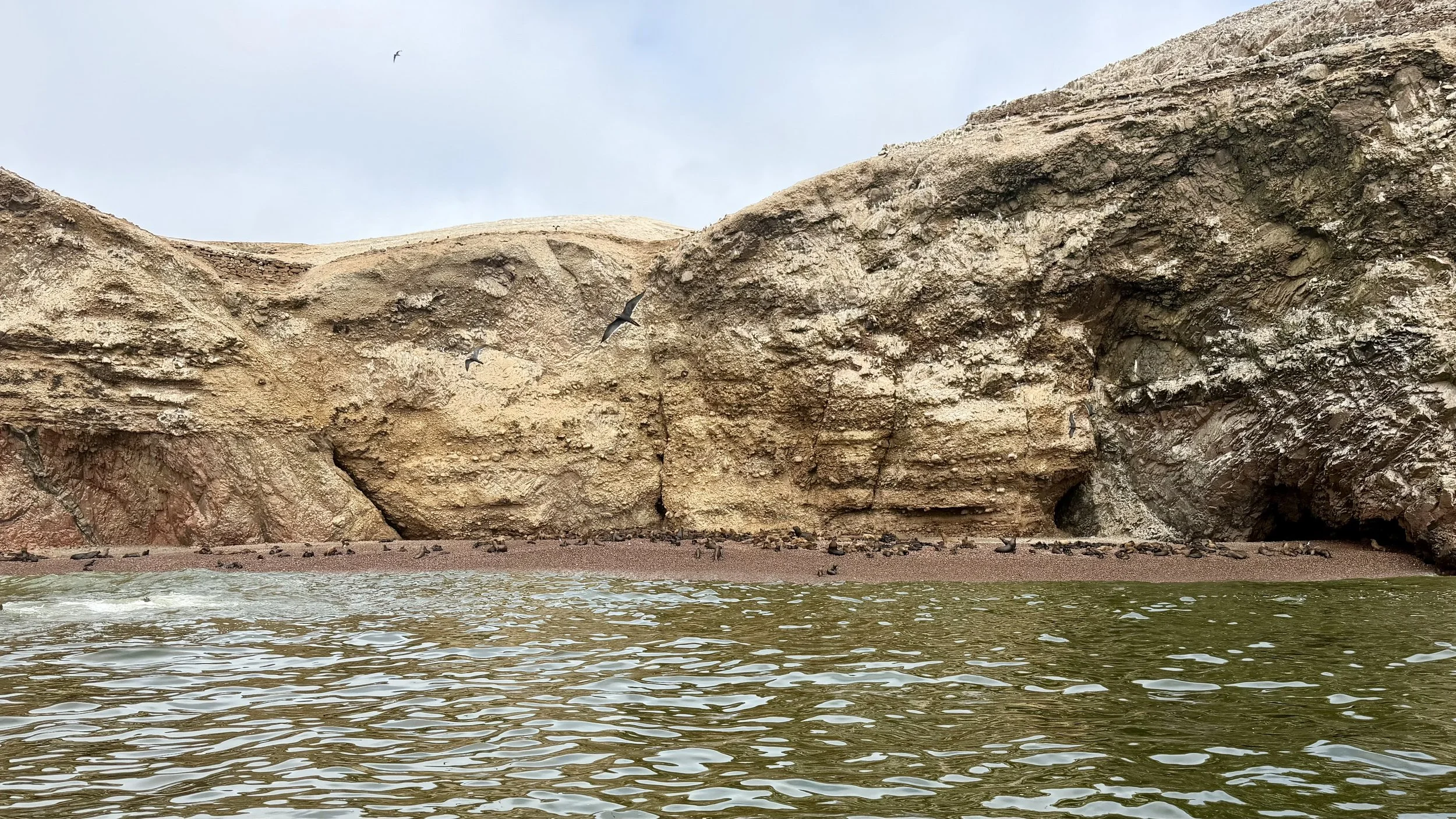
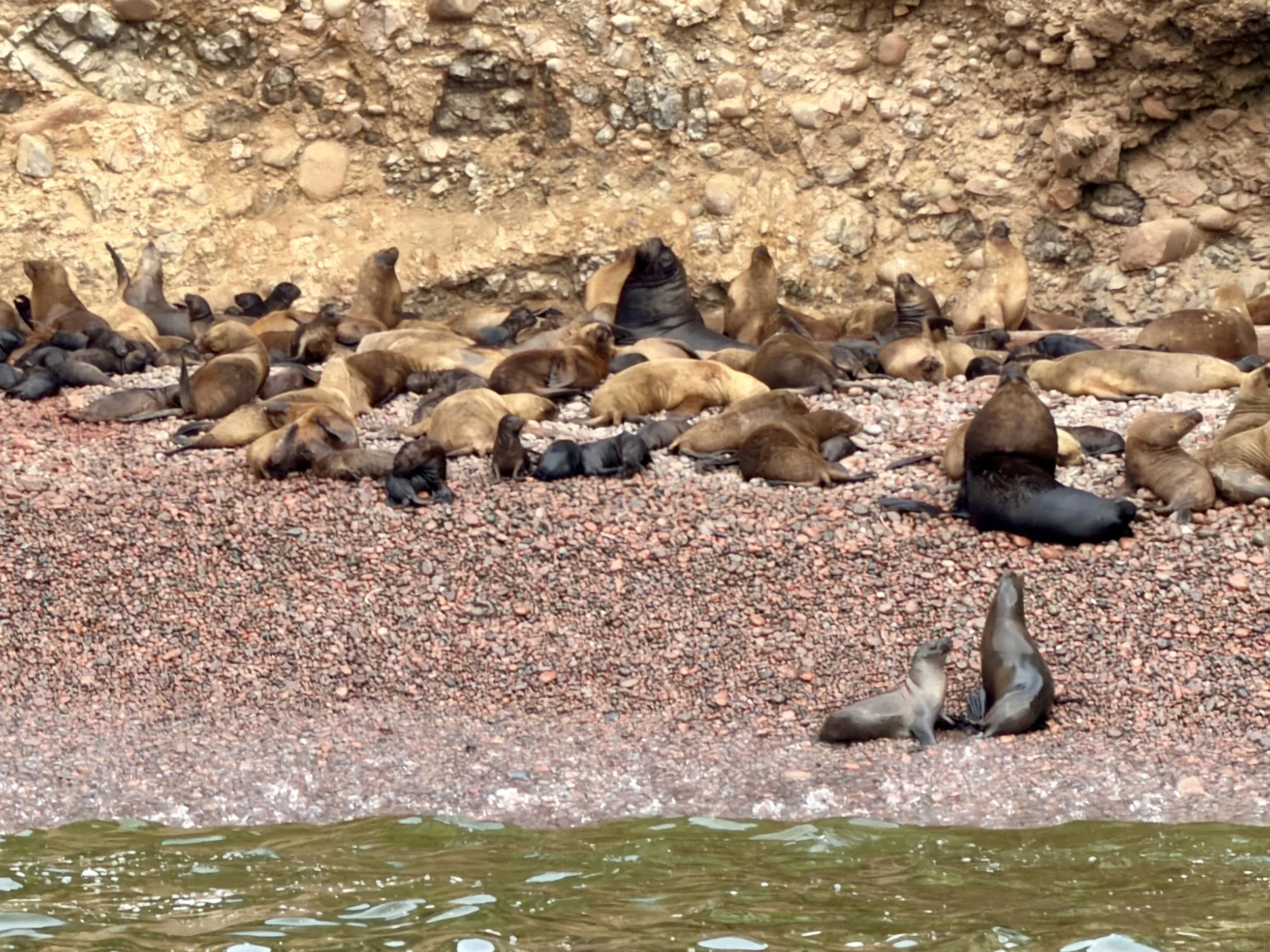
We spotted sea lions and pups on several stony beaches. At aptly named Maternity Beach, there were hundreds of them! Most of the sea lions lounged or slept. One industrious parent was teaching a pup to swim.
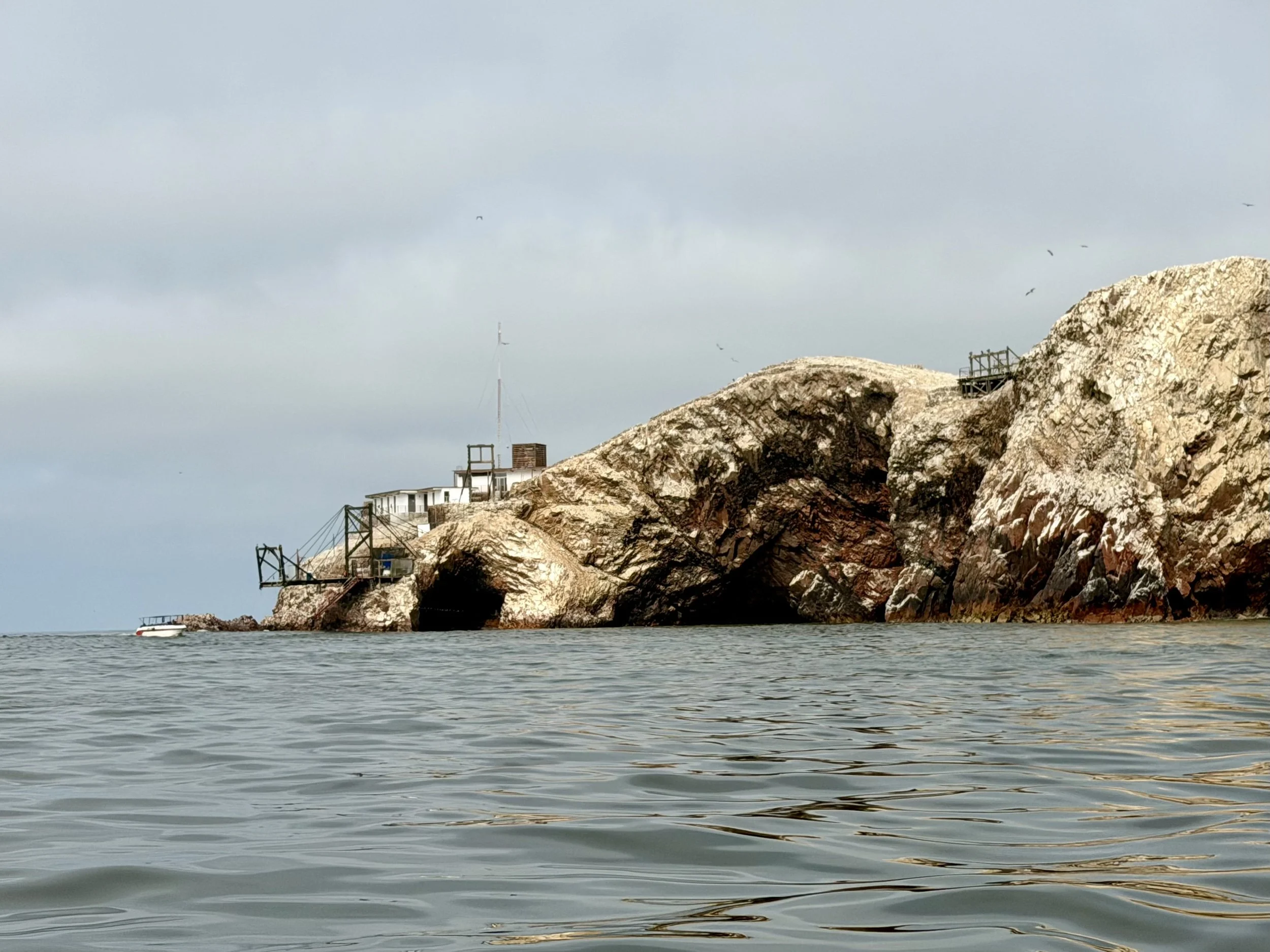
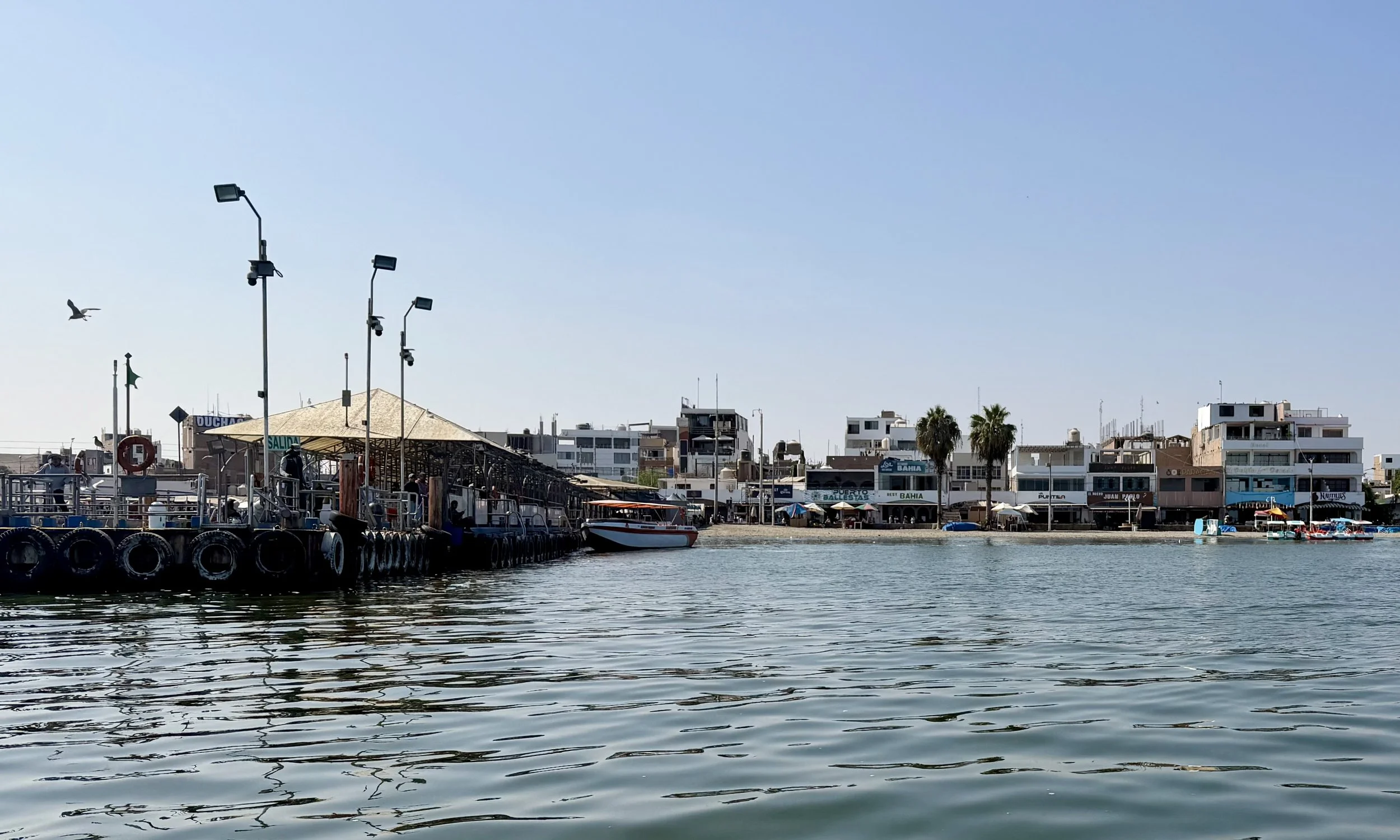
Two large islands still had docks and worker houses from commercial guano extraction in the 19th century, a reminder that these islands once had rich deposits of the bird excrement so highly prized around the world for fertilizer and explosives. We left the Ballestas and enjoyed the cool sea breezes during the 30-minute ride back to the dock in Paracas.
Postscript
Guano is fascinating stuff. Who knew that stinky bird poop could be so valuable? Pre-Columbian cultures knew of the islands and used guano for their farming. The Inca leaders divided the islands into sectors
By the 1800s, guano was in high demand around the world for fertilizer and explosives. The guano deposits on the islands off the coast of Peru were up to 200 feet thick! From about 1840 to 1870, Peru extracted about 12 million tons of guano from its islands and achieved great economic and political power.
Today, the guano on the islands is just a few feet thick. The population of seabirds is at a historic low, due to overfishing of anchovies (their main food) and severe El Niño weather events. Guano is increasingly in demand as an organic fertilizer, and Peru is still the world’s largest producer of it.
Each year, about 35,000 tons of guano are carefully harvested during a limited season. The extraction is done by hand, just as it was done 150 years ago. About 200 men scrape off the guano and put it in sacks - smelly, back-breaking work. The sacks are dumped into a large sieve to remove rocks, bones, and feathers. The pure guano is bagged and loaded onto small boats for transport to the mainland. The guano is sold only to domestic farms, to grow produce for export.
Reading List
Guano Islands, Islets, and Capes National Reserve System for Peru (UNESCO)
Holy Crap! A Trip to the World’s Largest Guano-Producing Islands (Audubon)