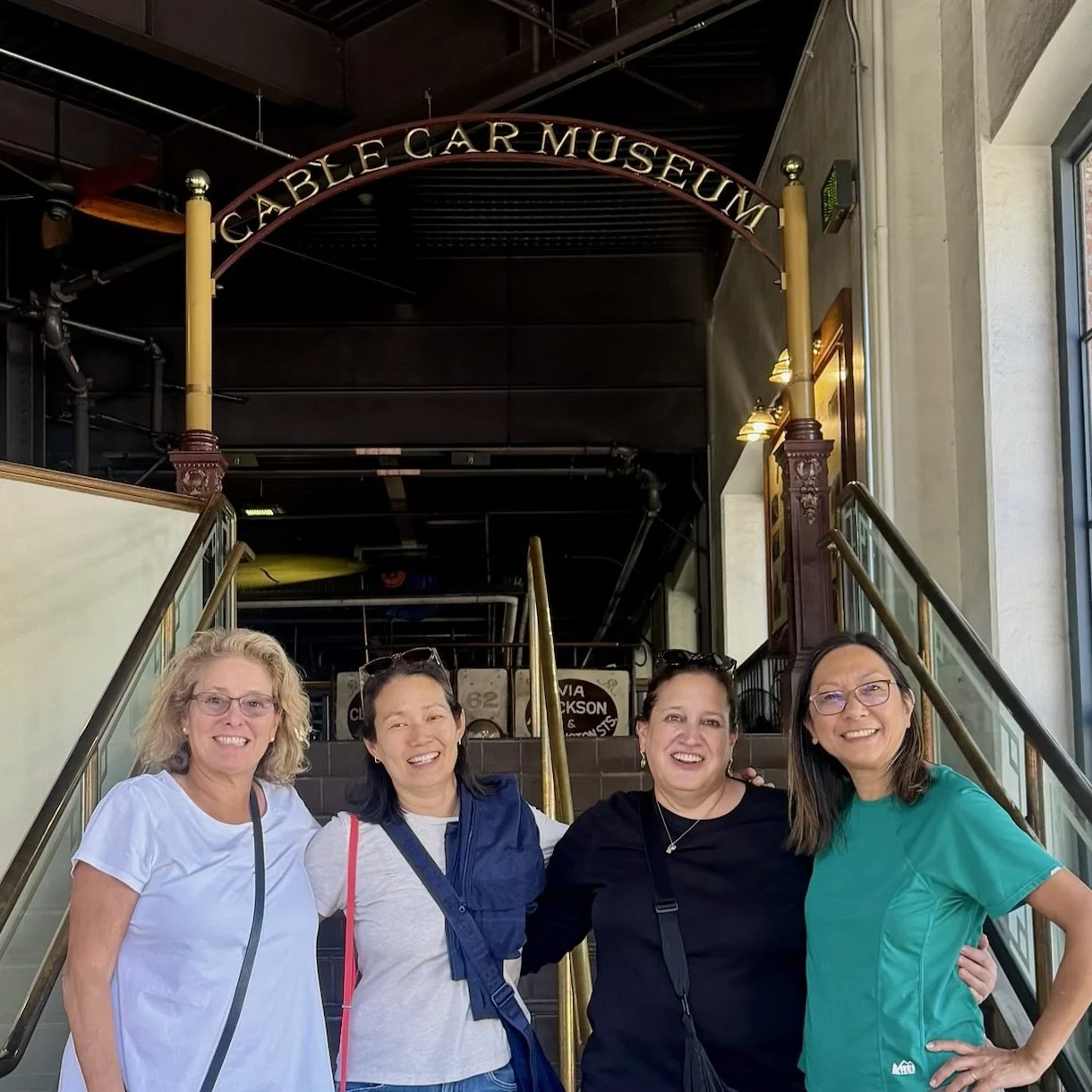
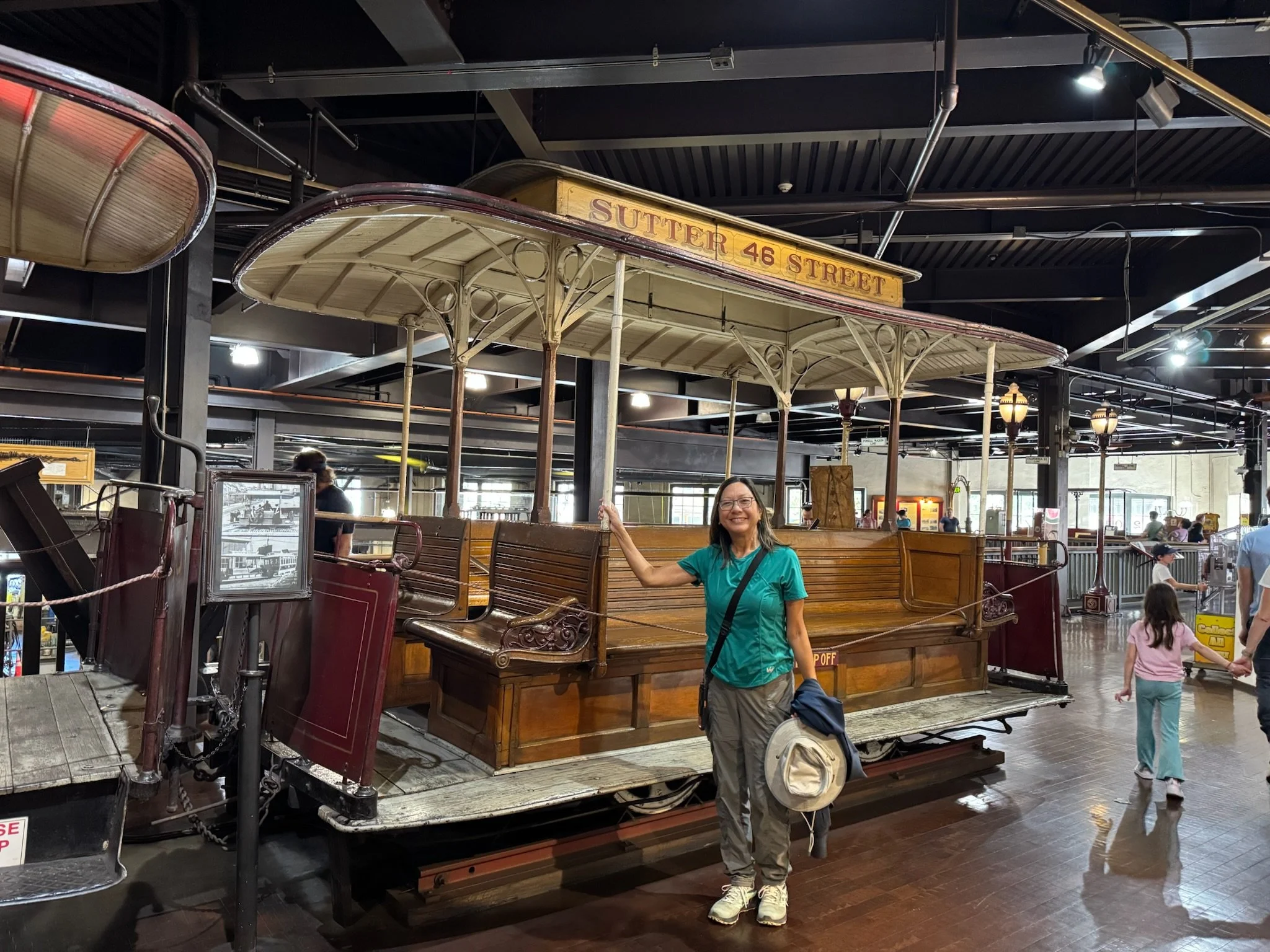
The San Francisco Cable Car Museum was in an unassuming brick building on Mason Street in Nob Hill. There were vintage cable cars and exhibits explaining their history and how they work. It was fun, fascinating, and free of charge - the perfect way to spend an hour with my Zoom Buddies (college friends) Jean, Jennifer, and Stephanie.
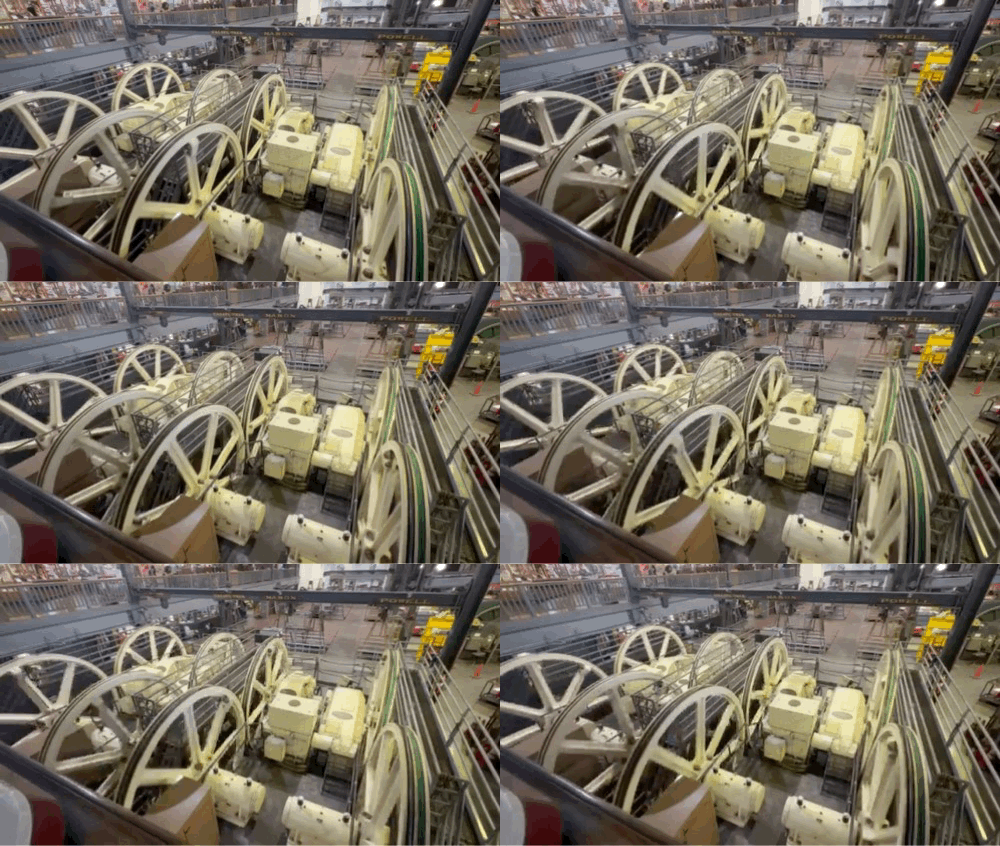
It’s also much more than a museum - it’s the powerhouse that actually drives the cable used by the cable cars. Visitors can see the massive motors and wheels that keep the big cable moving continuously at an even rate. Visitors can also go below street level to see the angled wheels that direct the cables around corners and into the powerhouse. How cool is that?
Some things I learned:
Cable cars are iconic, and unique. San Francisco is the only city in the world that still uses a manually operated cable car system for public transportation. It was the first cable street railway in the world. Now it is a National Historic Landmark.
Cable cars almost disappeared. Before the devastating earthquake of 1906, the city had more than 600 cable cars and 23 different lines (routes). As city was rebuilt, electric streetcar lines replaced all of the cable car lines except those on steep hills. Today, there are 40 cable cars and three lines.
The cable car doesn’t have a motor or engine. It moves by gripping a continuously running cable beneath the street. The grip device reaches the cable through a slit in the street between the rails. Grip the cable, and the car moves. Release the cable, and the car slows. This relatively simple technology hasn't changed much in the 150 years that cable cars have been operating.
It takes two to run a cable car. The gripman (grip operator) drives the cable car, controlling the grip mechanism and brakes. The conductor collects fares, manages the passengers, and may help operate brakes on steep hills.
The fare didn’t change for 70 years. When the first cable car line opened in 1873, the fare was 5 cents. It remained the same until 1944. Today, the fare is $9.
The museum did a nice job of explaining the cable car system’s innovative design. Jennifer and Stephanie were engineers, like me, and Jean was (and is) an architect. So the technical details appealed to the inner nerd in all of us. The history was fascinating, too, particularly the photos of the city after the earthquake. Now I have a better appreciation for why the San Francisco cable car is so iconic.