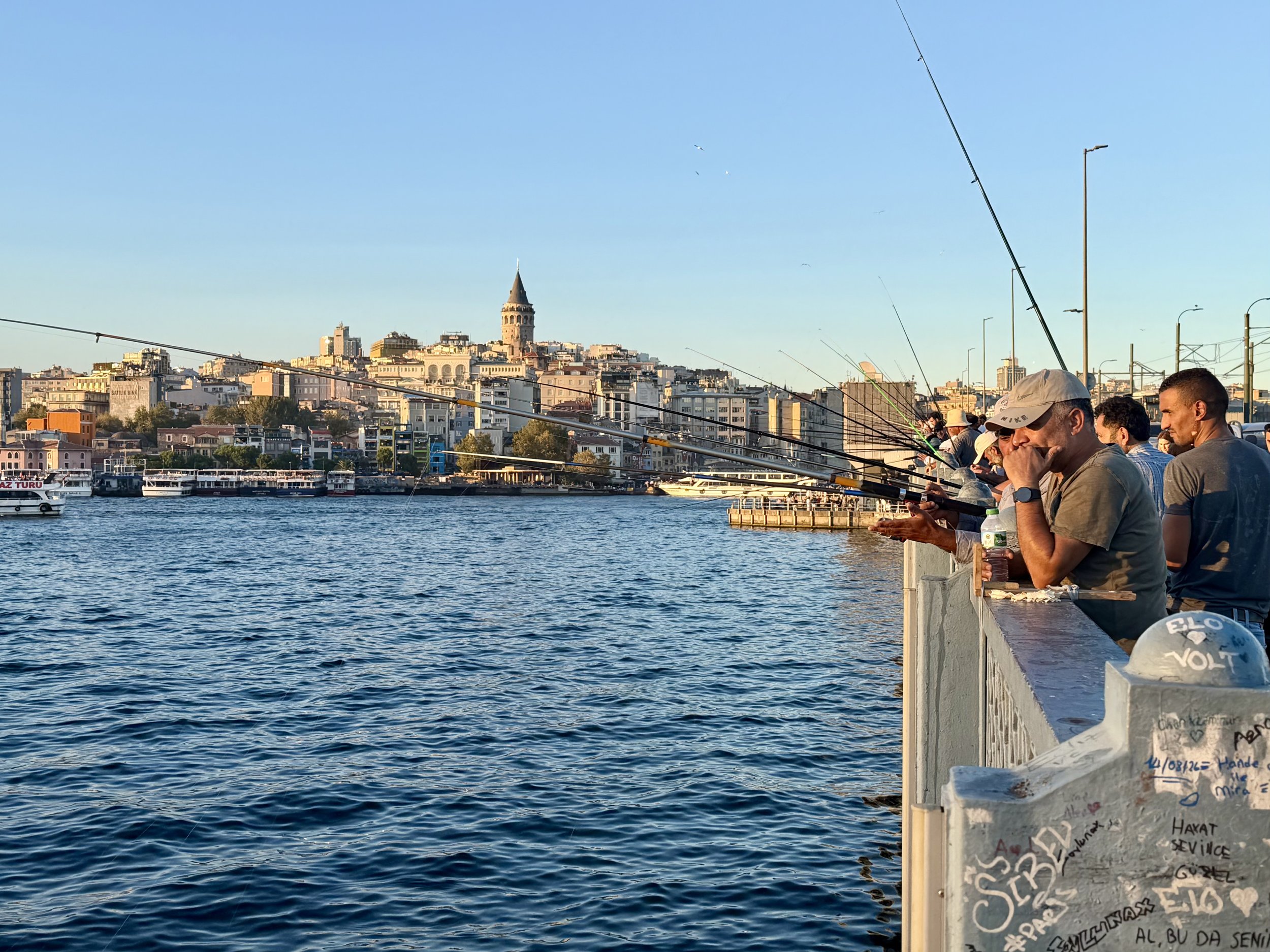
The Galata Tower was a distinctive hilltop landmark in Beyoğlu, visible from Istanbul’s Old City on the other side of the Golden Horn. We had seen it earlier in the month when walking across the Galata Bridge. Now that we were staying in Beyoğlu, the tower was right near our hotel, so naturally we had to check it out.
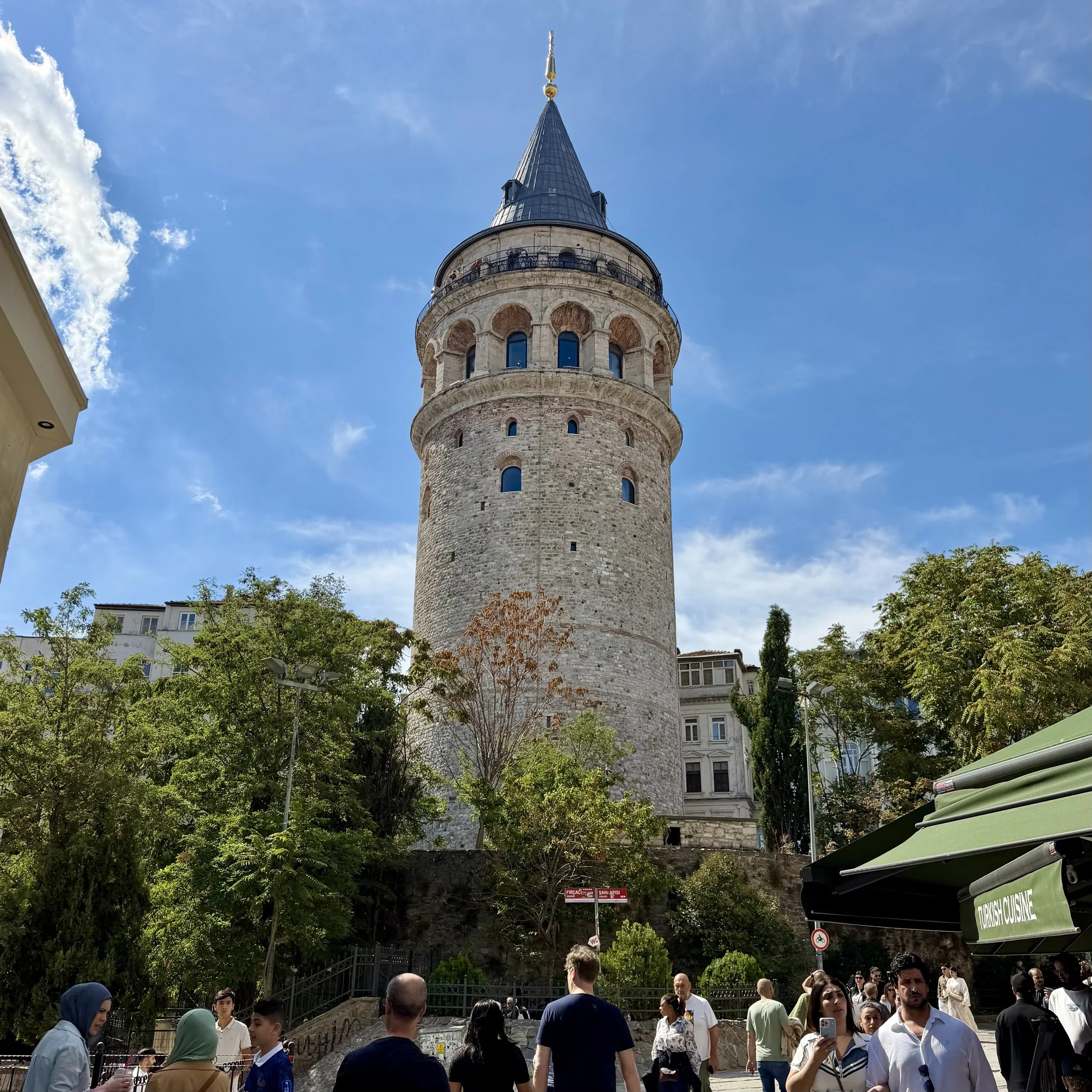
We learned that the medieval stone tower had been built in 1348, when the area was a Genoese colony. At a height of nearly 220 feet, it was the tallest building in Constantinople. Through the centuries, the Galata Tower has functioned as a lighthouse, a military observation post, a prison, a watchtower for fires, and a cafe. Now it is a tourist attraction, popular for its 360° views of Istanbul.
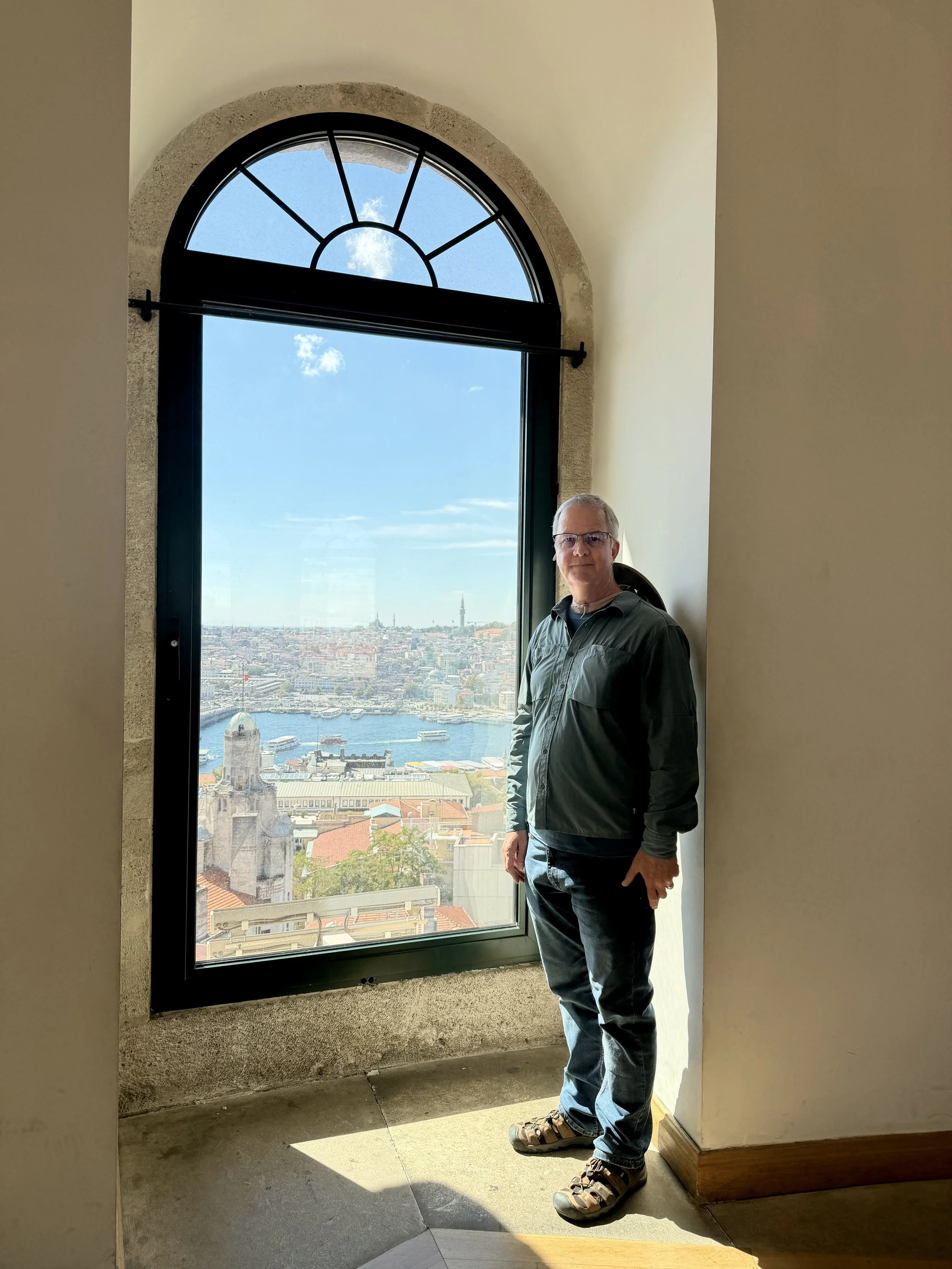
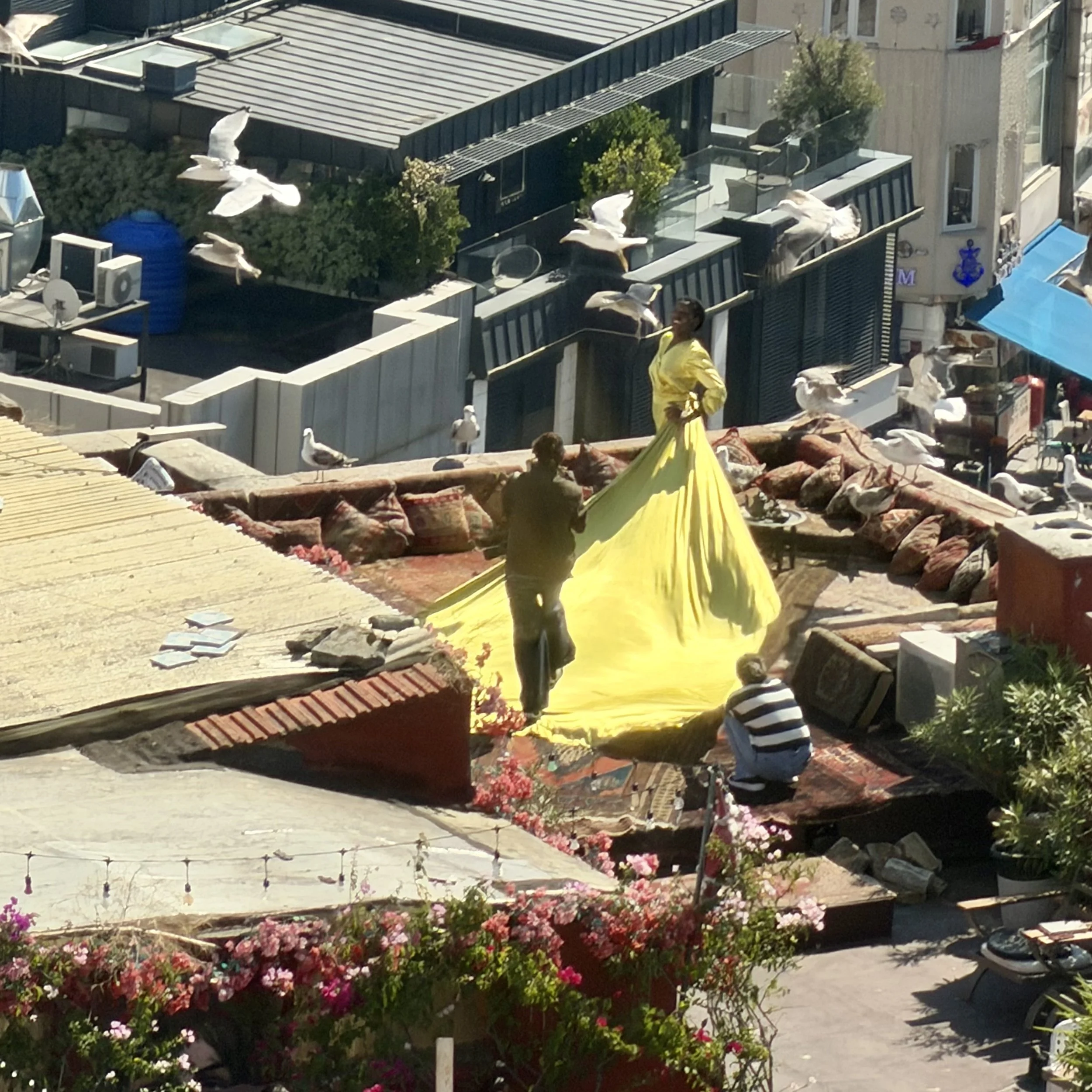
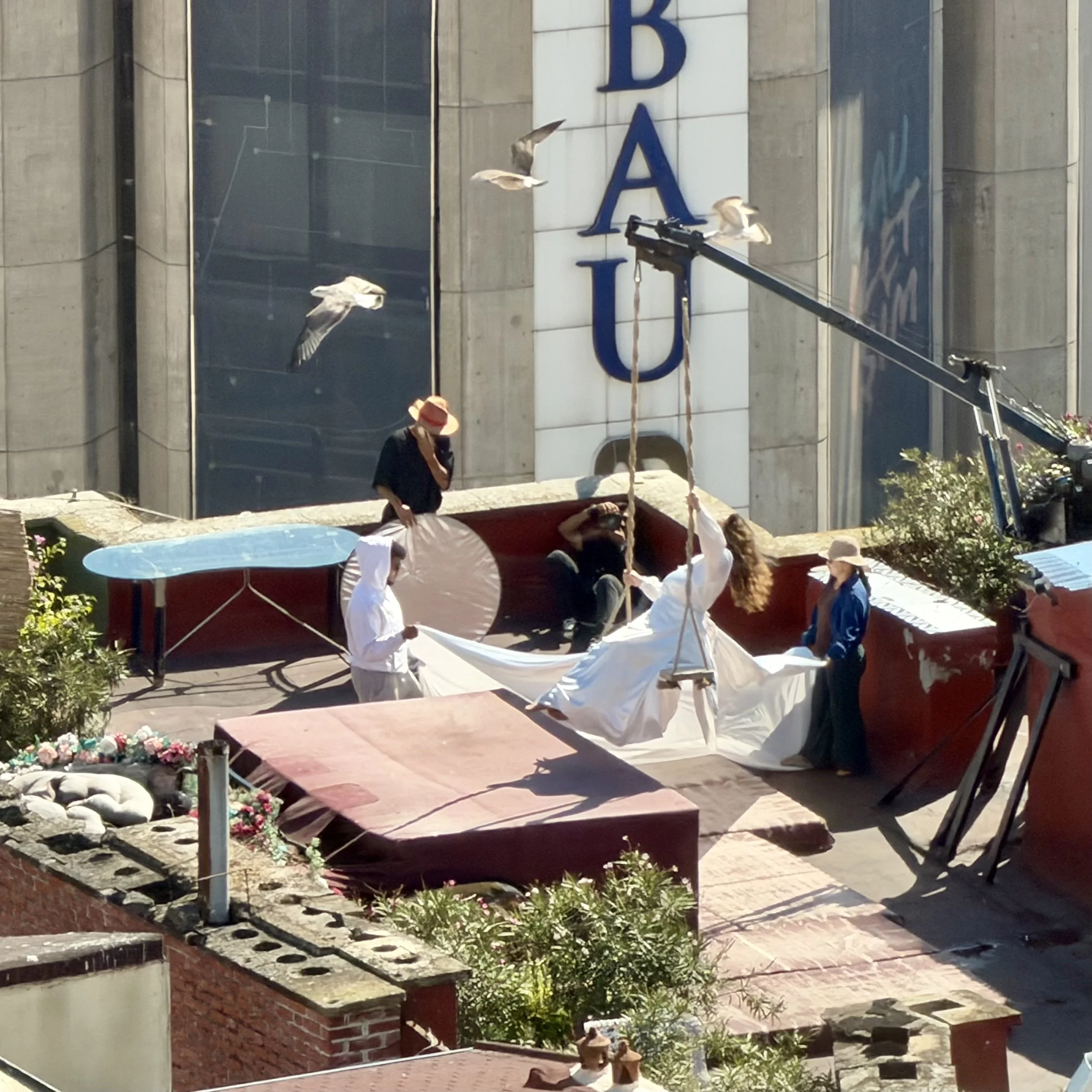
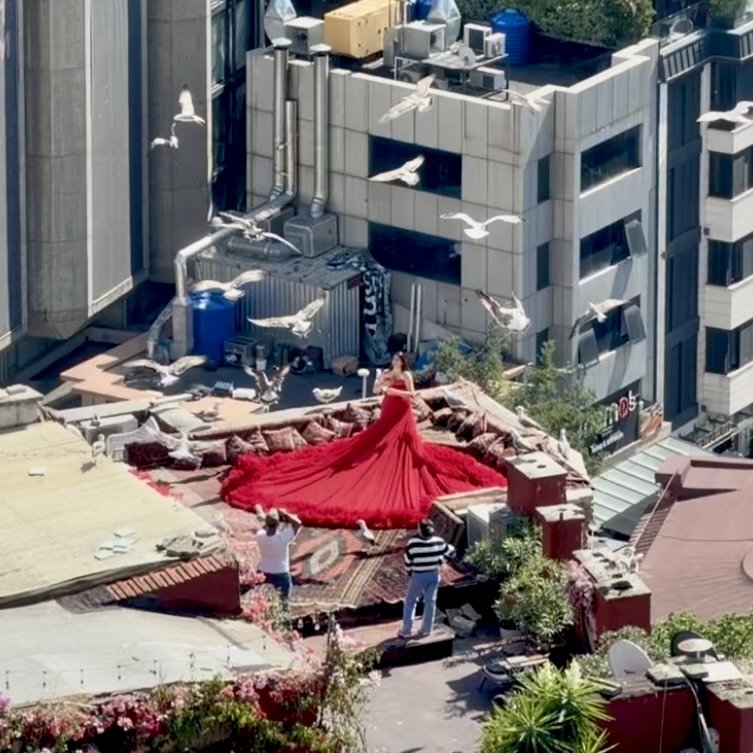
We took an elevator to the 7th floor, where huge windows offered marvelous views. It was entertaining to watch the “big dress” portrait shoots on a nearby rooftop.
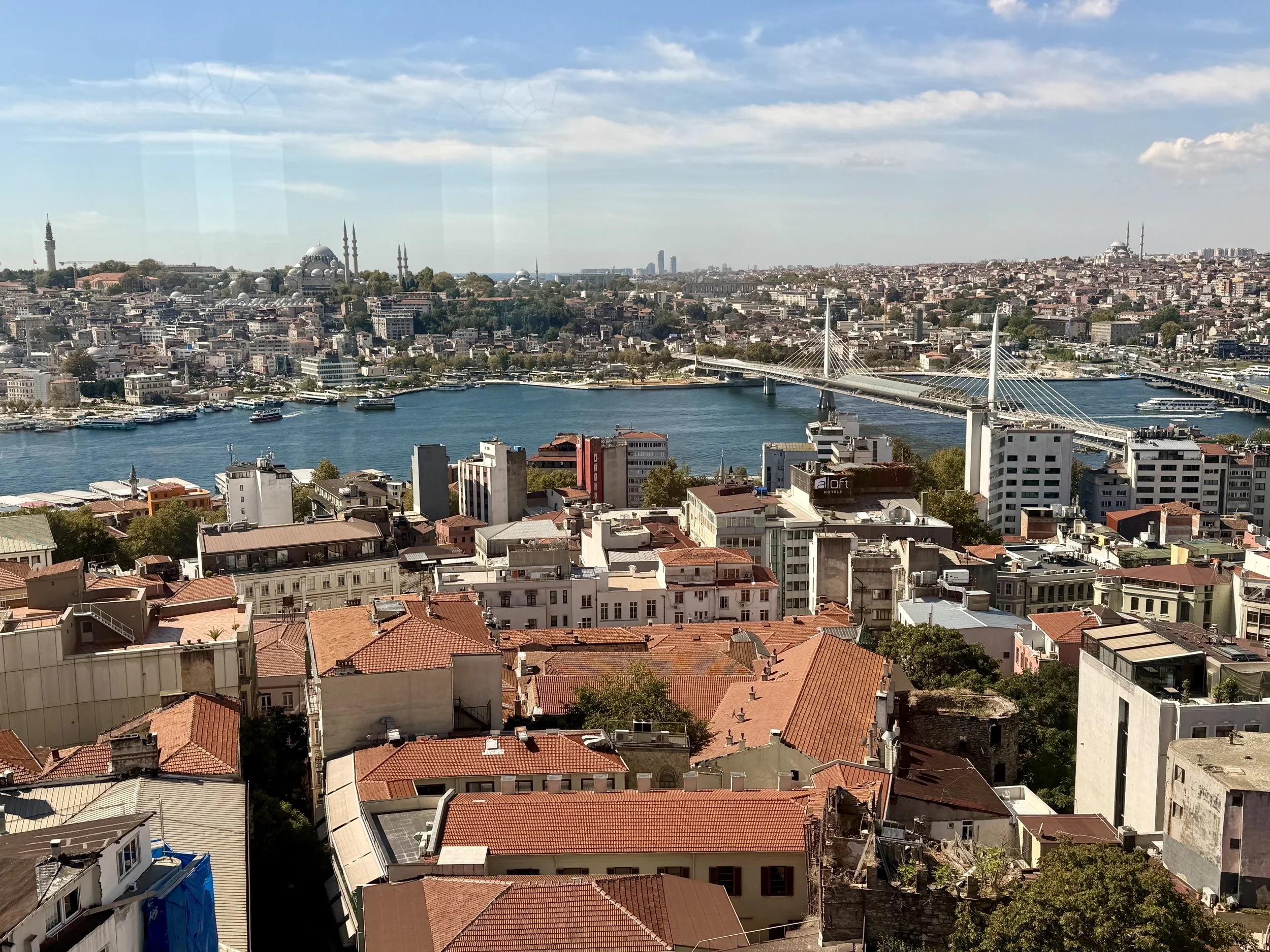
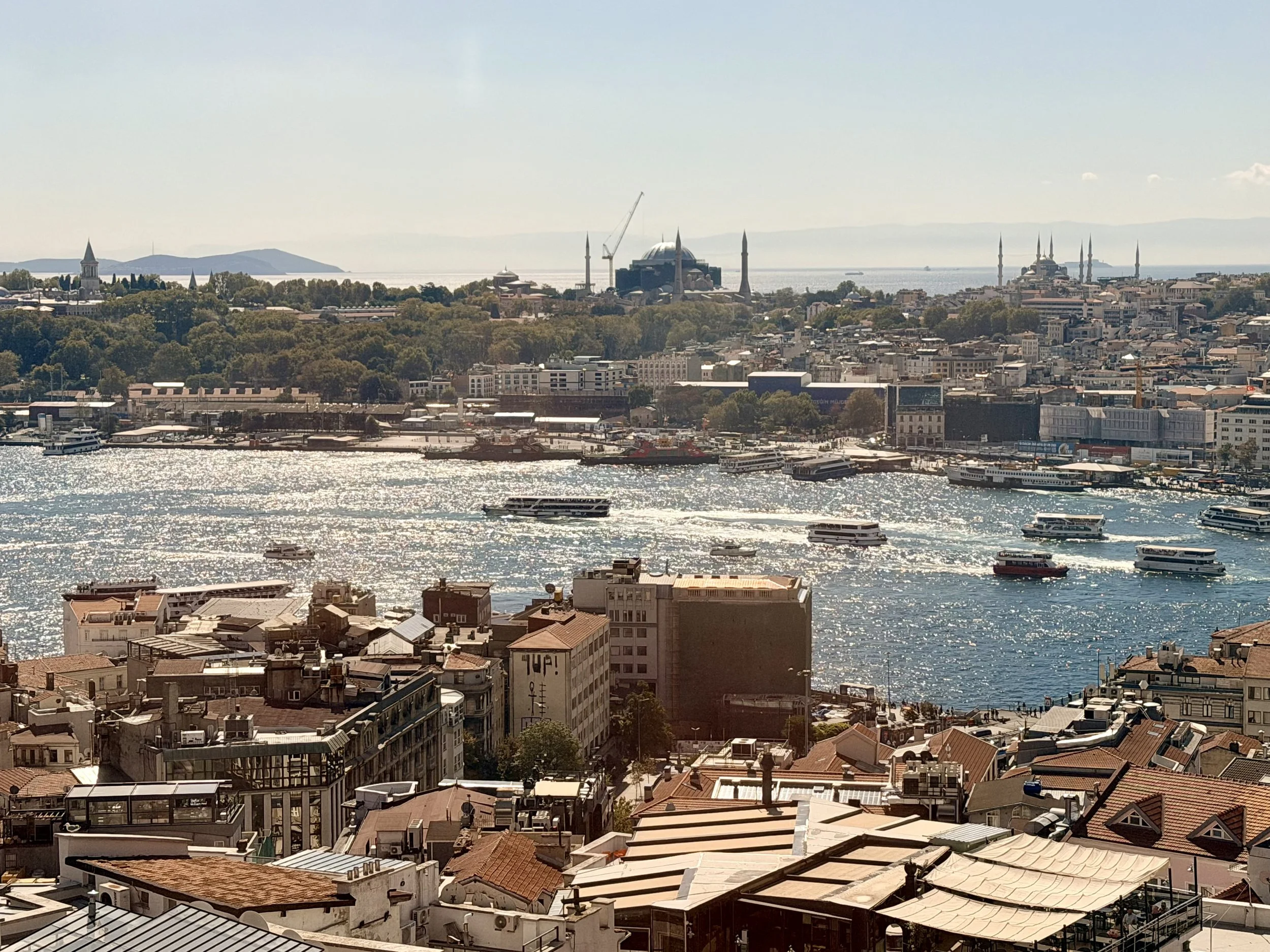
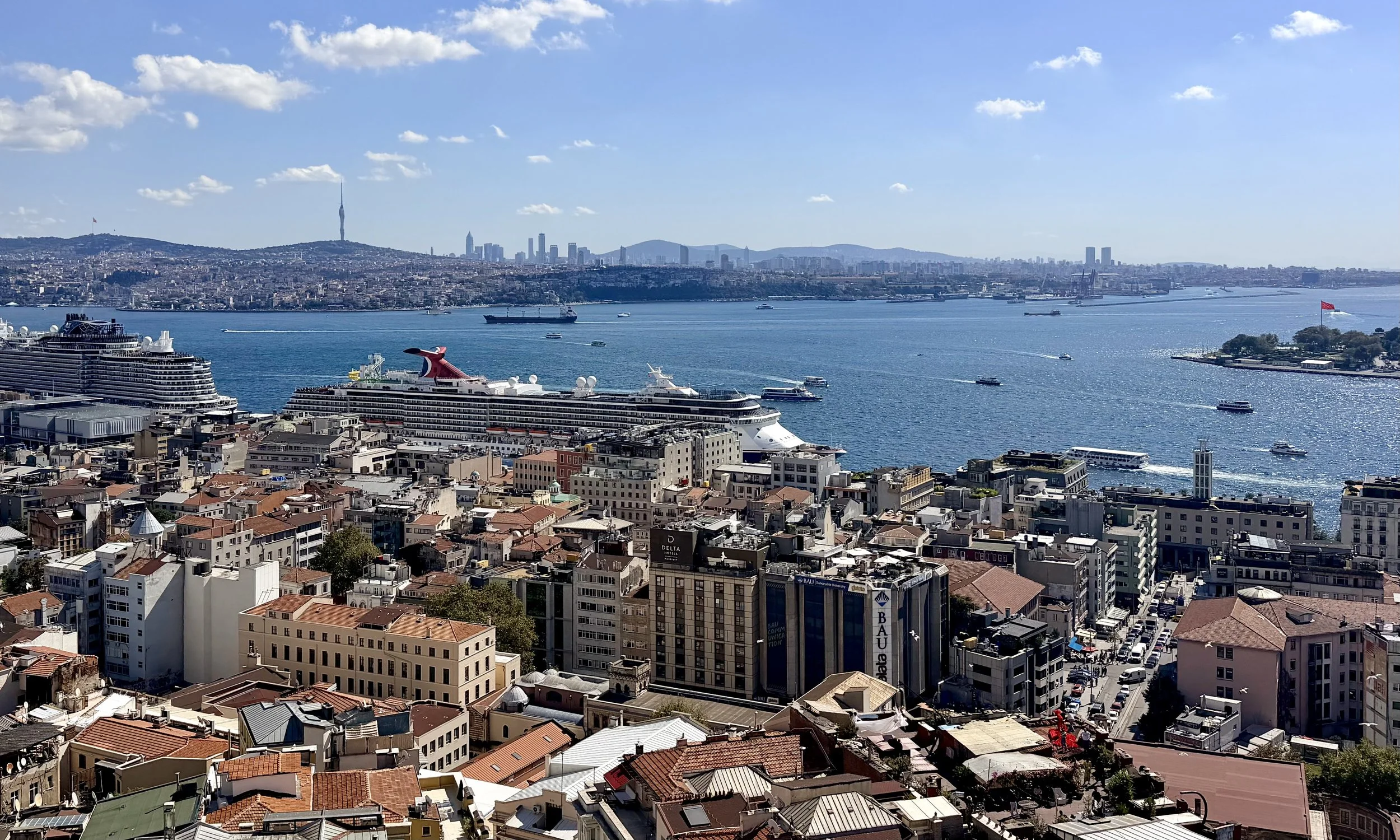
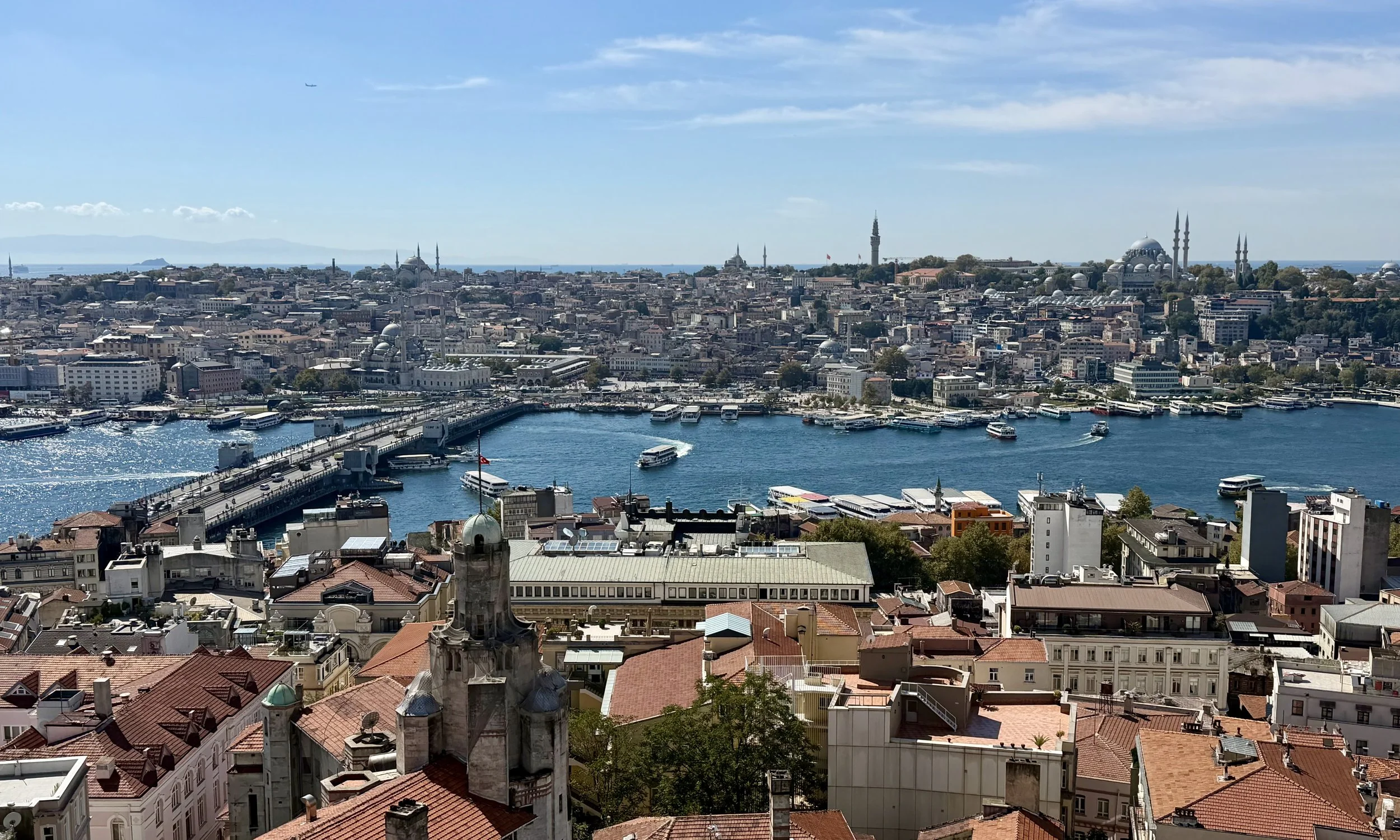
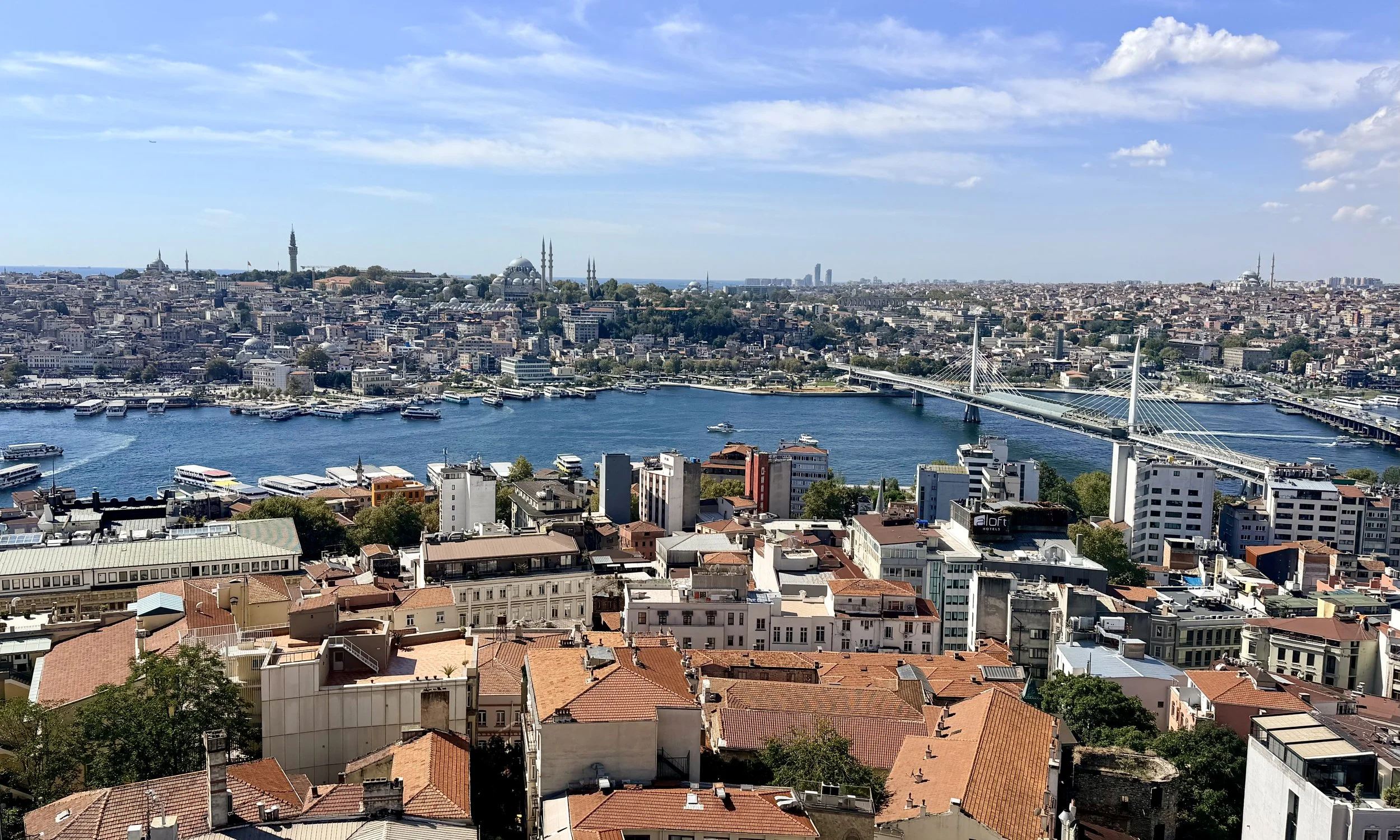
An iron staircase went up to the 9th floor observatory, where we could step outside and enjoy the spectacular views without any reflections from glass windows. The water of the Bosphorus and the Golden Horn sparkled in the sunlight. Gorgeous!
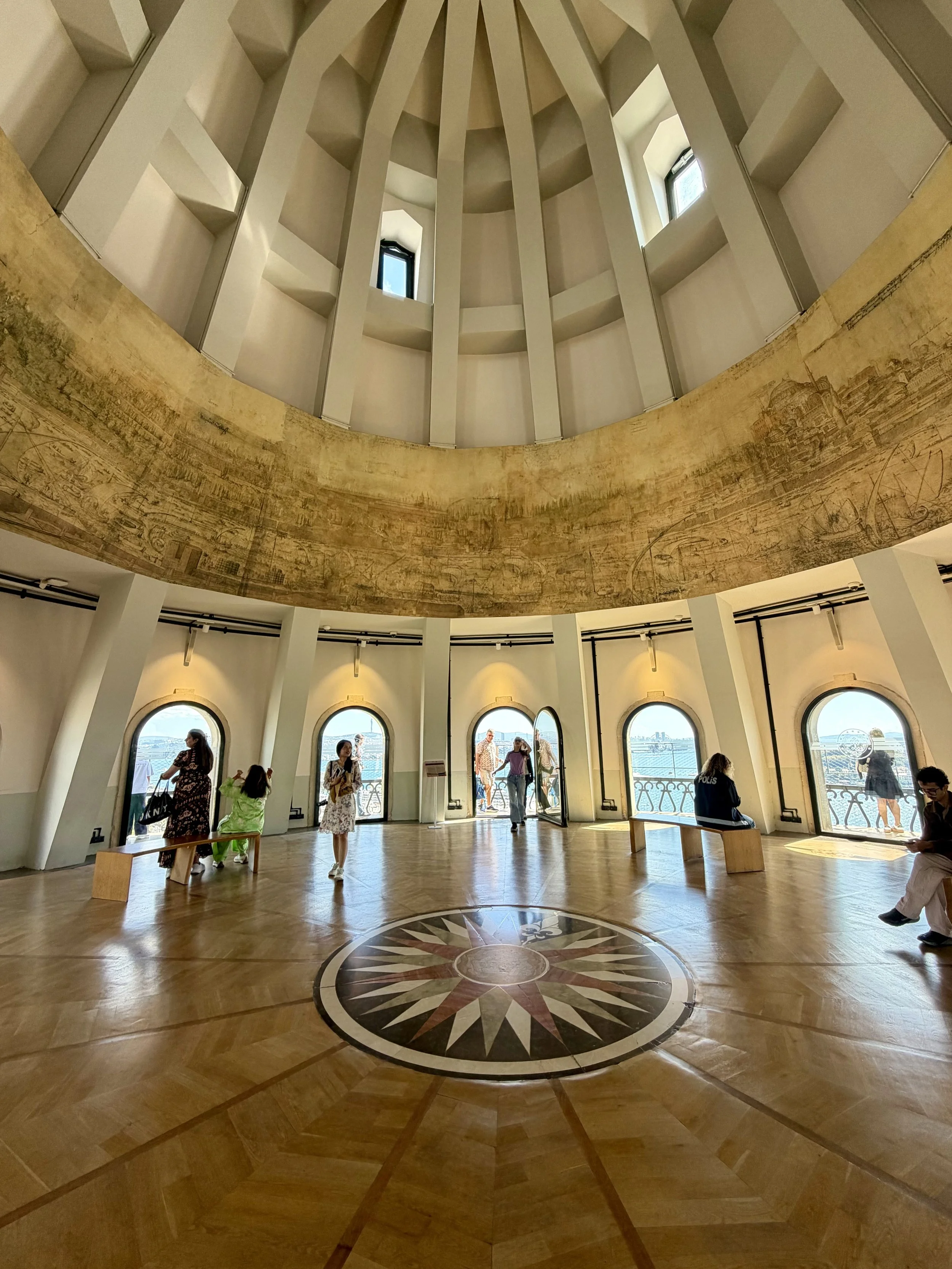
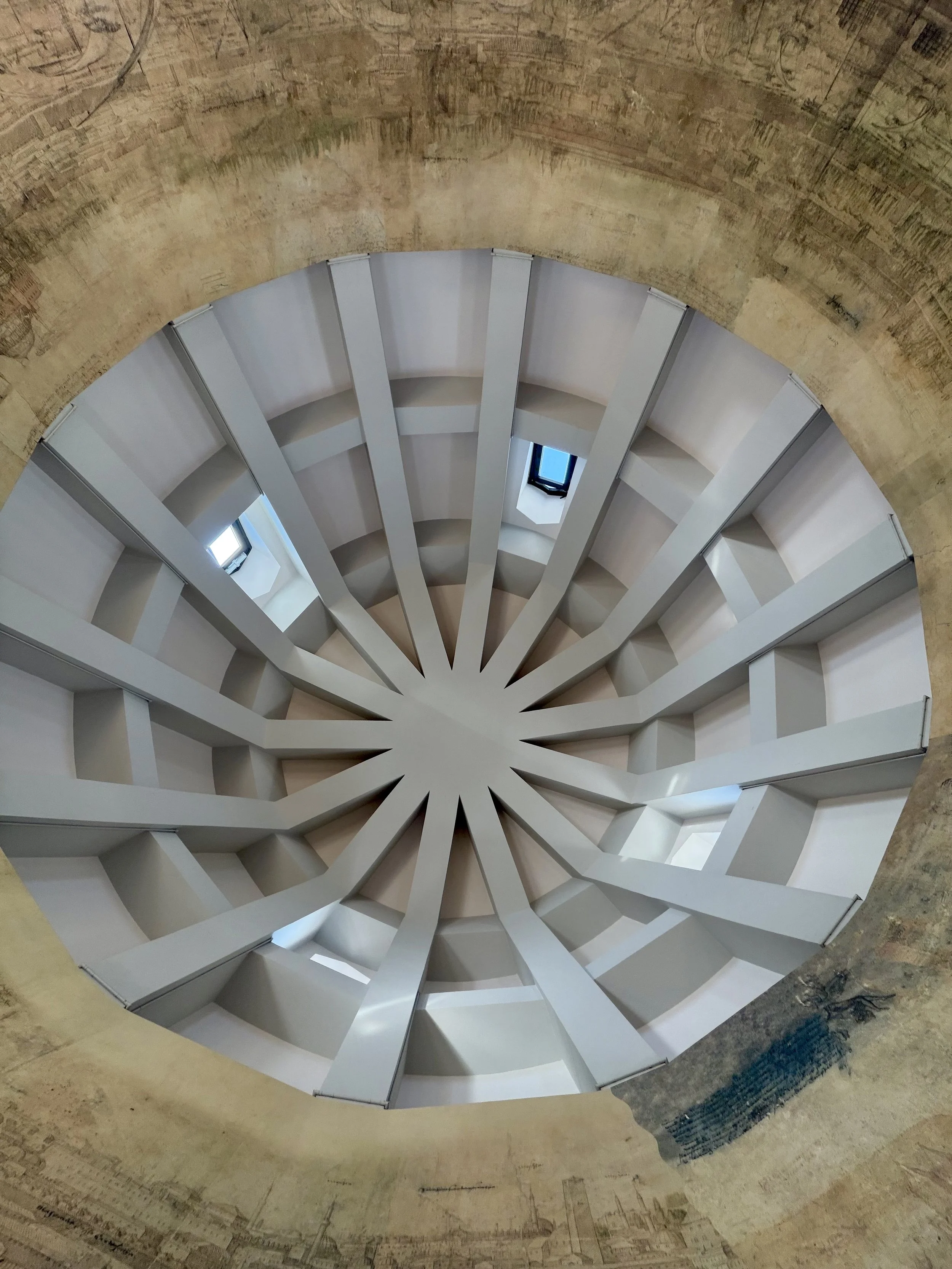
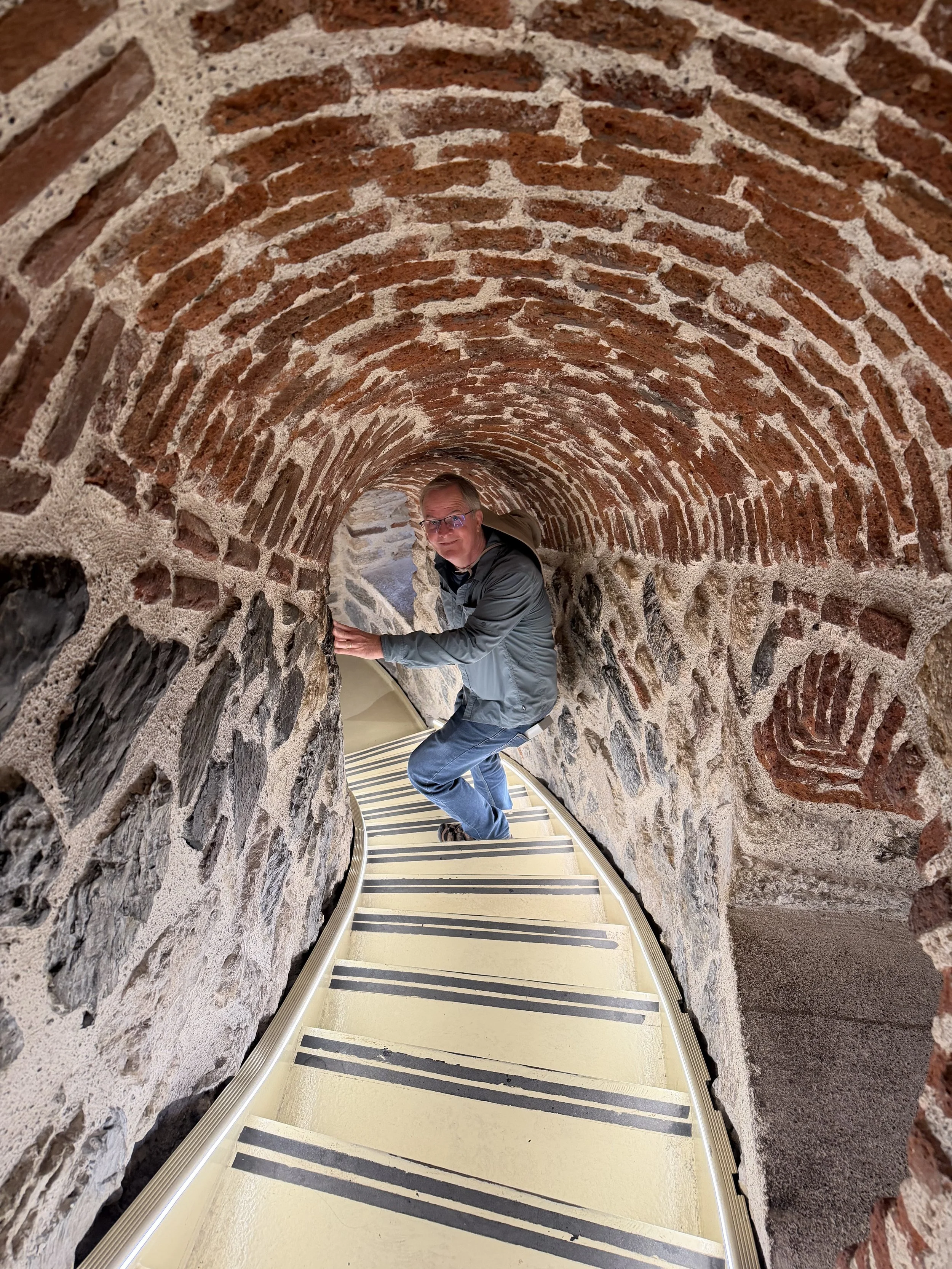
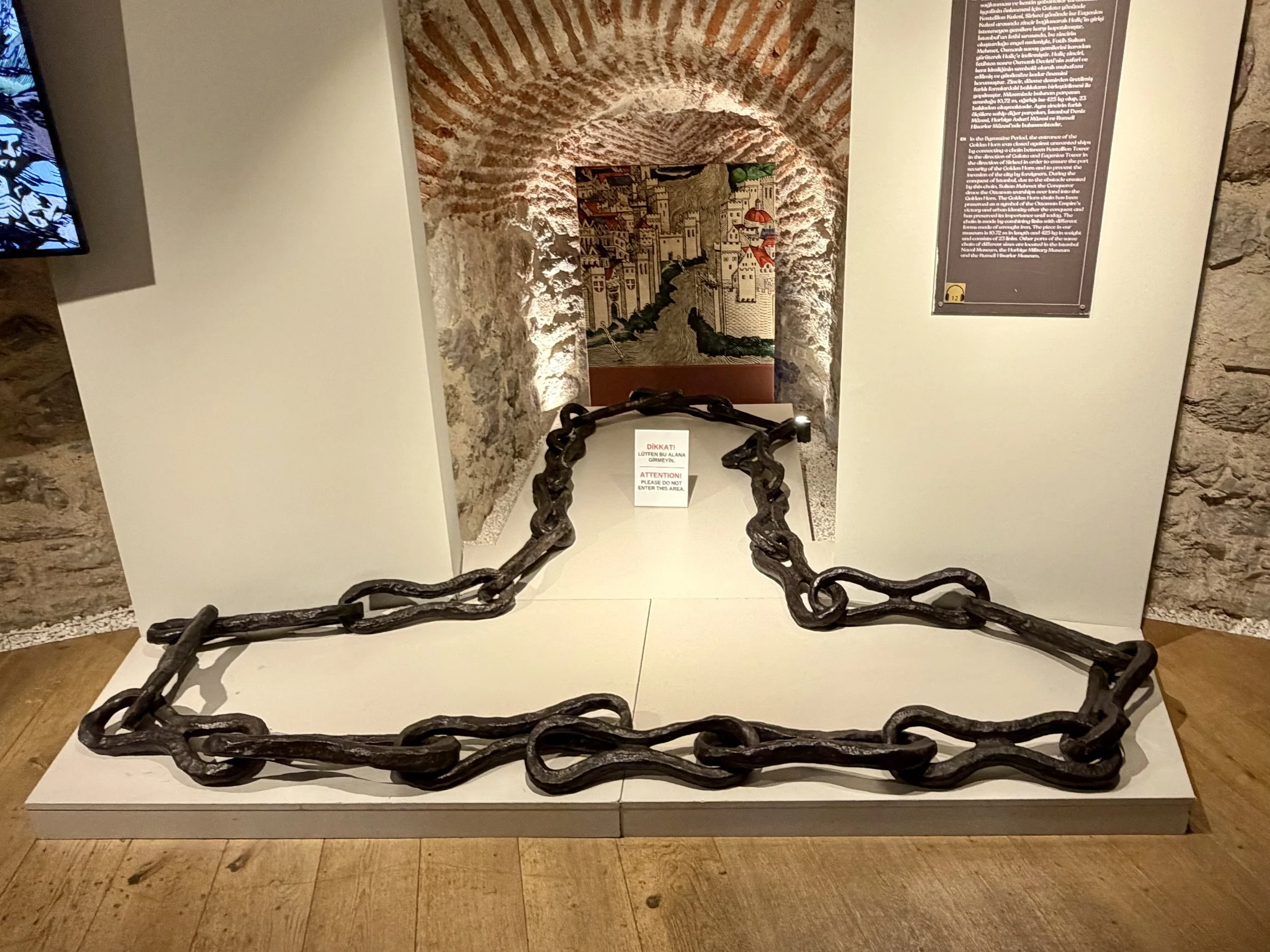
We then walked down via a series of staircases, pausing on each floor to see the exhibits. There was a section of the chain that once stretched across the Golden Horn to defend Constantinople from invaders. The Ottomans carried their ships over land to get past the chain!
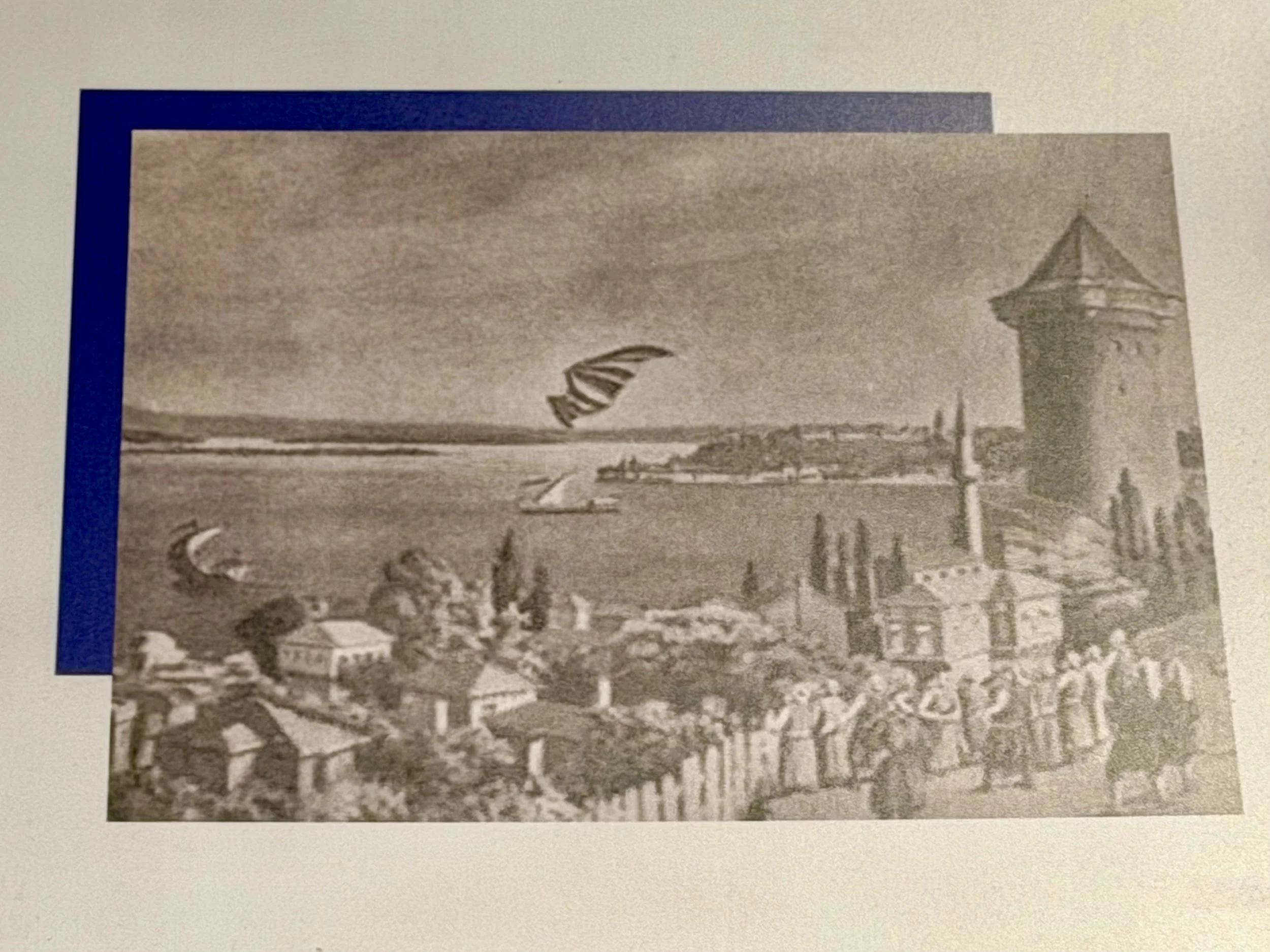
One exhibit honored the history of Turkish aviation. Two early figures were particularly interesting:
In 1159, a Turkish man climbed to the top of the obelisk in the Hippodrome and announced that he would fly. He wore a wide, flowing garment, with willow branches attached, and the wind filled it like a sail. As the Emperor and the assembled crowd watched in surprise, he leapt off the obelisk and plummeted to his death.
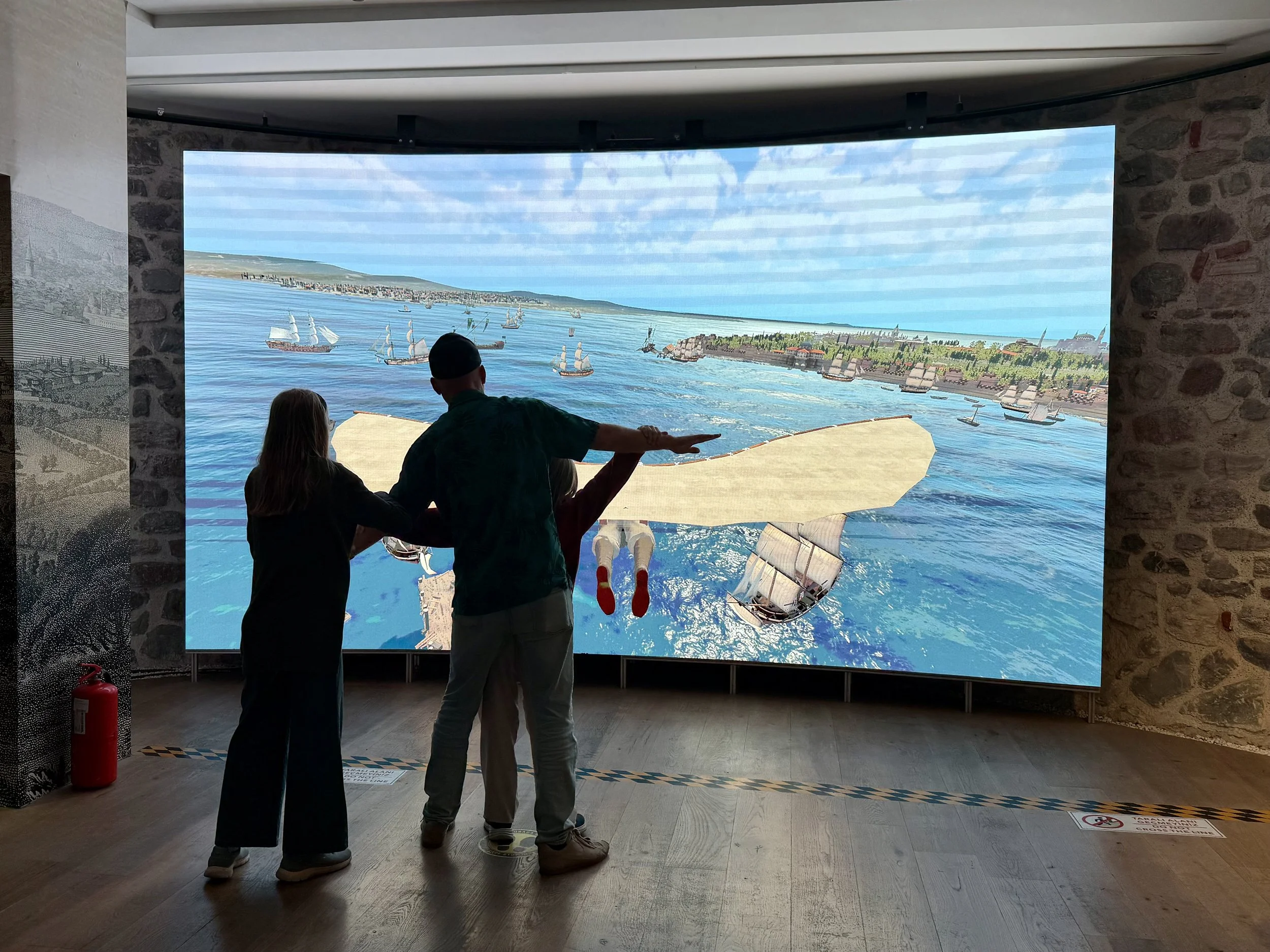
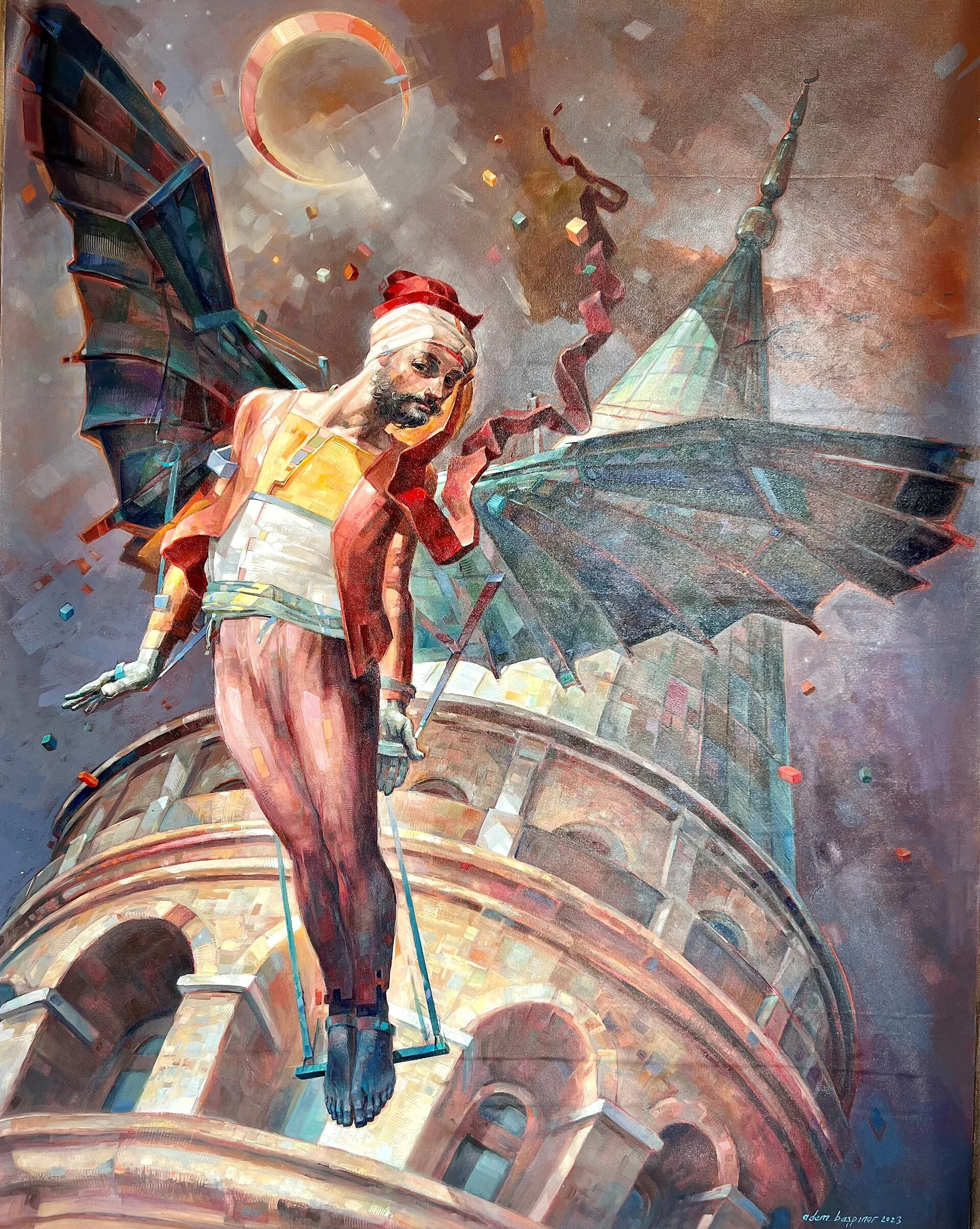
In 1632, an Ottoman scientist named Hezârfen Ahmed Çelebi made himself a pair of wings and jumped off the top of Galata Tower. He glided across the Bosphorus and landed safely in a square on the Asian side. Çelebi was rewarded by the Sultan with a purse of gold coins and a free trip to Algeria, where he died in exile. Visitors to Galata Tower could experience Çelebi’s achievement via a virtual reality flight simulation.
Fortunately, both the technology and the rewards for Turkish fliers improved significantly in the 20th century.

Galata Tower was expensive and touristy, but on that beautiful, sunny day, it was totally worthwhile. I loved seeing Istanbul in all its glory.