Our Culinary Backstreets tour was called “Two Markets, Two Continents” because it would visit both the European and the Asian sides of Istanbul. Interesting, right?
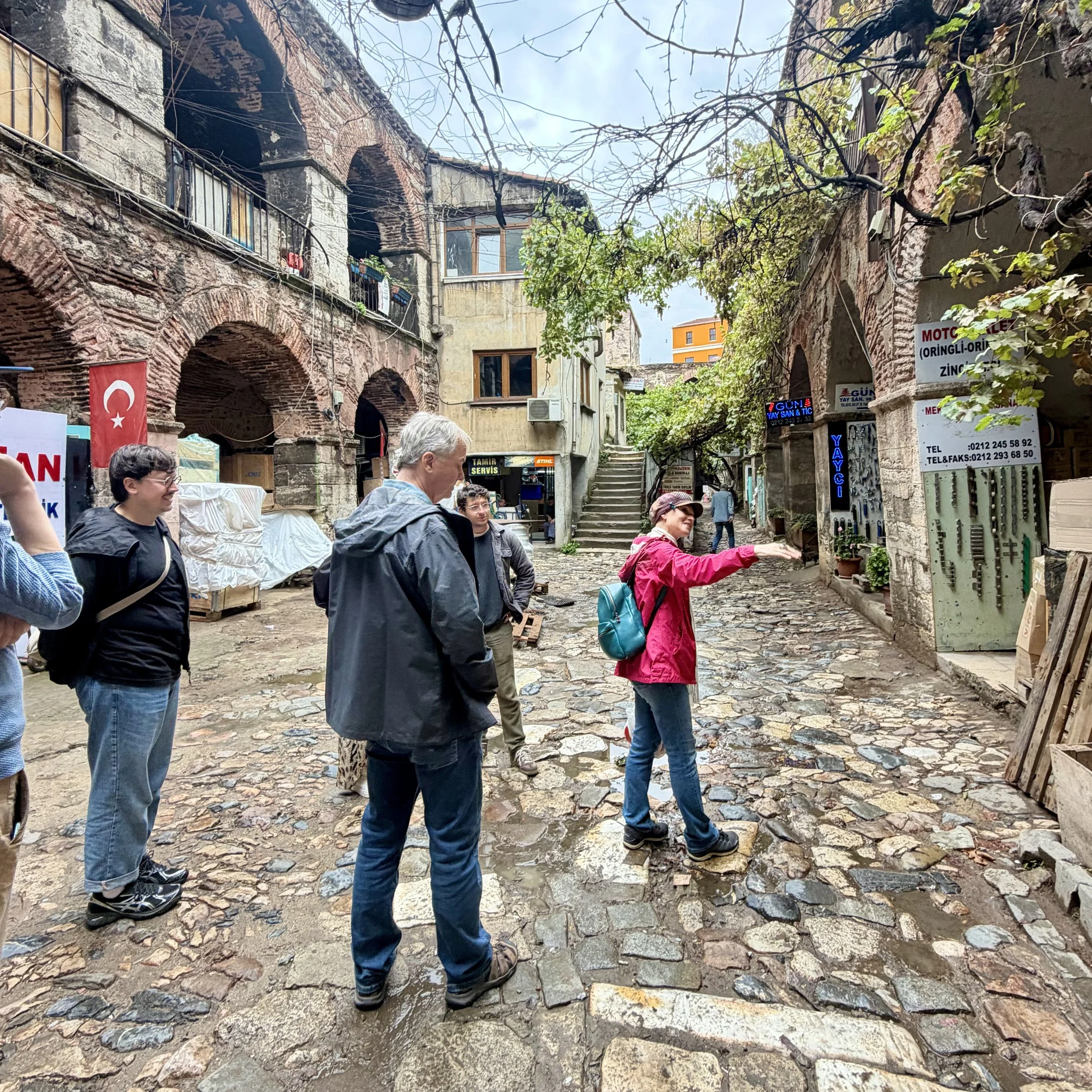
Our guide, Gonca (gohn-jah) was energetic and disarmingly friendly, and our group of seven warmed up to her quickly. Along with Steve and me there were Steph and Justin from Tasmania, Australia and Chris, Matthew, and Valerie from Calgary, Canada. We enjoyed chatting with the others about their home cities and travel experiences.
Over the next six hours, Gonca led us through the markets at a comfortable pace. With her fluent English, she moved easily between topics, touching on Turkish history and customs, her own family’s traditions, and, of course, the food.. A light rain fell, but nothing that really hampered our progress.
Sometimes, we stopped at a restaurant and sat at a table that had been prepared for us in advance. Other times, we stopped at a random market stall or shop because a member of our group saw something interesting. Gonca handled both situations with enthusiasm and ease. I loved the combination of planned and spontaneous tasting!
I was a little uncertain about the planned duration of the tour (6.5 hours), but the time passed quickly. I tried took take some notes, but we tasted a lot of foods and covered a lot of topics. I did my best to remember as many highlights as possible.
Karaköy
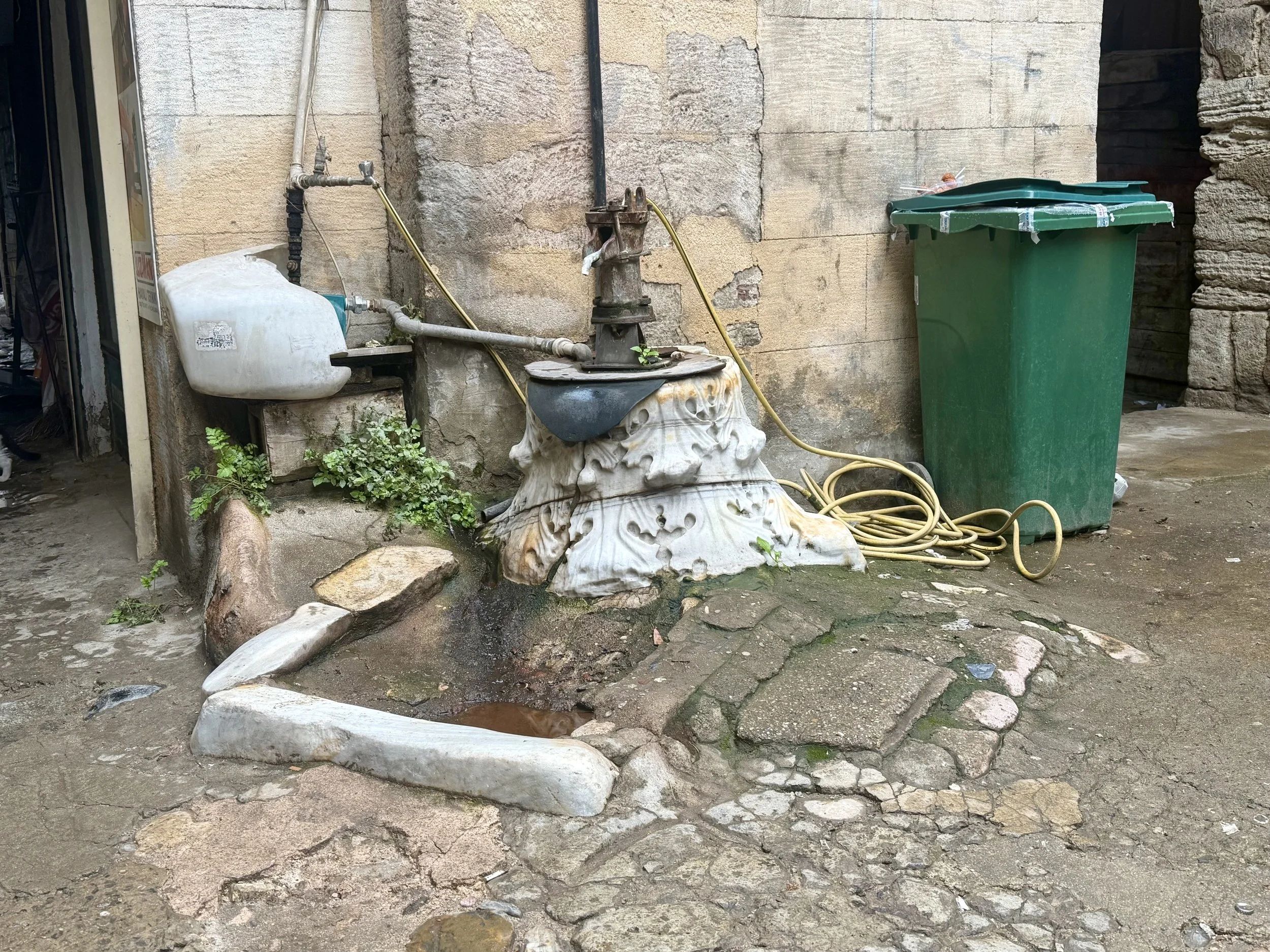
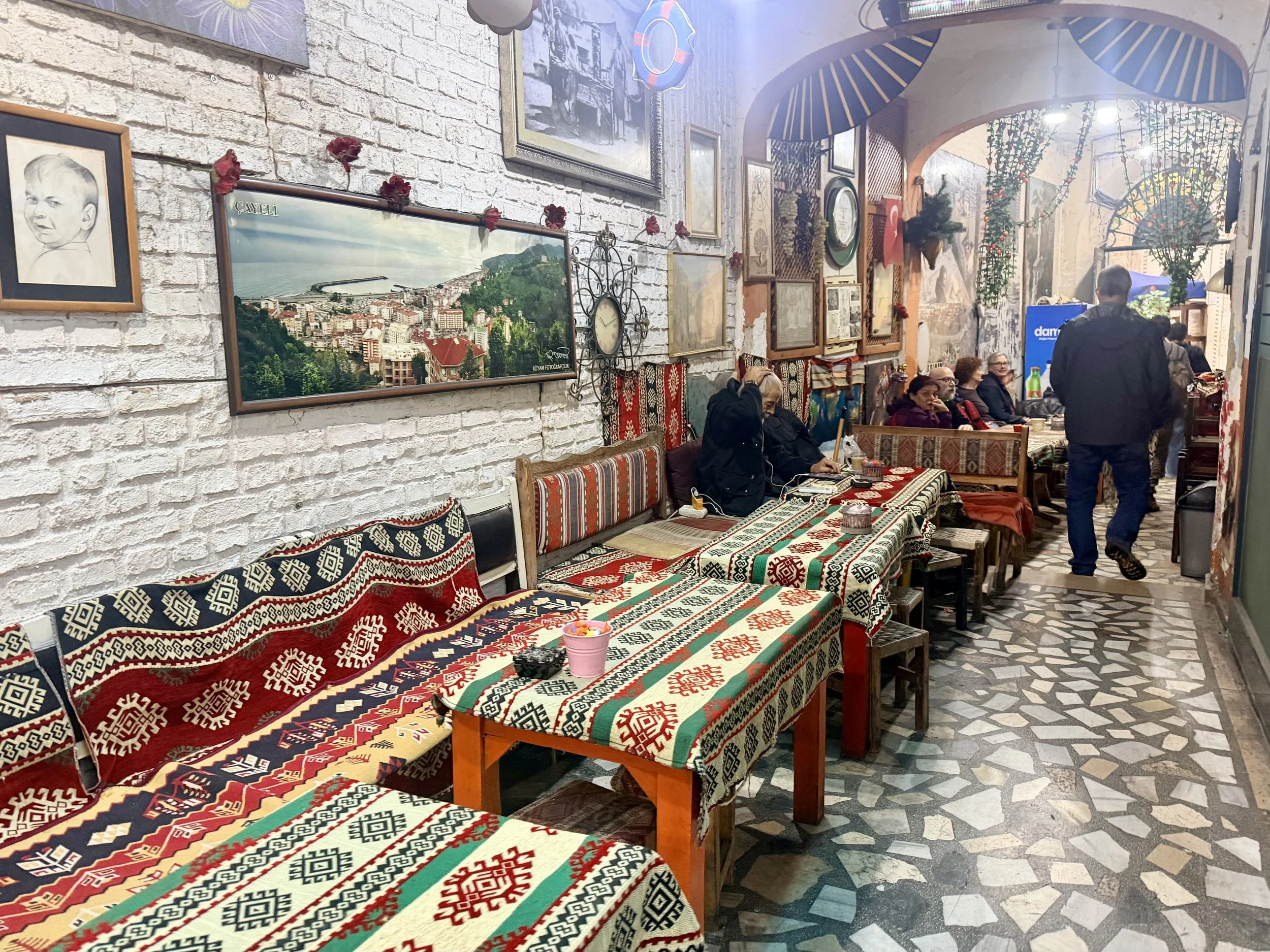
We stopped in a historic han (or caravanserai), a courtyard behind the market. Workshops and lodging for merchants surrounded a small courtyard. In one corner next to the tea maker’s station, we sat down to have çay (tea), and Gonca explained the polite way to drink it: add sugar cube if desired, stir quietly, sip quietly. She also demonstrated how tea servers carry glasses of hot tea on silver trays through the market. She ran and twirled, and didn’t spill a drop!
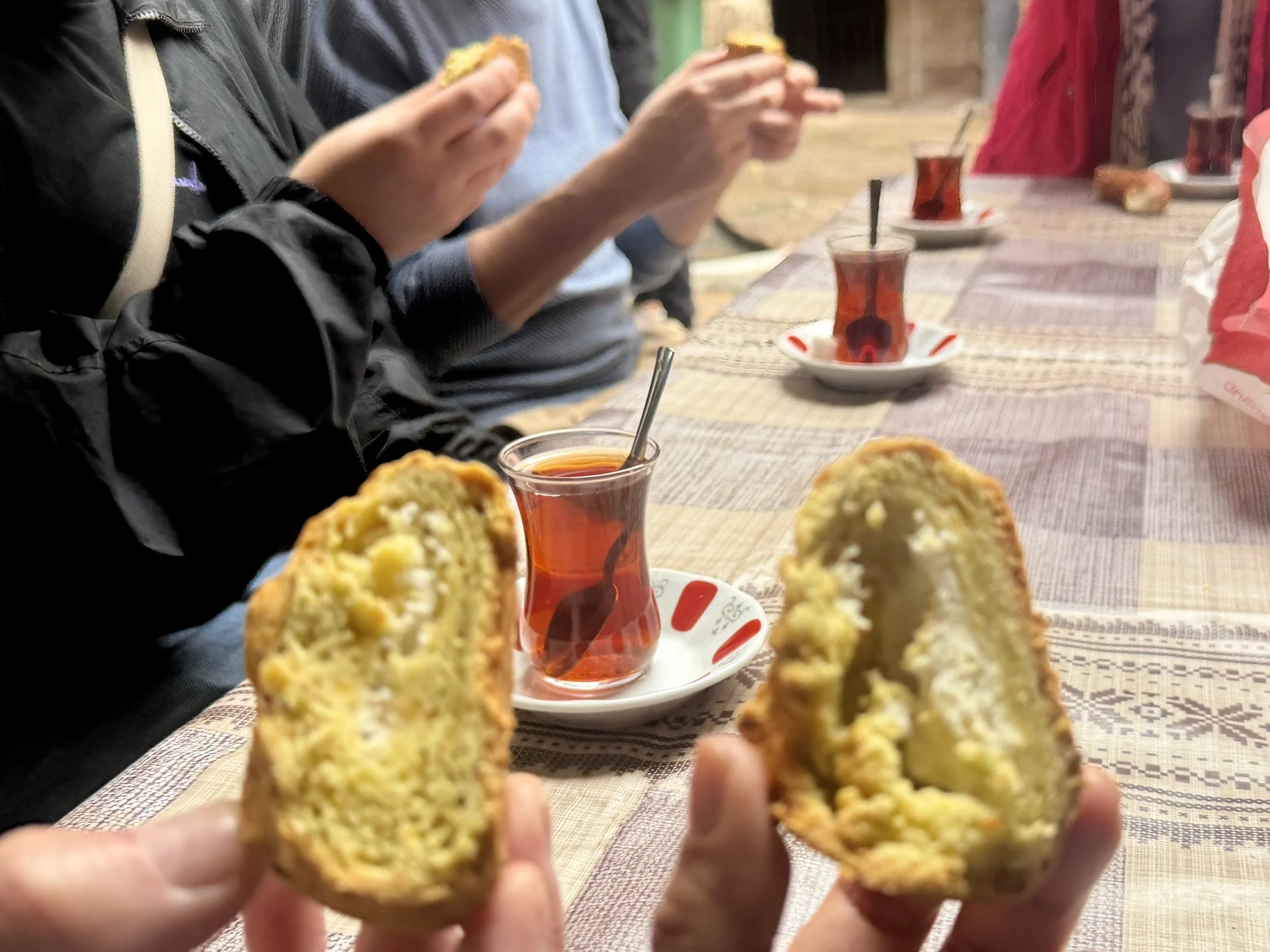
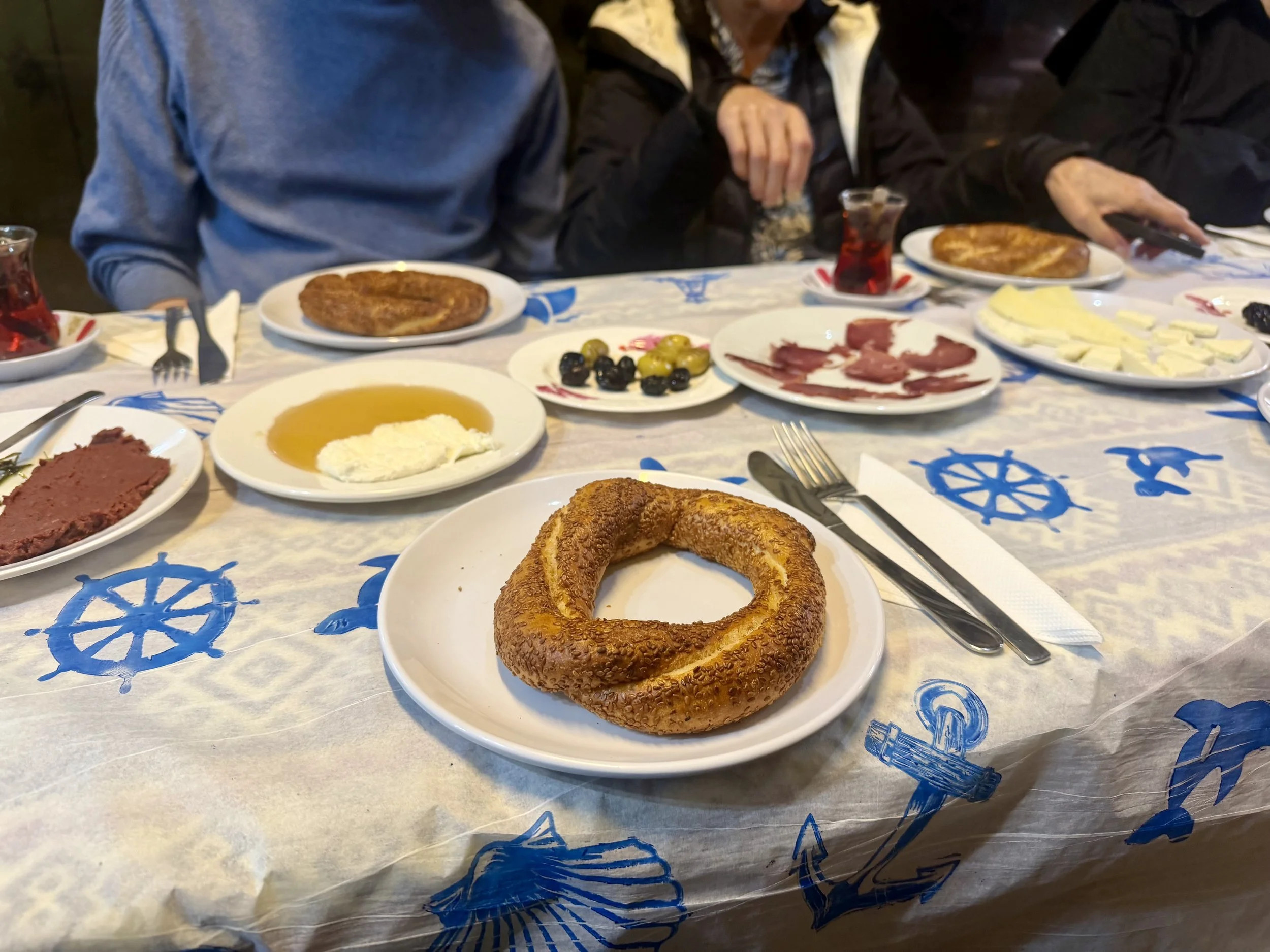
We sad down for a weekend breakfast - a popular way for Turkish friends to gather. Along with fresh simit (bread ring with sesame seeds), we tasted kuru sele (black olives dry-cured in baskets), kaymak (clotted cream made from water buffalo milk) and honey, acuka (red pepper and walnut spread), pickled wild thyme in olive oil, and pastırma (beef pastrami). It was all delicious, but the kaymak was my favorite.
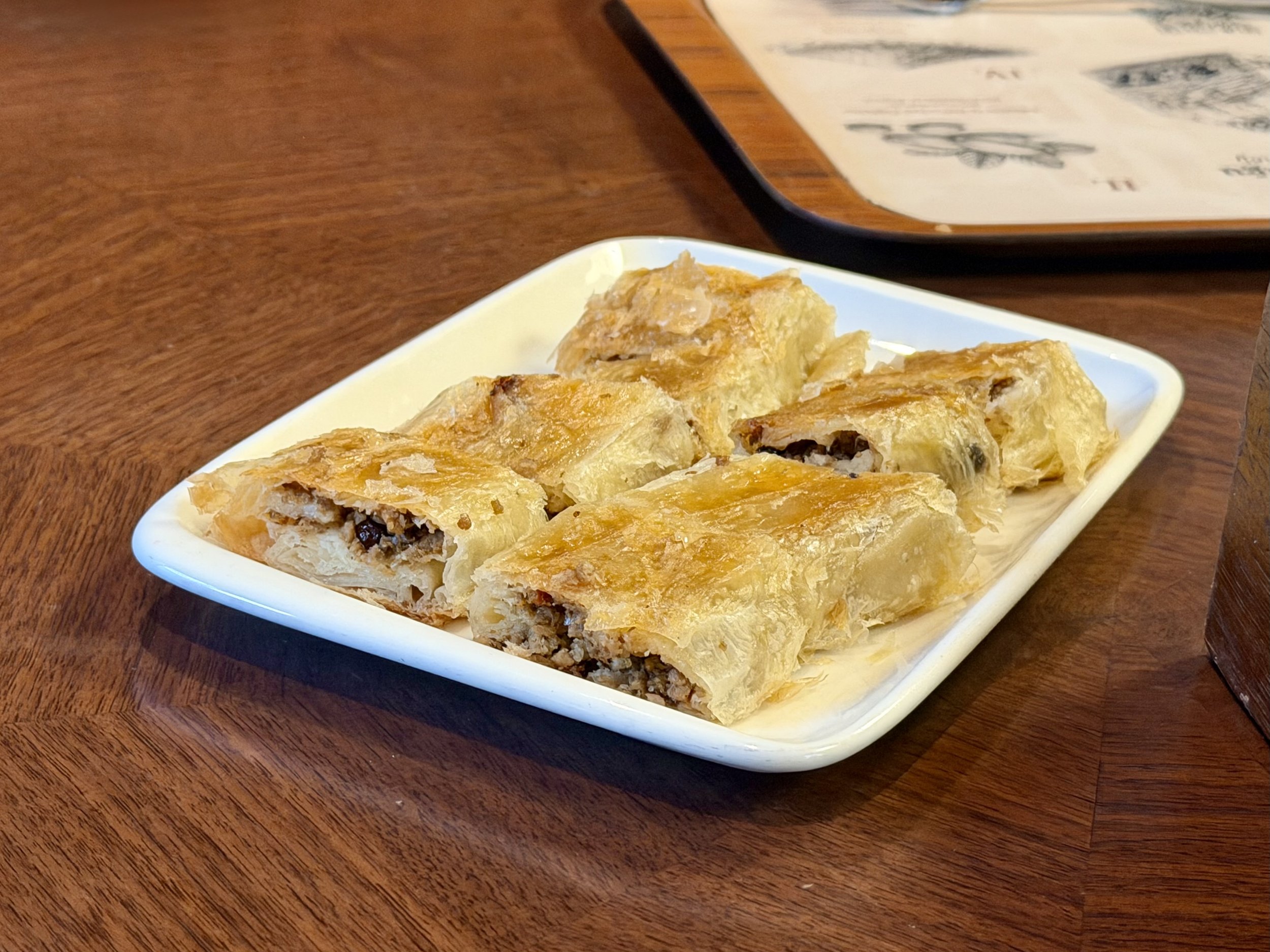
Now for some street food! We watched tantuni being prepared. Julienned beef was sauteed with sunflower oil and spices (red pepper, paprika) on a griddle. The cook put a piece of thin flatbread on top to soak up the juices. Then he topped the flatbread with some of the seasoned beef, added cooked tomatoes and onions, and rolled it all up into a tube. It was served with lemon wedges and small pickled peppers. Gonca showed us how to push a pepper into the tantuni before each bite. YUM!!
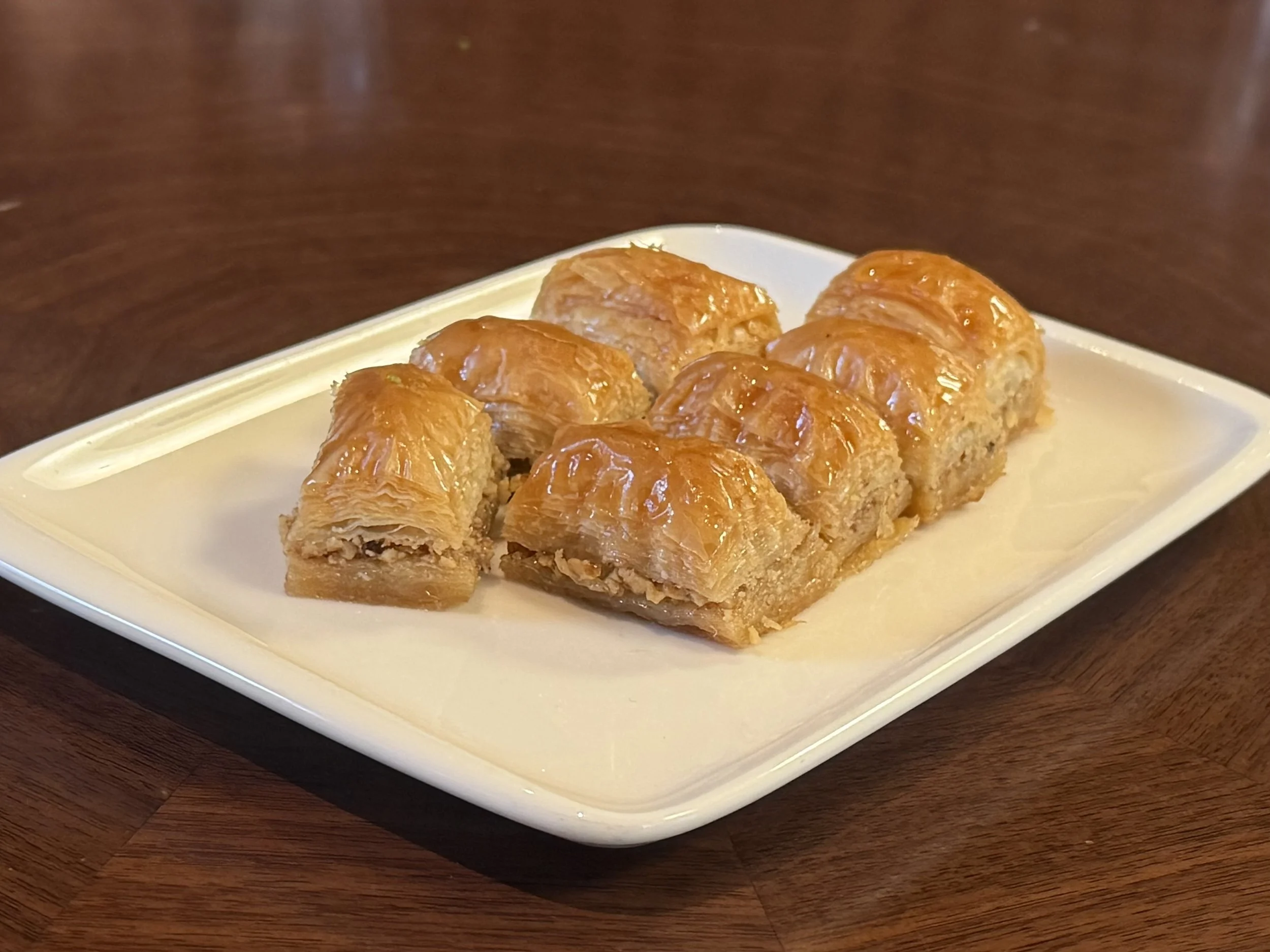
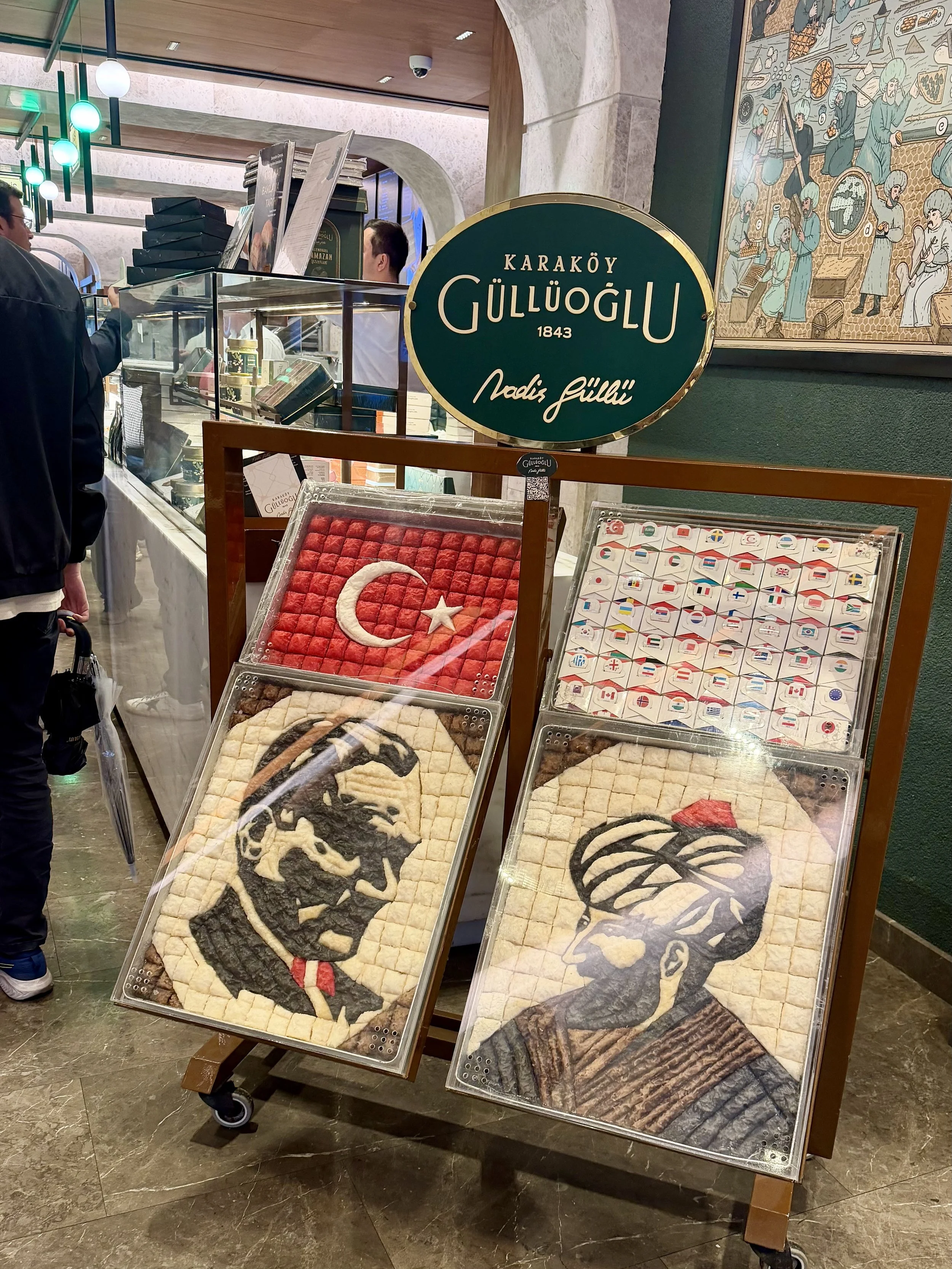
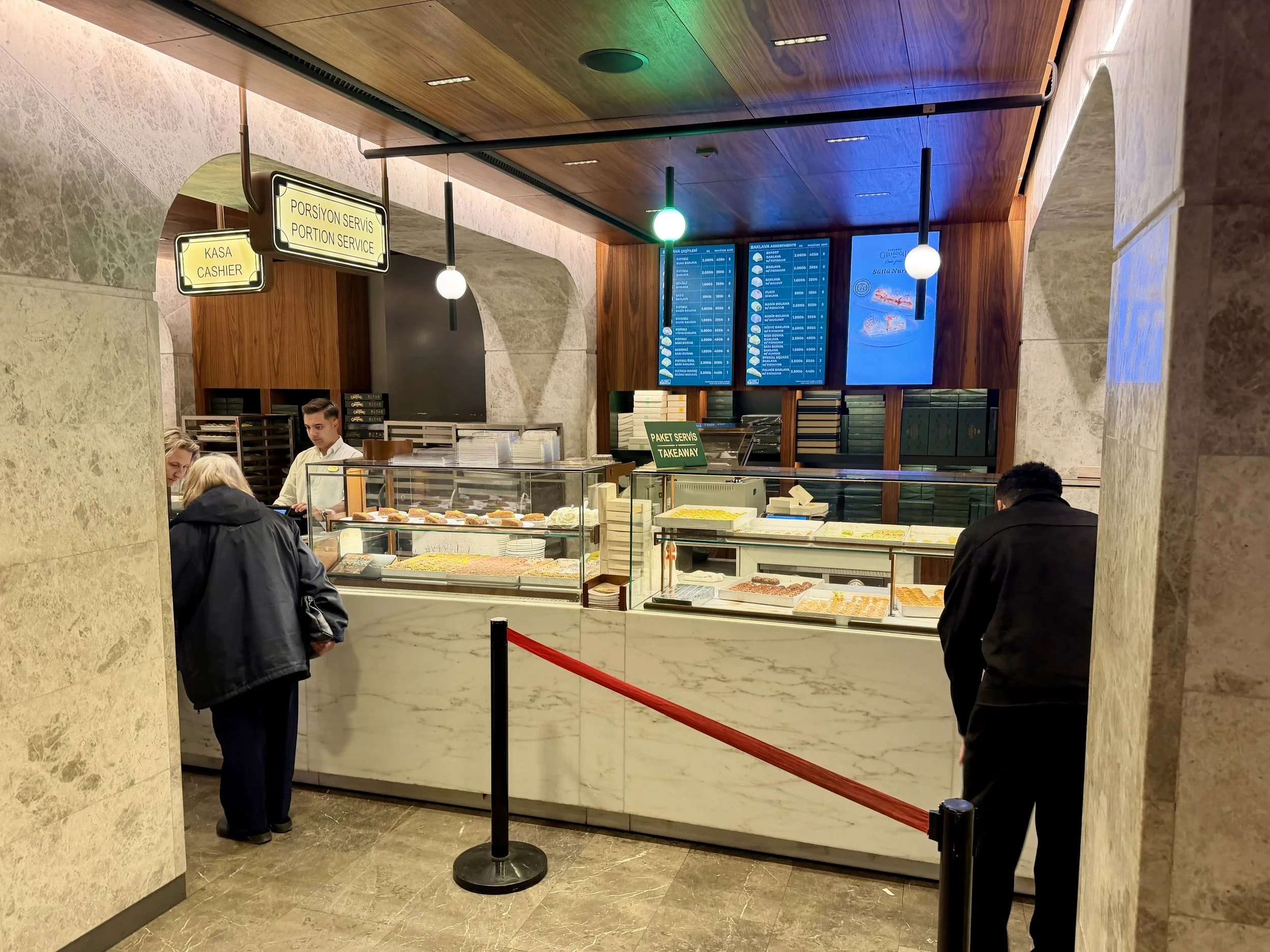
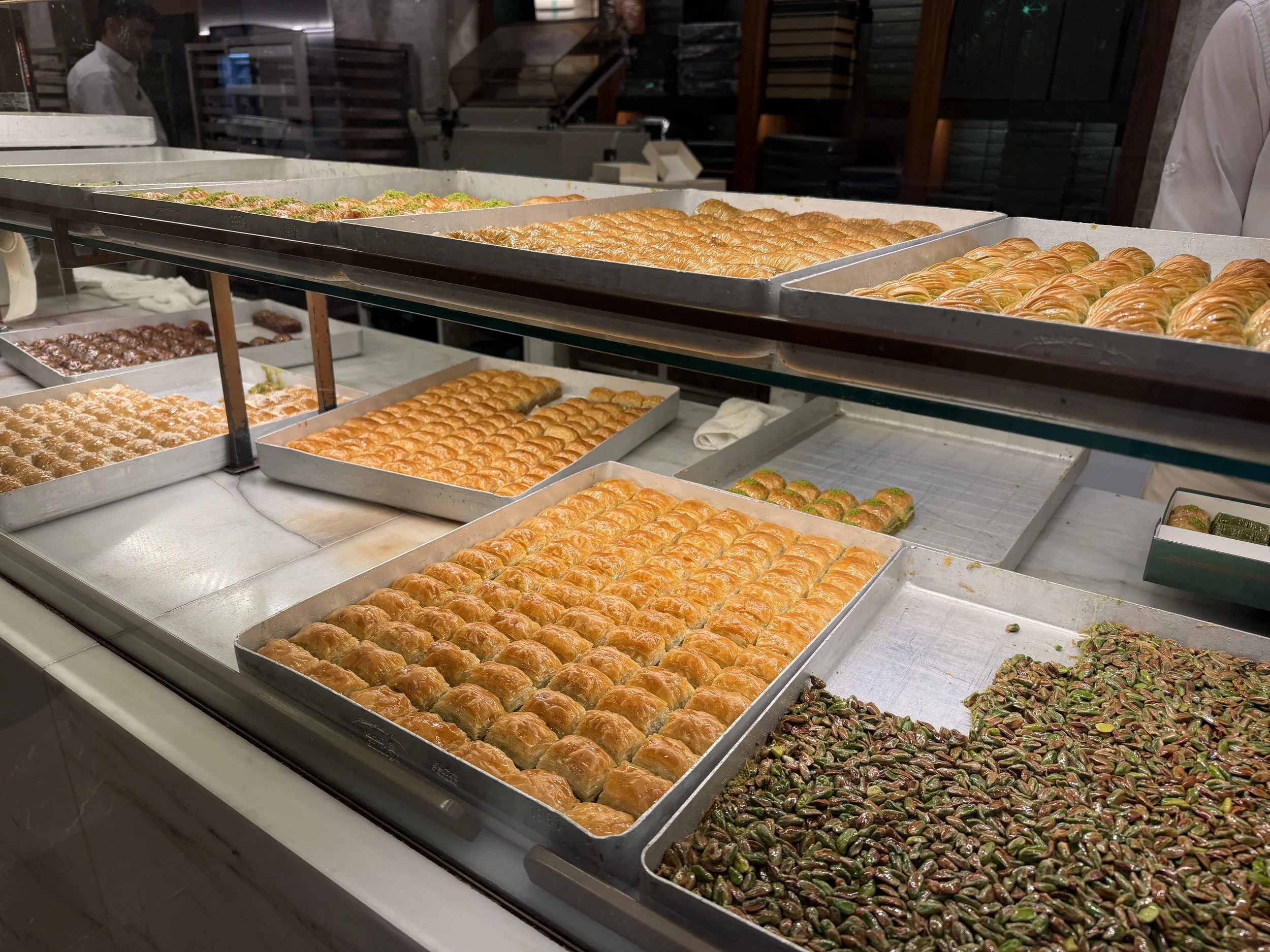
Our last stop on the European side was Karaköy Güllüoğlü, a famous baklava shop. The Güllü family has been making baklava for generations, and opened their first pastry shop in Istanbul in 1840s. Gonca explained that a good Turkish baklava is made with sugar syrup, not honey. The top layers of phyllo are crispy, the chopped nuts are fresh, and the flavor and aroma are buttery. We picked up the baklava with our fingers, and it held together well and did not drip. Following Gonca’s instructions, we turned the baklava upside down and took a bite. FANTASTIC!
I would have loved more baklava, but we still had another continent to discover. We boarded the modern “sea bus” ferry in Karaköy. Unfortunately, it was raining steadily, so there wasn’t much of a view. We crossed the Golden Horn and stopped at Eminönü. Then we crossed the Bosphorus and disembarked in Kadiköy.
Kadiköy
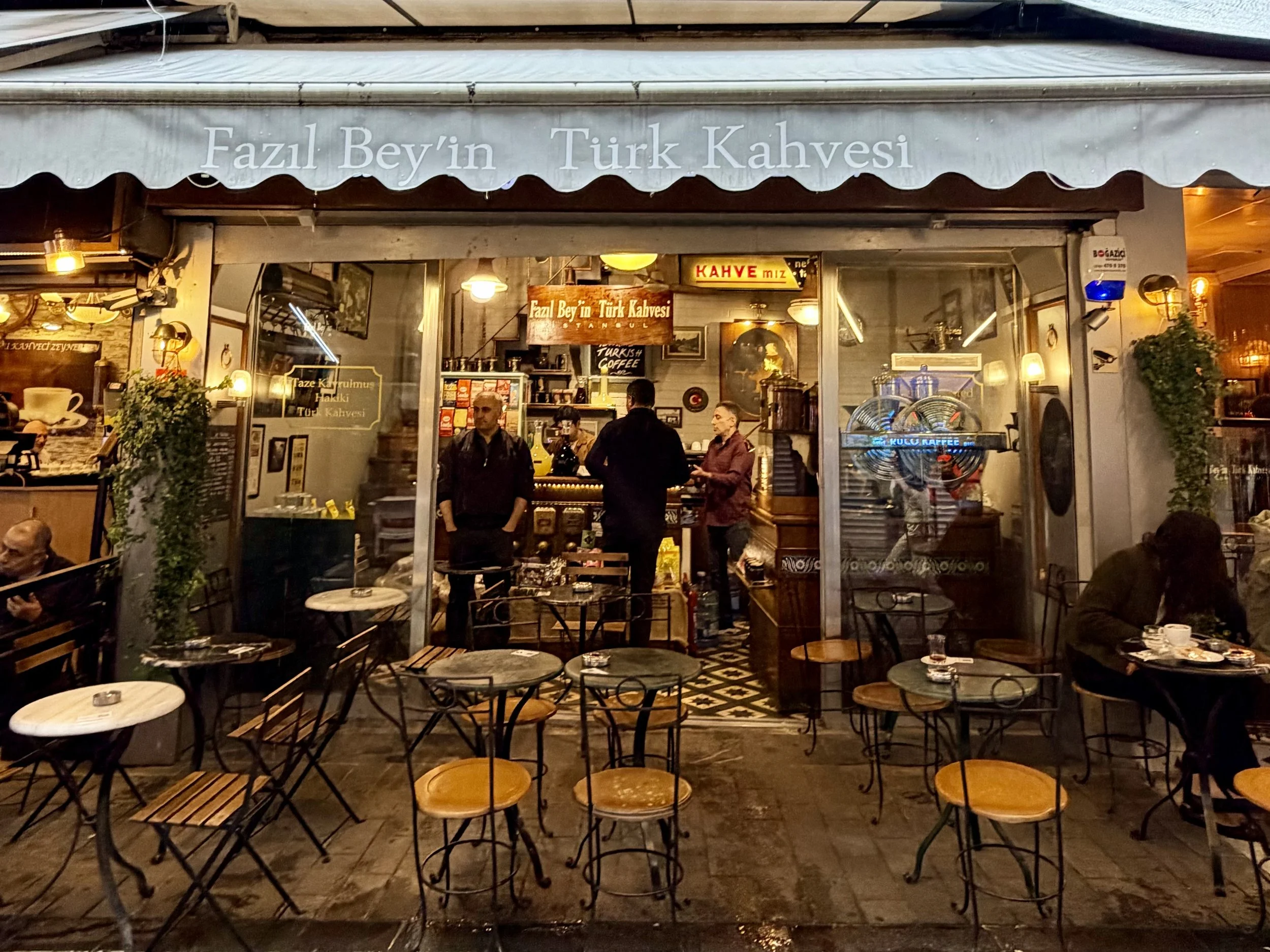
Our first stop on the Asian side of Istanbul was for some Turkish coffee. We sat down at a café and told the server our sugar preferences: plain, low, medium, or sweet. Turkish coffee is ground extra fine, almost like the consistency of flour. The coffee and sugar (if any) are added to cold water and slowly heated to near-boiling. The coffee is served with the foam, with no filtering. Ganca explained that Turkish coffee is meant to be a leisurely break in the day, not a rushed affair. The coffee must be sipped slowly, so that the sediment remains at the bottom of the cup. I managed only three sips before I tasted the gritty coffee grounds. Our coffee was served with a cube of Turkish delight, which was nice.
Energized with coffee, we wandered among the market stalls and tasted almost anything that looked interesting. We tried olives from different parts of Turkey (I liked the citrus-stuffed ones best) and dolma wrapped in grape leaves or squash blossoms. There were butcher cases filled with sheep heads, tongues, and feet. We didn’t taste any of those, but it was interesting to see that one could take home a whole sheep’s head, already roasted.
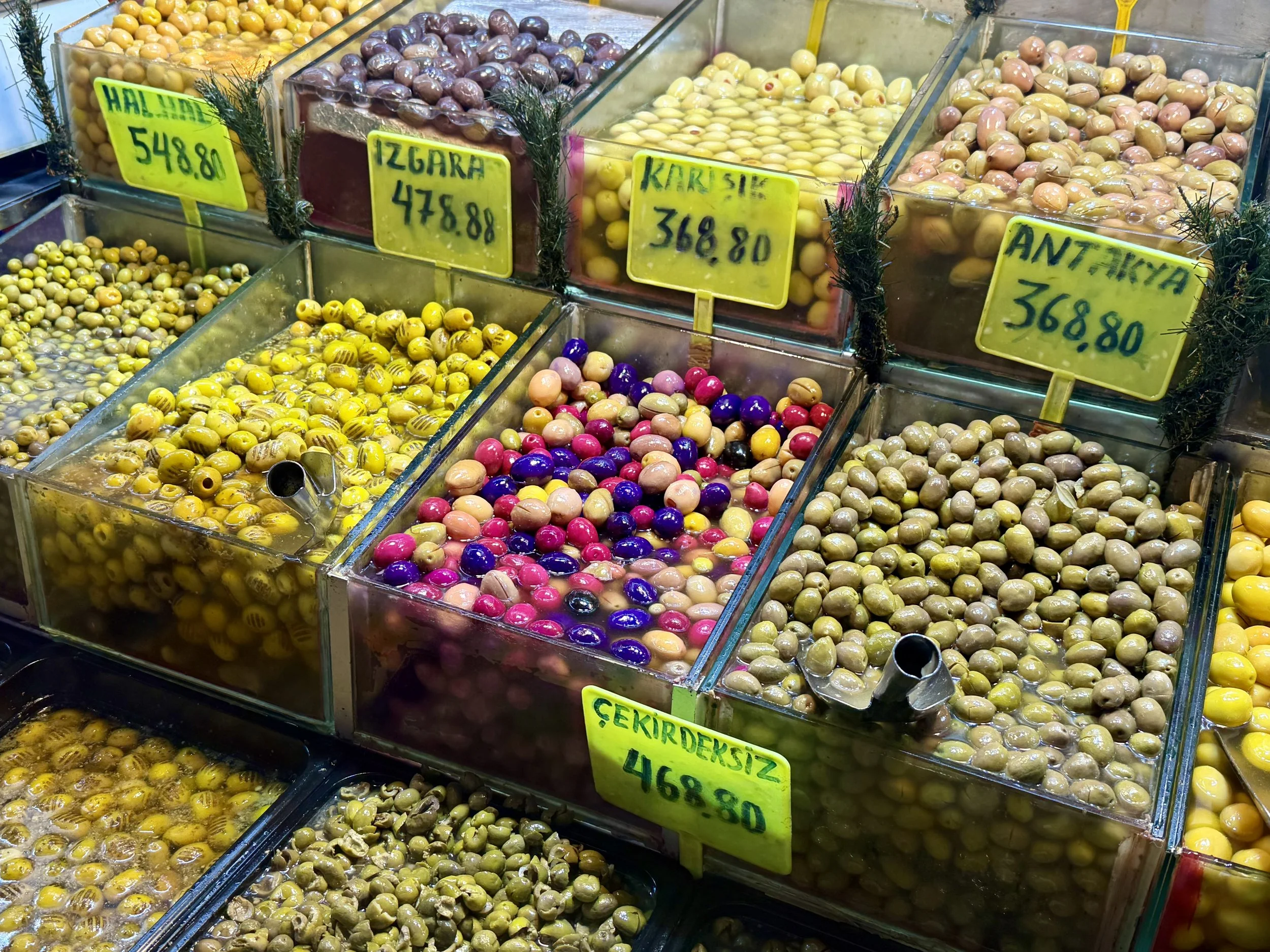
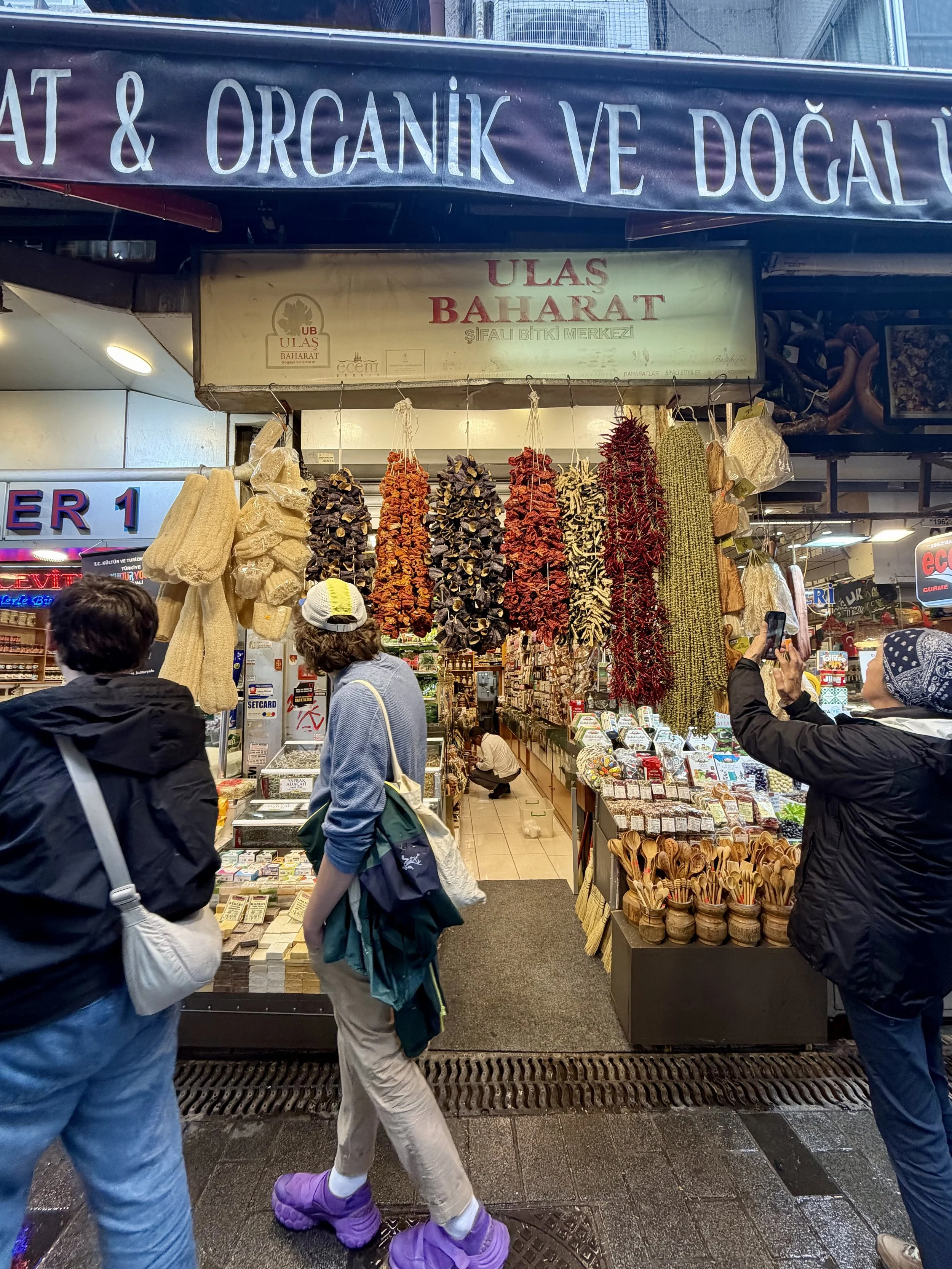
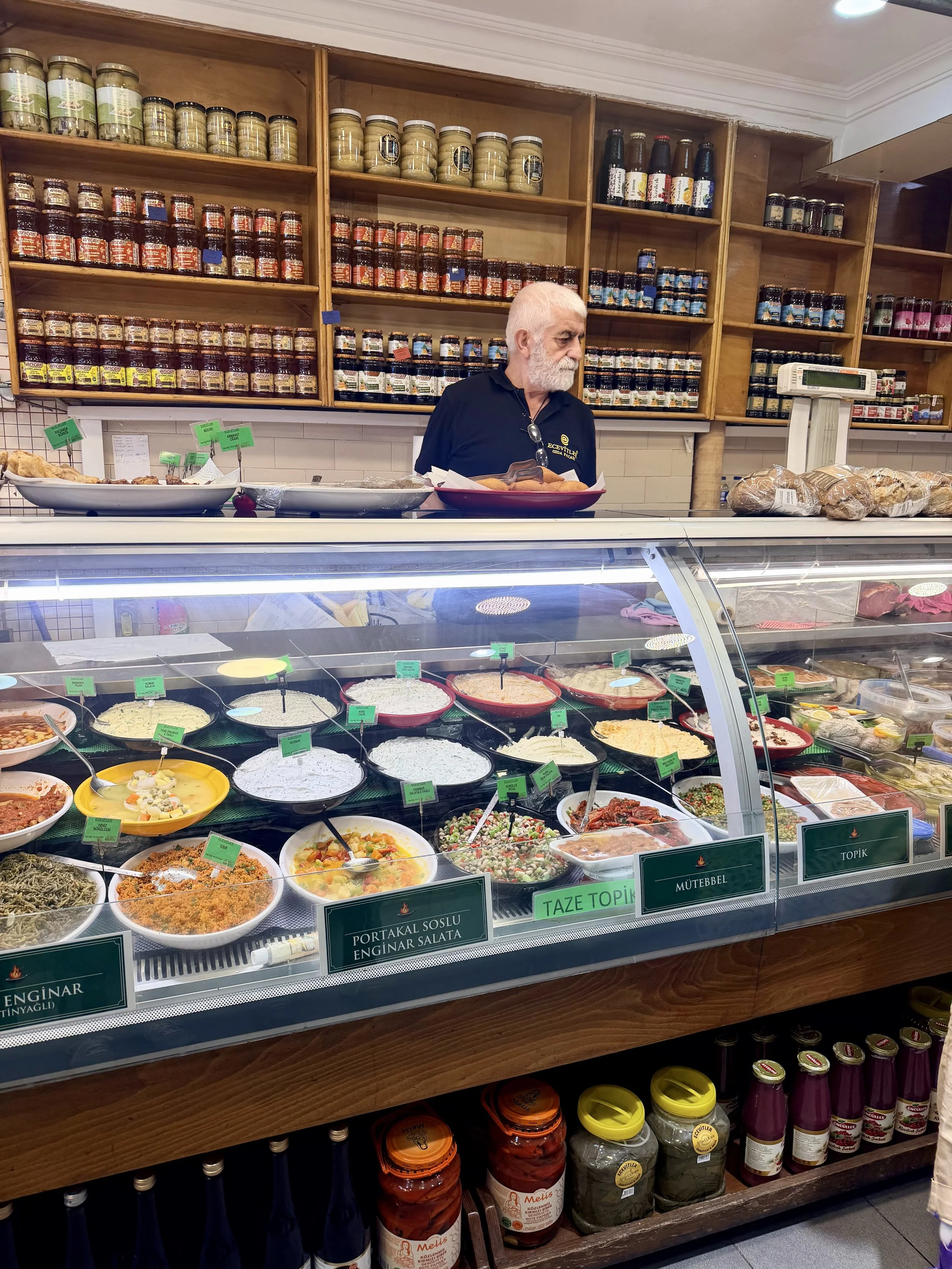

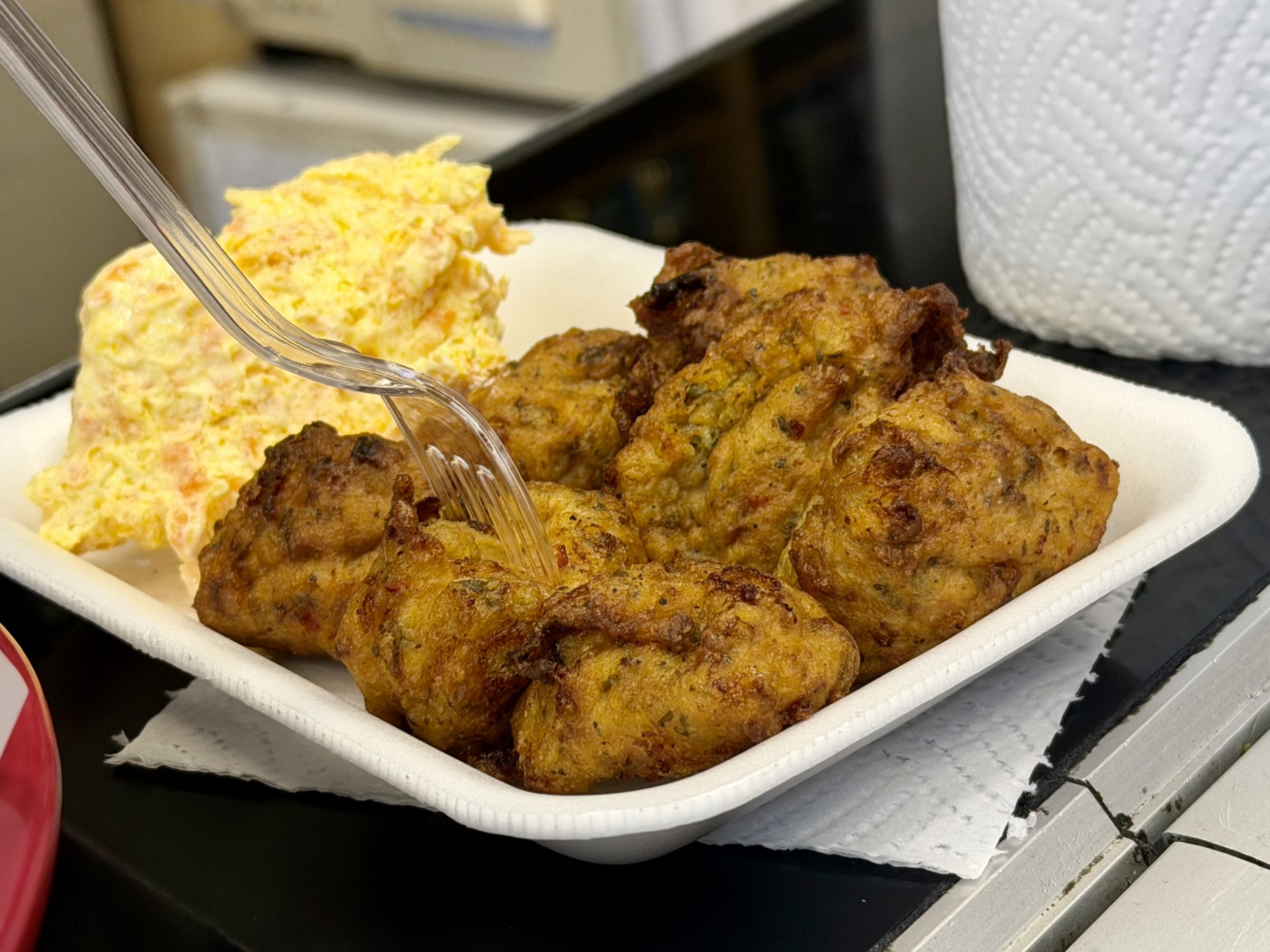
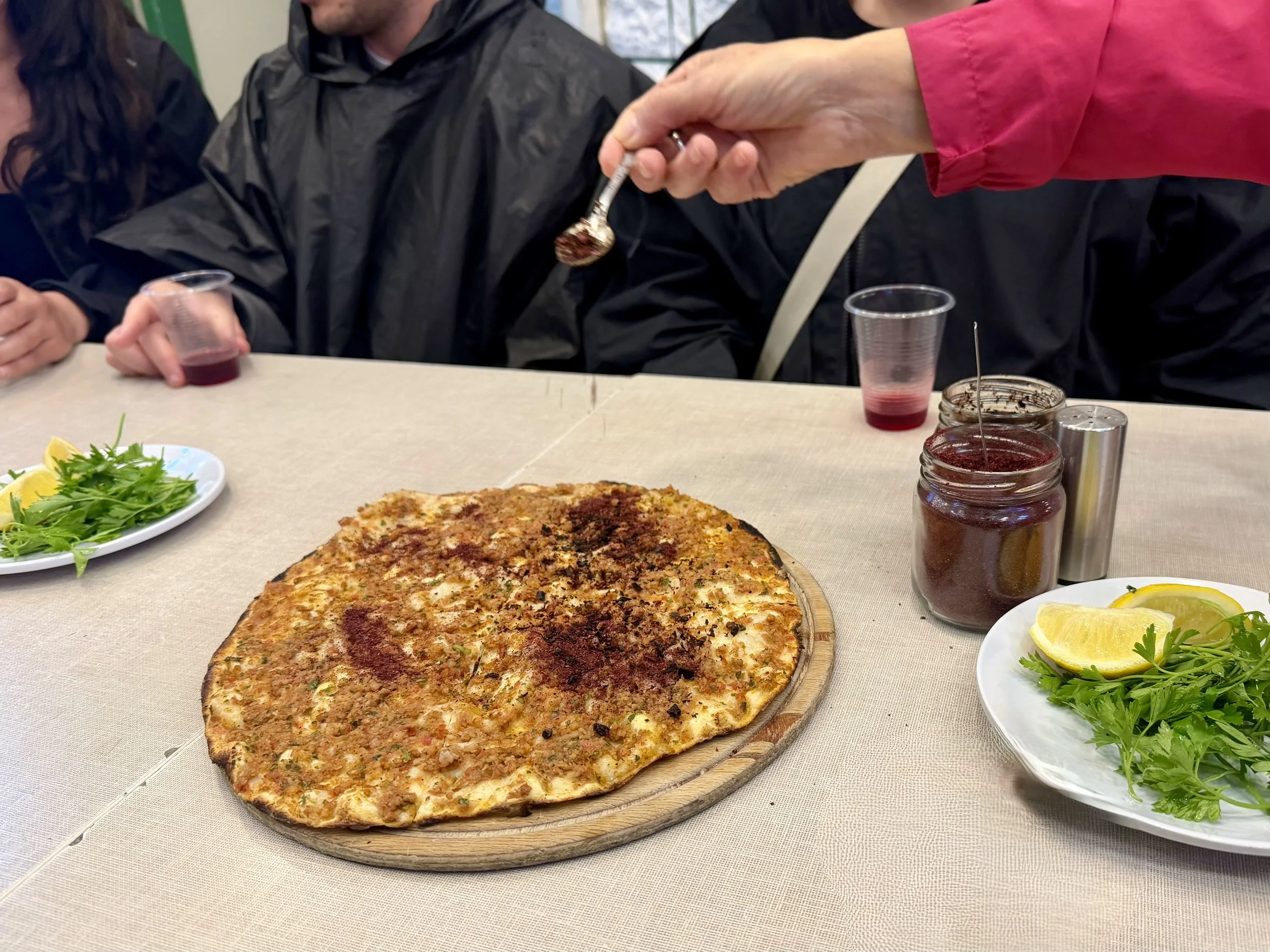
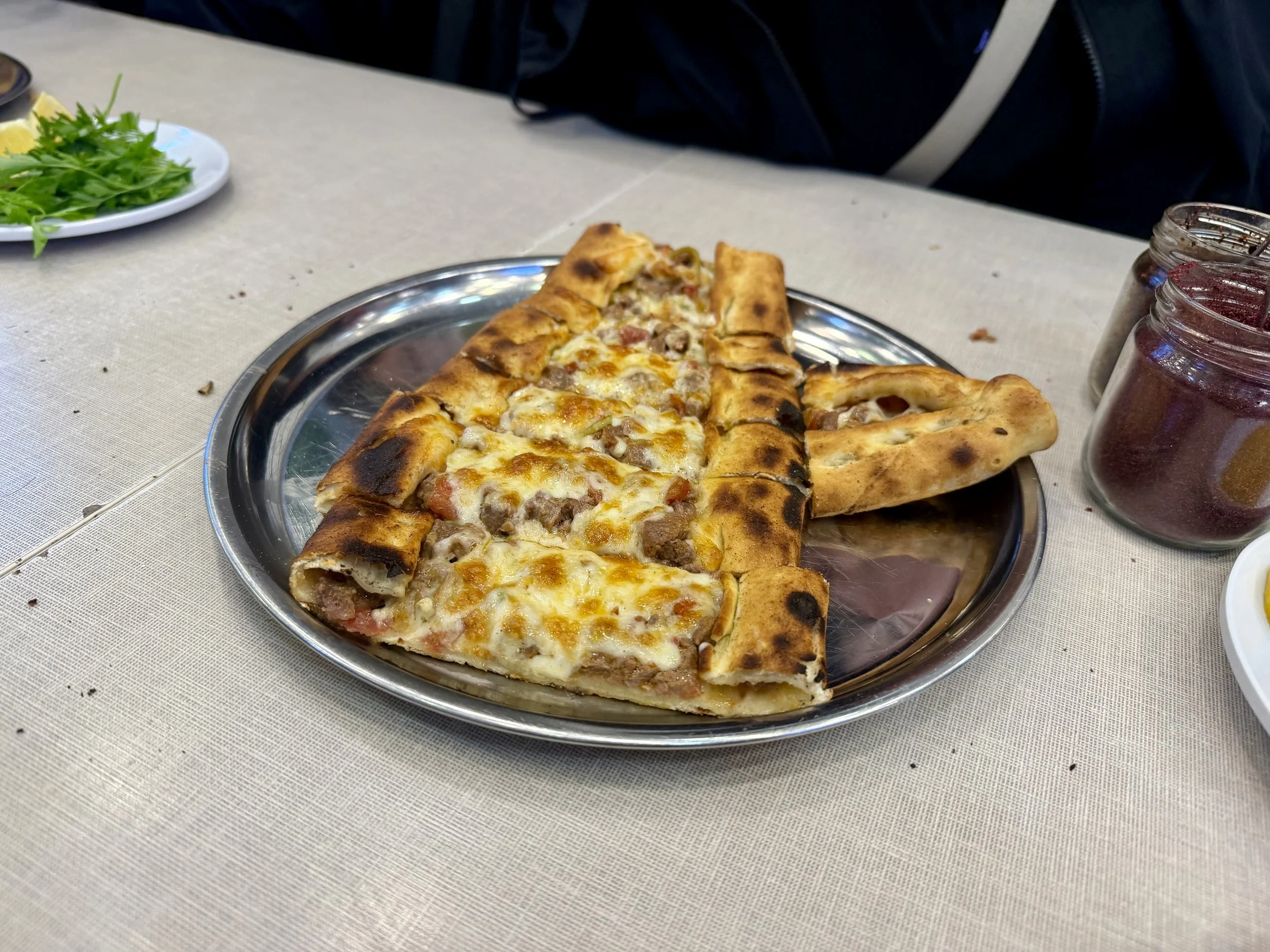
We sat down at a small bakery to taste their specialties cooked in a wood-fired oven. Gonca showed us how to season the lamacun (lah-mah-djoon) with pepper flakes and sumac, add fresh lemon juice and parsley, and roll it up. The pide was similar to a thin-crust pizza, shaped like a boat. Steve and I were already familiar with lamacun and pide, but we thoroughly enjoyed eating them again. Delicious!
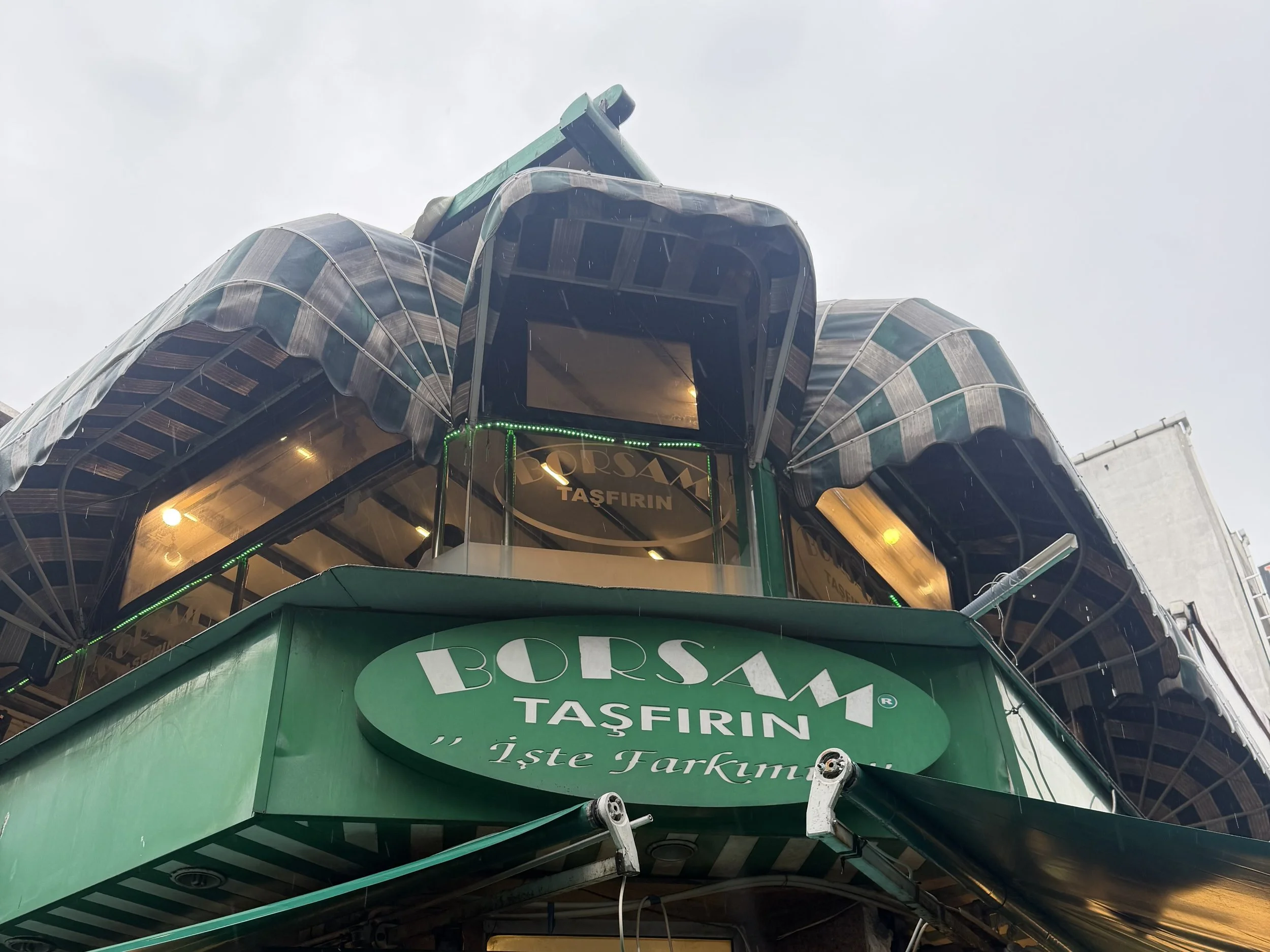
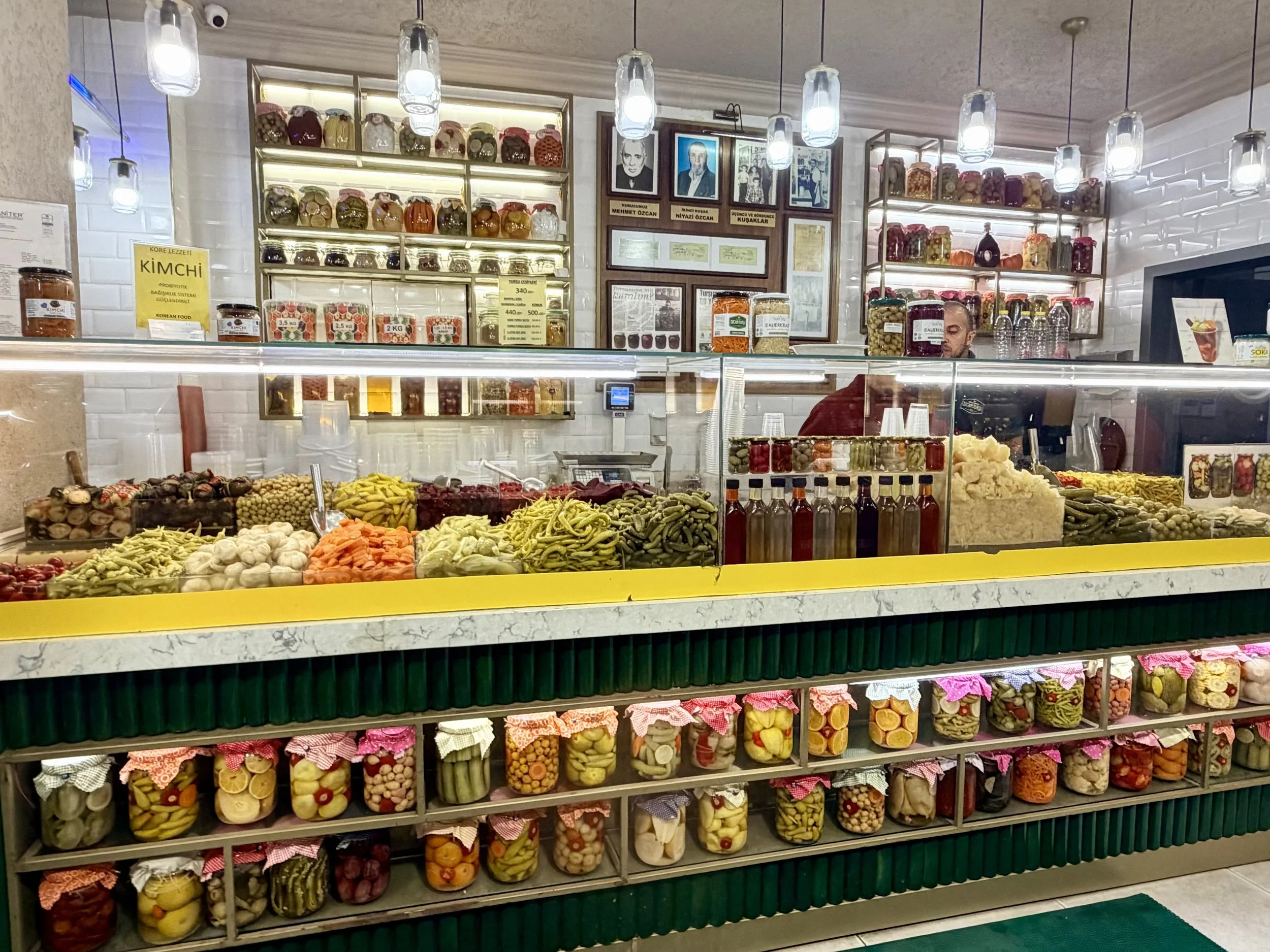
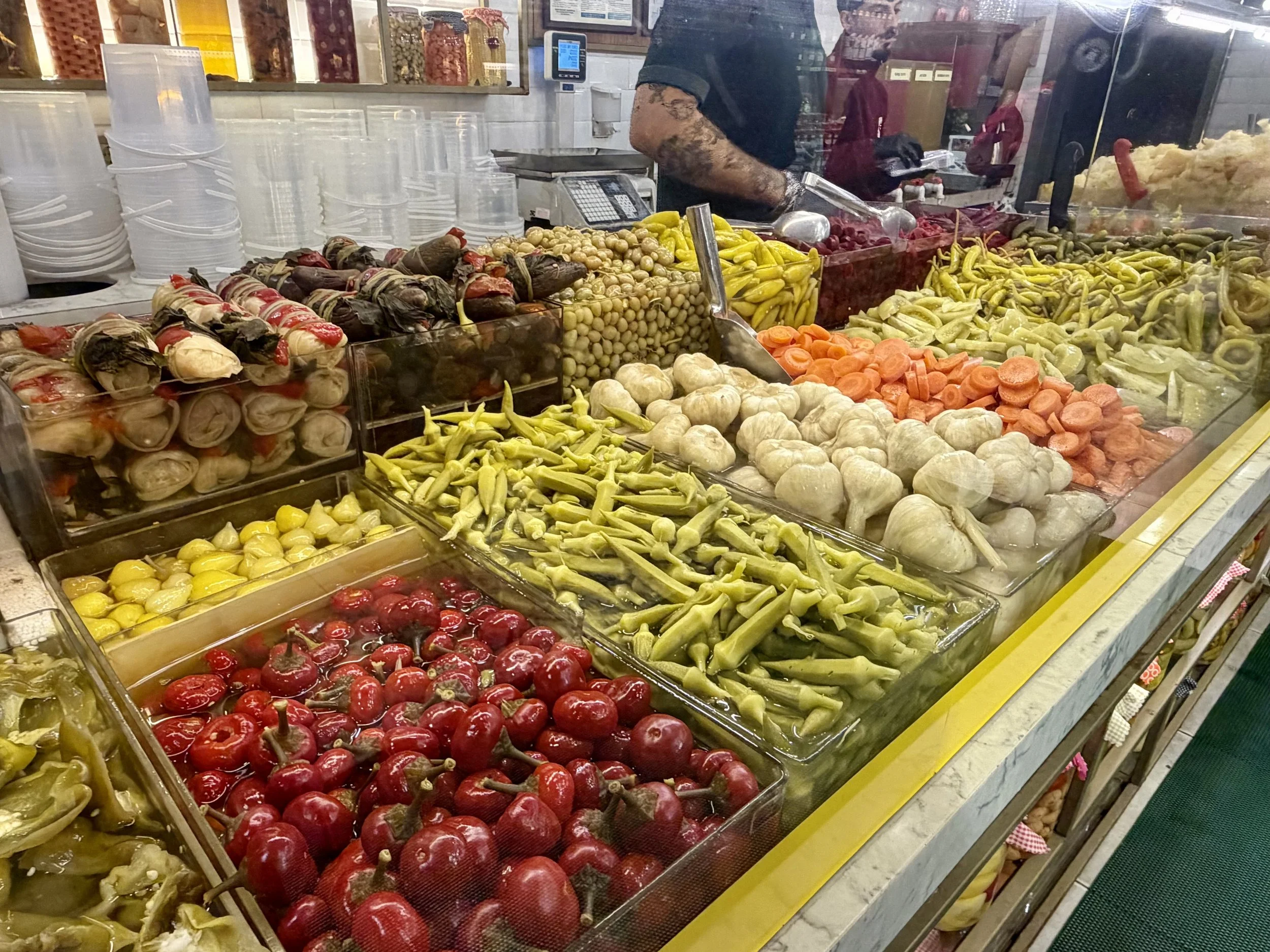
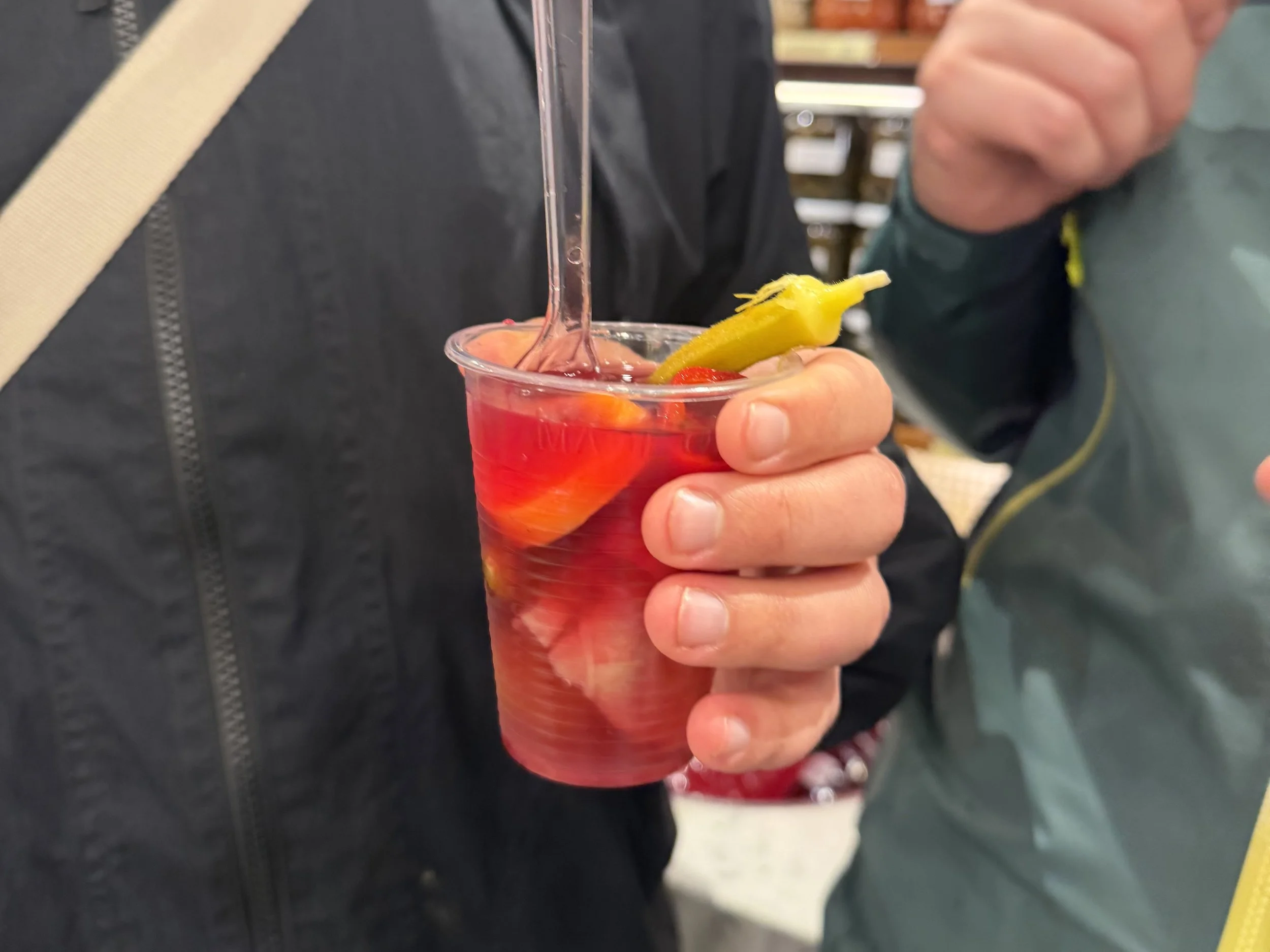
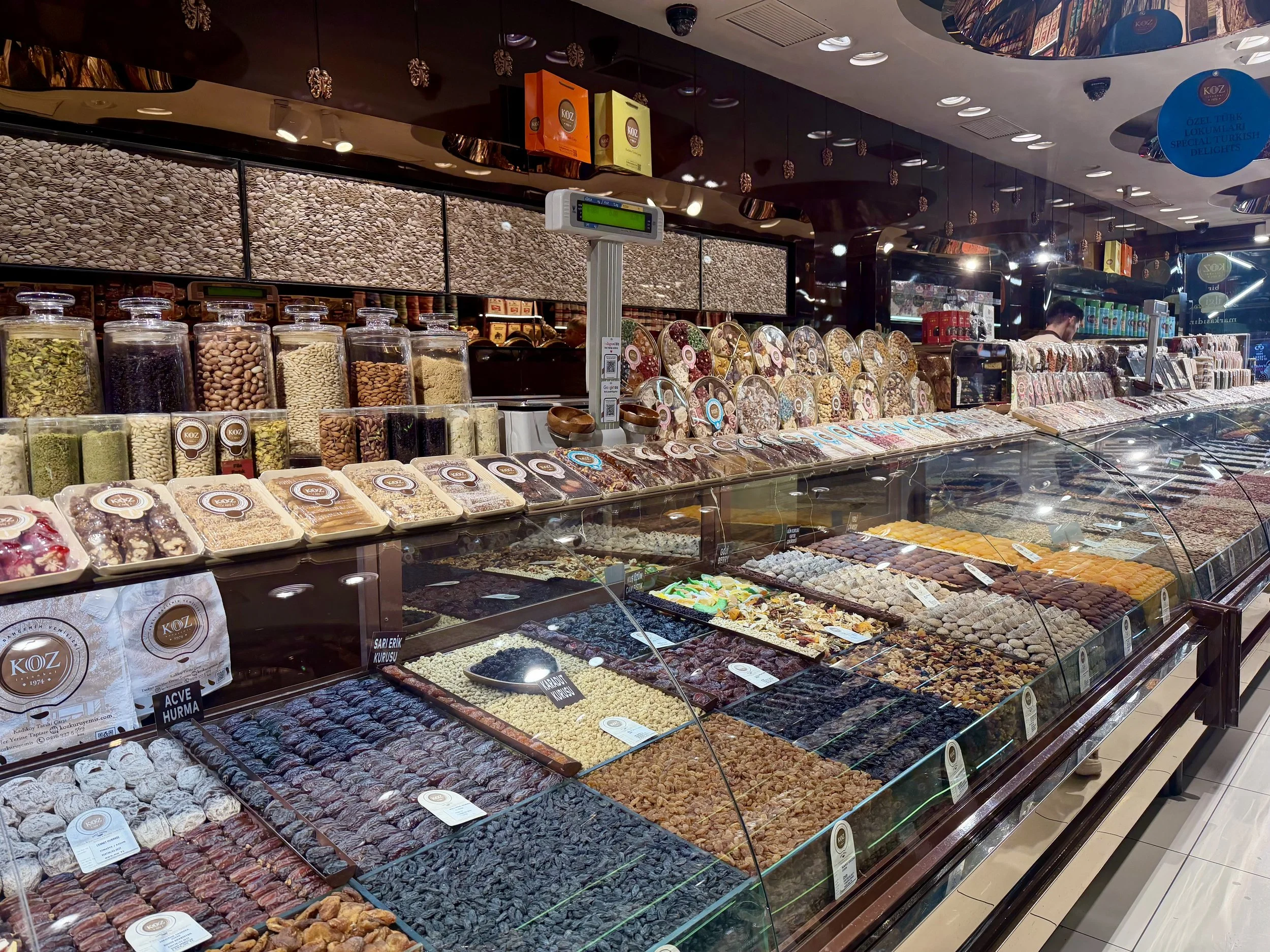
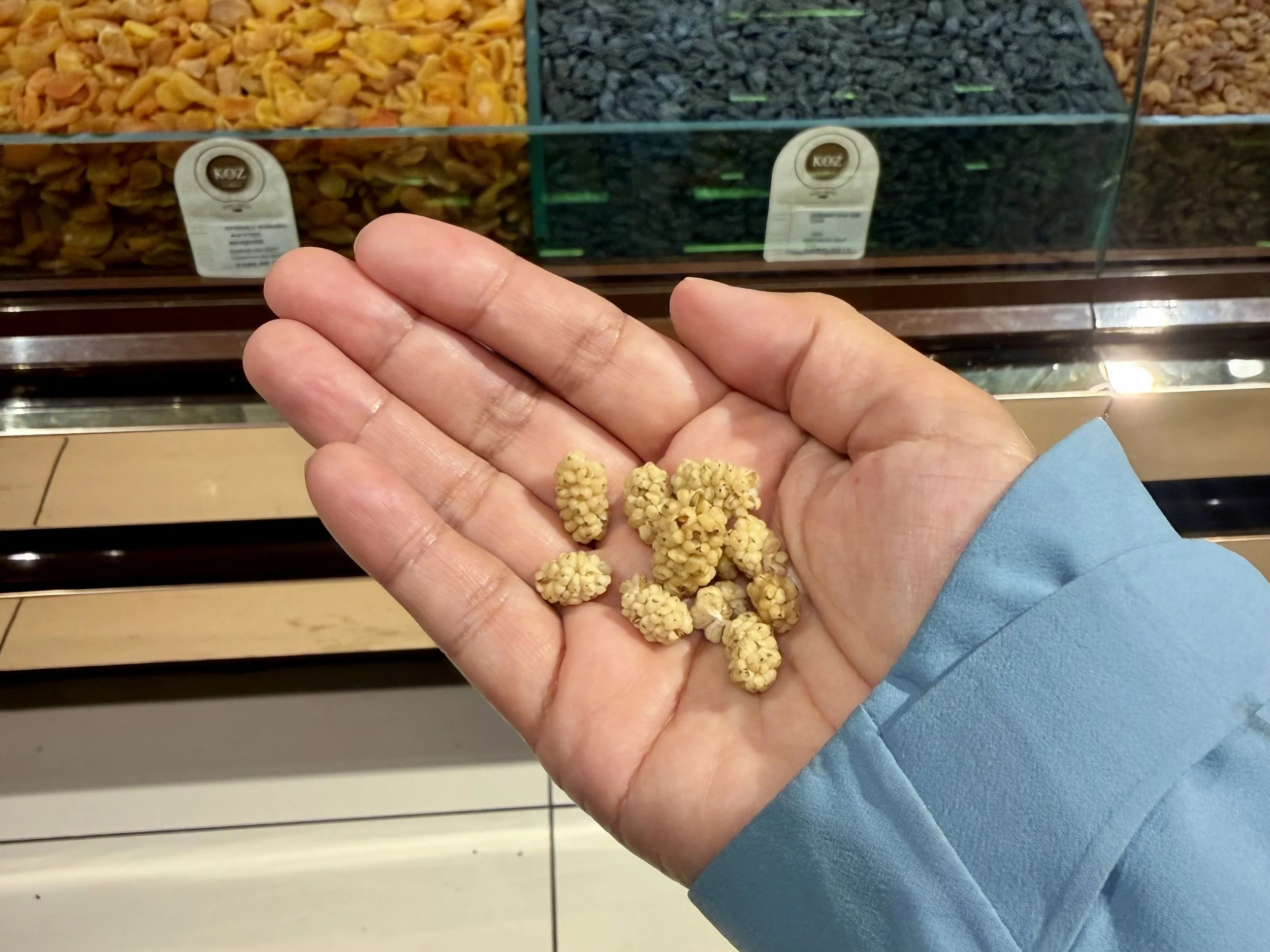
We did more wandering and tasting. One shop specialized in pickled vegetables, and you could buy a cupful to eat while walking through the market. Another shop had the best nuts and dried fruits I had ever tasted! The dried white mulberries were my favorite, along with the dried apricots - they had a subtle sweetness that was almost like caramel. I would happily have spent another hour tasting those nuts and fruits!
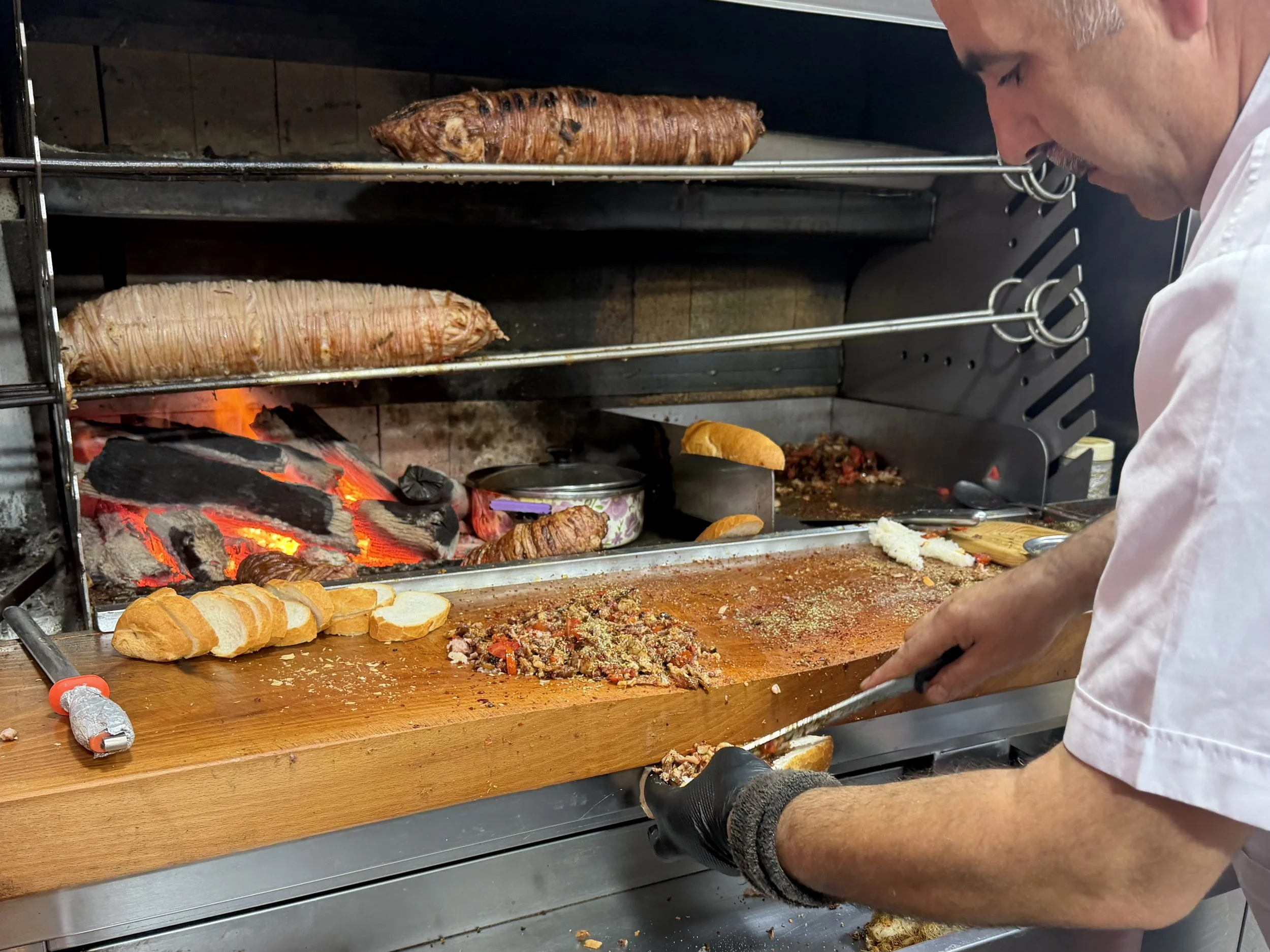
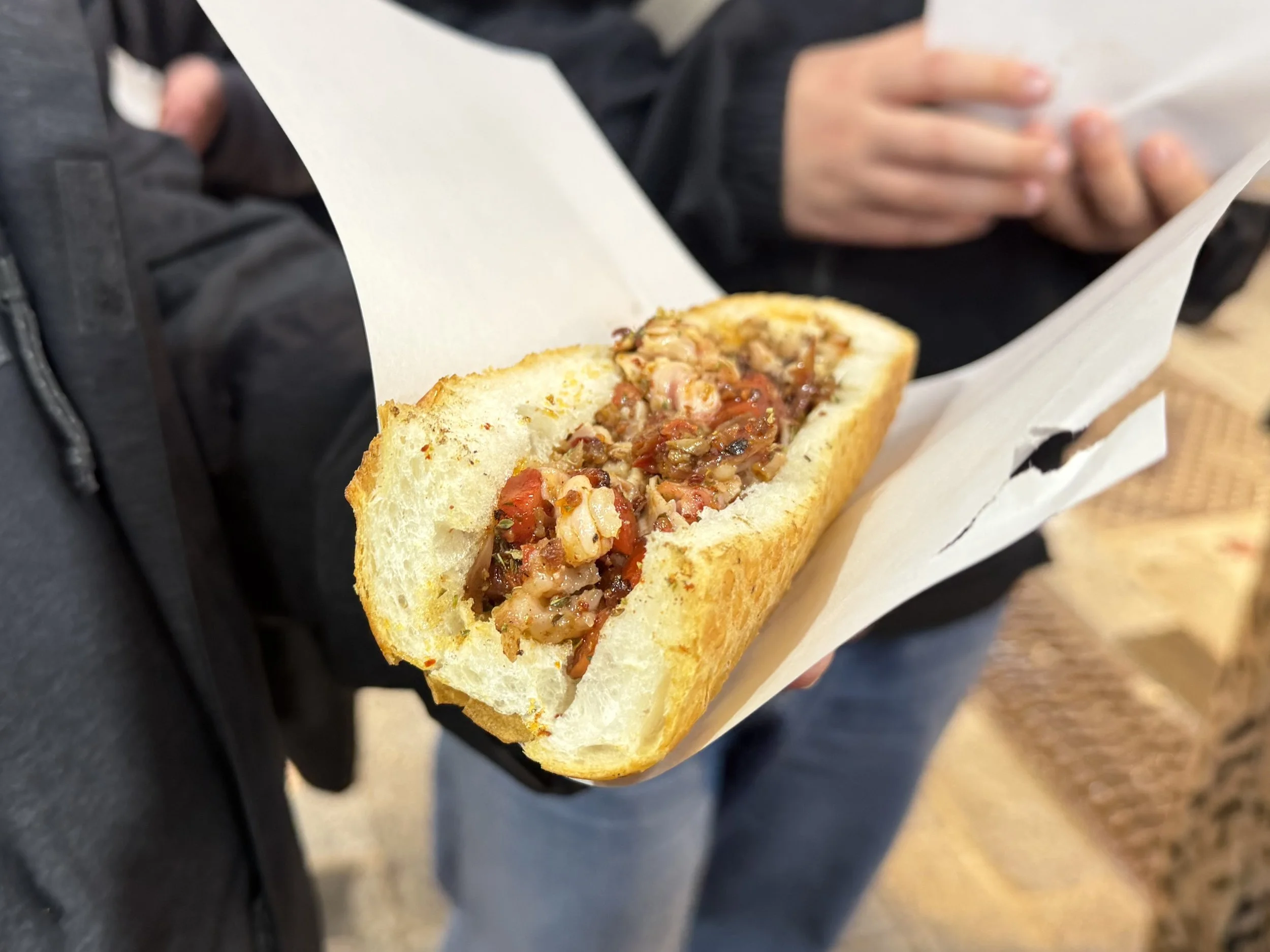
Gonca said that every food tour must have street food for “brave” tasters, so she had us try kokoreç, which was a sandwich made with lamb offal wrapped in intestines and grilled on a spit. Steve had already tried (and liked) kokoreç, but I wasn’t a fan, so he happily ate my share.
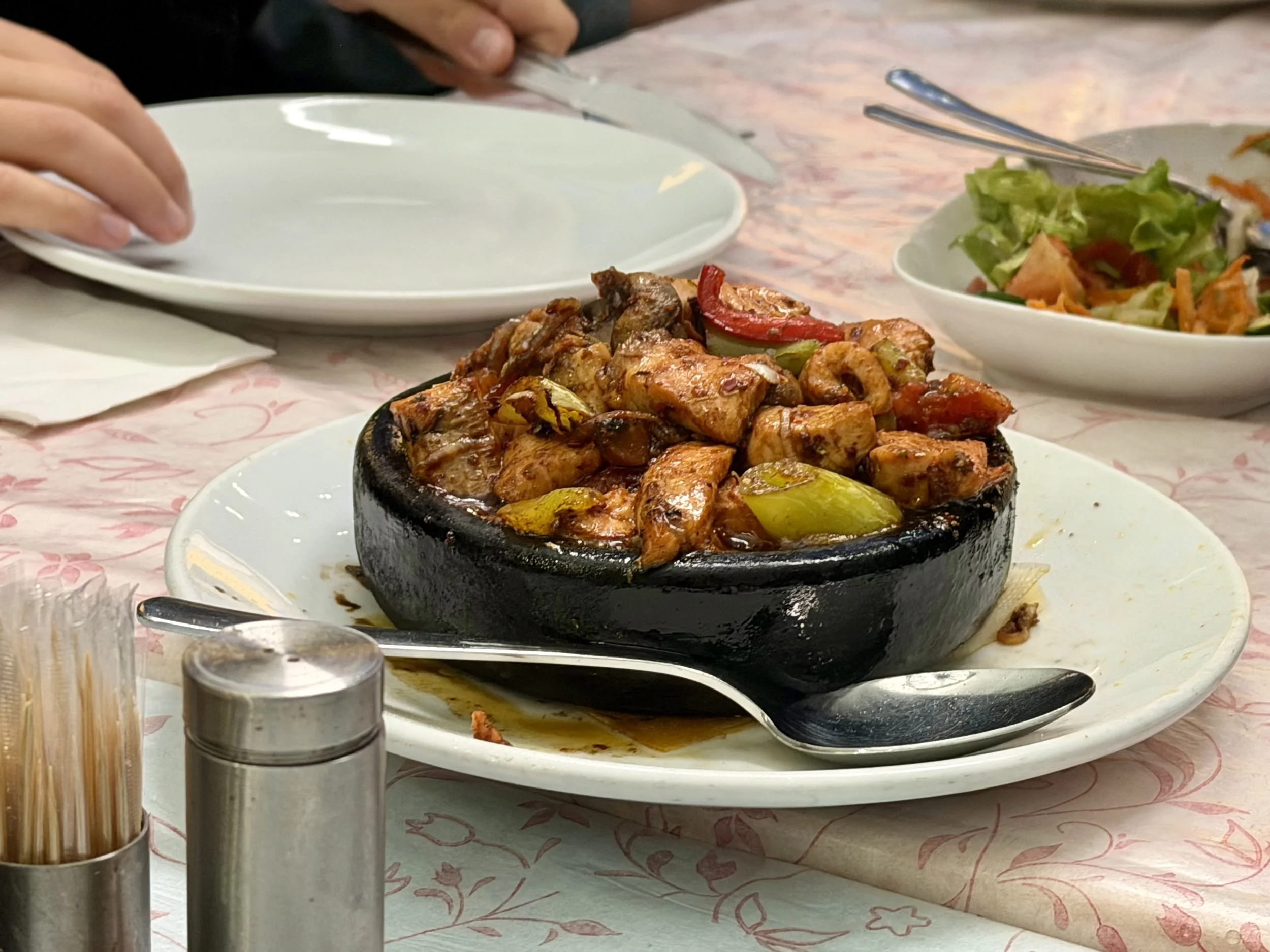
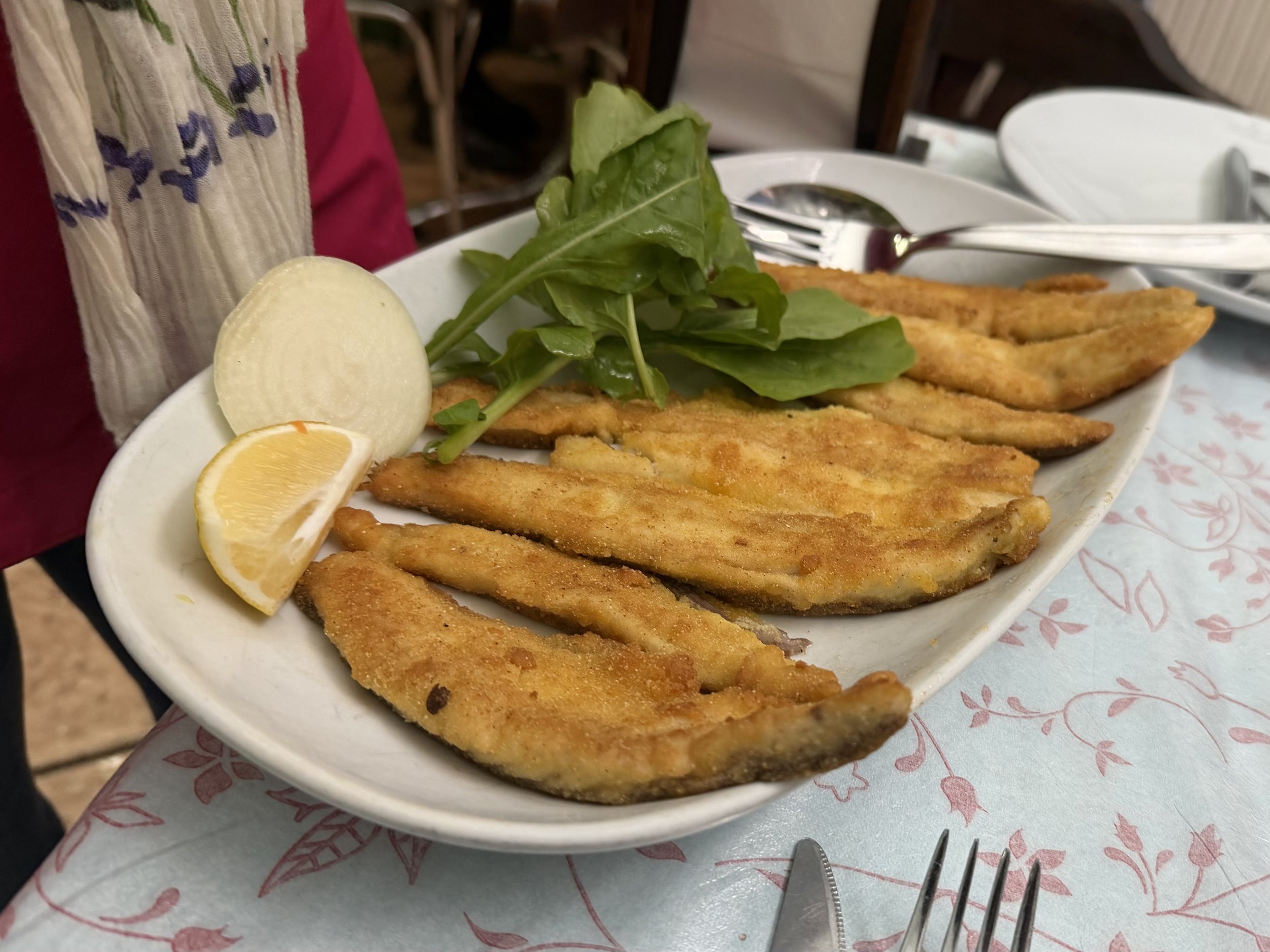
Our last stop was Balıkçı Lokantası, a seafood restaurant. We sat down to try an example of contemporary Turkish cuisine: Black Sea salmon sautéed with vegetables and glazed with soy sauce and pomegranate molasses. Fantastic!
We were well over our allotted time, and Gonca still had a two-hour commute back home. So we said our goodbyes at the Kadiköy port, and Steve and I took the ferry back to Karaköy.
I learned so much about Istanbul, past and present. Gonca was a truly gifted guide and storyteller who loved her job and really connected with her clients. My only regret is that we didn’t do this tour at the start of our trip! I LOVED it, and can’t wait to book another tour with Culinary Backstreets.