Our guide Togay wanted to show us a monastery that was less crowded and commercialized than Göreme, so we could get a better feel for the daily life of the monks of Cappadocia.
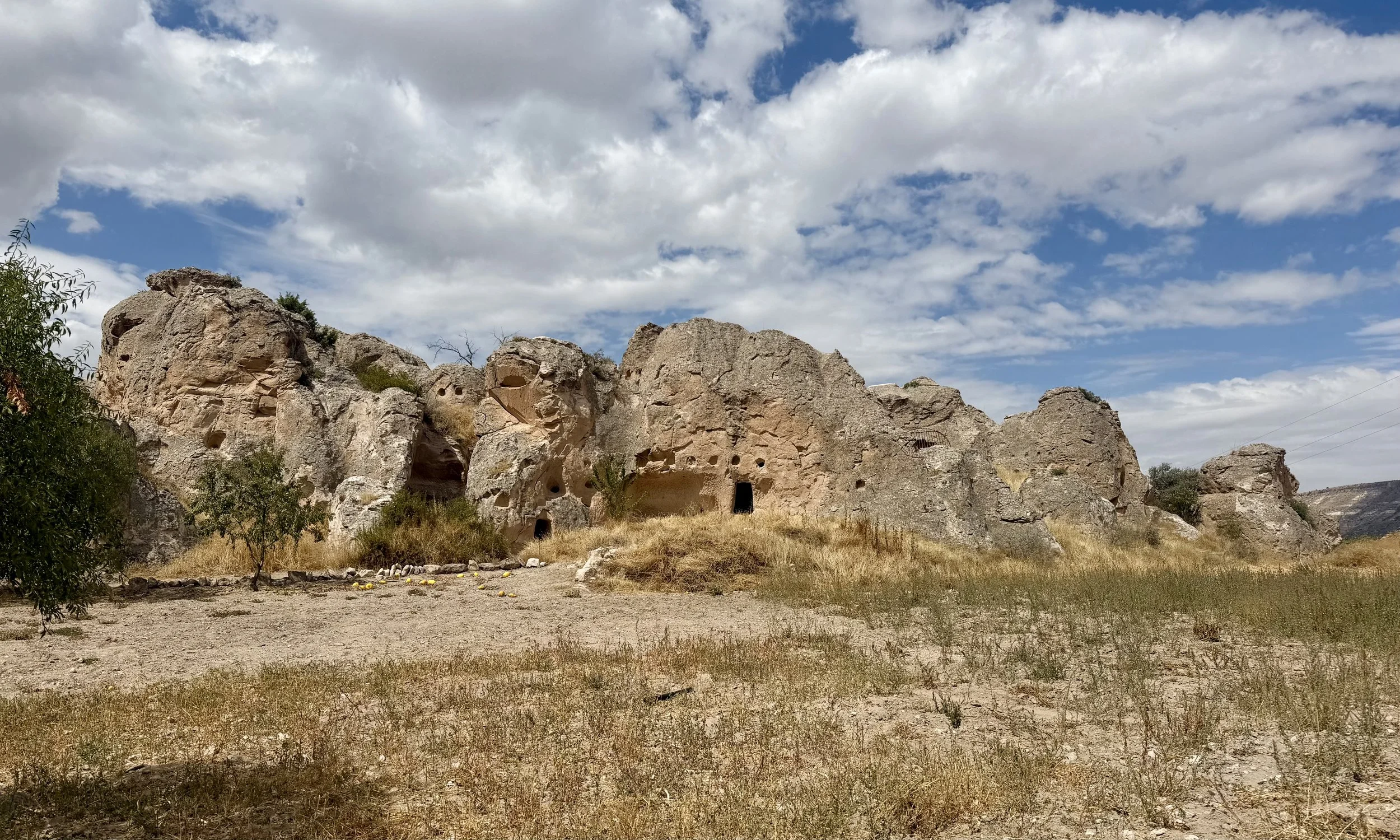
Sure enough, Keşlik Monastery didn’t have tourist buses, admission gates, railings, or spotlights. There were other visitors, but it was much quieter than the open air museum had been.
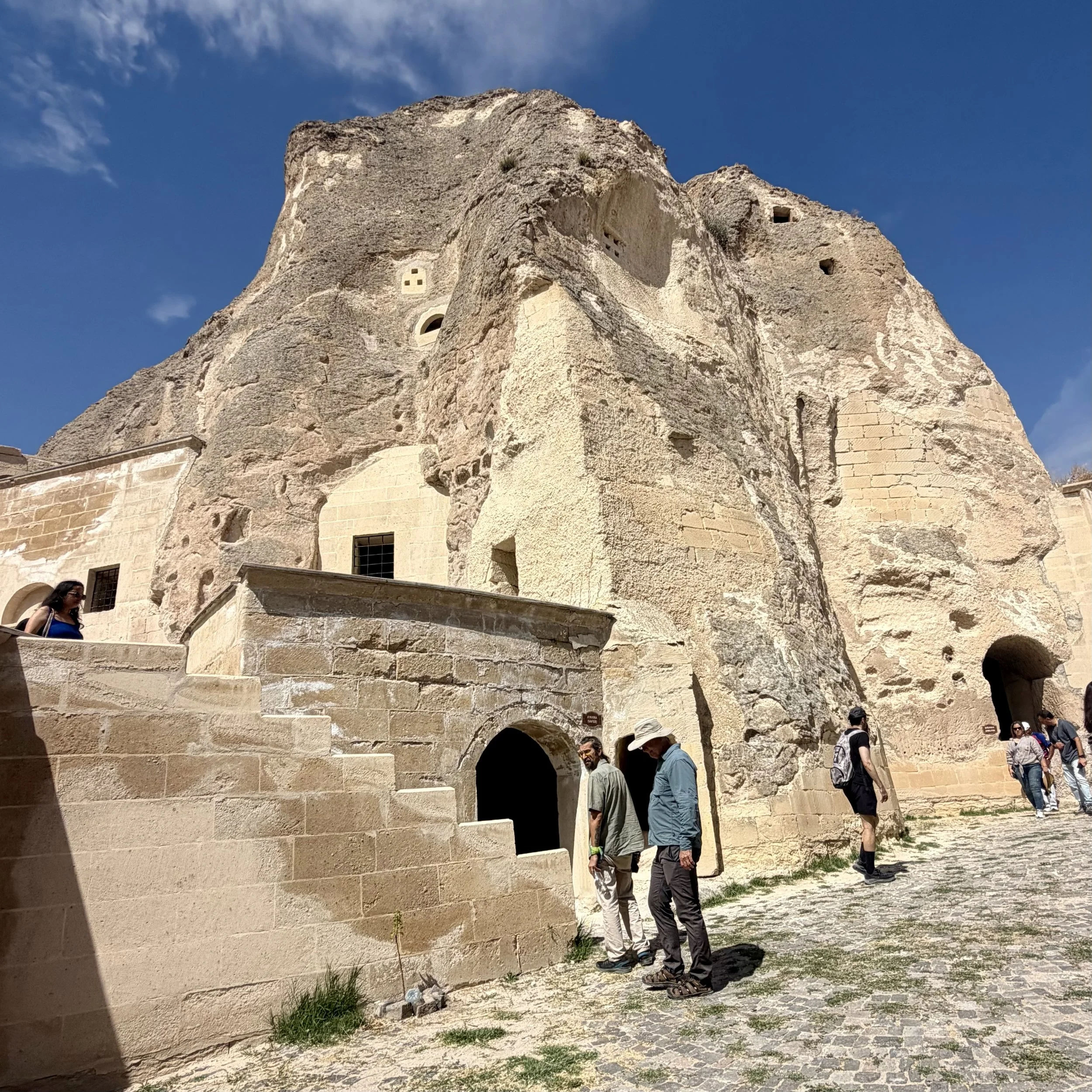
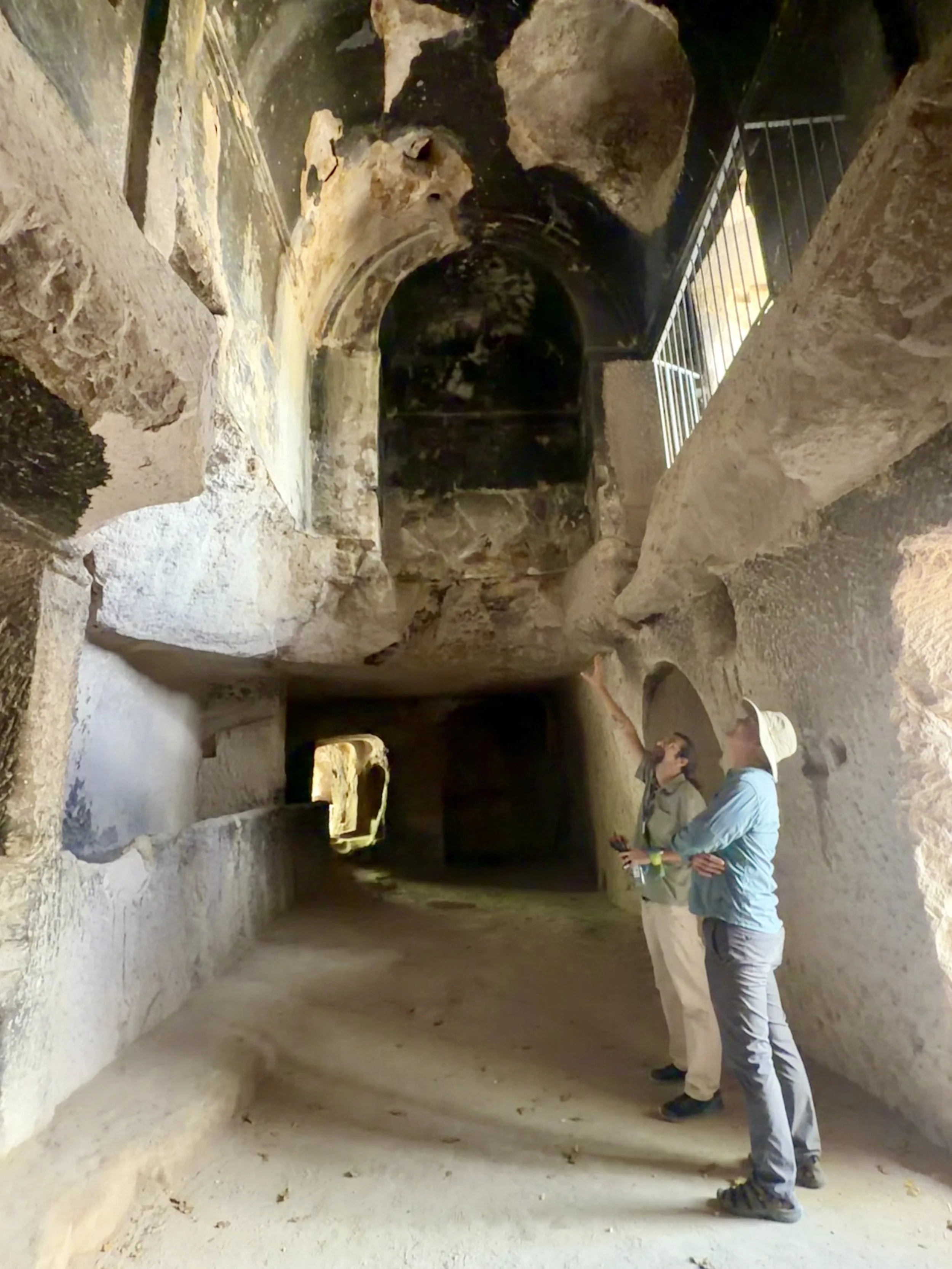
We explored the different rooms carved into the rock. The refectory/classroom had long tables and benches carved into the tuff. The kitchen had soot-caked walls and cooking pits with grooves to let air reach the fires.
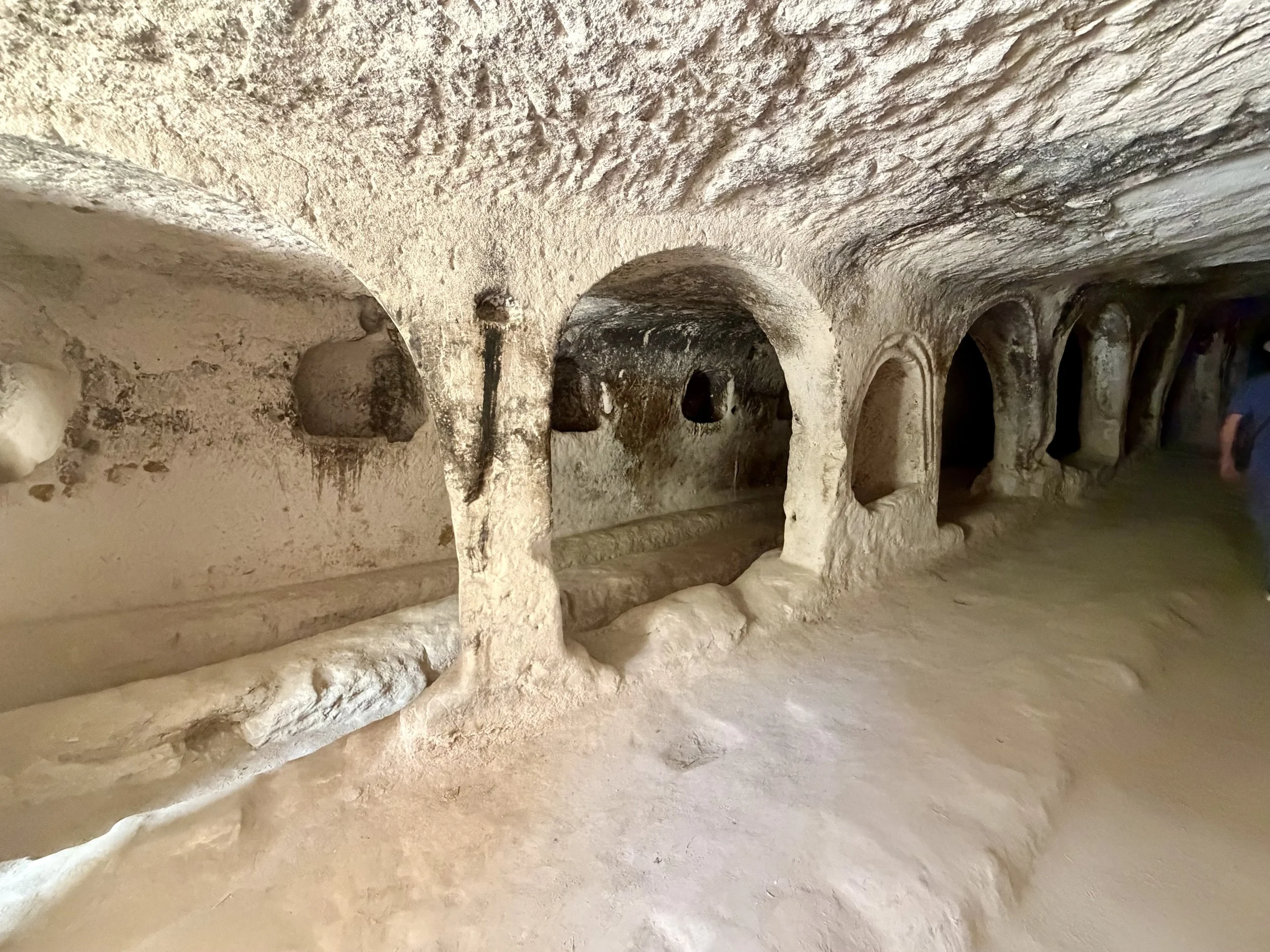
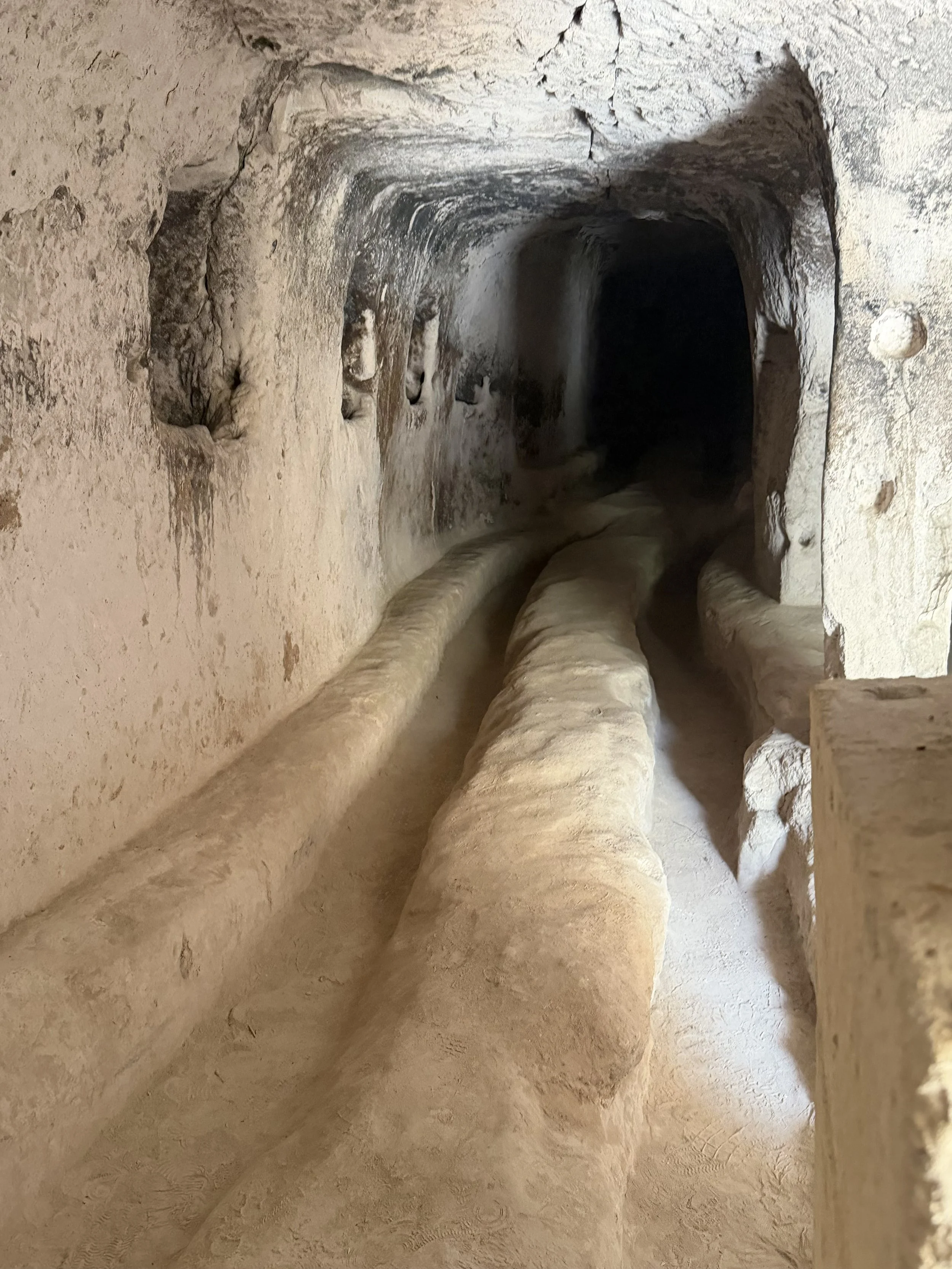
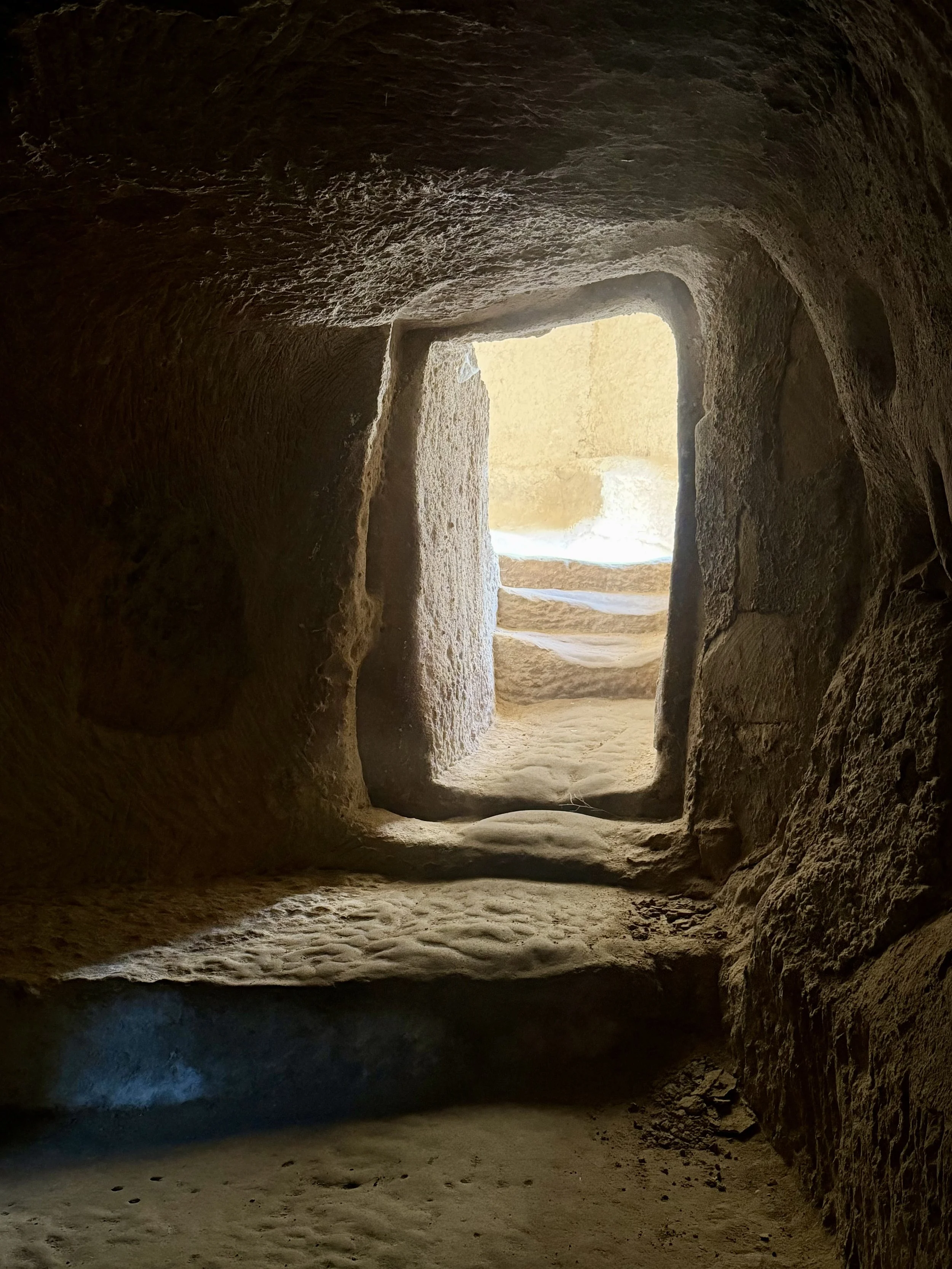
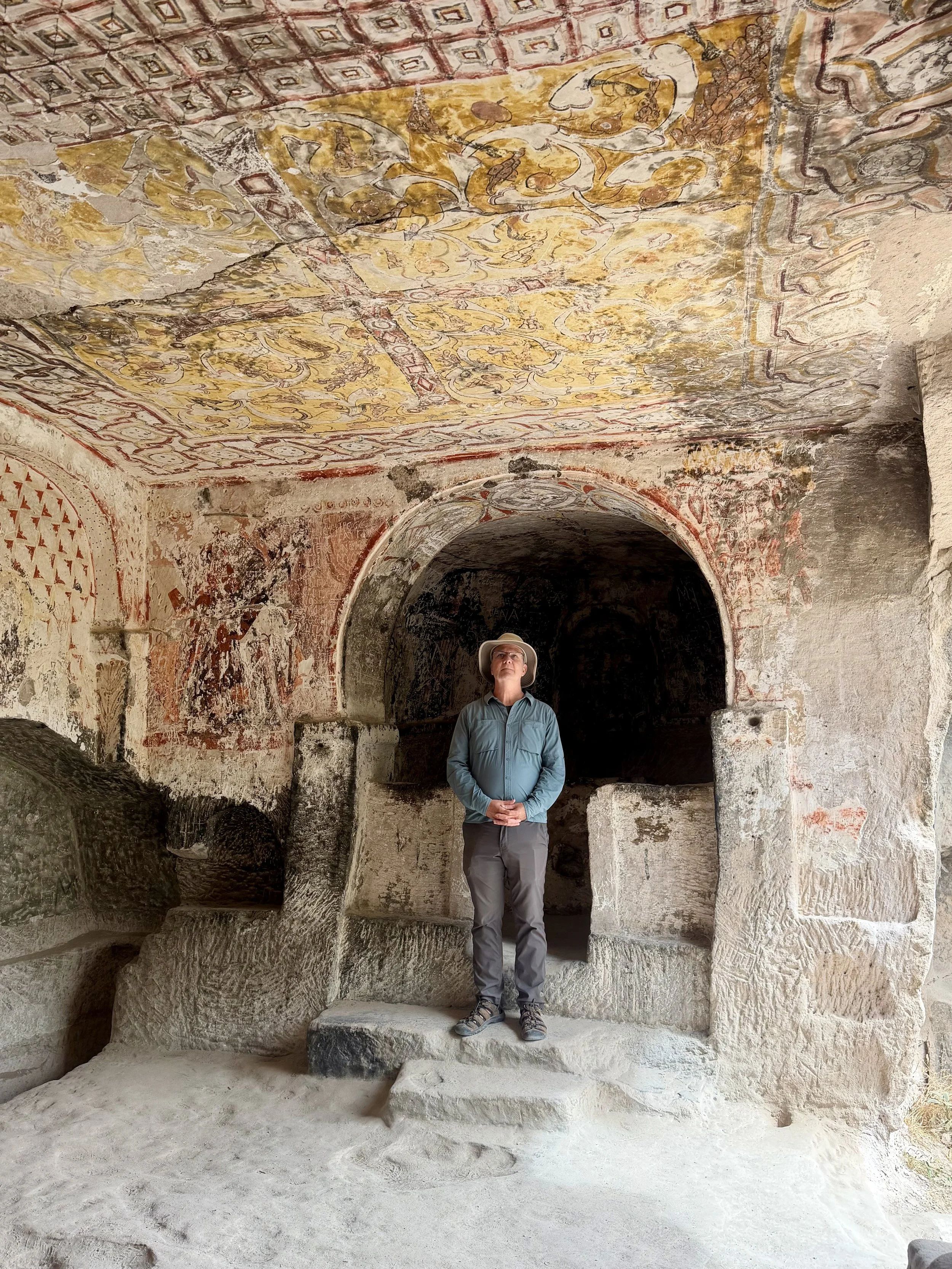
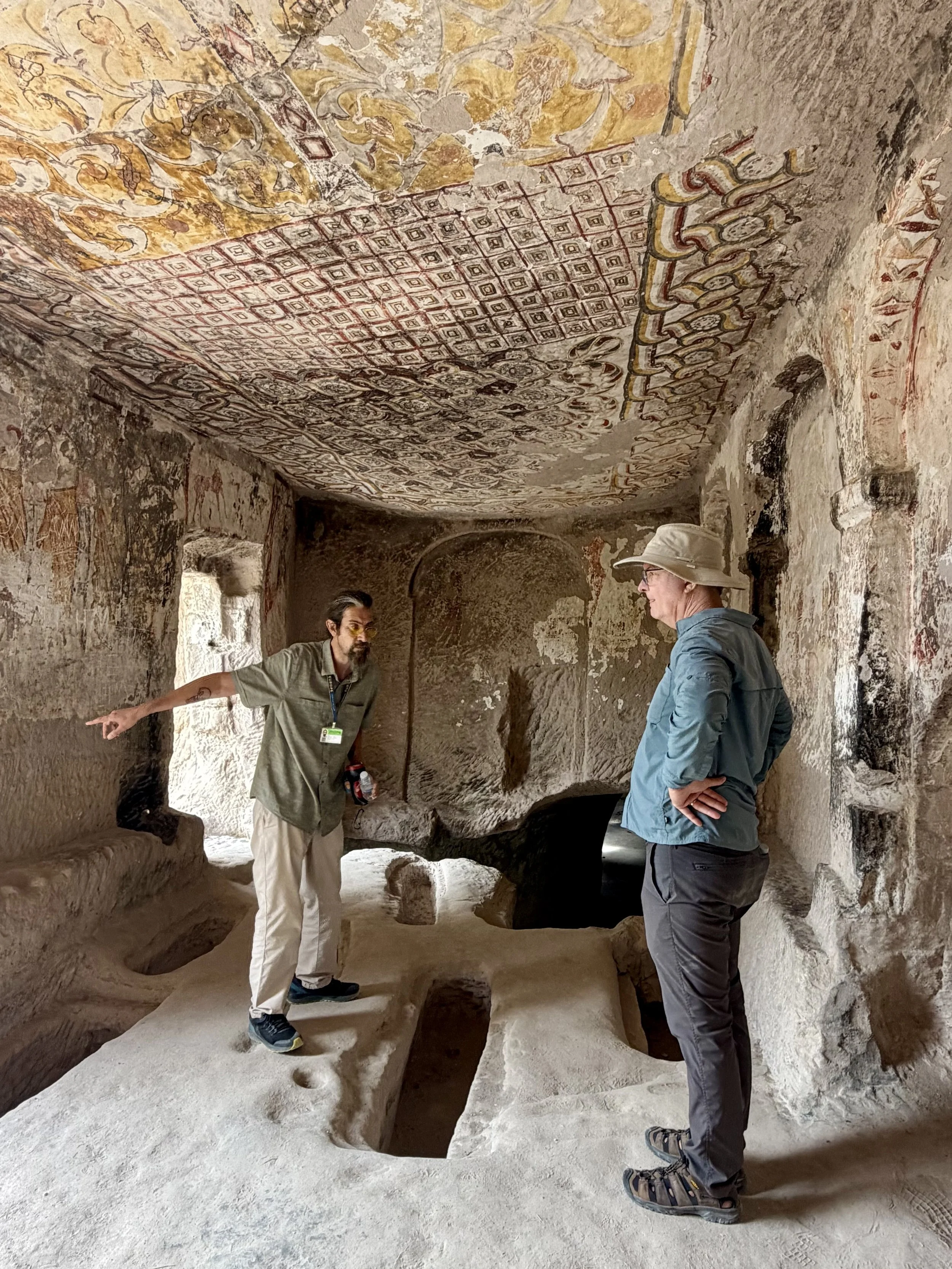
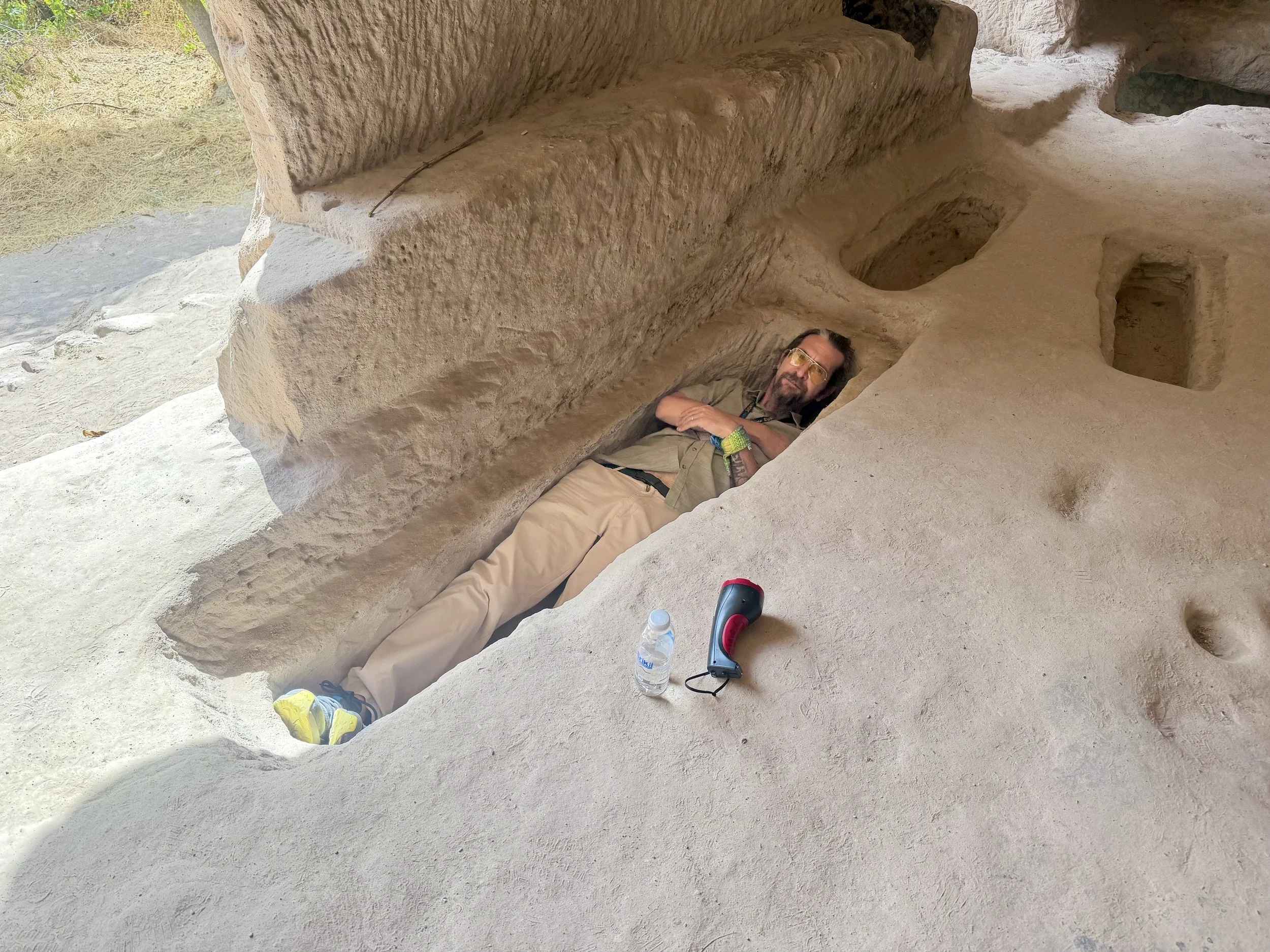
One church was decorated with simple red and yellow fresco designs. The shallow depressions in the floor were graves, and Togay used one to demonstrate how the 3rd century monks were shorter than we are today. The larger church had an impressive two-story vaulted nave. It was used by locals for religious services until the 1920s, so the paintings were obscured by black soot from more than a thousand years of candles and incense.
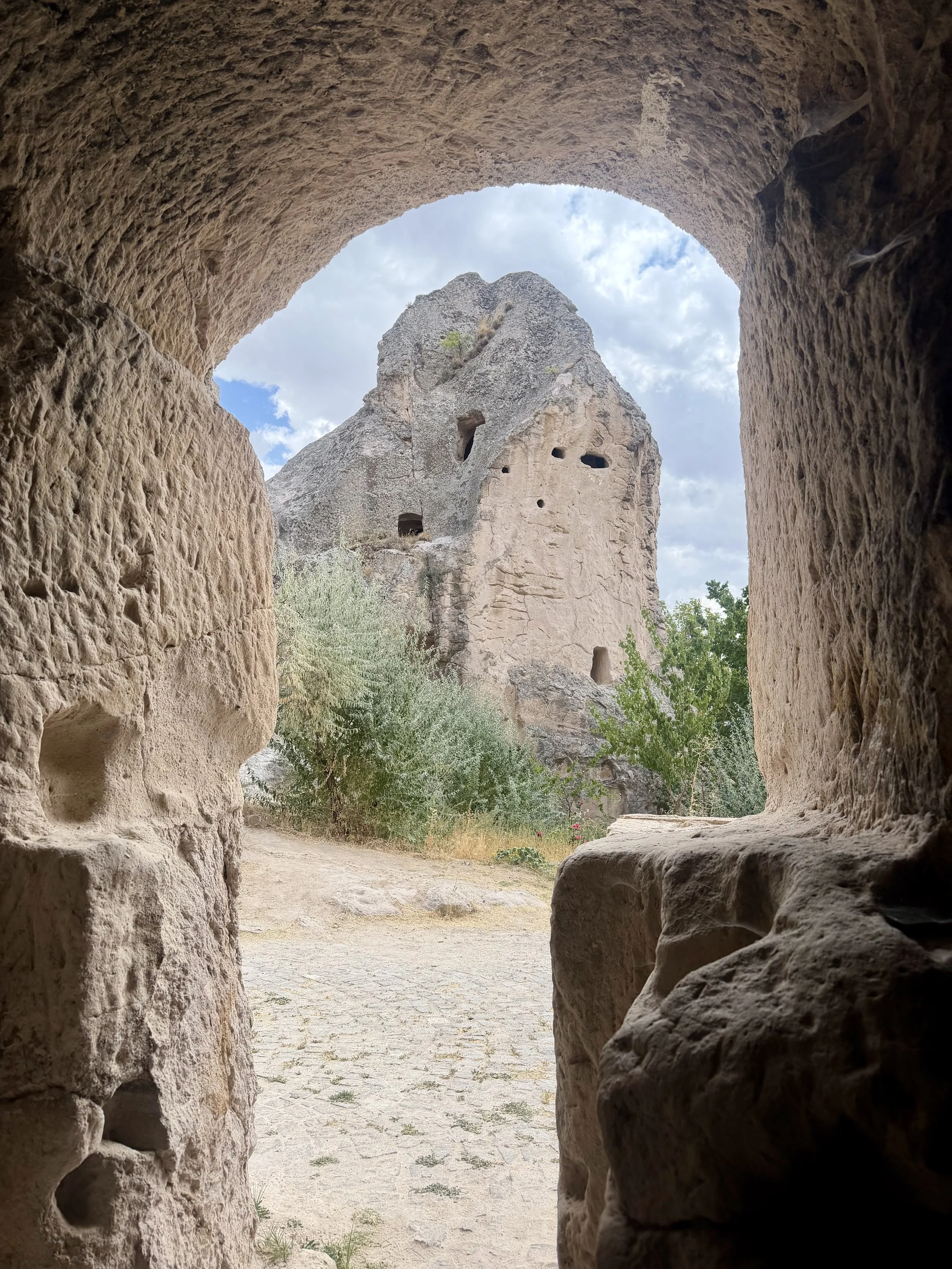
Keşlik was a large monastery and probably housed about 200 people. It was self-sufficient, with a cistern, a winery, a beehive, an animal barn, and a pigeon house. I could imagine how life here would have felt simple, peaceful, and safe.