Monarch Butterfly Sanctuary
When I was a kid, I LOVED butterflies. I drew them and wore them and decorated my bedroom with them. I’m not sure when this fascination with butterflies started, but it may have been in 1976, when National Geographic published sensational news: a longstanding scientific mystery - Why did monarch butterflies vanish every autumn? - was finally solved! The butterflies migrated from southern Canada and all over the United States to a little known mountain range in central Mexico. Though I outgrew my butterfly phase long ago, I was still curious to see this special place where they spend the winter. So on Thursday, we took a day trip to see the monarchs.
At 7:00am, about twenty of us left San Miguel de Allende in two vans and drove south toward the state of Michoacán. We were happy to once again be with Aldo, the knowledgeable and friendly guide from our tour of Guanajuato. Our destination was the Monarch Butterfly Sanctuary in the village of El Rosario. It was a four-hour drive through the arid plains, with a rest stop in Juarécuaro, the halfway point. We passed many farms, which Aldo said grew vegetables and alfalfa.
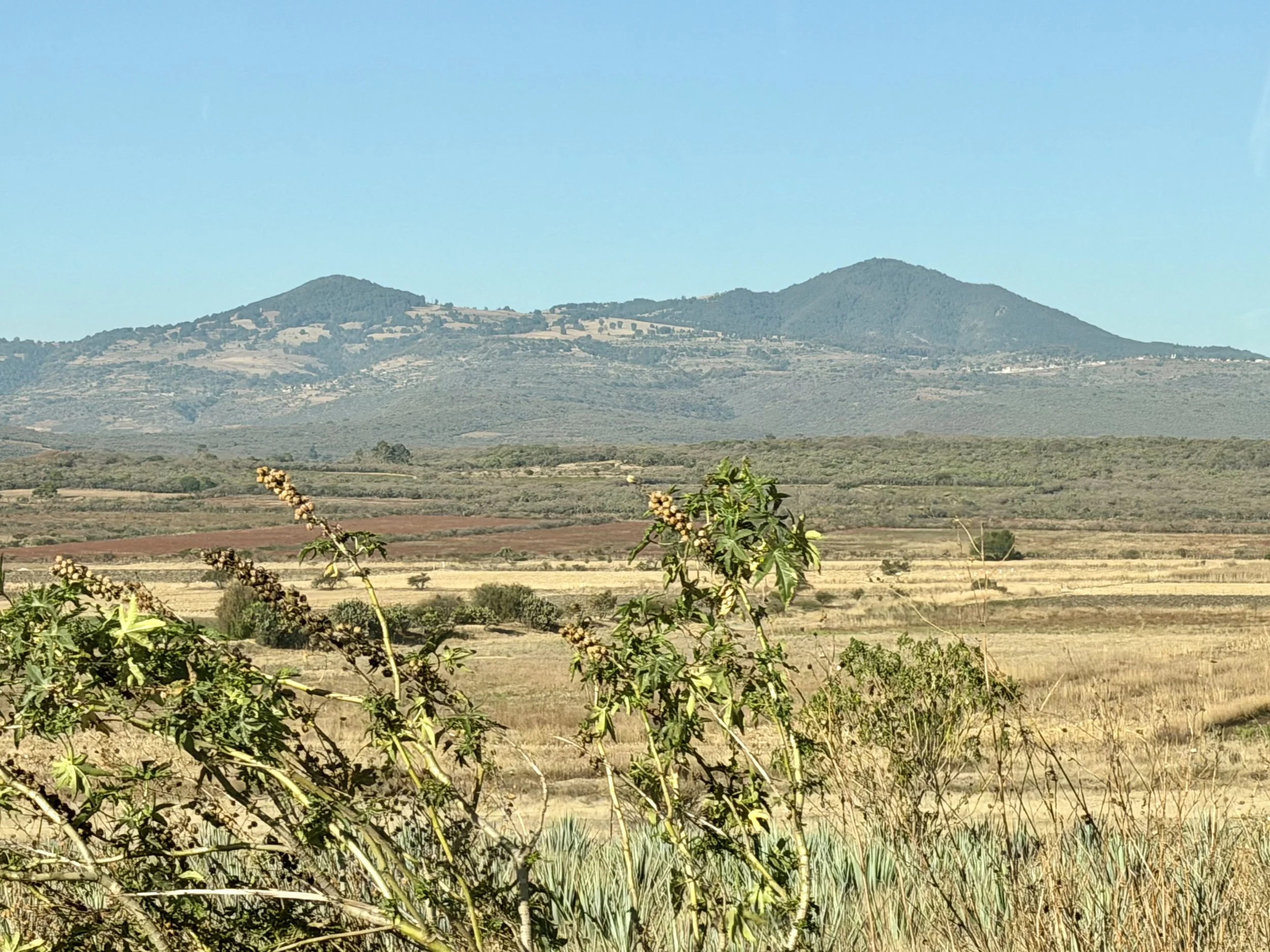
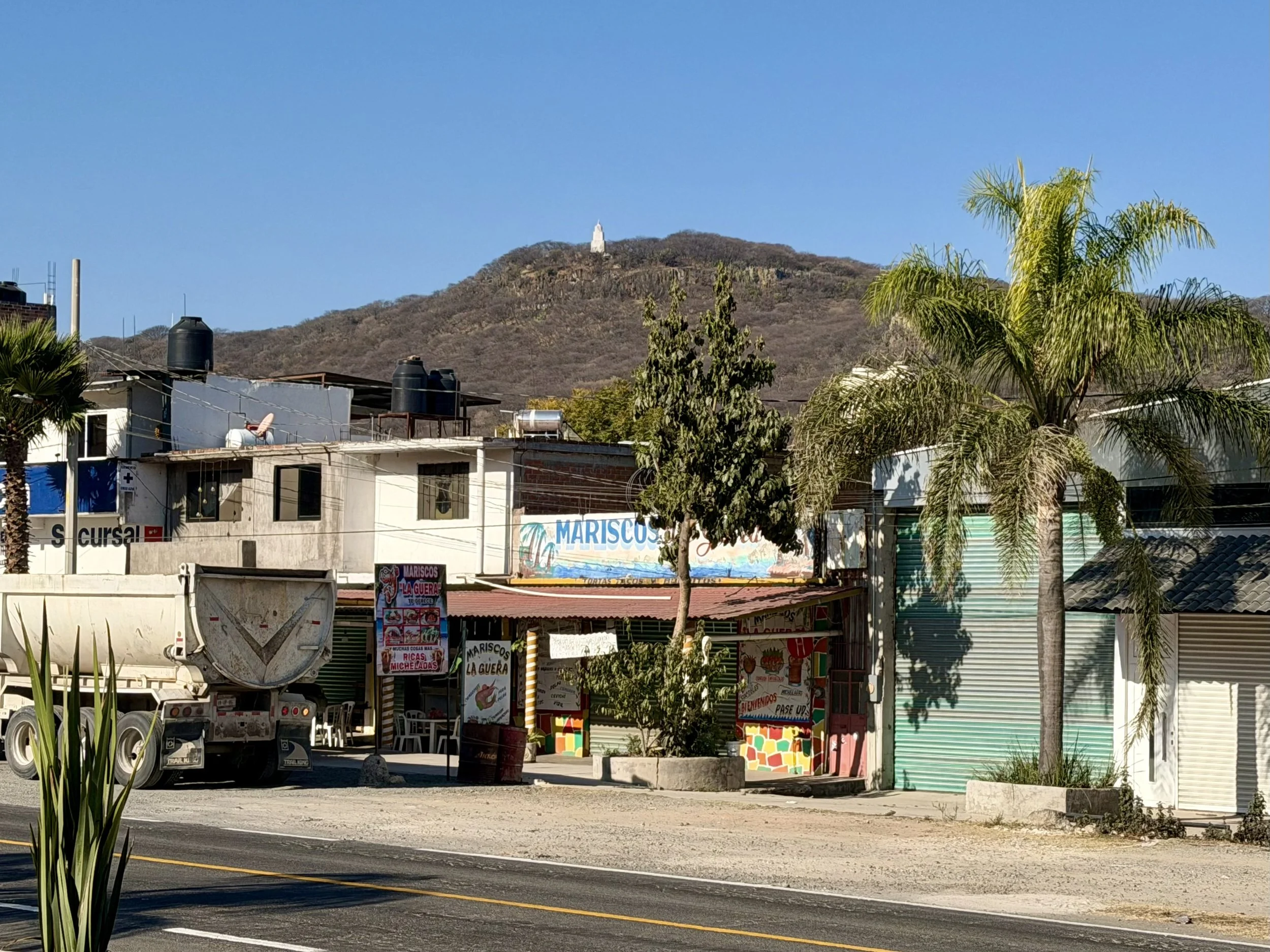
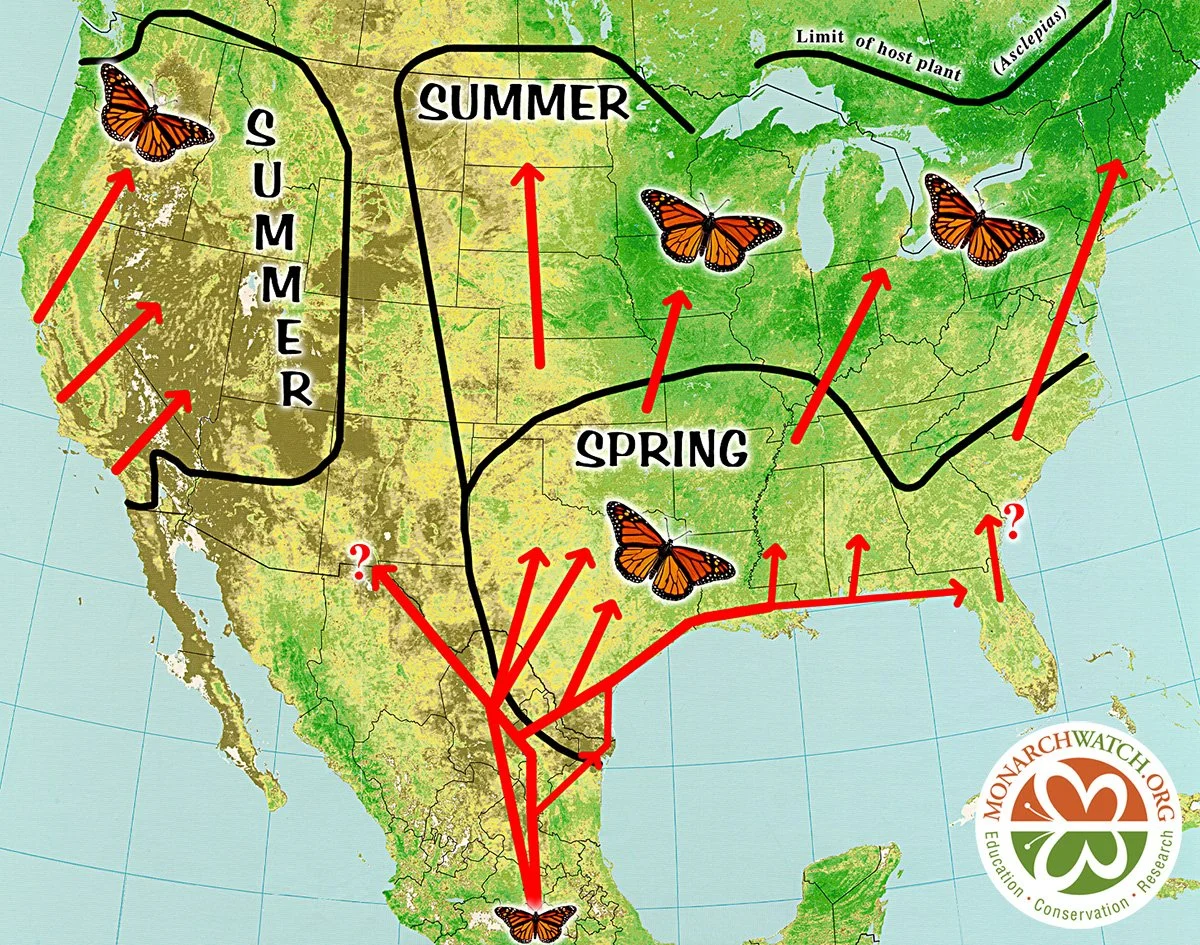
As we drove, Aldo explained the remarkable monarch butterfly migration.
In the spring, in Mexico, the monarches begin mating. The females fly north and lay their eggs on milkweed plants across the southern United States. Those eggs become the first generation of monarchs, and they continue their northward journey.
Throughout the summer, a second and then a third generation of monarchs spread through the central and northern US.
By late summer the monarchs reach southern Canada, around the Great Lakes, and a fourth generation of monarchs emerges. Unlike the previous generations, which had life spans of just 2-6 weeks, this super-generation of “Methuselah” monarchs has a life span of 7-9 months.
These are the hardy butterflies that will migrate 3,000 miles to Mexico, where they will spend the winter until it’s time to mate and migrate northward. (Monarchs west of the Rocky Mountains migrate to California, but this is just a small fraction of the total monarch population.)
What is so special about the mountains in central Mexico? Aldo explained that the monarchs had a geomagnetic compass that guided them there. The high mountains provided cool (but not freezing) temperatures, the oyamel (sacred fir) trees offered shelter and repelled predatory birds, and there was plenty of water and (the right variety of) milkweed for sustenance.
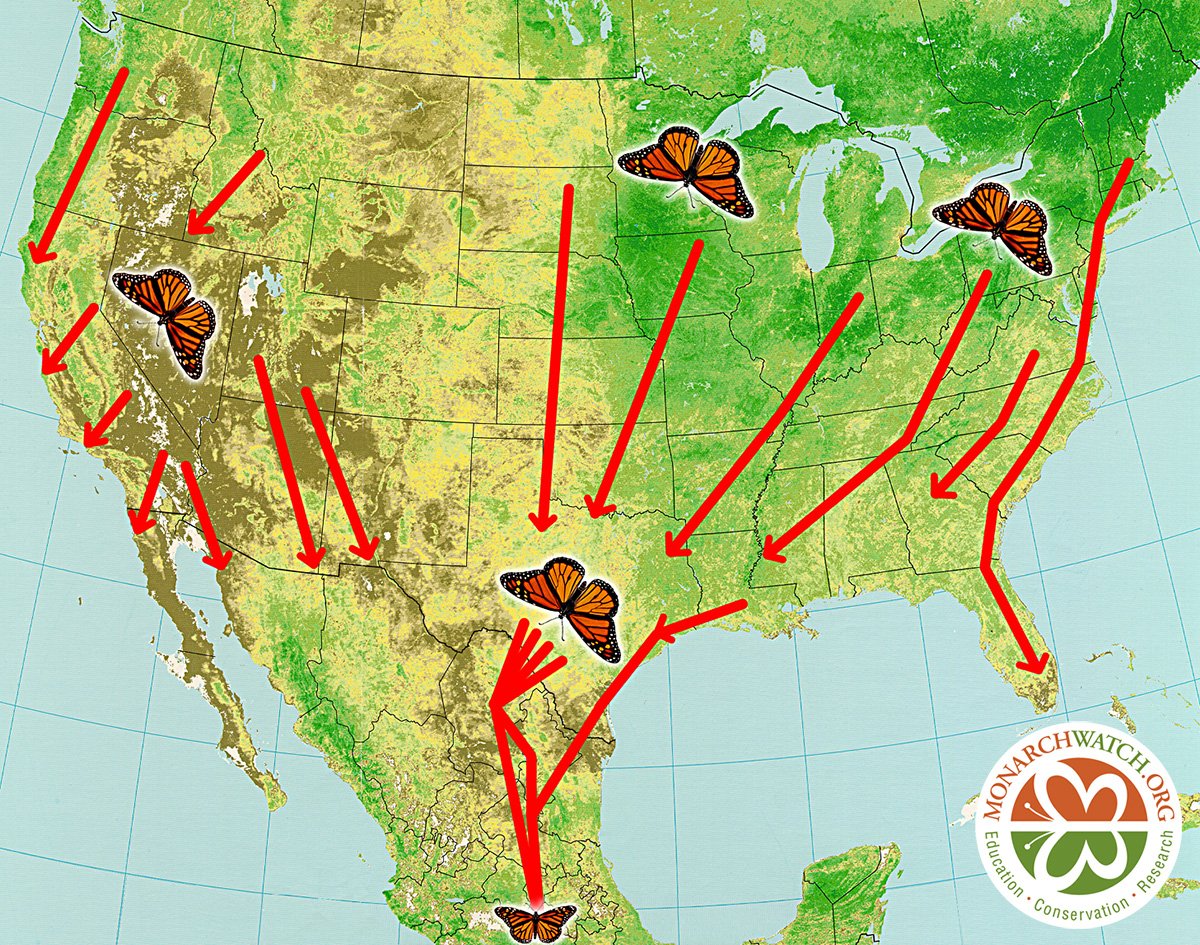
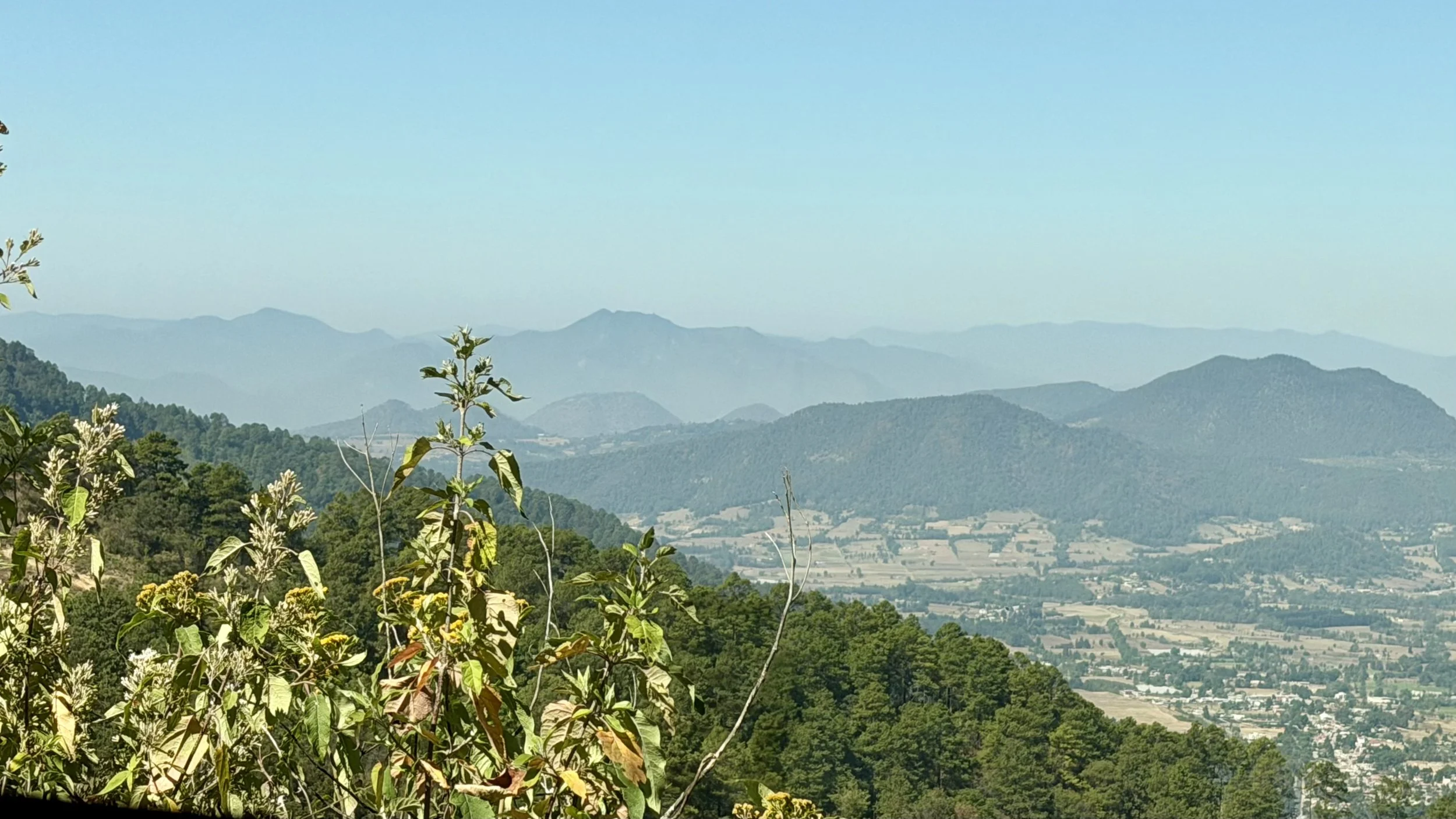
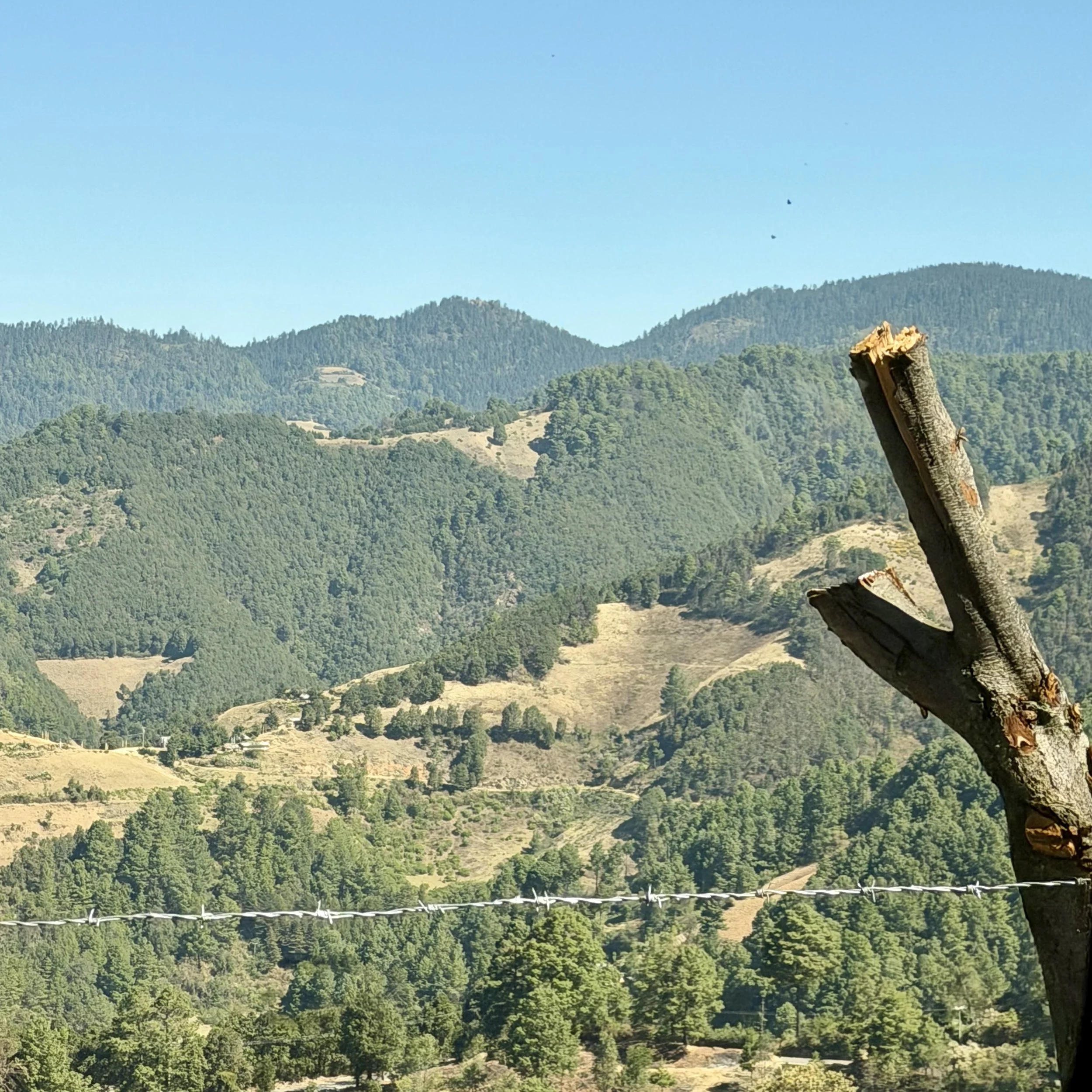
After 3-1/2 hours we reached Agangueo, an old mining town, and began to drive up the mountain on twisty, narrow roads. We had entered the Monarch Butterfly Biosphere Reserve, a UNESCO World Heritage Site. To our delight, monarch butterflies flitted around our van during the 30-minute drive up to El Rosario. We zigzagged up through a forest, occasional glimpsing the surrounding mountains.
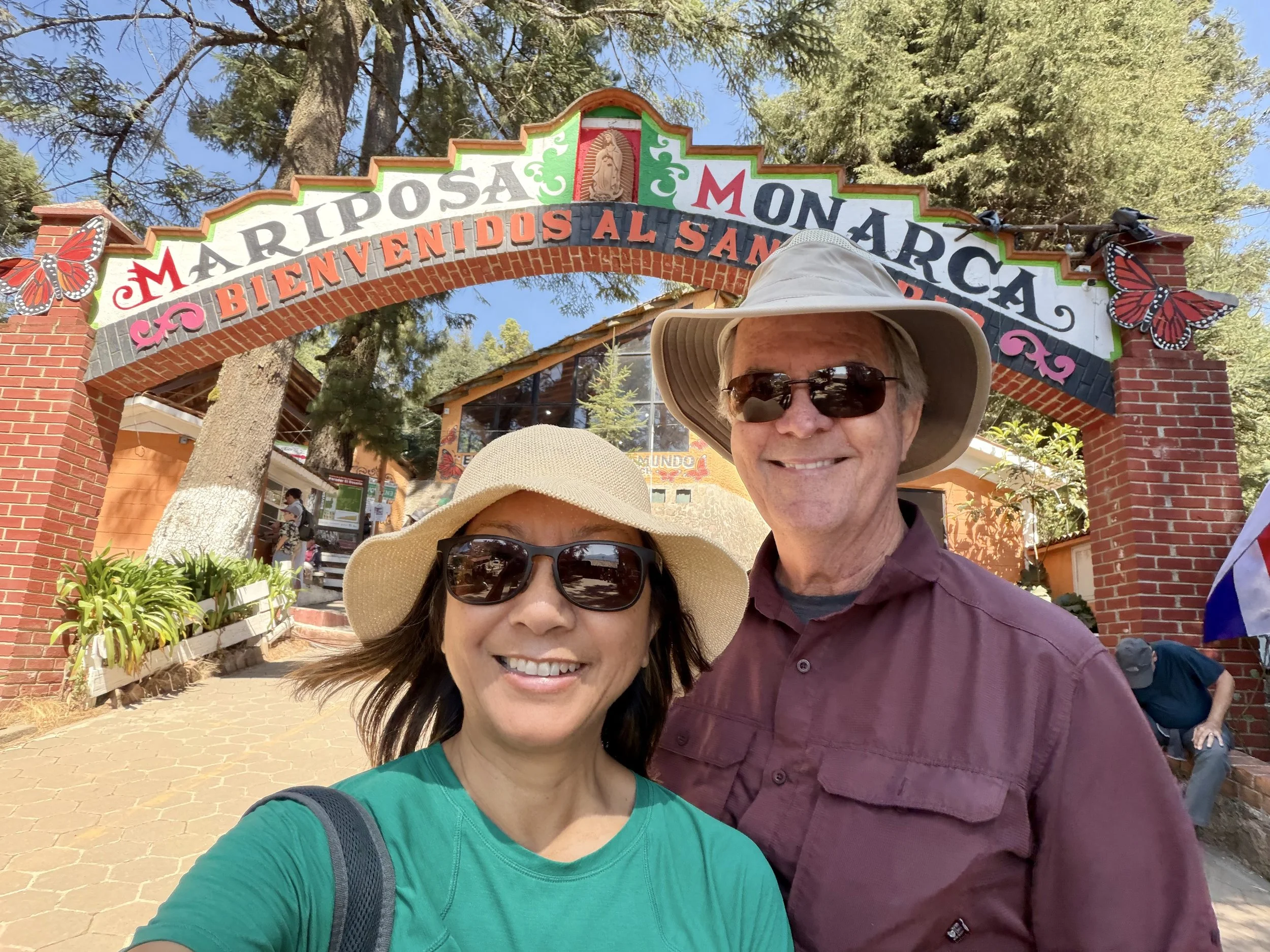
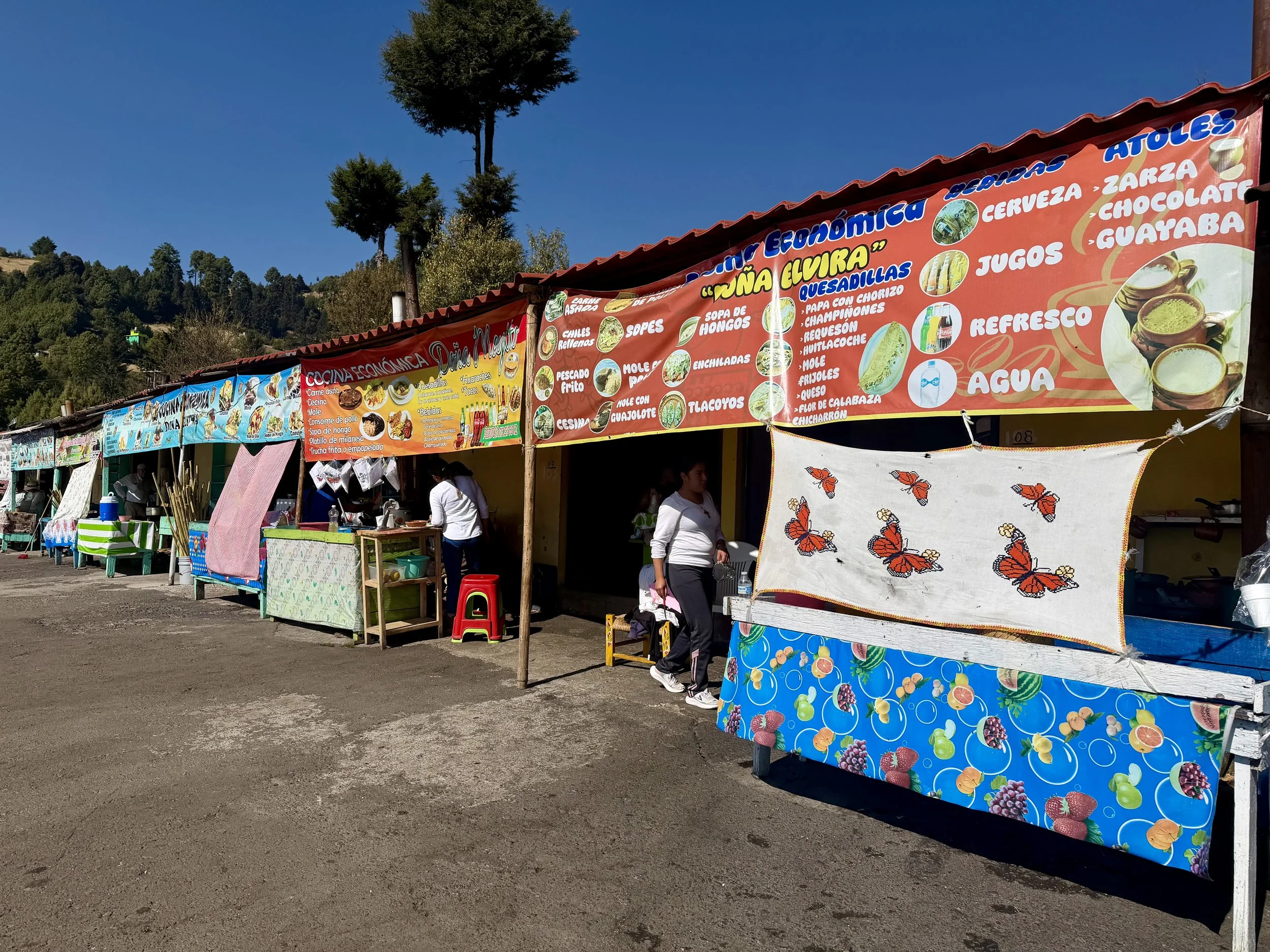
The tourist center parking lot was lined with souvenir stands and food stalls. We paid 8 pesos to use the public restrooms, and were amused to receive official receipts. They looked just like the 150 peso tickets for entering the sanctuary.
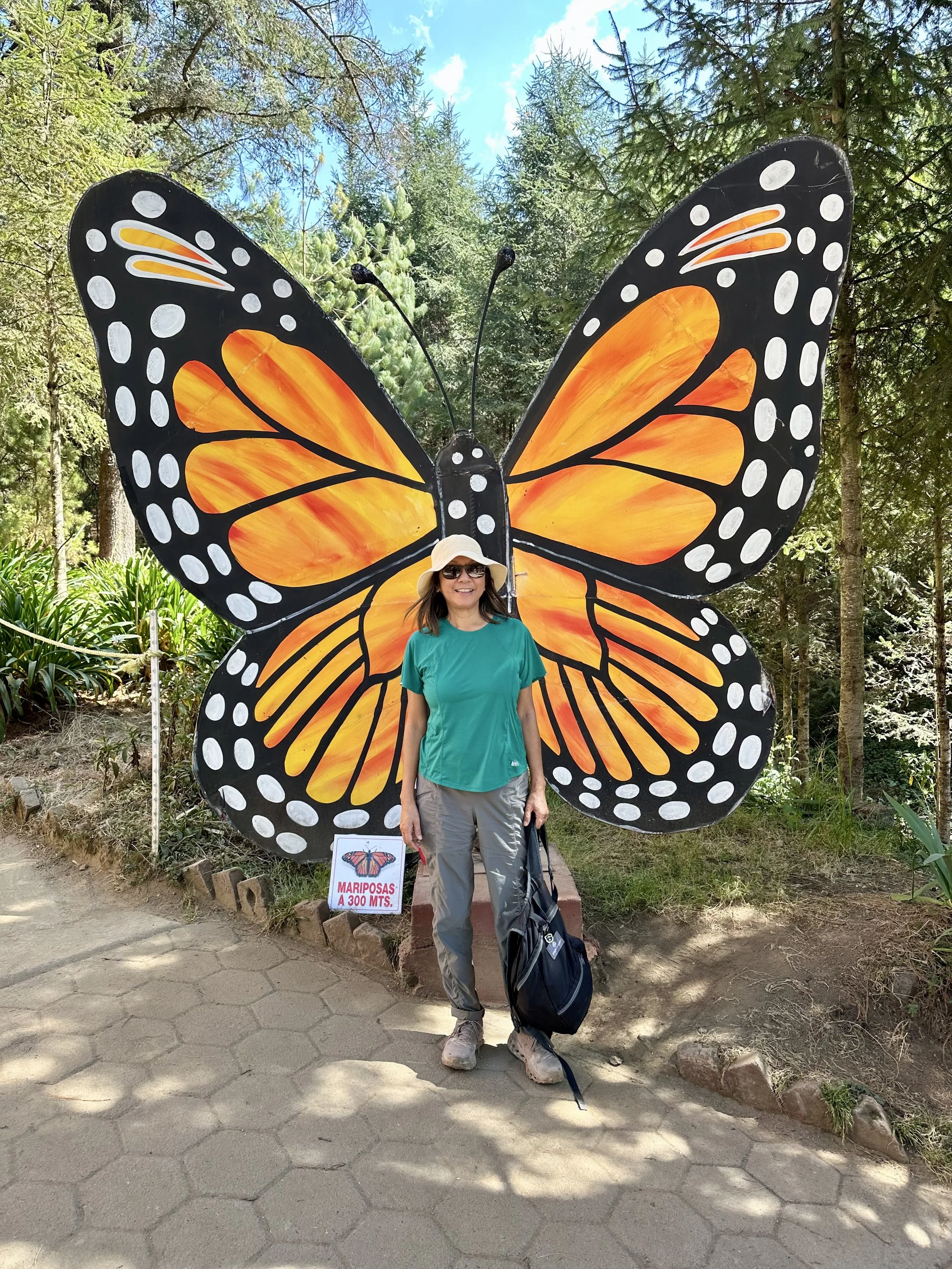

The official viewing place was still two miles up the mountain. We had a choice to make for the first mile: ride a horse (200 pesos one way) or climb on foot? We decided to go on foot. This was risky, as we were at an elevation of 11,000 feet. But no pain, no gain, right?
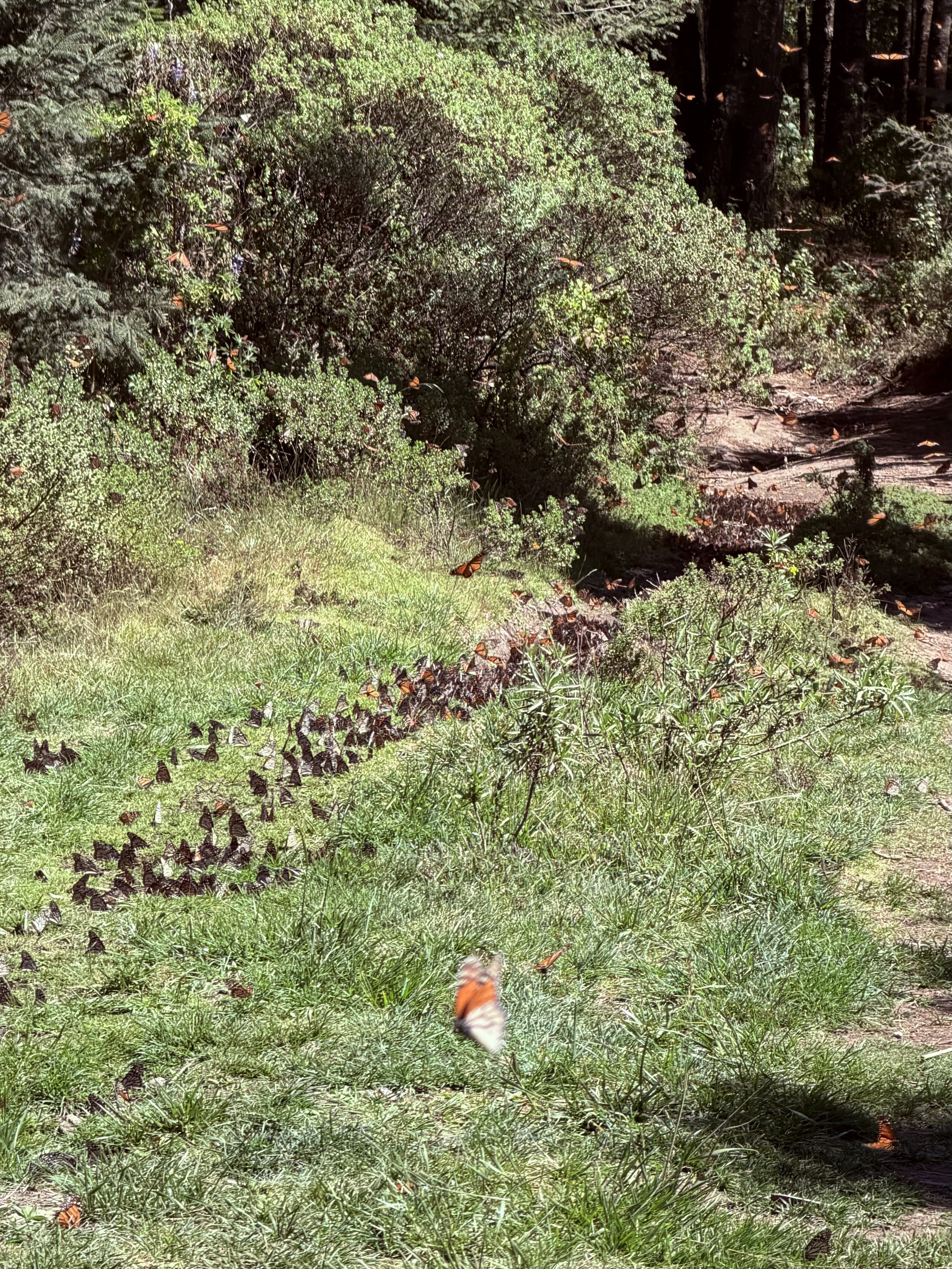
That first mile was a long, slow climb up an endless series of concrete steps. I was definitely breathing harder and more quickly, and stopped often to rest and catch my breath. Steve had a mild earache. But it was also a magical walk, because we were surrounded by monarchs the entire time! Thousands of vivid orange butterflies fluttered past my shoulders and around my feet and overhead. I looked up to watch them glide like birds across the bright blue sky. I felt a little dizzy, but was it from the altitude or the joy?
A group of butterflies is called a kaleidoscope. Perfect!
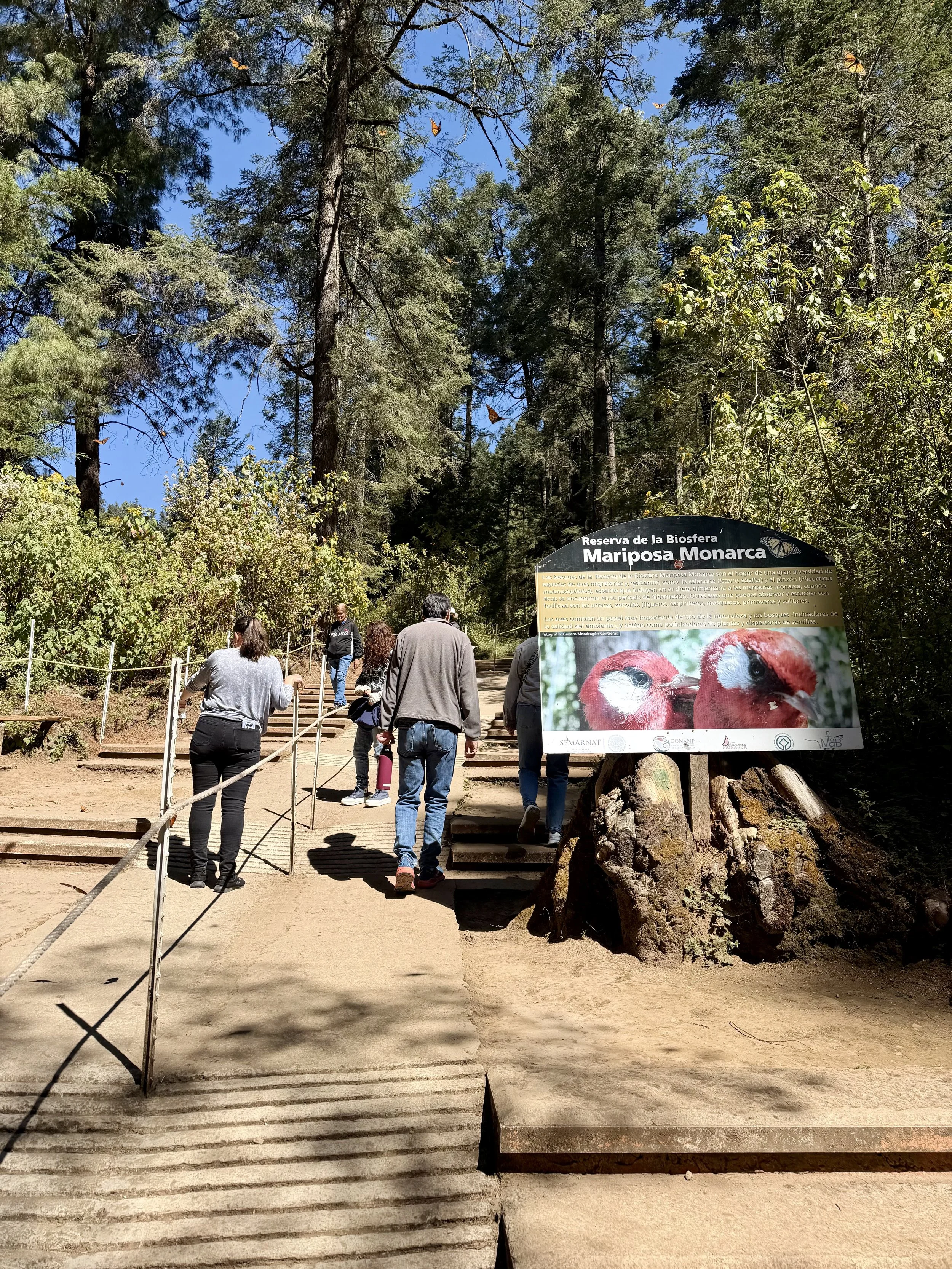
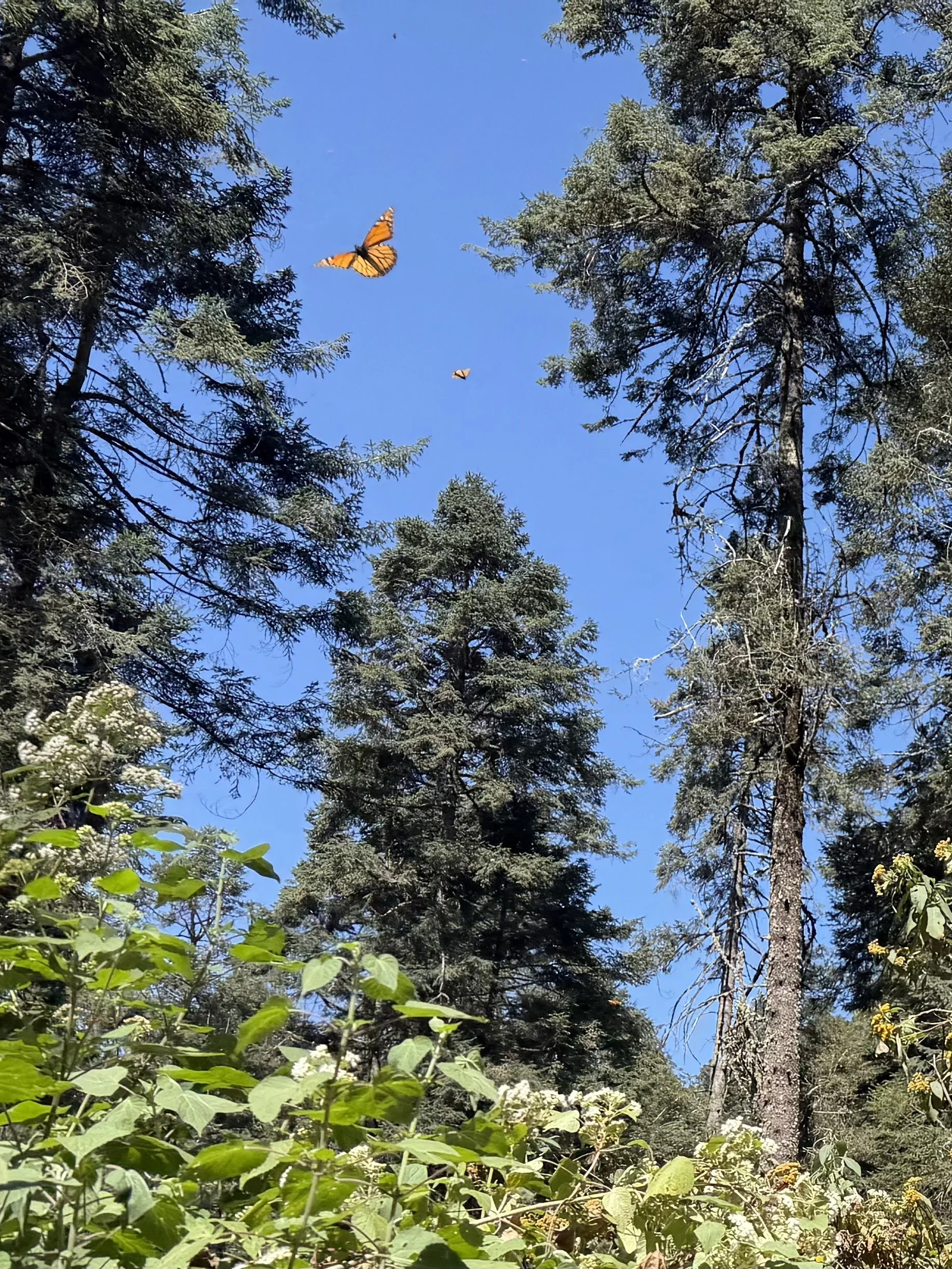
At last we reached the entrance to the valley, where the horse trail and pedestrian trail converged. There were SO. MANY. MONARCHS.
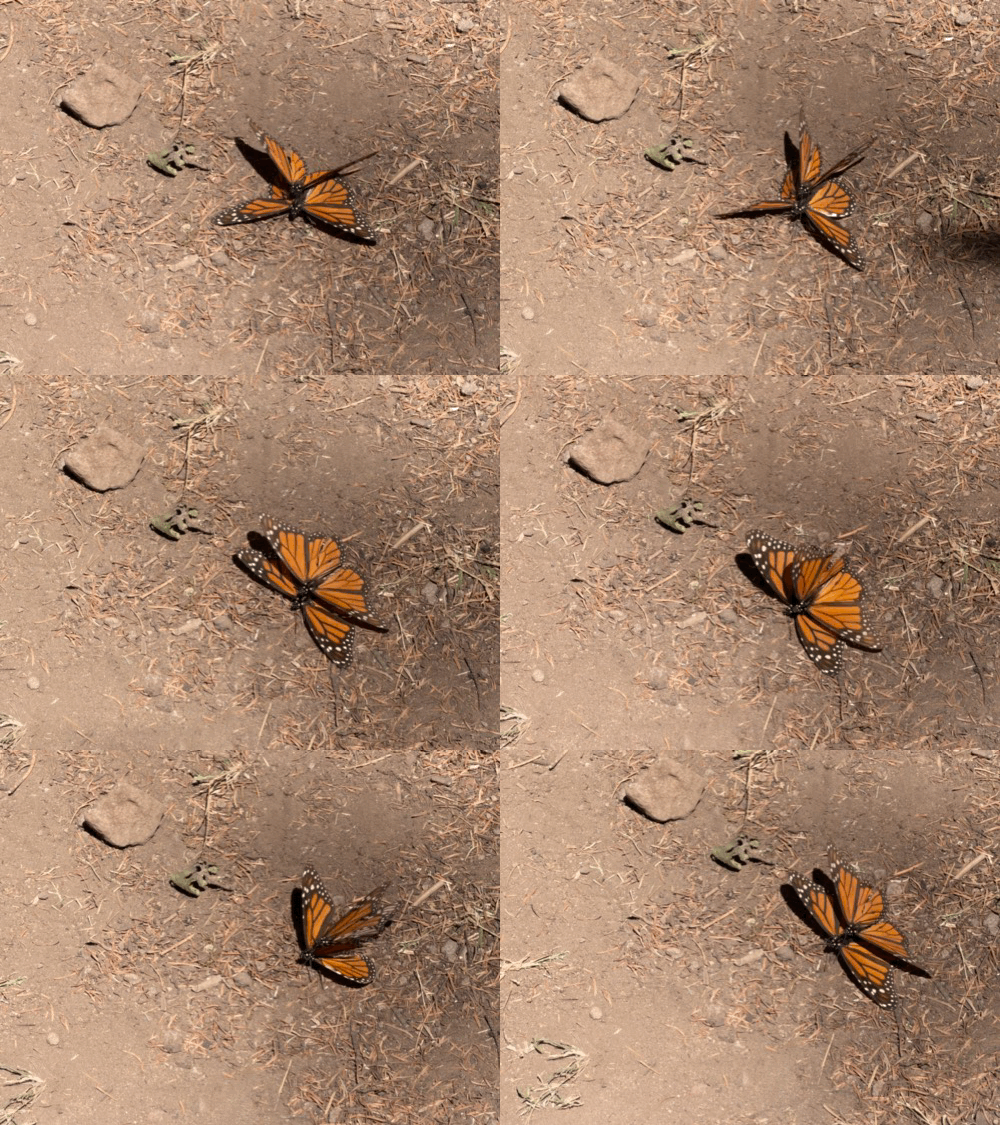
I had fun taking “Slo-Mo” videos with my phone.
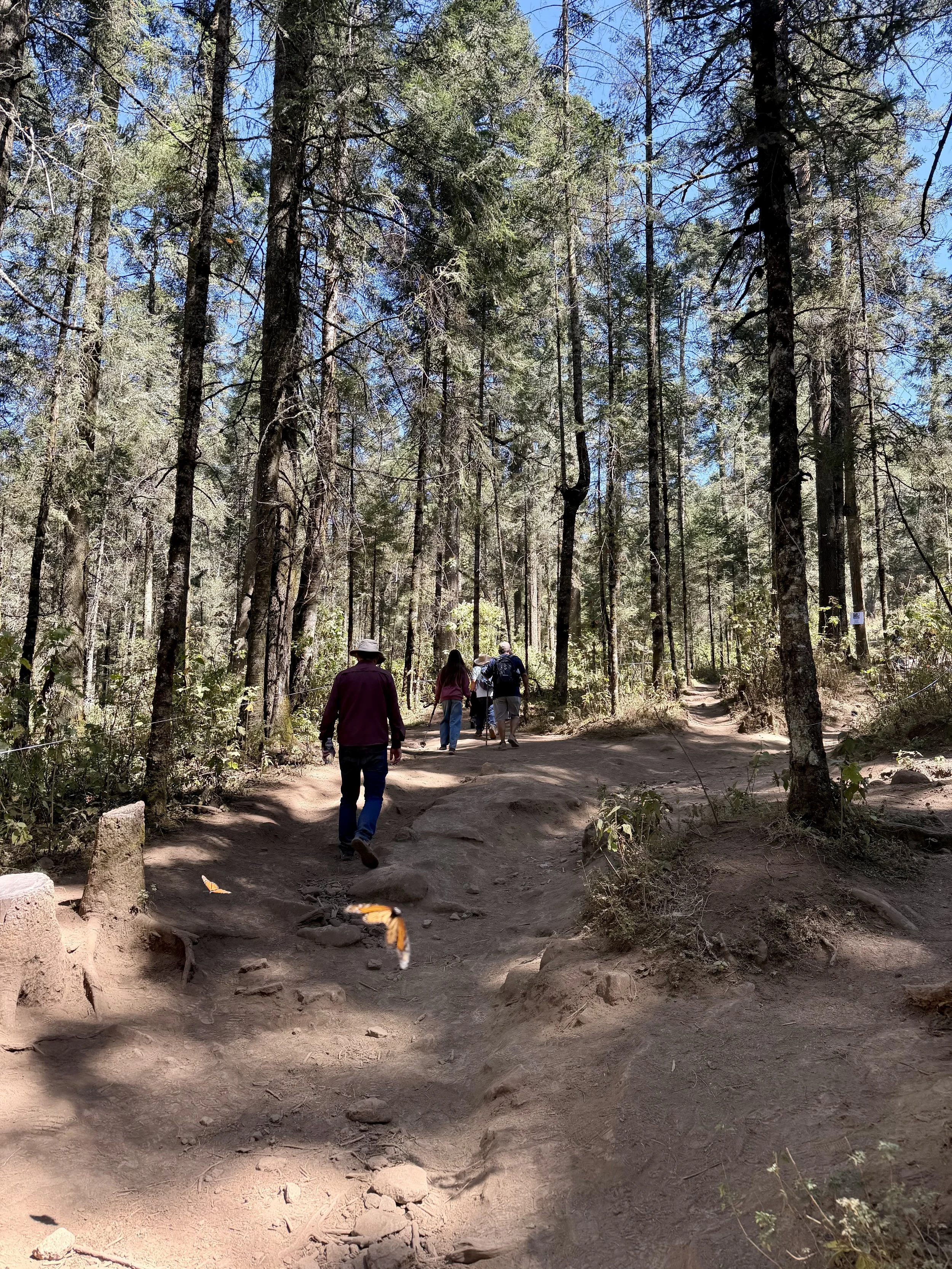
After the clearing at the valley entrance, we walked the second mile through the oyamel forest on a wide dirt trail. It was still an uphill climb, but less steep. The monarchs were surprisingly large, 5-6 inches across. They perched on tall, bushy milkweed plants, feasting from their yellow or white blossoms. They sipped from spring water that seeped from the ground or trickled from higher places. We even saw a few pairs of monarchs in the later stages of mating, a lengthy process that starts in the air and ends on the ground. (Aldo said that sadly, the male monarch dies 48 hours after mating.)
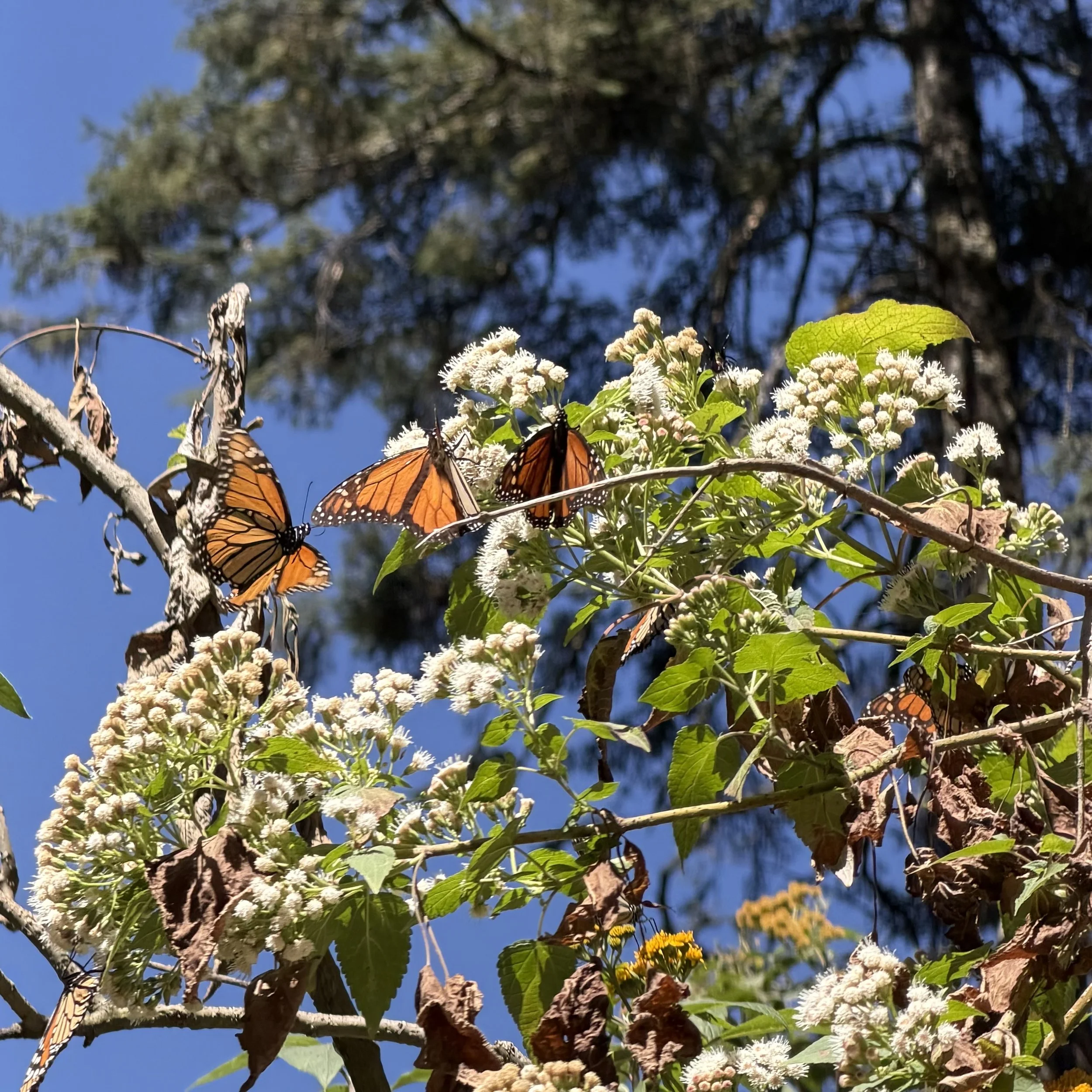
The official viewing area was marked with signs instructing us to keep silent. Here, the oyamel branches were weighed down with clusters of what looked at first like dried grey leaves, but were actually monarchs.
There weren’t any benches here, I think because they didn’t want people to linger too long. But in the hushed silence, shaded by towering oyamel trees, it was very peaceful. We took our time strolling around the viewing area and then, at a leisurely pace, we worked our way back down the trail to the valley.
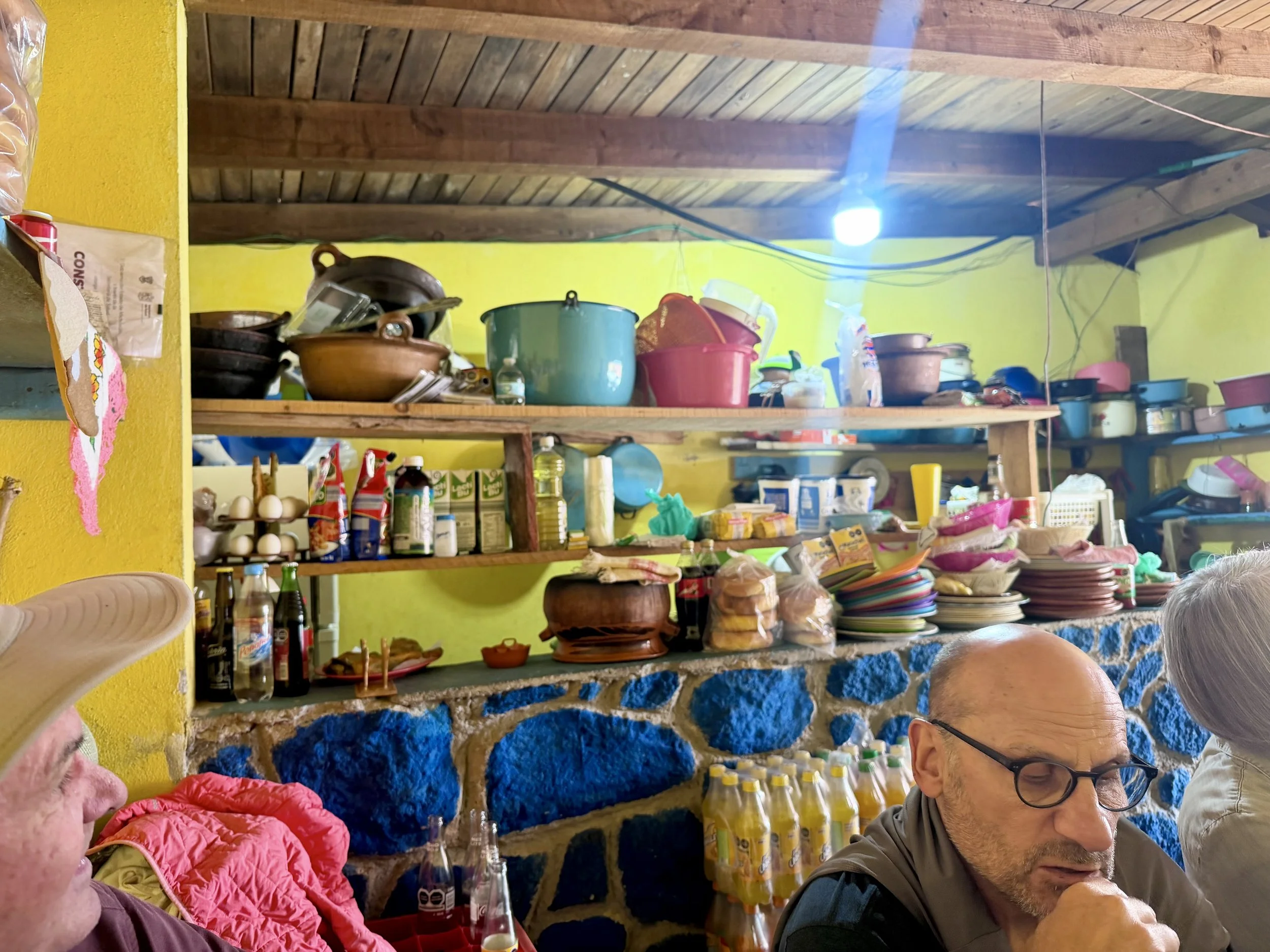
We spent about 2-1/2 hours at the sanctuary. Then we were driven a short way down the hill, where we had lunch at the food stall of a woman who knew Aldo’s great grandmother. I ordered a trio of sopes - chicken, mushroom, and huitlacoche (corn mushroom). The blue corn masa was freshly cooked on the comal (griddle). The sopes were delicious!

We napped fitfully during the long drive back to San Miguel, arriving 13 hours after we had left. It had been a very long day. But I will never forget the magical experience of being immersed in a kaleidoscope of monarchs.
Postscript
How many monarchs spend the winter in Mexico? It’s difficult to count them. One approach is to measure the number of hectares of forest they occupy and multiply by an estimated 20 million butterflies per hectare. There were about 38 million monarchs in Mexico over the 2024-2025 winter. The number fluctuates every year, but has been trending downward since the mid-1990s, when the estimated population was TEN TIMES that of today. Aldo, whose great grandmother lived in this area, remembered a visit about ten years ago when the oyamel branches and trunks were completely blanketed with monarchs.
Although monarchs are not yet officially listed as “endangered,” it’s clear their population is declining, and they are fragile creatures. Monarch tagging enables scientists to better understand their migration paths and the factors affecting their population. Some tags are simply round stickers with codes that are attached on the wings. More recently, researchers are using tiny solar-powered radio tags attached to the insects’ torsos. The data gathered will be critical to improving conservation efforts.