Our bus didn’t leave Huacachina until 2:00pm. So we had a leisurely breakfast and then relaxed in our room at the Senoma Hotel, thankful for the privacy and the mini-split air conditioner.
Later, we walked to the Wild Rover to meet the bus. The Aussie couple told us the group dinner last night had been a lot of fun - there was dancing afterward, and they had even won a prize!
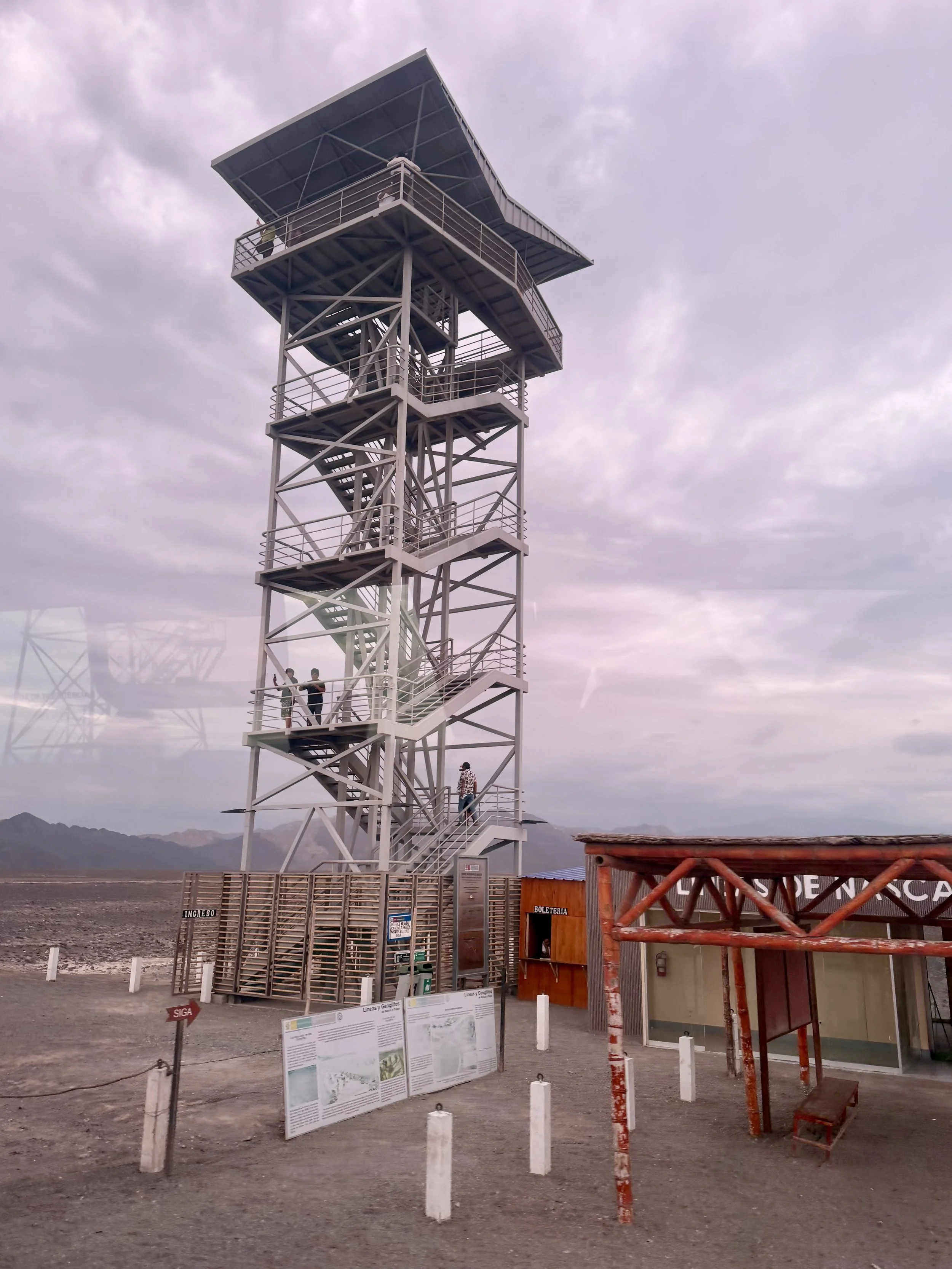
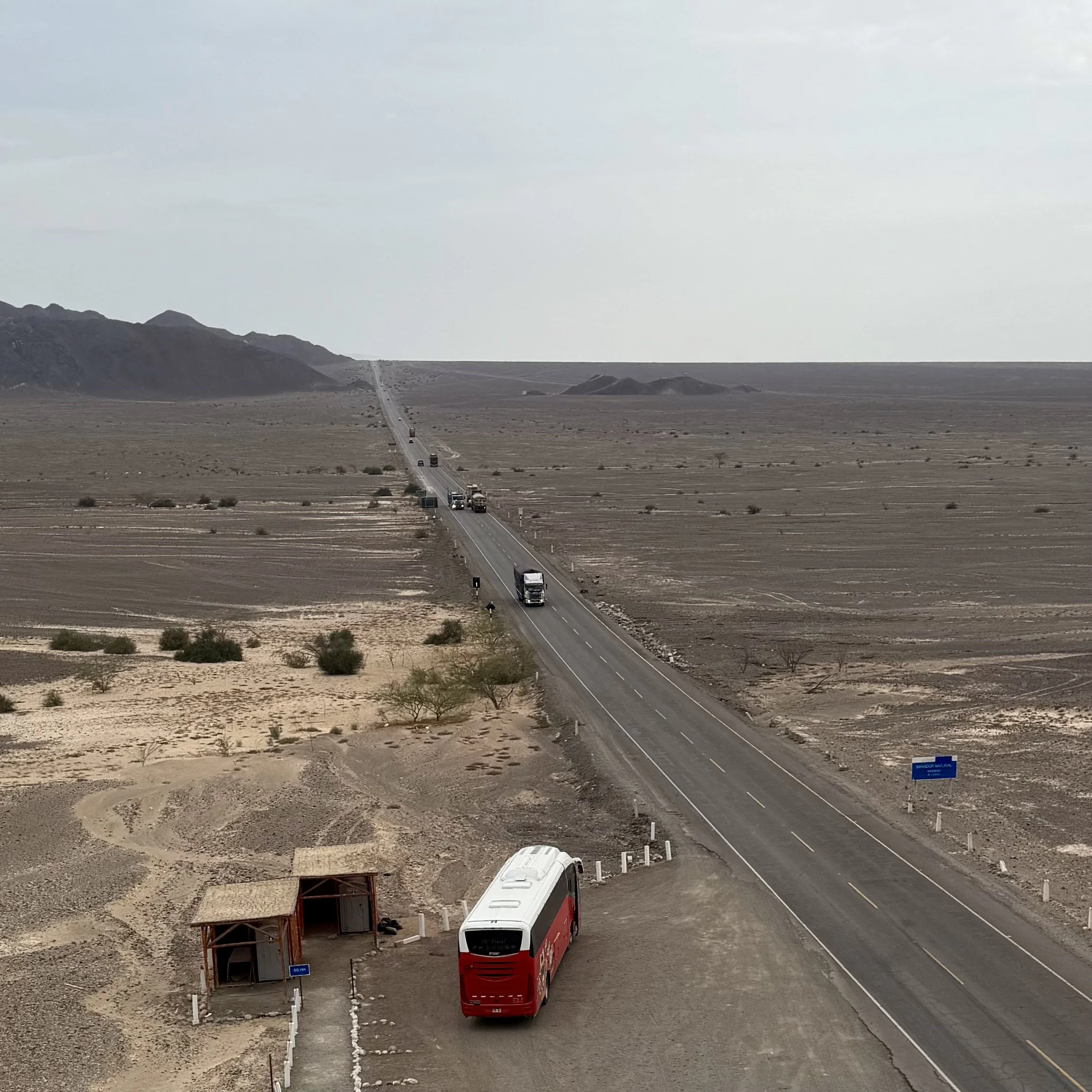
We left the oasis and giant sand dunes behind and continued through the desert on the Panamerican Highway. When we reached the foothills of the Andes, the highway began to wind and climb. After about two hours, we stopped at the Nazca Lines Observation Tower.
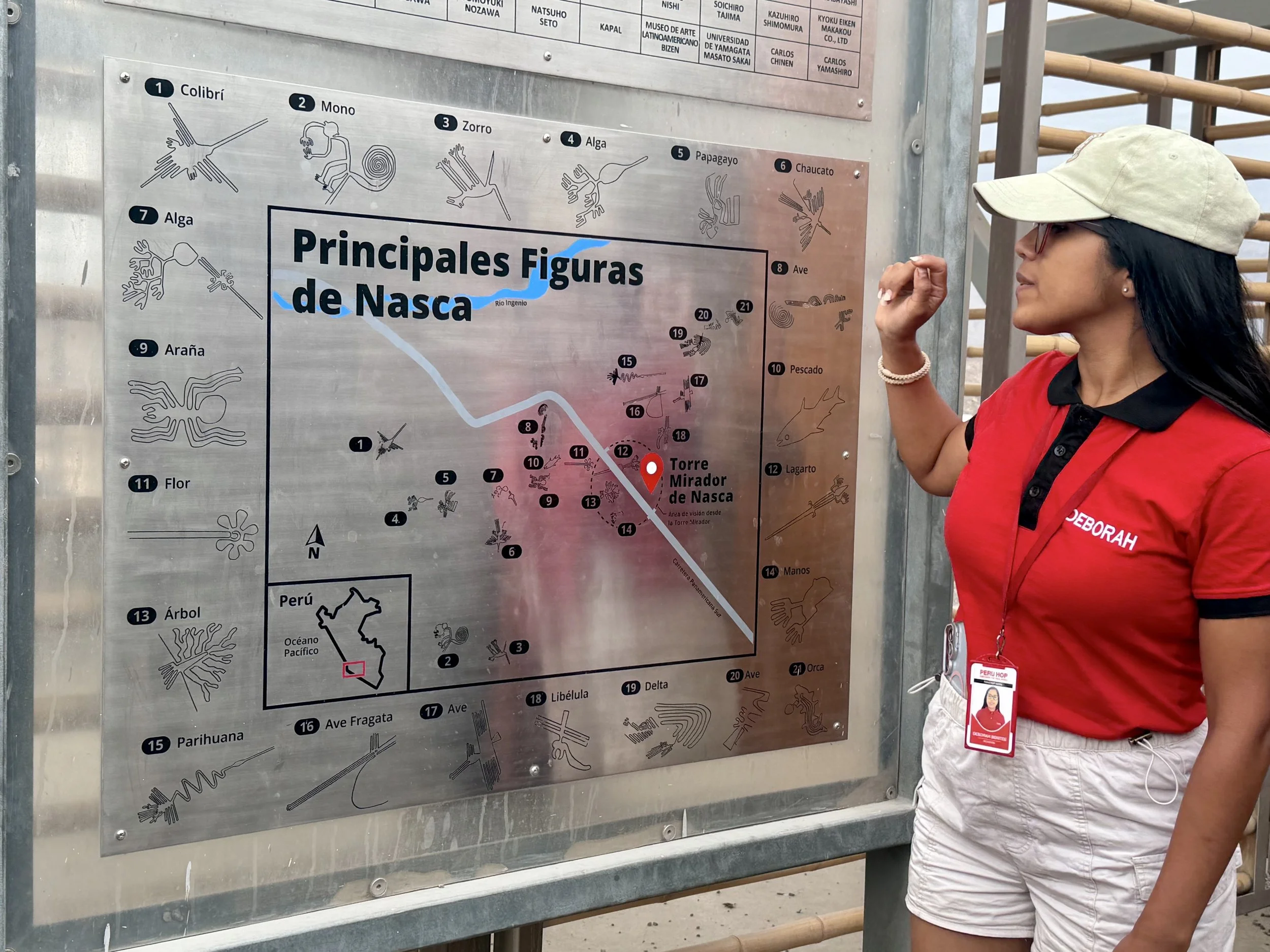
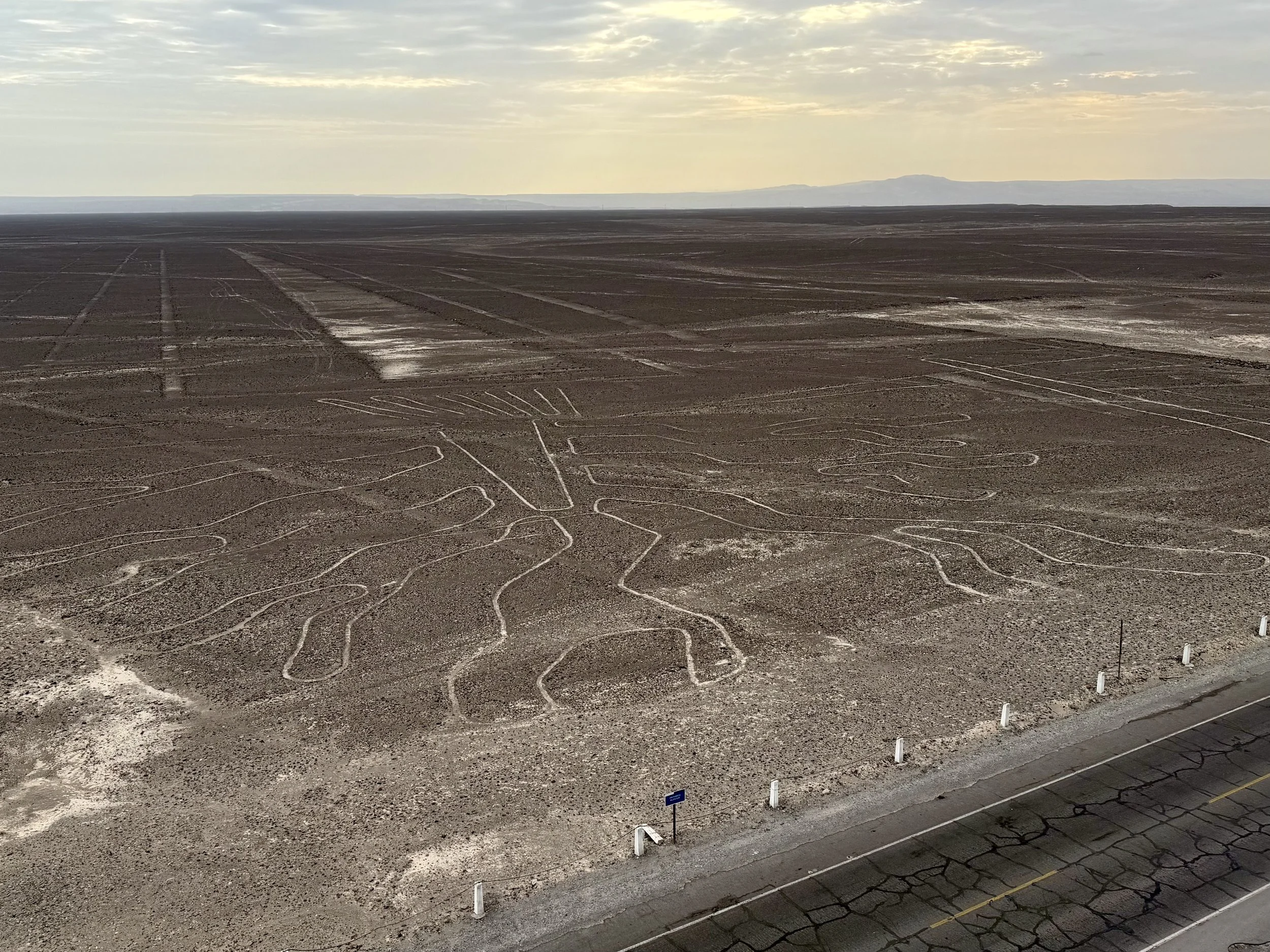
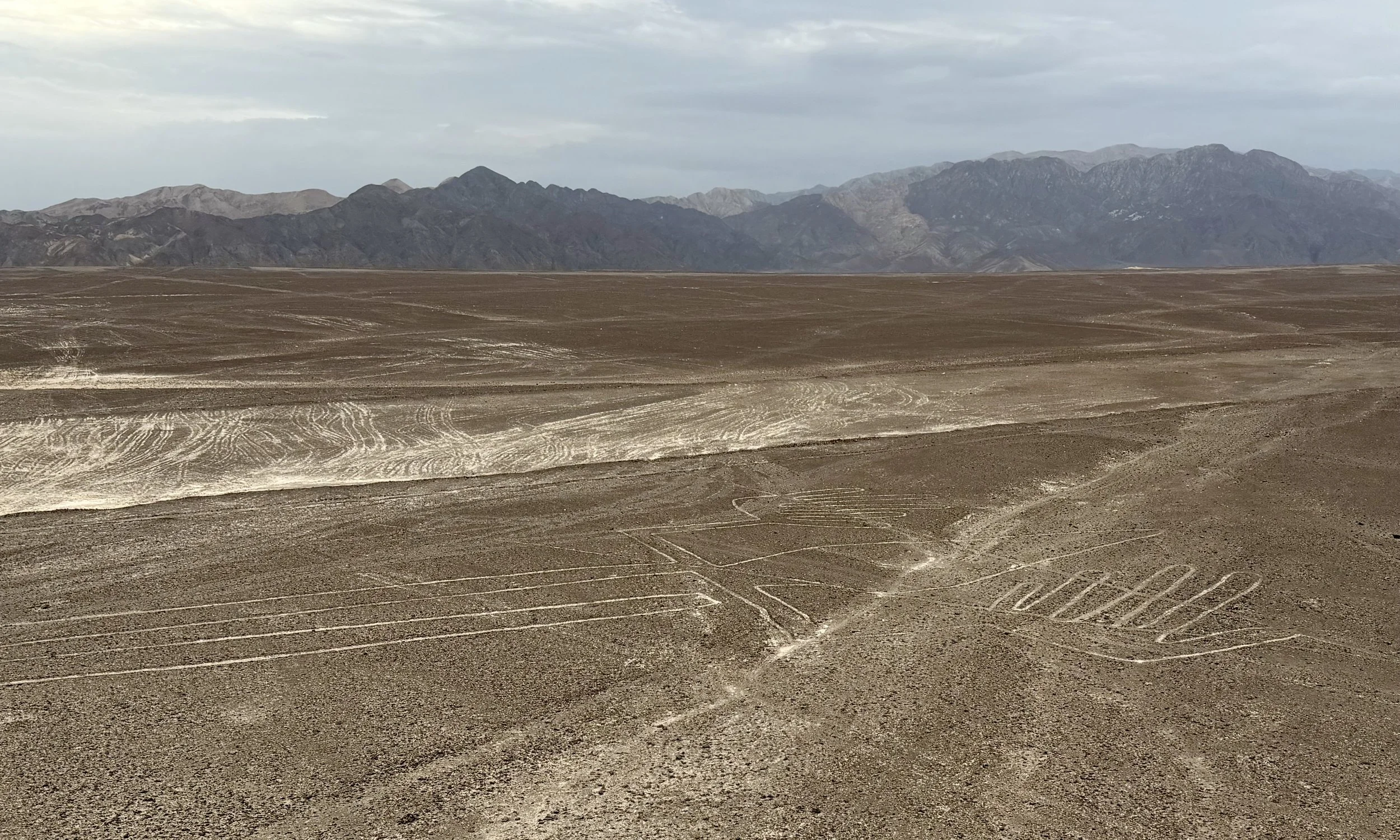
The Nazca Lines are enormous geoglyphs - drawings etched into the desert soil - covering an area of nearly 20 square miles. The figures can be up to 400 yards long! It has been suggested that geoglyphs of this grand scale must have been created by aliens. More likely, they were made by Paracas and Nazca people between 500 BCE and 500 CE, by removing the top layer of pebbles to expose lighter-colored dirt. They were discovered in the 20th century by pilots spotting them from the air, and archaeologists began studying them in earnest in the 1940s. The Nazca Lines are now a UNESCO World Heritage site, and their purpose is still a mystery.
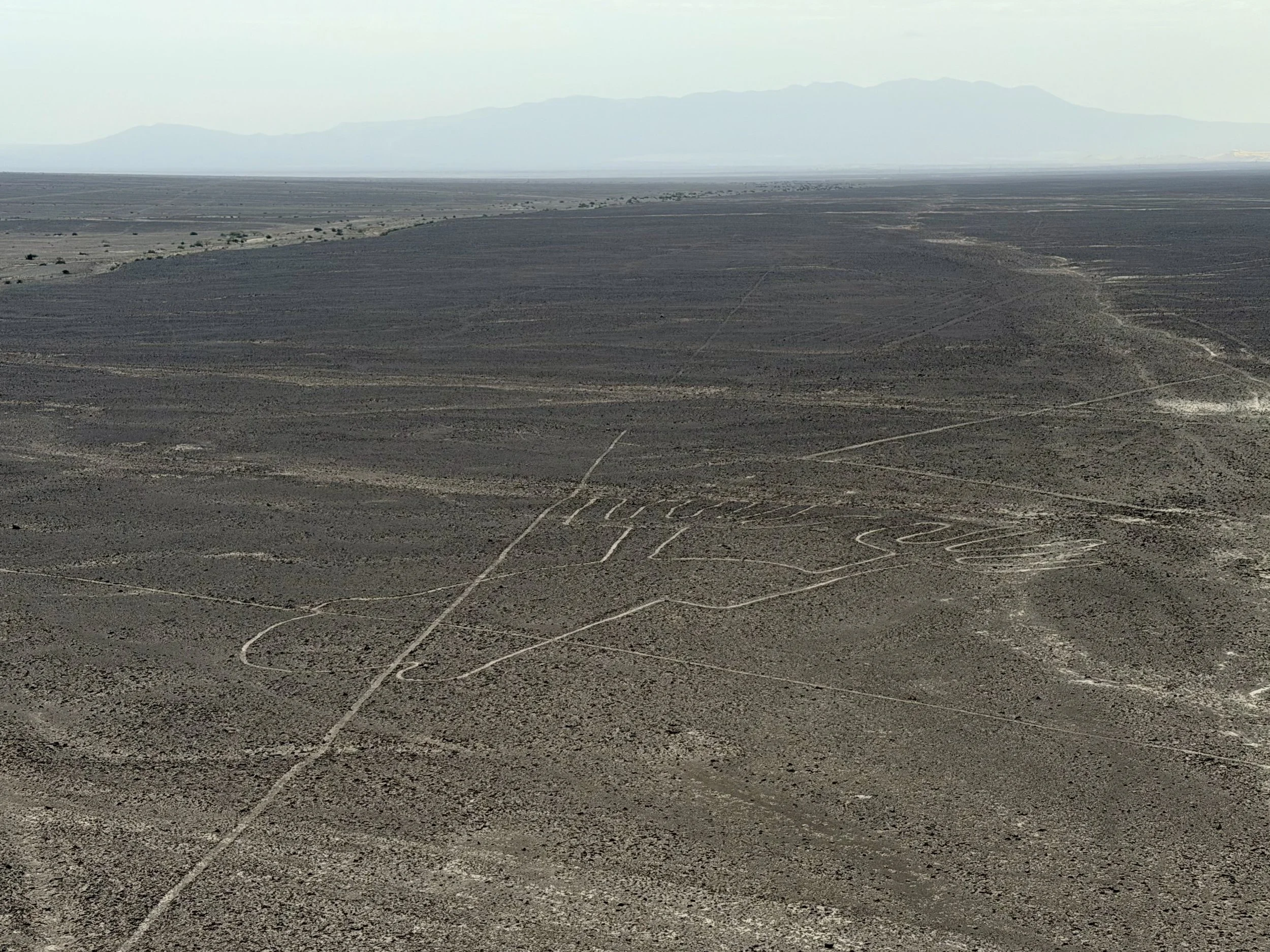
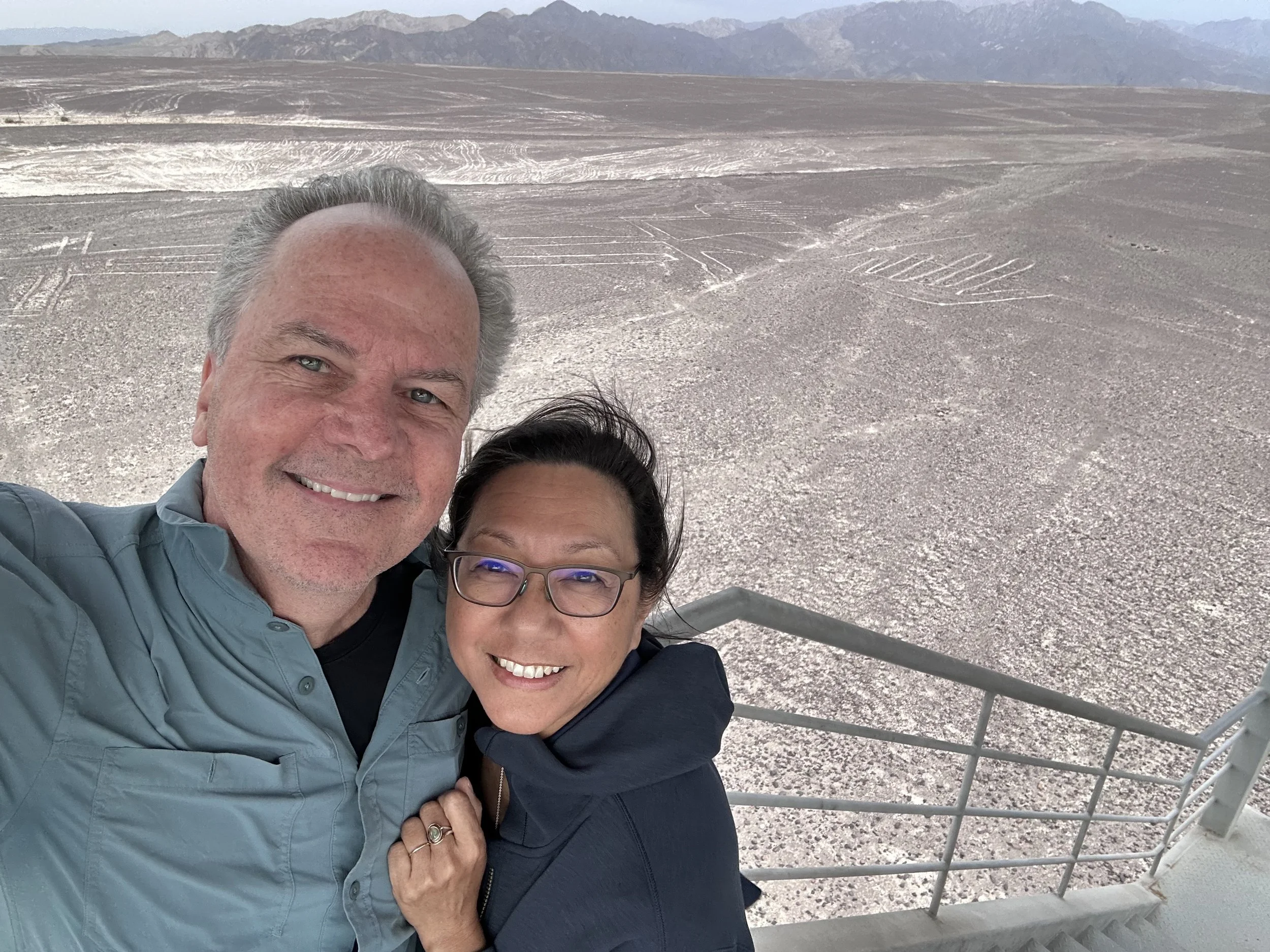
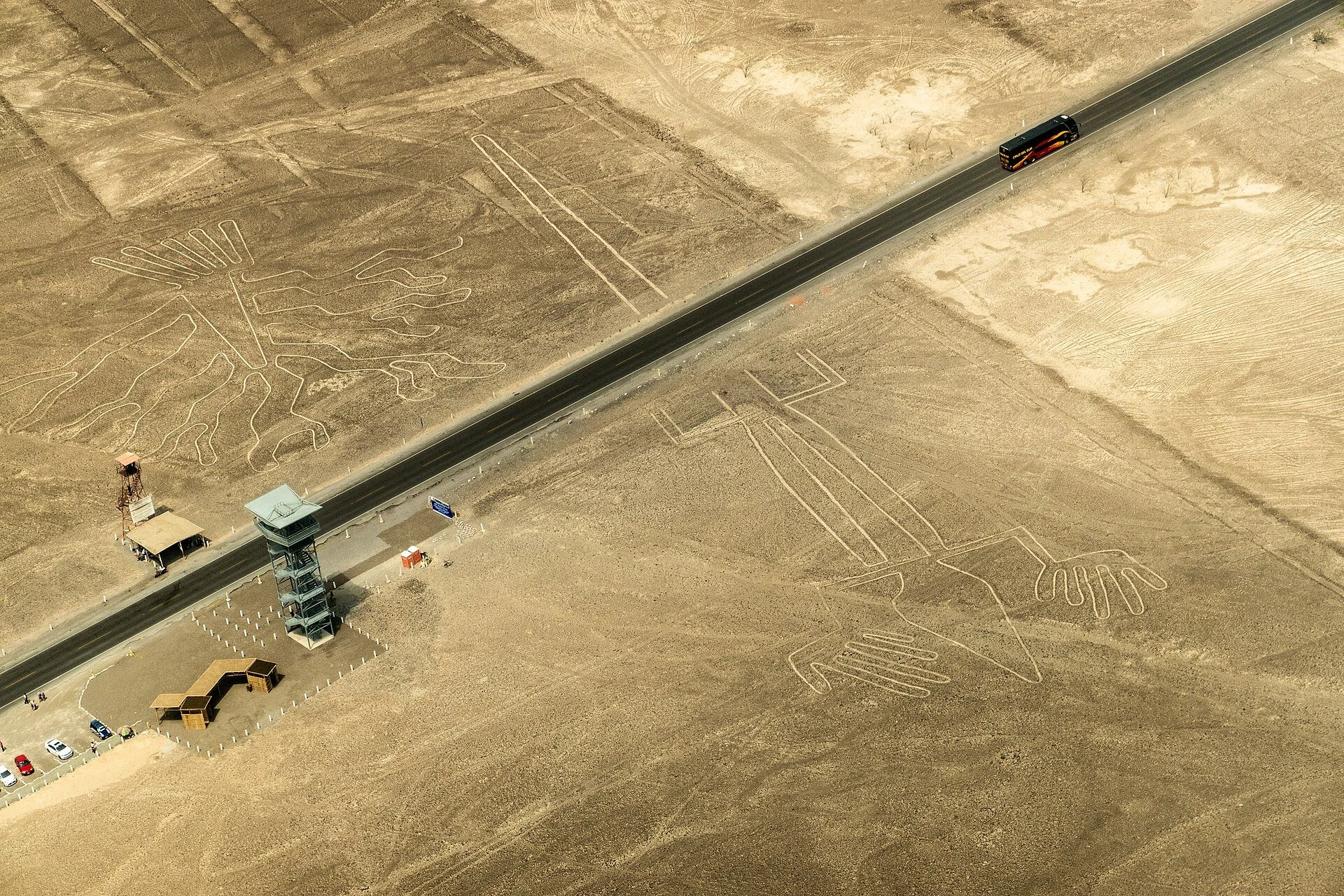
From the 40-foot observation tower, we could see three geoglyphs: the Tree, the Hands, and the Lizard. The highway cut right through the Lizard’s tail - instead of being run over ON the road, this creature was run over BY the road. The figures were huge, and making them must have required a great deal of time, effort, and mechanical ingenuity. They were truly impressive!
After viewing the Nazca Lines, we rode about 30 minutes to the small town of Nazca, where we had a short dinner break. We ate a simple meal at a cafe and took a little walk to stretch our legs. At 6:30pm, just after sunset, we boarded the bus for the last leg of our journey - the overnight ride to Arequipa.
Our host Deborah explained that for this long segment, the two bus drivers would do four-hour shifts; there was a berth beneath the bus where the off-duty driver could sleep. She reminded us that the bathroom on the bus was for liquids only, and assured us that if anyone had an emergency, they would assist, and stop the bus if needed. Then she checked with every passenger individually to confirm where they would be staying in Arequipa, so she could arrange the transfers. Paulo handed out red blankets. Soon, the interior lights were dimmed, and it was quiet on the bus.
Suddenly, we were assailed by disgusting odors from the onboard bathroom. Thankfully, the stink dissipated after a minute or two. But this happened at least three times. We were at the front of the bus, and the bathroom was at the rear, so it must have been even more awful for the passengers sitting in back.
The Panamerican Highway was on the coast again, where the mountains meet the ocean. The bus had to climb the winding road from sea level to more than 7,600 feet. I’m glad it was dark and I couldn’t see out my window; otherwise, I’m sure the sharp turns and steep inclines would have been nausea-inducing. Since I couldn’t see the narrow road and sheer drop-offs, and since I knew our drivers were experienced and well-rested, I didn’t feel afraid or unsafe.
Fortunately, there were no more bathroom stink bombs. Unfortunately, I could not get comfortable enough to sleep. My seat reclined, but the seatback was bumpy and the headrest did not keep my head stable. I listened to an audiobook to pass the time. (Steve couldn’t sleep, either.)
The bus stopped a few times - once for gas and twice for driver shift changes - but we never had to move from our seats. At last, at around 5:00am, Paulo quietly informed us that we had reached Arequipa. Everyone stumbled sleepily off the bus, collected luggage, and waited for transfers. It was chaotic, and we didn’t have a chance to thank our hosts and say goodbye. As the sun rose, we rode a white van to a hostel and then walked a short distance to our Airbnb. We were tired and groggy after the sleepless night, but happy to have arrived safely in Arequipa.
Postscript
The best way to see the Nazca Lines is from the air. Many visitors take a flight tour - a 30 minute ride on a small propeller plane. But after reading many comments about the turbulent flight making people feel sick, I decided we’d settle for the observation tower. These borrowed photos show a sample of what we might have seen on a flight tour.
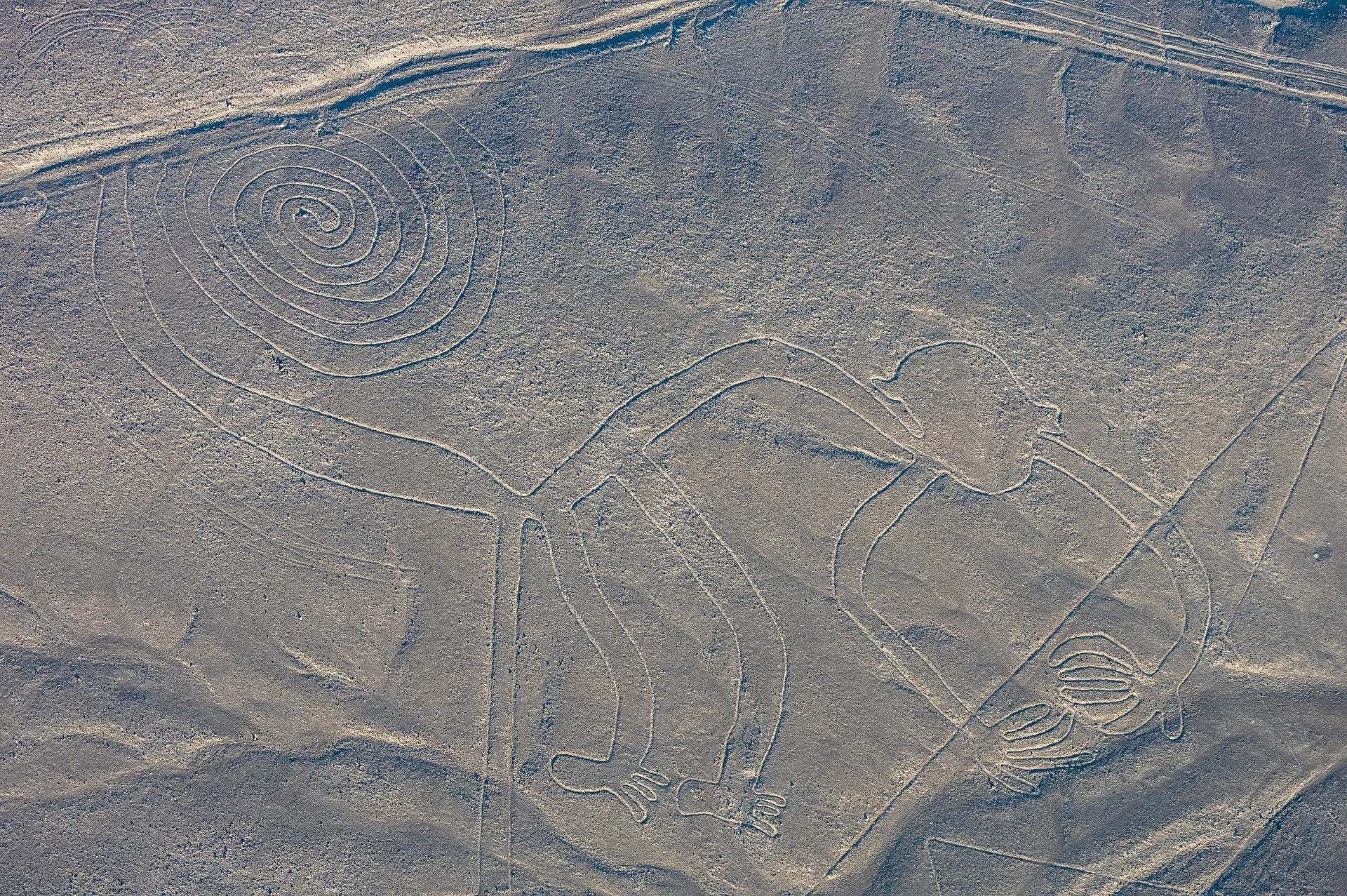
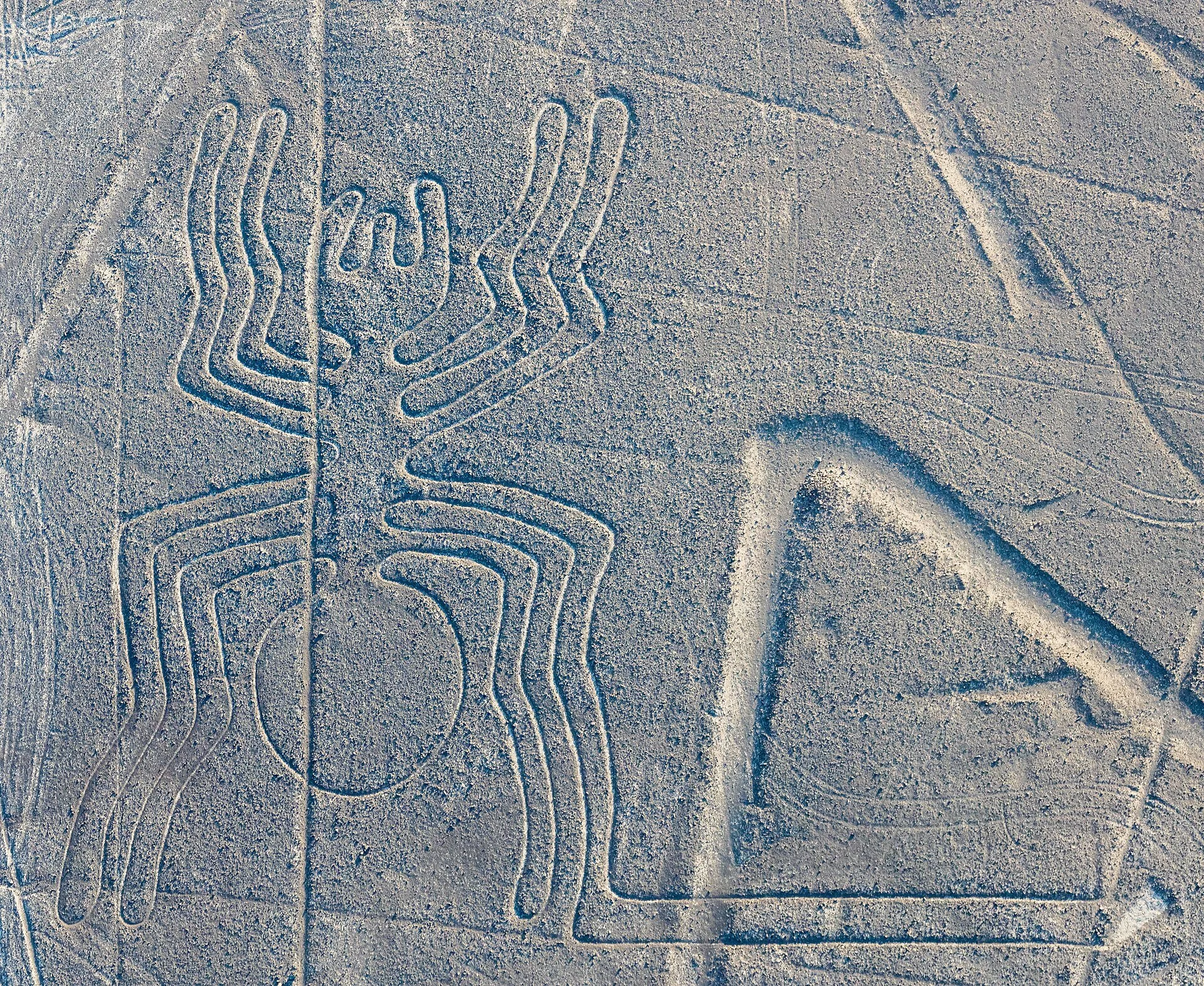
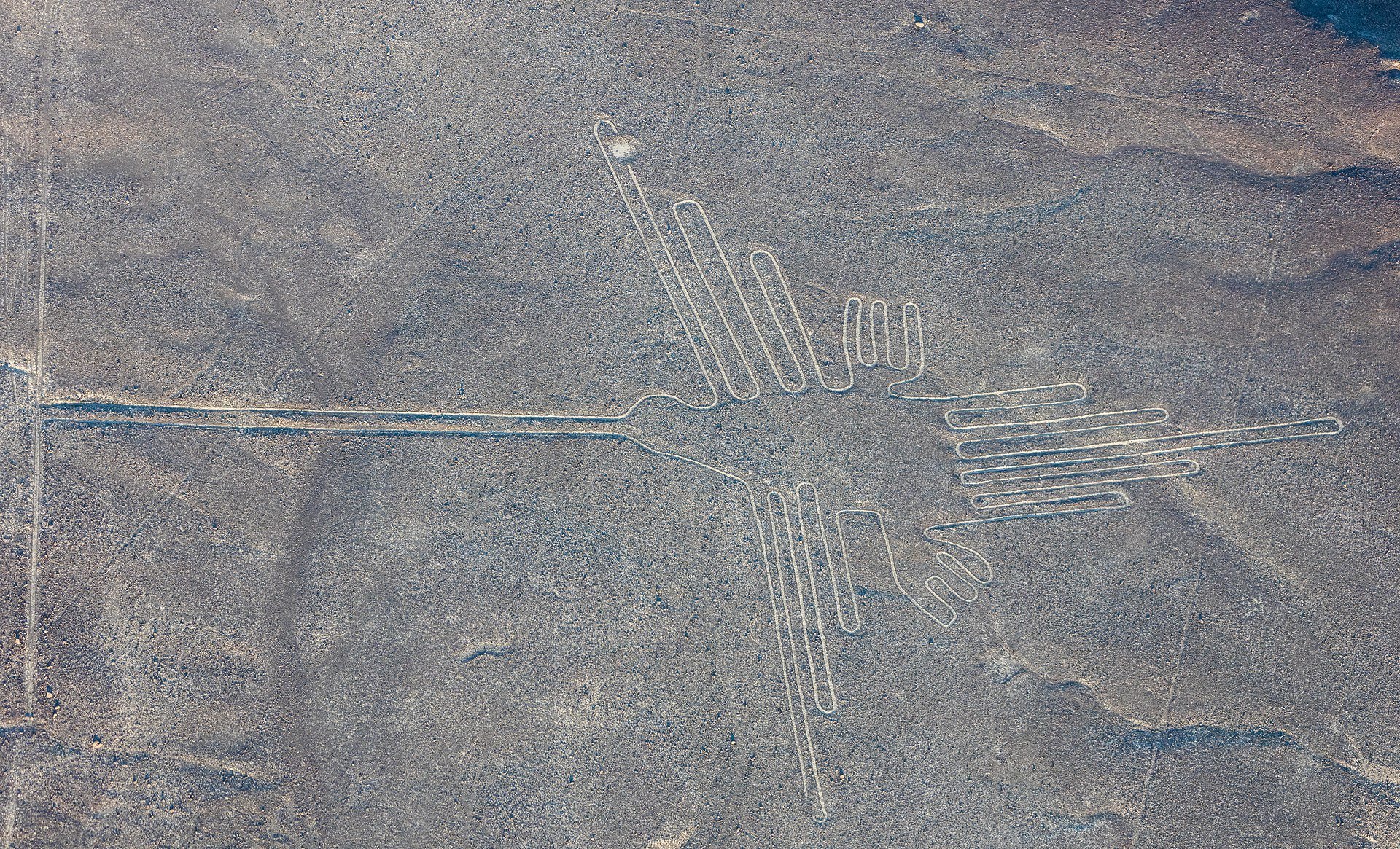
In 2024, more than 300 additional geoglyphs were discovered near Nazca using artificial intelligence.
There have been many different theories proposed regarding the purpose of the Nazca Lines. They include astronomical calendar, representations of constellations, irrigation ditches, and paths for religious worship. My favorite theory, from the 1960s, is that they were landing sites for UFOs!