Princeton Reunions weekend had a busy calendar of events. It wasn’t all parties - there was a rich variety of university-sponsored fireside talks and Alumni-Faculty Forums. There were dozens of offerings, but we had time for just three.
It felt odd, in a good way, to be back in McCosh 50, a large classroom in an ivy-covered Gothic building where I had taken classes as an undergraduate. (Those hard wooden seats! Those desks, so awkward for my left-handedness!) The events were not recorded, and I think the alumni panelists felt more free to speak their minds. I’ve tried to capture my takeaways from each.
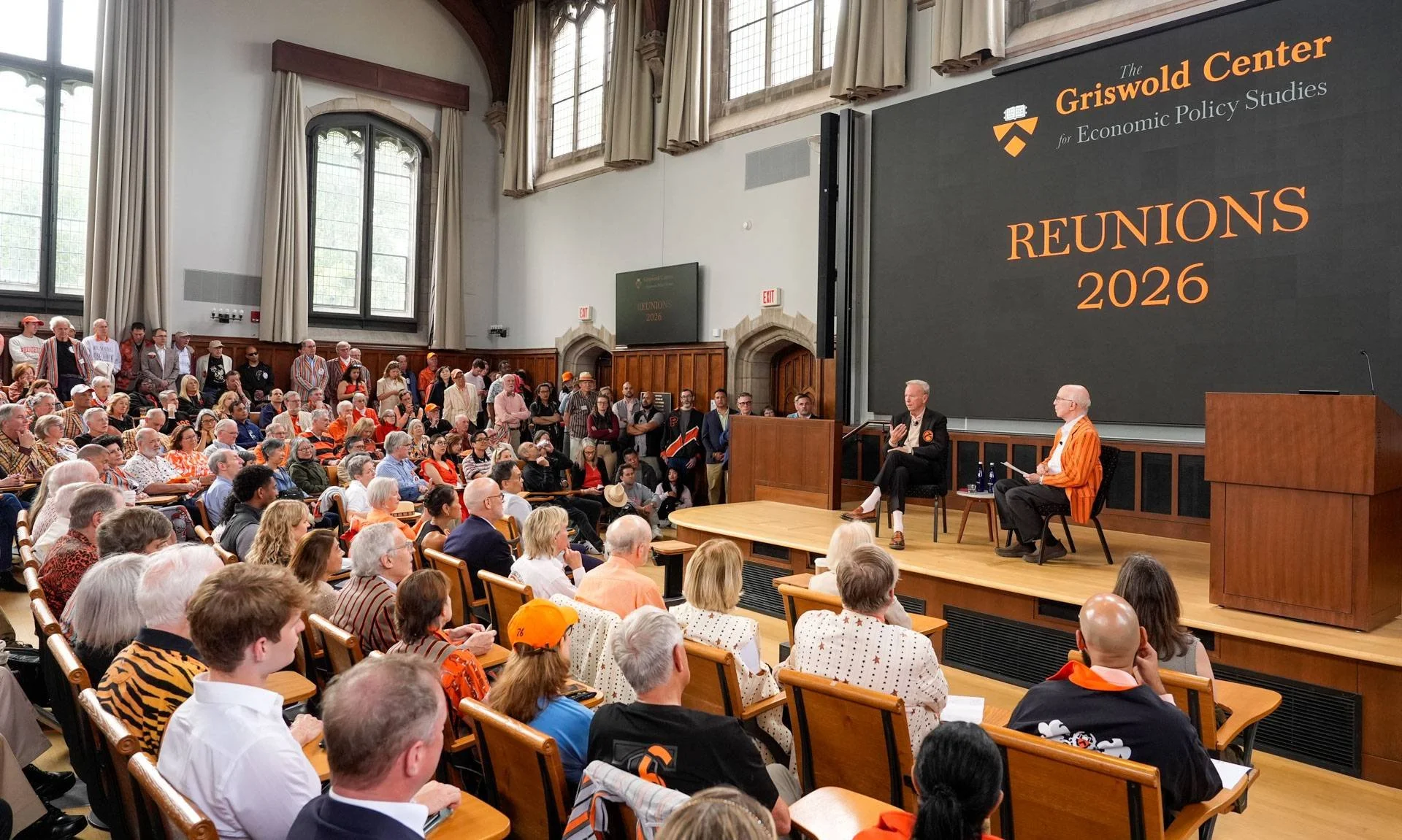
Relativity Space CEO (and former Google CEO) Eric Schmidt ‘76 talked about the AI Revolution. He was interviewed by Alan Blinder ‘67, my freshman year Economics professor, who co-wrote the textbook that many colleges still use today.
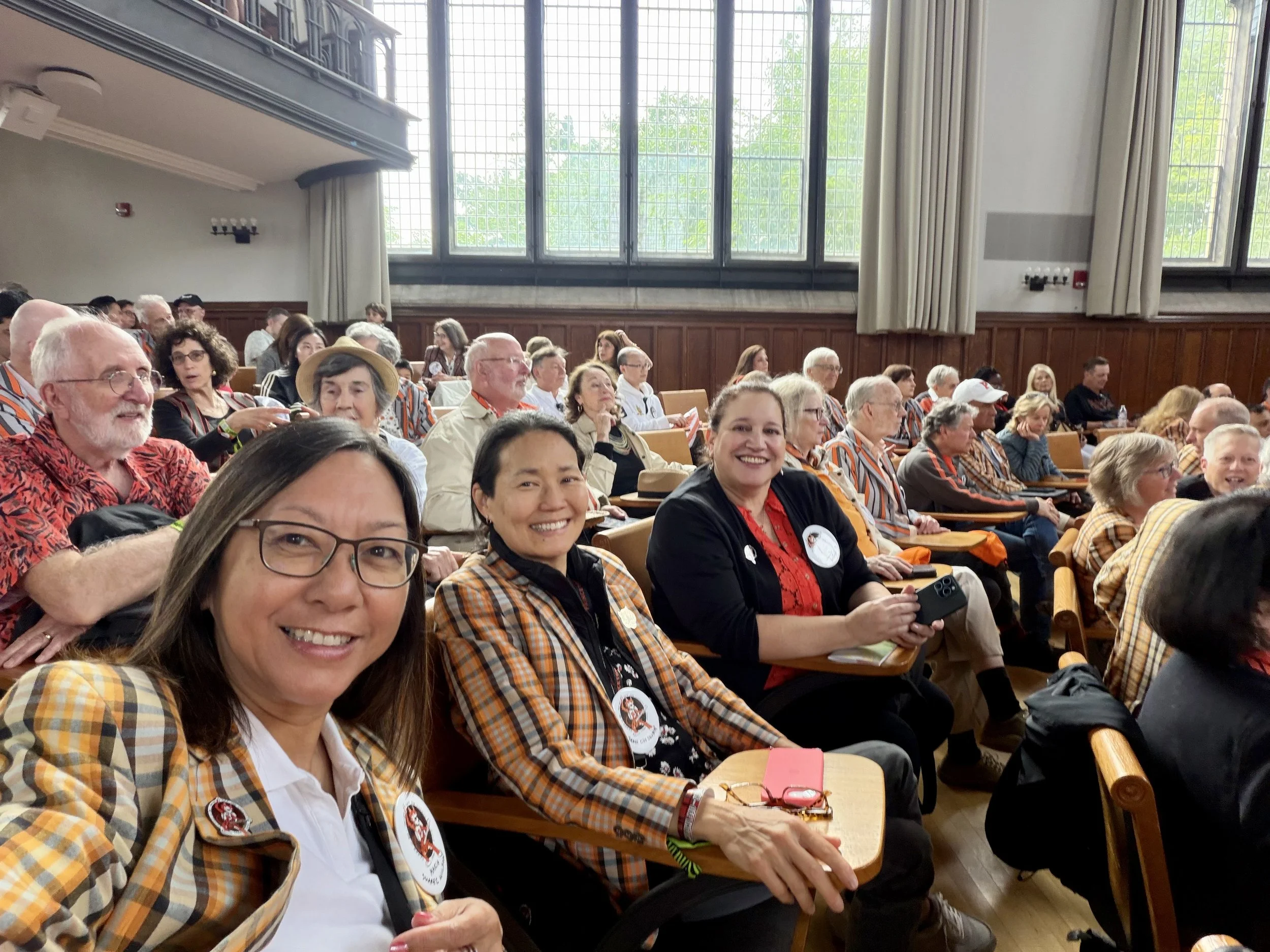
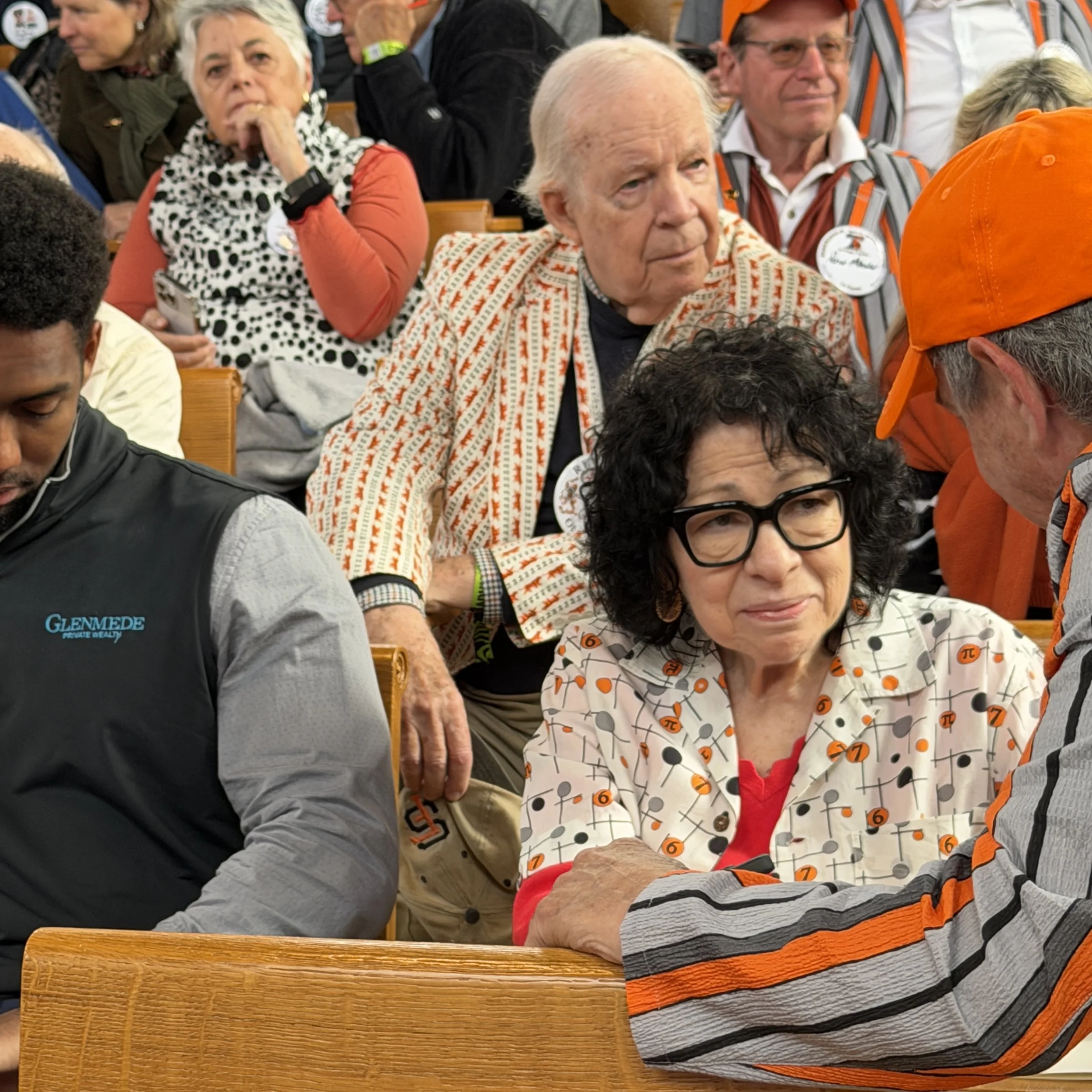
It was standing room only in McCosh 50! As we waited for the event to start, we enjoyed watching friends and fans greet U.S. Supreme Court Justice Sonia Sotomayor ‘76, who was sitting quietly in the audience.
Schmidt reminisced about his days at Princeton - he had to major in Electrical Engineering because there was no Computer Science major (my story, too) and working on the university’s IBM mainframe (all of my fellow ‘86 engineers remember that old behemoth).
He spoke about the speed of advancements in artificial intelligence, and its surprising ability to learn. Just two days before, Open AI had announced that a model NOT trained in mathemetics had made a breakthrough in discrete geometry. Schmidt said, “I’m a REALLY good programmer, but these AI agents are MUCH better.”
He said the United States was rapidly losing its lead on China in the AI race, and that the current administration’s cuts in technology investment would create long-lasting damage. But overall, he was more “boom” than “doom” about AI.

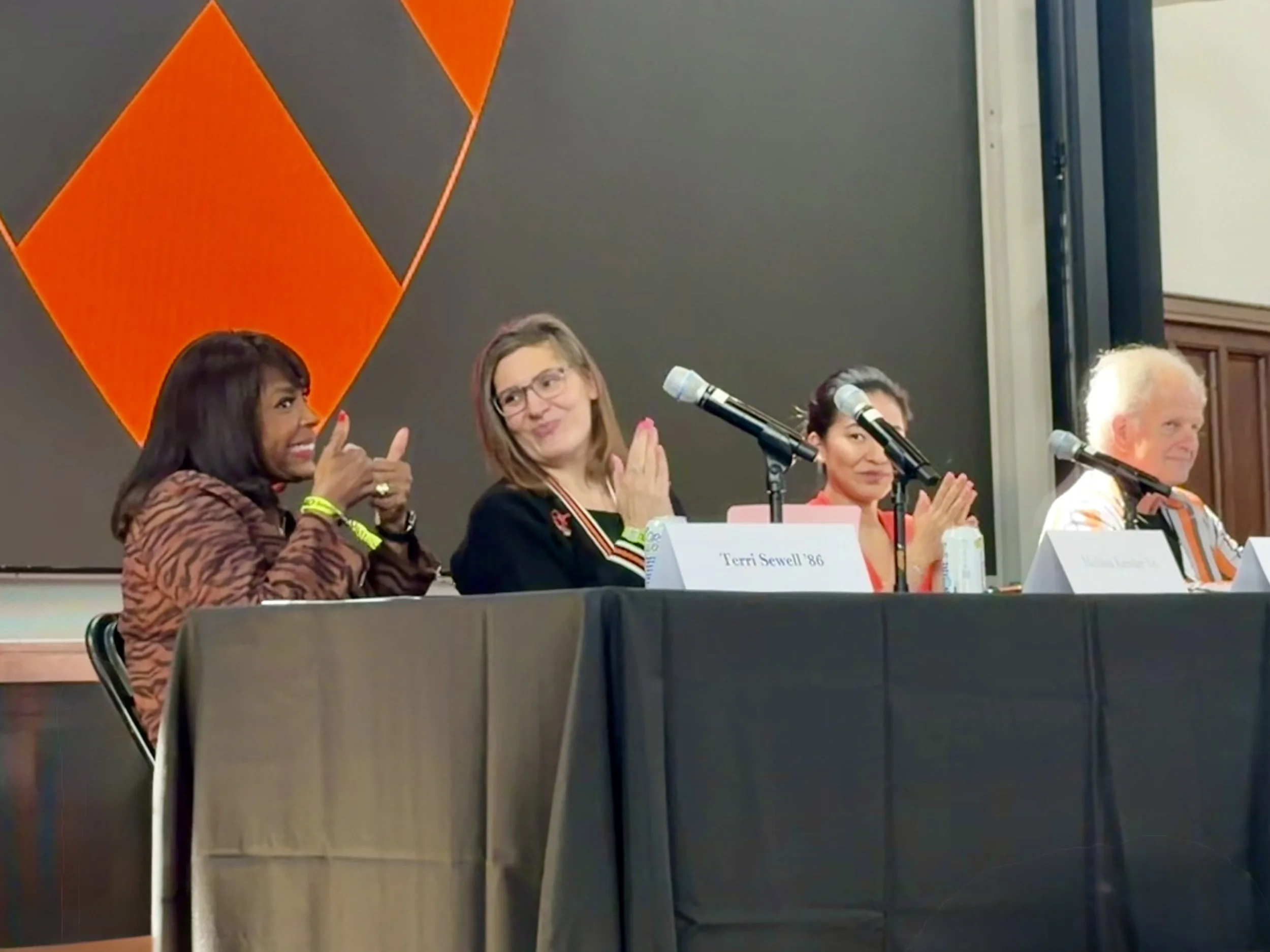
Our classmate Terri Sewell ‘86, the U.S. Representative for Alabama’s 7th District, was a panelist in a forum about The Future of U.S. Elections.
The panelists discussed the importance of the 2026 elections to American democracy. Recent U.S. Supreme Court rulings have weakened the Voting Rights Act of 1965. Gerrymandering in multiple states threatens to reduce minority representation in all levels of government.
In Alabama, Terri is in the thick of things. Proposed redistricting in the state would likely result in Alabama having just one U.S. Representative of color instead of two. (Alabama has seven representatives, and about 27% of residents are Black or African American.) Terri recently reintroduced the John R. Lewis Voting Rights Advancement Act, to reduce minority discrimination in voting and representation.
The panel also discussed the current administration’s attempts to collect voter information nationwide and the states’ commitment to protecting voter privacy. The U.S. Department of Justice filed lawsuits against the states that refused to hand over their voter databases; thus far, 8 of the 30 cases have been dismissed by federal courts.
In a call to action, the panelists urged the audience to get involved in elections at any level of government. They also advised trying to connect with voters at a personal level: knock on doors, offer to buy them a meal, and listen carefully.
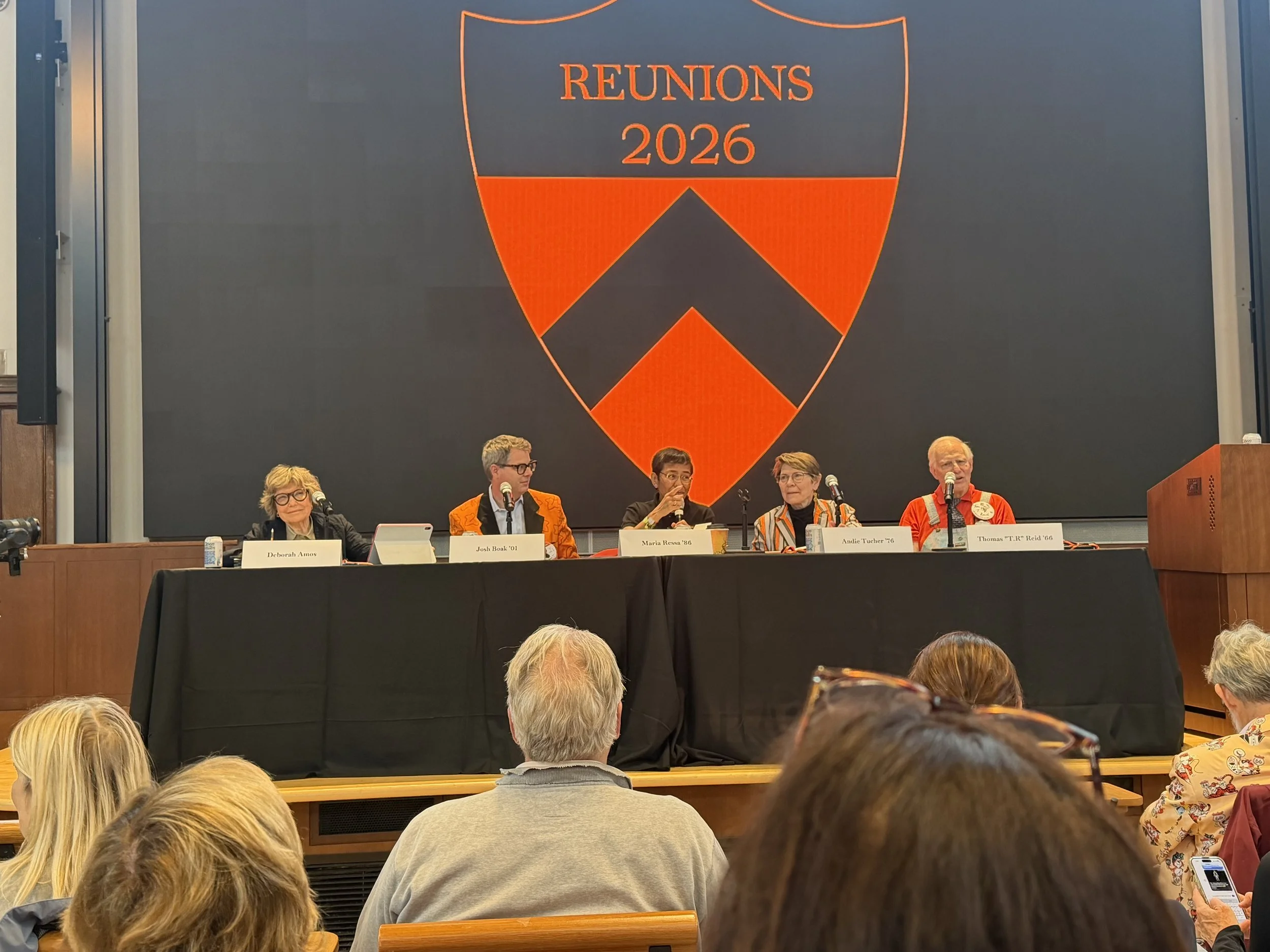
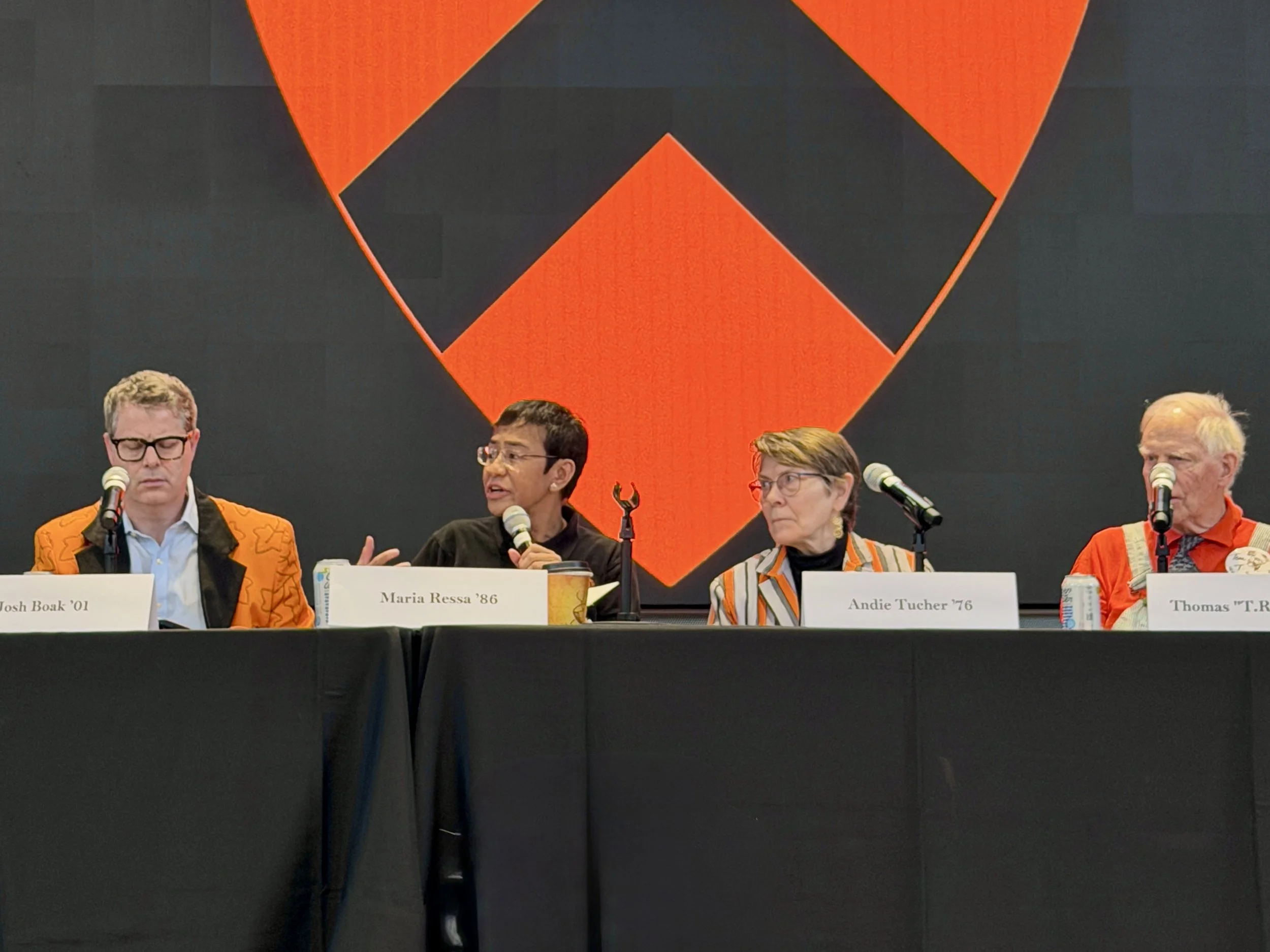
Our classmate Maria Ressa ‘86, CEO of Rappler and Nobel Peace Prize laureate, was a panelist in a forum about Journalism’s Role in Defending Democracy.
The moderator asked, “Are you still getting newspapers delivered to their door?” For most of the panelists and audience members, this was a fervent YES! Associated Press White House Reporter Josh Boak ‘01 said that he still reads a newspaper regularly so he can decide which articles to read, and in which sequence.
Former Washington Post reporter T.R Reid ‘66 said it was not possible for journalists to have true “objectivity” because every writer has a background and a point of view.
Maria reminded us that more people - especially young people - are getting their news from social media. Algorithms - and the tech billionaire-owned companies that write them - are driving our society’s understanding of current events.
Associated Press White House Reporter Josh Boak ‘01 talked about the journalist’s ability to influence political leaders - including the President - by asking informed questions. Maria pointed out that journalism has become activism.
In a call to action, the panelists reminded the audience to thoughtfully curate their news sources and subscribe to support their preferred news organizations.
One of Maria’s many bon mots: "Without facts, you can't have truth. Without truth, you can't have trust. Without all three, we have no shared reality."

After each of these events, my mind was awhirl with ideas and aspirations to heed the calls to action. The young people in the audience asking questions (including the 17-year-old running for City Council) gave me hope for the future. I was incredibly proud of my illustrious classmates Maria and Terri. Most of all, I felt grateful to be part of such an insightful and influential alumni community.