Machu Picchu Part 2
I started planning our trip to Machu Picchu about six months in advance. Traveling to the place is complicated, requiring a flight to Cusco, a drive to Ollantaytambo, a train (or trek) to Machu Picchu Pueblo, and then a bus to the archaeological site. There are at least ten different circuits (routes) through the site, each requiring a different ticket, and the number of tickets is strictly limited.
This is why I decided to book a package tour with a reputable operator (Apus Peru) instead of planning it all myself. What’s more, I splurged on an extra day in Machu Picchu Pueblo and tickets for THREE circuits of the archaeological site. I viewed the extra tickets as insurance in case of bad weather or altitude sickness or whatever. That’s why we had a wonderful second tour of Machu Picchu, the day after our first.
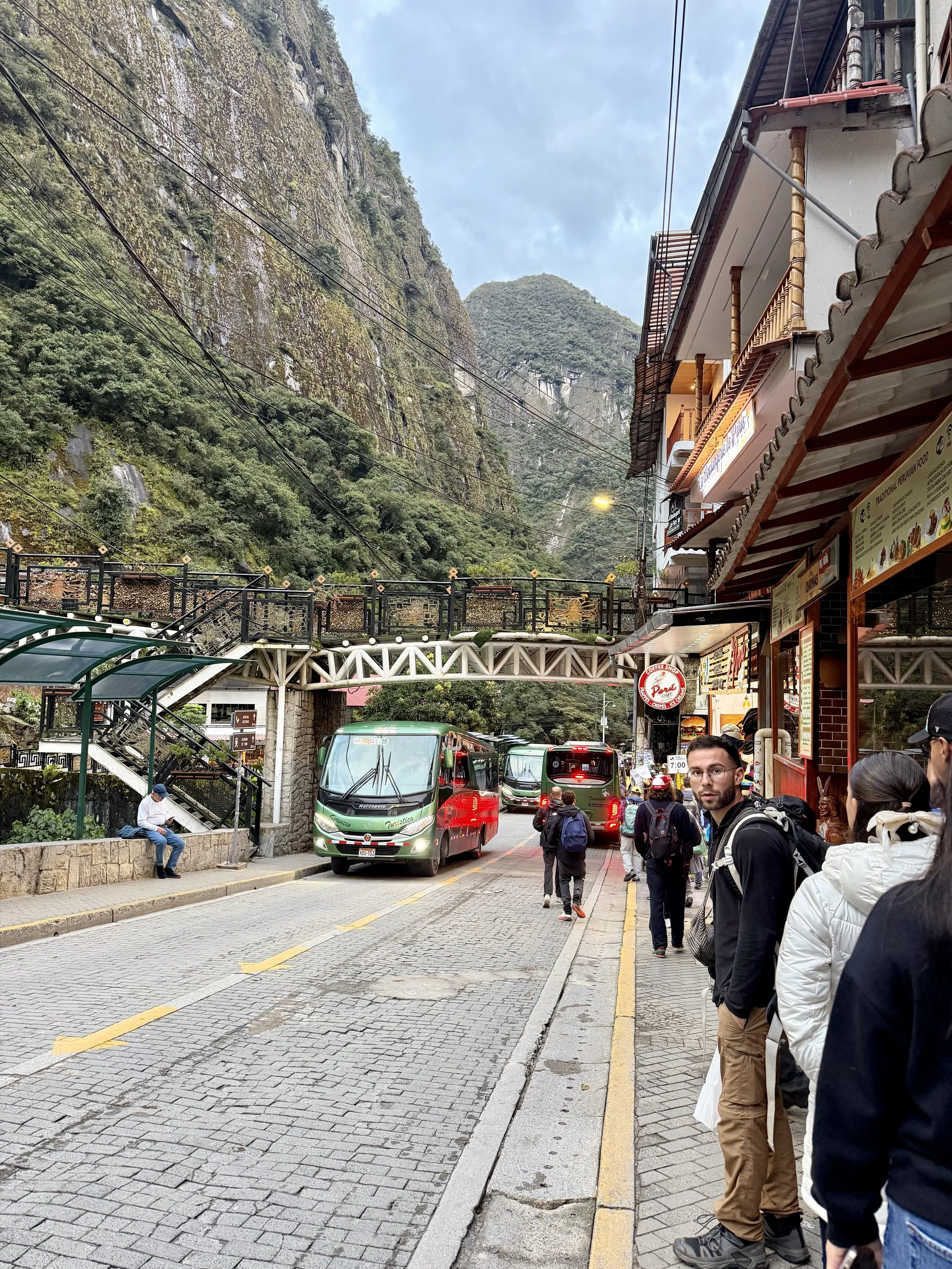
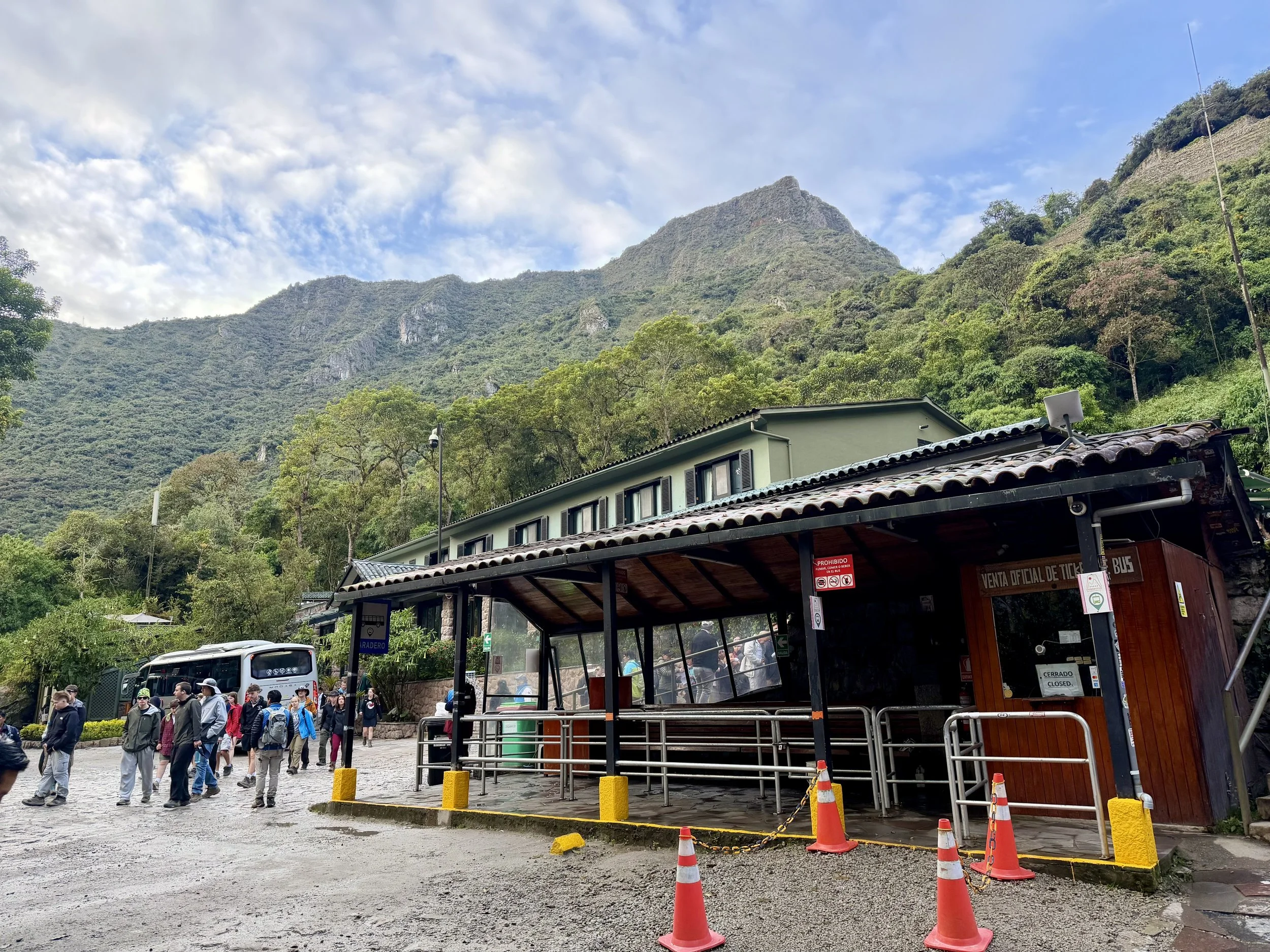
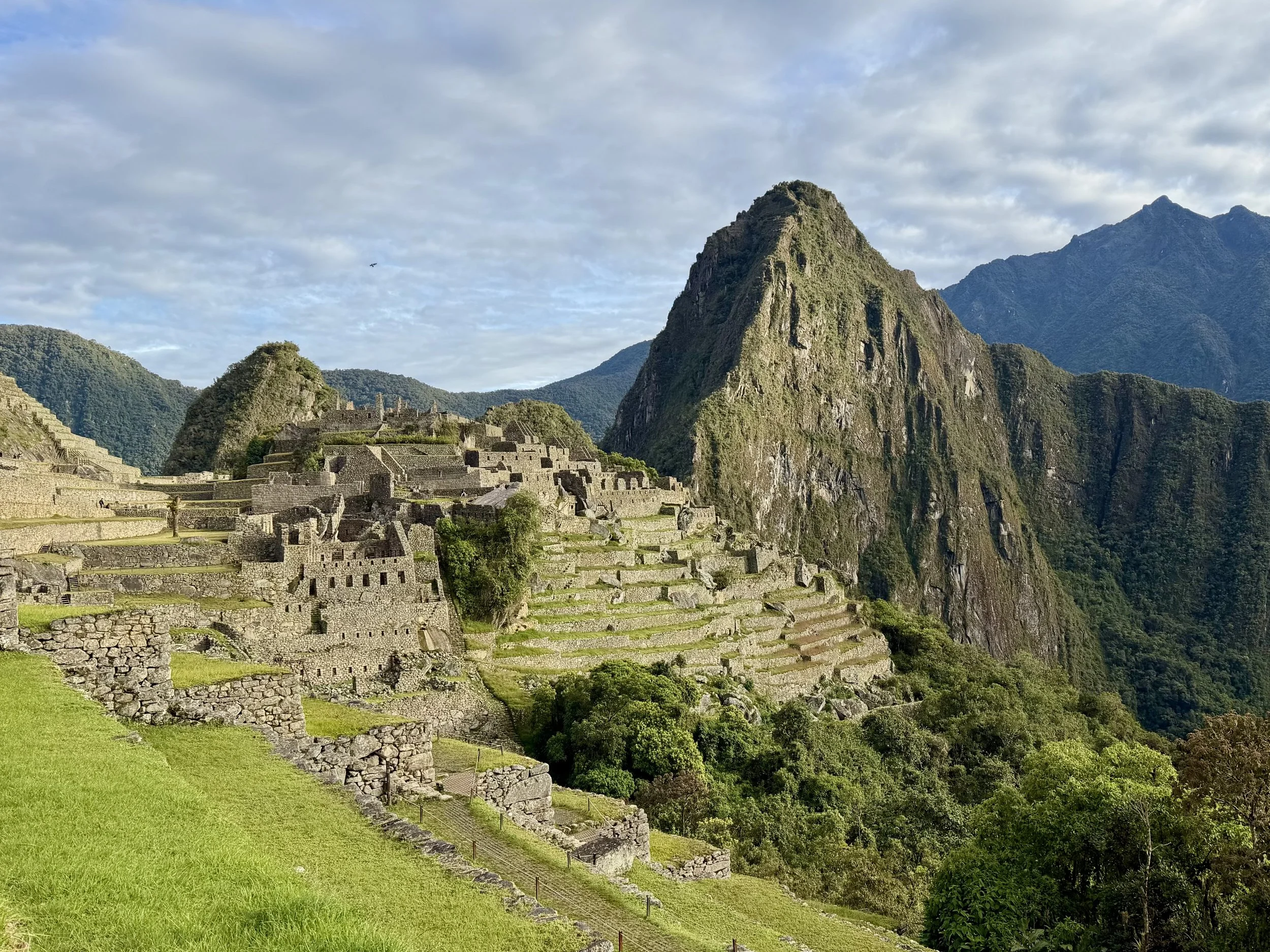
On that second morning, it was overcast, but there was no rain. Hooray! Our tour slot was at 7:00am, which meant we were boarding the bus just before sunrise. (Yawn.) This time, there was a bit of blue sky as we got off the bus at the entrance to Machu Picchu. We entered the site from the bottom this time. The Inca city looked completely different without all the rain clouds!
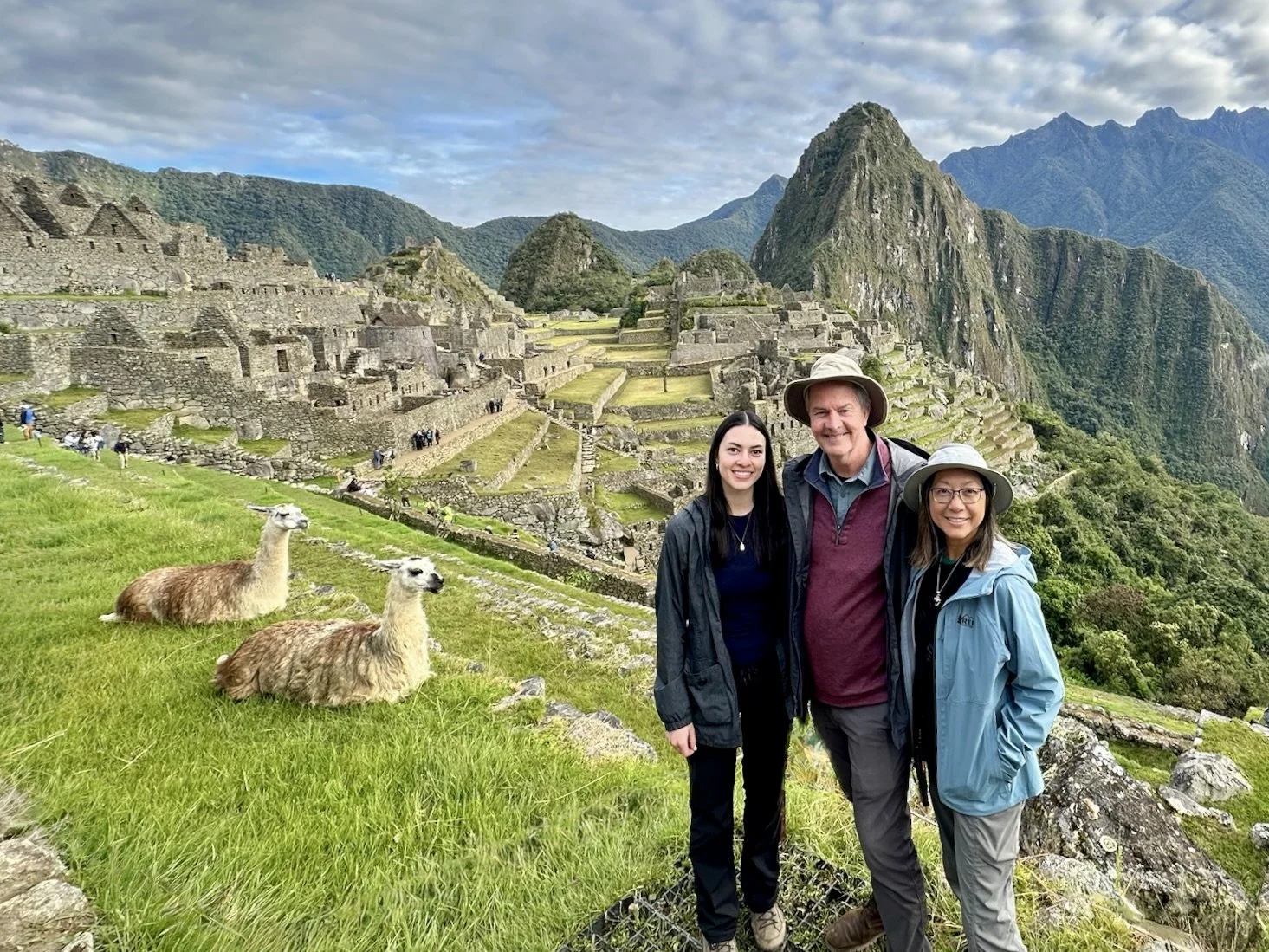
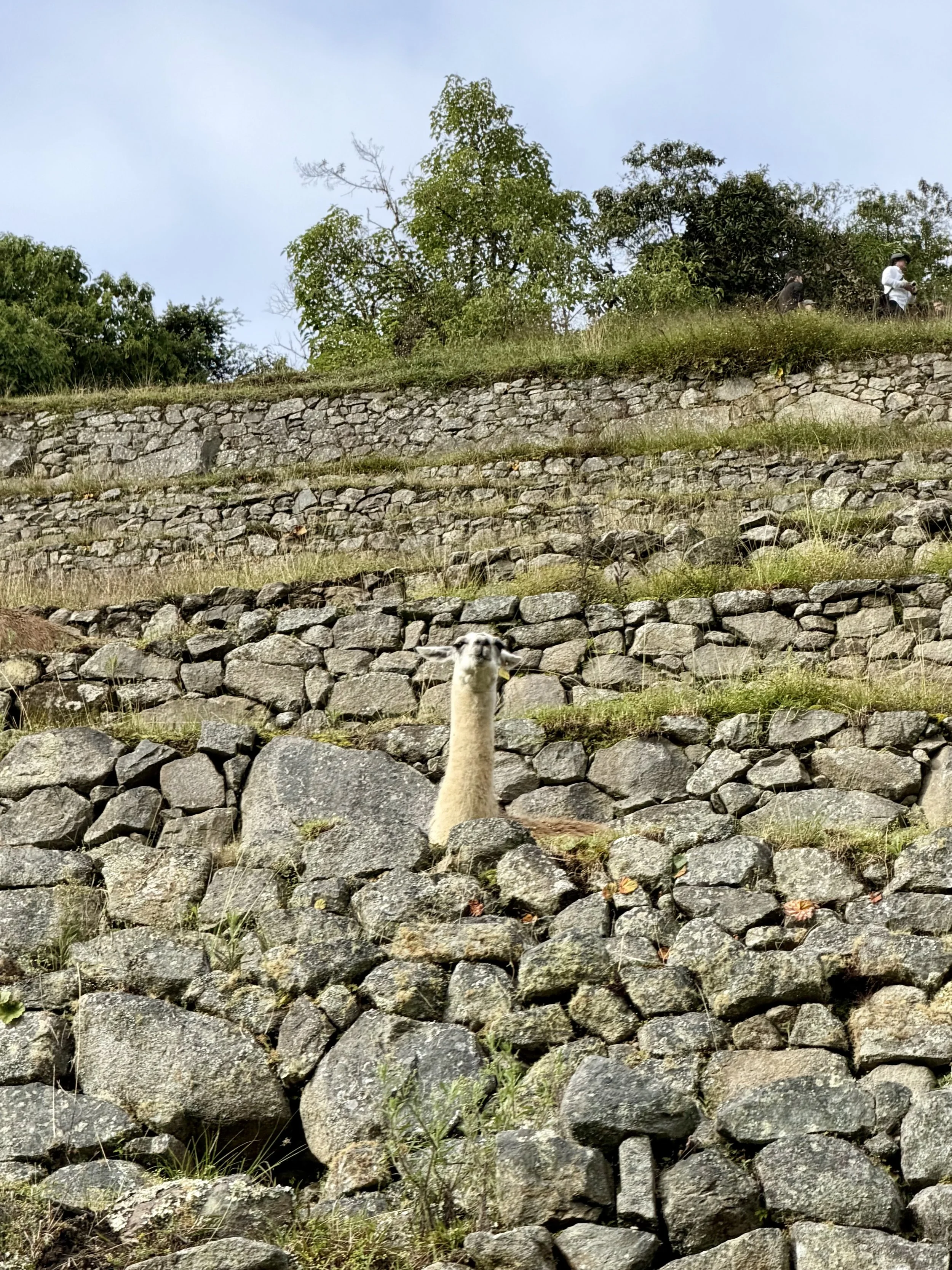
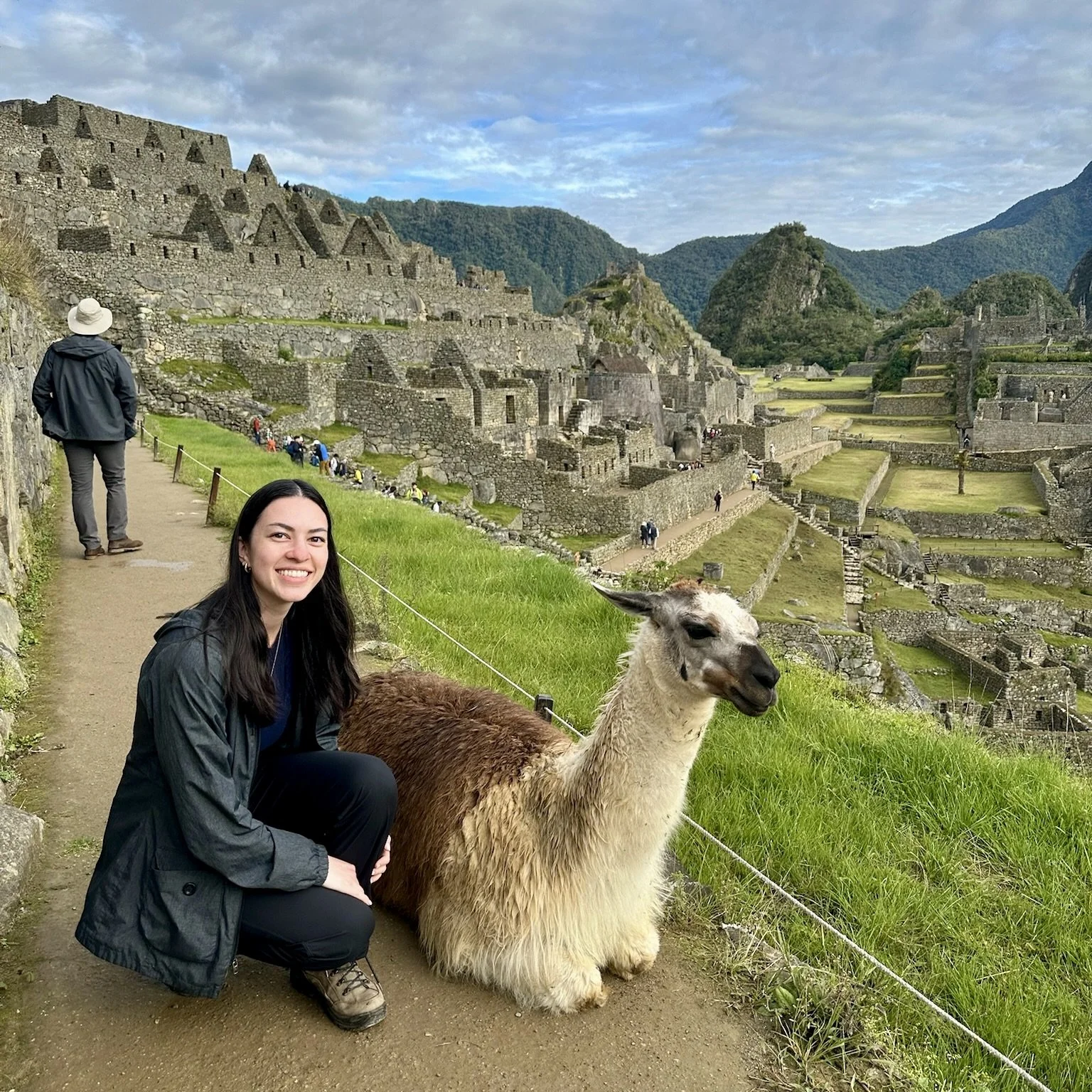
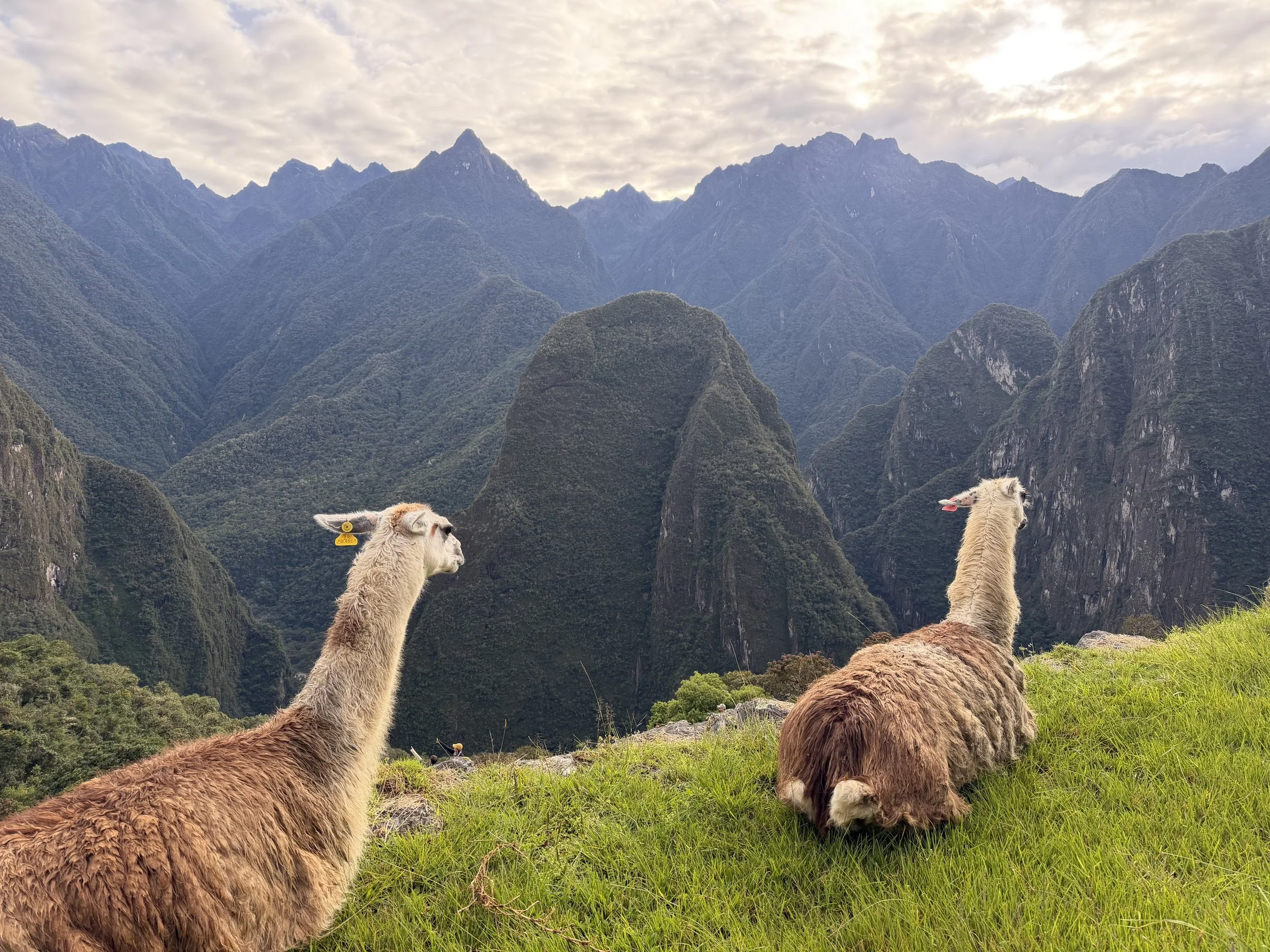
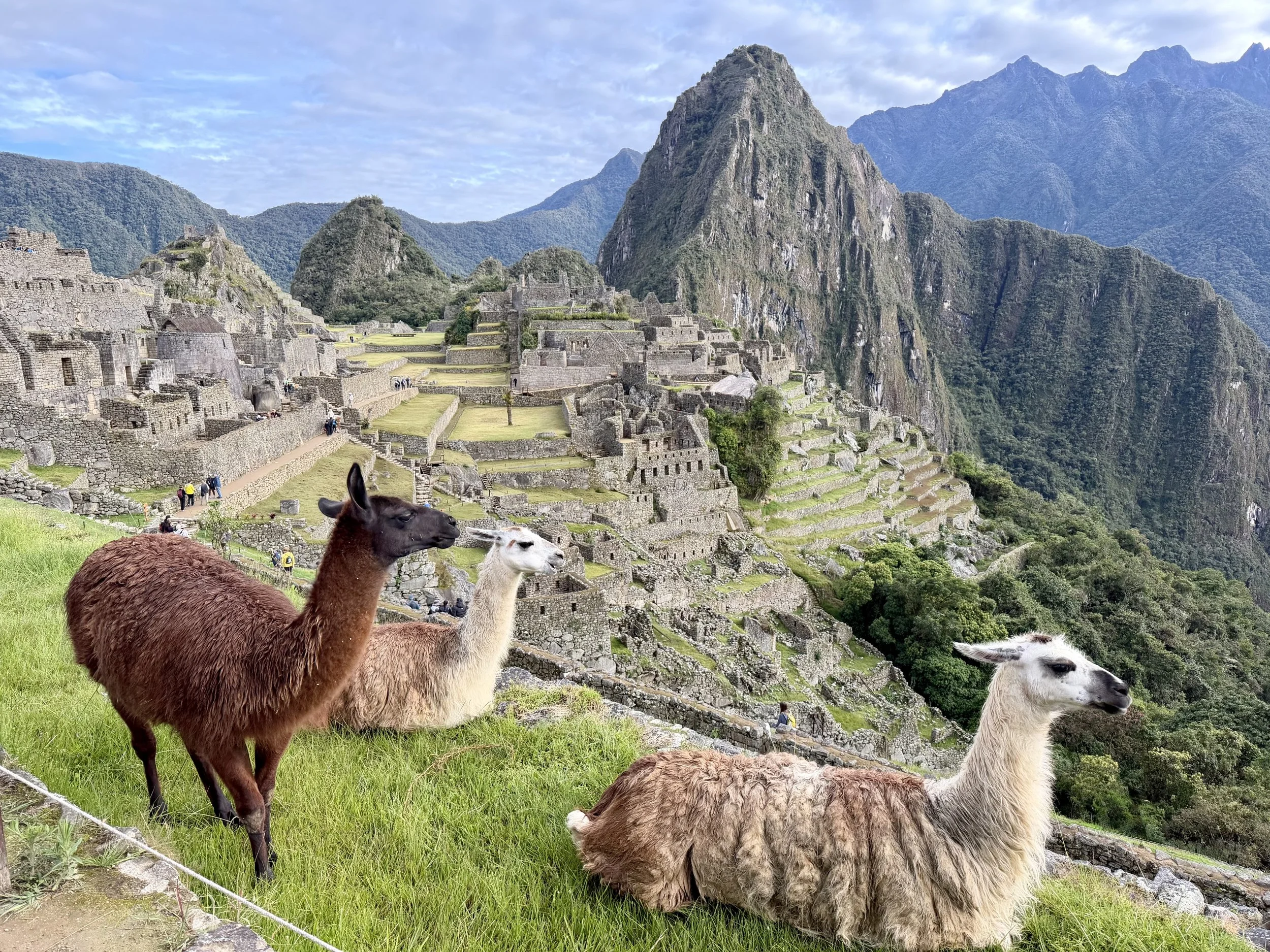
I looked up at the terraces and saw a llama’s head rising above the stone wall. We walked up and found that friendly fellow standing on the path, quite willing to pose for photos. Other llamas were sitting serenely on the grass, gazing out at the sunrise over the mountains. It was a nice reminder that for the original human inhabitants, this was a sacred place.
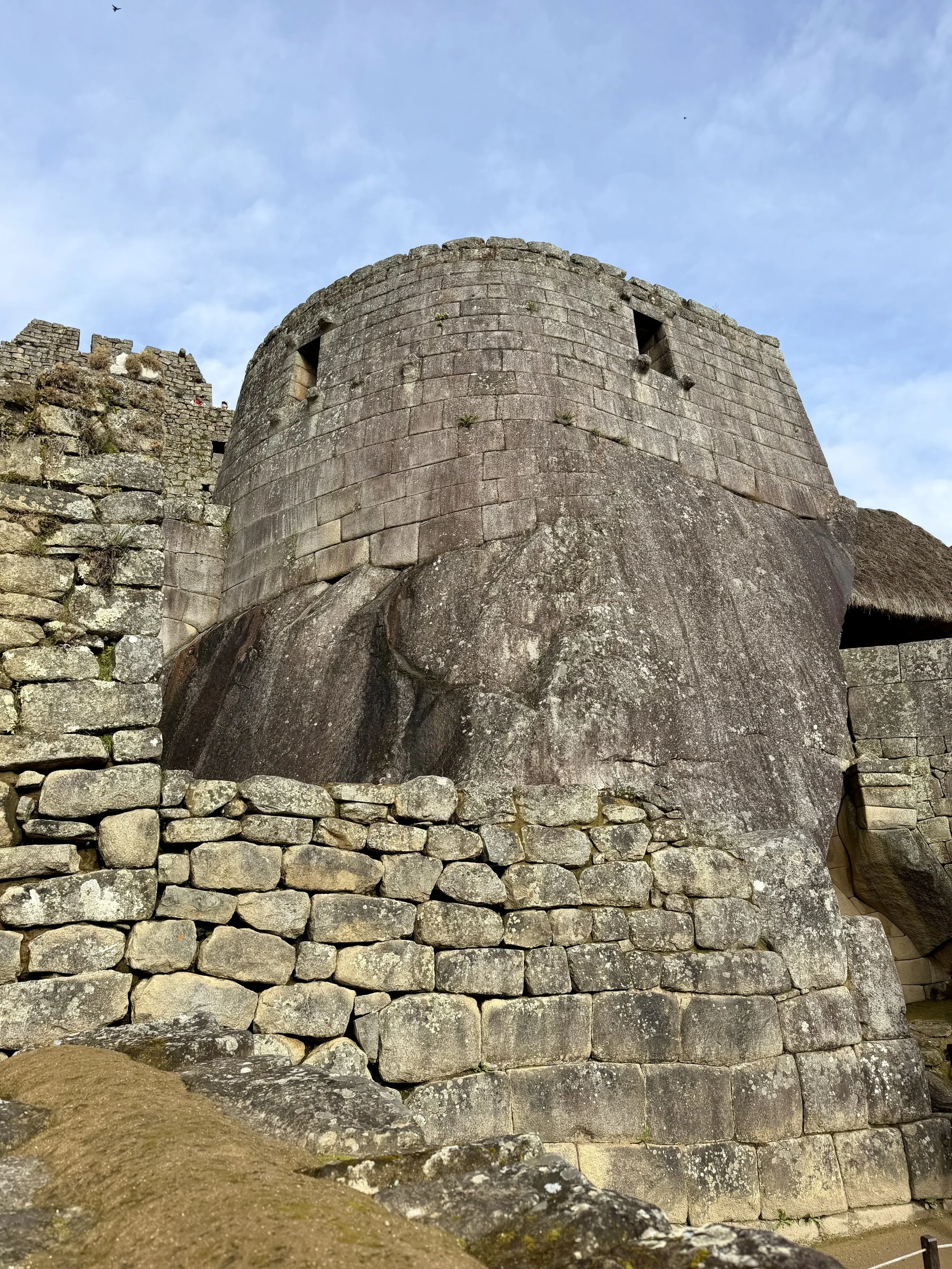
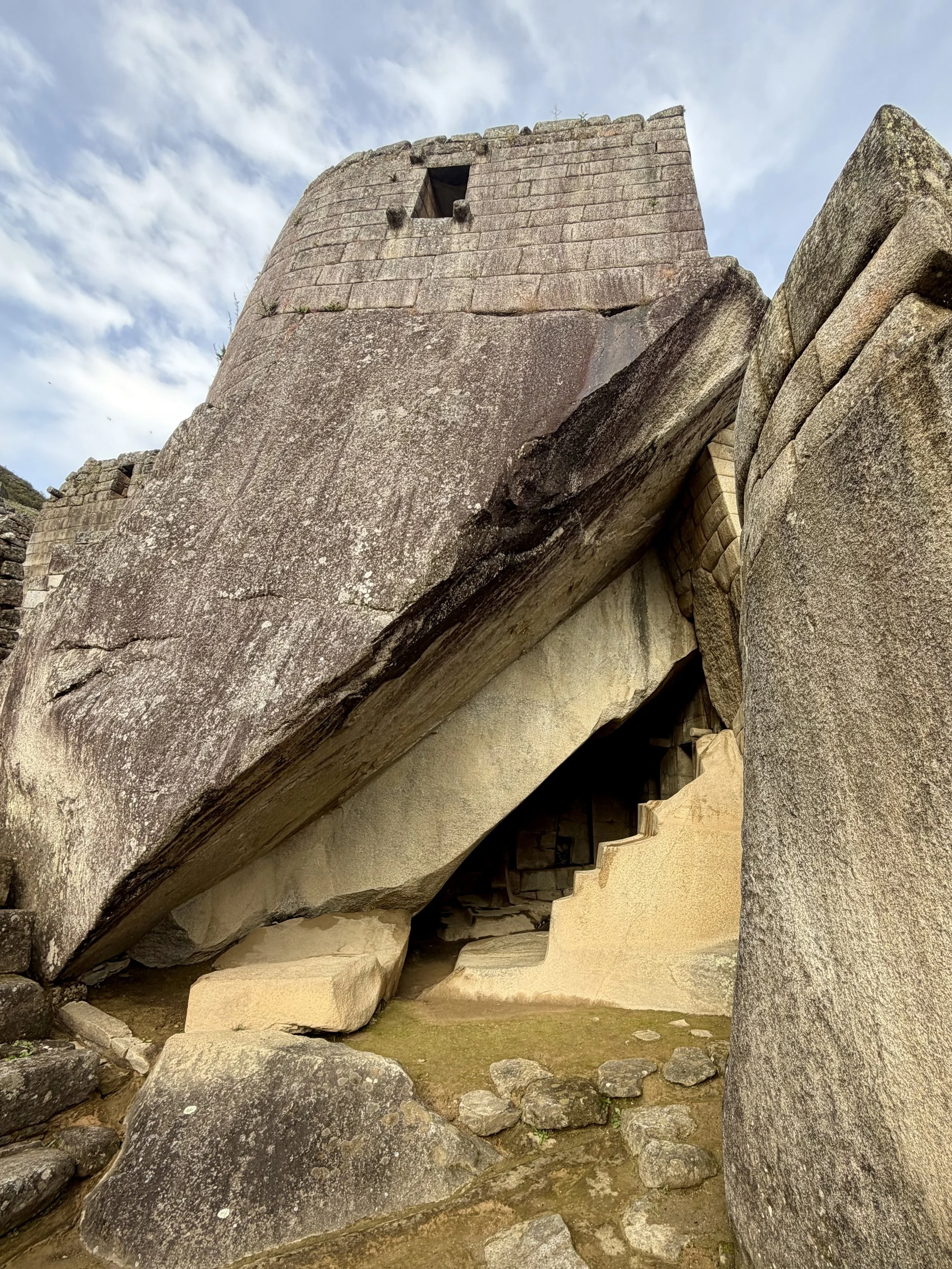
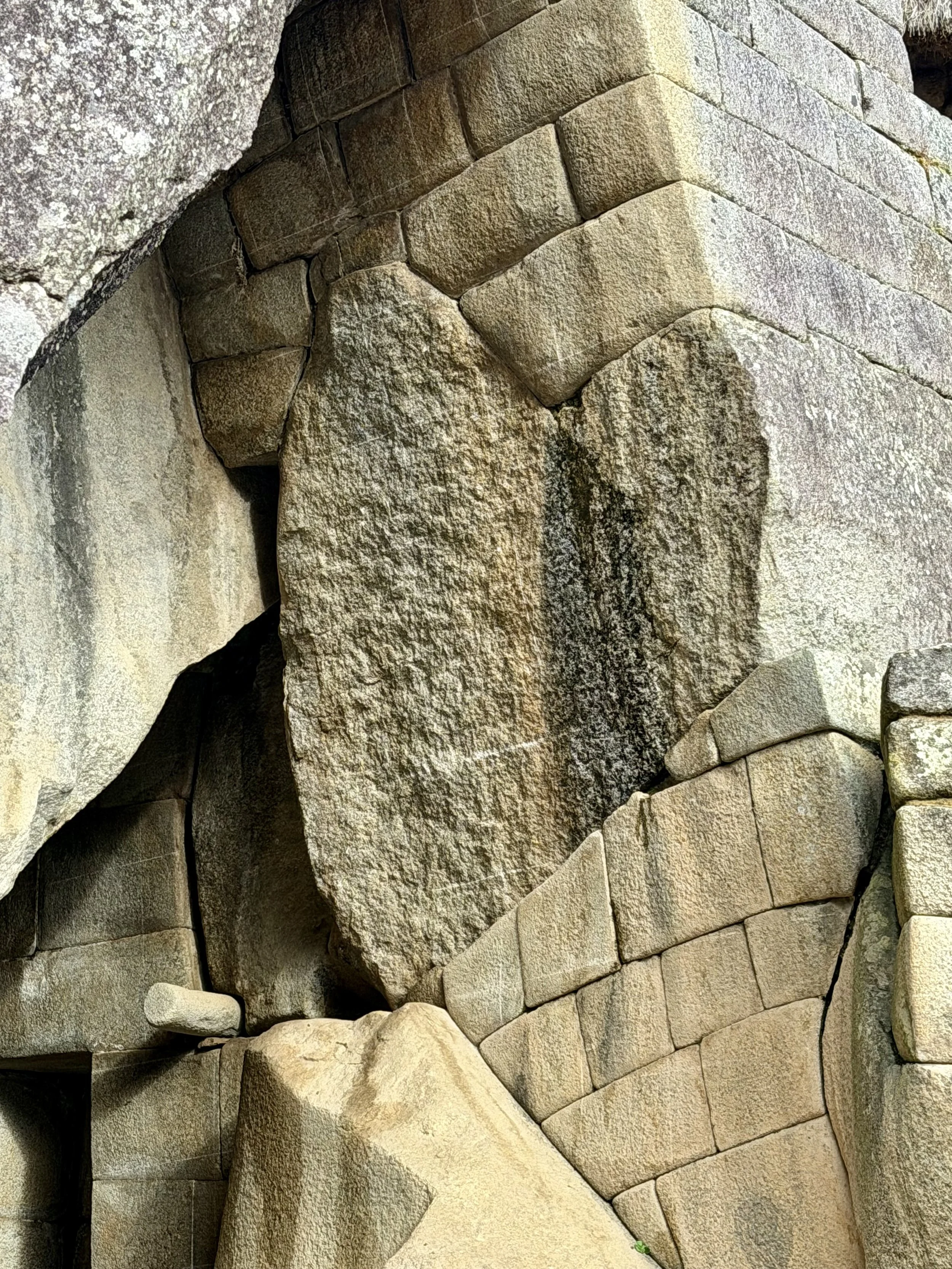
After we’d had enough time with the llamas, we walked down to see parts of the city we had not seen the previous day. The famous Sun Temple was a curved wall built atop an immense rock. An intriguing cave was formed from the natural space beneath. Pilar said many people believe the Sun Temple is a powerful energy vortex. She shared a story about woman who left her guide to explore the cave, but never returned. A full week later, the confused woman appeared in Brazil, still thinking she was in Machu Picchu! I’m not sure I believe in vortexes, but this place definitely felt special.
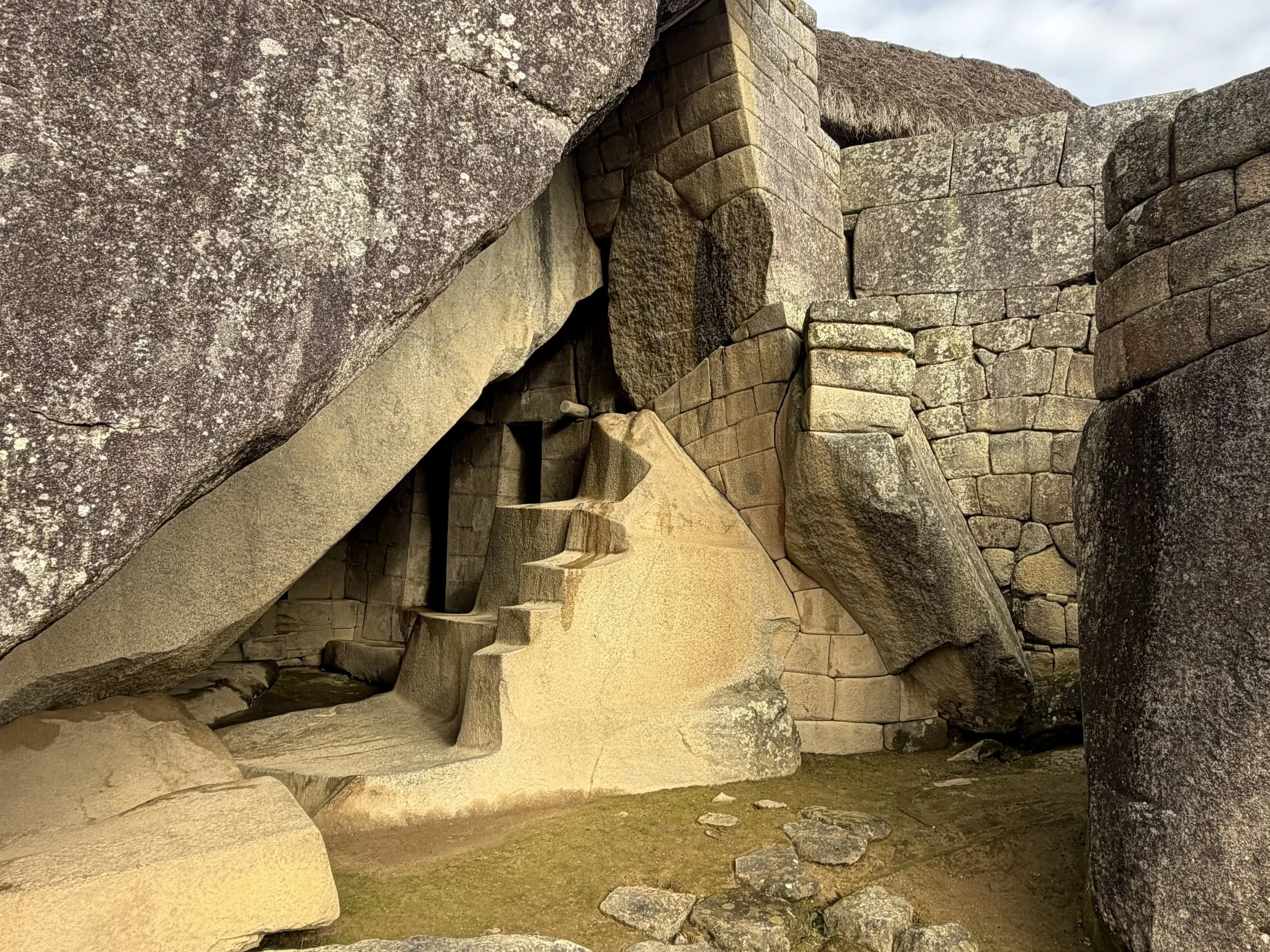
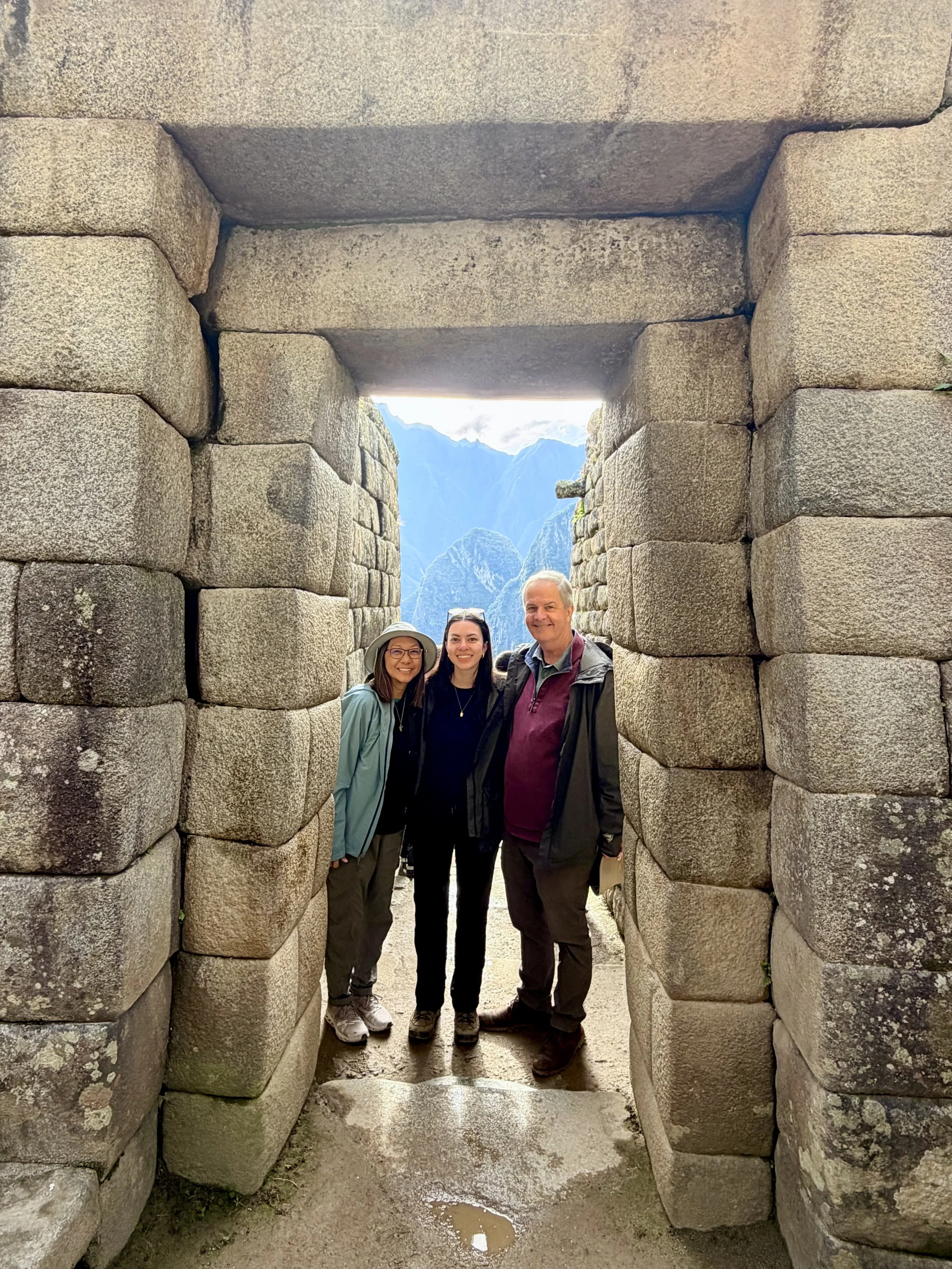
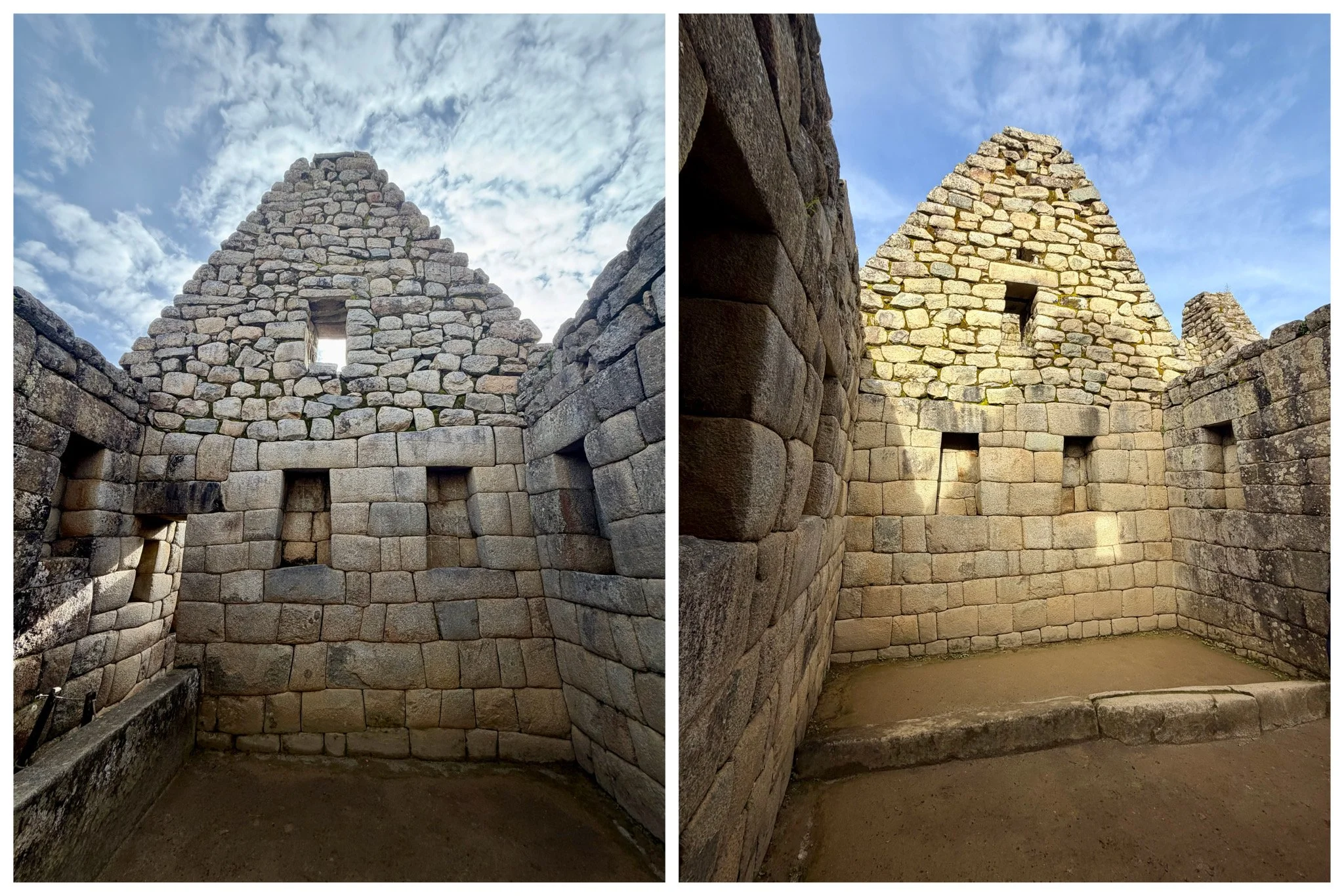
Near the temple was the Royal Residence, which Pilar called the House of the King. Pilar explained that this was an example of a kancha, an Incan walled enclosure with a single entrance and buildings around a central courtyard. As with the temples we had seen earlier, the double-jamb doorway and precise stonework indicated that this was an important building. There was a place for the emperor’s bed, and even a small adjoining space which may have been a private toilet. Across the courtyard was a similar structure, perhaps for a queen or concubine.
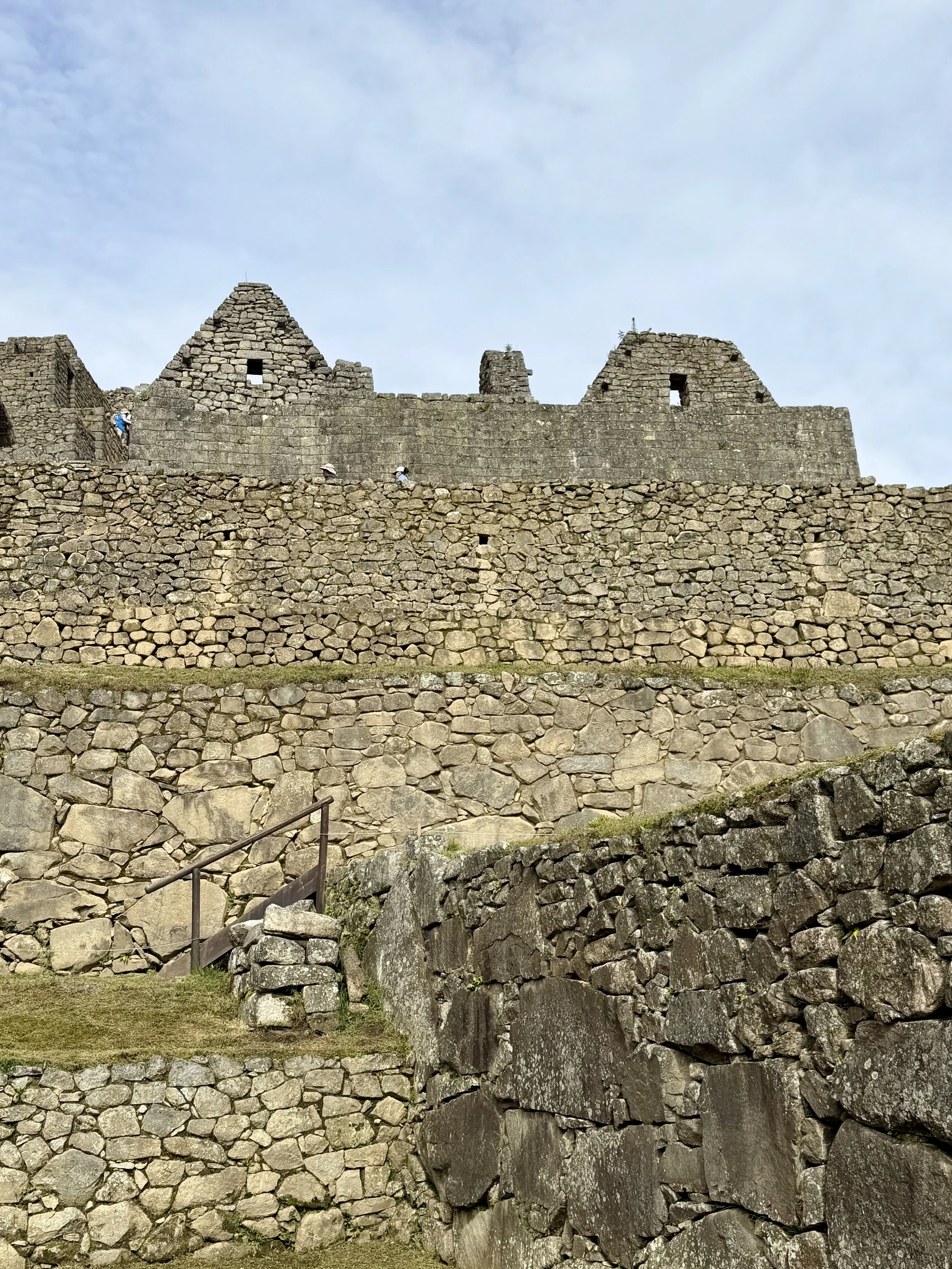
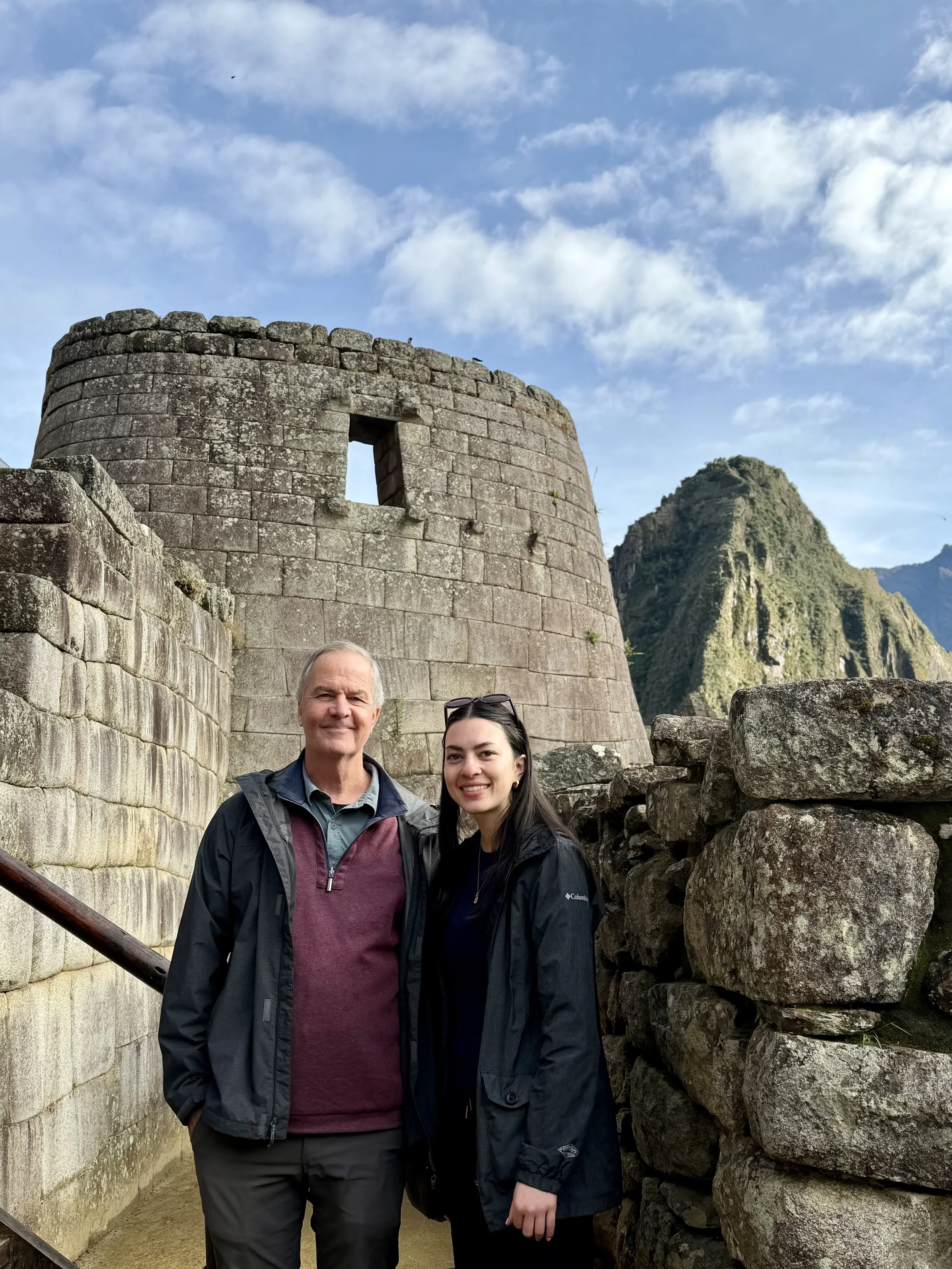
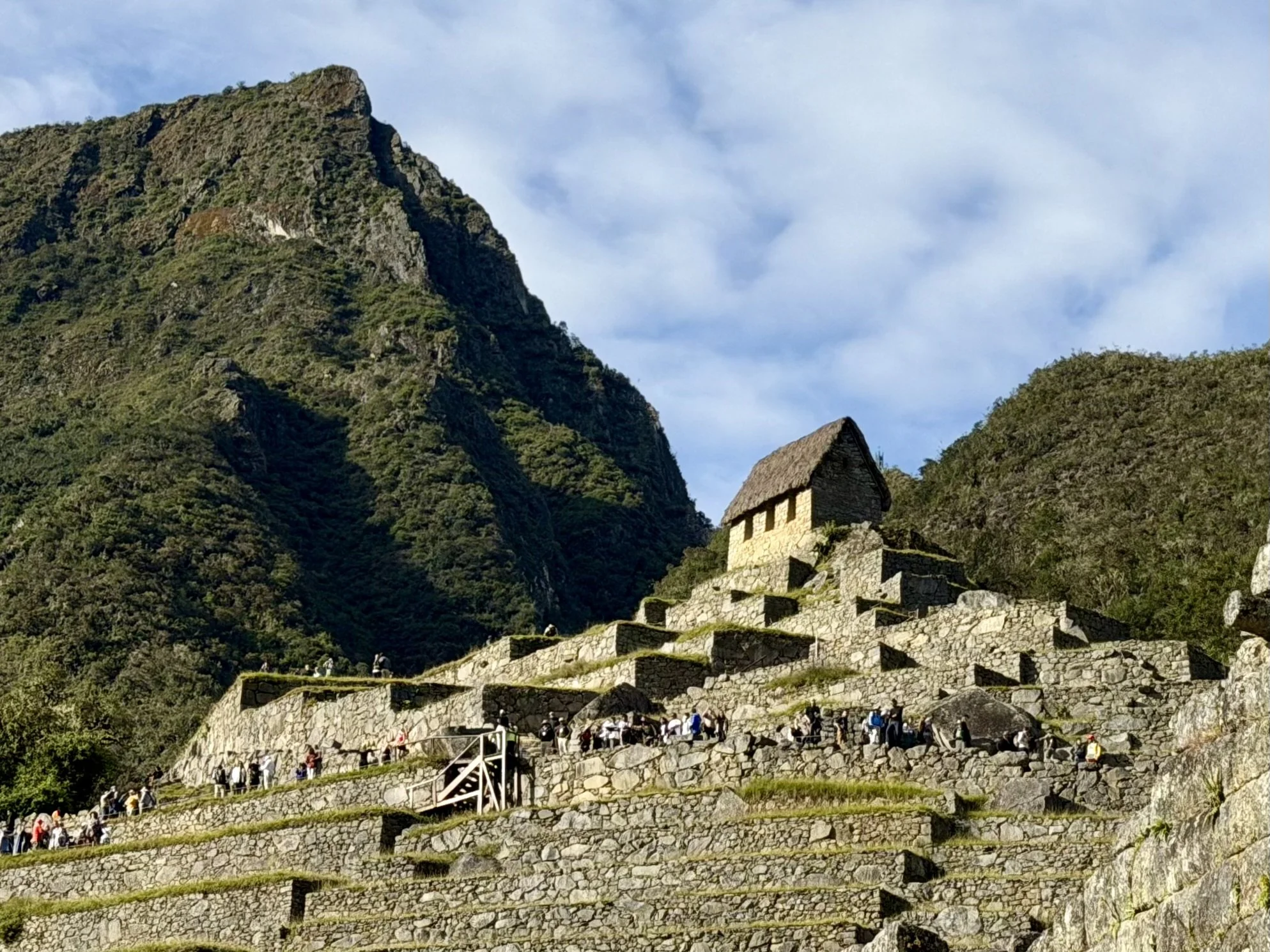
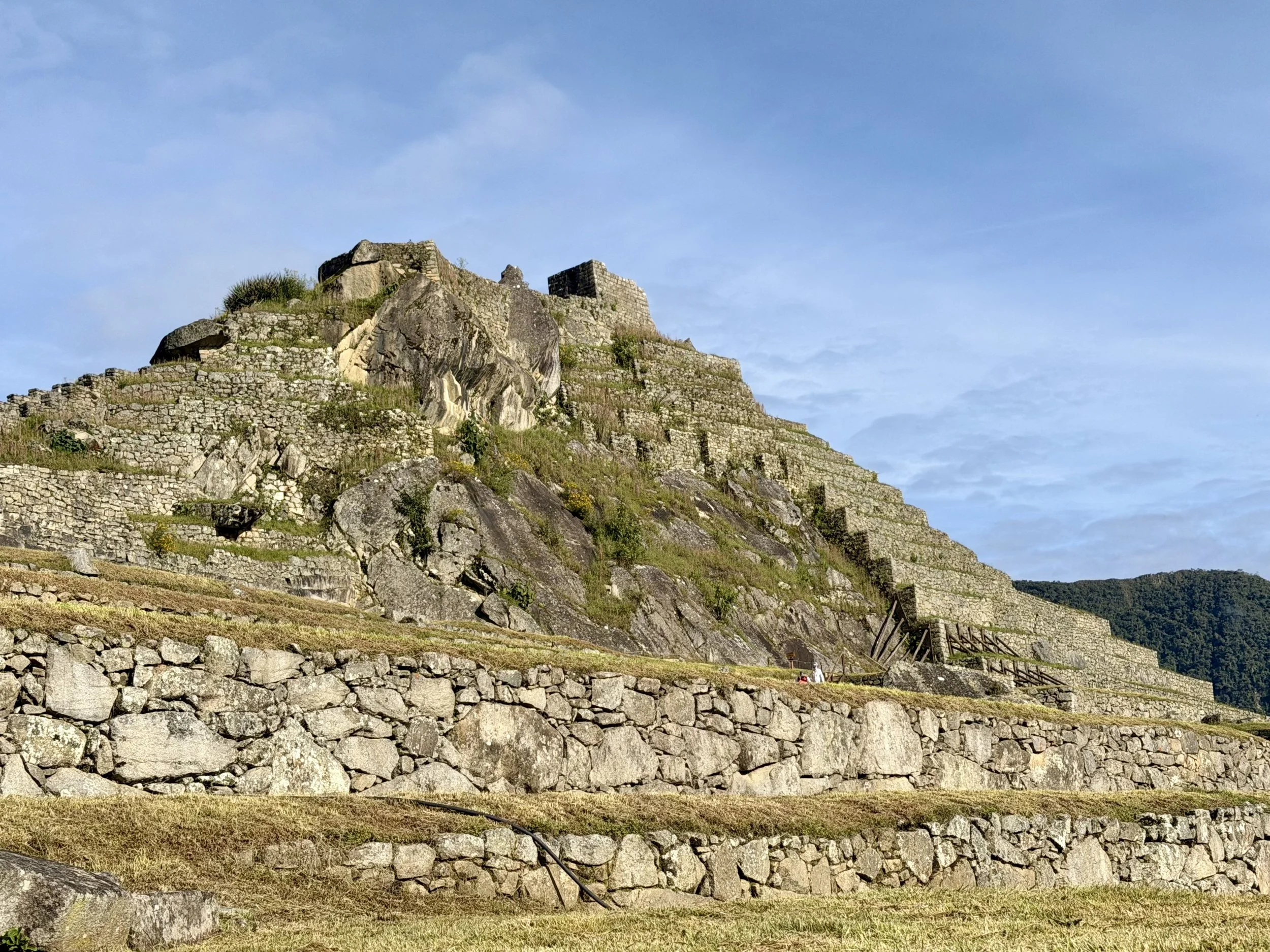
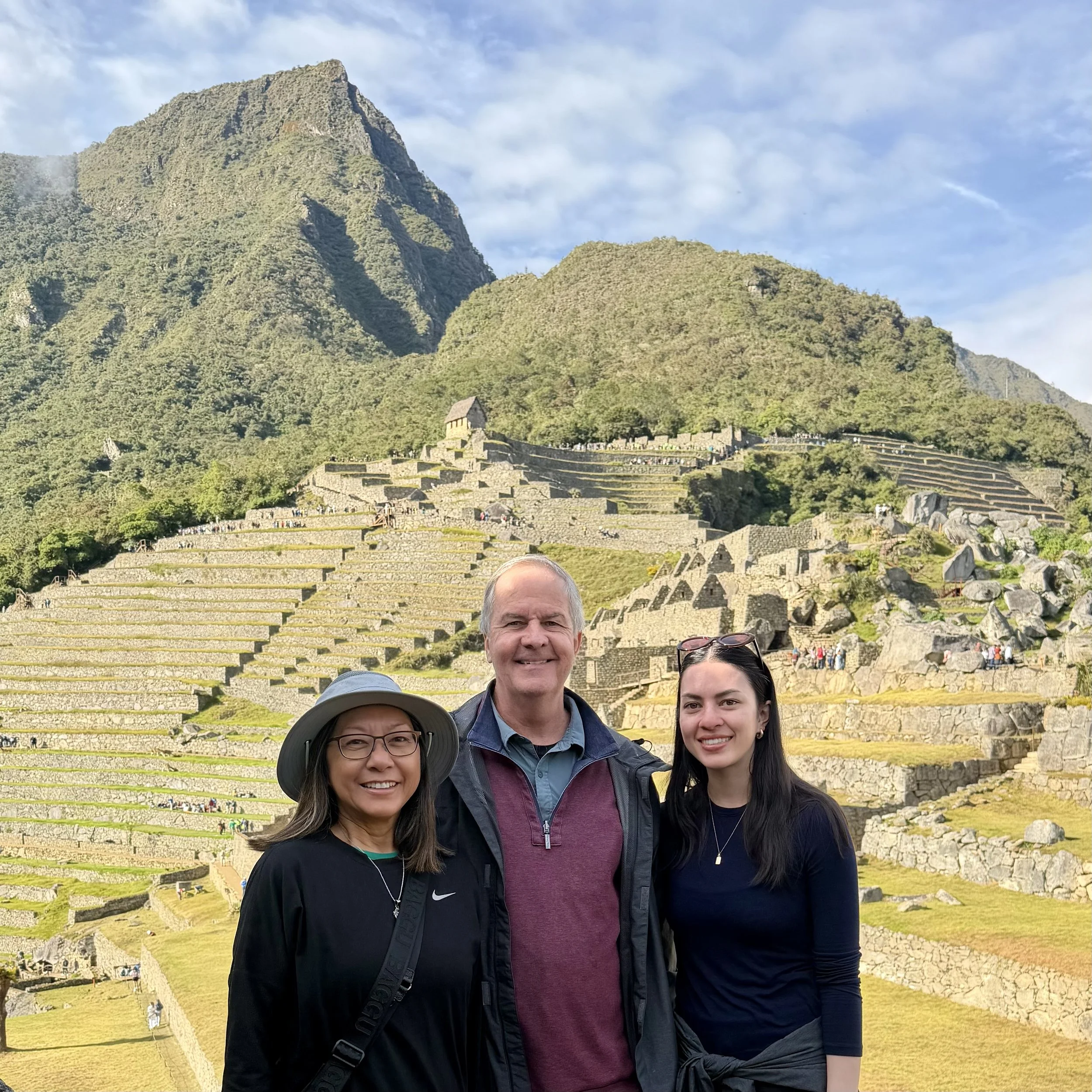
As we walked across the Main Square, we marveled at how different the city looked compared to yesterday. Machu Pichu Mountain, which had been obscured by clouds the day before, rose majestically behind the Guardhouse. The flattened pyramid with its famous sundial looked much more distinct, viewed from this angle and lit by the sun.
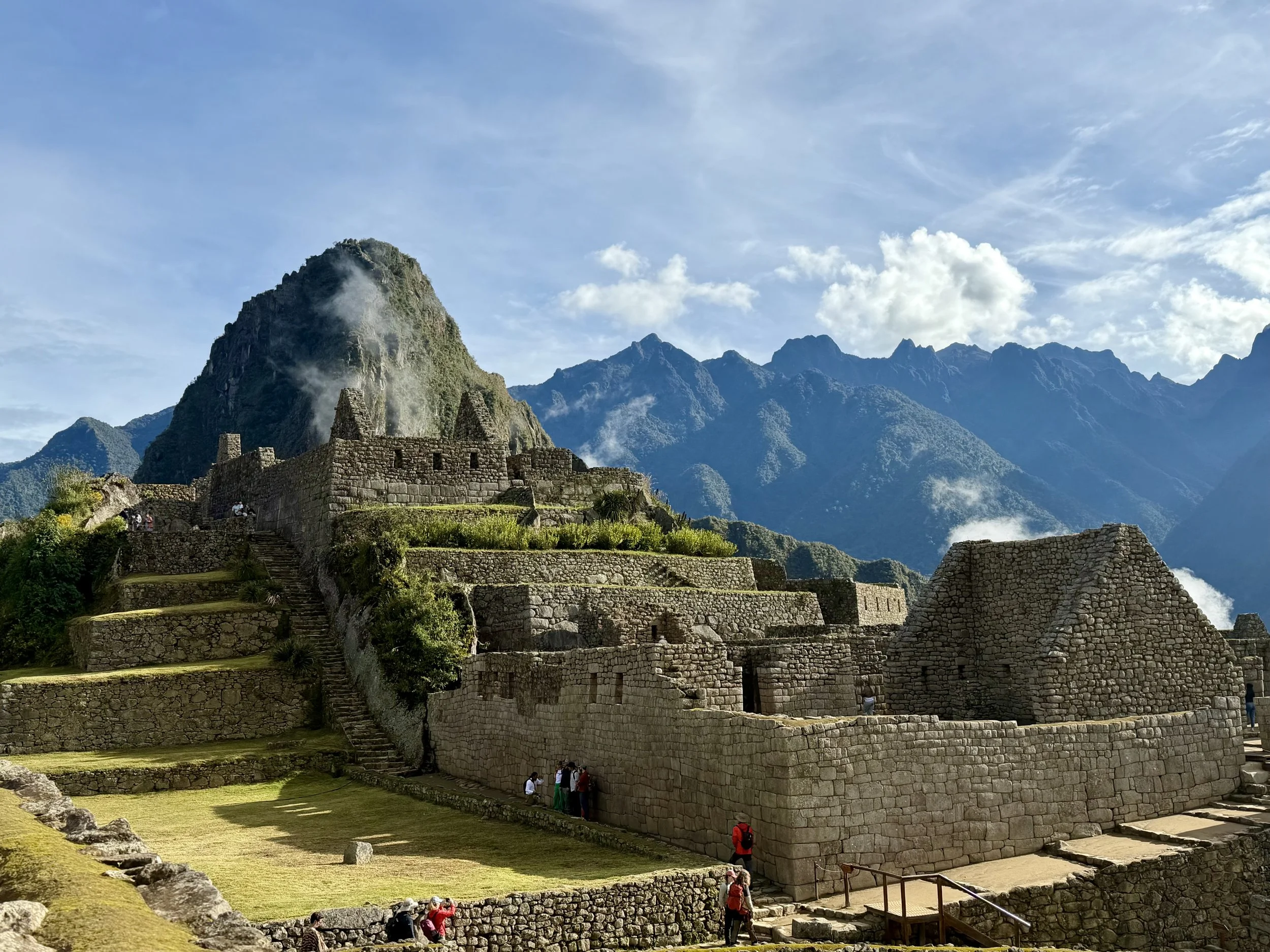
We climbed a long stairway to an upper terrace, where Pilar led us through a series of large, connected kanchas. These were probably permanent residences for well-connected families and temporary housing for the royal entourage, since they had access to small grassy terraces overlooking the Main Square. Behind these were smaller dwellings, open courtyards, and storage buildings for workers and craftsmen. It was an interesting example of Incan urban planning.
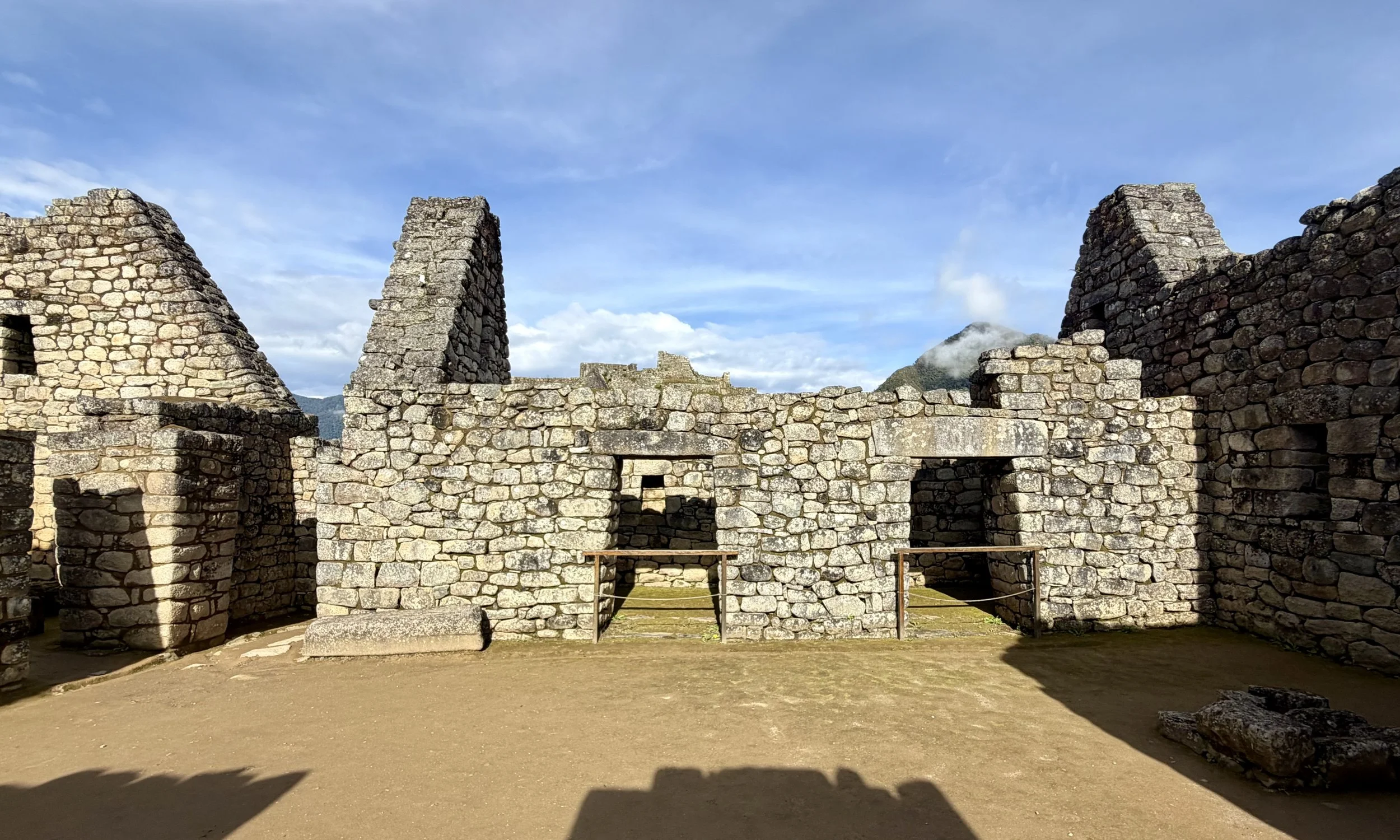
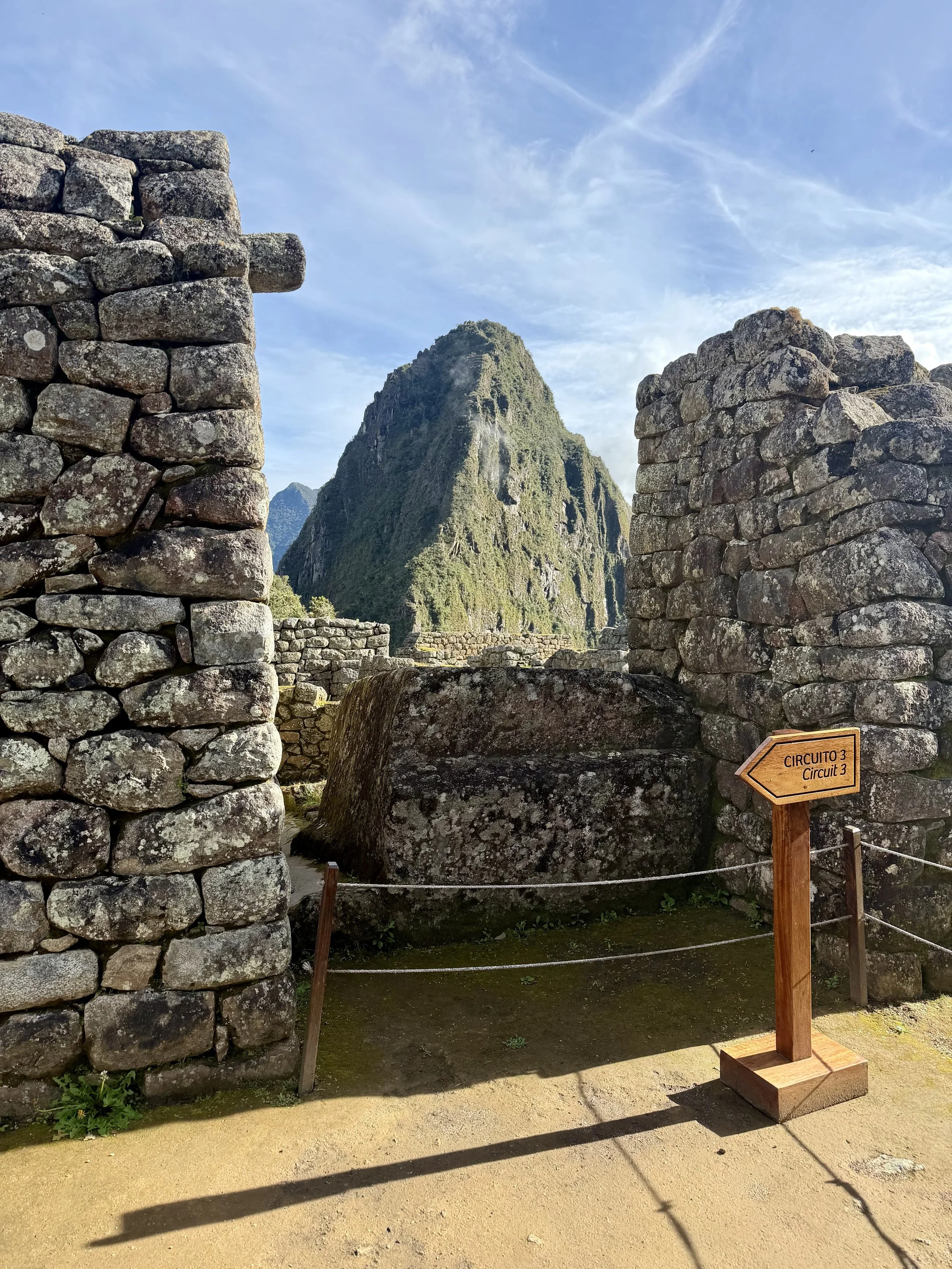
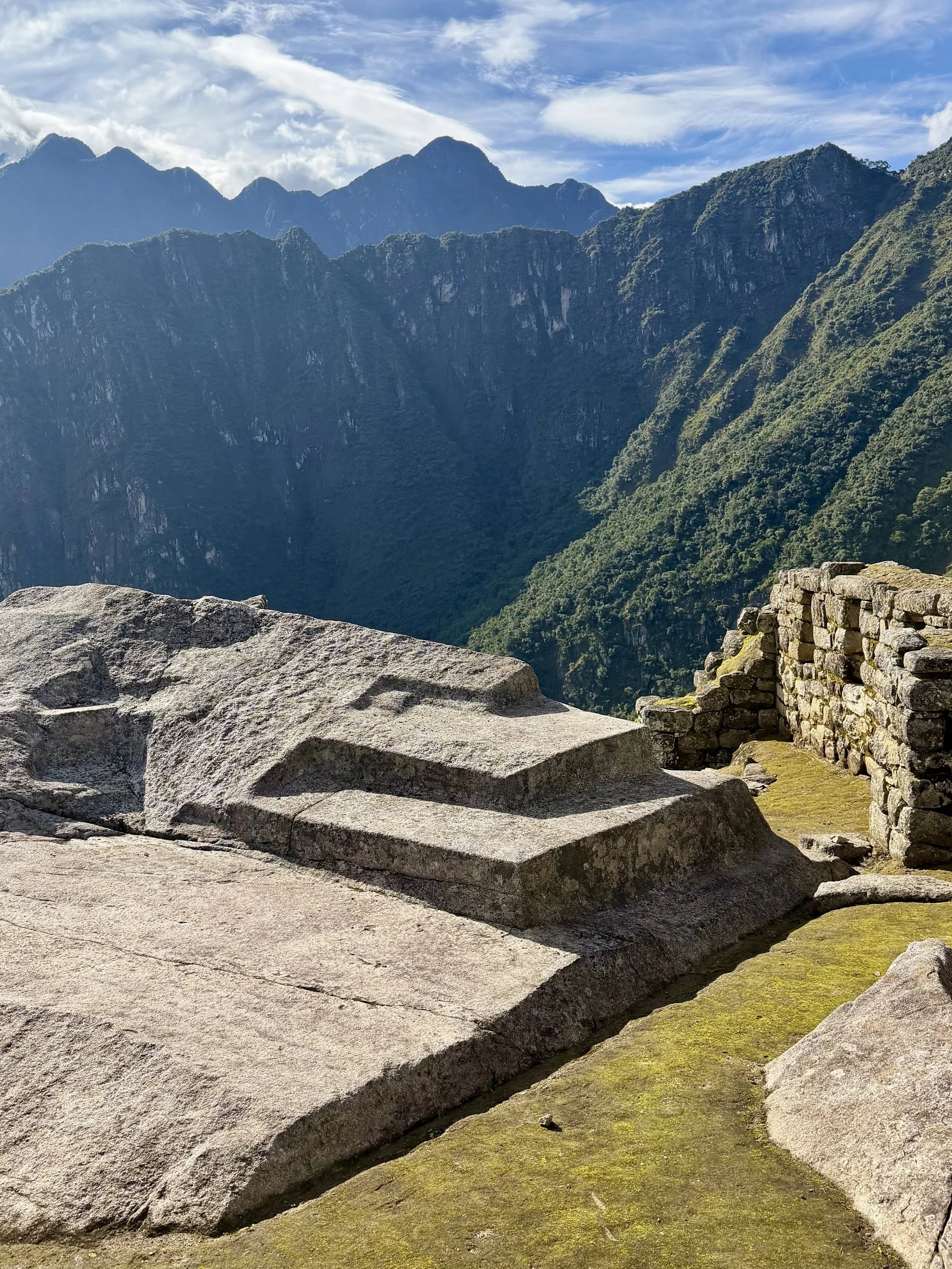
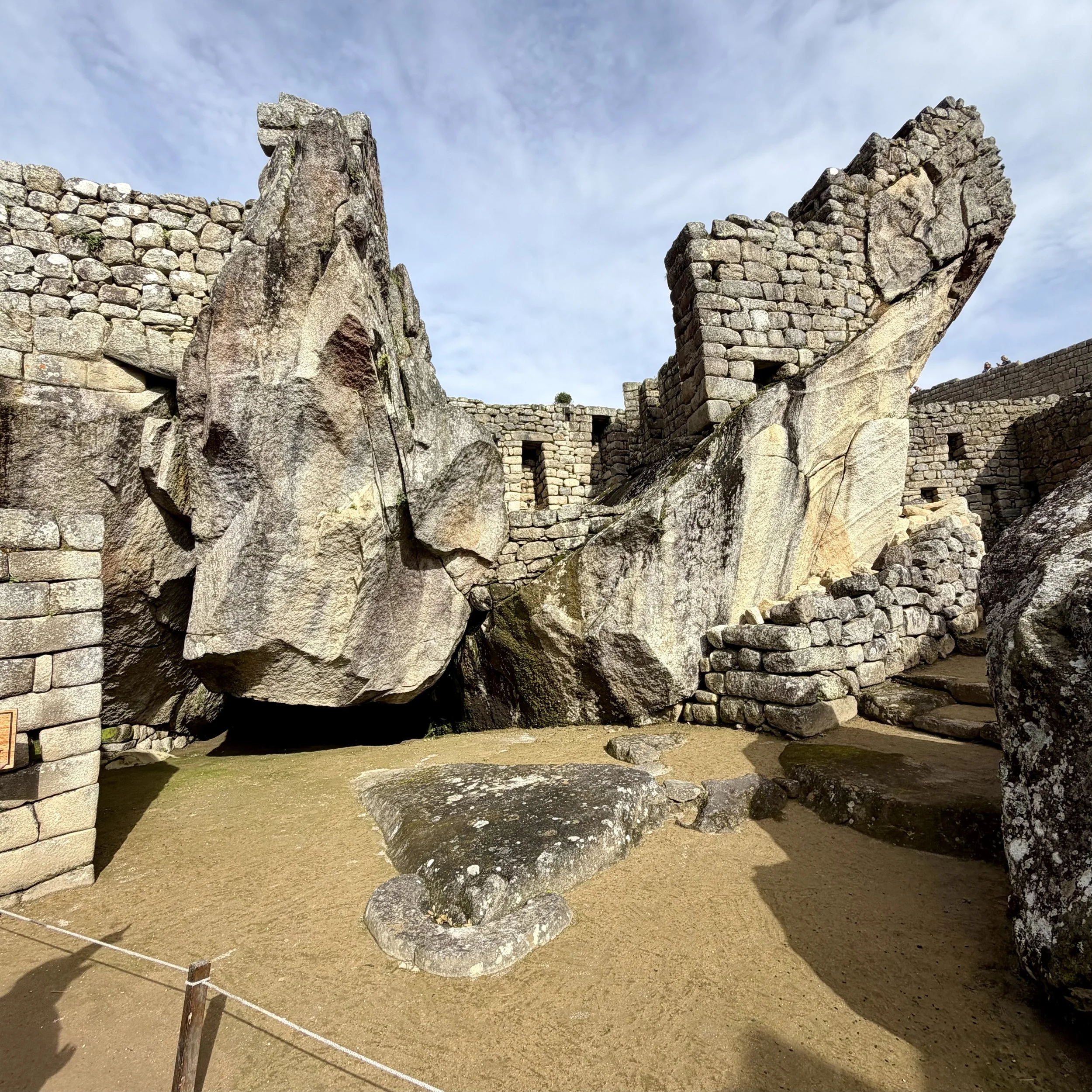
We walked back down to the lower part of the city to see the Temple of the Condor. The condor is an Andean bird of prey with an 11-foot wingspan, and was considered by the Incas to be a sacred animal (along with the puma and snake). Two natural rock formations resembled the outstretched wings of a condor, and a carved stone altar below them formed the bird’s body and head. Around the beak was a curved trough to hold the blood of sacrificial offerings. It was an intriguing place of worship, and probably visited frequently by the working residents, based on its location.
There are still mysteries surrounding Machu Picchu. Why did the residents leave such a marvelous place? It may have been due to the Spanish conquest, but normally, when Incas left a city due to war, they destroyed it. Machu Picchu was still intact. Did its residents expect to return? If so, how sad that they never did.
We reluctantly said goodbye to the Inca city and the sacred mountains. Steve said that our first visit to Machu Picchu had felt dreamlike, and our second visit helped make it feel real. It still feels incredible to me that we had finally visited the legendary Lost City of the Incas.