After months of planning and anticipation, the day had finally arrived - we would finally see the legendary Machu Picchu, the Lost City of the Incas!
It was 8:00 am and raining lightly when we meet our guide Pilar and boarded the the bus that would take us from Machu Picchu Pueblo to the entrance to the archaeological site. The bus crossed the Urubamba River on an old wooden suspension bridge and then continued along an unpaved road up a series of switchbacks. The rain had stopped, and the mountains were shrouded in thick clouds. Still, as we climbed, I had no trouble seeing the sheer drop off to the river far below. I tried not to think about the wide bus and the narrow dirt road! The five mile drive took about thirty minutes, and we gained nearly 1,300 feet in elevation.
I have to admit, I felt nervous about the weather. Would we be able to see anything through these thick clouds? Pilar told us she’d had clients who cried because of bad weather and poor visibility. Her stories didn’t me feel any better. But her confidence was a good reminder that there are many more reasons to visit Machu Piccho than pretty photos.
As we entered the site and began walking along the path, Pilar gave us an overview of Machu Picchu.
The city was built around 1450 by Inca emperor Pachacuti, as a royal estate where he and his family could enjoy milder winter weather than in the Inca capital Cusco.
The Incas constructed hundreds of terraces at this site, with well-engineered layers of gravel and soil to promote drainage and reduce erosion and landslides.
Workers came from all over the Inca empire to serve as builders, and 600-750 people continued to live in Machu Picchu, subsisting mainly on corn and potatoes grown on the farming terraces.
The city was mysteriously abandoned in the mid-1500s, less than 100 years after it had been built. The buildings were soon hidden by jungle overgrowth.
Although Peruvian explorer Agustín Lizárraga had visited the ruins in 1902, it was American explorer Hiram Bingham who found the city in 1911, led its excavation, and made it known around the world.
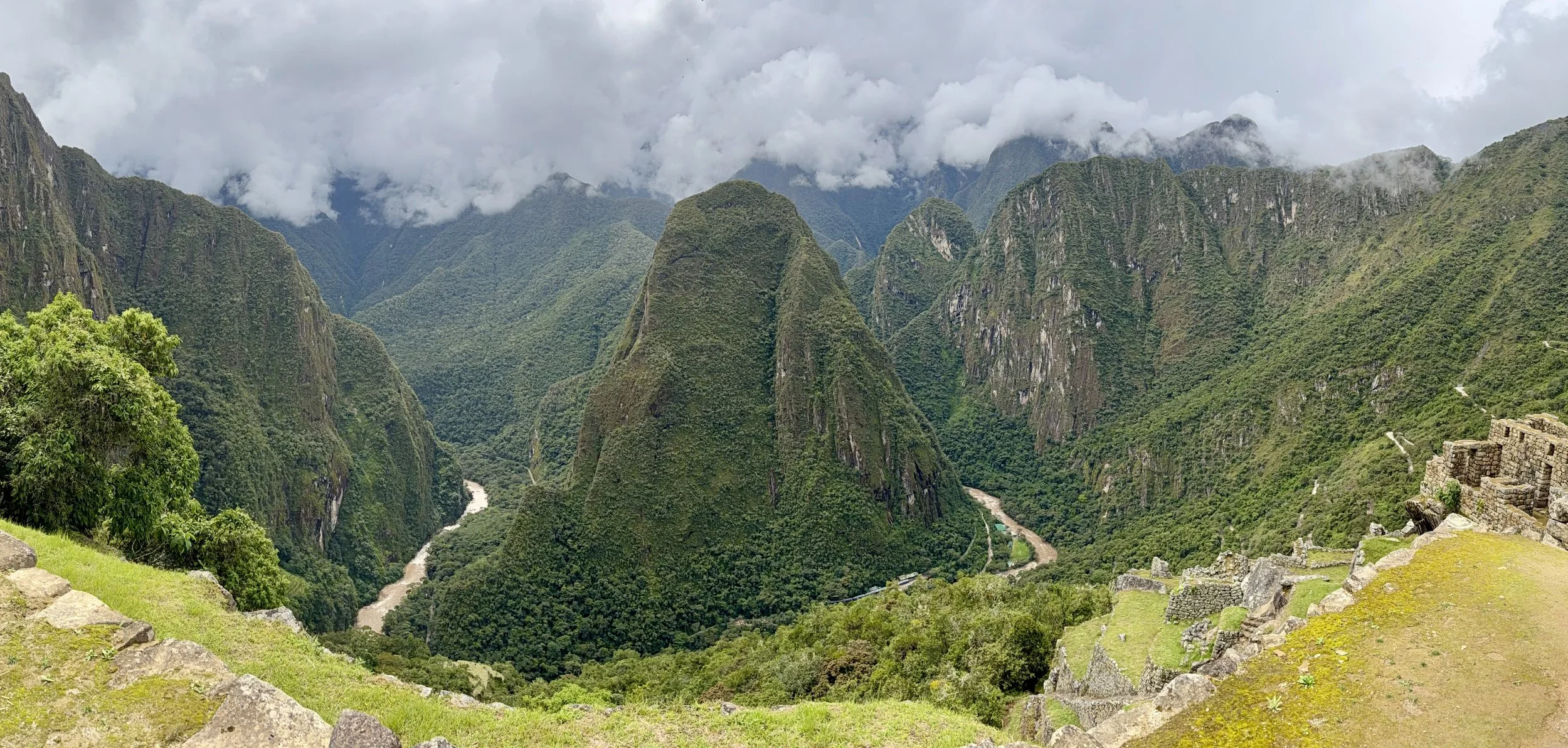
Pilar also told us about the surrounding mountains (mostly hidden by clouds at the time), which were sacred to the Incas. “Machu Picchu” is Quechua for Old Mountain, and we and the Inca city were on a ridge of Machu Picchu. “Huayna (wine-ah) Picchu” means Young Mountain, and was the peak looming behind the city. A third, smaller peak, Putucusi (Happy Mountain), lay across the river from the city.
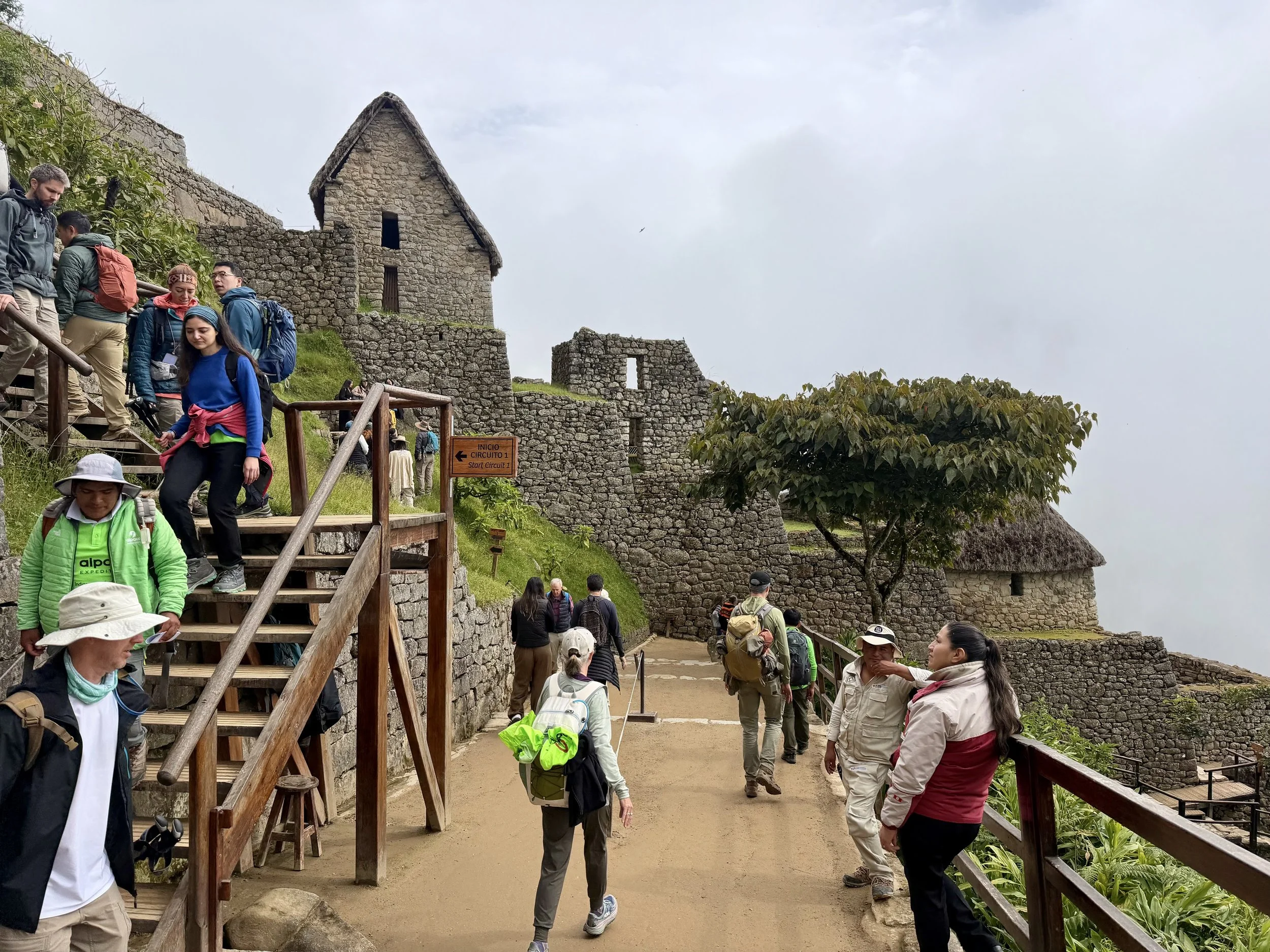
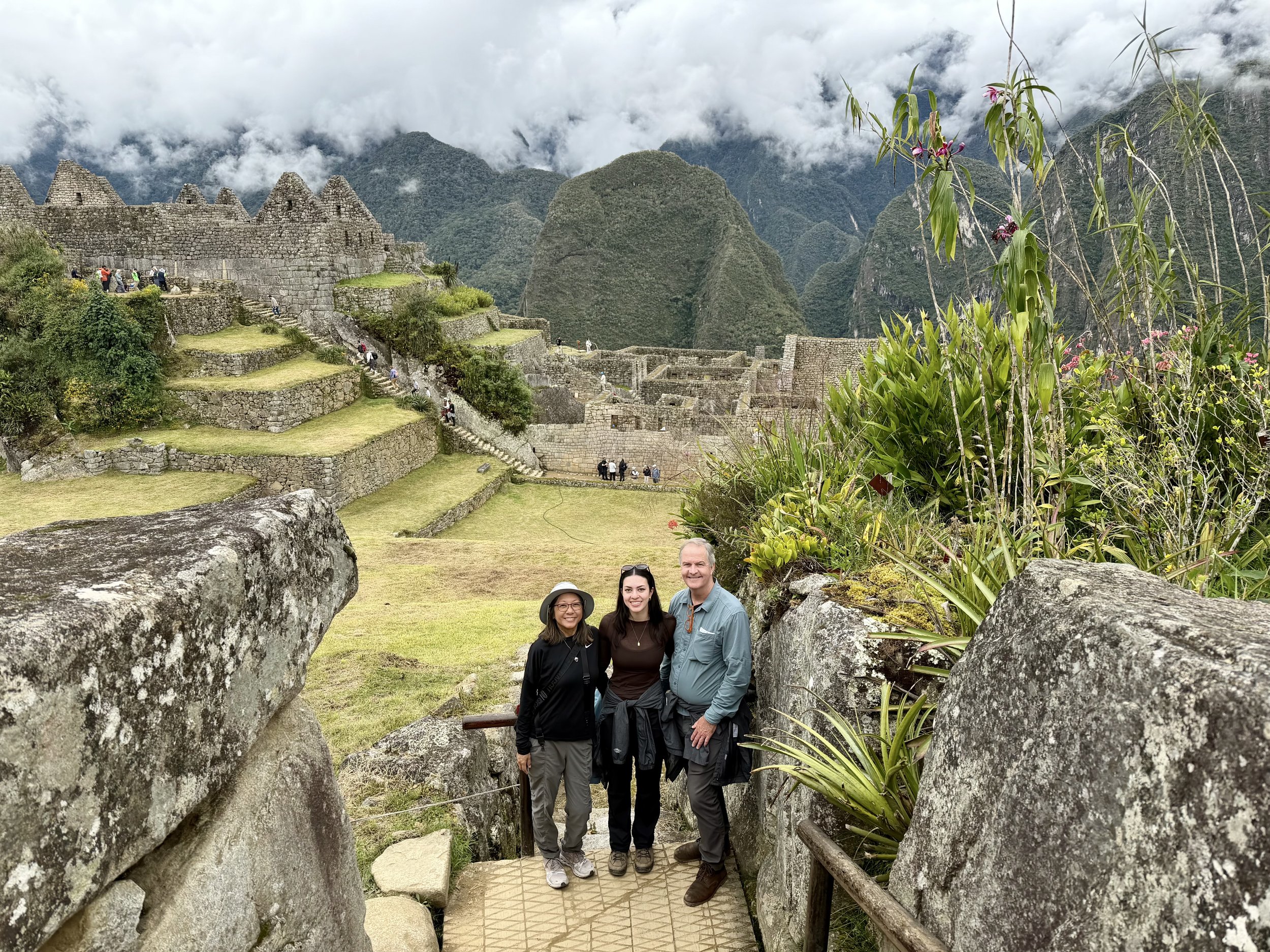
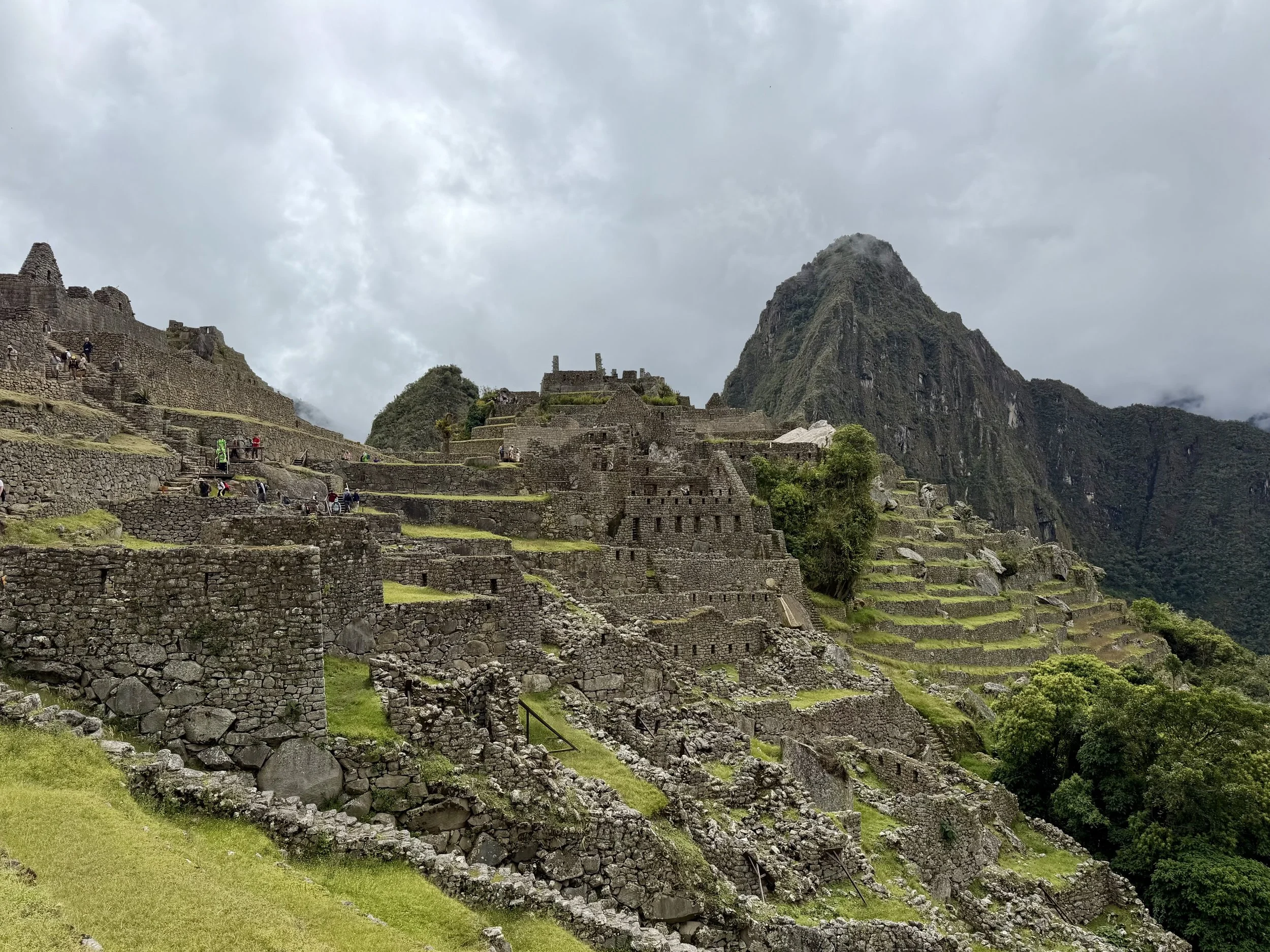
The first Inca structure we saw was the Guard House, silhouetted against a sea of white fog. We climbed stairs to higher terraces, and soon the city of Machu Picchu came into view! It was magnificent. We took our time, watching as clouds moved across the site and the light changed. Huayna Picchu would appear for a minute or two, and then vanish again. It felt, by turns, mysterious and exciting.
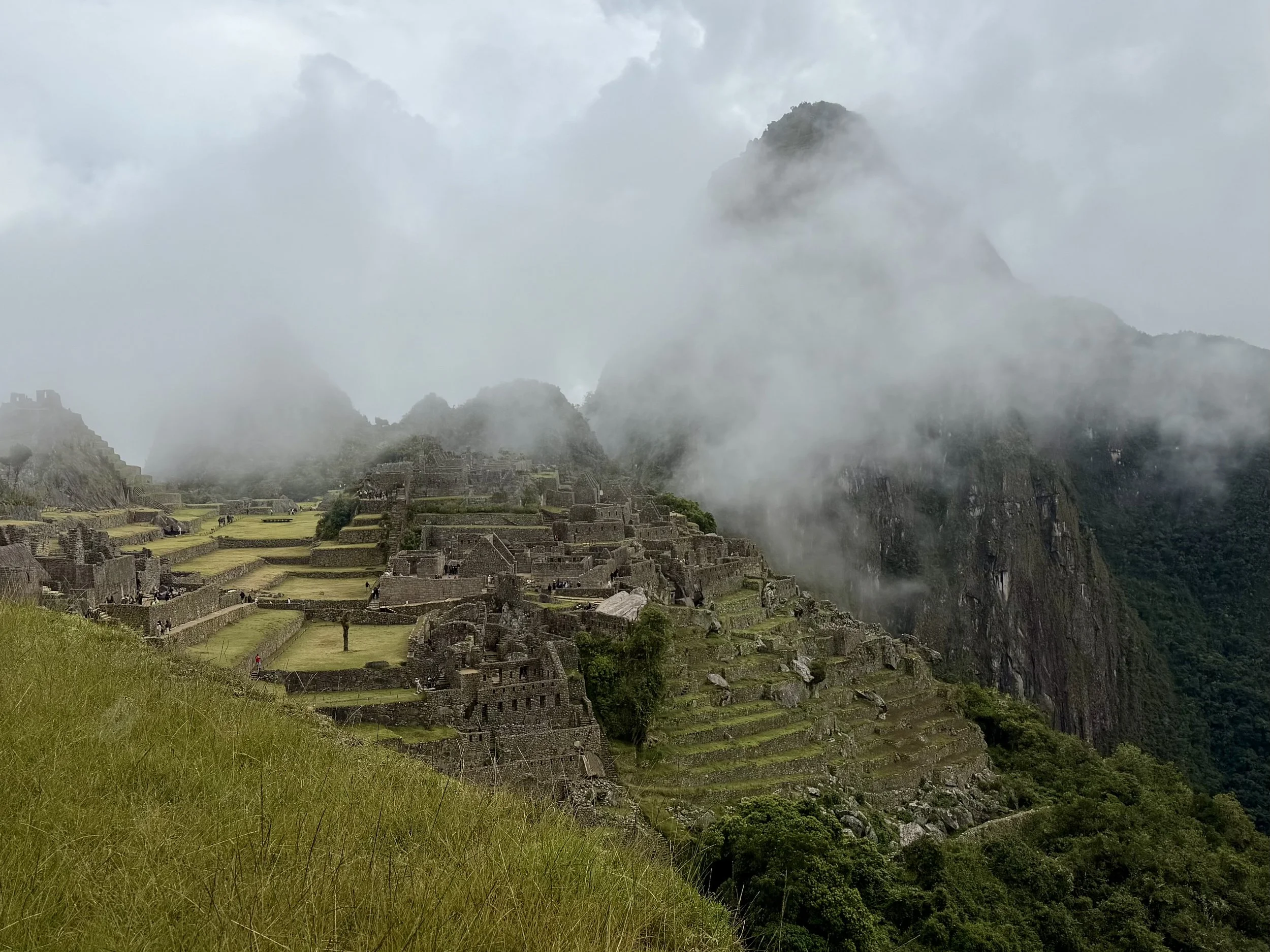
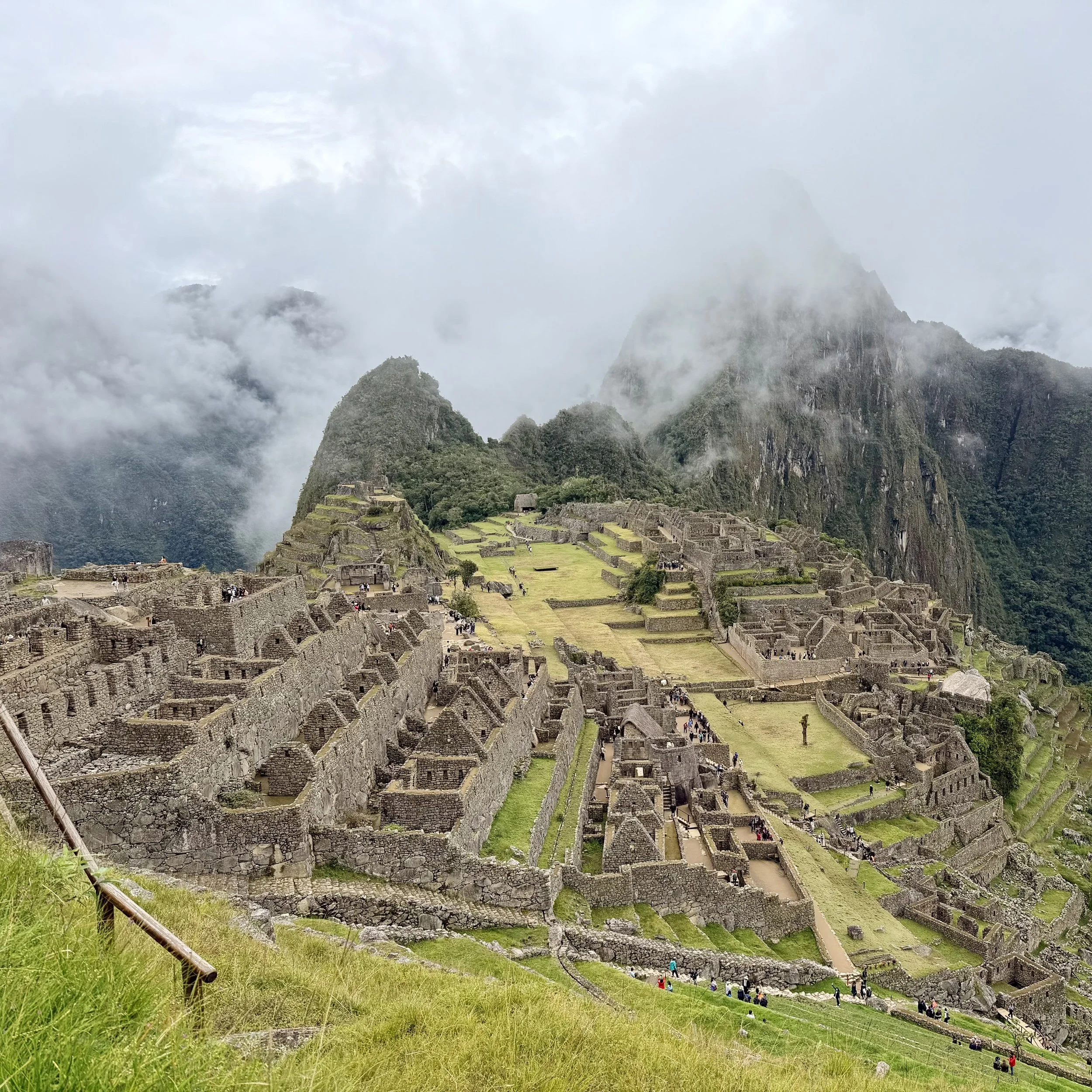
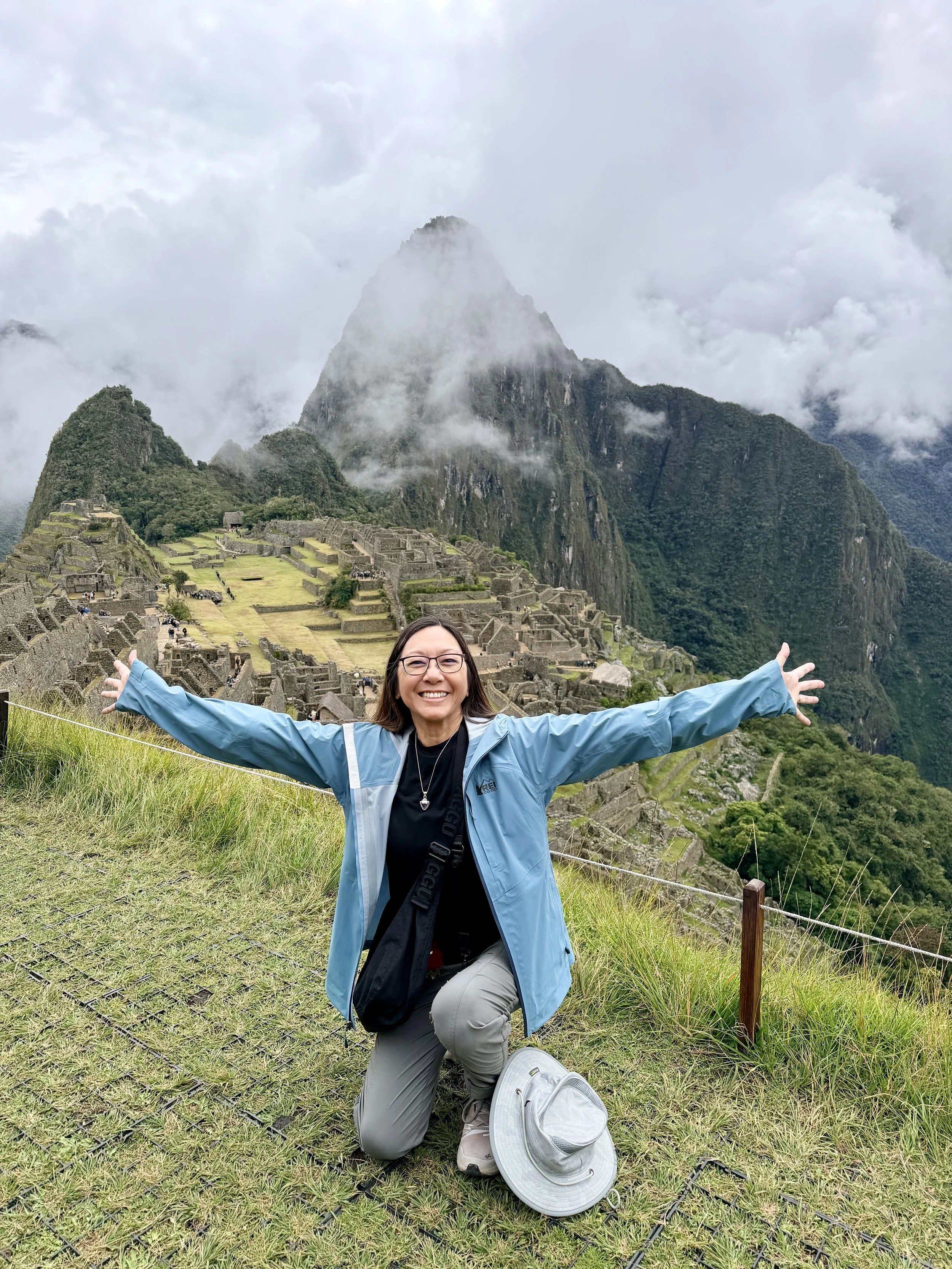
Pilar took a little video that captured our joy!
We continued climbing the terraces, and Pilar enthusiastically took more photos of us in the ever-changing landscape. Occasionally we had to wait our turn while influencers struck dramatic poses in their stylish Peruvian ponchos and hats. Even the resident llamas and a chinchilla patiently posed for photos.
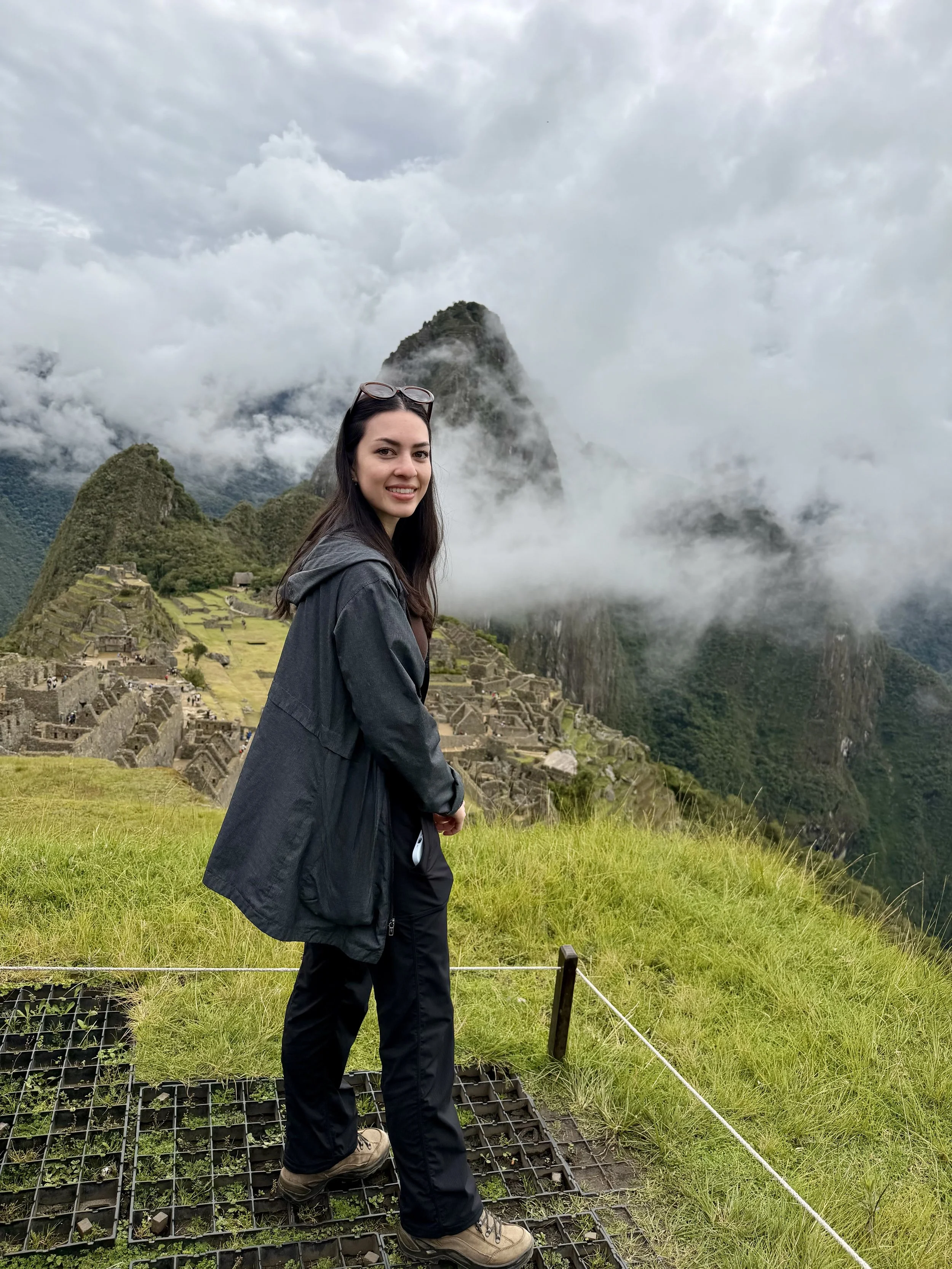
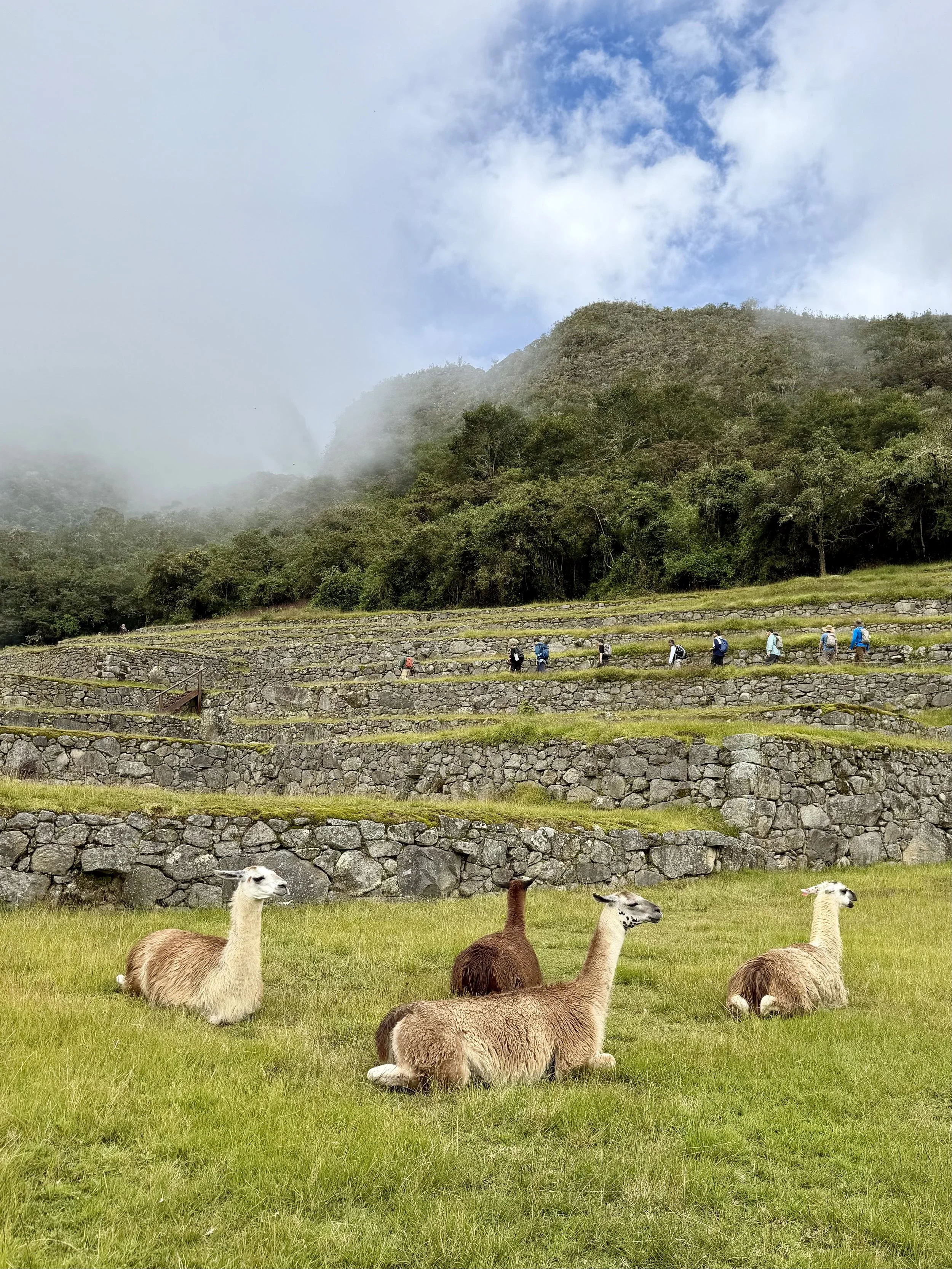
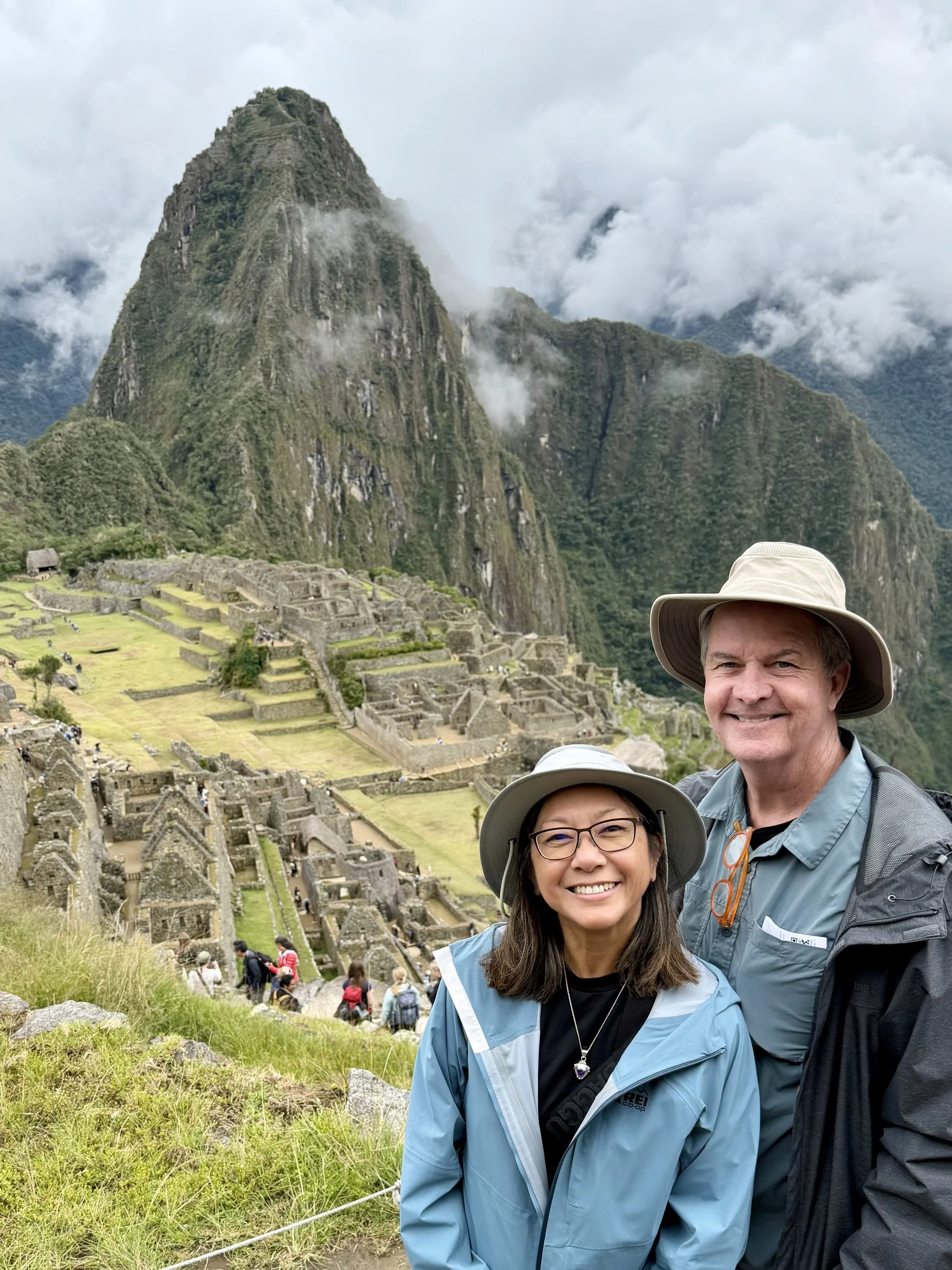
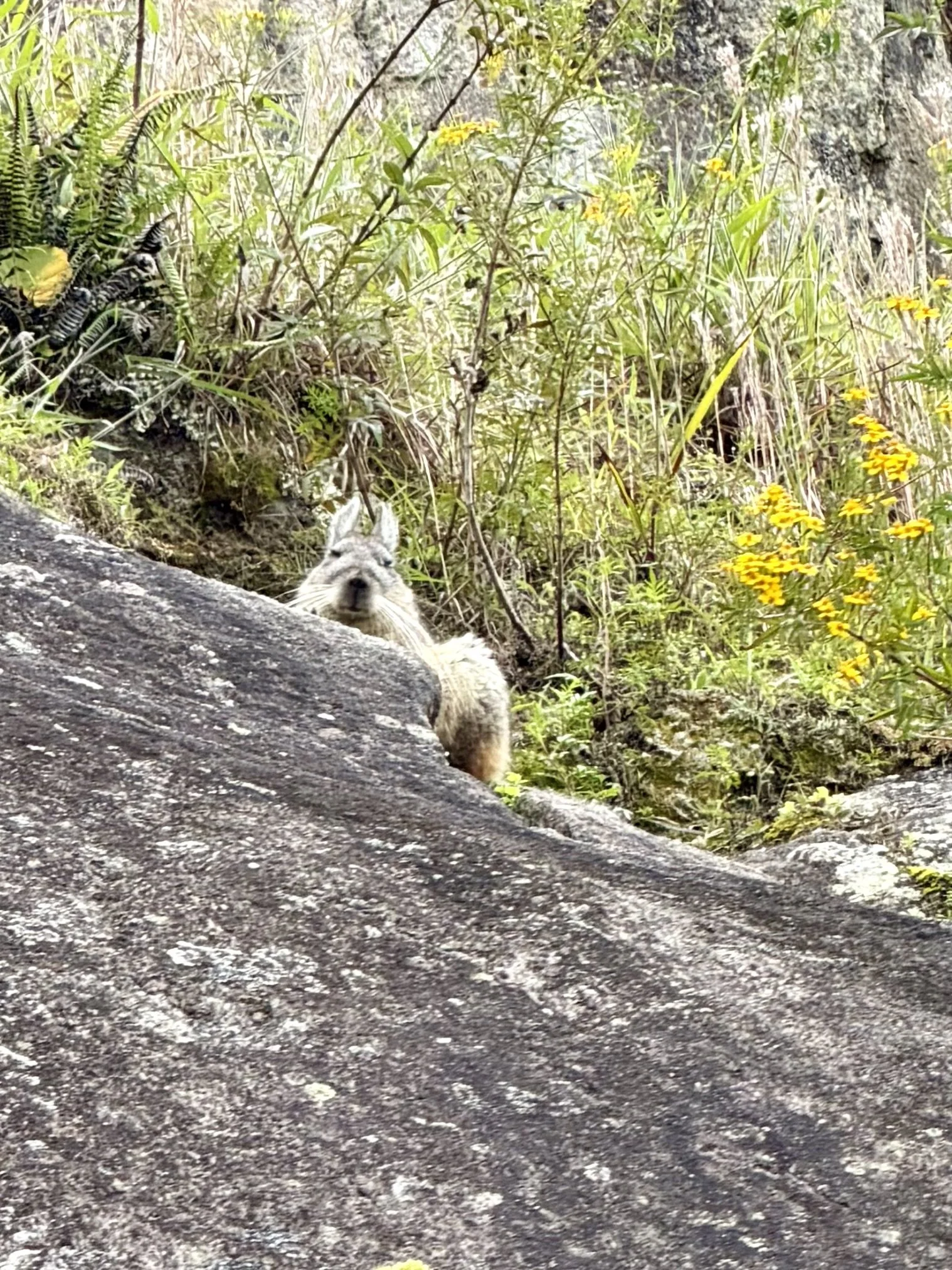
We were soon tired of posing and ready to enter the city for a closer look at the Inca buildings. The complex was much larger than I had imagined. As with the ruins at Ollaytantambo, the more important buildings had finer workmanship. The temples were built with great precision, with sundials and windows oriented perfectly to the sun and the sacred mountains to the north, south, east, and west.
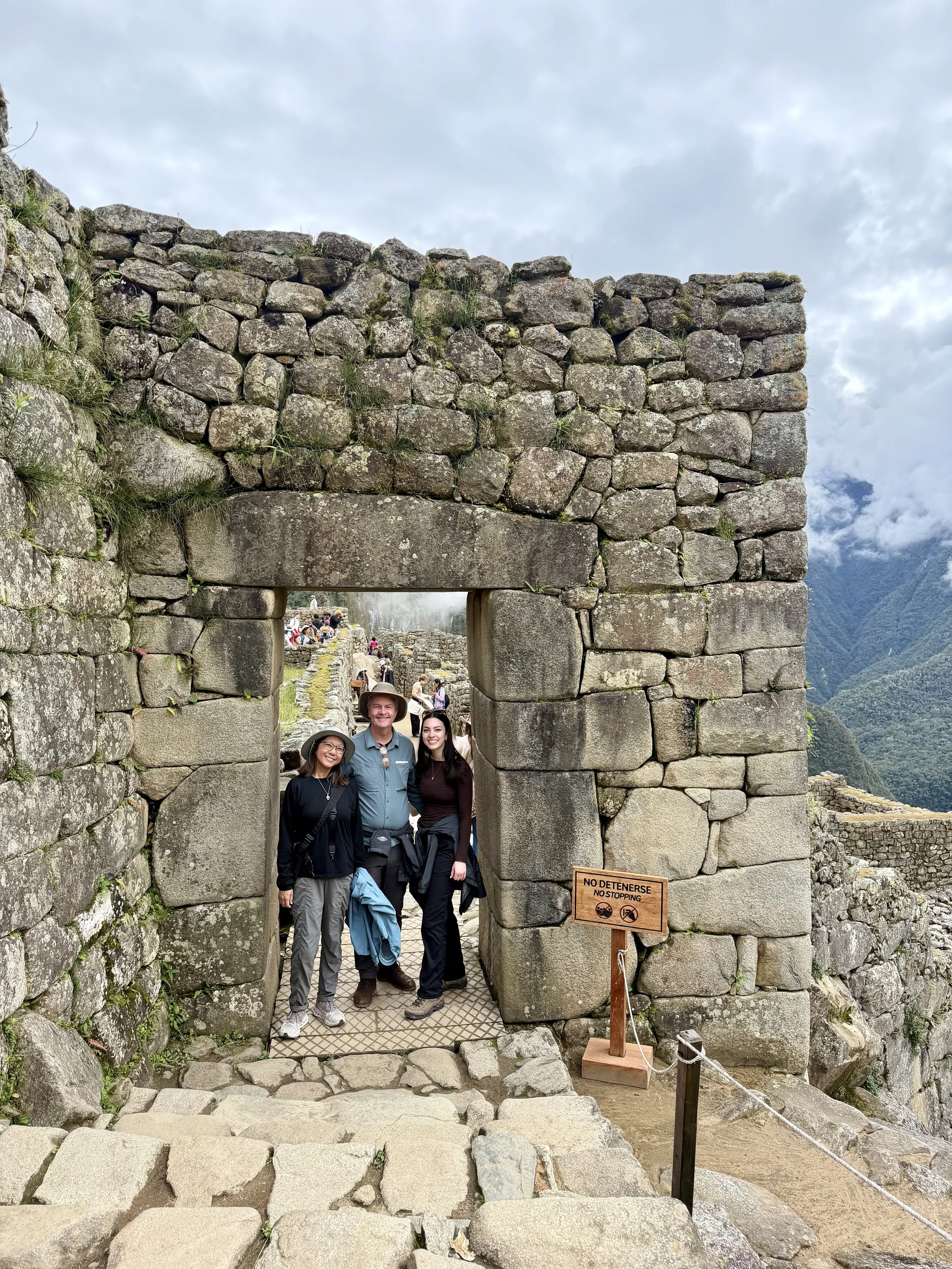
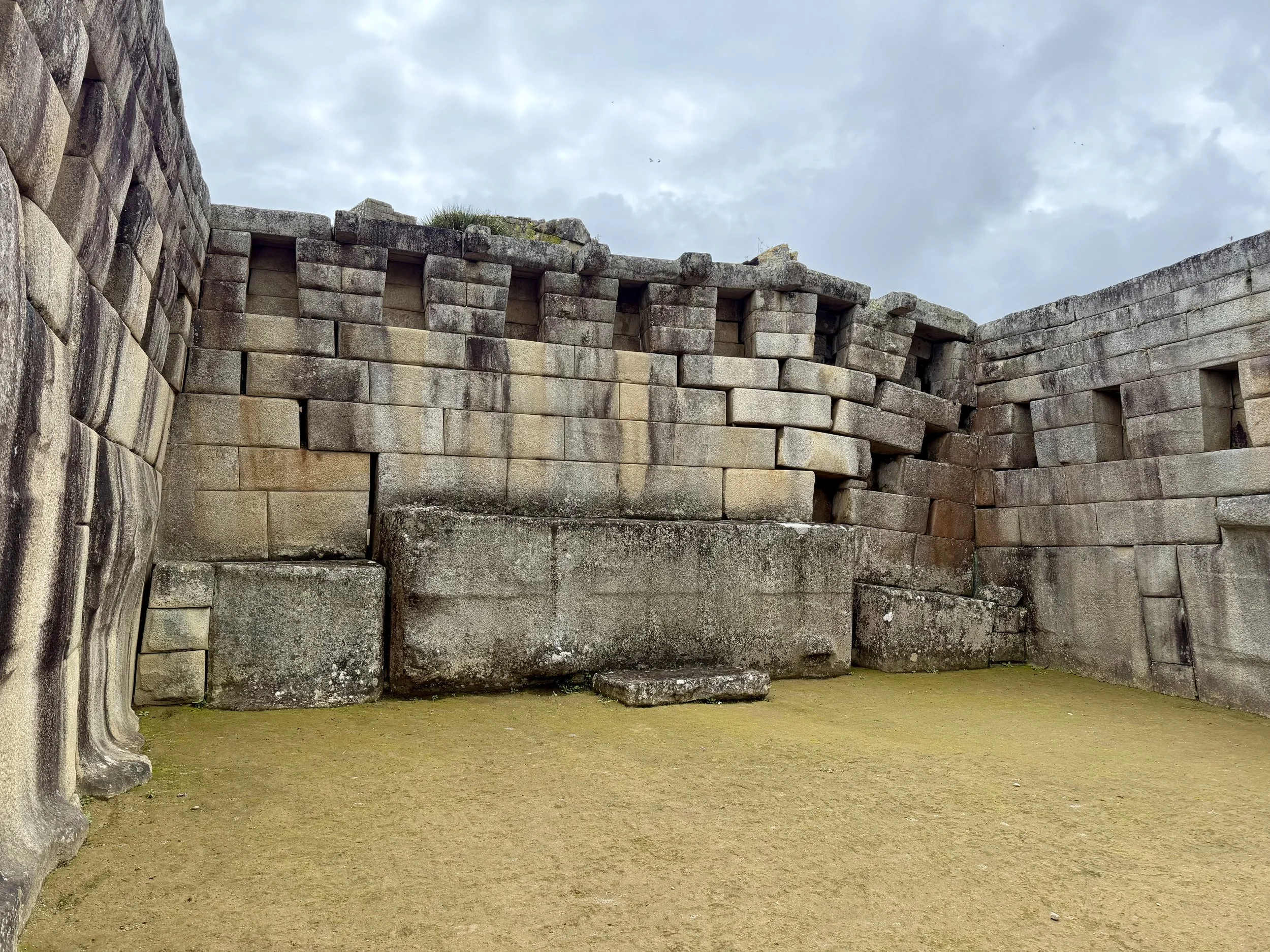
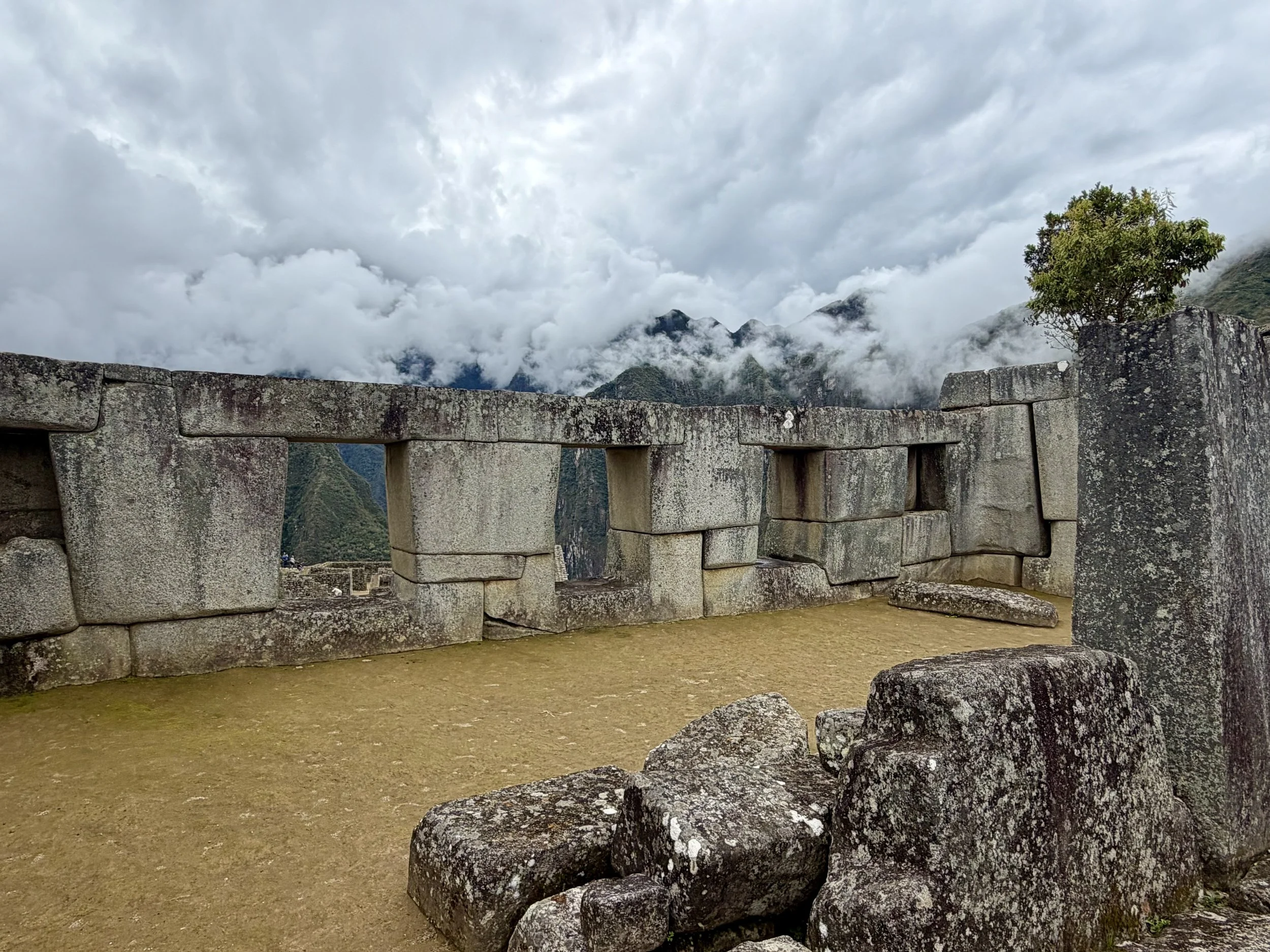
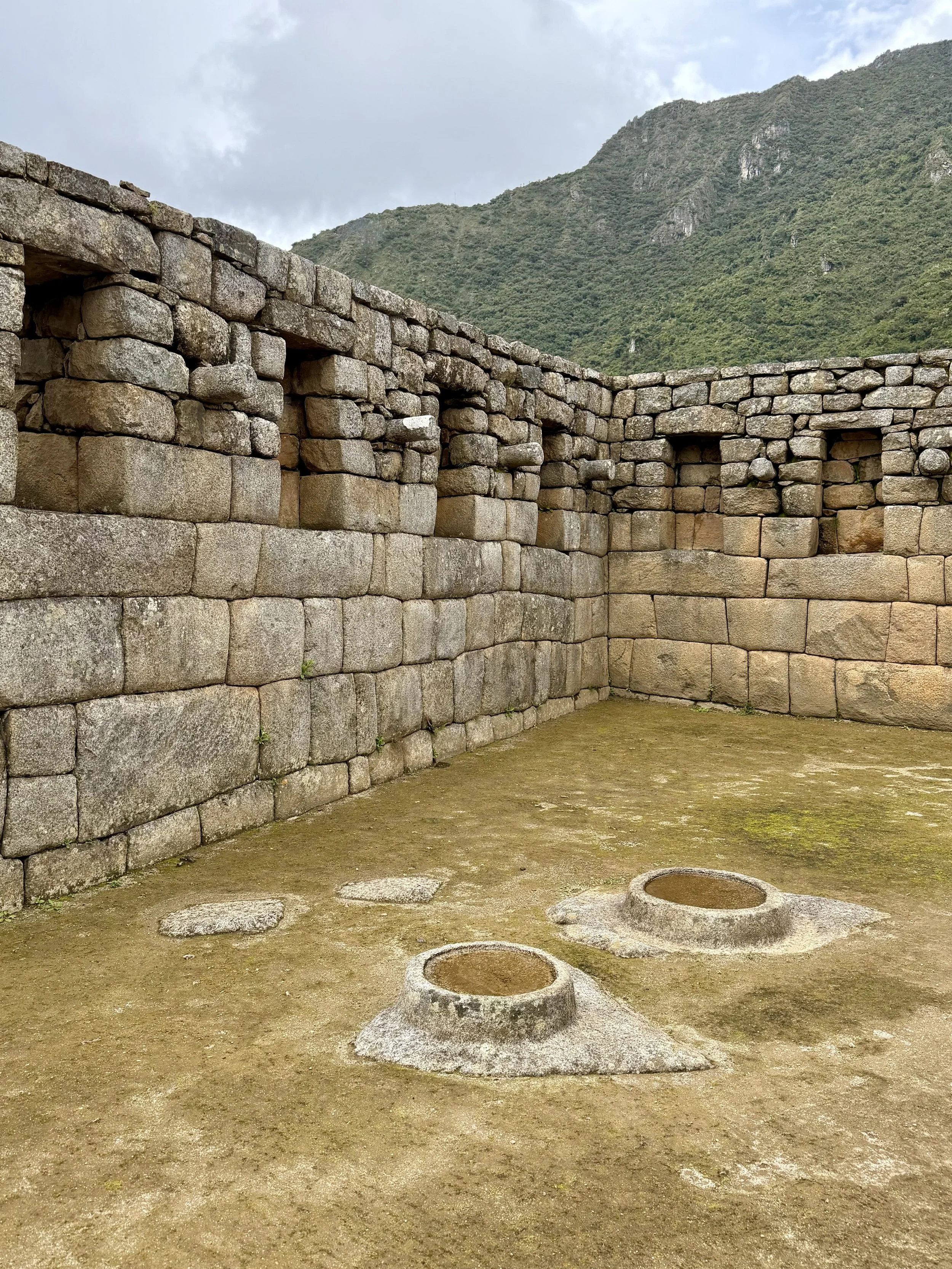
We had been at Machu Picchu for around three hours, but it hadn’t felt that long. The clouds were still thick, but they had lifted, and all the mountains were “out.” At the lower edge of the city, we had a clear view of the Urubamba River snaking around Putucusi. As I took one last look at the magnificent Inca city, it still felt unreal that I had just walked through one of the New Seven Wonders of the World.
The restaurant at the welcome center had a wonderful buffet lunch. I was ravenous after all the walking. While we were inside eating, it started to rain! We agreed to abandon plans for a second, shorter tour. After a long, leisurely lunch, we took the bus back down the mountain to Machu Picchu Pueblo.
Machu Picchu is a UNESCO World Heritage Site.