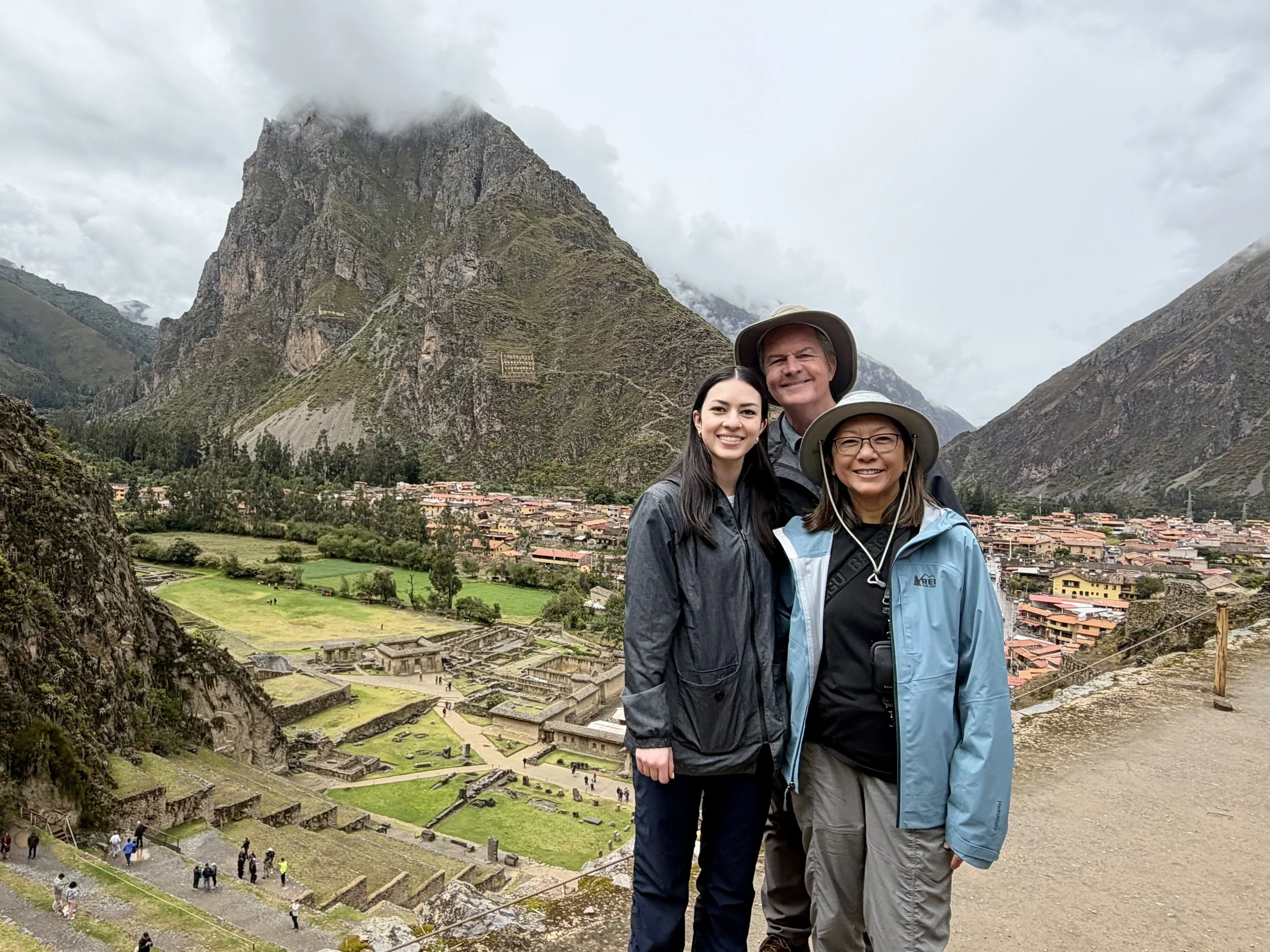
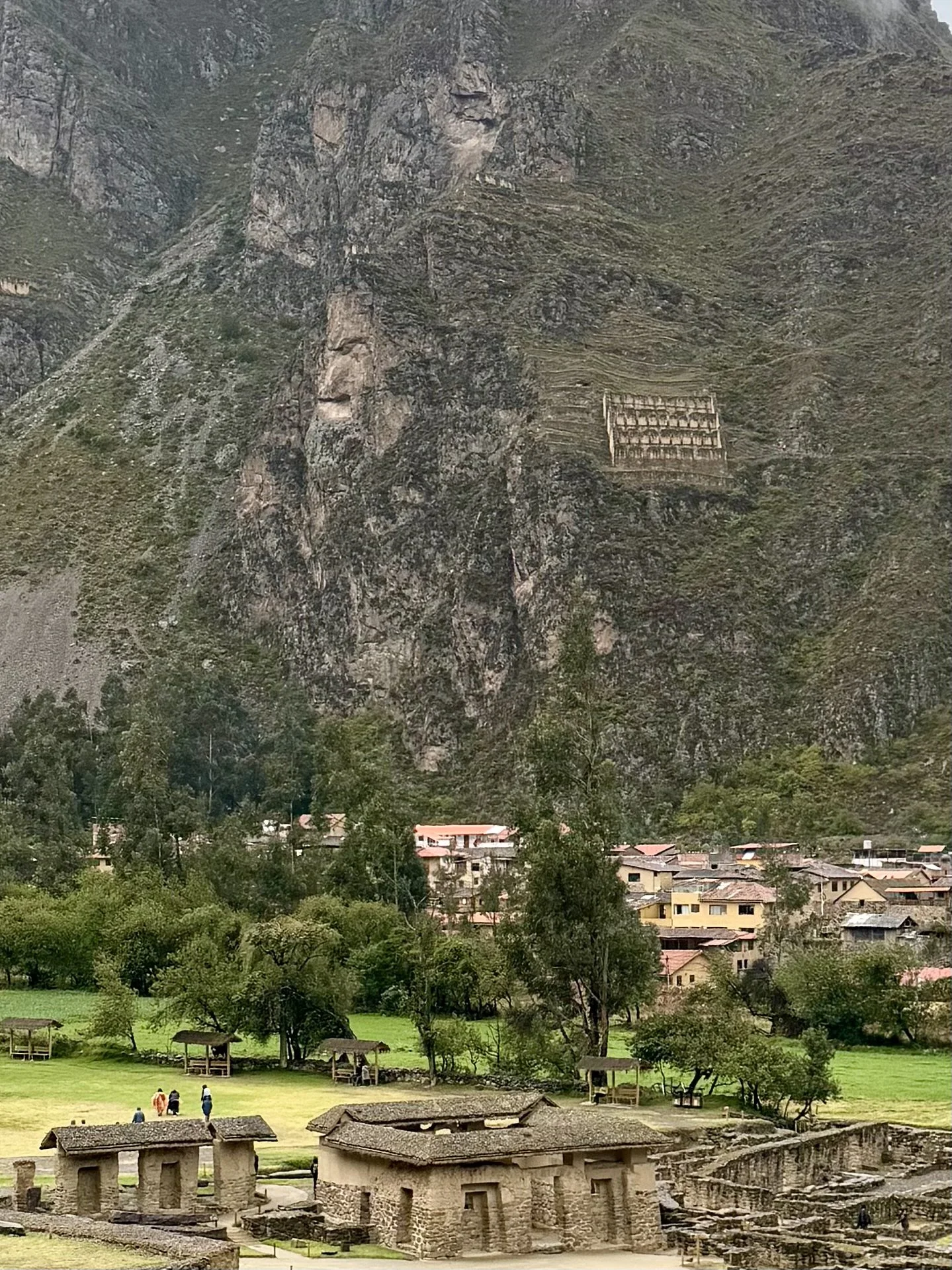
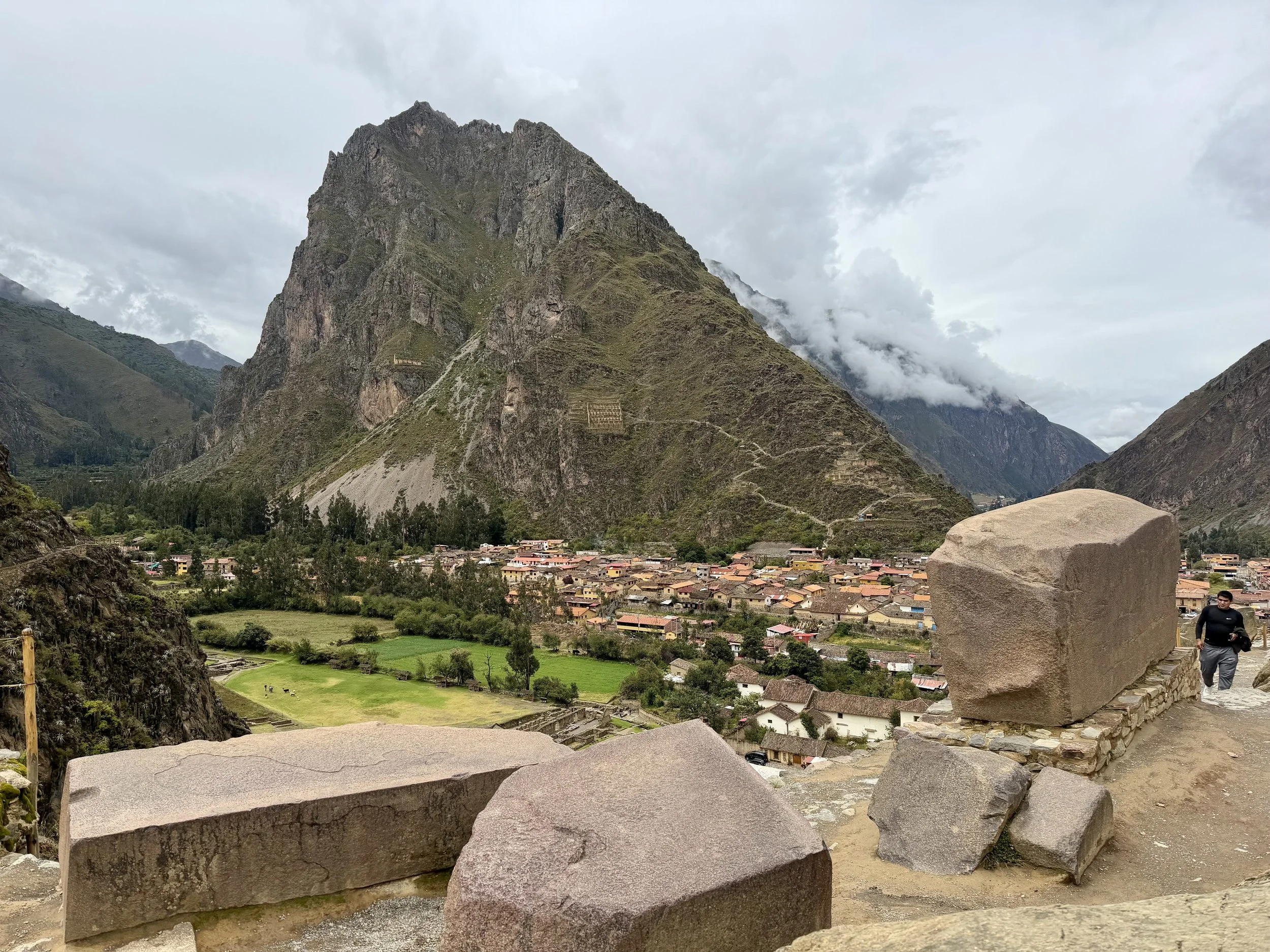
The Ollantaytambo Archaeological Park is perhaps the most important ancient site in Peru after Machu Picchu. We climbed steep steps up massive stone terraces. From up on those terraces, we could see the town of Ollantaytambo spread out at the foot of Pinkuylluna Mountain. Pilar explained that the mountain is named after an Andean flute because of the whistling sounds the wind makes. There were ancient storehouses on Pinkuylluna, and a huge stone face. The Incas used the position of the sun relative to this mountain to chart the seasons.
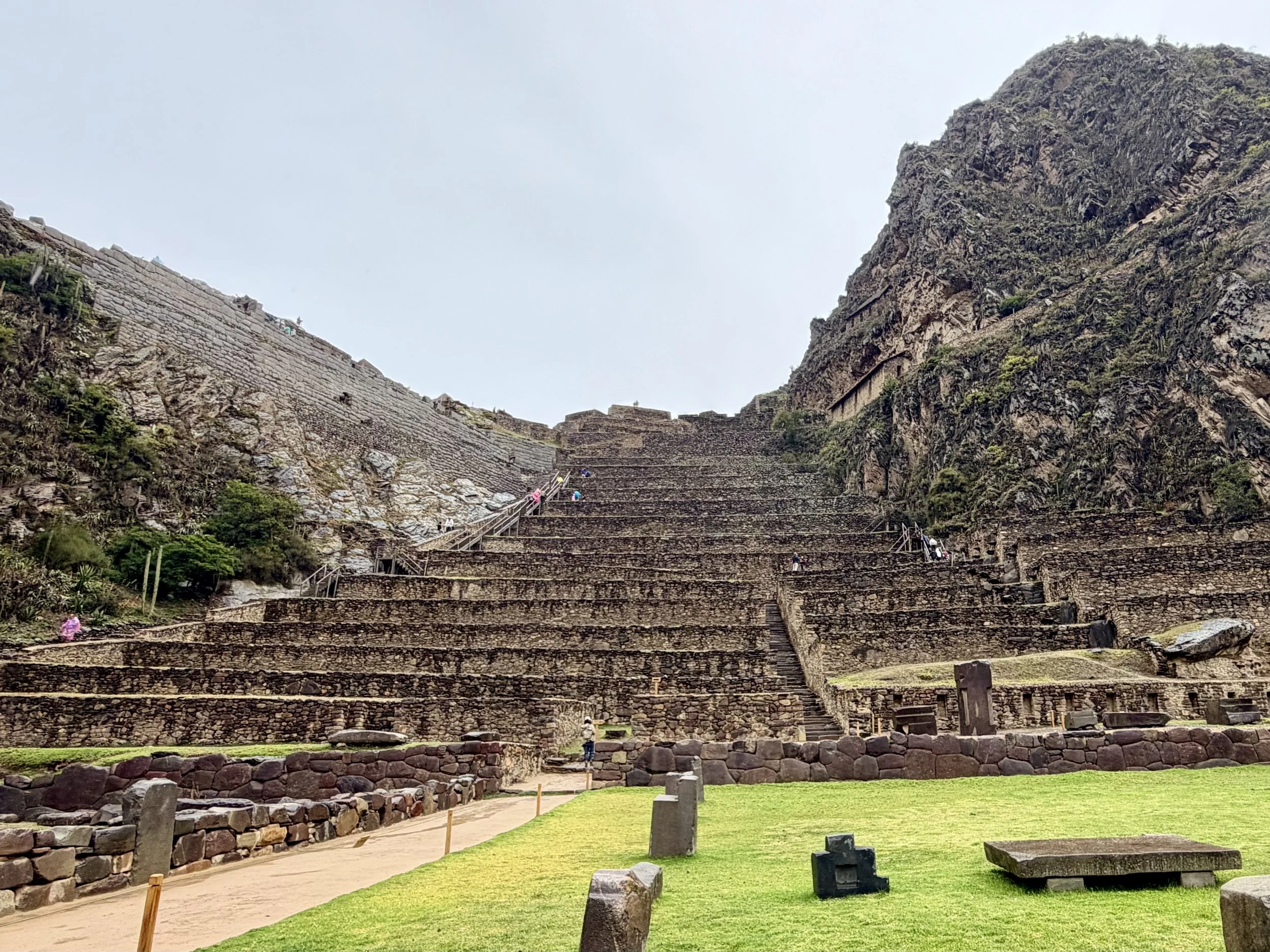
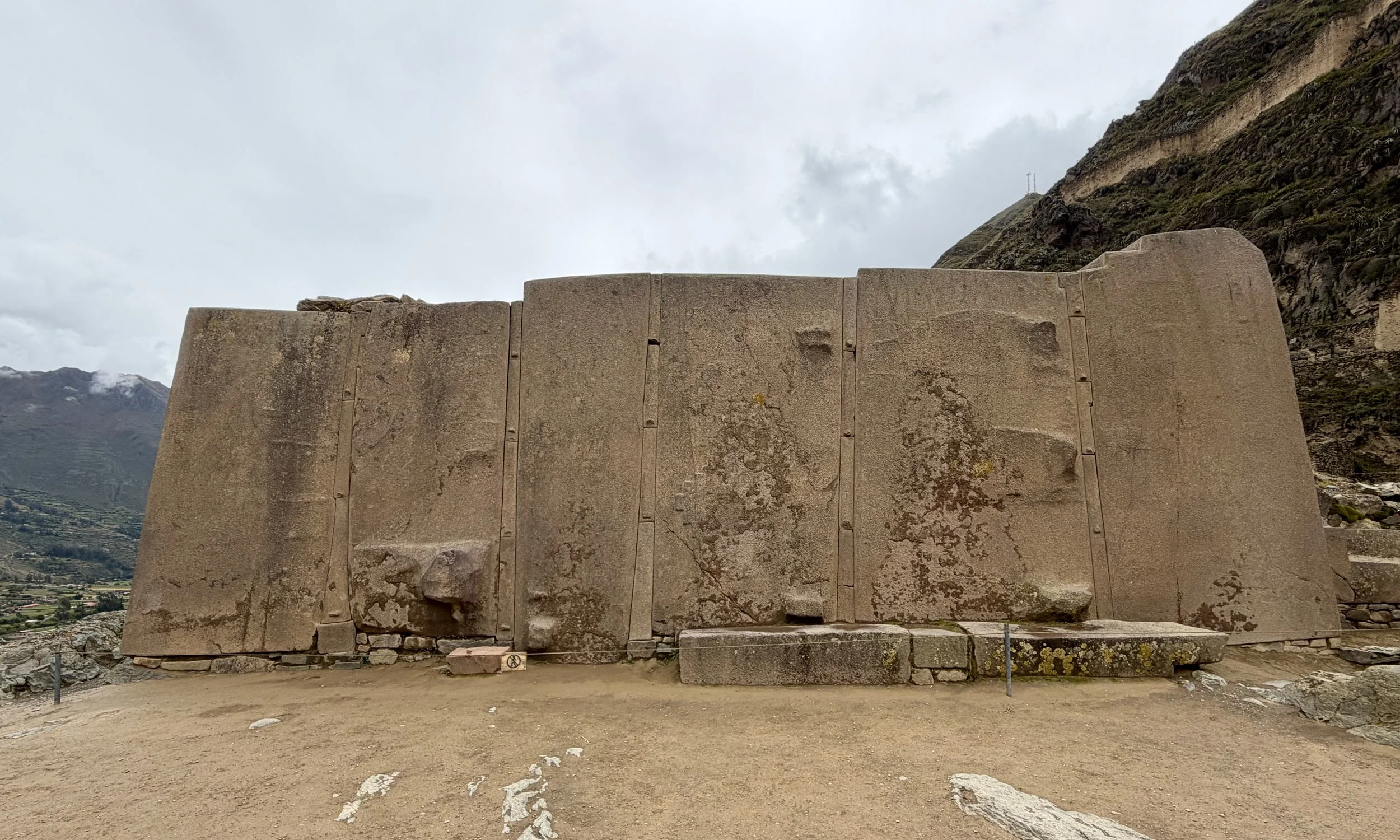
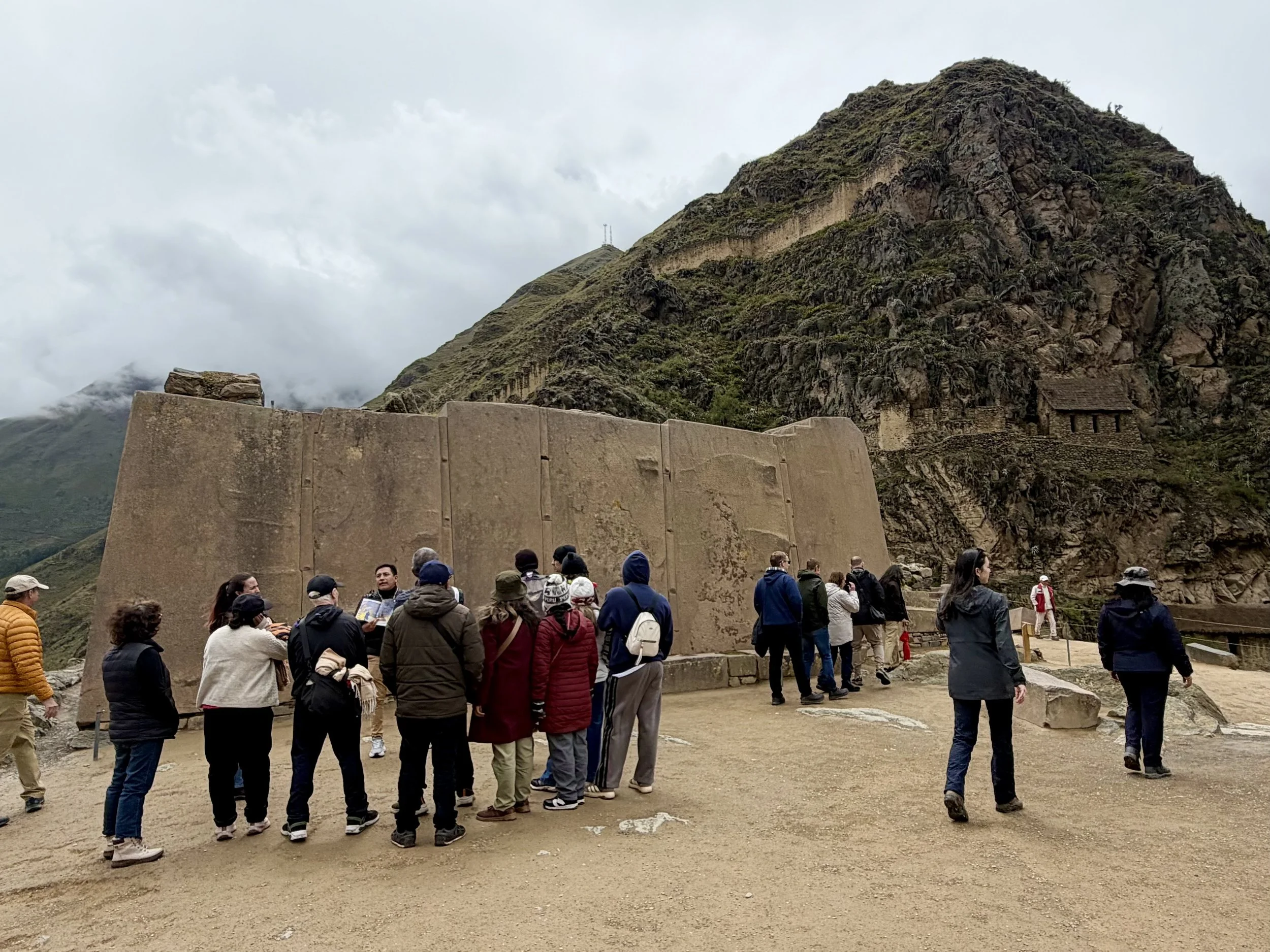
At the top were gray walls constructed using very large blocks of stone that fitted together so precisely that no mortar was needed. Moreover, the hidden sides of the stones were alternately concave and convex, so they locked together. This sophisticated workmanship indicated that the three buildings atop this hill were temples, though none of them was ever finished.
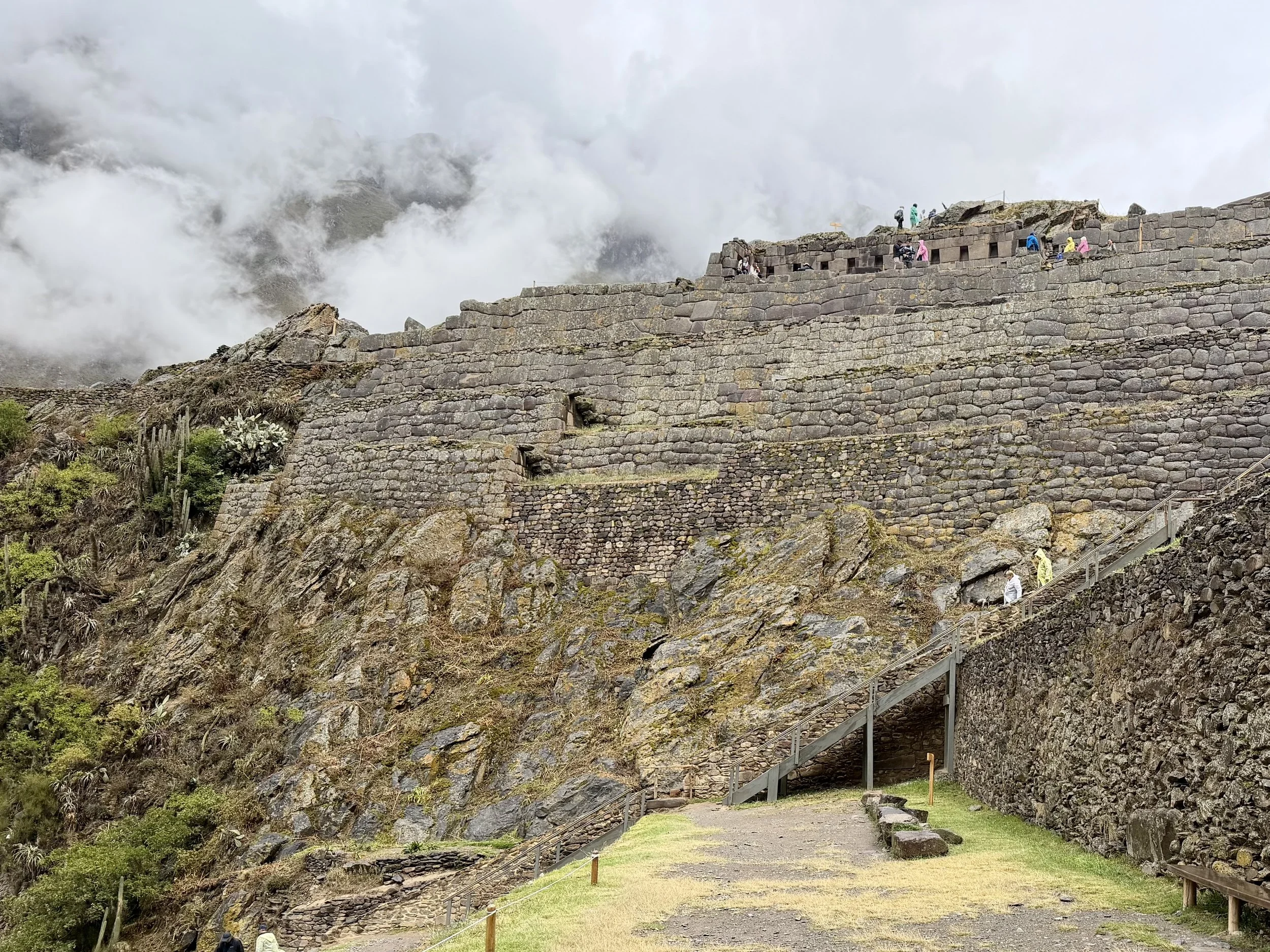
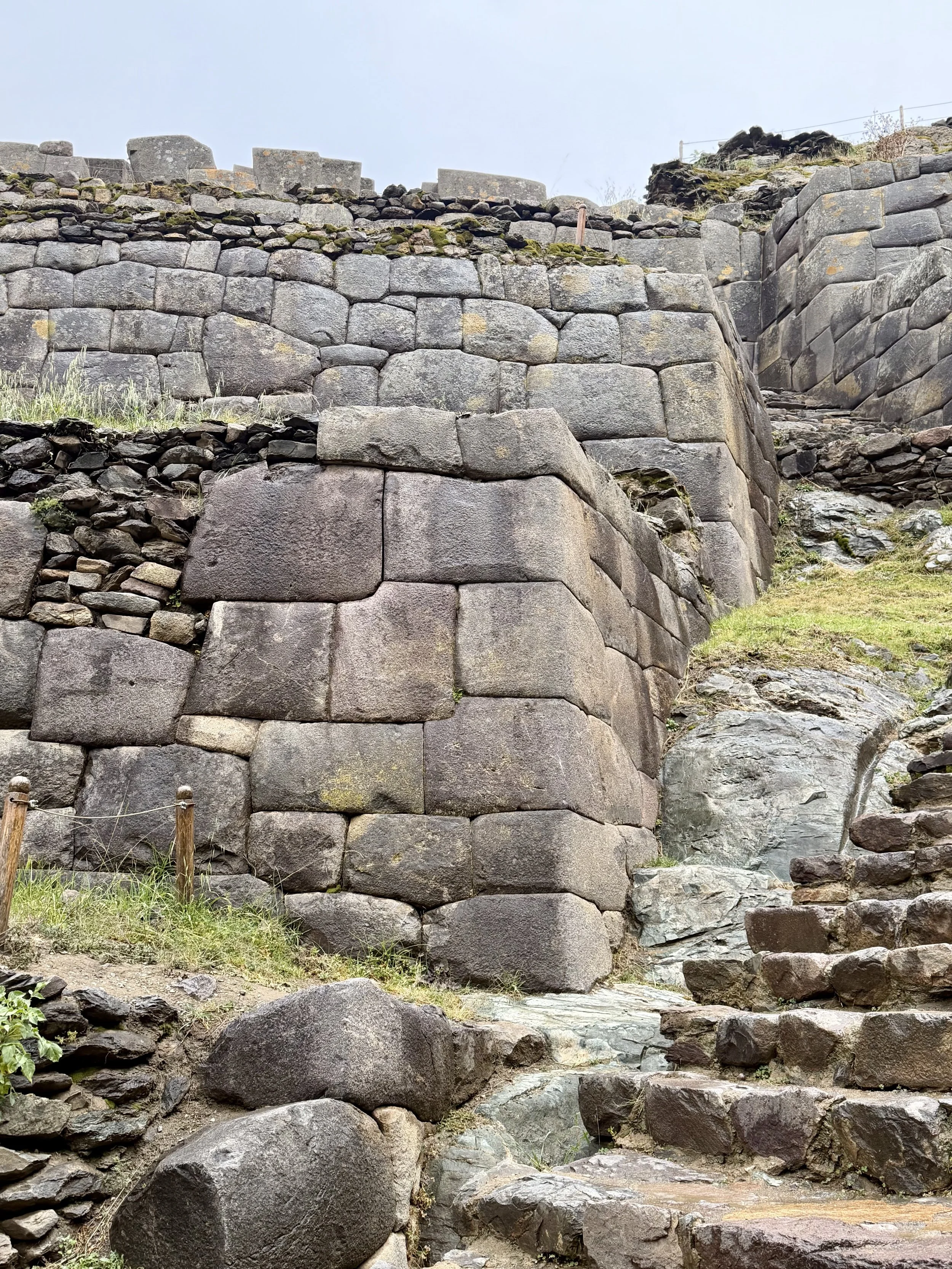
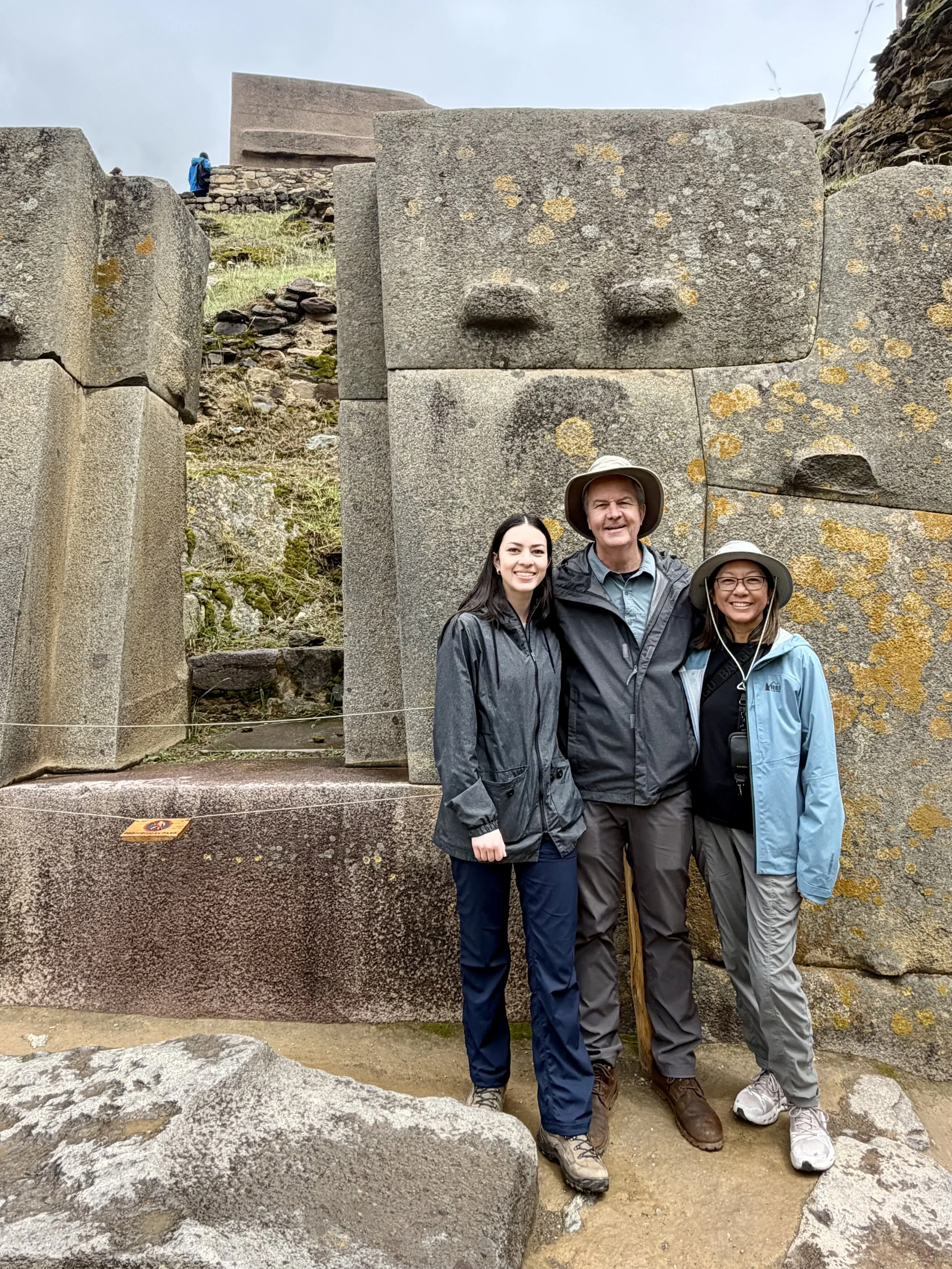
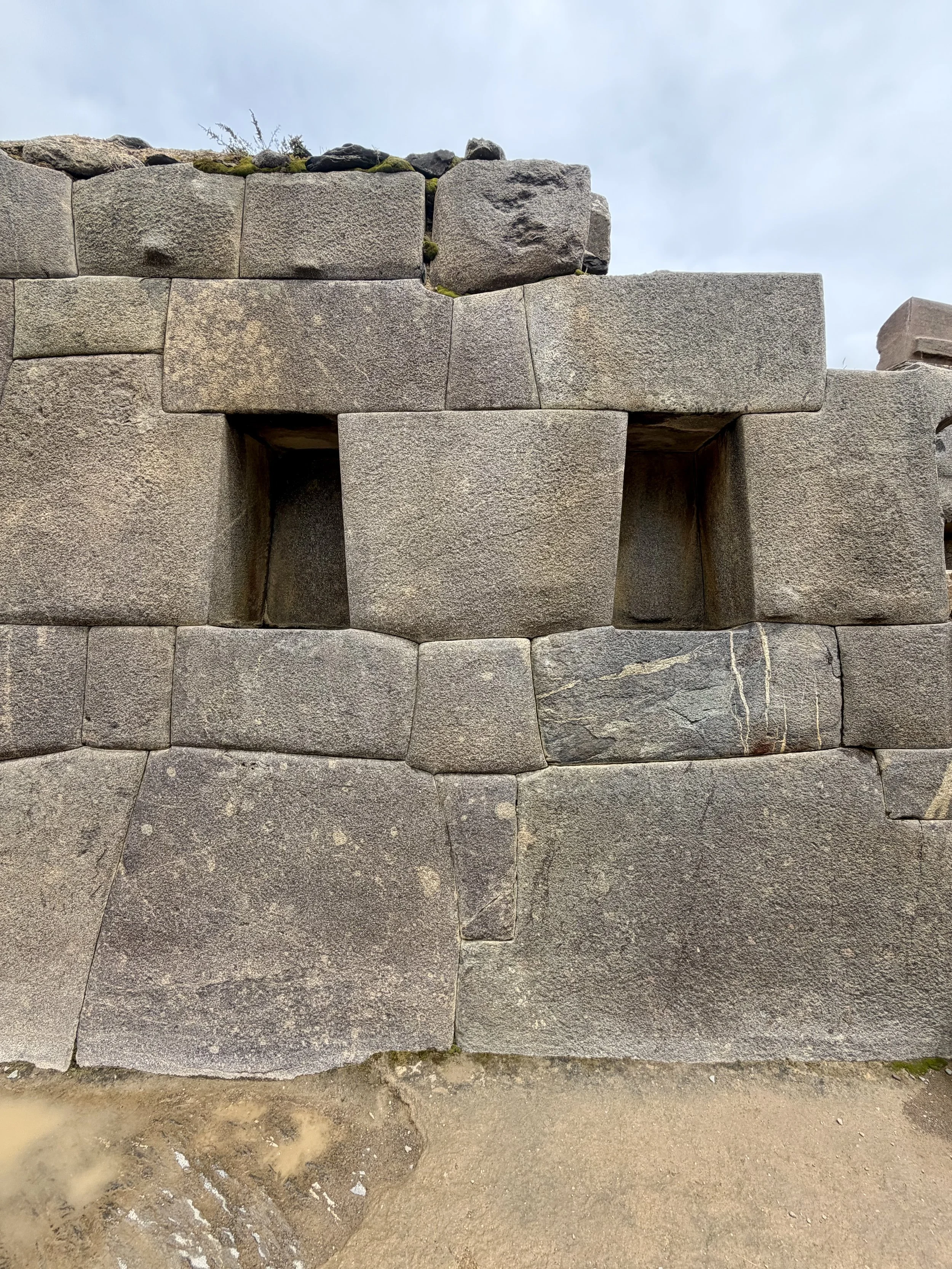
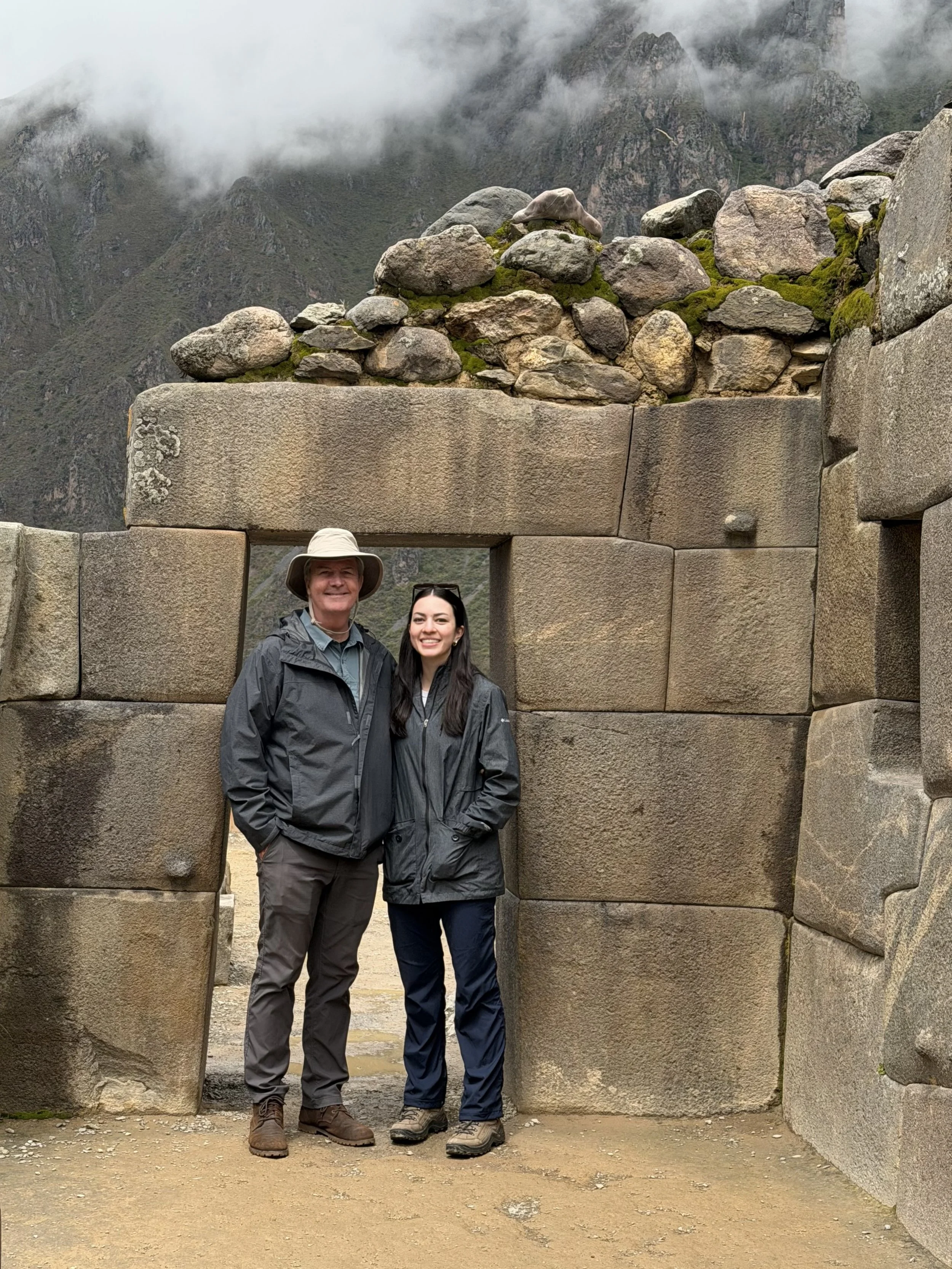
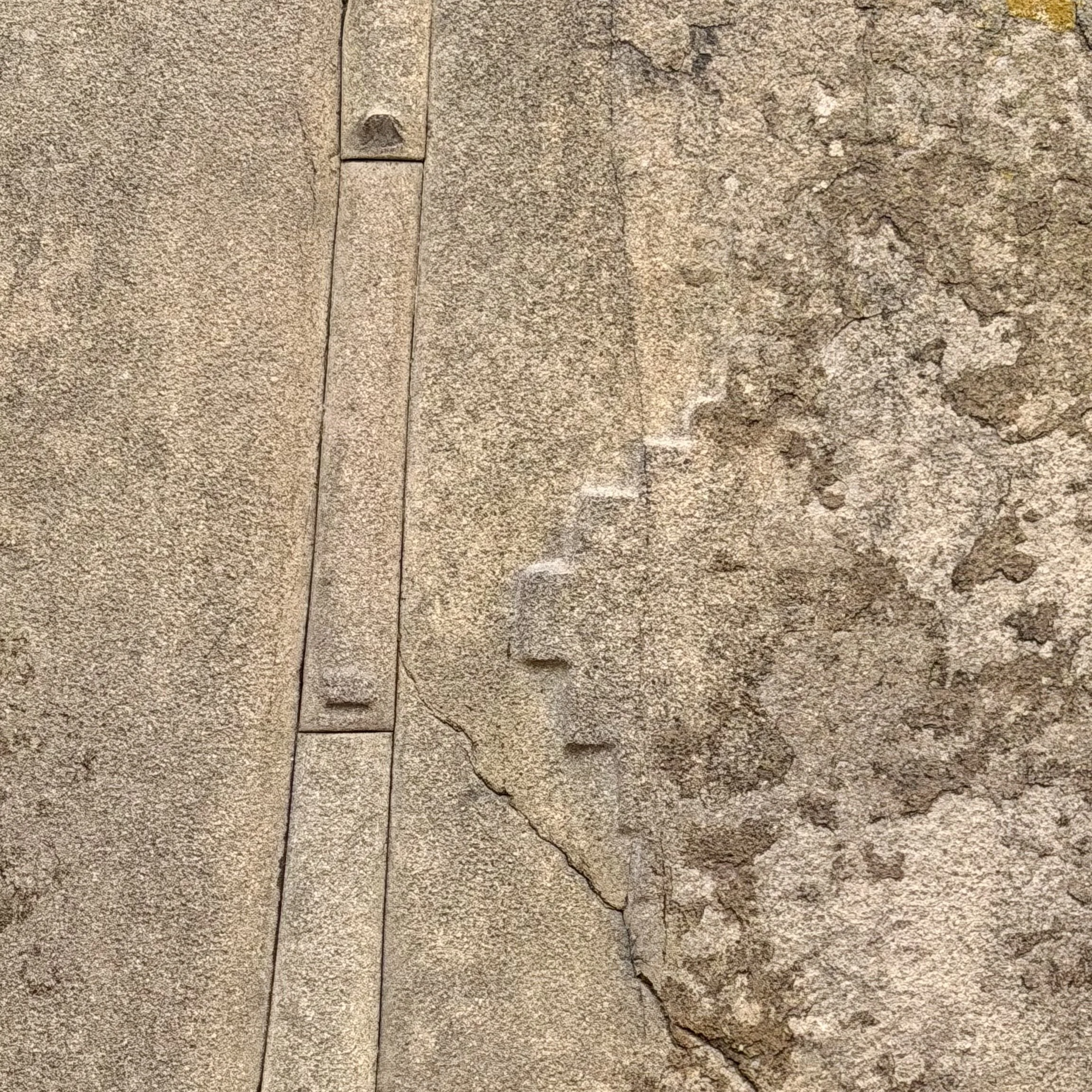
The stone blocks grew increasingly larger. The uppermost temple had monolithic pink granite panels, with clever expansion joints between them for added stability during earthquakes. All this stone had come from a quarry in the far distance. Pilar explained that they were moved by tying ropes around them and having an army of workers drag them down from the quarry, across the riverbed (from which the water was temporarily diverted), and then up a ramp to the top of Temple Hill. I felt overwhelmed just trying to imagine the effort needed to build these temples.
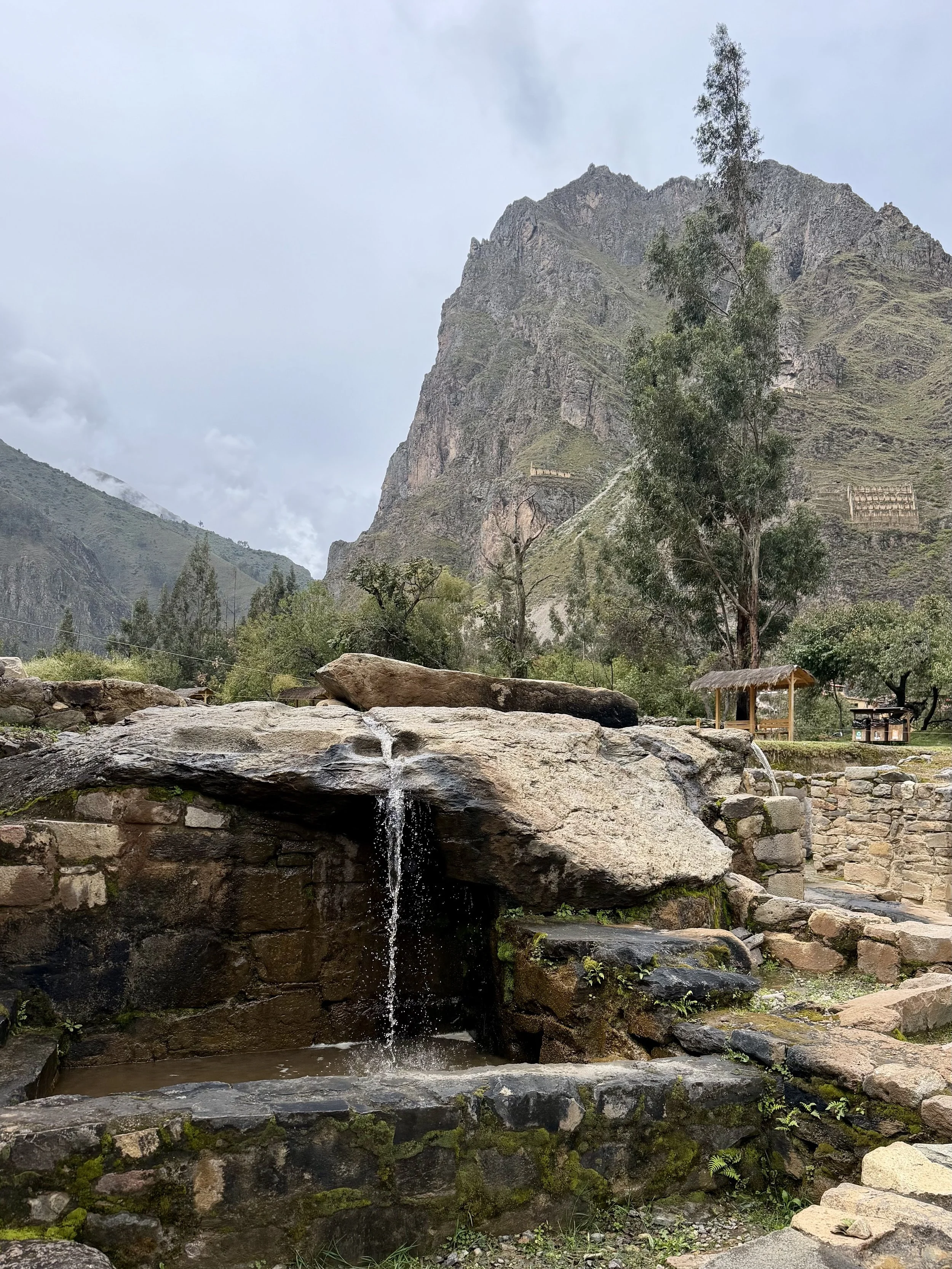
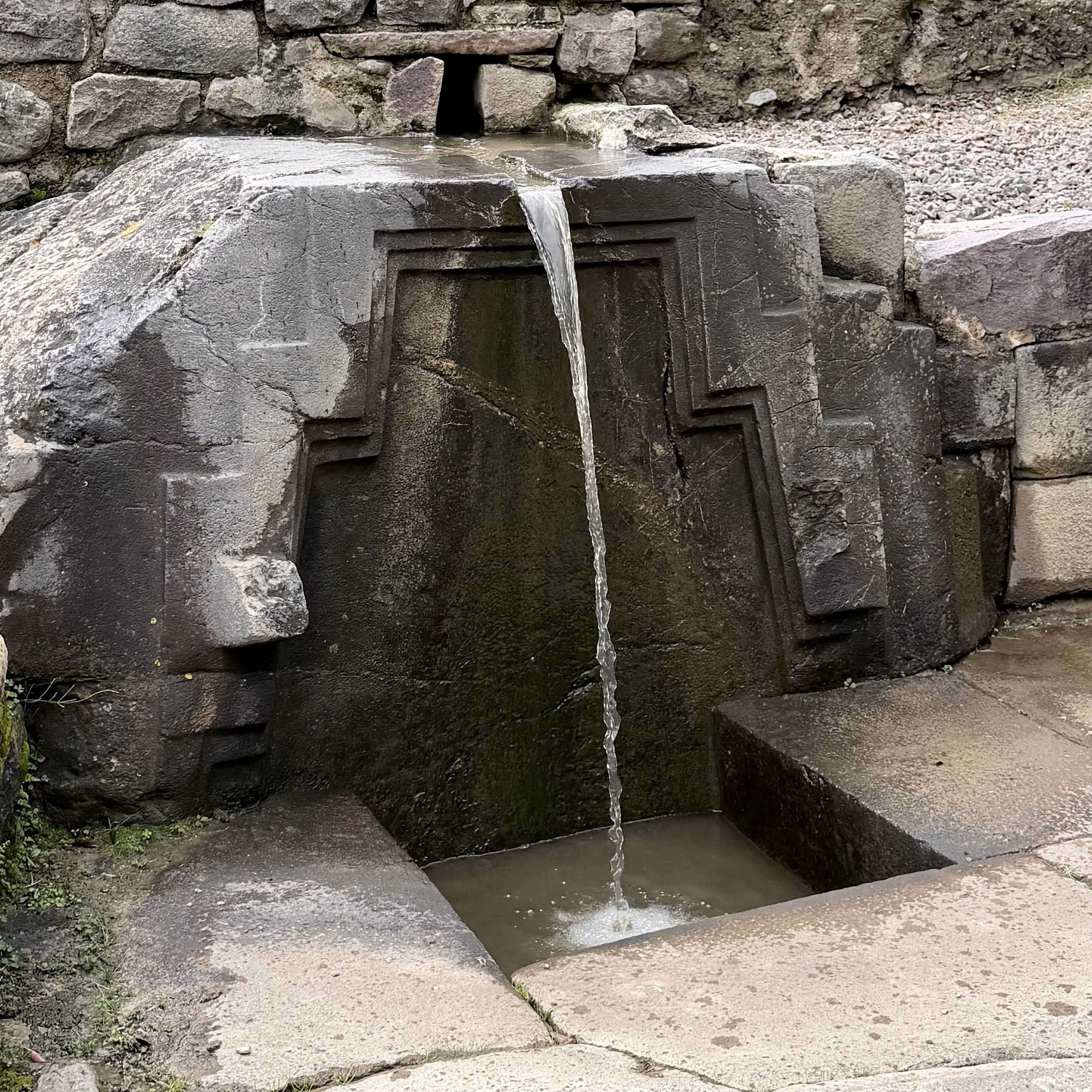
We descended the Temple Hill terraces and stopped to admire the Inca fountains that were still fully operational.
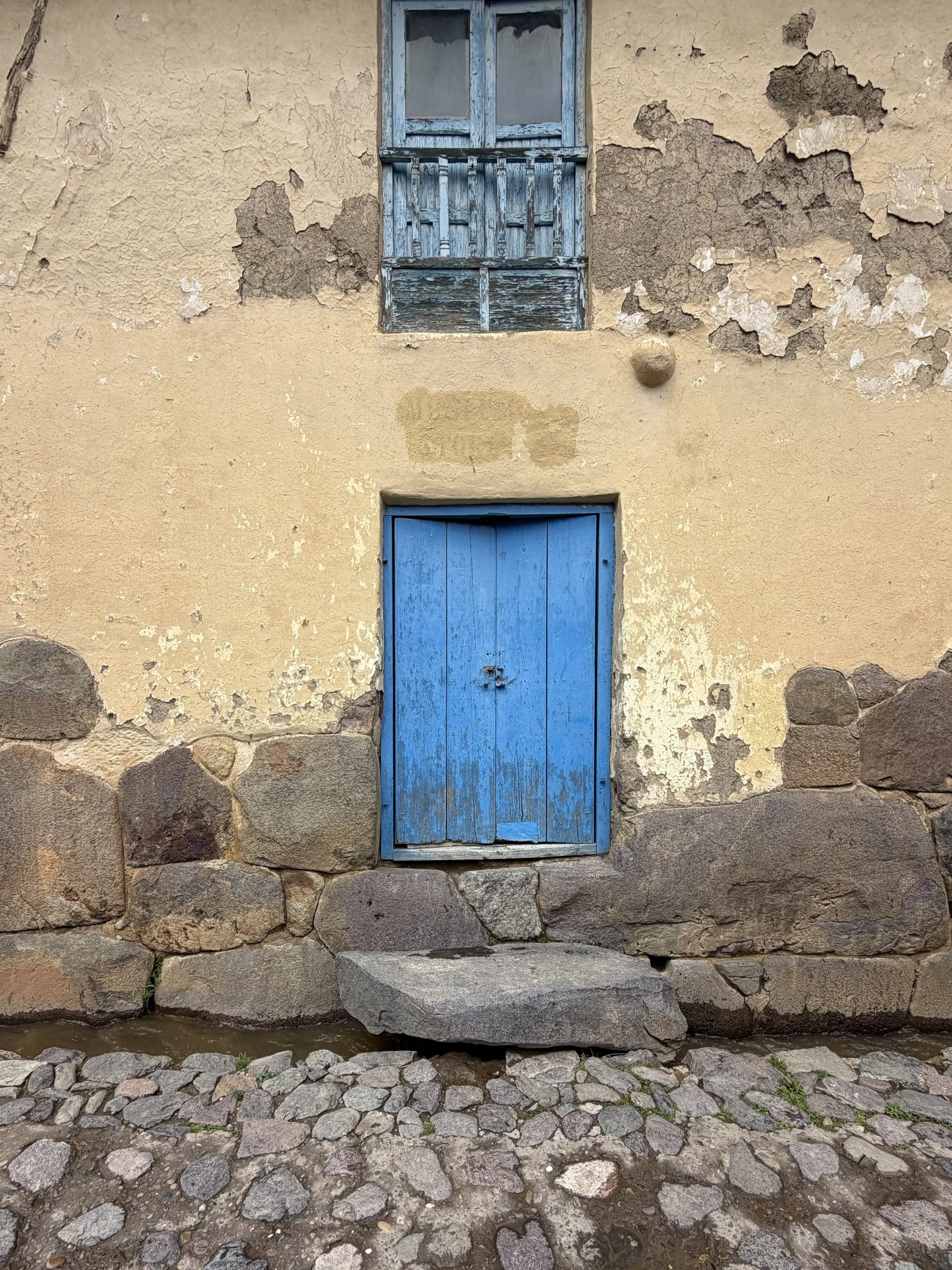
Now Pilar led us through the town, where we could see houses built atop Inca foundations. Narrow streets were decorated with festive garlands. Cactus plants sad atop stone walls.
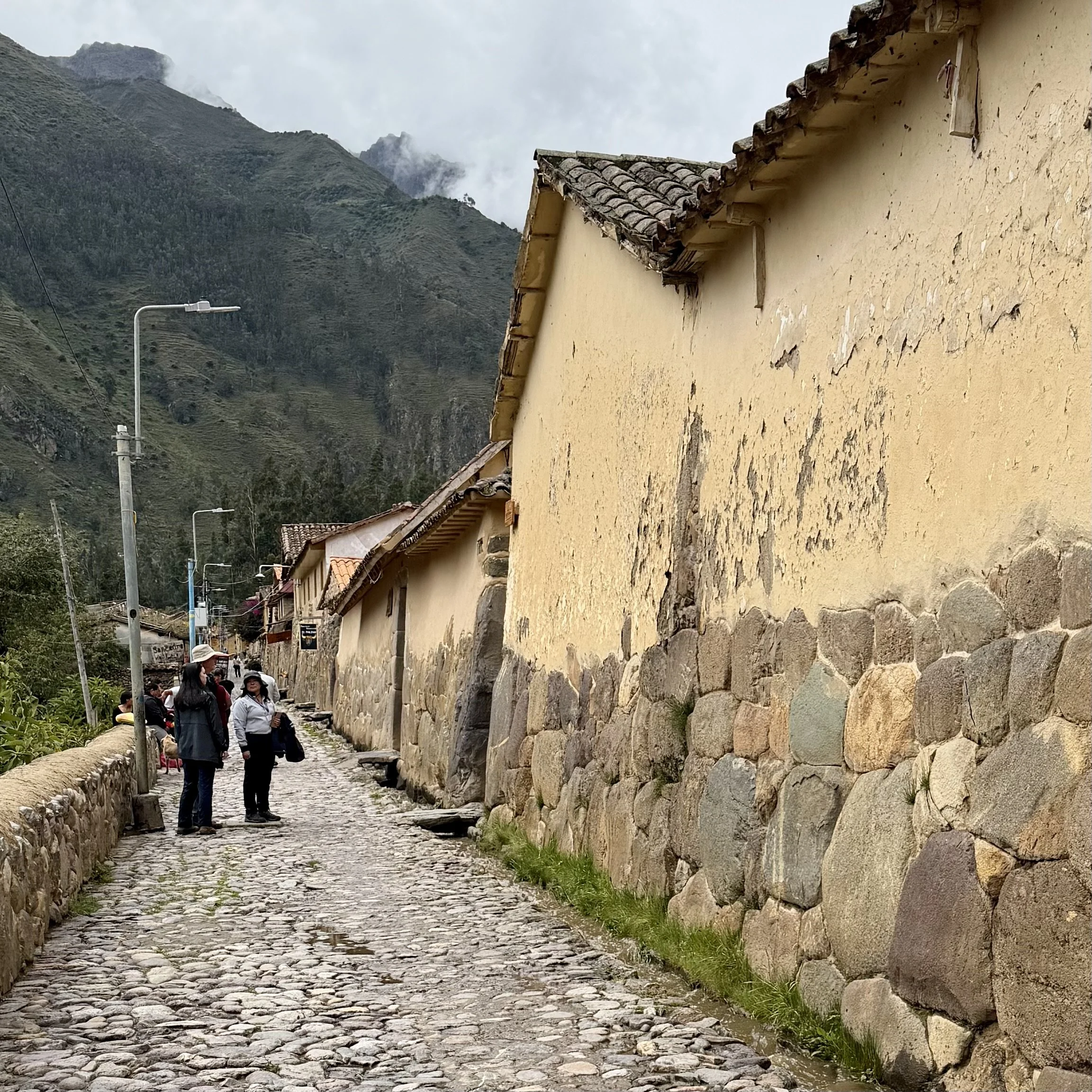
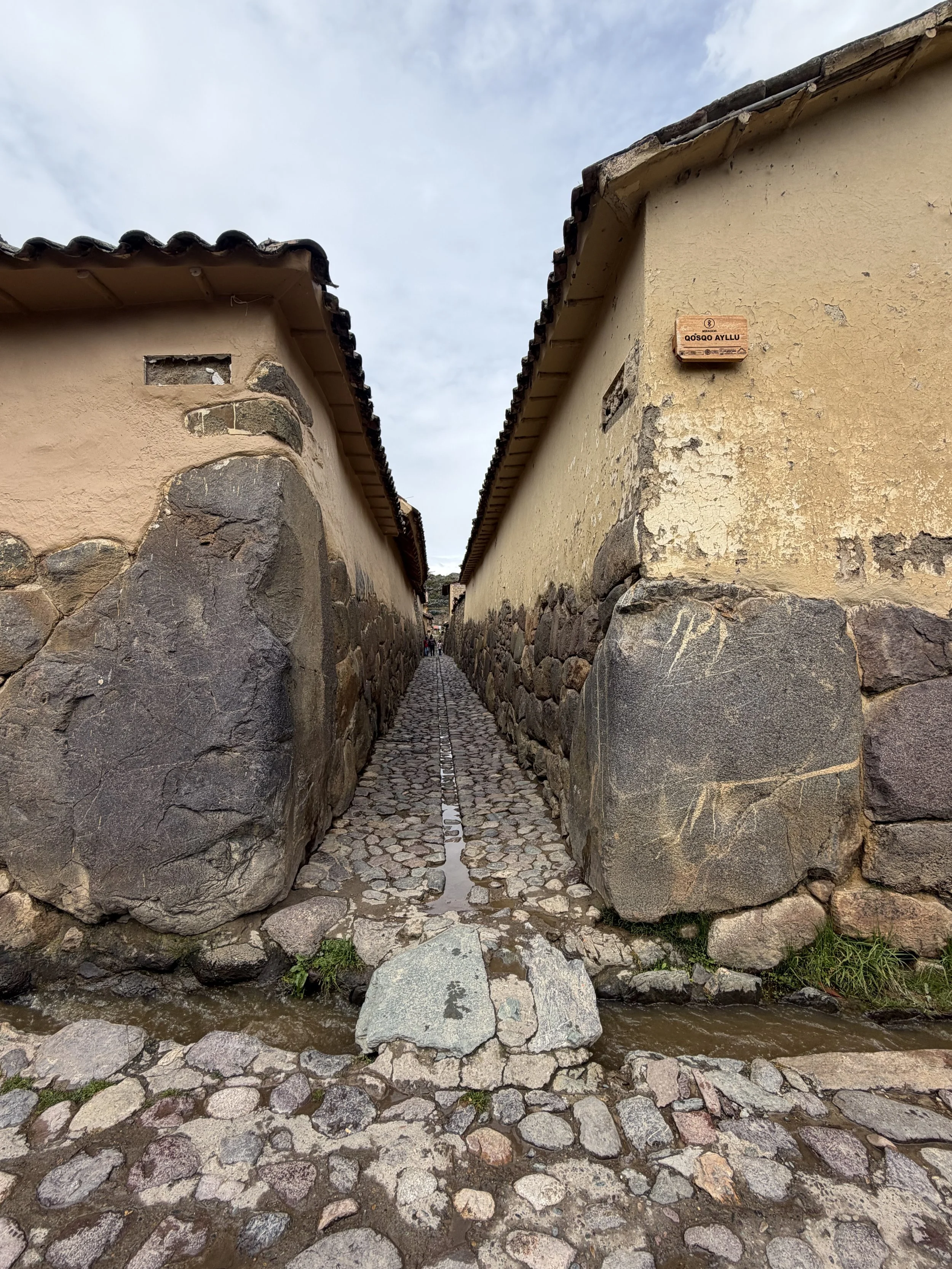
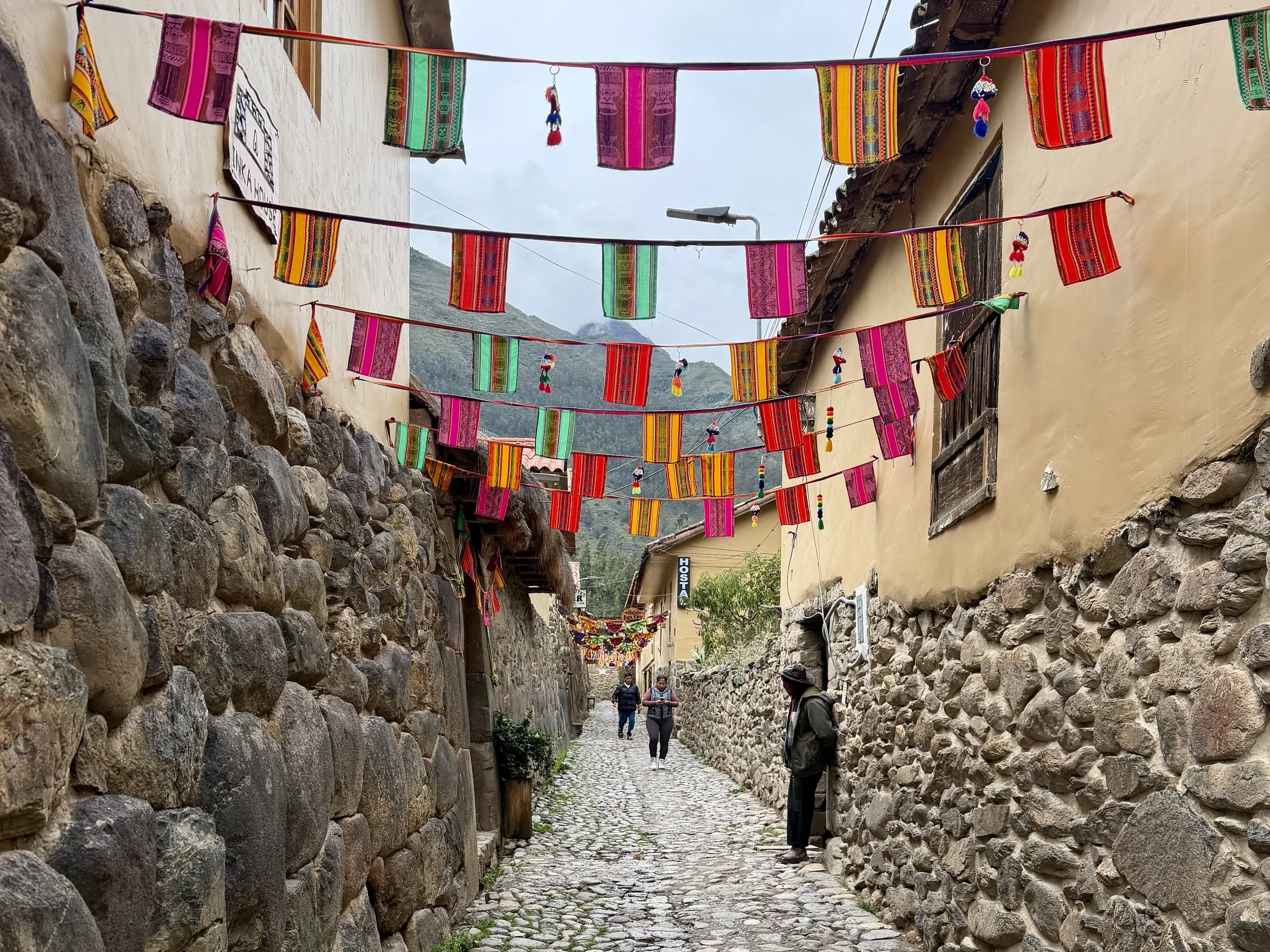
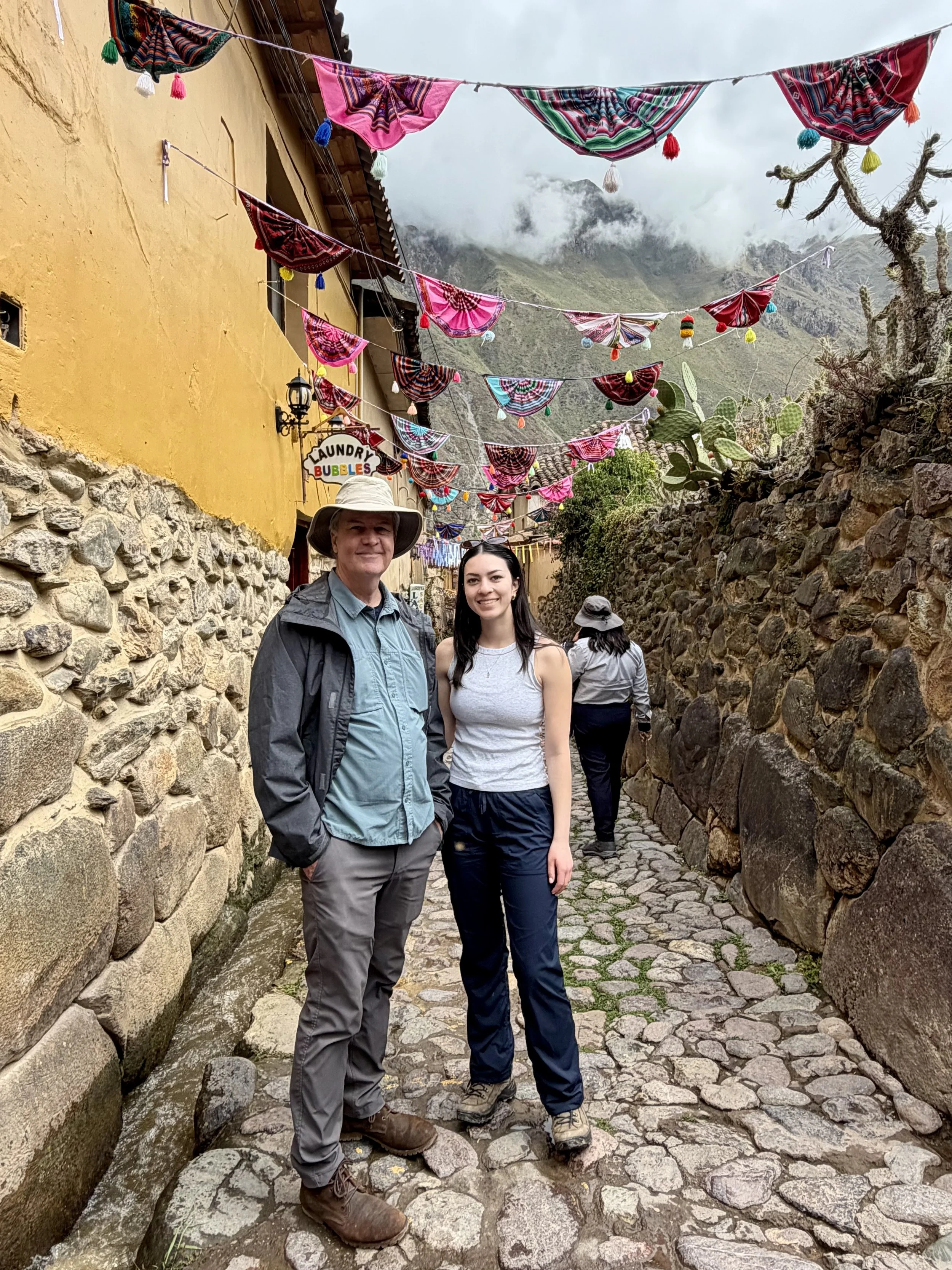
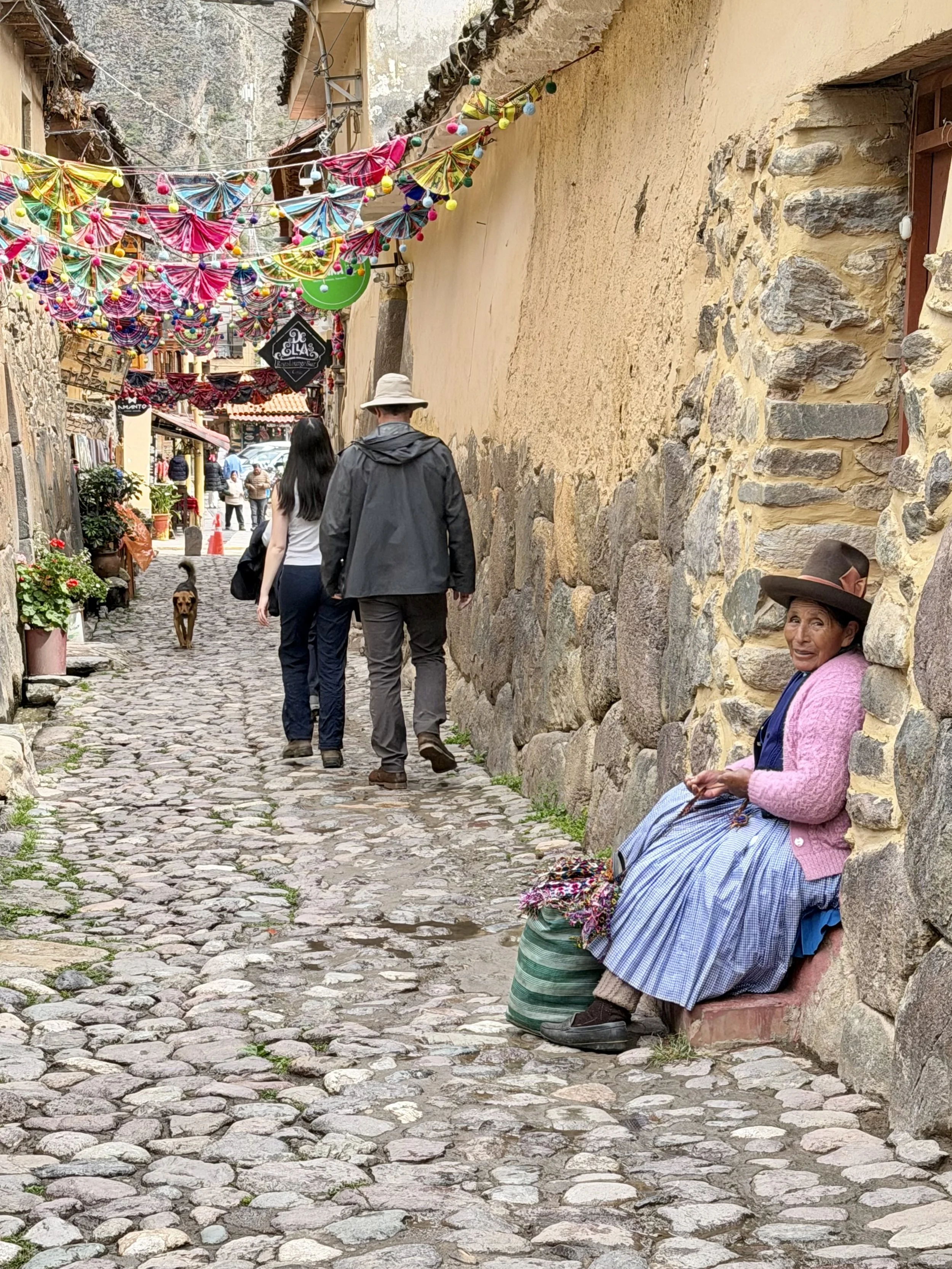
Ollantaytambo is growing quickly due to increased tourism to Mahu Picchu. The town faces the challenge of how to retain its unique historic charm amidst a flood of new construction.