After visiting the amazing ruins at Ephesus, I wanted to see a different ancient site - something distinctive, smaller and less visited, and in the same region (Aegean). Aphrodisias proved to be exactly what I was looking for.
Aphrodisias was a Roman city about 60 miles inland from the Aegean Sea, flourishing during the 1st and 2nd centuries CE. The city was dedicated to Aphrodite, the goddess of love and beauty. Emperor Augustus favored the city because his family believed themselves to be descendants of the goddess. With rich quarries of fine marble nearby, Aphrodisias was famous for its school for sculpture and for producing outstanding marble portrait statues.
We reunited with our guide İlcare and driver Mustafa, and drove about 2.5 hours to Aphrodisias. İlcare gave us the story of site’s accidental discovery. In 1958, Turkish photojournalist Ara Güler became lost and found himself in a remote mountain village called Geyre. To his surprise, villagers were casually using ancient marble fragments as tables, benches, and building materials. Talk about “life among the ruins”! Here are just a few of Güler’s photographs of Geyre; you can see more HERE.
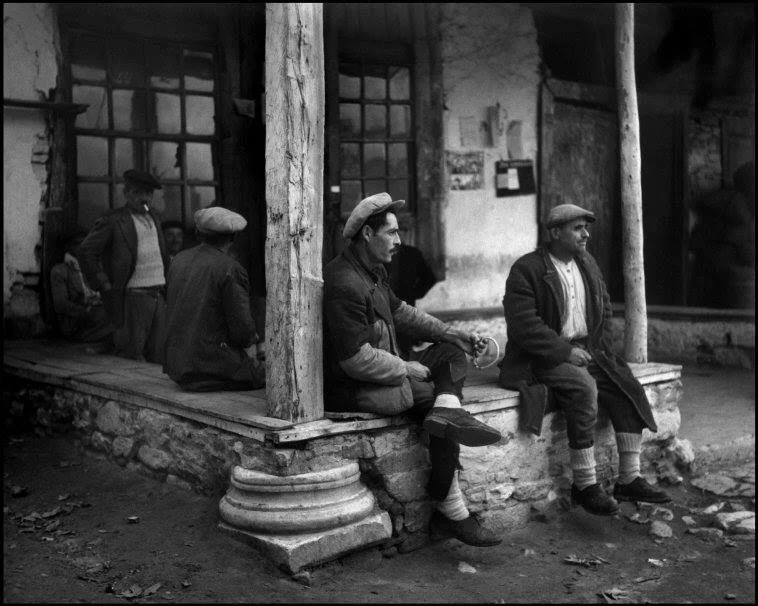
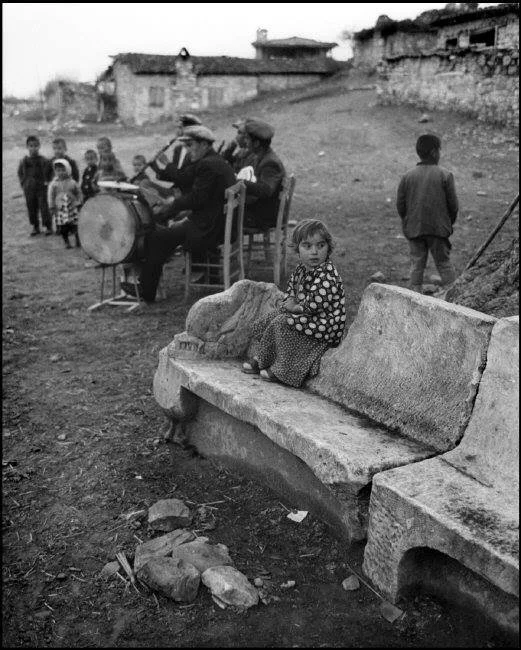
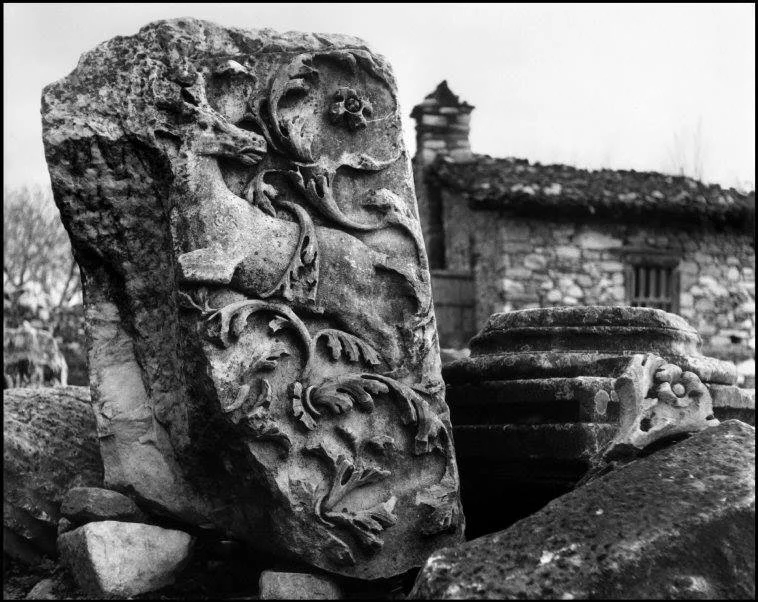
Kenan T. Erim, a Turkish native and professor at New York University, was tapped to write an article to accompany Güler’s photographs. Erim devoted his life to leading the excavations at Aphrodisias, and is even buried at the site. (Fun fact: Erim earned his Masters and PhD at Princeton.)
Just inside the entrance to Aphrodisias, sculpted marble fragments lay randomly along the path, perhaps a nod to the village of Geyre (which incidentally had to be relocated due to the excavations).
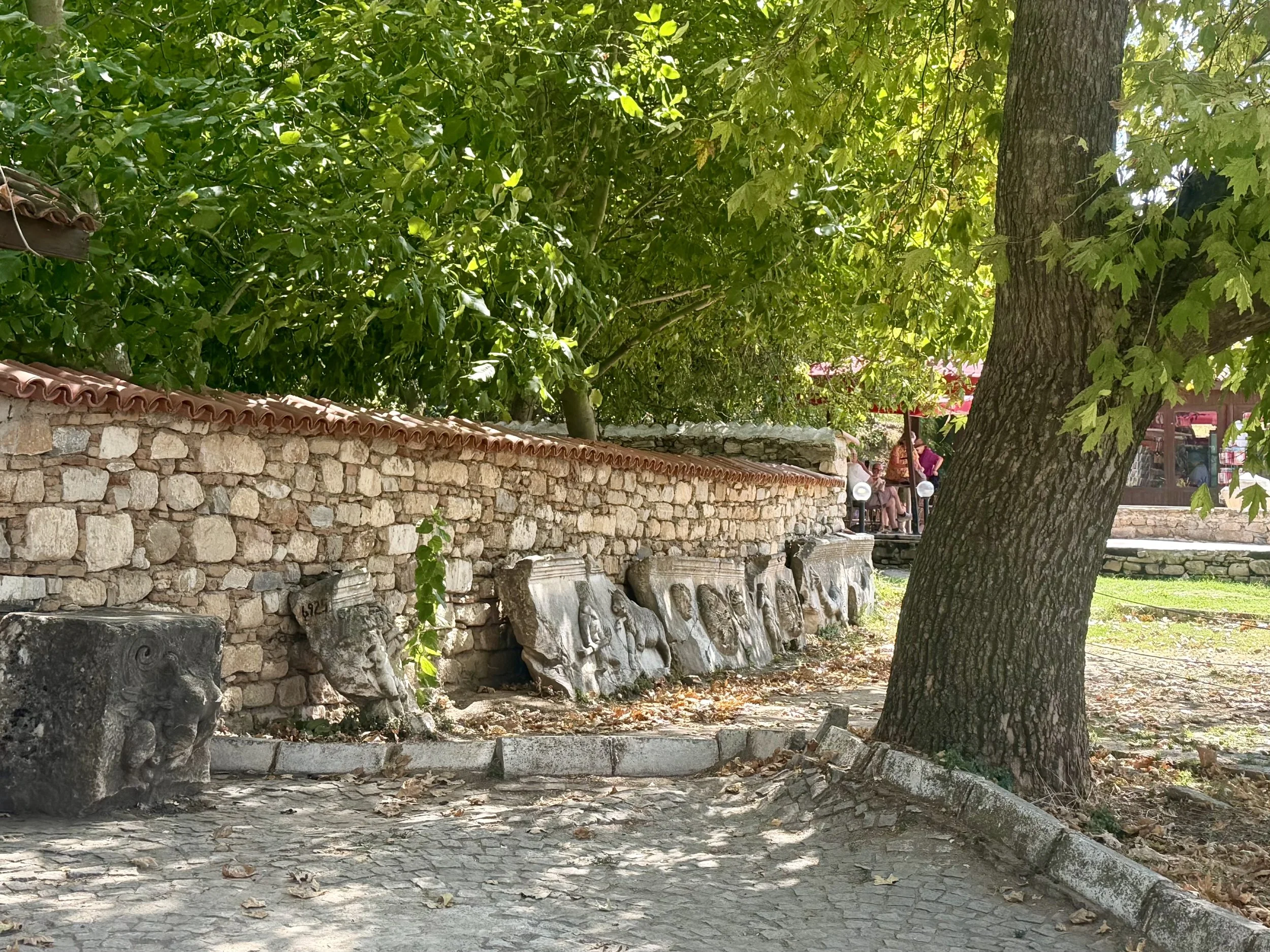
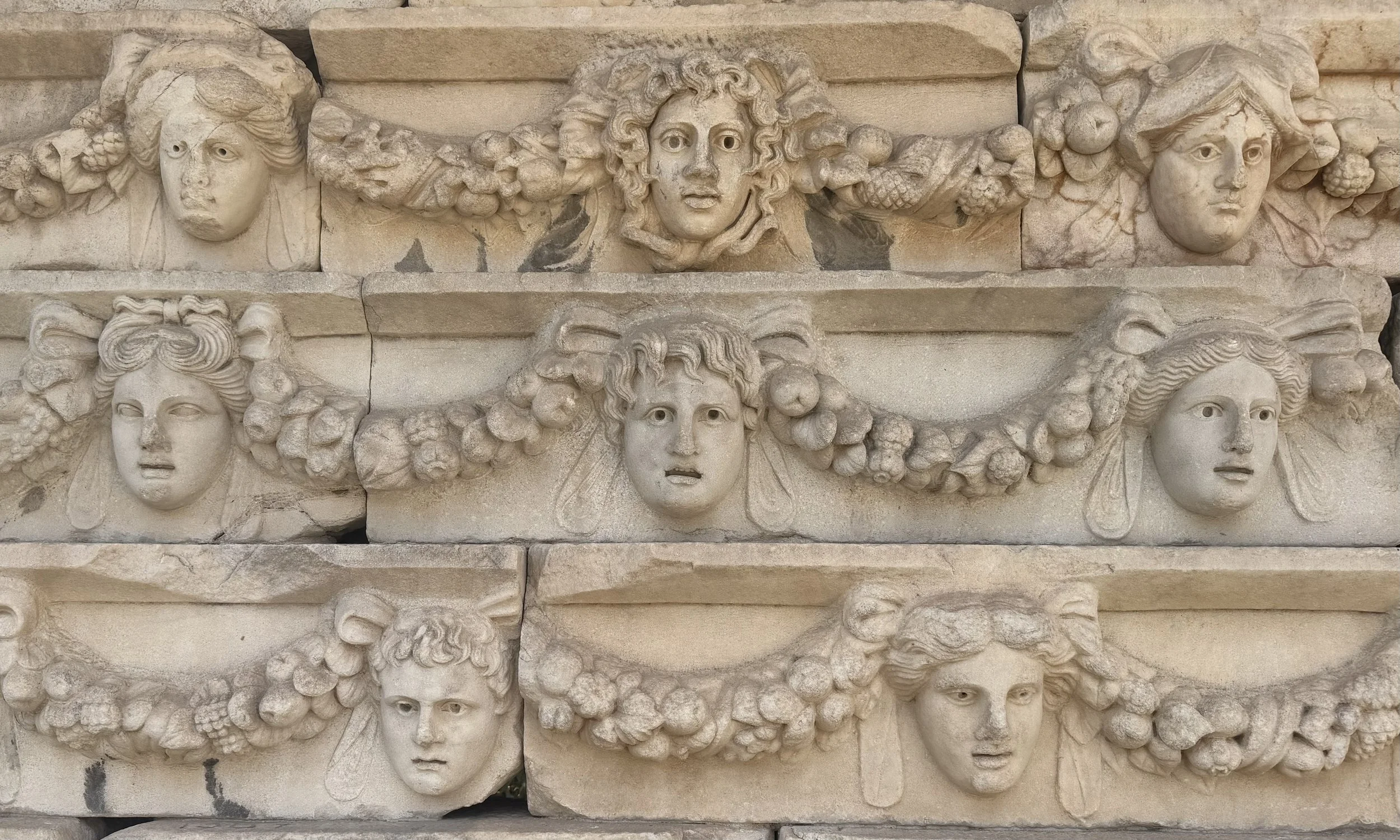
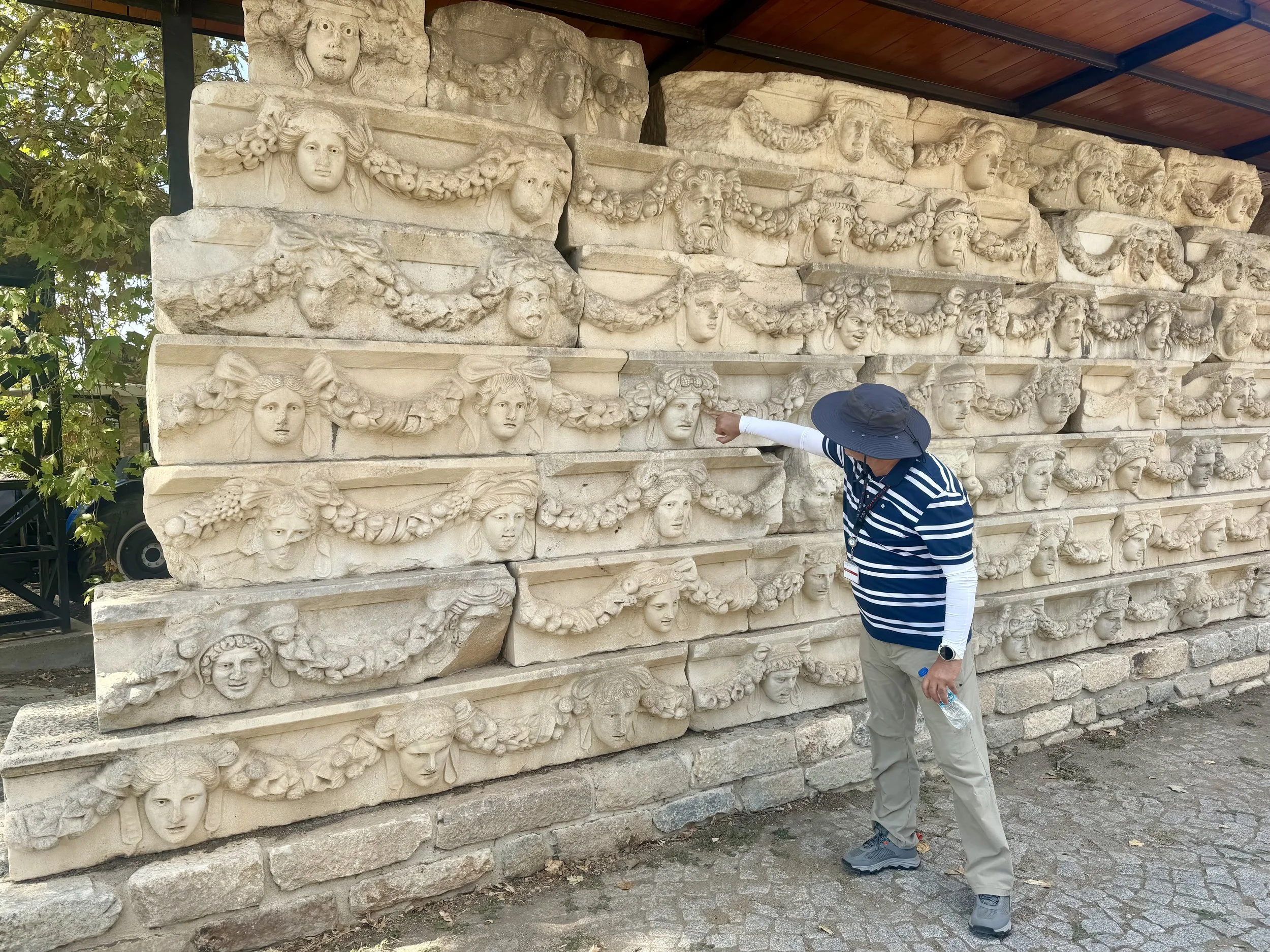
Suddenly I was confronted by a wall of faces! I had never seen anything like this before. The wall was really a stack of long marble blocks carved with “mask and garland” friezes. These blocks had once lined the colonnades and porticos of the city. İlcare said that each face was the portrait of a real person, and that the eyes once held colored gemstones the same color as the subject’s eyes. I wondered if the faces were the work of student sculptors perfecting their skills. Every face was, indeed, different. When viewed up close, the empty eyes were a bit unnerving. When I stepped back, the overall effect was quite beautiful.
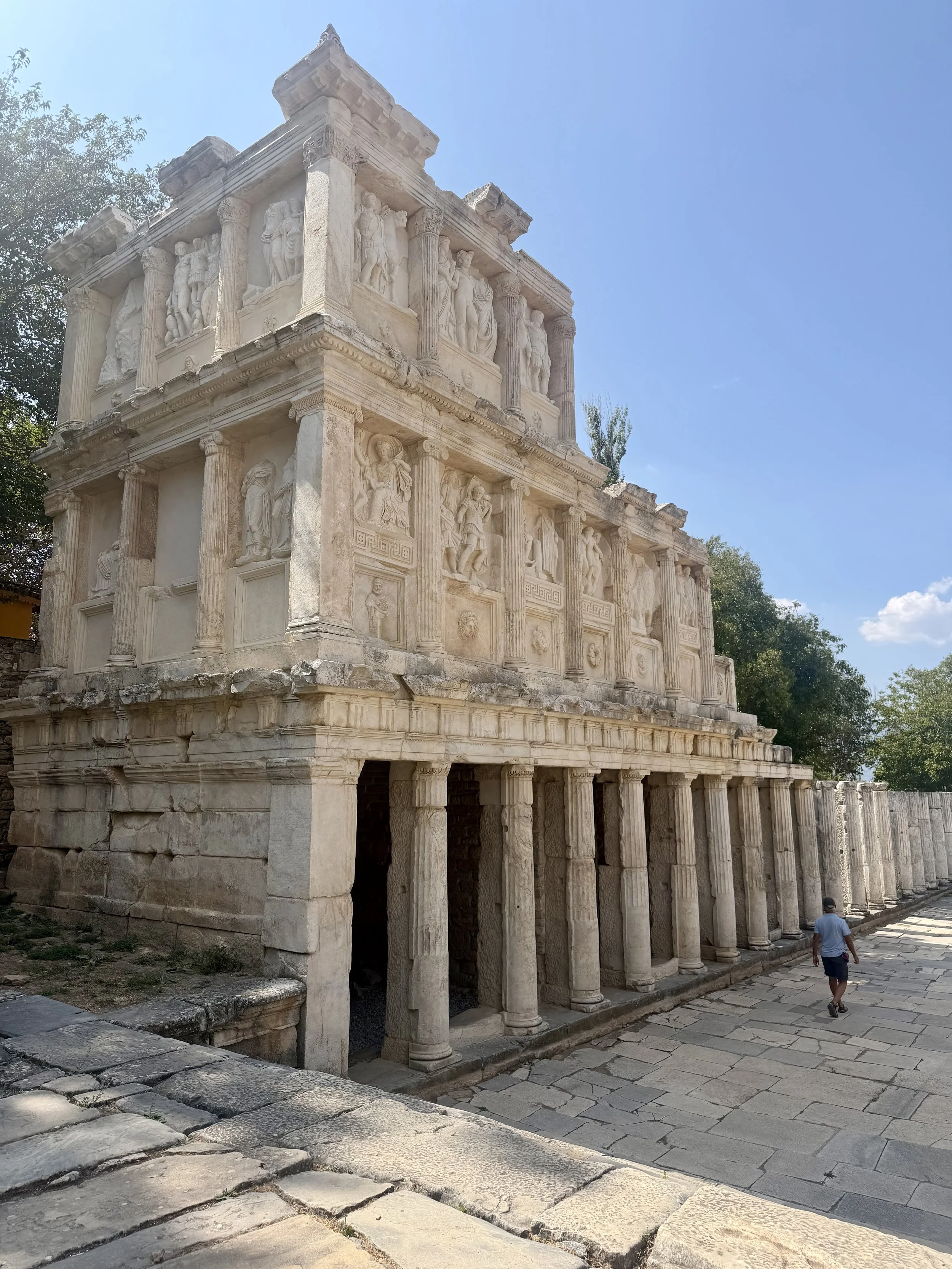
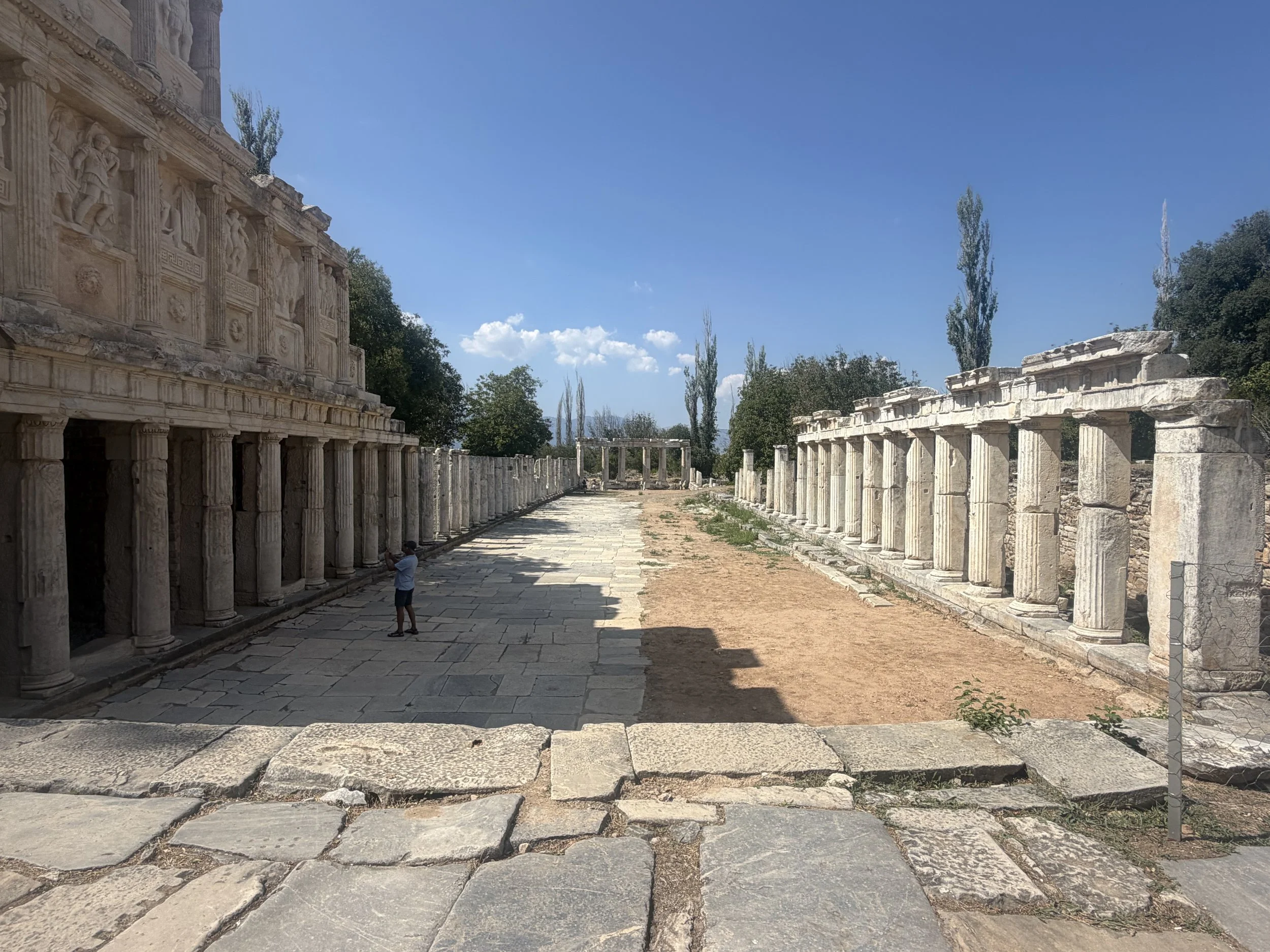
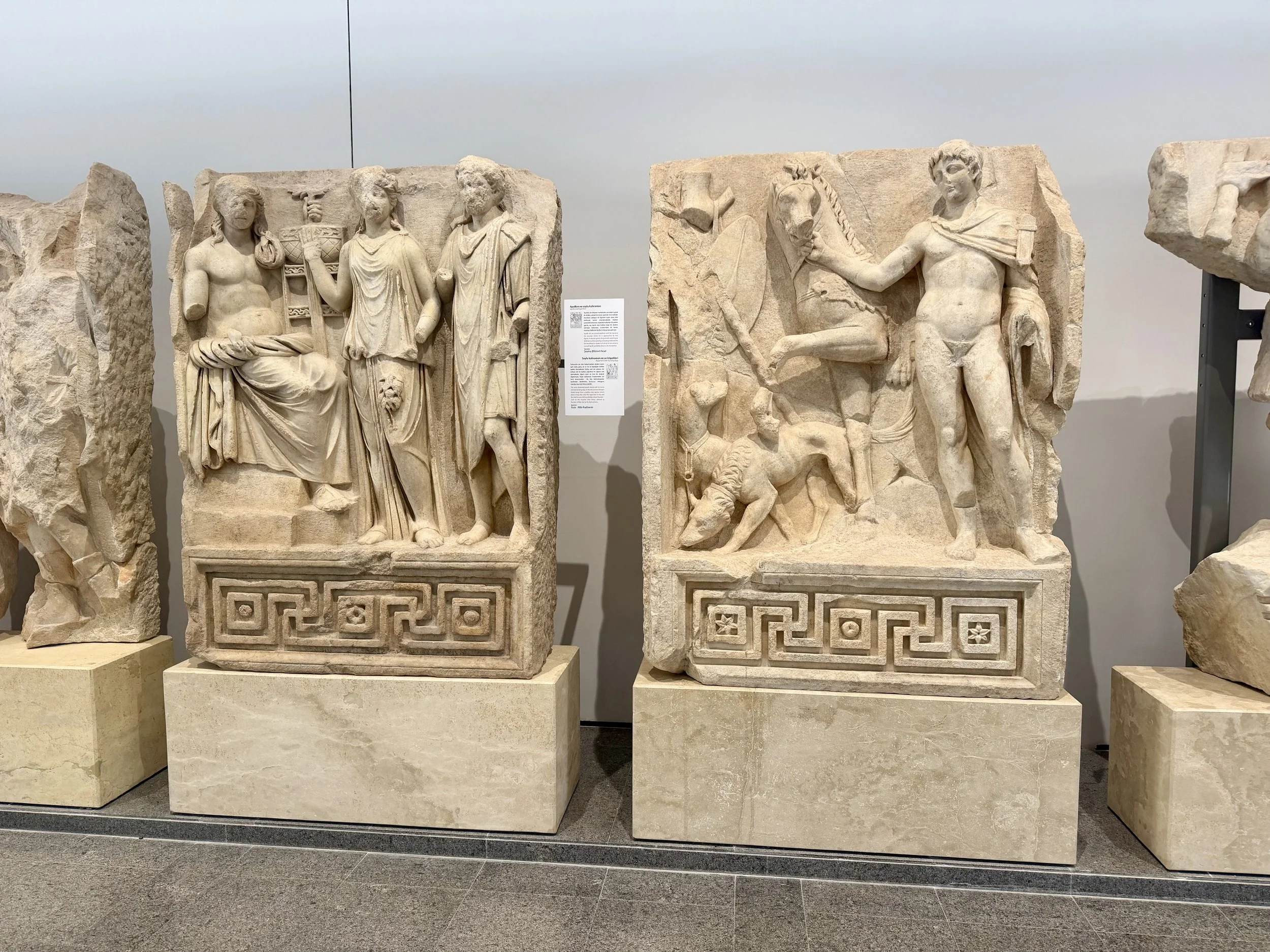
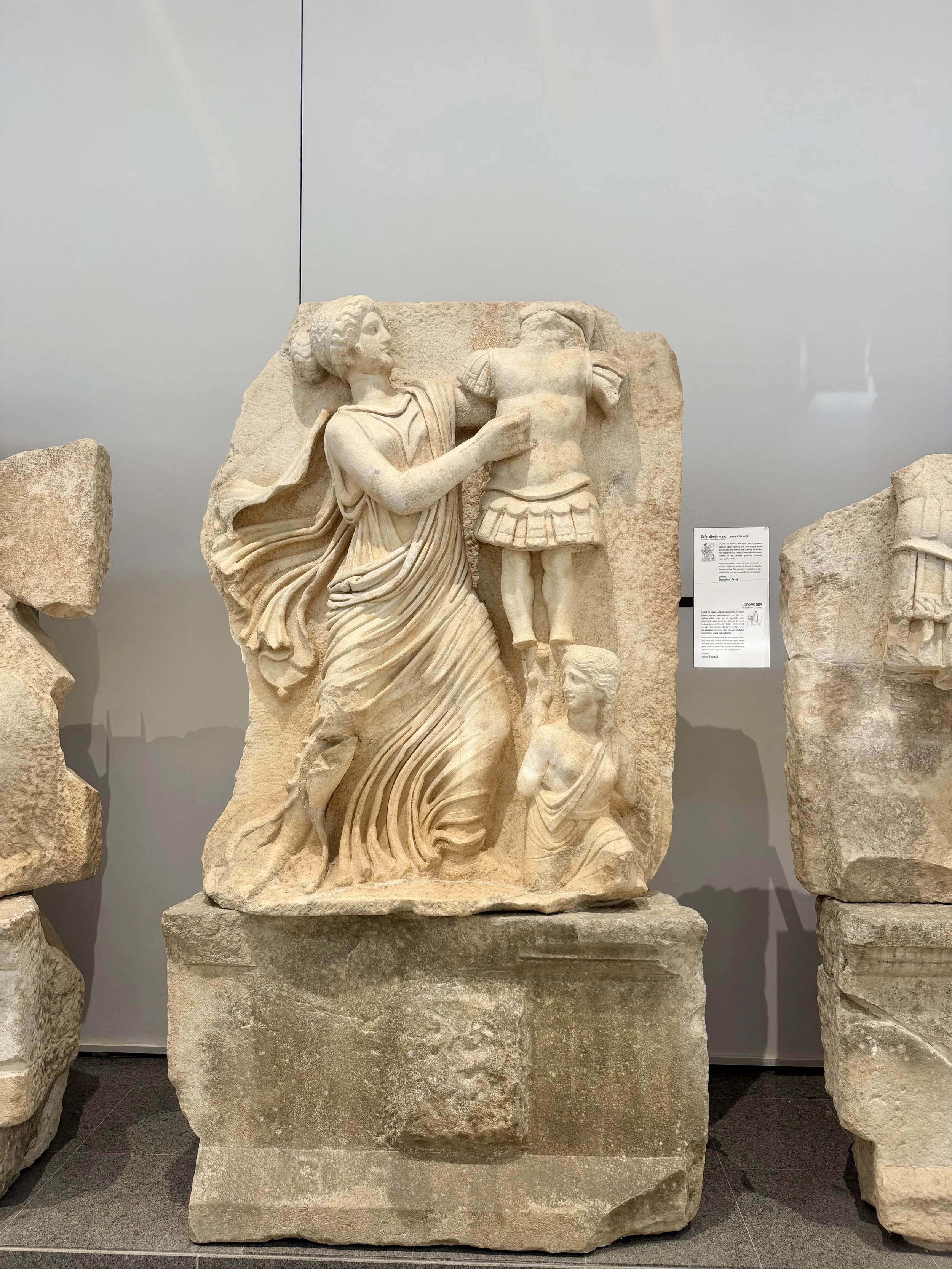
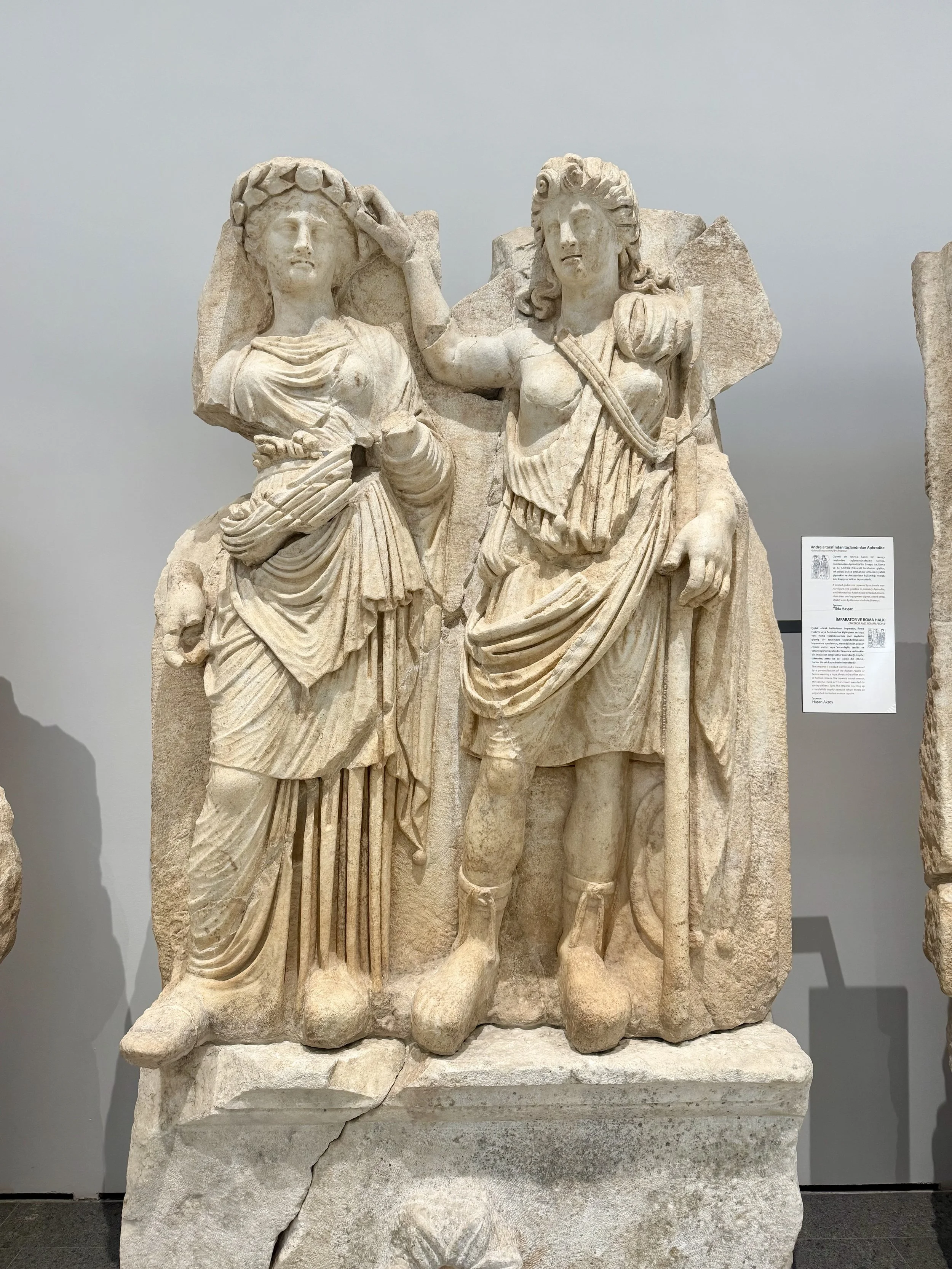
The Sebasteion was a 1st century temple complex dedicated to both Aphrodite and the Emperor. On each side of a wide marble avenue were three-story buildings covered with finely carved marble reliefs. About 200 reliefs would have been needed to cover both buildings, and more than 80 reliefs have been recovered to date. (The reliefs in the reconstructed building were replicas; the originals were in the museum.)
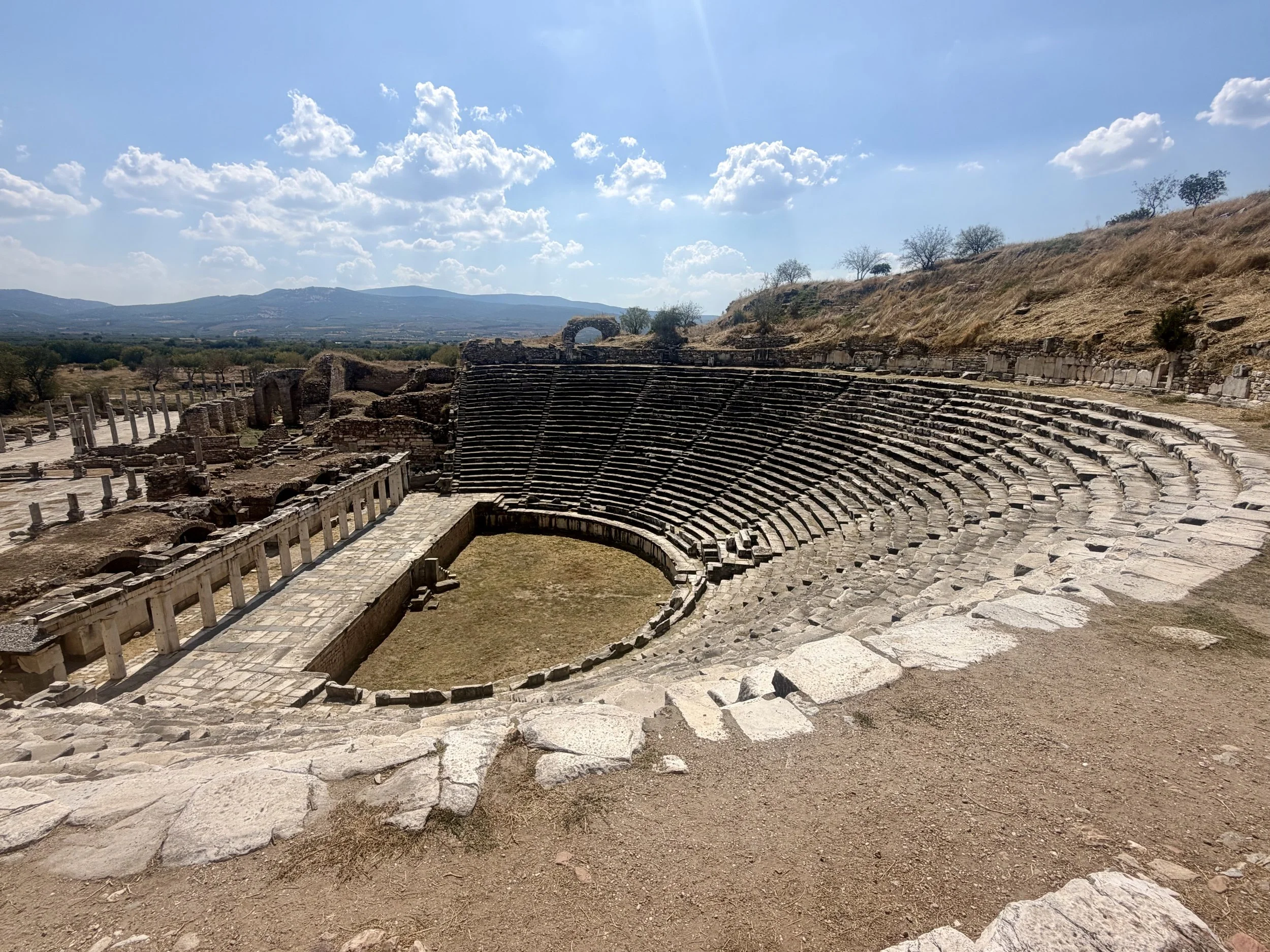
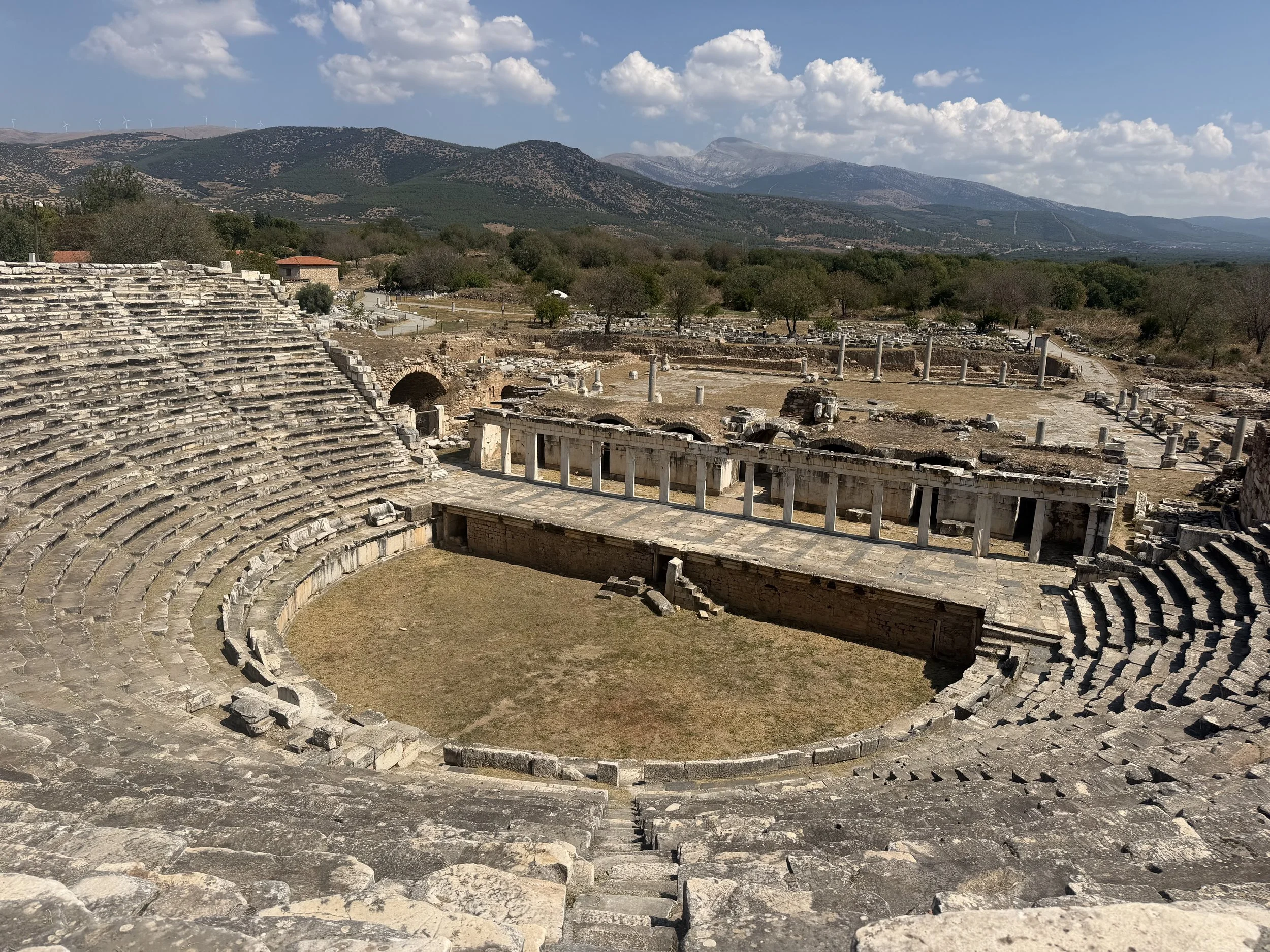
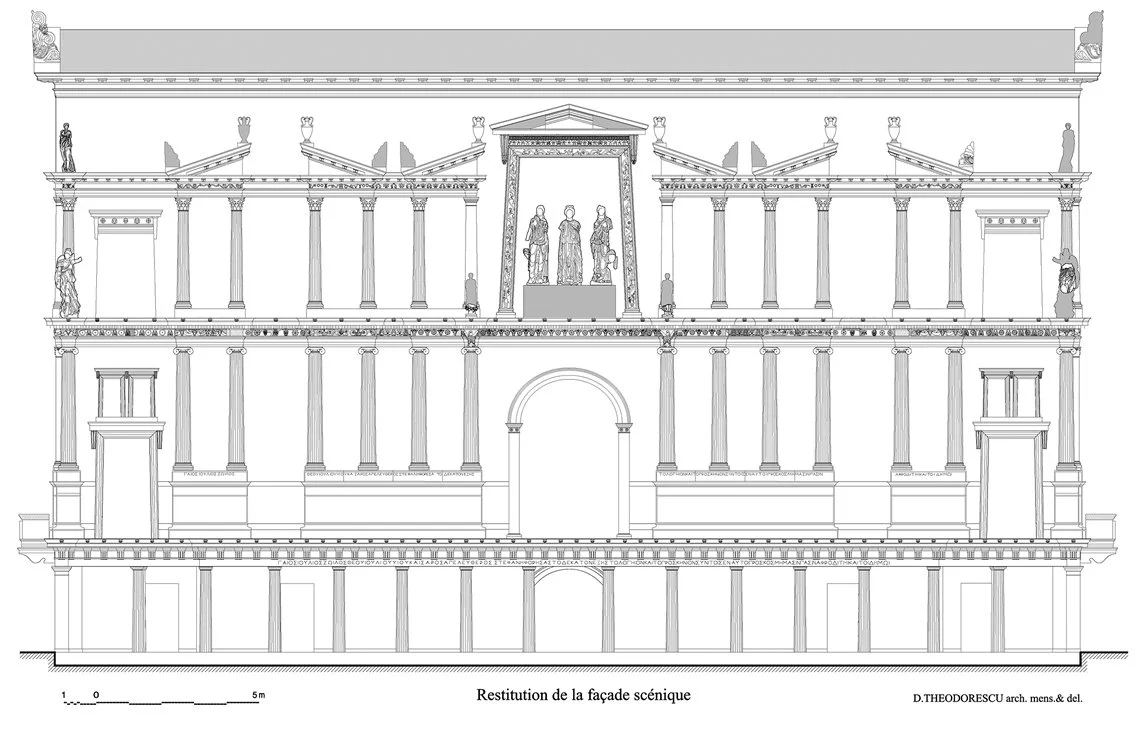
The Theatre could hold about 7,000 people, and the unexcavated upper level may have seated a few thousand more. The marble stage had once been three stories tall, with elaborate columns and statues. Next to the theatre were public baths with checkerboard marble floors.
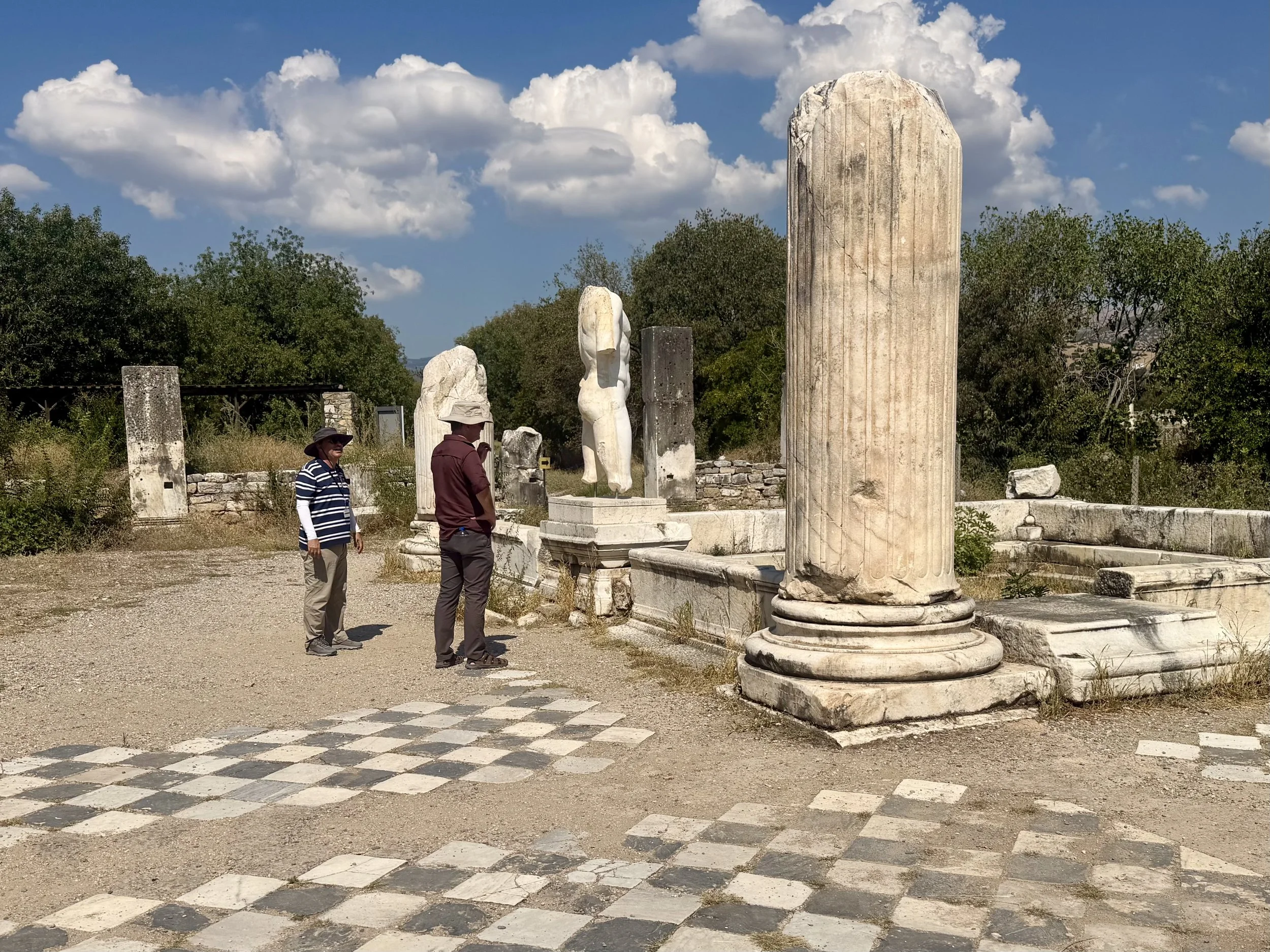
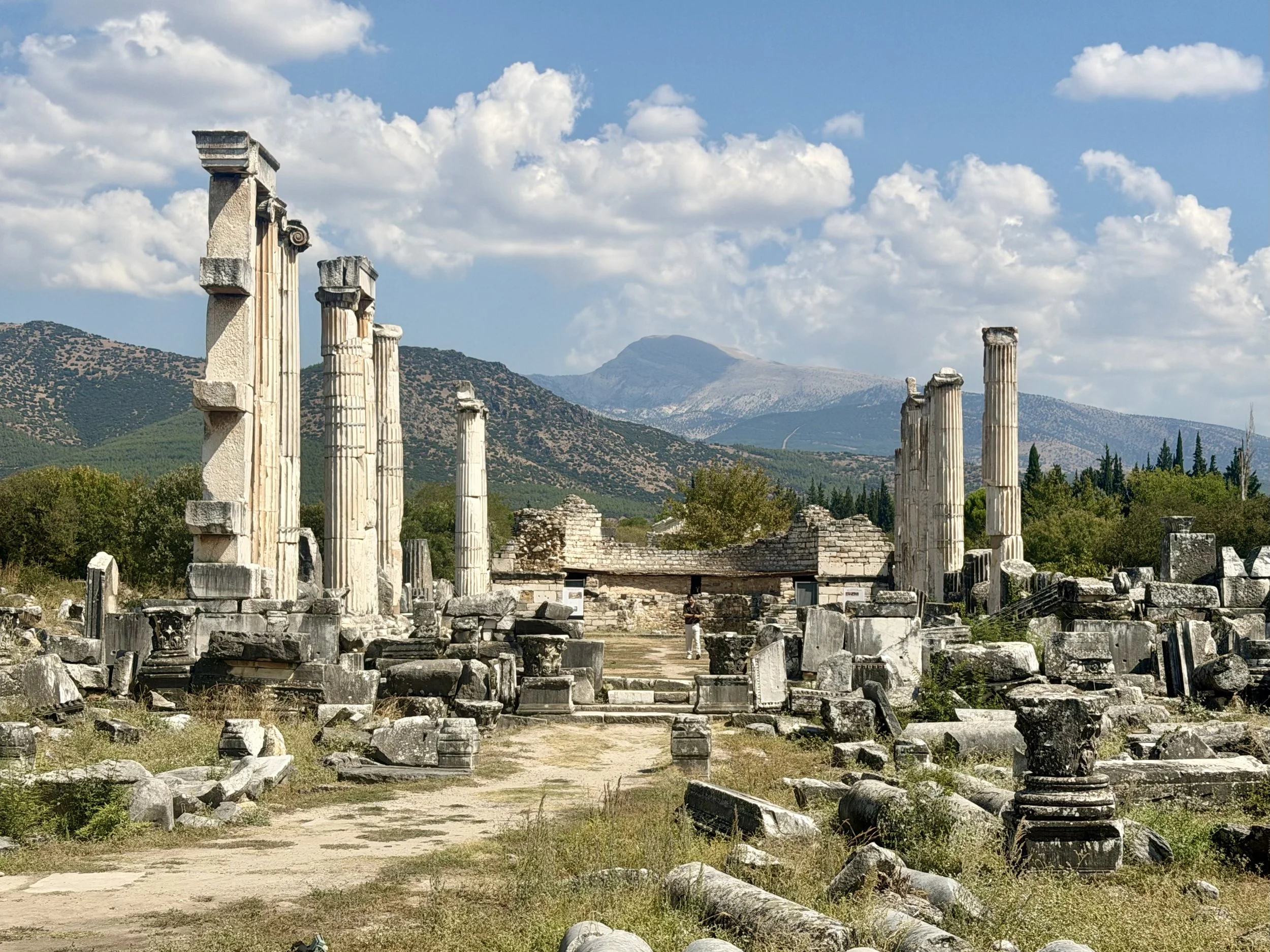
The Temple of Aphrodite was converted to a Christian basilica in the 5th century, and remnants of both structures still stood on the site.
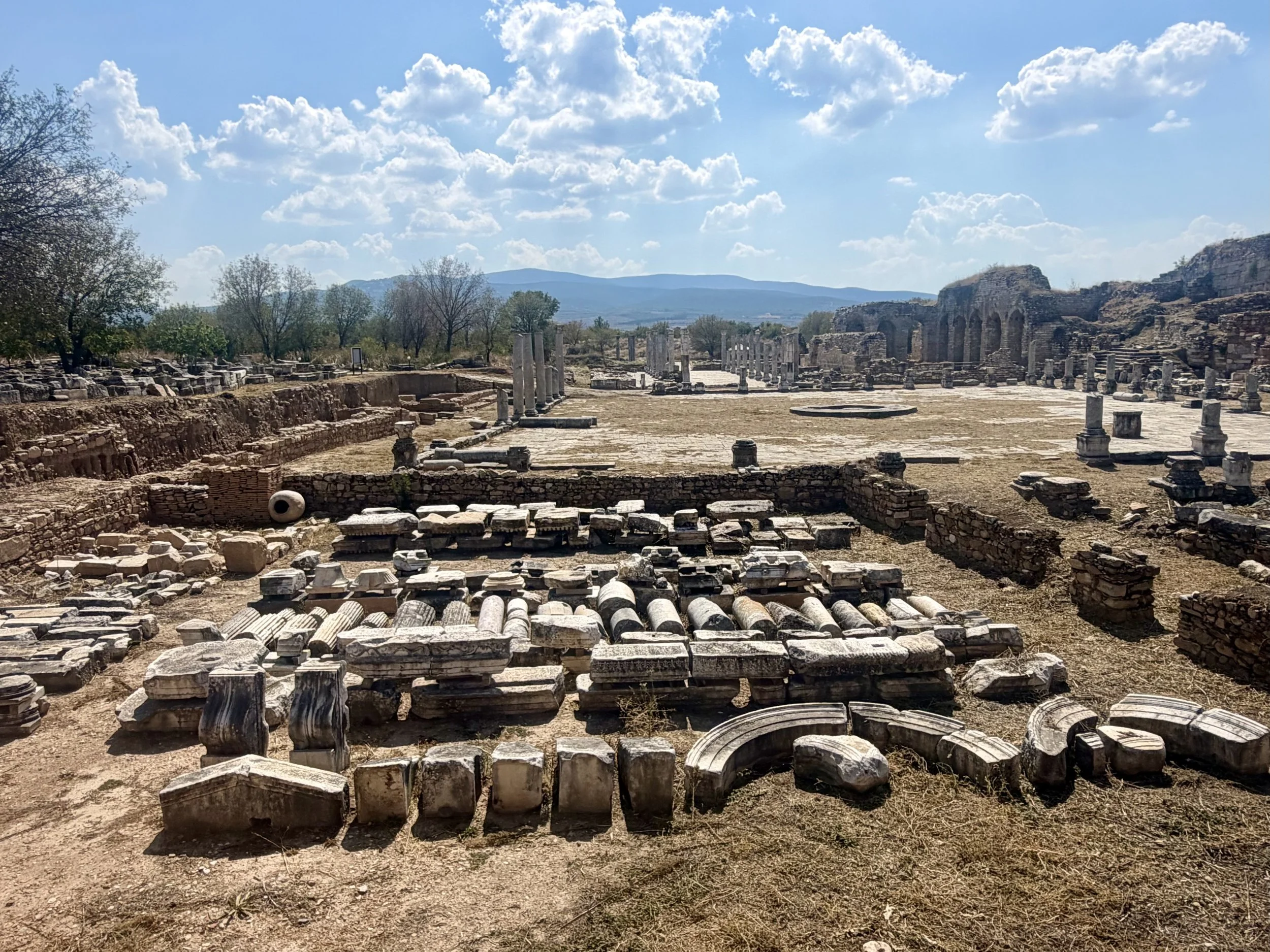
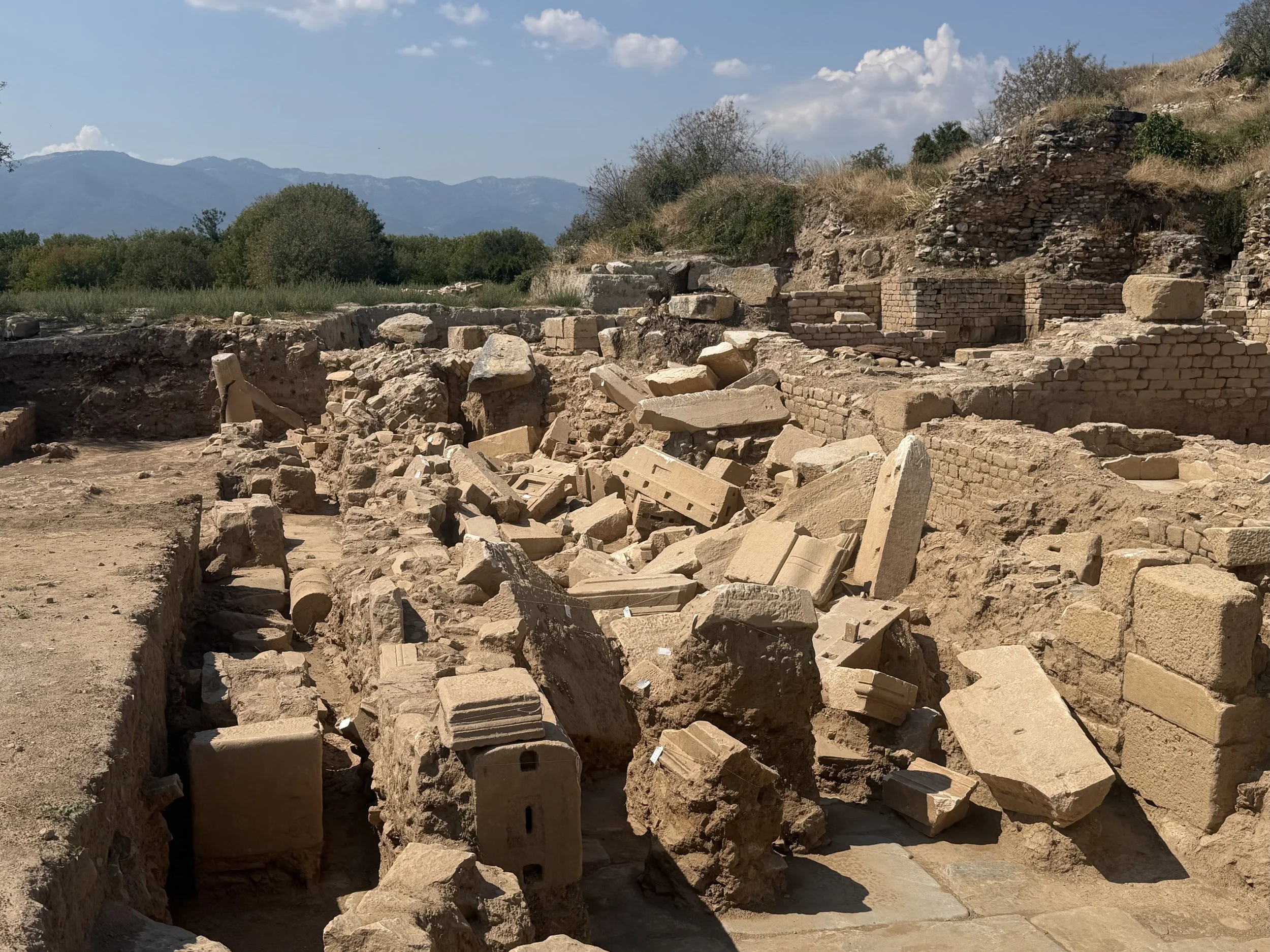
Throughout the site were rows of marble fragments, like giant jigsaw puzzle pieces already sorted and waiting to be assembled. In one section, newly excavated artifacts had been tagged but still lay as they had been found.
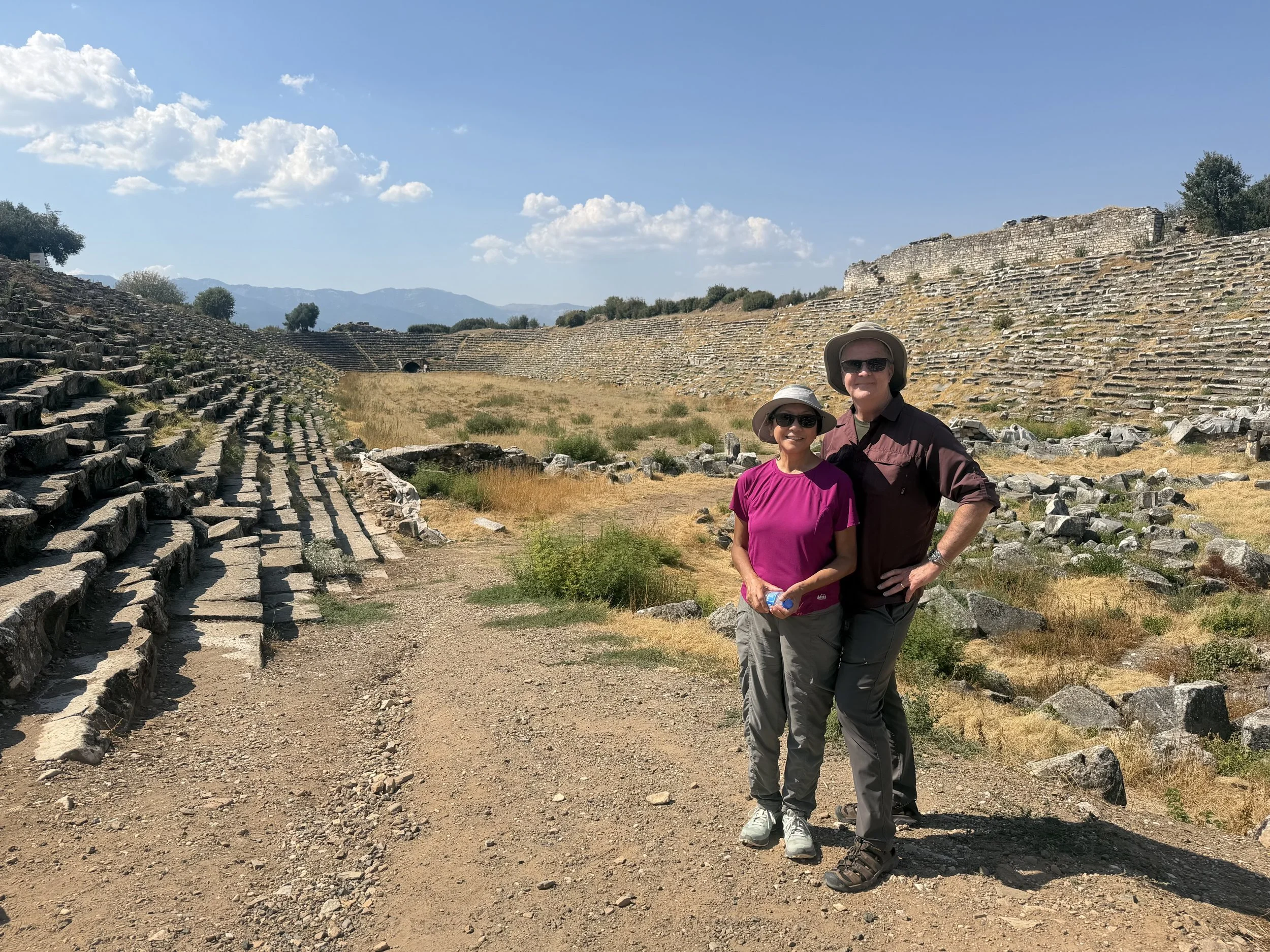
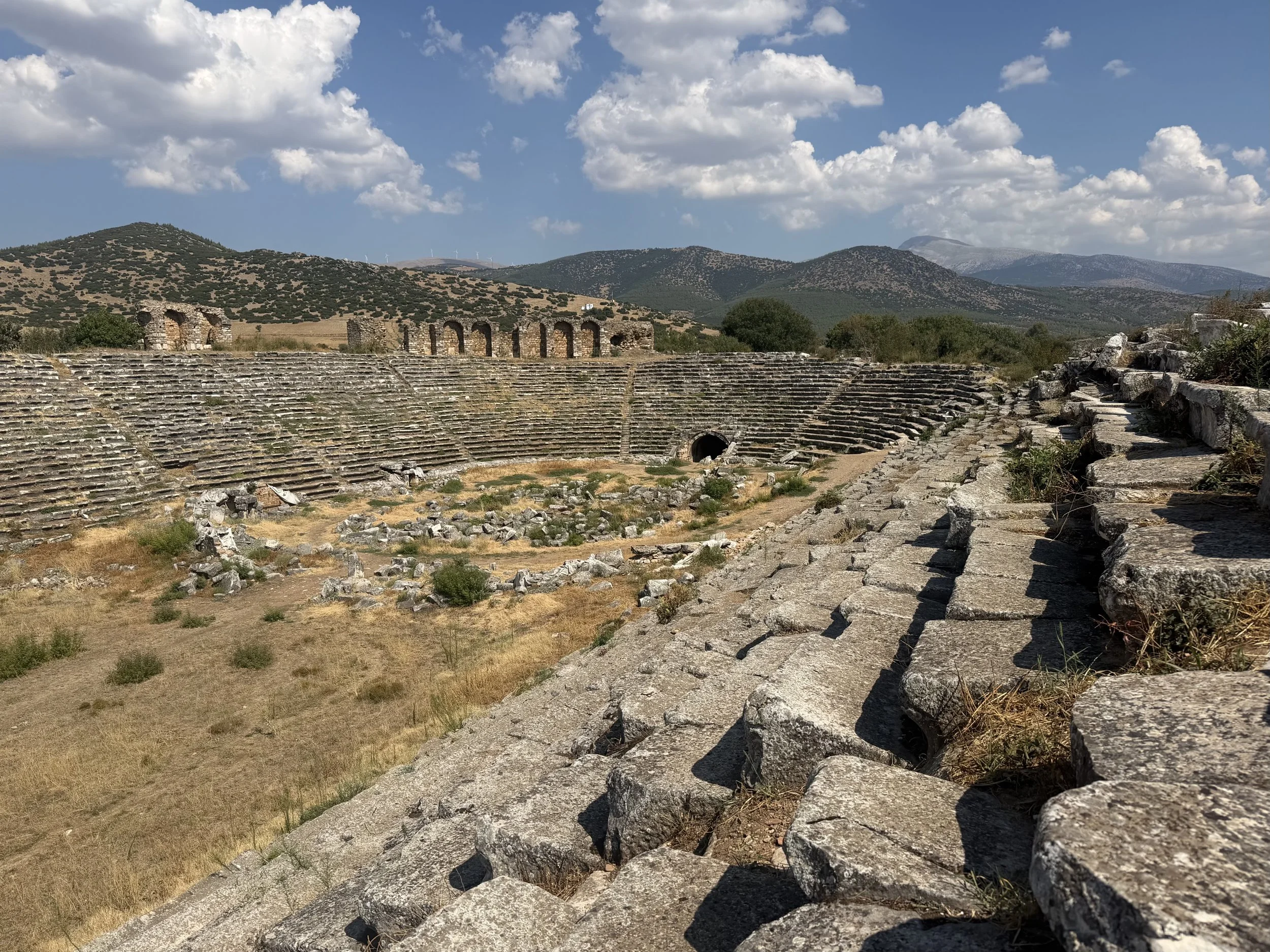
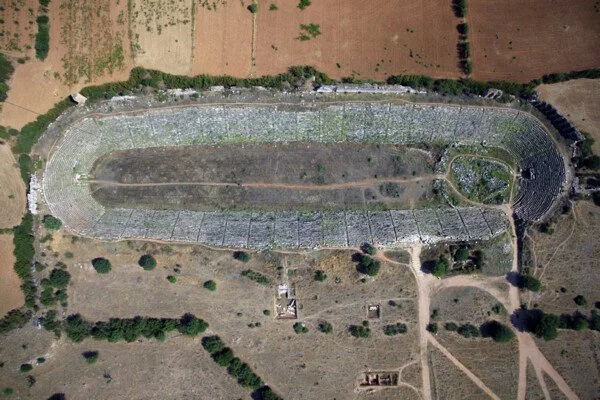
Togay was eager to show us his favorite site in Aphrodisias. After a long, hot walk and a short climb, we were rewarded with a breathtaking view of the colossal Stadium! It was an intact oval with thirty rows of stone seats, enough for 30,000 spectators. At nearly 900 feet long and 200 feet wide, the Stadium could fit three American football fields side by side. The people of Aphrodisias came here to watch footraces, long-jumping, javelin and discus-throwing, and wrestling. Later, one round end was used for gladiatorial games. We were awed by the scale and remarkably preserved condition of this 2,000-year-old sporting arena.
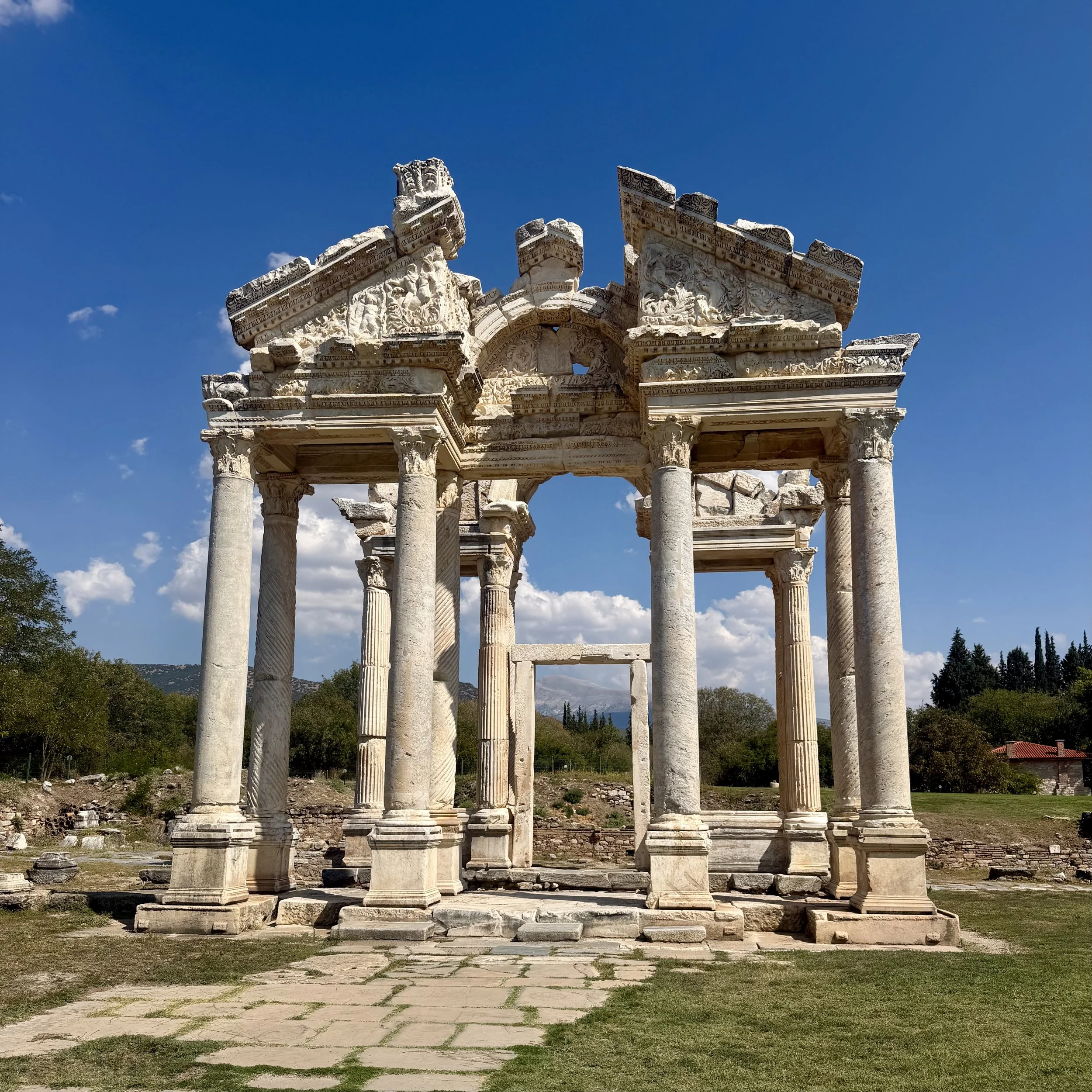
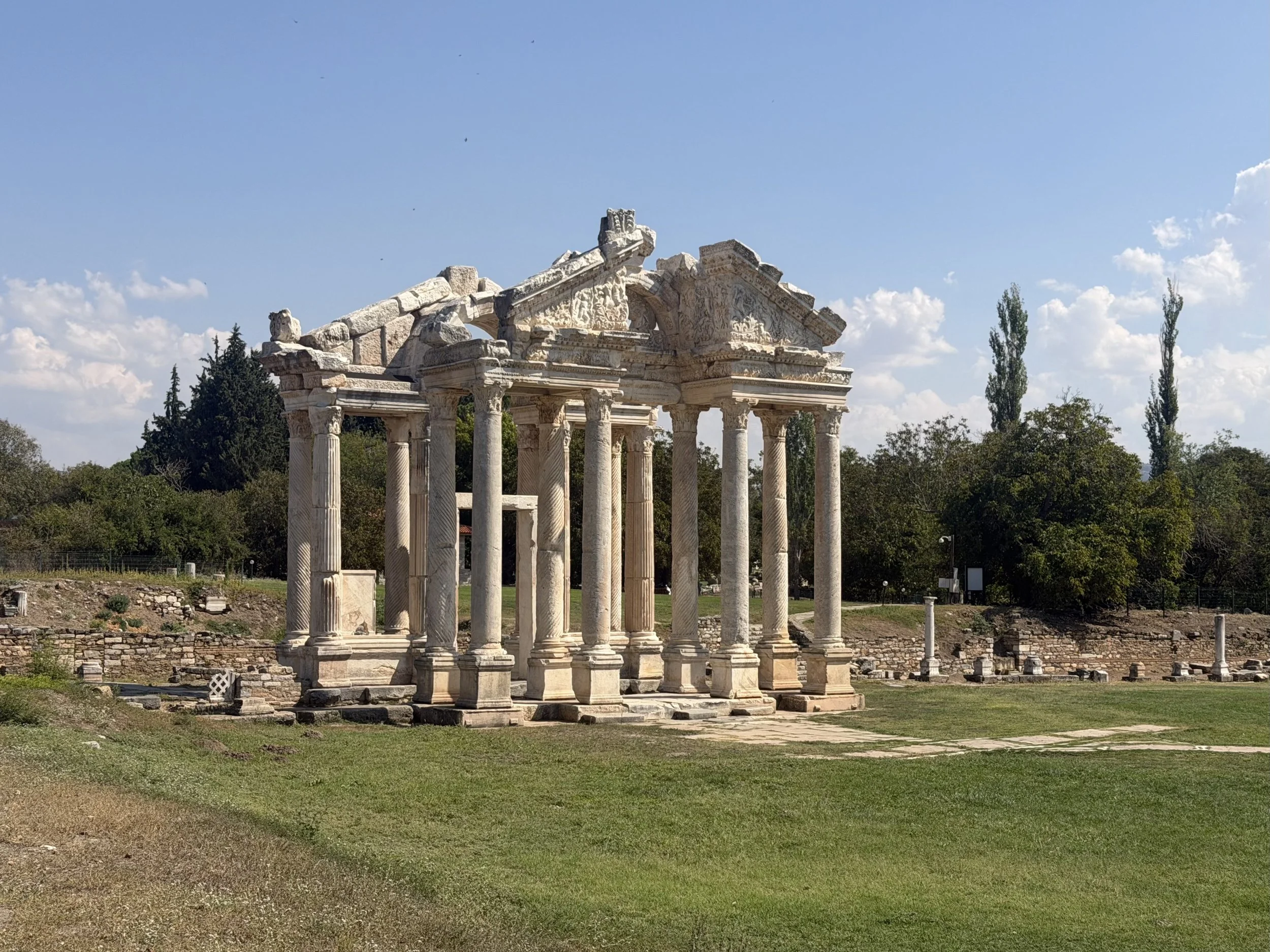
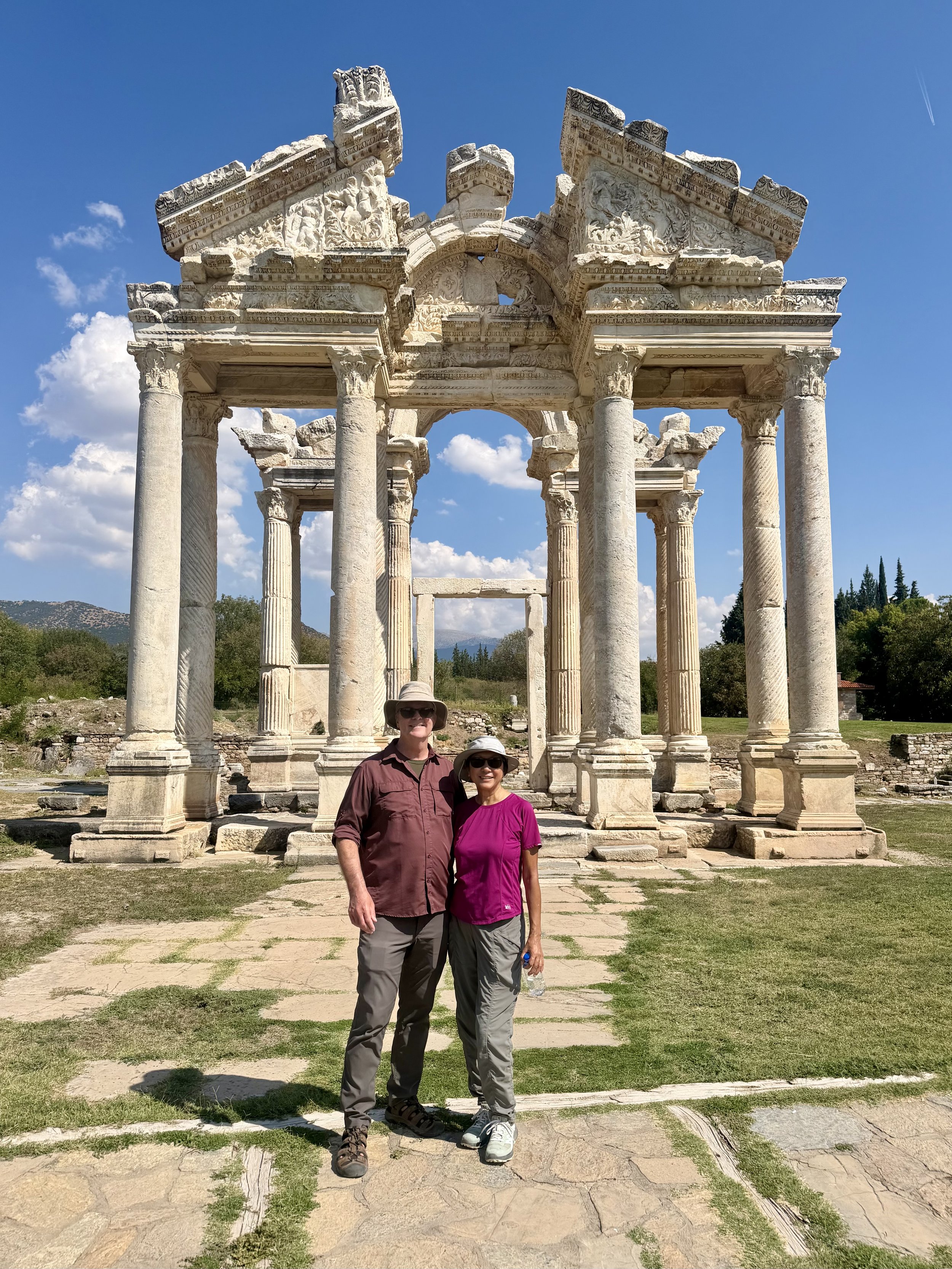
We walked back toward the entrance to Aphrodisias for the grand finale of our visit: the Tetrapylon, which had been reconstructed from original fragments found on the site. As the city’s ceremonial gate, it had sixteen elegant columns and elaborately decorated pediments. It was absolutely beautiful!
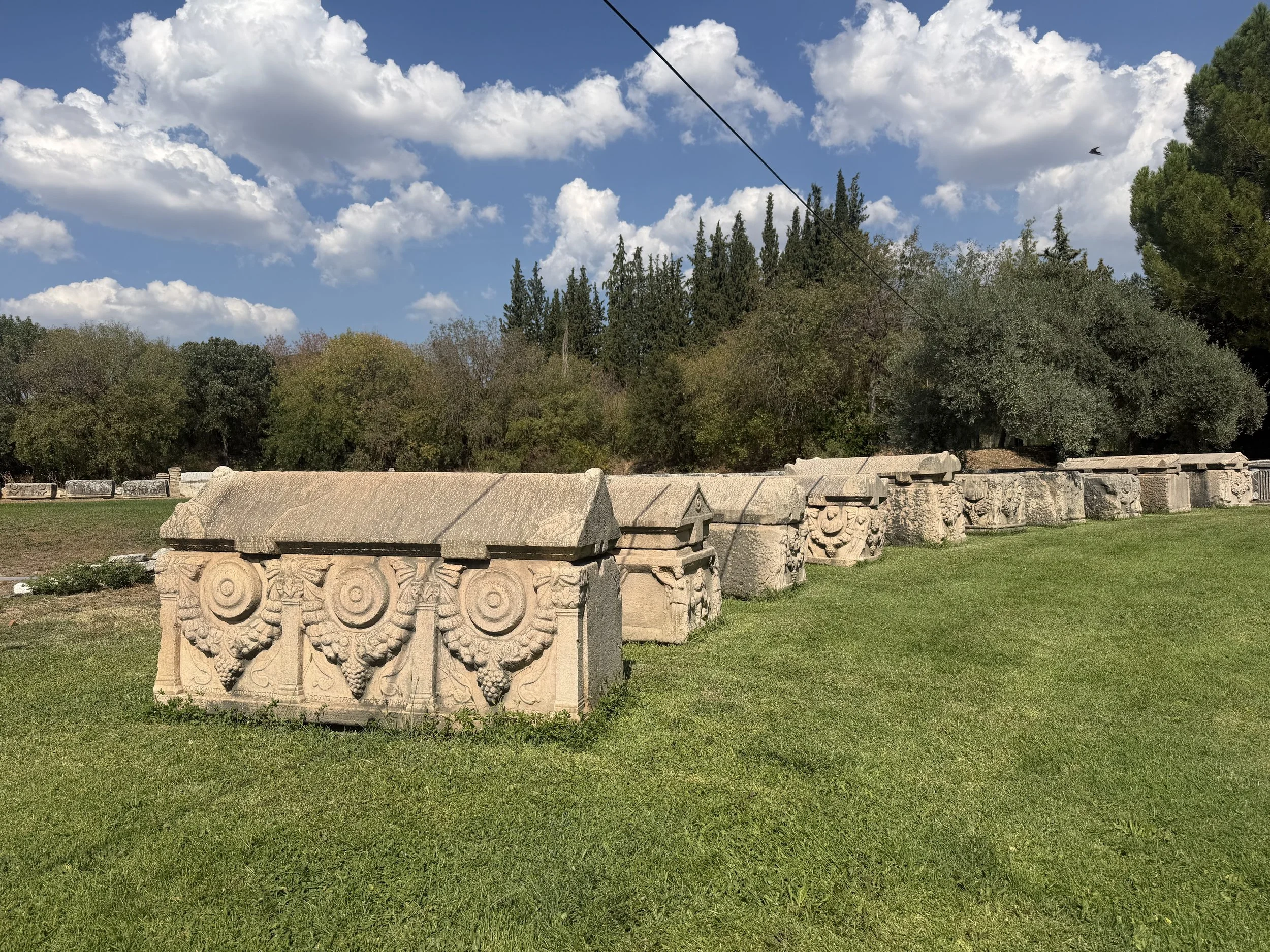
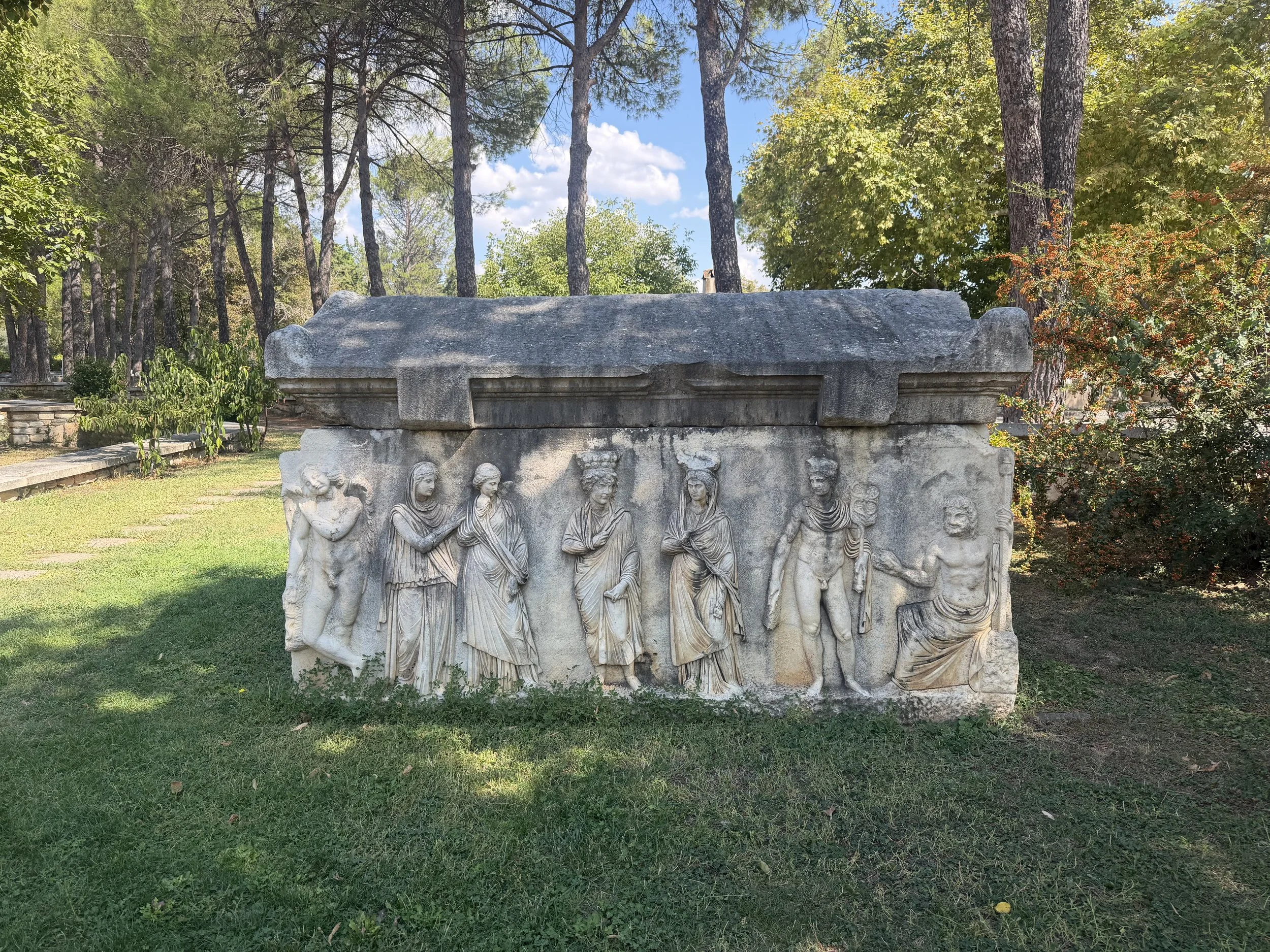
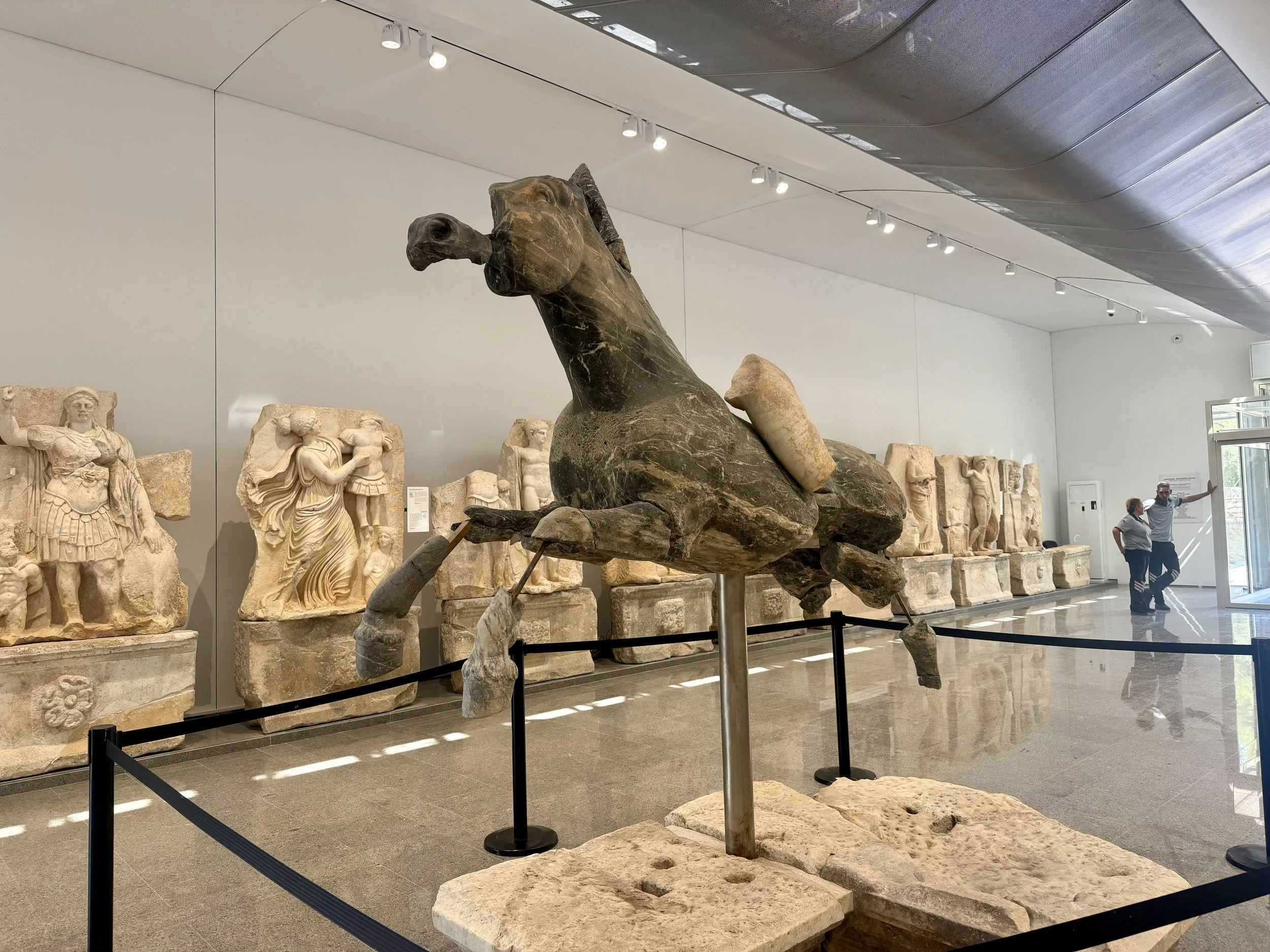
Our last stop was the Aphrodisias Museum. Outside was a collection of stone sarcophagi, some with elaborate carving.
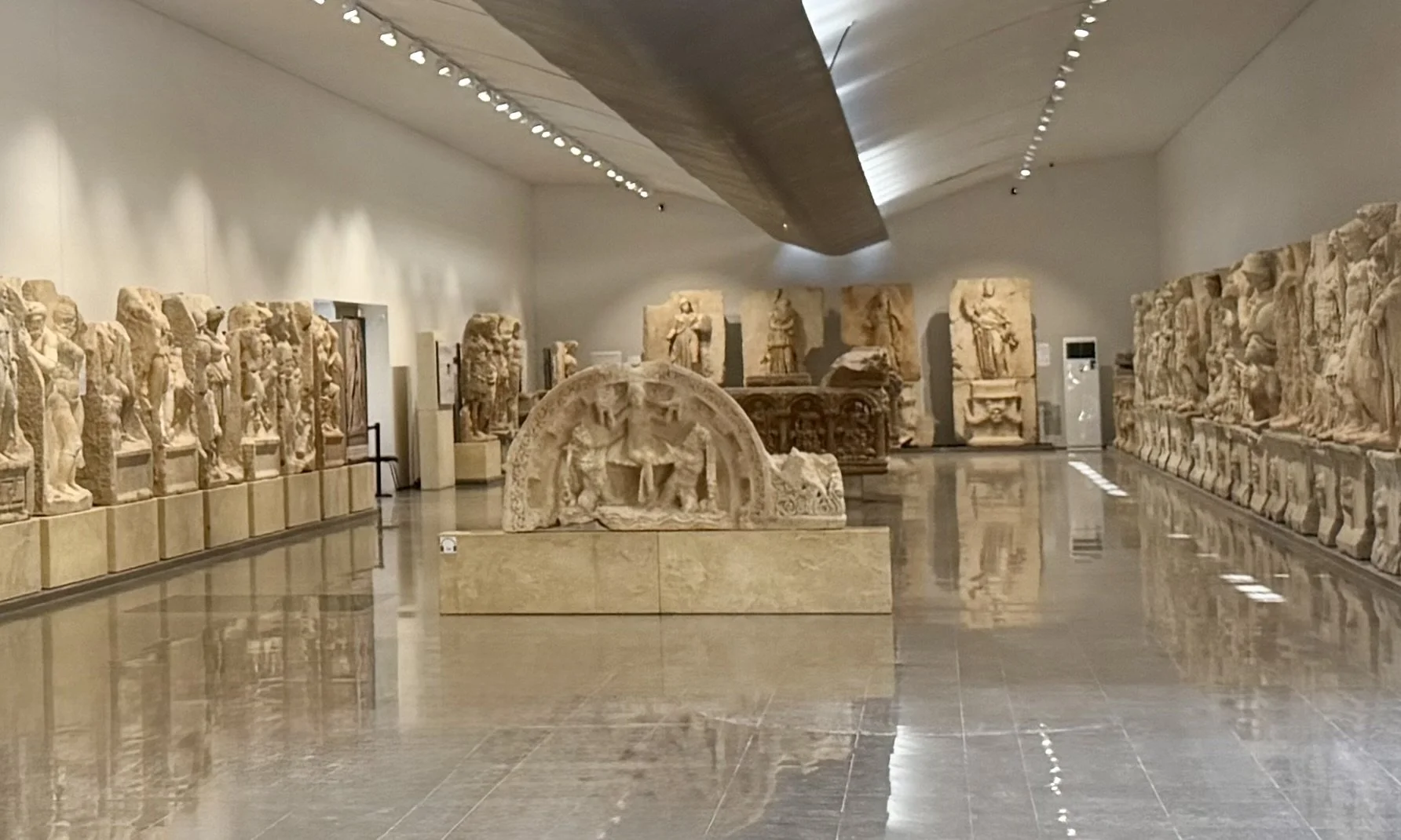
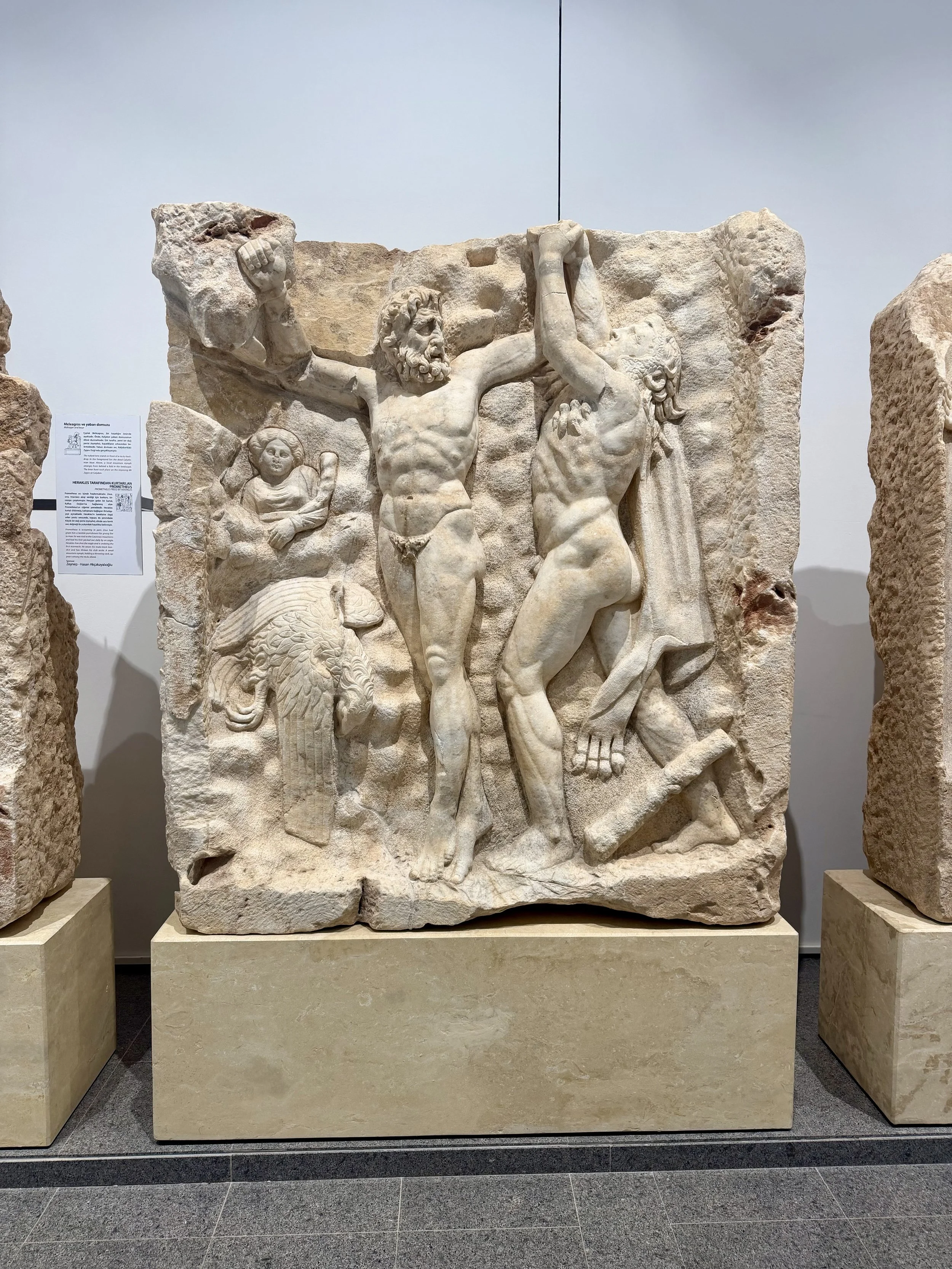
Inside, there was a long gallery displaying dozens of marble reliefs. These had once covered the Sebasteion, and the workmanship was outstanding. The figures included gods and goddesses, heroes, and emperors. There were scenes from the Trojan War, the Labors of Herakles, and much more.
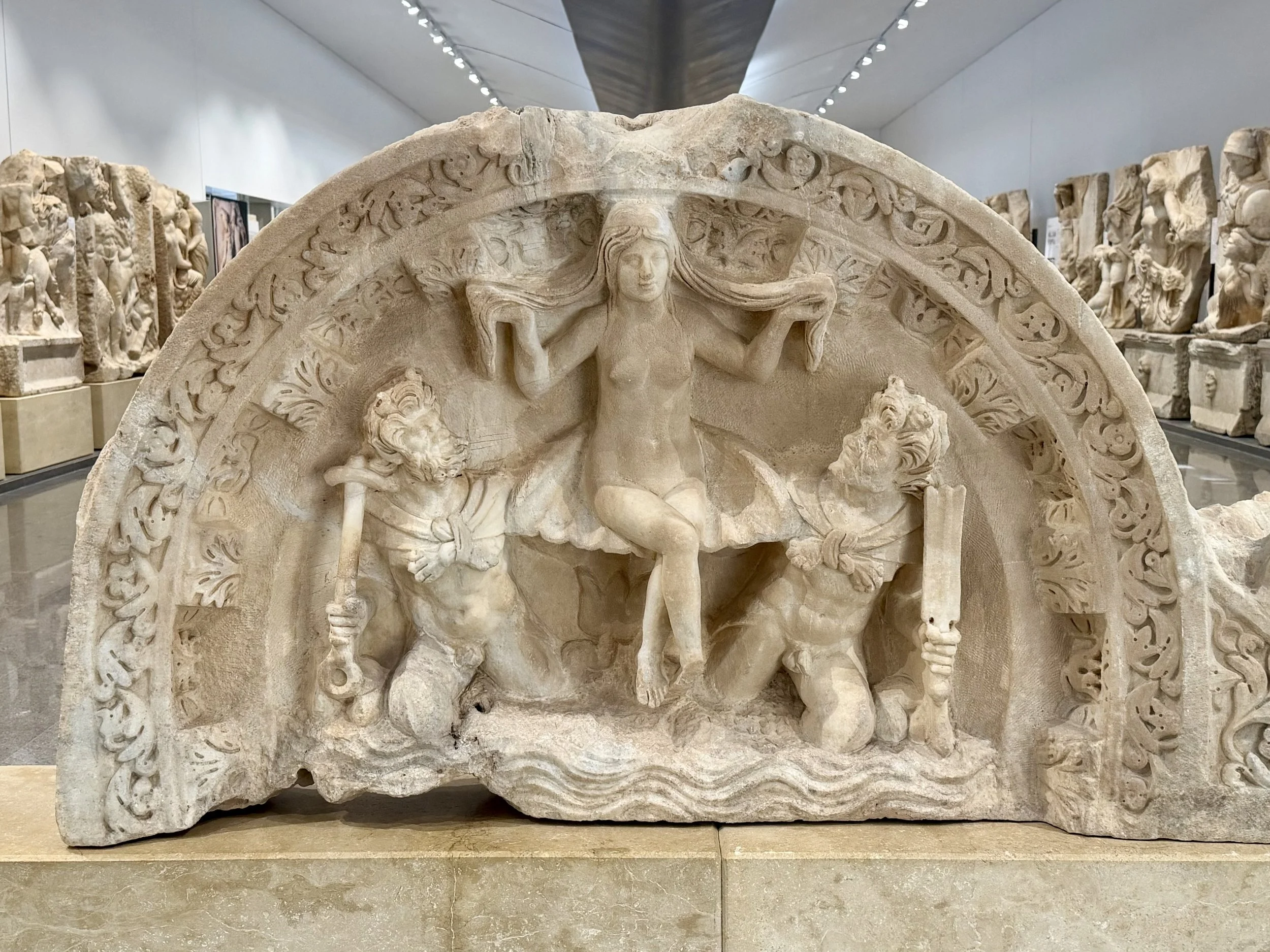
We were not able to view the cult statue of Aphrodite - it was in a section of the museum that was closed - but we did see a curved pediment showing Aphrodite sitting a half-shell, being carried across the sea by Tritons.
Ephesus was a port city, a bustling metropolis, a hub of commerce and government. Aphrodisias was renowned center for fine art in a scenic valley. In the ancient Roman province of Asia, if Ephesus was New York City, Aphrodisias was Santa Fe.
Aphrodisias is a UNESCO World Heritage site. It is a hidden gem and perhaps one of Turkey’s most underrated destinations.