Our guide İlker (ill-care) and driver Mustafa picked us up in Izmir for a day trip to Ephesus, about an hour’s drive to the south.
House of the Virgin Mary
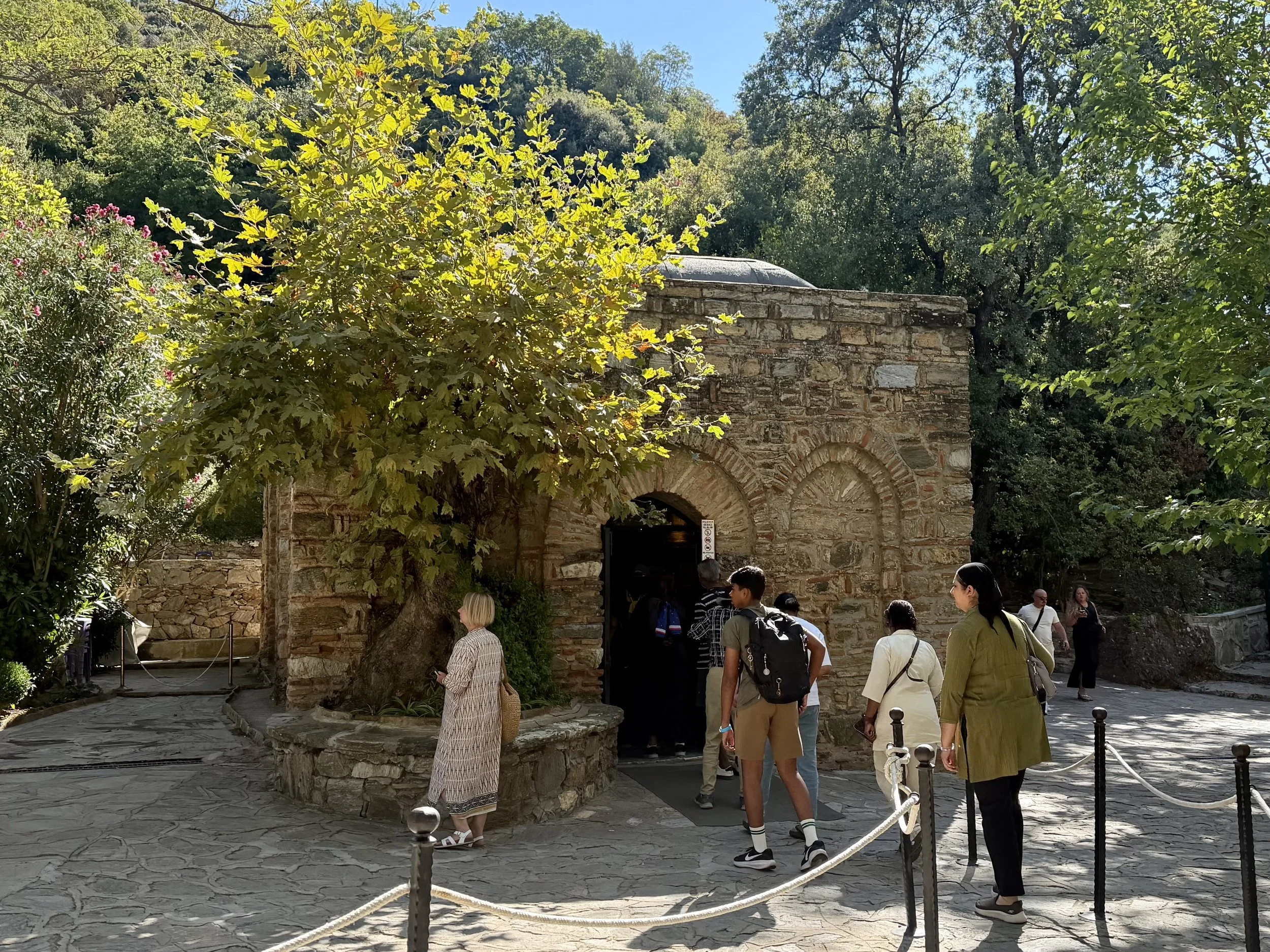
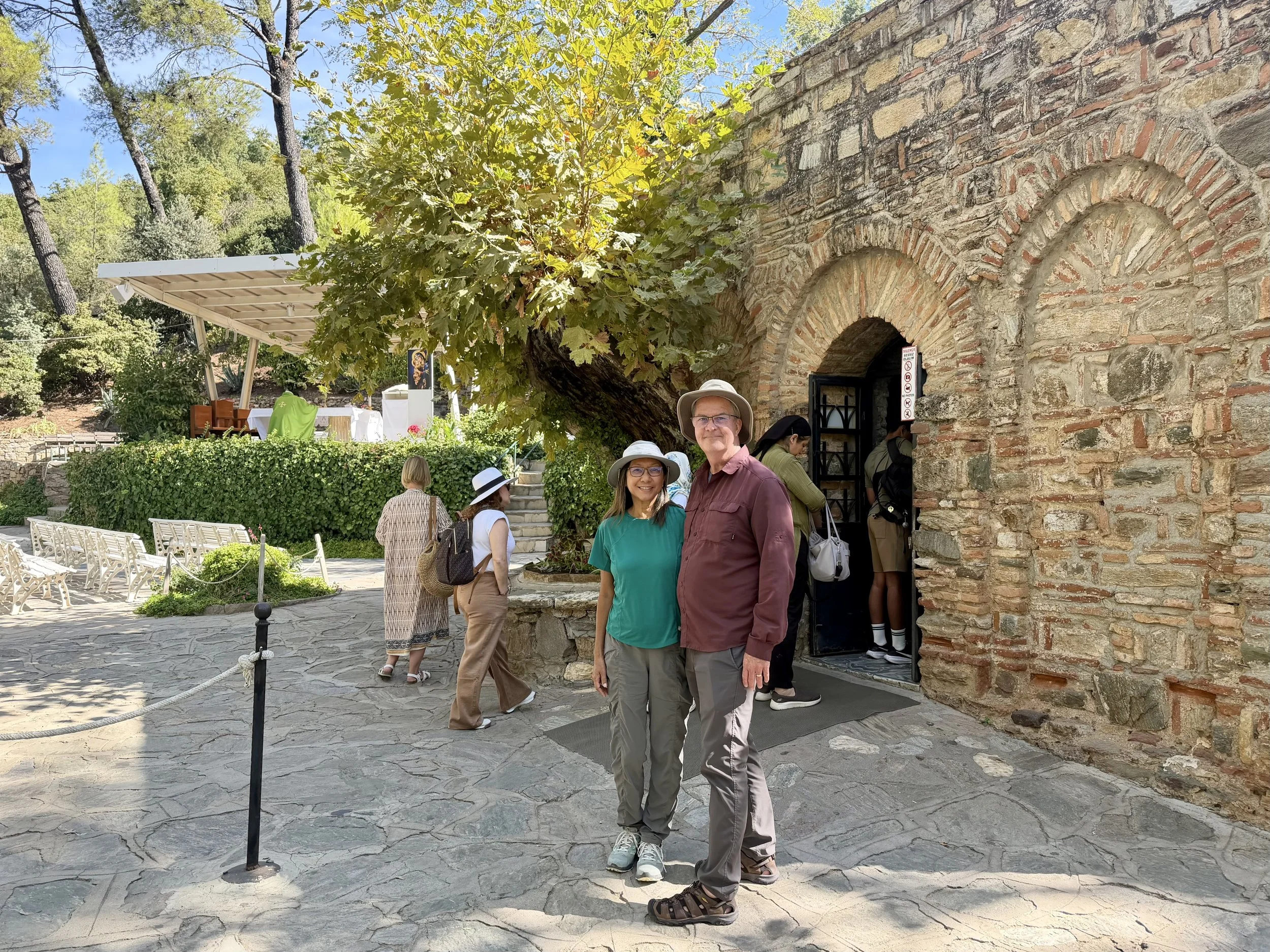
We drove to the top of a mountain near Ephesus to see Meryemana Evi (Mother Mary’s House.). Many people believe that St. John the apostle brought Jesus’ mother to Ephesus, and that she lived in a house above the city for eleven years before being taken up into heaven. This site was discovered in 1891, and matched descriptions from visions described many decades earlier by a bedridden nun in Germany.
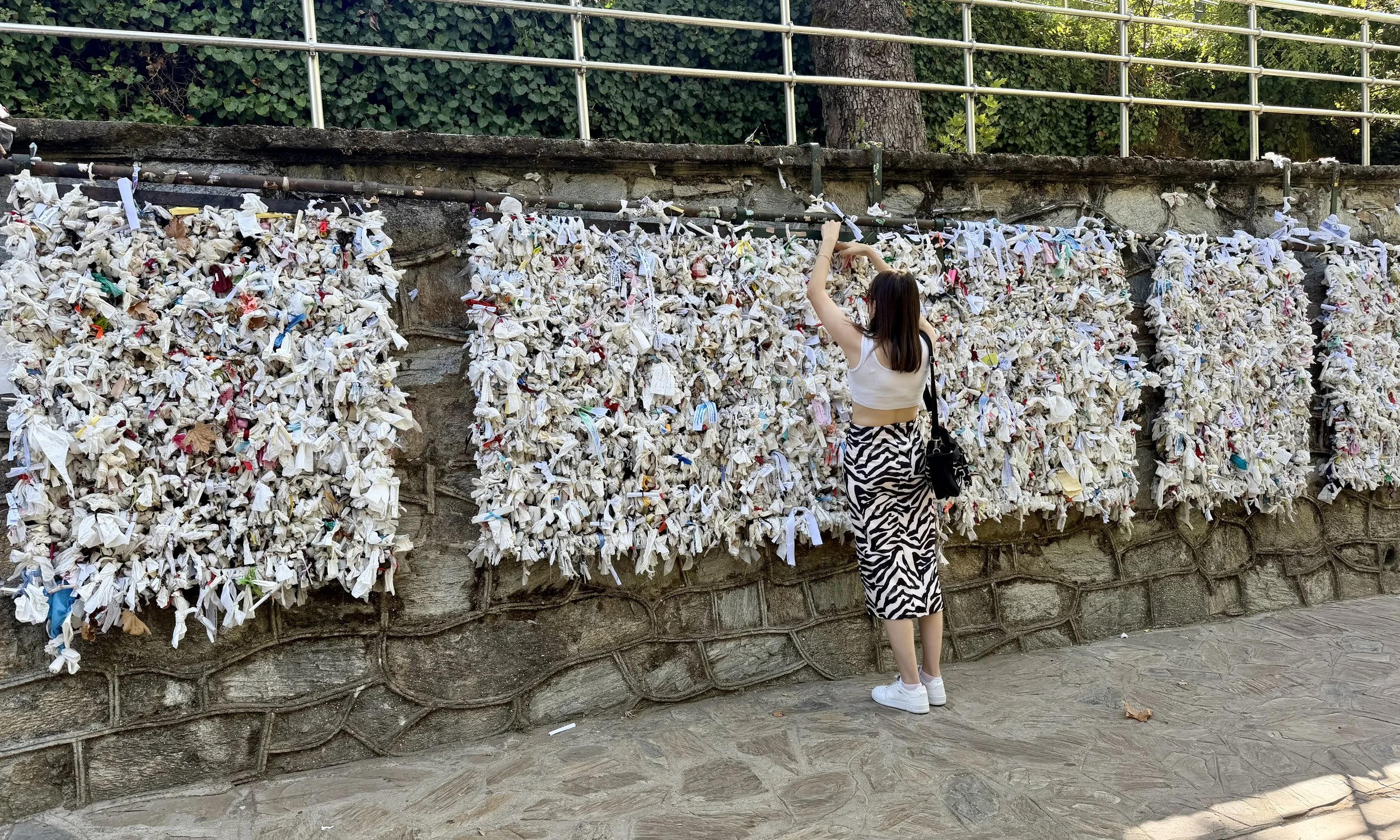
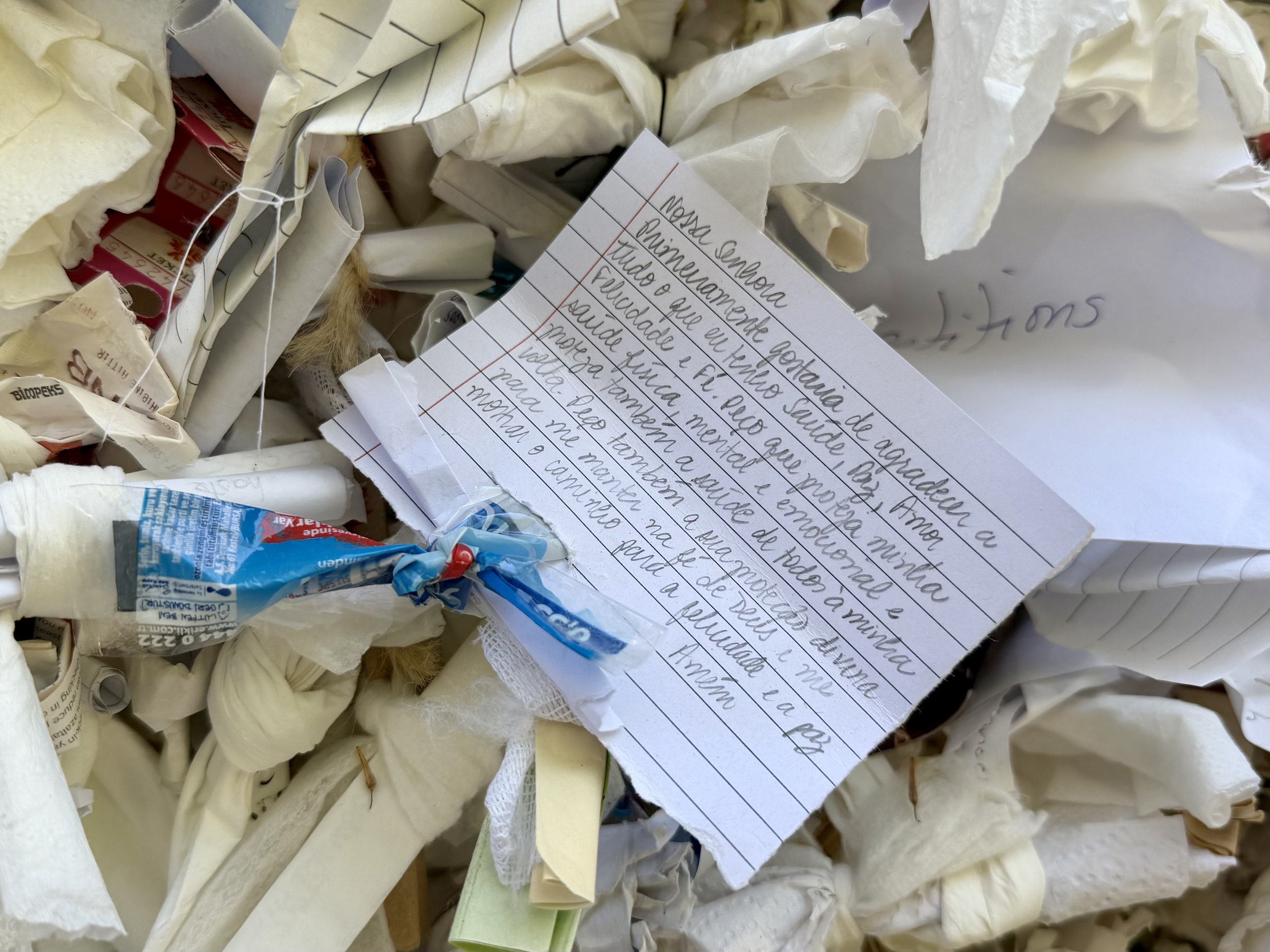
We walked past a Mass being celebrated outdoors to the Catholic shrine - a simple chapel built atop the ruins of an old stone house. A short way down the hill, where there was once a spring, a wall fluttered with white scraps of paper and cloth with wishes written on them.
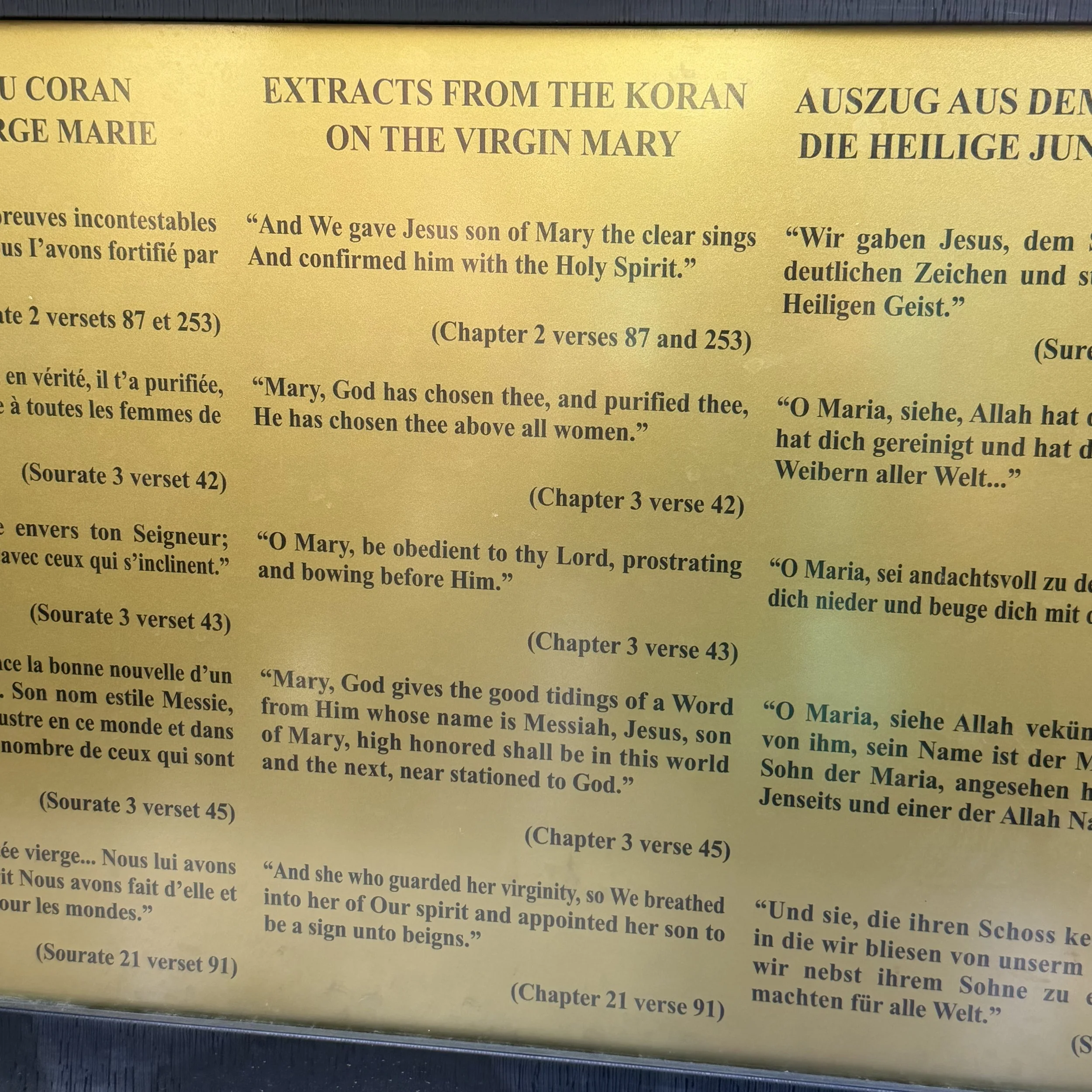
While there is no scientific evidence that Mary actually lived here, it is a holy place of pilgrimage for Catholics. İlker explained that Muslims also come here to revere the Virgin Mary, the only woman mentioned by name in the Quran.
Ephesus
Ephesus was founded in the 4th century BCE. By the 1st and 2nd centuries CE, it was one of the largest and wealthiest cities in the Roman Empire. It was the capital city of the Roman province of Asia, and its Temple of Artemis was one of the Seven Wonders of the Ancient World. The apostle Paul lived in Ephesus and preached here, and a council of Christian Bishops convened here and confirmed the Nicene Creed. Today, Ephesus is a UNESCO World Heritage site and one of the most visited places in Turkey.
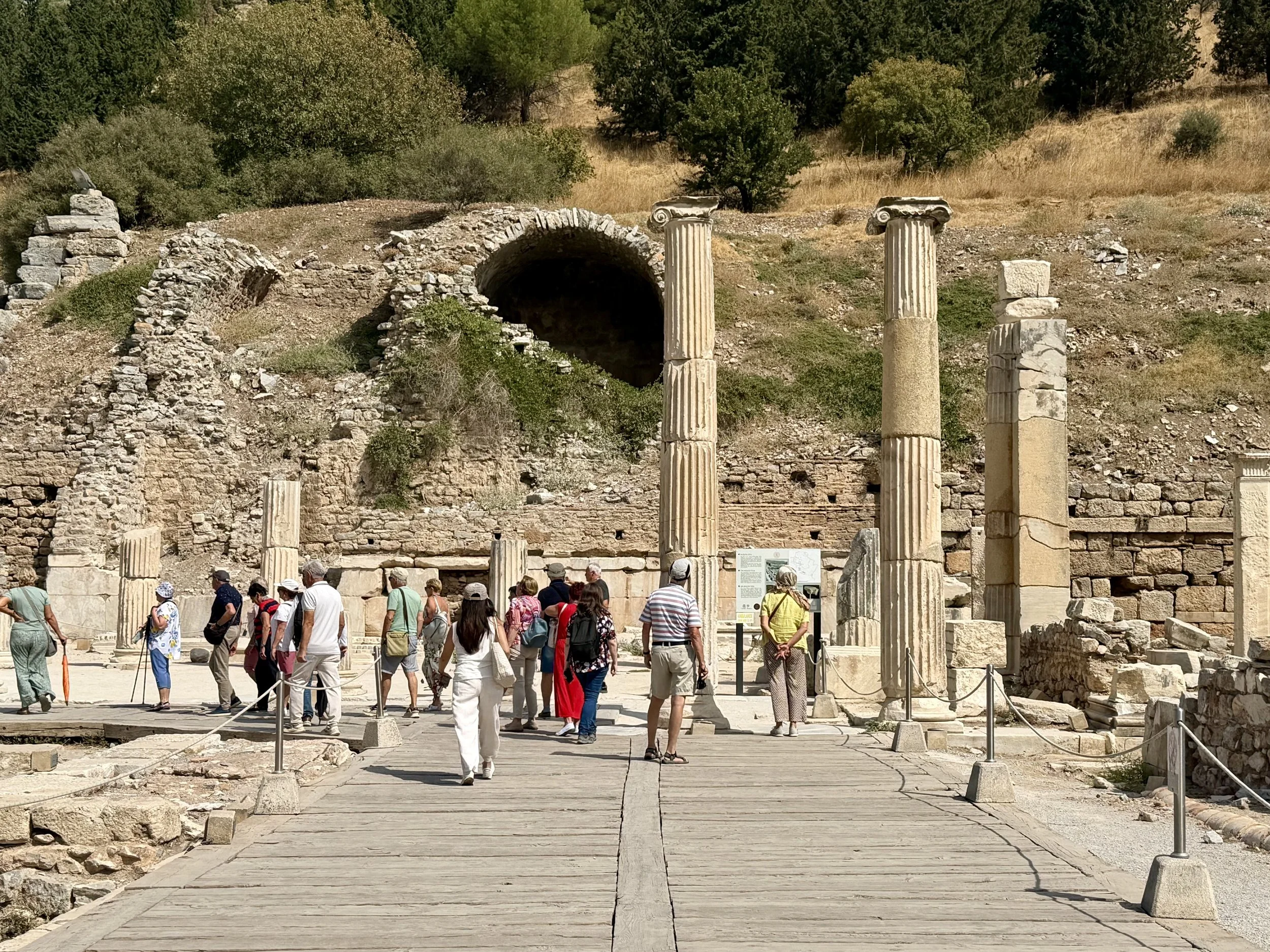
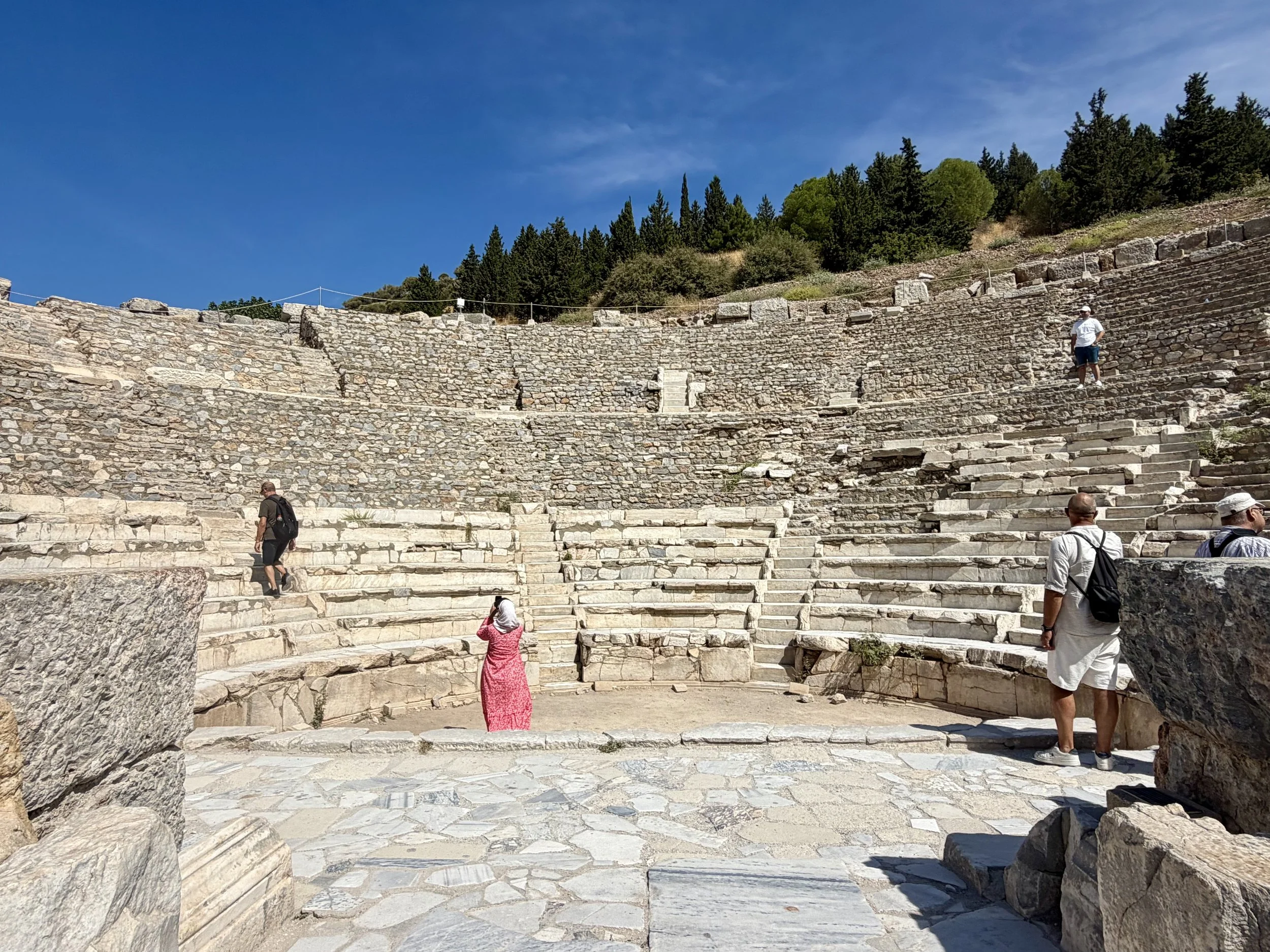
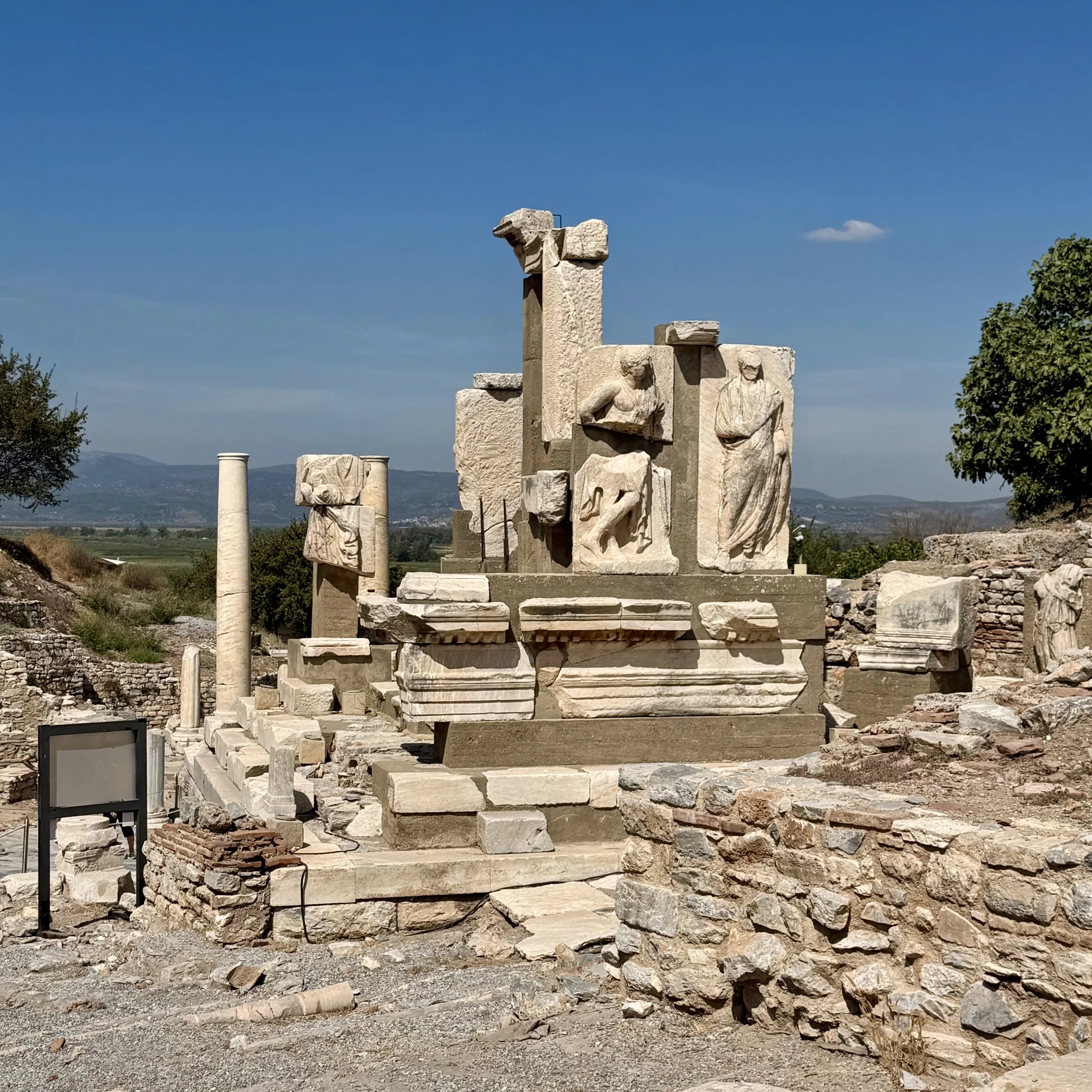
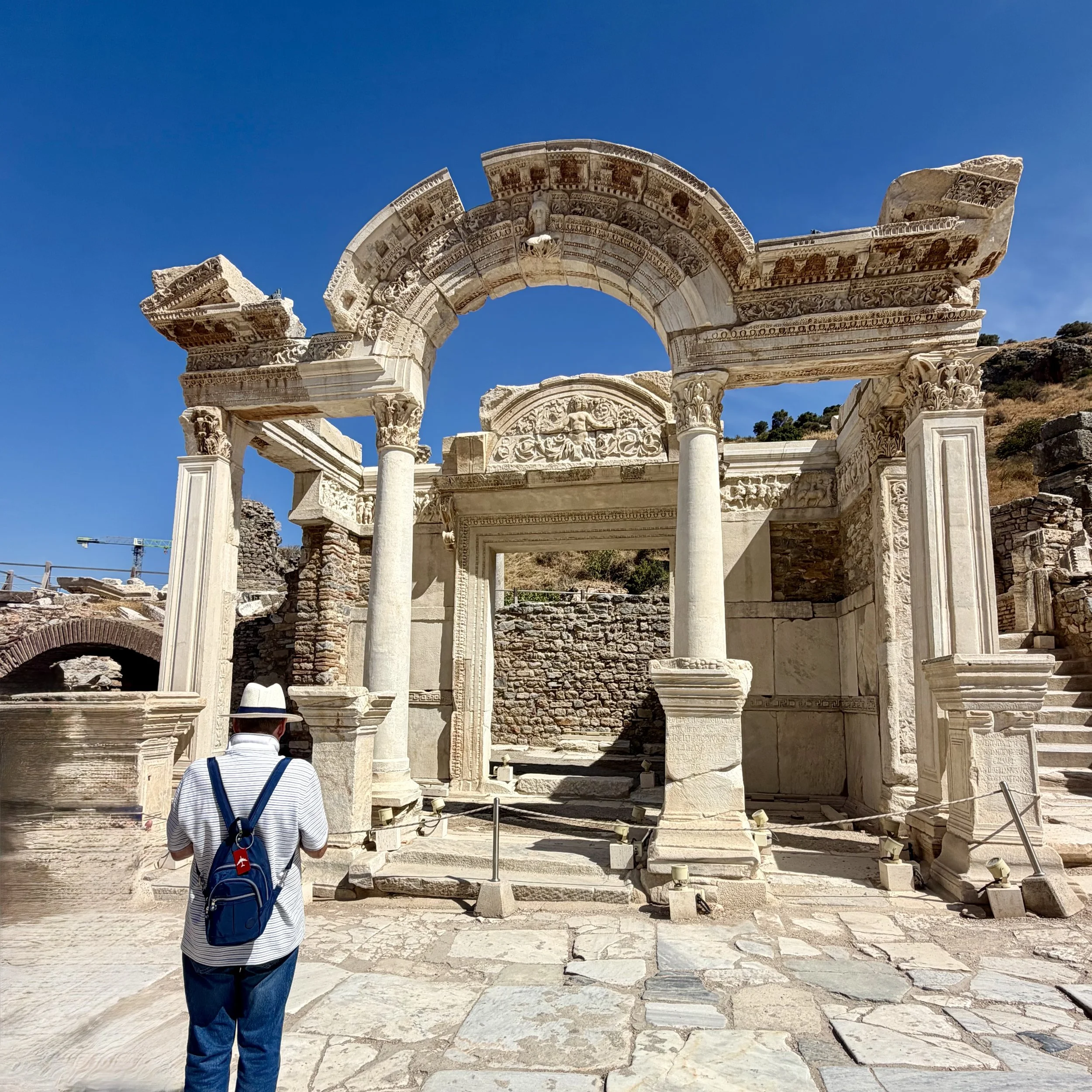
We started at the upper gate and explored the part of the city where state business was conducted. Highlights included the Odeon, used for senate meetings and theatrical performances, and the Temple of Hadrian, with its remarkably intact columns and arch. We also saw the city’s aqueducts and one of its public bath houses.
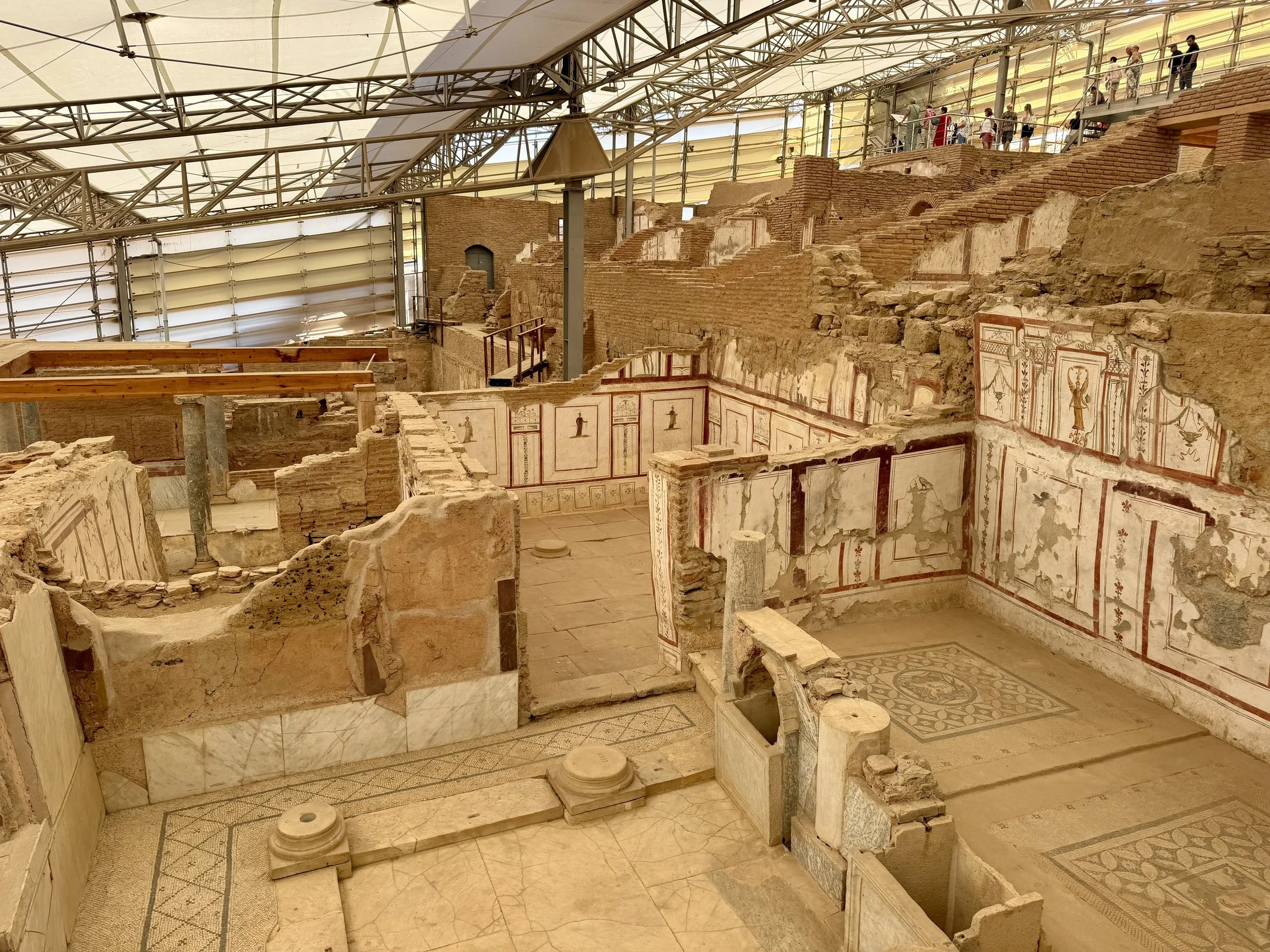
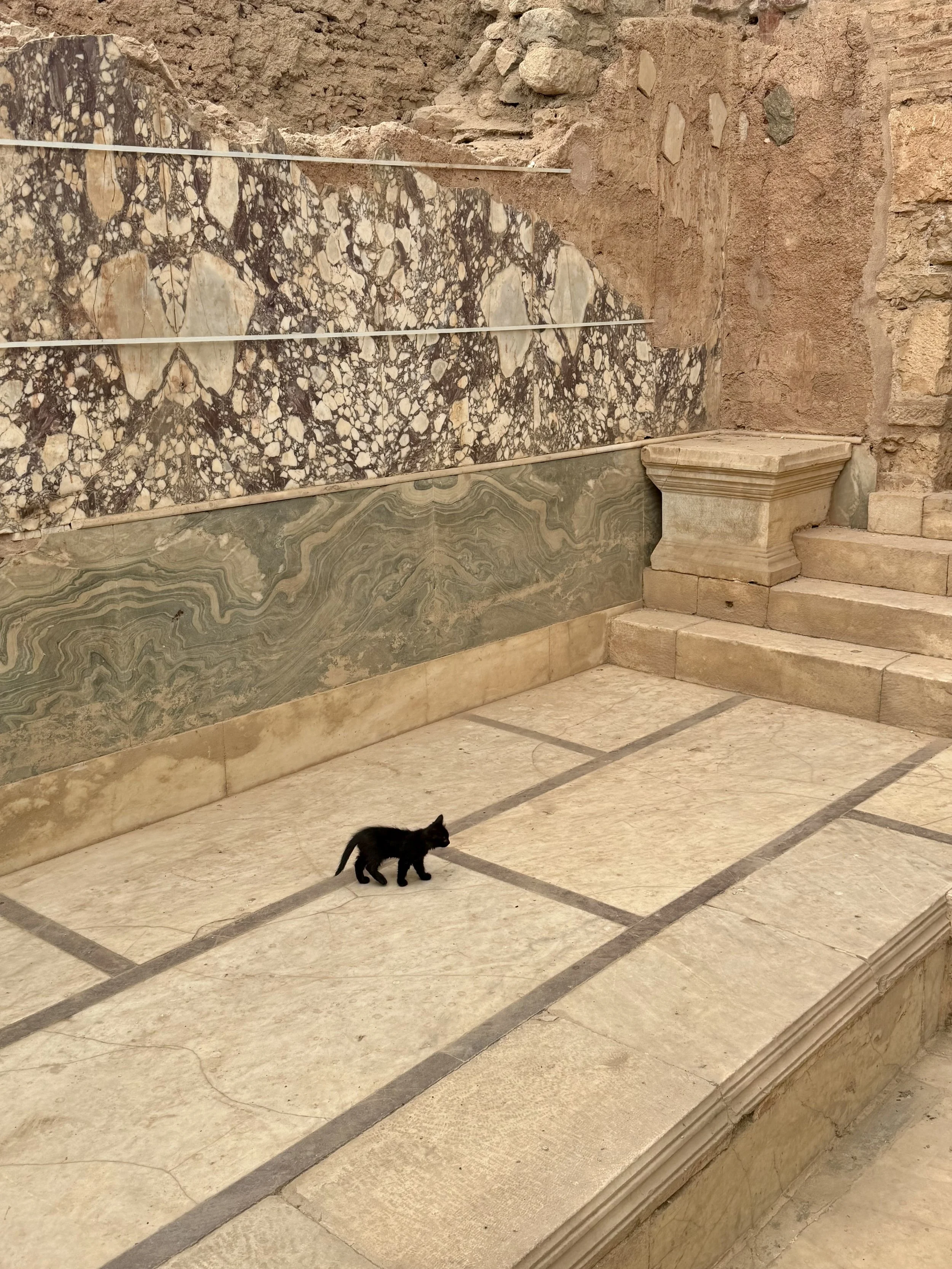
The Terrace Houses were six large, luxurious Roman villas on a hillside. The houses were decorated with wall frescoes and floor mosaics, and had pipes for running water. One house had a private basilica with colorful marble panels. Excavation work was ongoing, and the whole area was sheltered by a roof of glass and steel. I really enjoyed walking through the Terrace Houses, as they provided a glimpse into daily life for the wealthier residents of Ephesus.
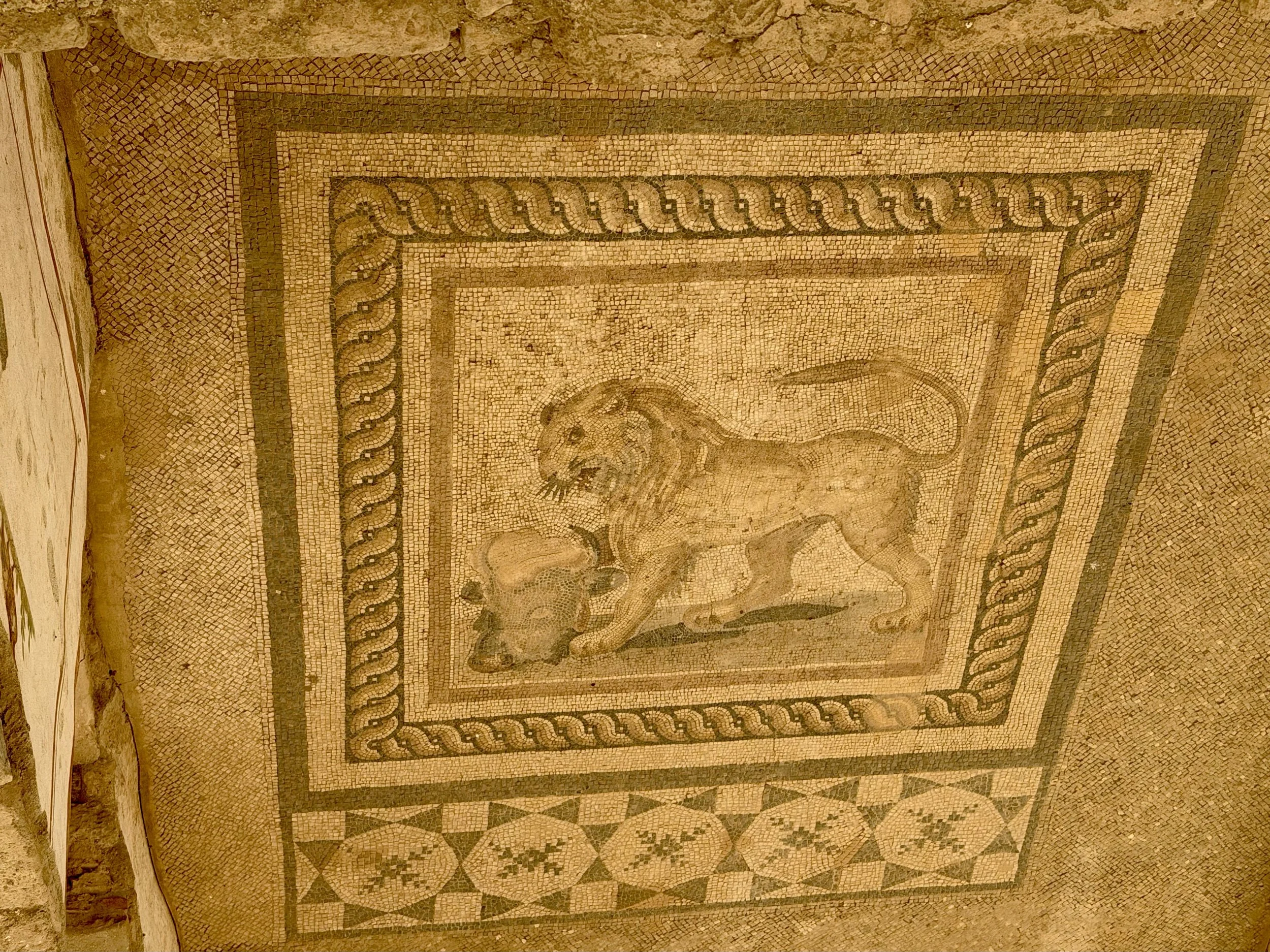
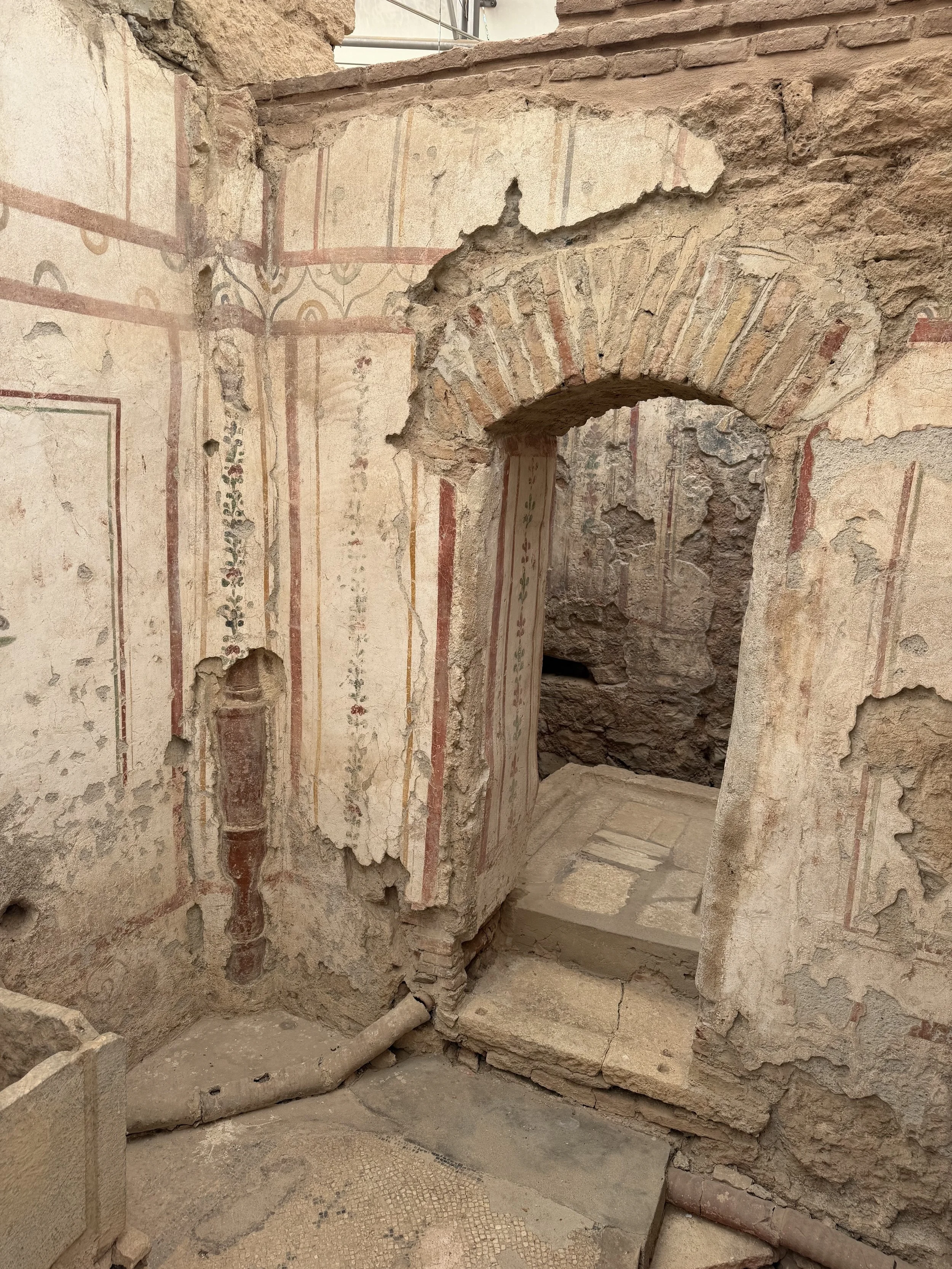
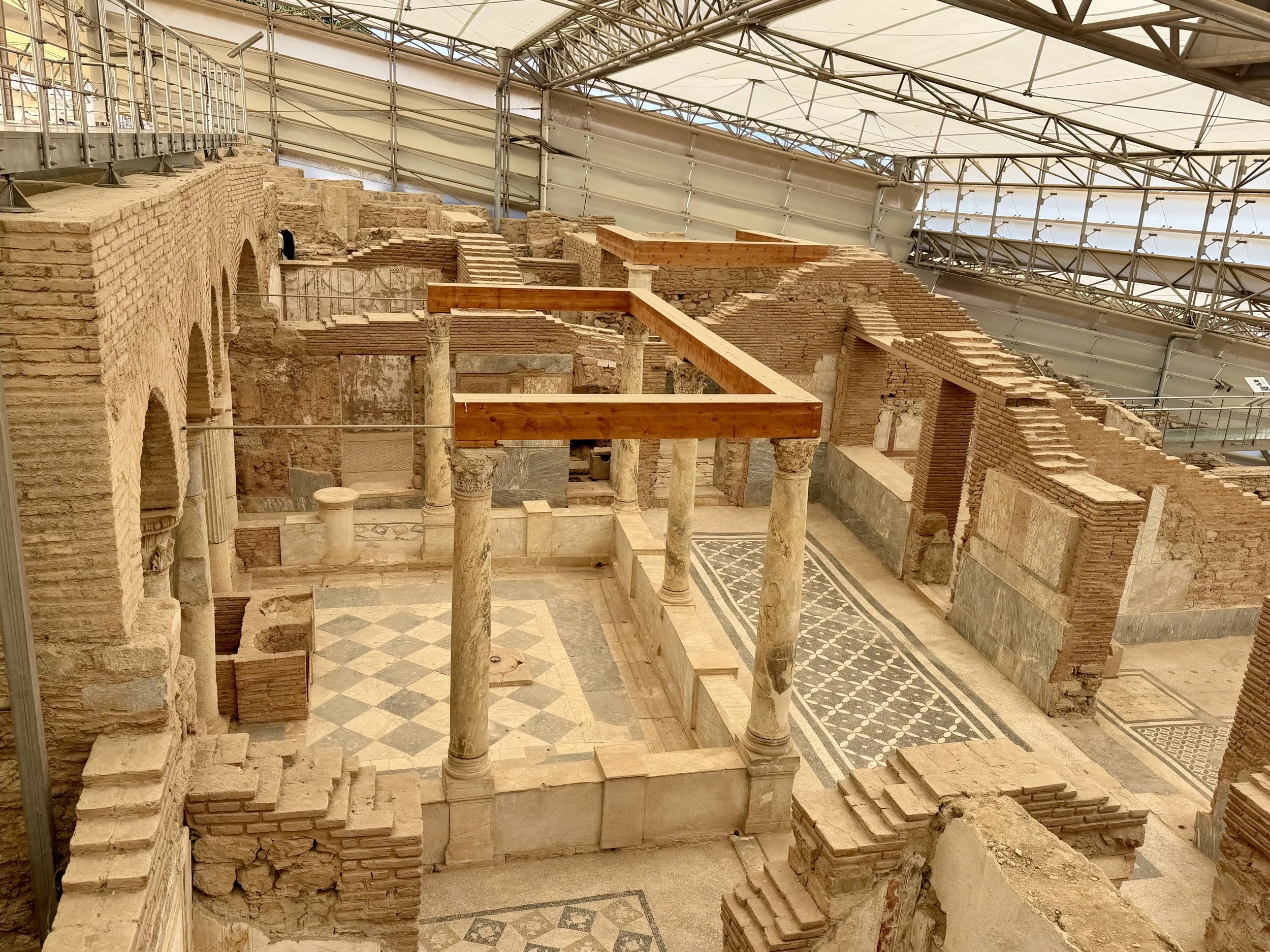
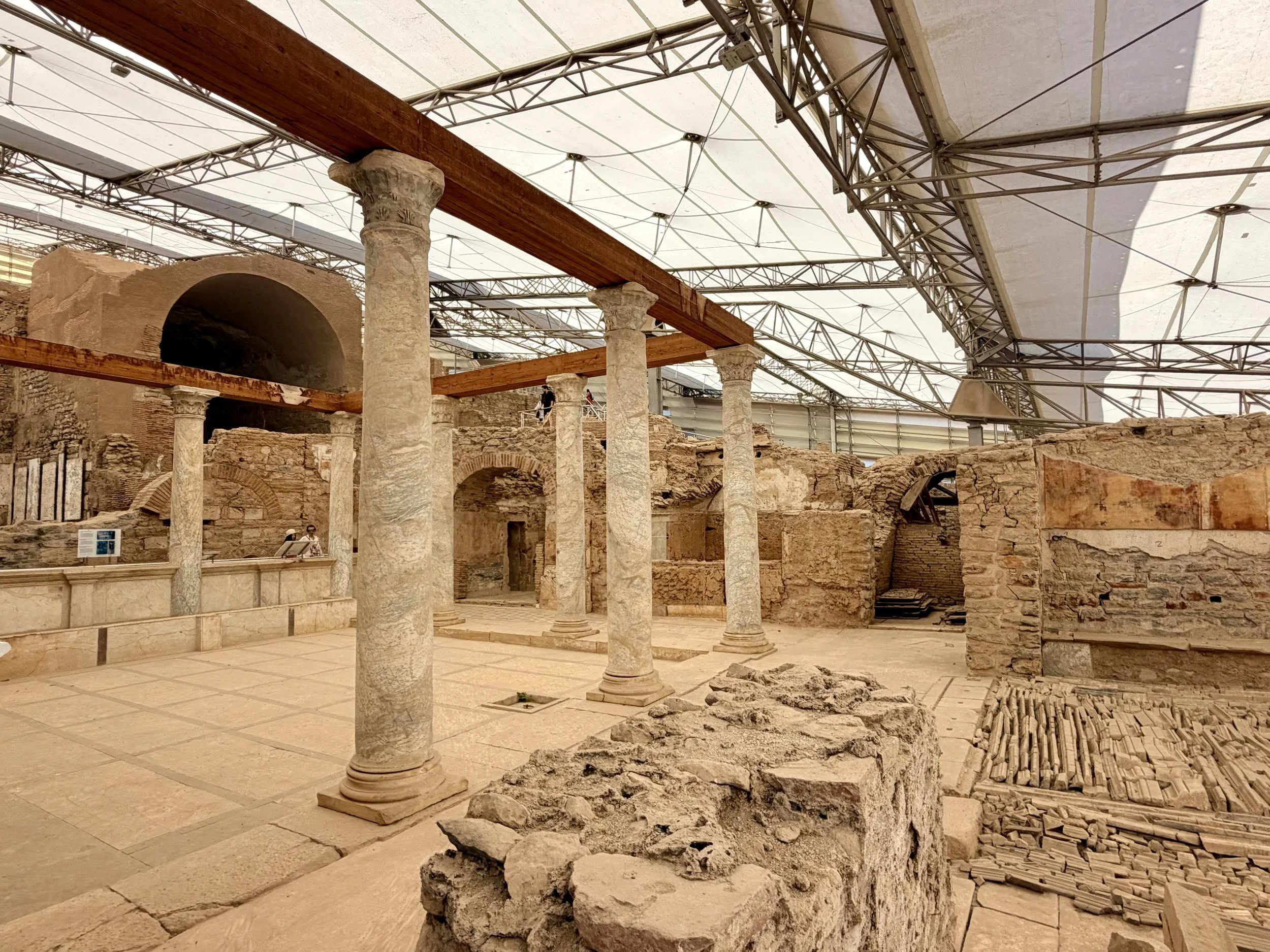
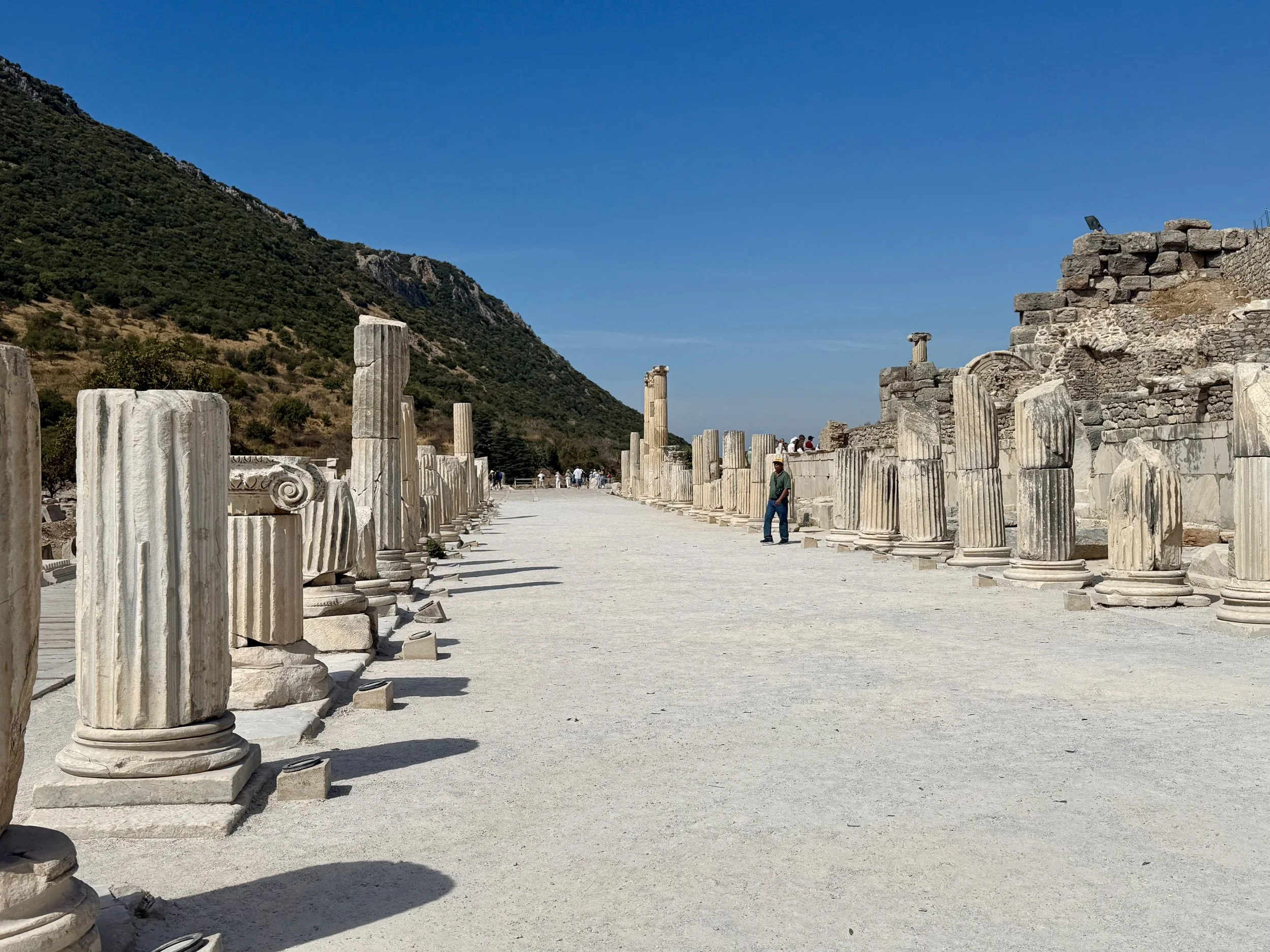
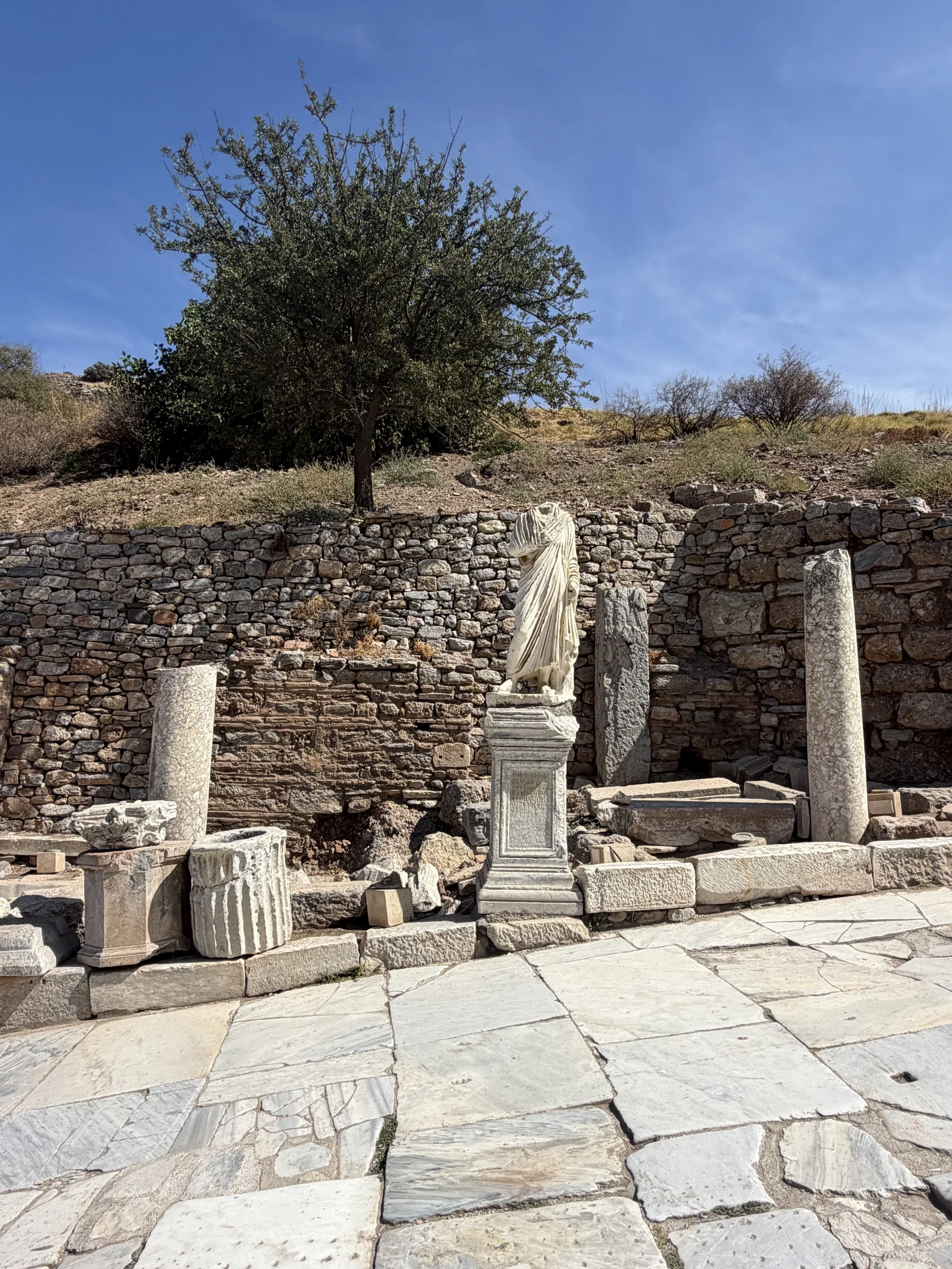
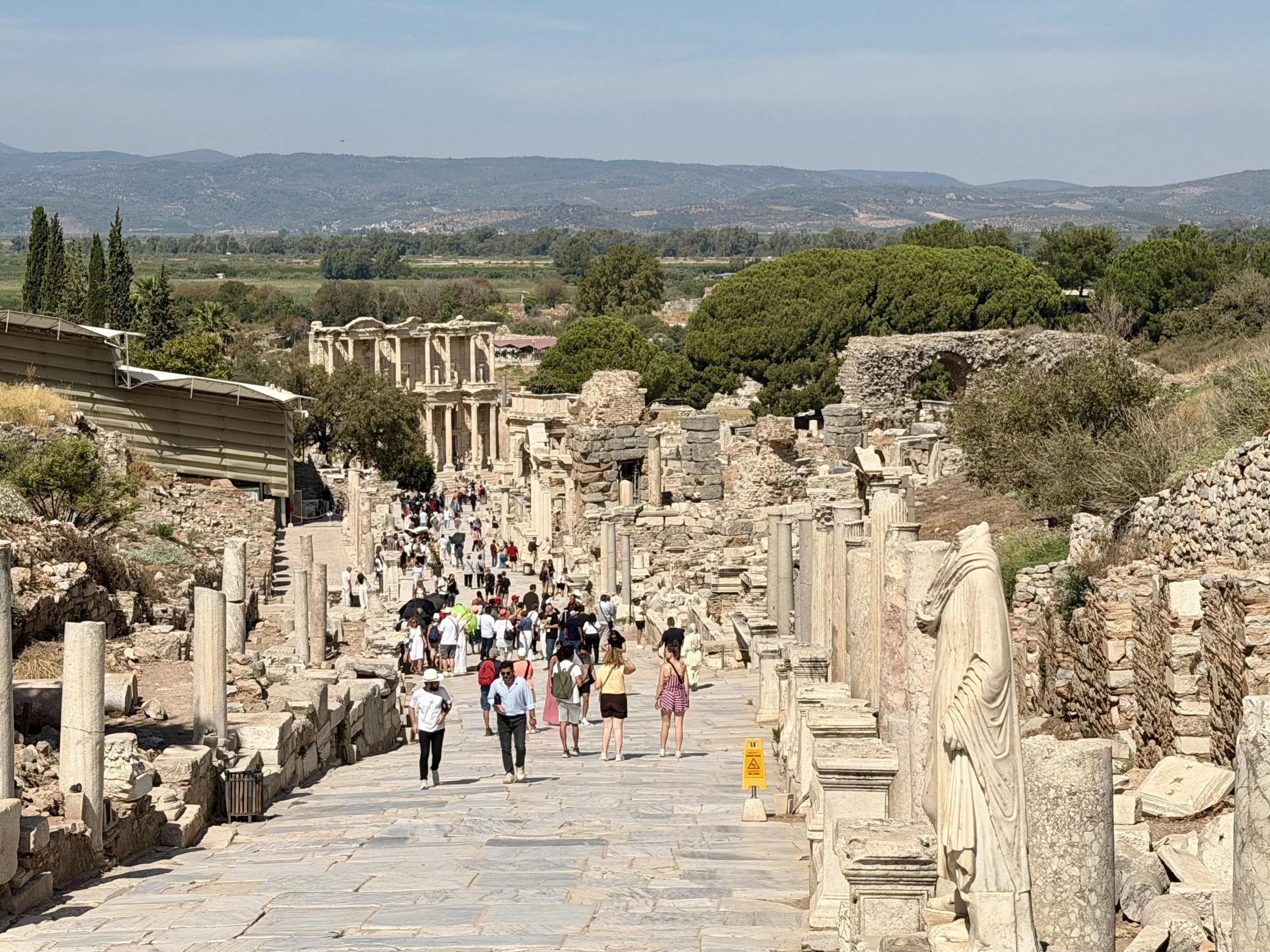
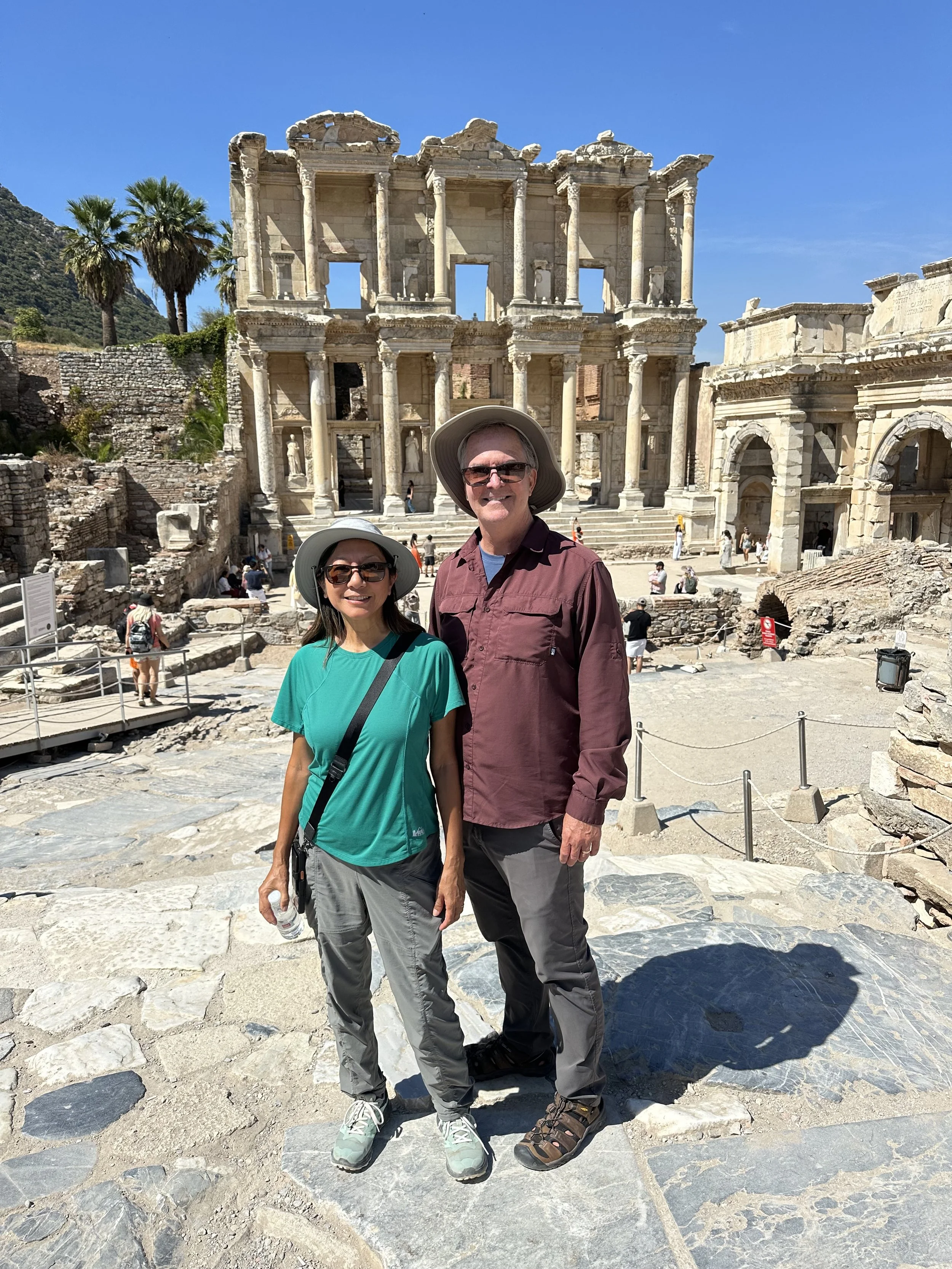
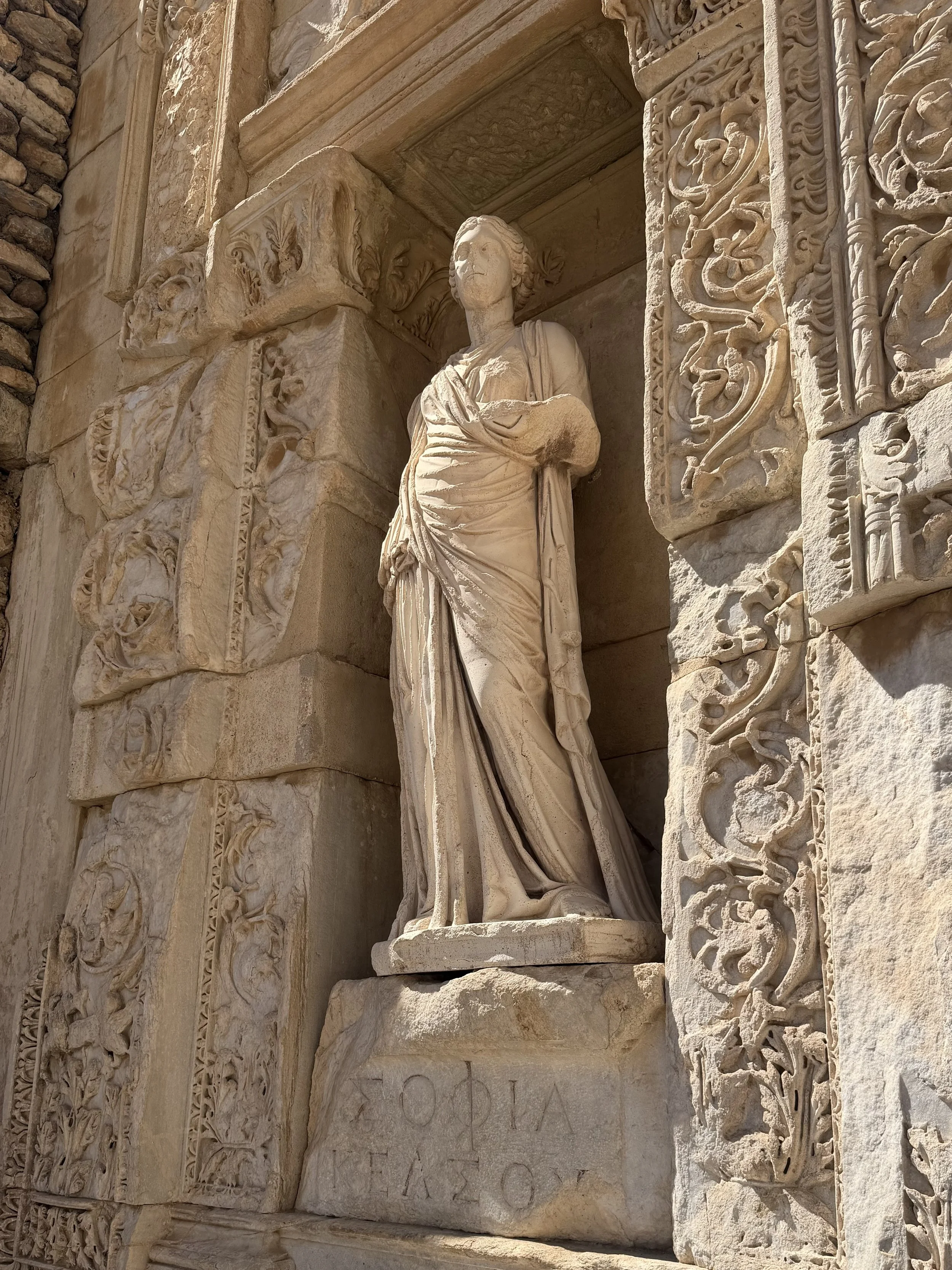
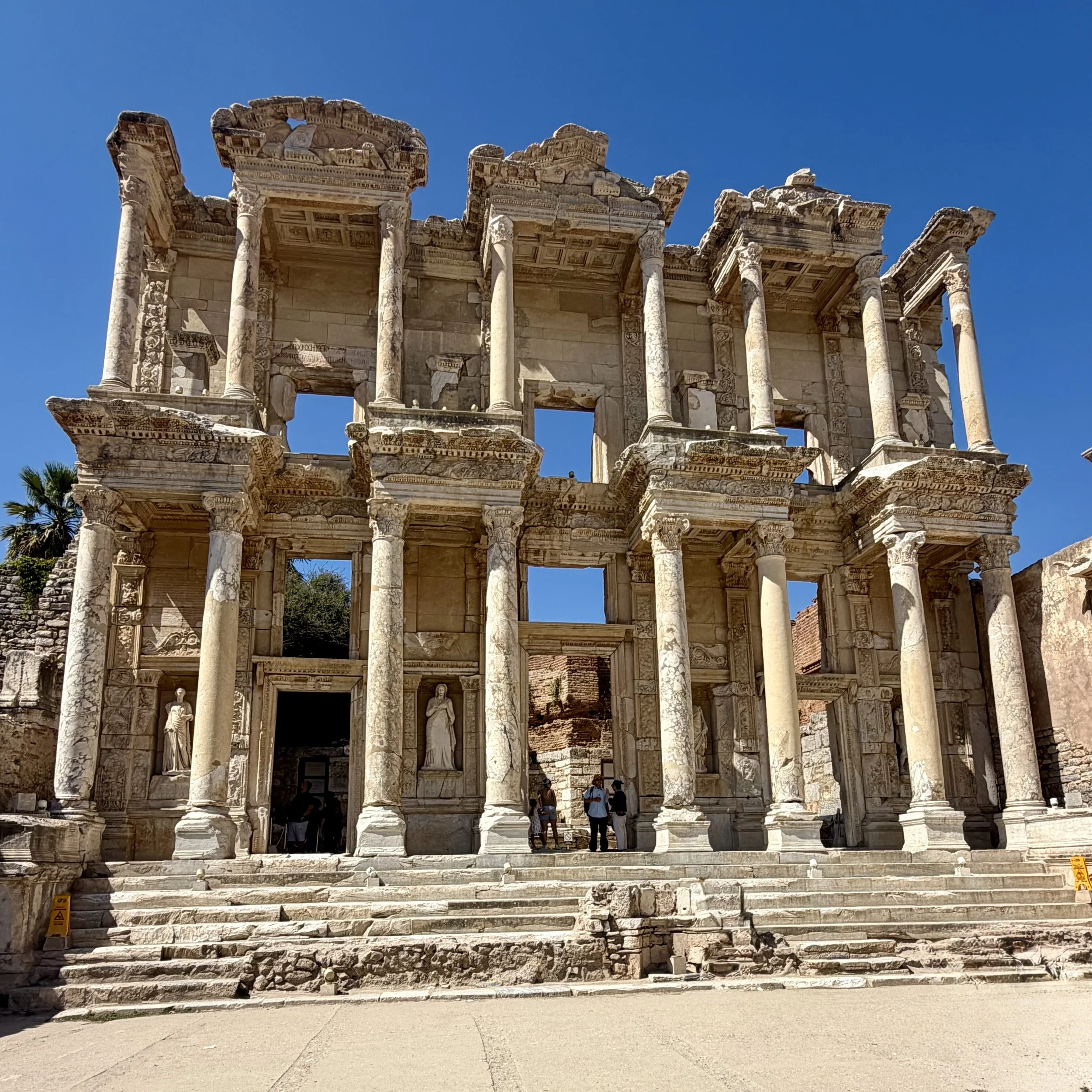
The Marble Road was lined with columns and pedestals that once held larger-than-life statues of statesmen. The road was remarkably intact, and we walked carefully on the slippery marble as it sloped gently downhill. It was amazing to think that we were walking in the footsteps of Alexander the Great, Cicero, Julius Caesar, and Mark Antony and Cleopatra! At the bottom of the road was the most famous ruin at Ephesus: the Library of Celsus. During the 1970s, the library’s façade was carefully rebuilt from original fragments found at the site. It was absolutely magnificent!
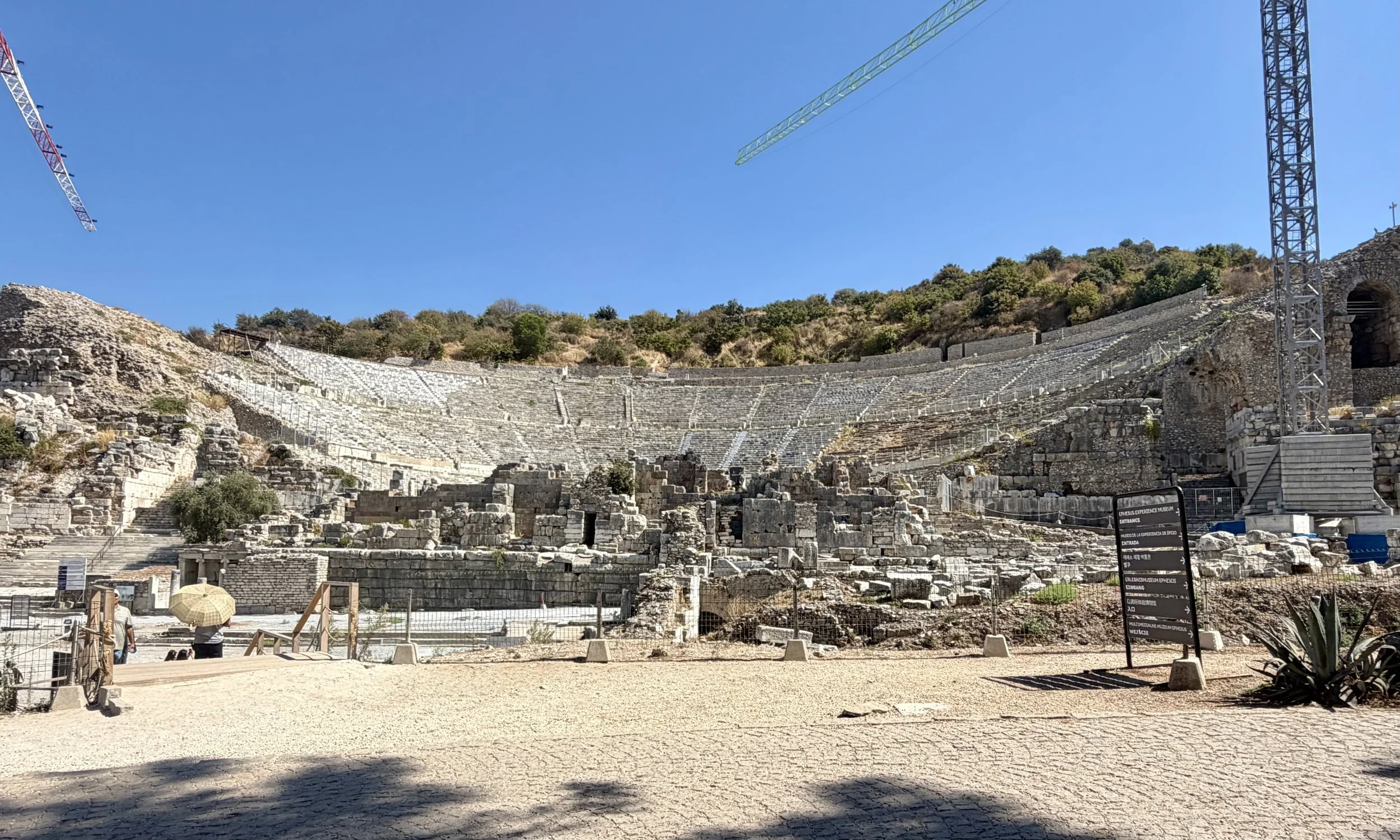
We walked through the ruins of the commercial agora surrounded by a stoa (covered colonnade) that had once been two stories tall and large enough for 250 shops. Beyond that was the Great Theatre, where Paul the Apostle preached to the people of Ephesus. It was large enough to seat 25,000! Restoration was in progress, so we admired it from a distance. The Harbor Road was another stoa, connecting the theatre to the port. It must have been exciting to arrive at Ephesus by ship and walk along this bustling road to the impressive marble city.
We had reached the lower gate and the end of our tour of Ephesus. The Temple of Artemis is gone; just one column (rebuilt from fragments) marks the site. The harbor is gone, too; it gradually filled with silt, and ships stopped using it during the 7th century. Today, Ephesus is several miles away from the Aegean Sea.
The population of an ancient city is estimated by multiplying the capacity of its theater by ten. This means around 250,000 people lived in Ephesus! This figure may be inflated, but there is no question that Ephesus was a jewel of the Roman Empire, second only to Rome in splendor.
Ephesus Archaeological Museum
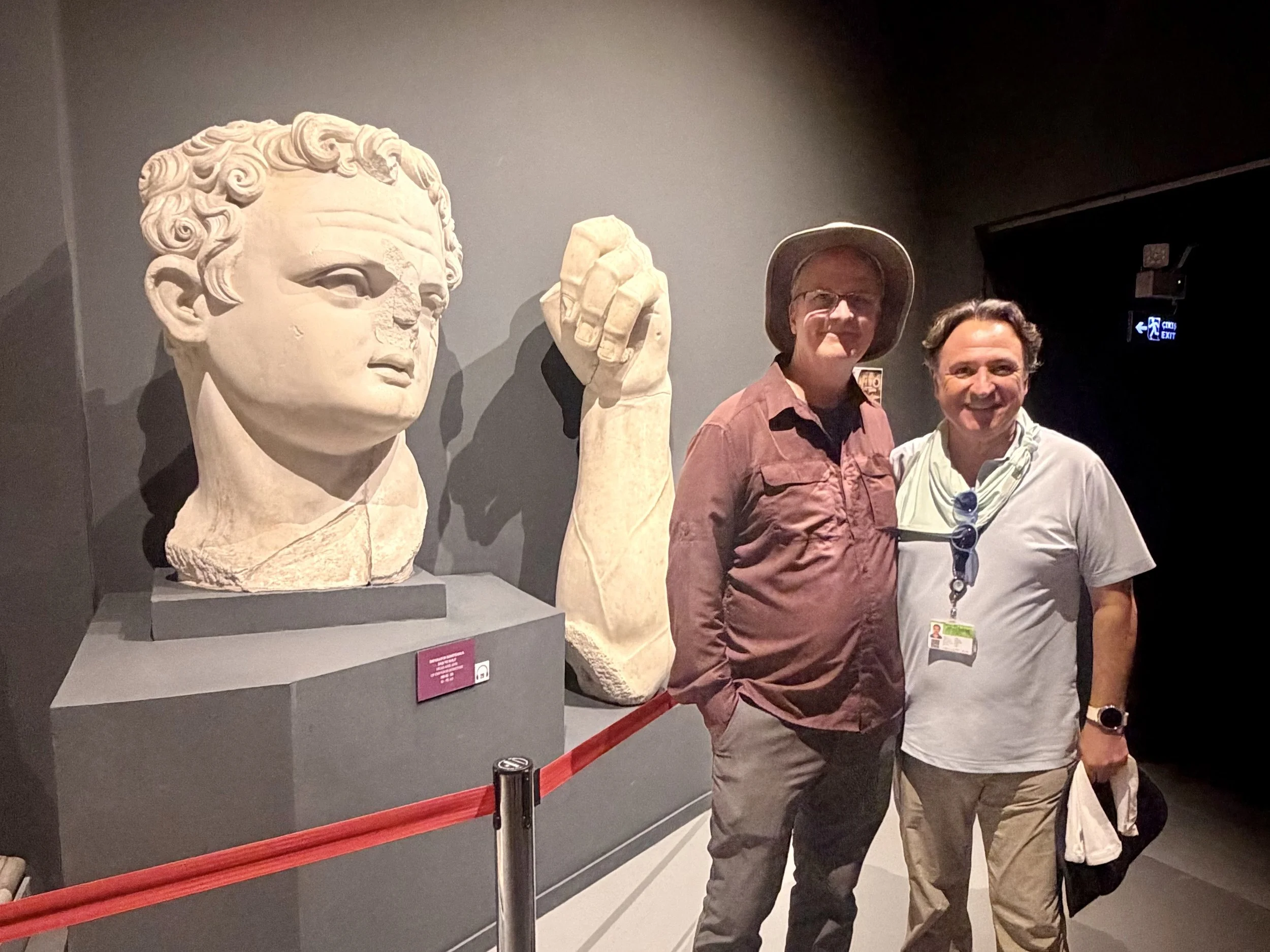
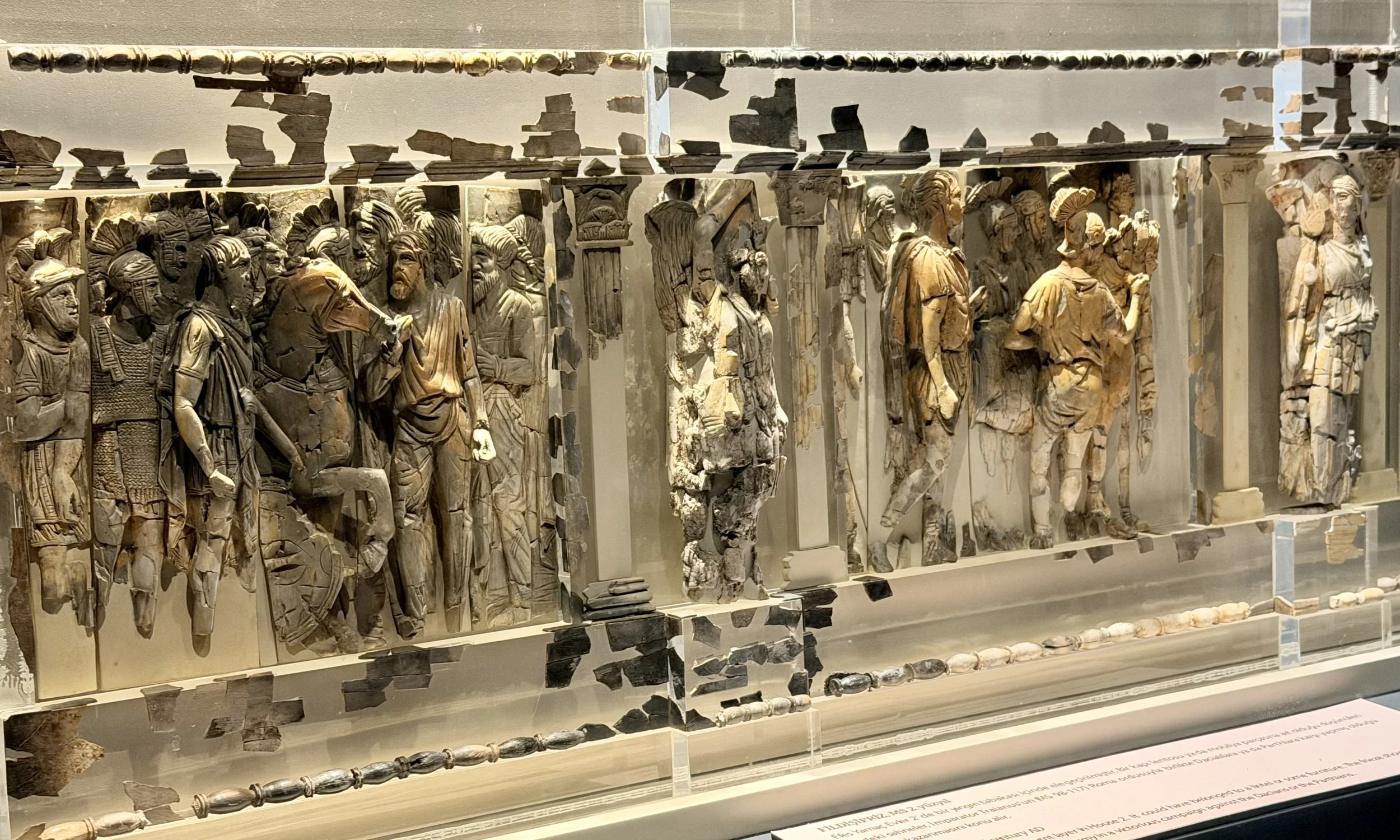
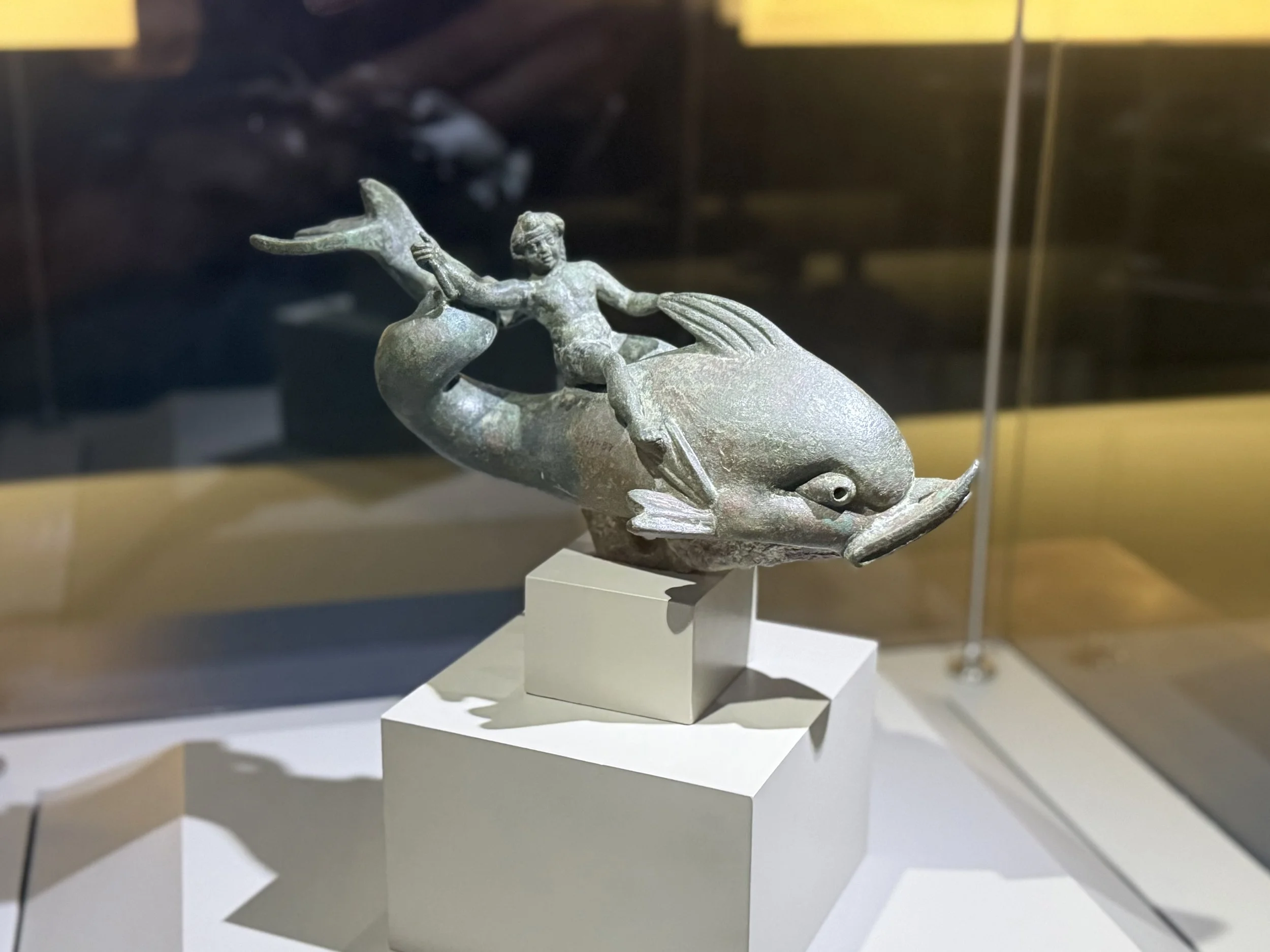
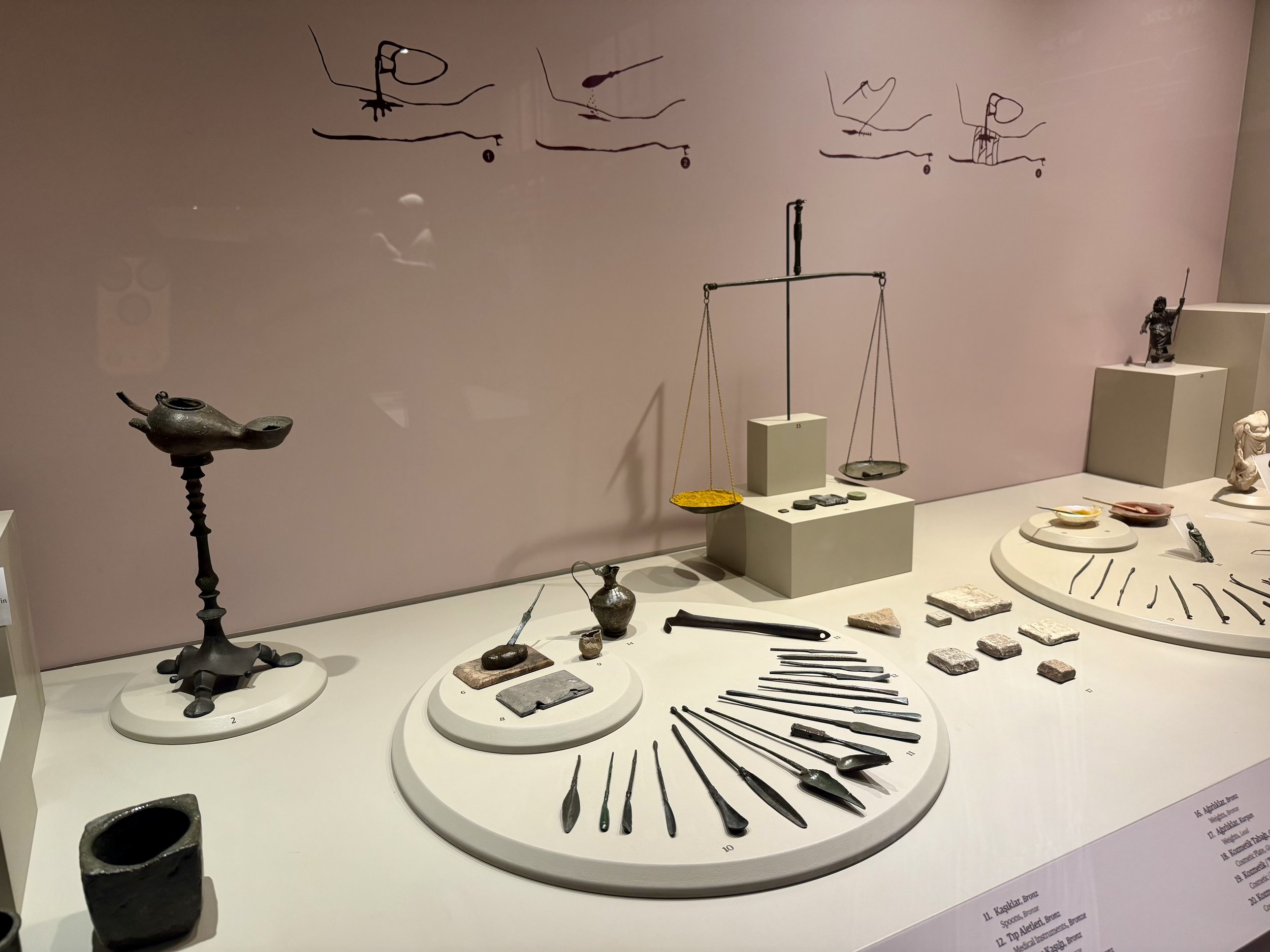
We went to the nearby town of Selçuk to see the Ephesus Archaeological Museum, which houses artifacts found at the site. Interesting pieces included the head and arm from an enormous statue of Emperor Domitian; a detailed frieze and a faucet shaped like Eros on a dolphin from the Terrace Houses; and a collection of medical instruments.
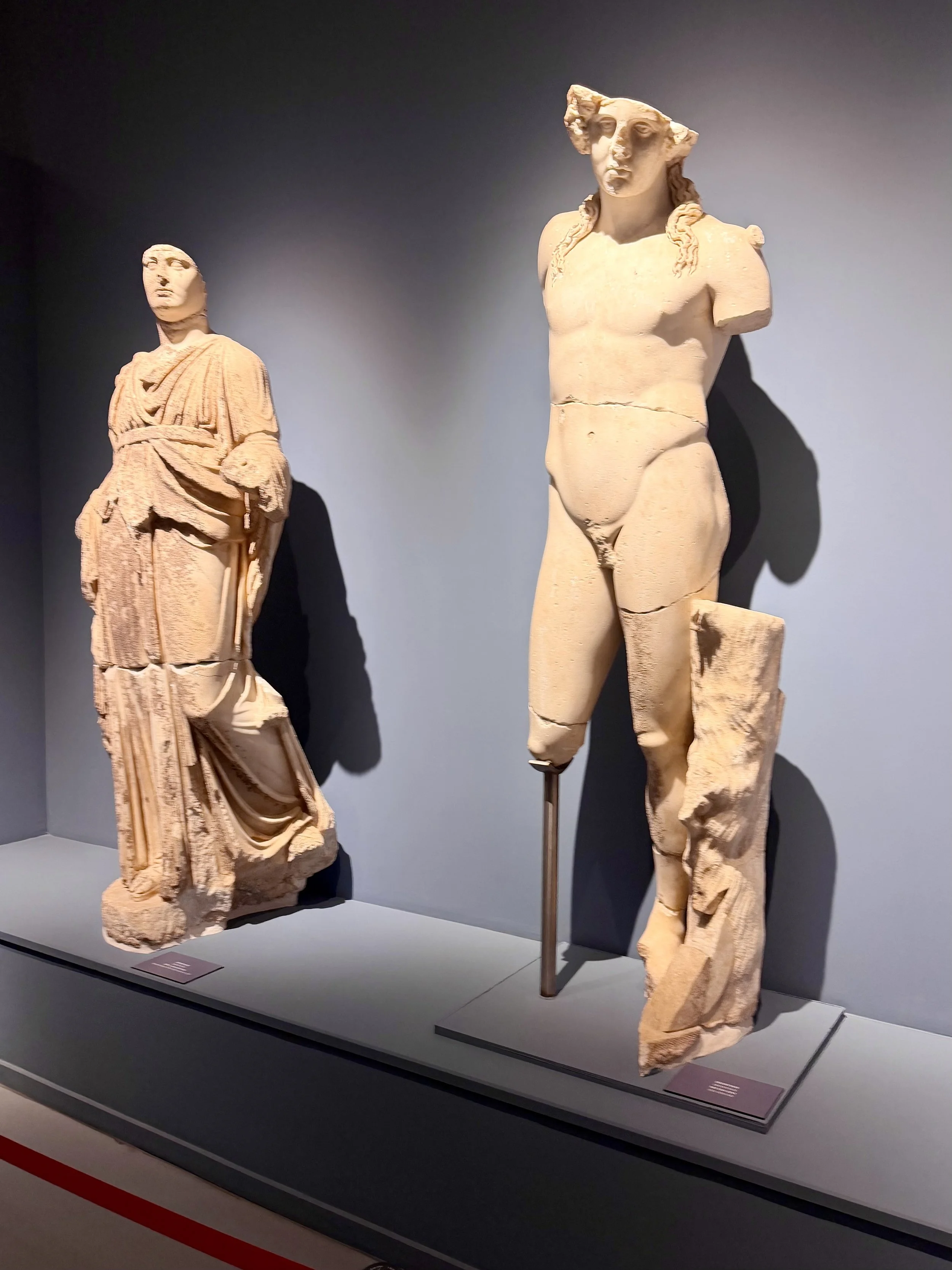
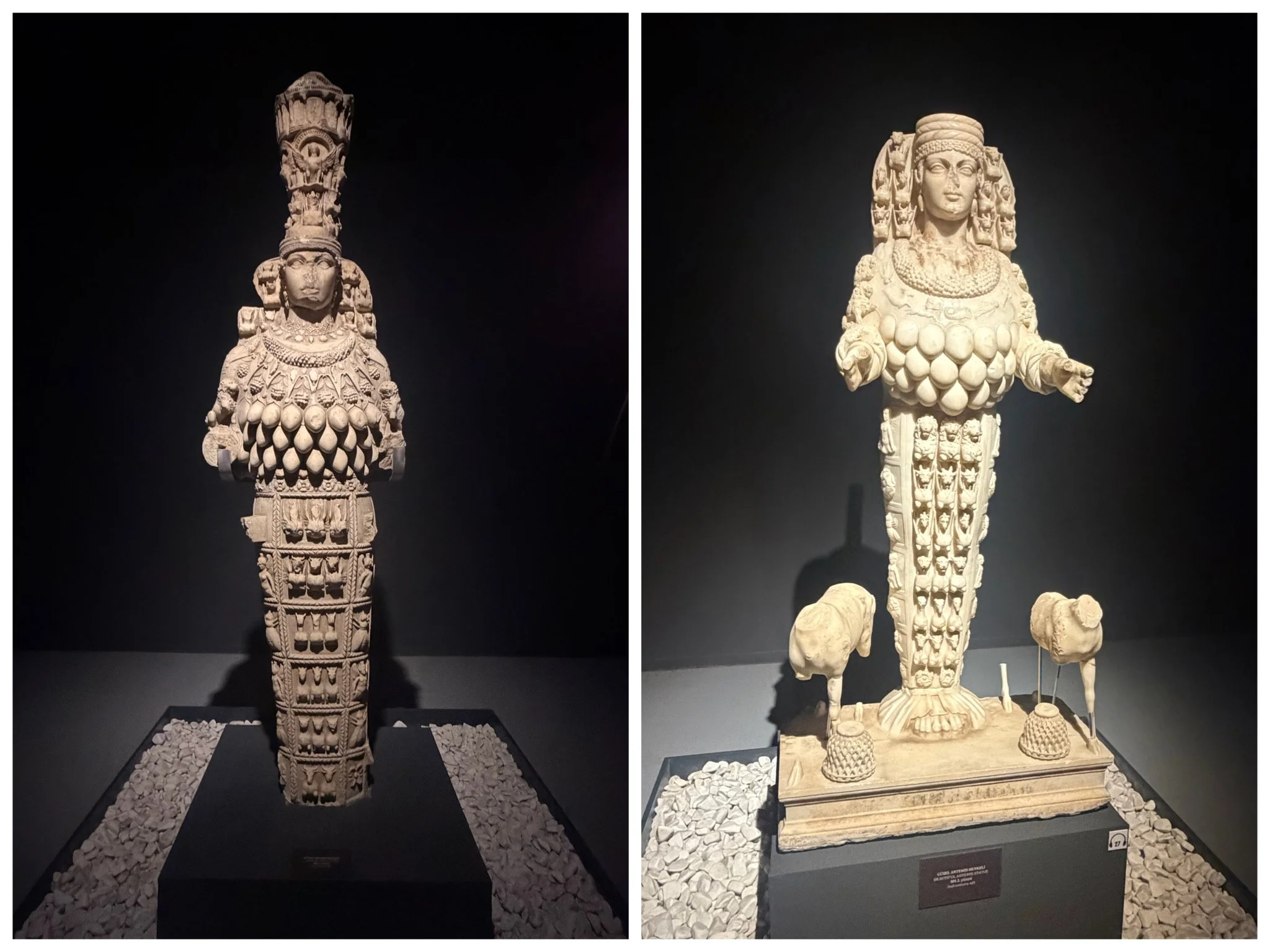
One gallery showcased two famous marble statues: Great Artemis and Beautiful Artemis. They had been buried behind the Odeon during the 4th century CE to escape destruction by Christian emperors, and were very well-preserved.
Artemis was the goddess of, among other things, wild animals, hunting, chastity, and childbirth. In both statues, her headdress and skirt were covered with animals (lions, bulls, deer, rams, griffin, sphinxes, and bees). Her chest was covered with mysterious items. Were they breasts, eggs, the testicles of sacrificed bulls, or something else? Experts differ on this, but agree that they symbolize fertility.
Prior to 1923 (when Turkish law changed), artifacts found at Ephesus were taken to museums in London and Vienna, and can still be viewed there.
Virtual Ephesus
Hungarian artist Ádám Németh has created 3D reconstructions of Ephesus based on laser scans and extensive historical research. They are very cool, and bring the ancient city to life! Learn more at Wonderful Ephesus App.