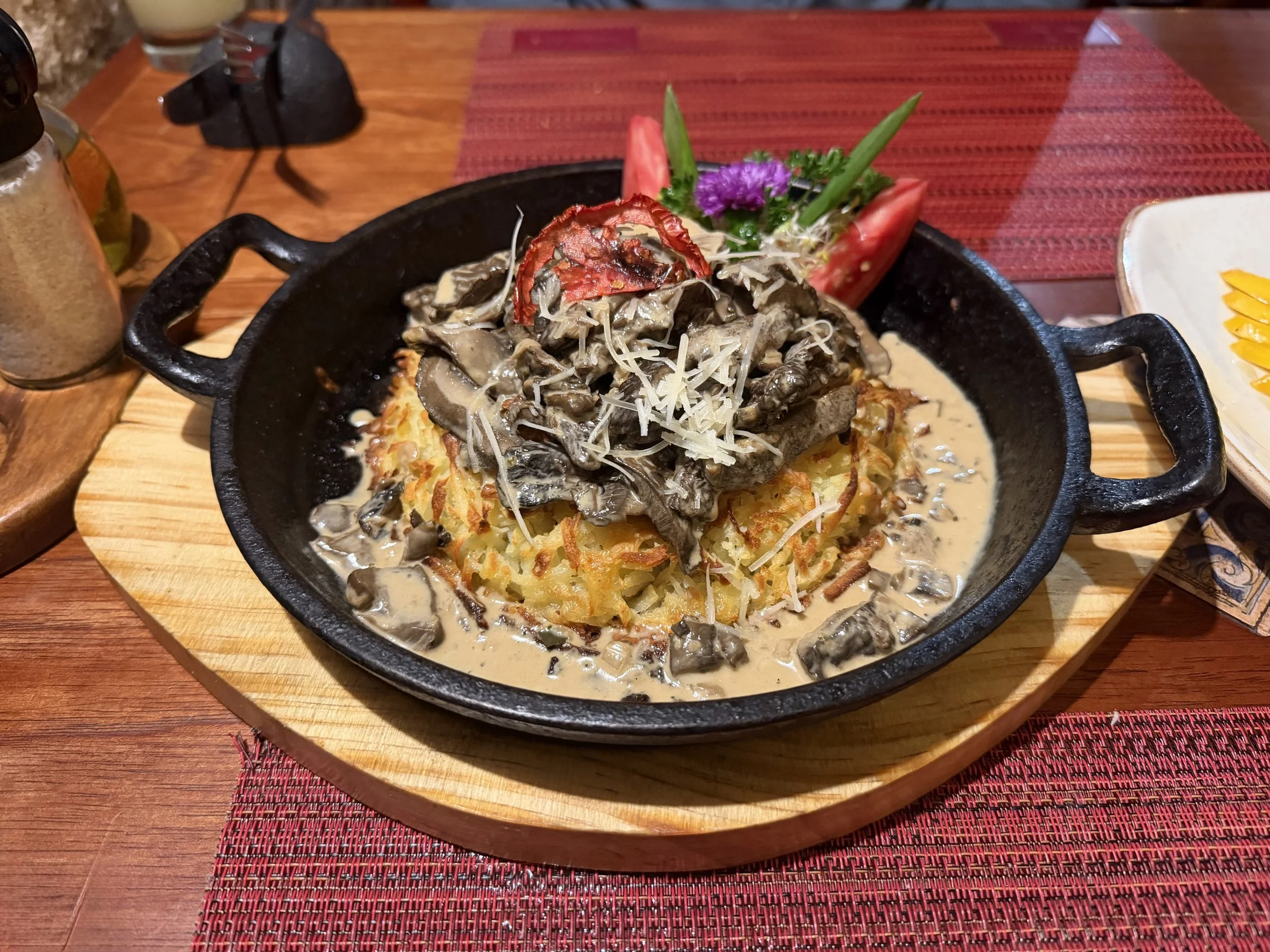
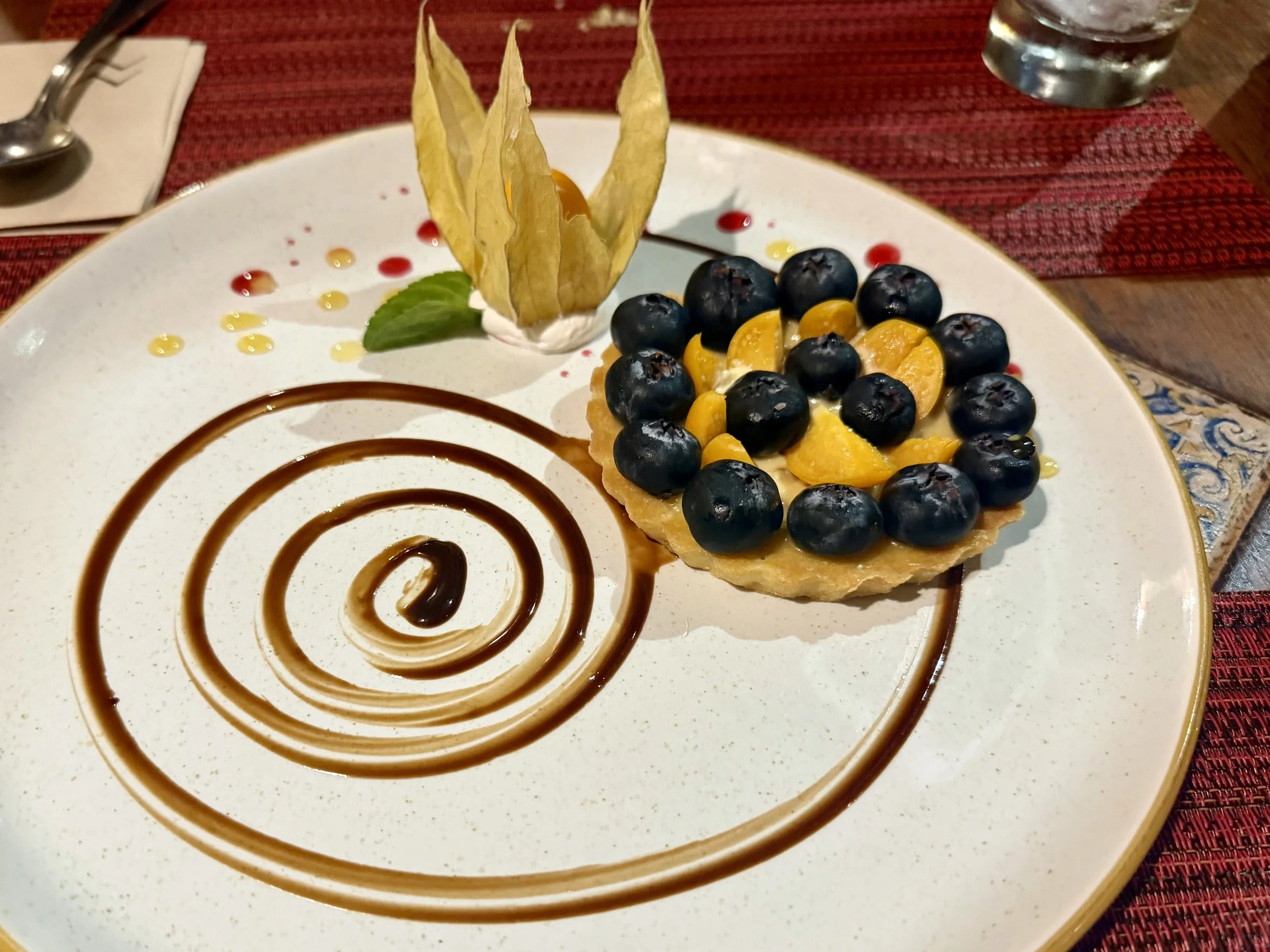
While there were plenty of restaurants serving traditional Peruvian dishes, some of the cuisine in Arequipa was distinctly different from what we had tasted in Lima.
Local Specialties
The traditional restaurants in Arequipa were called picanterías - from the Spanish word for “spicy/hot.” These were rustic places typically open just for lunch. Classic picantería offerings included rocoto relleno (red chili peppers stuffed with meat and cheese) and chupes (stews), with a different chupe on each day of the week.
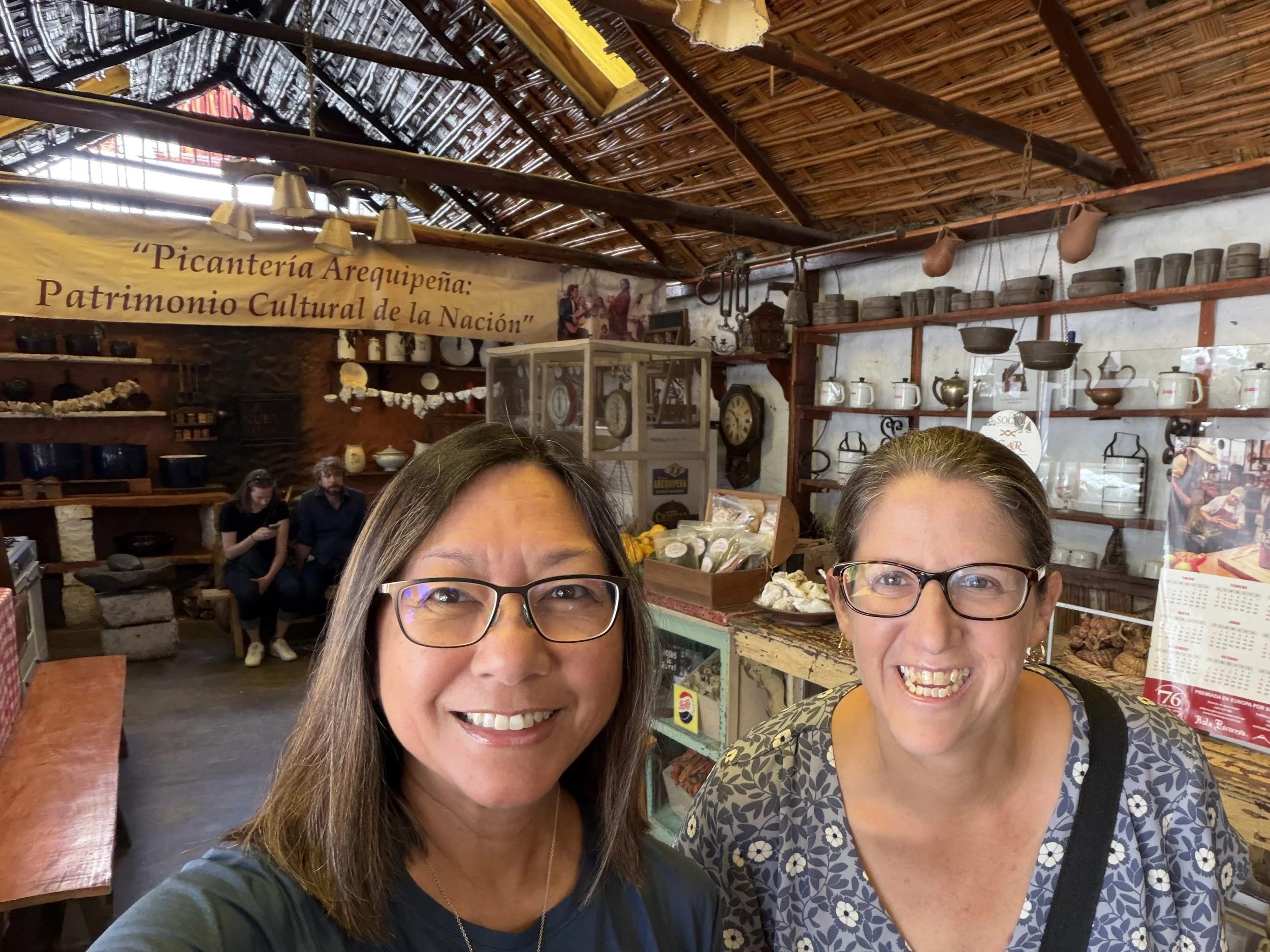
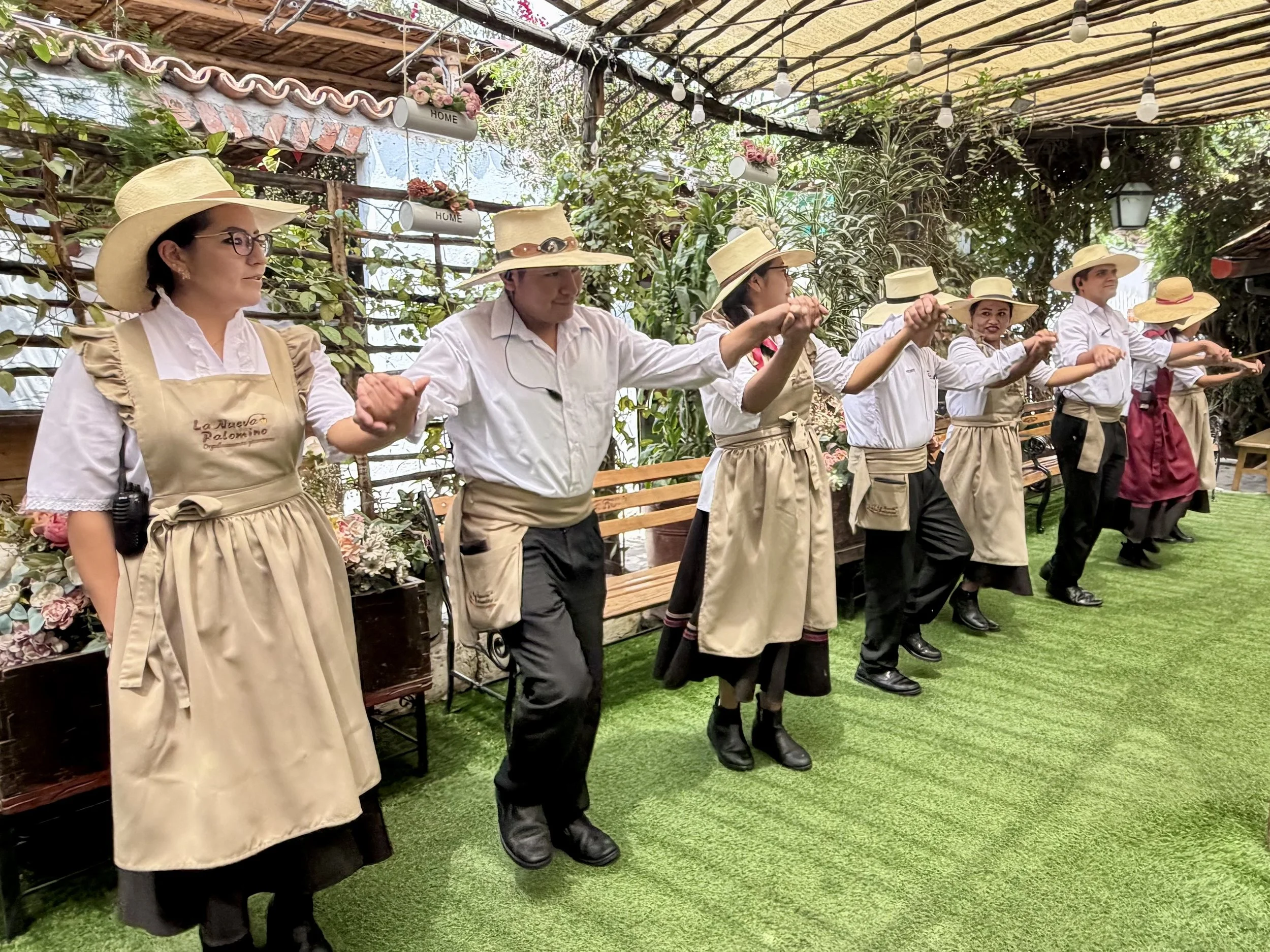
I met Karen through the Go With Less Facebook group, and we had lunch together at a picantería called La Nueva Palomino. The staff gave us a festive welcome, and we found a table in a private alcove. The rocoto relleno was much too spicy for me, but I thoroughly enjoyed talking with my new friend. We traded stories and chatted for hours about nomad life and our Peru Hop adventures.
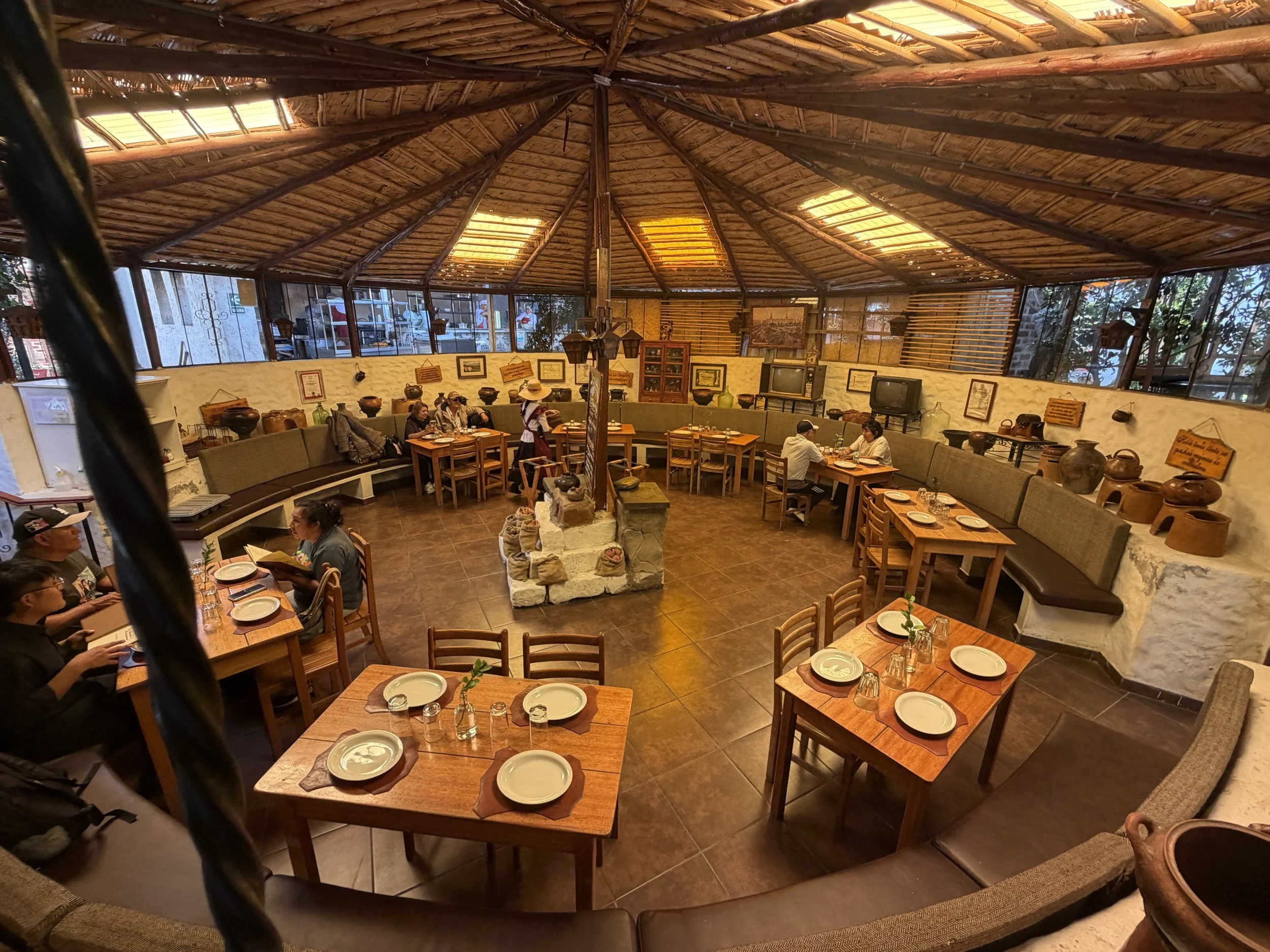
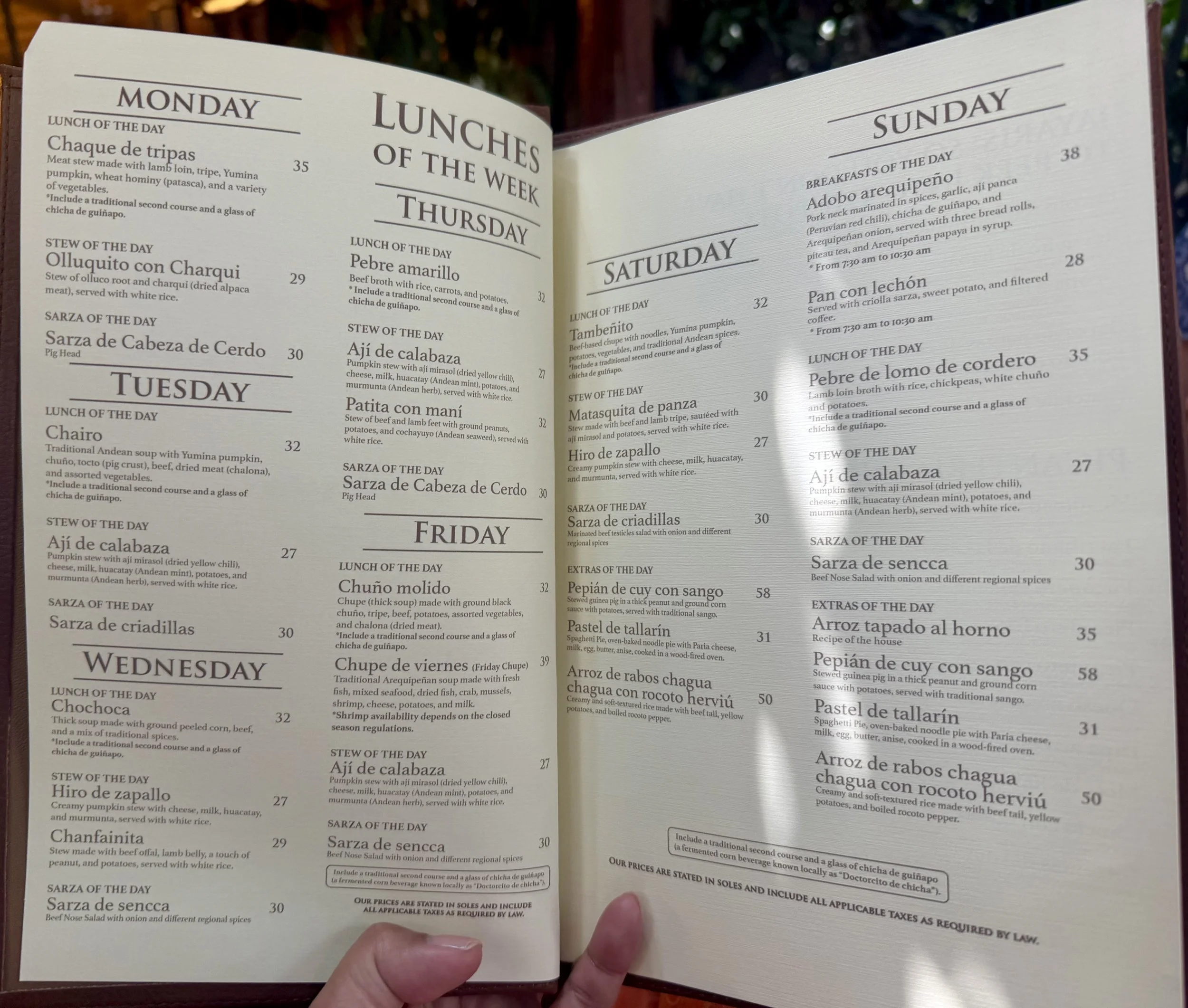
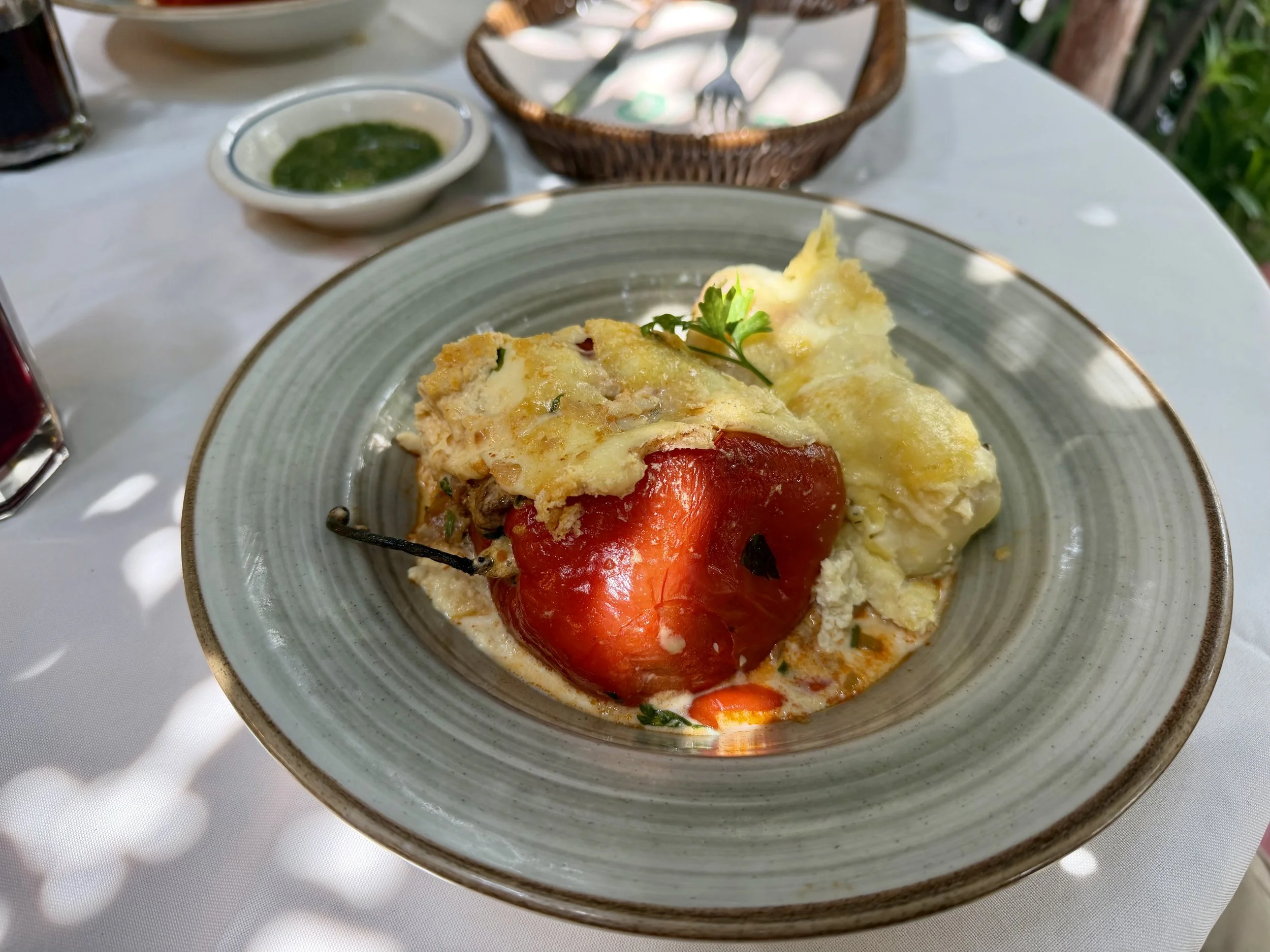
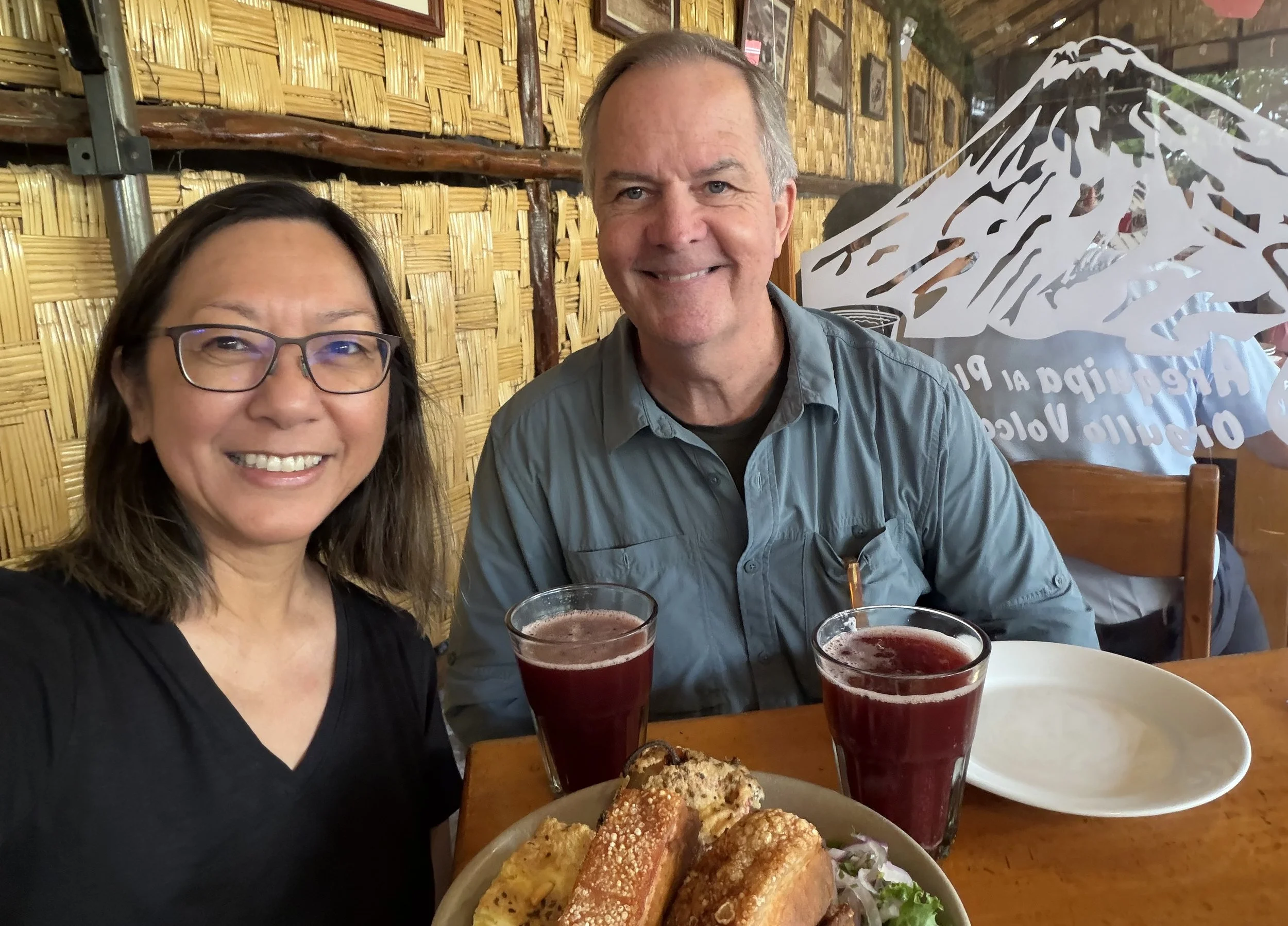
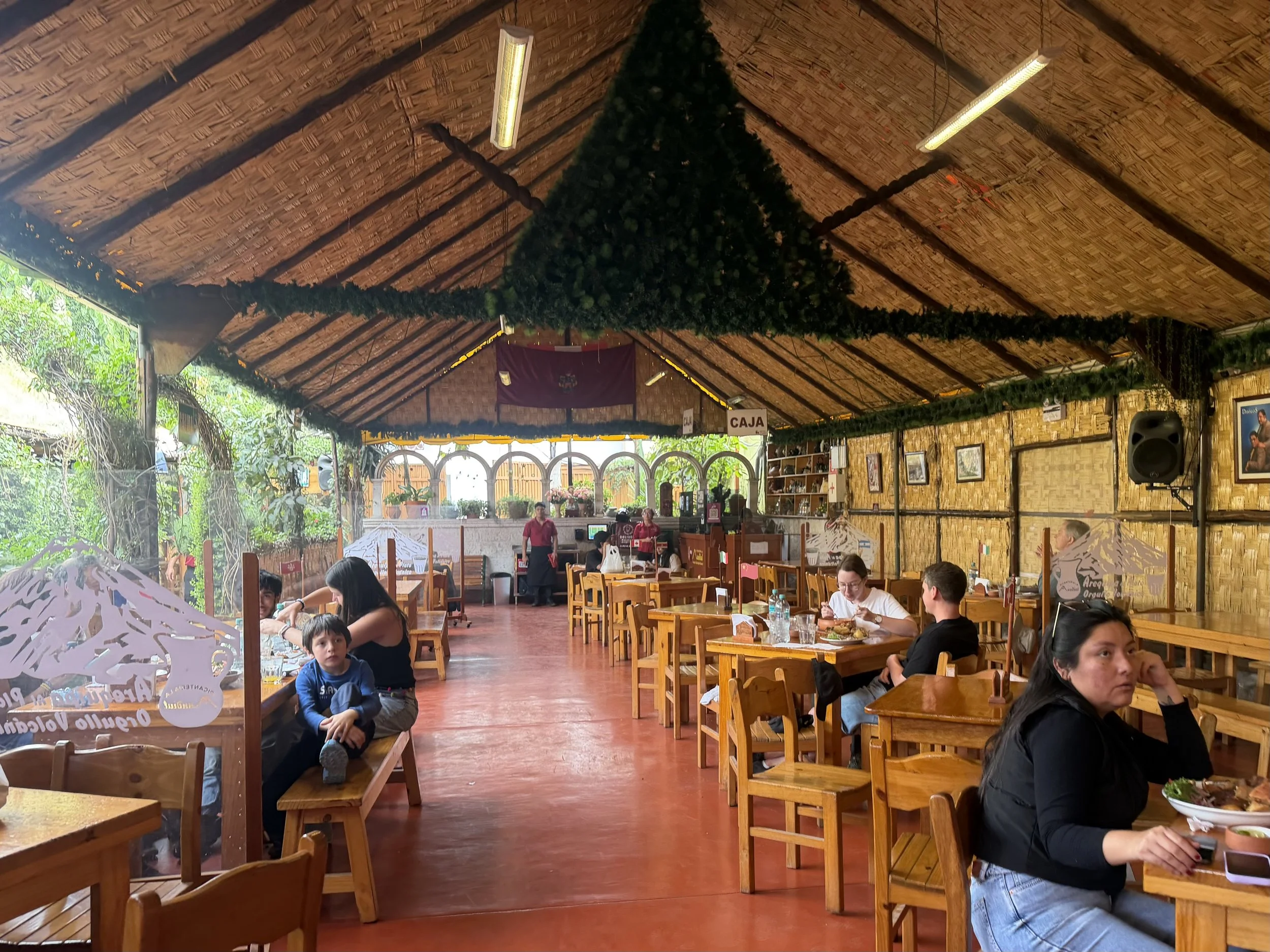
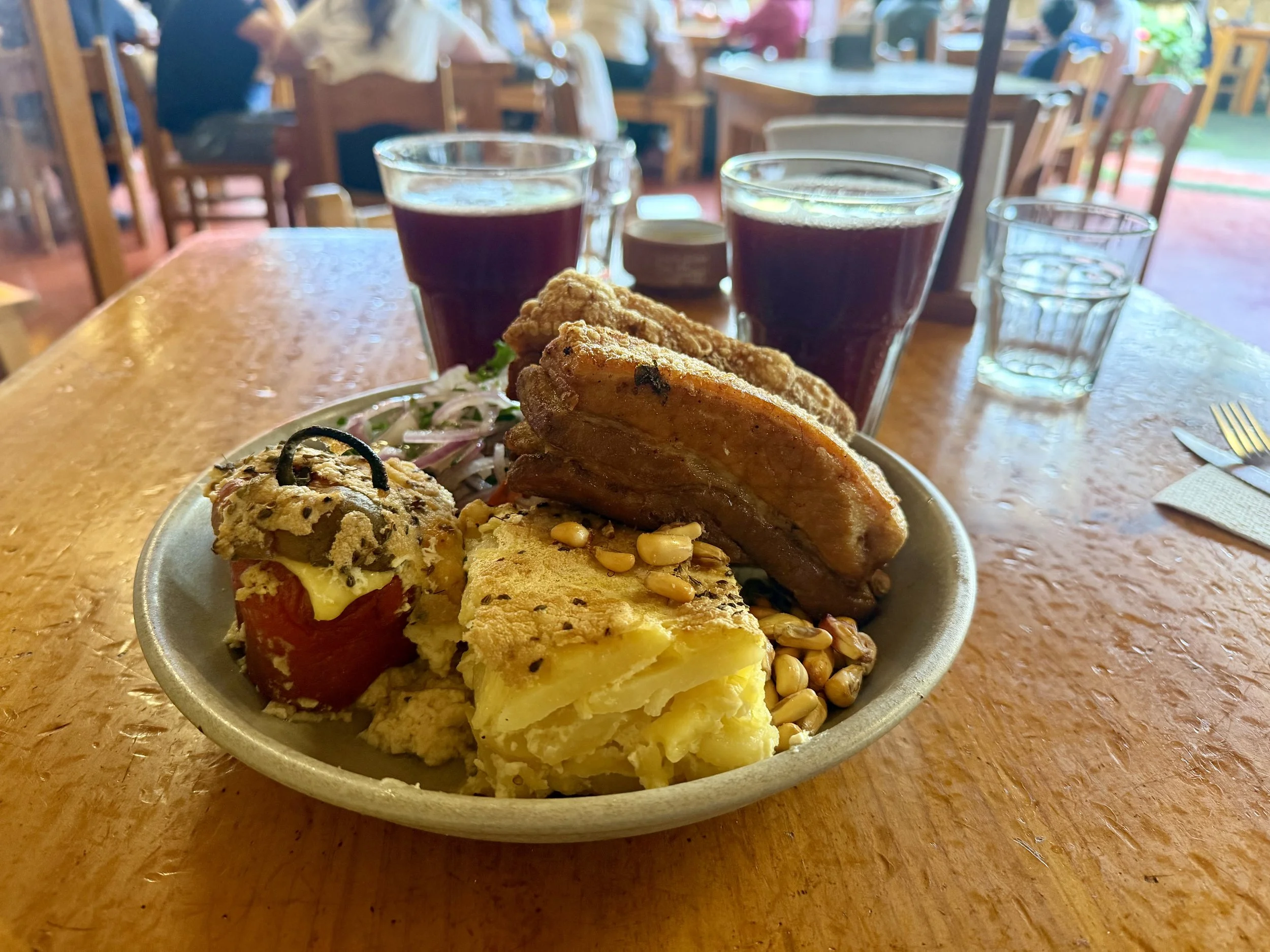
The next week, Steve and I lunched at Picantería La Mundial. We had a local drink called chicha de guiñapo (germinated black corn fermented with brown sugar) that was delicious and refreshing. We shared one doble - a combo plate with rocoto relleno, pastel de papa (potato pie), chicharrón de chancho (fried pork belly) and bean sprout salad. Our meal was tasty - not too spicy - and enormous! It’s a good thing we didn’t order the triple. And it was just 55 soles (about $16) for more food than we could possibly eat at one sitting.
Queso helado originated in Arequipa and became popular across Peru. Although the name translates to “cheese ice cream,” this was a frozen dessert made with milk, coconut, and cinnamon. It reminded me of Spanish horchata. I couldn’t have more than a bite due to my lactose intolerance, but both Steve and I thought the queso helado was delicious.
Favorite Restaurants
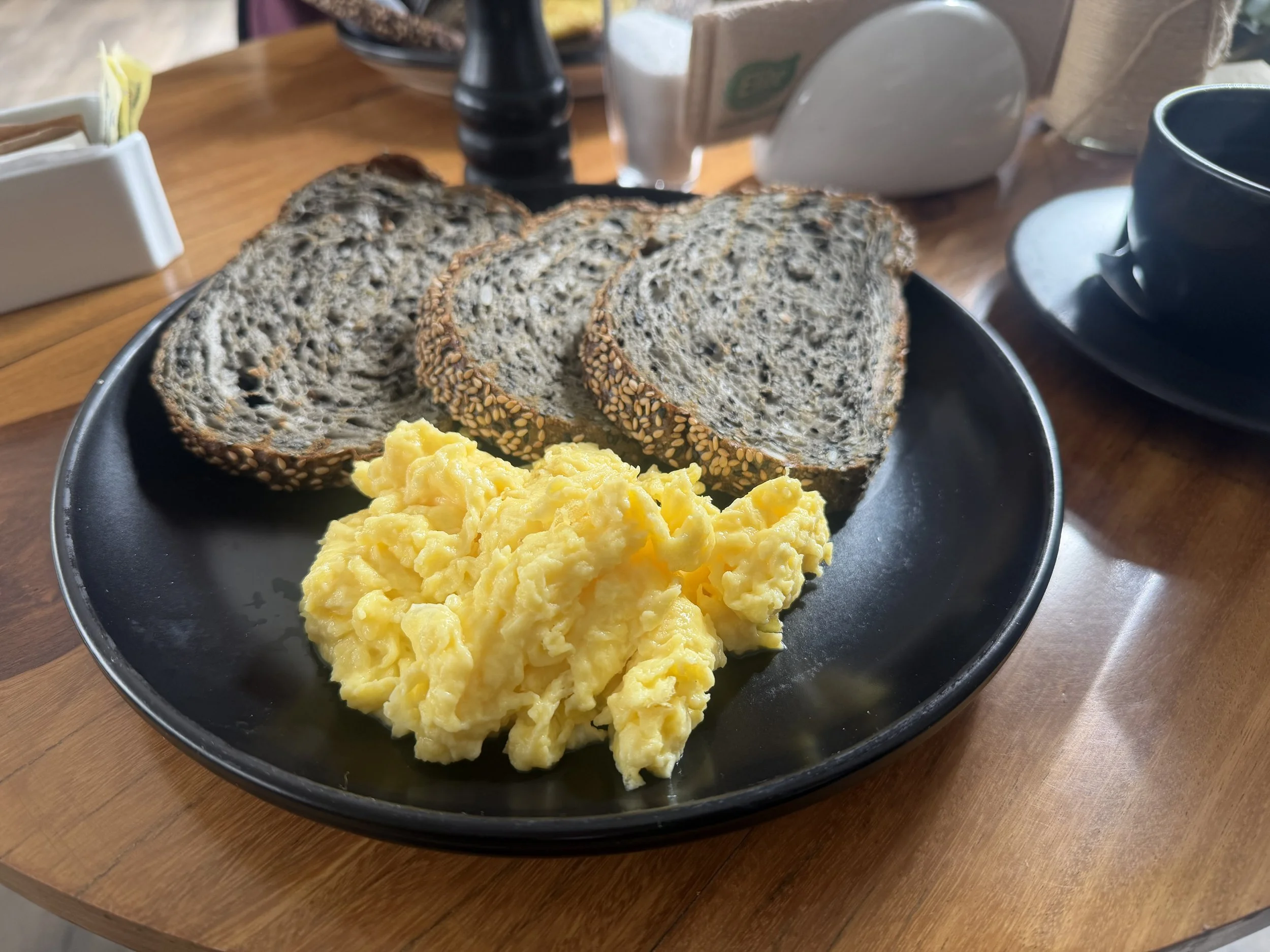
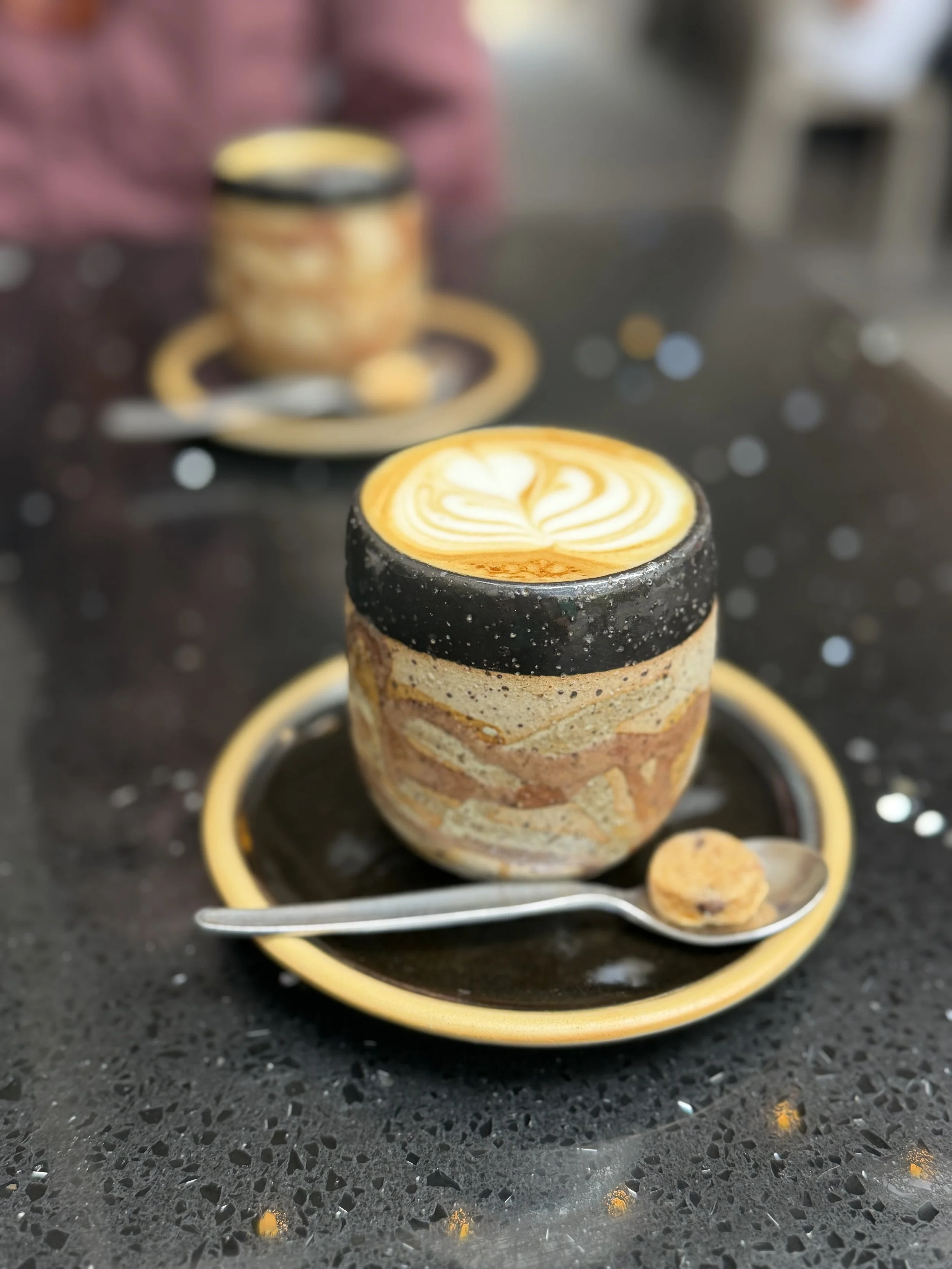
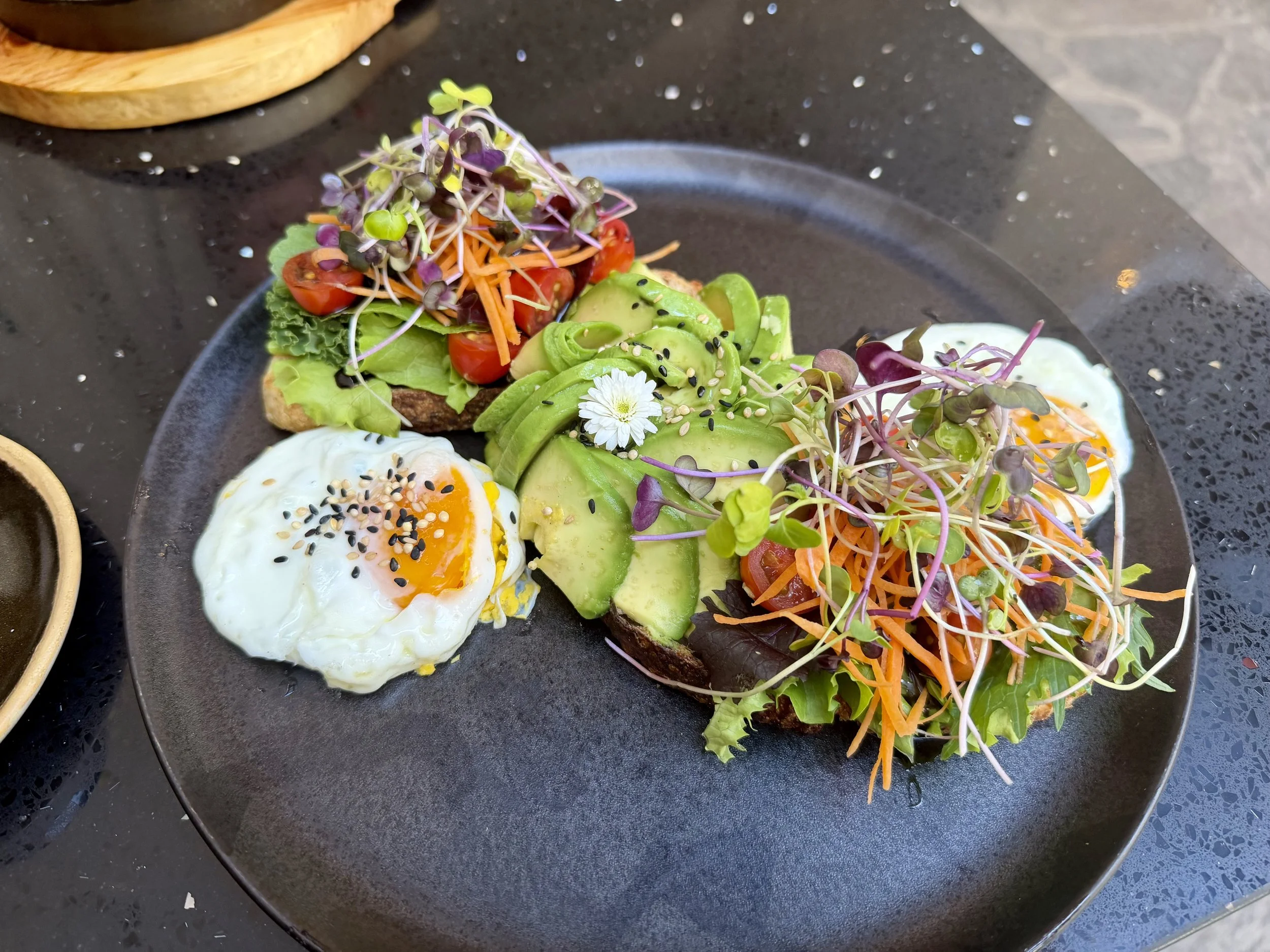
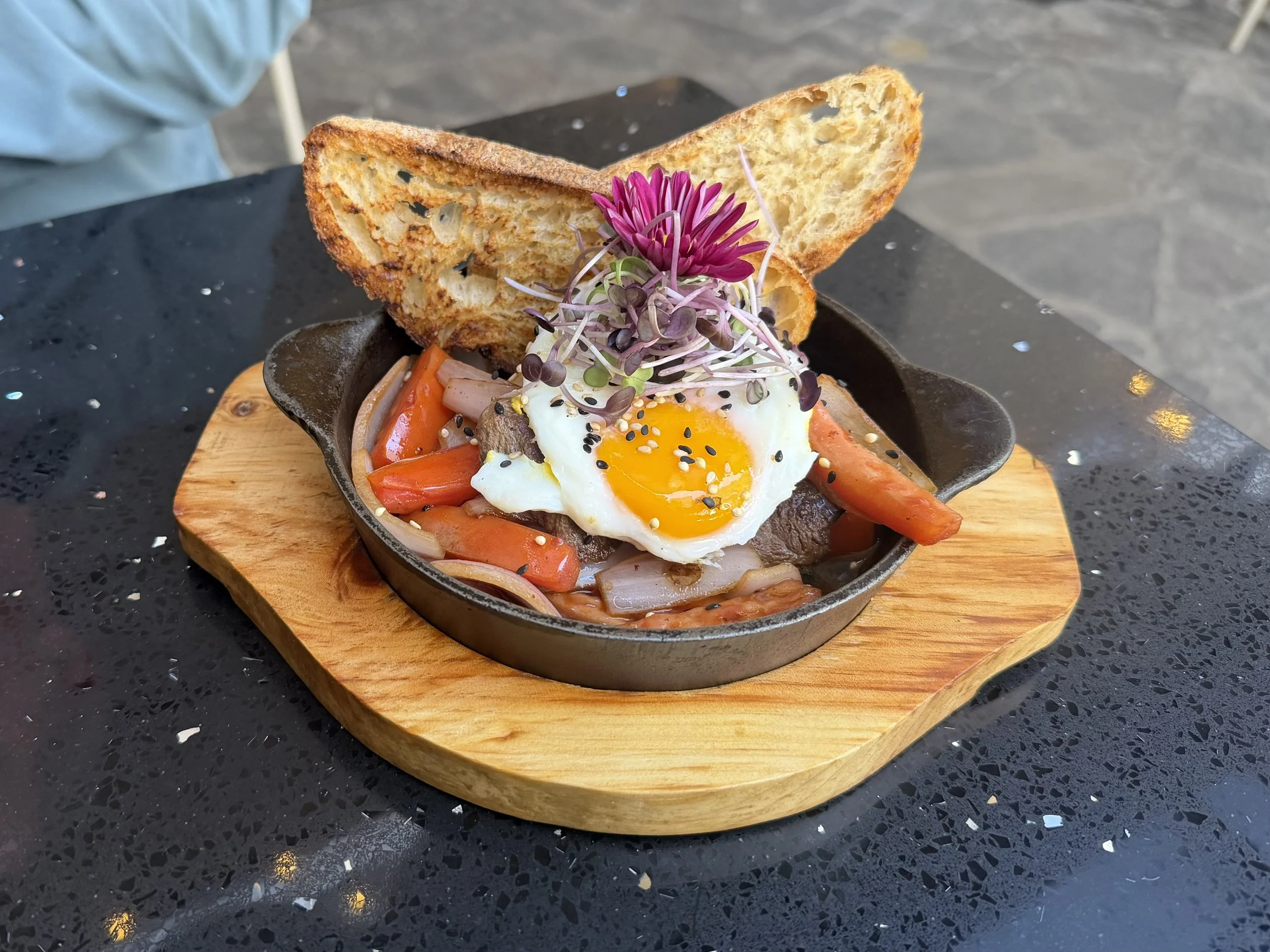
We had two favorite places for breakfast. Bue Cafe had simple dishes, served with toasted multi-grain bread that was addictingly good. Kafi Wasi had more sophisticated offerings that looked beautiful and tasted even better.
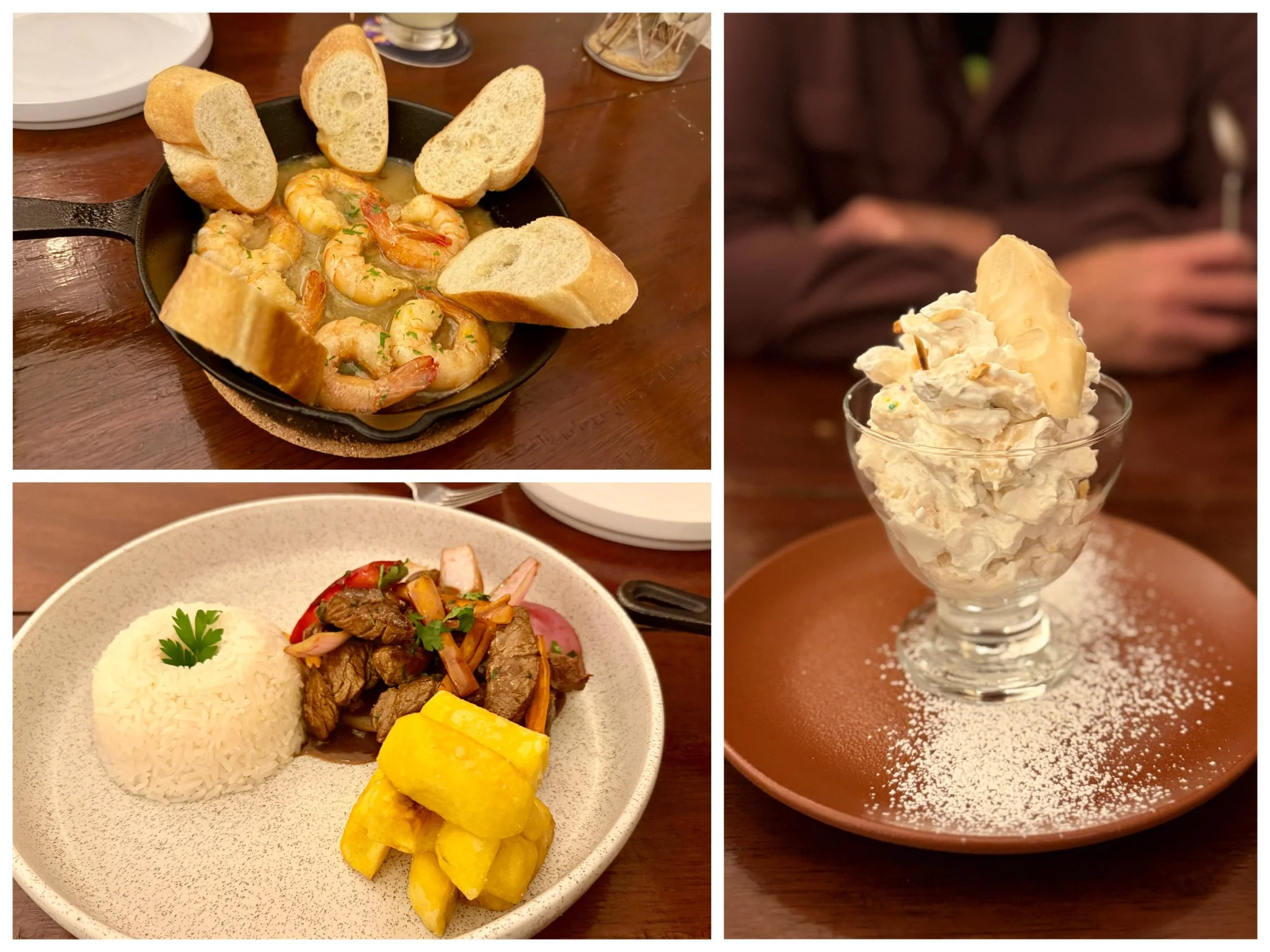
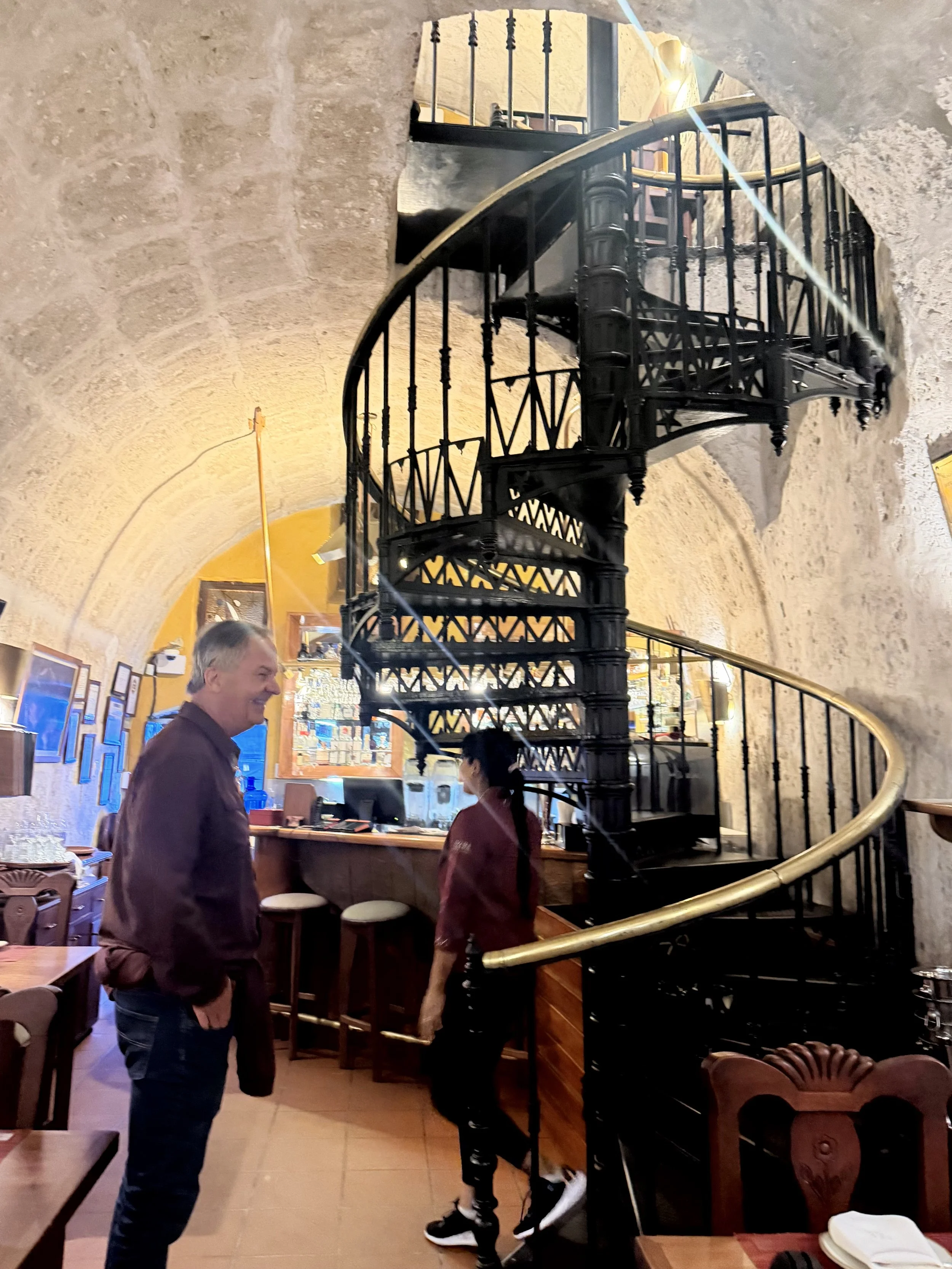
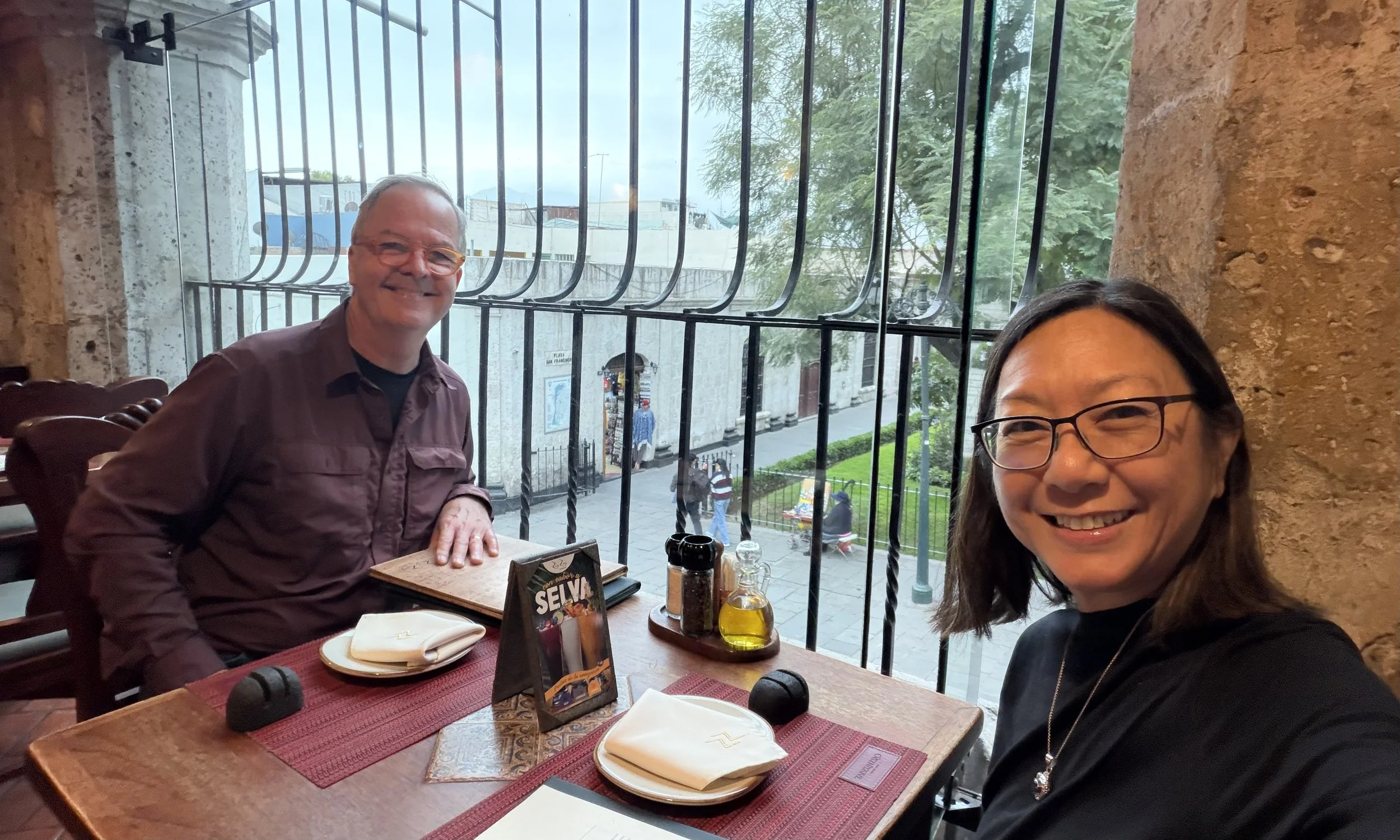
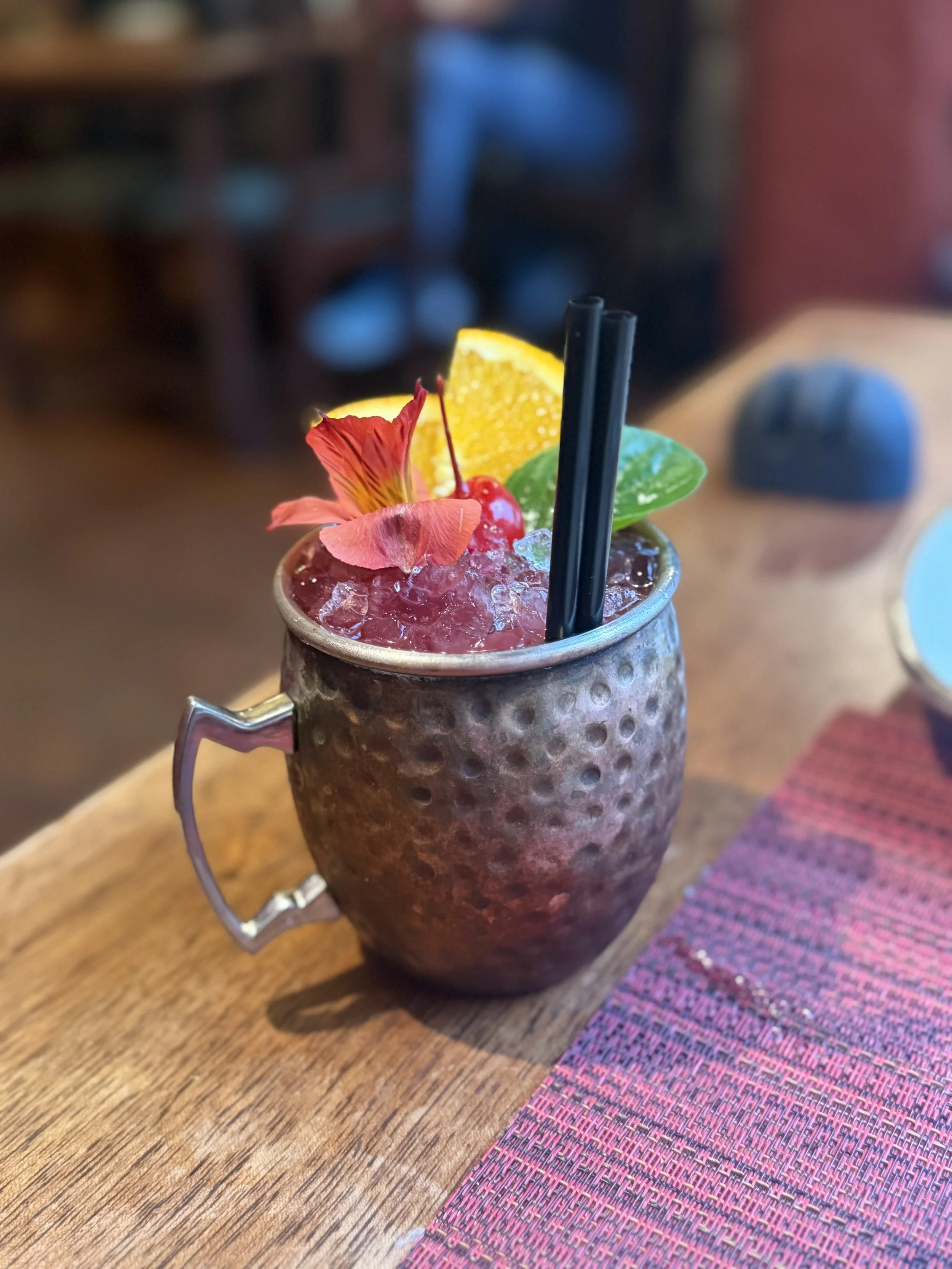
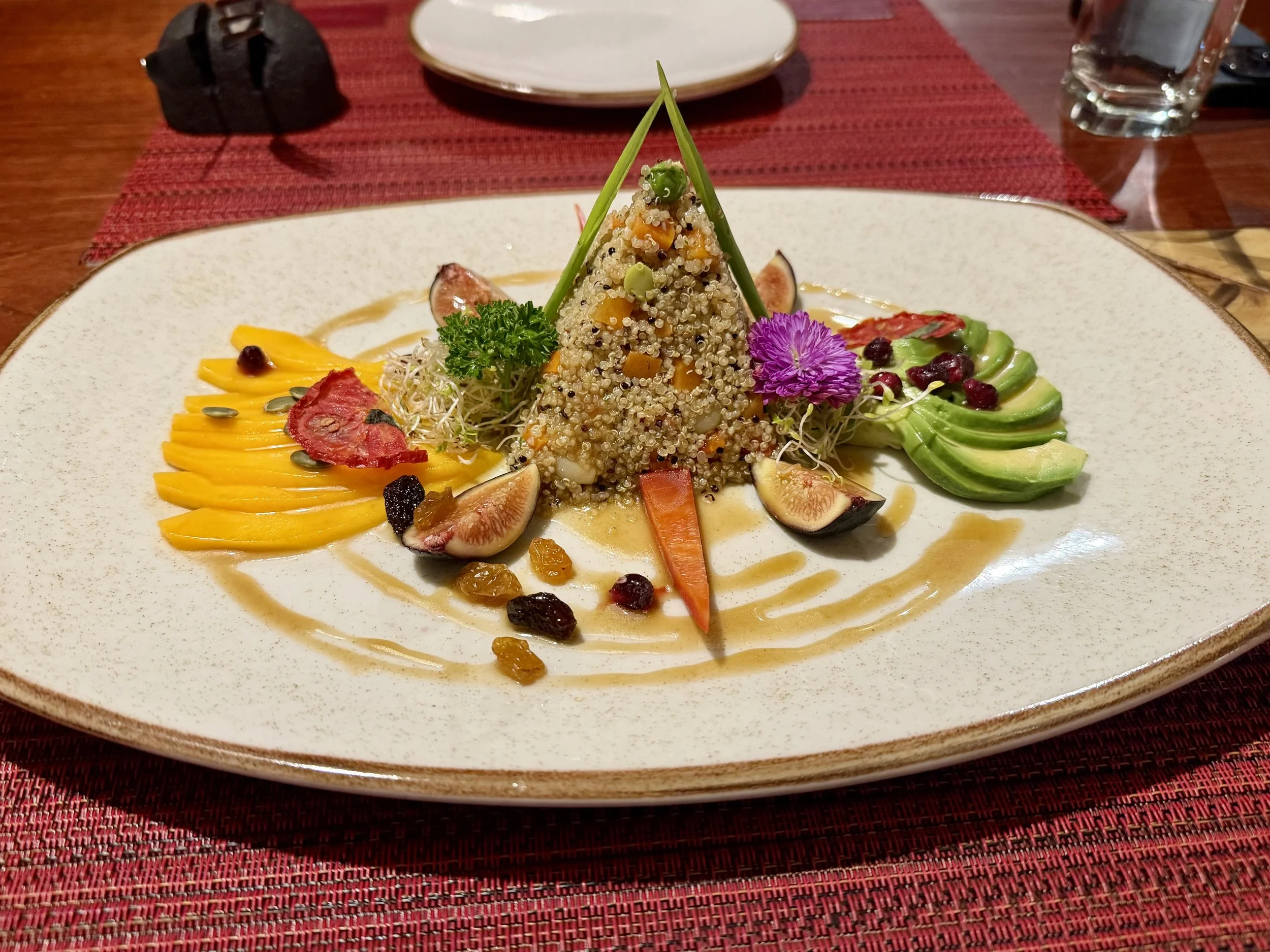
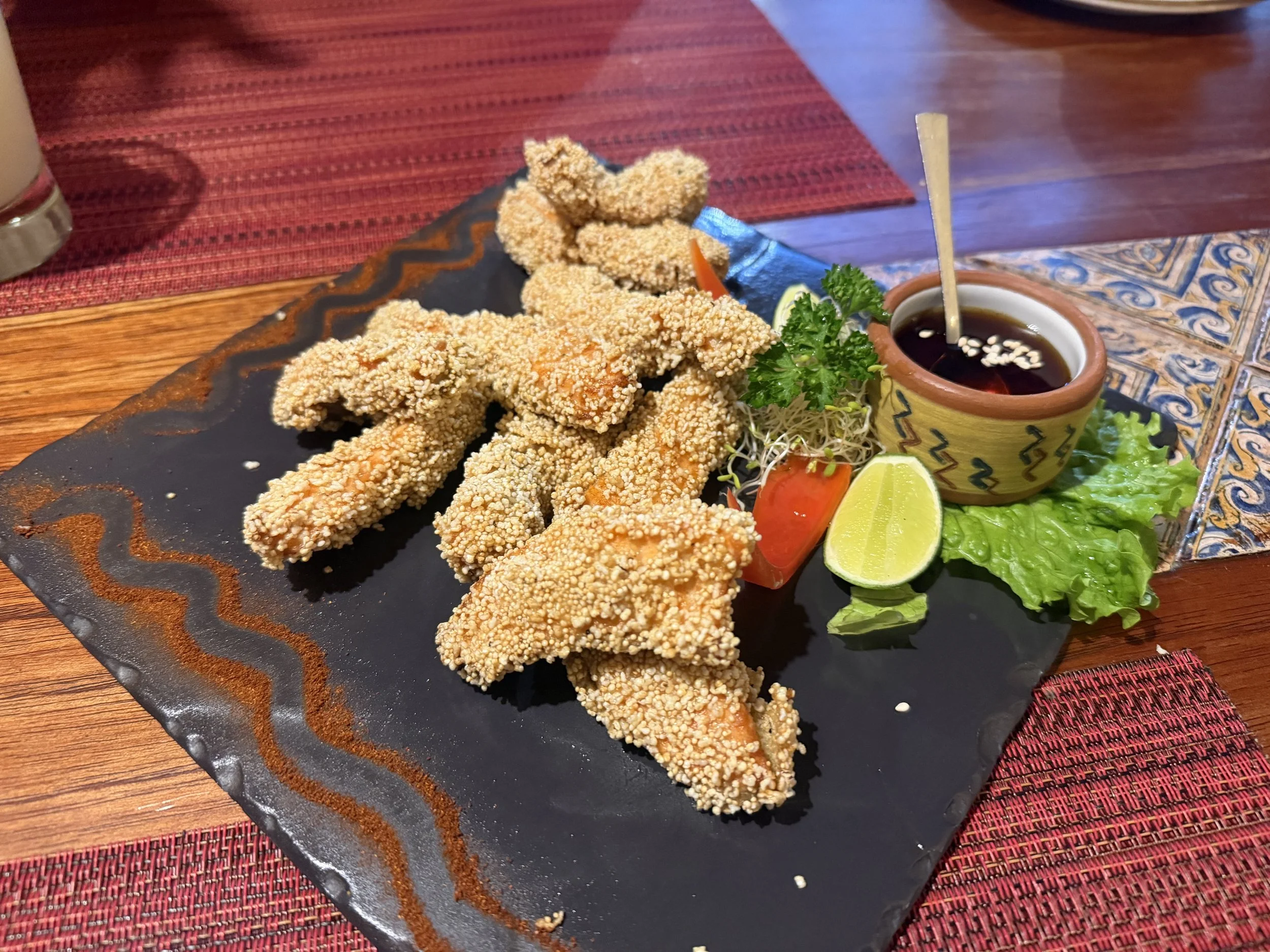
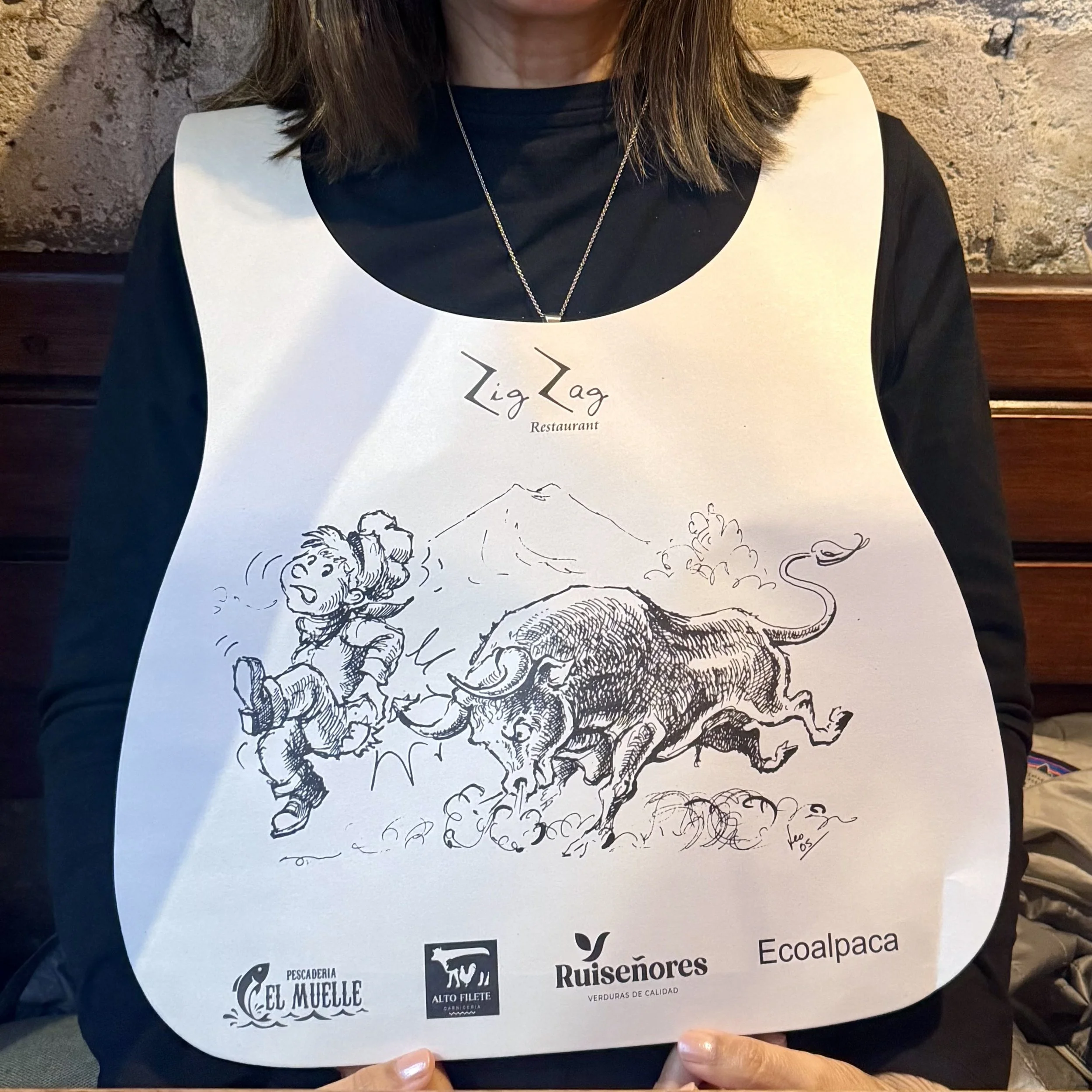
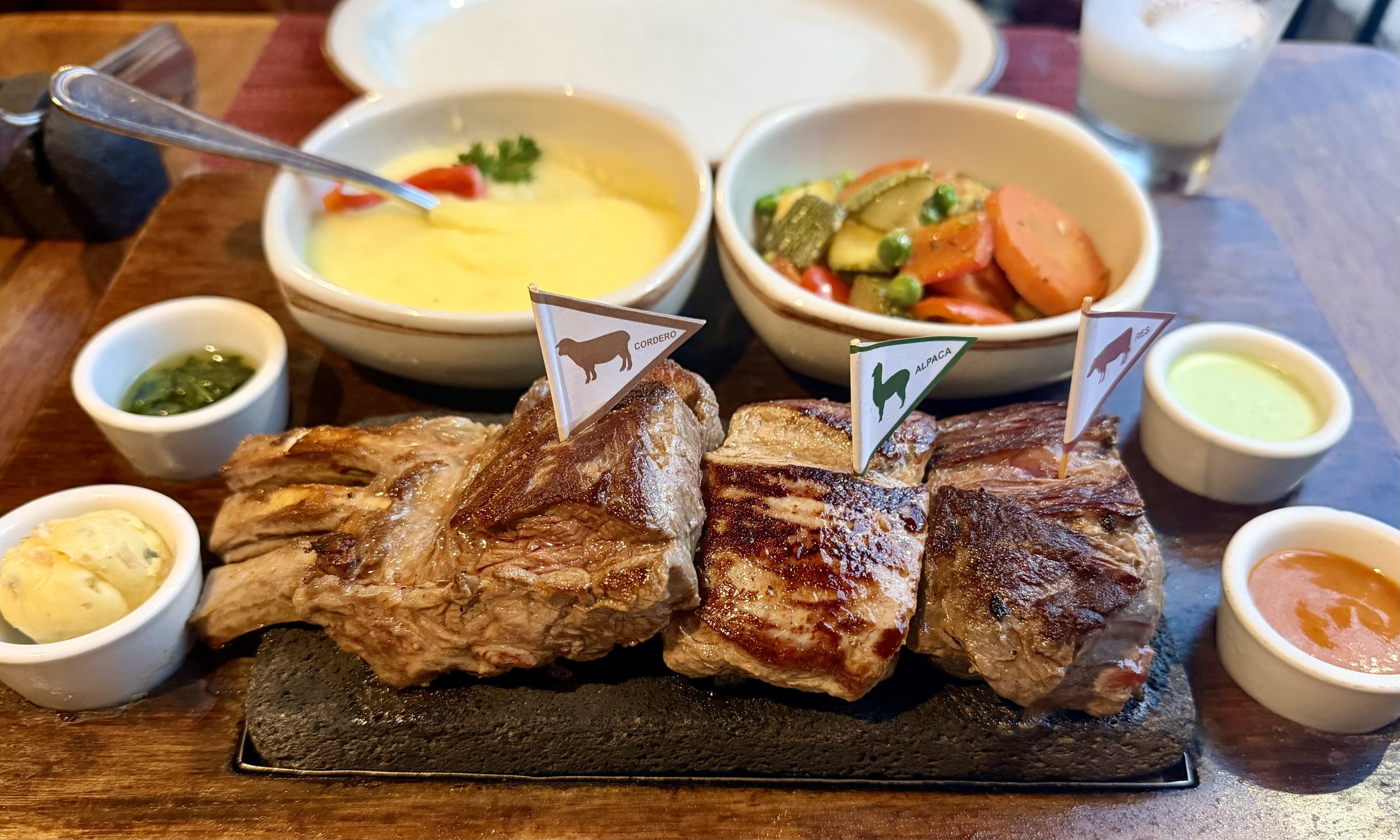
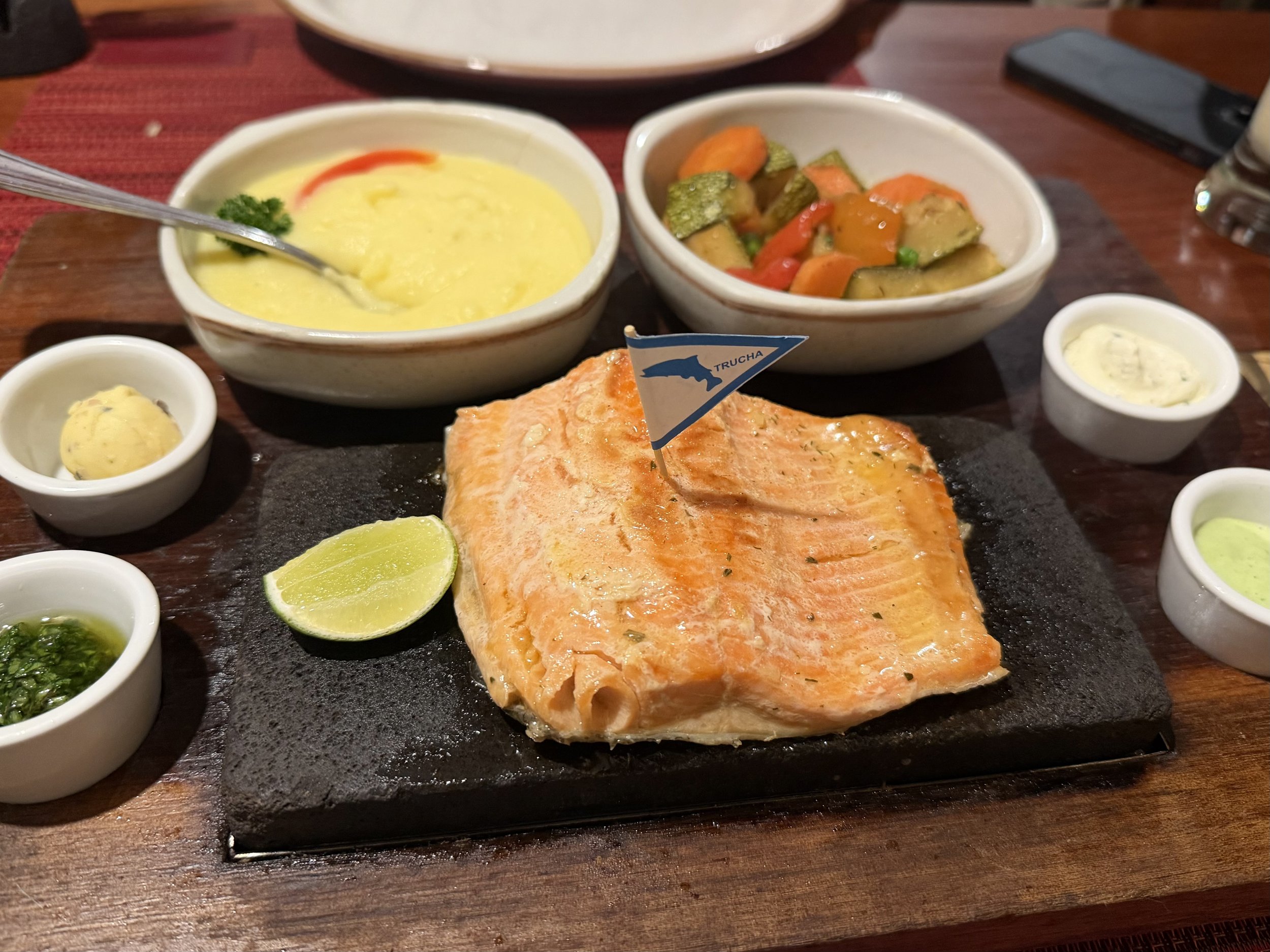
Our all-time favorite restaurant was Zig Zag, which had a cozy historic dining room, excellent service, and a creative menu. There was a wide selection of pisco-based cocktails. The “Alpandina” cuisine was a fusion of ingredients from the Peruvian Andes and culinary traditions from the Swiss/German Alps. Steaks and fish were grilled perfectly and served with an array of sauces. We tasted alpaca meat - it was very lean, but not gamey. The side dish of roasted vegetables was a rarity in Arequipa. Everything was so delicious that we kept going back to Zig Zag for more.