Basilica Cistern
Near the Hagia Sophia, beneath the bustling city streets, was a vast and ancient cistern. Built in the 6th century, it was a reservoir for water that came from a forest twelve miles north of Constantinople via two long aqueducts. This cistern was the largest of many under the city, and provided water for Emperor Justinian’s palace. (A great basilica once stood on this spot, hence the cistern’s name.)
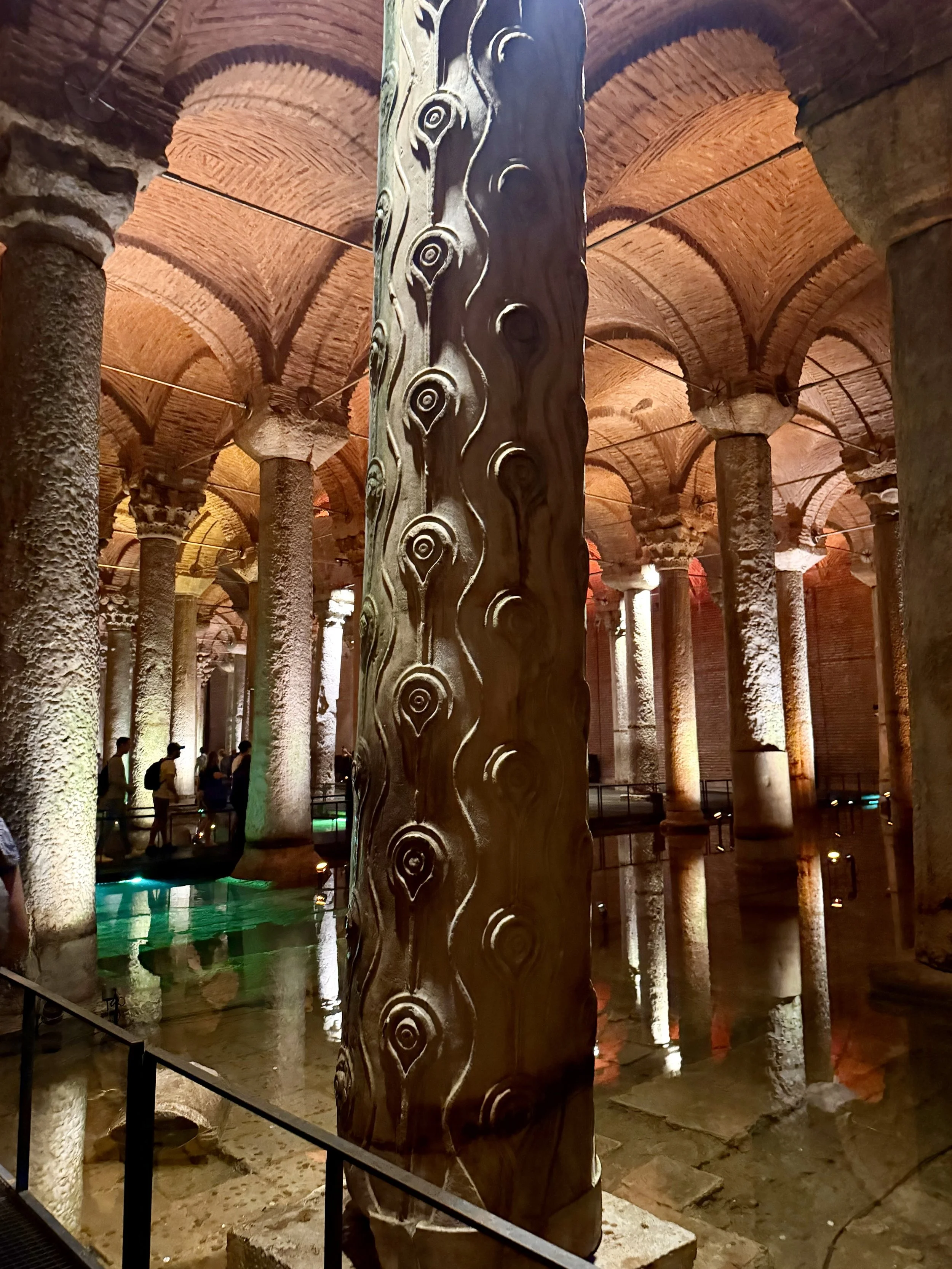
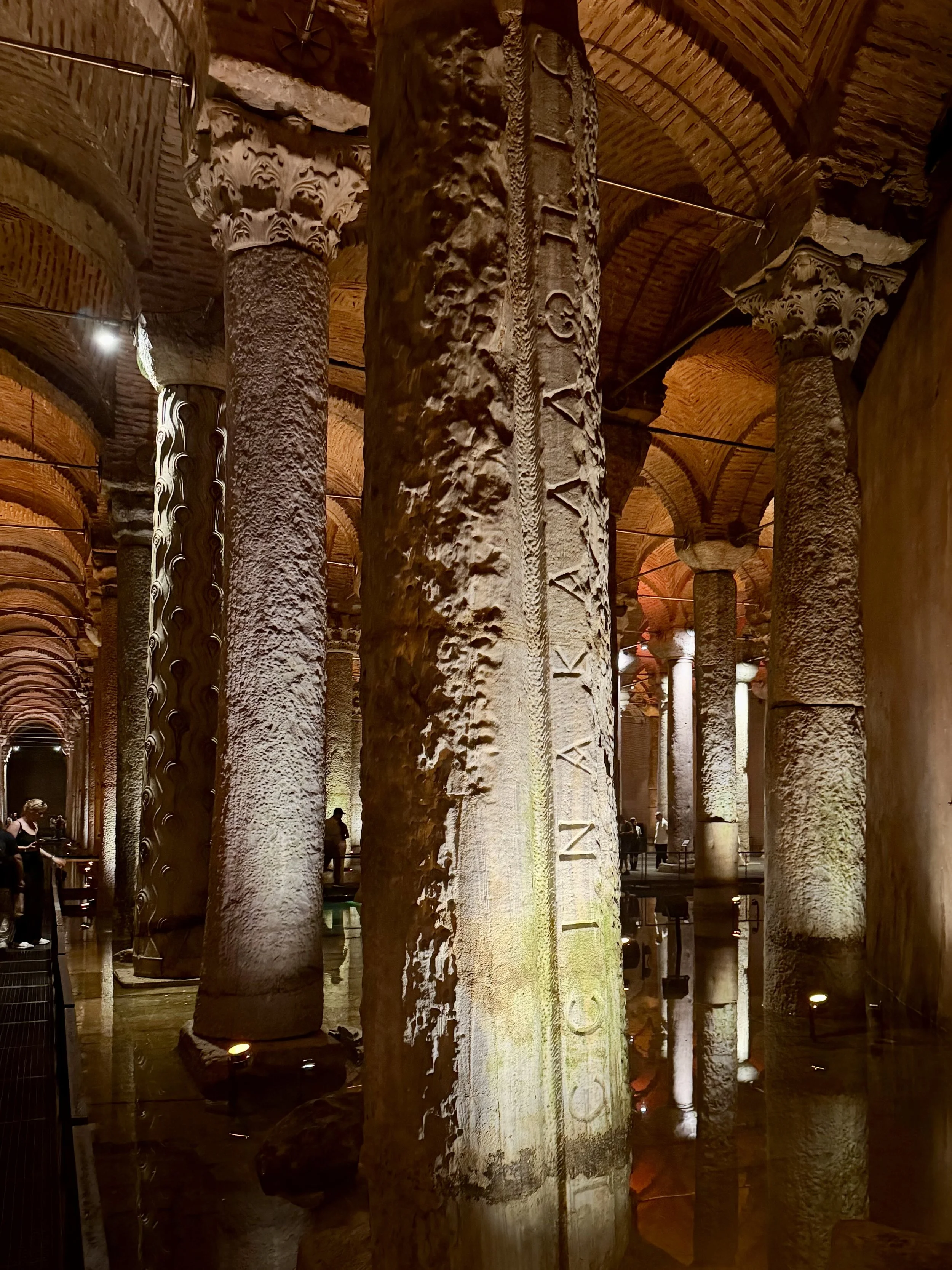
We walked down stone steps into an enormous underground chamber, 150 yards long and 70 yards wide. The arched brick ceiling was held up by 336 stone columns, each one 30 feet tall. Rows of columns stretched endlessly into the distance. Colored spotlights near the ceiling and at the bases of some columns provided just enough light for us to see our way. It felt otherworldly and mysterious.
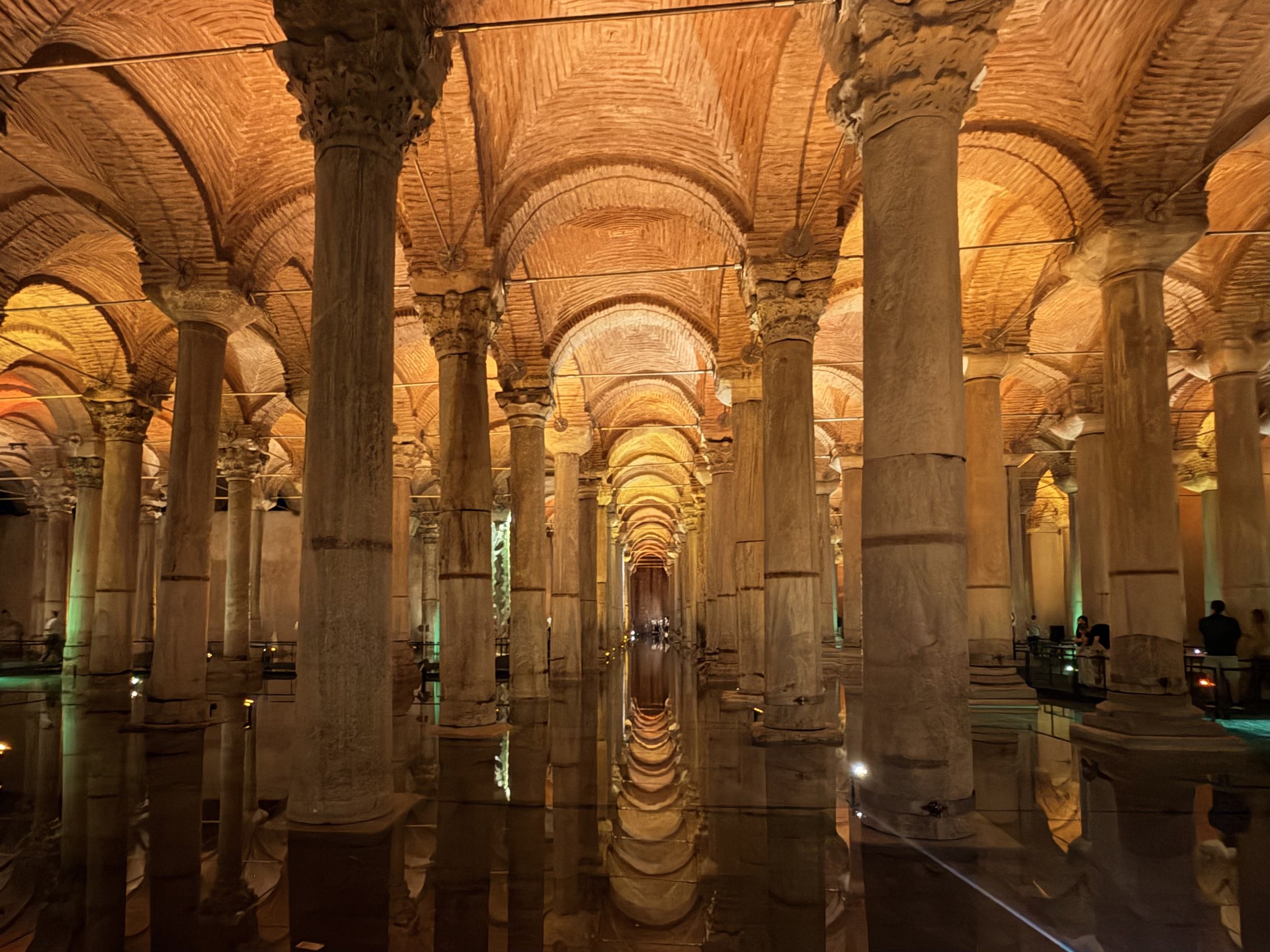
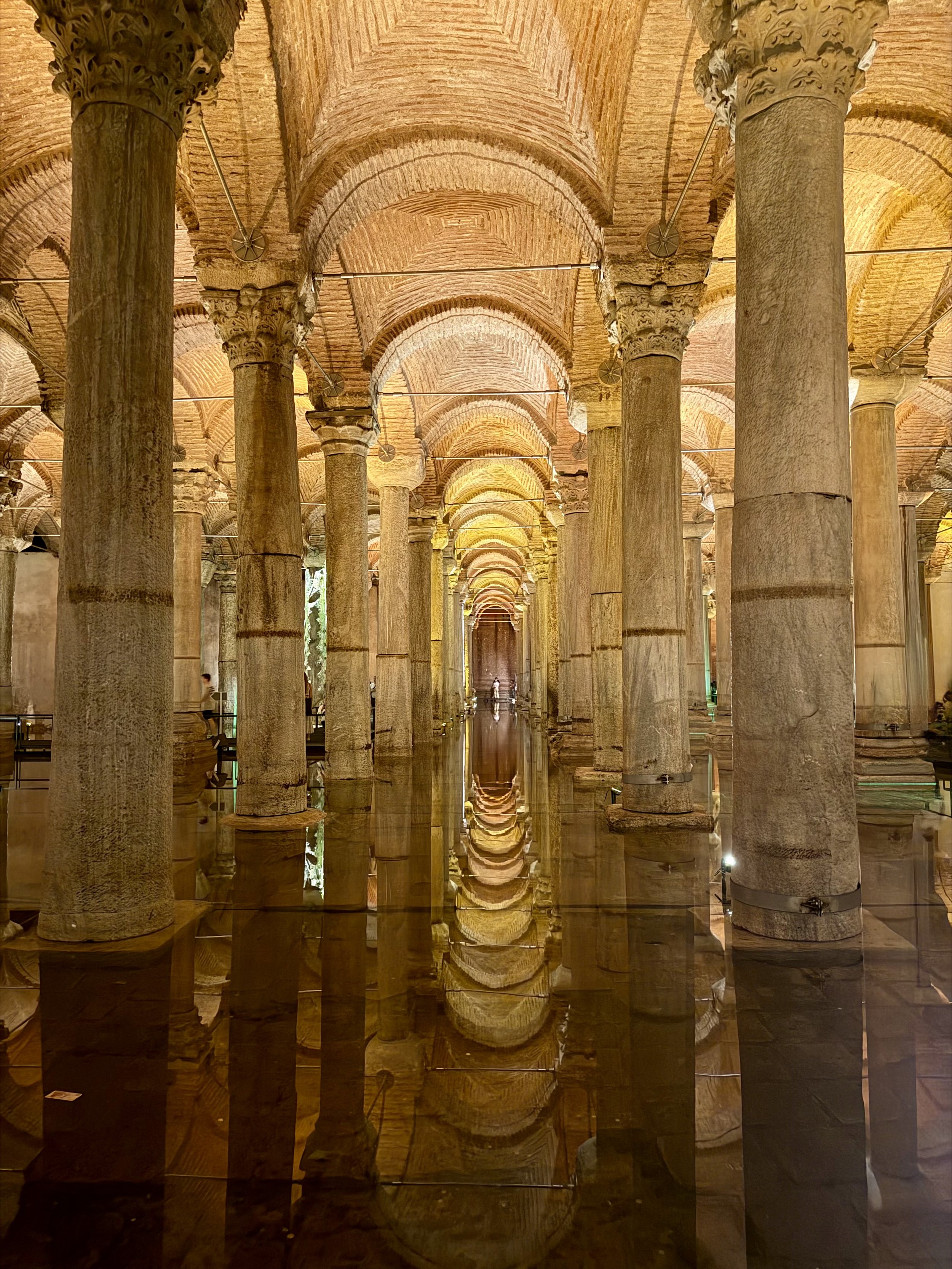
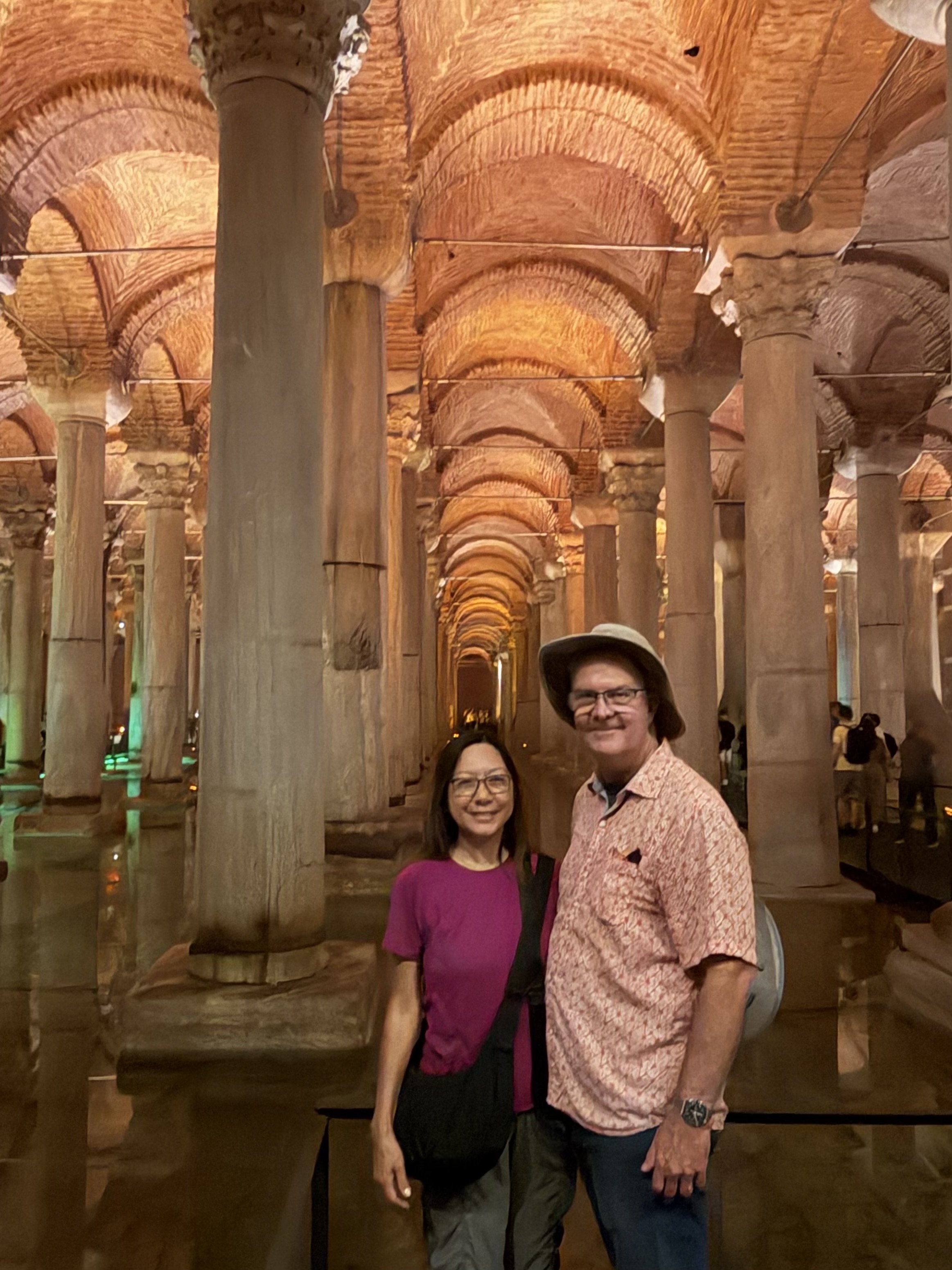
We walked on a metal grille walkway over shallow water, perhaps only a foot deep. When in use, the cistern was filled with water to the top! The columns showed wear and tear from being submerged for a thousand years.
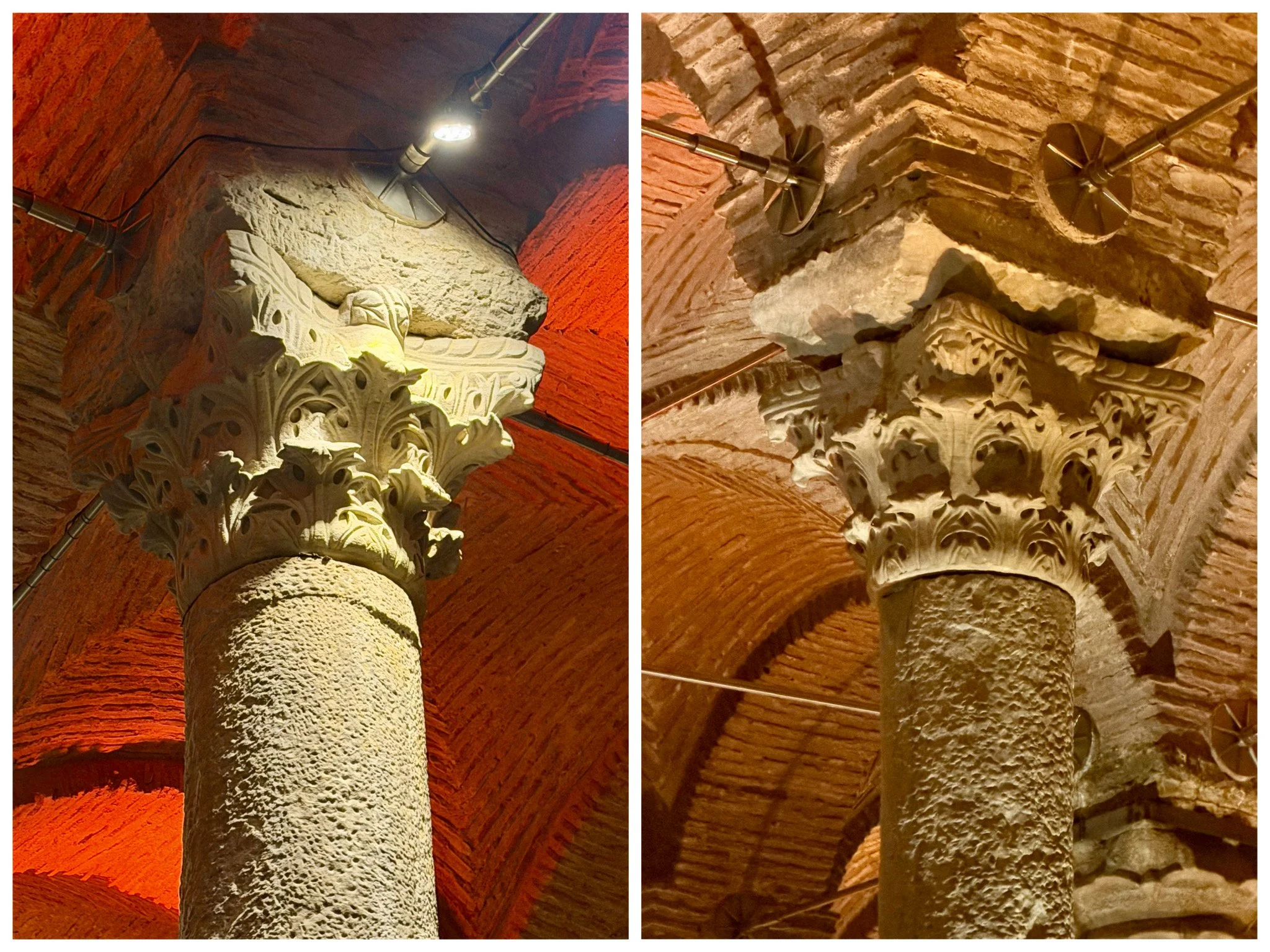
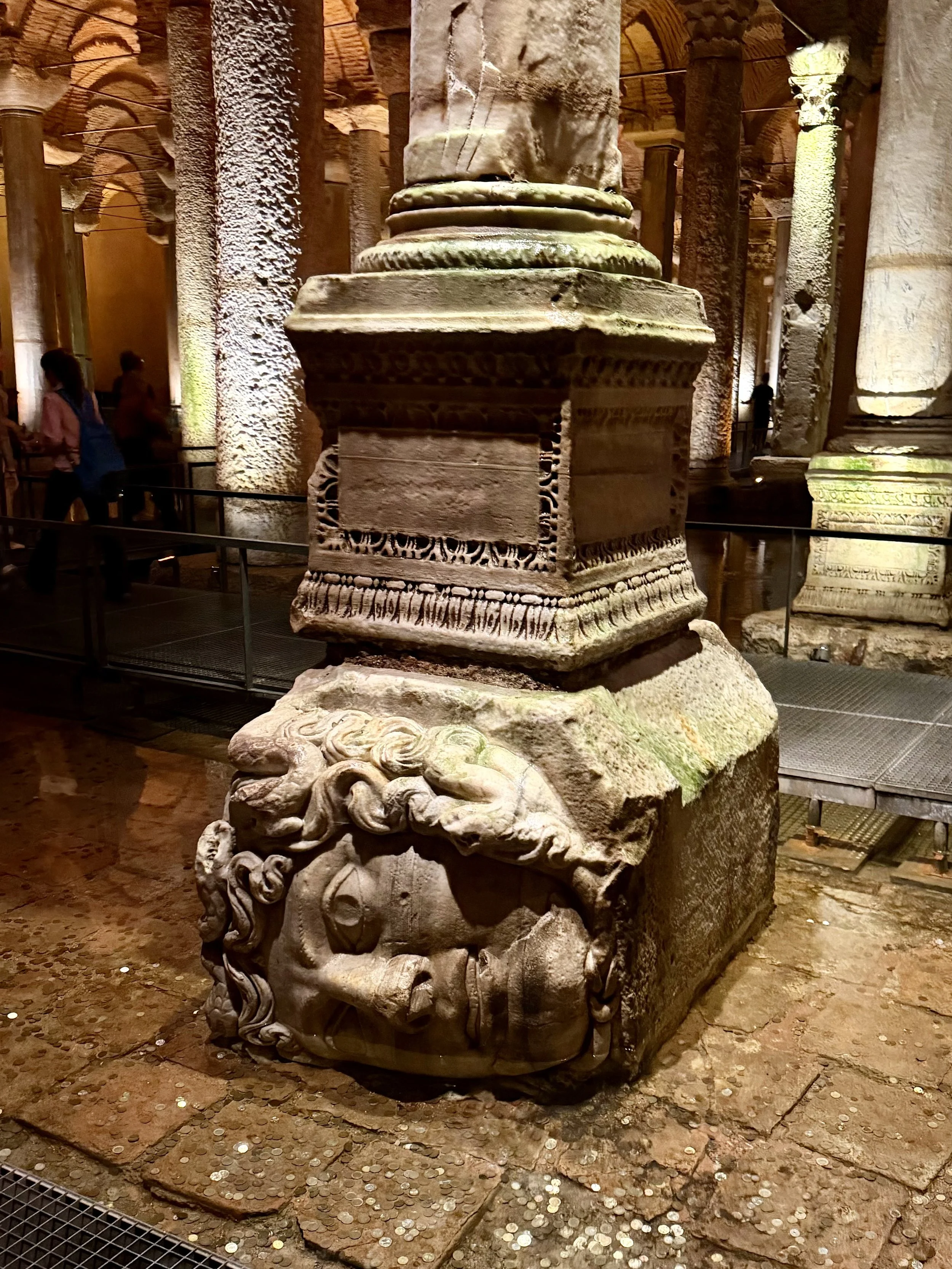
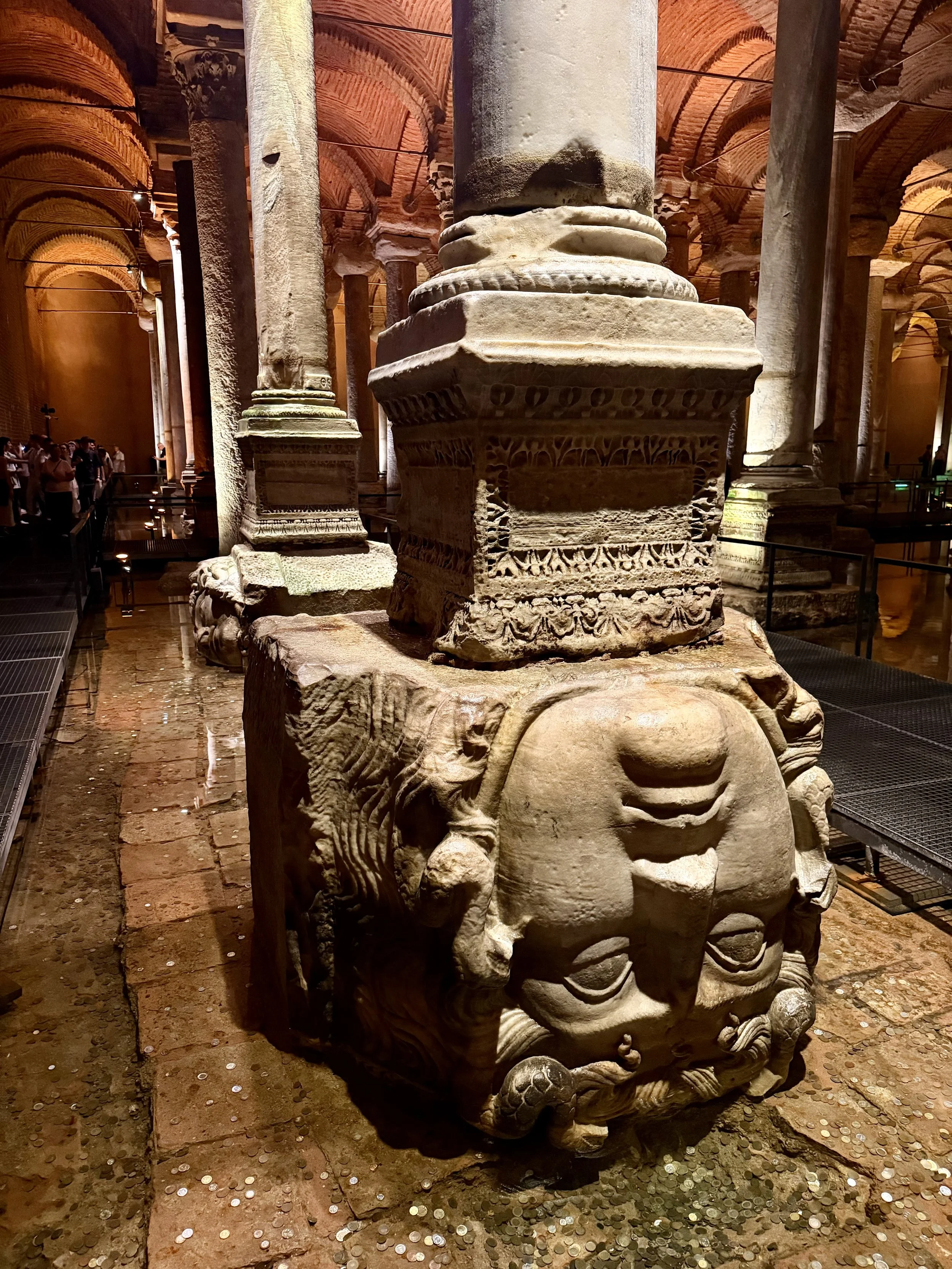
The mismatched columns had been reused from older buildings from across the Byzantine empire. Some were marble, others were granite. Shorter columns were propped up with taller bases. The columns had different style capitals, and some were upside down. Some were not even columns at all, but horizontal beams placed on end. Curiously, two columns were propped up on huge stone Medusa heads. Nearby, a statue of Medusa lurked in a dark corner.
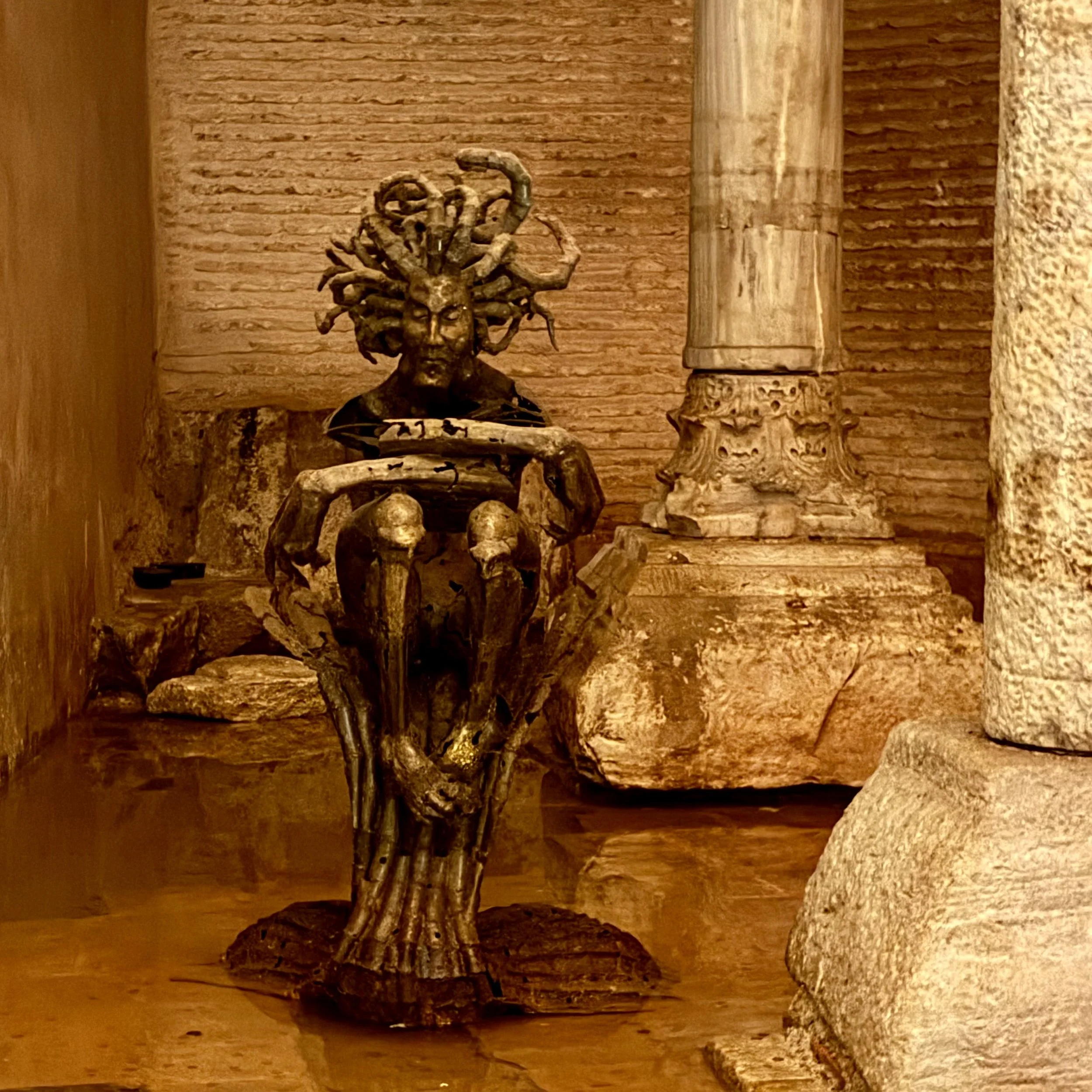
For me, it was a strange and wonderful place. Other than the 7,000 slaves who built the cistern, the residents of ancient Constantinople probably didn’t give it a second thought. I wondered what future civilizations might think of our modern-day underground infrastructure. Would our engineering even survive 1,500 years?