Blue Mosque and Hagia Sophia
On Saturday morning, our guide Erdinç (ehr-dinch) met us at our hotel and took us on the T1 tram to an area of Istanbul’s Old City known as Sultanahmet.
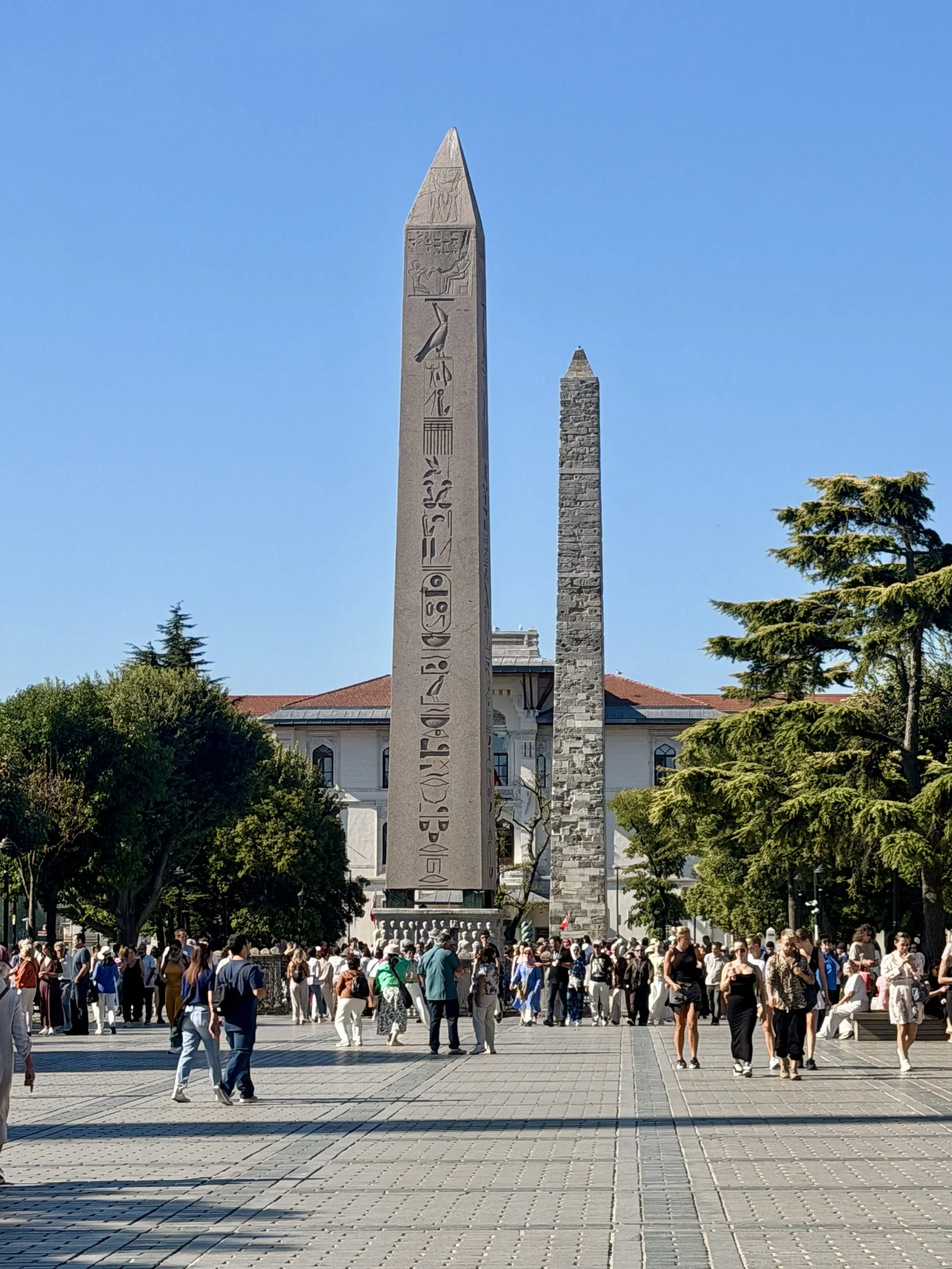
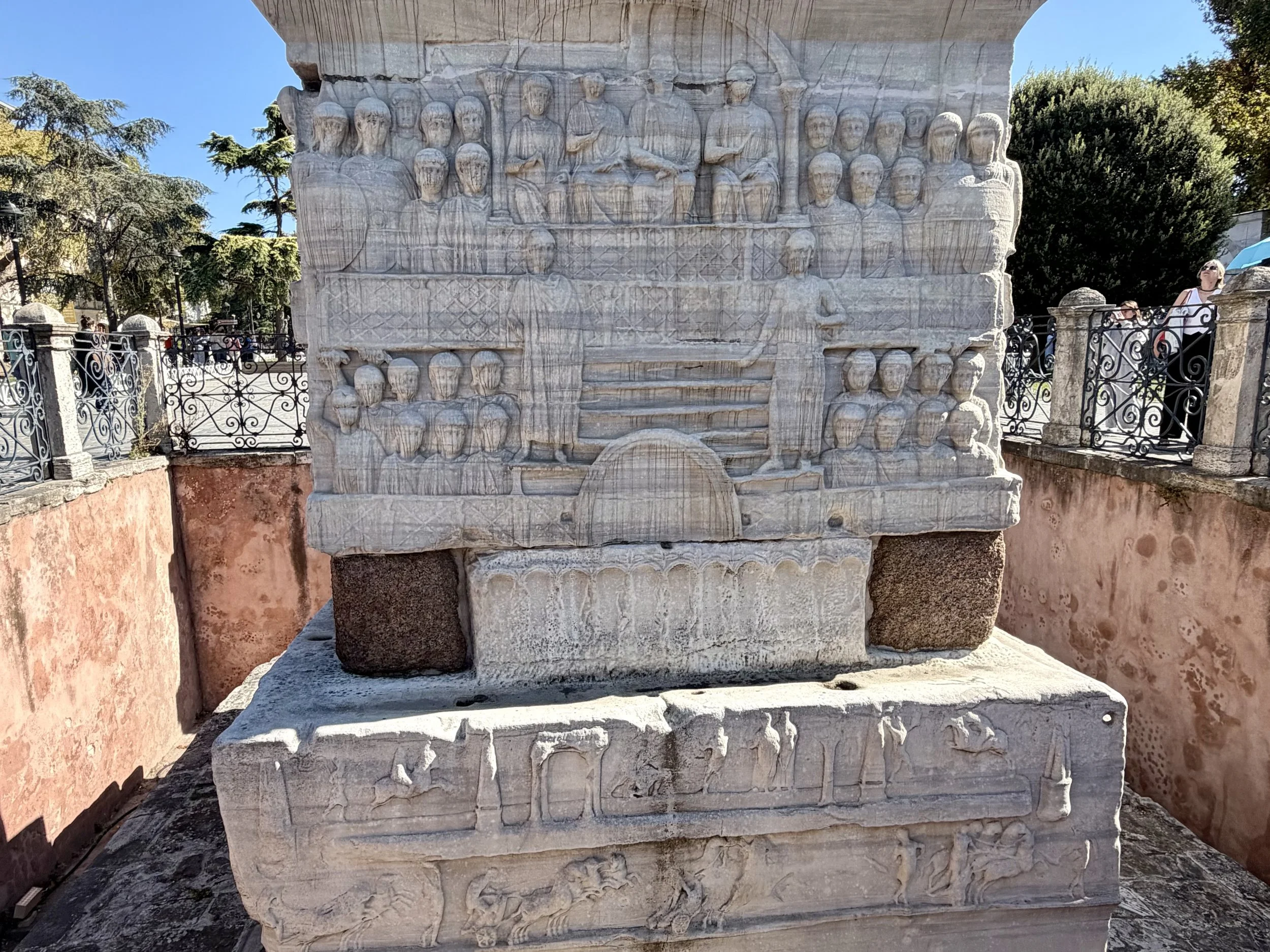
Our first stop was the Hippodrome, a plaza the length of five football fields. From the third to thirteenth centuries, this was a chariot racetrack, with stands holding up to 100,000 spectators! At the center was an ancient obelisk, dating back to 1500 BCE, that Emperor Theodosius brought from Egypt. We sat at an outdoor cafe overlooking the Hippodrome and sipped tea while Erdinç gave us some historical background on the two great mosques we were about to see.
Blue Mosque
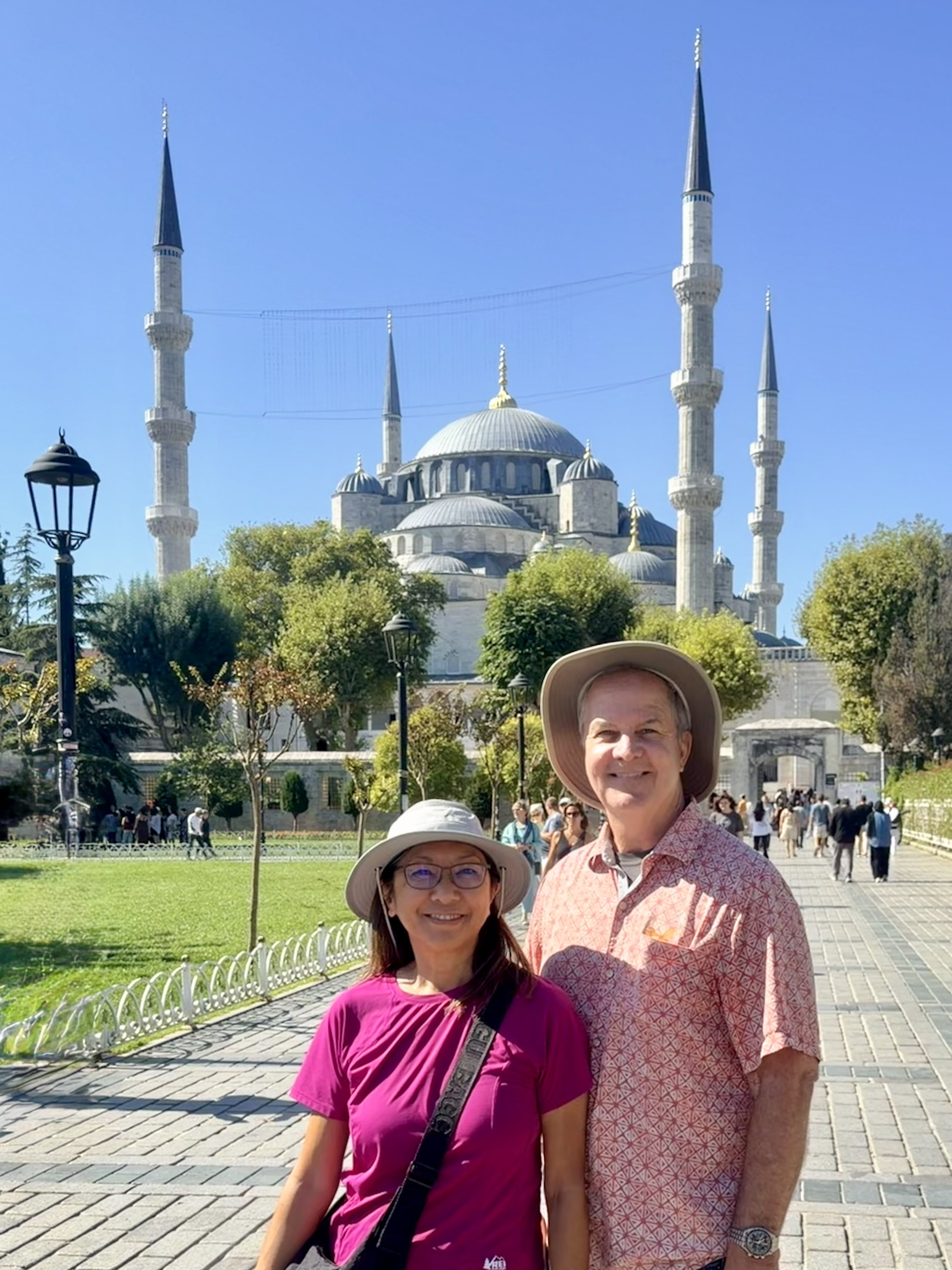
It had six minarets, as many as the central mosque in Mecca. Perhaps Sultan Ahmet I was flaunting his wealth (he later built a seventh minaret for the mosque in Mecca). Impressively, the Blue Mosque was built in just seven years, 1609-1616. It was designed by Mehmet Ağa, a student of legendary Ottoman architect Mimar Sinan.
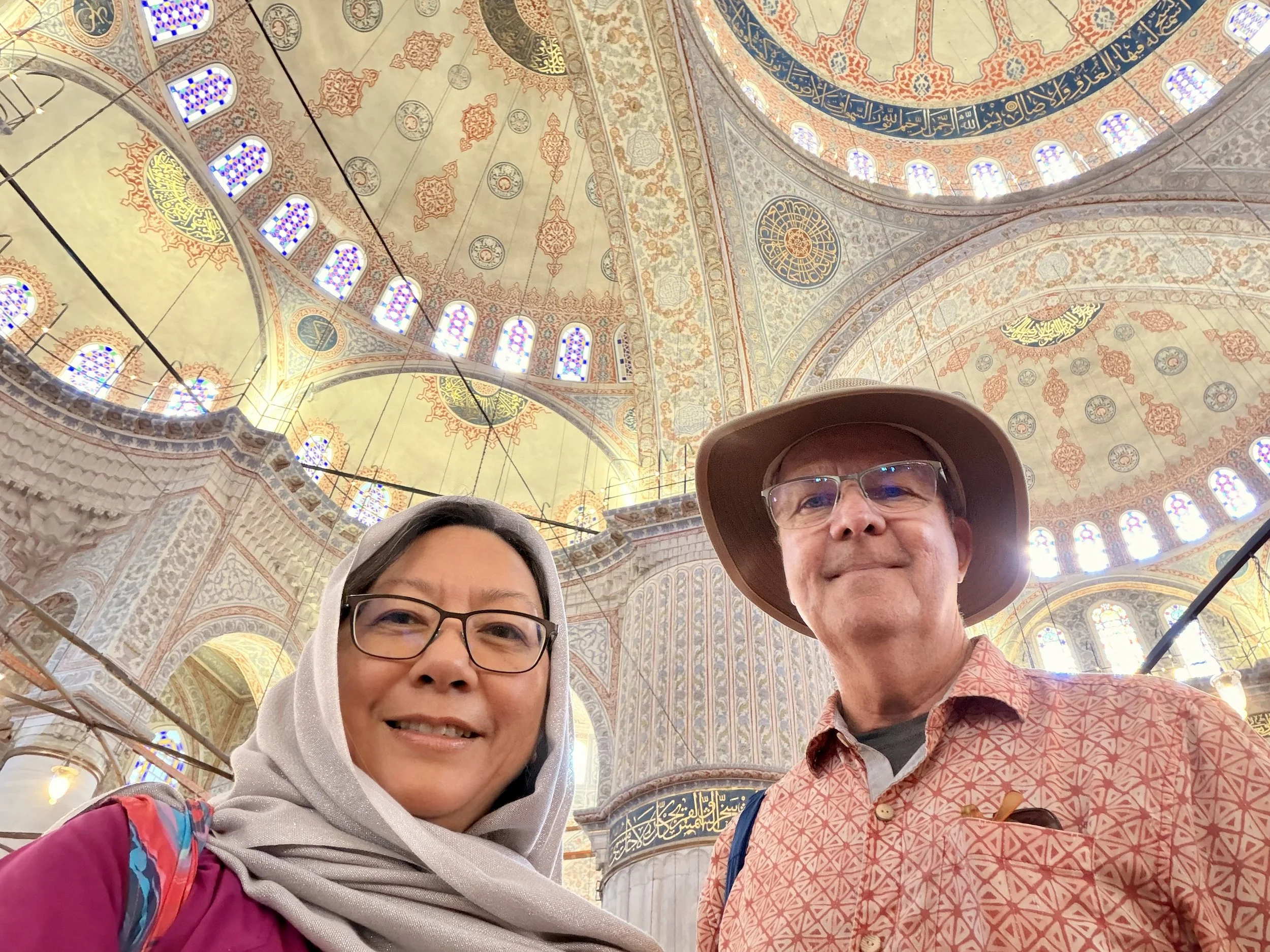
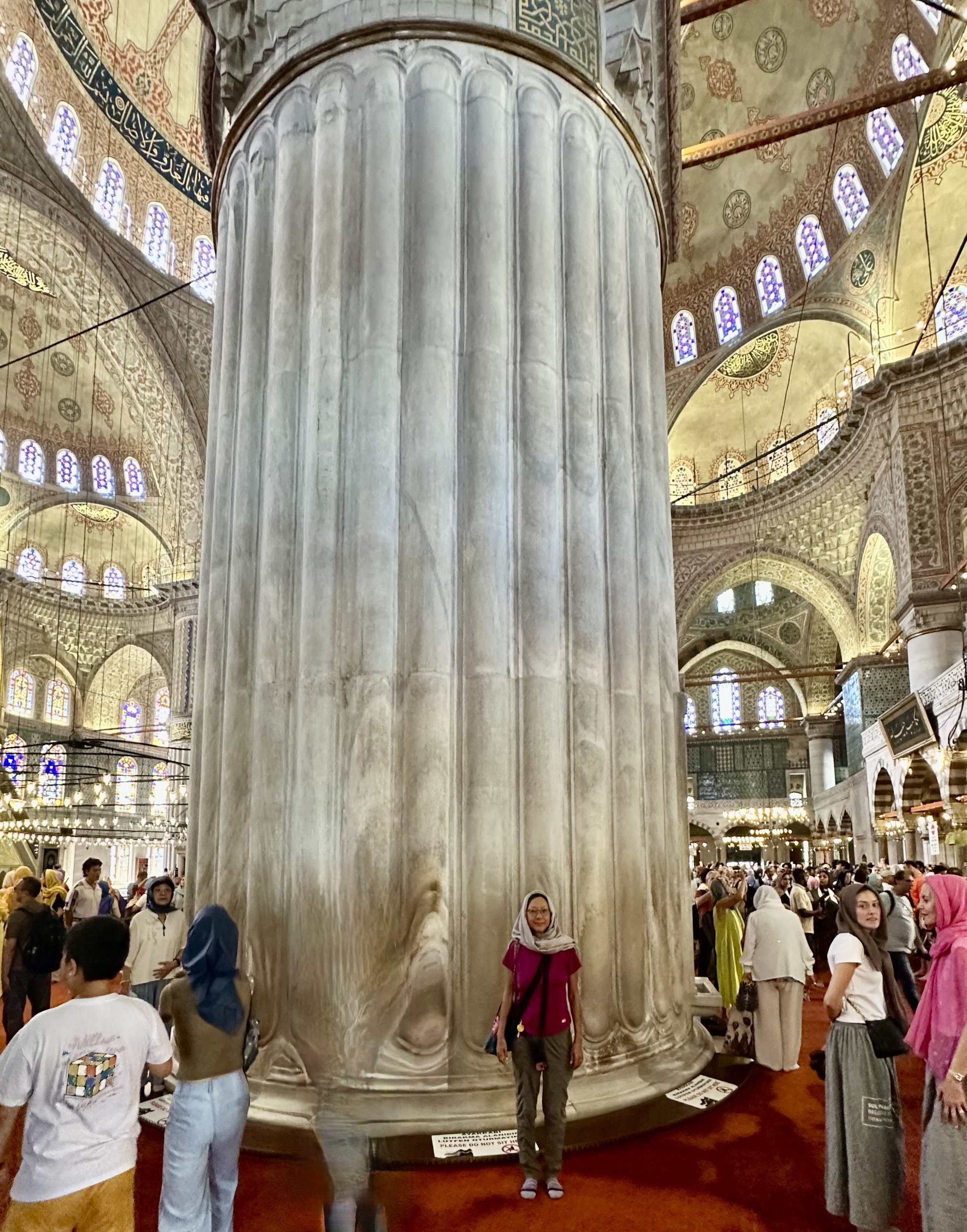
Erdinç sweet-talked a security guard, and we entered without having to wait in line. I draped my scarf around my head, and we took off our shoes and put them in the tote bags we had brought. Then we stepped inside, onto a padded carpet.
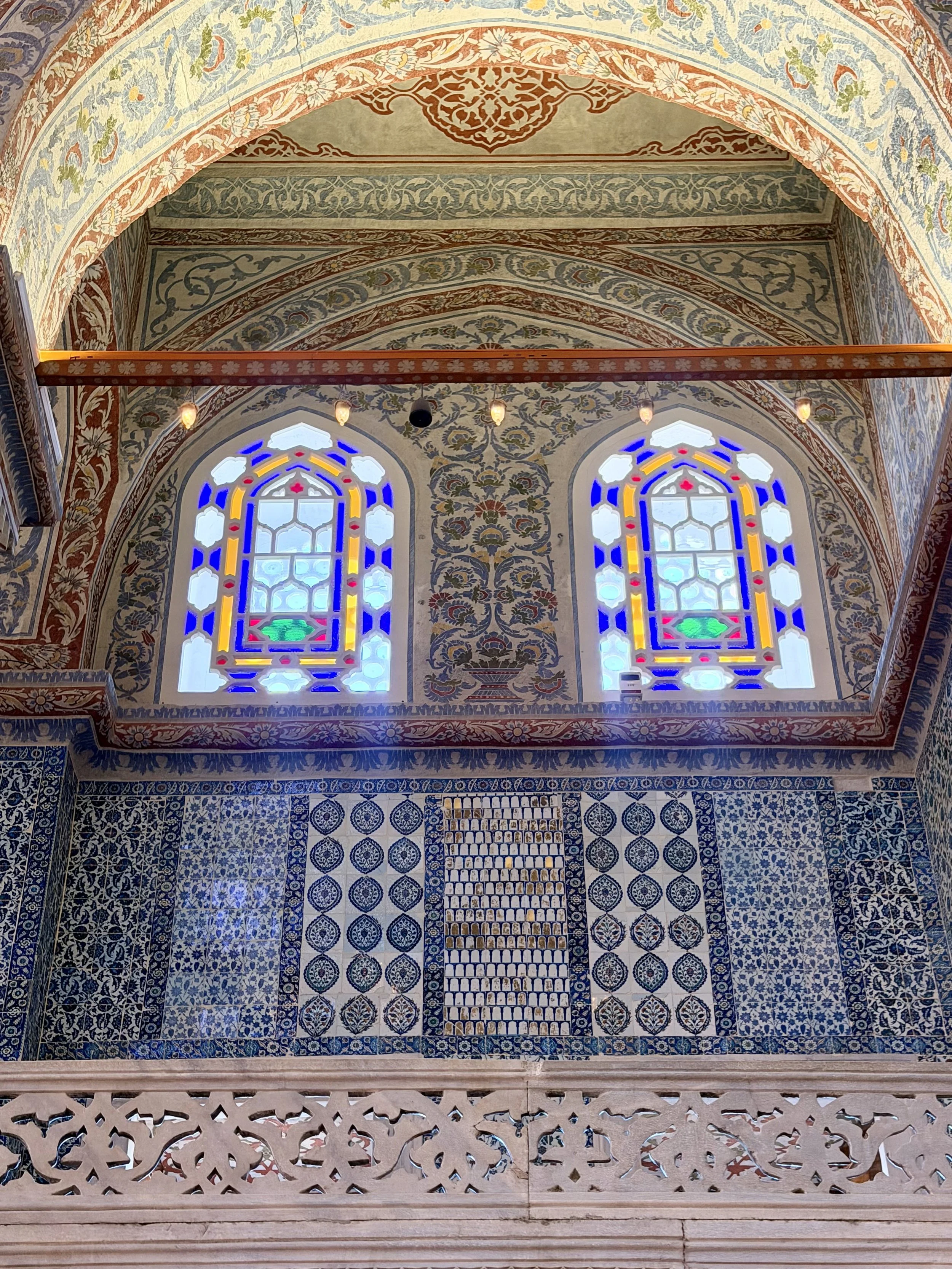
The dome overhead was enormous - 110 feet across and 140 feet high - and it took my breath away! It was supported by four massive columns and four half domes. Beautiful tiles with geometric patterns and stylized calligraphy covered every surface. On the walls, the predominant color was blue, hence the mosque’s name. The soaring space was flooded with light from stained glass windows.
The Blue Mosque was magnificent, and stunningly beautiful. But with the crush of tourists and constant hum of noise, I wasn’t inclined to linger. I imagine that during prayer services, it must feel totally different.
Hagia Sophia
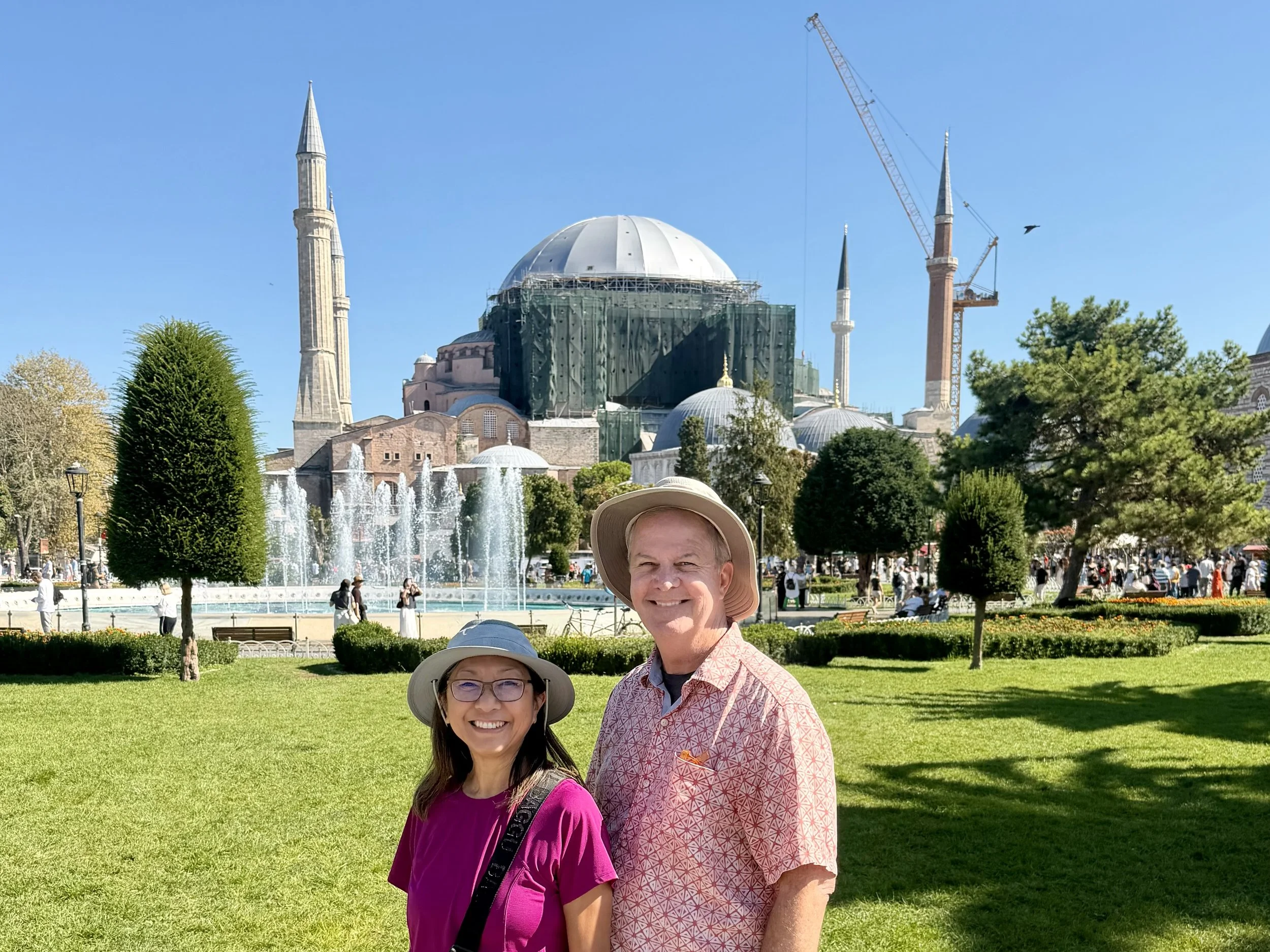
We walked across Sultanahmet Park to the iconic Hagia Sophia (eye-yah so-fee-ya), which is Greek for “Holy Wisdom.” It was a Byzantine church built in the sixth century by Roman emperor Justinian I. For nearly a thousand years, it was the most important church in the Christian world. Ottomans converted the cathedral into to a mosque. It was a museum for a time, but today, it is once again a mosque, with the upper galleries still open to visitors.
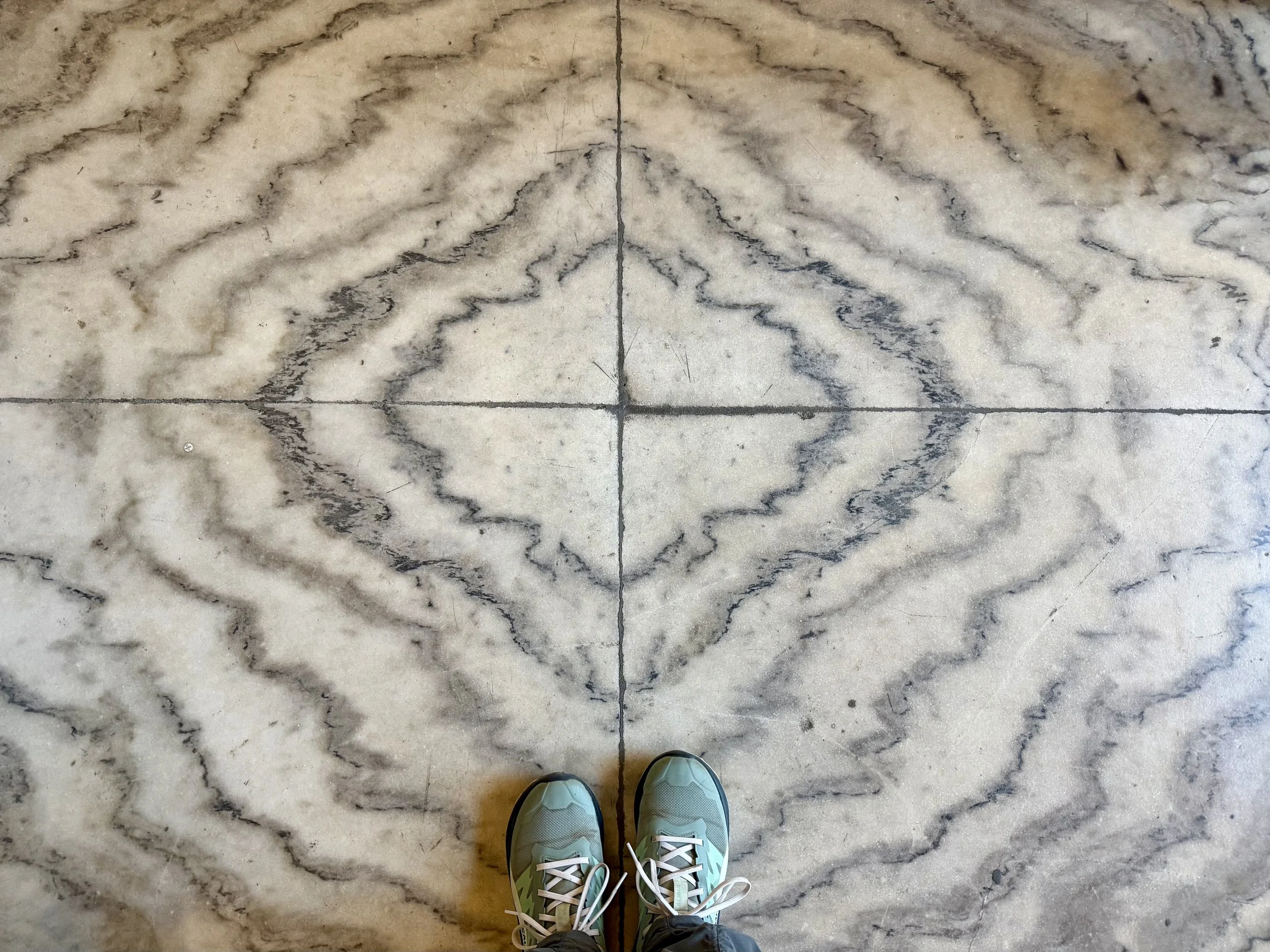
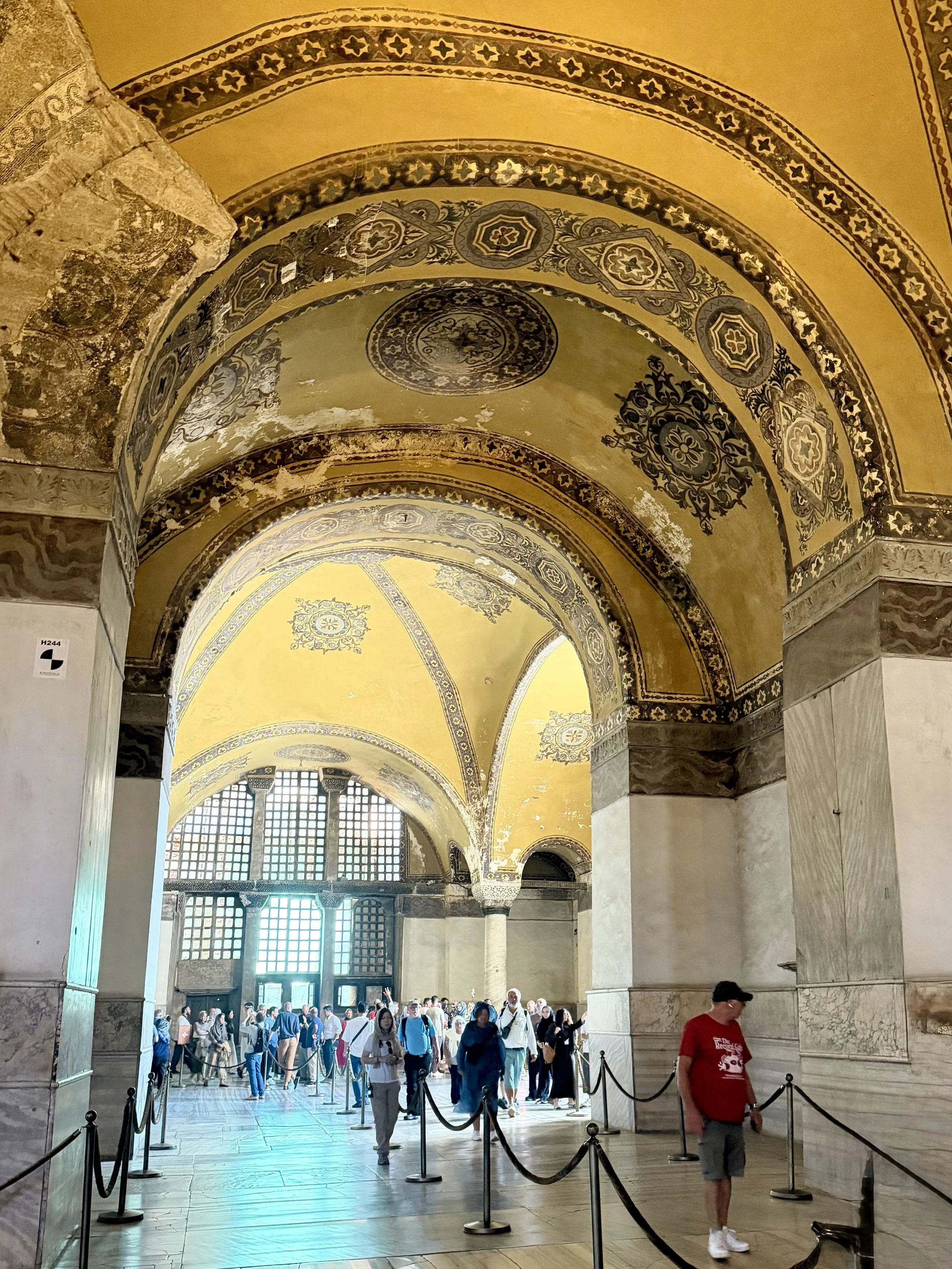
The exterior of the Hagia Sophia was partly covered with scaffolding, thanks to an extensive restoration effort that started in 2023 and is expected to last fifty years. Inside, we walked up a long ramp to the upper level, where the floor and walls were covered with slabs of veined marble. Between green marble columns, we could look down into the massive nave (now a prayer hall), large enough for 20,000 worshippers!
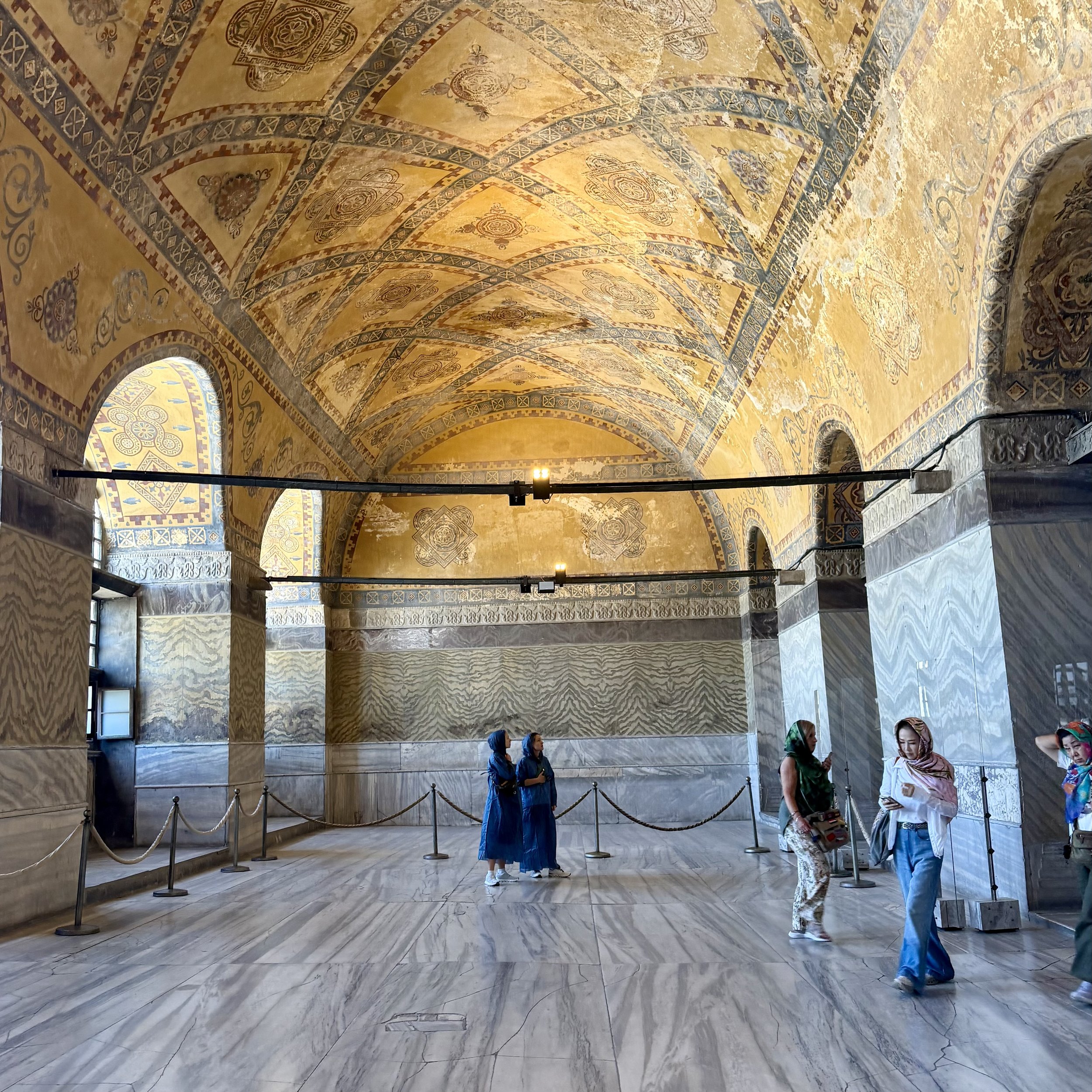
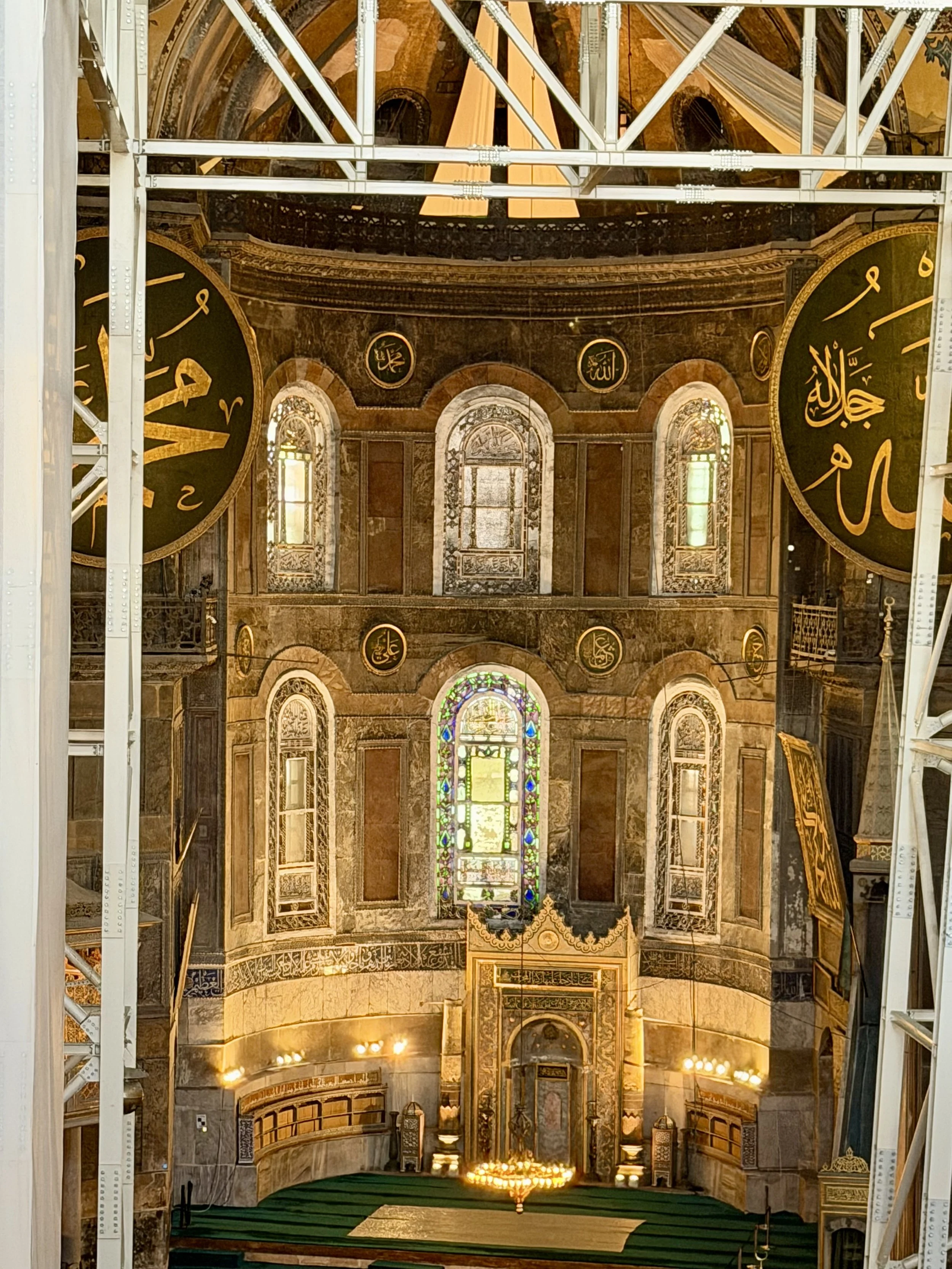
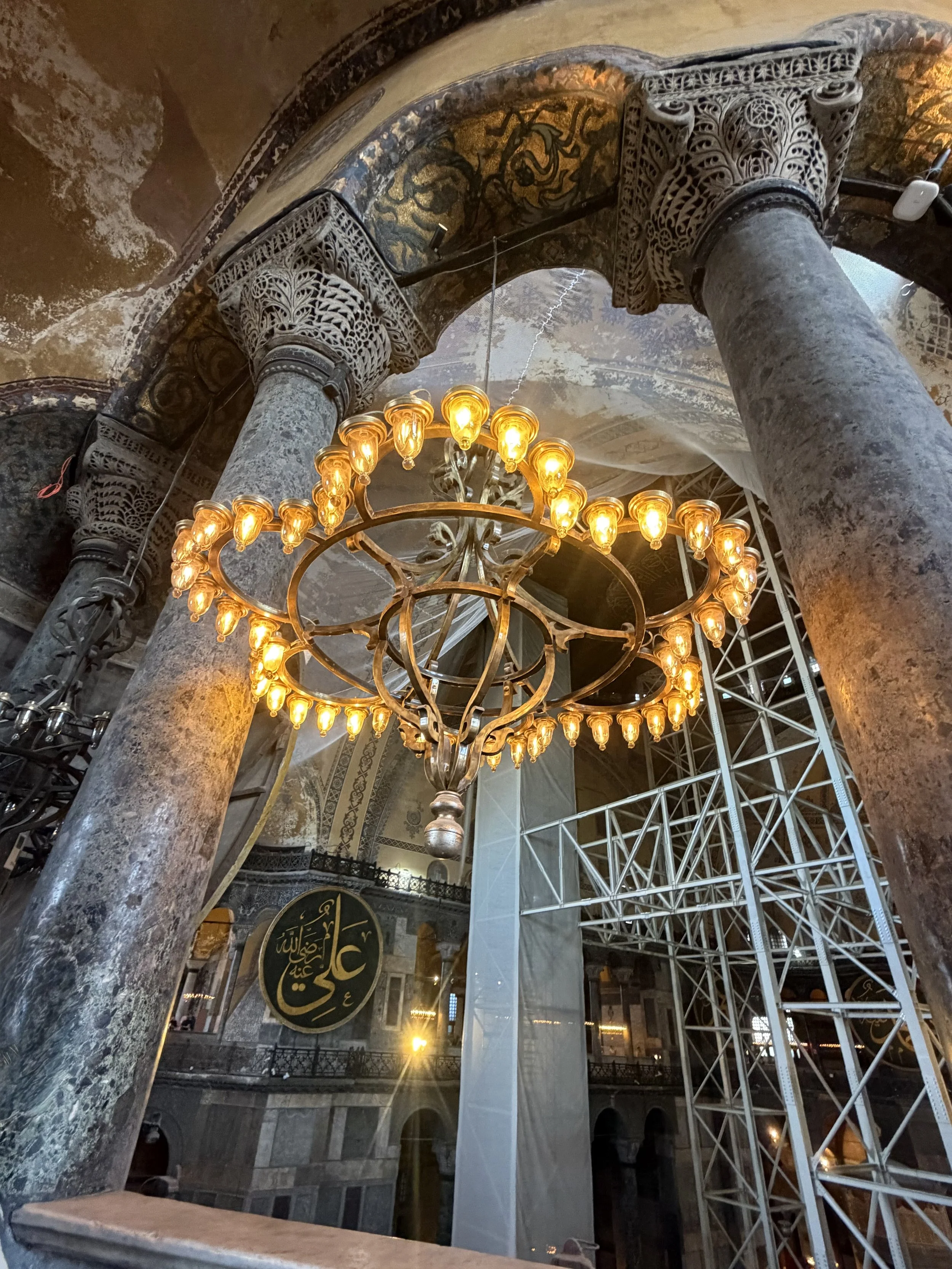
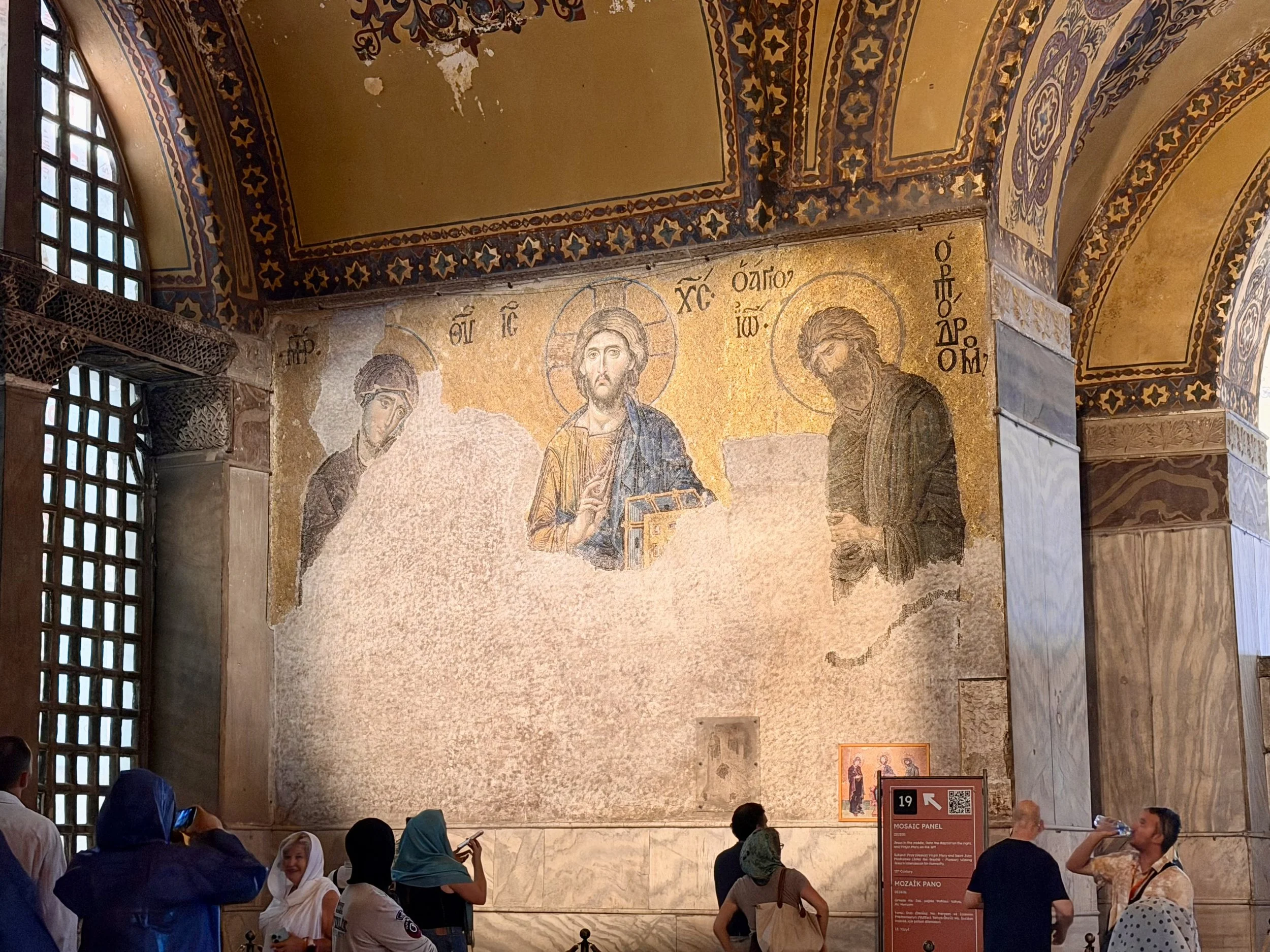
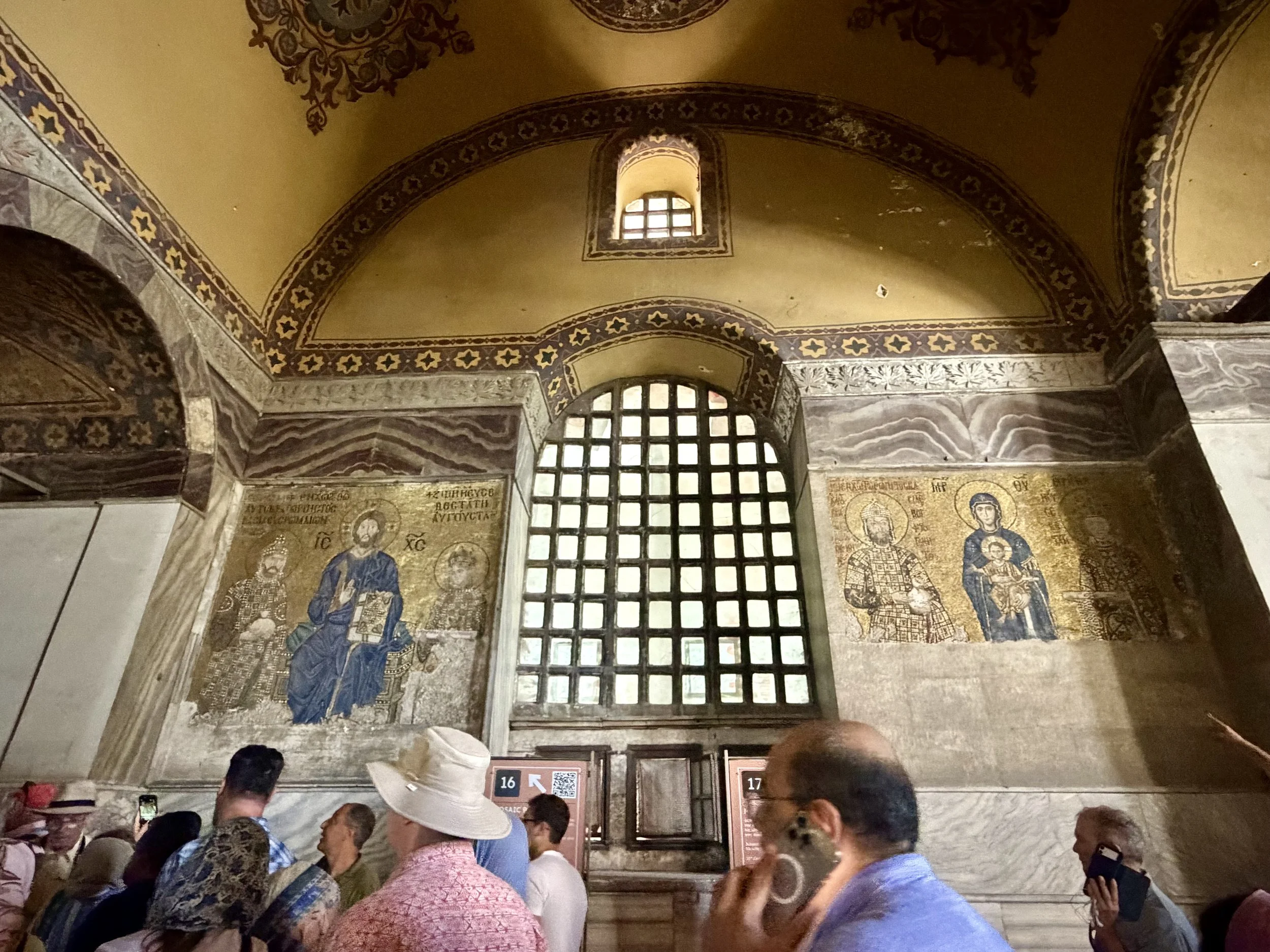
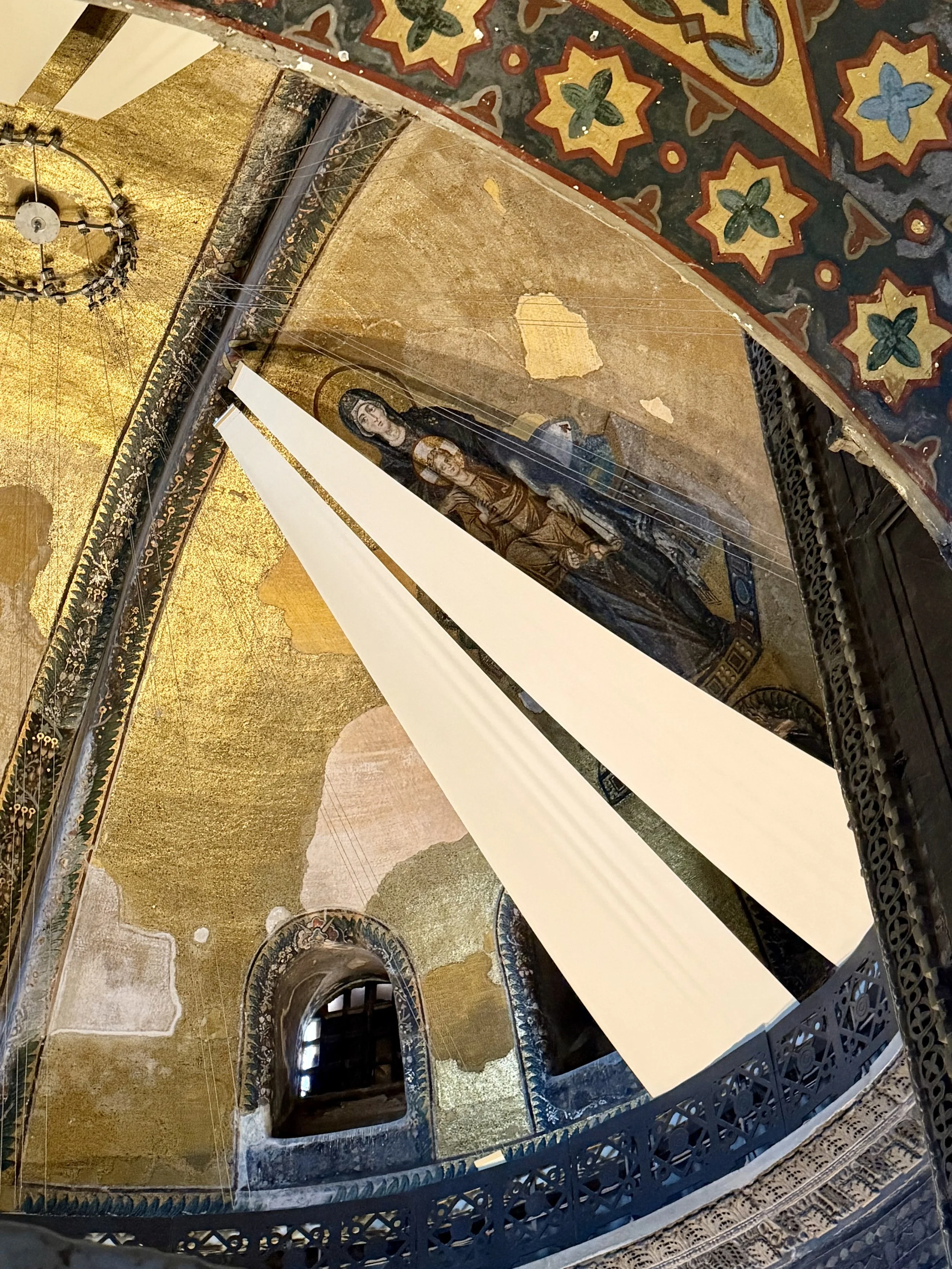
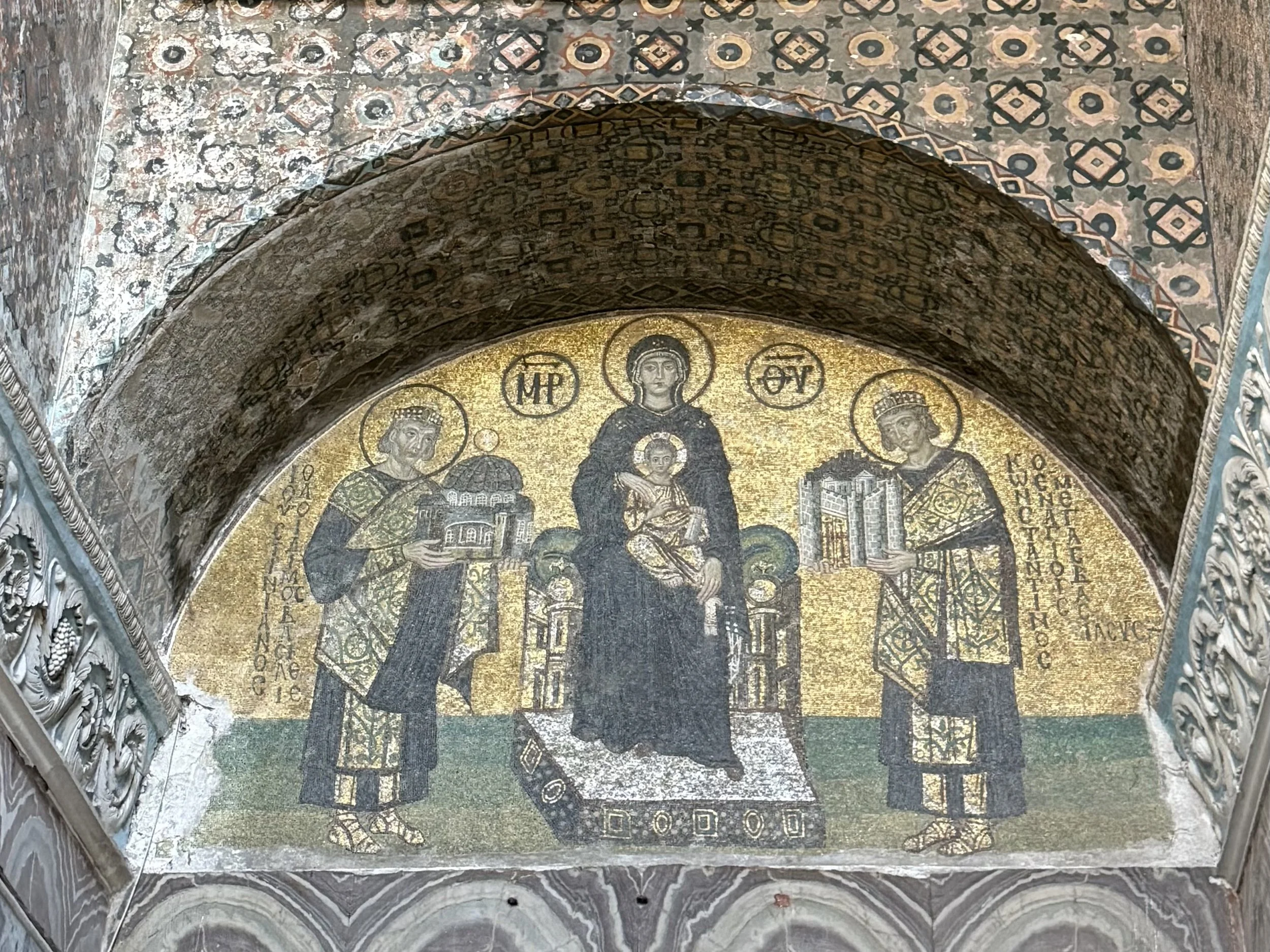
The Blue Mosque had only non-figurative art because Islamic places of worship cannot have any portraits. As a former church, the Hagia Sofia had beautiful mosaics of Jesus, Mary, and other noted Christian figures. But the large mosaic of Mary and the child Jesus in the apse was covered by a white curtain, so that their figures would not be visible above the mihrab (the decorated niche marking the direction of Mecca, that Muslims face when praying).
The area of Old City Istanbul with the Hagia Sophia and Hippodrome, along with Topkapı Palace, is a UNESCO World Heritage Site.