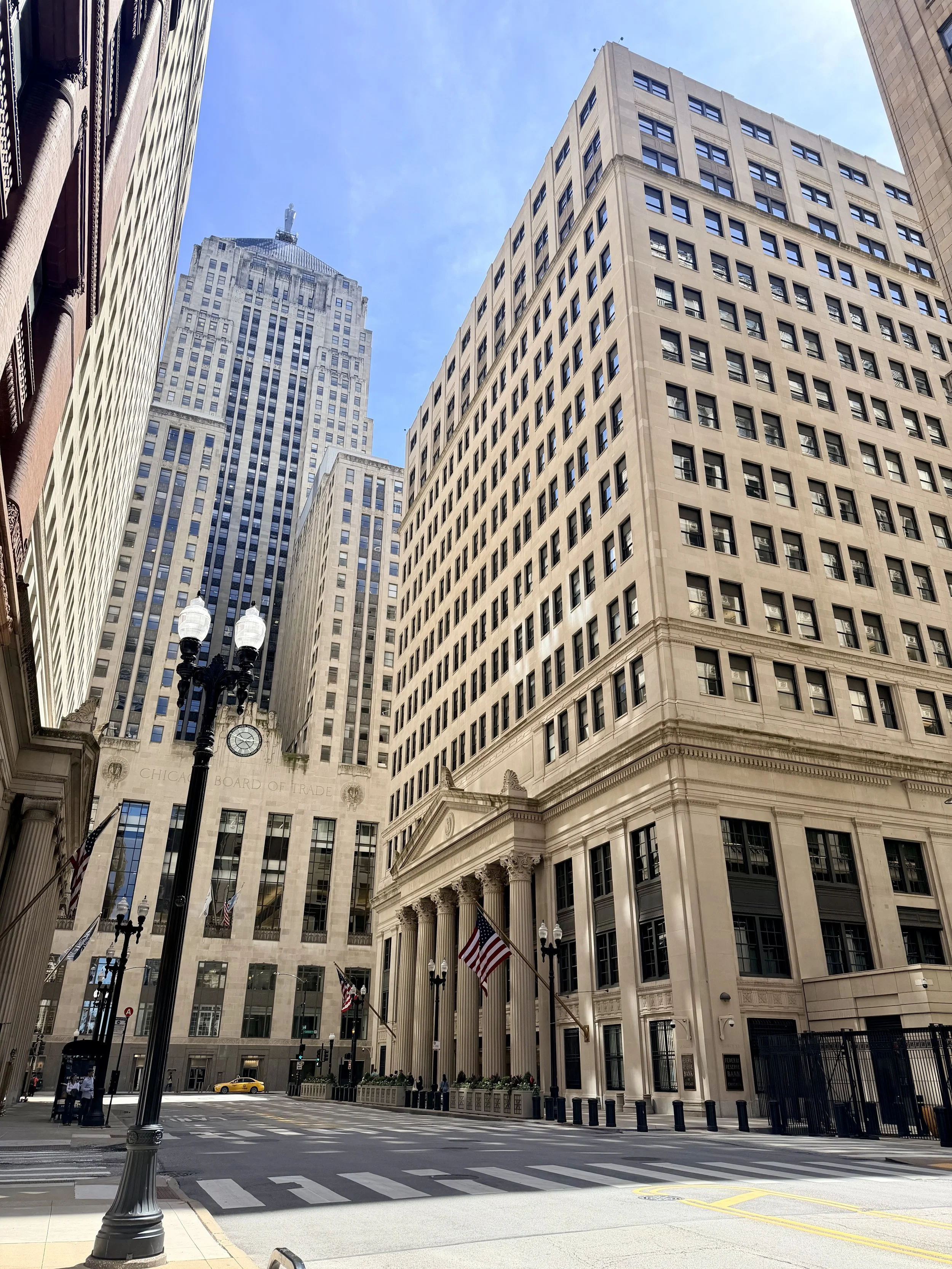
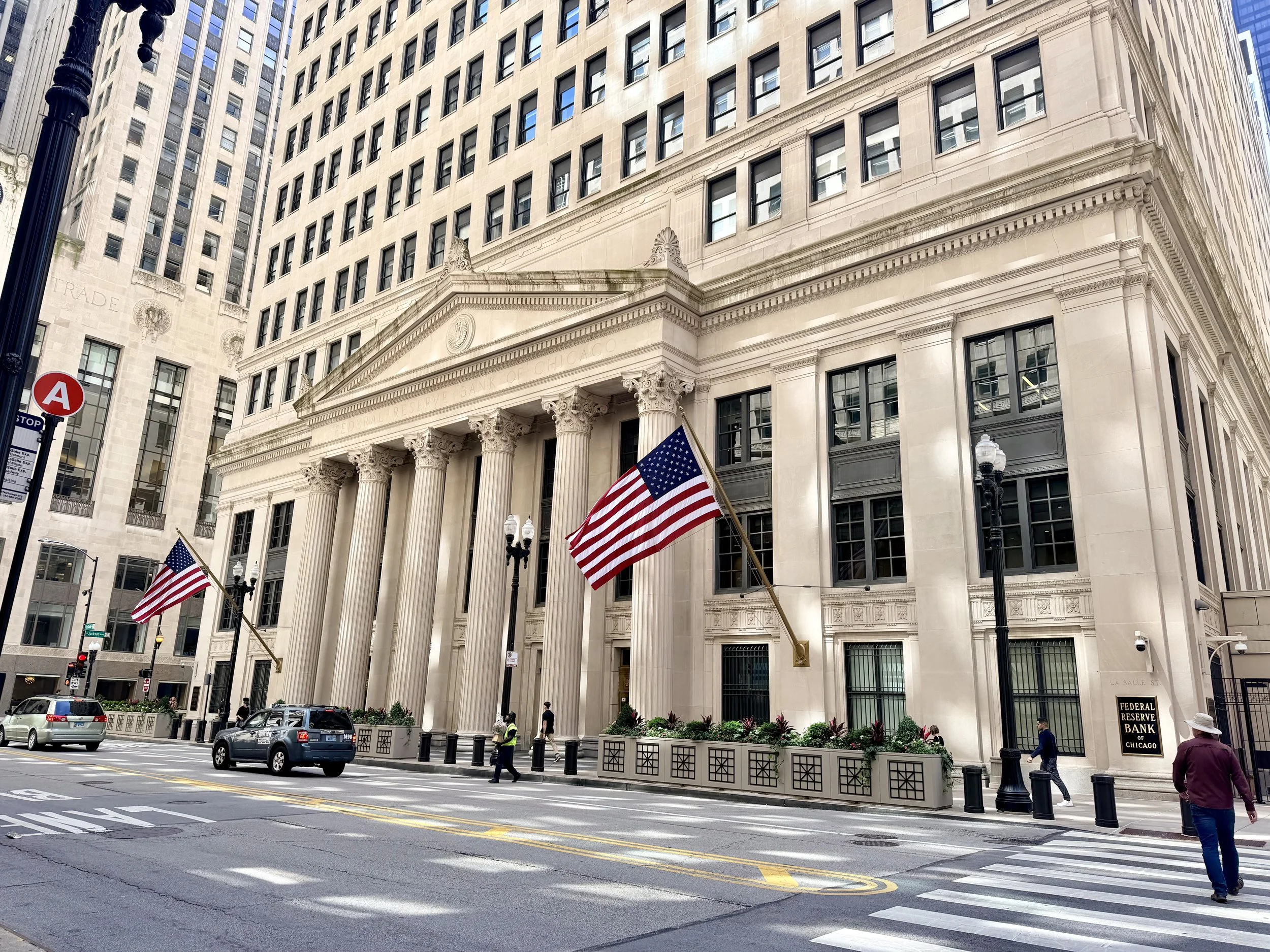
The Federal Reserve Bank of Chicago is in the Financial District, across the street from the iconic Board of Trade. On the first floor, the Money Museum is free to the public. It was a beautiful day for a walk, and there was surprisingly little traffic on a Monday afternoon.
History of the Federal Reserve
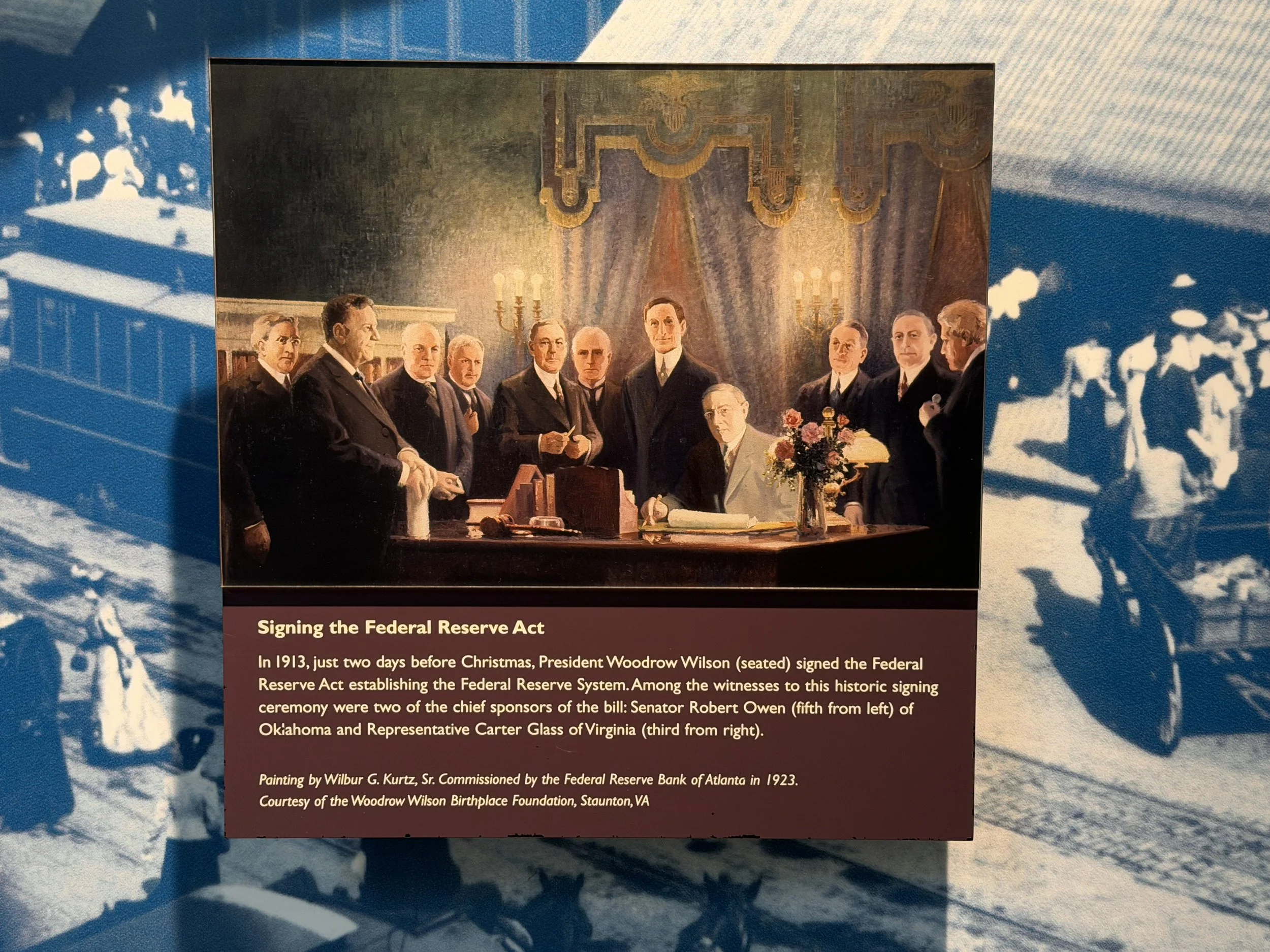
The Federal Reserve (the Fed) is the central banking system of the United States. After two unsuccessful attempts to create national banks in the early 19th century, and after several banking panics, the Fed was created in 1913 to provide the country with financial stability and a healthy economy.
The Chicago Fed is one of twelve regional banks in the Fed. It is run by a seven-member board of governors who serve fourteen-year terms. It is an independent bank; its decisions do not require approval from the President or Congress, and it is not funded from the Congressional budget.
Through interactive exhibits, we learned about the main services of the Fed:
It sets monetary policy, adjusting interest rates to control inflation.
It regulates member banks, providing “discount window loans” to help them cover their liquidity needs.
It puts cash into circulation or removes it.
It collects and processes checks (which are now mostly electronic).
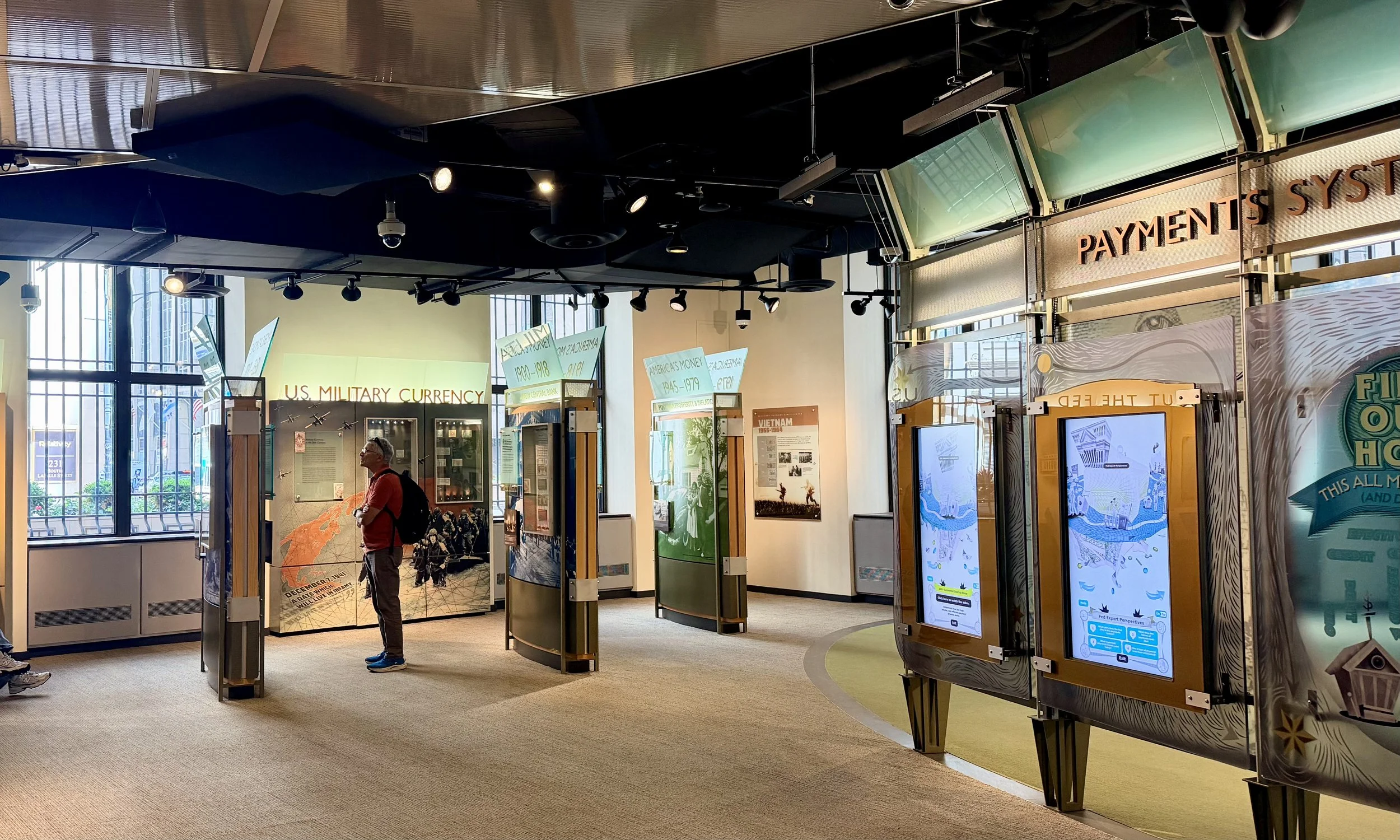
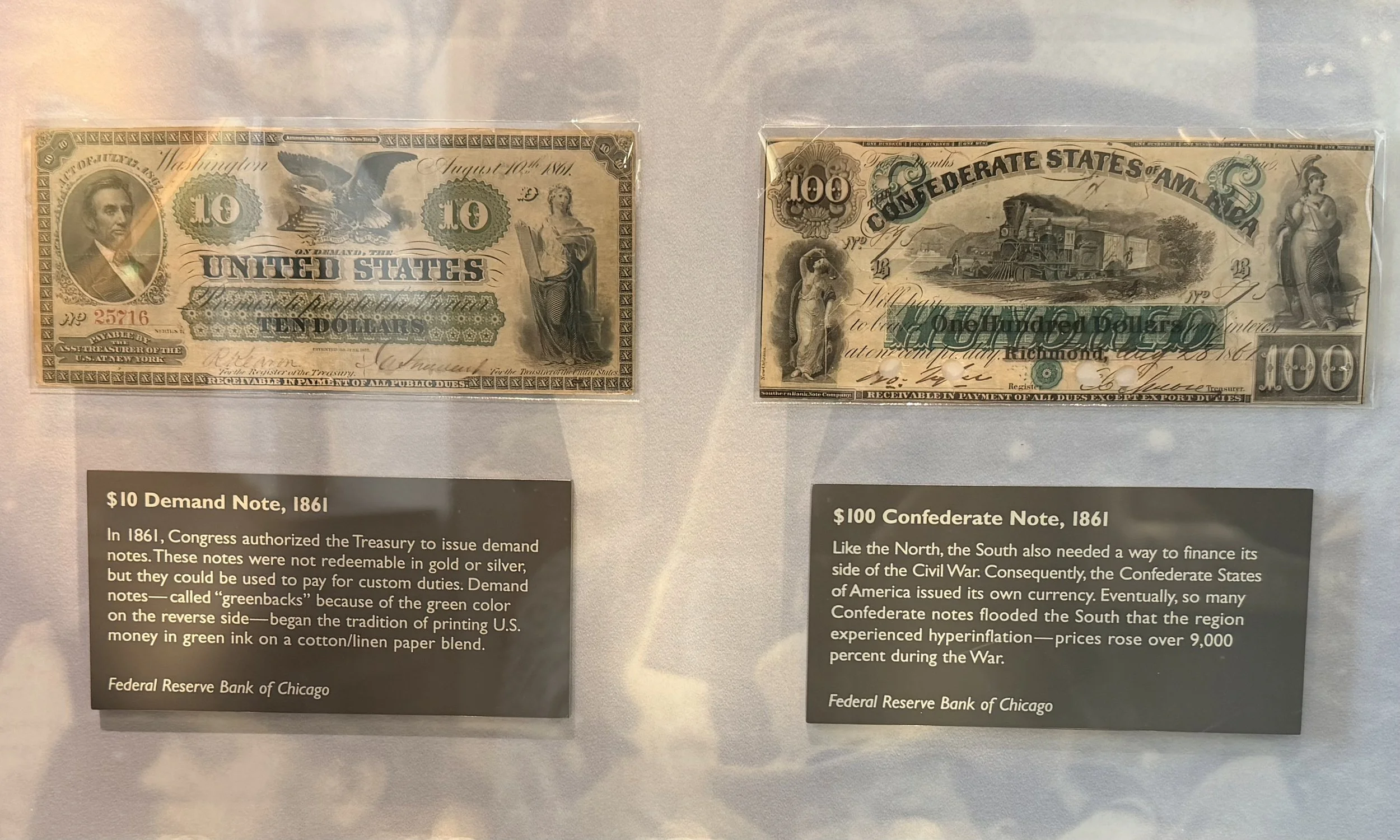
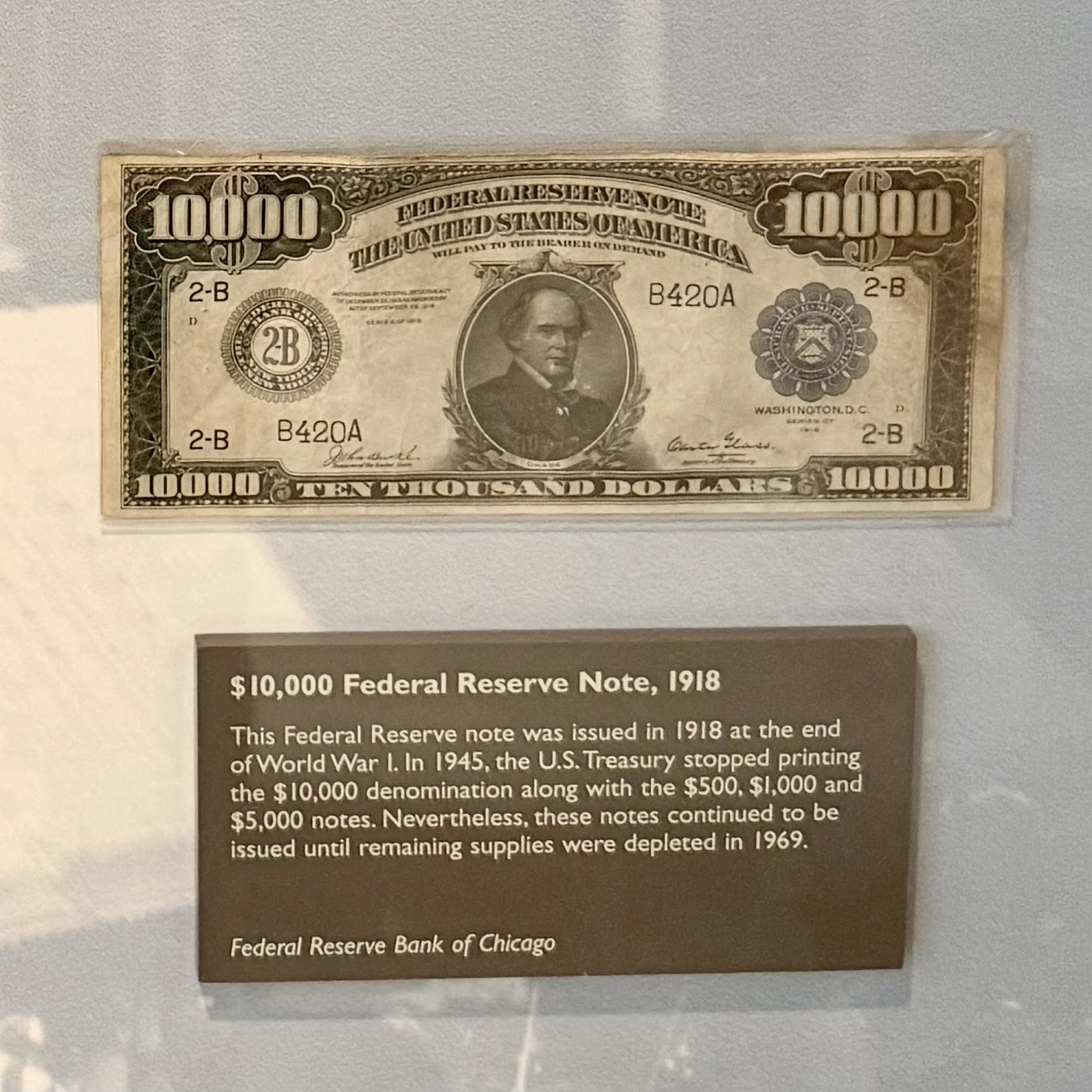
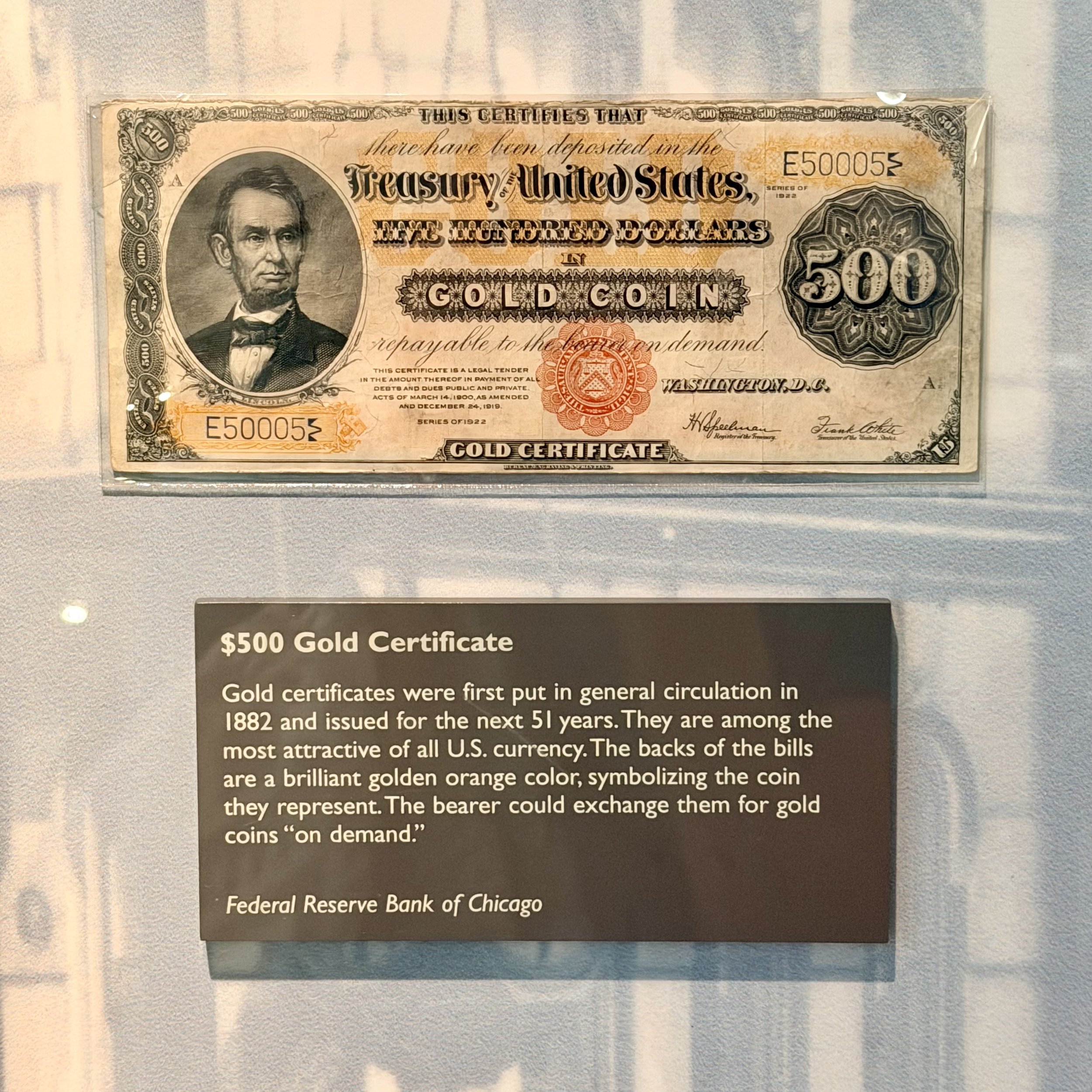
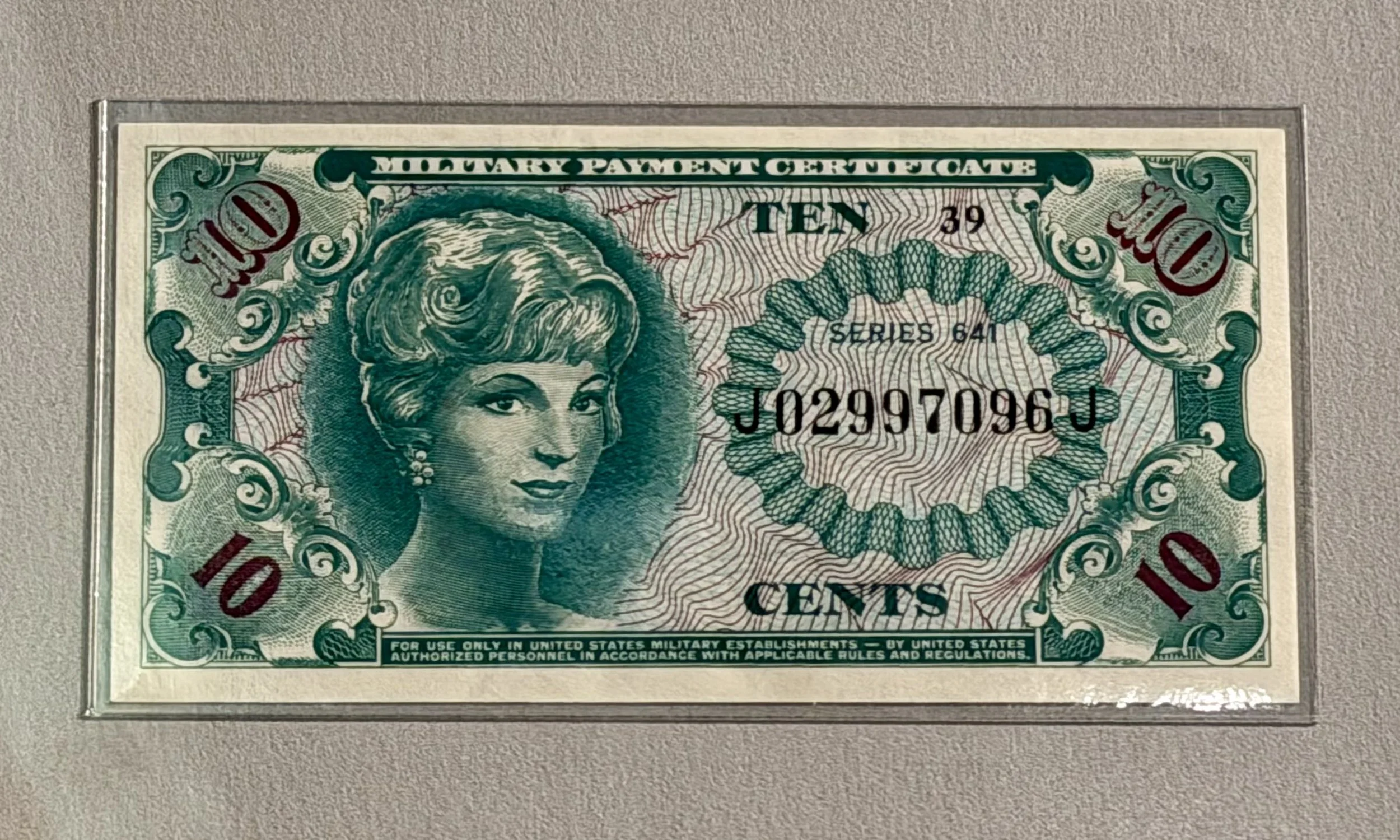
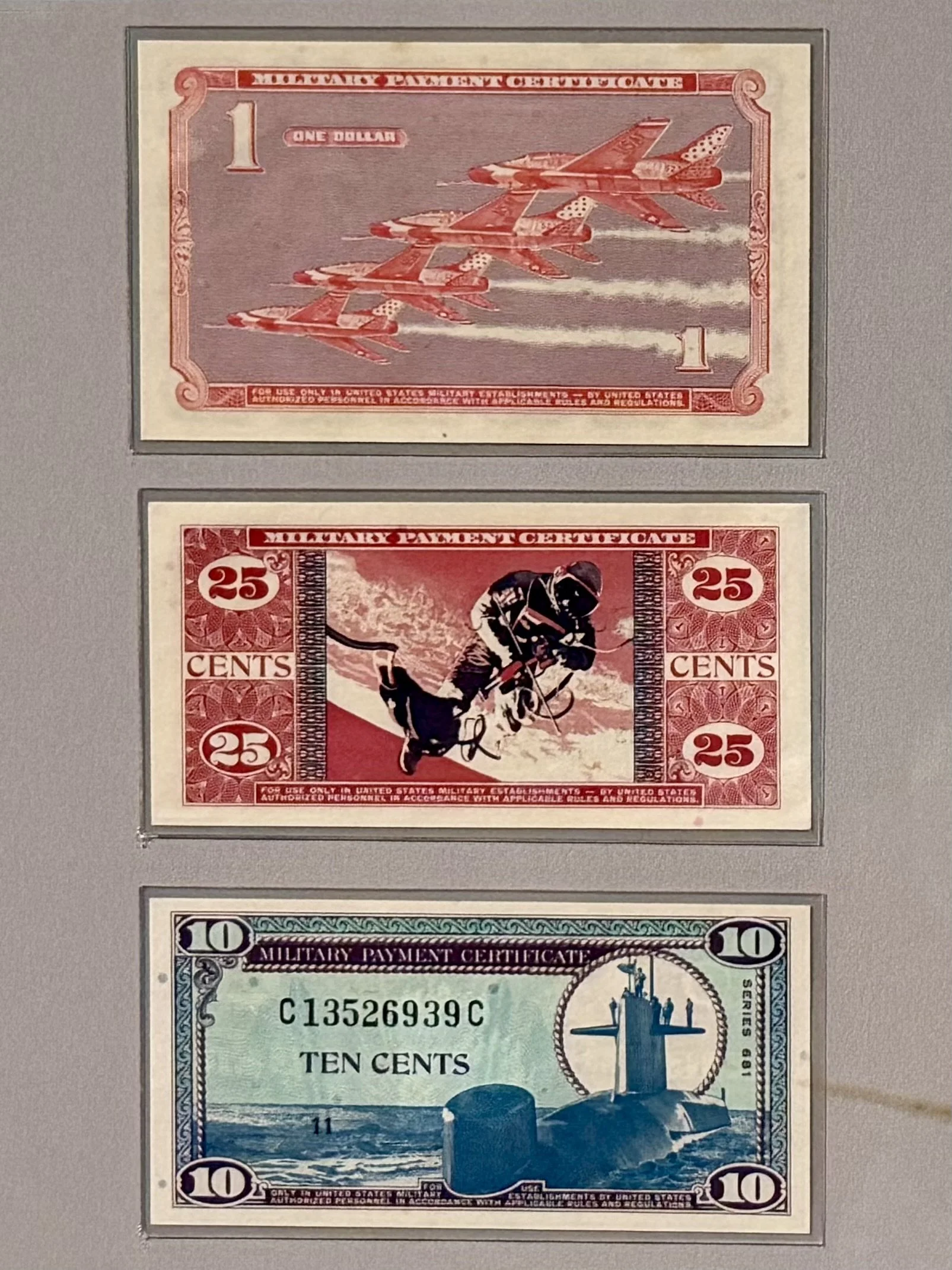
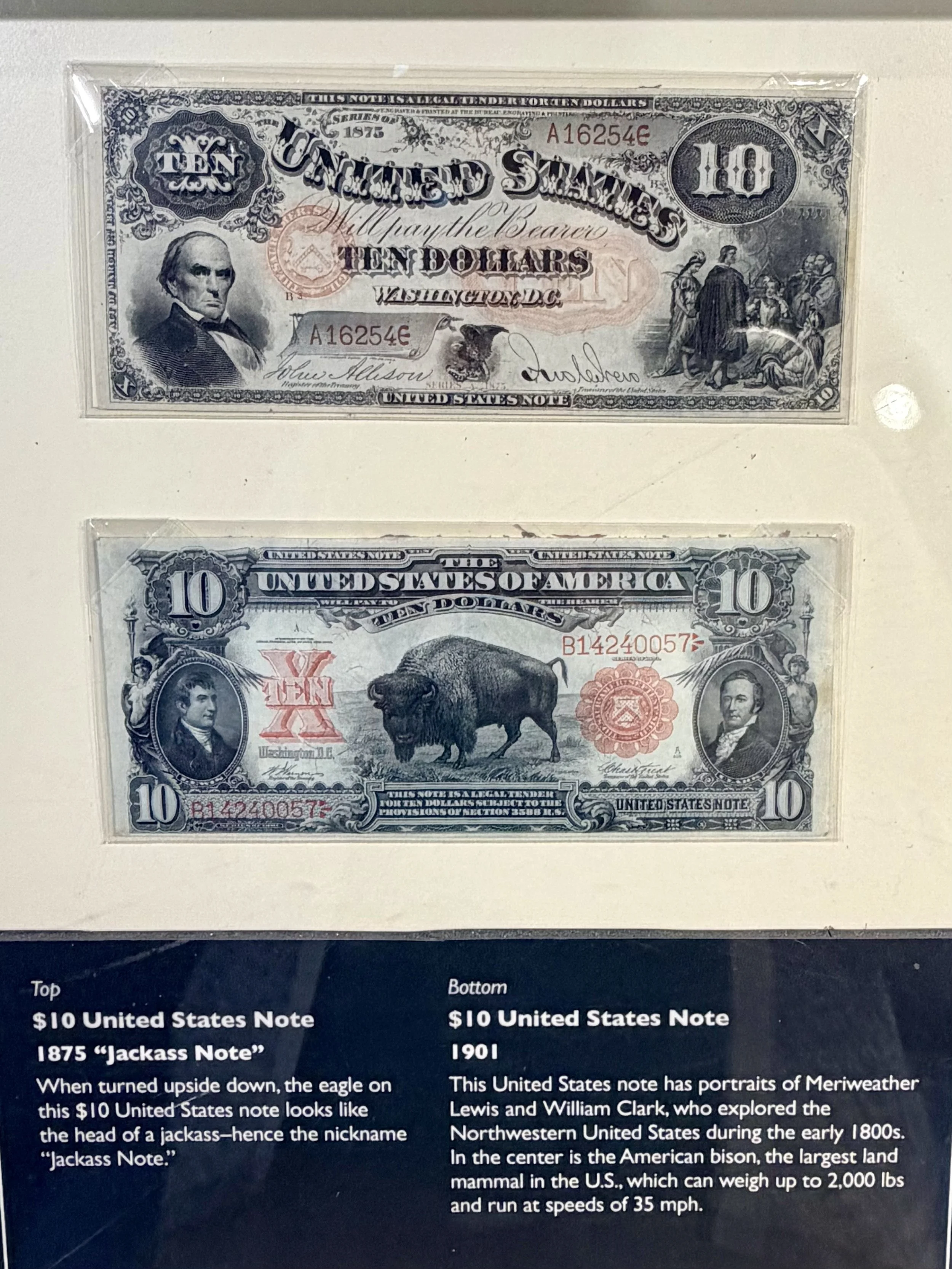
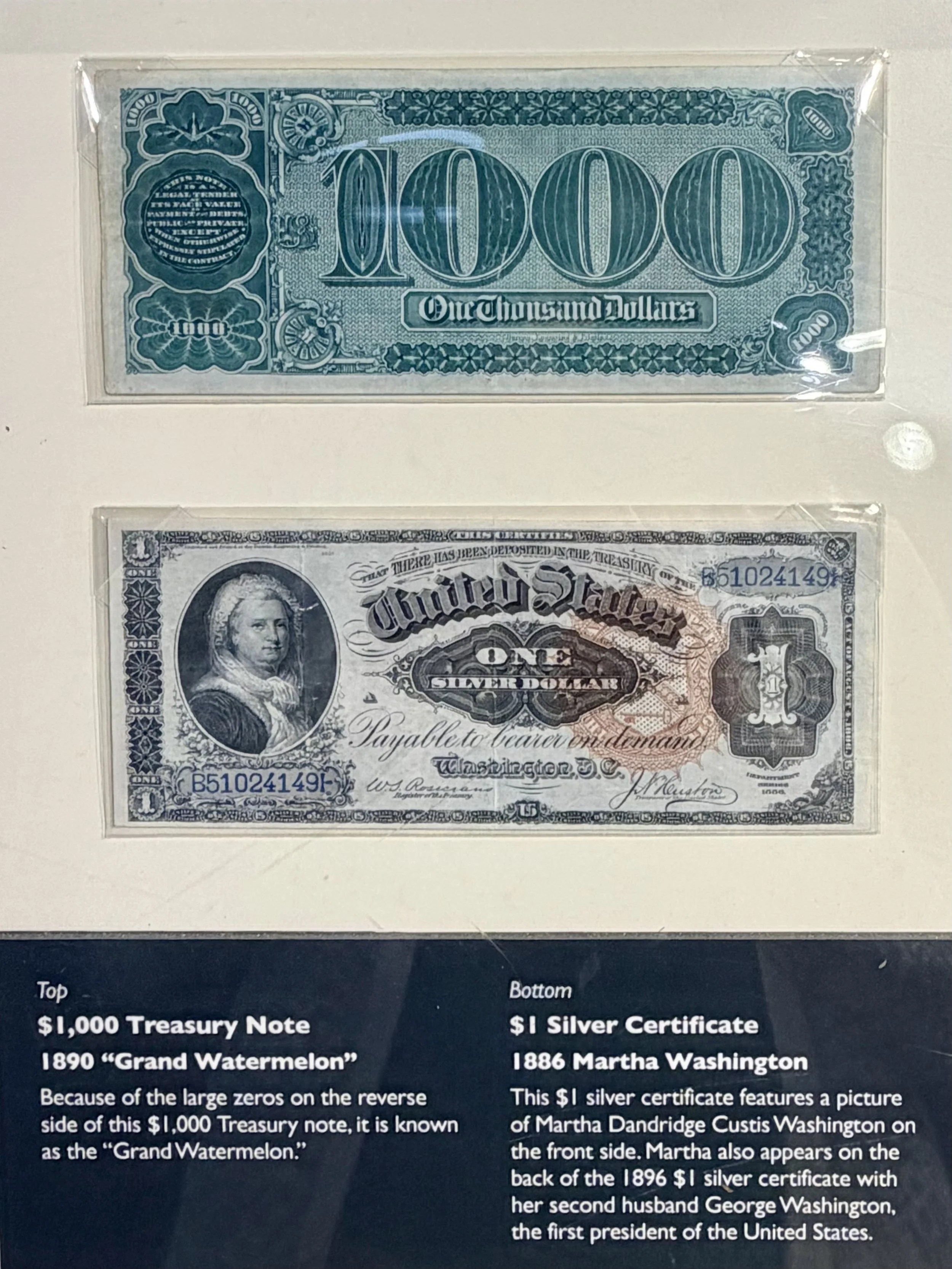
The museum also had a fascinating collection of old U.S. paper currency, from Confederate notes from the Civil War, to notes that could be exchanged for gold or silver coins, to MPCs (Military Payment Certificates) used to pay soldiers abroad.
We learned that today’s U.S. paper currency has special features that make it difficult to counterfeit, such as:
cotton-linen fabric with red and blue fibers scattered throughout
microprinting too small to read easily with the naked eye
watermark images visible when held up to the light
embedded plastic ribbons that glow under UV light
color-shifting ink
We examined our own bills with the light and magnifying lenses provided. Thankfully, they were real, not fake!
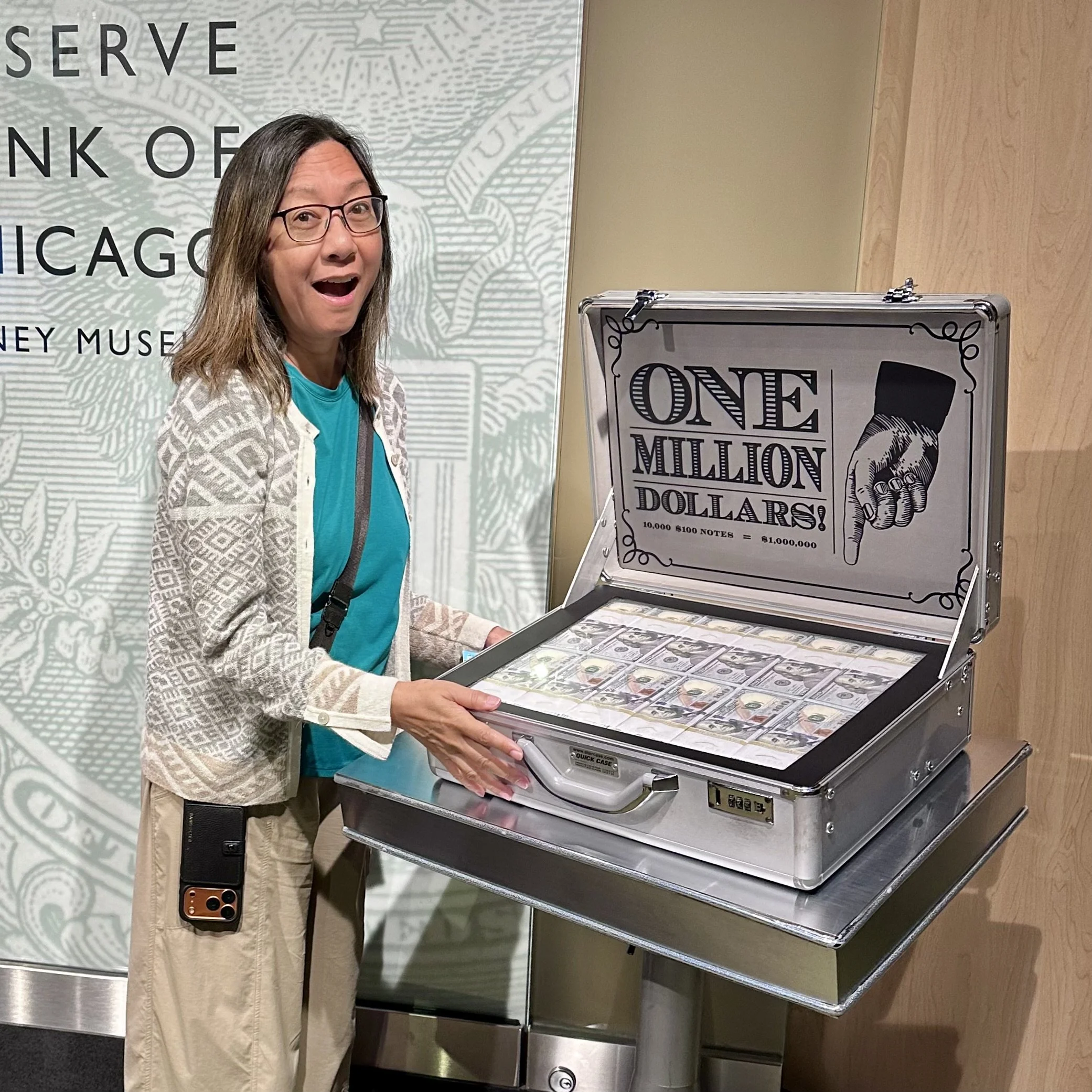
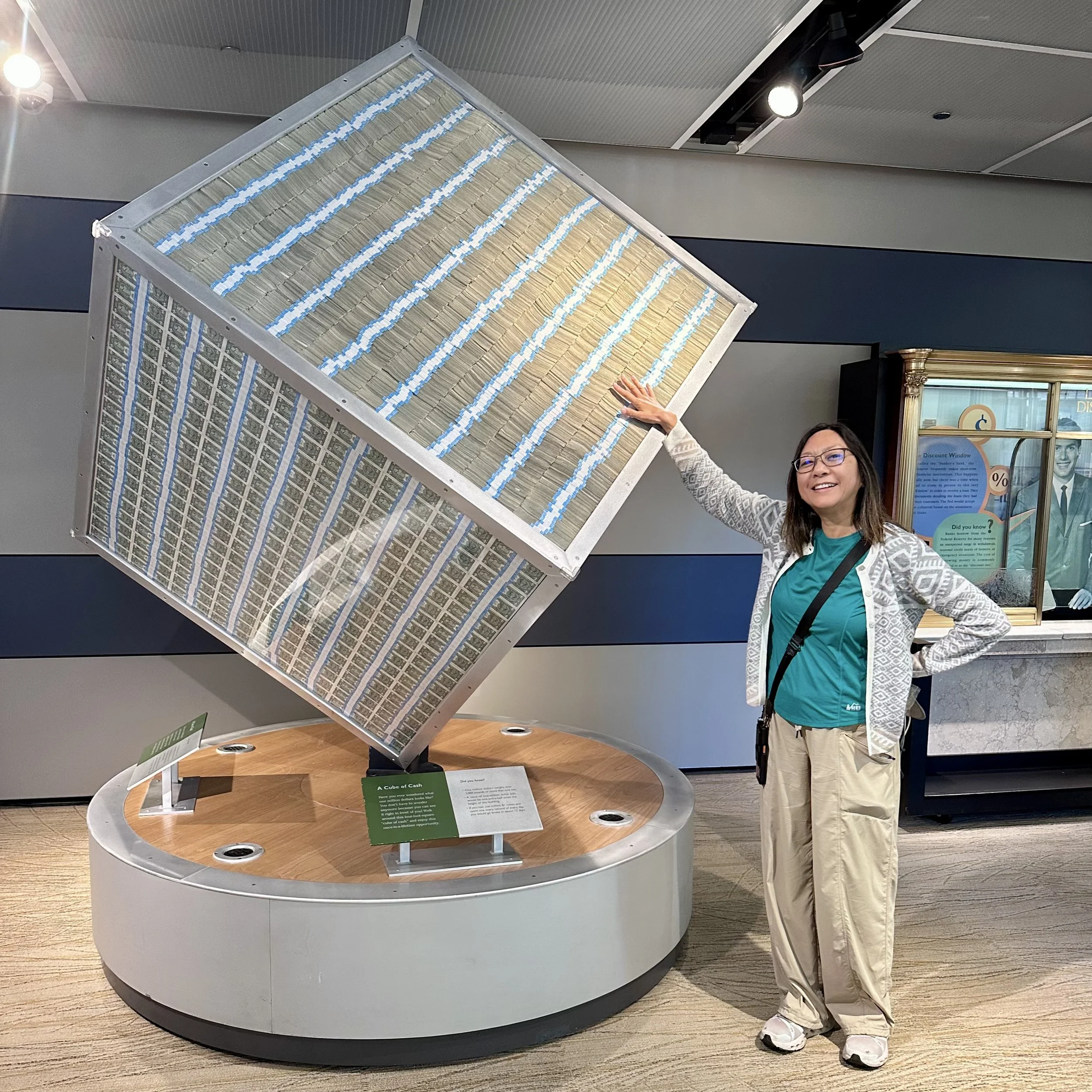
It was fun to see what $1,000,000 dollars looks like, in different denominations. Ten thousand $100 bills fit in a large briefcase, but a million $1 bills weigh over a ton!

The Money Museum was a great way to learn about the national entity that balances the private interests of banks with the public need for financial stability.