This year marks the 100th Anniversary of Route 66, the iconic road from Chicago to Los Angeles. We love the tours hosted by the Chicago Architecture Center (CAC), so we joined their inaugural Route 66 bus tour.
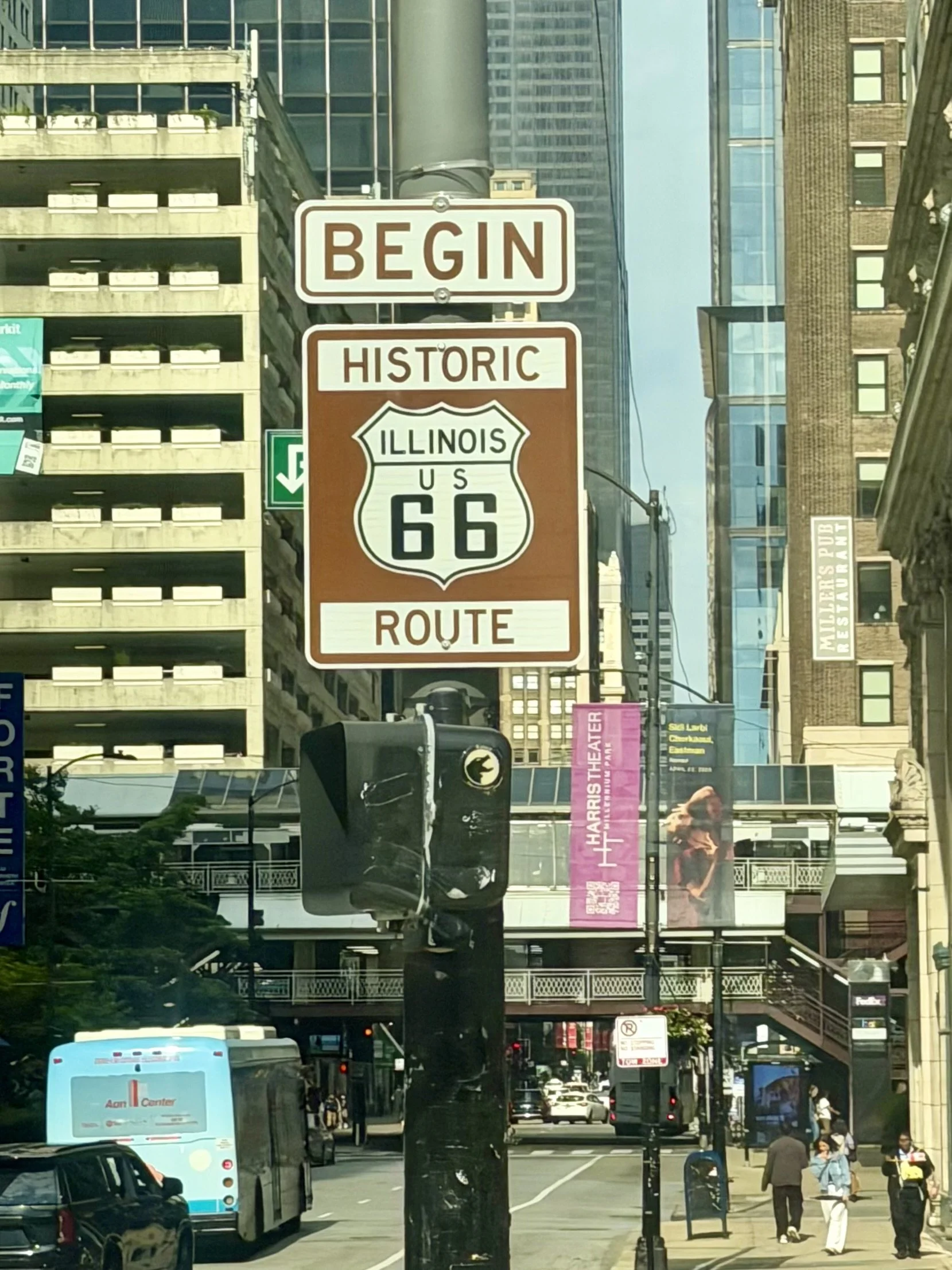
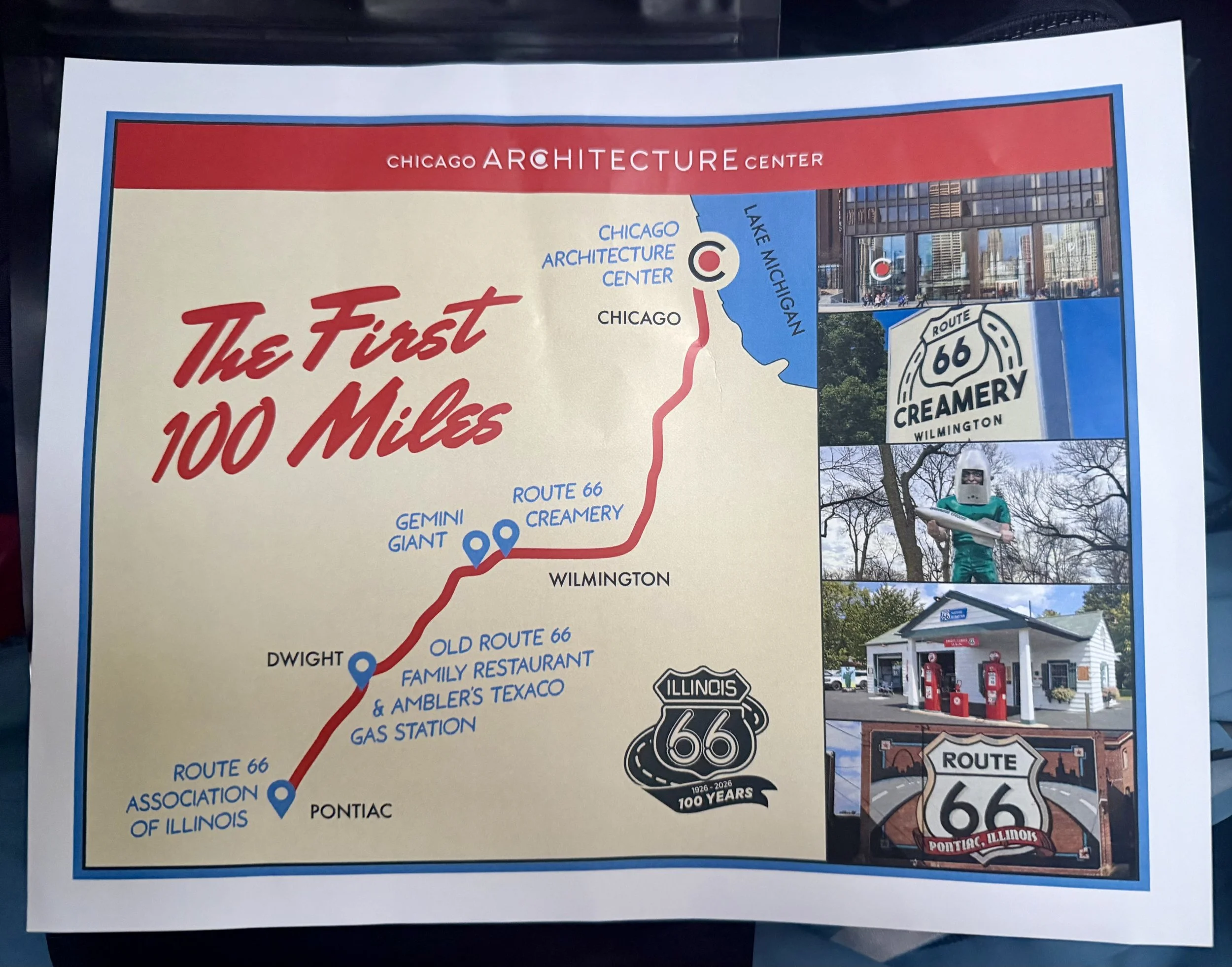
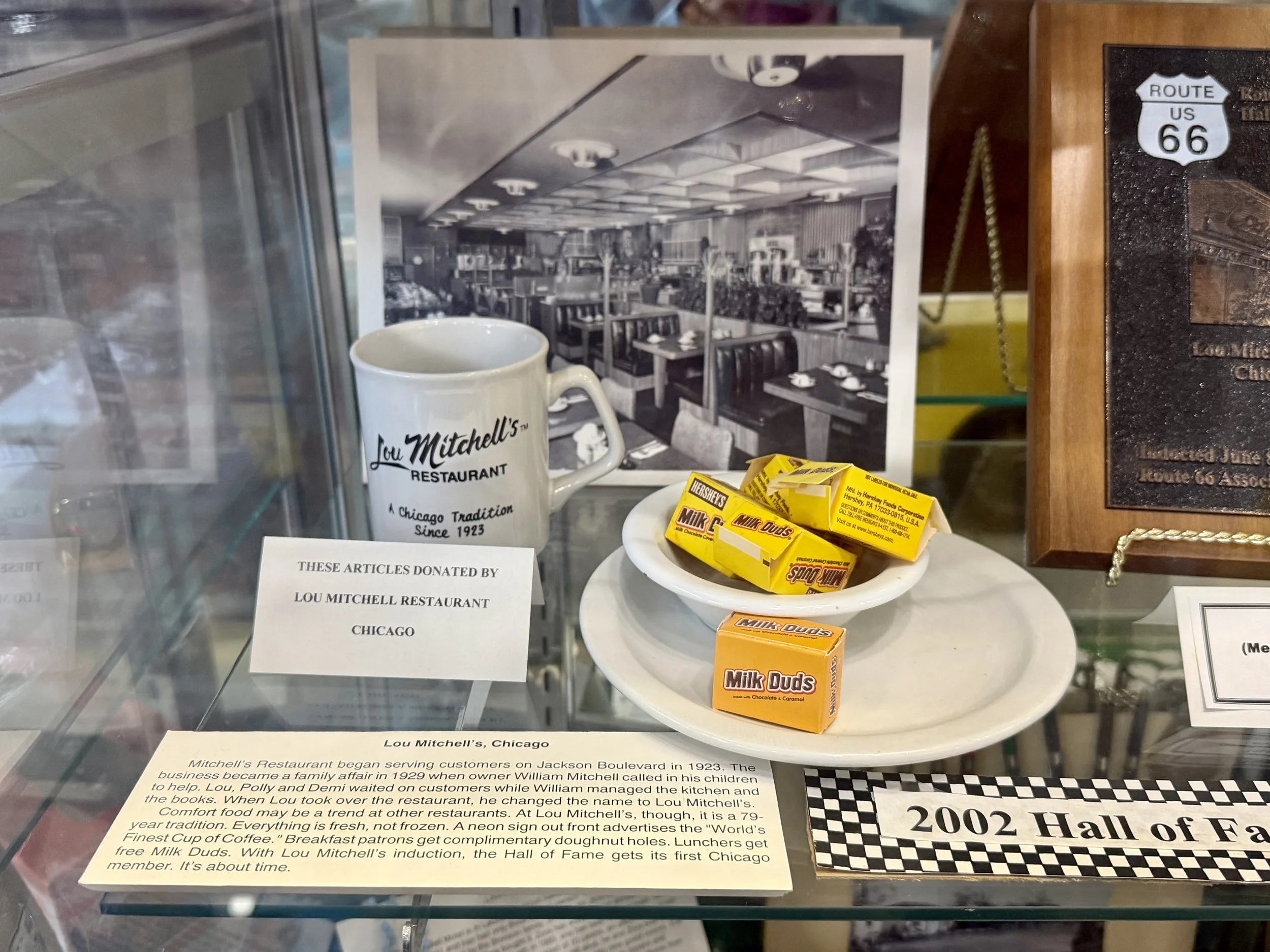
Staff at the CAC greeted us with free donuts from Lou Mitchell’s, a nearby diner dating back to 1923 that was traditionally the first stop on a Route 66 road trip. Then we boarded the bus and drove to the start of Route 66, on Adams Street near the corner of Michigan Avenue, across from the Art Institute. Our souvenir maps showed that our tour of Route 66 would cover the first 100 miles of its nearly 2,500-mile length.
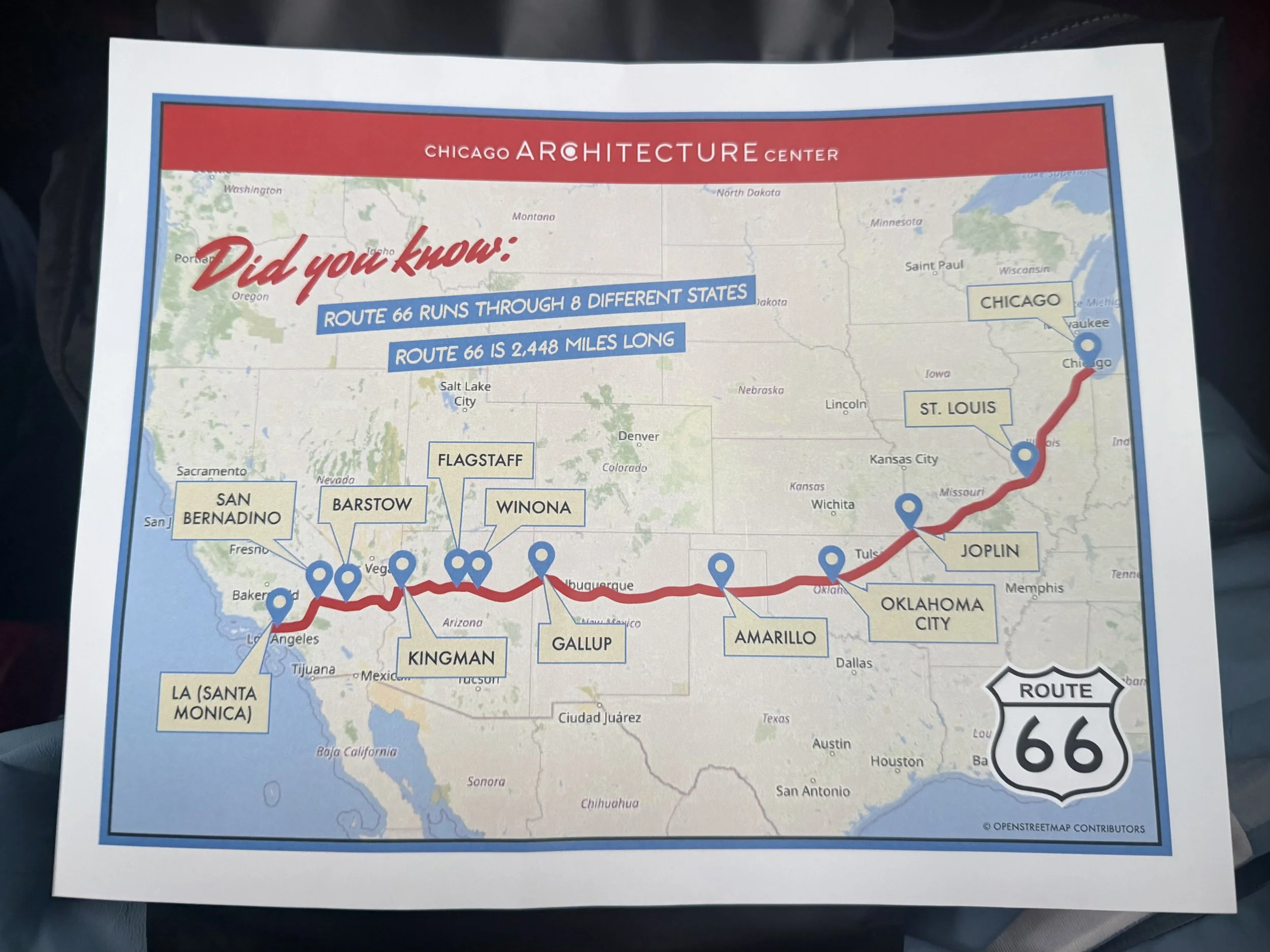
As we made our way through the traffic leaving Chicago, our docent hosts Ellen and Martha shared some highlights of Route 66’s history. It was one of the original highways in the country’s numbered highway system. During the 1930s, thousands migrated west on Route 66, seeking work. In his 1939 novel The Grapes of Wrath, John Steinbeck called it “The Mother Road.” In the years after World War II, Route 66 was in its heyday; roadside restaurants, motels, and service stations used themes and kitsch to attract tourists. Starting in the mid-1950s, sections of Route 66 were gradually replaced by Interstate Highways, and it was decommissioned in 1985.
As we drove along I-55 (which was built over and alongside Route 66), our hosts entertained us with slide shows and music on the bus. We learned the names of towns along the way through several versions of the famous song, “Get Your Kicks on Route 66.” Bobby Troup composed it during a road trip in 1946, and his wife came up with the catchy title. Nat King Cole’s recording was the first to hit the charts; it was also covered by many other artists including Chuck Berry, Bing Crosby (with the Andrews Sisters), and the Rolling Stones.
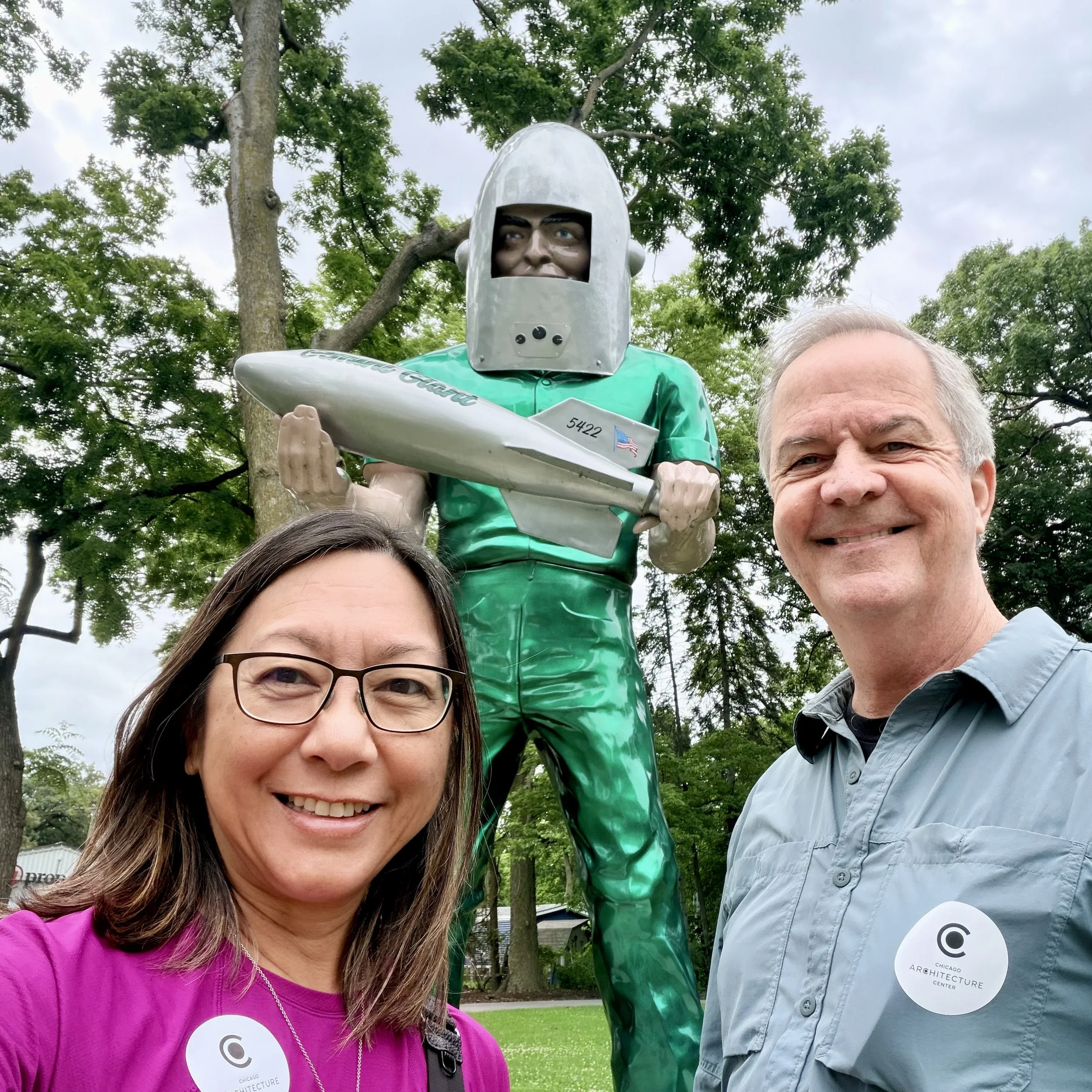
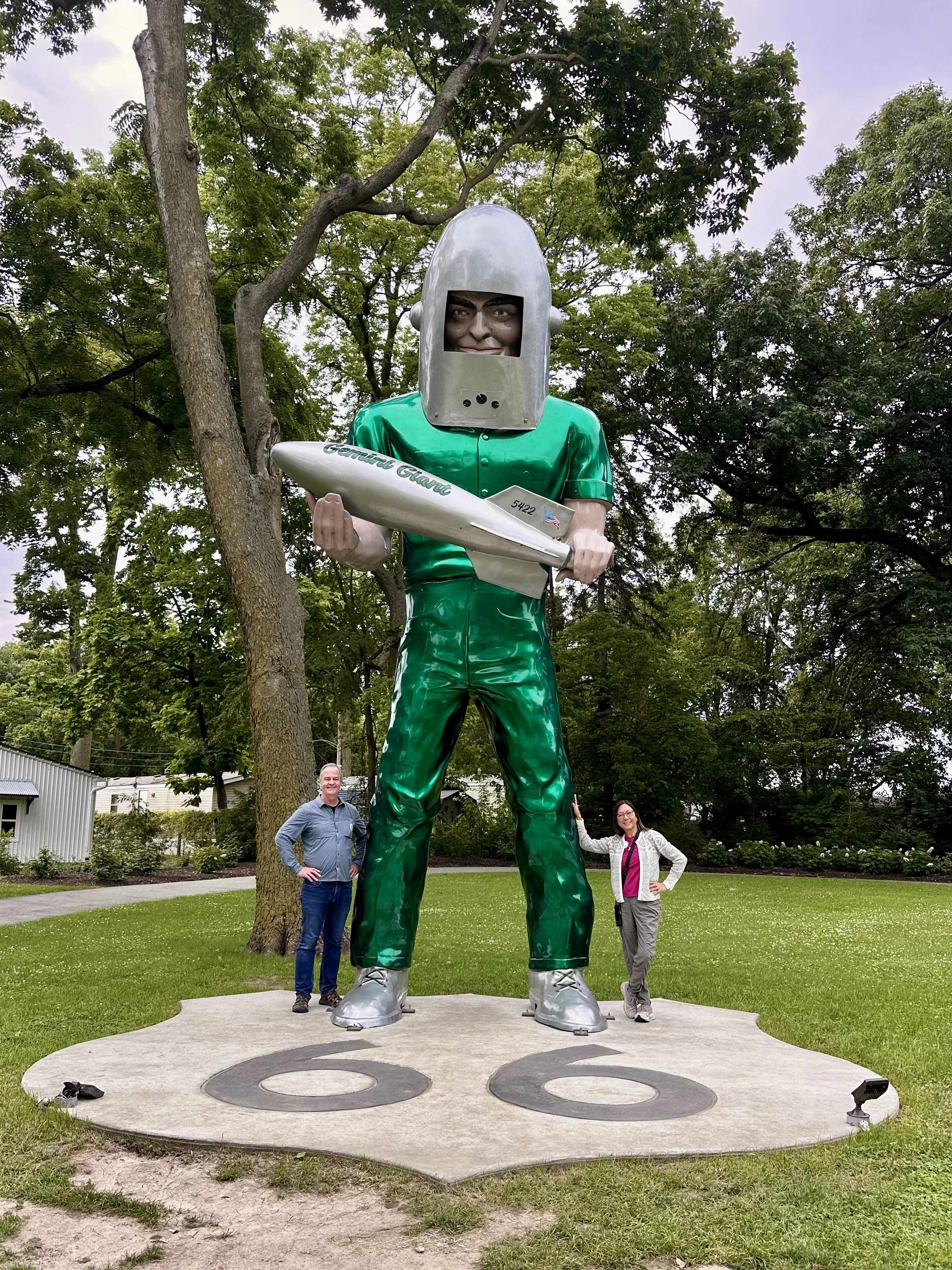
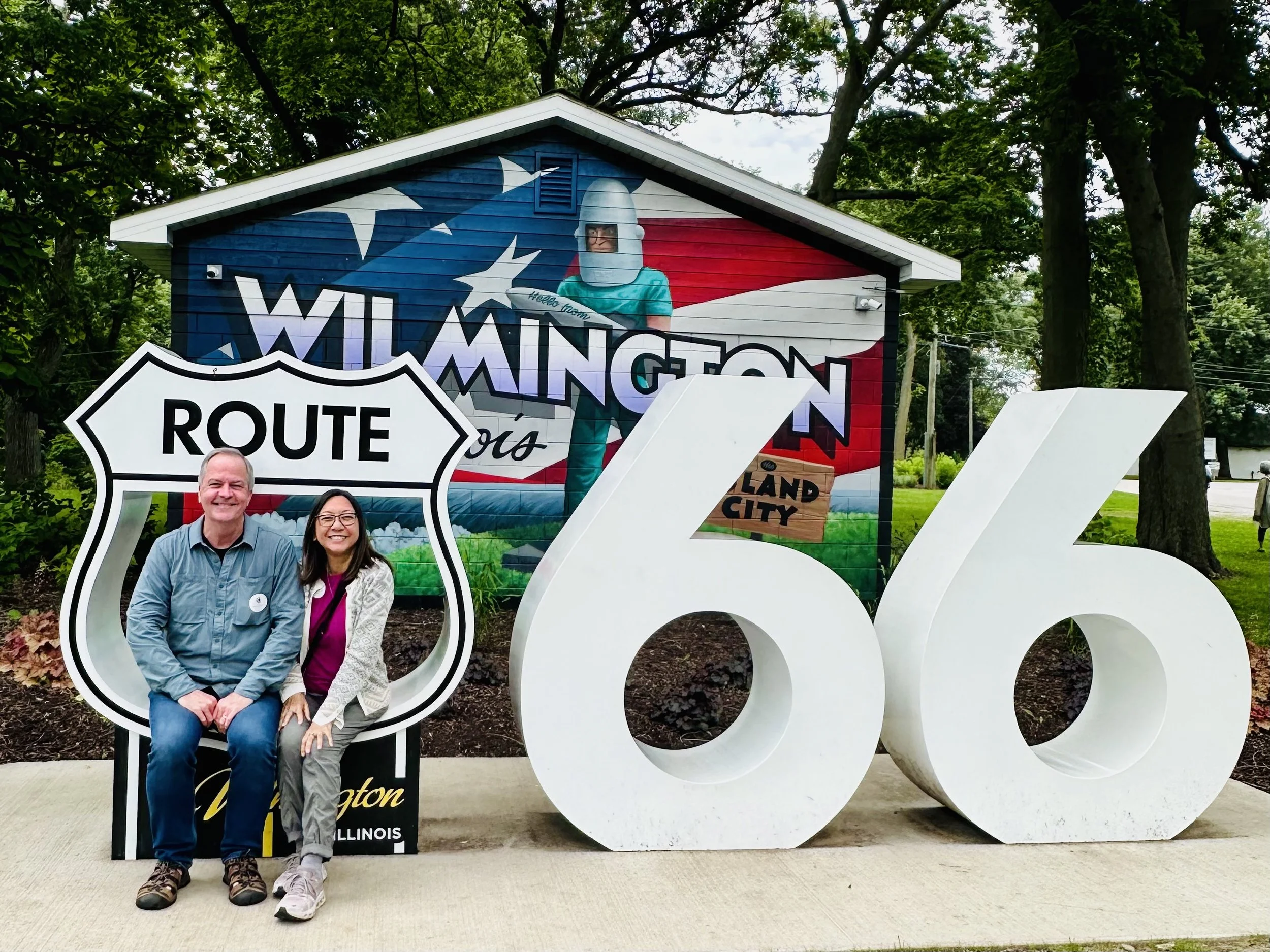
Our first stop was Wilmington, Illinois, home of the Gemini Giant. The towering astronaut was one of thousands of “Muffler Men,” oversized fiberglass figures that became a nationwide fad during the 1960s. The Gemini Giant originally belonged to a family-owned restaurant on Route 66 called The Launching Pad, and got its name from a contest at the local elementary school. Now it stands watch in a pretty little park. It’s either 28 or 30 feet tall, depending on who you ask.
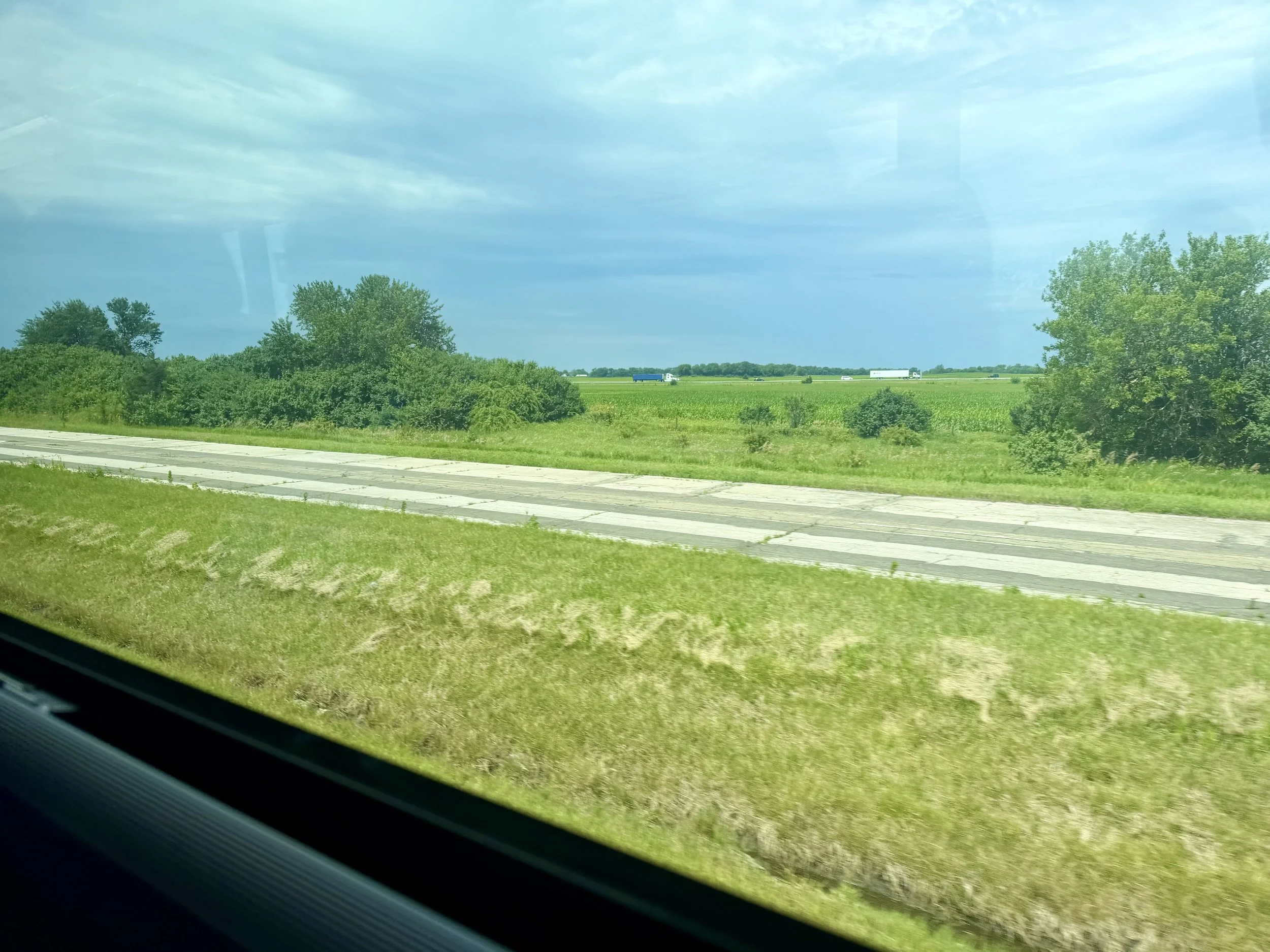
On the way from Wilmington to Pontiac, Illinois, we left the interstate and drove along Historic Route 66. Alongside the modern road were long stretches of the original Route 66 paved road.
There were even some Burma Shave signs, the humorous roadside advertisements from the 1930s and 1940s designed to be read, one snippet at a time, at 35 miles per hour.
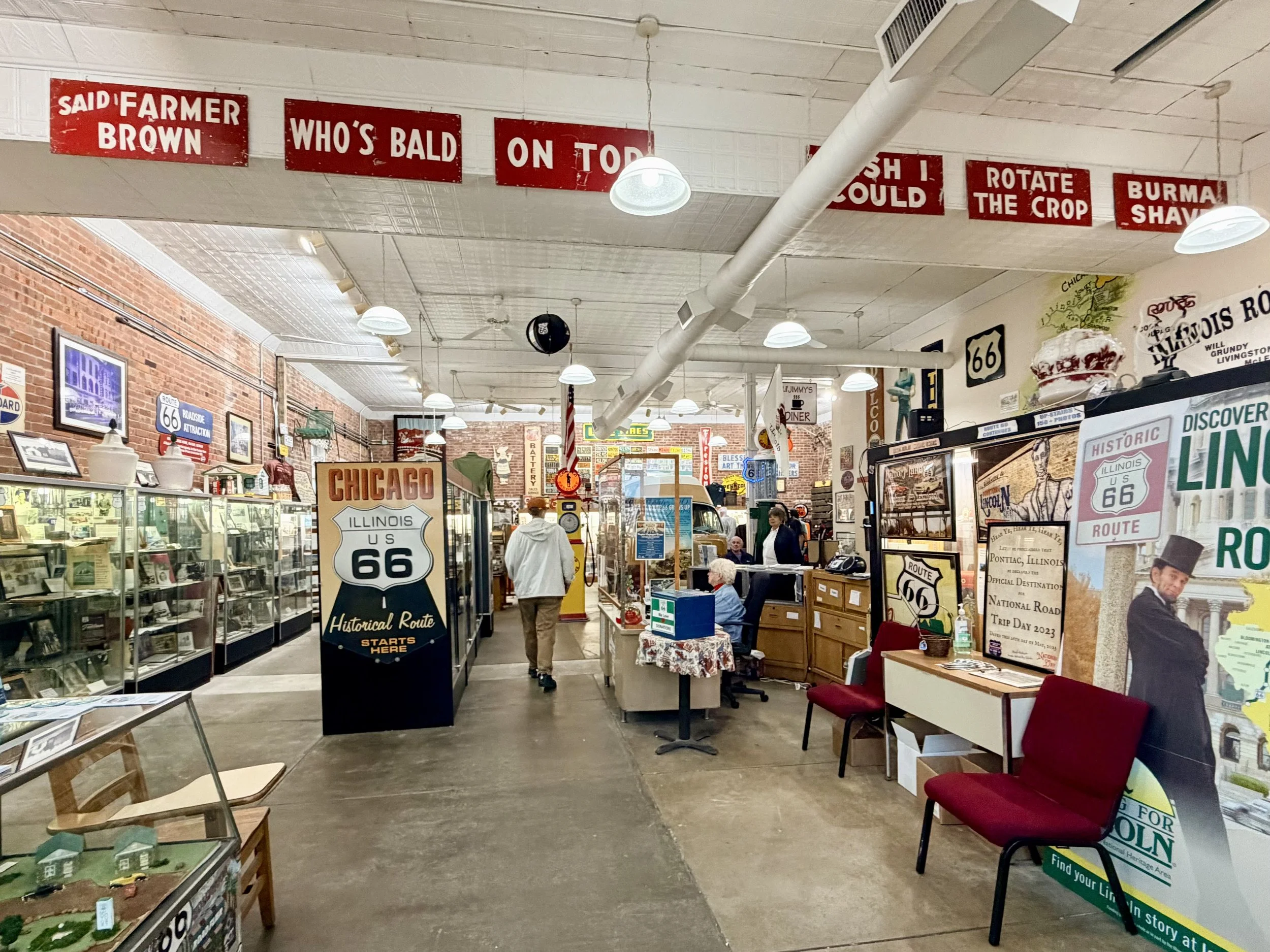
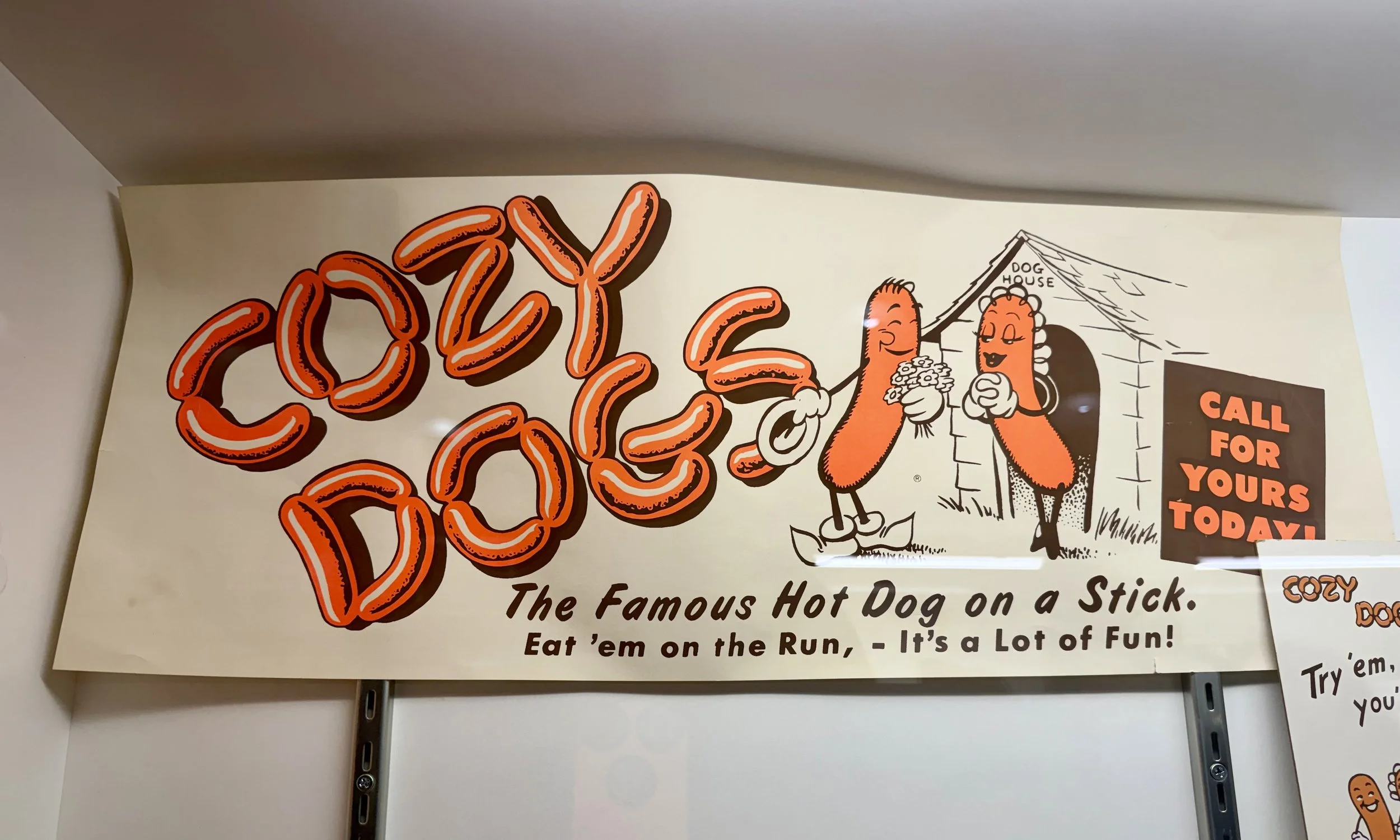
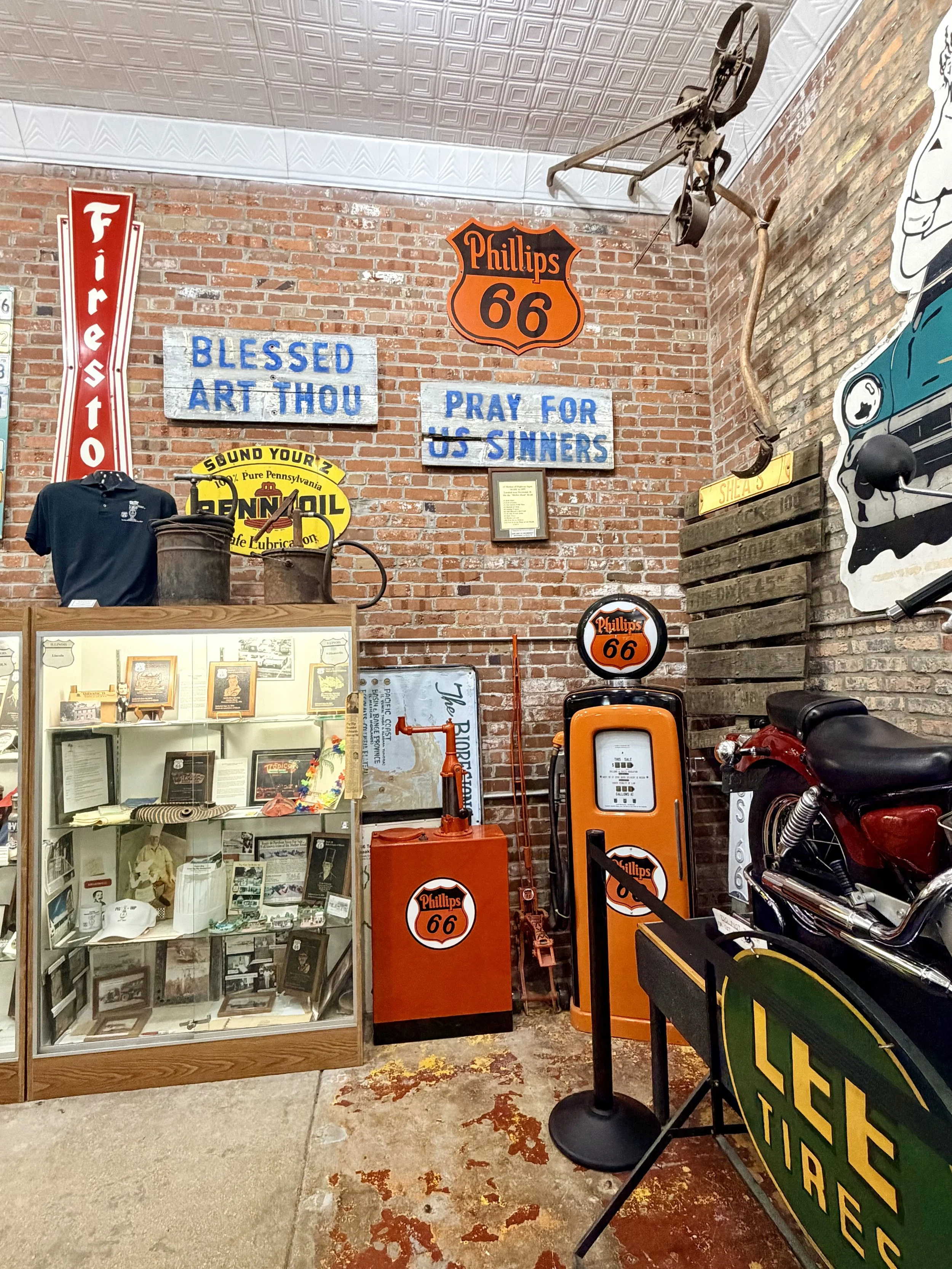
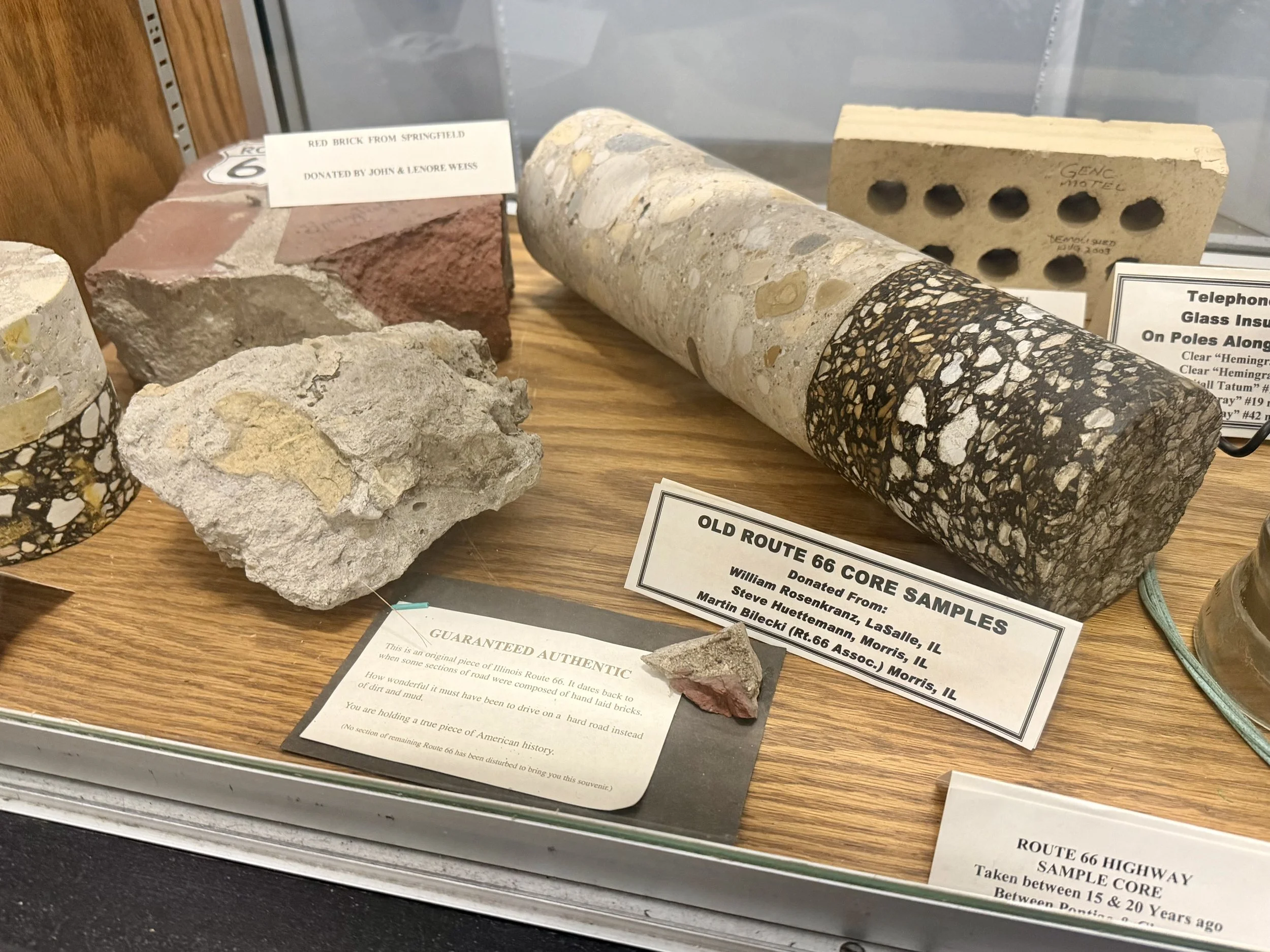
In Pontiac, we stopped to explore the Route 66 Hall of Fame and Museum. On the first floor was a vast collection of Illinois Route 66 memorabilia. Highlights included signs from the Cozy Dog Drive-in, whose owner Ed Waldmire perfected the corn dog in the mid-1940s, and the Volkswagen Microbus that inspired the character “Fillmore” in Disney’s animated film Cars.
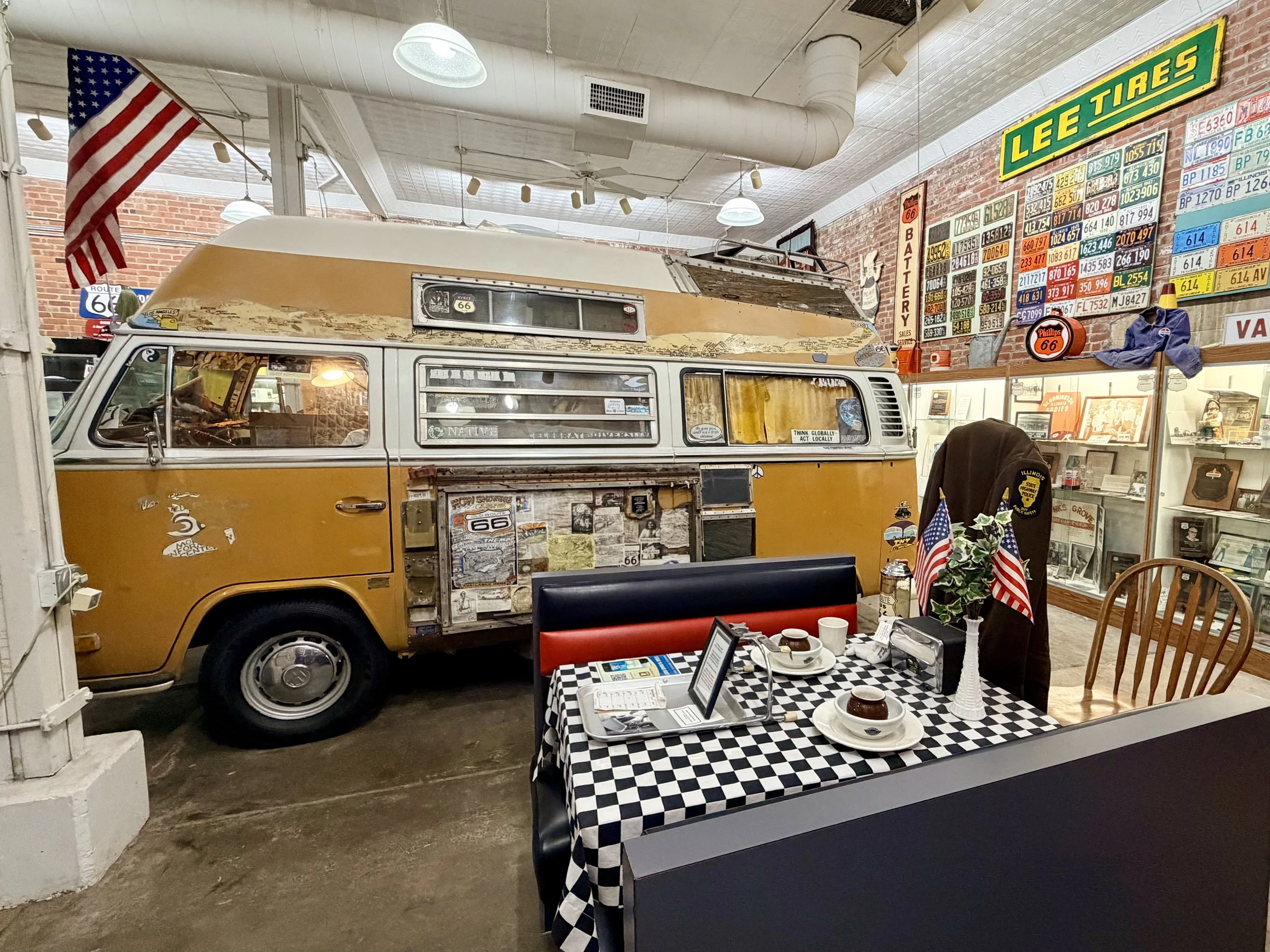
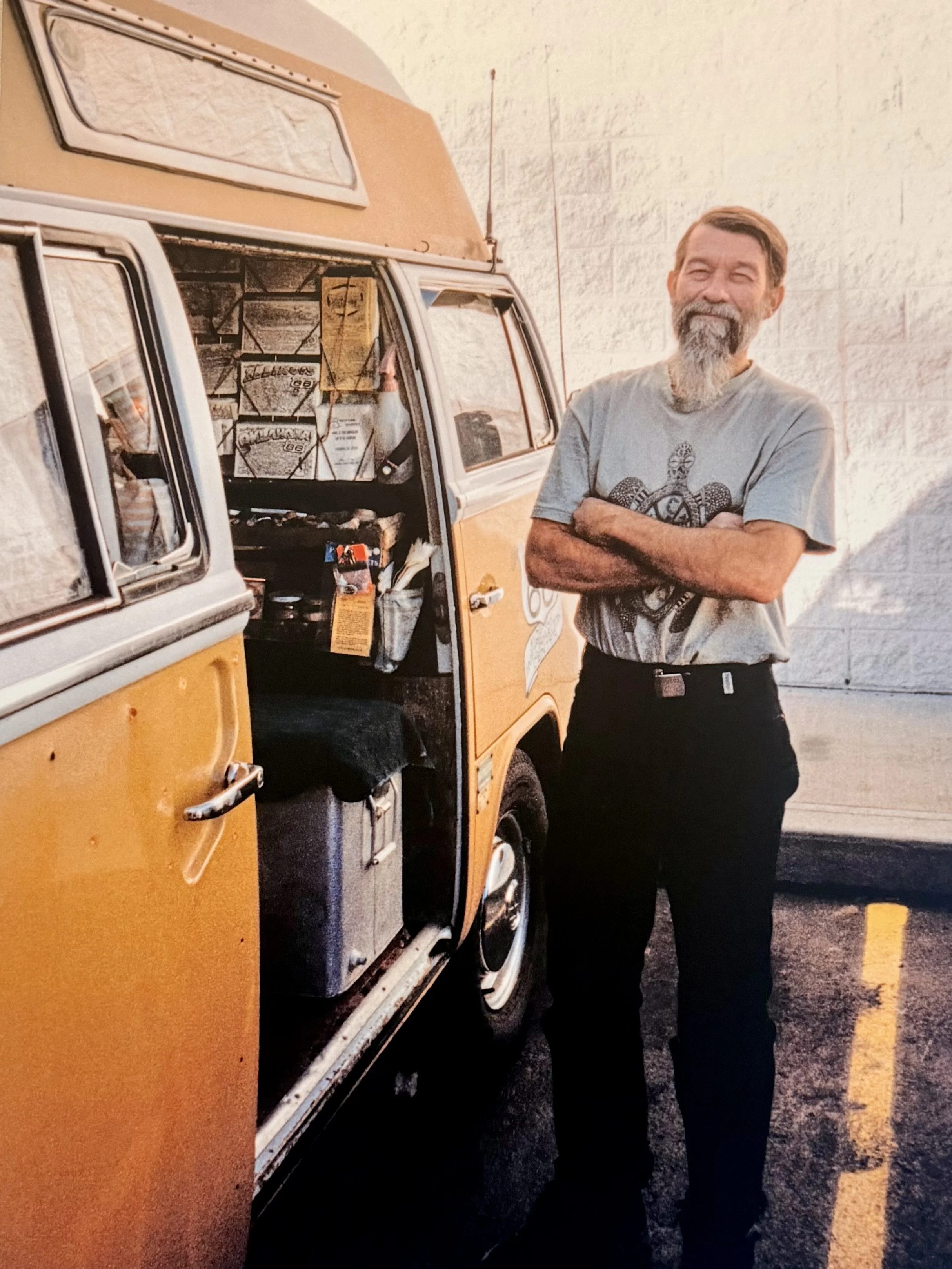
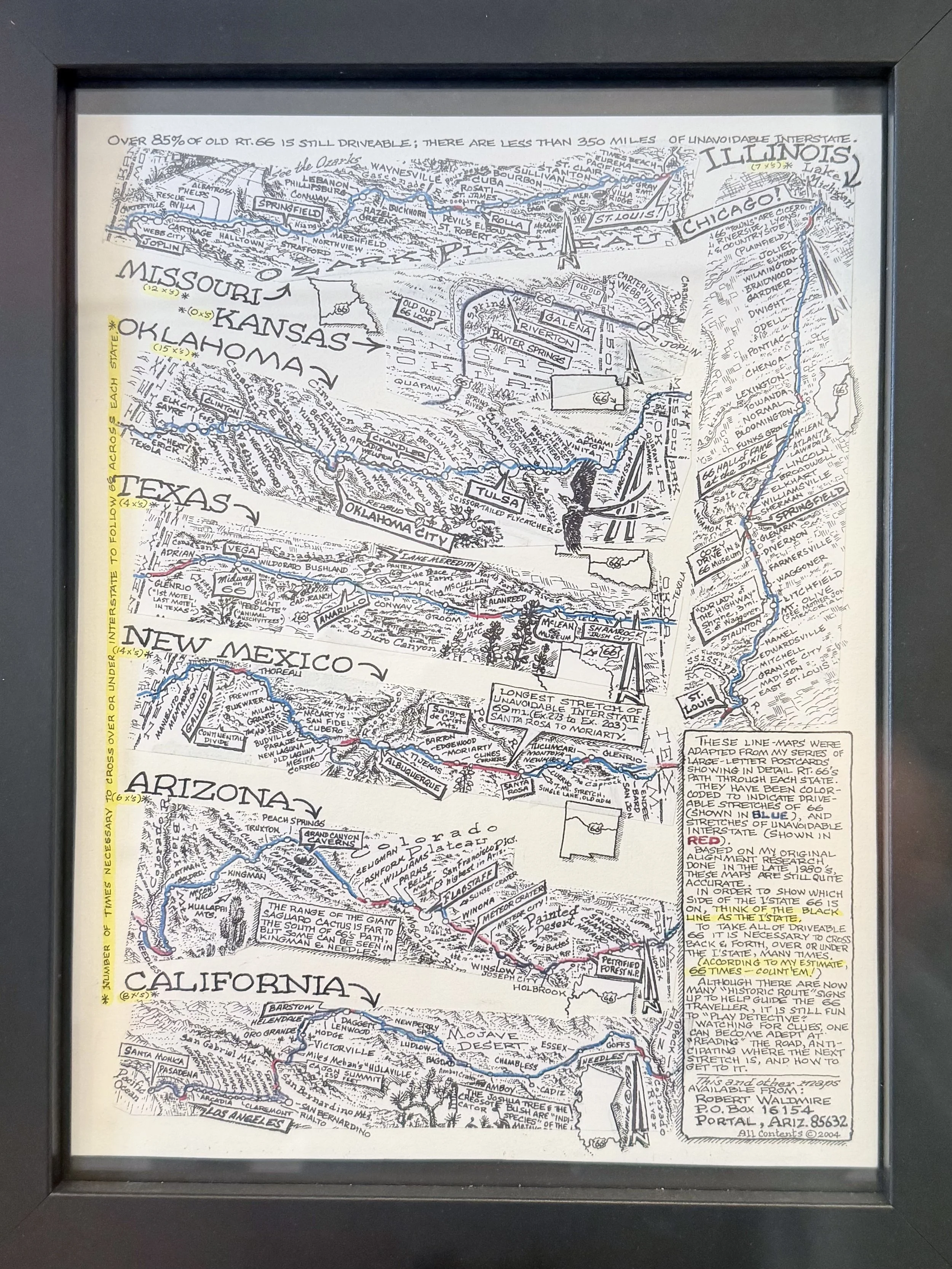
That VW bus belonged to Bob Waldmire, traveling artist and son of the Cozy Dog restaurateur, who became famous for his whimsical maps promoting Route 66. On the second floor of the museum was a space dedicated to Bob’s fascinating work. He was a colorful character who lived in his bus every summer and considered himself an environmentalist and ethical vegetarian. He got in trouble with the law for displaying live rattlesnakes at Cozy Dog and was sentenced to drawing posters for the U.S. Fish and Wildlife Service. I wish we could have stayed longer, to better appreciate those amazing maps.
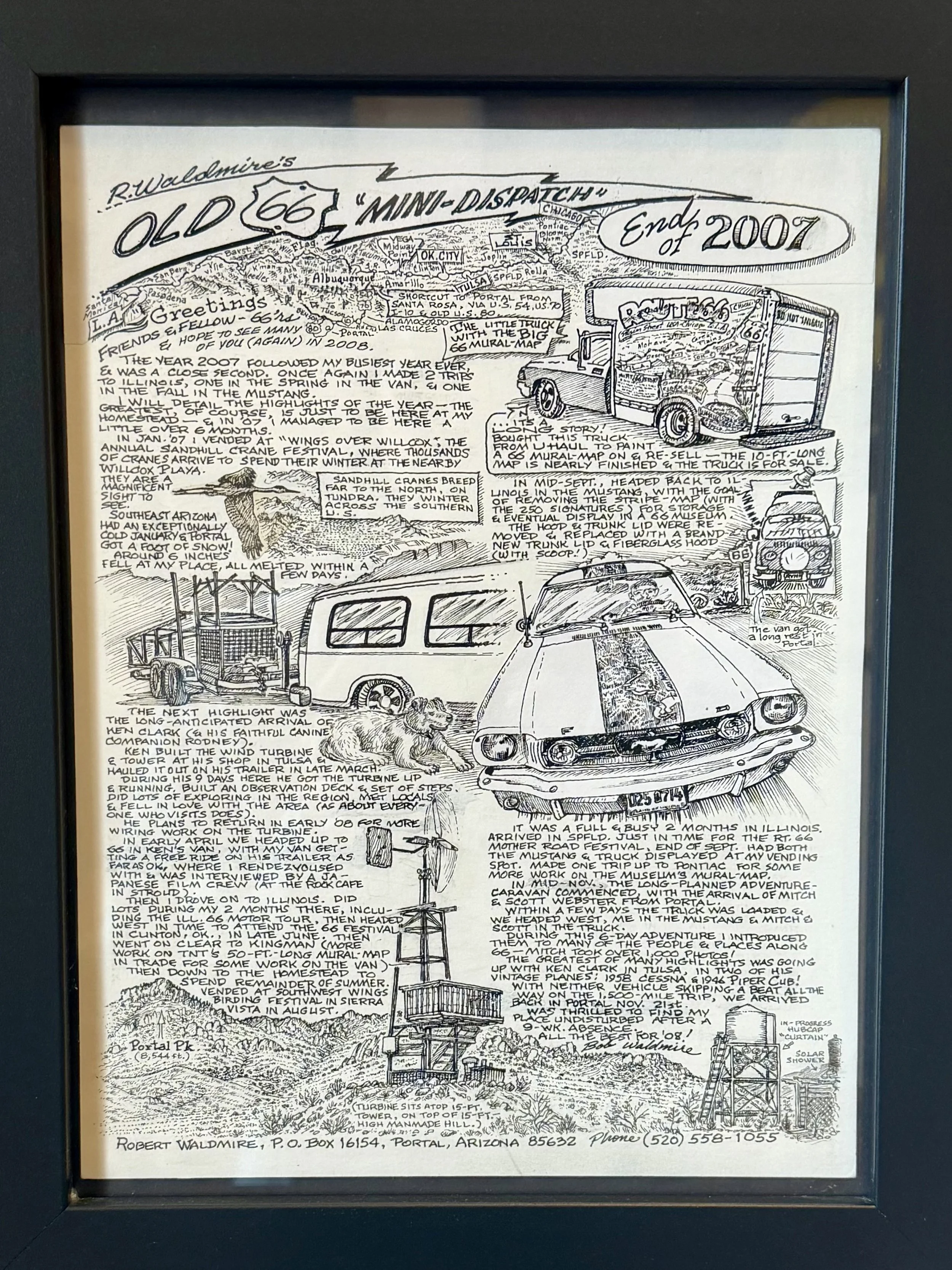
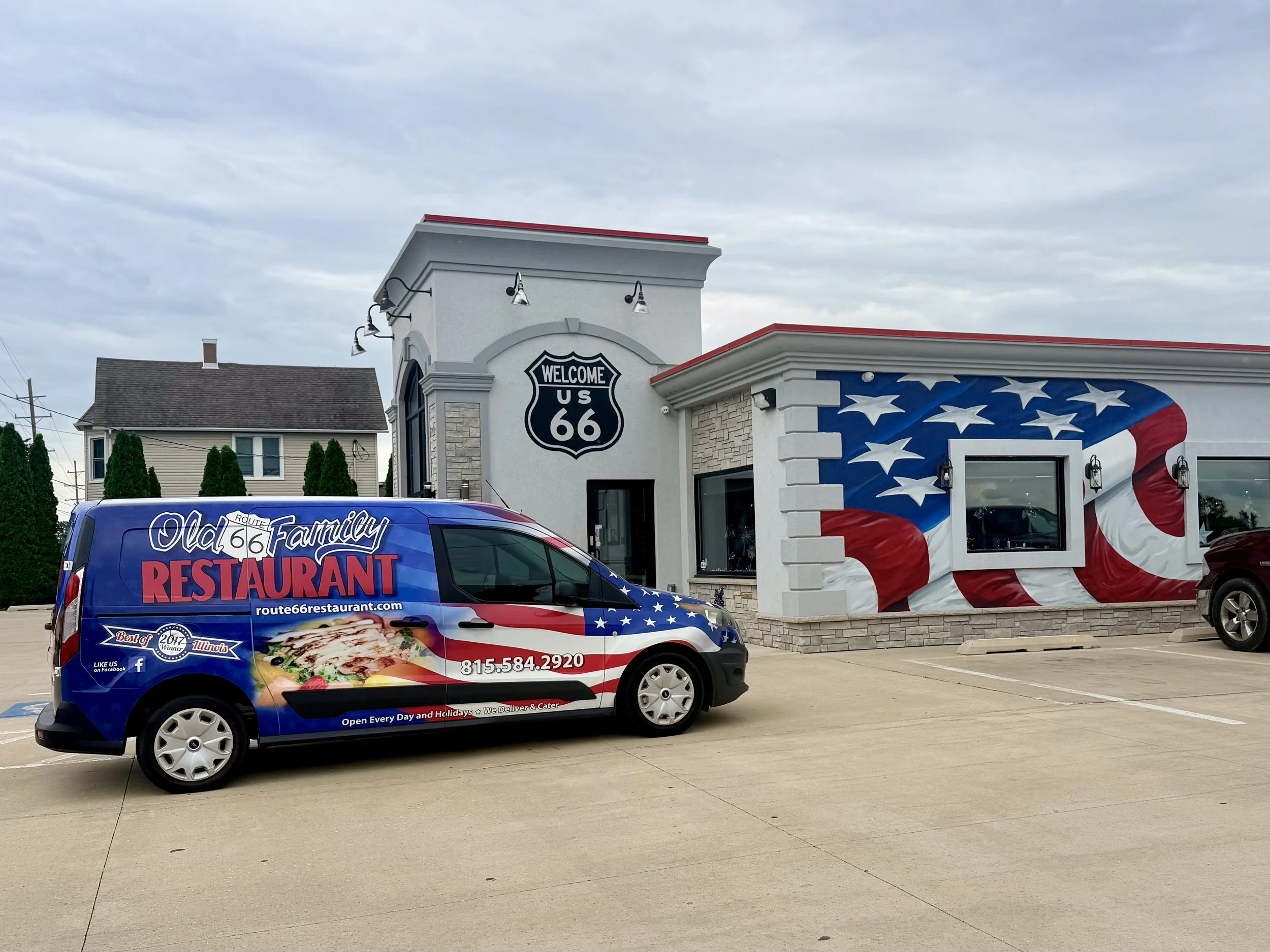
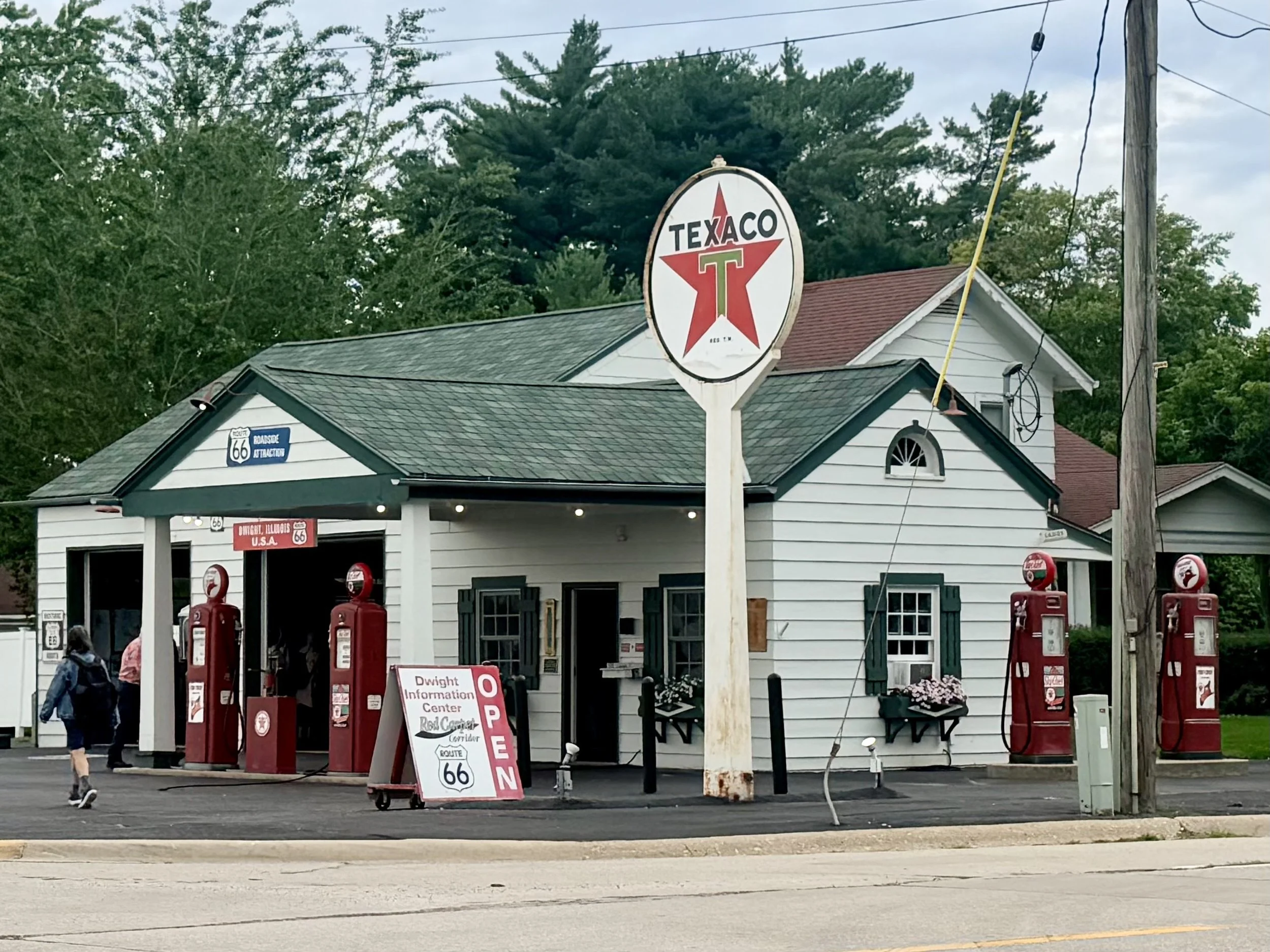
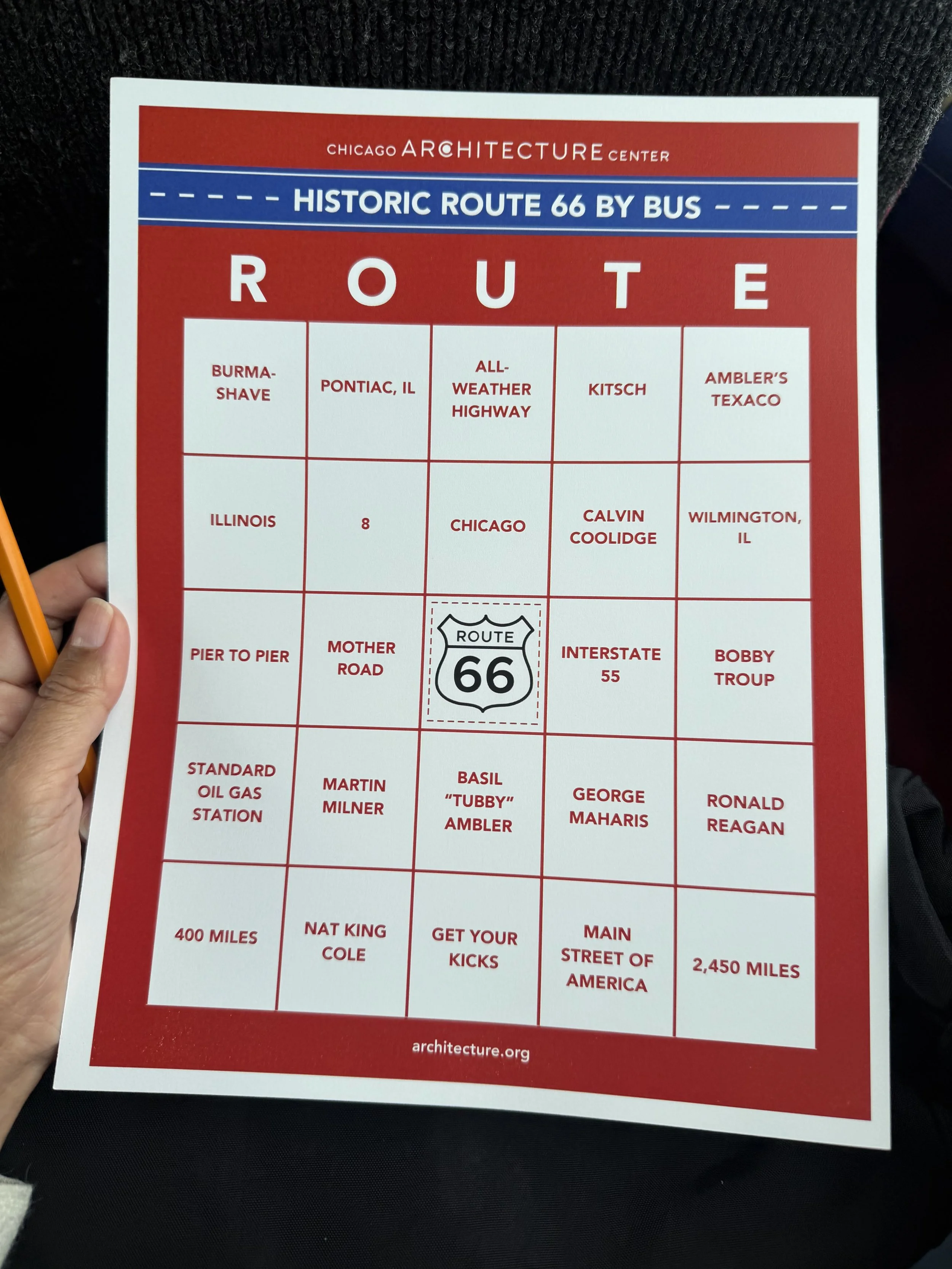
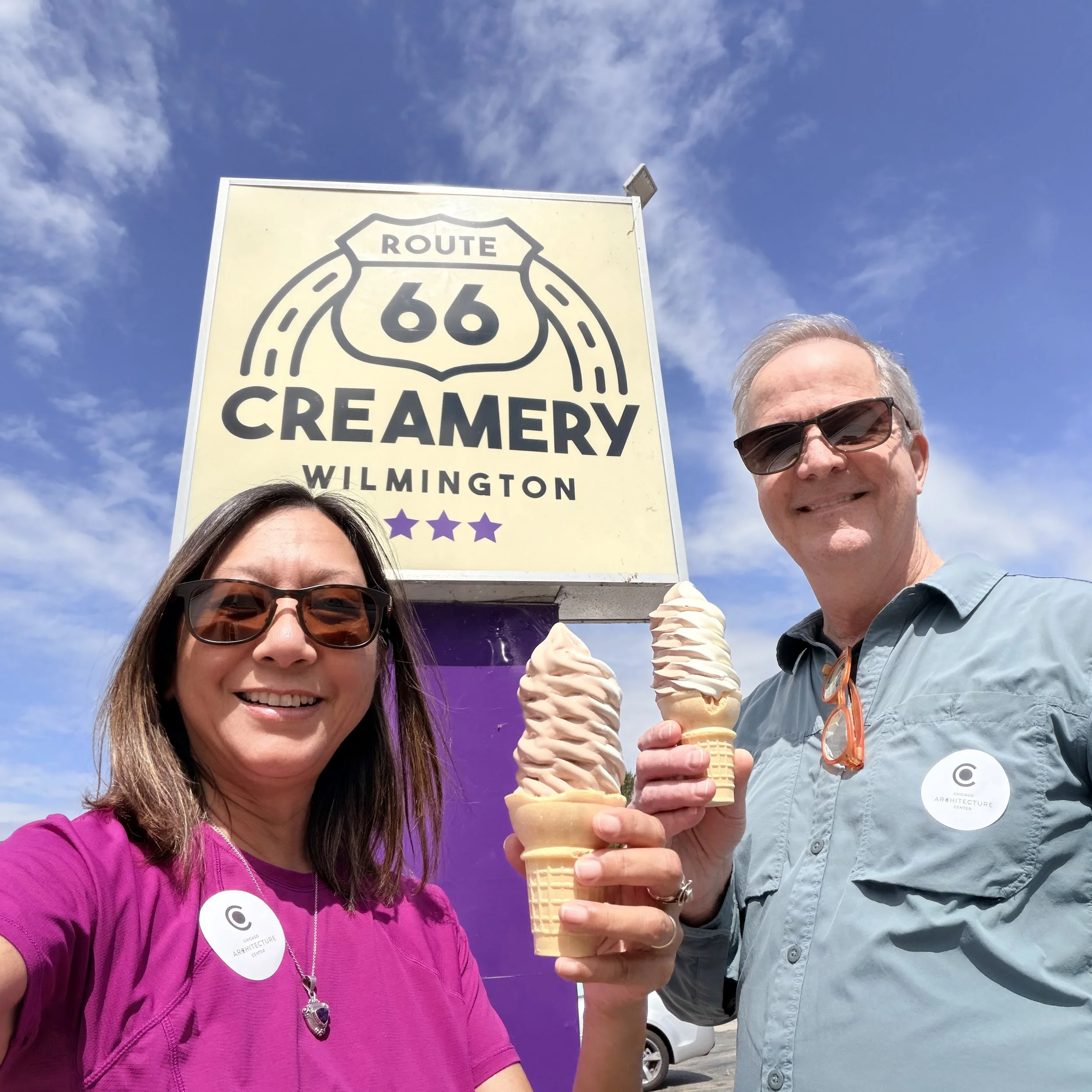
Pontiac was the furthest spot on our tour of Route 66, so we turned around and headed back. We stopped in Dwight for lunch at the Old Route 66 Family Restaurant and a peek inside Ambler’s Texaco Gas Station. After playing several rounds of Route 66 Bingo on the bus, we made a quick stop in Wilmington again for soft-serve ice cream at the Route 66 Creamery.
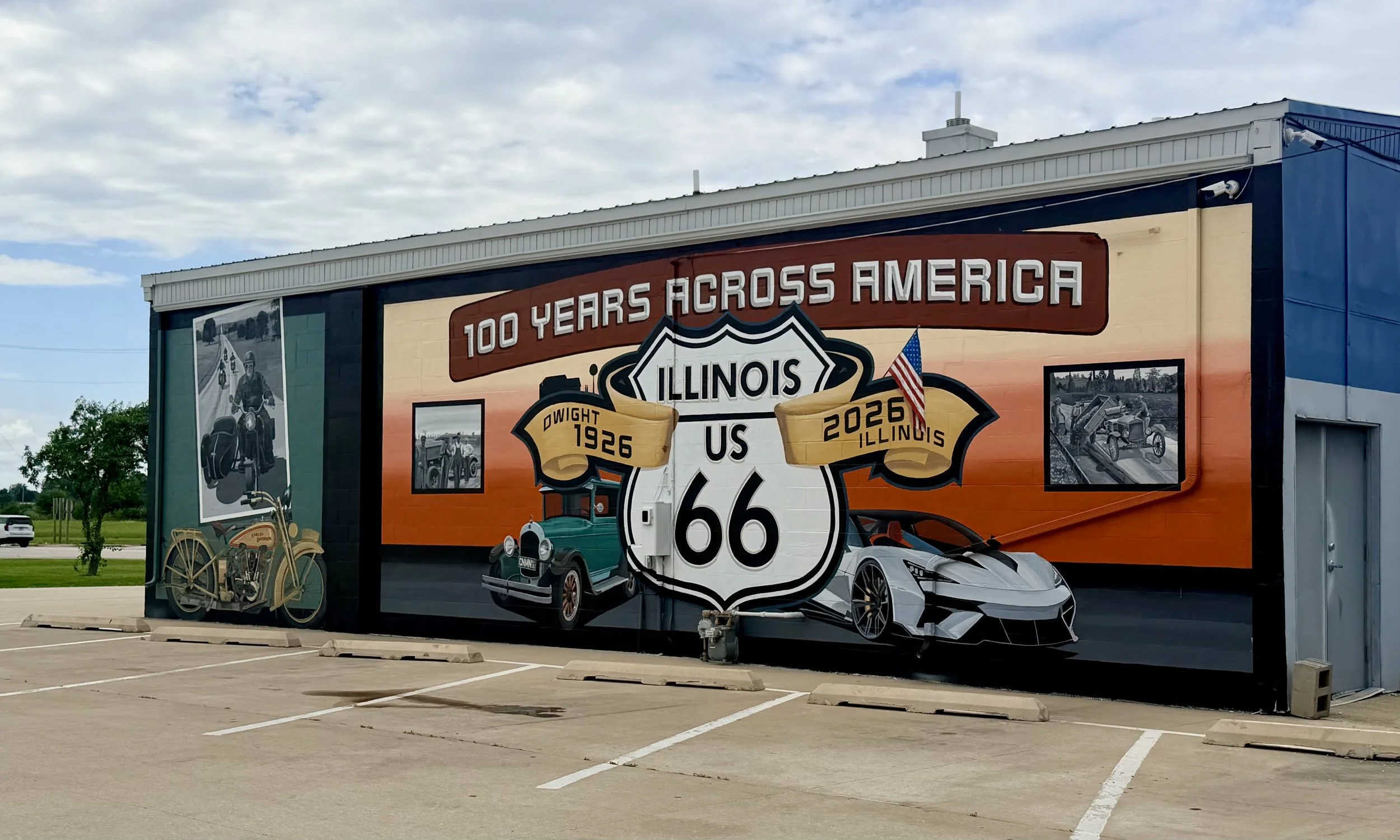
Our ride back to Chicago was uneventful and surprisingly quick. Our bus driver avoided heavy traffic on Lakeshore Drive by using the “Lower Streets” (Lower Michigan, Lower Wacker, etc.) - a new experience for us!
It was fun to experience Route 66 and learn about its fascinating history and its unique contribution to America’s pop culture. Hats off to the CAC for putting together such an interesting and enjoyable tour!