After admiring the rustic paintings in the cave churches in Cappadocia - of middle Byzantine vintage (9th-12th centuries) - I was curious to see the Chora Church in Istanbul. I had heard that the Chora had outstanding mosaics and frescoes from the late Byzantine era, a time known as the Palaeologan Renaissance. I didn’t remember that term from my college Art History courses, so I Iooked it up: it was the culmination of Byzantine Art, and inspired the Italian Renaissance.
The Chora Church was just a couple blocks inside the city walls. Our guide Fatih explained its convoluted backstory:
The Chora was originally part of a 4th century monastery called The Holy Savior in the Fields. Its name was shortened to Chora - the last part of its Greek name, referring to its location outside the Wall of Constantinople. When the famous Theodosian Walls were built, the church was inside their protection, but the name stuck.
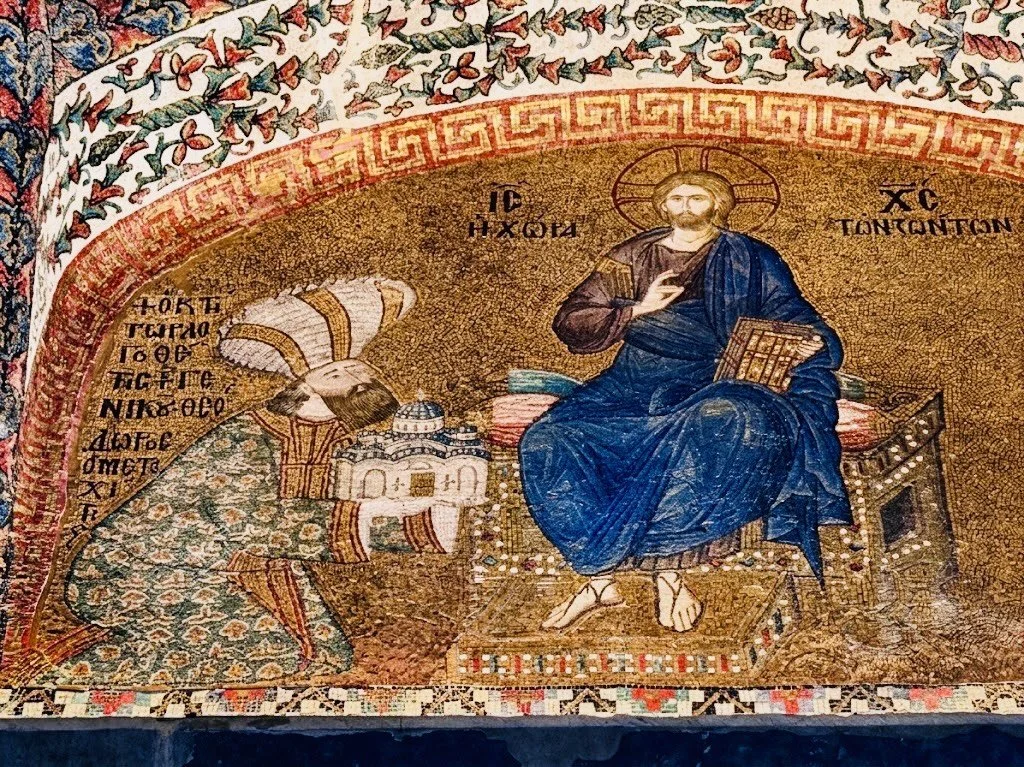
The old church was rebuilt at least twice, perhaps due to earthquakes. The church that stands today was rebuilt in the 14th century. A wealthy statesman and scholar named Theodore Metochites donated the funds for decorating the church.
During the 16th century, the Ottomans converted the church into a mosque.
In 1945, it was designated a museum by the Turkish government. After extensive restoration work, the museum opened to the public in 1958.
In 2020, Chora was converted to a mosque again by the Turkish government under President Erdoğan, which has generated some controversy.
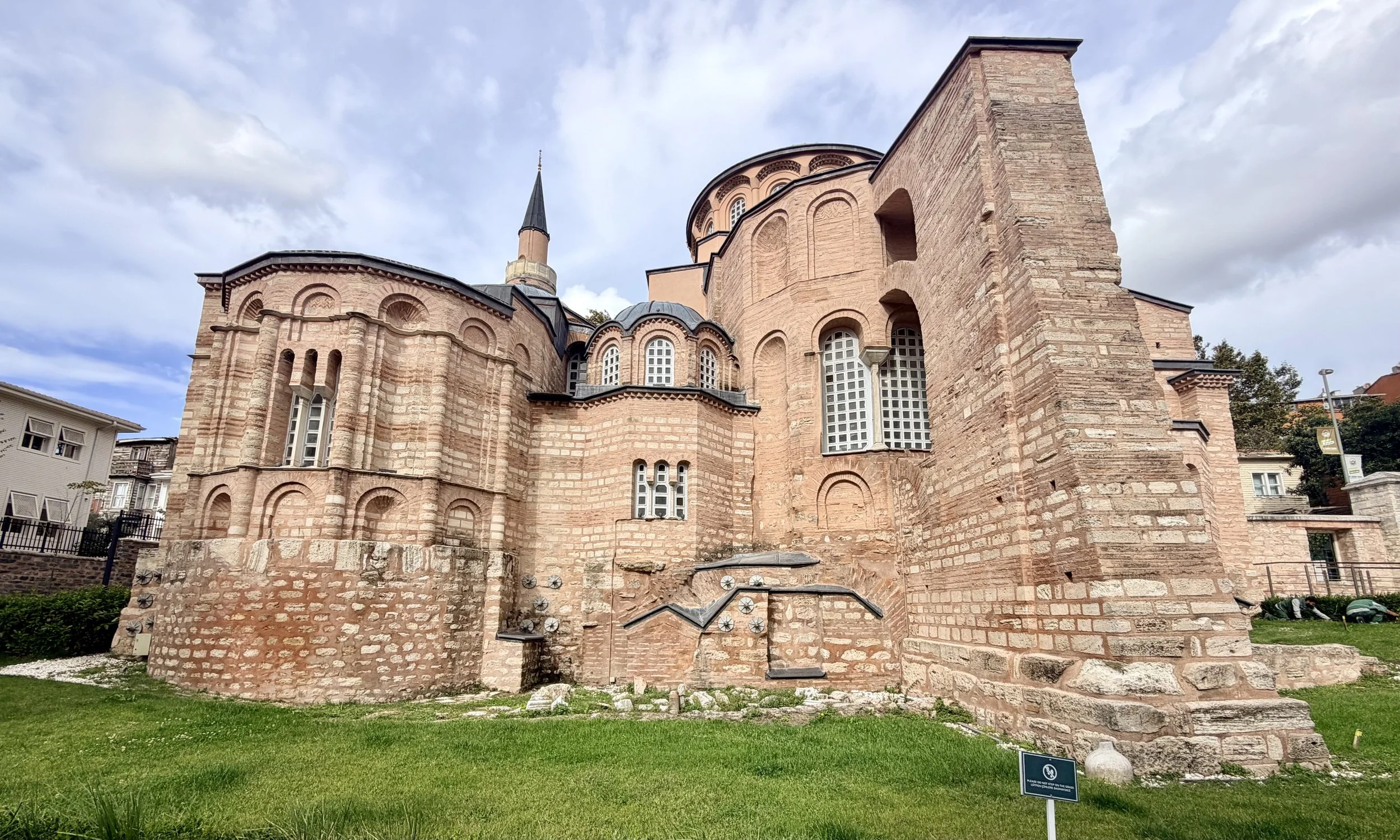
The Chora Church was relatively small, with a jumbled and confusing exterior. We could see the iron bars used to reinforce the old brick walls.
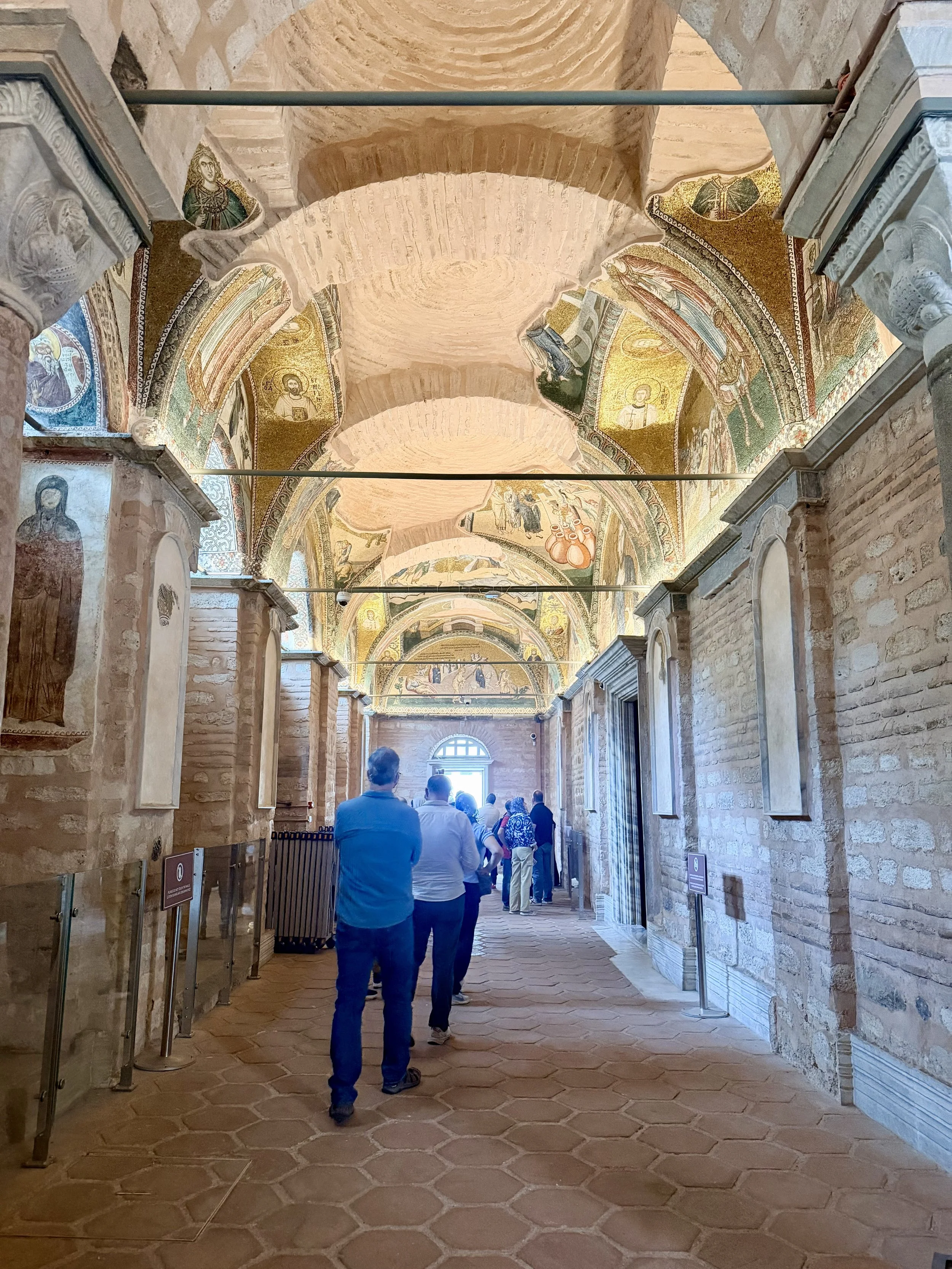
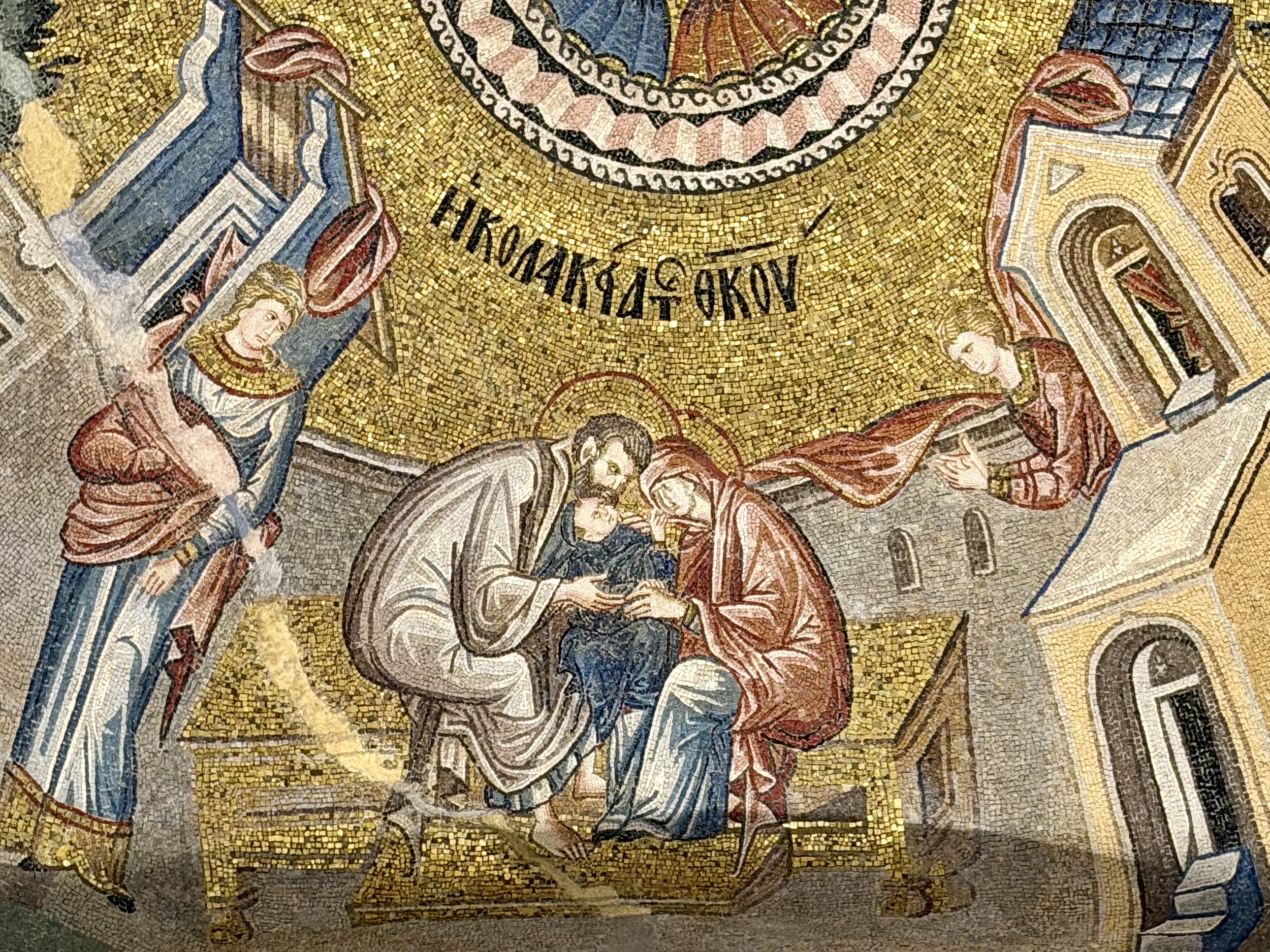
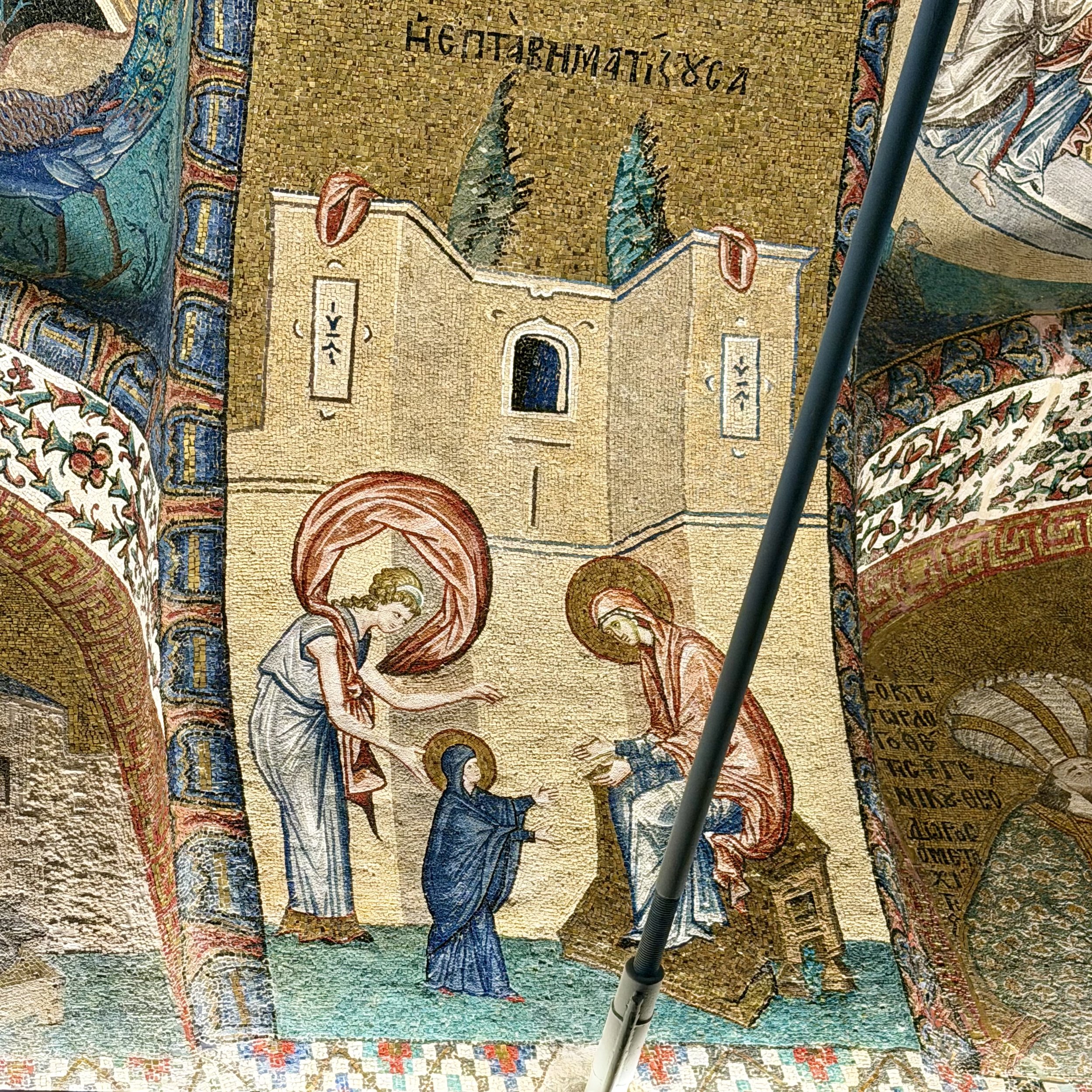
We entered near the side church, and found ourselves in a wide corridor topped by a series of domed vaults. Aside from some sections with bare brick that could not be restored, the ceilings and walls were covered in magnificent frescoes and mosaics! The detail in those images was amazing - the facial expressions, the fabric folds, the expressive hands. The gold mosaic tiles shone brightly in the spotlights. I felt grateful that when the Ottomans converted the church into a mosque, they plastered over the figures instead of destroying them

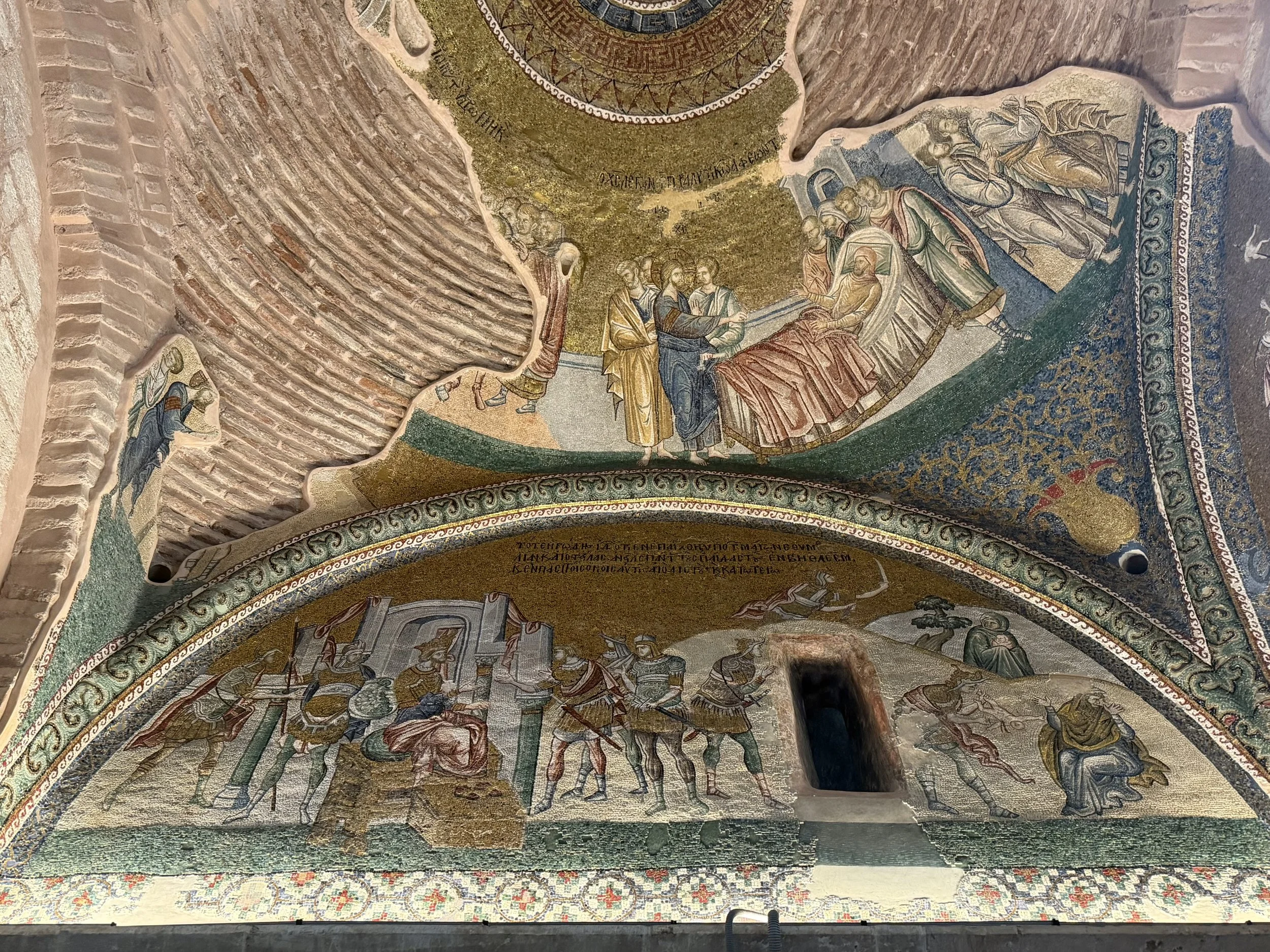
A side church used as a mortuary chapel was decorated with frescoes, including a very fine version of Anastasis, with Jesus standing atop a vanquished Hades and pulling Adam and Eve into Heaven. The Byzantine Church Fathers were depicted wearing distinctive vestments with geometric cross patterns.
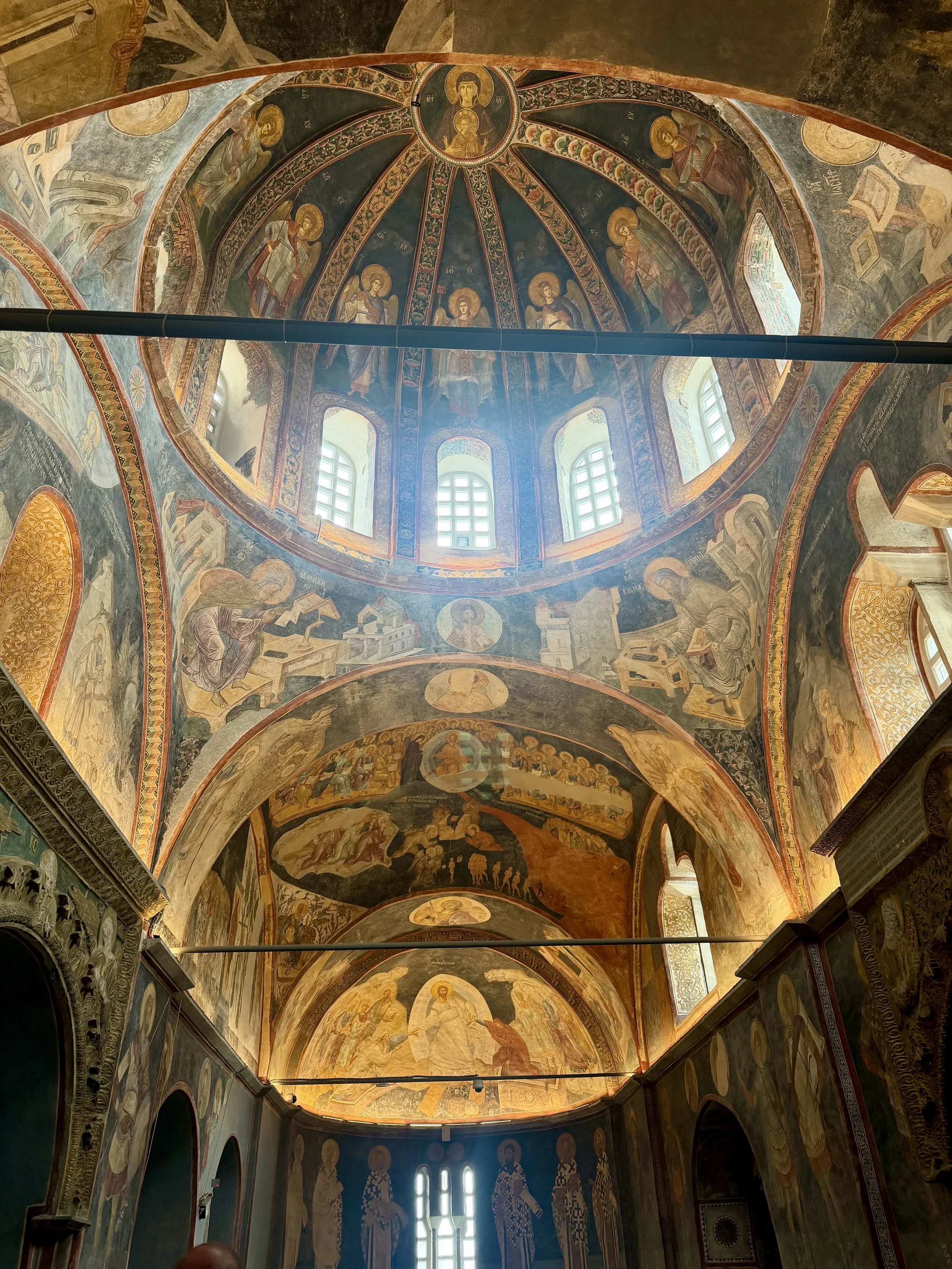
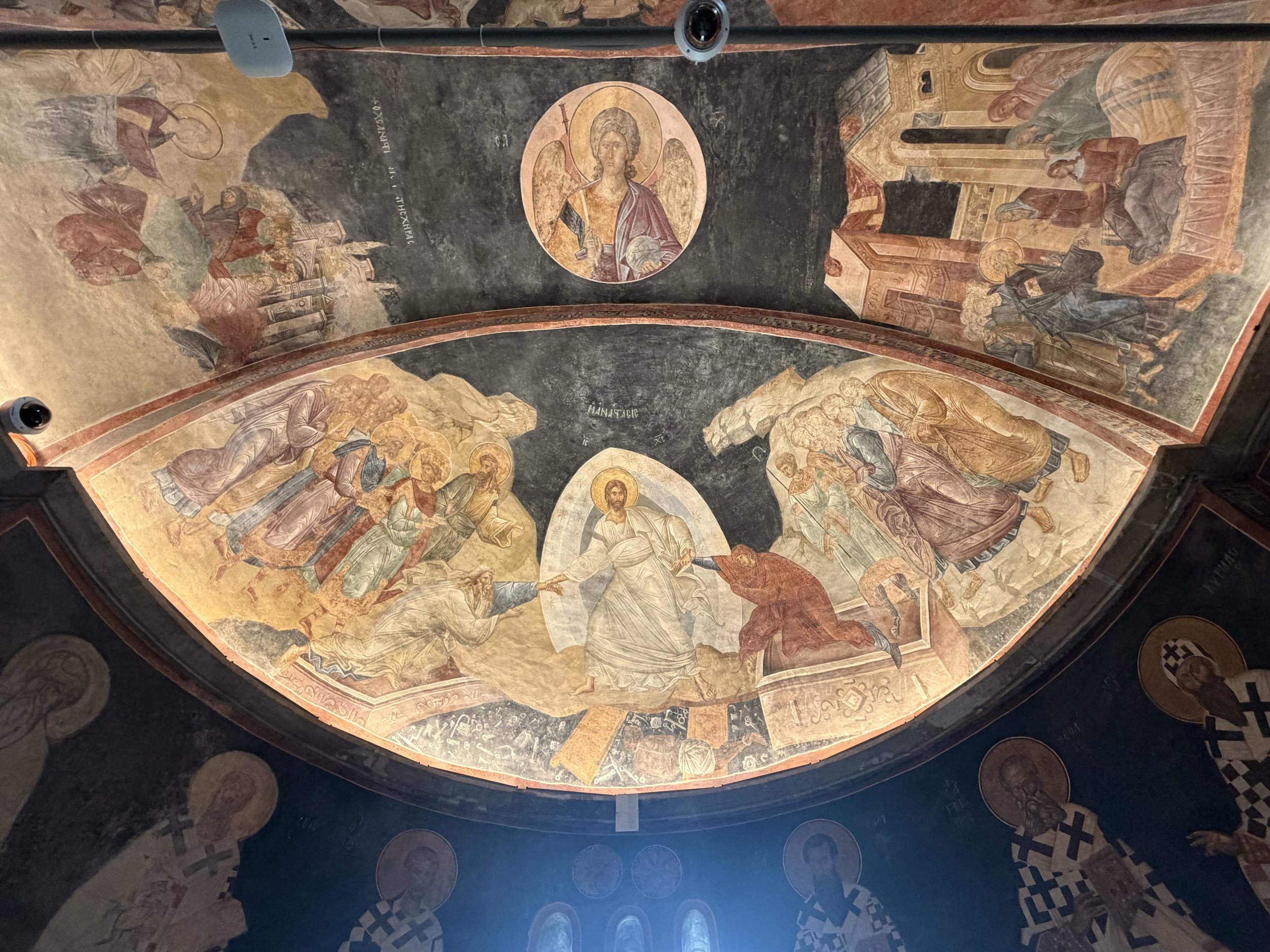
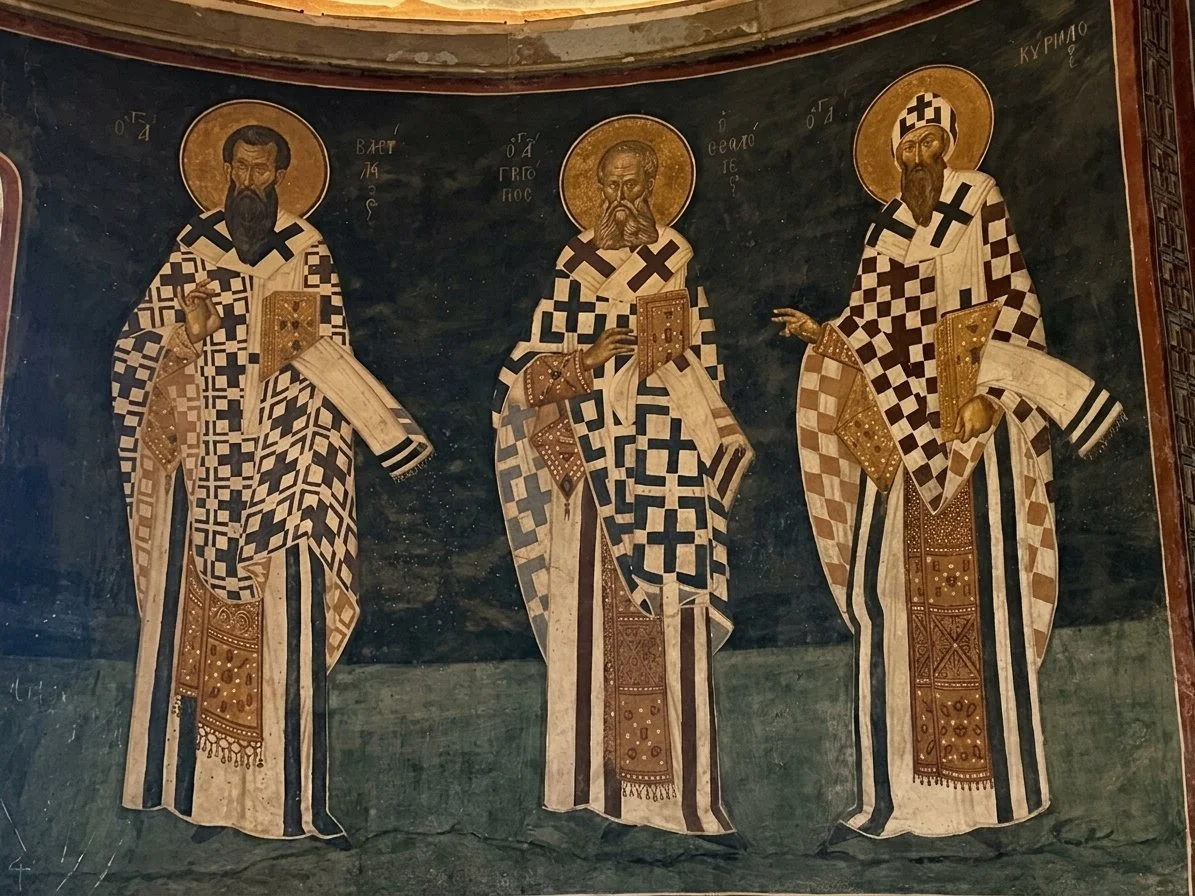
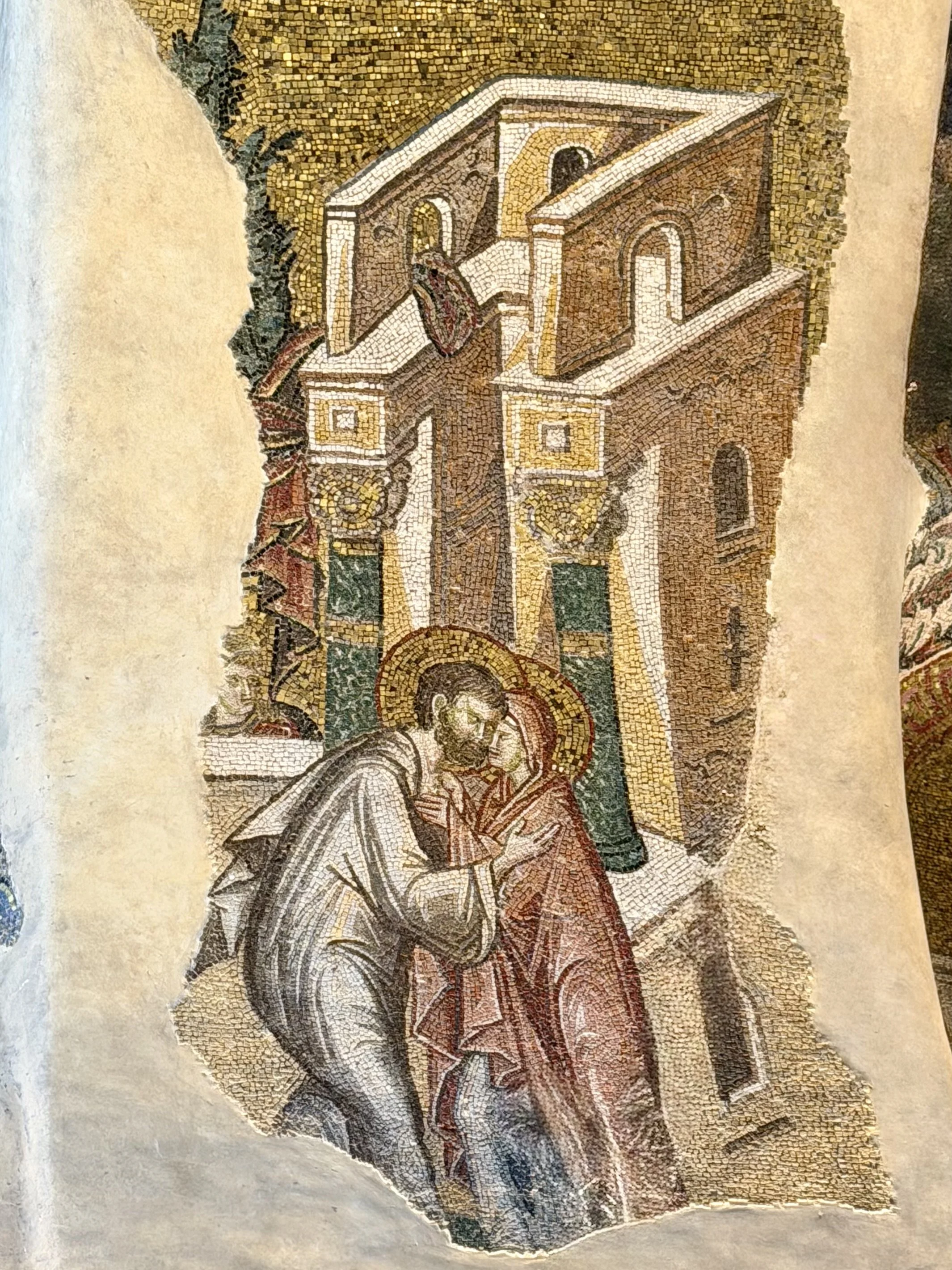
There were dozens of scenes overhead, and I walked around with my head tilted back, trying to take it all in. Many were familiar stories of Jesus’ miracles from the New Testament. I was intrigued by the scenes from Mary’s birth and childhood, as told in apocryphal texts. I was surprised to see so much emotion in those mosaic figures.
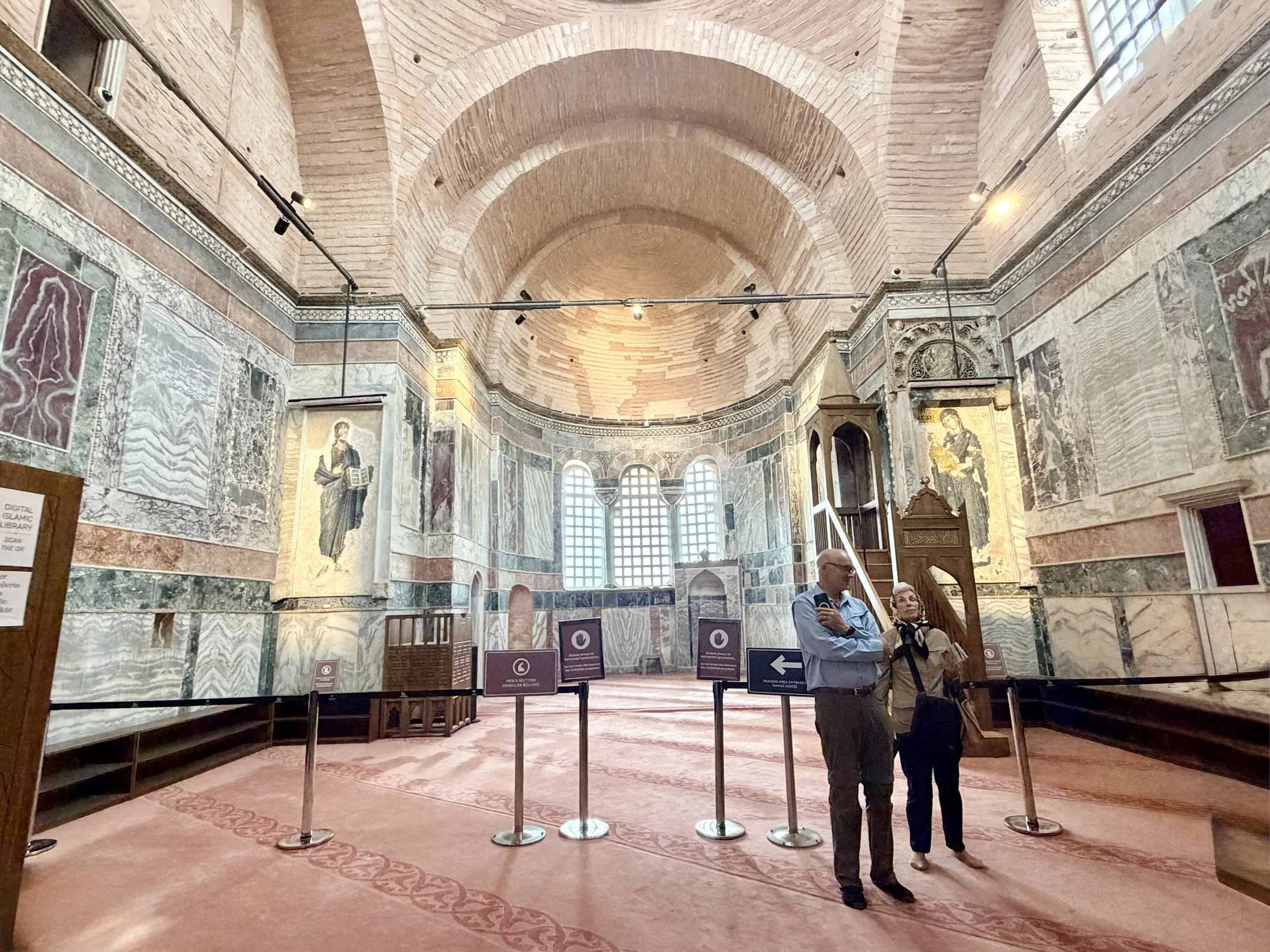
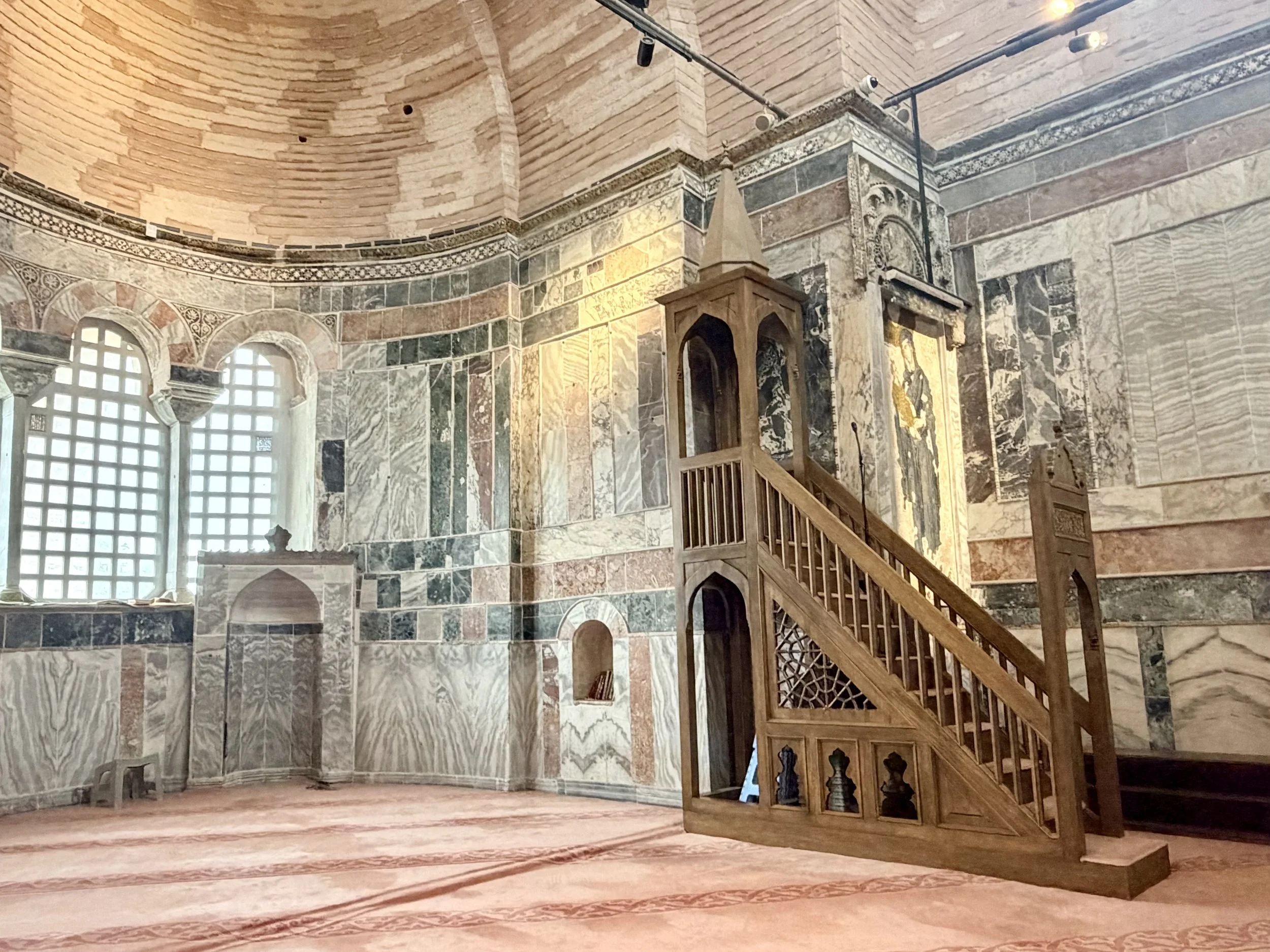
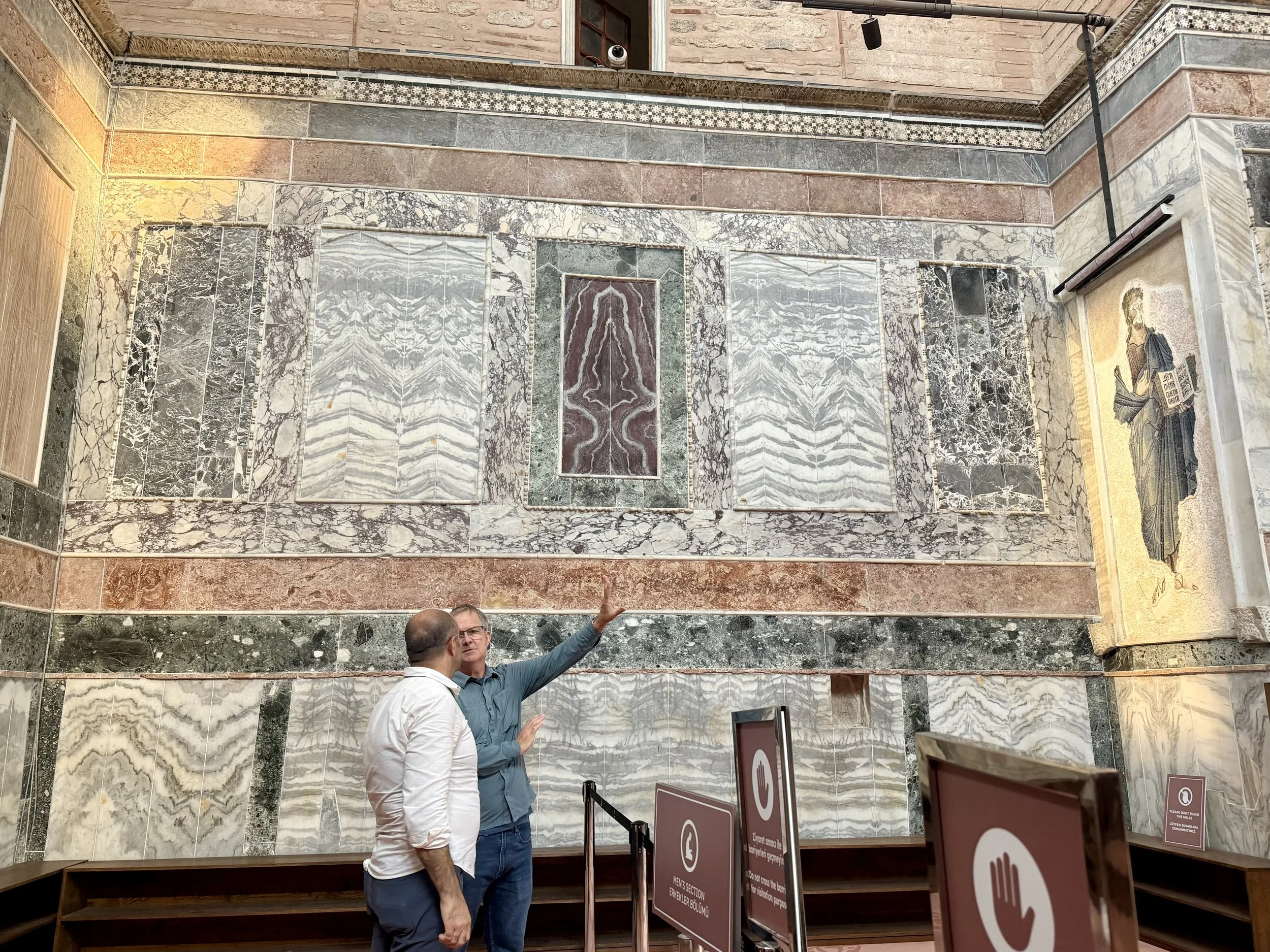
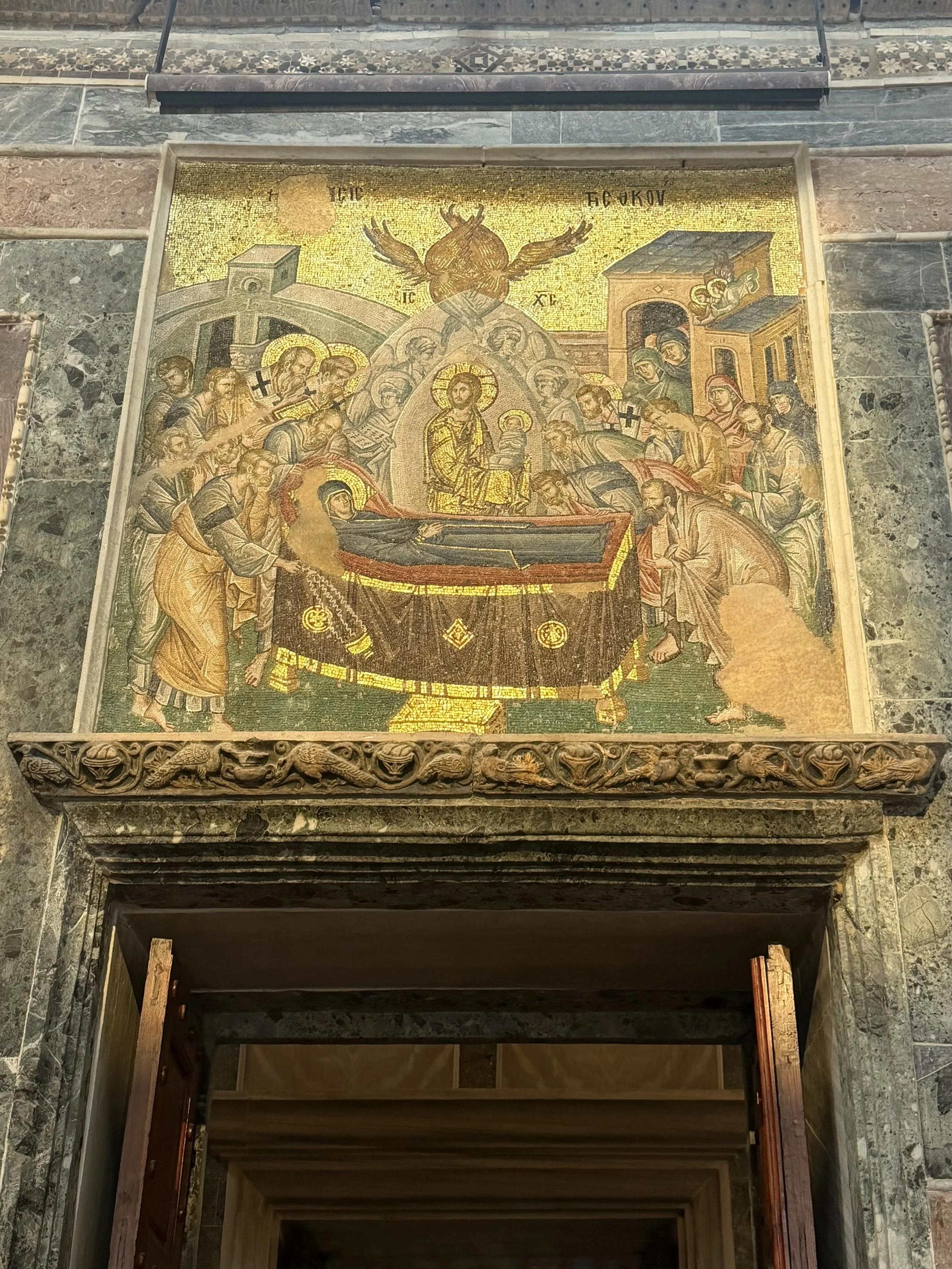
Inside the main church, the Naos, things looked very different, and we were reminded that this was now a functioning mosque. The domed ceiling was undecorated, but the walls were covered in strikingly beautiful slabs of marble in a variety of hues and patterns.Only three mosaics remained here, with fabric roller shades to cover the figures during prayer. The largest mosaic, above the doorway, showed Mary on her deathbed, with Jesus holding an infant symbolizing her soul.
Before we left the church, I stopped for a last look at the mosaic showing Jesus sitting on a throne, with Theodore Metochites on his knees, presenting a model of the Chora Church. I was a bit amused at how donors were honored in those times, but I was mostly grateful for Metochites’ philanthropy and love for the arts. Without him, we wouldn’t have this beautiful church.