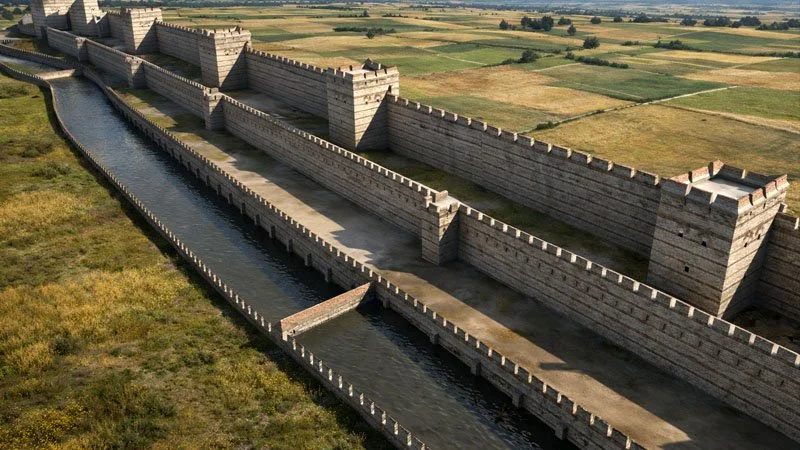
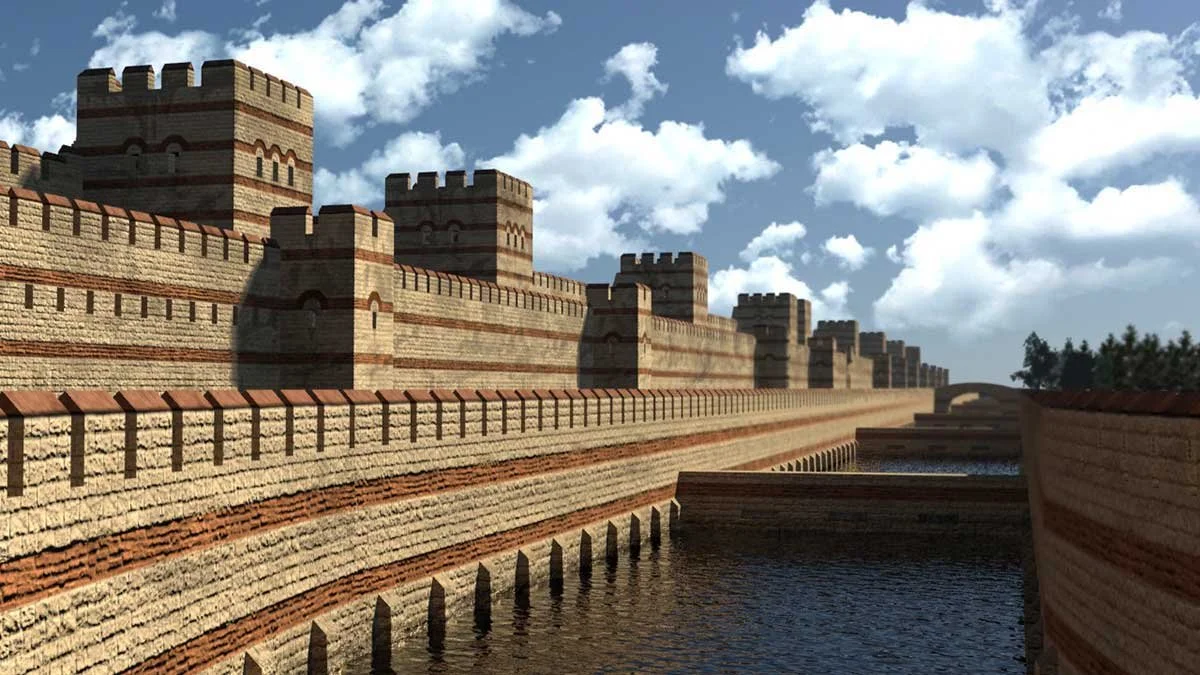
The Walls of Constantinople were so impenetrable that they protected the city for more than a thousand years. Wow!
In 330 CE, Constantine the Great had a new wall built and declared Byzantium to be the new capital of the Roman Empire. He renamed the city “New Rome,” but it became known as Constantinople. A hundred years later, Emperor Theodosius expanded the city walls, erecting a mighty land wall four miles long, from the Golden Horn to the Sea of Marmara. In 1204, the Venetians of the 4th Crusade sacked Constantinople by entering via the weaker (and older) sea wall. But the famous Theodosian Wall remained unbreached until the Ottomans, led by Sultan Mehmed II, conquered the city in 1453.
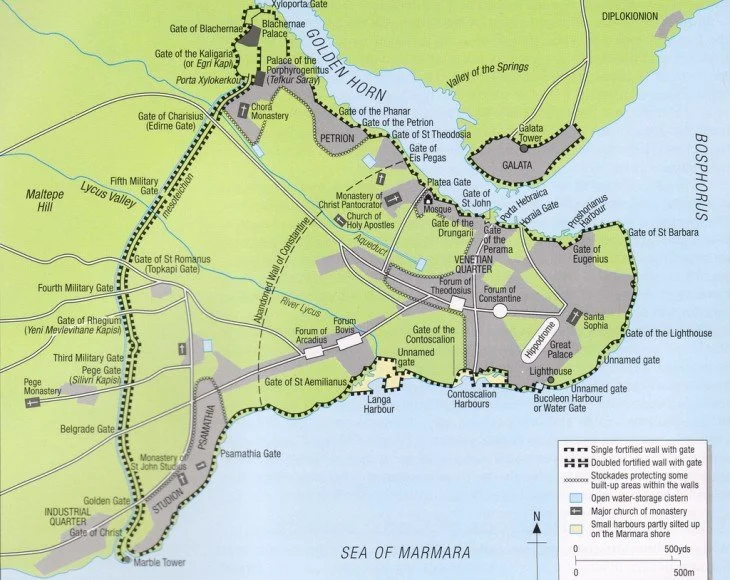
Many parts of the wall are still standing today. We saw one section when we visited Balat, the colorful neighborhood on the Golden Horn. The Agora Meyhanesi (Tavern) sat between the Theodosian Wall and another old wall.
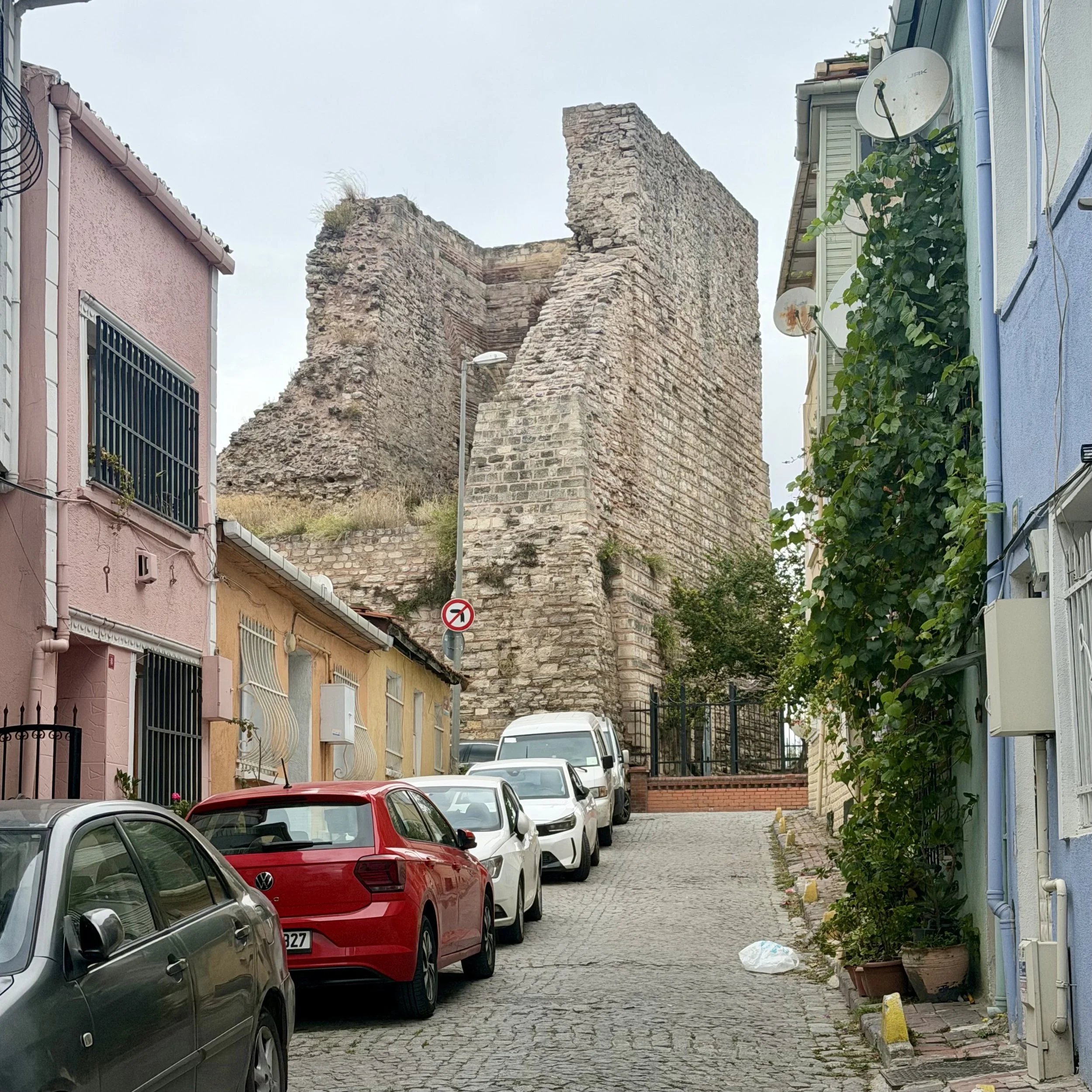
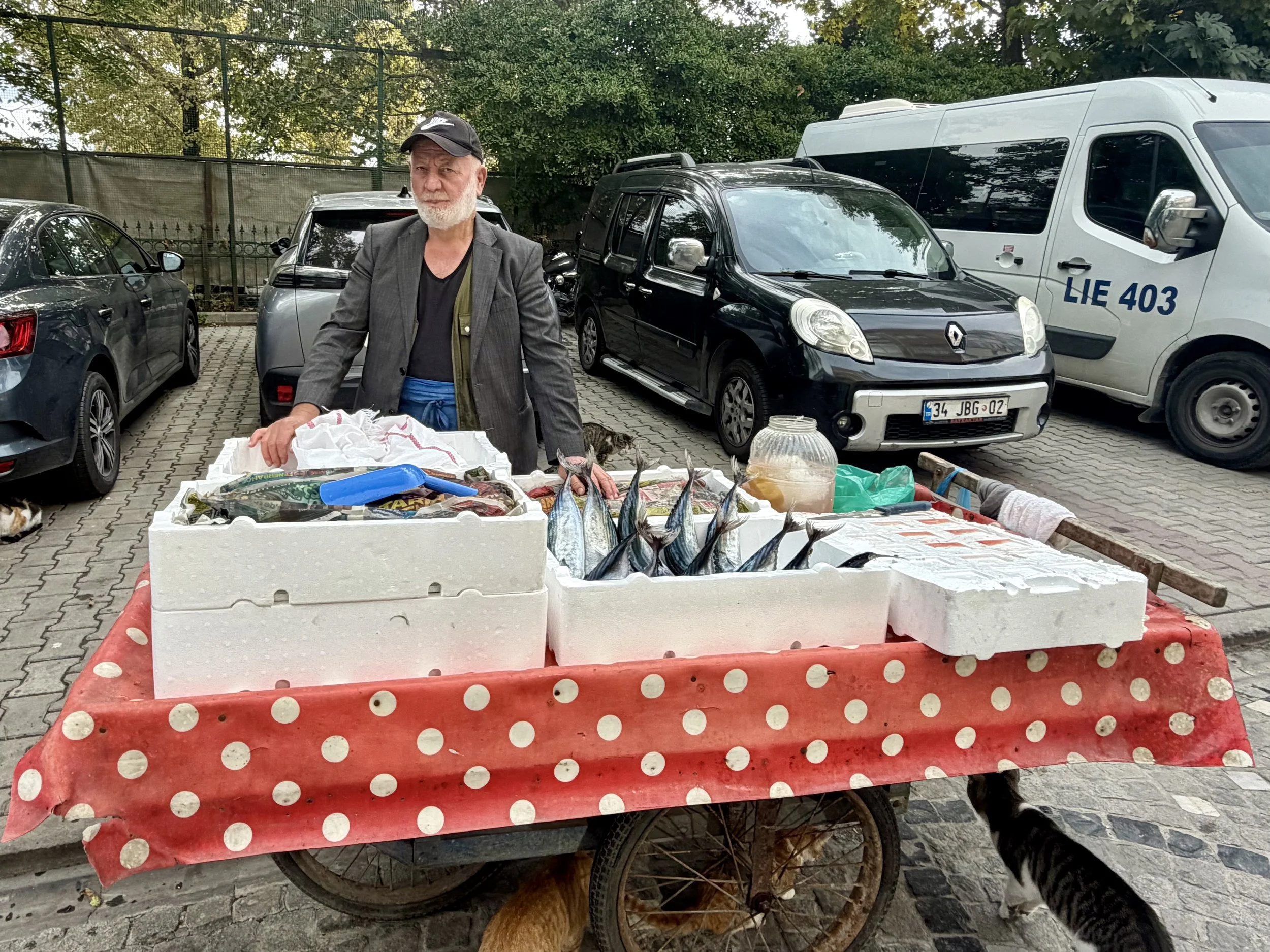
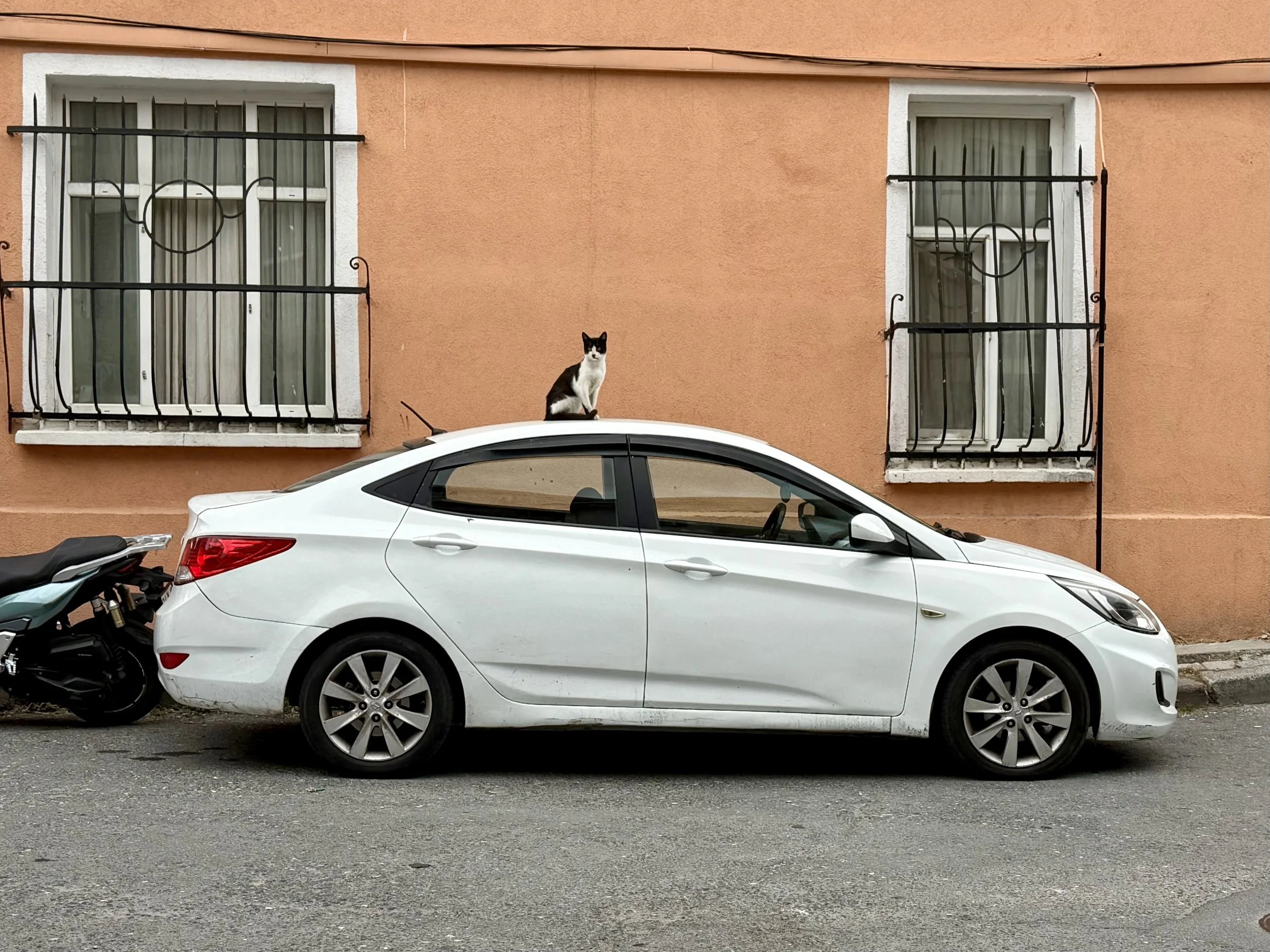
This time, we walked through a section near the Gate of Charisius, the same gate where Mehmed the Conqueror made his triumphal entry into the conquered city of Constantinople. This was a residential neighborhood, with remnants of the wall scattered among the buildings. The streets were quiet, except for a fishmonger selling his wares from a wooden cart, while hopeful cats waited and watched.

We visited Tekfur Sarayı (Palace of the Sovereign), also known as Tekfur Palace and the Palace of the Porphyrogenitus. That long Latin word means “born in the purple,” and was given to children born to a Byzantine emperor during his reign. Built during the second half of the 13th century, the palace was connected to the Theodosian Wall. I thought it was quite pretty, with its (restored) decorative brickwork.
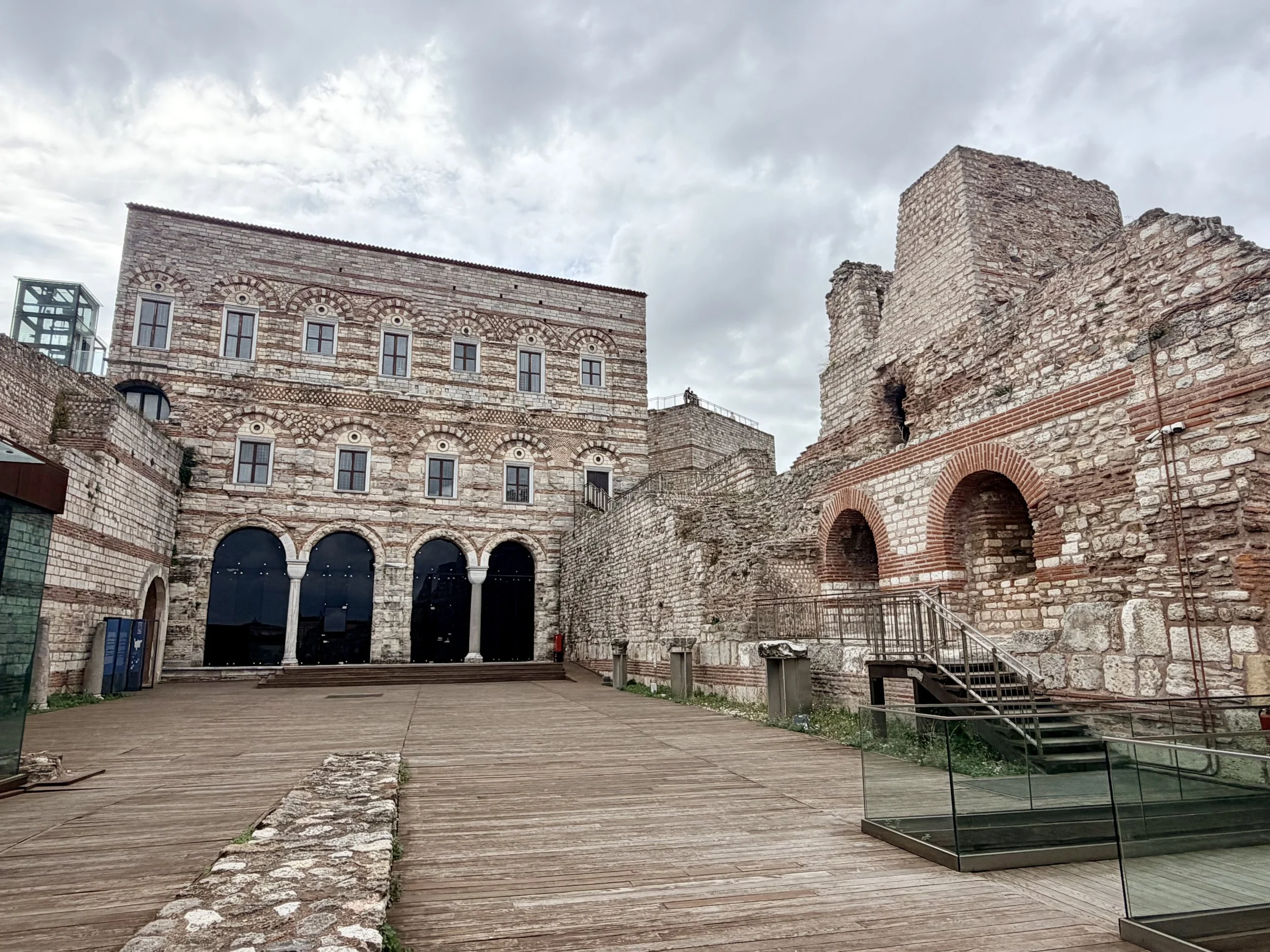
The palace was built for Prince Constantine Palaiologos. Later, it “unintentionally served as a residence for usurpers and emperors in waiting.” (Thanks, Wikipedia!) Not surprisingly, given its location between the inner and outer walls, the building was badly damaged during the fall of Constantinople. After that, things got interesting. Tekfur Palace housed the sultan’s elephants and other exotic animals for a while. Later it became a brothel, and then a poor house. If walls could talk…
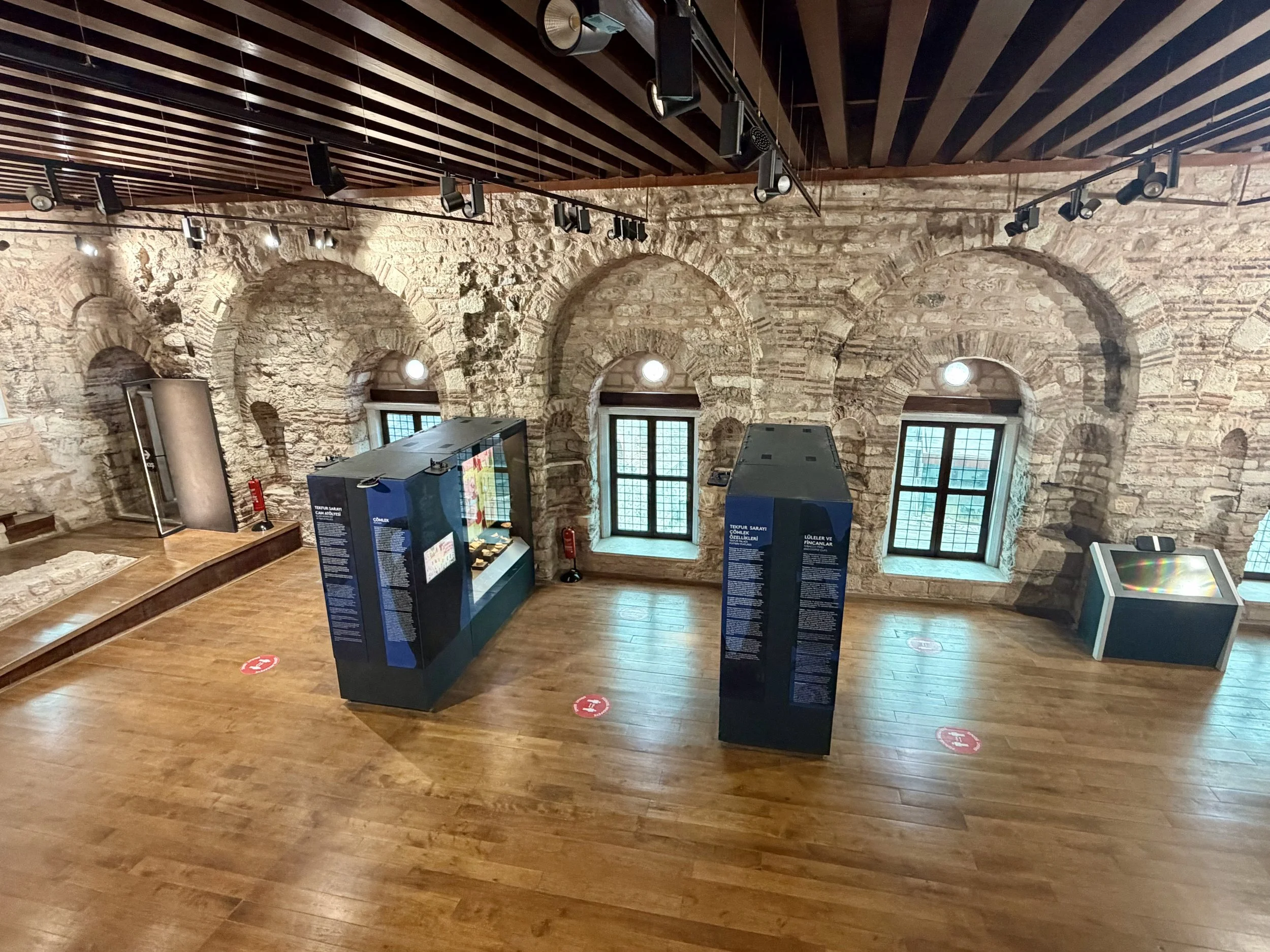
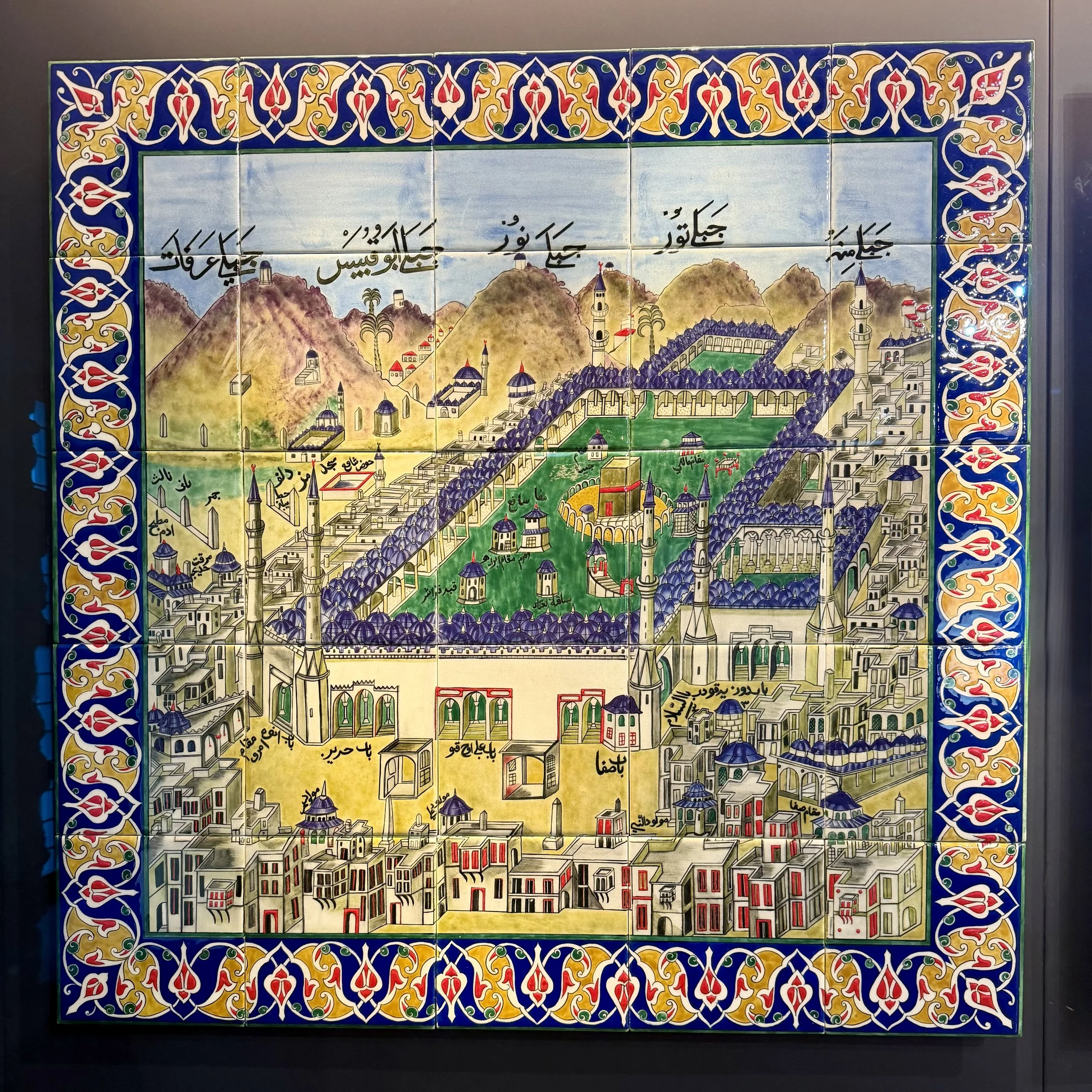
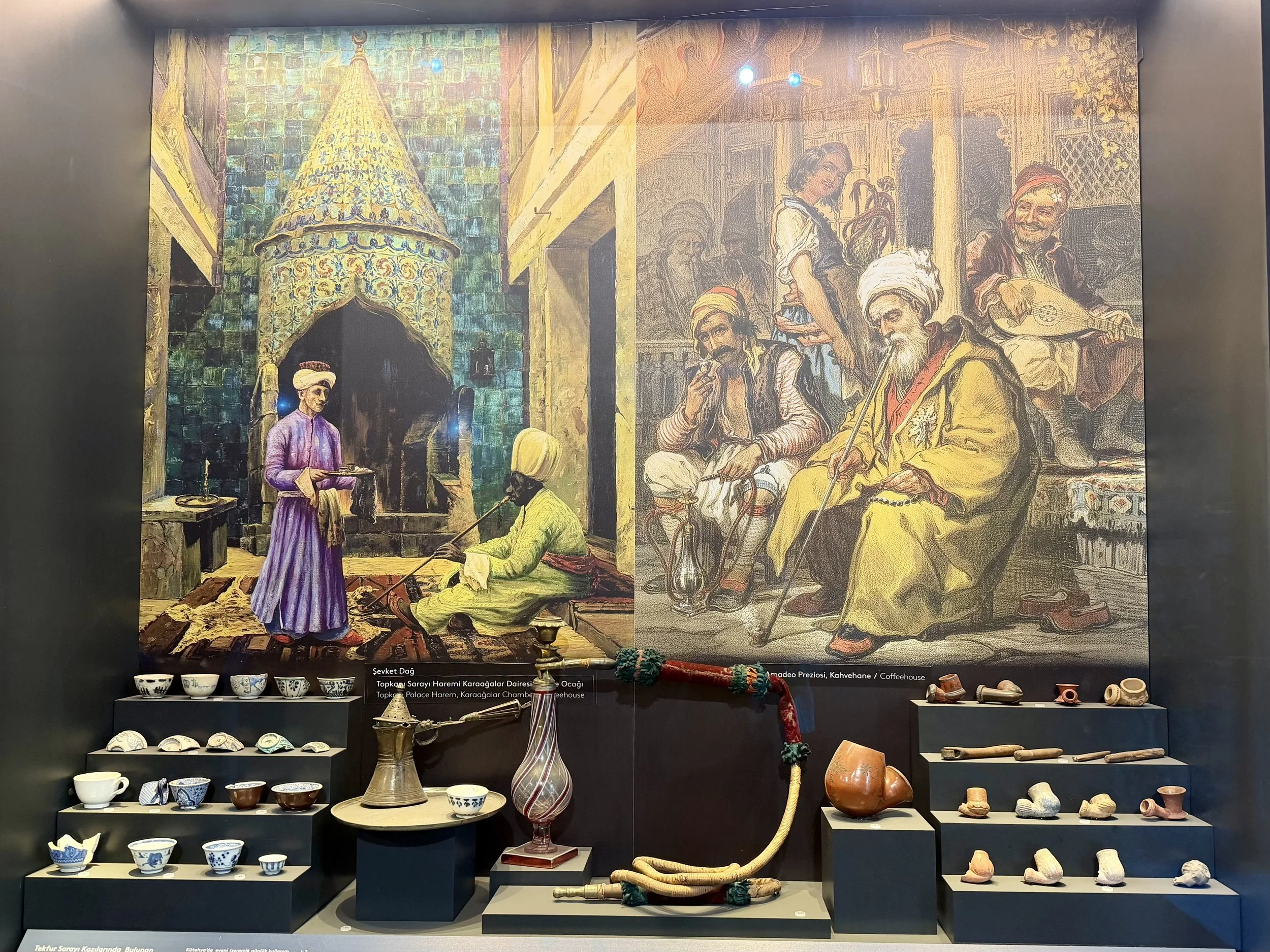
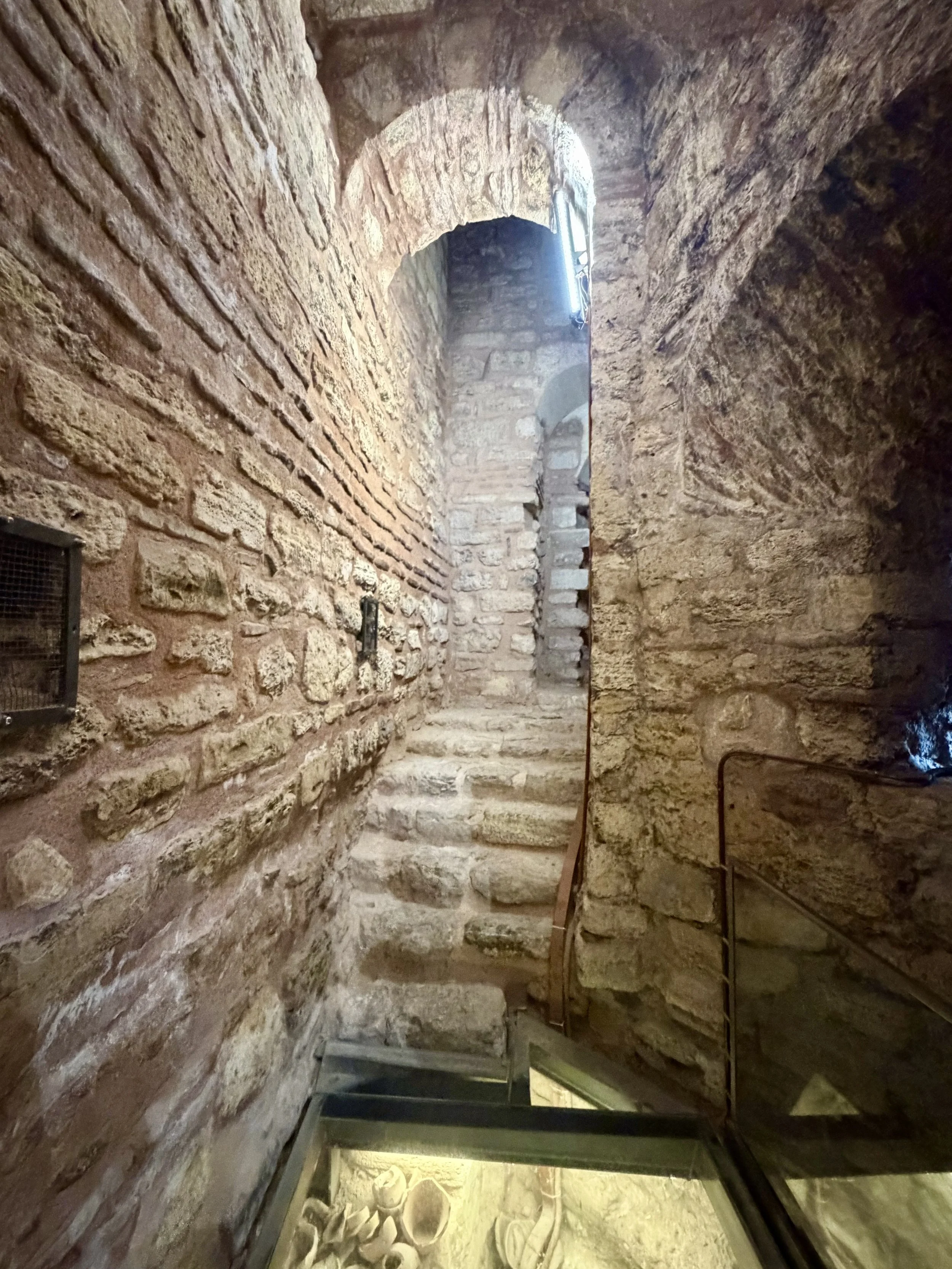
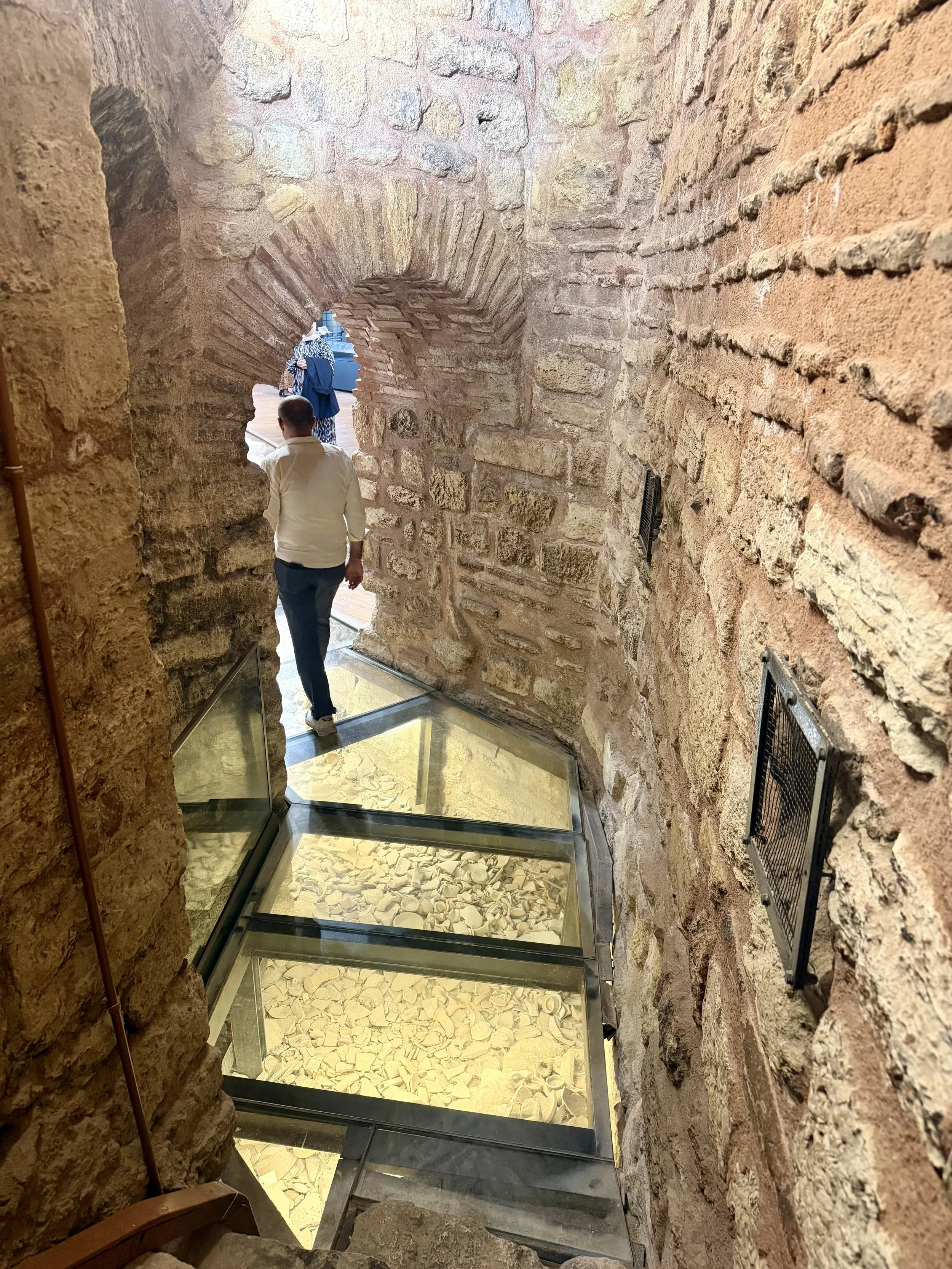
Now the restored palace is a museum focused on the building’s time as a pottery workshop. It produced tiles similar to the famous Iznik tiles, and these were used for the palaces and mosques across Istanbul. Inside the museum, we wandered through exhibits about Turkish tile production and saw the remains of the factory kilns. The (replica) tiles showing detailed layouts of the mosque complexes were interesting. It was fun exploring the narrow passageways that led from the palace to the watchtowers in the wall.
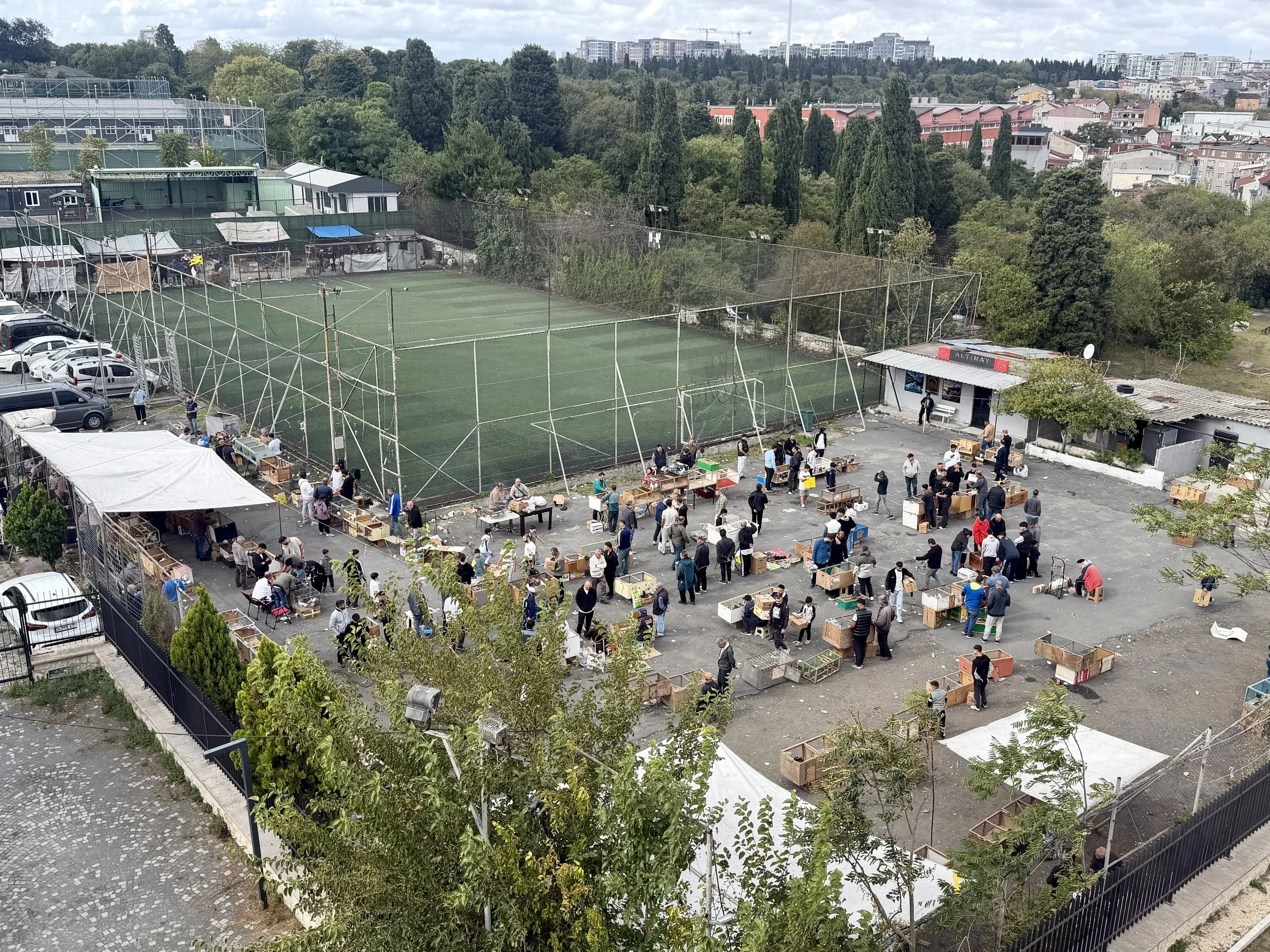
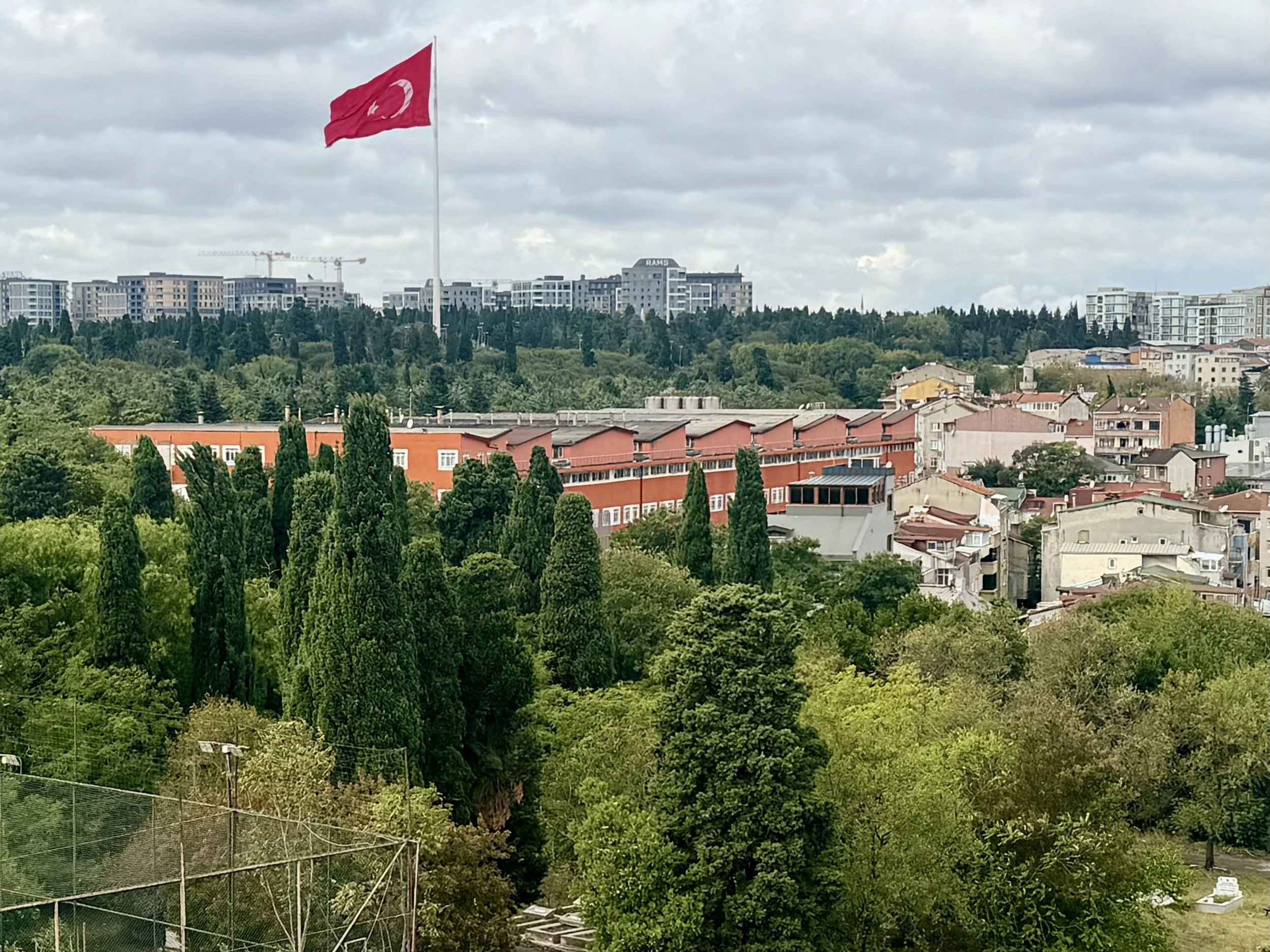
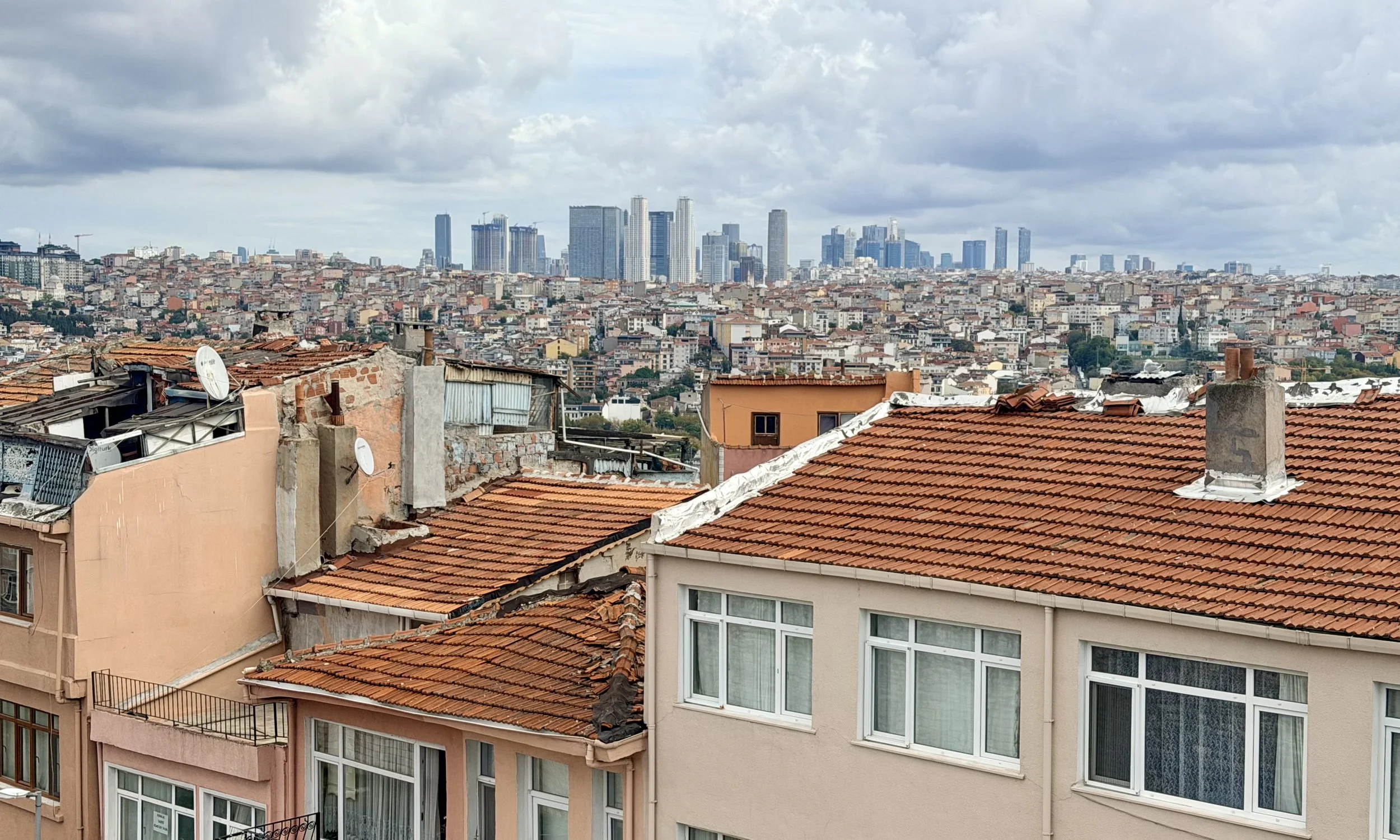
We were able to step outside in several different places to take in the views from the top of the wall. A series of square towers stretched into the distance, some more intact than others. The city had simply grown around and between those sections of ancient wall. The towers had stood there for one and a half millennia, and weren’t going away any time soon! Behind the palace, there was a live bird market bustling with activity. In front of the palace, the top of the wall was a wide, empty stretch of nothing. I said it might make a nice park, and our guide Fatih shrugged. Who would pay for it, and who would go? In the distance, we could see the Golden Horn and the Bosphorus, and the hills of the New District and the Asian side of Istanbul.
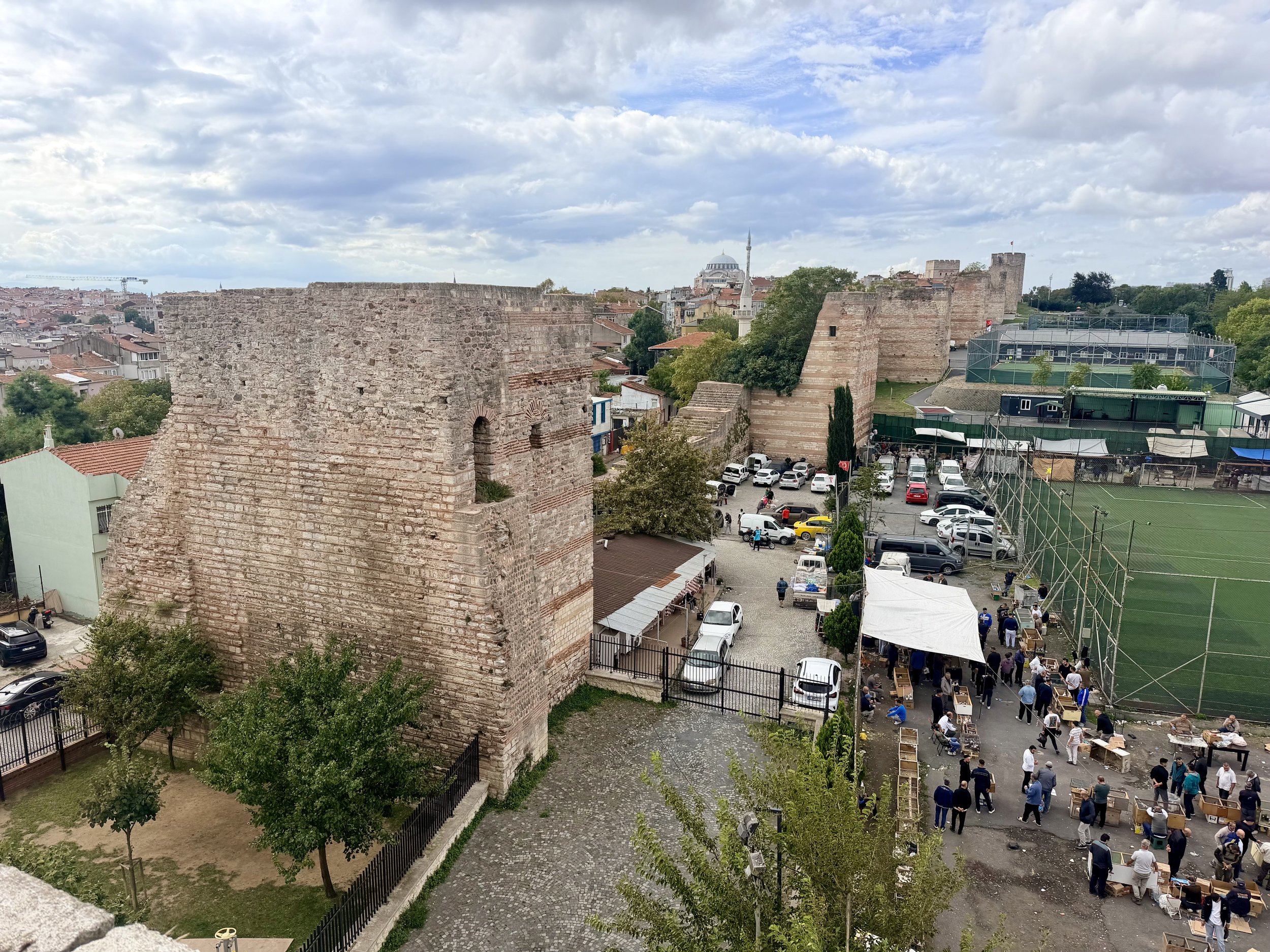
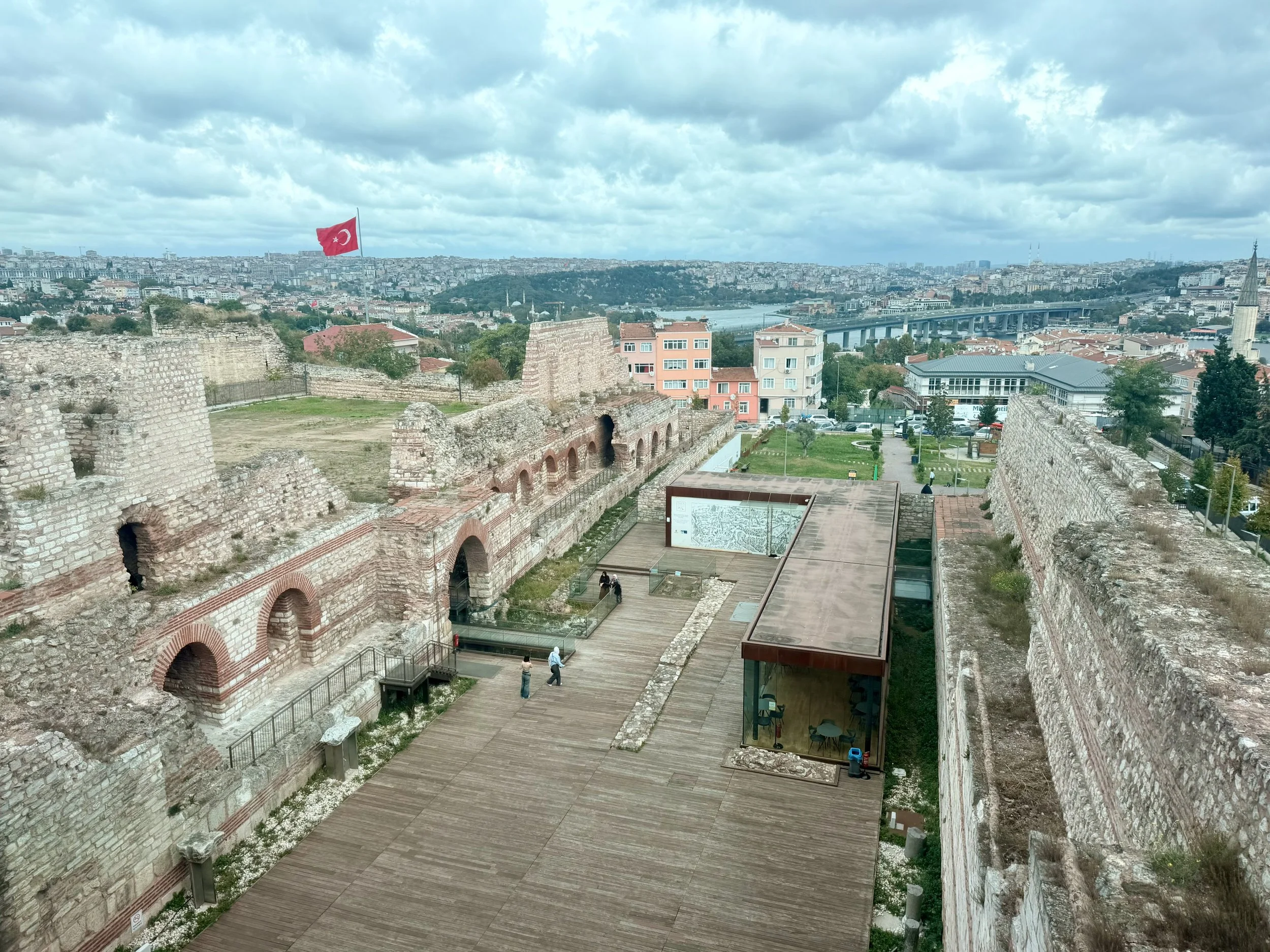
For the people of Constantinople, the city walls must have represented security and home. For modern-day residents of Istanbul, I imagine the walls are something more complex. There may be some pride in their ancient strength, able to withstand enemy sieges for a thousand years, and still standing today. The walls’ importance in history is undeniable - they are a UNESCO World Heritage site. But the walls are also a reminder of Christian history, rather than Ottoman. Some sections have been restored, but many others remain in neglected ruin. I hope that ongoing restoration efforts will continue to make more sections of the wall available for public recreation. I read that after the fall of Constantinople, the Sultan had urban gardens called bostans planted in the moat to grow produce for the city. Some bostans are still operating today and are known for their delicious lettuce. For all I know, I may have eaten salad grown by an ancient wall!
Postscript
There’s a story I love about the Theodosian Walls. In 447 CE, Attila the Hun invaded the Eastern Roman Empire. His armies marched toward Constantinople, destroying everything their path. In a massive stroke of bad luck, a catastrophic earthquake destroyed long stretches of the newly-built city walls. Constantinople was vulnerable. The Praetorian Prefect brilliantly enlisted help from the Blues and Greens, the opposing fans of the chariot races in the Hippodrome, presenting the repair effort as a race. Miraculously, 16,000 sports fans rebuilt the wall, added a second wall, and dug a moat, in just 60 days!
These wonderful images are from the Byzantium 1200 project. The new walls around Constantinople were both beautiful and formidable! I can understand why Attila the Hun decided to turn his armies away from Constantinople.