In 1889, Frank Lloyd Wright, just 21 years old and recently married, borrowed $5,000 from his new employer (Adler & Sullivan) to build his first house in rural Oak Park. For his modest two-story house, Wright drew inspiration from the wooden blocks he had played with as a child and from the beach cottages designed by his previous employer, Joseph Silsbee. Over the next twenty years, Wright would revise the house to accommodate his expanding business and growing family - and to test ideas and find his own signature style.
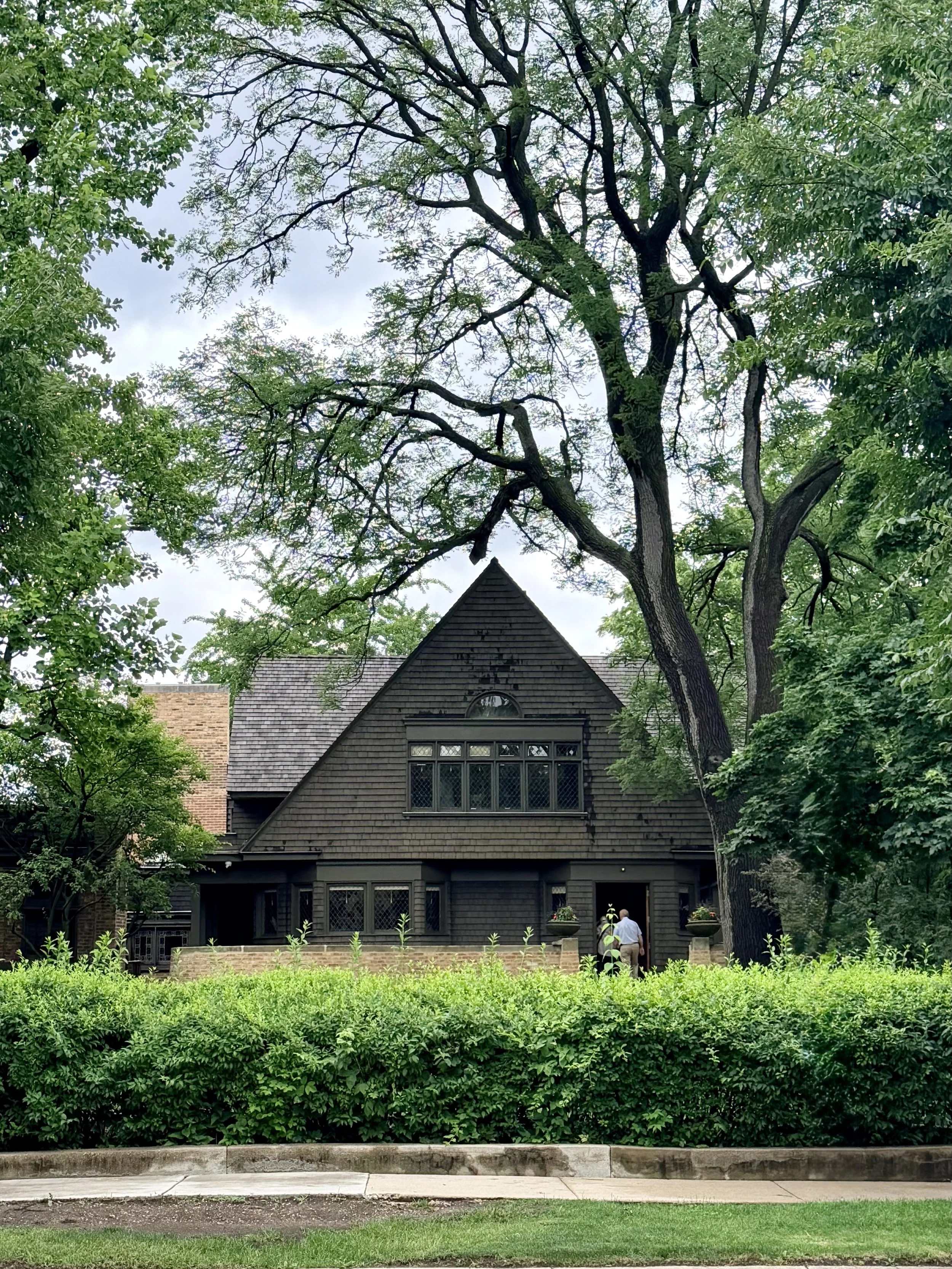
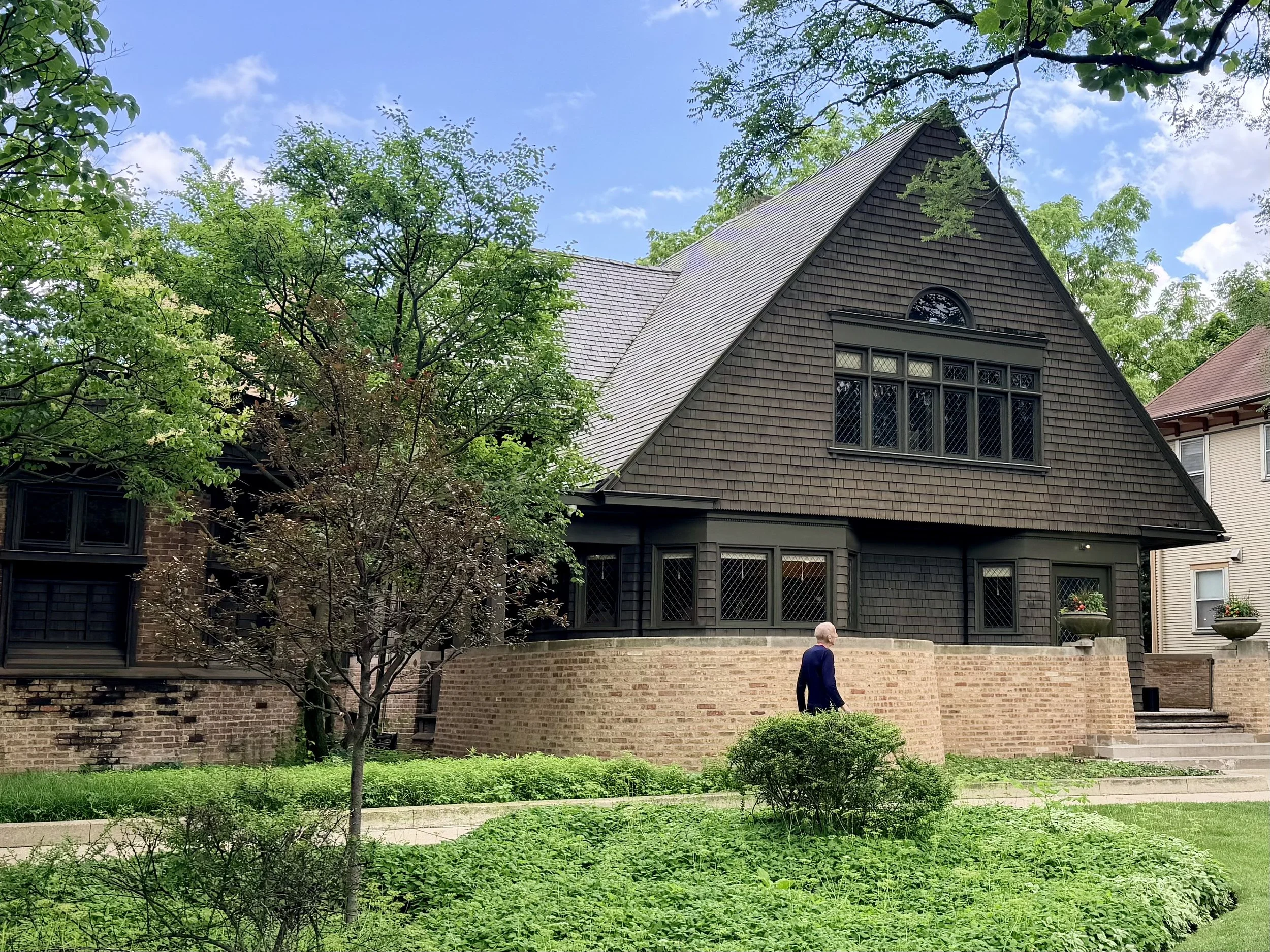
A tour of the interior of Wright’s home and studio was the perfect compliment to our walking tour of Oak Park. After seeing the exteriors of houses Wright had designed, I was eager to take a look inside.
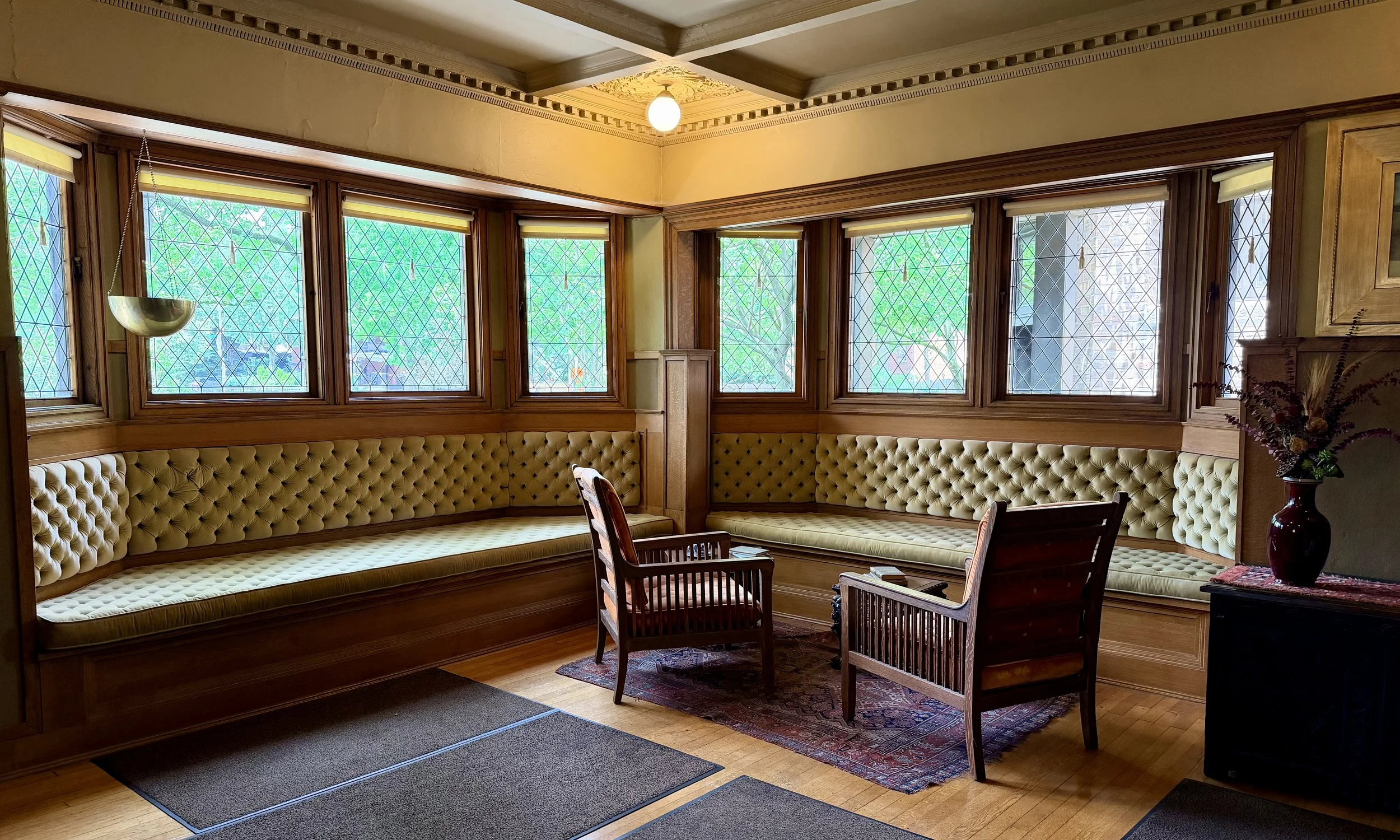
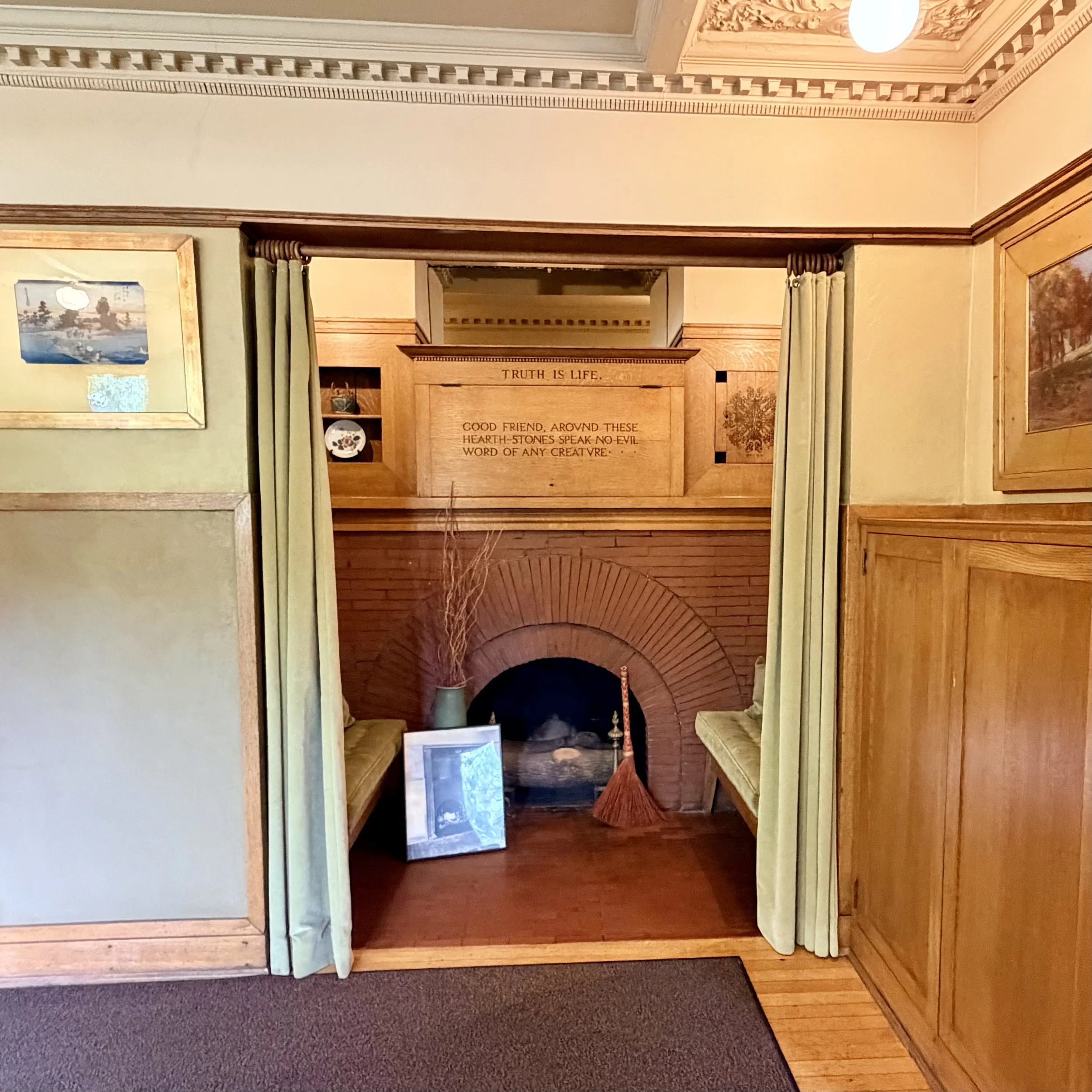
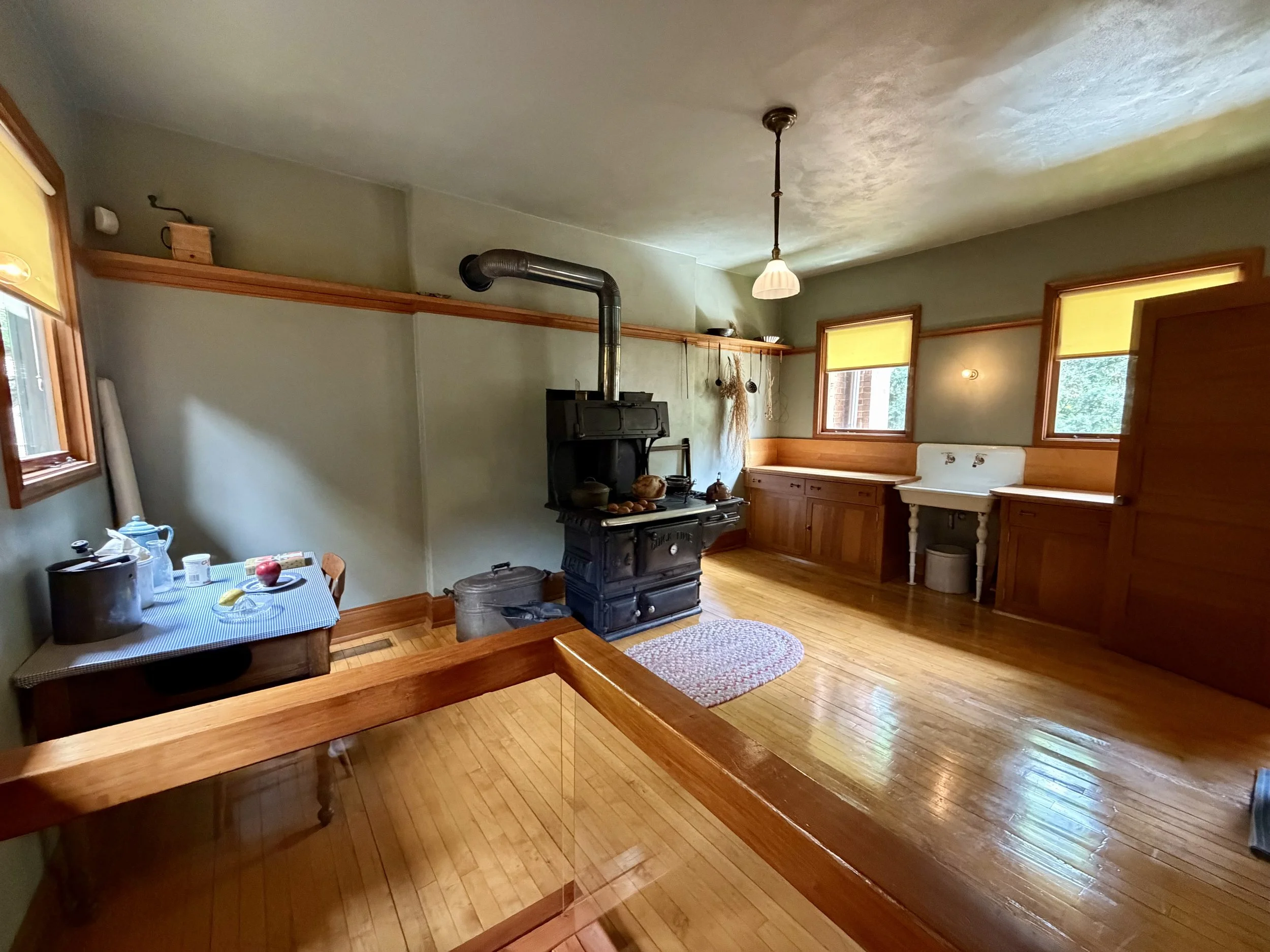
On the first level of the house, family spaces were arranged around a central chimney.
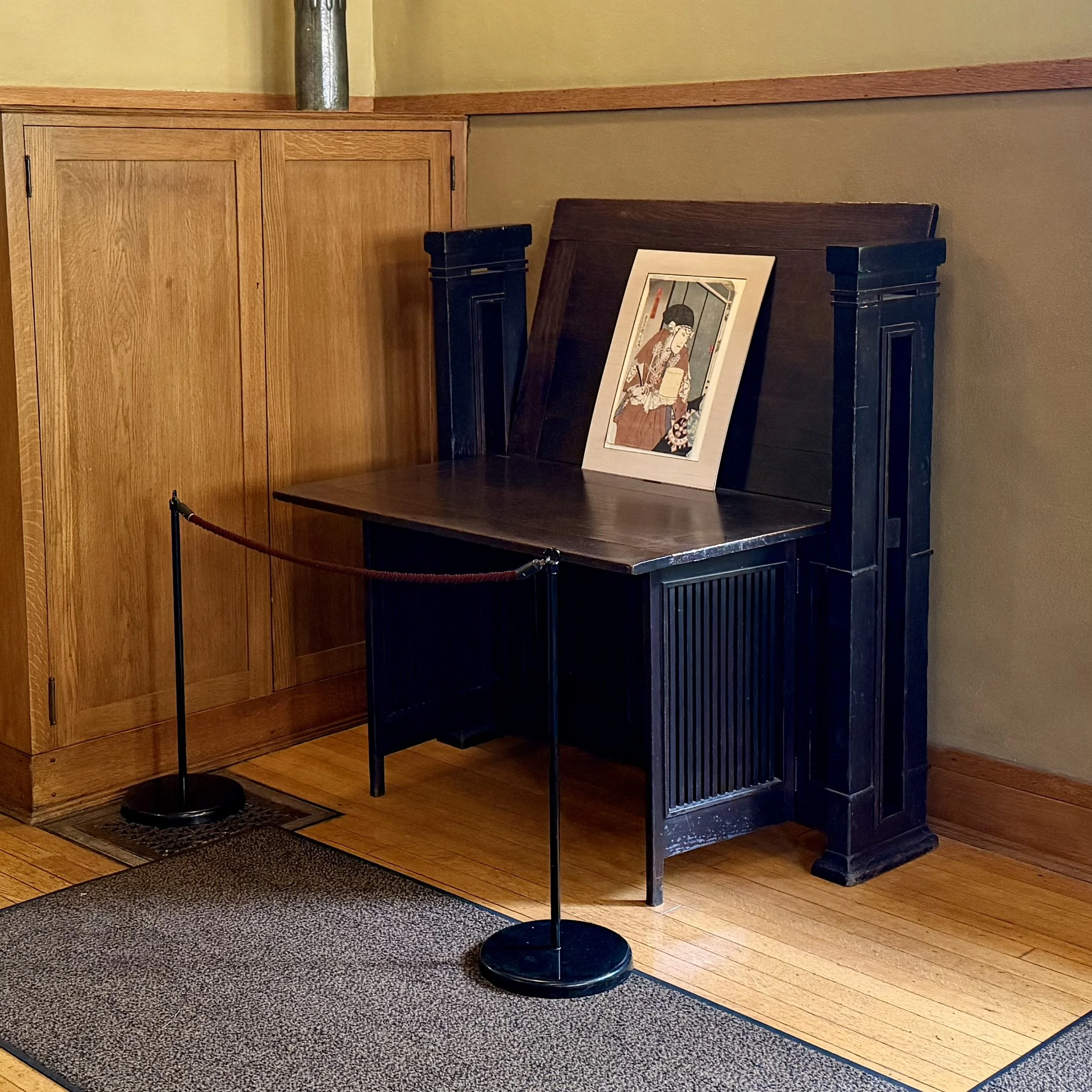
The living room featured an inglenook (an alcove around the fireplace for keeping warm), and furniture designed by Wright, including an elaborate stand for displaying Japanese prints. The ribbon of bay windows hinted at the seamless corner windows characteristic of Wright’s later work.
The passageway to Wright’s studio had a live tree growing through one wall. Guests would have to walk through a low, narrow, and dark corridor before stepping into a large, bright room at the other end. This “compression and release” concept was another signature element of Wright’s work.
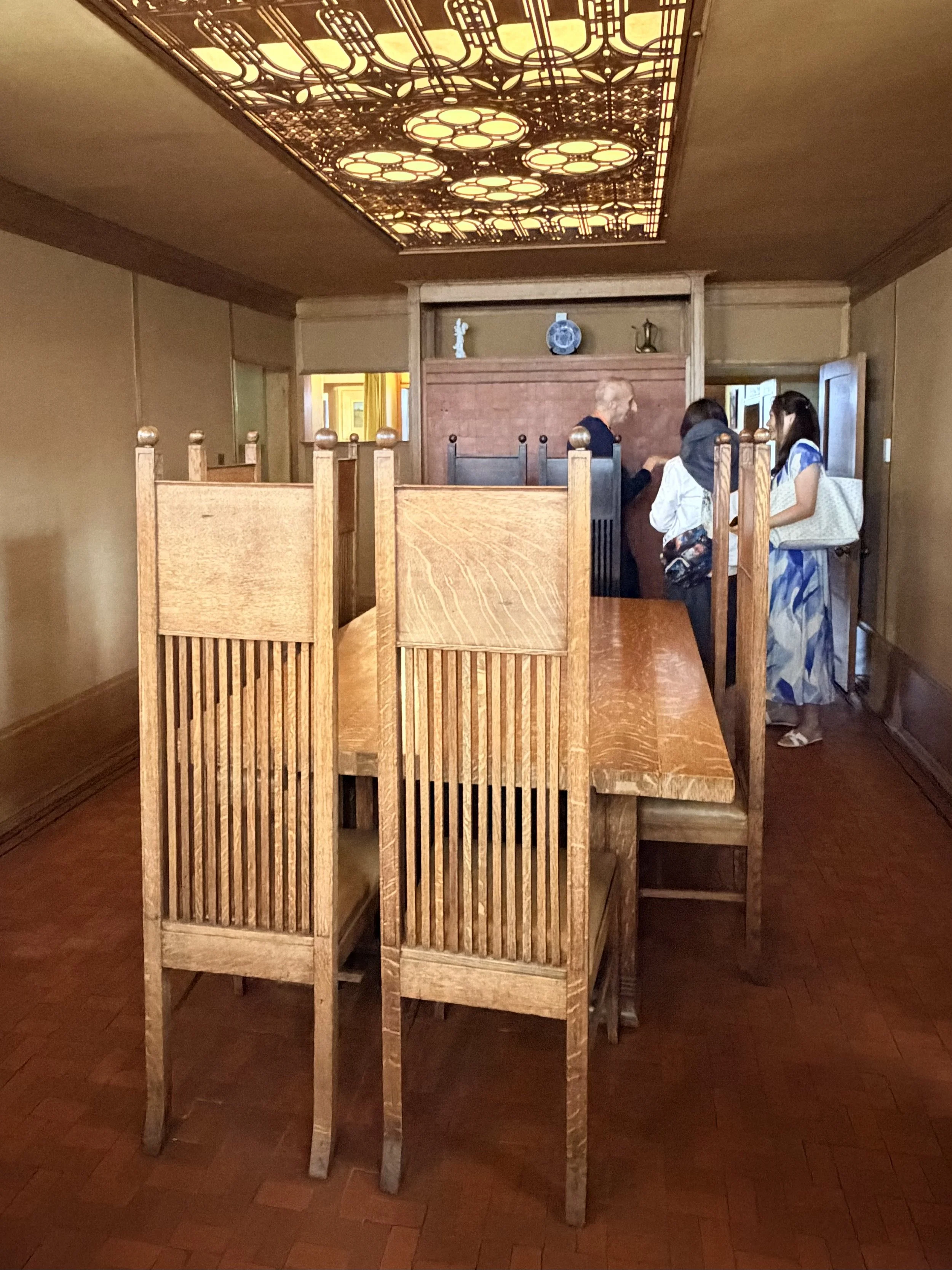
The dining room (added as part of an expansion in 1895) had terra cotta floor tiles and burlap walls that gave the room warmth. On the ceiling was innovative recessed lighting with a decorative screen. Wright designed the high backed chairs - which did NOT look comfortable - to create a “room within a room.”
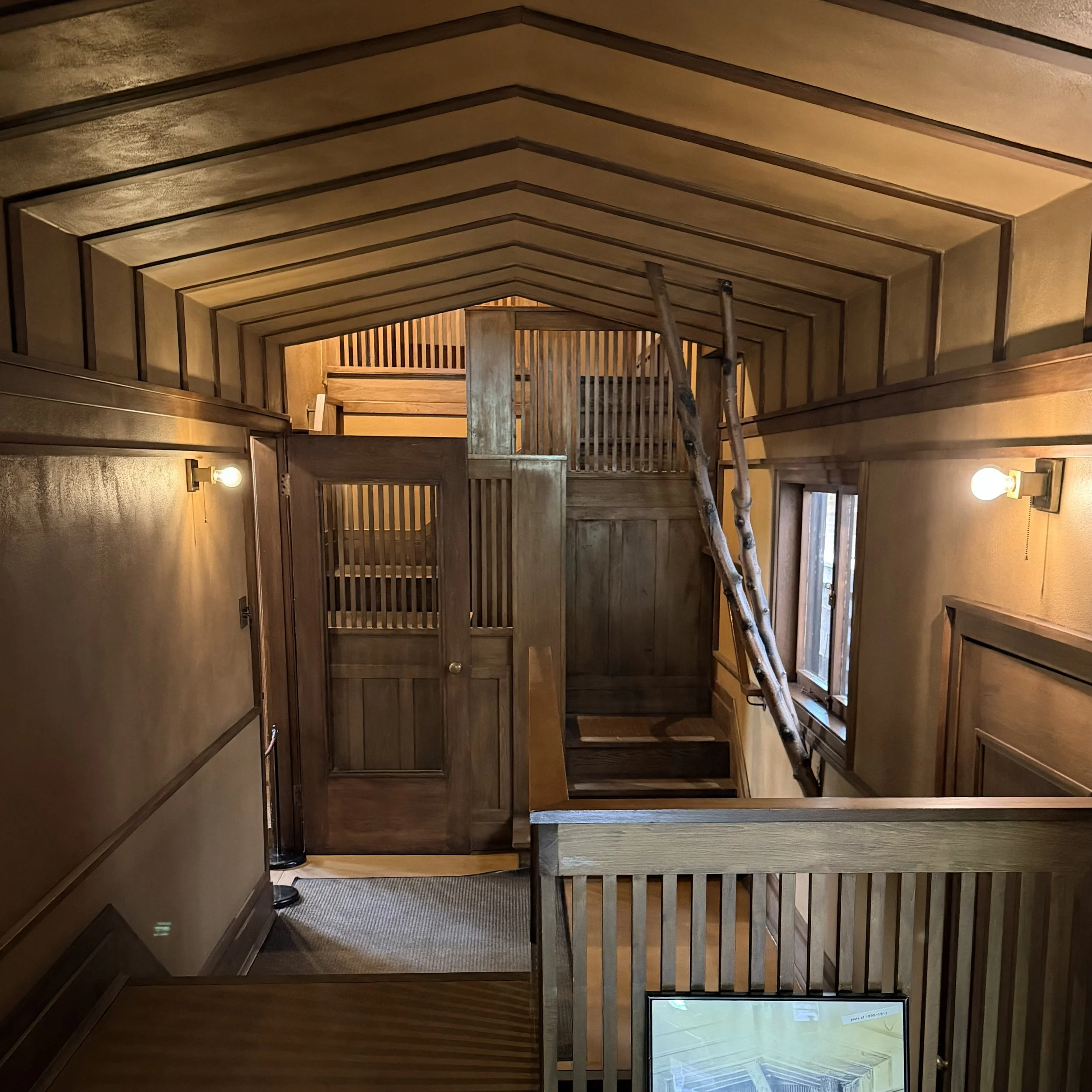
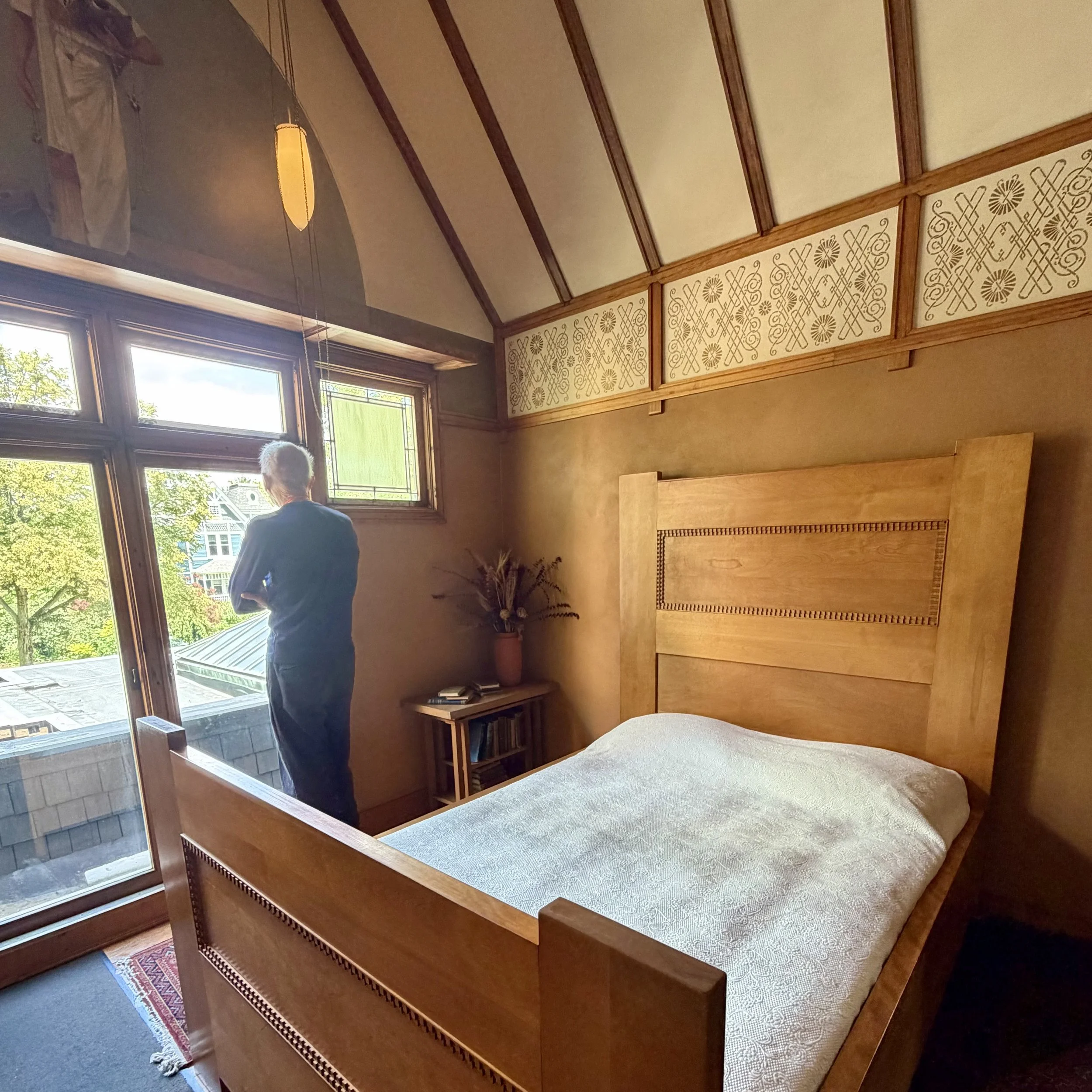
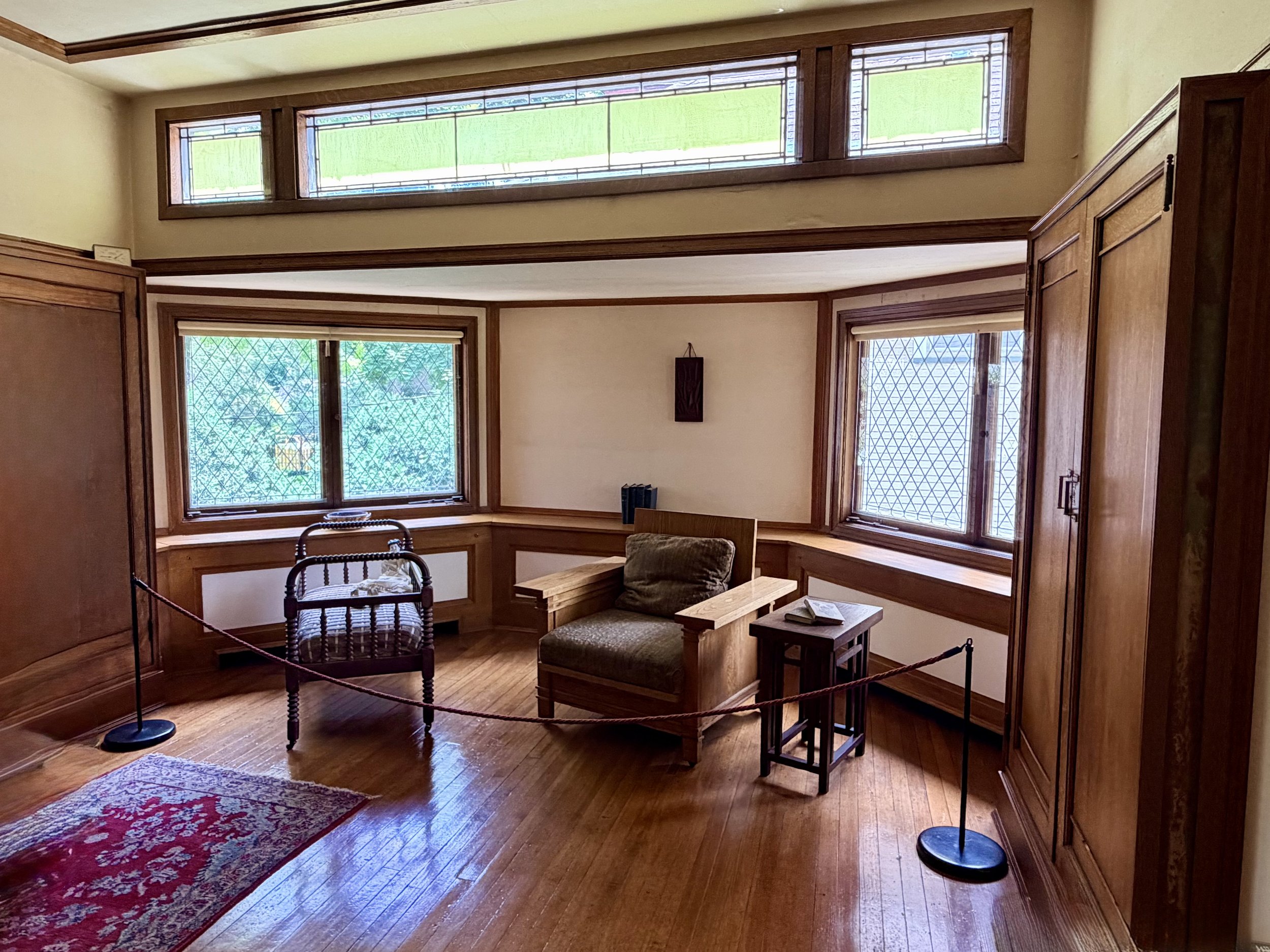
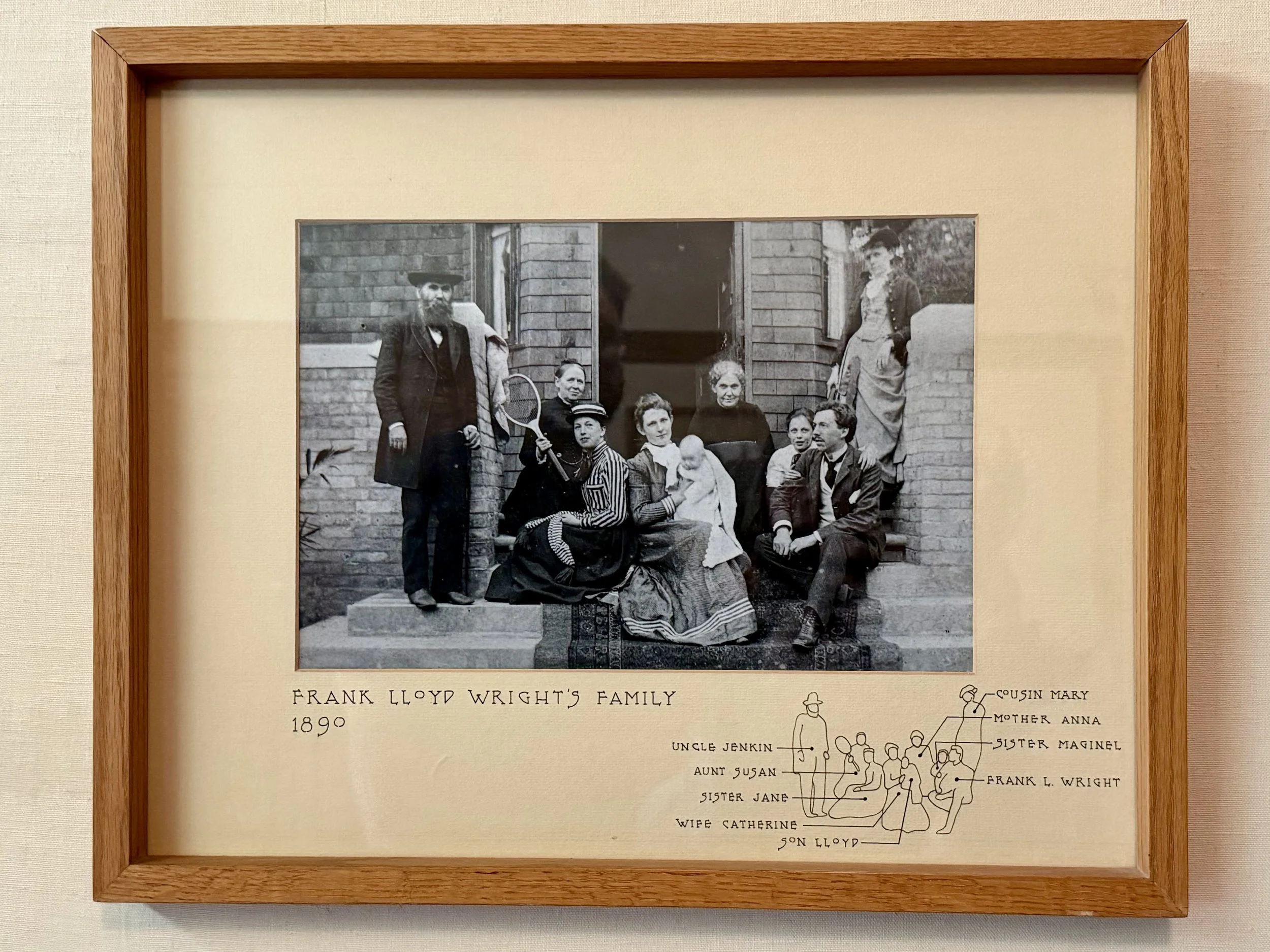
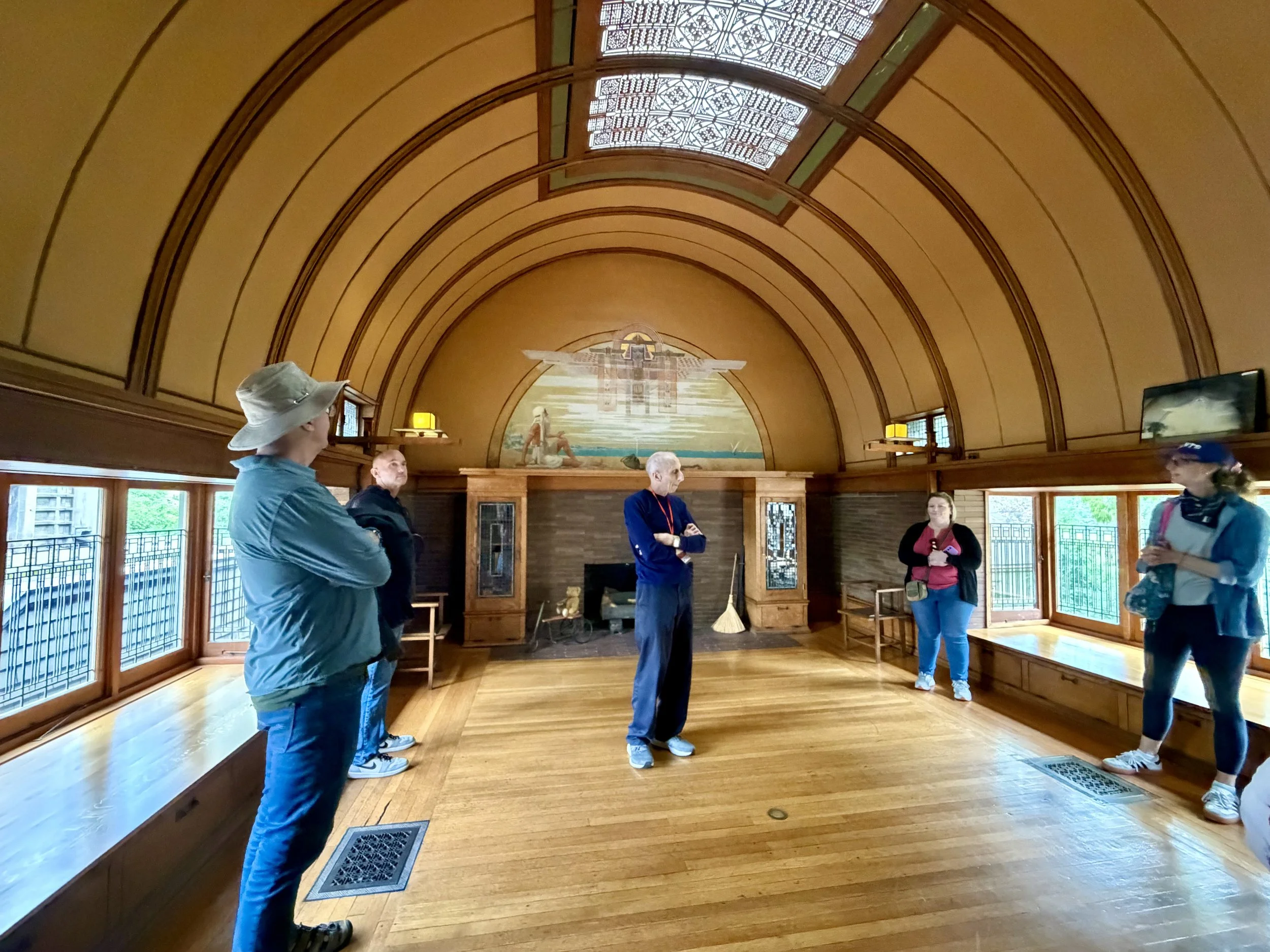
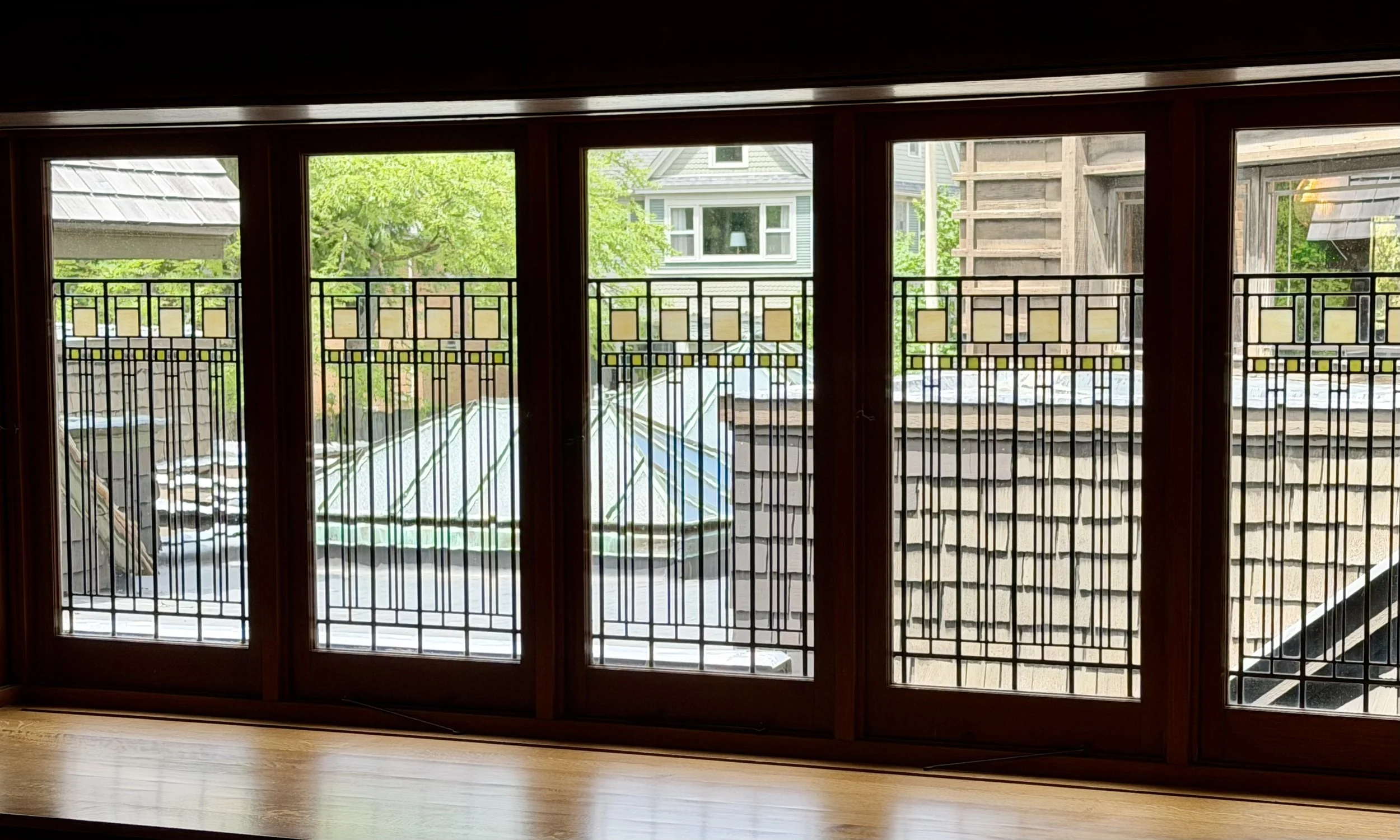
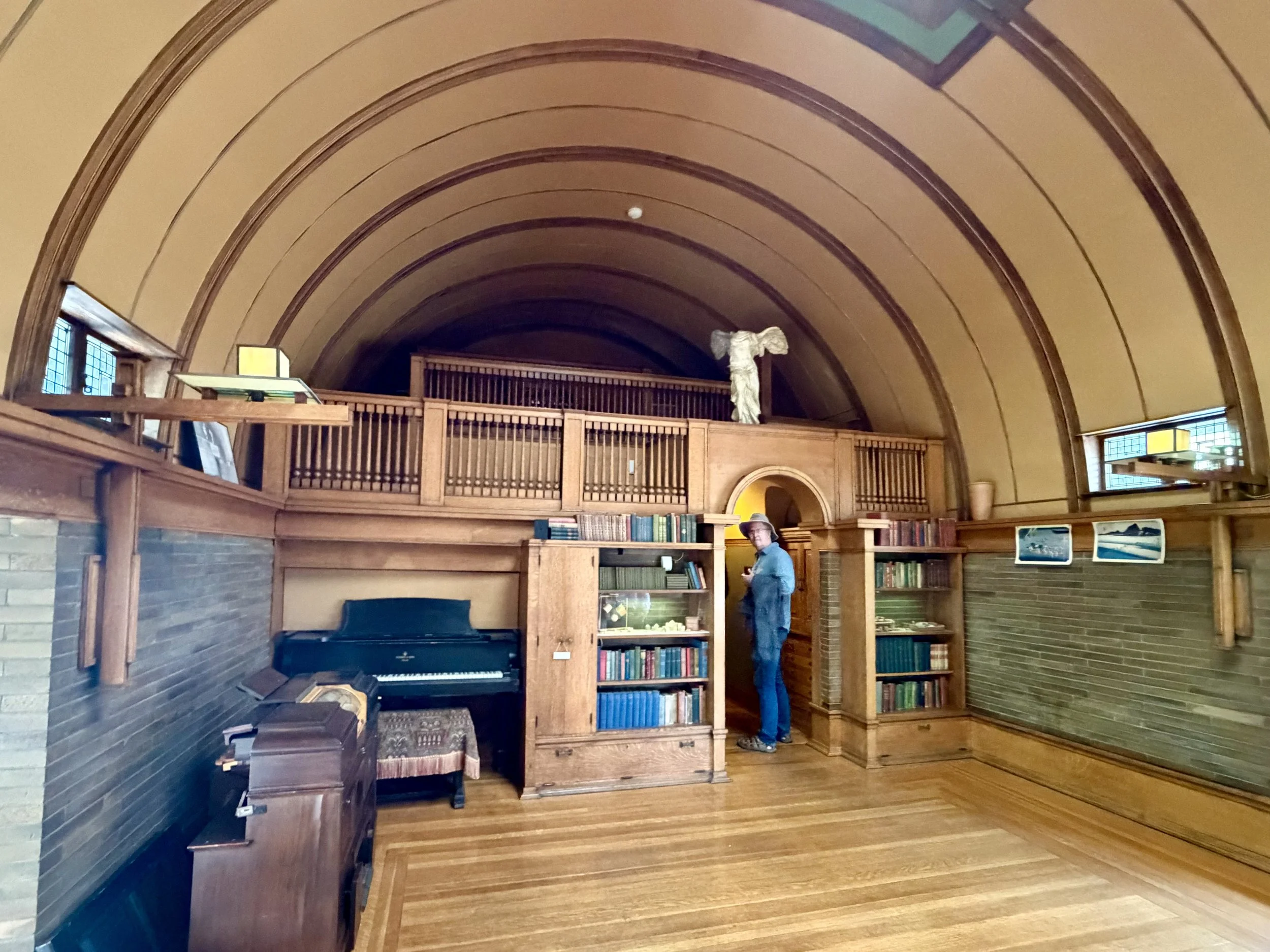
On the second level of the house were bedrooms, the house’s single bathroom, and areas for work and play. Seeing no need for an attic, Wright opened most of these rooms to the roof. Wright’s original studio had been converted into a large bedroom for the children (he had six born in this house) with a partition wall to separate the boys from the girls. The master bedroom was decorated with stenciling, pendant lights, and custom murals. We walked through a dark, low tunnel and then stepped into the dramatic expanse of the children’s playroom - compression and release! The playroom was a masterpiece, with storybook mural above the fireplace, a huge skylight with intricate, geometric cutouts, and beautiful leaded glass windows. With a gallery at one end that could be a hideout or a stage, it must have been a wonderful place to play.
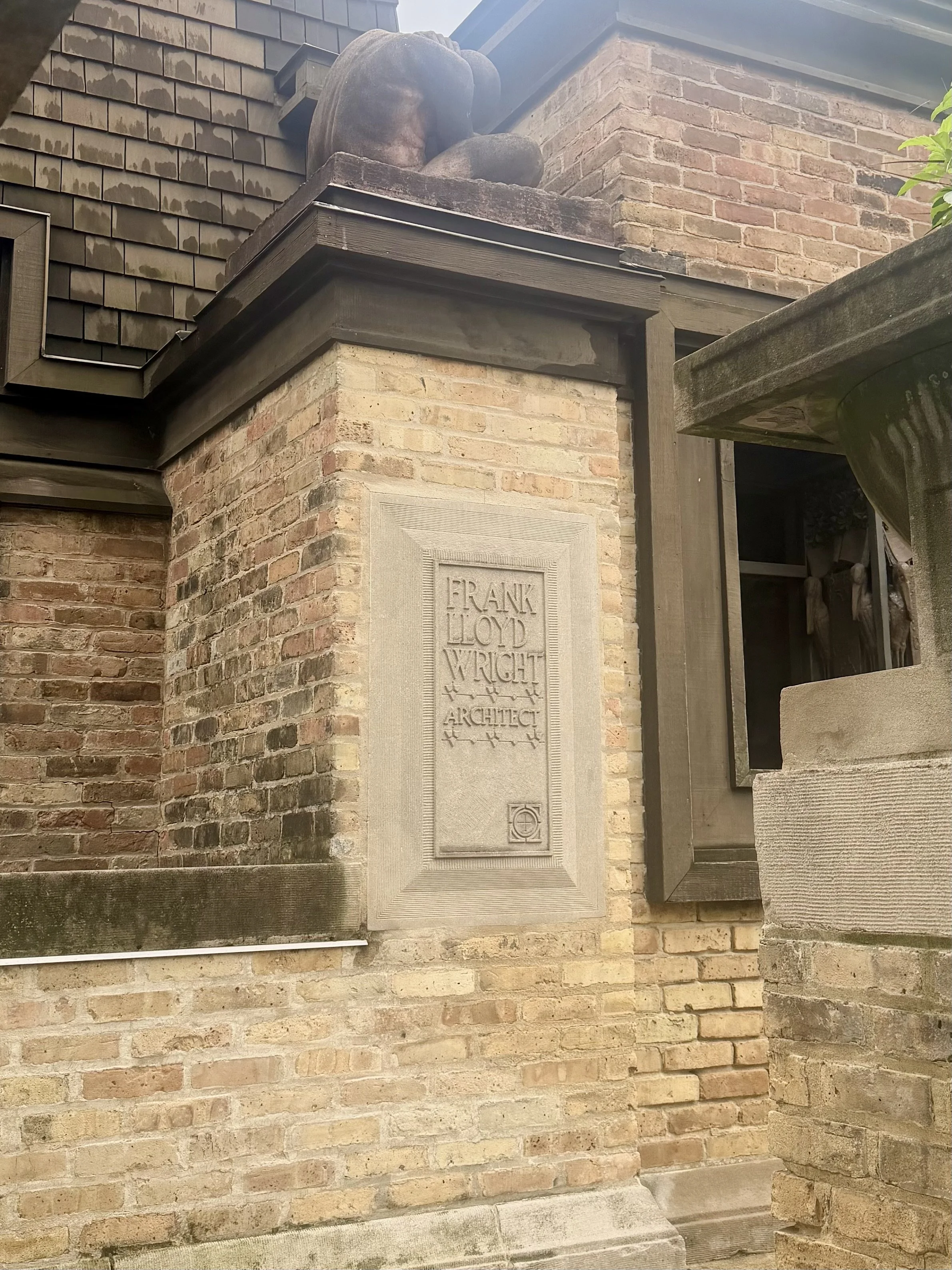
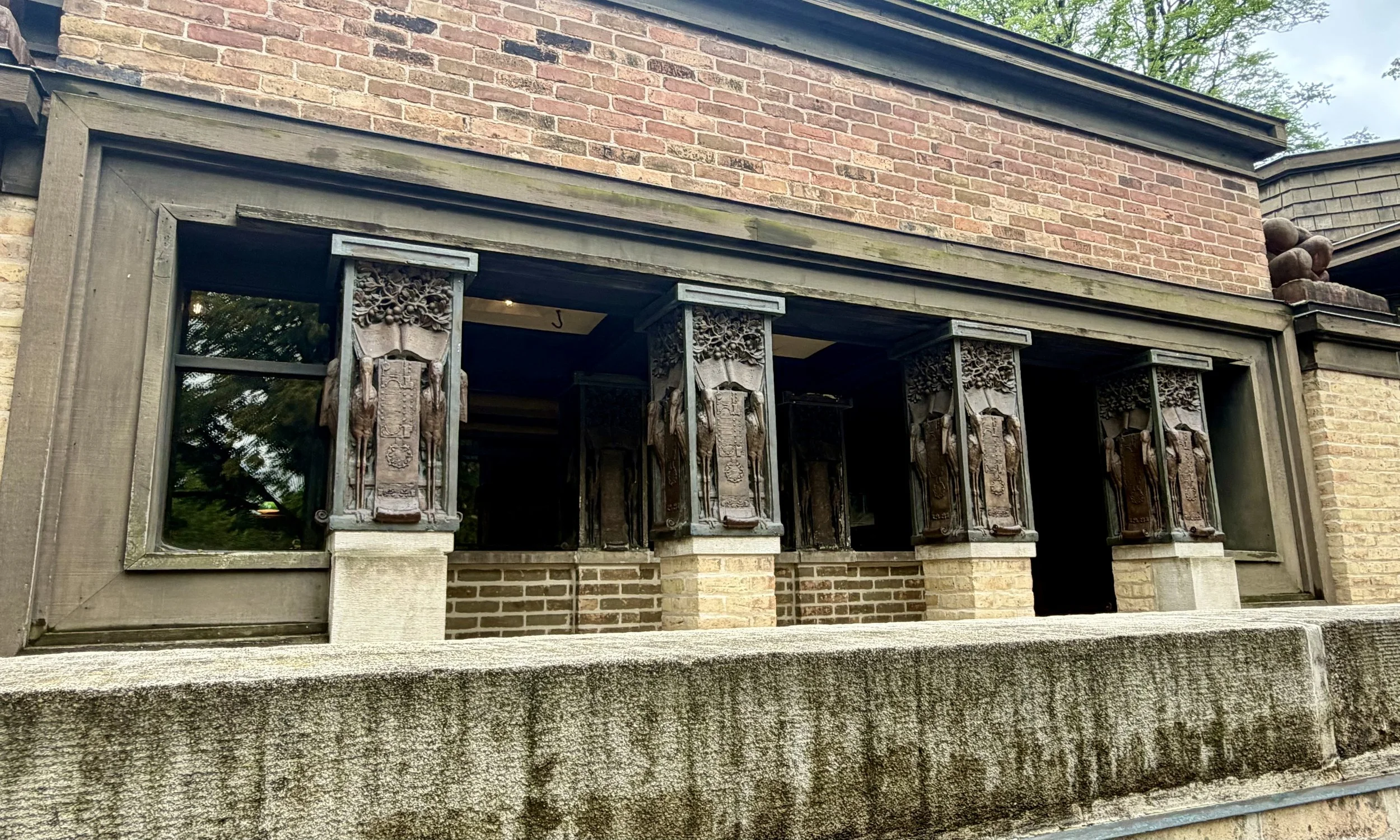
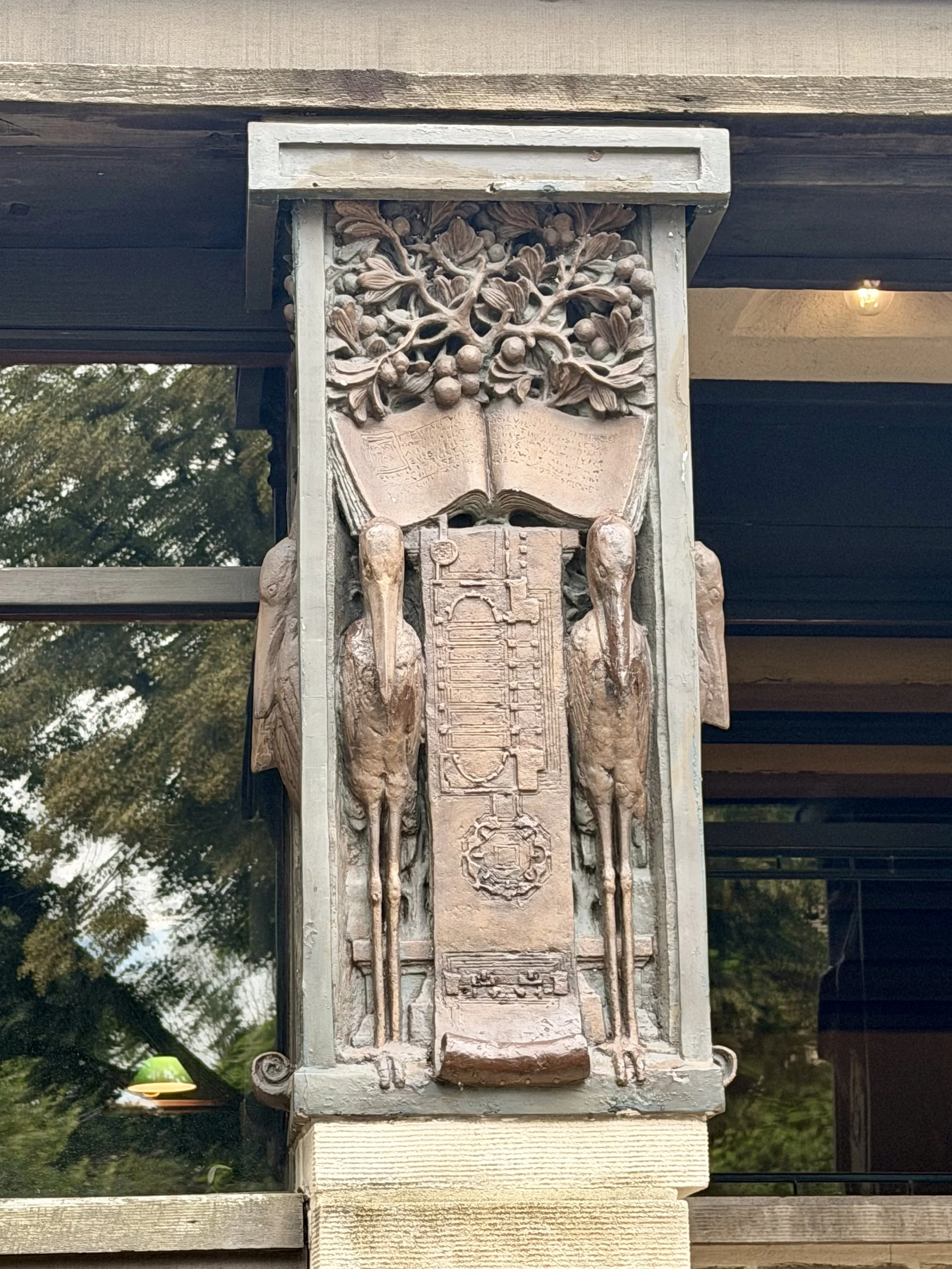
By 1898, Wright was tired of commuting to the city and built a studio addition to the house in Oak Park. This was an opportunity to experiment with ideas that would define his Prairie style. Horizontality is strong in the studio’s facade, where the two front doors are hidden behind a colonnade with storks.
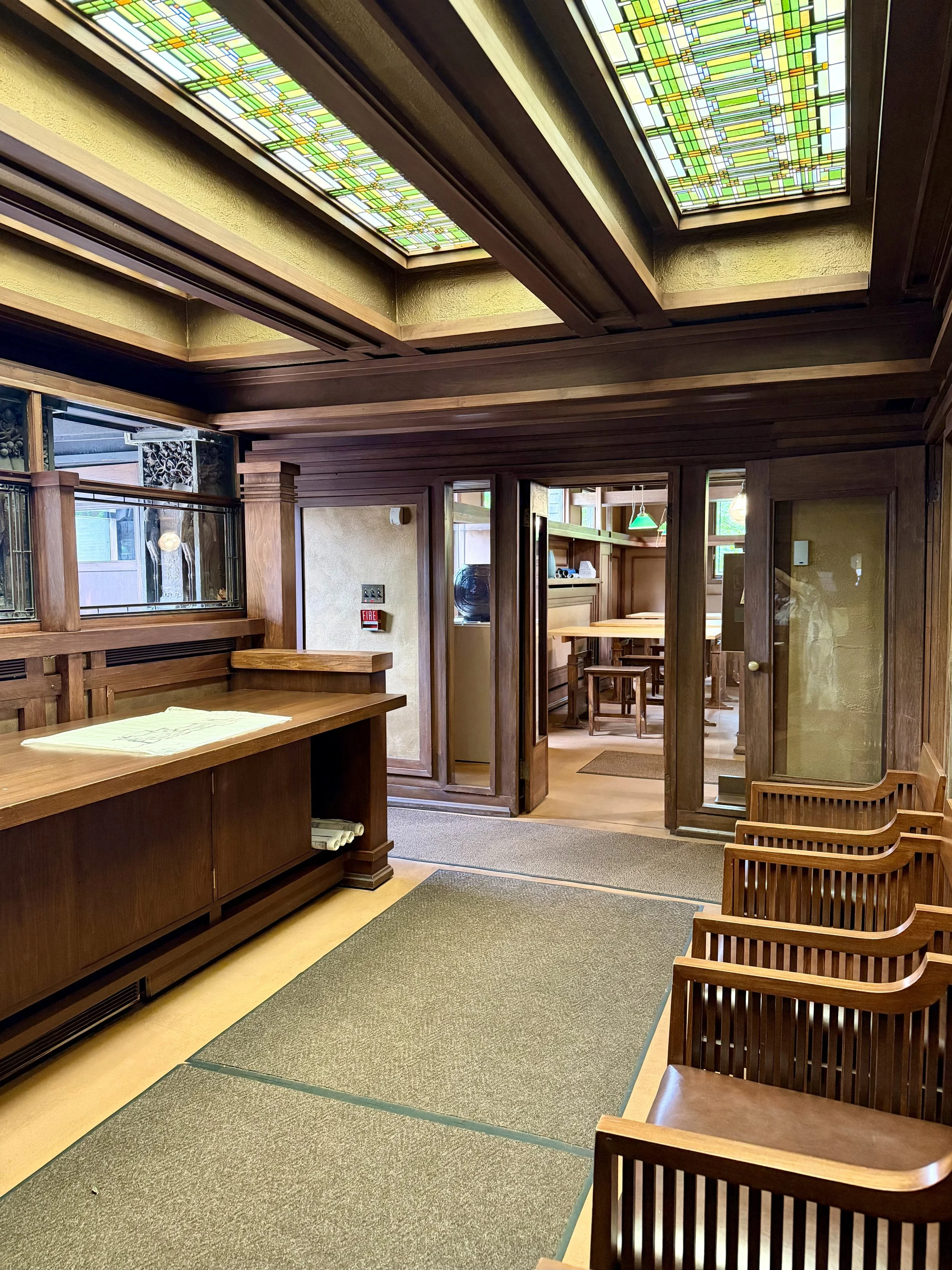
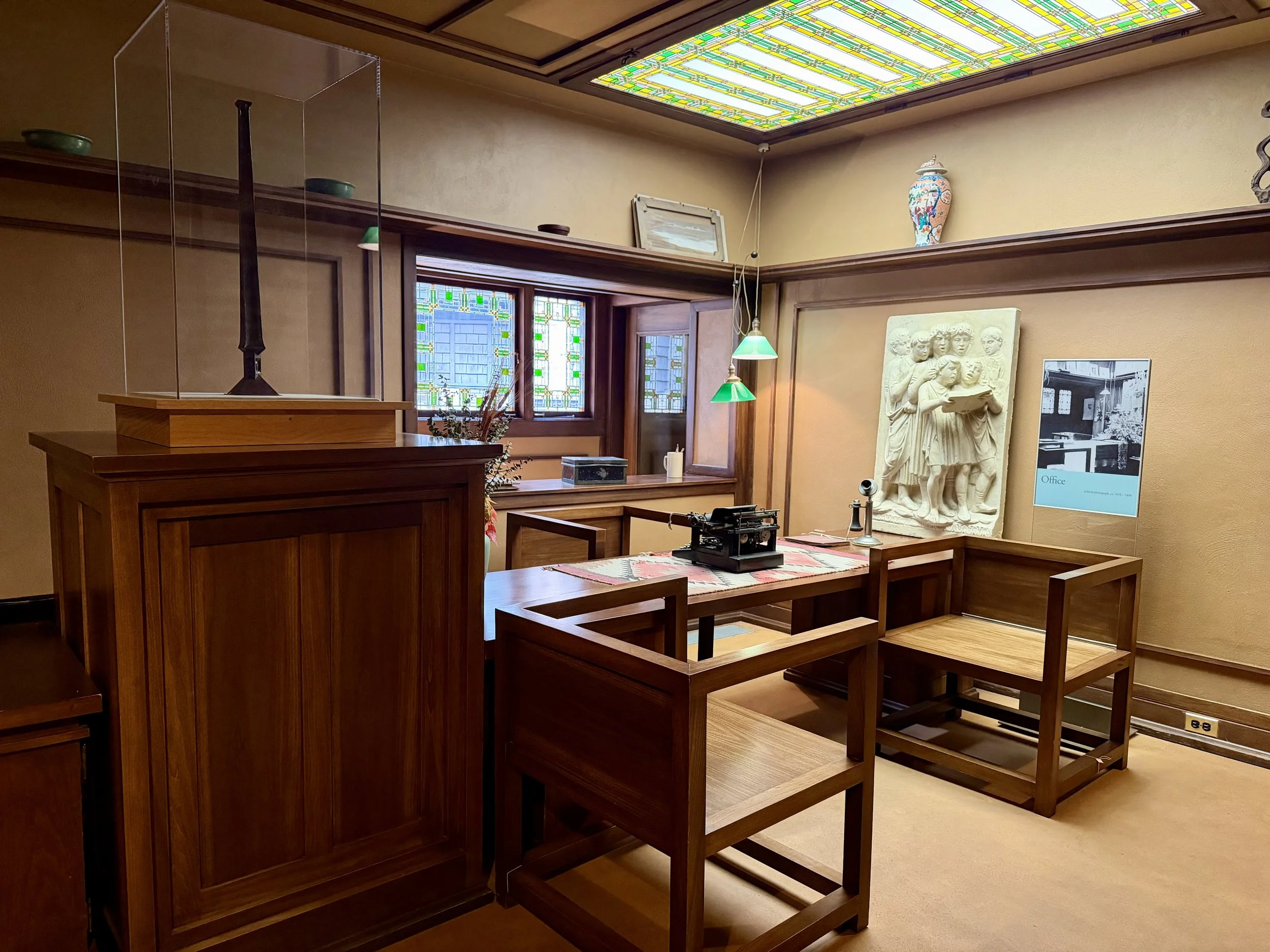
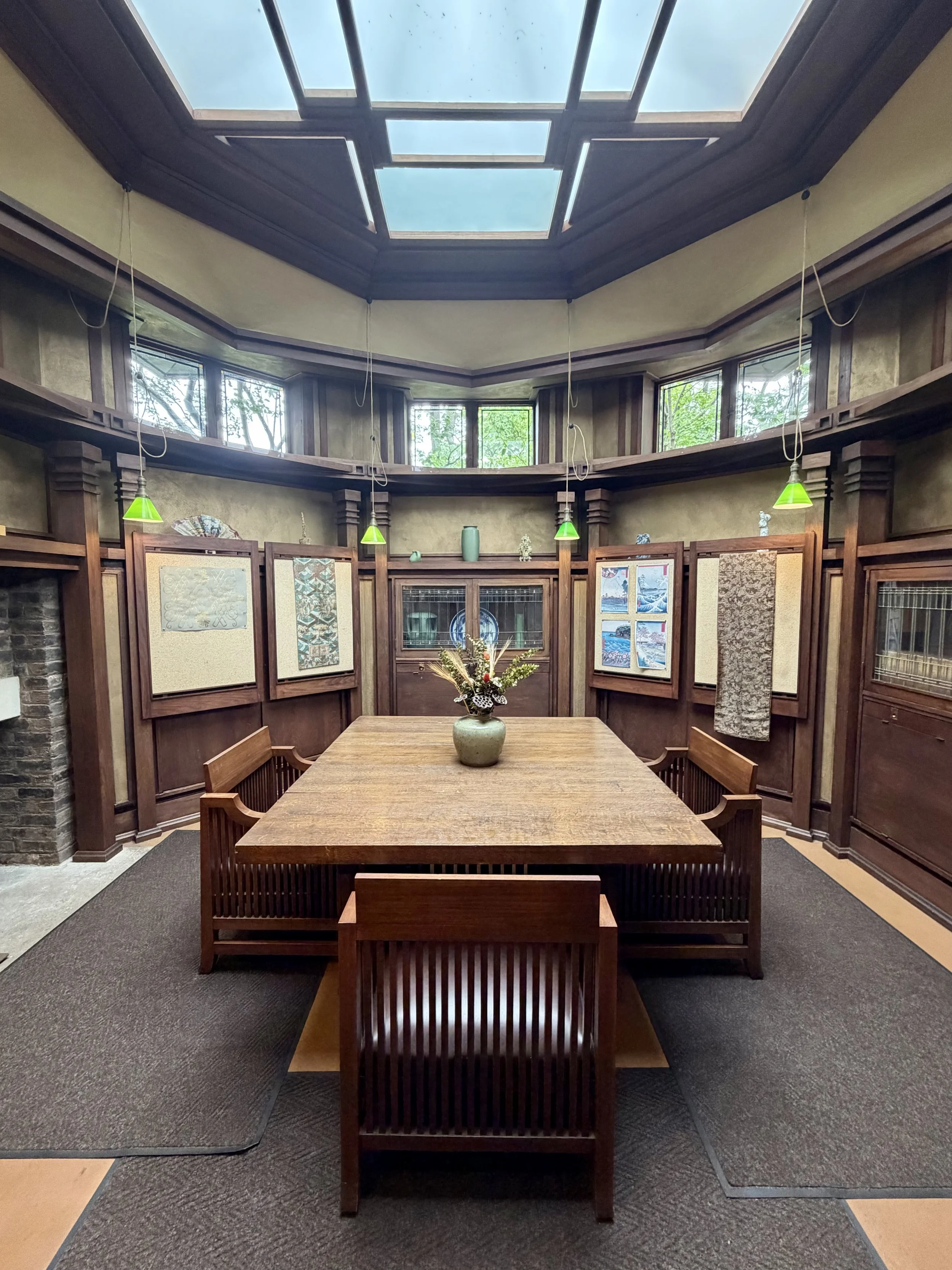
The reception area had three gorgeous leaded glass skylights. Wright’s office had chairs that looked extremely uncomfortable, perhaps so his clients wouldn’t stay long? The octagonal library was a cozy, appealing space. Wooden trim created multiple octagons, cleverly rotated above and below the windows. The library was my favorite room in the studio; I think it was Wright’s favorite, as well.
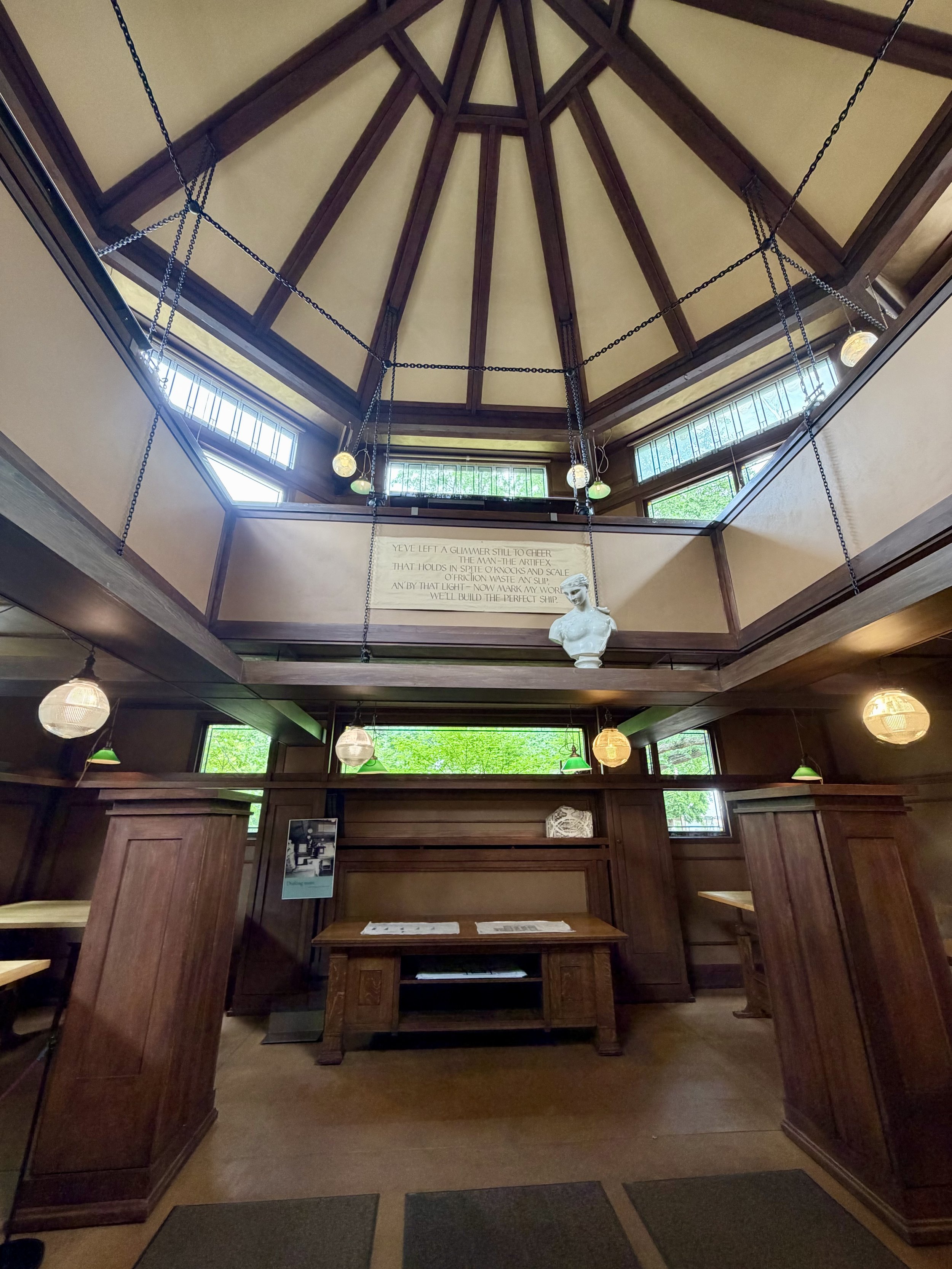
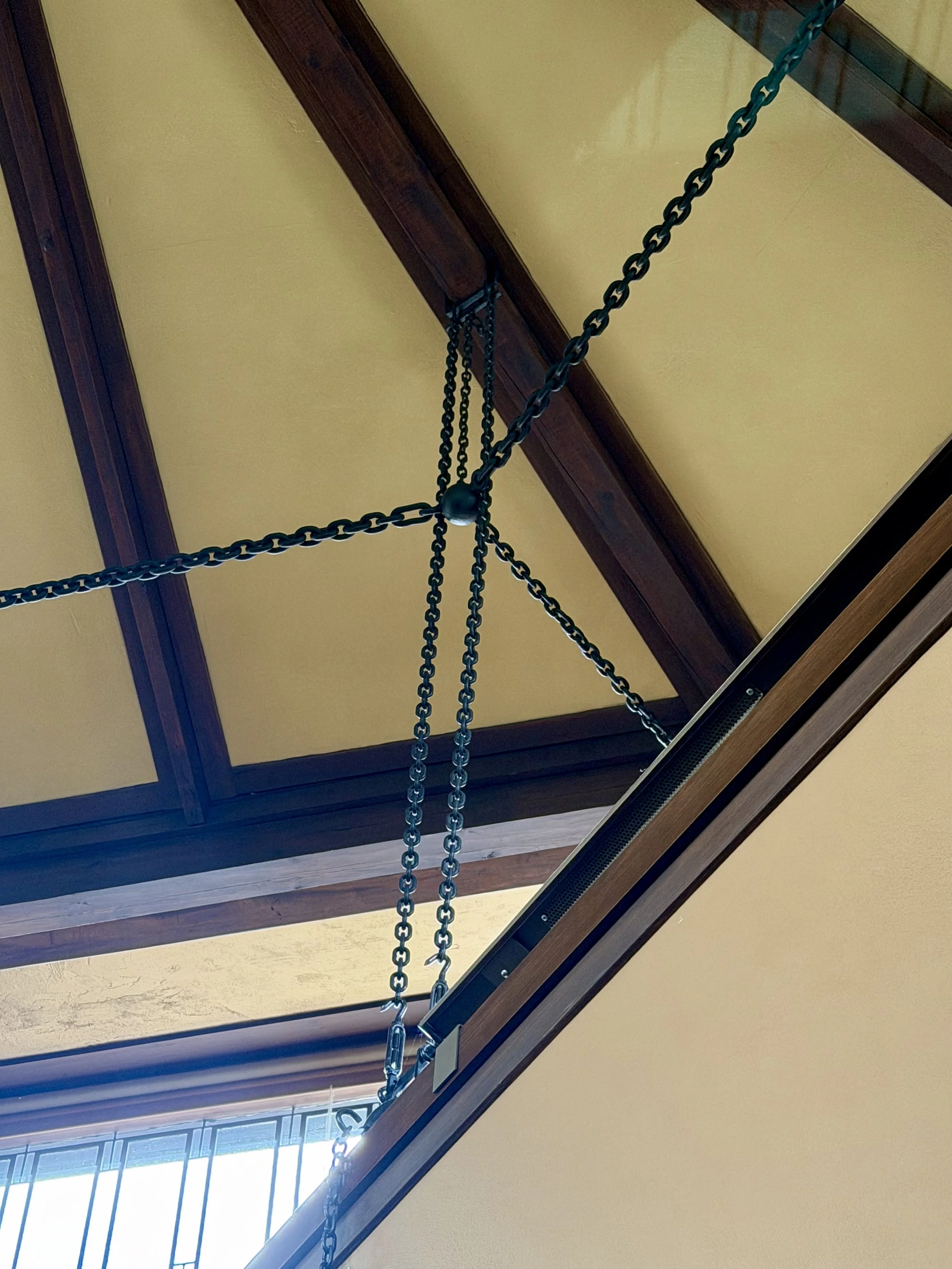
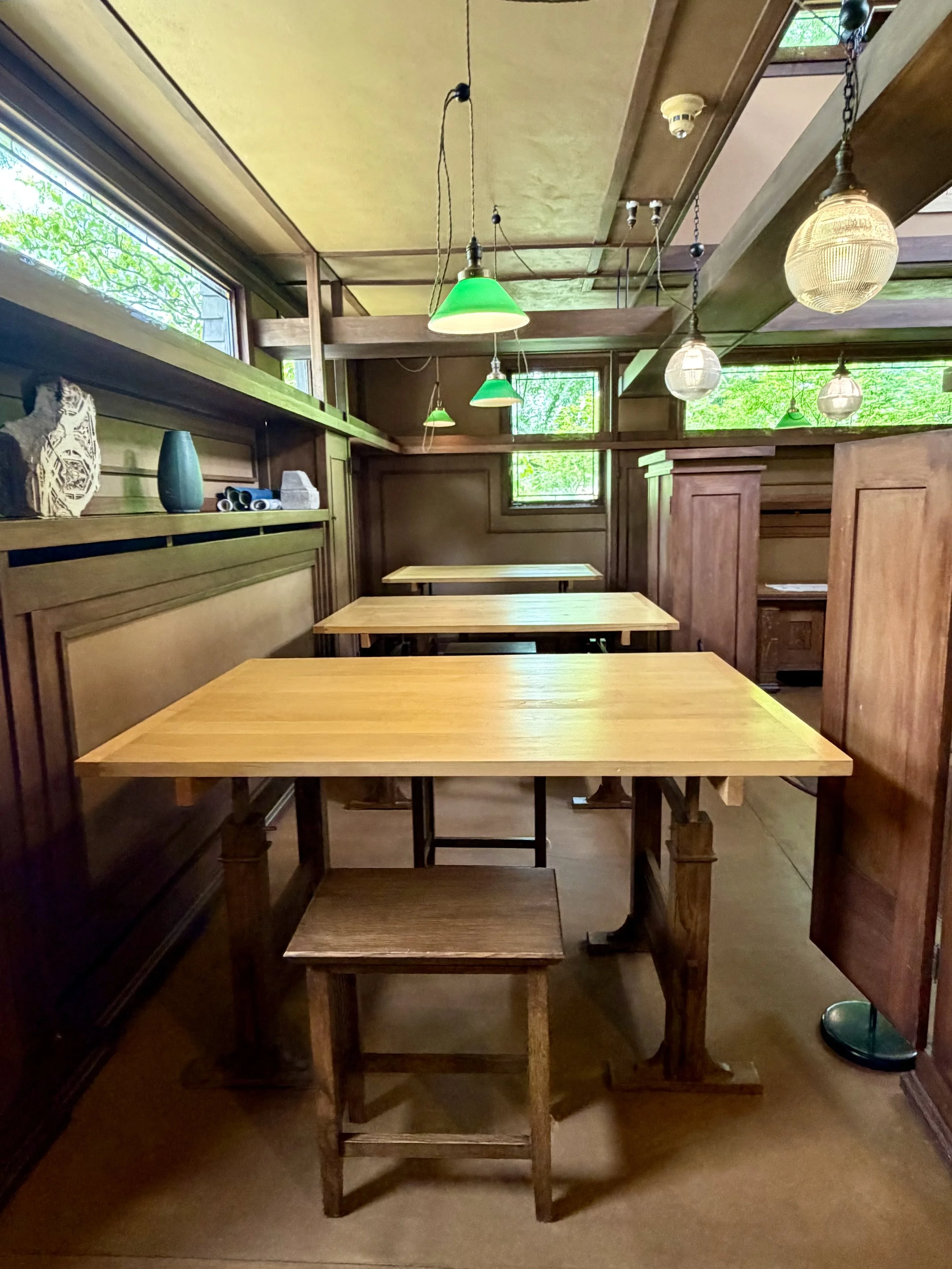
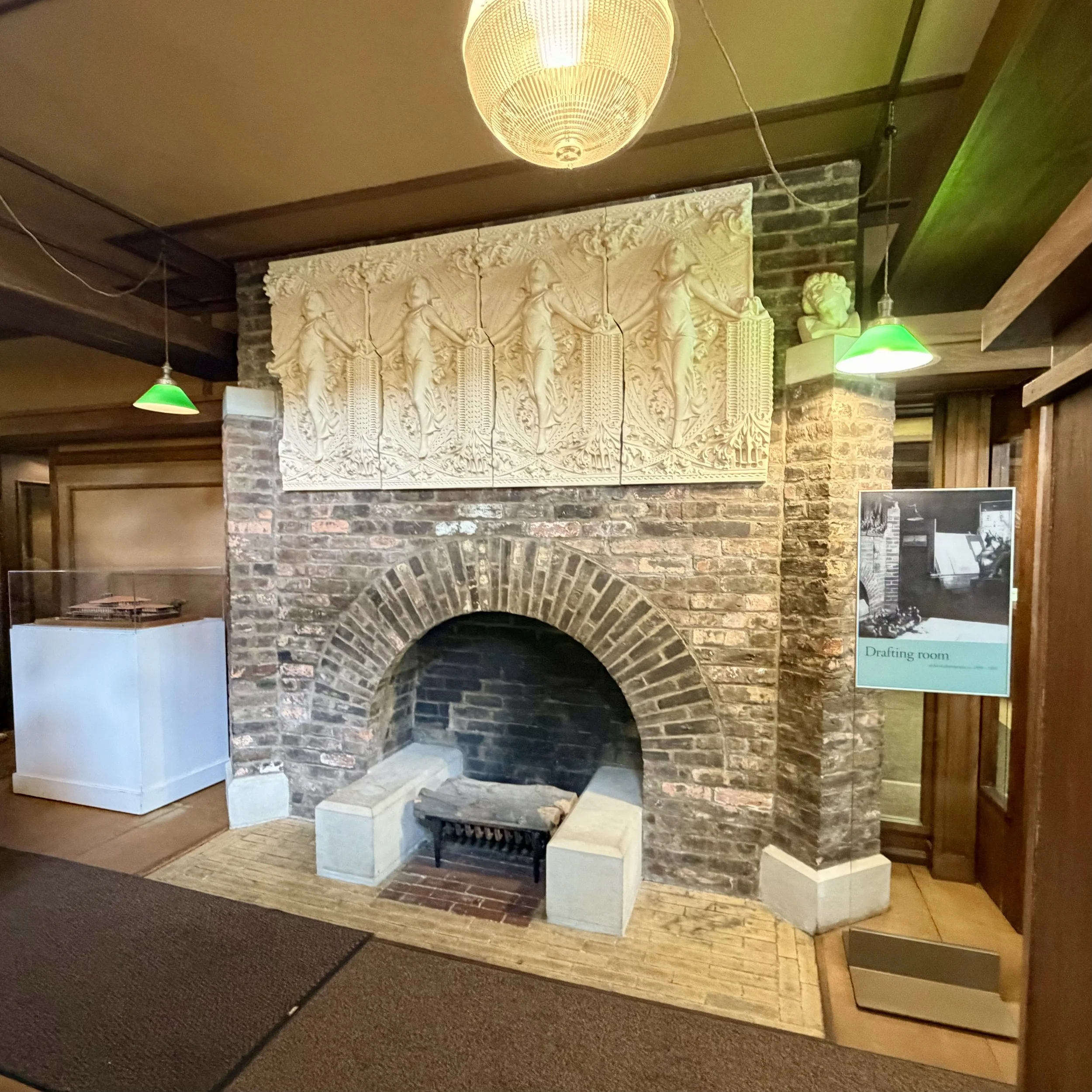
The most dramatic part of the studio was the two-story drafting room, flooded with light from an octagonal atrium. Structural support for the walls and balcony was provided by a network of iron chains instead of columns.
It was fascinating to walk through the rooms designed and used by Wright during the formative years of his illustrious career. To me, it seemed like the home of a brilliant man who loved to test new ideas and to surround himself, his family, and his colleagues with bold design and great art.