After an ominous early morning rainstorm, the skies cleared just in time for our Chicago Architecture Center walking tour. We were going to explore Oak Park, a suburb of Chicago which boasts one of the world’s largest collection of buildings designed by legendary American architect Frank Lloyd Wright.
Our guide, Jean, told us that when Wright was very young, his mother Anna believed he would grow up to be a great architect. She gave him the Froebel Kindergarten Gifts - wooden blocks in geometric shapes - which influenced his approach to design and love of nature. In 1887, after attending college for just one year, 20-year-old Wright came to Chicago seeking work. Construction there was booming after the Great Chicago Fire of 1871. In 1889, Wright settled in Oak Park, a rapidly expanding suburb with train service to Chicago. He was to live and work there for the next twenty years.
Oak Park is a picturesque neighborhood with stately houses on large lots with green lawns and towering oak trees. We tried to imagine how it looked during Wright’s time here, when these houses looked out onto the open prairie. Typical for the Victorian-era, many houses had asymmetrical shapes, wraparound porches, steep roofs, and towers. They were often decorated with multiple colors of paint and gingerbread trim. This was the context in which young Frank Lloyd Wright experimented, trying and discarding ideas to find his own signature style.
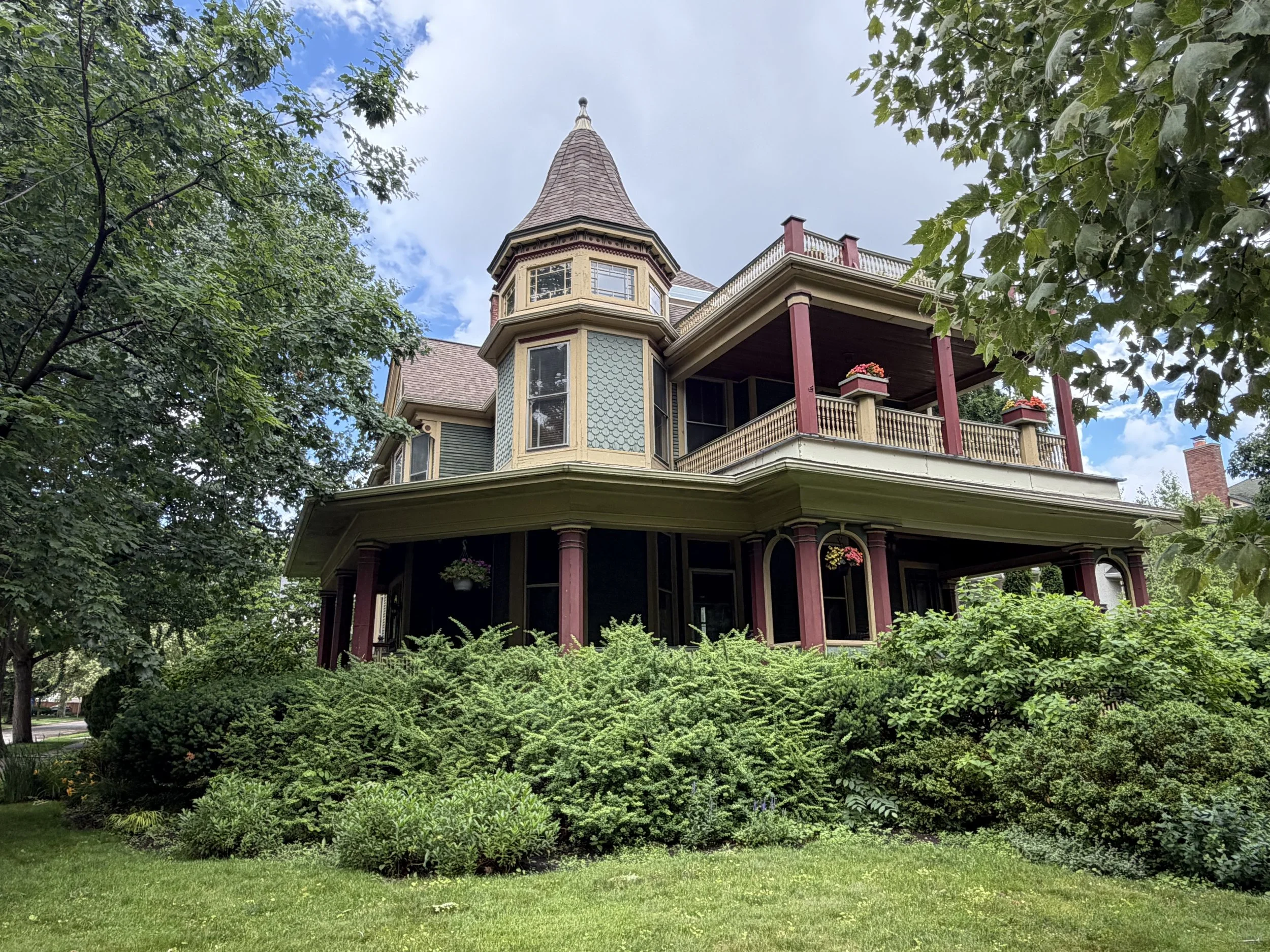
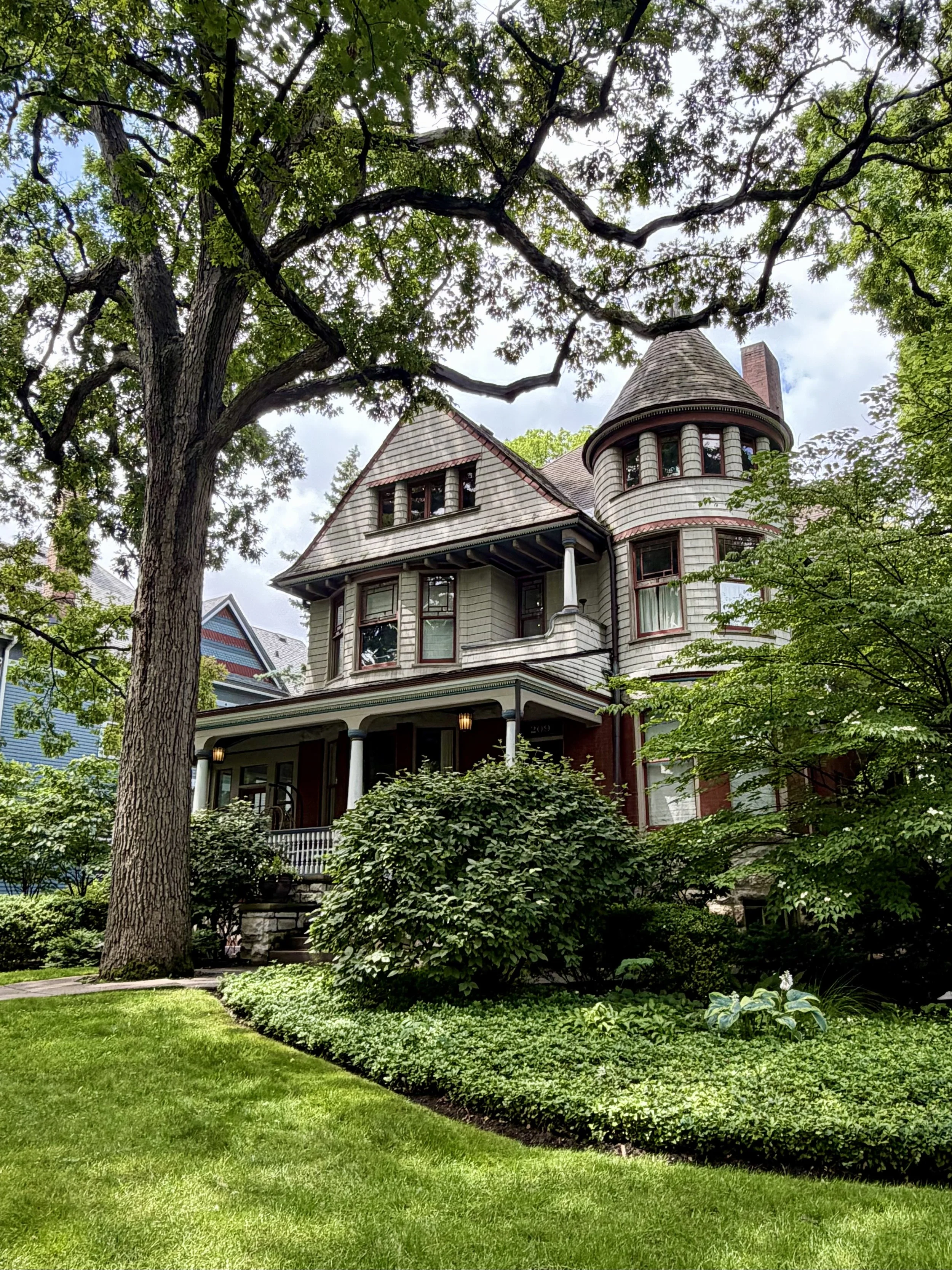
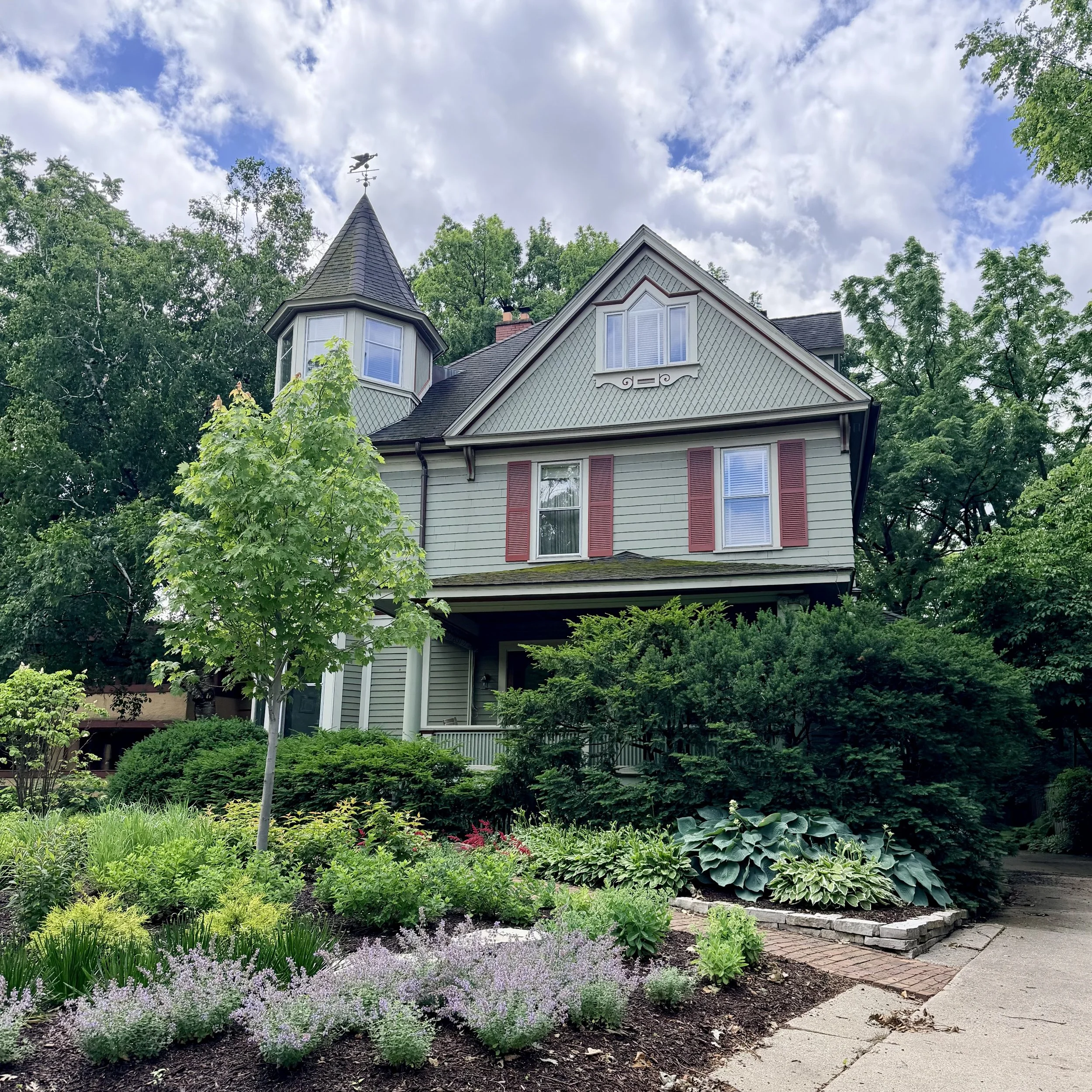
We started our tour at Wright’s first home and studio (which we would return to later). From there, within a small radius of several blocks, we viewed the exteriors of nine houses designed by Wright.
Wright’s boss and mentor, Louis Sullivan, loaned Wright the funds to build his own home, on the condition that he would work off what he owed under an exclusive five-year contract with Adler & Sullivan. But Wright had expensive taste in clothes and cars, and a new family to support. So he moonlighted, taking commissions on the side, designing what are now known as Bootleg Houses.
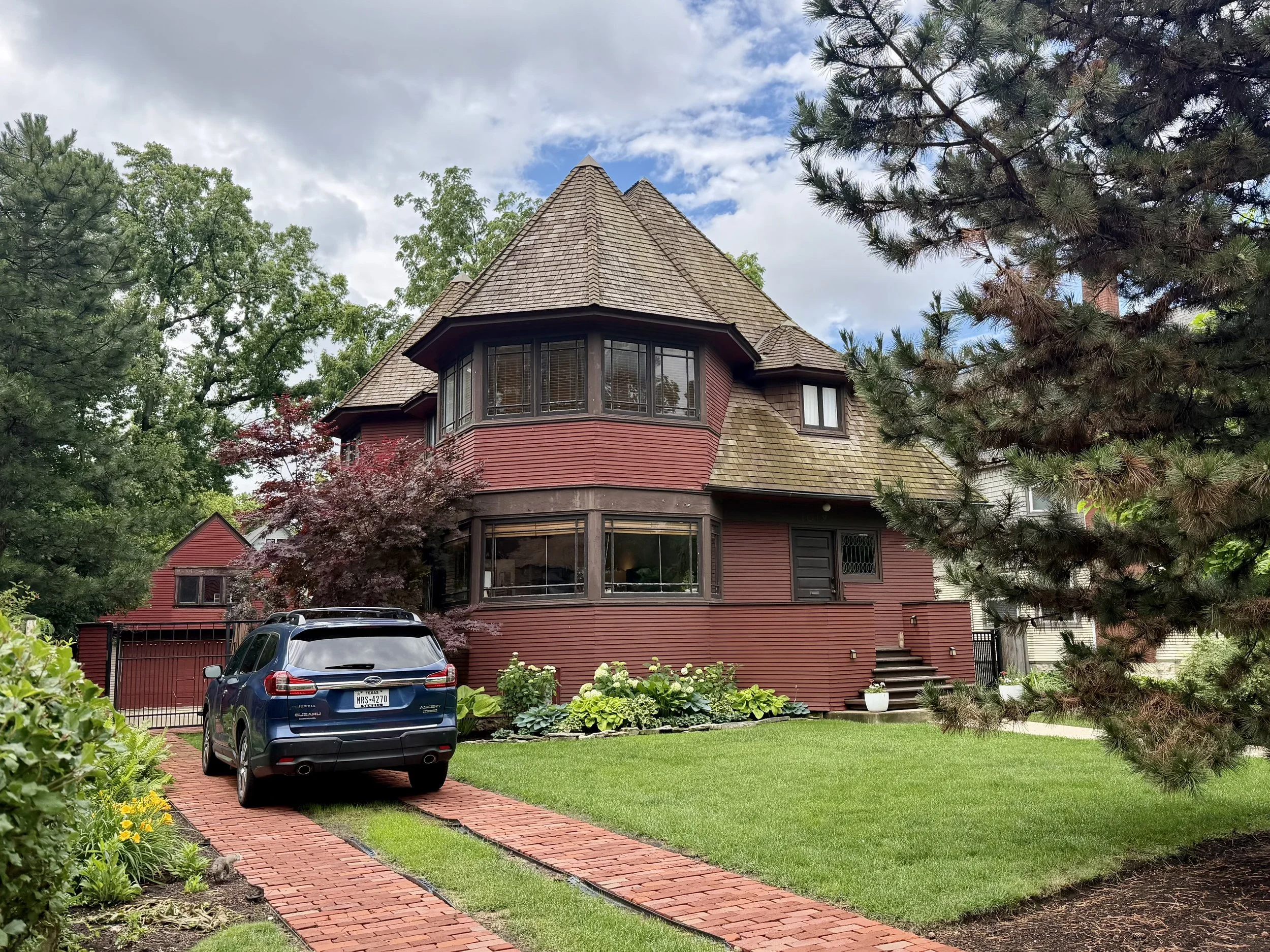
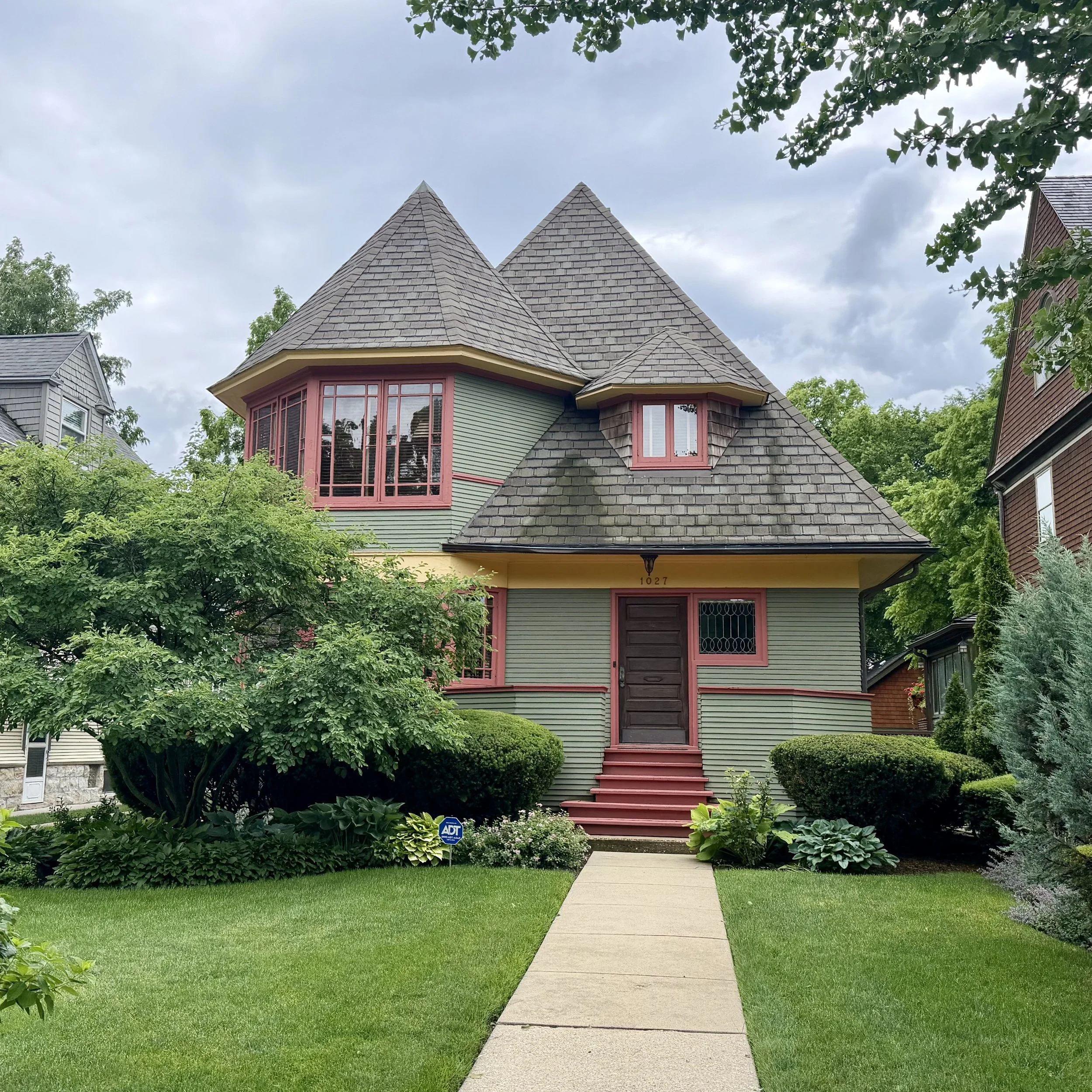
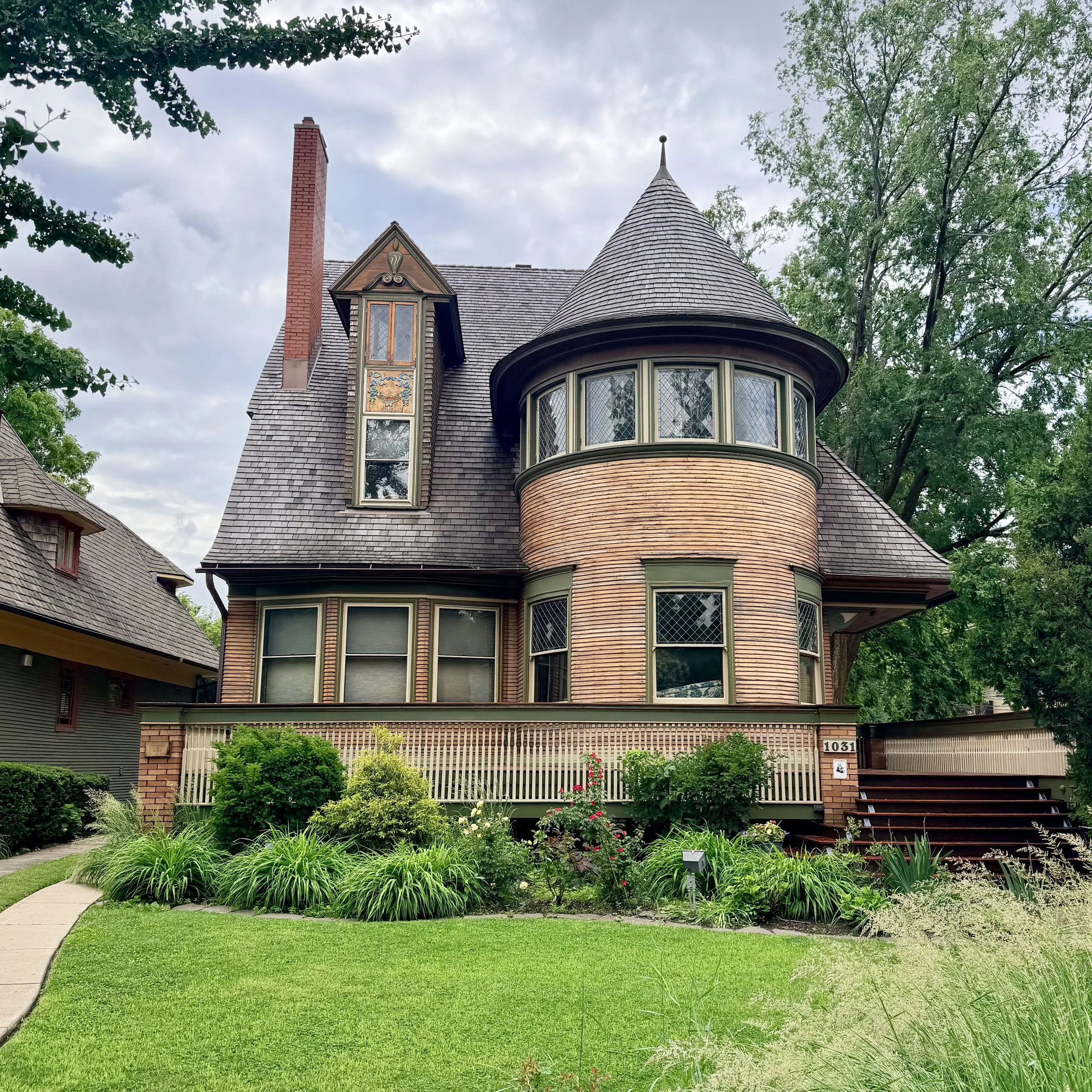
The Bootleg Houses in Oak Park - the Robert Parker House and the Thomas and Laura Gale House - were reminiscent of the Queen Anne style, but with simpler shapes and less decoration. We could see Wright’s love for nature in the earthy paint colors, and his growing interest in horizontality in the ribbon windows and somewhat squat proportions.
Sullivan recognized one of the Bootleg Houses as Wright’s work and charged him with breach of contract. Wright was fired (or quit) from Adler & Sullivan in 1893 and opened his own practice in a studio attached to his house. The Walter Gale House was one of his first projects as a sole practitioner.
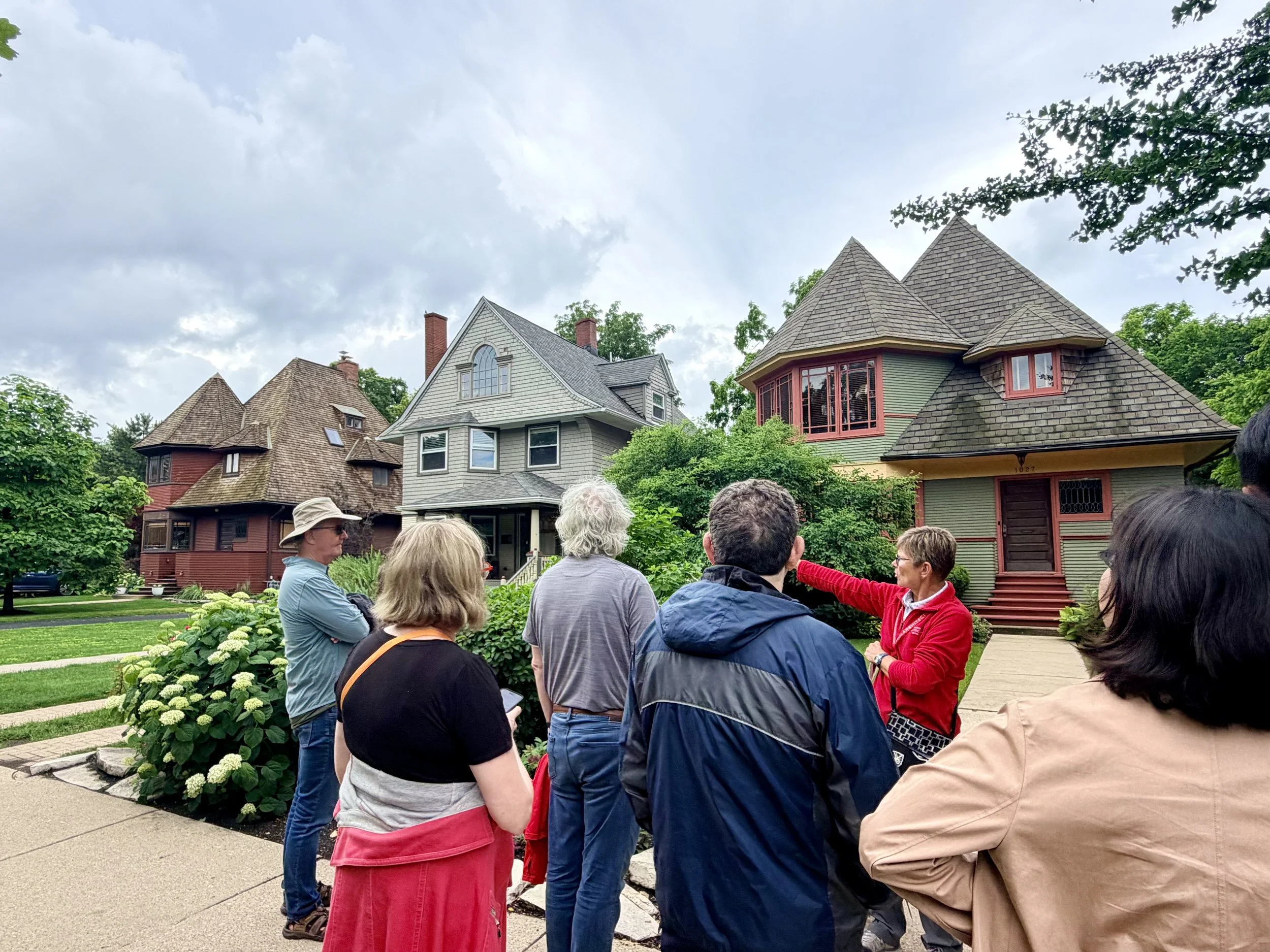
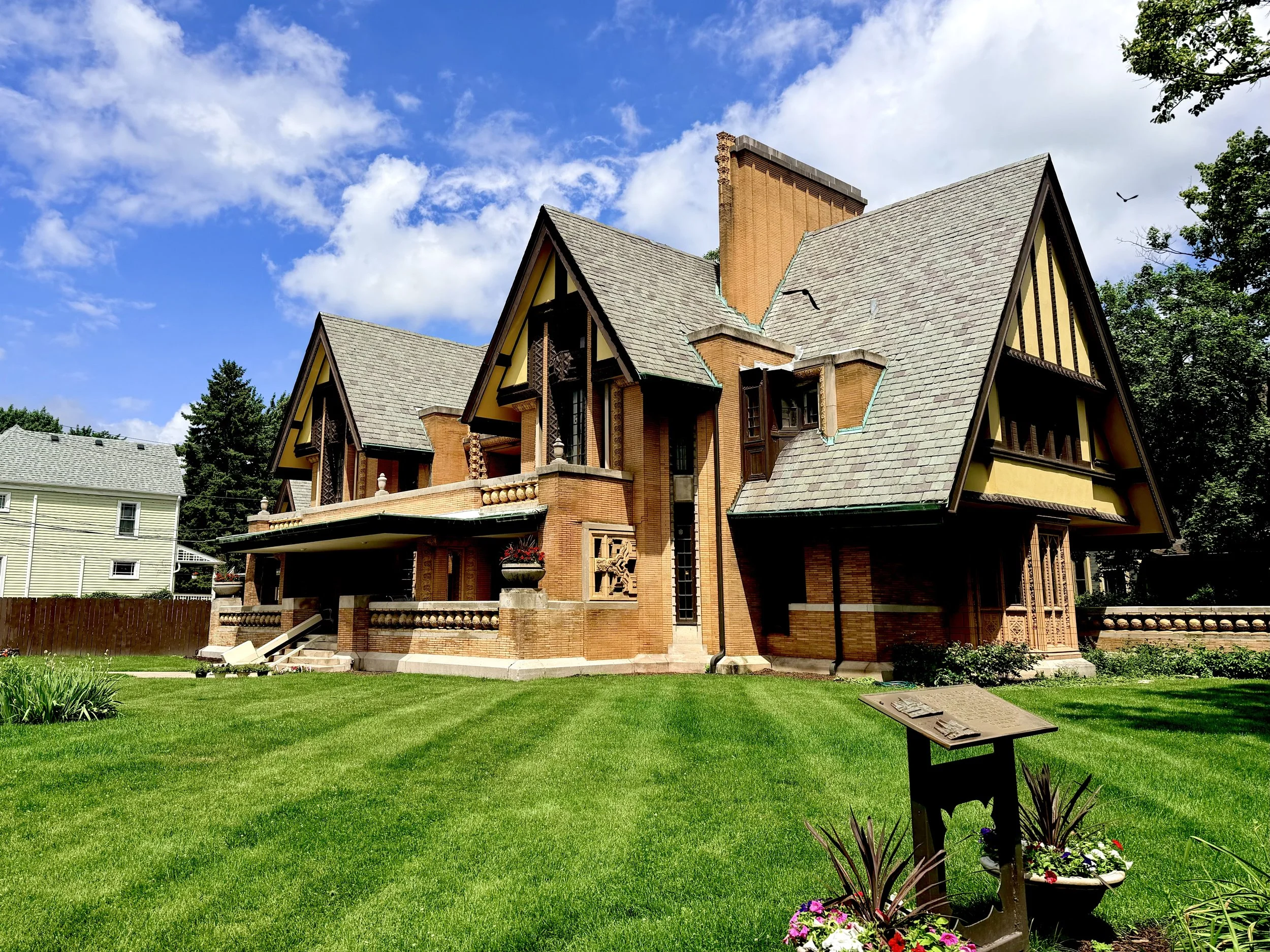
I didn’t really like the design of the Nathan G. Moore House (1895), and neither did Wright, who reluctantly complied with the client’s request for a Tudor-style home because he needed the money. When a fire destroyed the upper floors in 1922, Wright had them rebuilt to a new - but still Tudor - design. He did add a wide back porch, a decorative balustrade, and his signature concrete planters (round on a square base). In my opinion, this mishmash of incongruous elements was not a successful experiment.
I was more interested in the house next door - the Edward R. Hills House. In 1906, Moore purchased this house for his eldest daughter and hired Wright to do a complete remodel. Wright had recently visited Japan for the first time, inspired by the Phoenix Pavilion at the 1893 Chicago World’s Fair. It was easy to see his fascination with Japan in the pagoda-like features of the Hills House. The large yard connecting the two houses was a reminder that this was the client’s family compound.
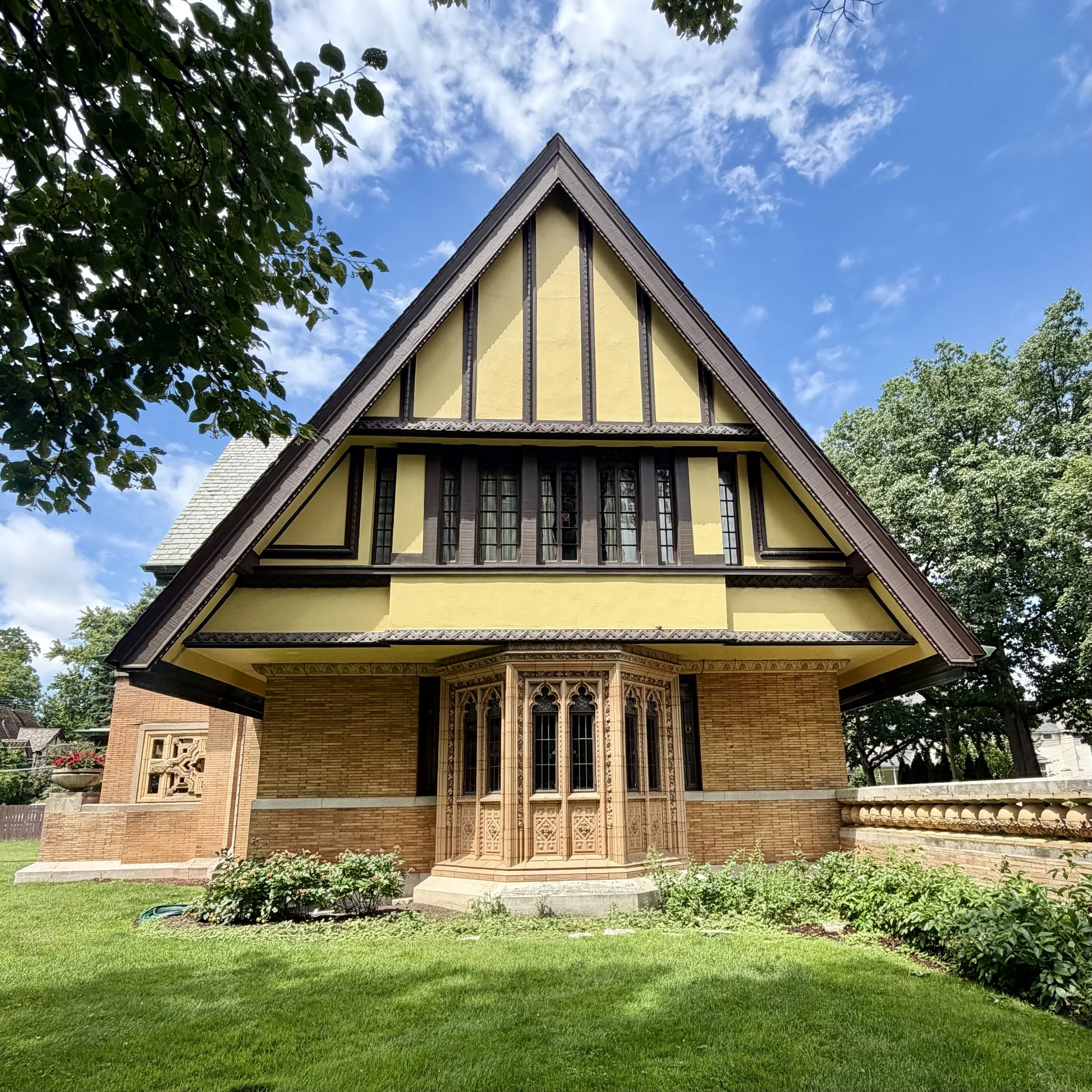
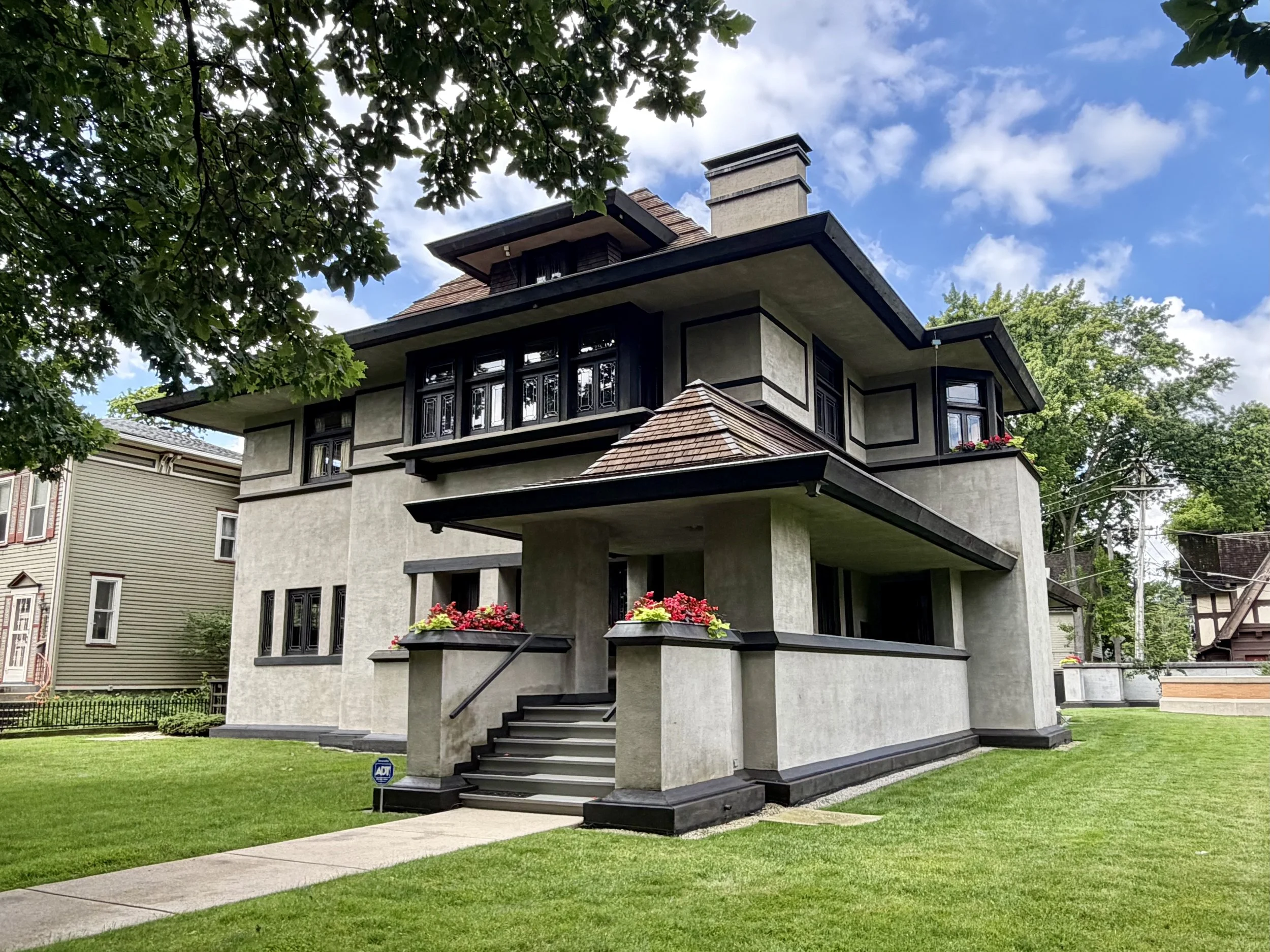
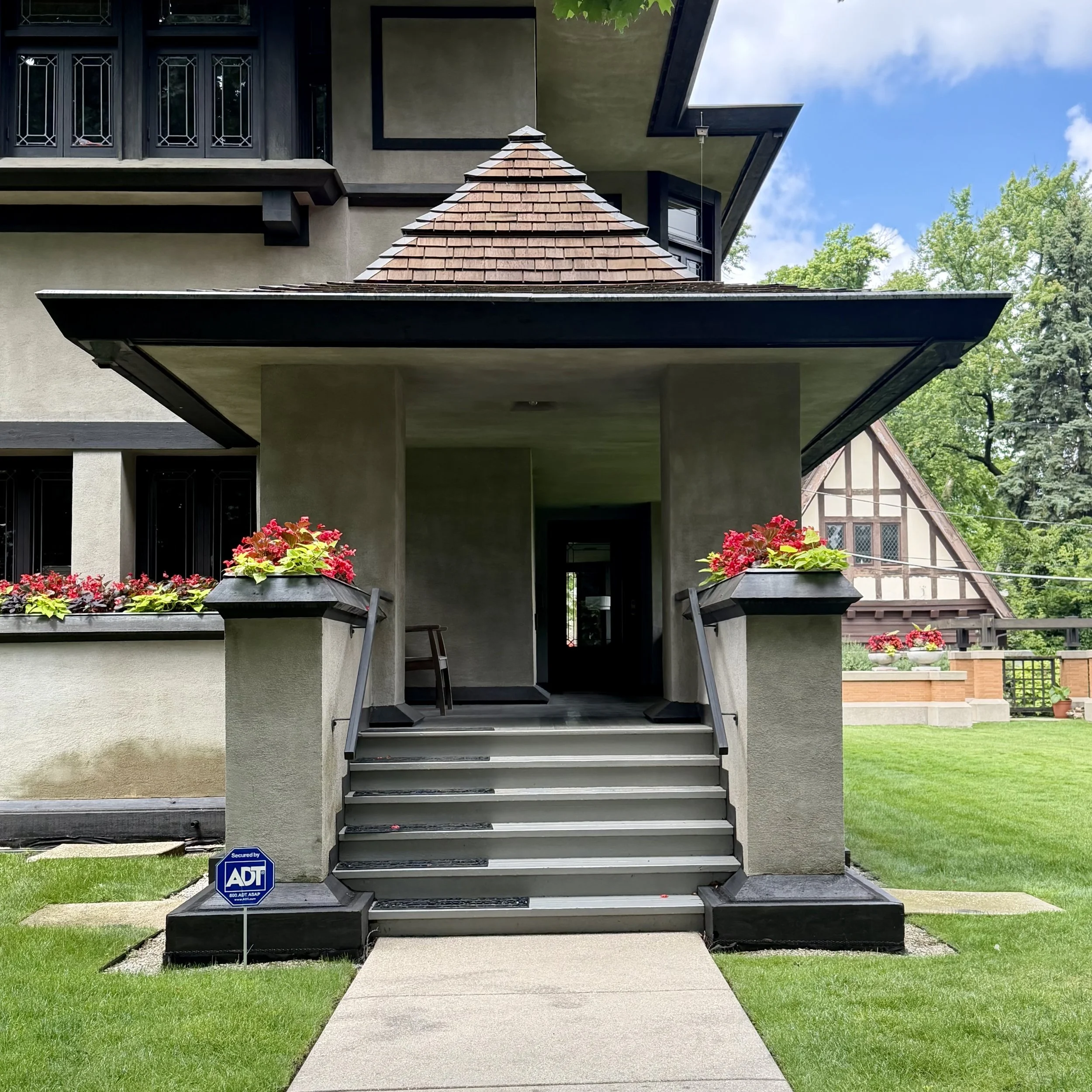
Wright was finding his voice. He helped define what we now call the Prairie Style - long and low, sprawling horizontally like the prairie landscape. We saw a few Prairie-style Wright-designed houses, with beautiful leaded glass windows, deep eaves like pagodas, and front doors that were rarely in the front. A small home built for Laura Gale (the widow of Thomas H. Gale) looked like a prototype for Wright’s Prairie-style masterpiece, Fallingwater.
About those flat roofs…the story goes that Mrs. Gale called Wright to tell him the ceiling was leaking. His response? “Put a bucket under it.” Apparently Wright houses are sometimes described by how many buckets are needed.
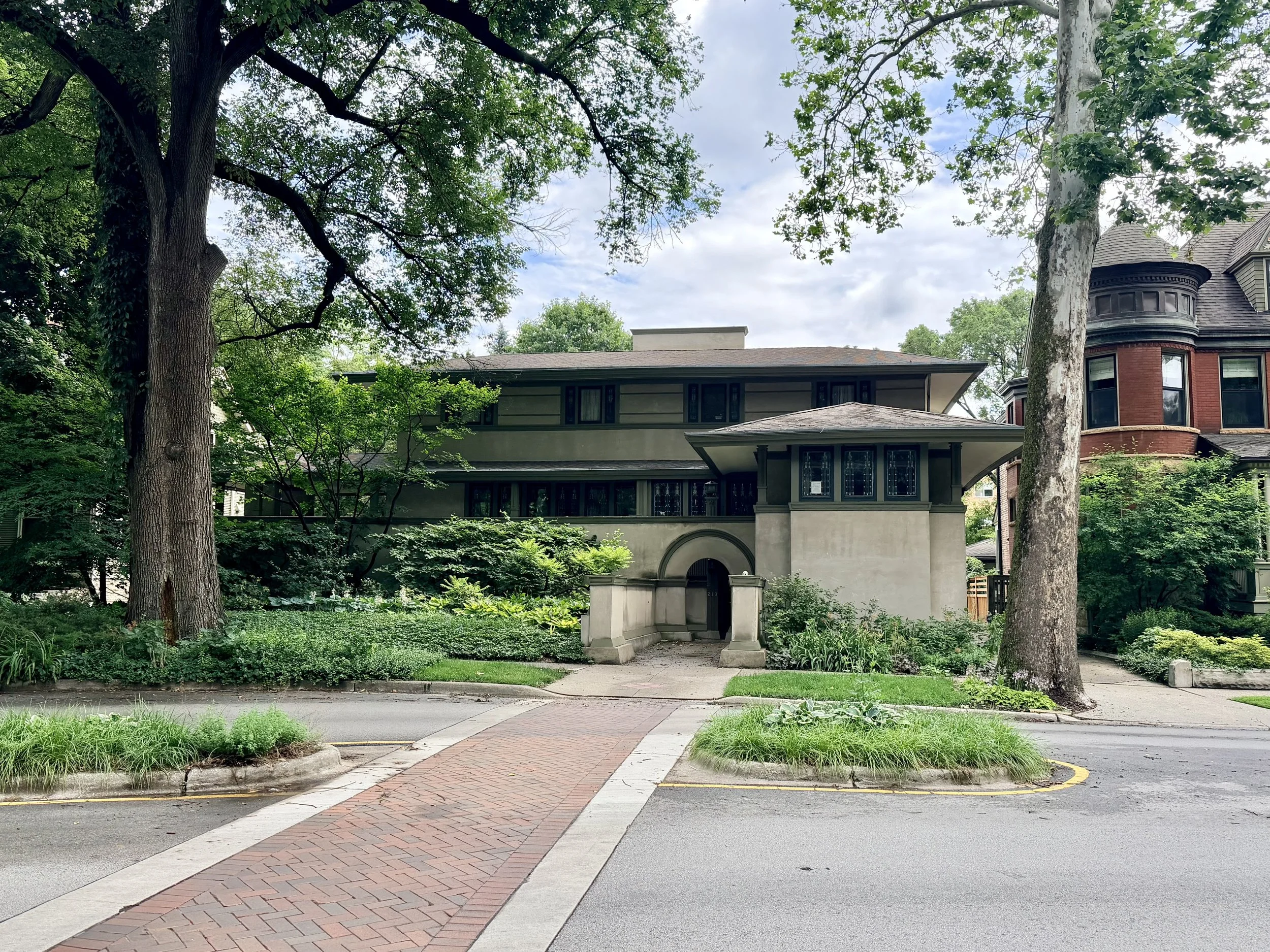
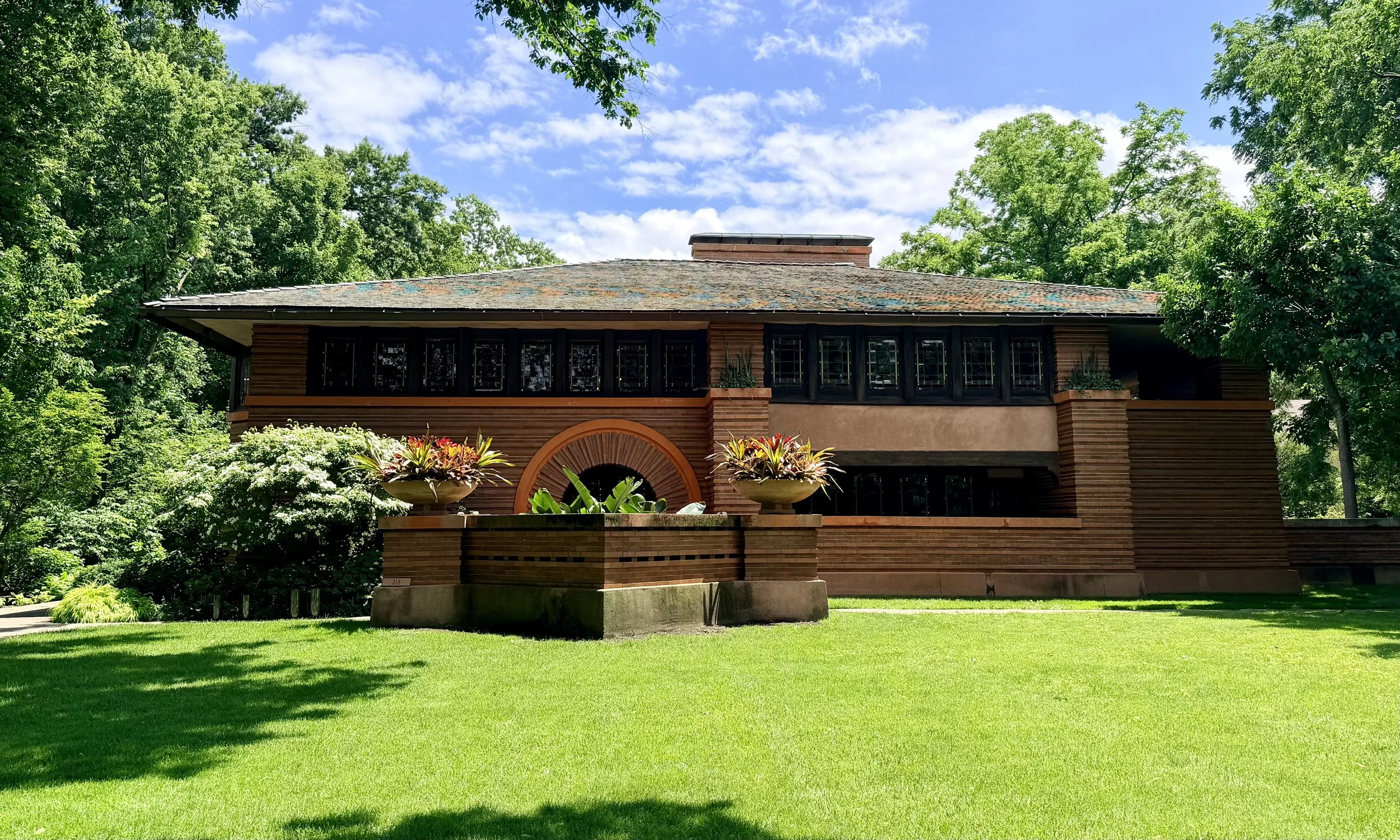
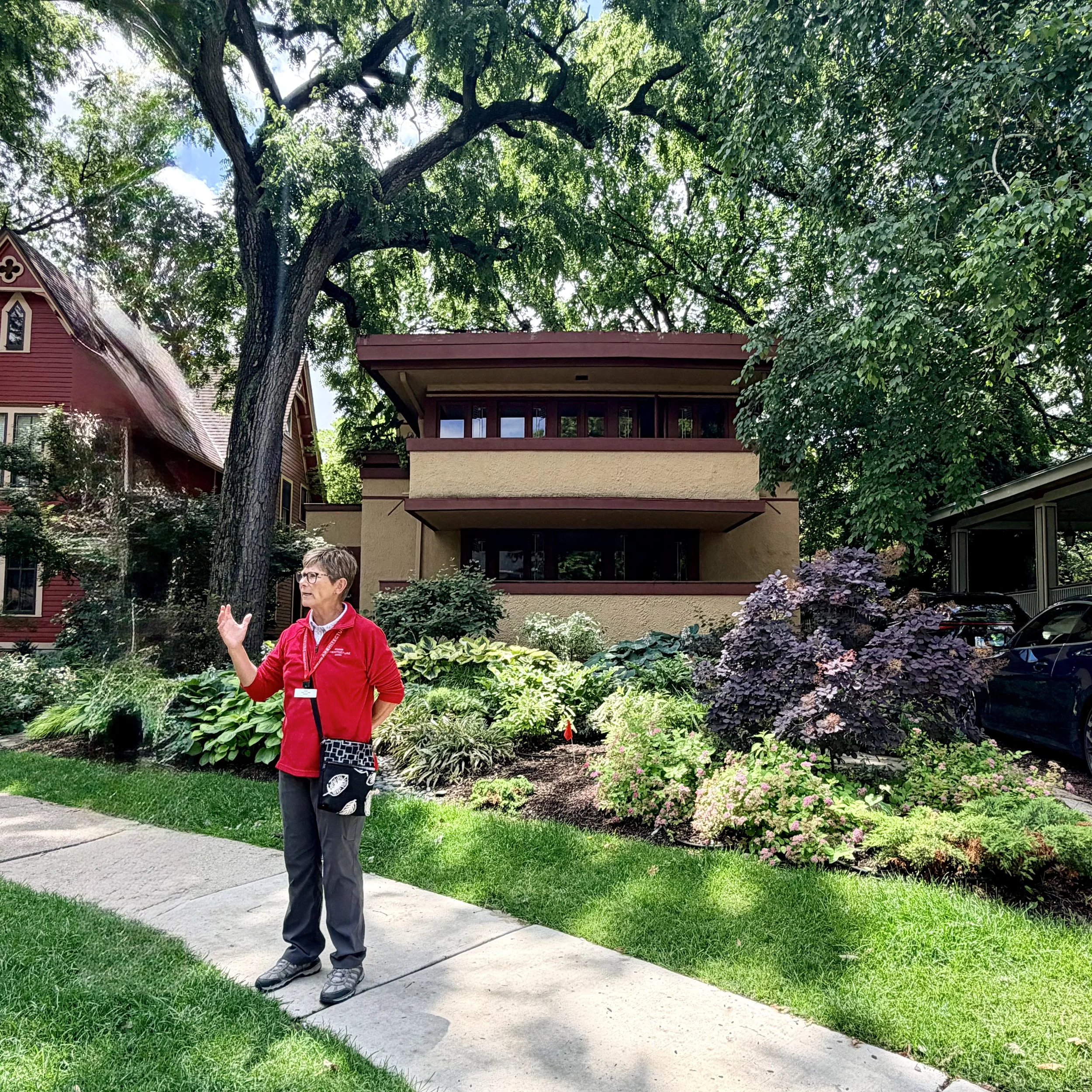
Wright had big vision and an even bigger ego. He often designed the furniture and decor inside the homes, so that the owners wouldn't spoil the integrity of his designs with incompatible furnishings. The modern-day owners of Wright-designed homes like these in Oak Park are responsible for preserving the houses’ original designs and built-in furniture. They must also comply with the restrictions of the Oak Park Historic District. This all sounds both challenging and expensive. Behind the Arthur B. Heurtley house there was a pizza oven with brickwork and trim that perfectly matched the house. I imagine it required prodigious effort and cost to obtain approval and build that pizza oven!
It was fascinating to see the evolution of Wright’s style. After viewing all these distinctive exteriors, I was curious to see the interior of a Wright-designed house in Oak Park. We would soon find out: our next adventure would be a tour inside the Frank Lloyd Wright Home and Studio.
Chicago Architecture Center walking tours are free (or discounted) for members.