During the Byzantine era - from the 4th to 13th centuries - Cappadocia became a center for monastic life. It was the hometown of Saint Basil the Great and two other famous clergymen called the Cappadocian Fathers. Hundreds of monastic dwellings and churches were carved into the tuff across the region. A cluster of beautifully decorated rock churches was found at Göreme, and it is now an open-air museum and a UNESCO World Heritage site.
Vehicles were no longer permitted at the upper entrance to the site because the road is dangerously steep. We were dropped off some distance away and walked carefully down a long, winding road paved with large, slippery cobblestones. (We were lucky to have a driver; most visitors have to hike UP from the parking lot at the bottom of the hill.)
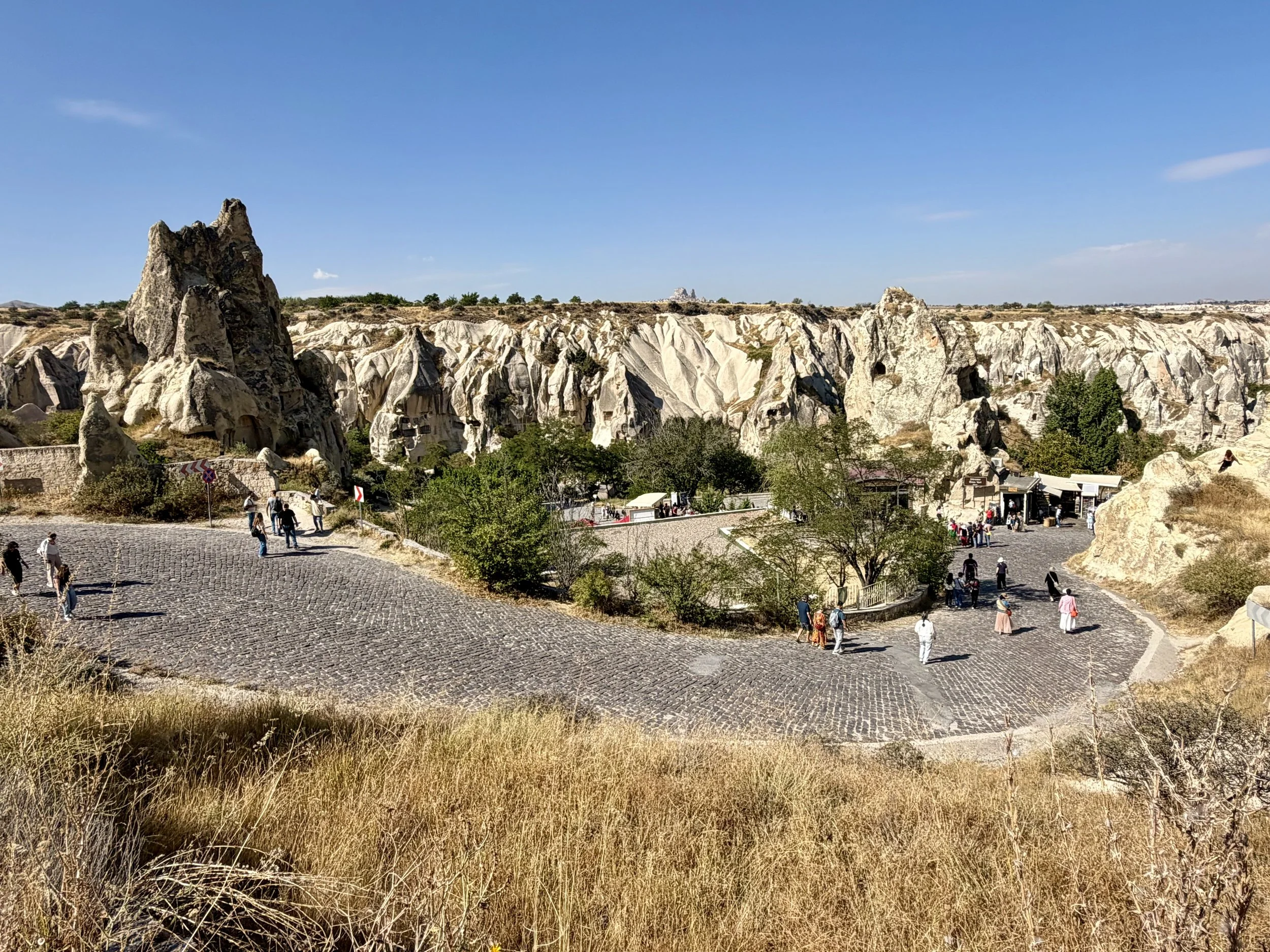
When we reached the open air museum, we were surrounded by tall rock formations with doorways and windows. These were cave dwellings for the monks, some with multiple stories. The tuff rock was easy to carve and provided natural insulation from the extreme heat and cold of this high desert region. We explored a couple of caves; one had niches for storage, and another had been a refectory and classroom.

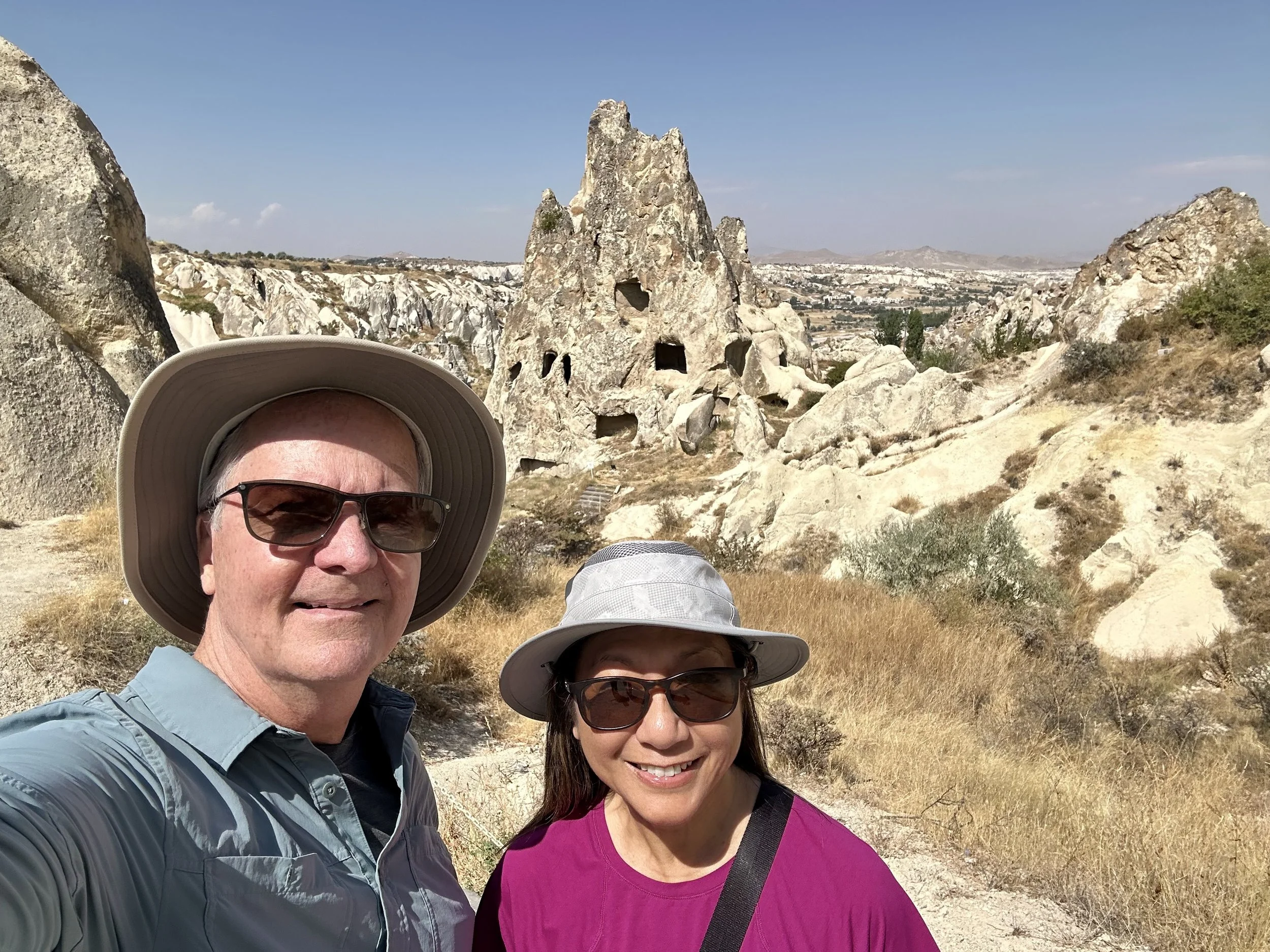
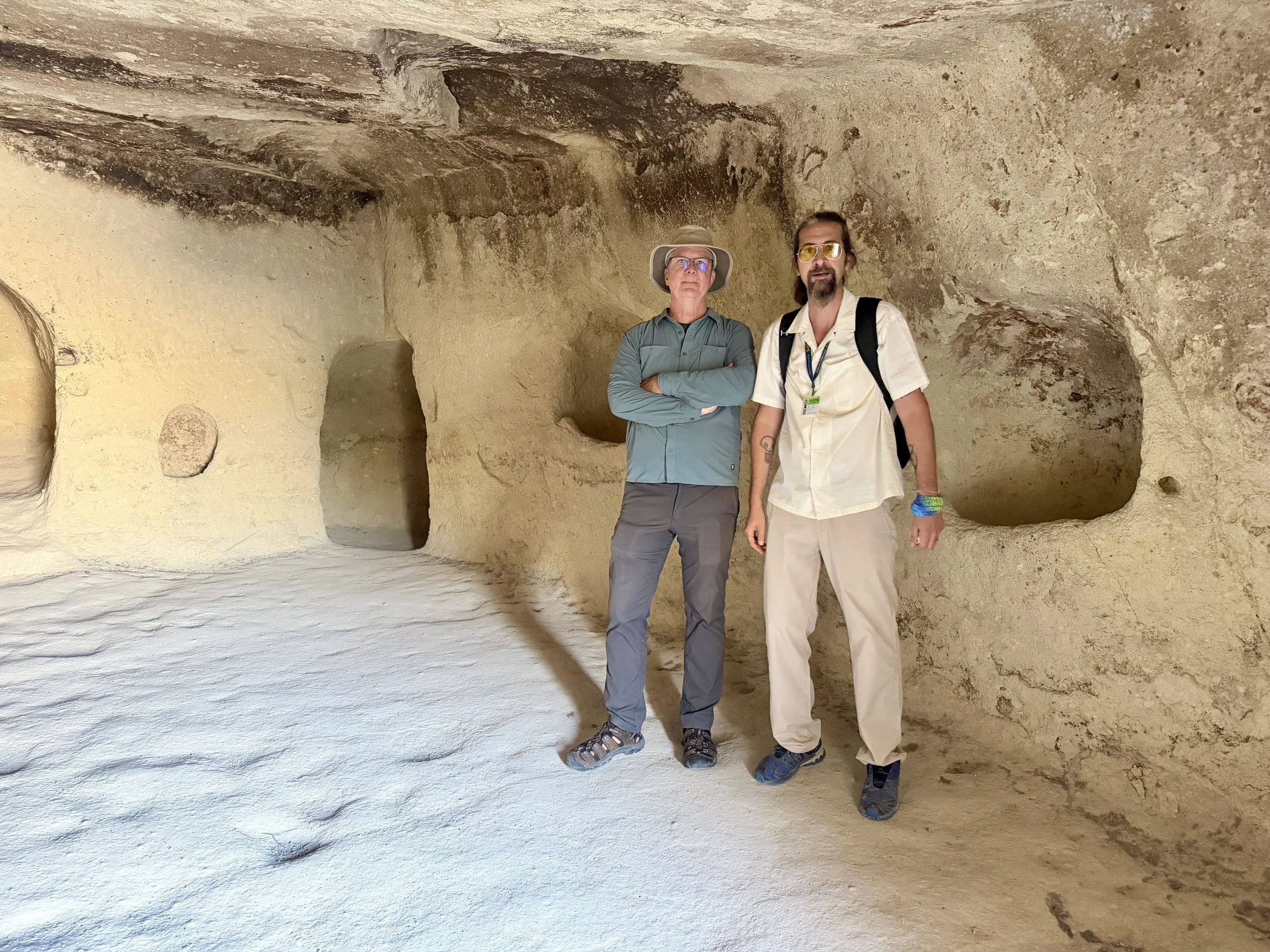
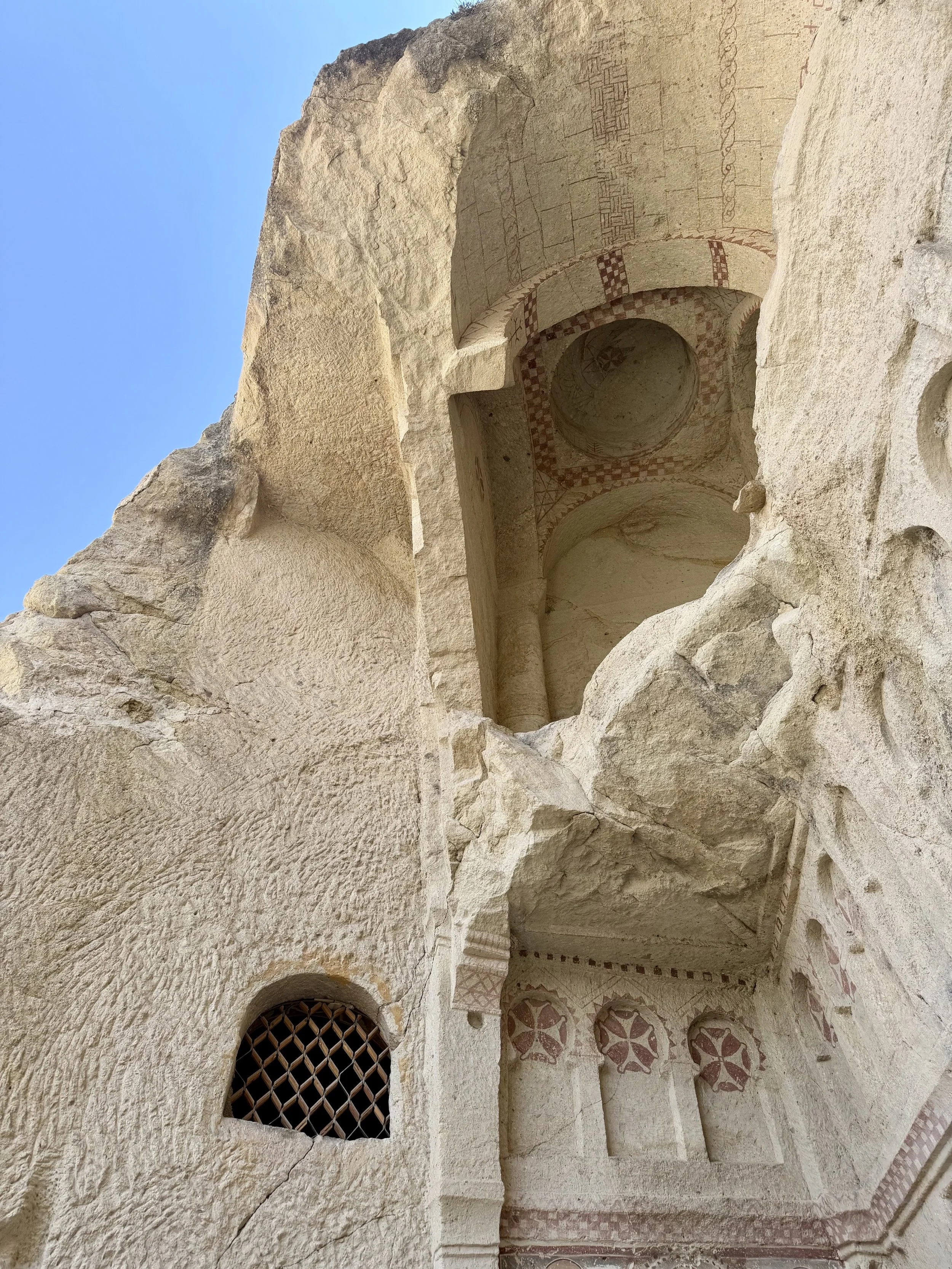
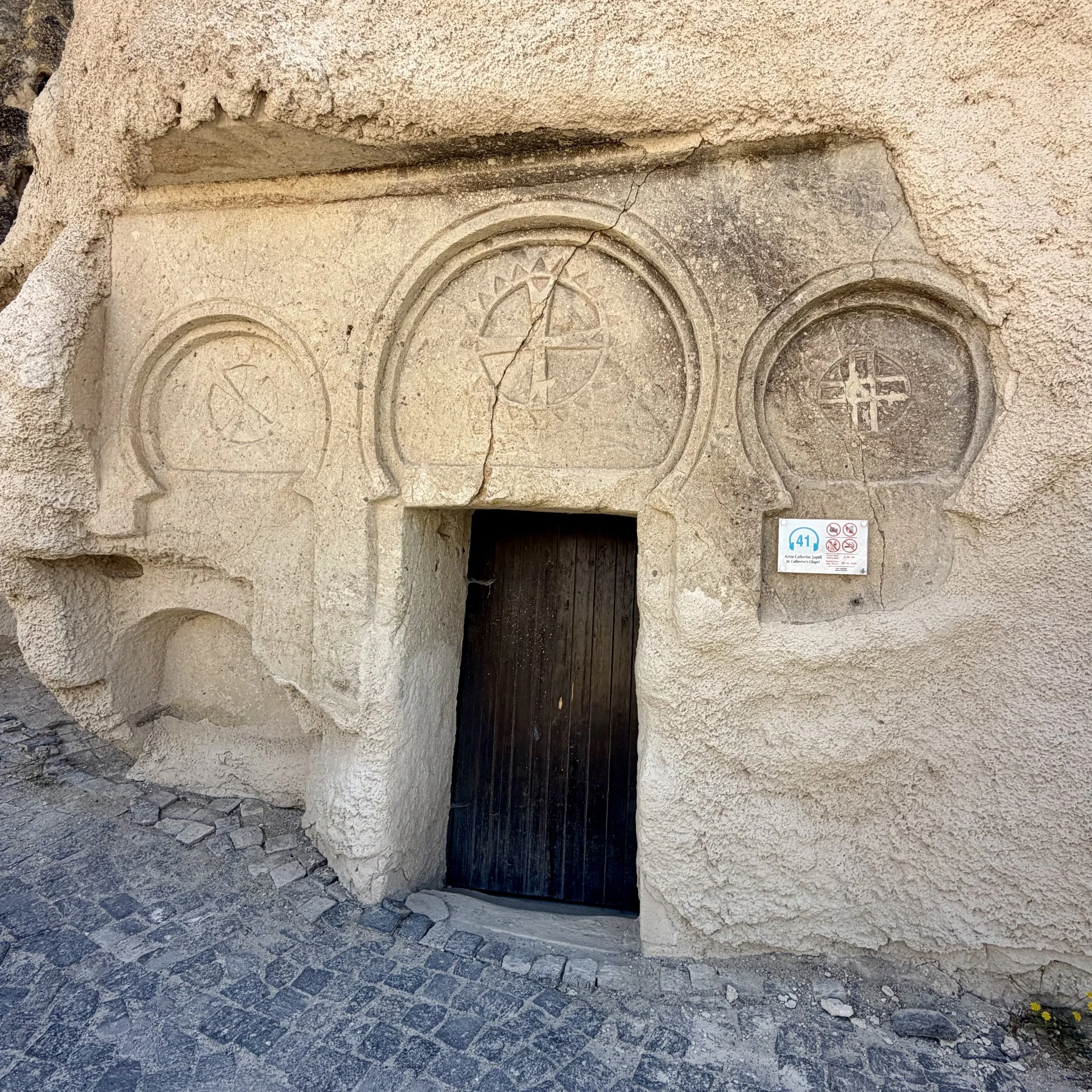
There were about a dozen churches inside the rocks. Outside, some of the entrances still had paint visible.
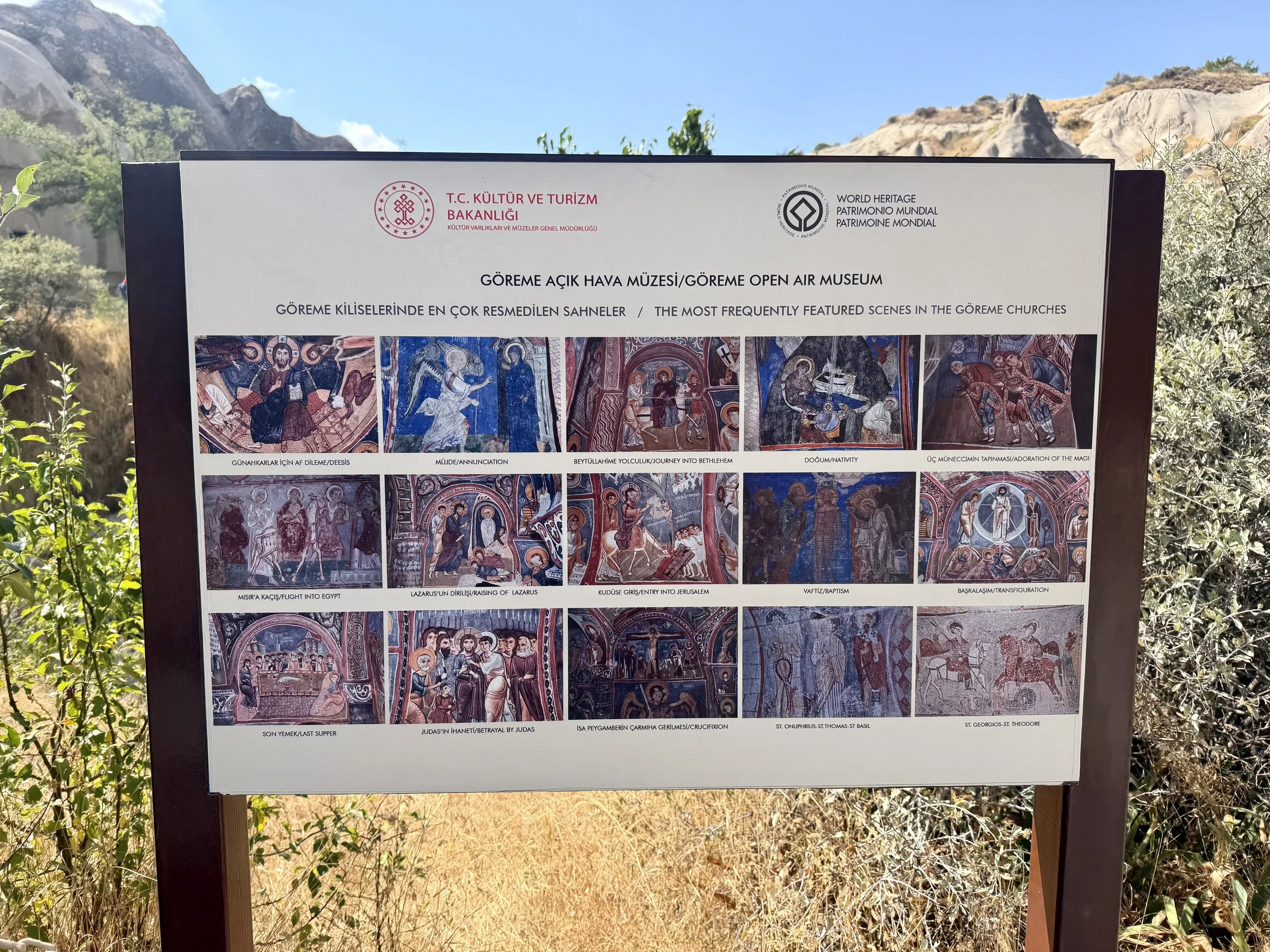
Inside, the churches were beautifully decorated using the secco (dry fresco) technique. Guides were not permitted inside the churches, so Togay used a signboard to explain what we would be seeing. Since this was a monastery complex focused on education, there were numerous scenes from the life of Jesus Christ. Some I recognized from the New Testament, such as the Last Supper and the Transfiguration. There were also apocryphal scenes I was unfamiliar with - stories that were widely accepted by the Cappadocian Christians but that didn’t make it into the official New Testament. For example:
Joseph escorts a pregnant Mary on a donkey to Bethlehem, accompanied by his son (her stepson)
Two midwives bathe the baby Jesus, and then animals warm the baby with their breath
Jesus stands on the vanquished Hades/Satan and pulls Adam and Eve into heaven
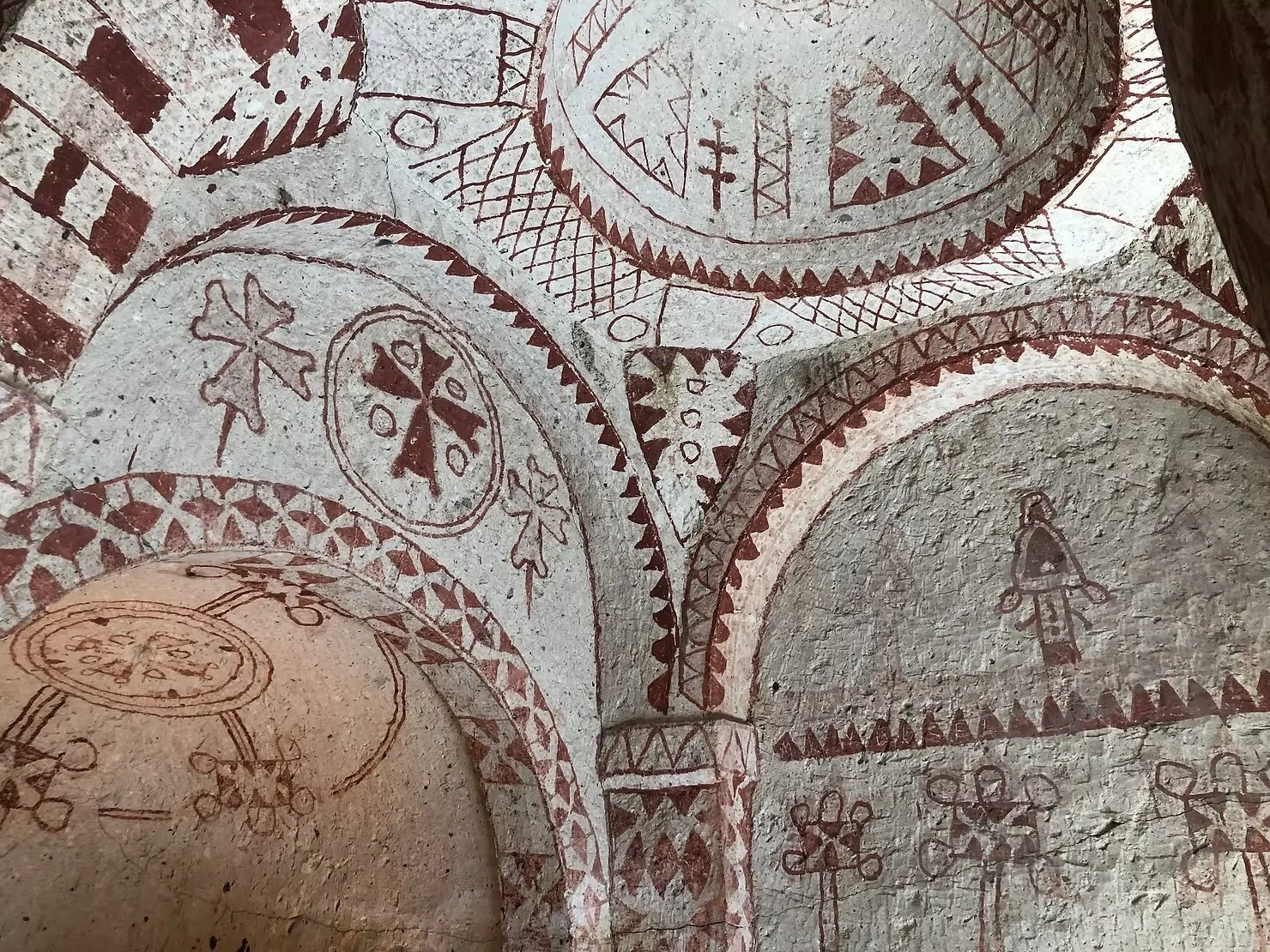
Some churches were simply decorated: line drawings and geometric shapes in red paint. Others had multiple domes, columns, and archways, with every surface covered in colorful murals and decorative patterns. The Dark Church was particularly beautiful because it was hidden away from vandals and not faded by sunlight.
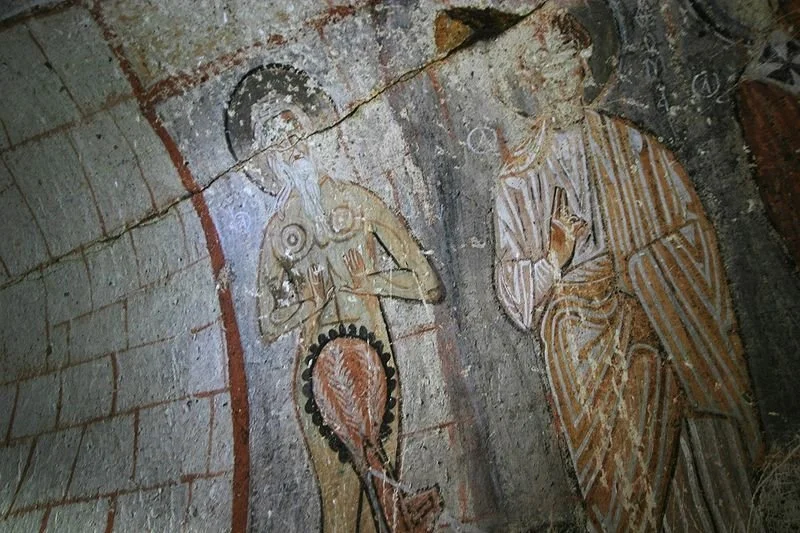
There were many images of Jesus, the disciples, and popular saints like St. George and St. Theodosius (who killed a dragon). An intriguing figure was hermaphroditic St. Onophrius; legend has it that she wanted a monastic life so much that she was miraculously transformed into a man.
Many of the holy figures’ faces had been scraped off by vandals for religious reasons (human figures are excluded from Islamic art). Some faces had been retouched, with dubious accuracy.
Photography was not permitted inside the churches, so I borrowed these images.

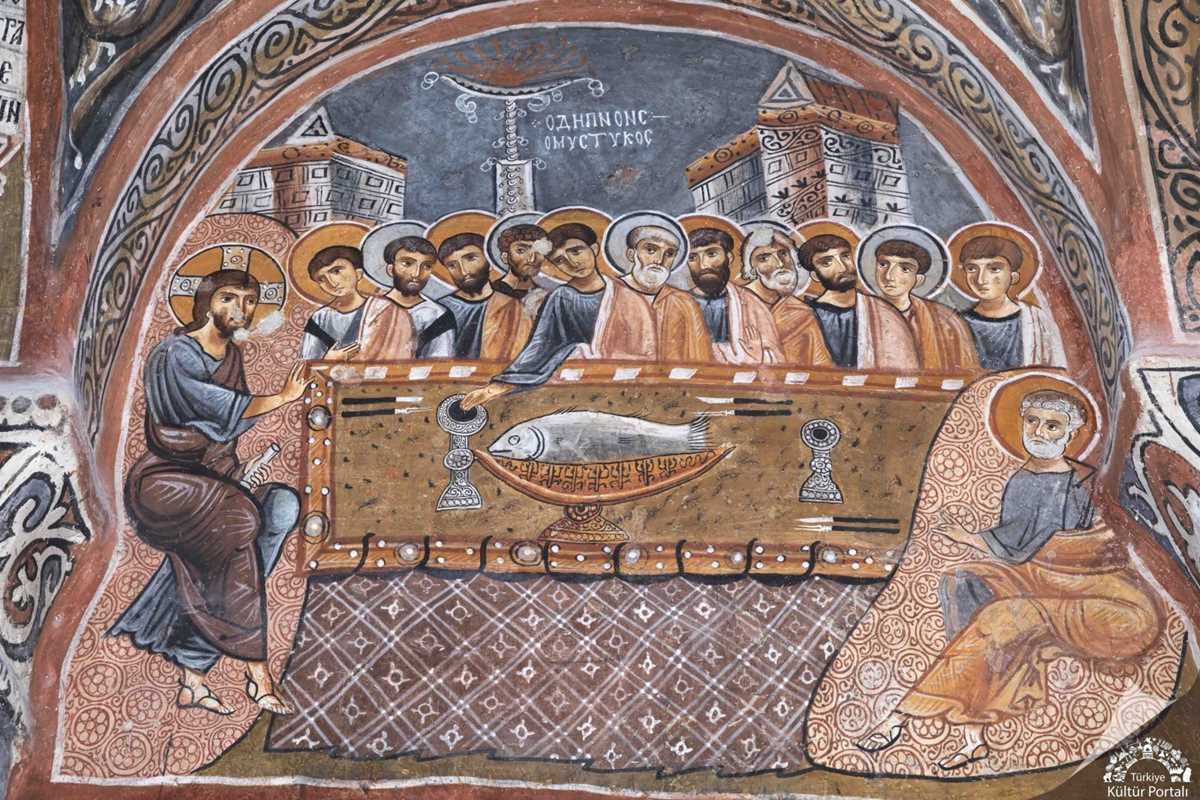
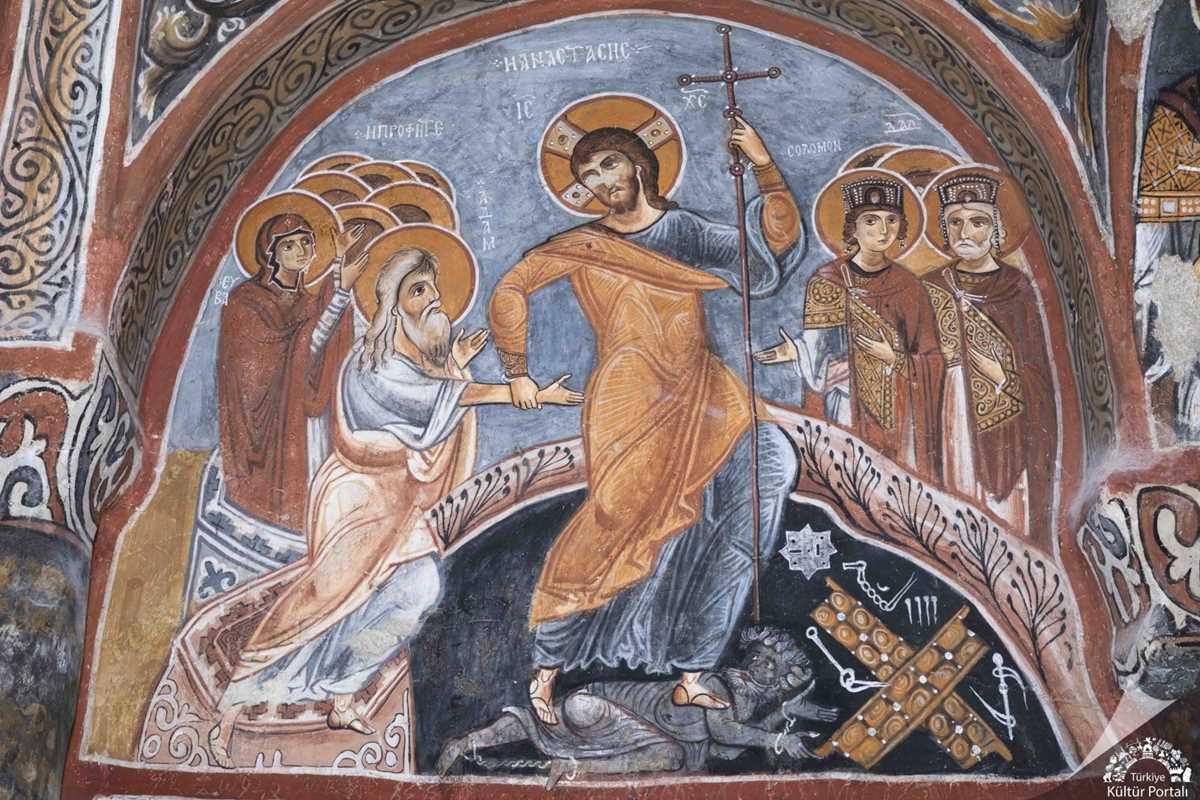
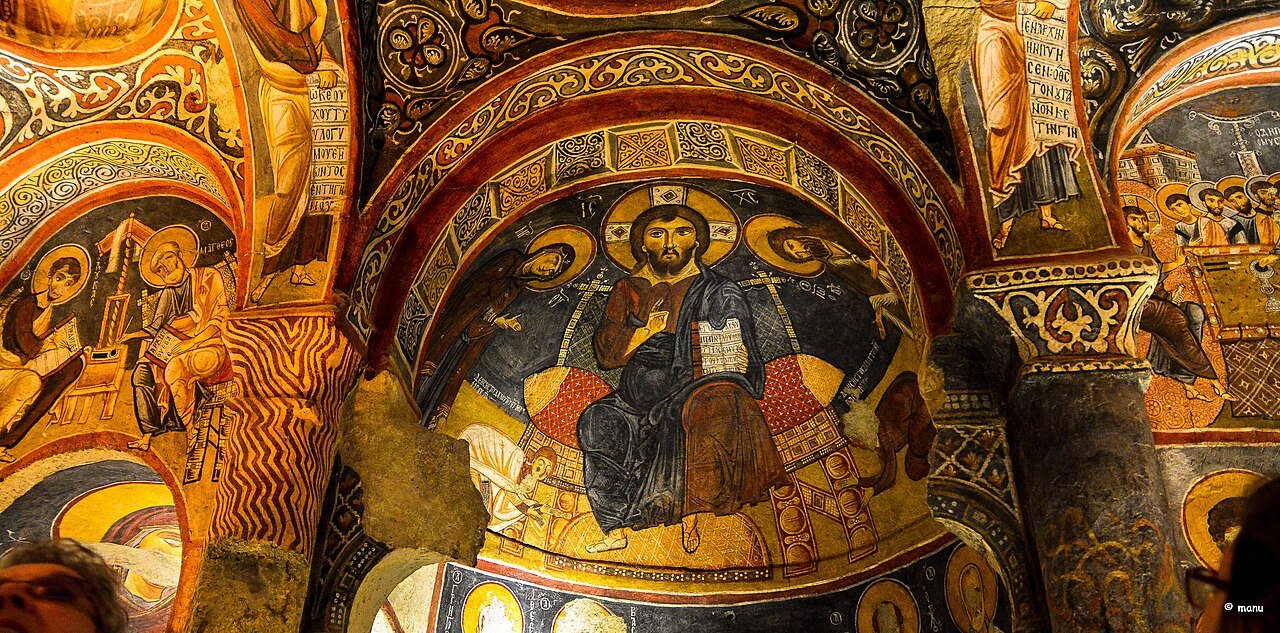
There were several large tour groups at Göreme that day, and it was uncomfortably crowded inside some of the small churches. Still, I was struck by the unexpected beauty inside those caves. For much of Göreme’s history, the Byzantine Christians were hiding from Arab invaders. I tried to imagine the artists painting quickly to conserve lamp oil and the monks worshipping quietly in the cave churches.