On Friday we took a small group tour to Guanajuato, a historic city and UNESCO World Heritage Site just 90 minutes’ drive west of San Miguel de Allende.
In the 18th century, Guanajuato was the wealthiest city in New Spain, providing plenty of gold and two thirds of the world’s silver from its prolific mines. In 1810, Guanajuato was the site of the first battle of the war for Mexican independence. Today, it is the capital of the state of Guanajuato. (Mexican capital cities have the same name as their state - it’s both convenient and confusing.)
Our guide Aldo drove five of us to Guanajuato in a compact SUV. As we crossed the arid plateau with mountains on both sides of the highway, Aldo explained that the hazy sky was due to controlled fires set by the government to prevent wildfires.
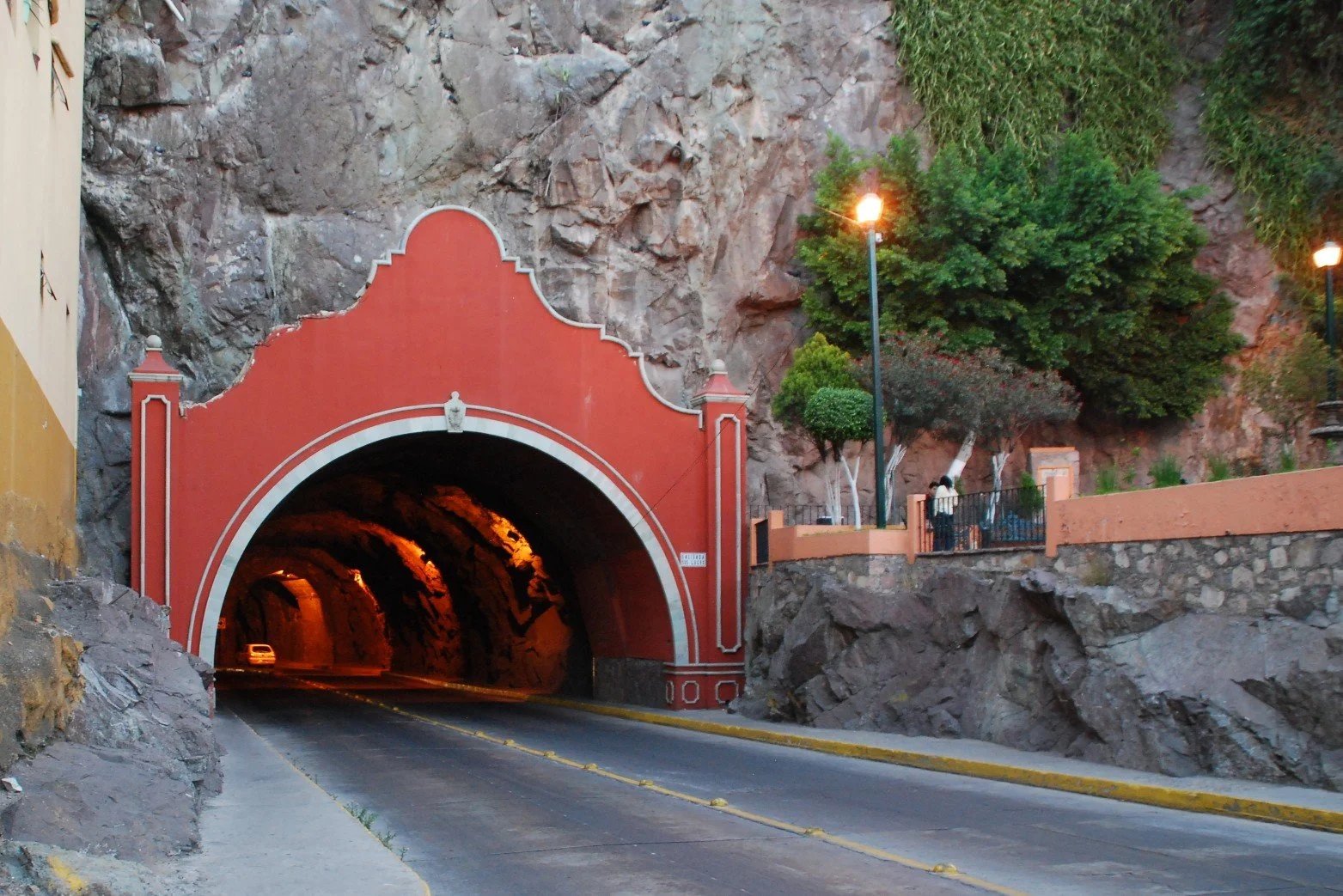
Guanajuato is in a narrow valley. To reach the city center, we drove through a series of underground tunnels. They were originally constructed in the early 1800s to prevent flooding. In the 1960s, the Guanajuato River was diverted, and the tunnels were repurposed as roadways. The tunnel system was more complex than I expected; as we drove through just a few of the passages, we passed intersections, bus stops, parked cars, and steps up to street level. Aldo said many residents walk through the tunnels to catch a bus, or to avoid hot sun and rain.

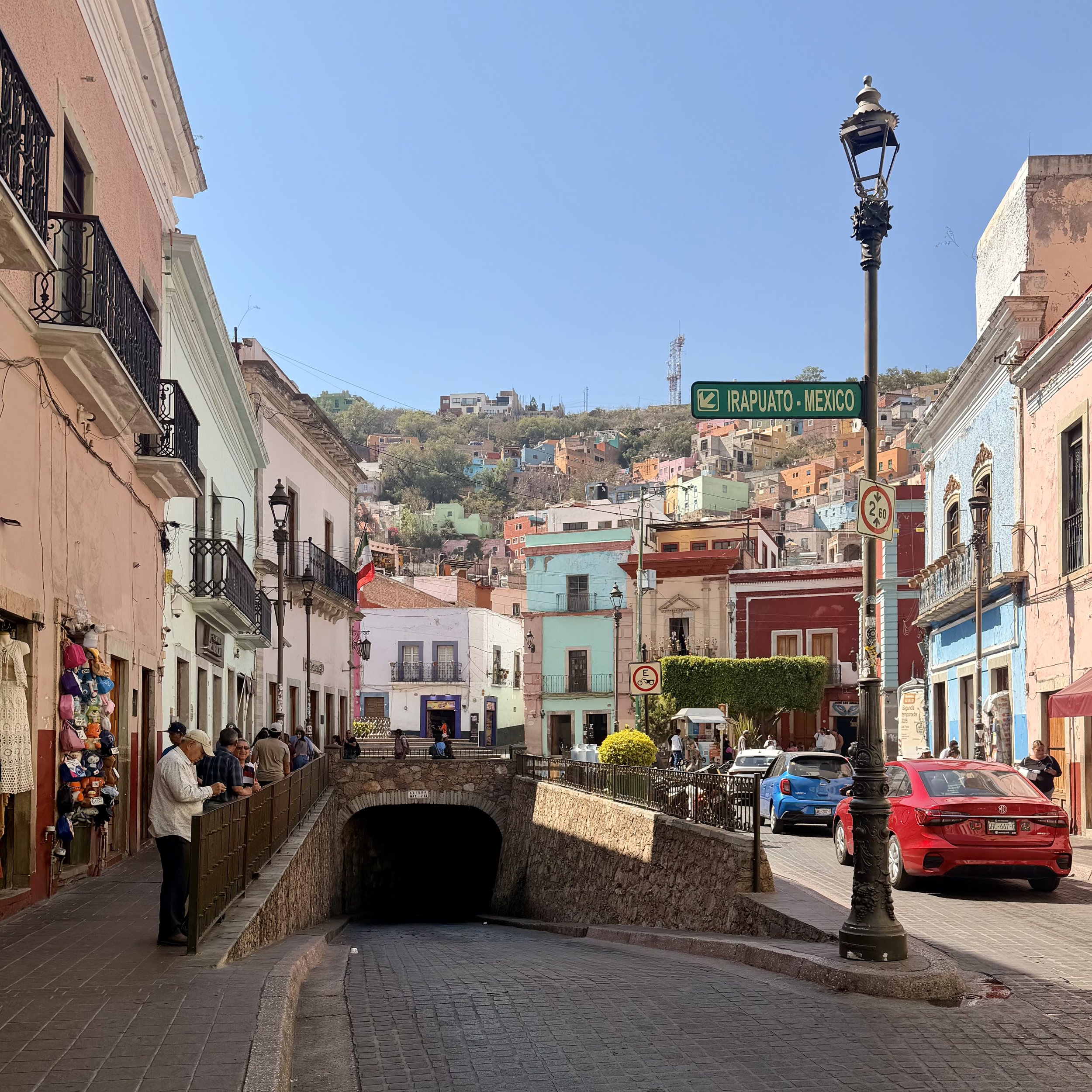
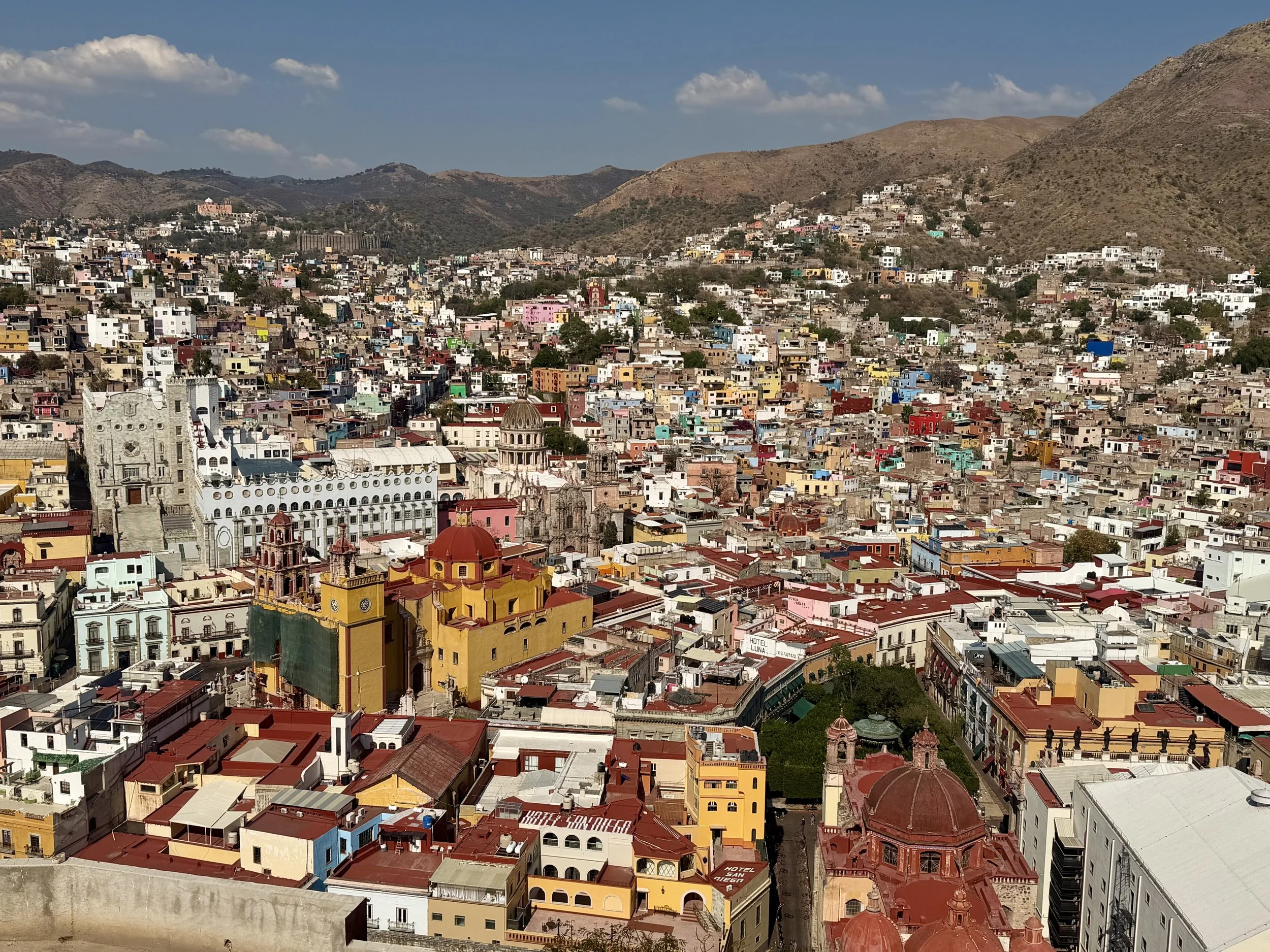
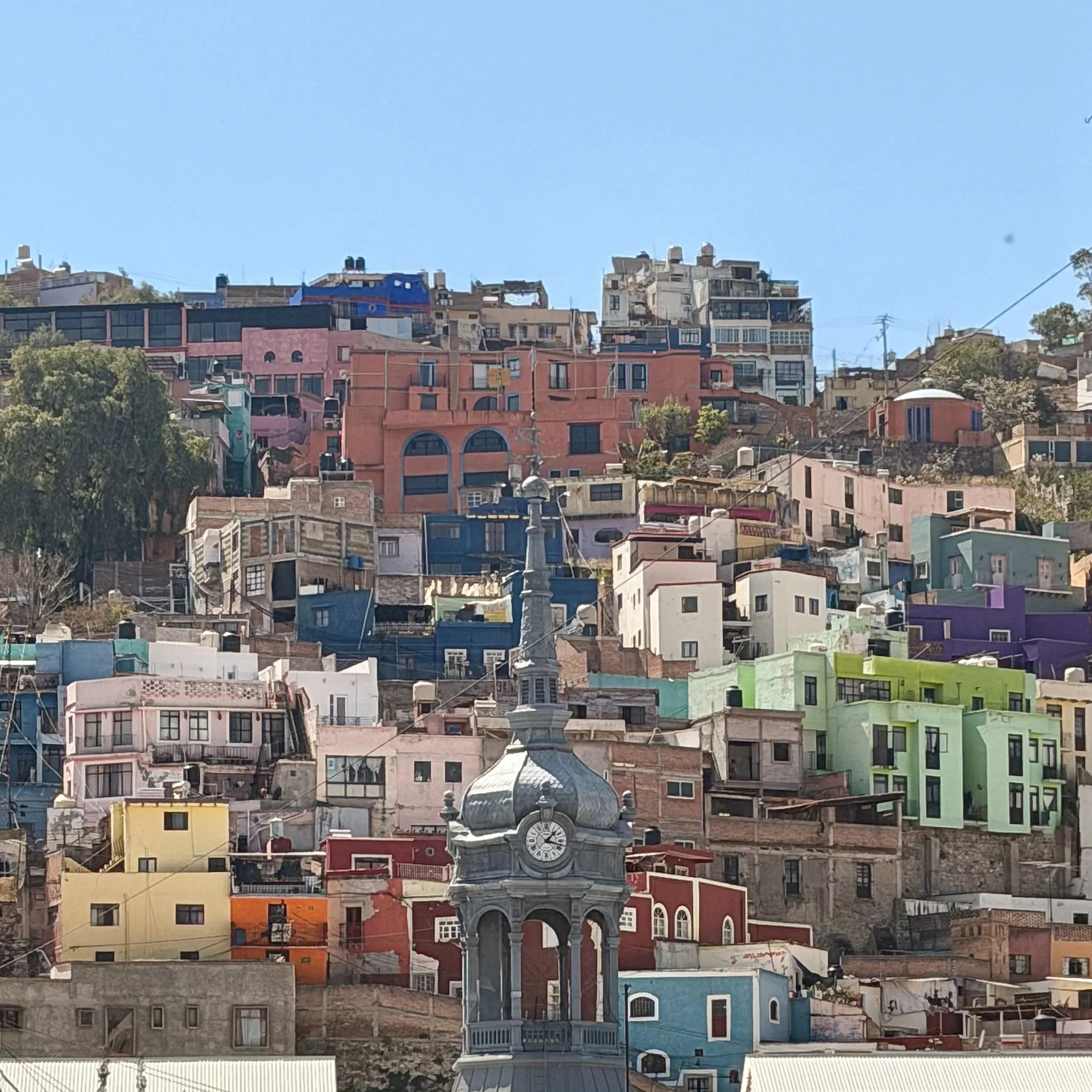
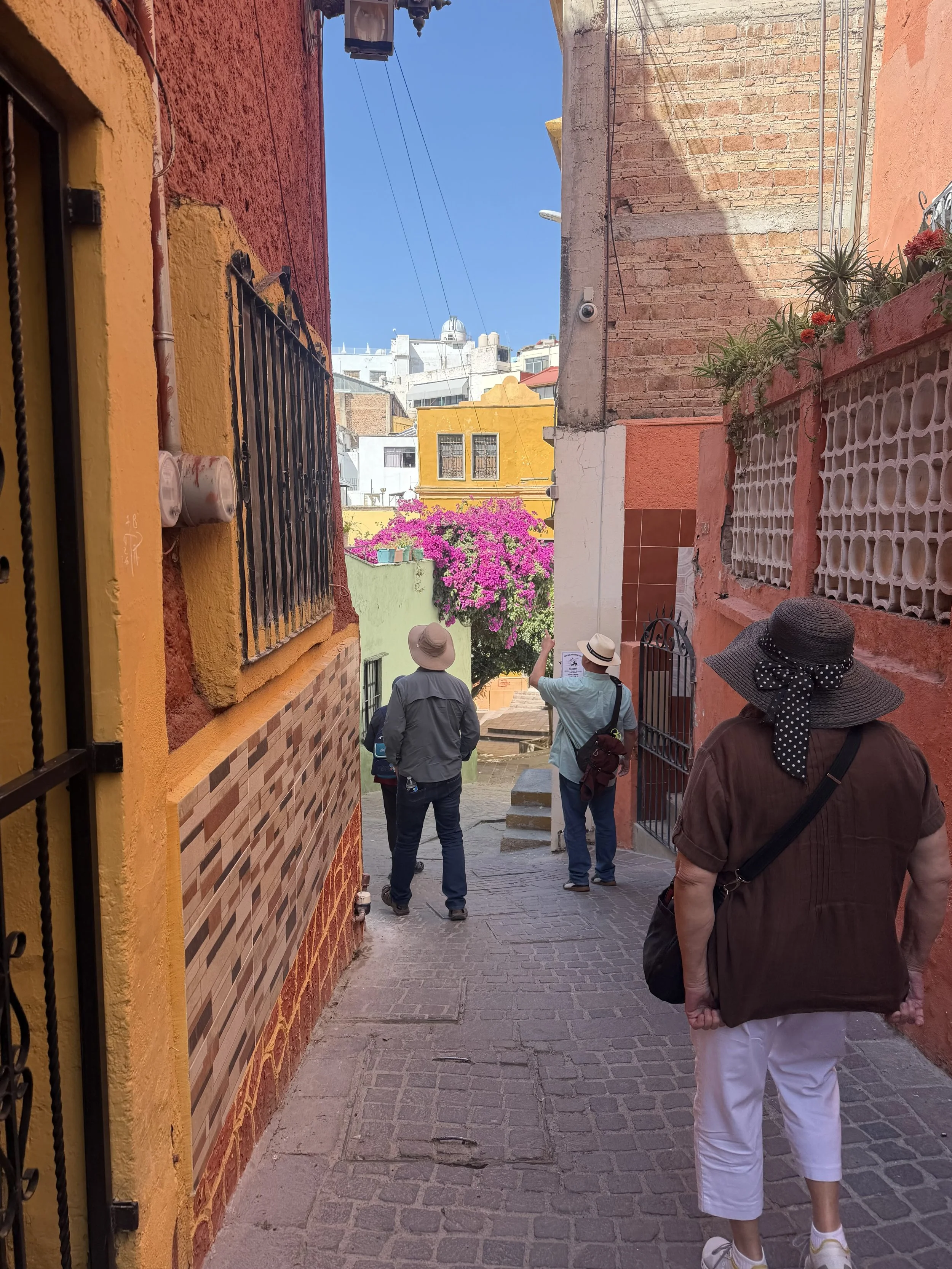
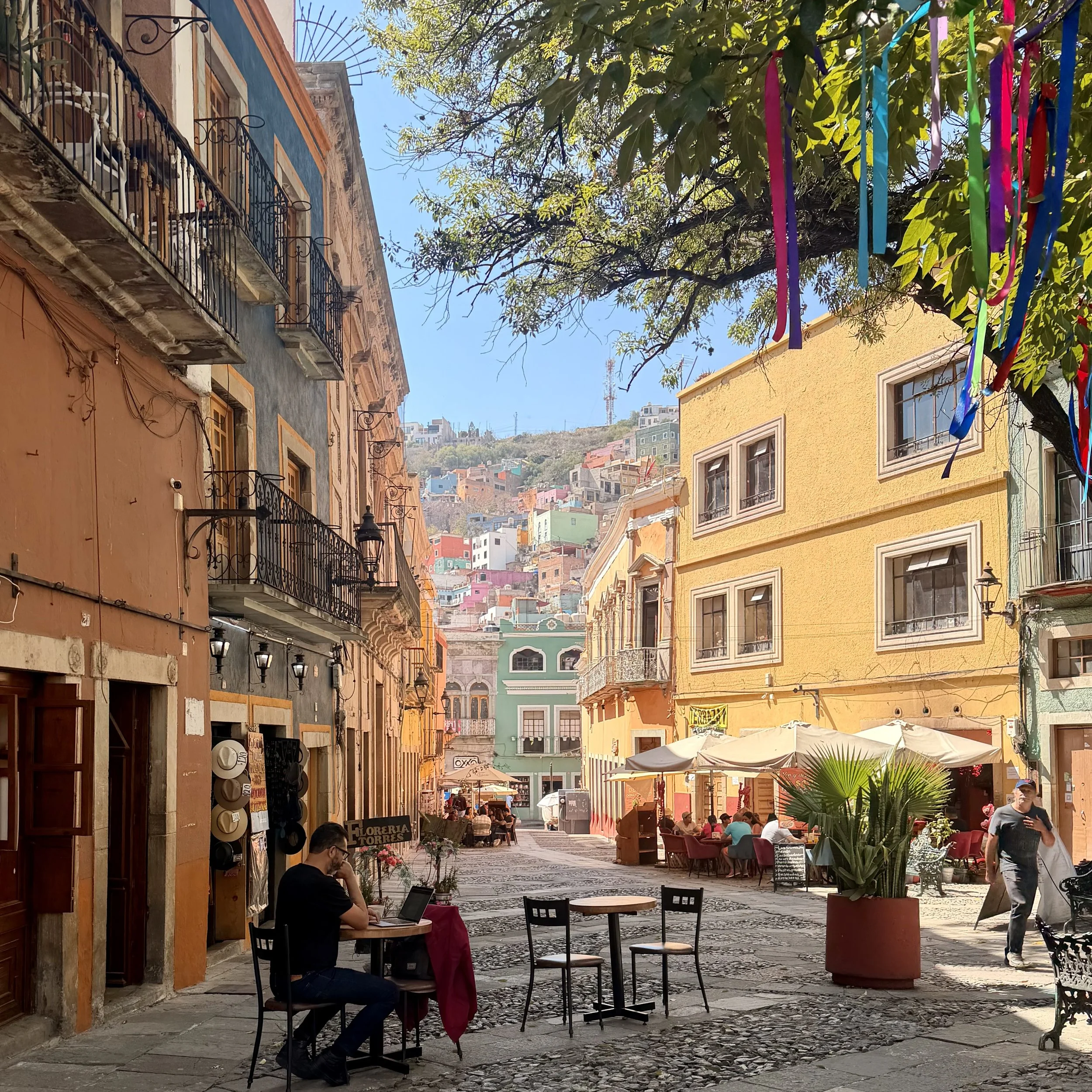
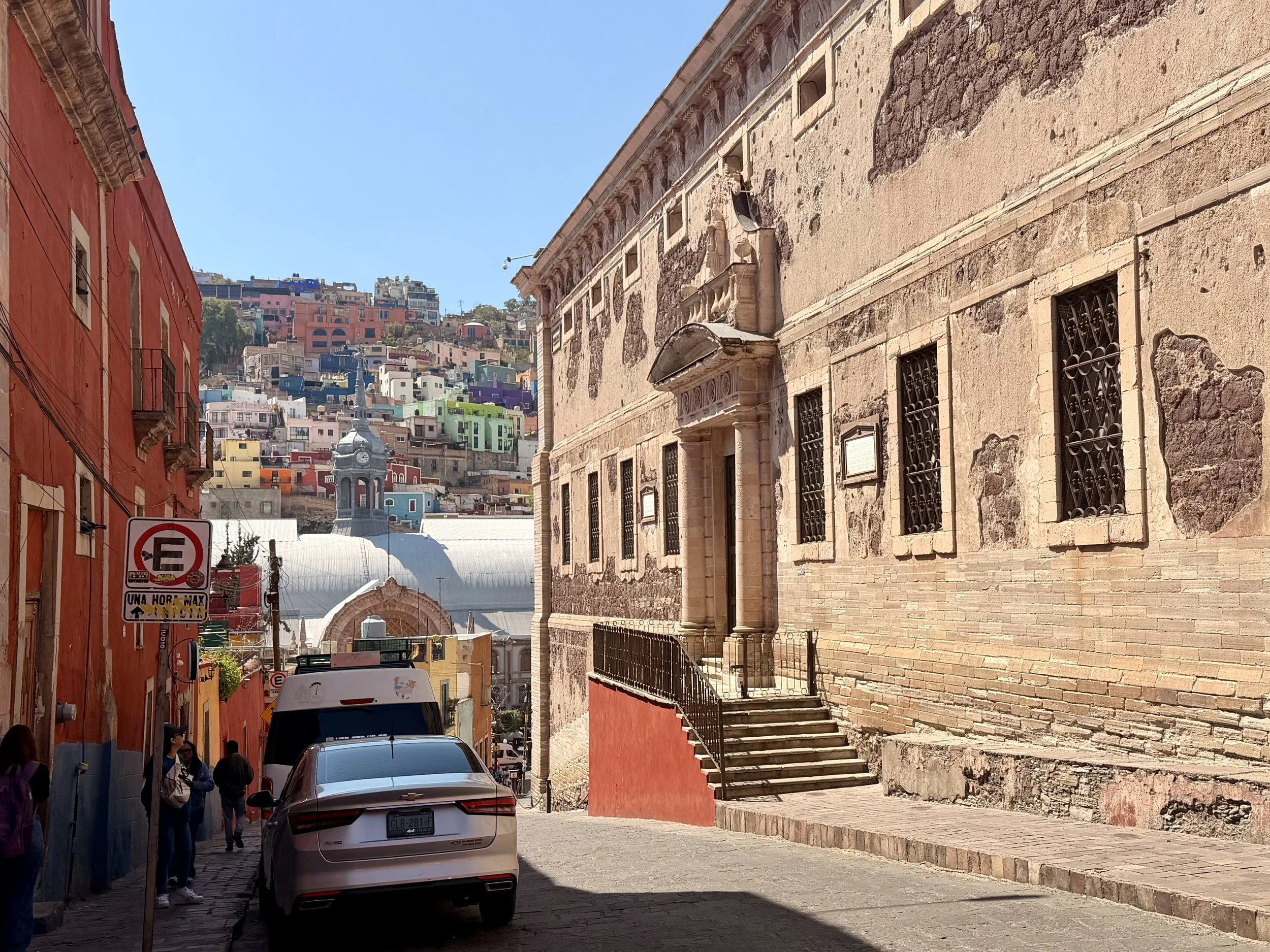
Colorful, blocky houses were built on the hillsides, seemingly stacked atop one another. The only way to reach the houses was on foot, via a maze of steep, narrow alleys and staircases. A few surface streets were wide enough for cars; most of the vehicular traffic was in the underground tunnels.
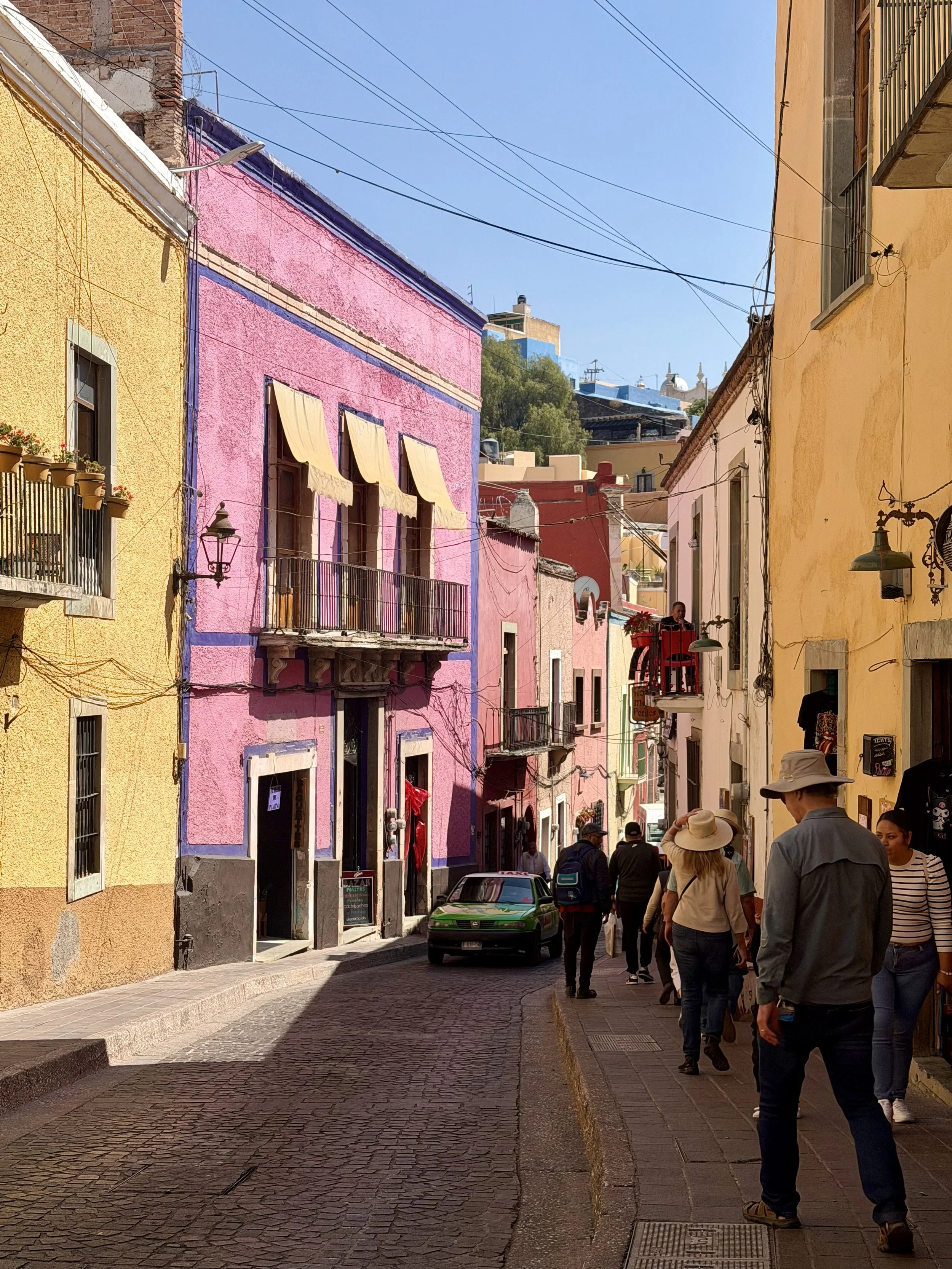
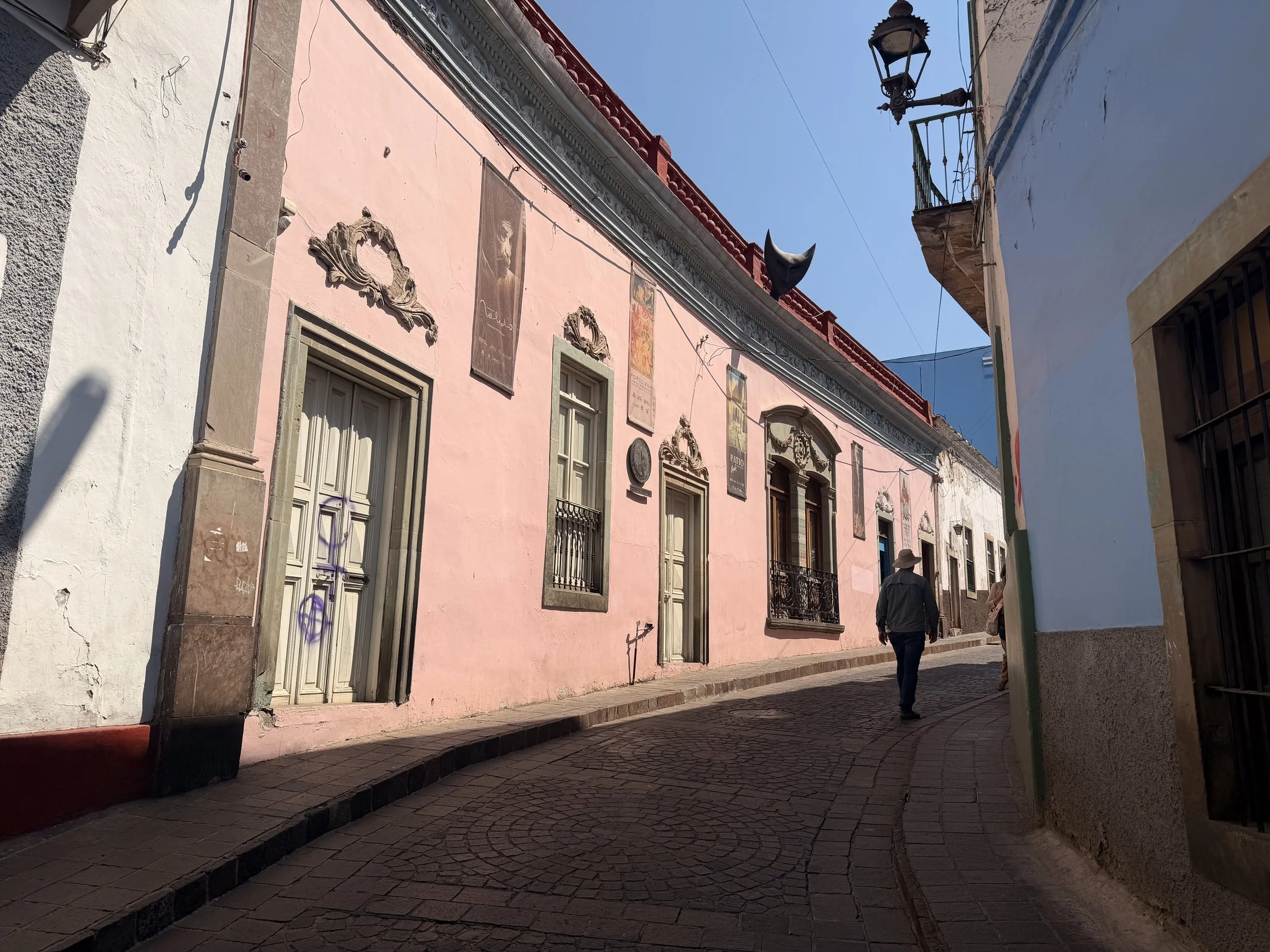
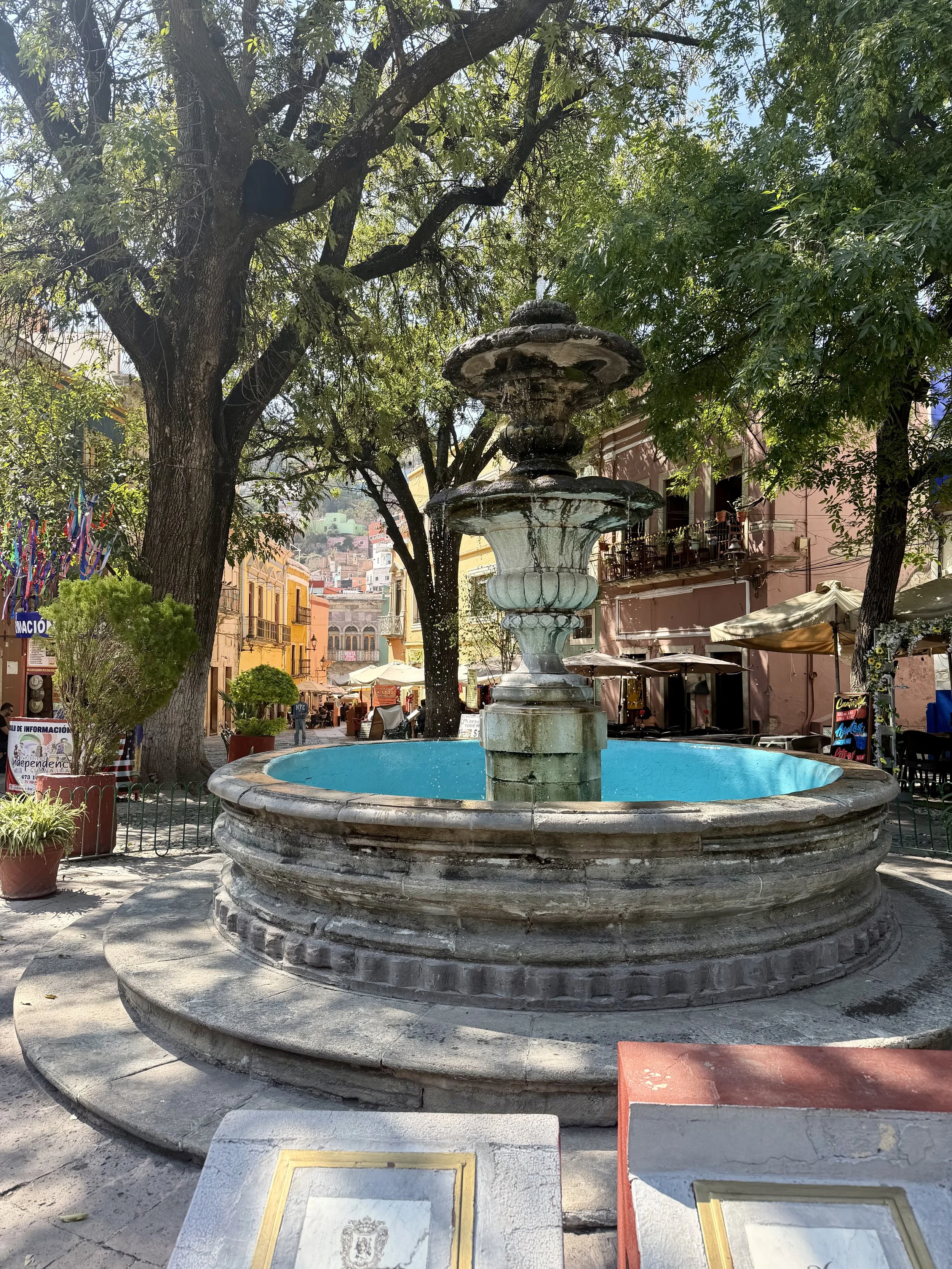
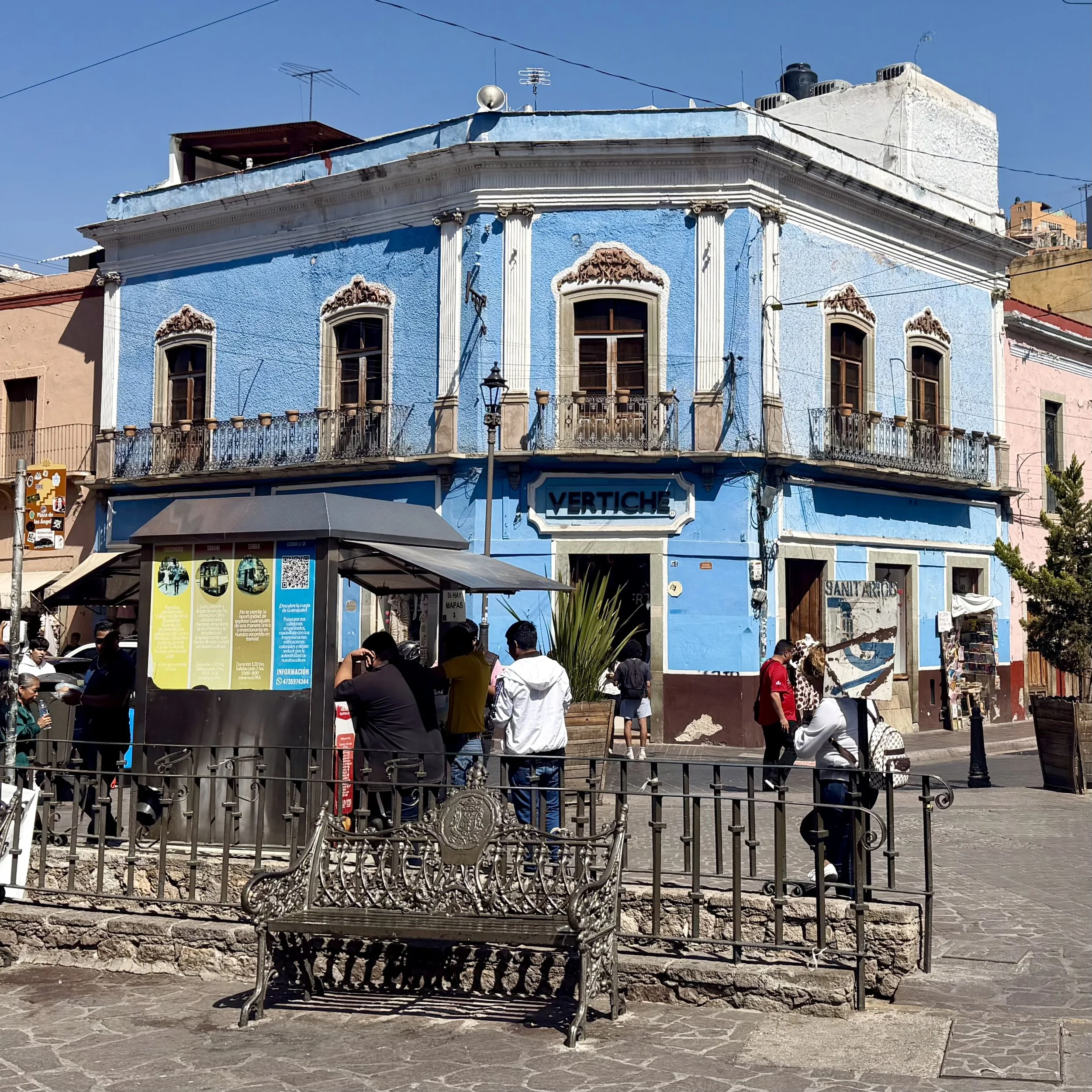
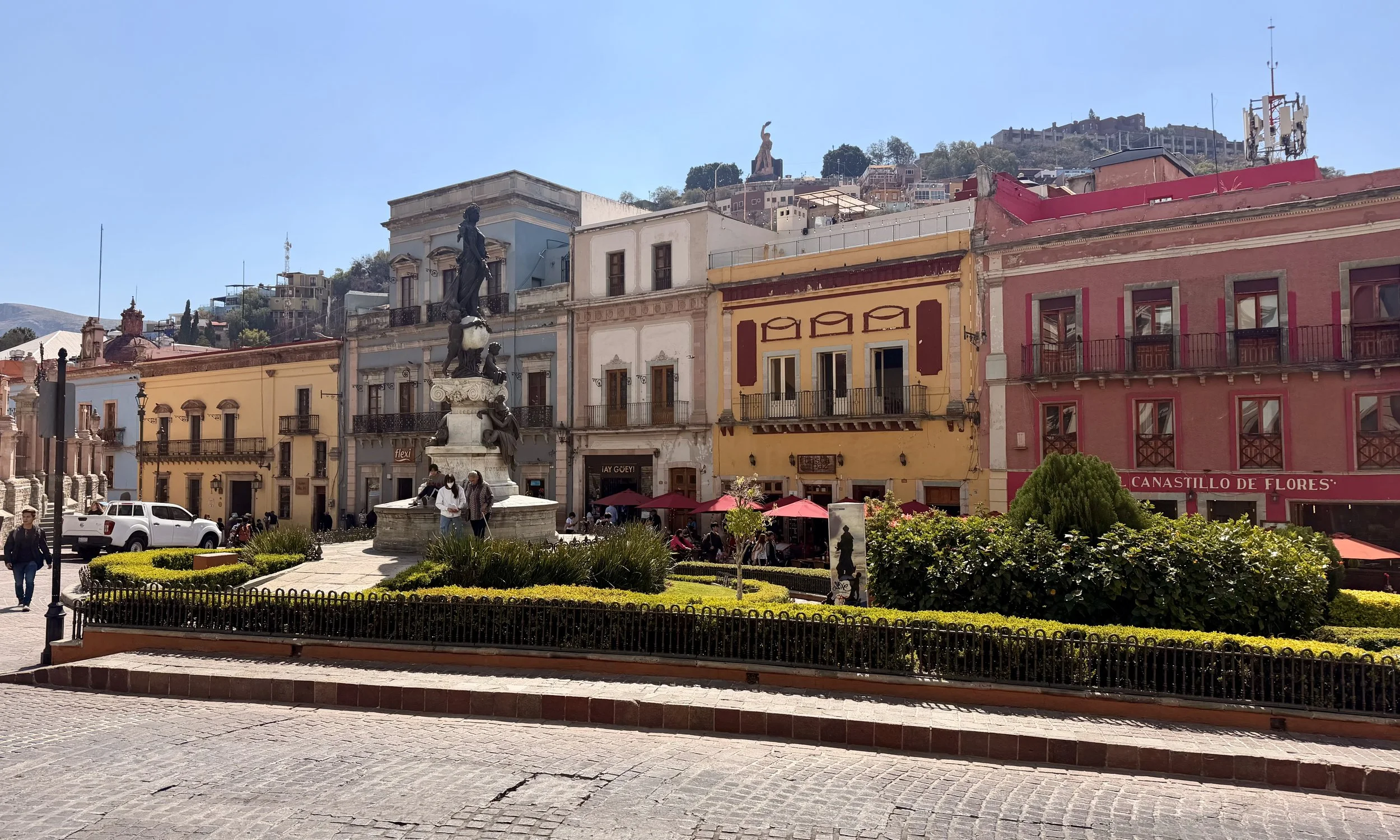
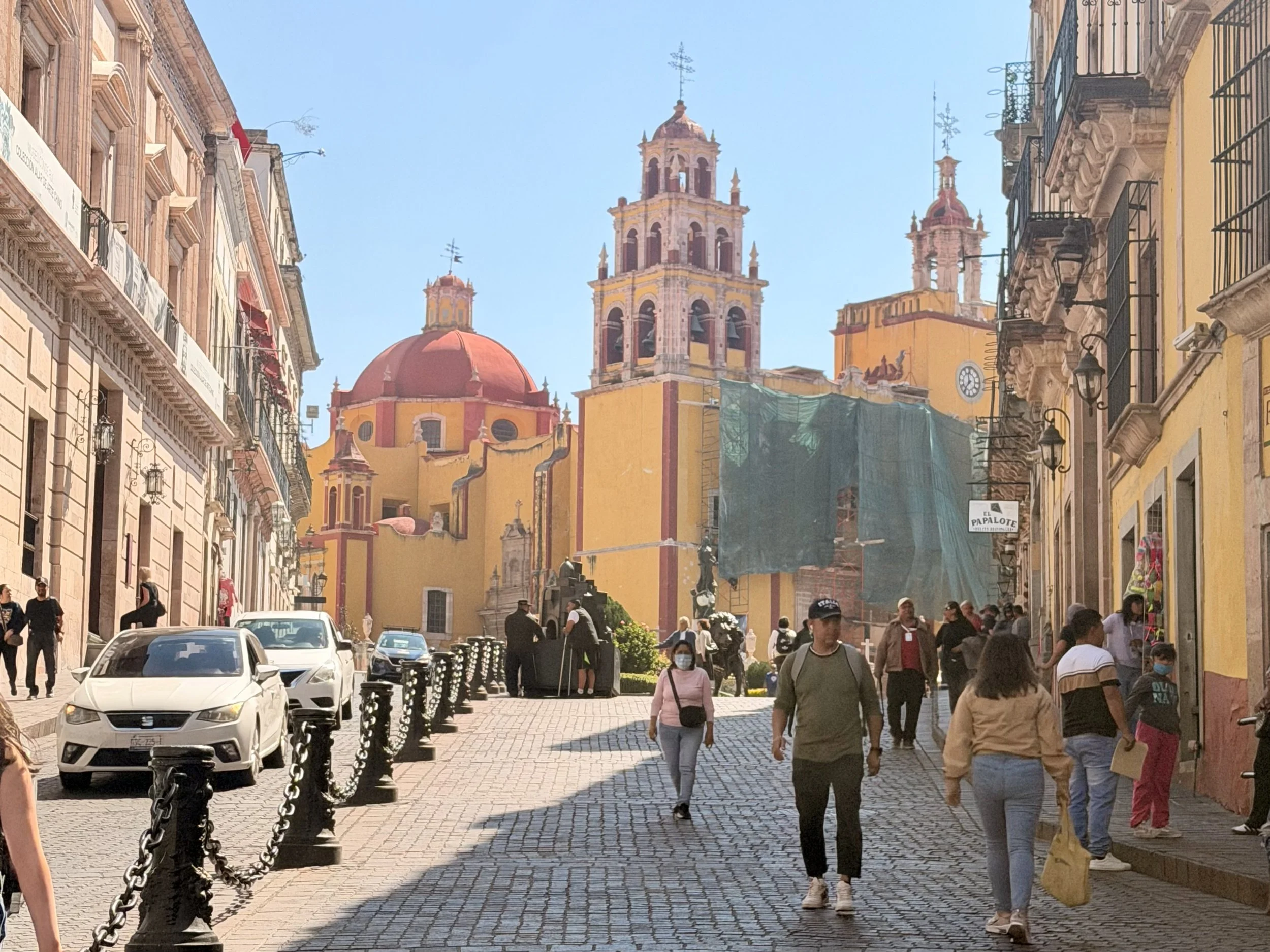
There were several plazas with fountains, leafy trees, and cafes. There were Baroque church facades and French and Italianate buildings with balconies and intricate wrought iron. It all felt very European.
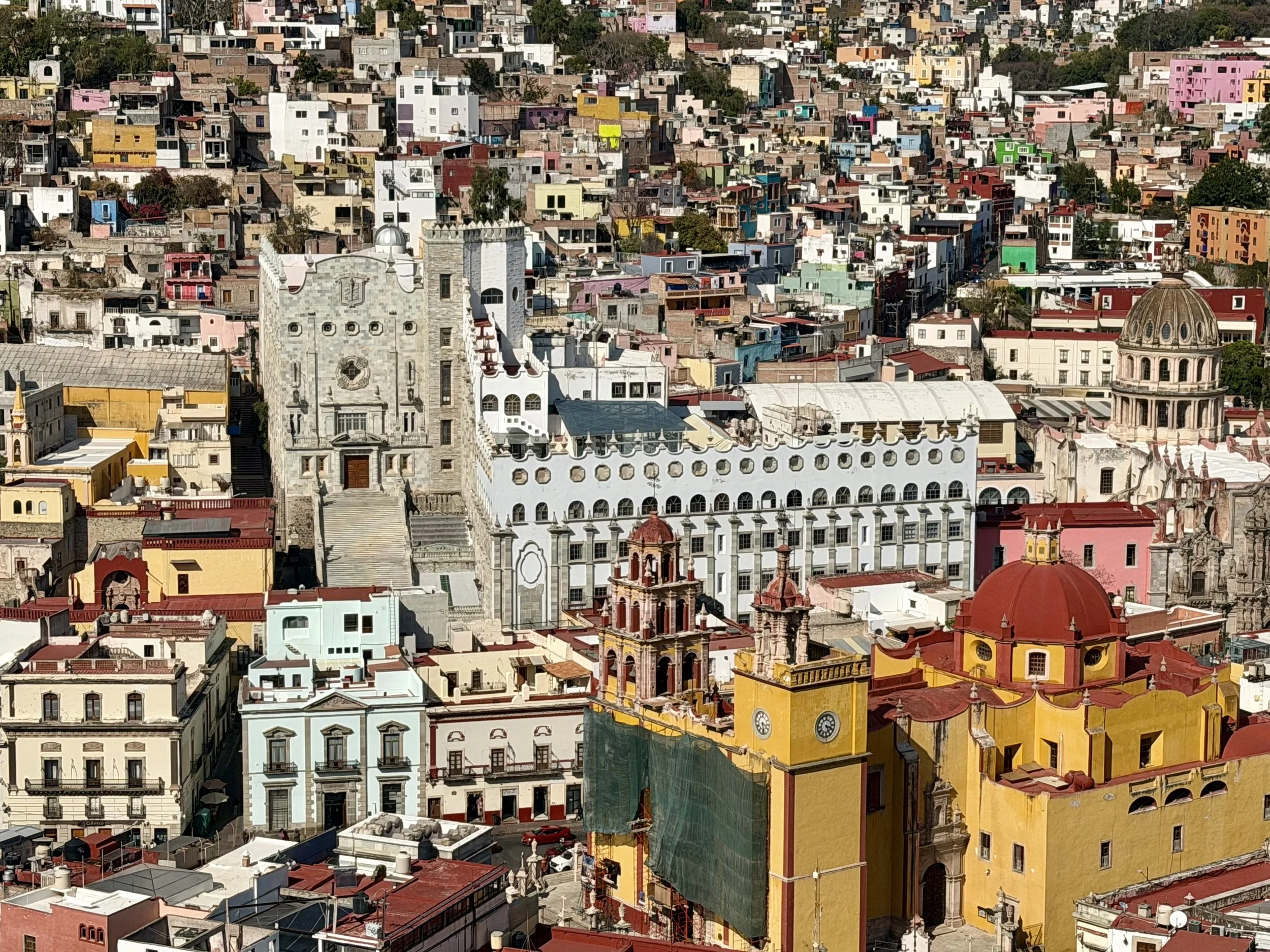
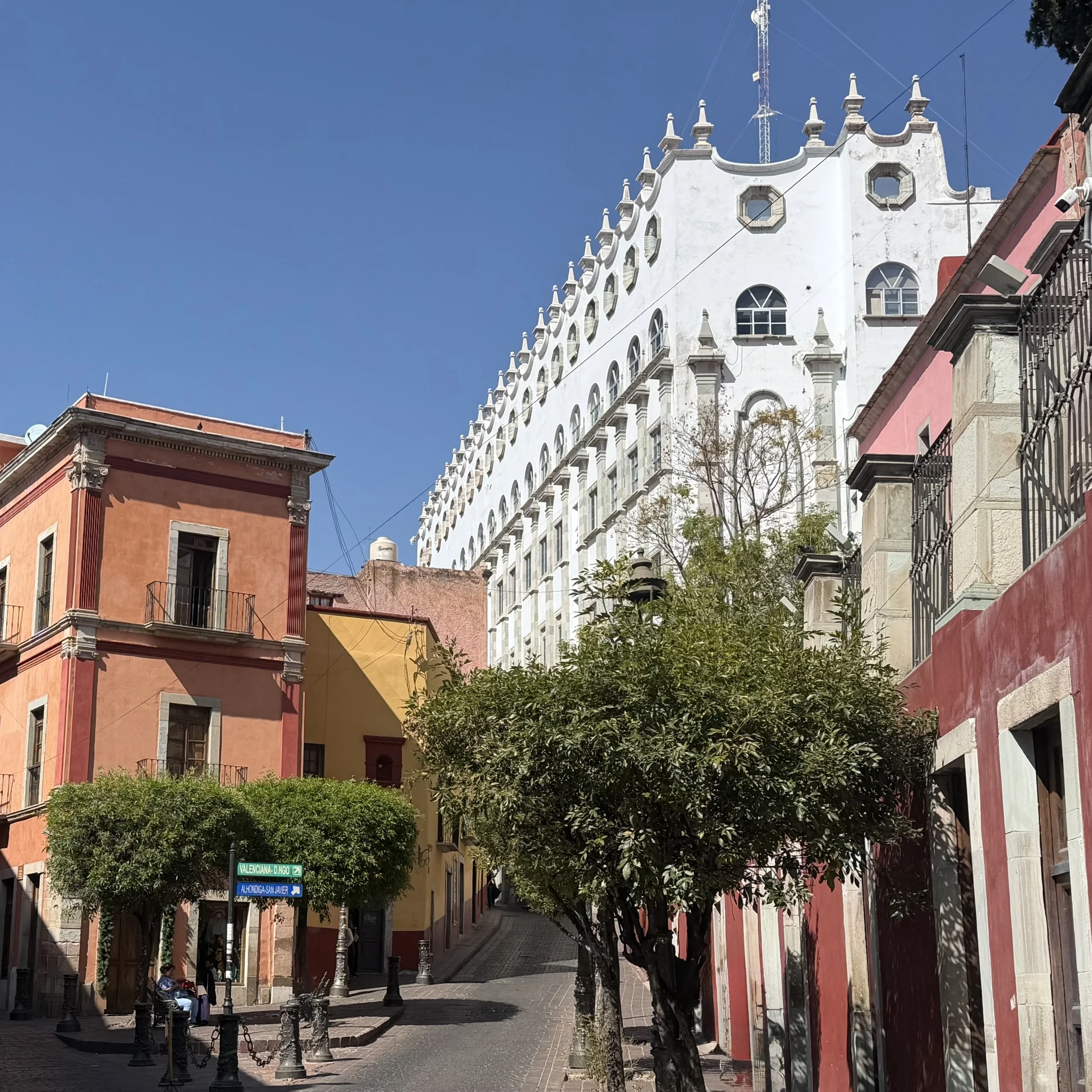
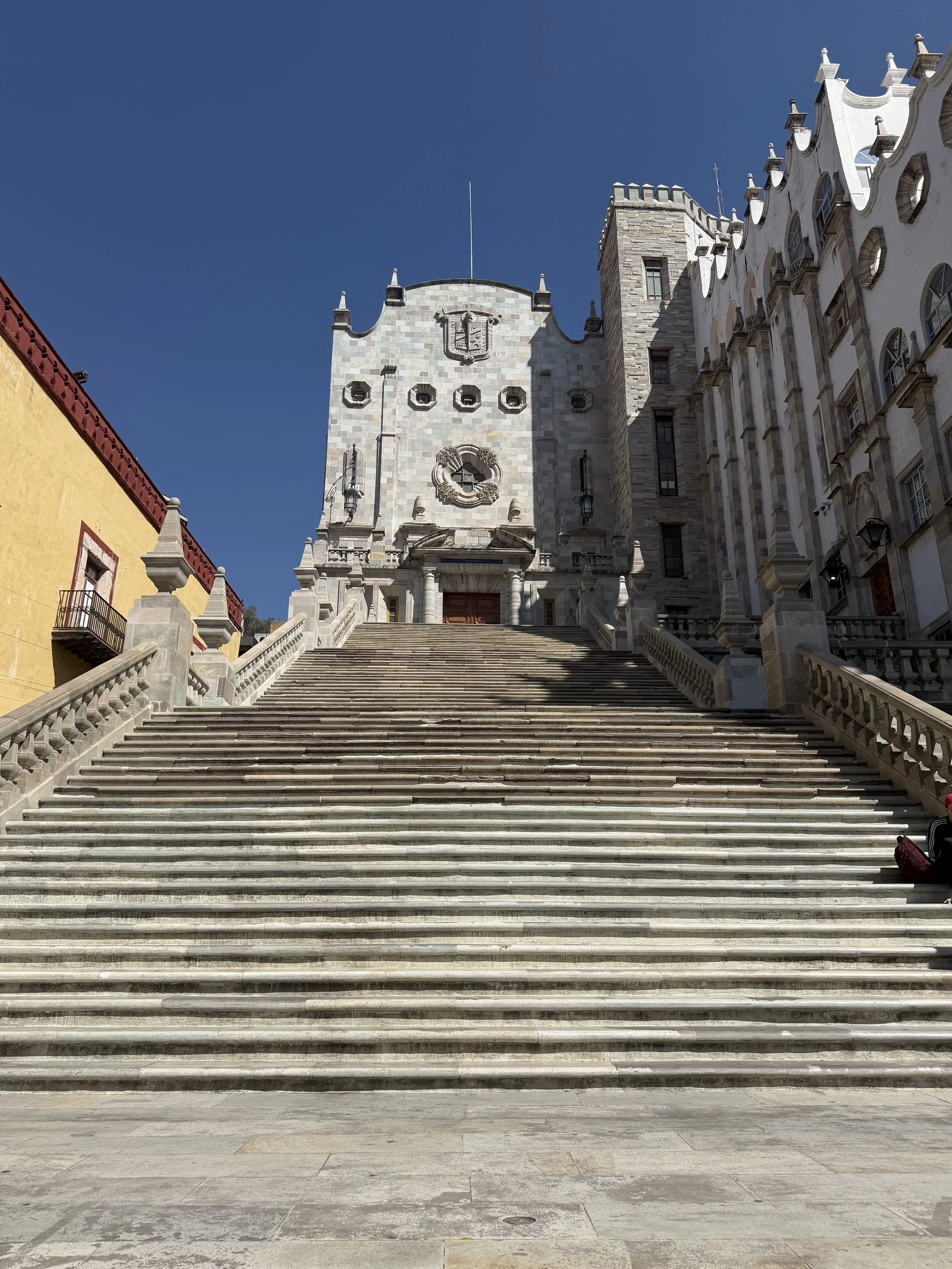
The prestigious University of Guanajuato was housed in an 18th century Jesuit church and a distinctive white Neoclassical building with a crenellated roof. There was a majestic stairway that doubled as theater seating for students to watch outdoor plays and movies.
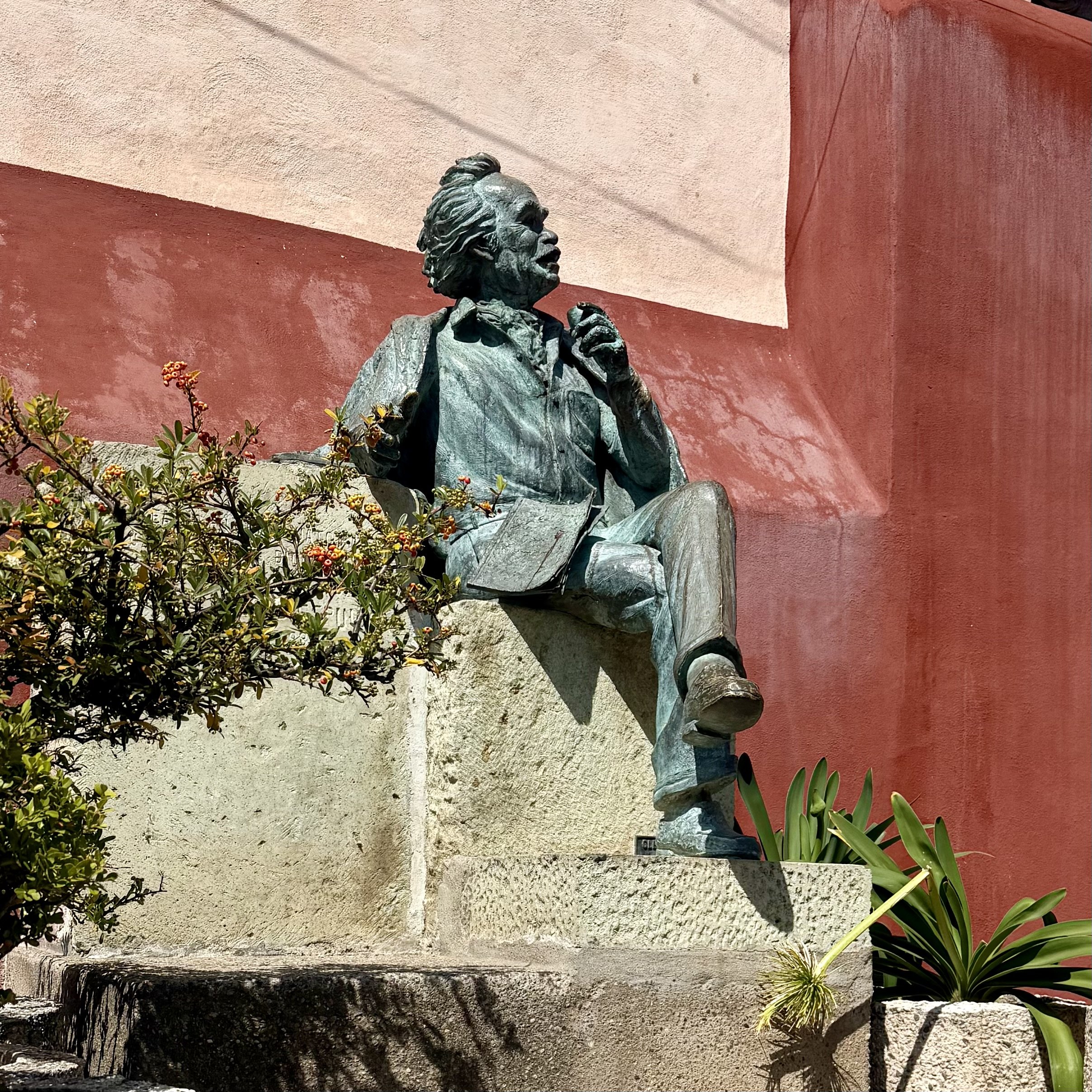
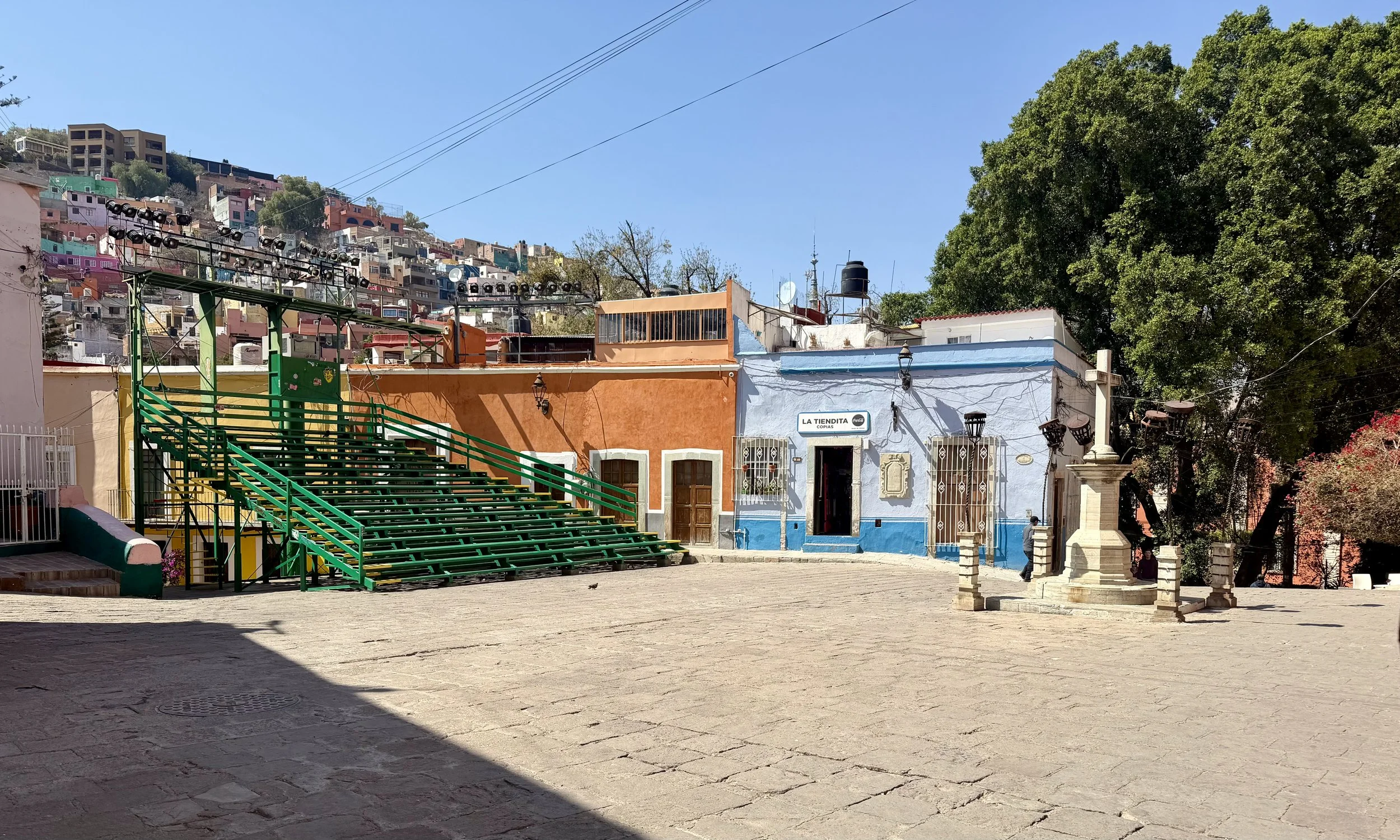
A statue at San Roque Church honored local hero Enrique Ruelas Espinosa. Ruelas’ parents forced him study law at the University of Guanajuato, but he rejected a career in law and became a playwright instead. In the 1950s, Ruelas founded the university theater program, and had students and local residents perform entremeses (short comic plays) by Cervantes in Plaza de San Roque and other squares around the city. That community tradition eventually became Festival Internacional Cervantino, a major annual event celebrating music, dance, theater, and visual arts. Last fall, Festival Cervantino presented 3,400+ artists from 32 countries!
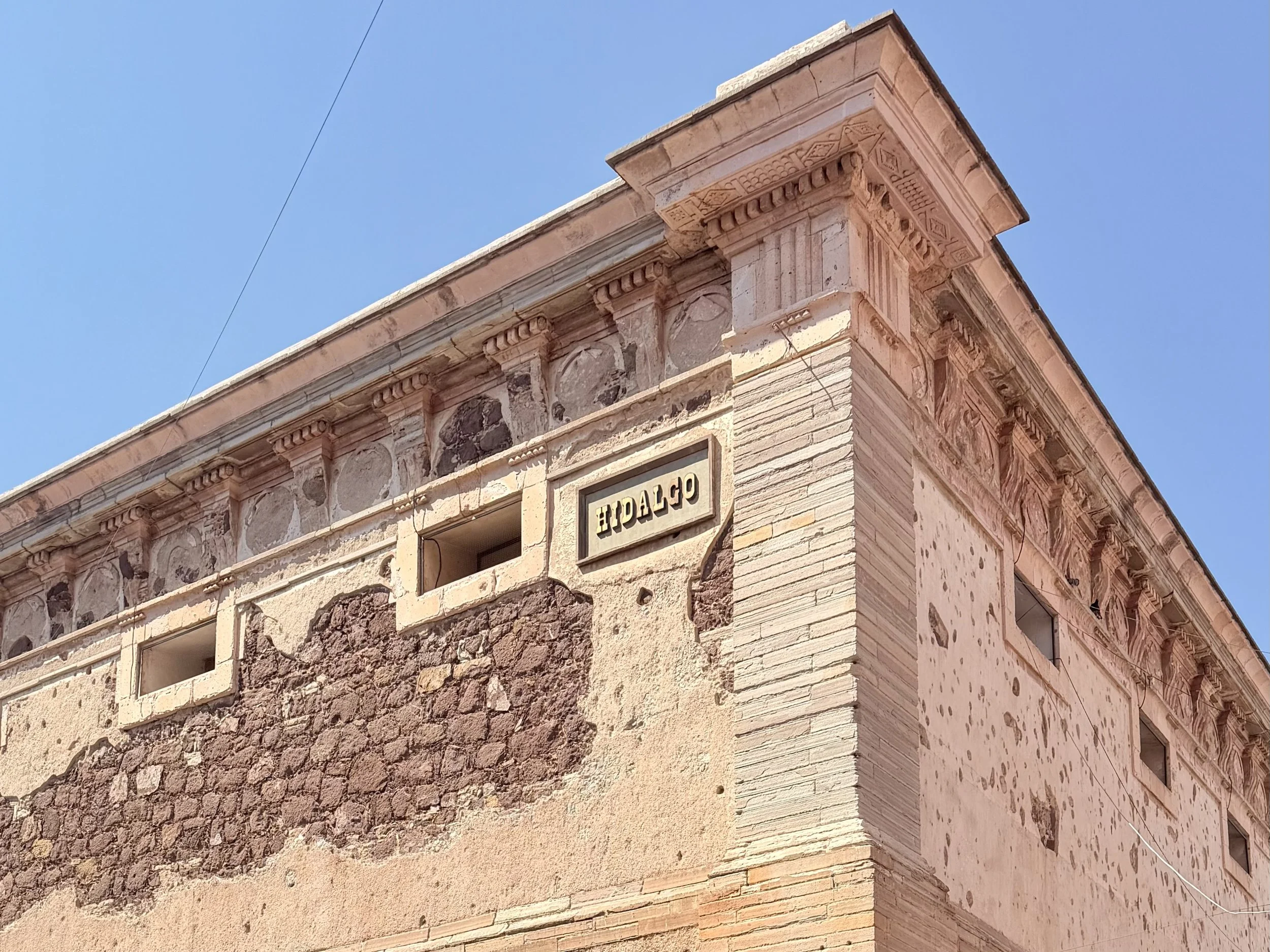
Our next stop was the Alhóndiga de Granaditas (Grain Exchange). This was the building that Miguel Hidalgo and his ragtag army of rebels stormed in 1810, in the first battle of the Mexican Revolutionary War. Their victory was thanks to the heroism of a miner from San Miguel (now San Miguel de Allende) with the odd nickname of El Pípila (the turkey hen). With a flat stone on his back to protect himself from bullets, El Pípila crawled to the entrance of the Grain Exchange and lit the wooden door on fire with a torch. Just ten months later, Hidalgo and his co-conspirators (including Ignacio Allende) were executed. Their bodies were decapitated, and their heads were hung on the four corners of the Grain Exchange as a warning to insurgents. Ten years later, when Mexico had achieved independence, the four heads were finally reunited with their bodies and are now entombed in Mexico City. As we stood in front of the Grain Exchange, we could still see bullet holes and the hook on each corner, grim reminders that independence was hard won.
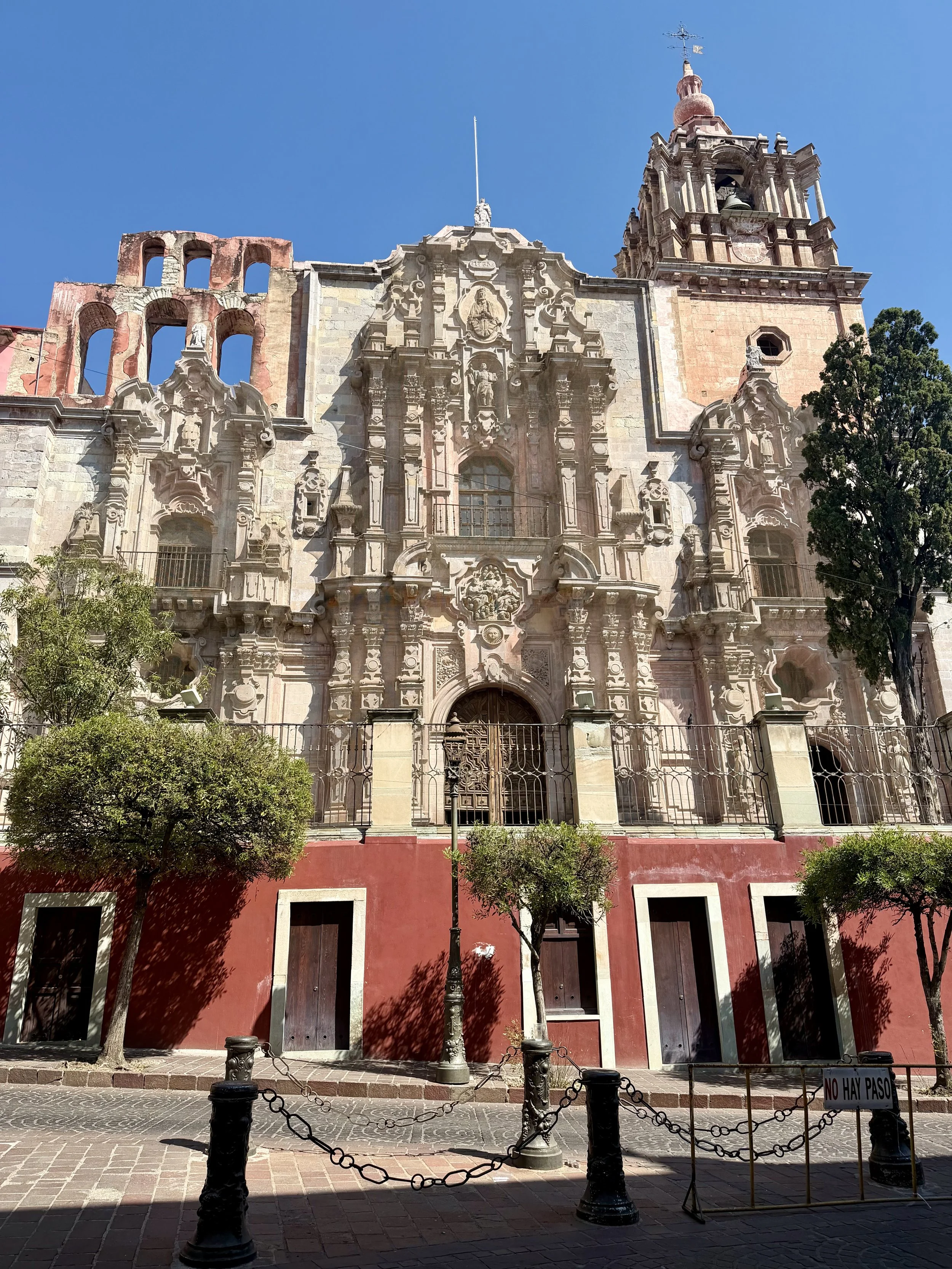
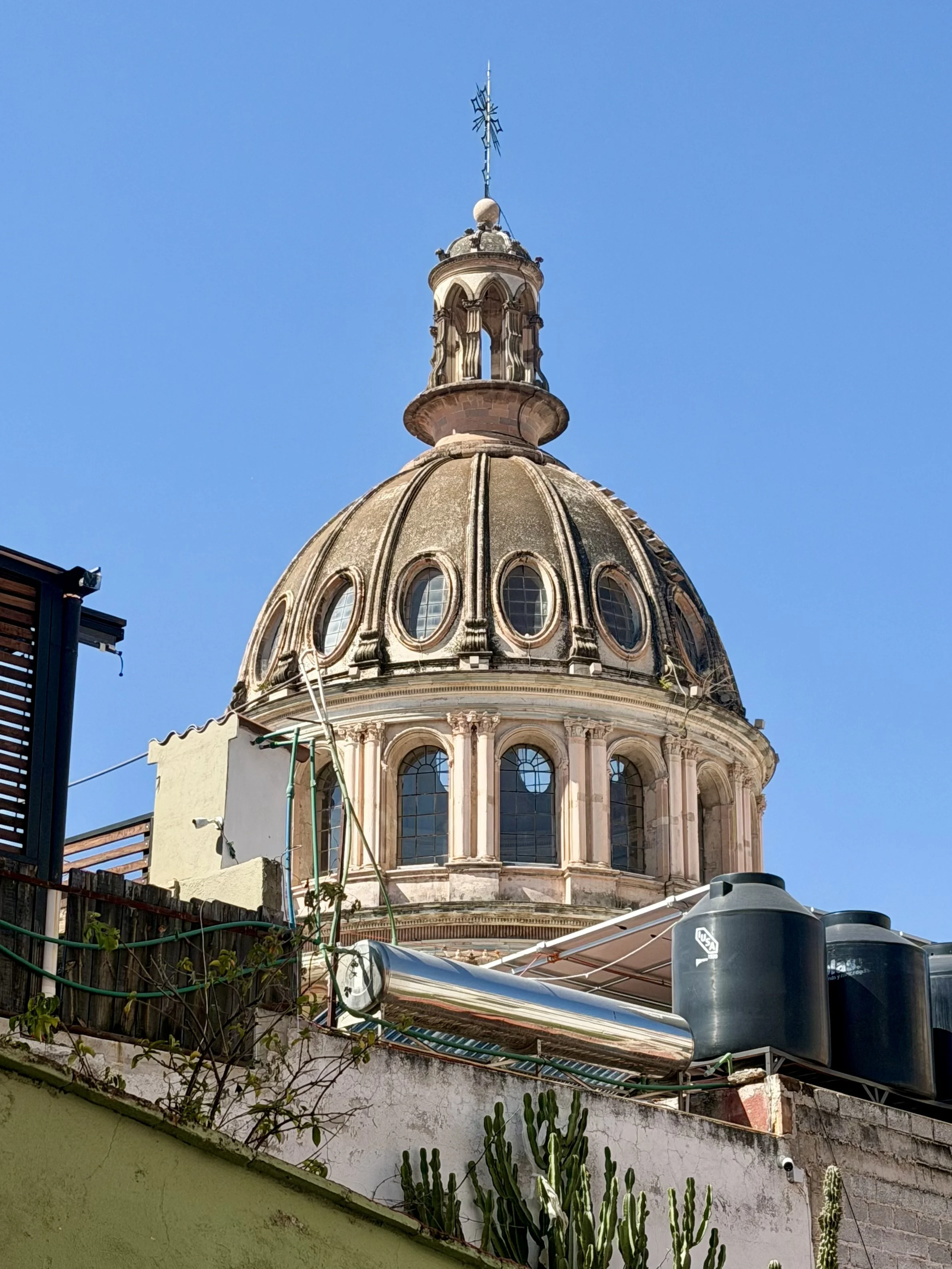
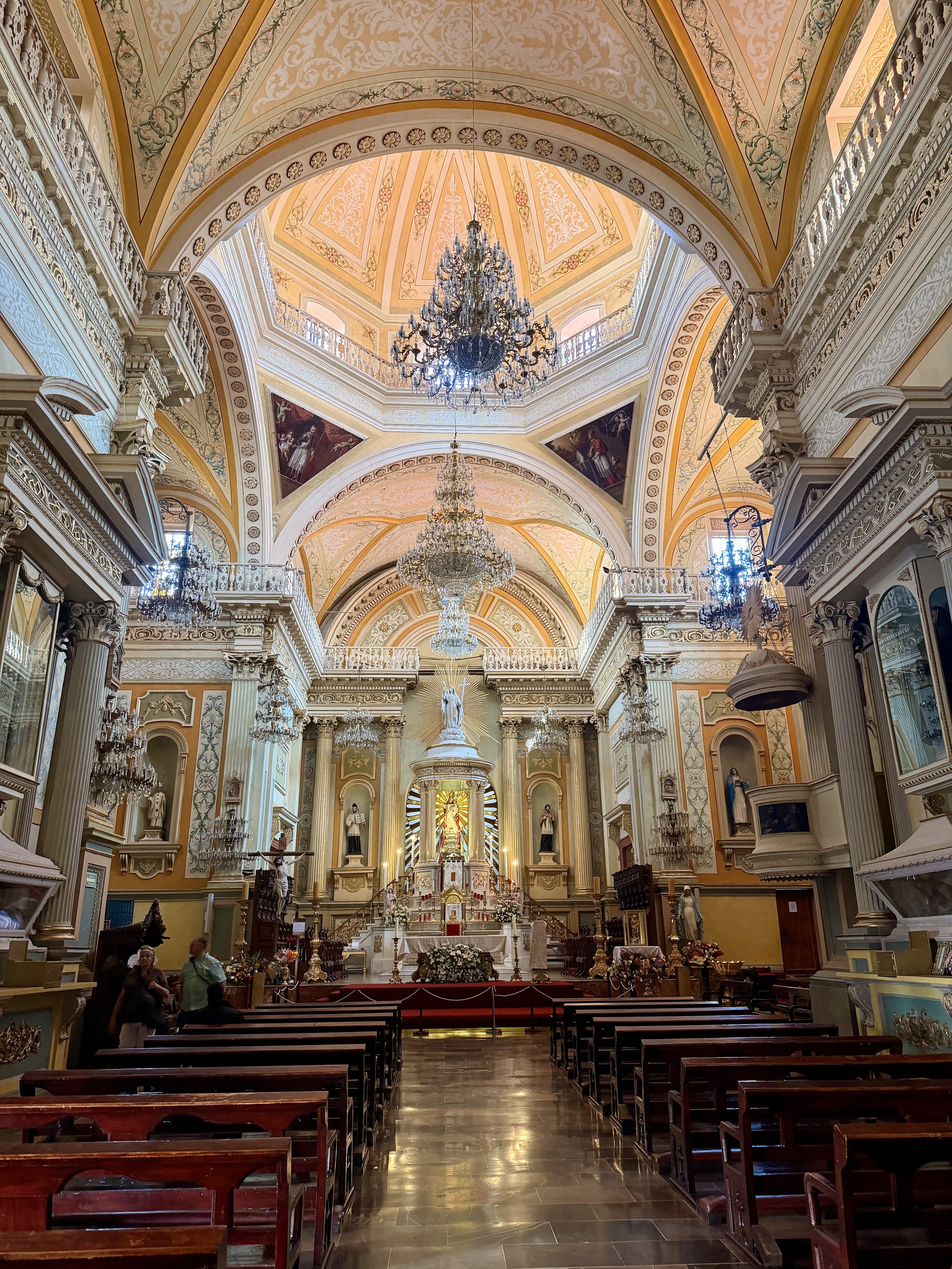
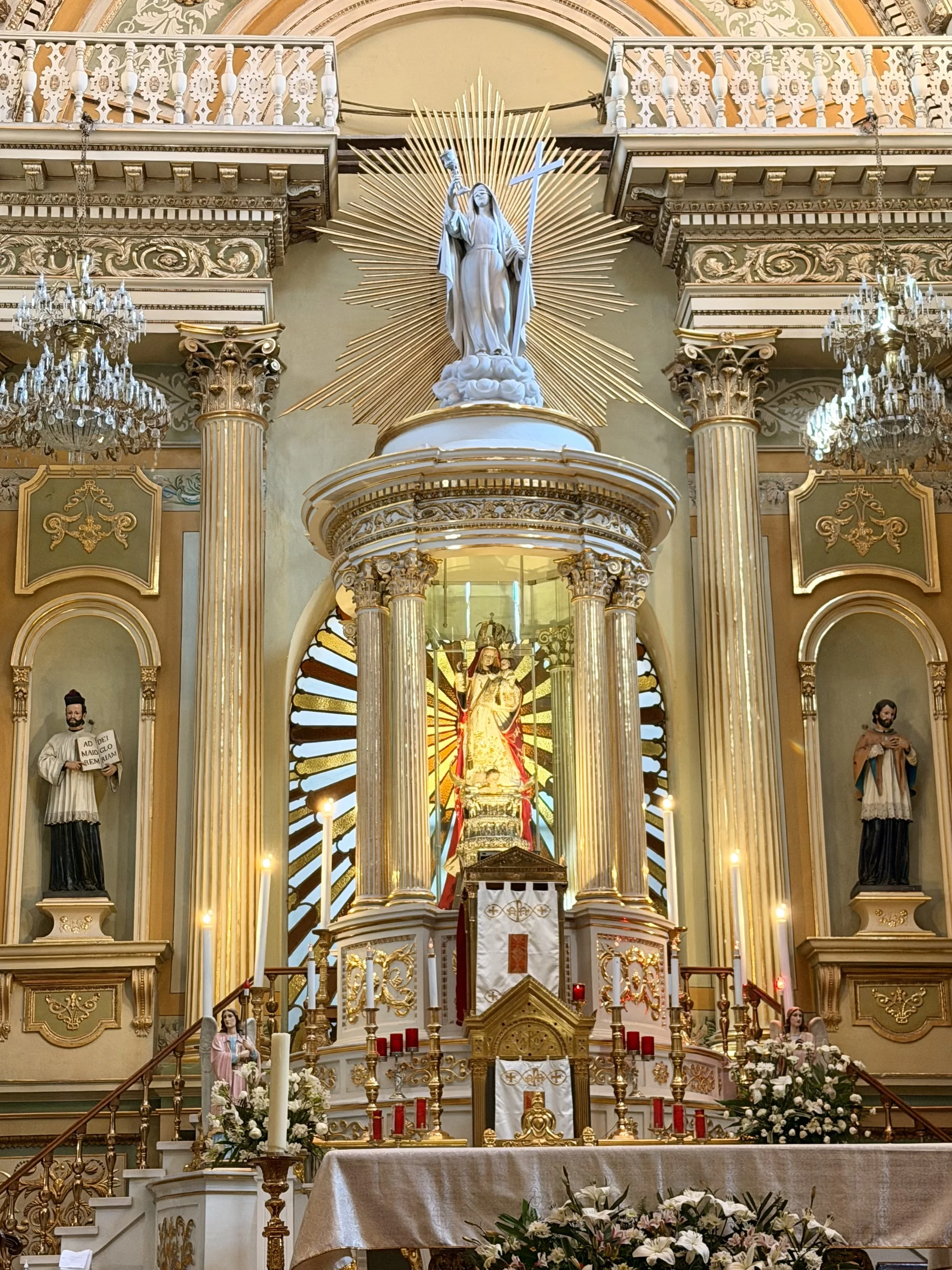
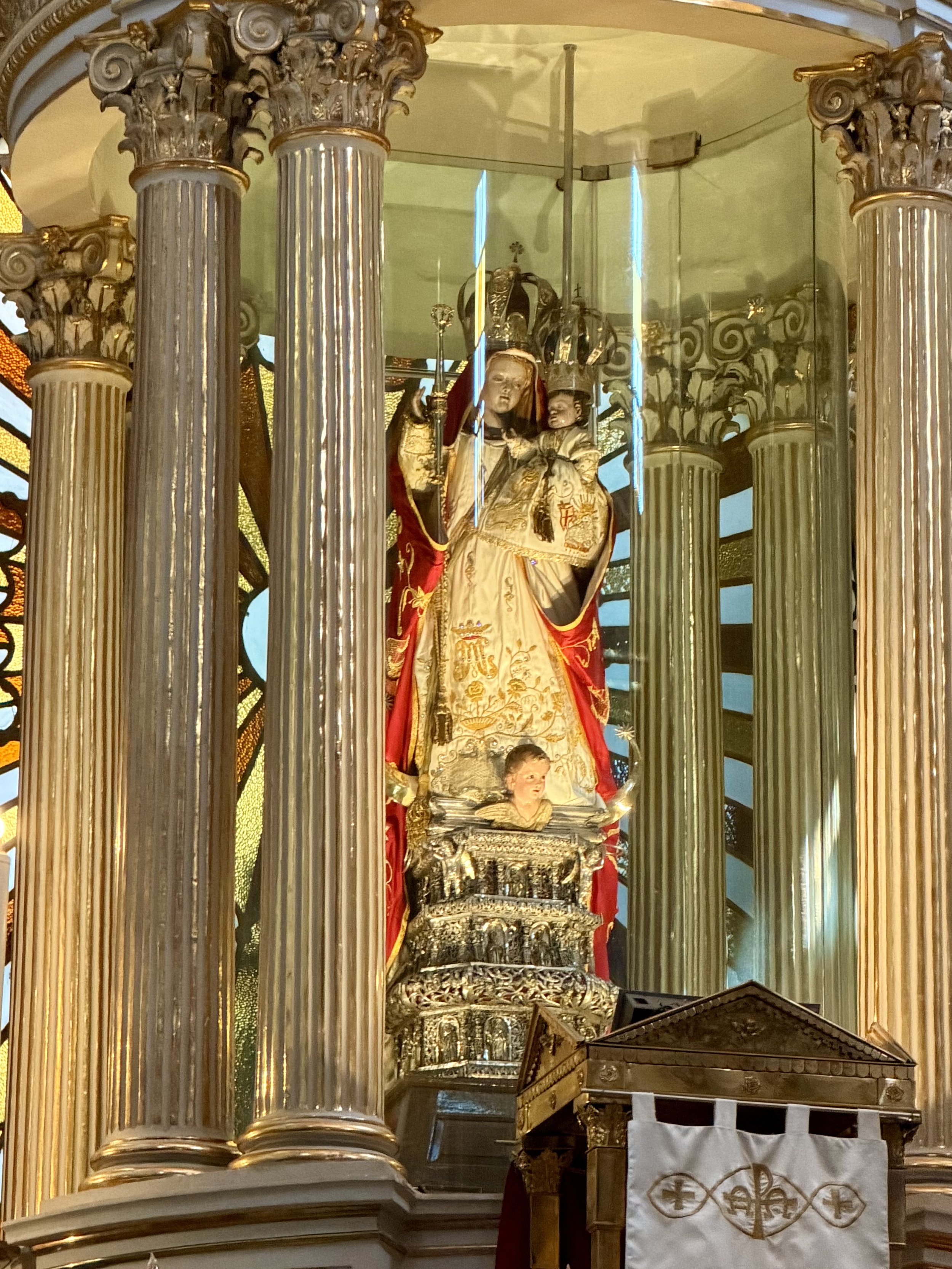
After visiting the Diego Rivera House Museum, we returned to Plaza de la Paz and peeked inside the Basílica Colegiata de Nuestra Señora de Guanajuato. It was highly decorated in New Spain Baroque style. Many elements of the basilica were donated by local miners and wealthy mine owners. Above the altar was a statue of Our Lady of Guanajuato on an ornate pedestal of solid silver.
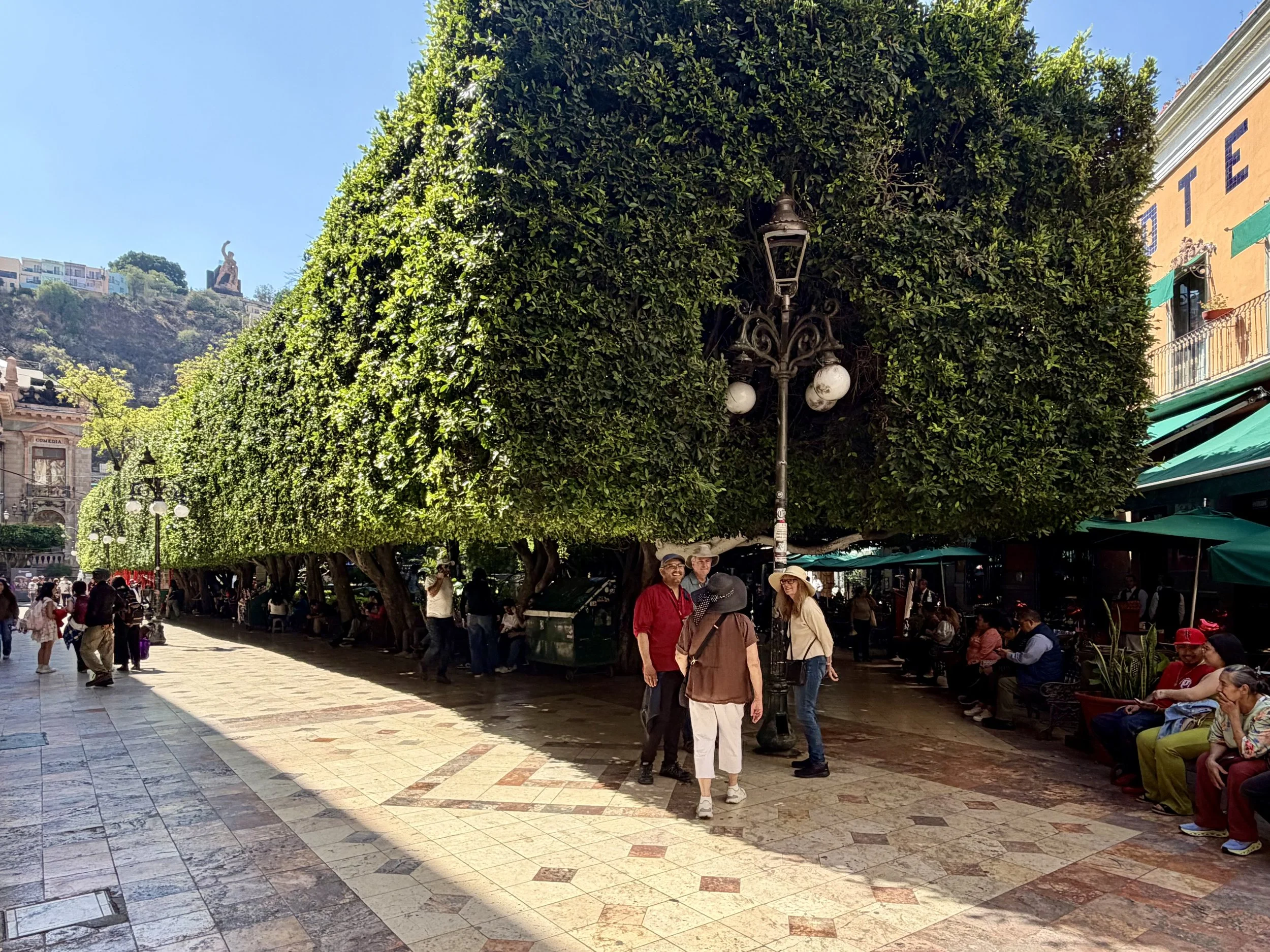
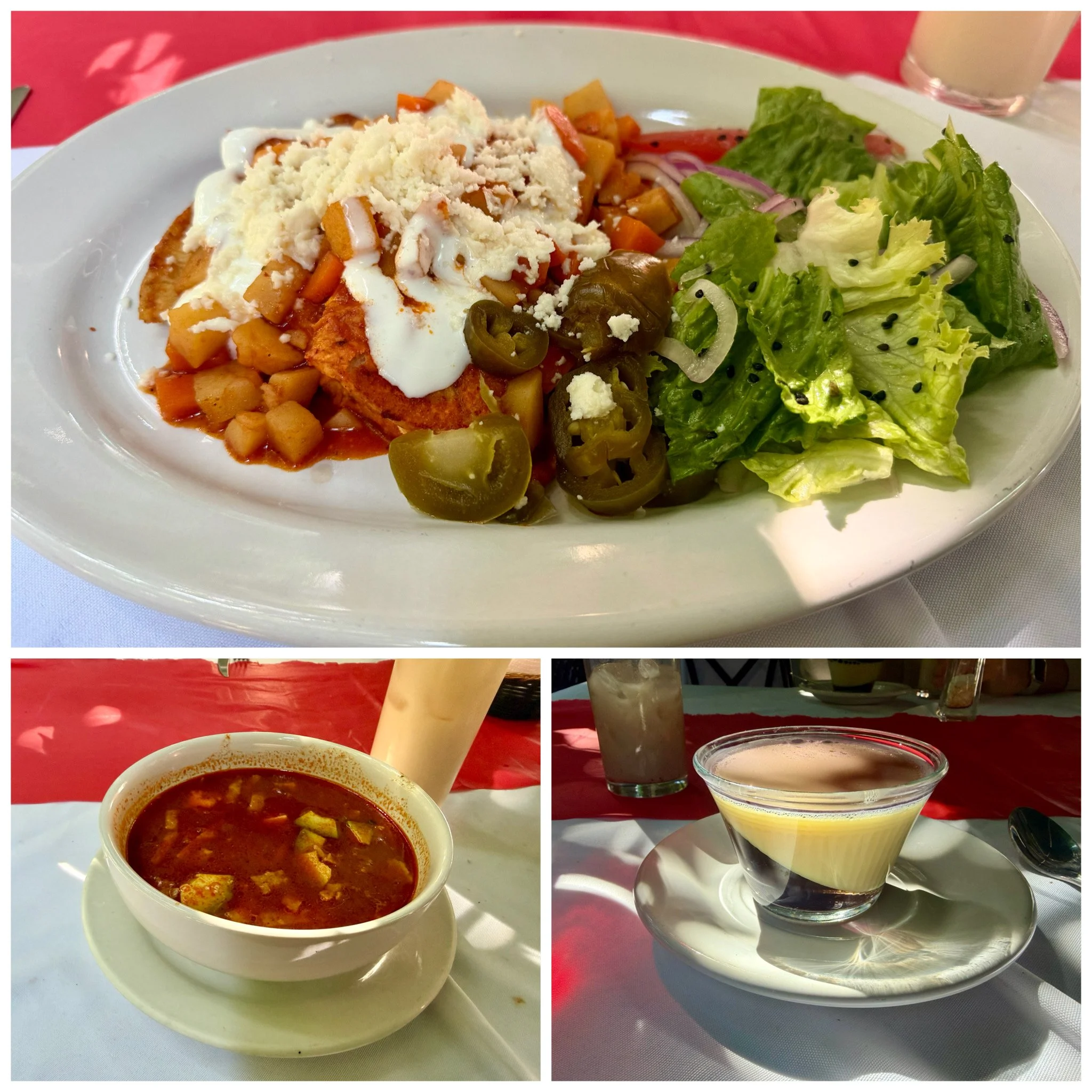
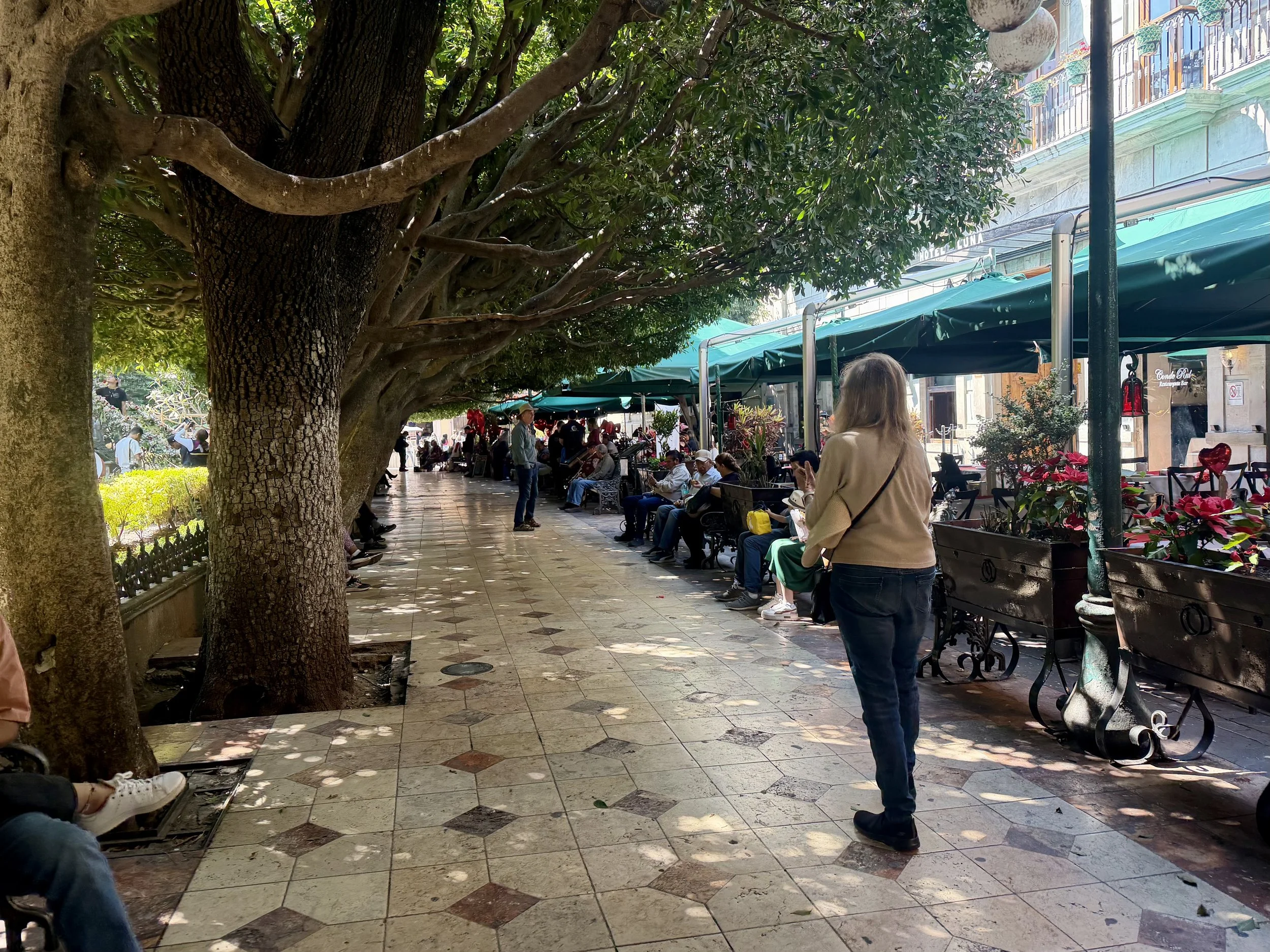
The Jardin de la Unión (Union Garden) was a triangular plaza shaded by leafy trees trimmed to a square shape. Dixie, one of our tour companions, joined us for a relaxing and delicious lunch at one of the many restaurants lining the plaza. The agua fresca of the day was horchata, a delicious concoction of rice, milk, and cinnamon served over ice. For my three-course set lunch I had sopa Azteca (tortilla soup); enchiladas mineras, a local specialty with diced carrots and potatoes; and gelatina, with layers of grape and tres leches gelatin. We enjoyed talking with Dixie, whose late husband was Frank Lloyd Wright’s photographer. Lunch ended with a pleasant (though much too loud) serenade from a Mariachi band.
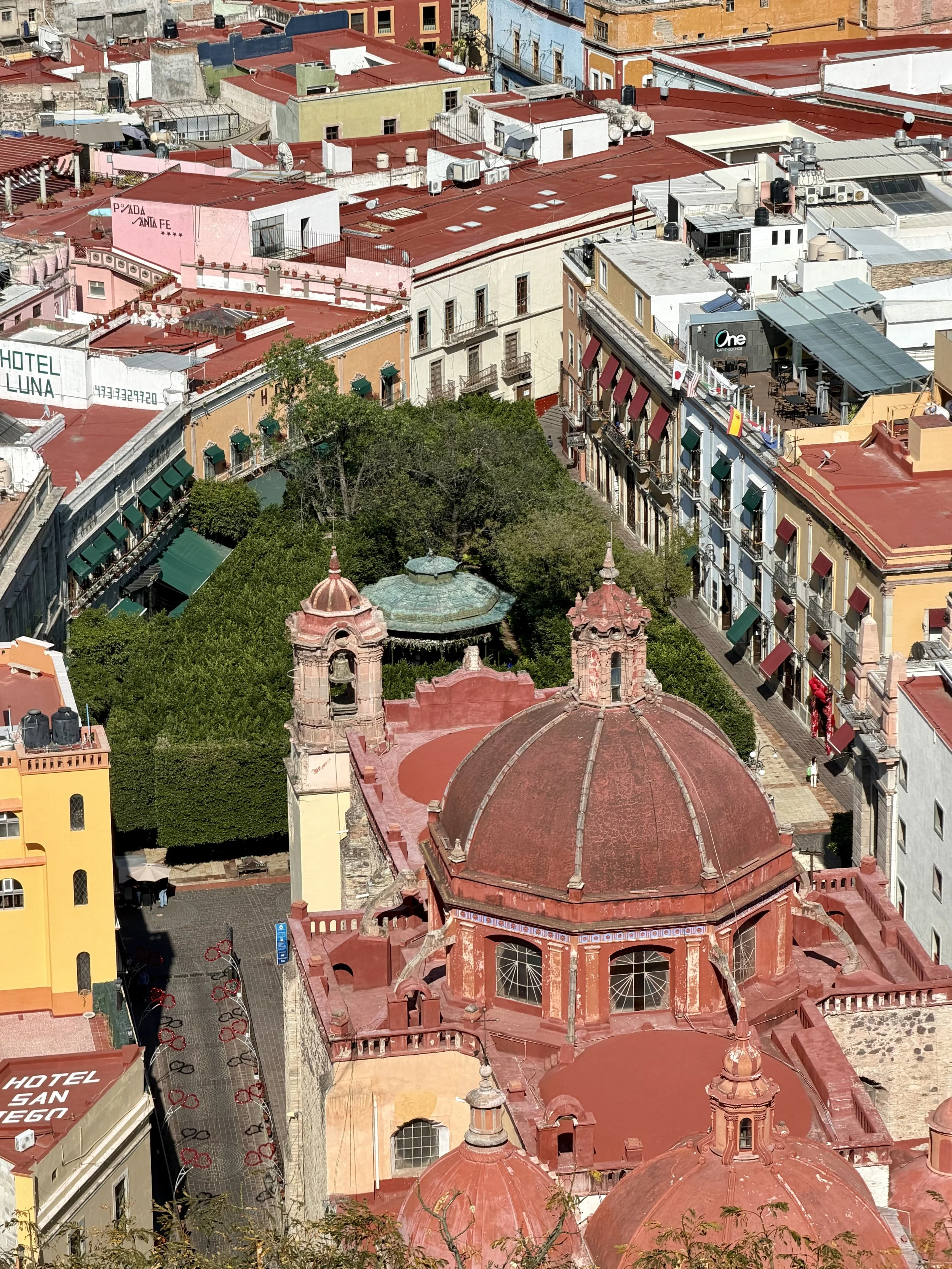
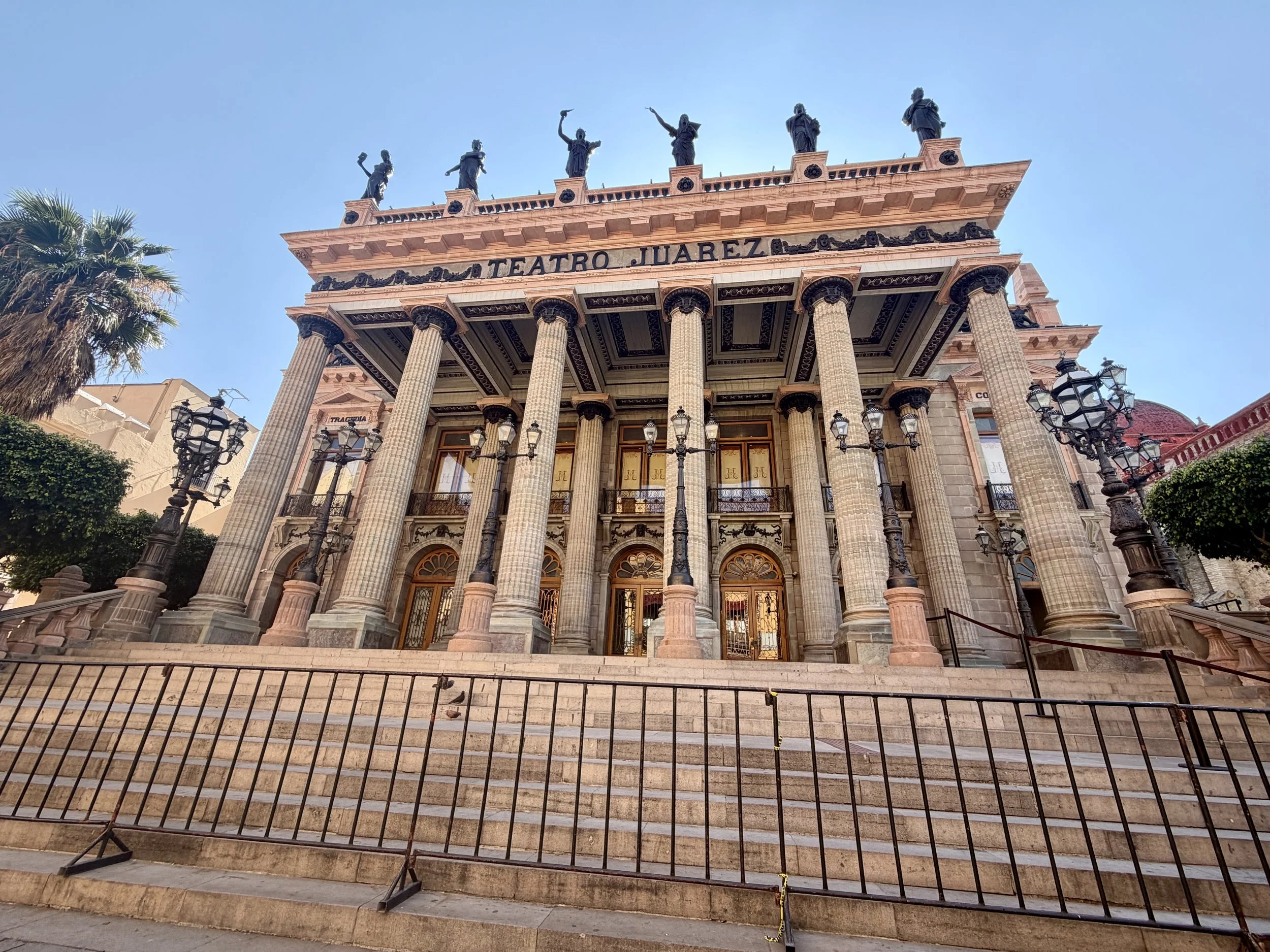
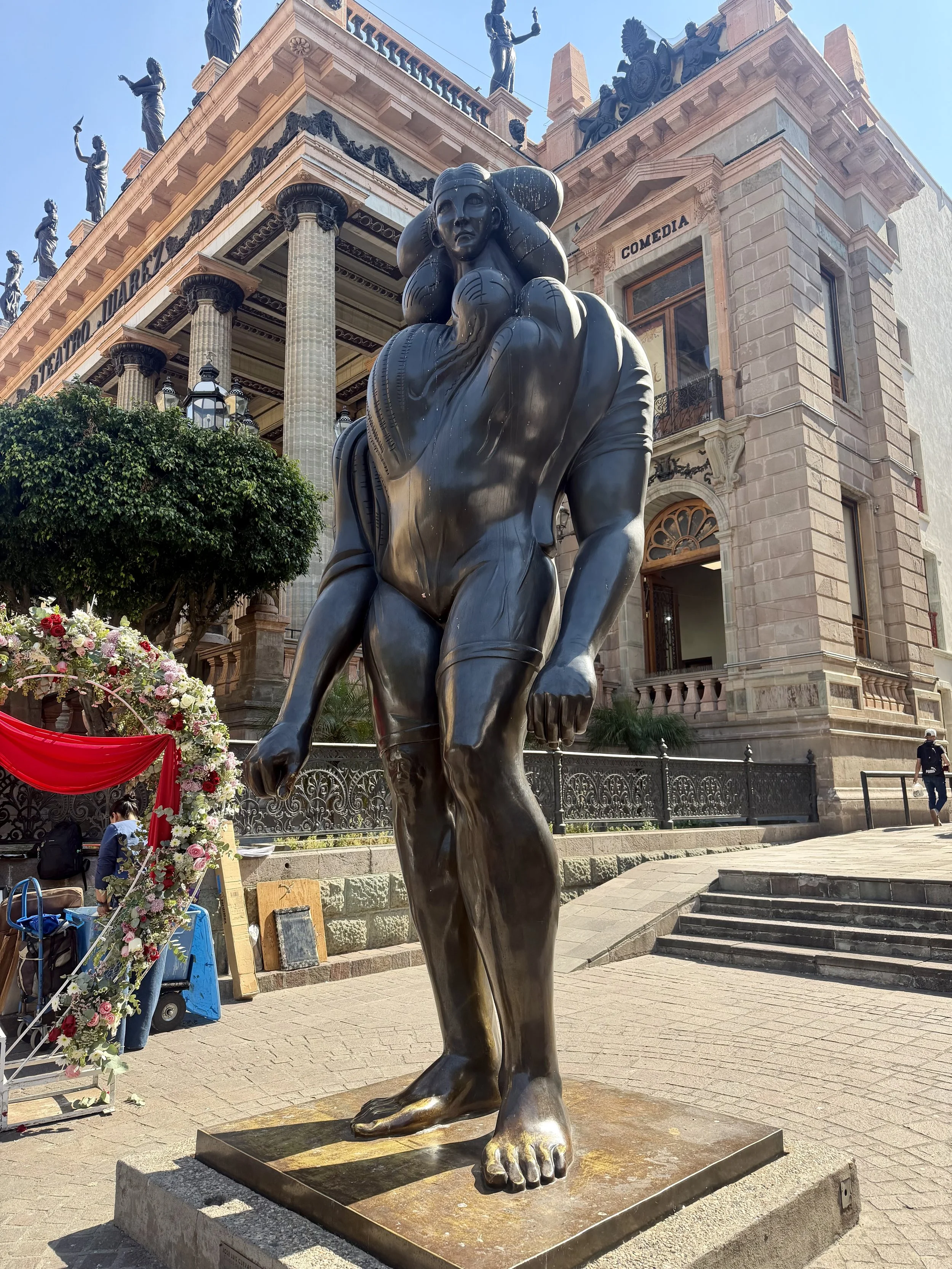
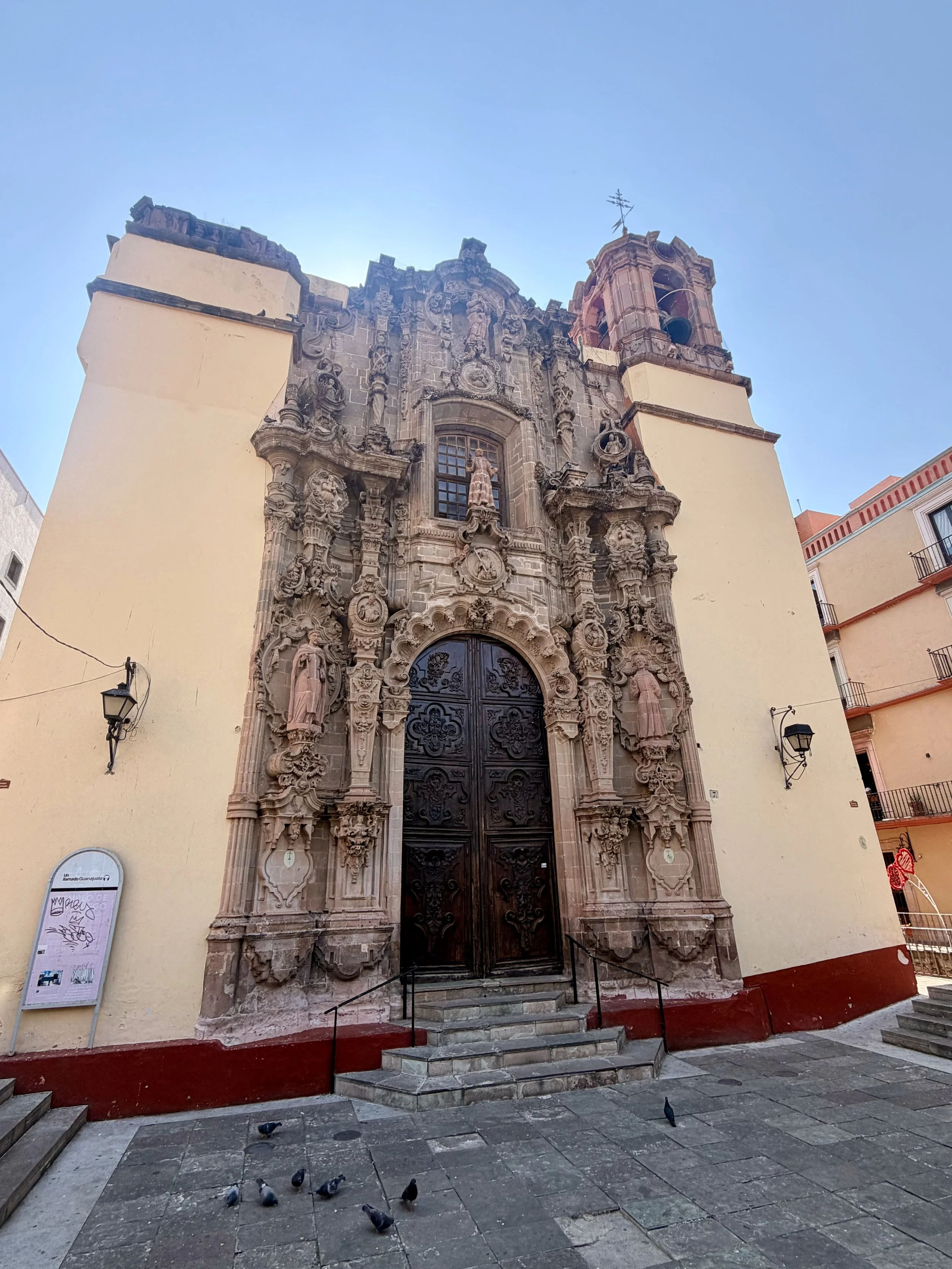
Our tour group reassembled on the far side of Jardin de la Unión, at the historic Teatro Juarez. It was an eclectic building resembling a colorful Greek temple, with Doric columns and bronze statues of the Muses on the roof. Nearby was La Giganta (the Giantess), a 13-foot bronze sculpture by Mexican artist José Luis Cuevas. The pink church next door, Templo de San Diego de Alcalá, was the starting place for the traditional callejoneadas, evening tours of song and story-telling led by costumed students.
We went behind the Teatro Juarez to the Guanajuato Funicular. We rode up the very steep (30°) hill with a friendly student carrying his art supplies. The funicular’s two cars were connected by a steel cable; as one car descended, the other one was pulled upward. At the top of the hill was a viewing platform with a huge masonry statue of the miner hero, El Pípila, with his stone and torch of liberty.
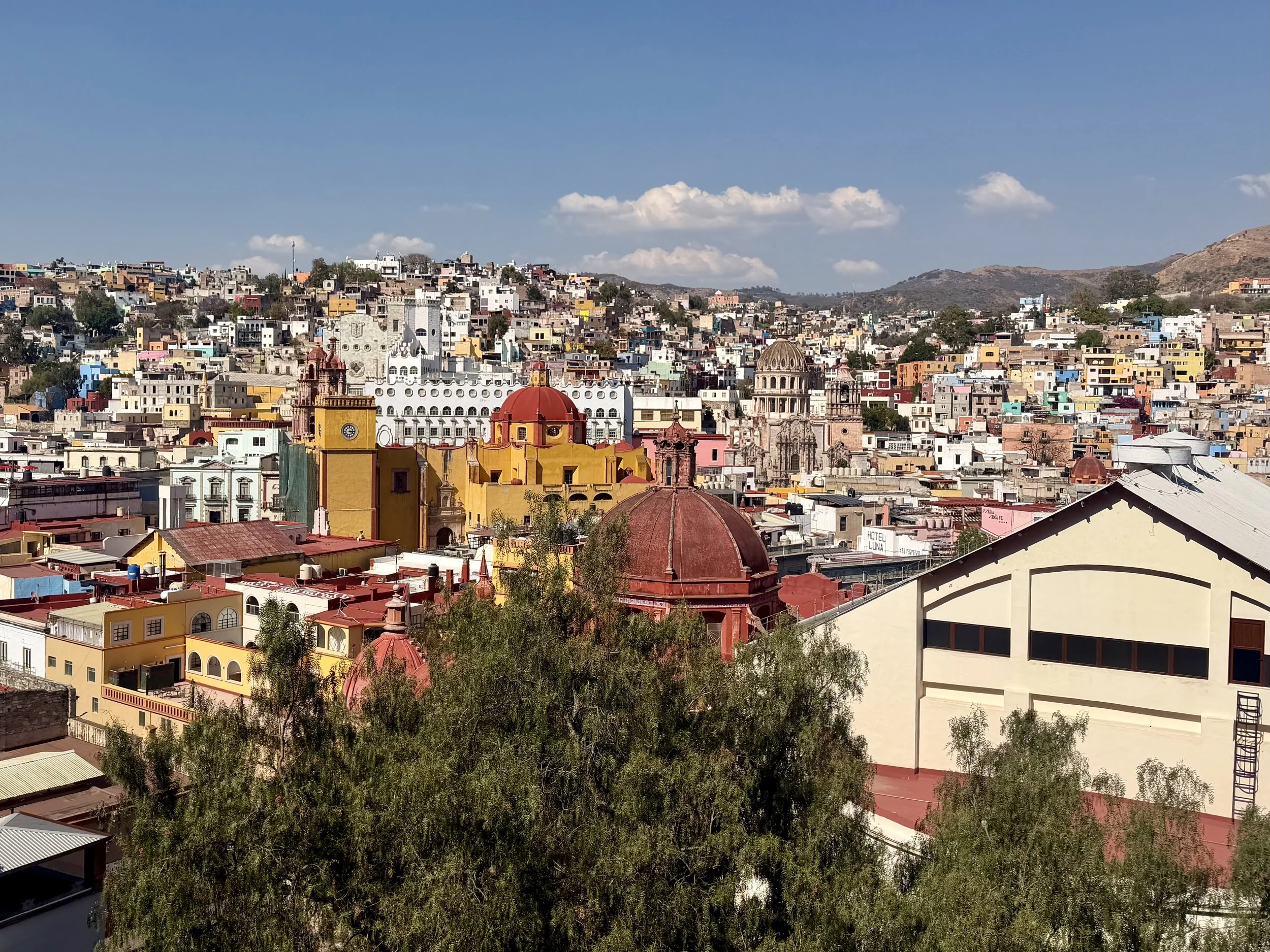
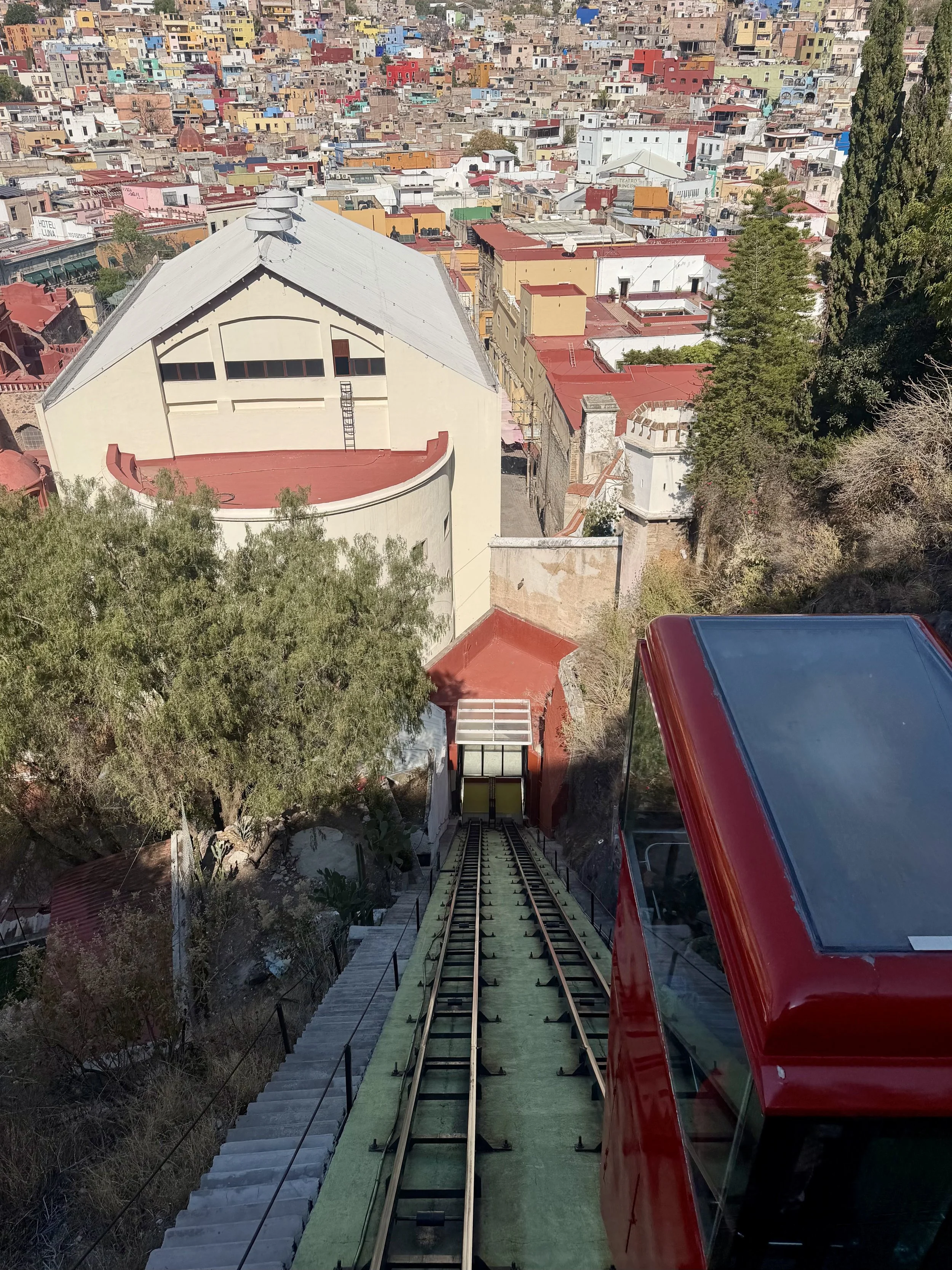
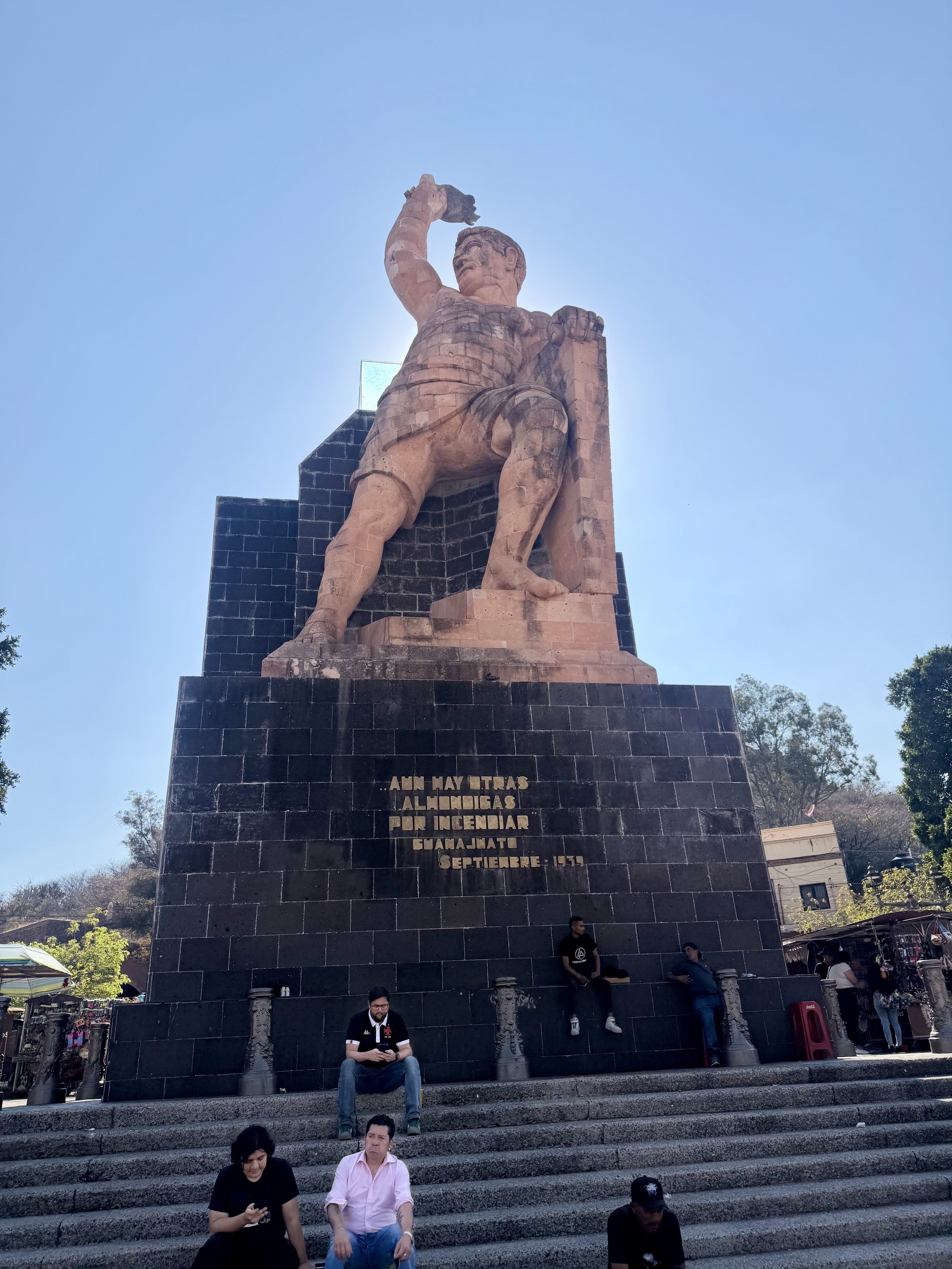
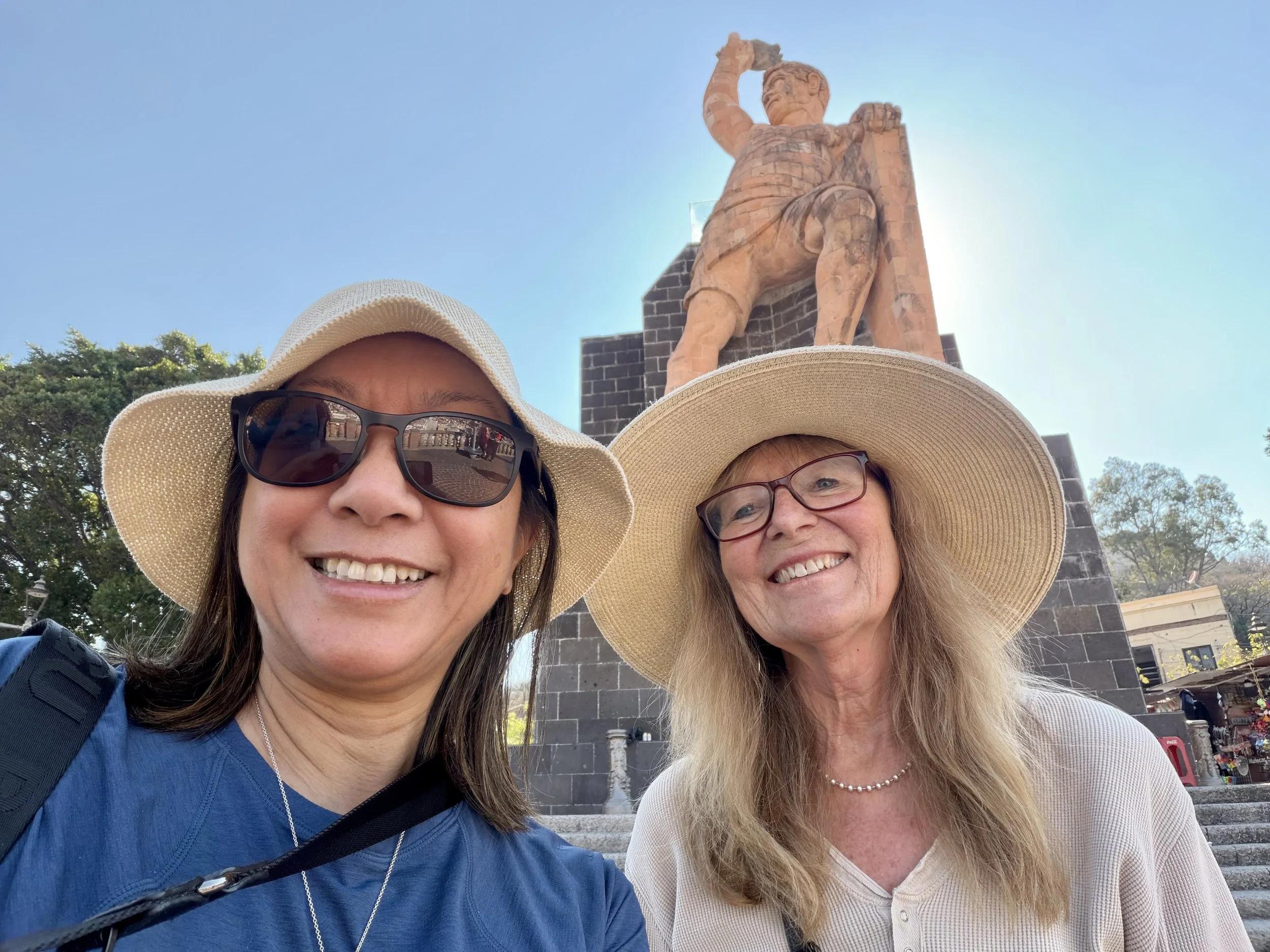
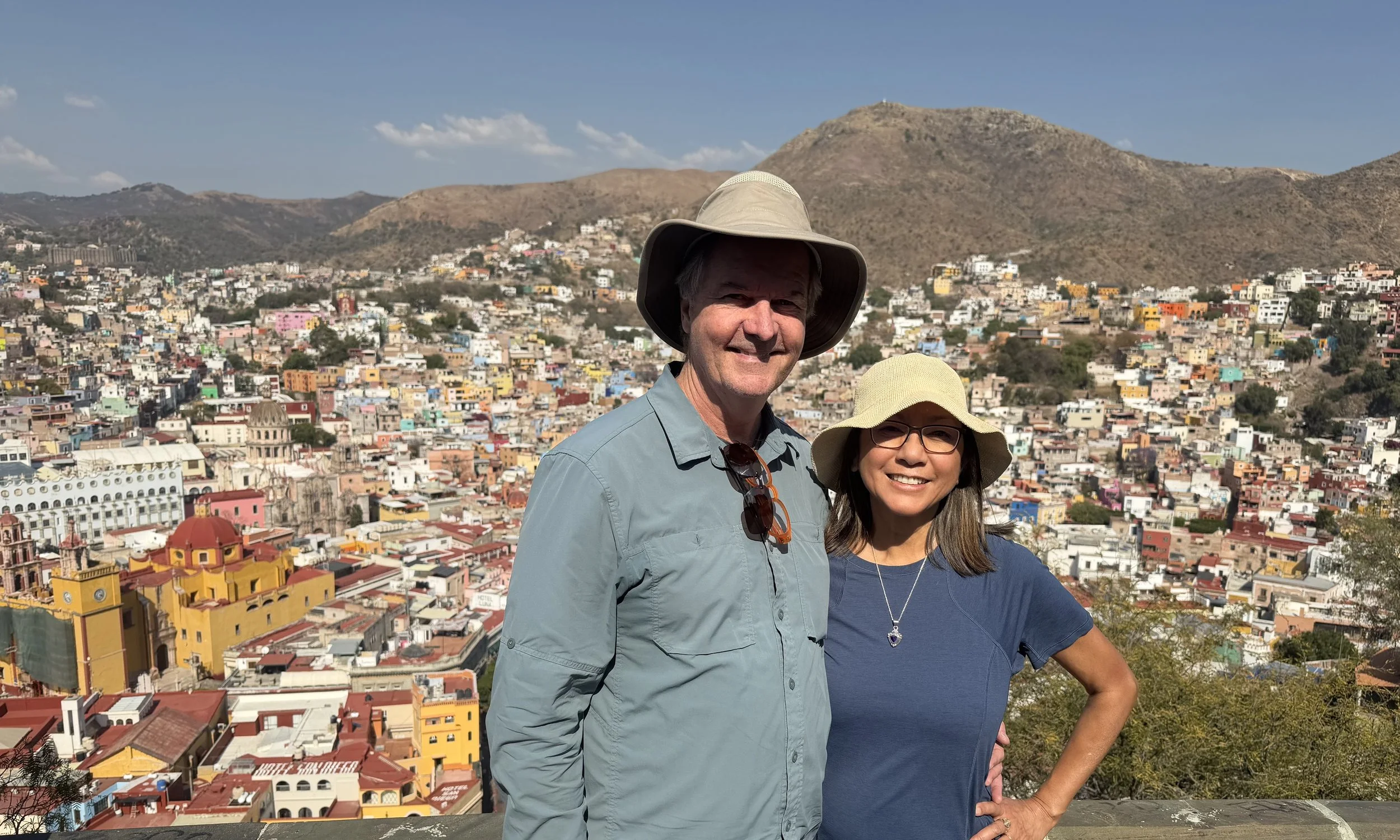
We lingered at the viewpoint, enjoying the panoramic views of the city. It was a spectacular grand finale to a memorable tour of Guanajuato.