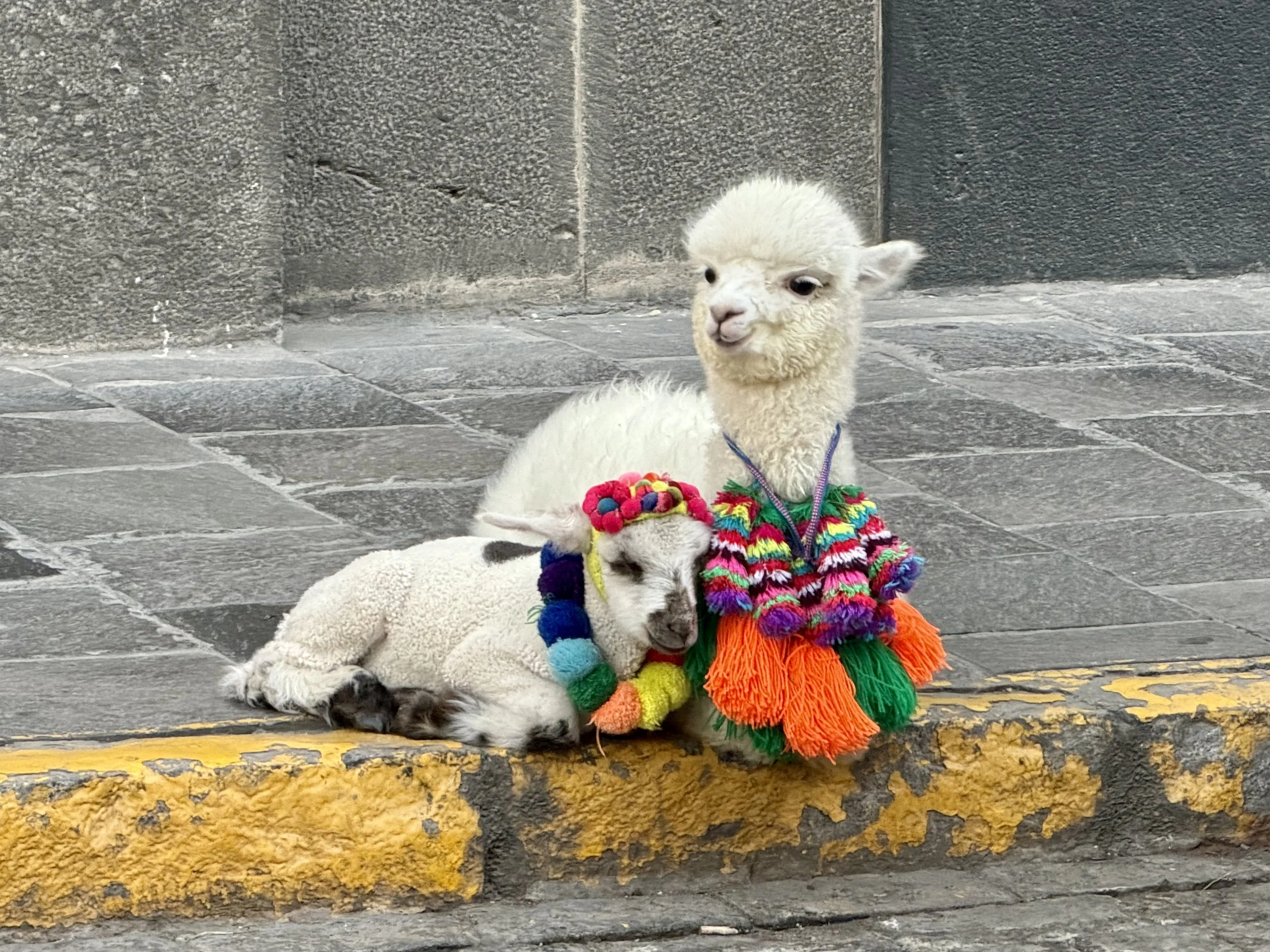
The Historical Centre of Arequipa is a UNESCO World Heritage Site, and we took a guided walking tour to learn more about it. Our guide, Slines (ess-lynes), was a native of Arequipa and received his unusual name from his Belgian father. Slines spoke very good English, which he learned by watching films and Youtube videos.
At the northern edge of the Historical Centre was Barrio San Lázaro, the oldest neighborhood in Arequipa. Mundo Alpaca was a fun start to the tour. We learned that these animals have been an essential part of Arequipa’s economy for thousands of years. Read more about our visit to Mundo Alpaca HERE.
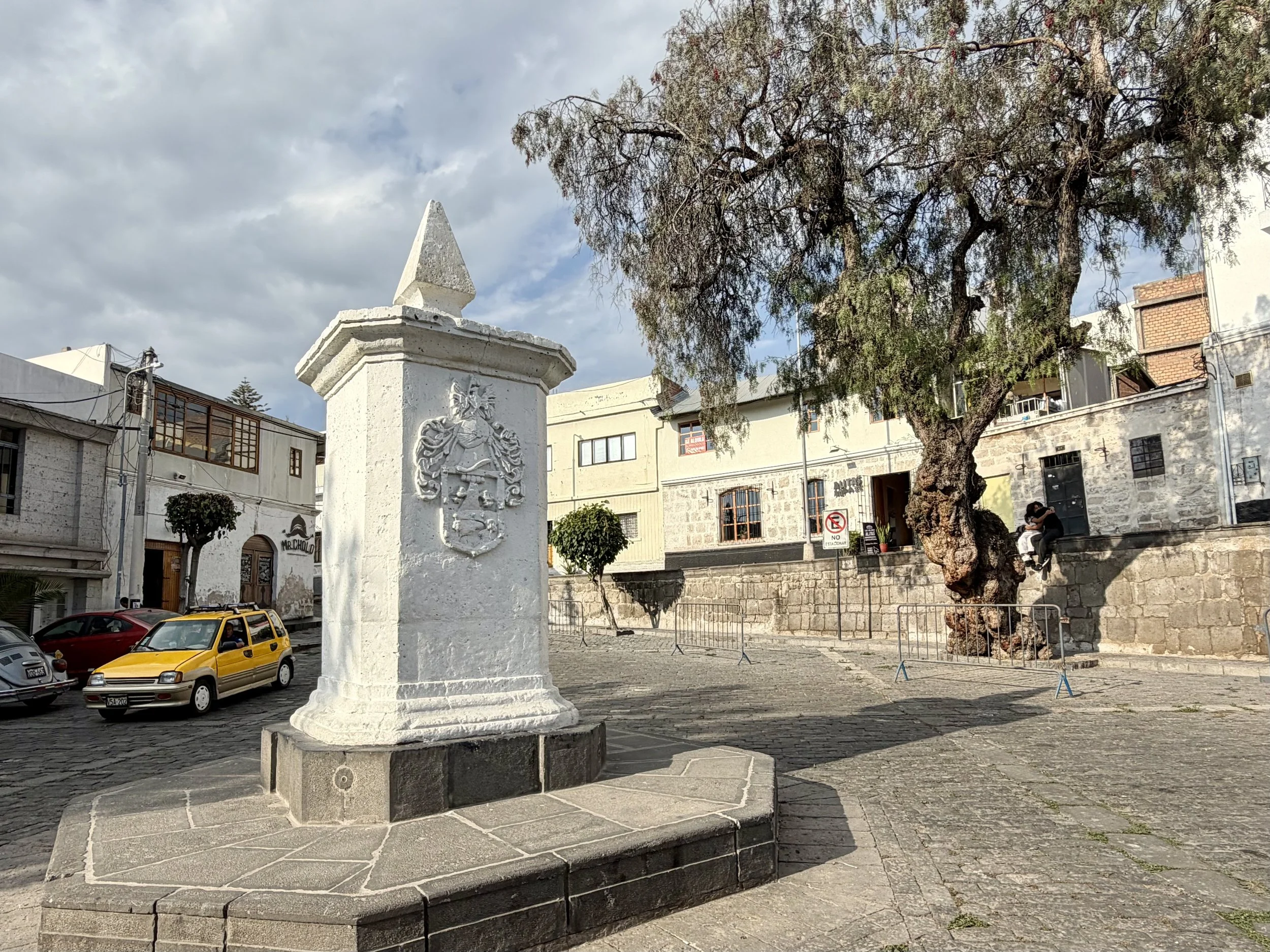
The neighborhood took its name from Iglesia de San Lázaro (St. Lazarus Church), built by Dominican monks soon after Arequipa was founded in 1540. In nearby Plaza San Lázaro, a small monument bore the Arequipa coat of arms, a reminder of the city’s enduring loyalty to Spain, even as the rest of Peru rebelled and fought for independence.
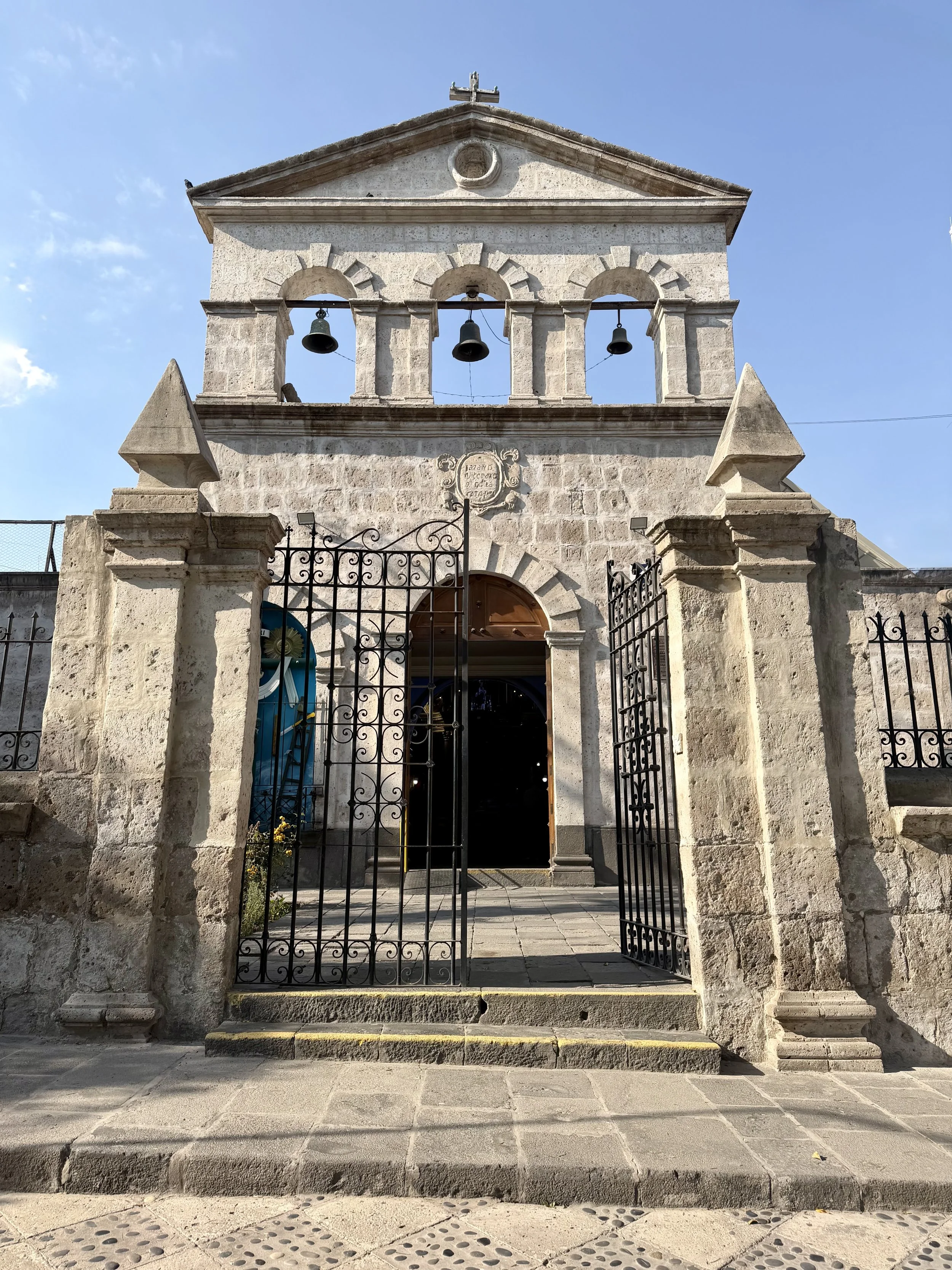
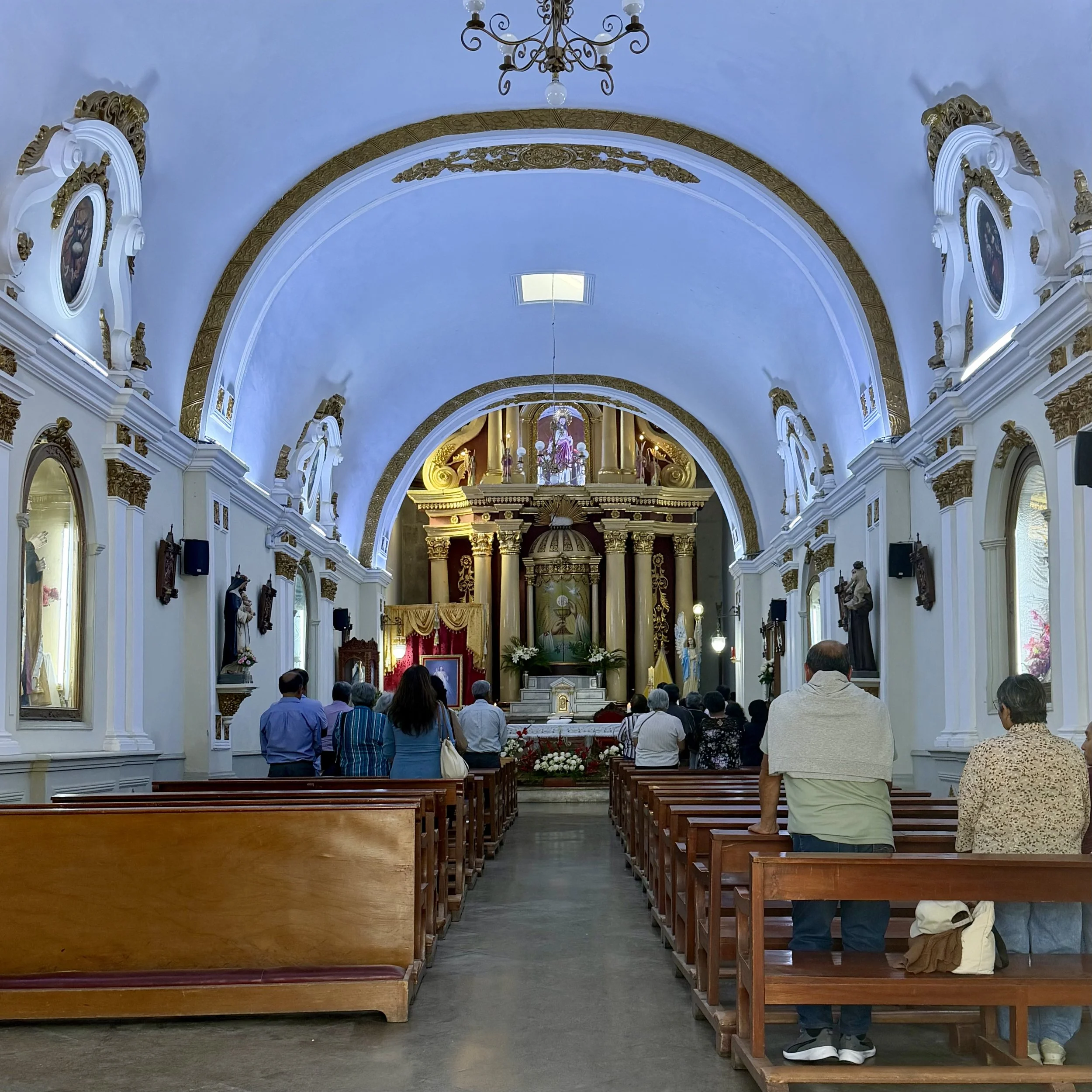
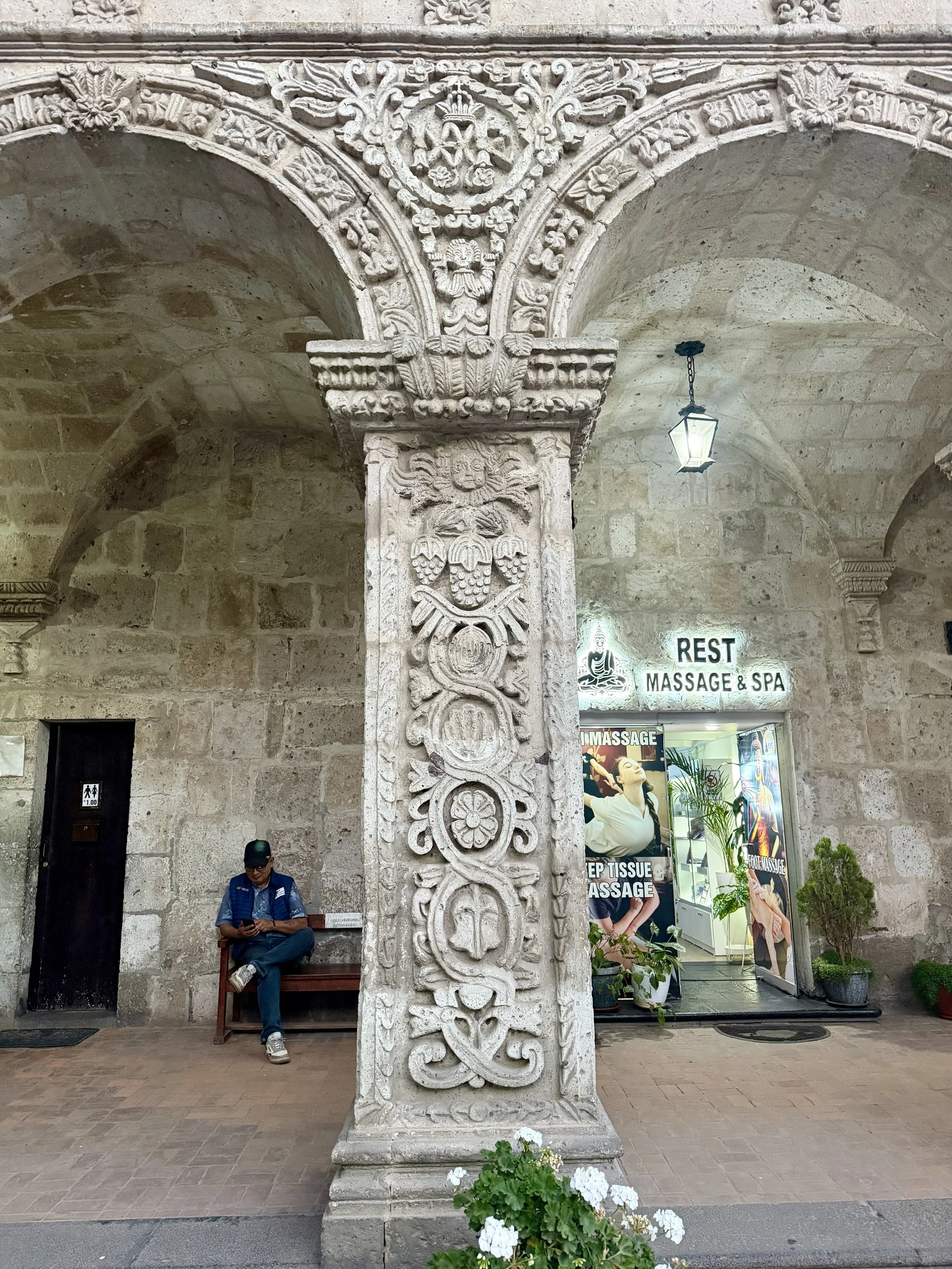
Slines told us about the distinctive white stone called sillar, used for St. Lazarus Church and many other buildings all over the historic centre. Formed from cooled volcanic ash, the sillar was plentiful, soft (for a rock), lightweight, and porous - good for raising walls quickly and cost-effectively. This made it the ideal building (and re-building) material for a city prone to earthquakes. Thanks to the widespread use of sillar, Arequipa became known as “The White City.” (The nickname might also describe the upper-class residents of viceregal Arequipa, who were Europeans.)We walked toward the Plaza de Armas and spent about an hour touring the Monastery of Santa Catalina, an intriguing, hidden city within a city. Read more about our visit to the monastery HERE.
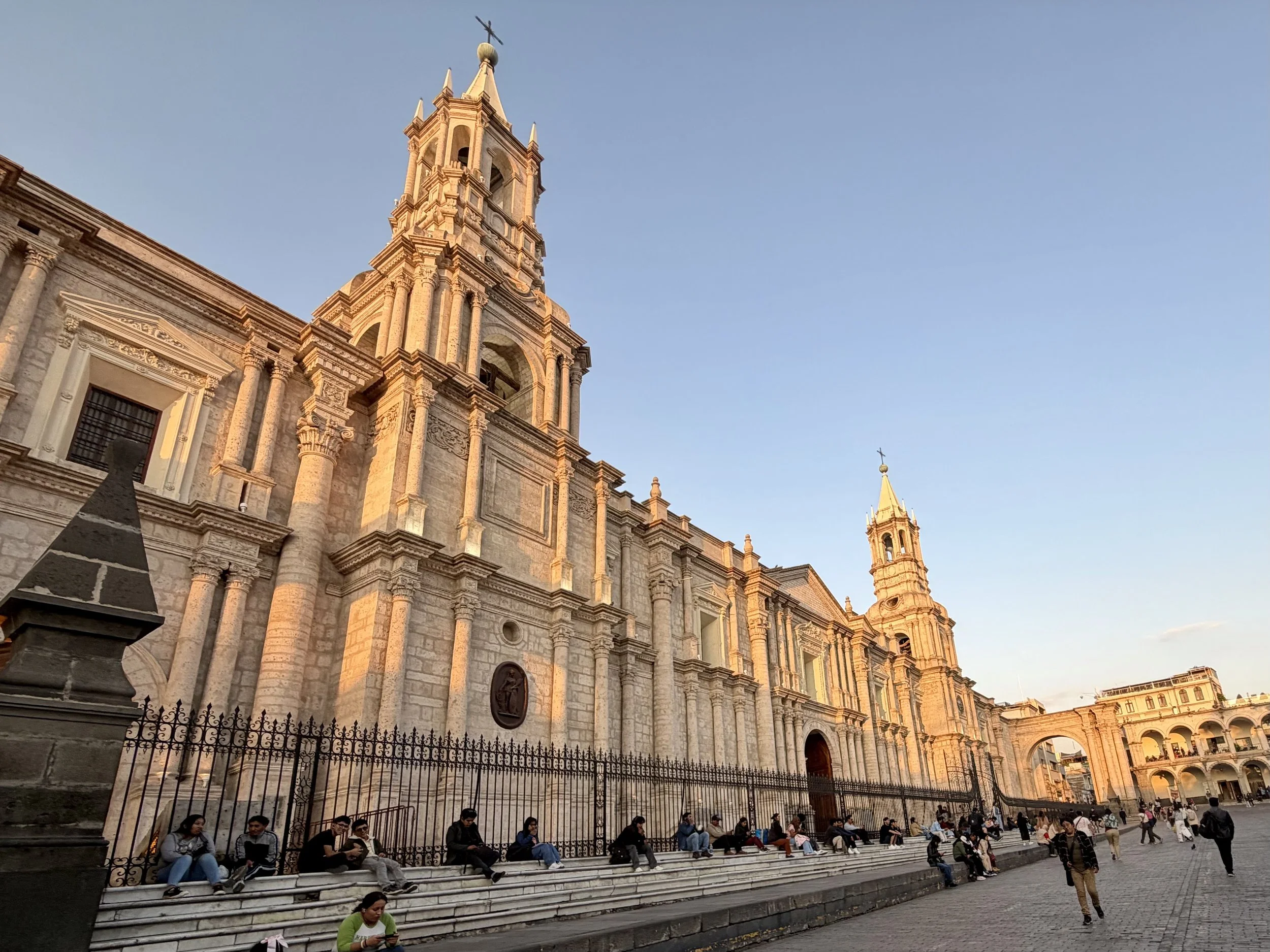
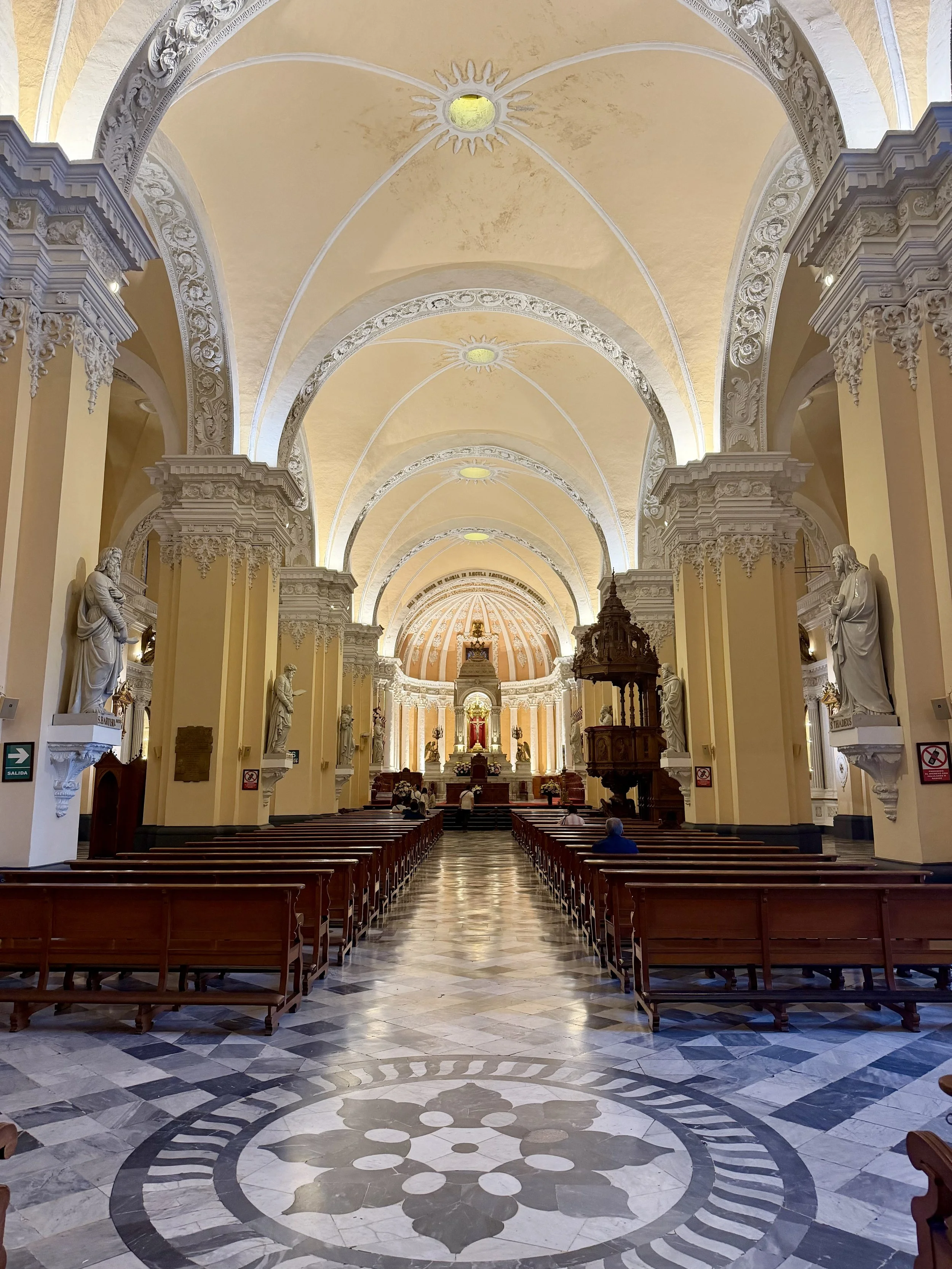
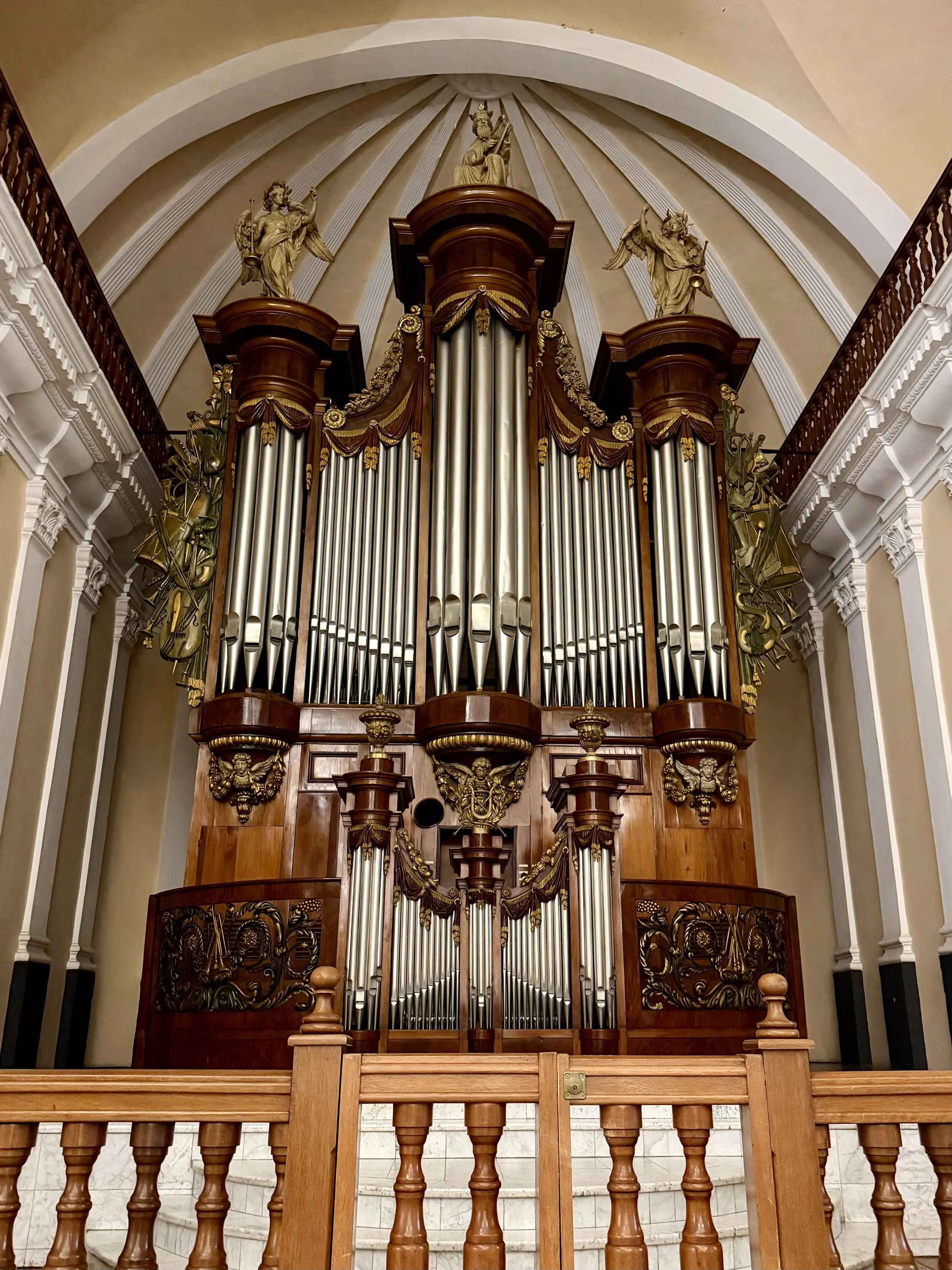
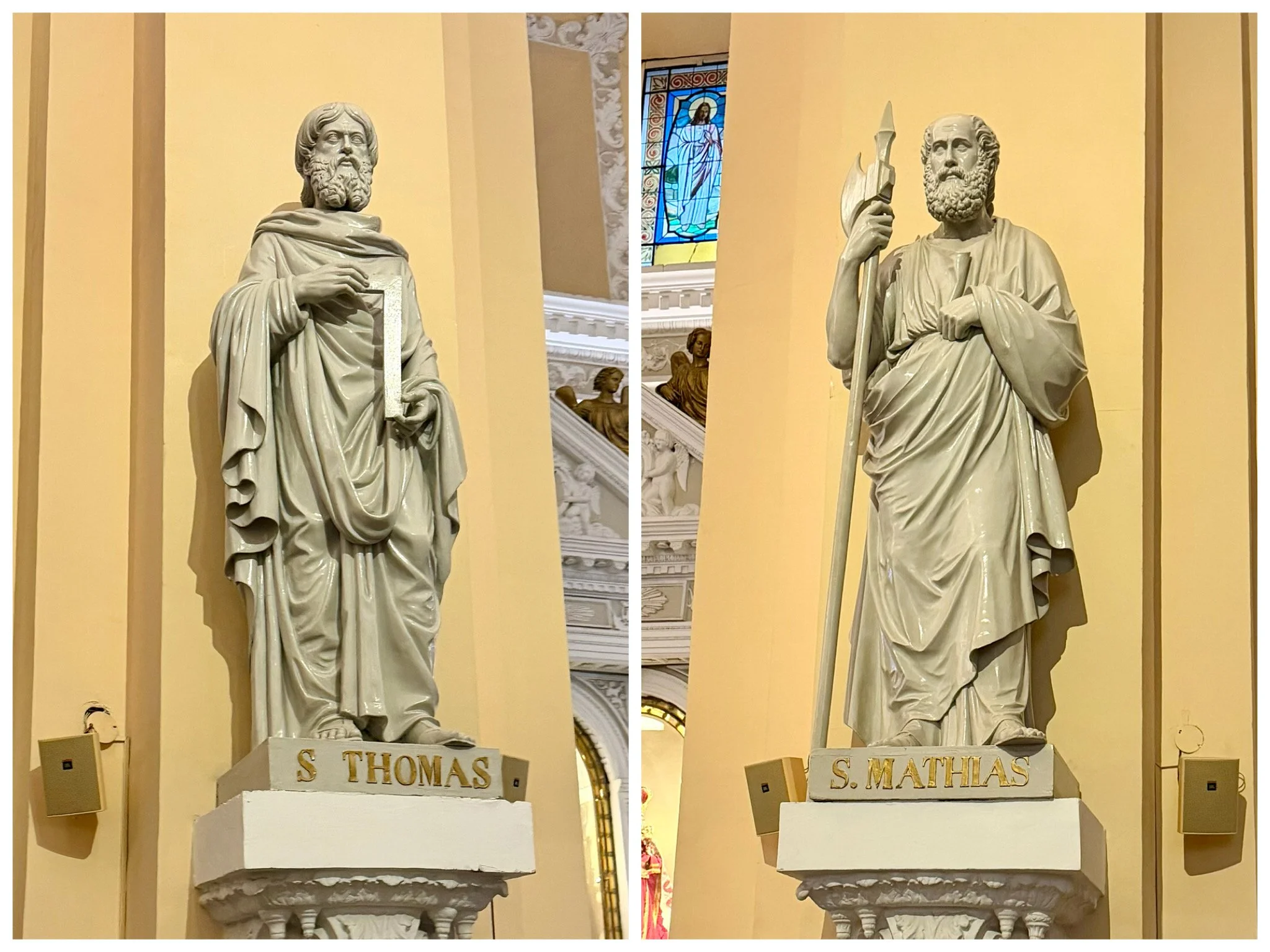
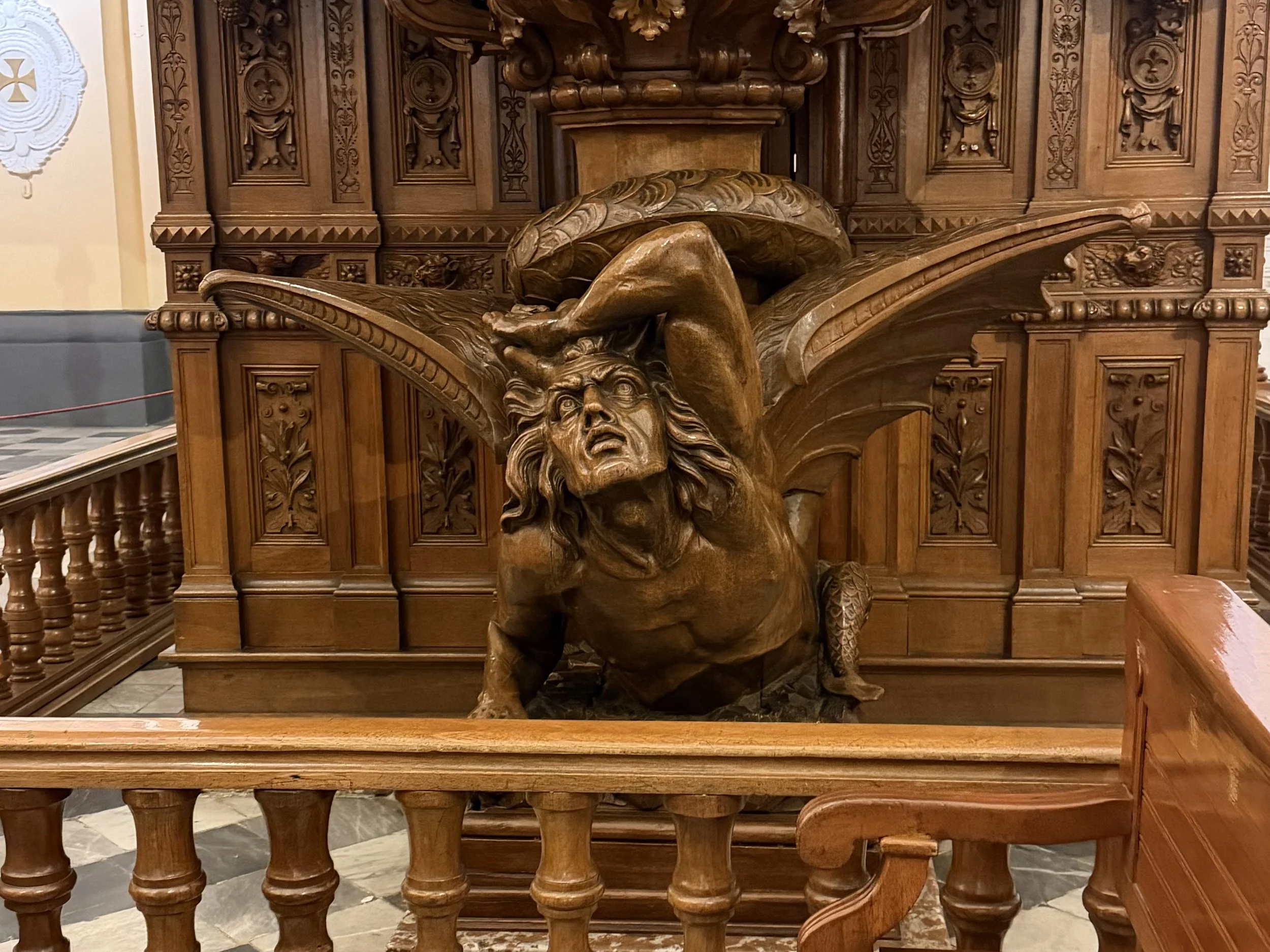
Next was the Basilica Cathedral of Arequipa, its sillar façade with two bell towers stretching the whole length of the Plaza de Armas (the main square). We entered the main doors and were surprised to realize that the nave ran sideways, parallel to the façade. (A much larger cathedral had been planned, but multiple earthquakes forced a major design change.) At the back of the nave was a majestic pipe organ from Belgium. An ornate wooden pulpit from France featured a sinister figure with horns, wings and serpent’s tail. A priest giving a sermon would be standing on the devil! Larger-than-life statues of the apostles were made from “fake marble” - wood covered with lyme and egg whites. The floor showed scars from the 2001 earthquake that caused the lefthand tower to collapse into the nave. Both towers were rebuilt and stabilized with wider proportions.
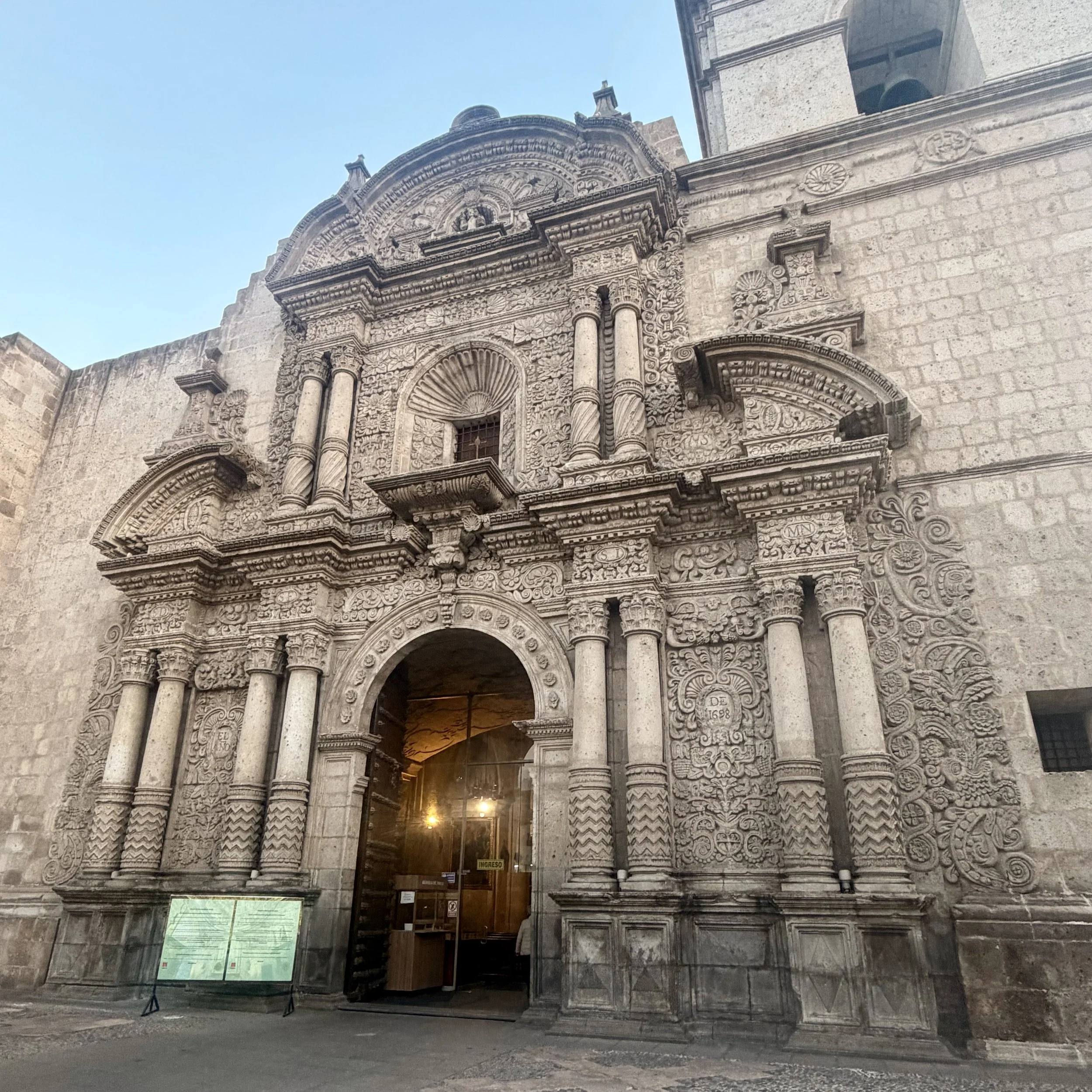
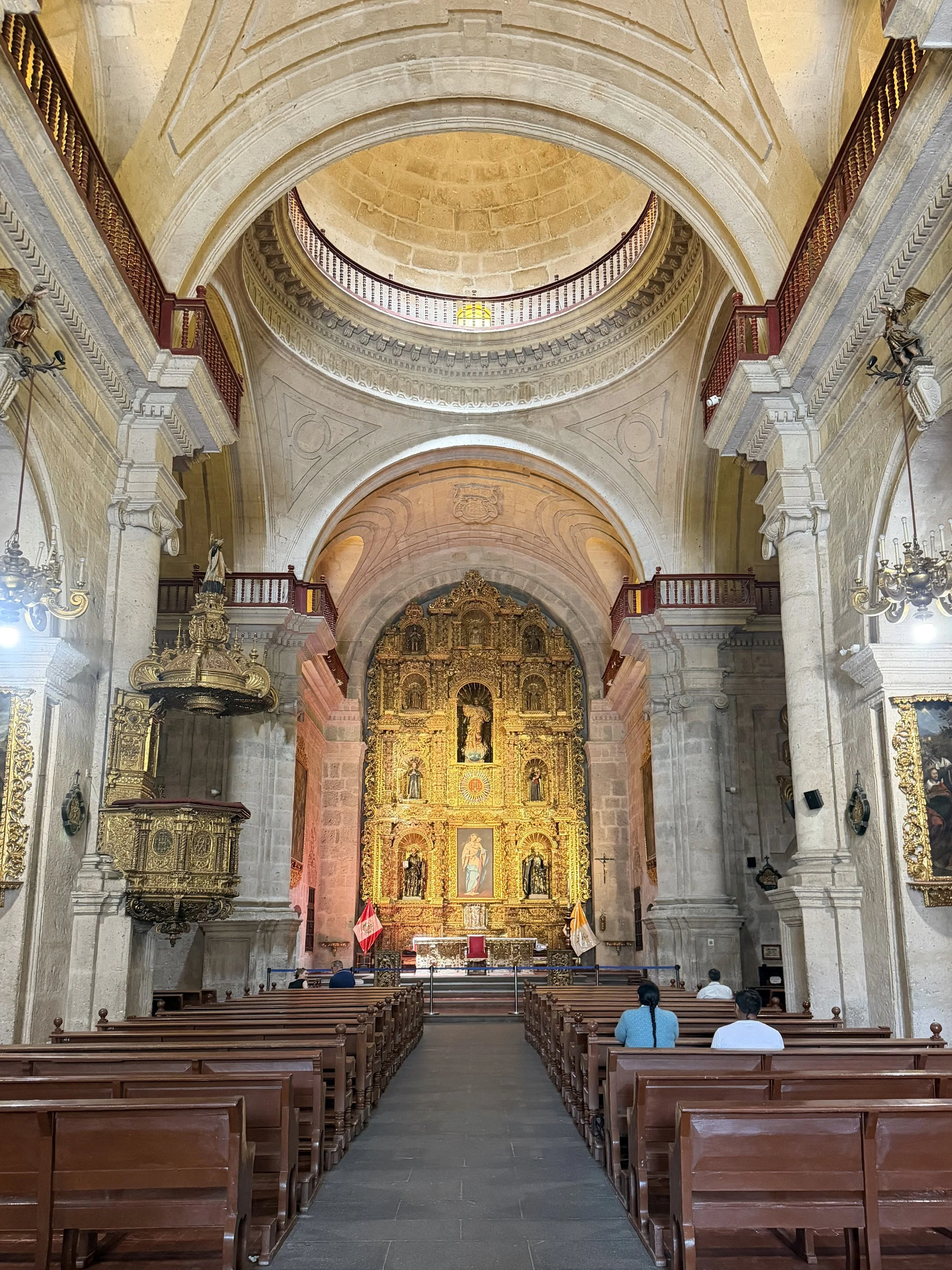
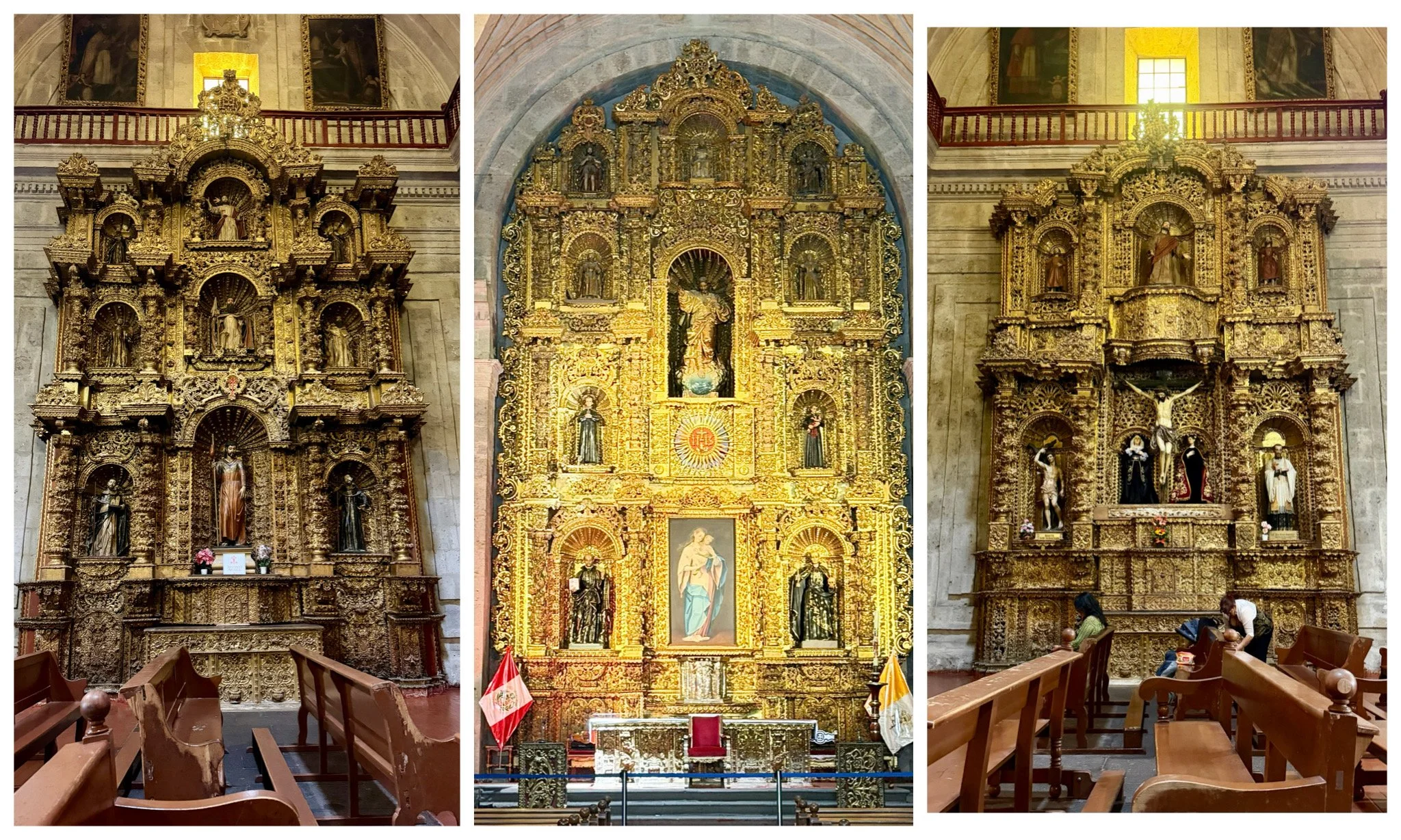
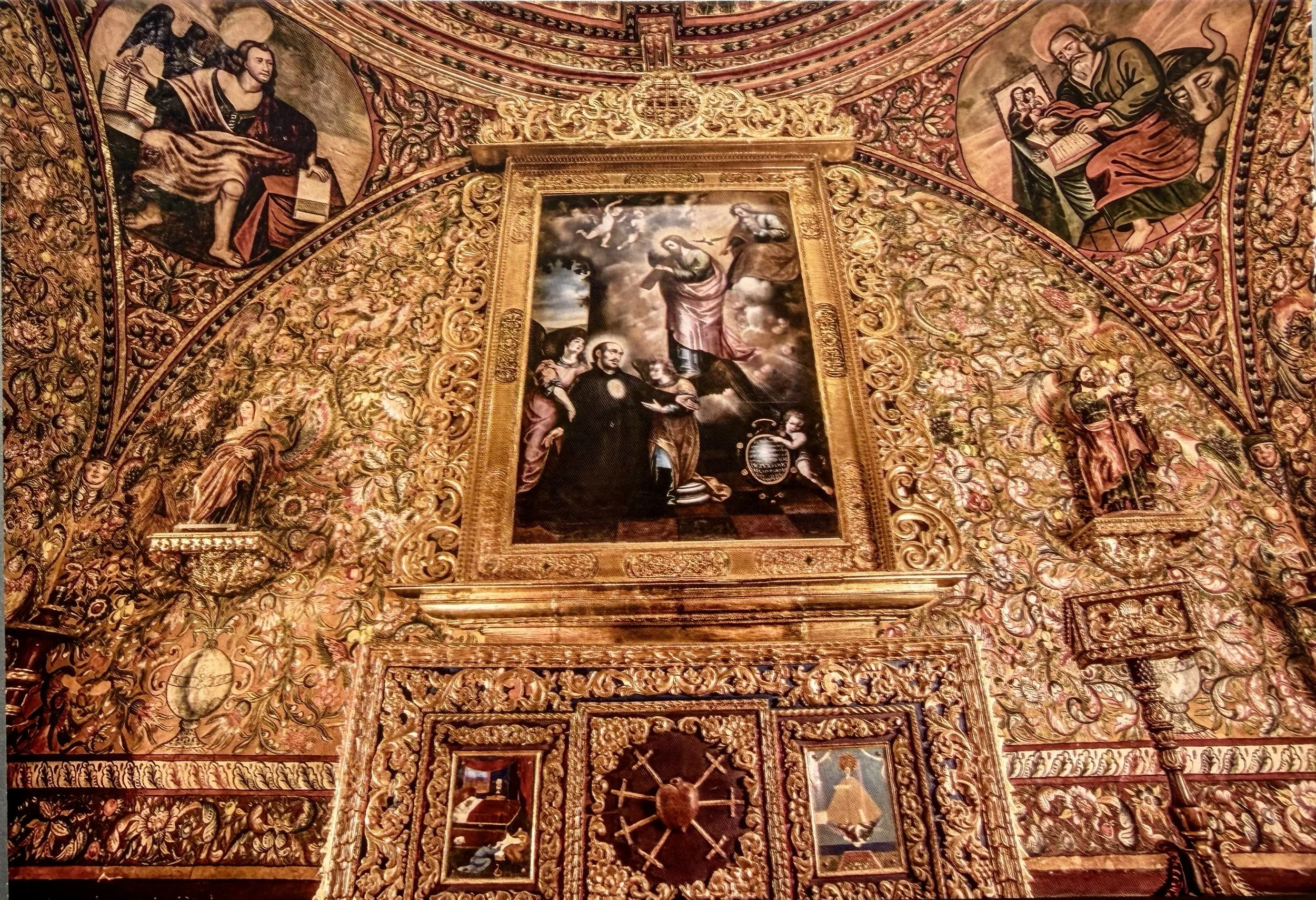
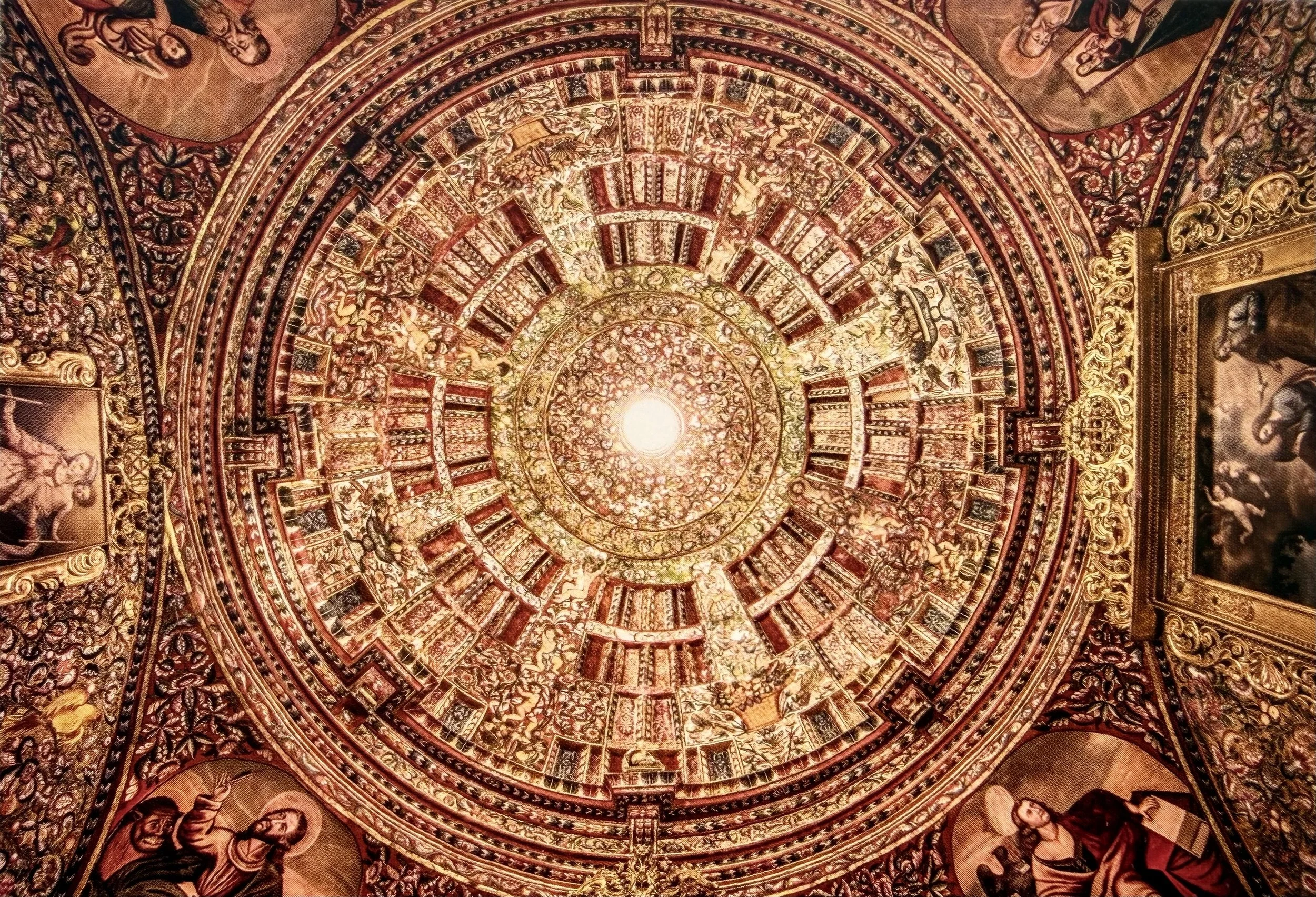
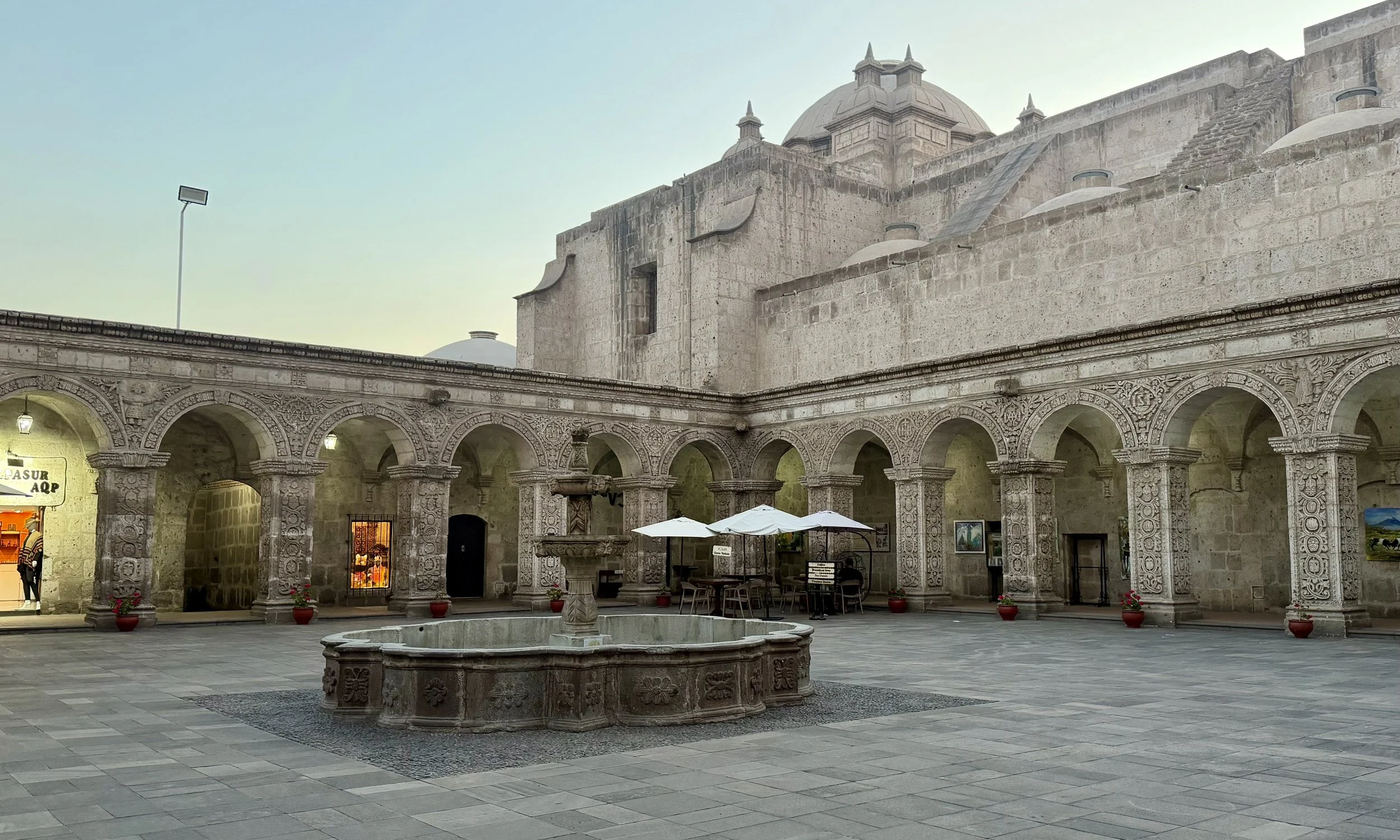
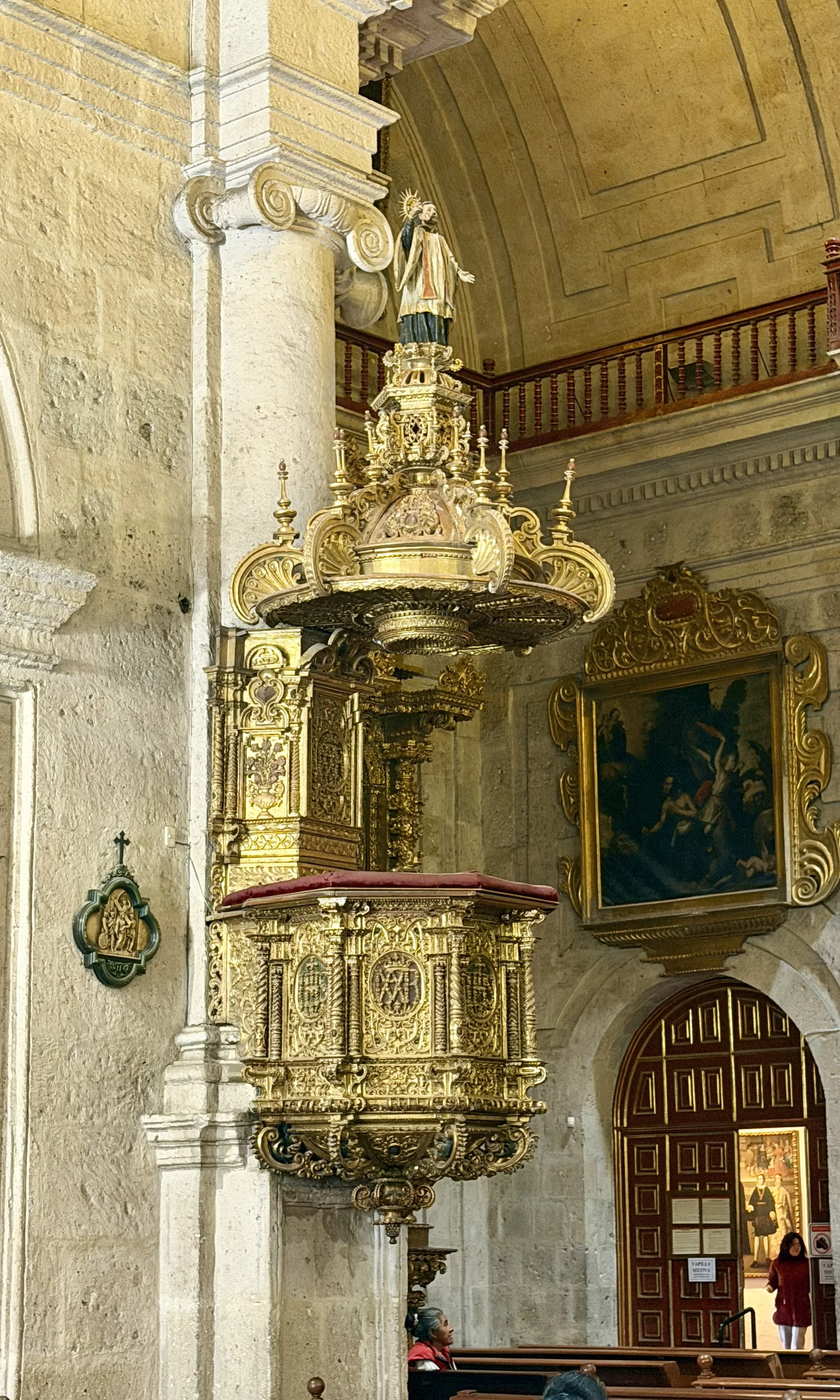
Our last stop was the Church of the Jesuits, built in the 17th century, with a highly embellished Baroque façade. Slines pointed out the secret message - pairs of letters representing a prayer in Latin. Inside the church, an elaborate pulpit and monumental altarpieces gleamed with gold. The St. Ignatius Chapel was small but remarkable - the walls and dome were covered with colorful frescoes of saints among jungle foliage. The adjoining cloisters and school had been converted to shops and restaurants.
Postscript
Legend has it that when the first Spaniards arrived, they inquired about the name of the place, pointing at the ground. The local chief thought they were asking for permission to sit down, and said, in Quechua, "Ari, qhipay" ("Yes, stay"). Hence the name, "Arequipa.”
Arequipa has experienced many major earthquakes - every 60 years on average, and as recently as 2001. It’s interesting that the city was largely built (and rebuilt) using stone created as a result of major volcanic eruptions. Arequipeños must be especially brave and resilient.
Many of the repeated reconstructions reflected the architectural trends of the time. The evolving building styles, along with the spectacular setting amidst majestic volcanoes, distinguish Arequipa from other capital cities from the former viceroyalties of Spain.
Spotted on the sidewalk as we walked home after the tour: