It was our first visit to Lima, and I knew very little about the city. I did know that the Historic Centre of Lima is a UNESCO World Heritage Site, so we booked a tour of “Cercado” on our first day in Peru’s capital.
Our guide, Silvana, gave us an overview of Lima’s history. Although the area had long been settled by indigenous cultures, the city of Lima was founded by Spanish conquistador Fernando Pizarro in 1535. For nearly 300 years, it was the wealthy capital of the Viceroyalty of Peru and the most important city of the Spanish Empire in South America. The architecture in the Historic Centre reflects Lima’s viceregal history, along with reconstruction efforts after numerous earthquakes.
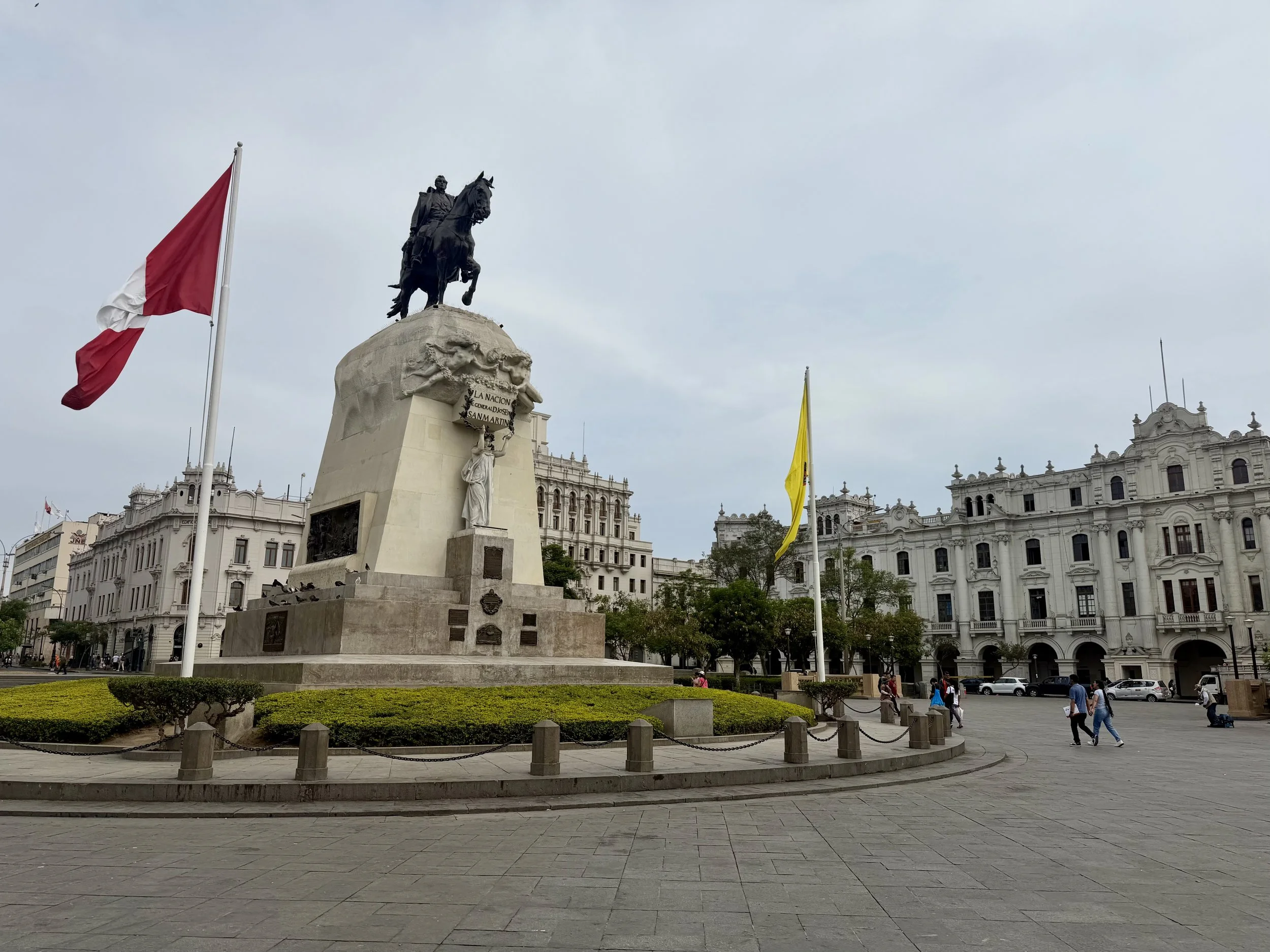
Our tour started with a minivan ride from our hotel in Milaflores to Plaza de San Martín, where we continued on foot. At the center of the square was a monument to its namesake, José de San Martín, the general who liberated Peru from Spain and declared its independence in Lima in 1821. At one side of the square was the Gran Hotel Bolivar, named after Simón Bolívar (“El Libertador”), who finalized Peru’s military victory in 1824. This hotel, built in 1924, was frequented by Hollywood stars during its heyday in the 1940s and 1950s, and reportedly invented the pisco sour.
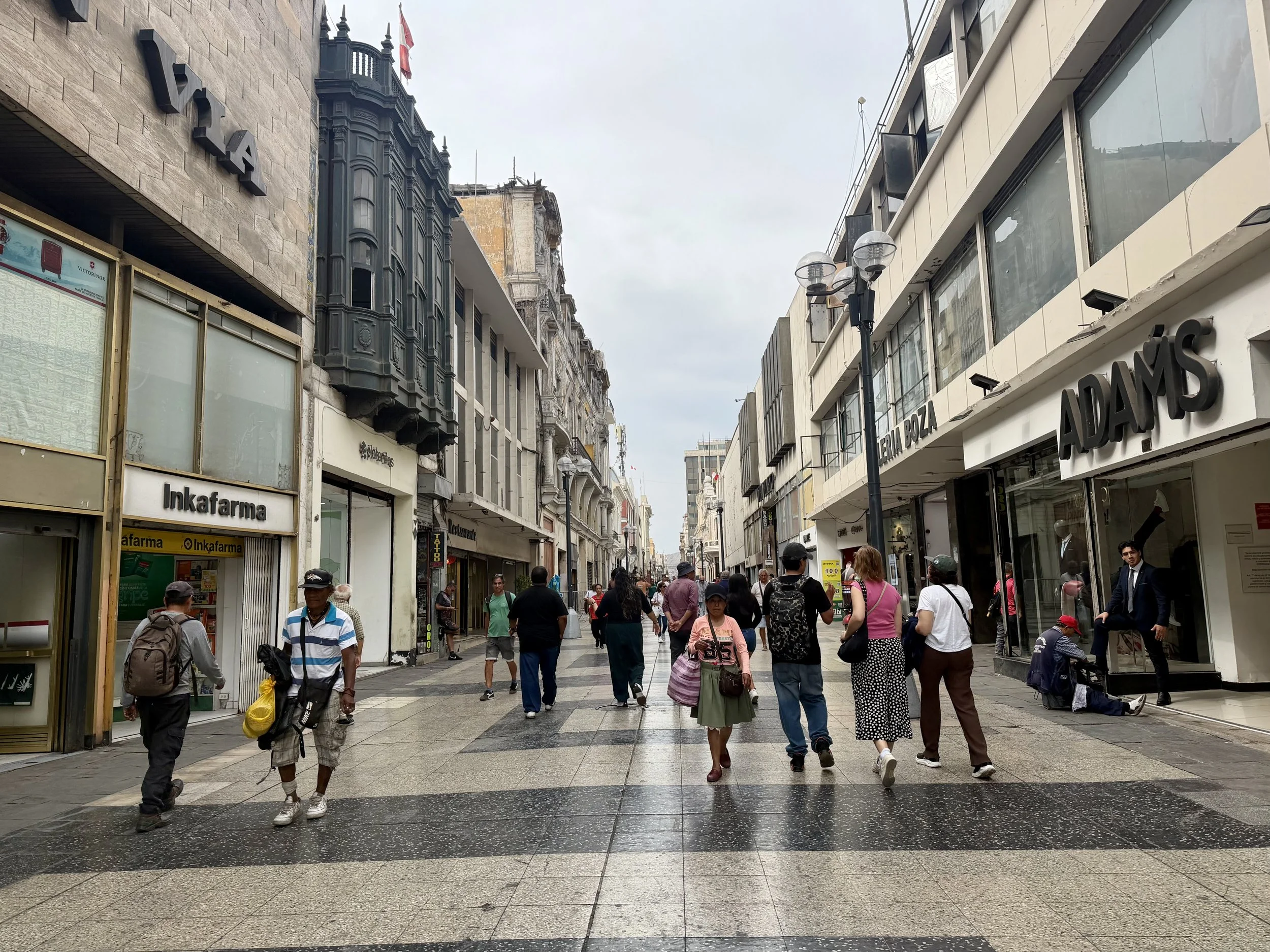
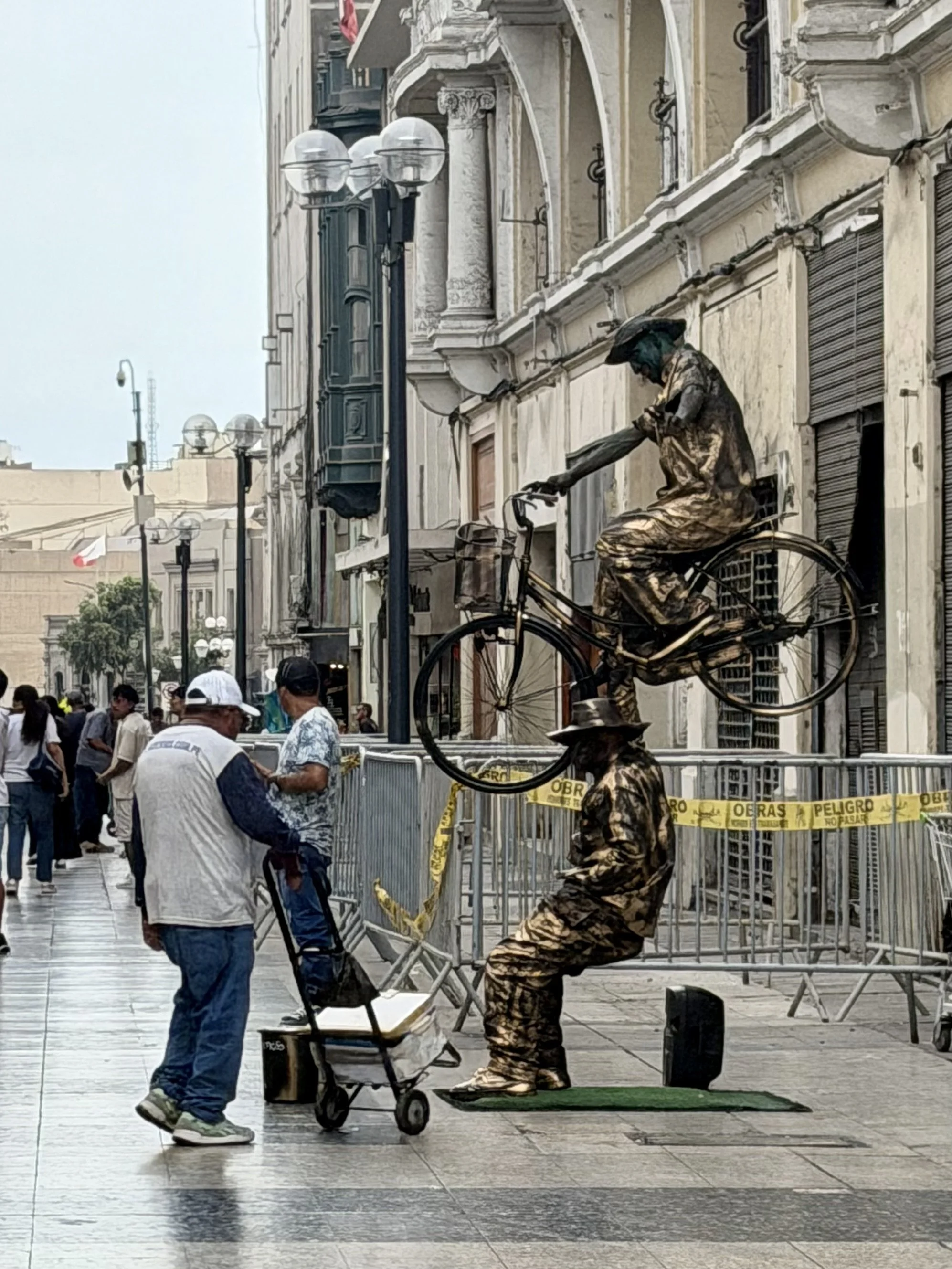
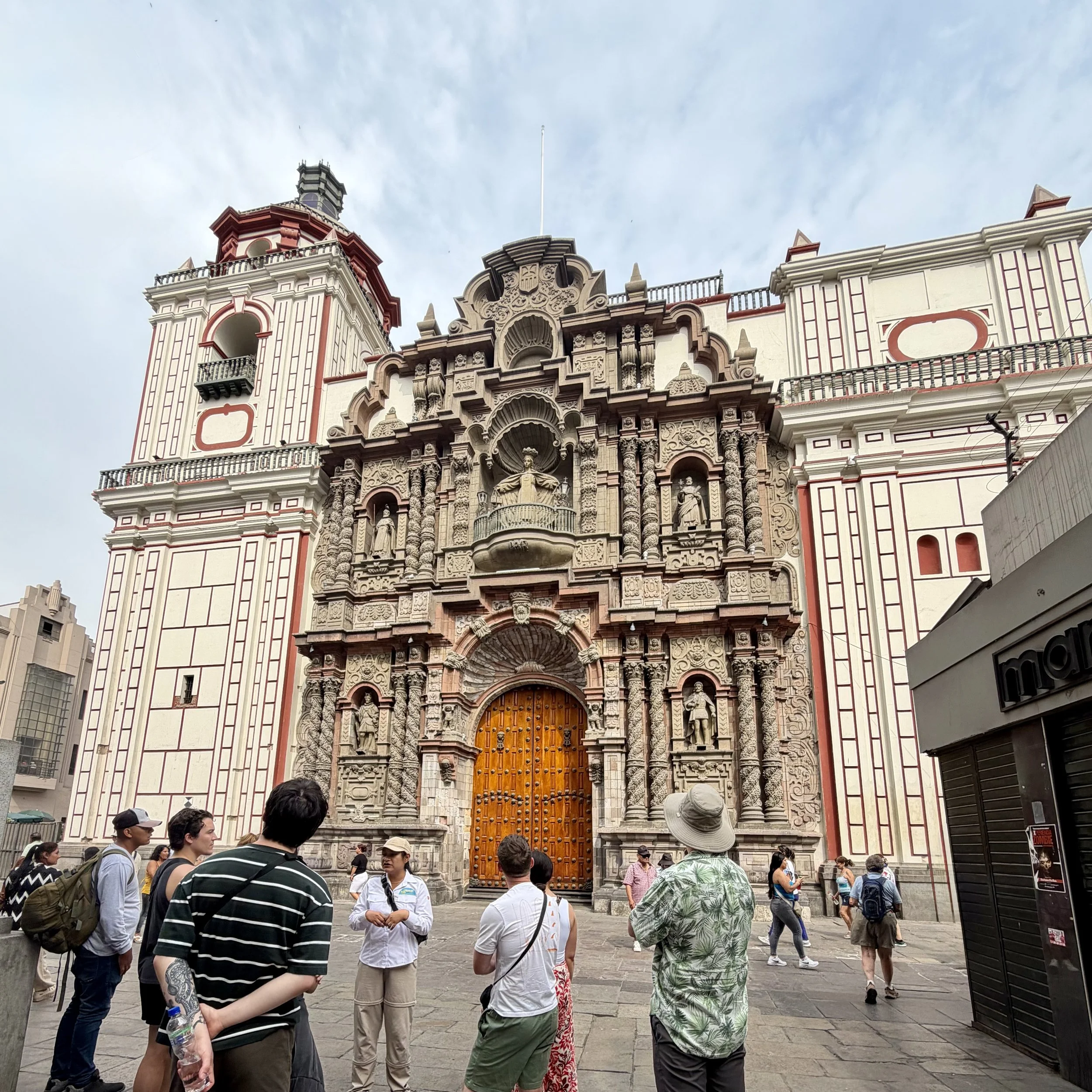
From Plaza San Martín, we strolled along Jirón de la Unión, the pedestrian avenue connecting it to Plaza Mayor. The street was lined with historic buildings with ornate balconies. There was an assortment of discount stores and fast food chains, labeled with simple black signage in compliance with UNESCO requirements. The Basilica and Convent of La Mercéd, with a Baroque façade flanked by square towers, was impressive, despite its rather modest proportions.
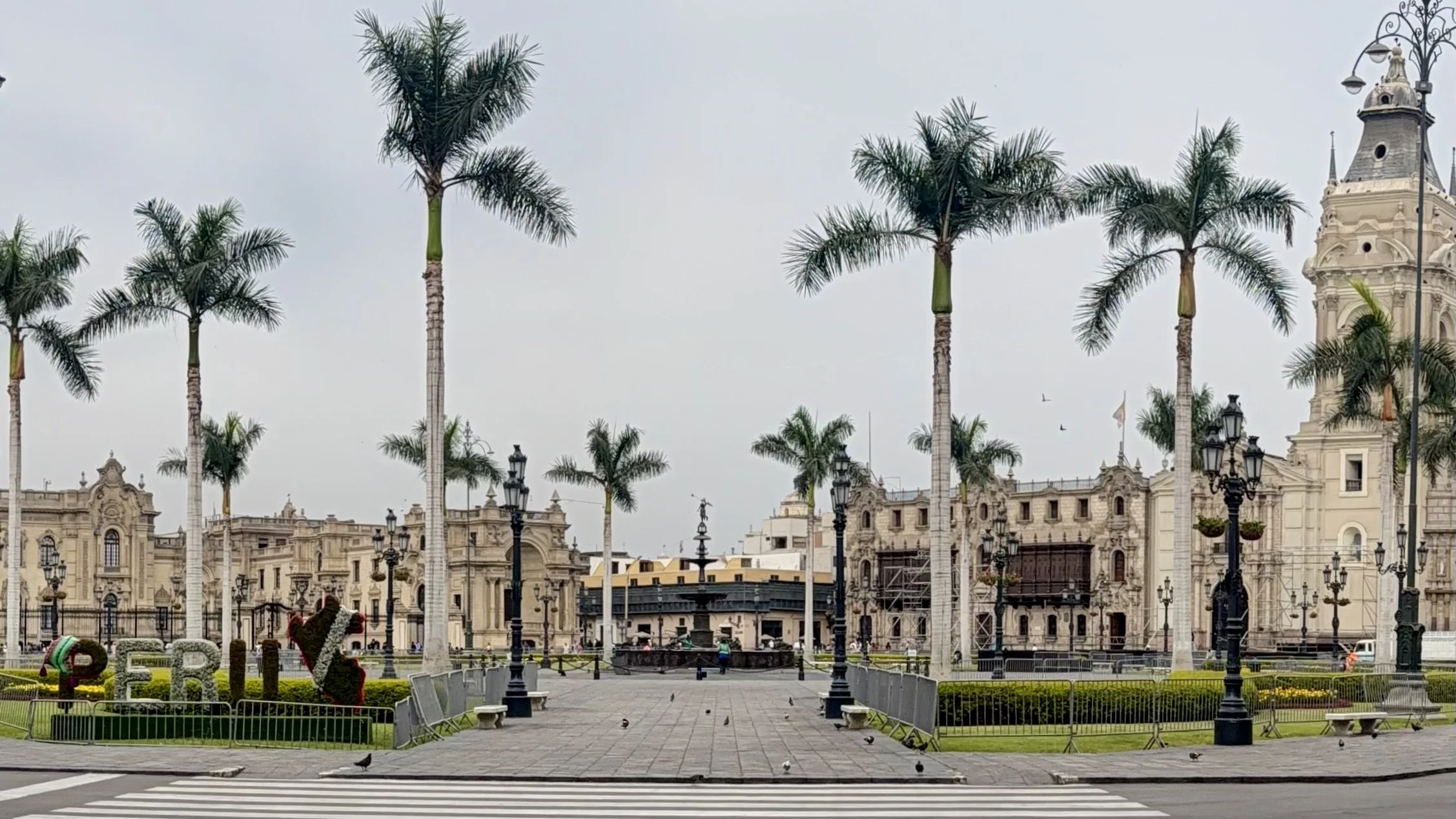
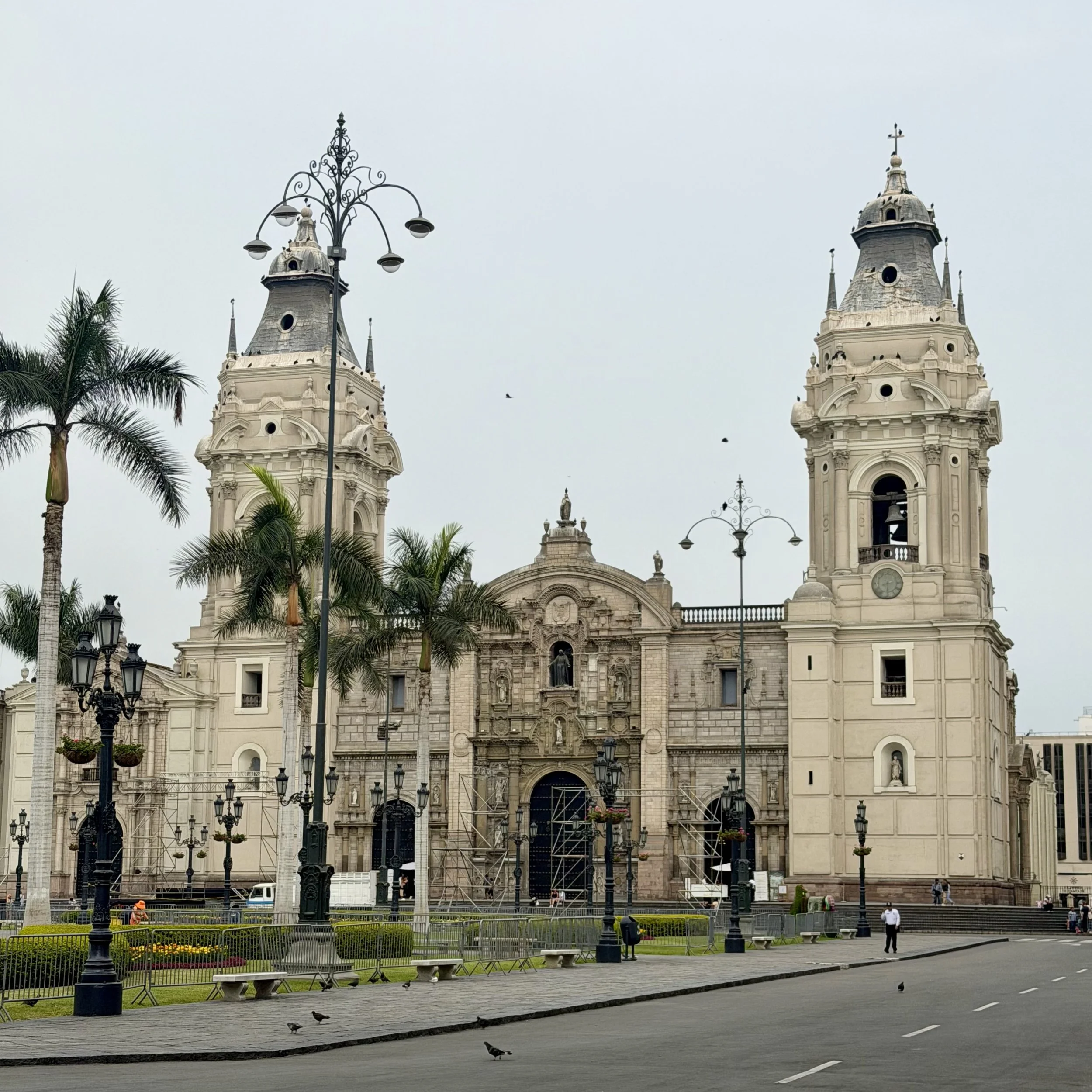
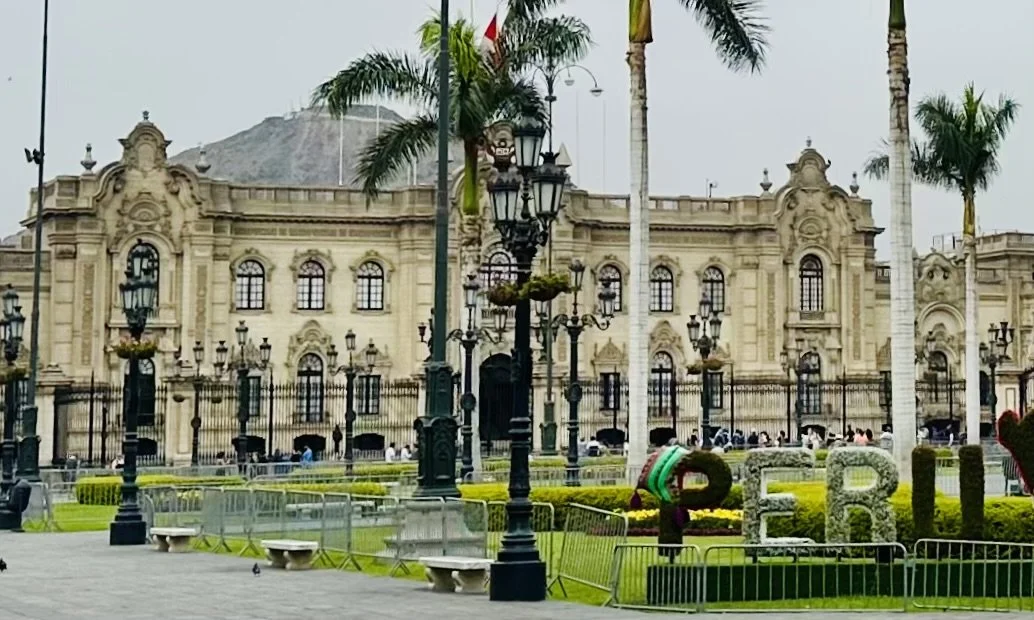
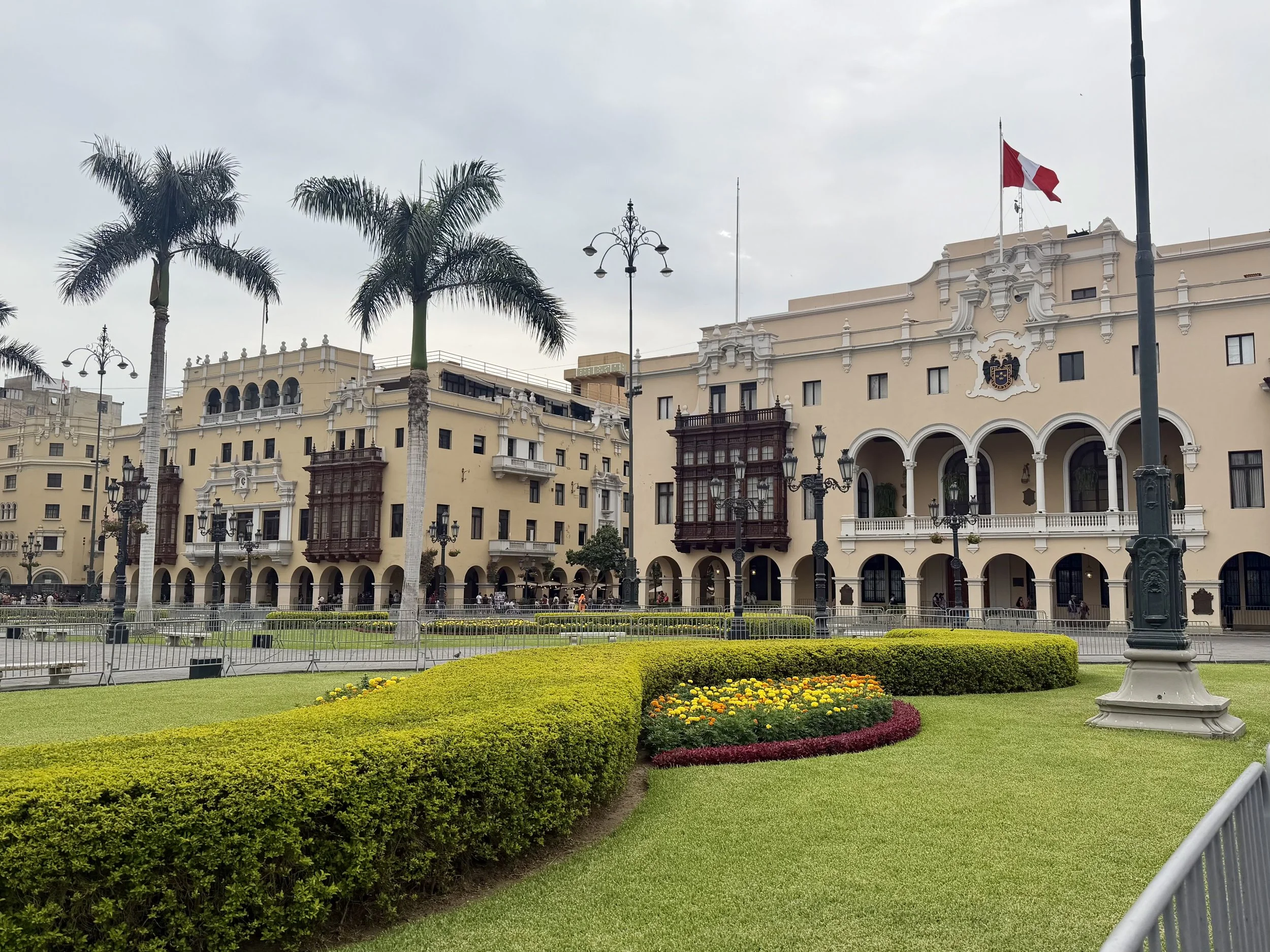
Plaza Mayor was blocked off; Silvana explained there had been demonstrations earlier that day. We walked around the outer edge, admiring the landmark buildings on all sides: the Metropolitan Cathedral, the Government Palace, the Archbishop’s Palace, the Municipal Palace, and the Palacio de la Unión. Behind the Government Palace, we could see San Cristoba hill rising 1,300 feet over Lima.
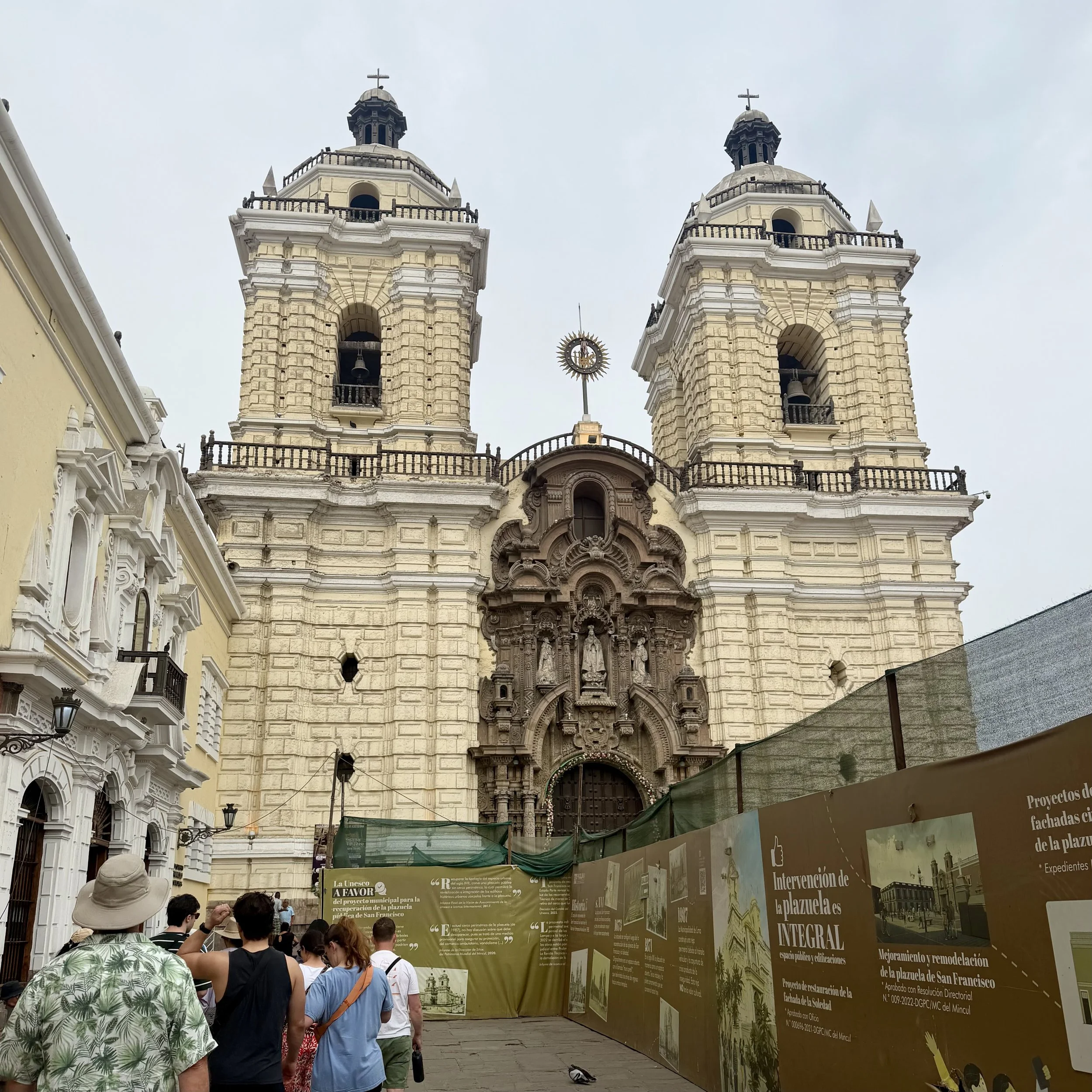
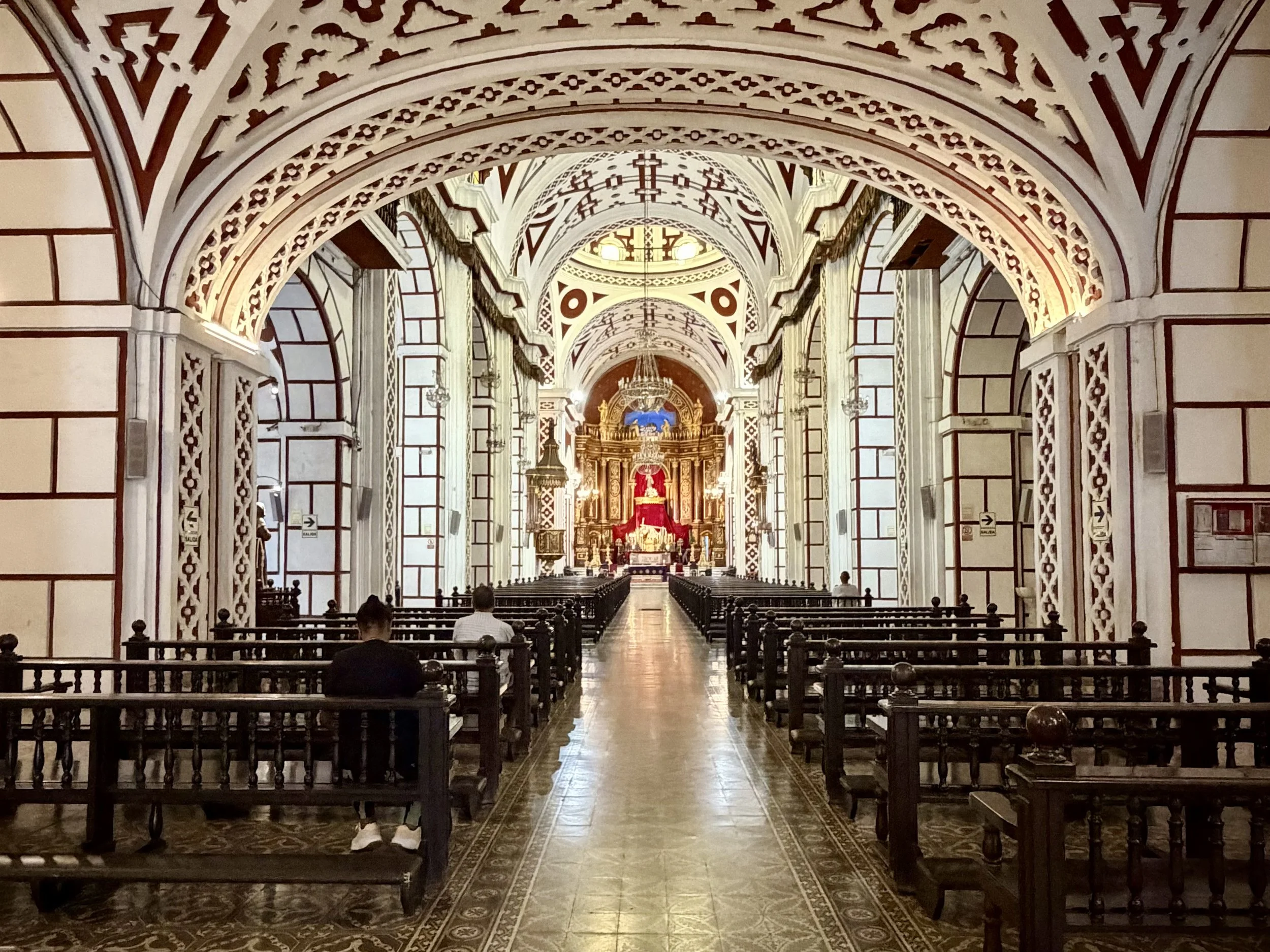
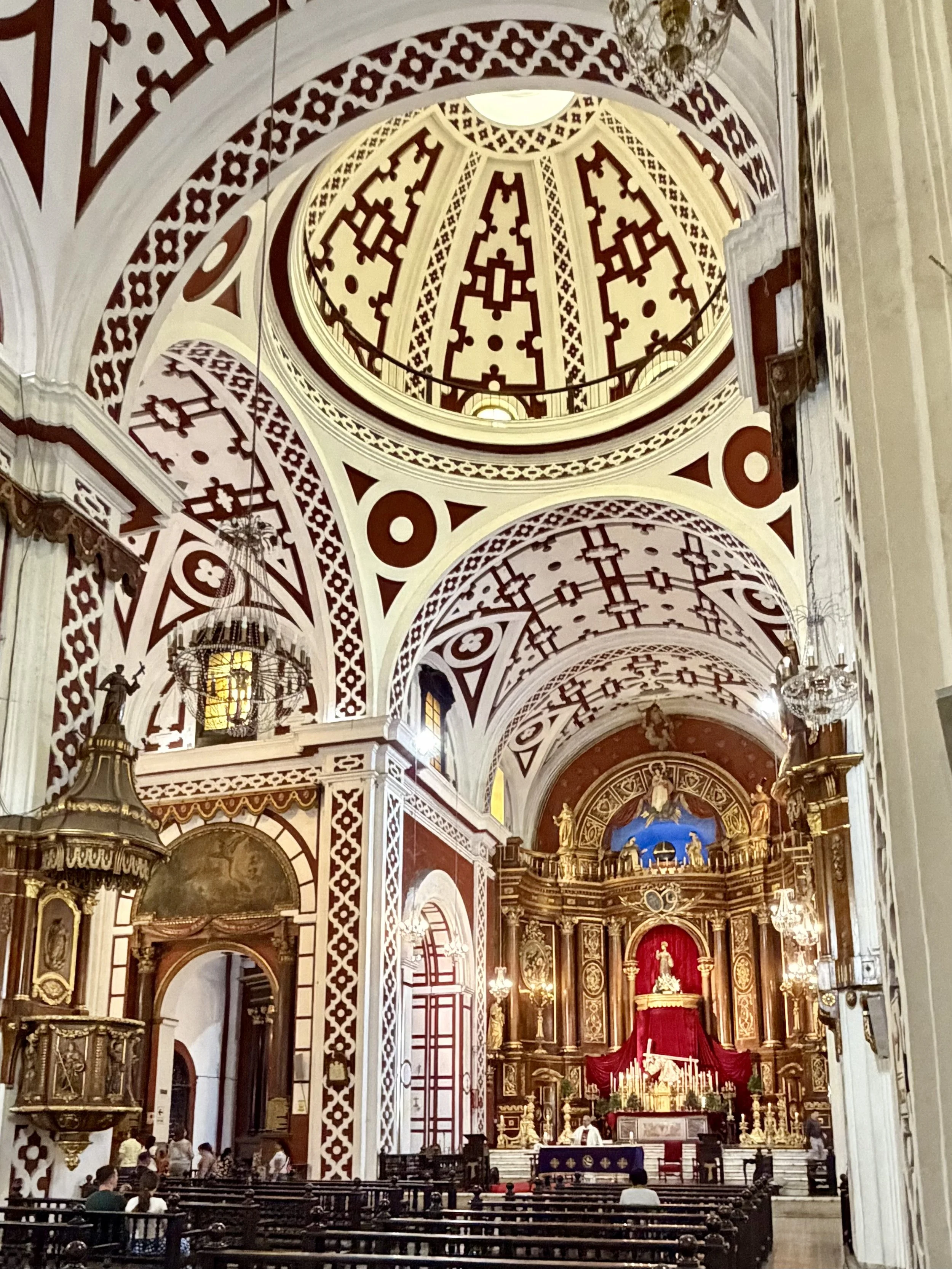
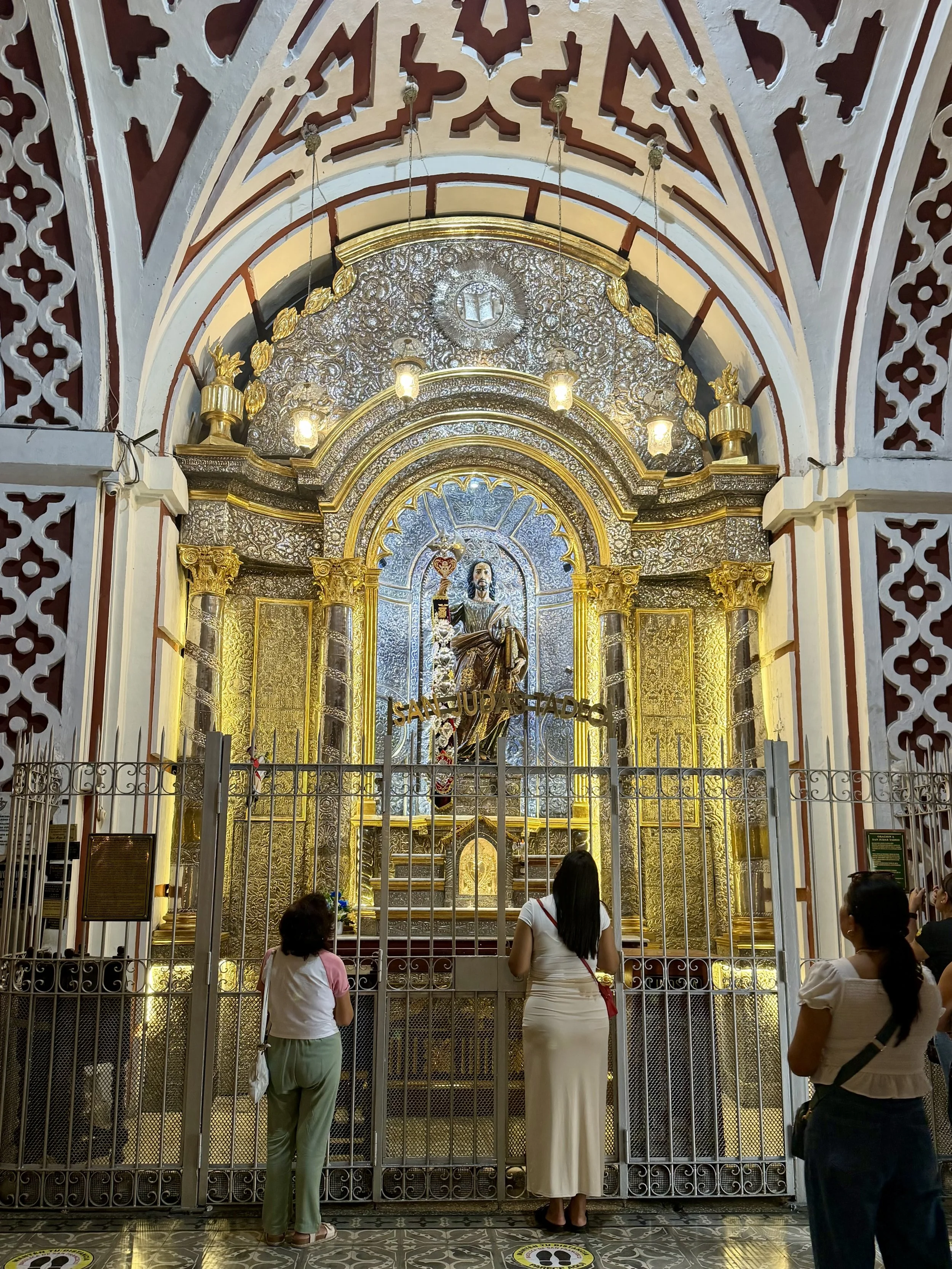
Our next stop was the Basilica and Convent of San Francisco. The church’s neoclassic interior was both beautiful and bright, with light from multiple domes reflecting off the white arches and columns. Grates in the tile floor offered glimpses into the catacombs beneath the church.
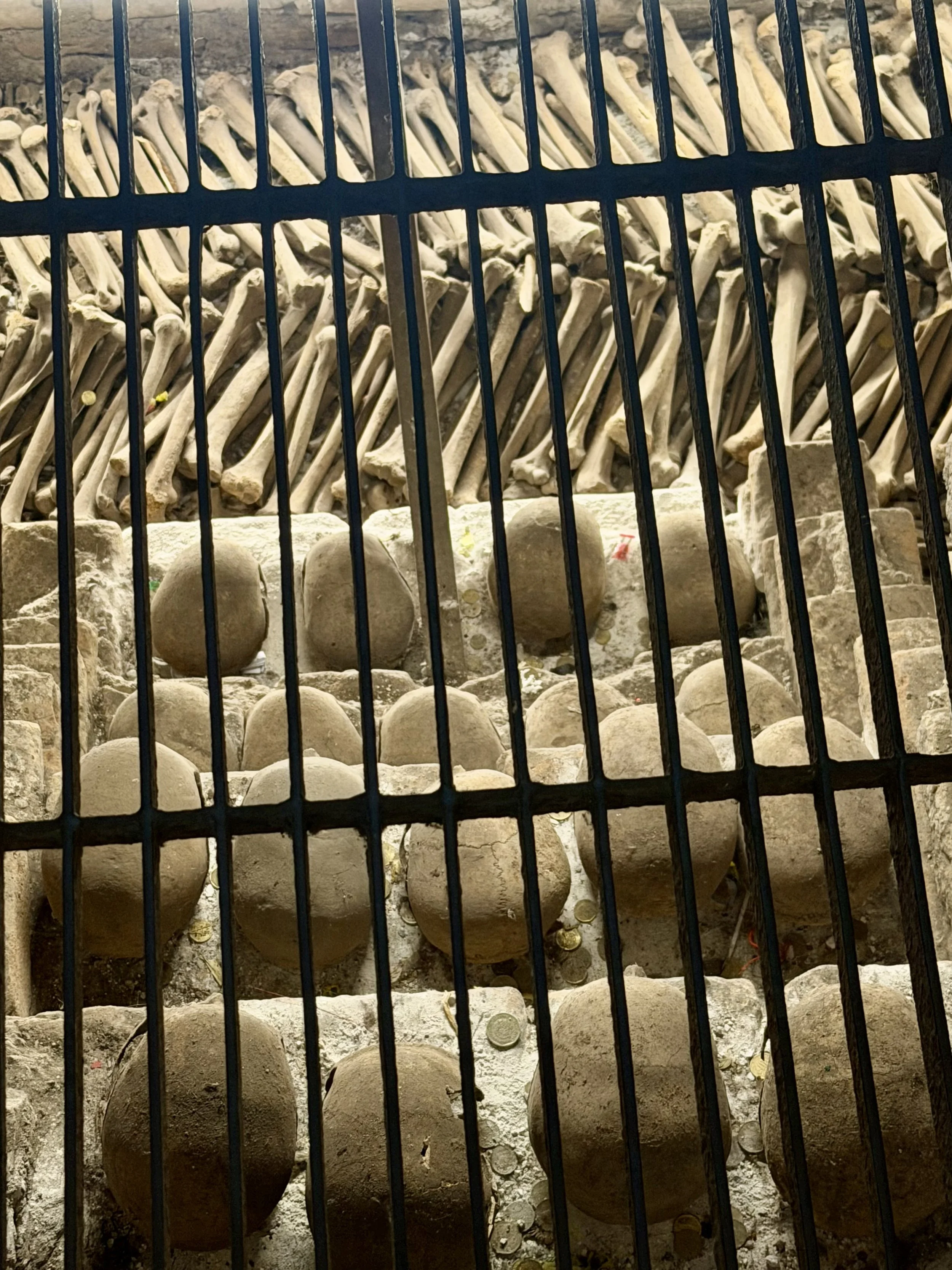
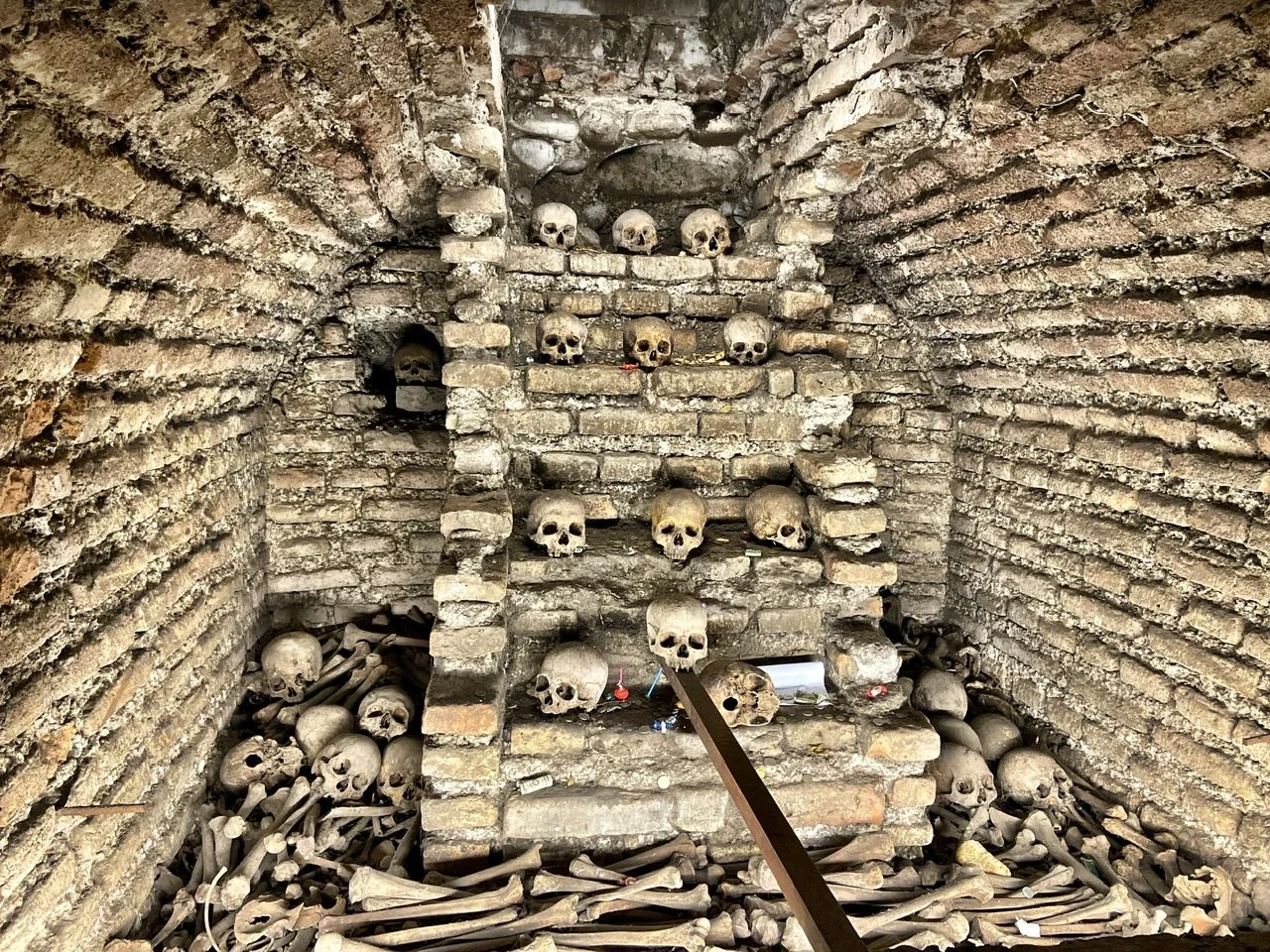
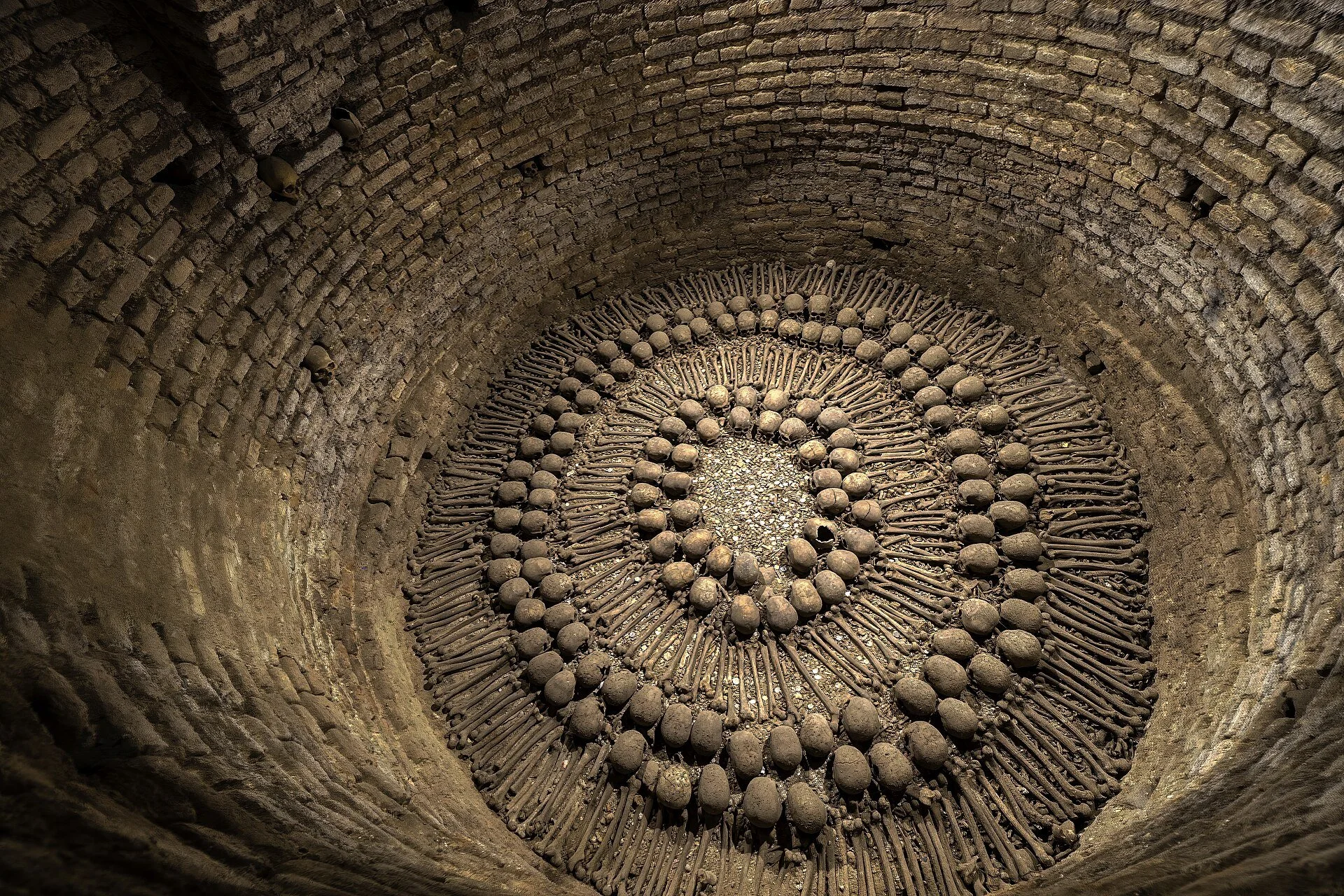
The catacombs were used as the city cemetery for most of Lima’s viceregal period. The rooms and passages were well-lit, so it was less creepy than I expected, as long as I didn’t think too hard about all the BONES. They were mostly skulls and femurs, as the smaller bones had already disintegrated.
As we walked through the catacombs, we could hear music and singing from the church above us. Silvana explained that families believed that burial beneath the church offered special closeness to God and heaven. Bodies were entombed in crypts for five years; then the remains were moved to an ossuary (mass burial pit). A new public cemetery was established outside the city in 1810, and the catacombs were closed. It is estimated that around 25,000 people had been buried there, although some sources say it was as many as 70,000. Either way, there were a LOT of bones, and someone brave and not too squeamish had taken the time to artfully arrange them. (We were not permitted to take photos in the catacombs, so these images are borrowed.)
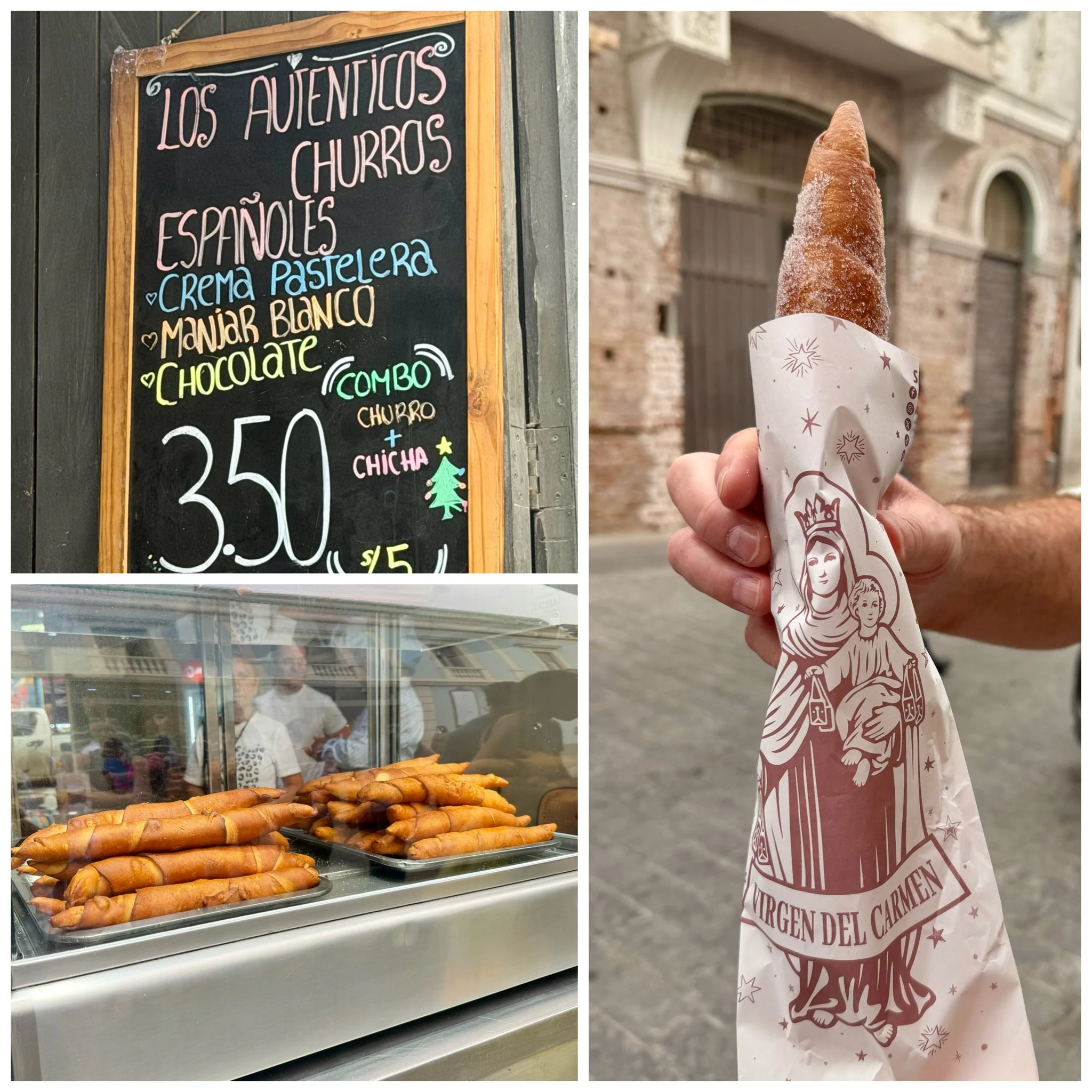
The last stop on our tour was a little shop selling traditional Peruvian churros. These were not crinkly extruded churros, like the ones in Spain or Mexico. They were larger and chewier, made from dough rolled around a filling of caramel, chocolate, or vanilla cream. They were absolutely delicious!