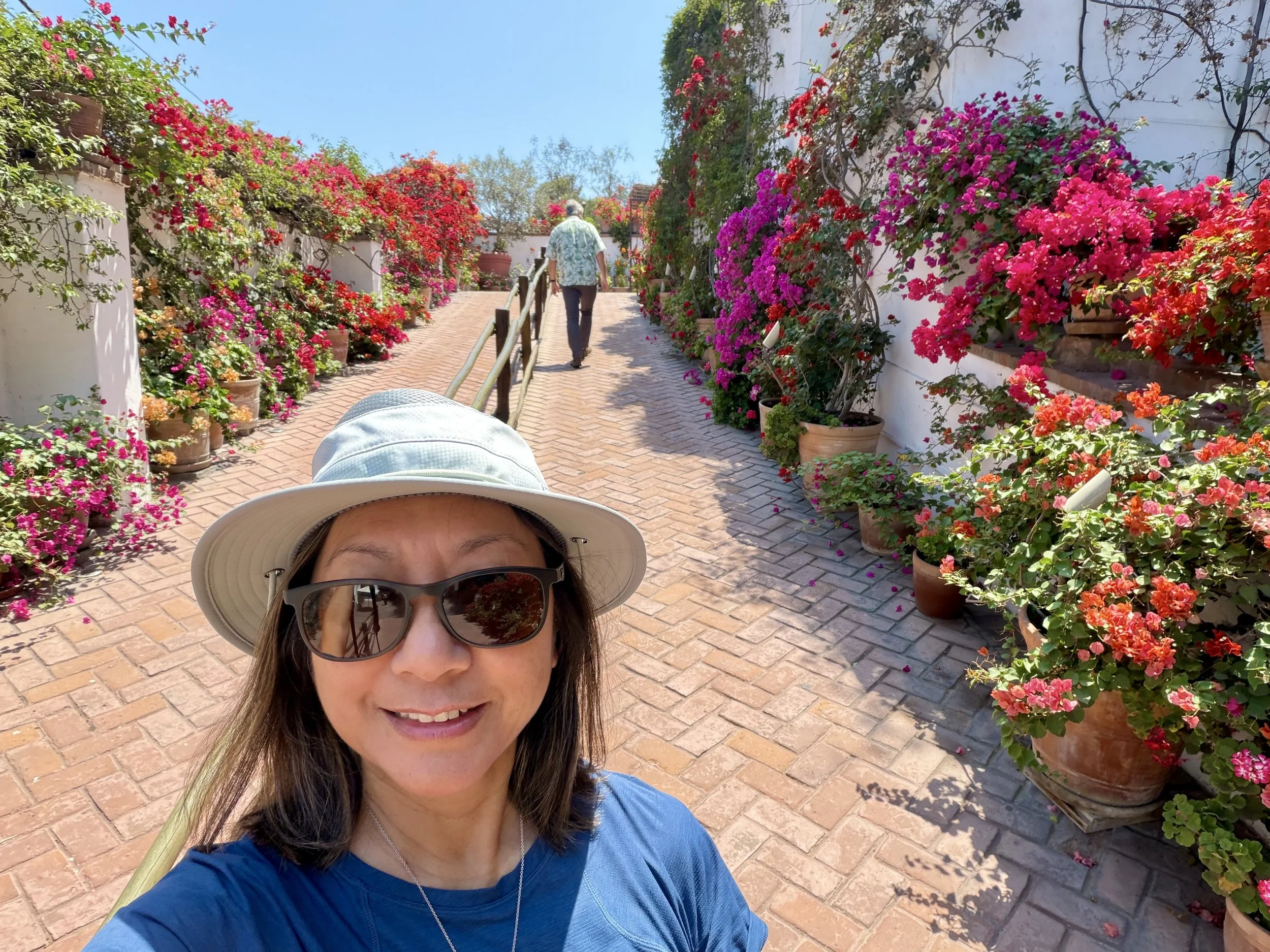
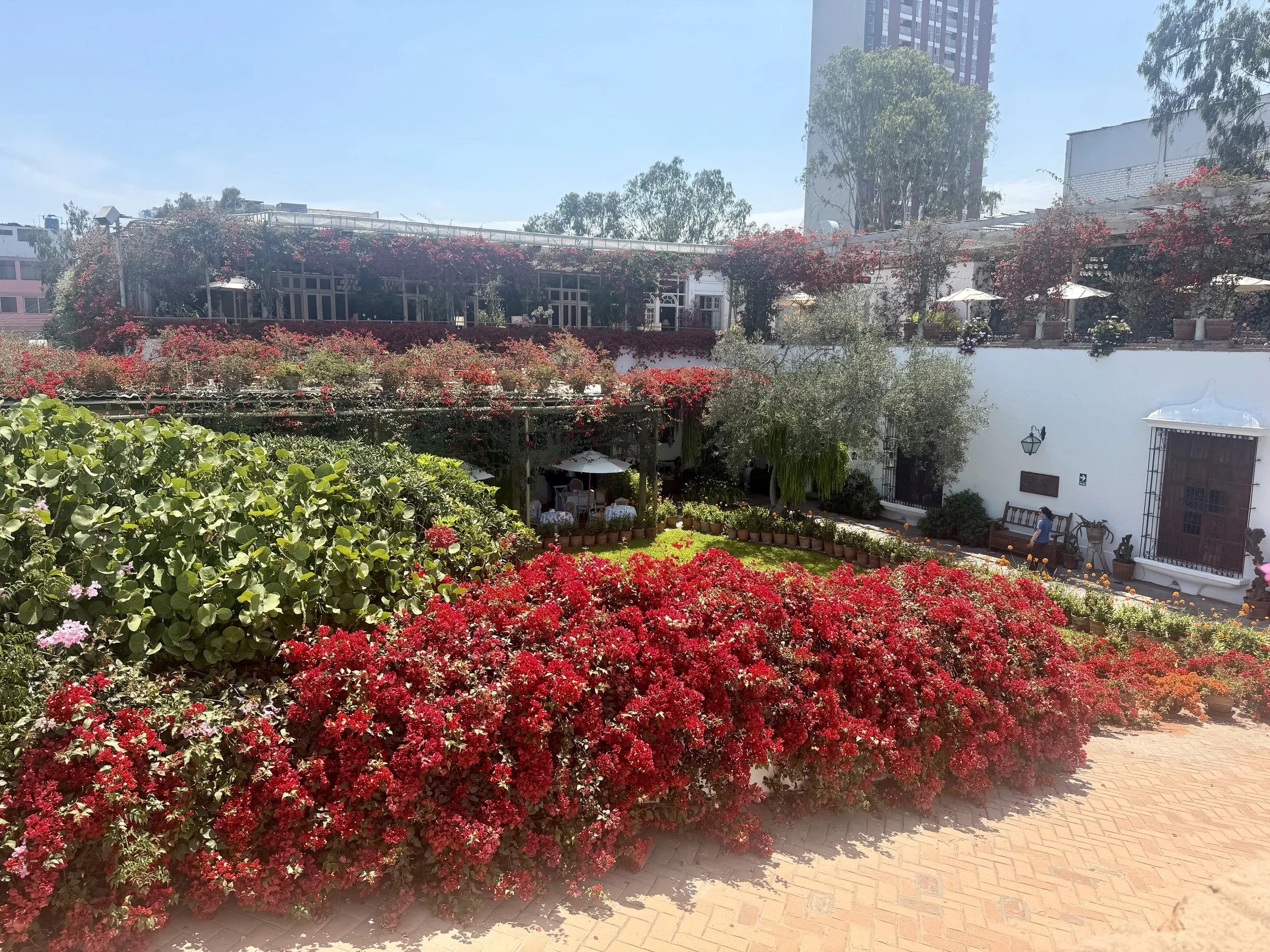
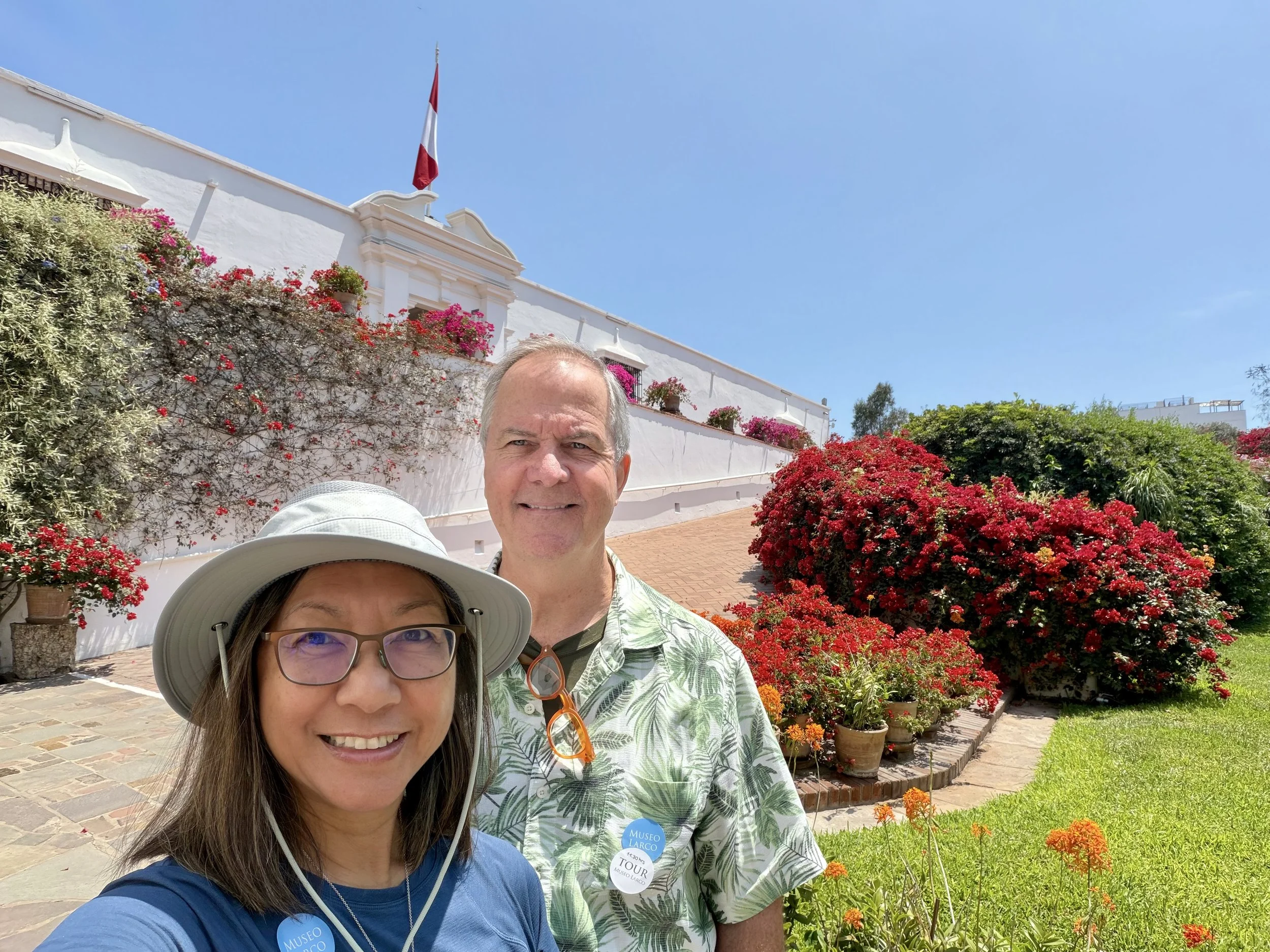
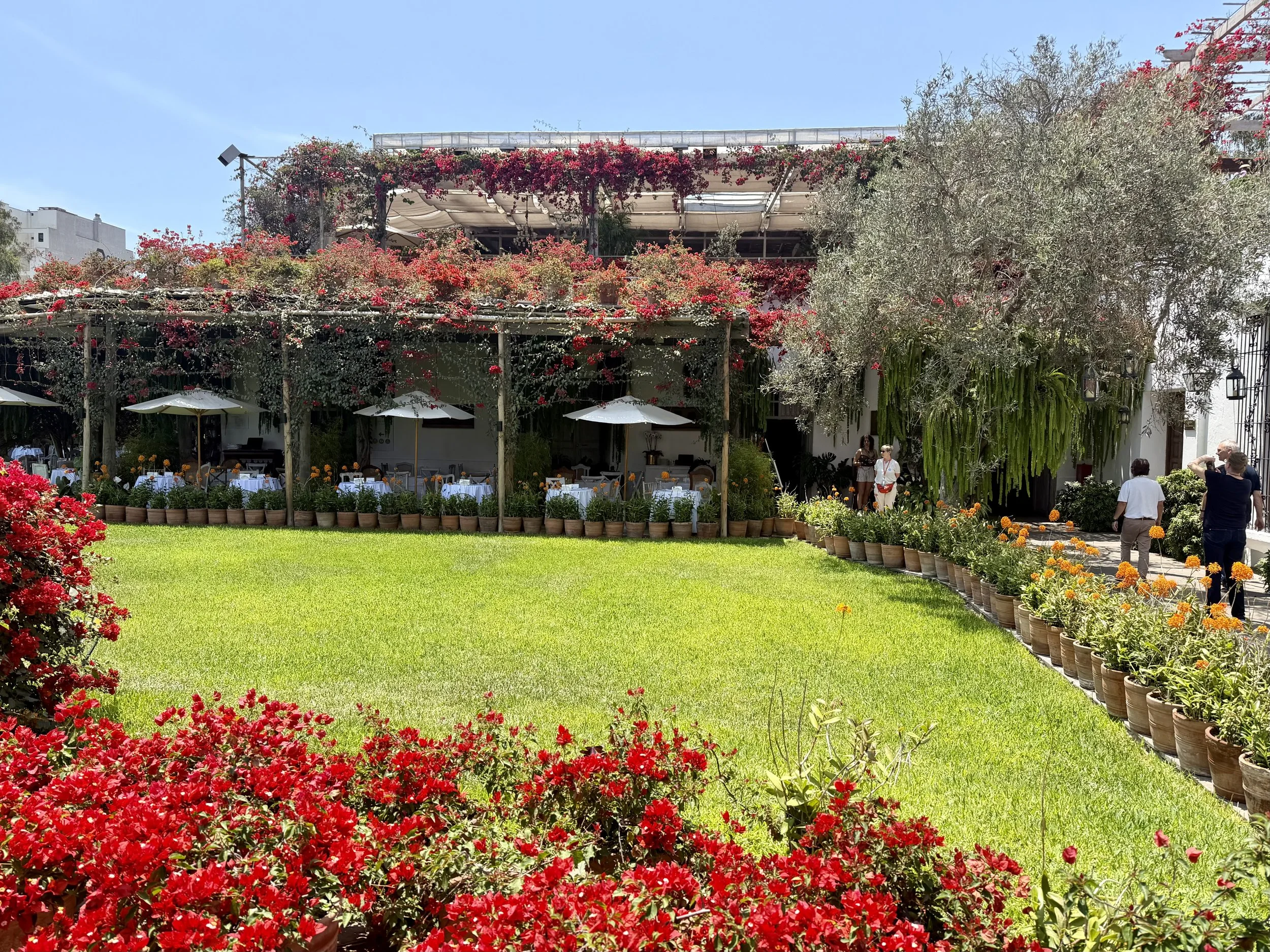
On our second day in Lima, we took an Uber to Museo Larco in Pueblo Libre, a pretty residential neighborhood about 45 minutes’ ride from our hotel (thanks to Lima traffic). The museum didn’t look like much from the street, but we entered the gates and were delighted to find a white viceregal mansion decked with a profusion of colorful bougainvillea! There was also a lovely courtyard garden and a restaurant.
The museum was founded in 1926 by Rafael Larco Hoyle when he was just 25 years old. He went on to become a pioneer of Peruvian archaeology.
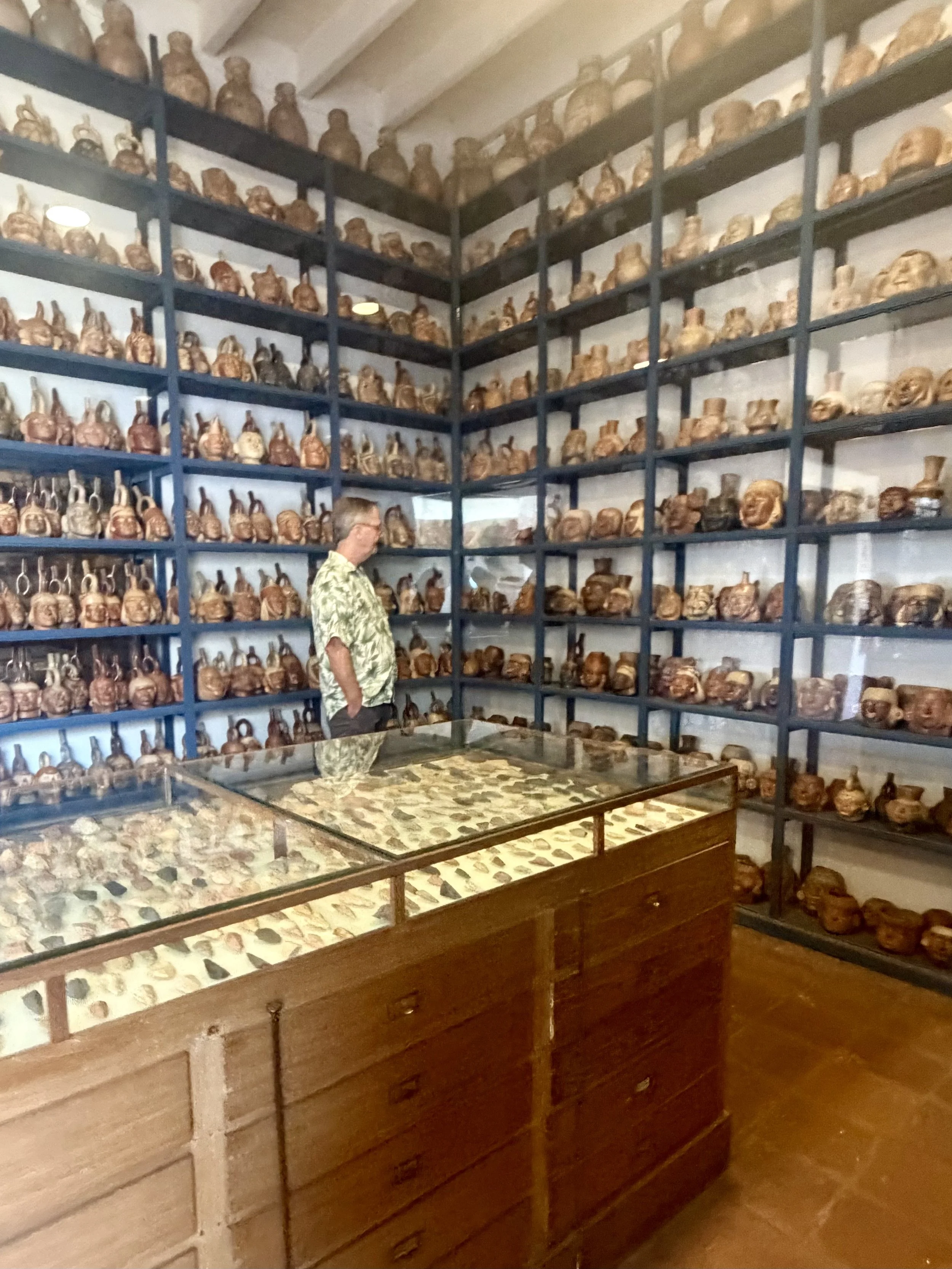
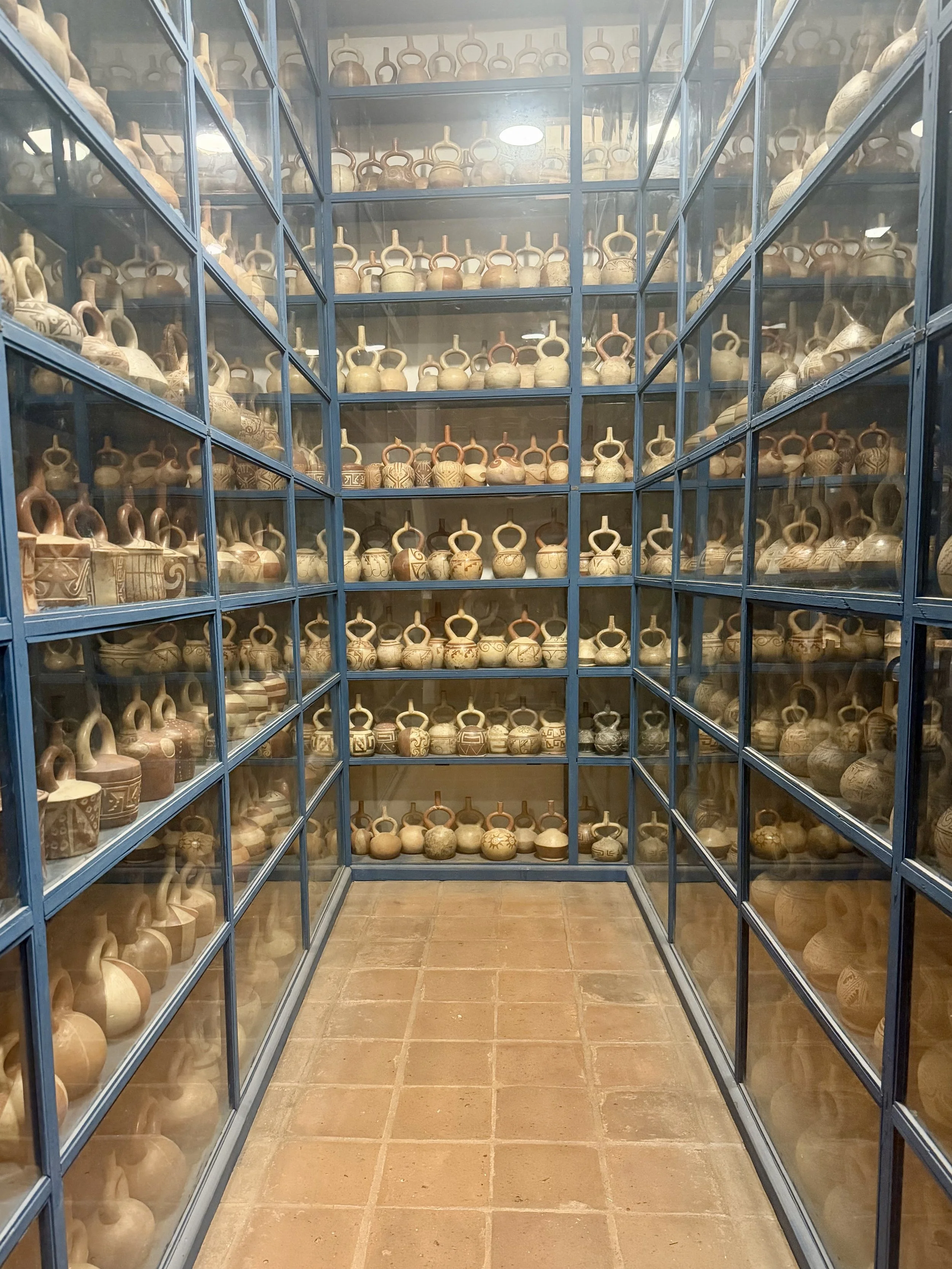
Guided tours in English were offered hourly. While we waited for the next tour, we wandered through “Visible Storage,” a seemingly endless maze of shelves holding 30,000 pre-Columbian pottery artifacts. Every inch of every wall was filled with items, from the floor to the 14-foot ceiling. It is rare to see museum storerooms open to the public. This one was fascinating, and I hope more museums will do this.
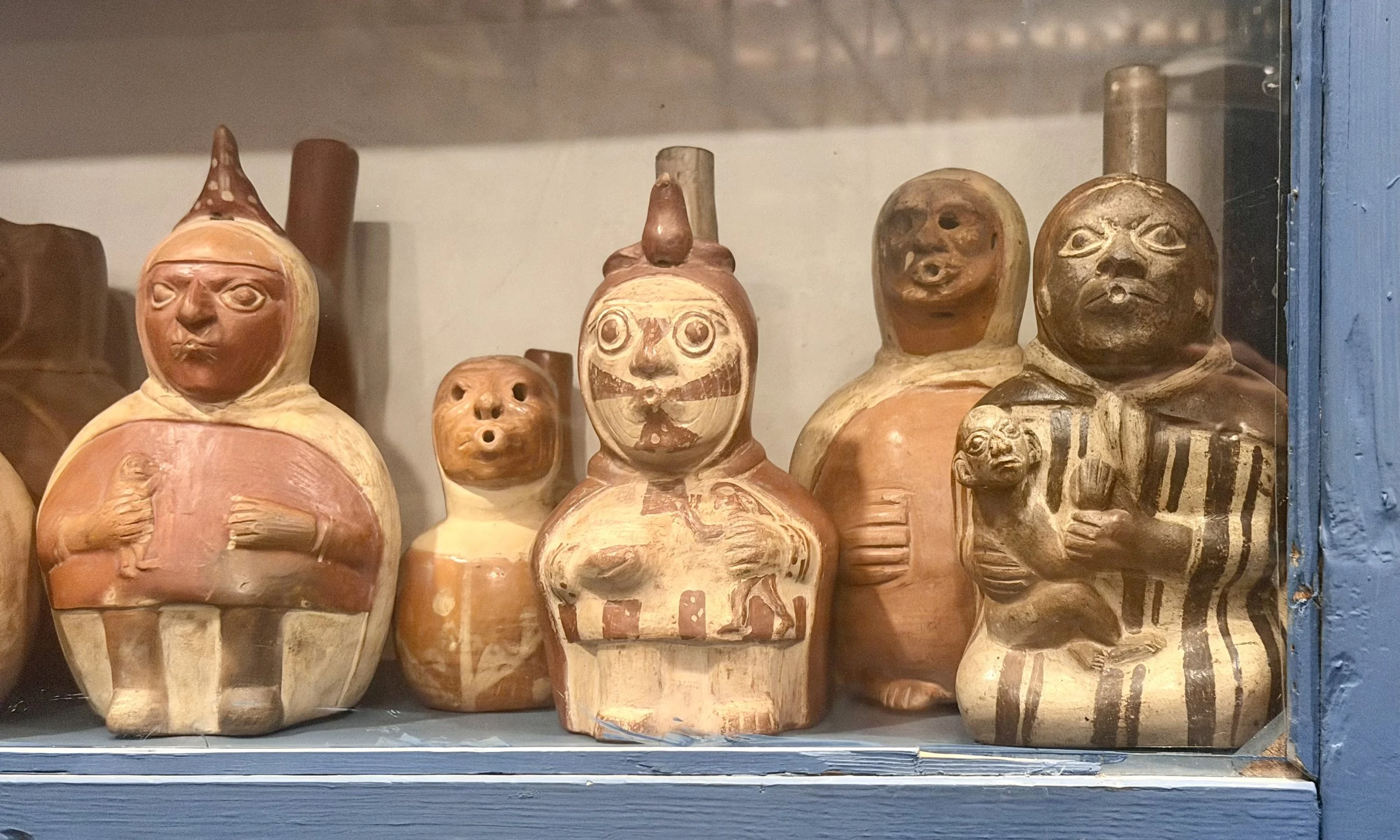
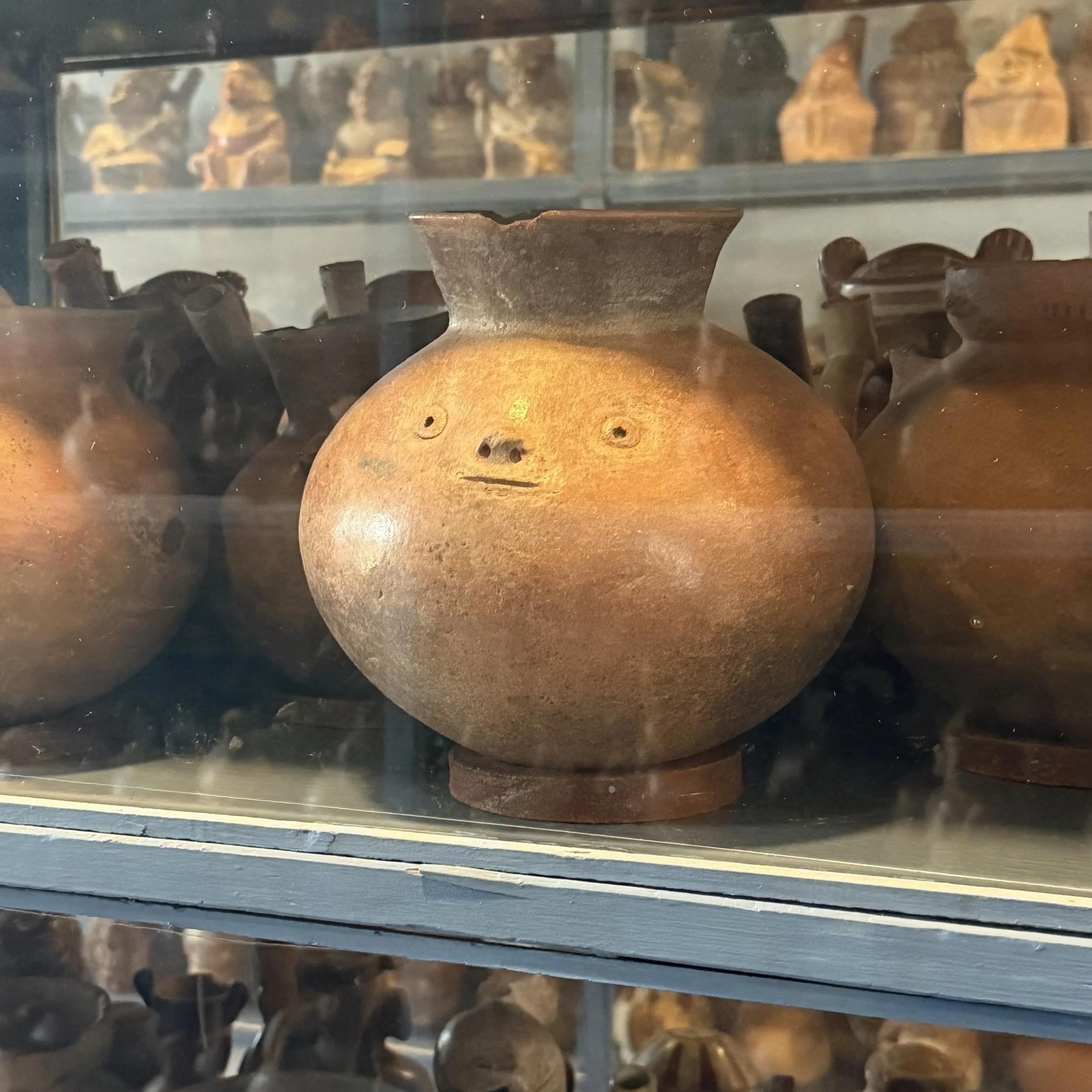
Our guide did a great job of showing us highlights from the museum’s vast collection of pre-Columbian artifacts.
We learned about the ancient indigenous cultures of Peru. They believed that the gods lived in the upper world, and performed rituals and sacrificial offerings to honor and please them. They paid homage to the dead in the underworld, and hoped their deceased leaders would be transformed into powerful ancestors.
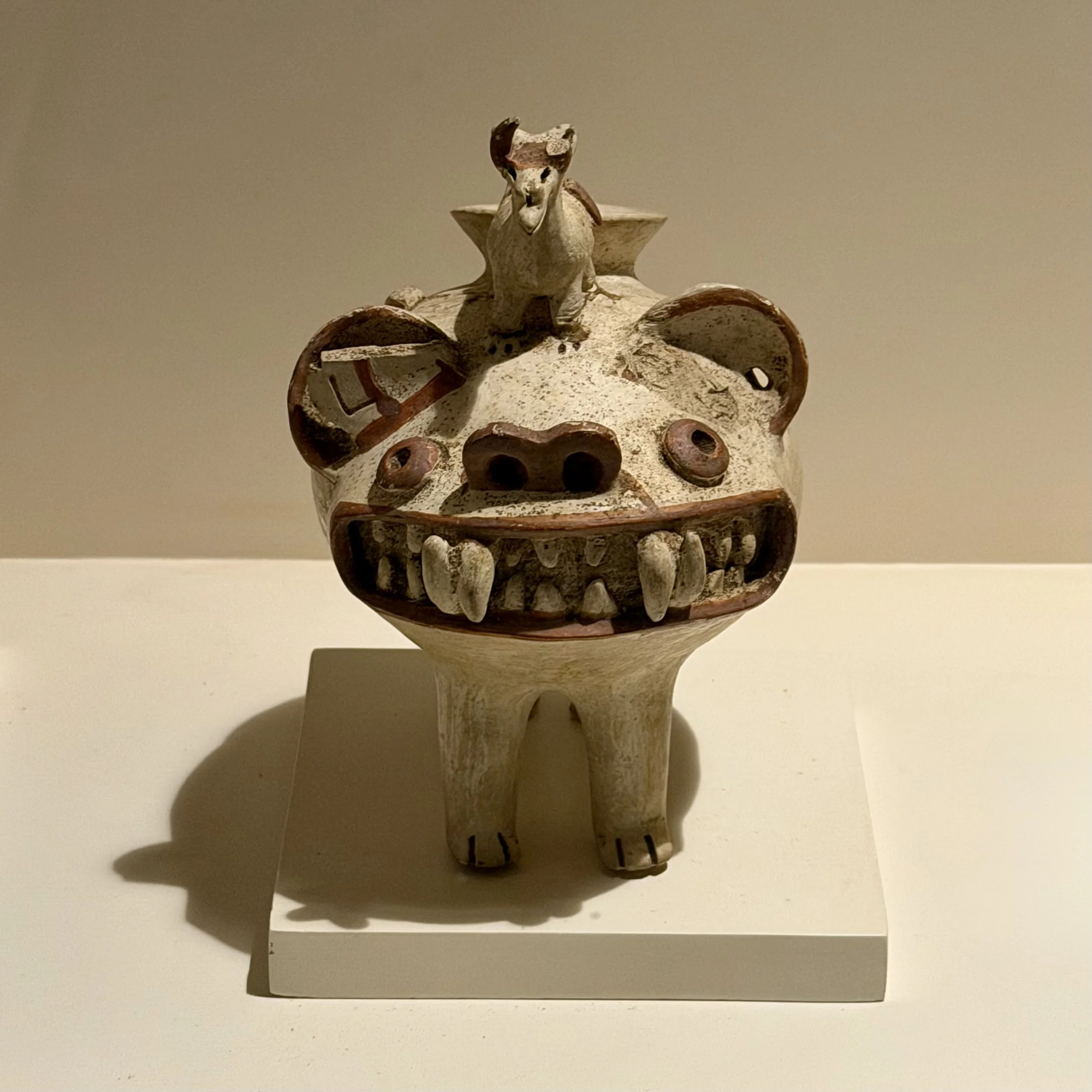
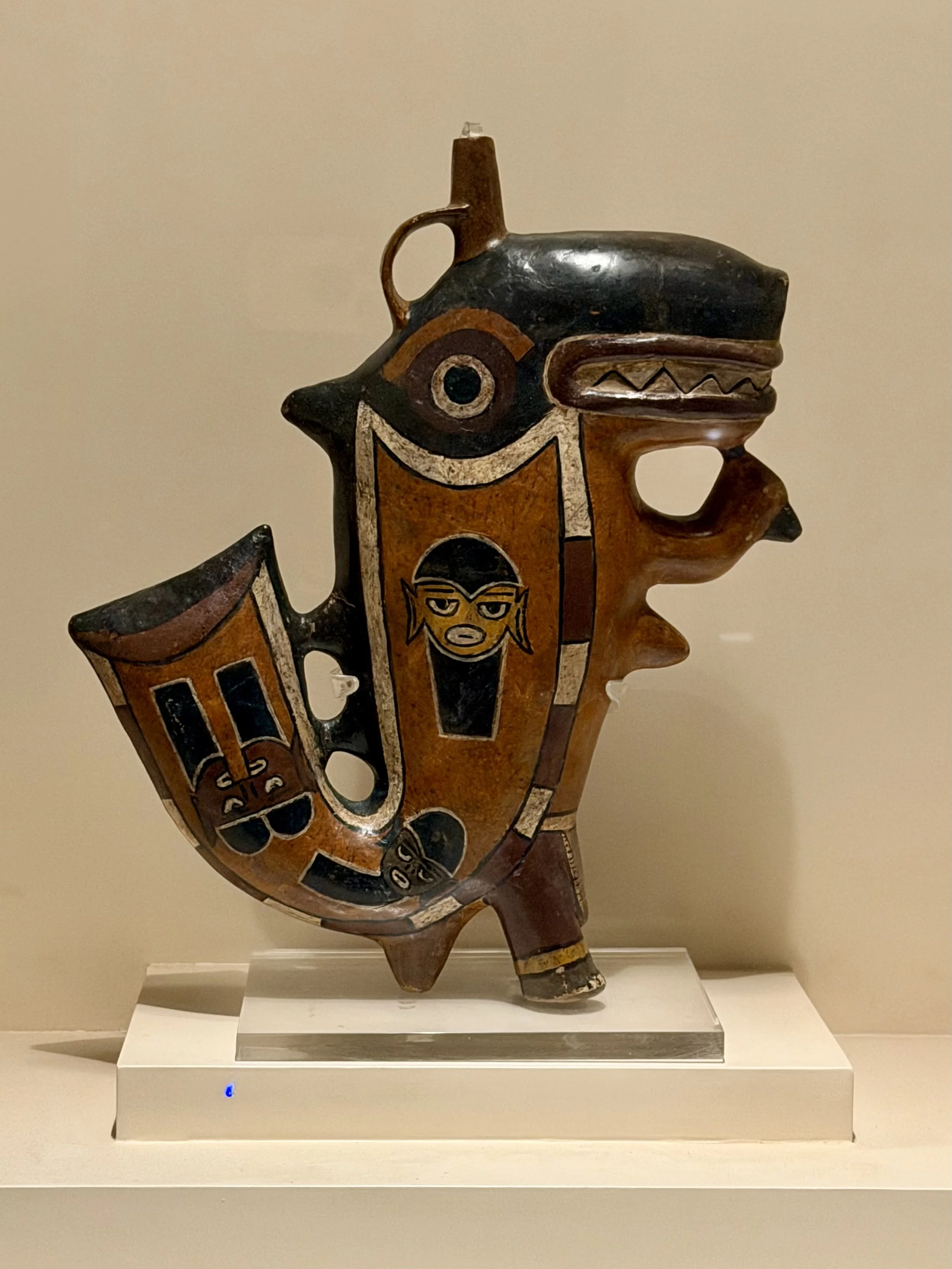
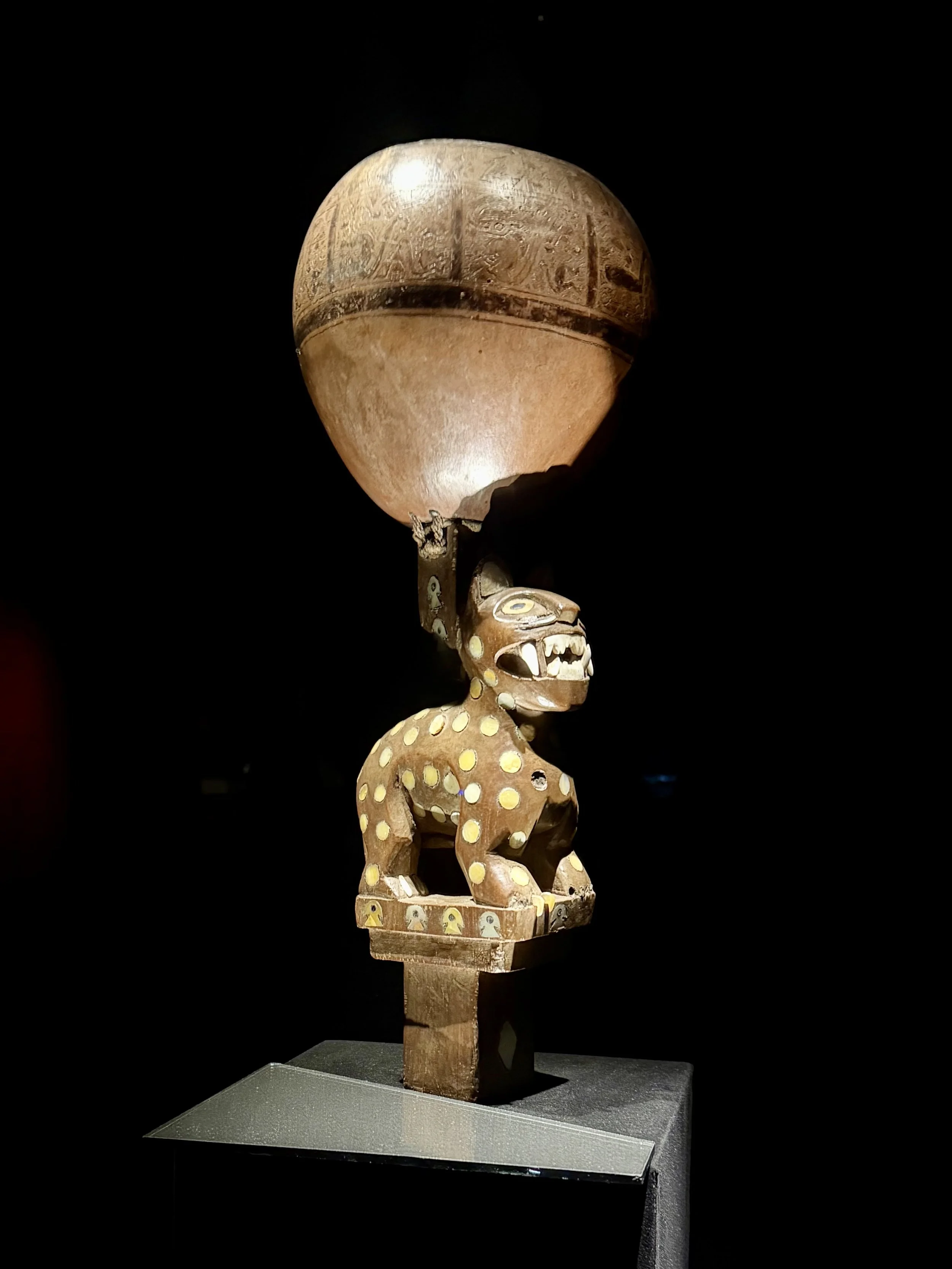
Many cultures believed that certain animals were sacred. Their art often featured hybrid, mythological creatures; for example, snake and jaguar, or bird and man.
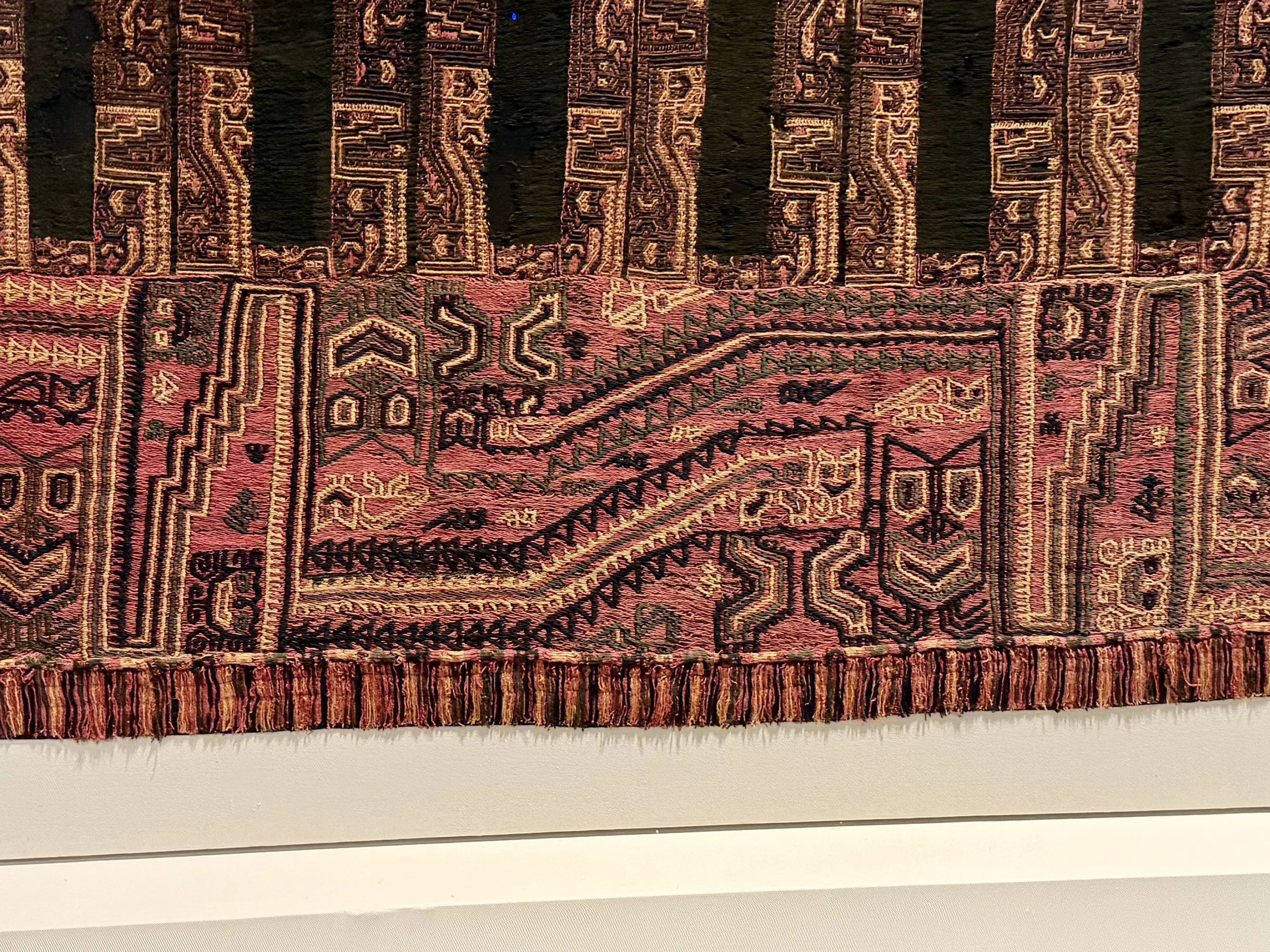
The Paracas people believed that the dead would be reborn. They placed the deceased in a fetal position and wrapped the body in layered womb of specially woven mantles. The textiles were colorful and expertly made; I was drawn to this intricate figure of mirrored cats within cats.
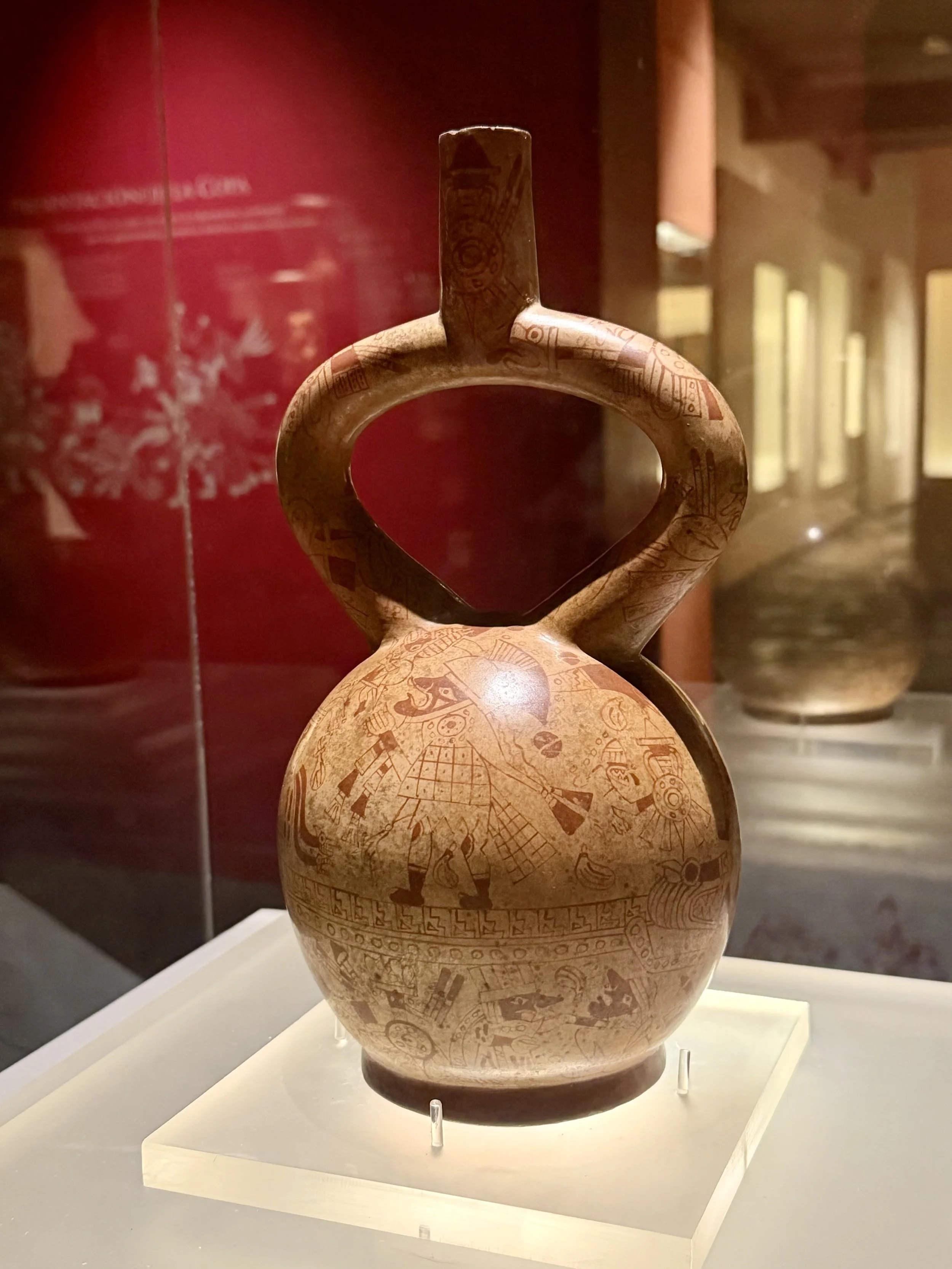
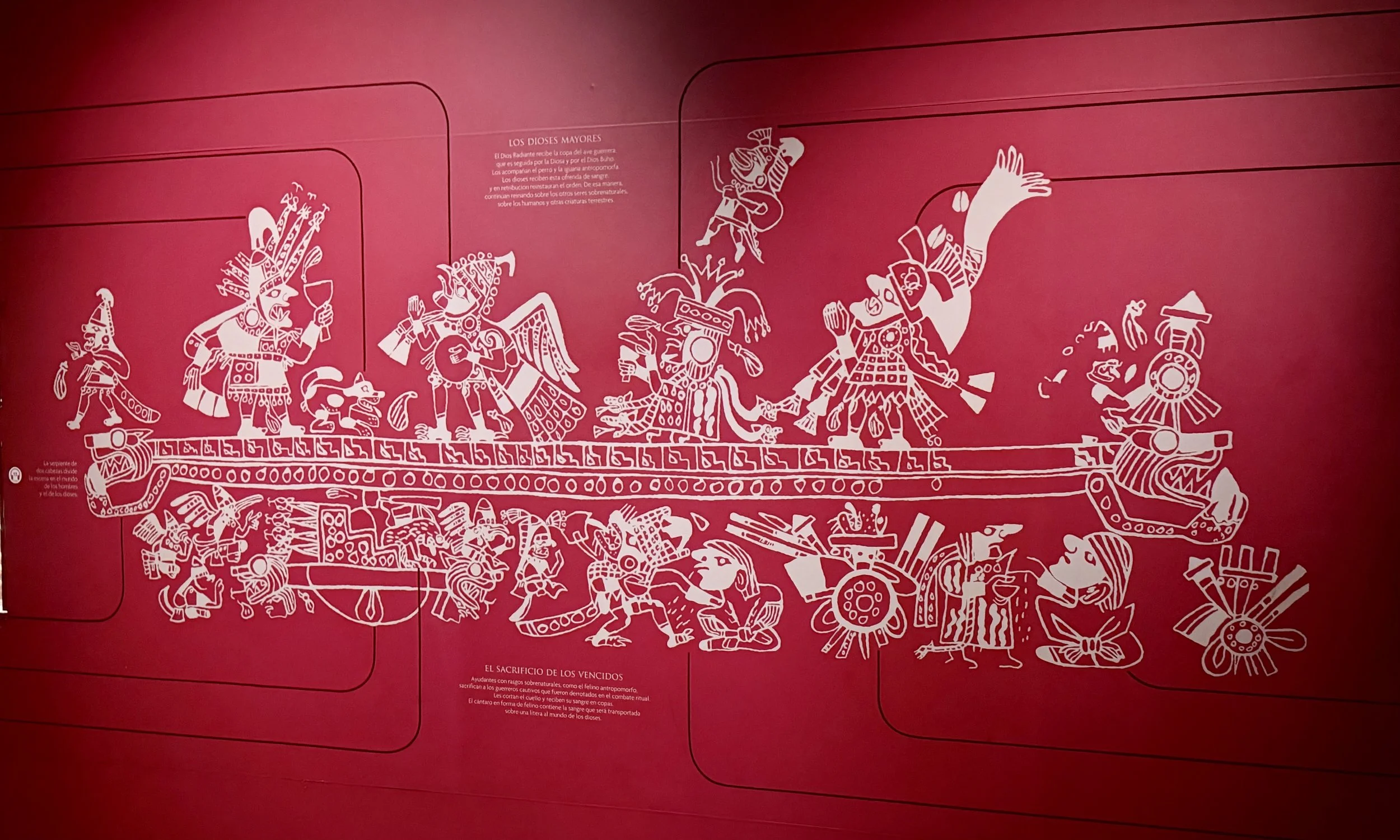
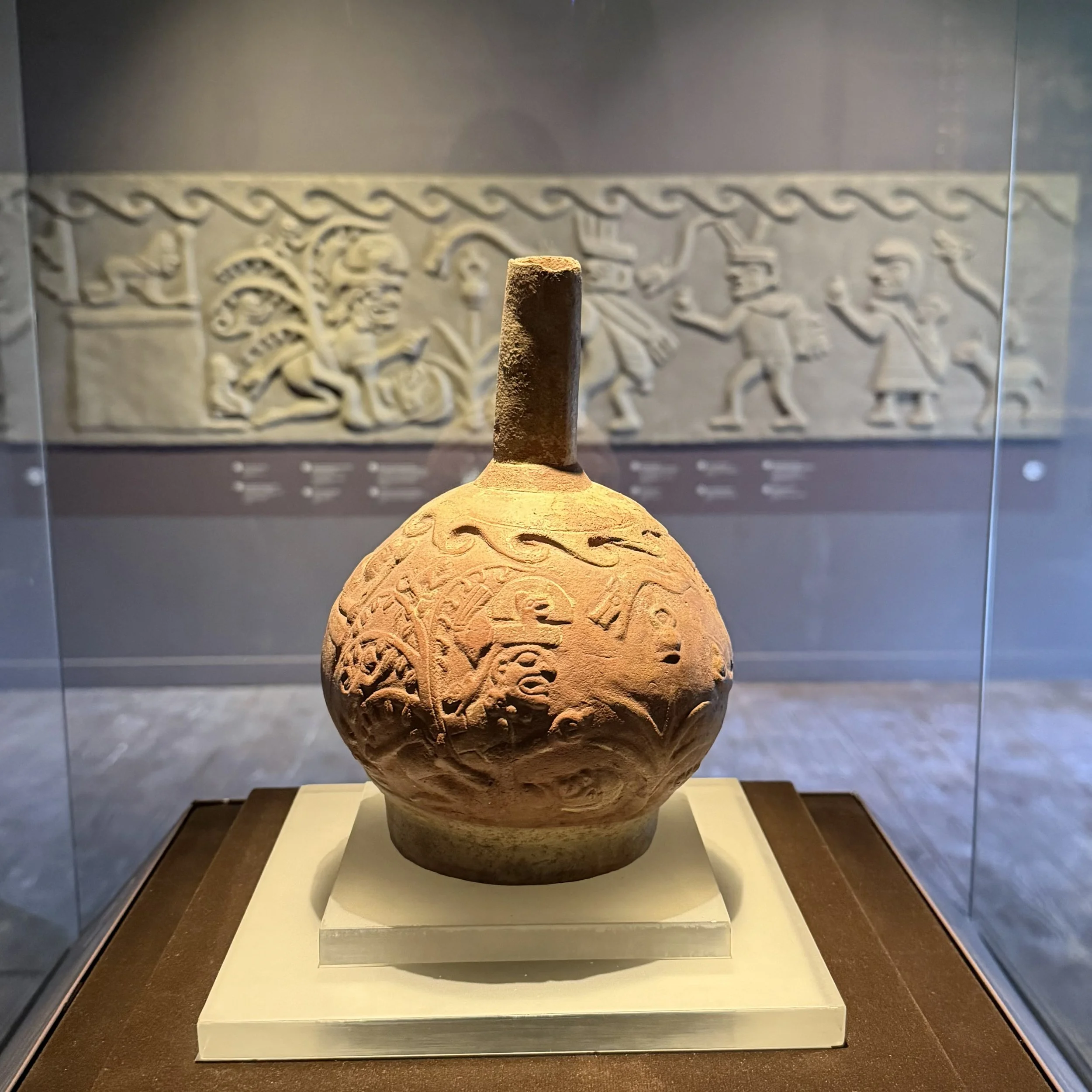
The Moche people believed that humans must be sacrificed to please the gods and maintain order in the world: man offered blood, the gods bestowed rain. Two warriors would compete in hand-to-hand combat, with the goal of removing the opponent’s helmet. The loser became the sacrificial victim.
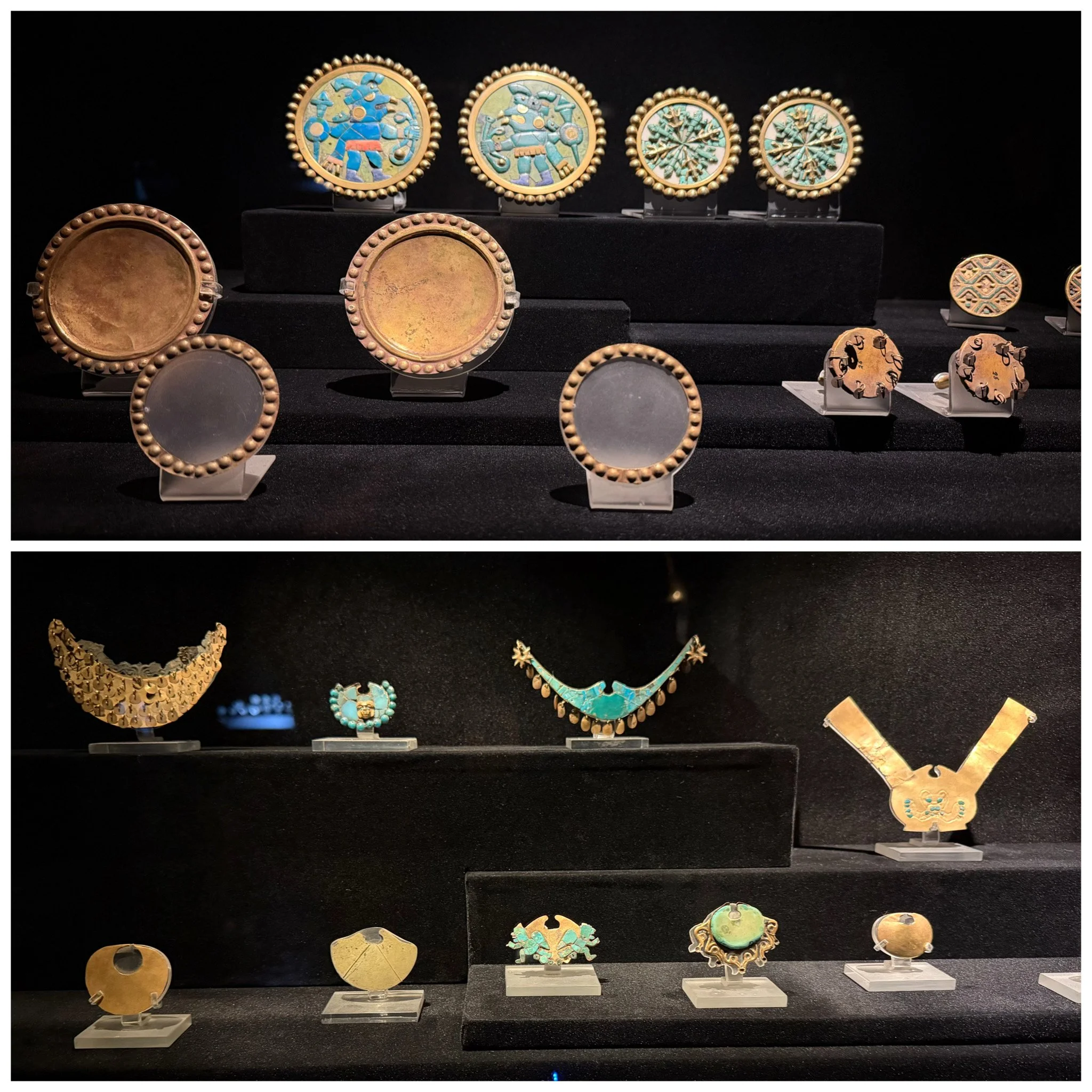
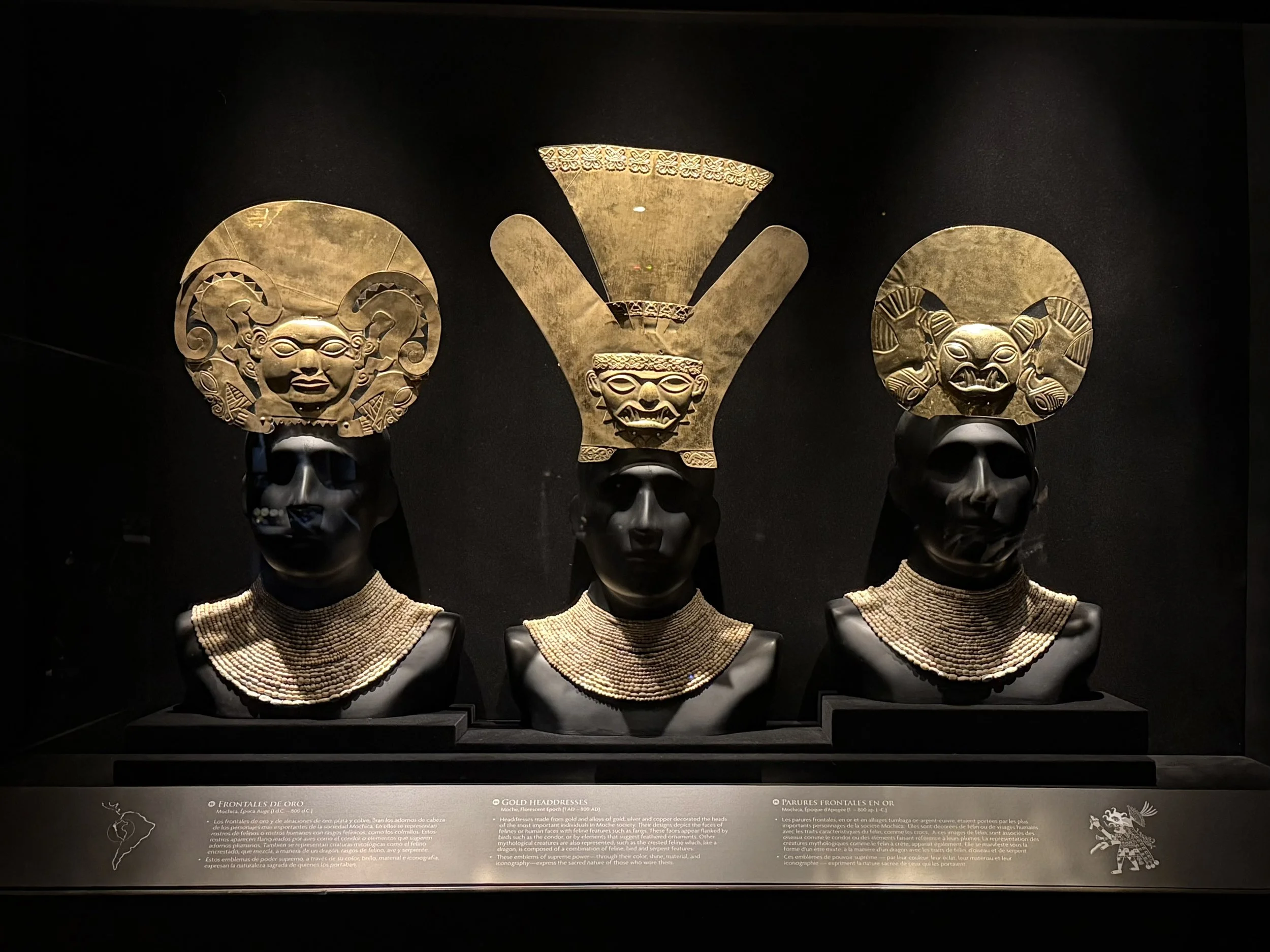
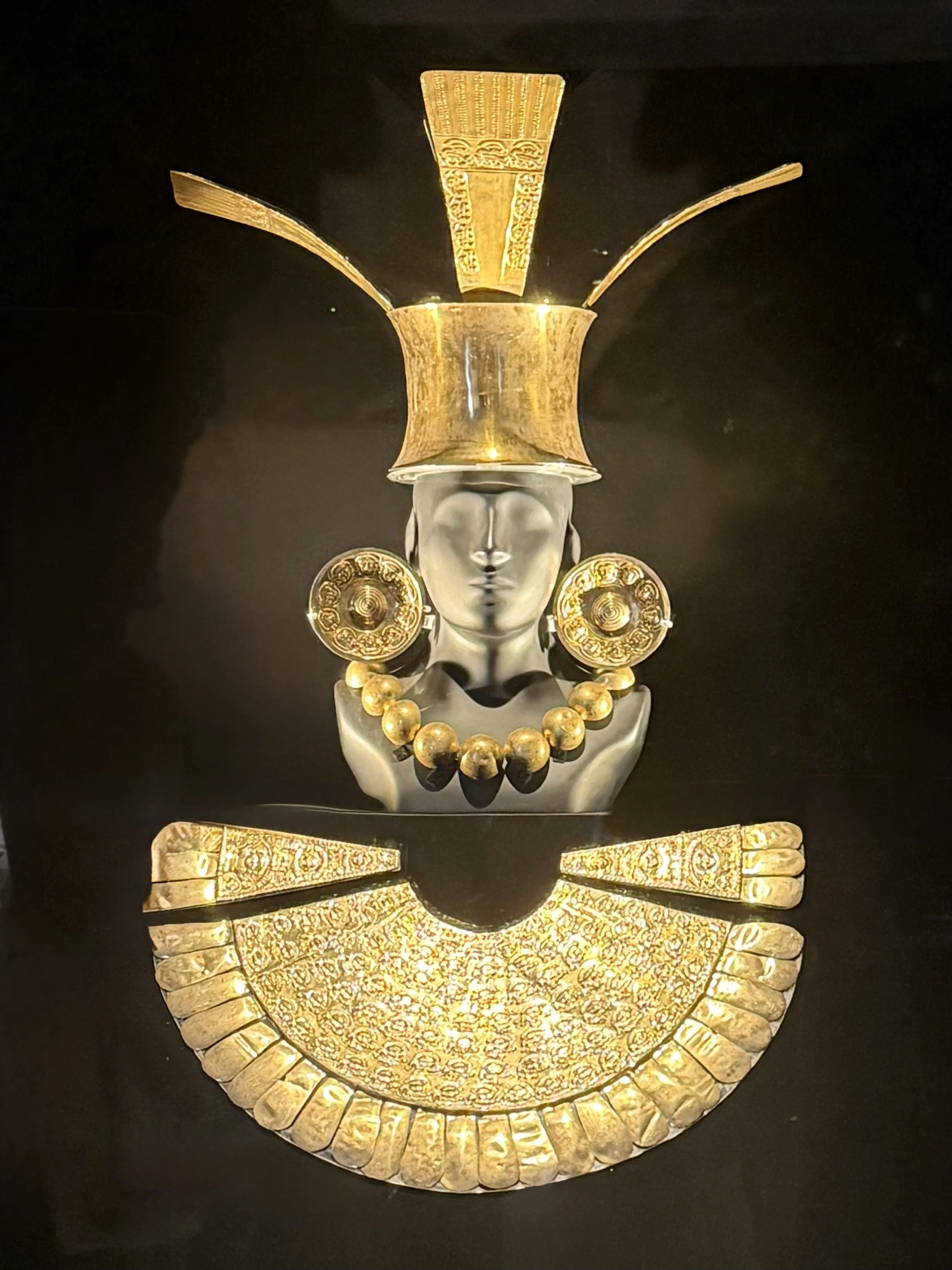
The Moche people also excelled at metalwork, making beautiful items with gold, precious stones, and alloys. Surprisingly large ear ornaments and nose ornaments were worn to demonstrate status and importance. Elaborate headdresses and breastplates had animal figures, emblems of supreme power for the wearers.
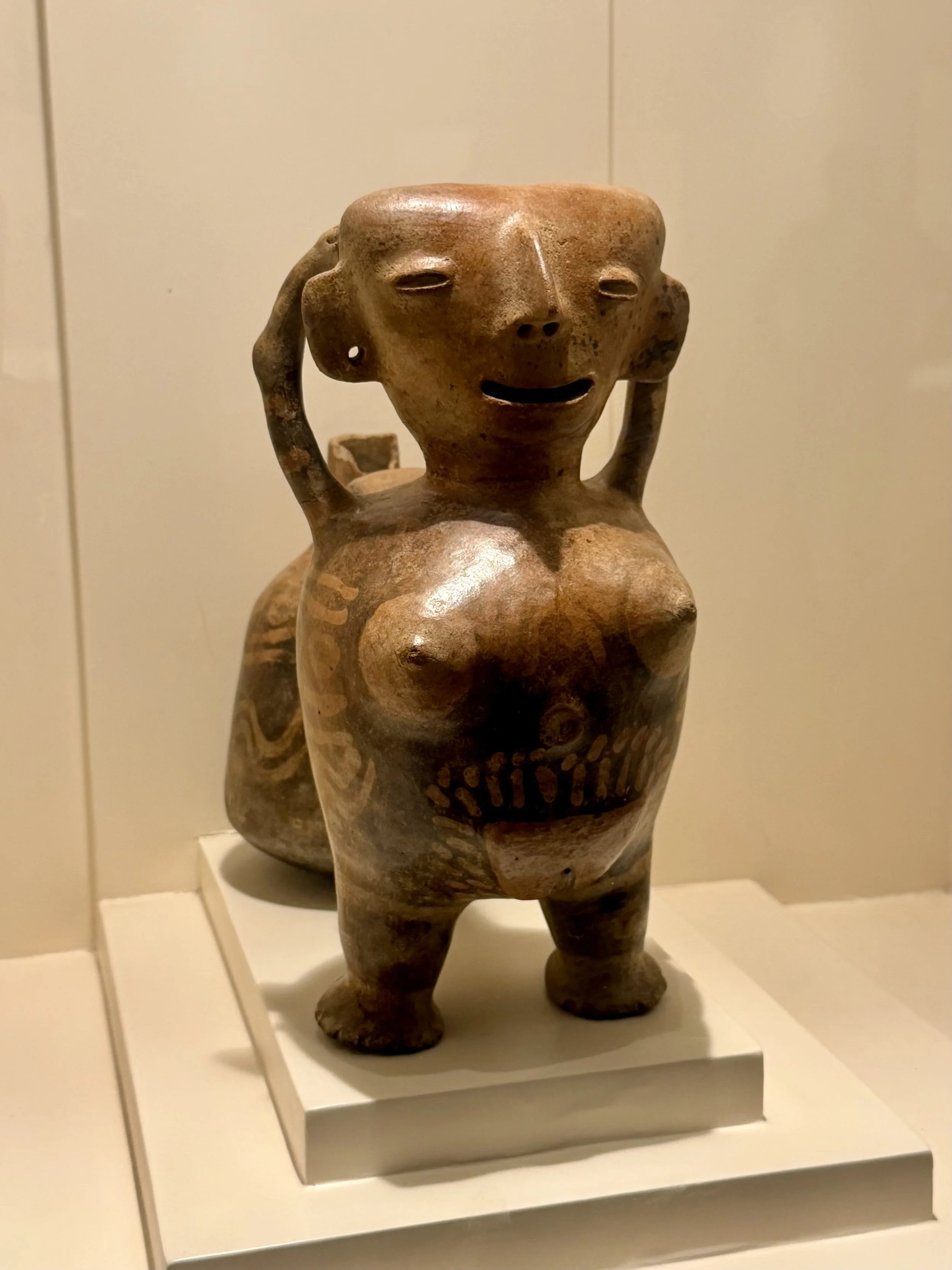
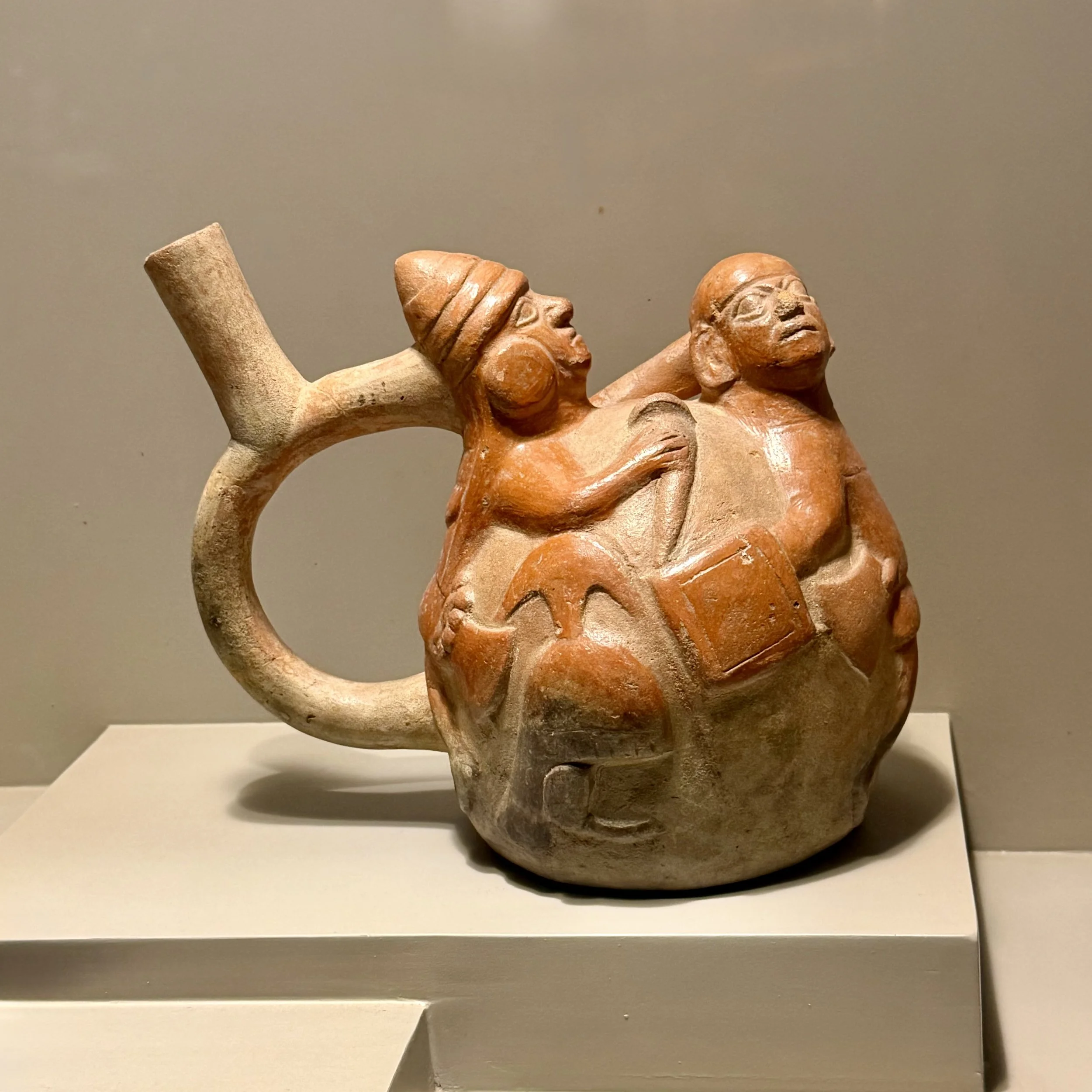
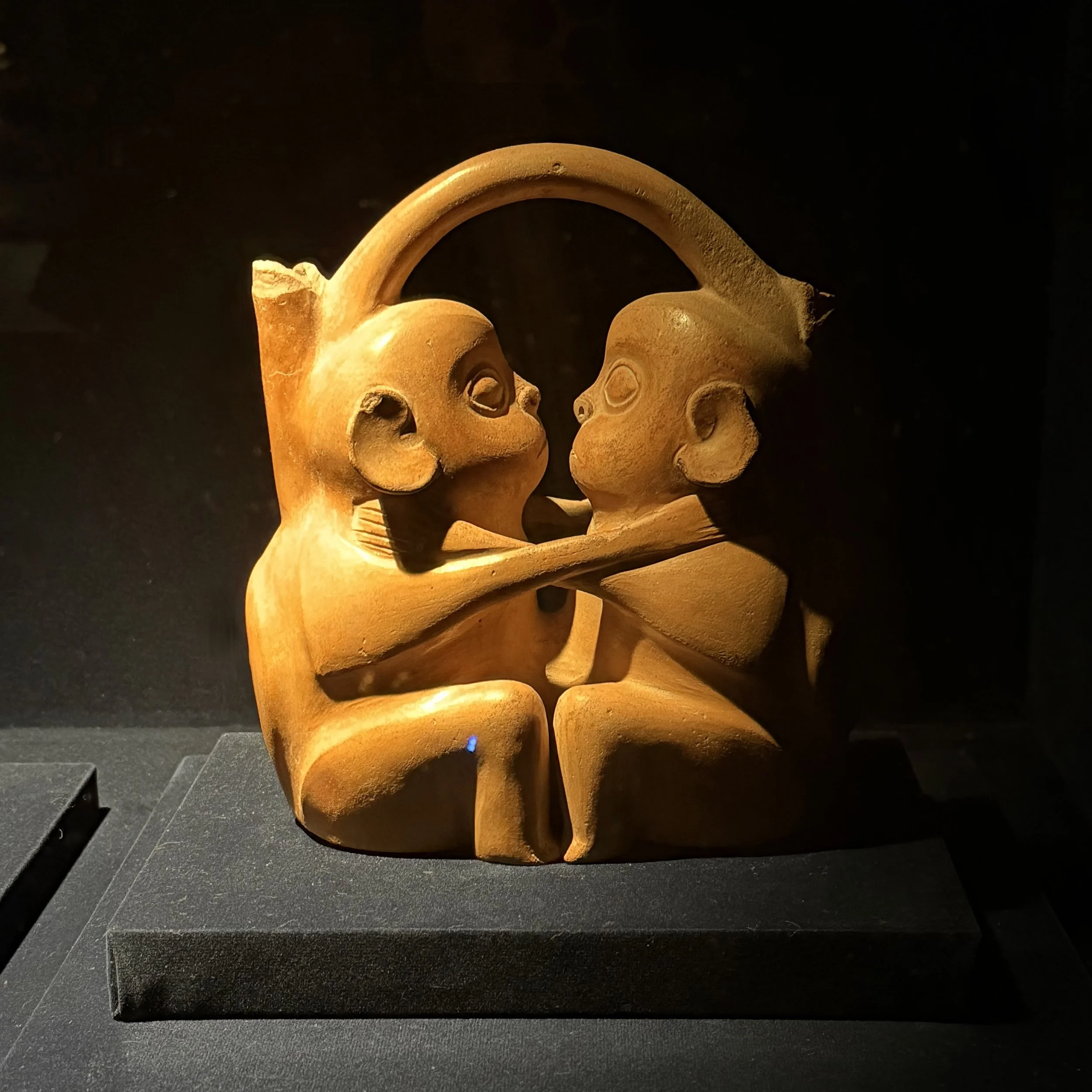
The last part of our tour was in the Erotic Gallery, a fascinating collection of ancient Peruvian ceramics that filled six rooms. Many vessels celebrated the naked human form, some even holding or dispensing liquids in male and female ways. Other items depicted the sexual union that generates life in the earthly world. There were also depictions of the ancestors in the underworld, engaging in sexual activities to produce fluids for the ongoing fertility of the earth. The pervading theme was that opposing yet complementary forces must come together to enable a new cycle of renewal. In one important Moche myth, the heroic ancestor Ai Apaec joins with Pachamama (Mother Earth), and she gives birth to the Tree of Life. While the Erotic Gallery lived up to its name, with plenty of titillating objects, it more importantly depicted the art and worldview of the ancient Peruvians.
The Larco Museum is definitely a must-see for anyone visiting Lima. What is particularly impressive is that the entire museum - including the gardens and Erotic Gallery - can be experienced online! Anyone curious to learn more about pre-Columbian cultures in Peru can visit the museum’s excellent website - just select a section and then click on Online Exhibit. ¡Bien hecho, Museo Larco!