La Merced Market
Chef Rick Bayless called Mercado de la Merced “one of the most wondrous places on earth.” It’s the largest retail food market in Mexico City, and it was the inspiration for our memorable meal at Topolobampo last spring. On our first full day in CDMX, we took a food tour called “An Insider’s Guide to Merced Market,” hosted by Club Tengo Hambre.
Our guide Paulina grew up in Mexico City, not far from La Merced. So she had been shopping at this market since childhood. It really was enormous, occupying 32 city blocks near Zocalo (the historic center of CDMX). Over time, the market has overflowed its large buildings, and it now surrounds both a church and and a subway station. It’s also the city’s oldest market, probably pre-dating the convent it was named after in 1860.
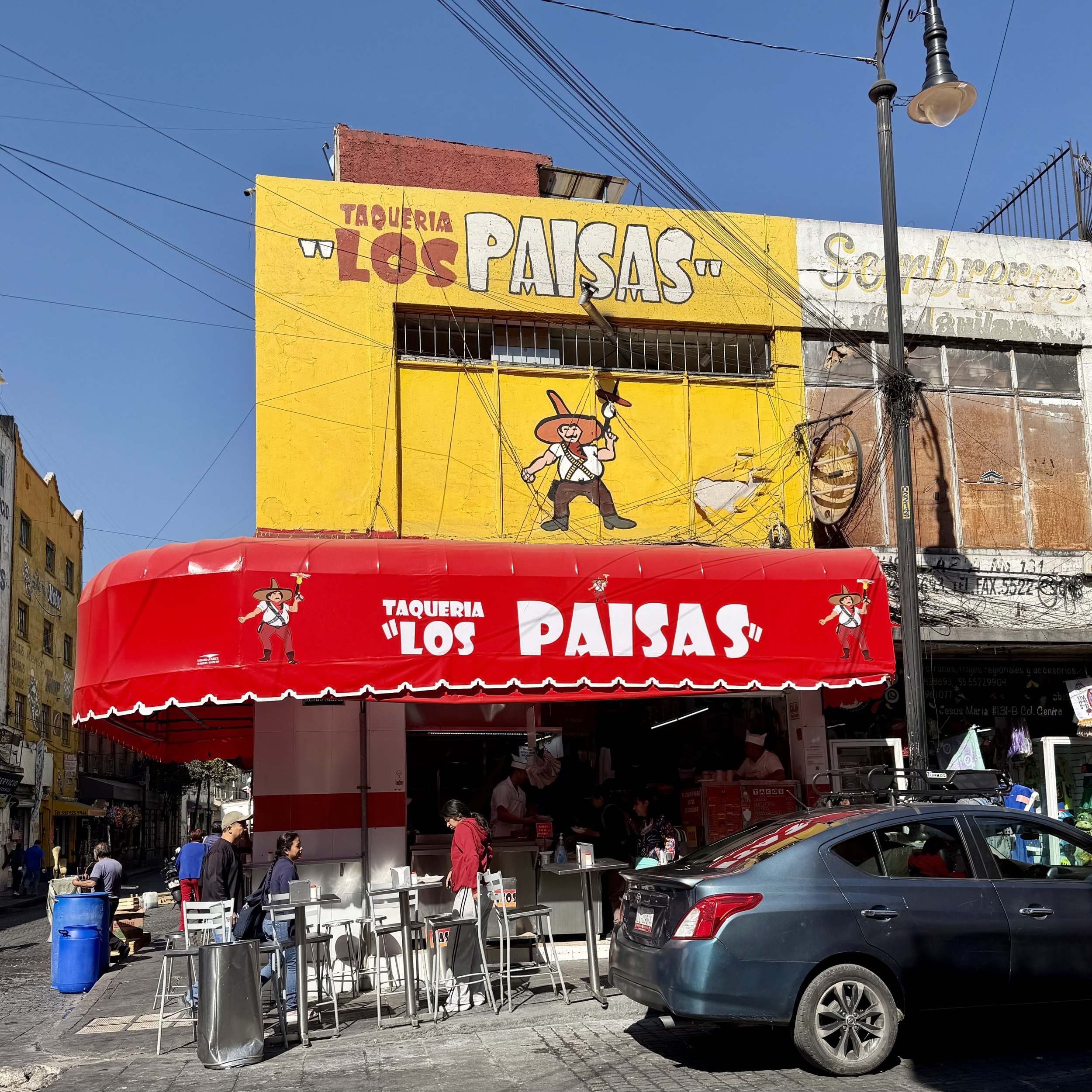
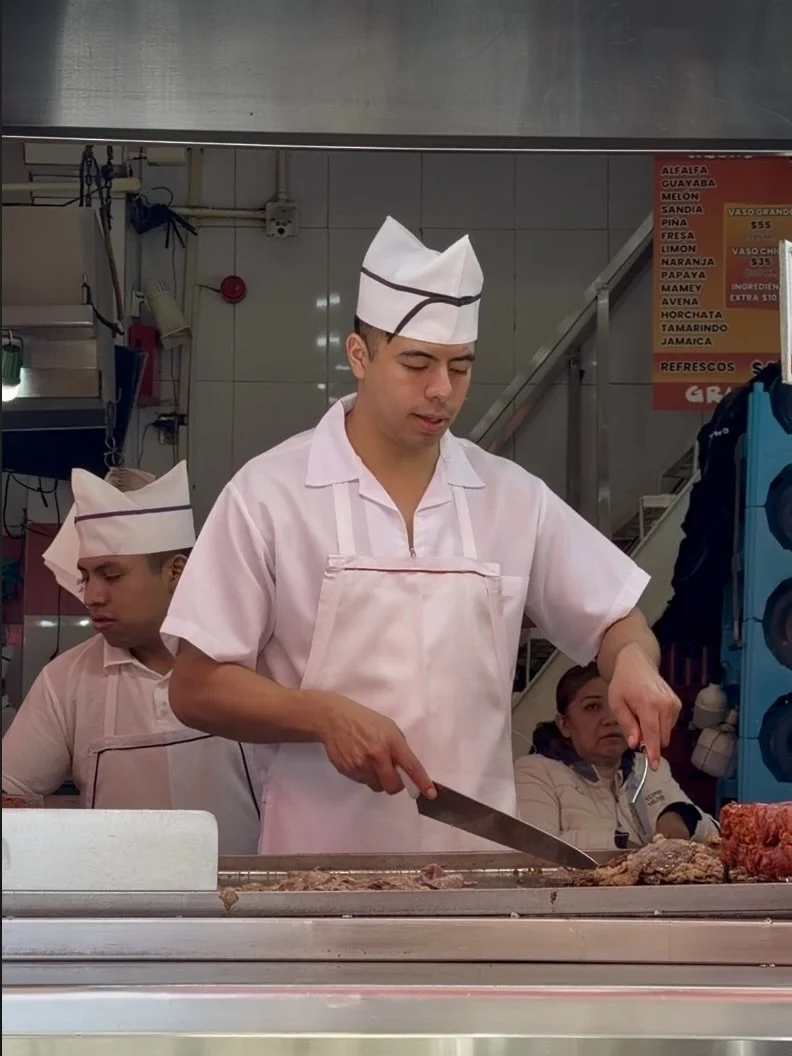
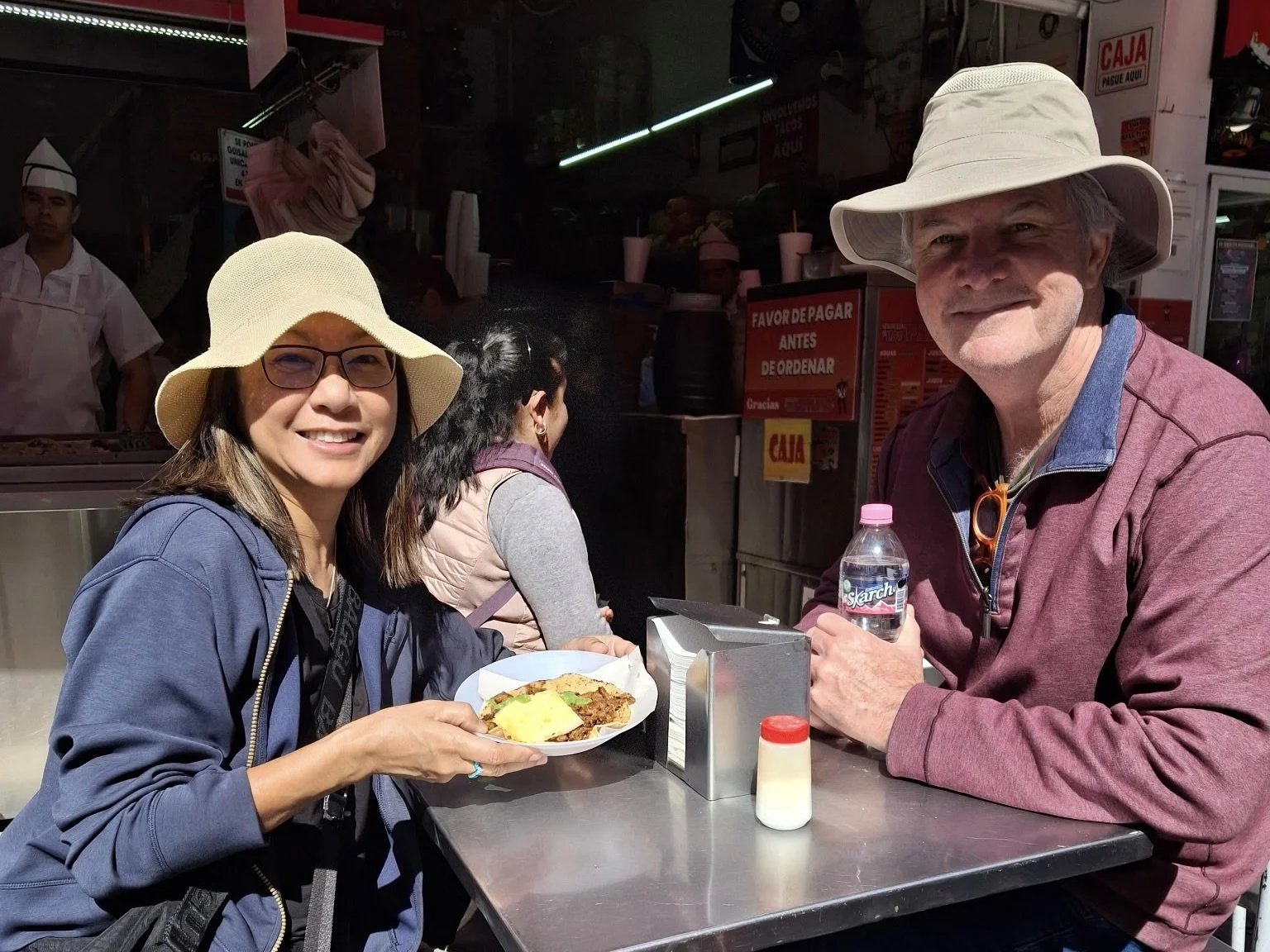
Our first stop was Los Paisas (The Compatriots), a taquería on the outskirts of the market that is a big favorite with locals. At 10:30am, it already had plenty of customers! Their specialty was tacos al pastor, a dish brought to Mexico by Lebanese immigrants. The rich, fatty pork was topped with a thick slice of fresh, tart pineapple, and we added salsa verde for a touch of heat. Delicious!
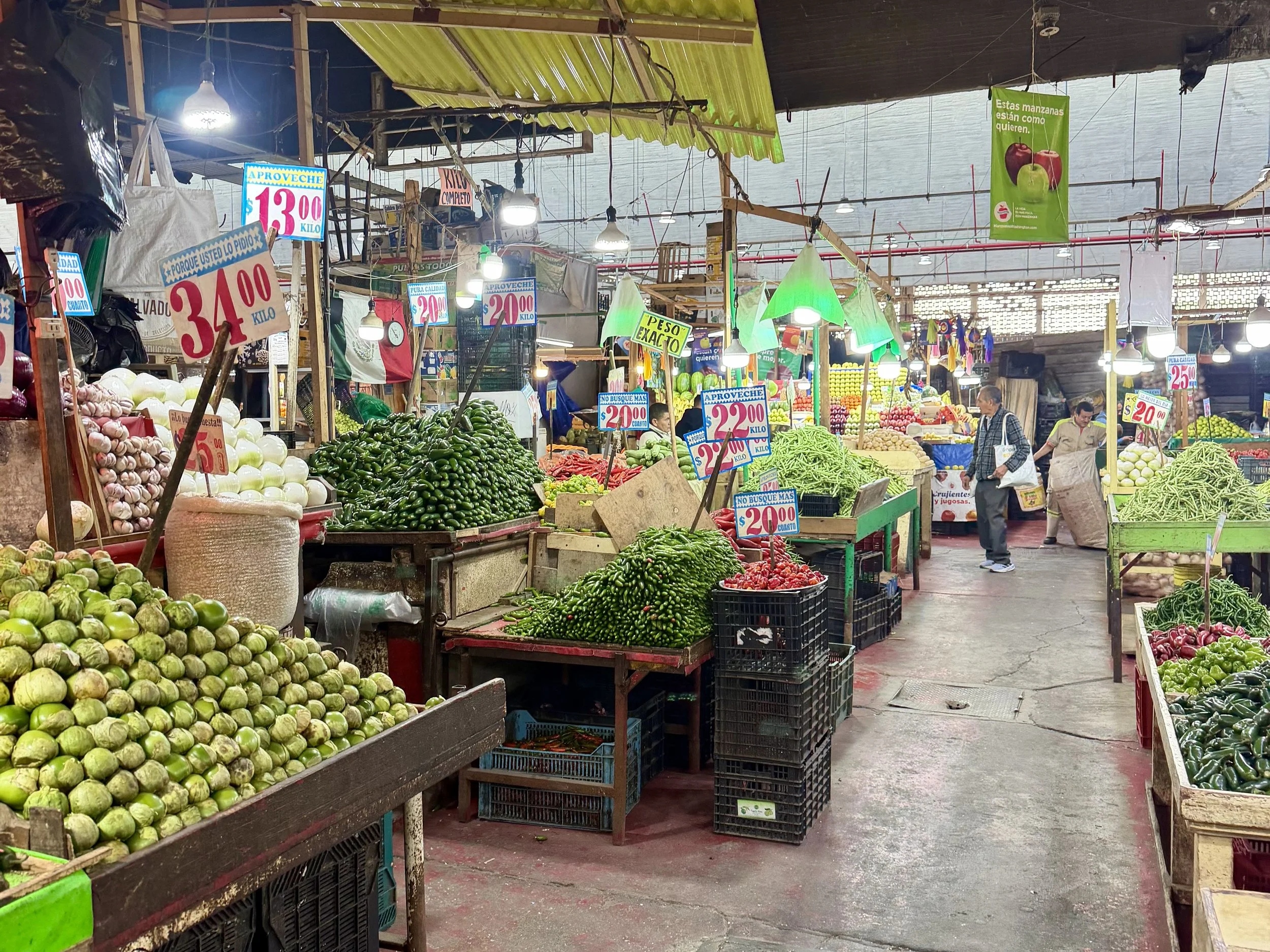
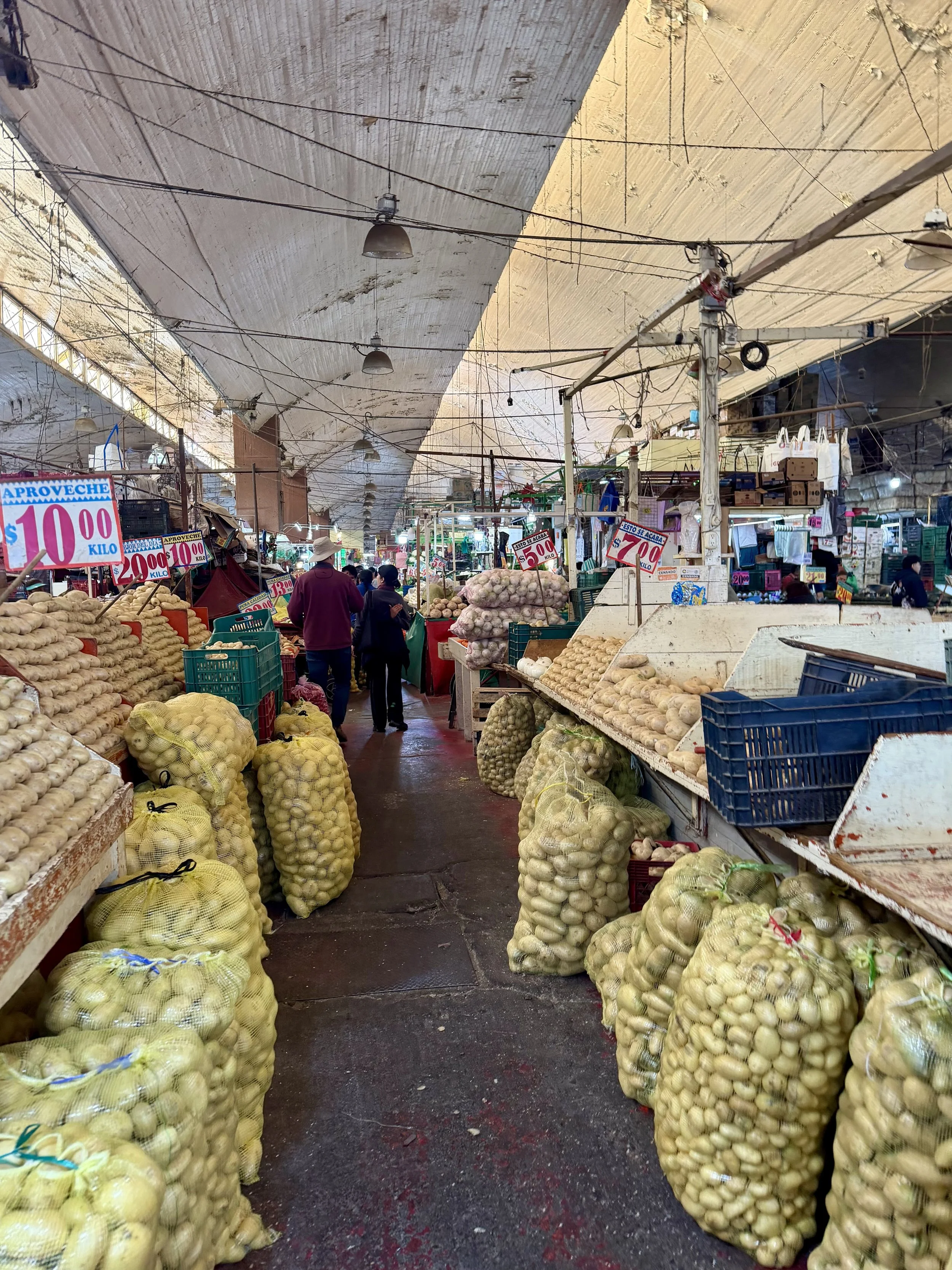
After a harrowing walk across a busy street with eight lanes and no traffic signal, we reached the tianguis, the unofficial outdoor market, where stalls were set up on the street. Paulina led us through the tianguis and into one of the market buildings, where we wended our way through the narrow aisles, stepping aside for vendors carrying large crates or pushing carts.
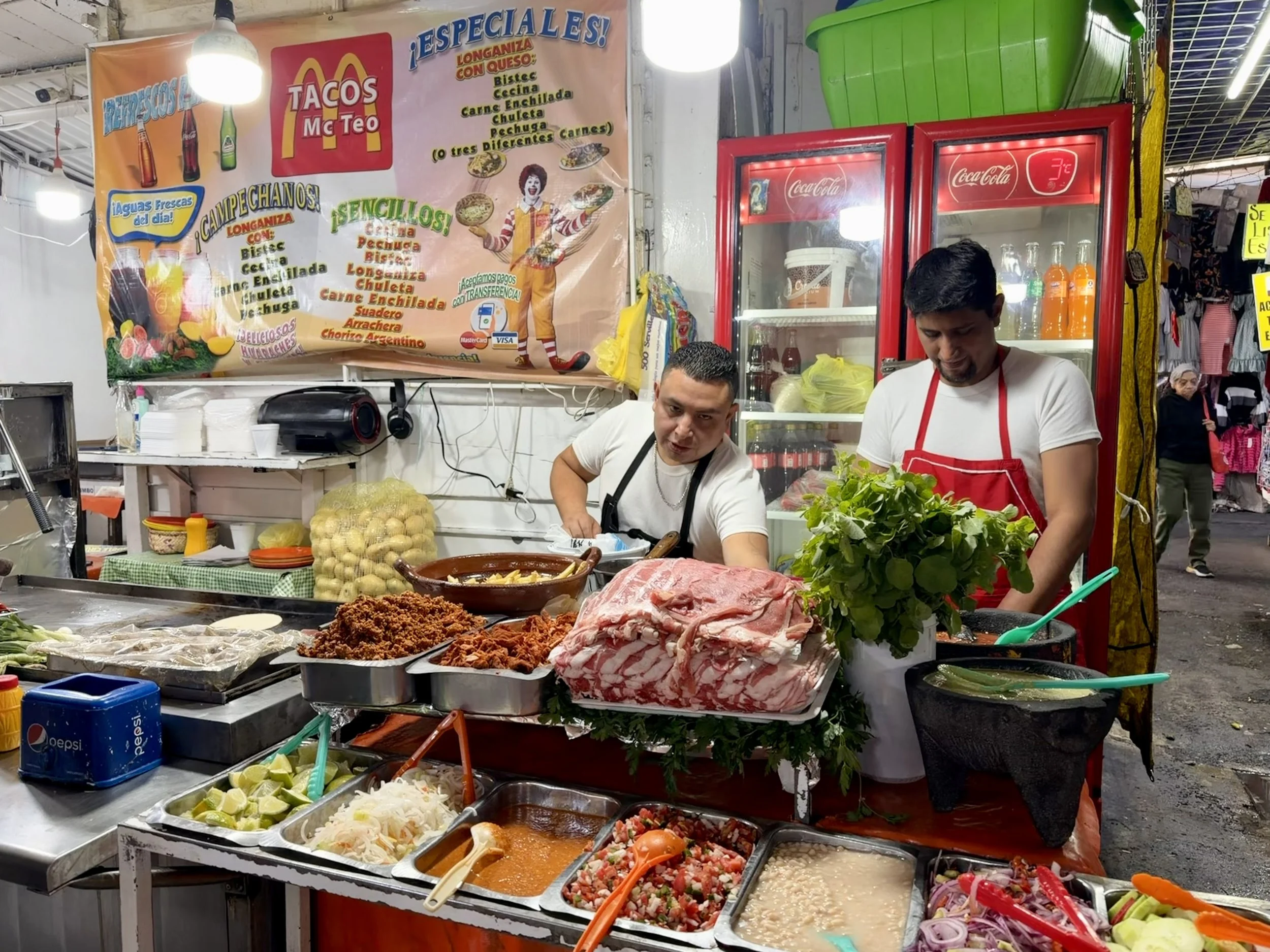
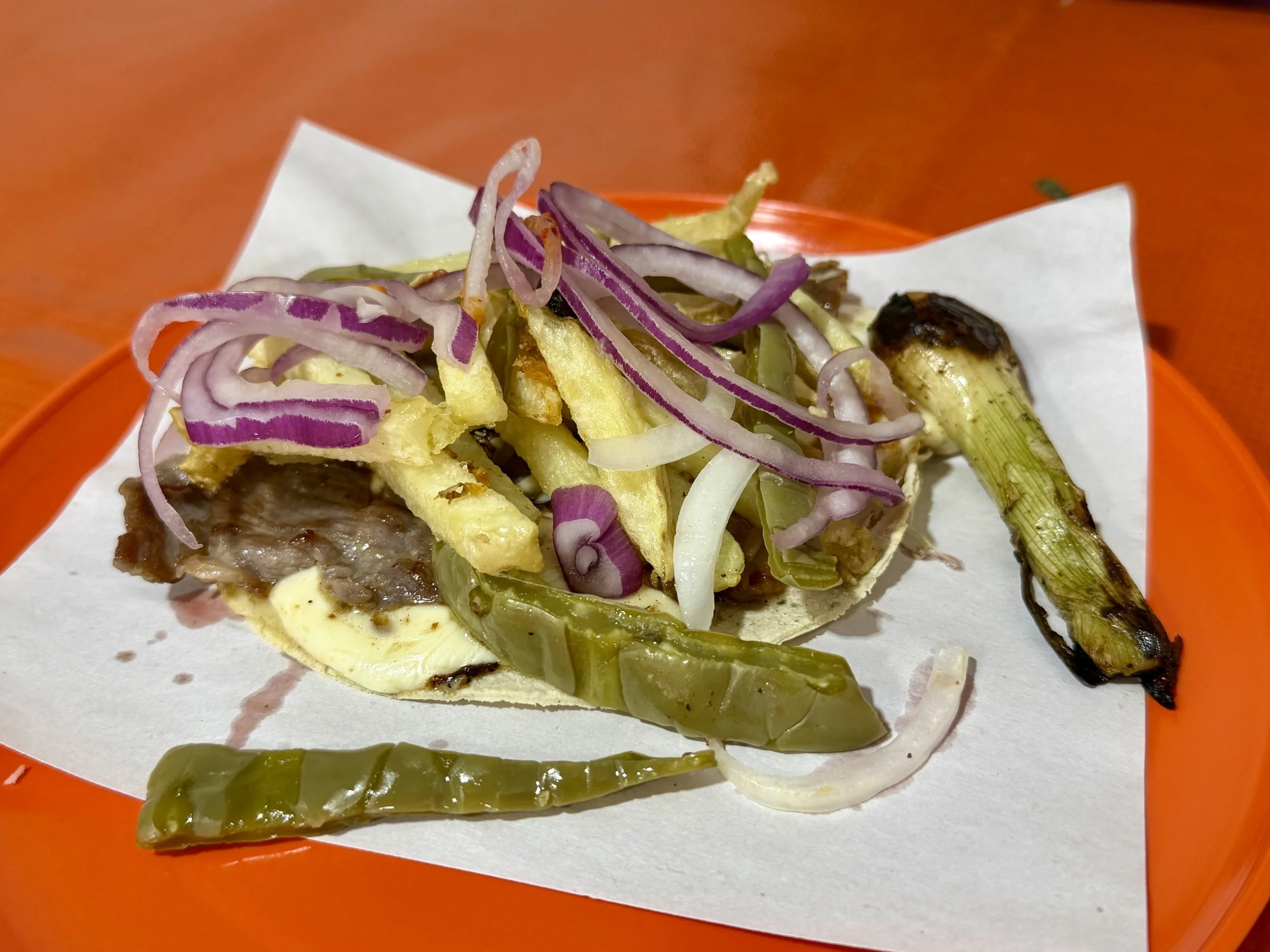
Our next stop was the amusingly named Tacos McTeo. We tasted a campechano, a “mixed” taco made with cecina (lightly cured beef), Oaxacan string cheese, grilled peppers and onions, and French fries. We added pickled red onions for a refreshing, tangy crunch. It was a bit like a Mexican version of a cheesesteak. Paulina explained that these tacos were popular with young folks.
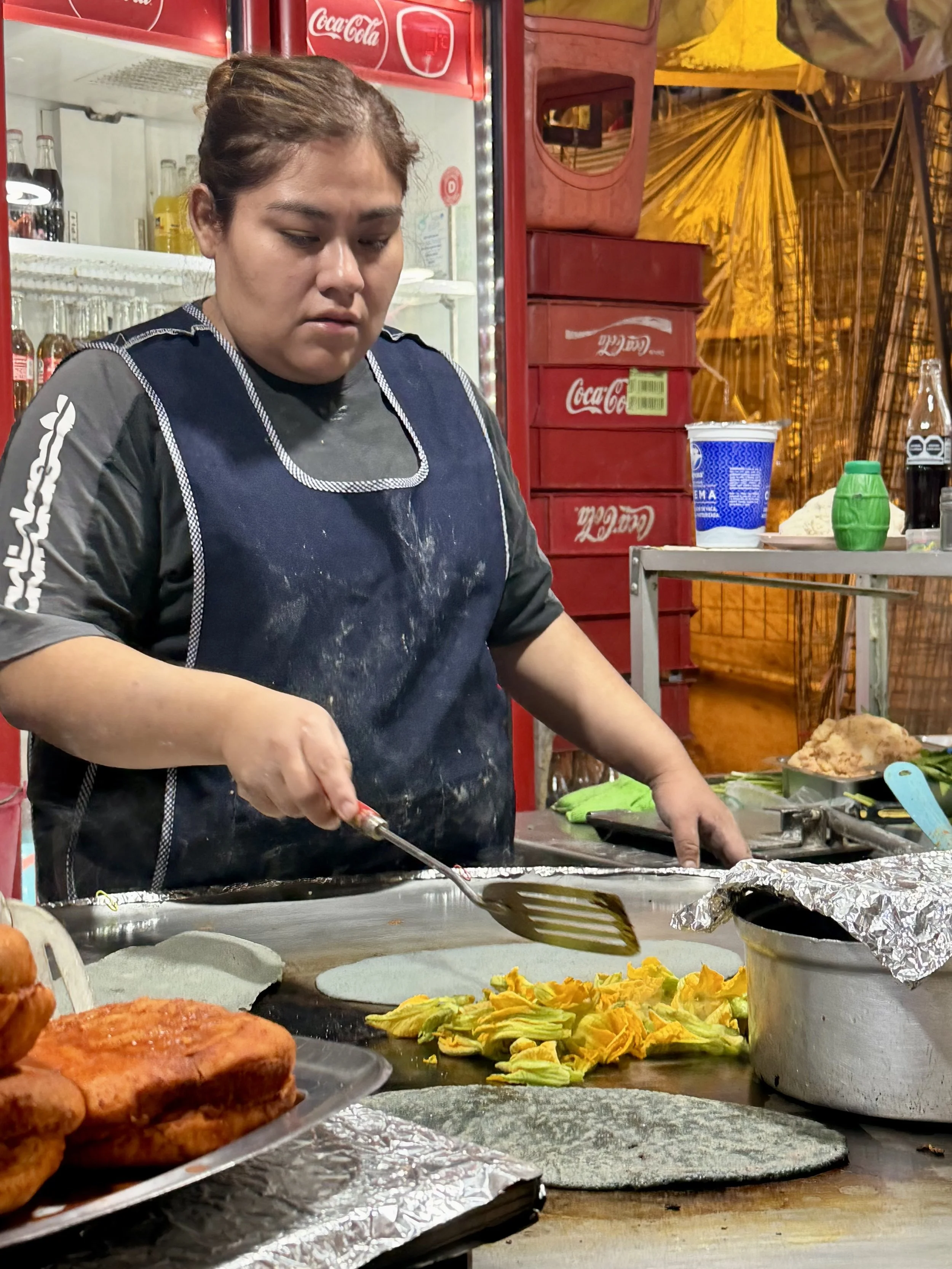
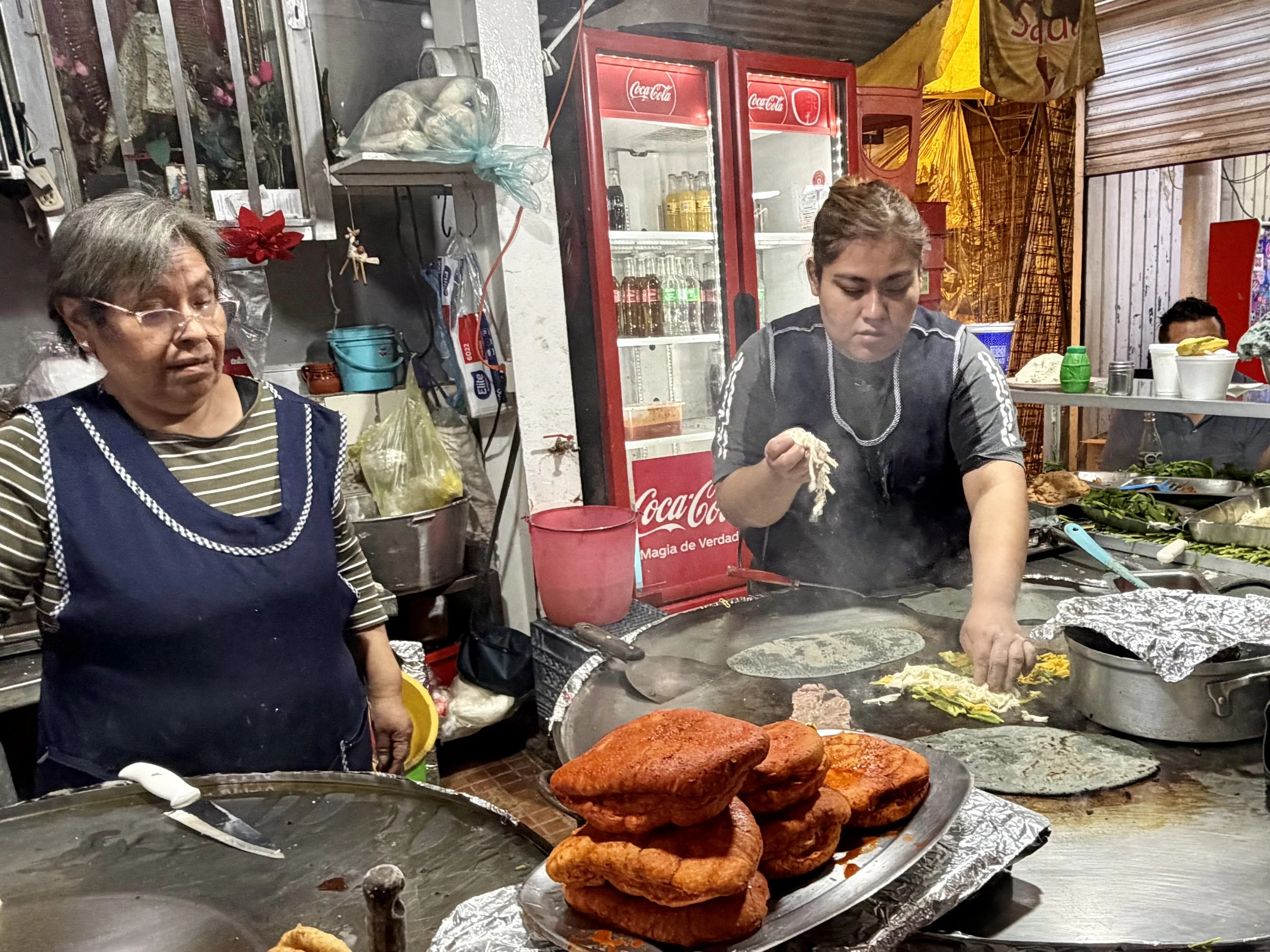
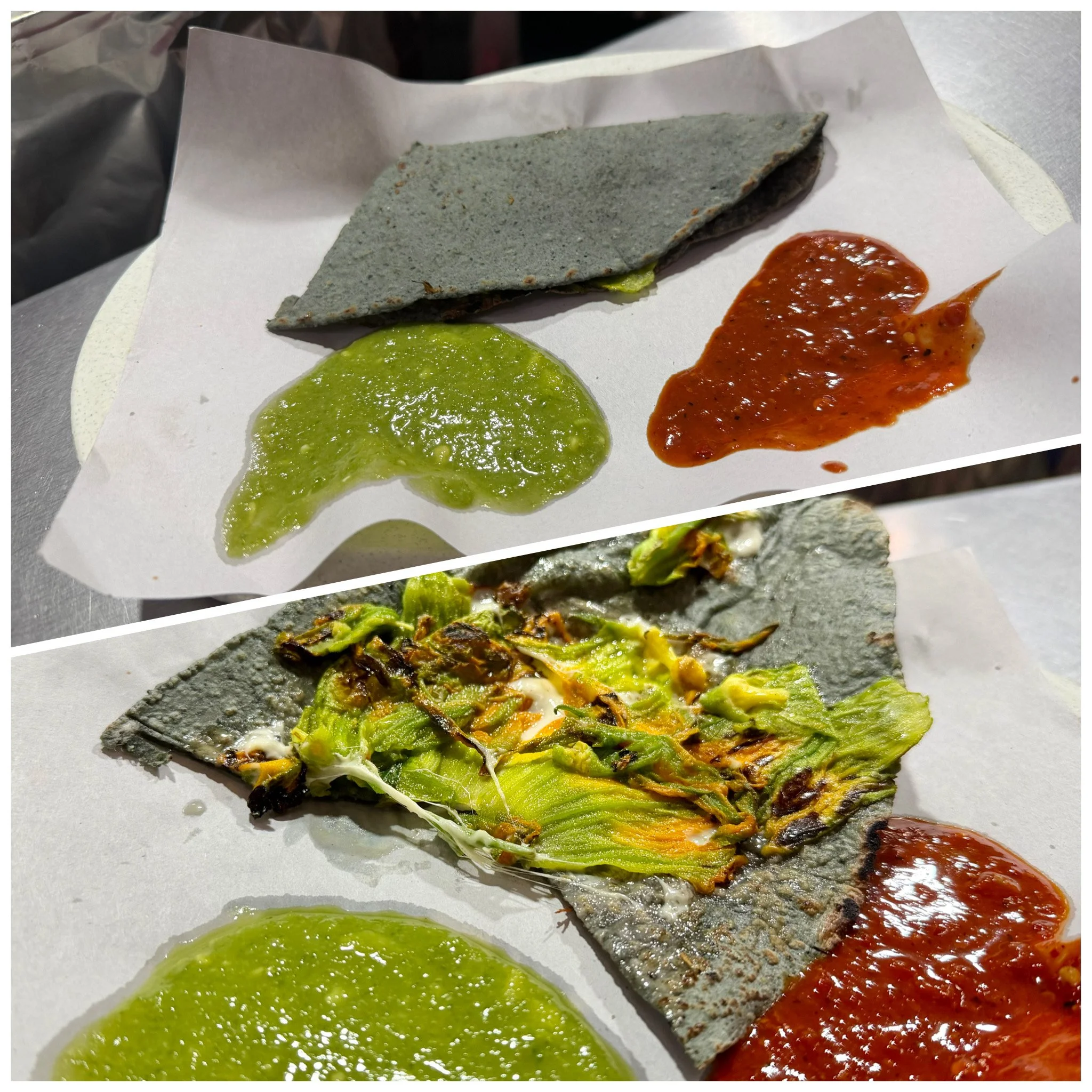
Next, we watched a mother-daughter team working at their large comal (griddle). From a huge ball of blue masa dough, they pressed large oblong tortillas. Those were used to make us quesadillas stuffed with flor de calabasa (squash blossoms) and Oaxacan cheese. This was my favorite dish!
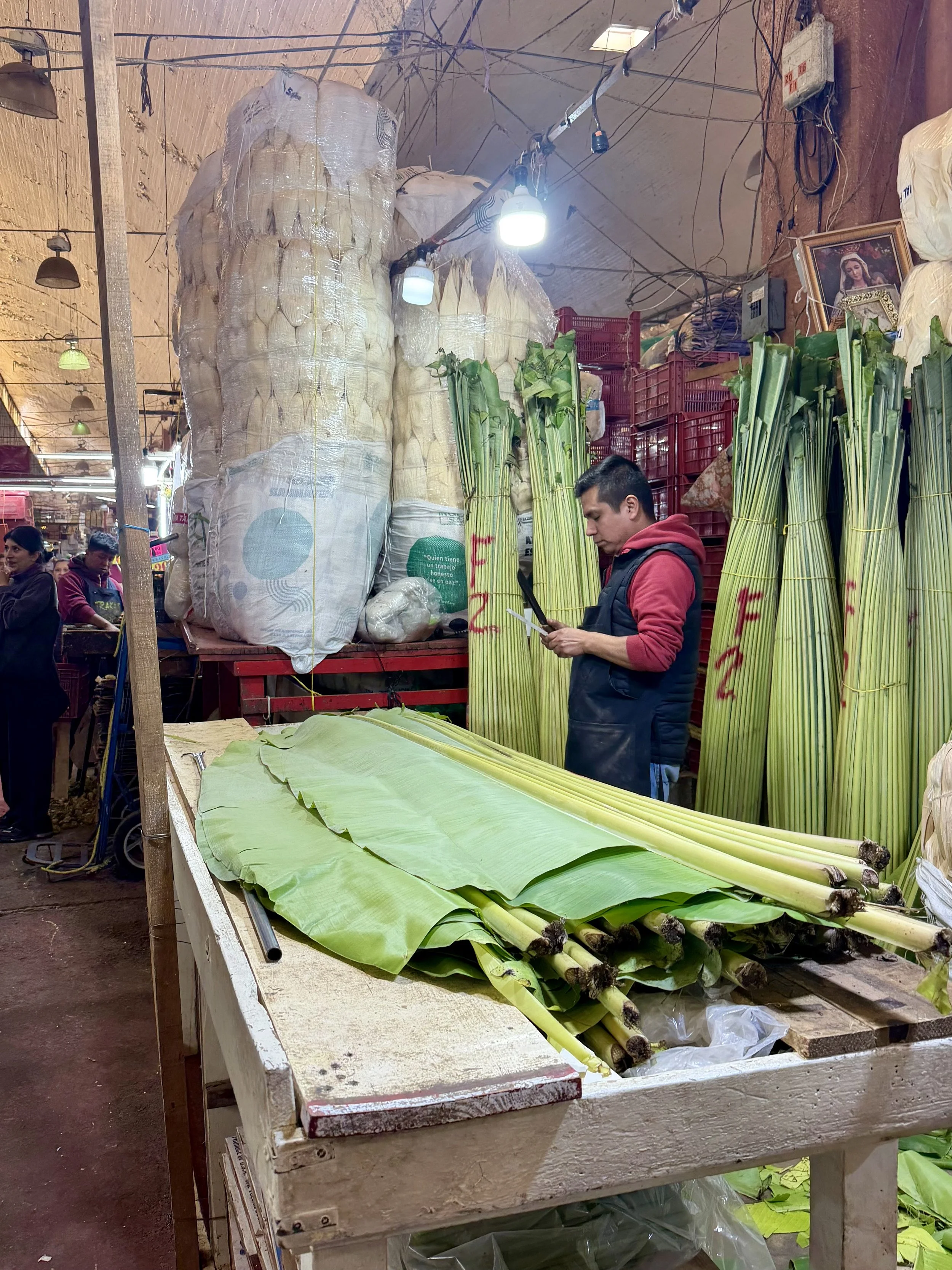
For the next few minutes, we wandered through the market, past endless stalls of fascinating and even surprising foods. I was very distracted and tried not to get lost.
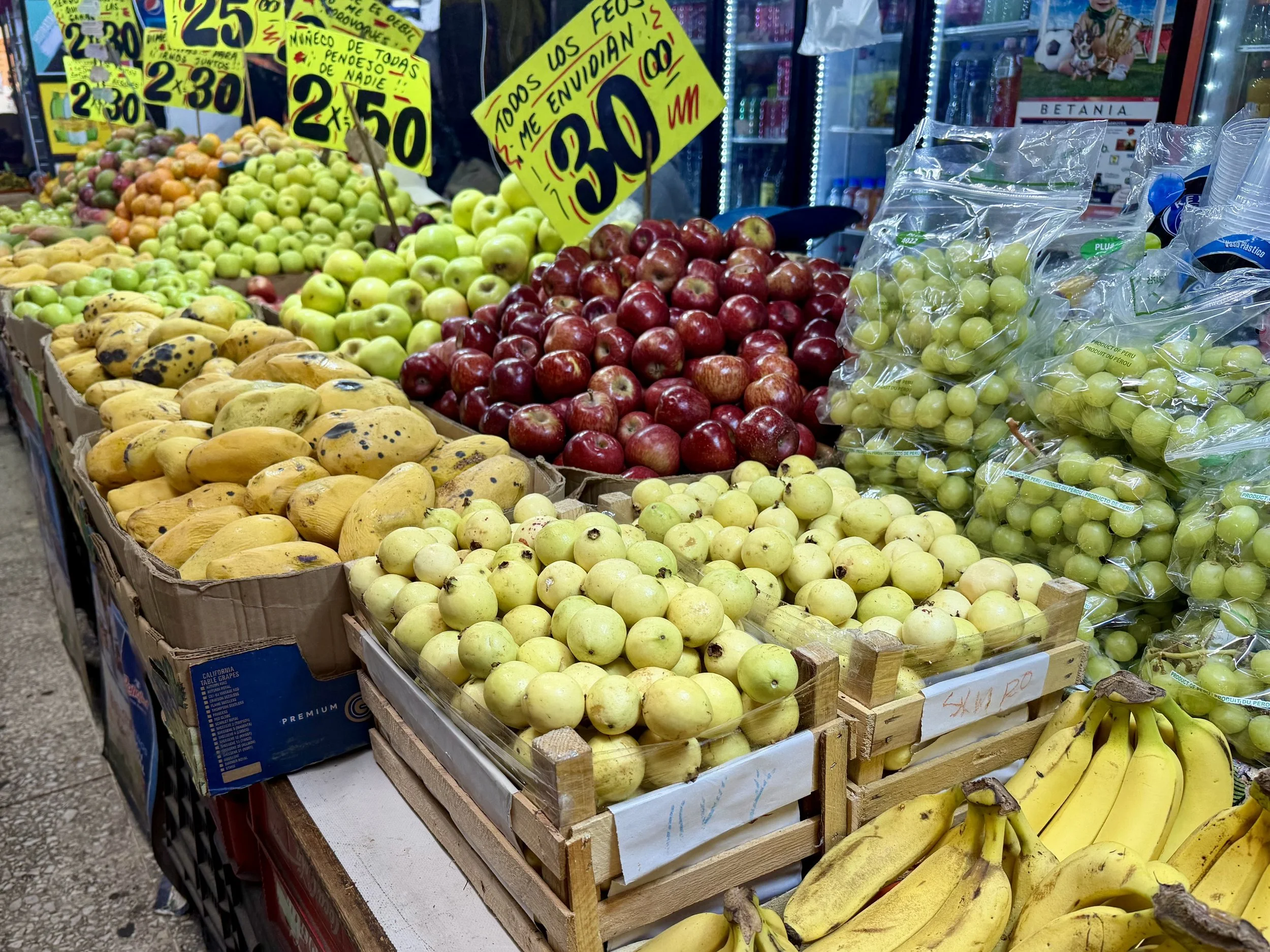
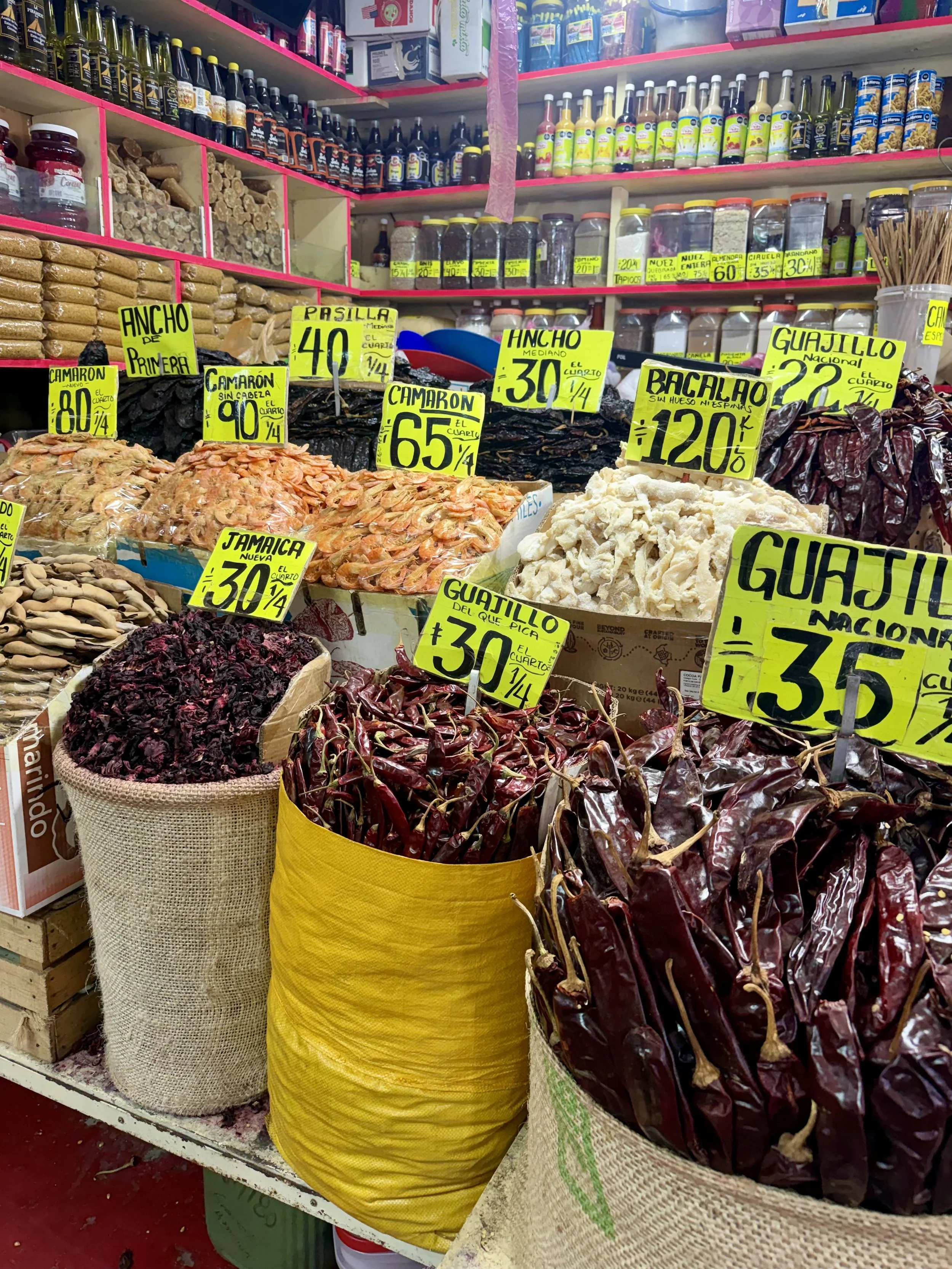
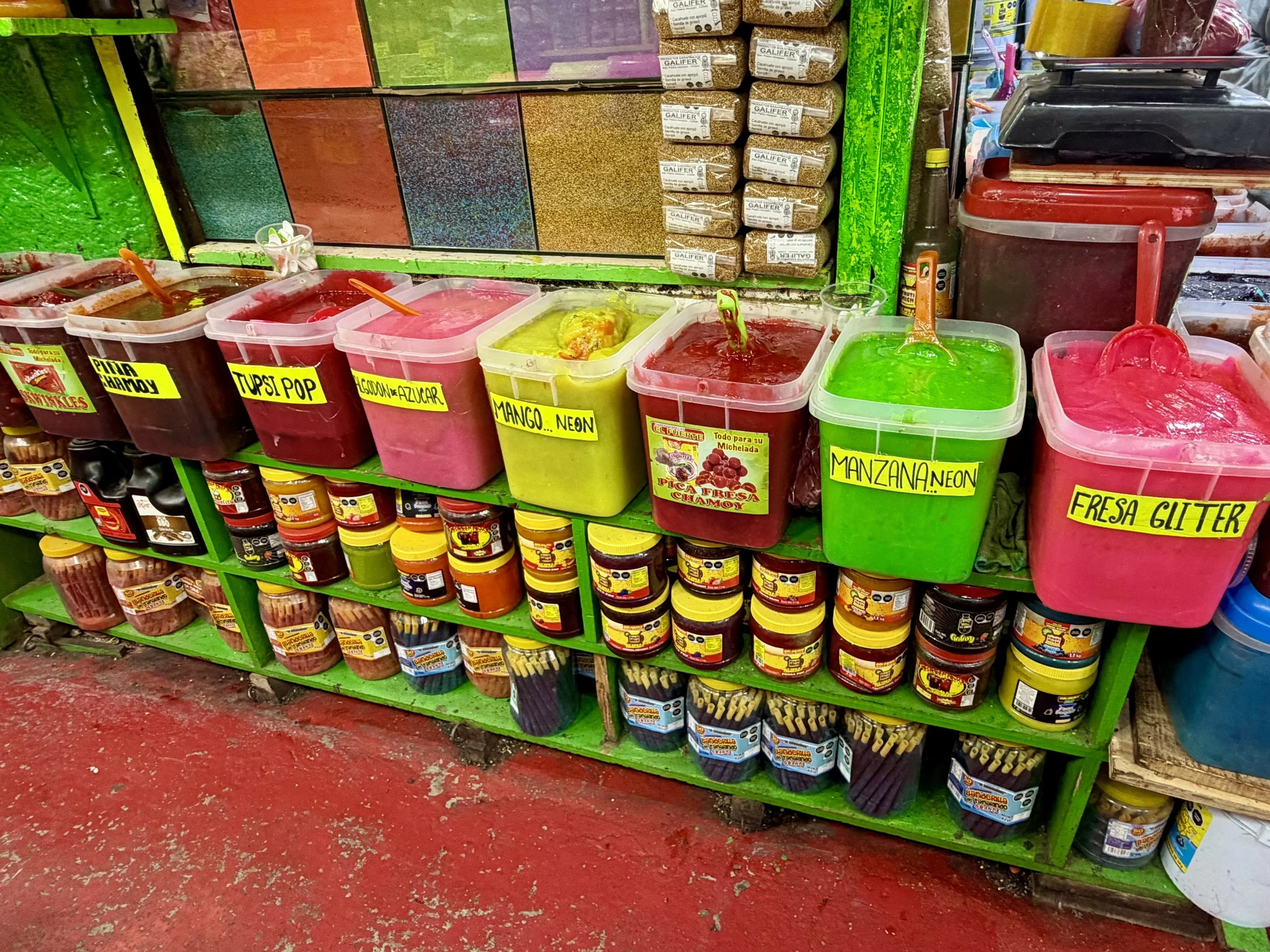
Señora Balbina’s stand had an impressive array of homemade moles. With Paulina’s help, we tasted six different moles using little plastic spoons. The mole cacahuate, mole chocolate, mole negro, and mole adóbo were all tasty, but our favorites were the nutty mole pipián and the tangy mole verde, both made with ground pumpkin seeds. Paulina explained that the mole powder had a shelf life of up to one year. The mole paste generally stayed fresh if refrigerated for six months, except for the mole verde, which lasted only a few weeks. We also tasted a cacahuate spread made from peanuts and cookies, and a chamoy paste with toasted, candied sesame seeds. This was Steve’s favorite part of the tour.
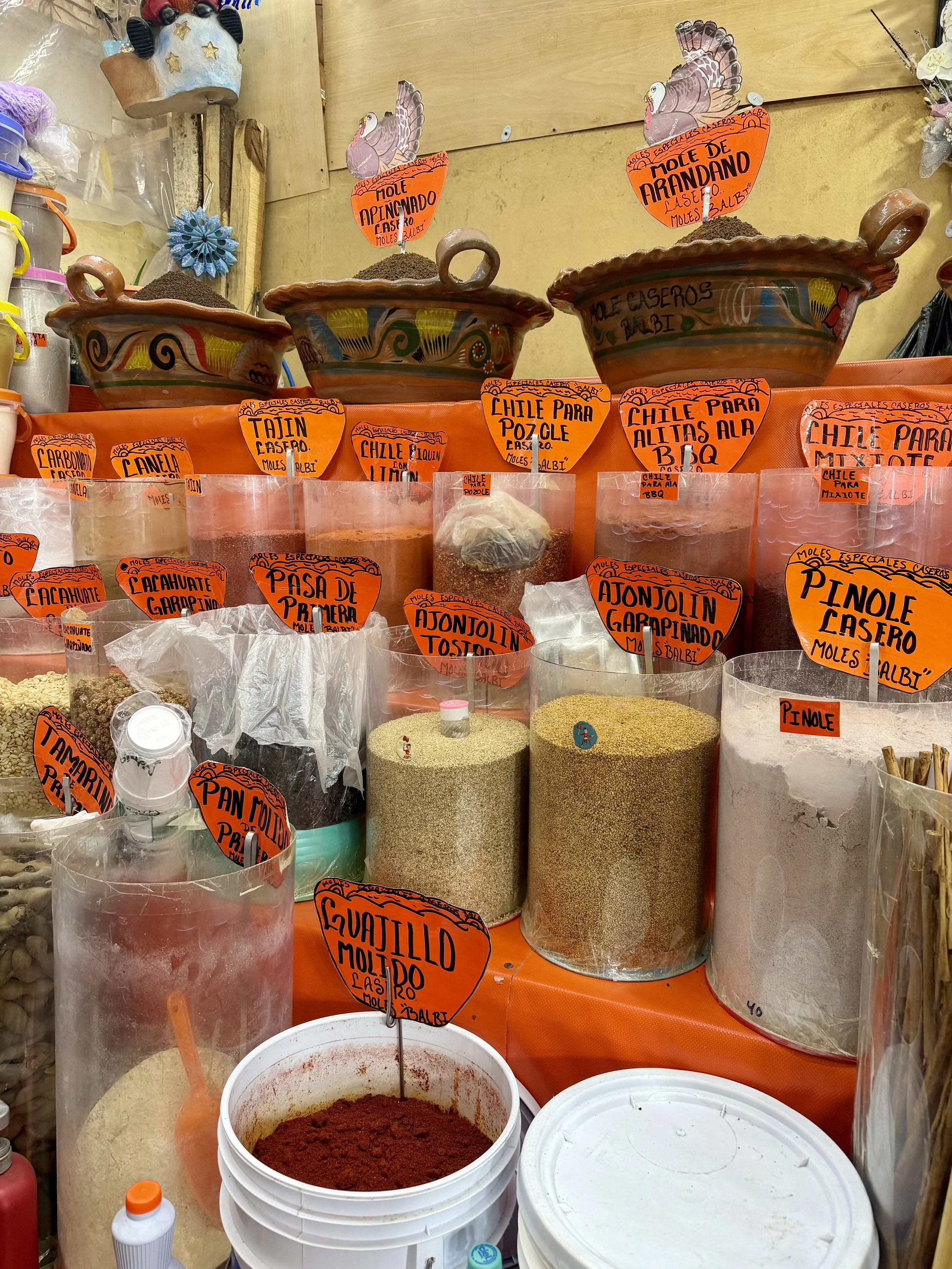
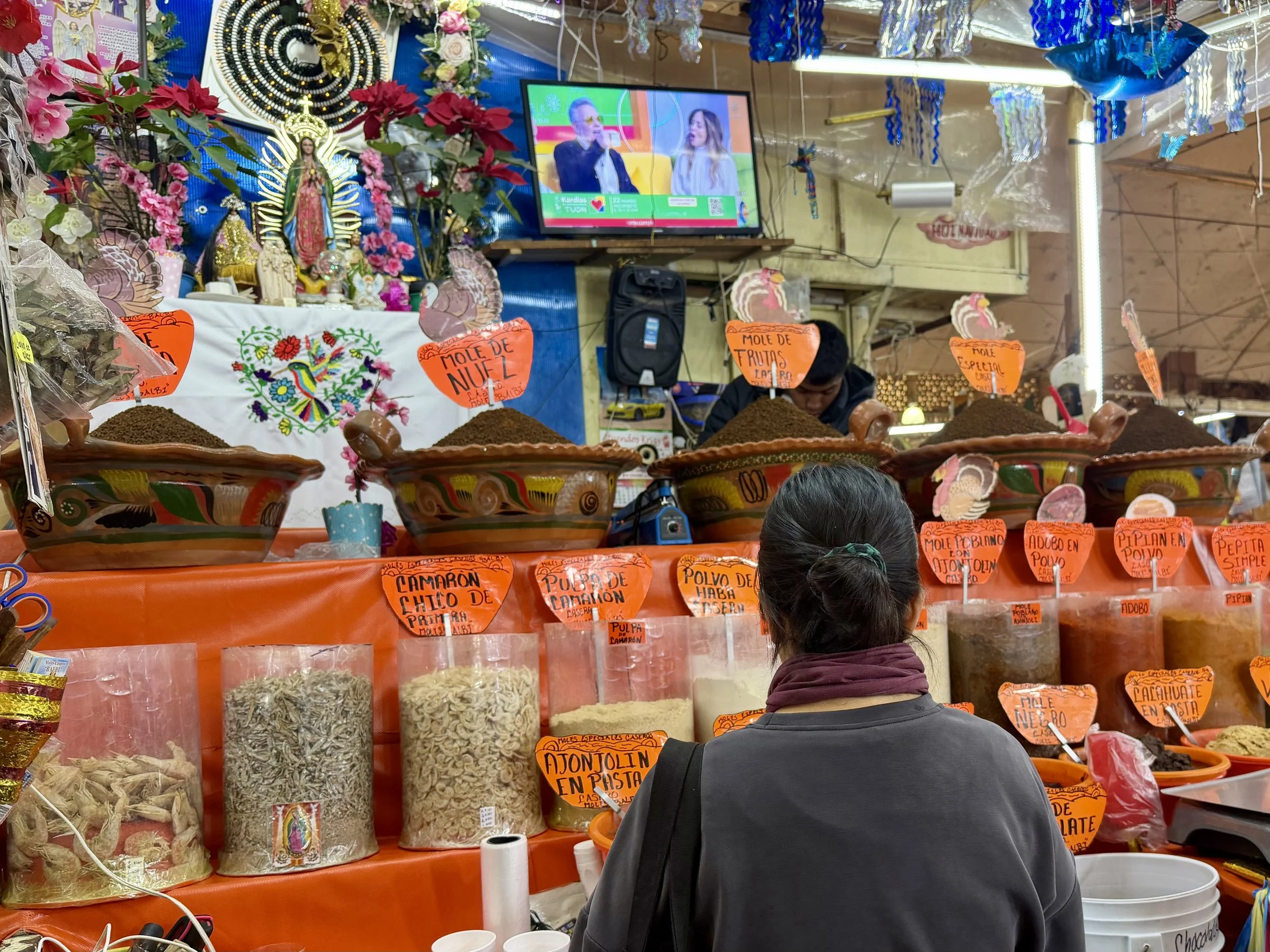
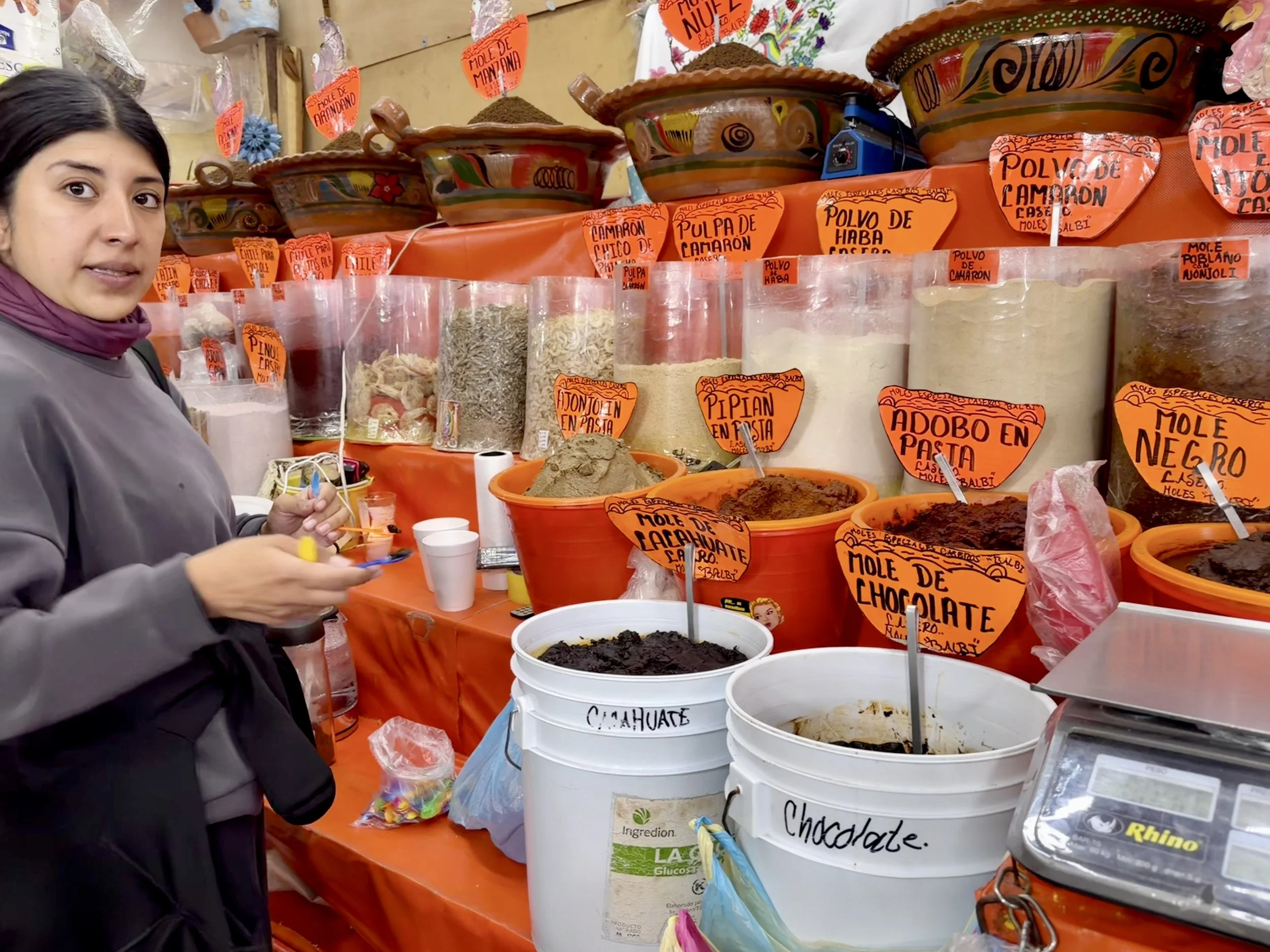
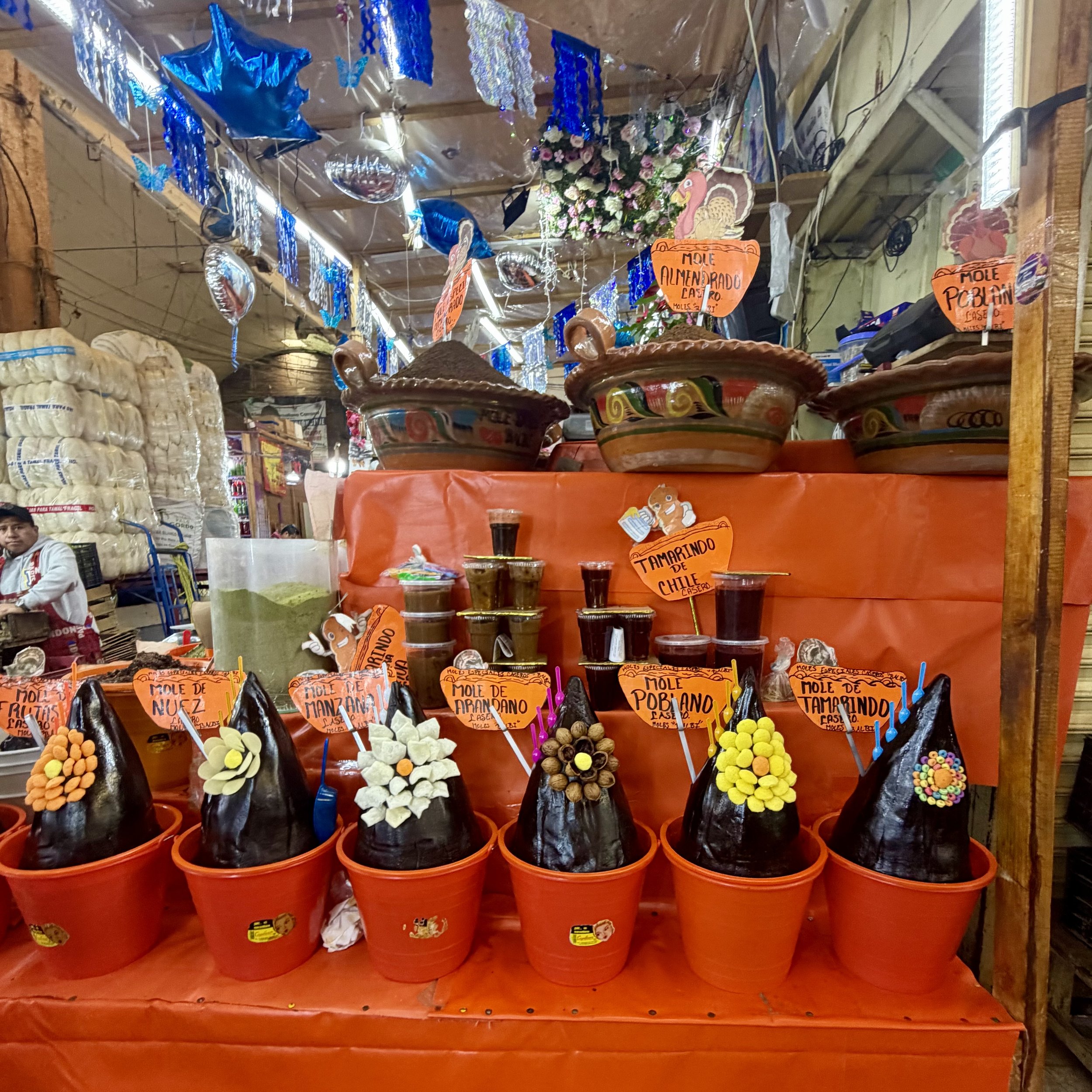
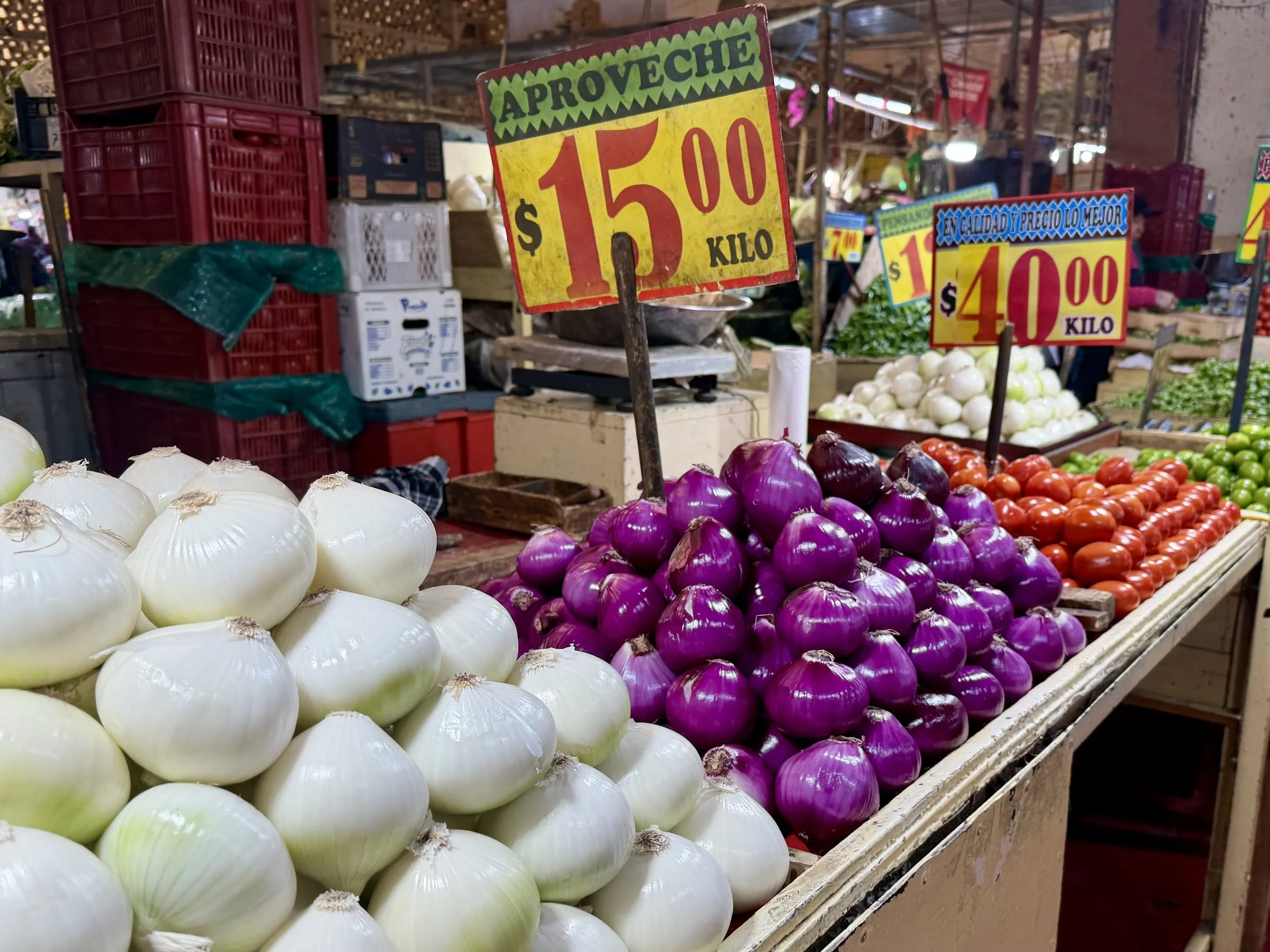
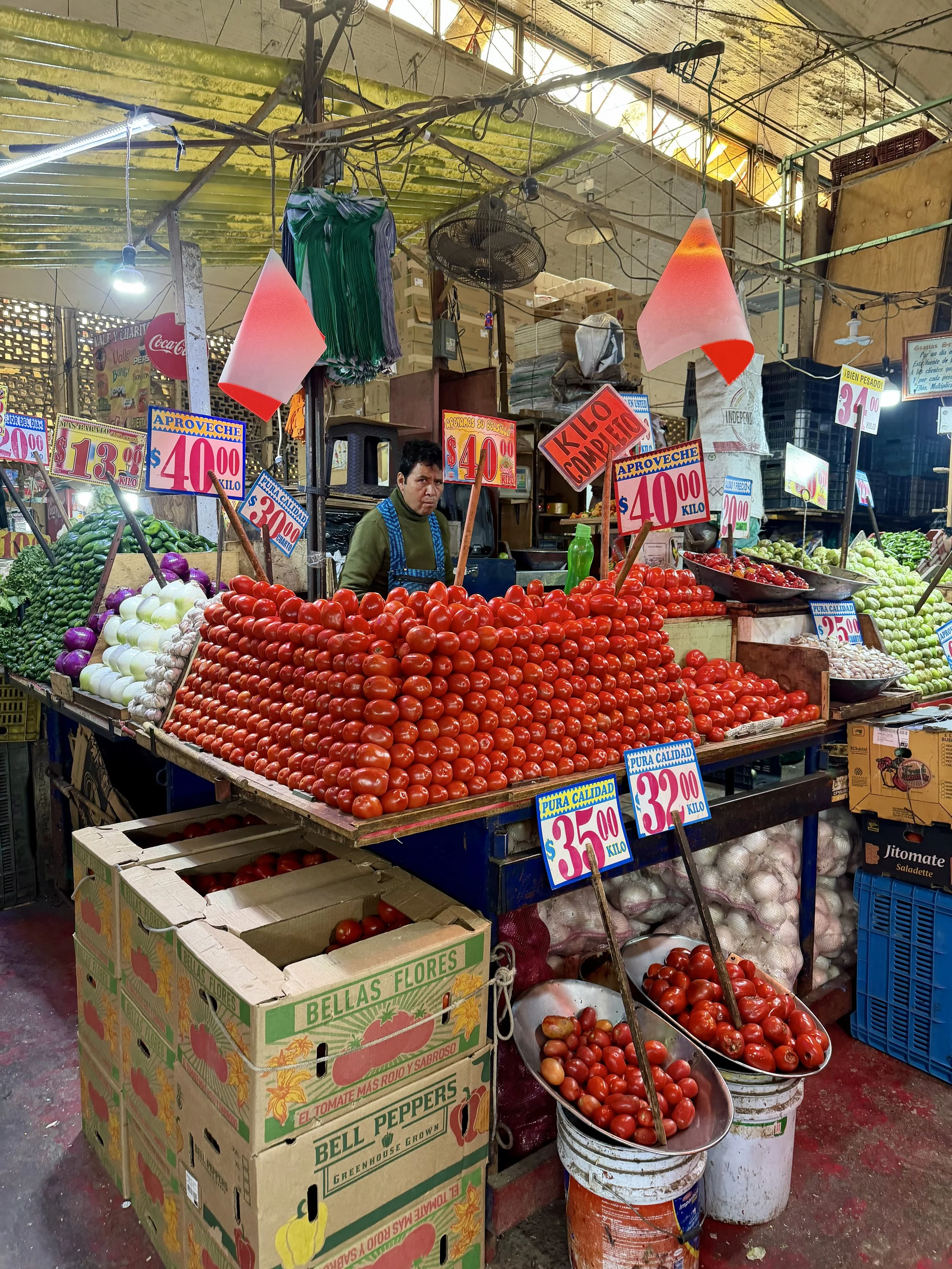
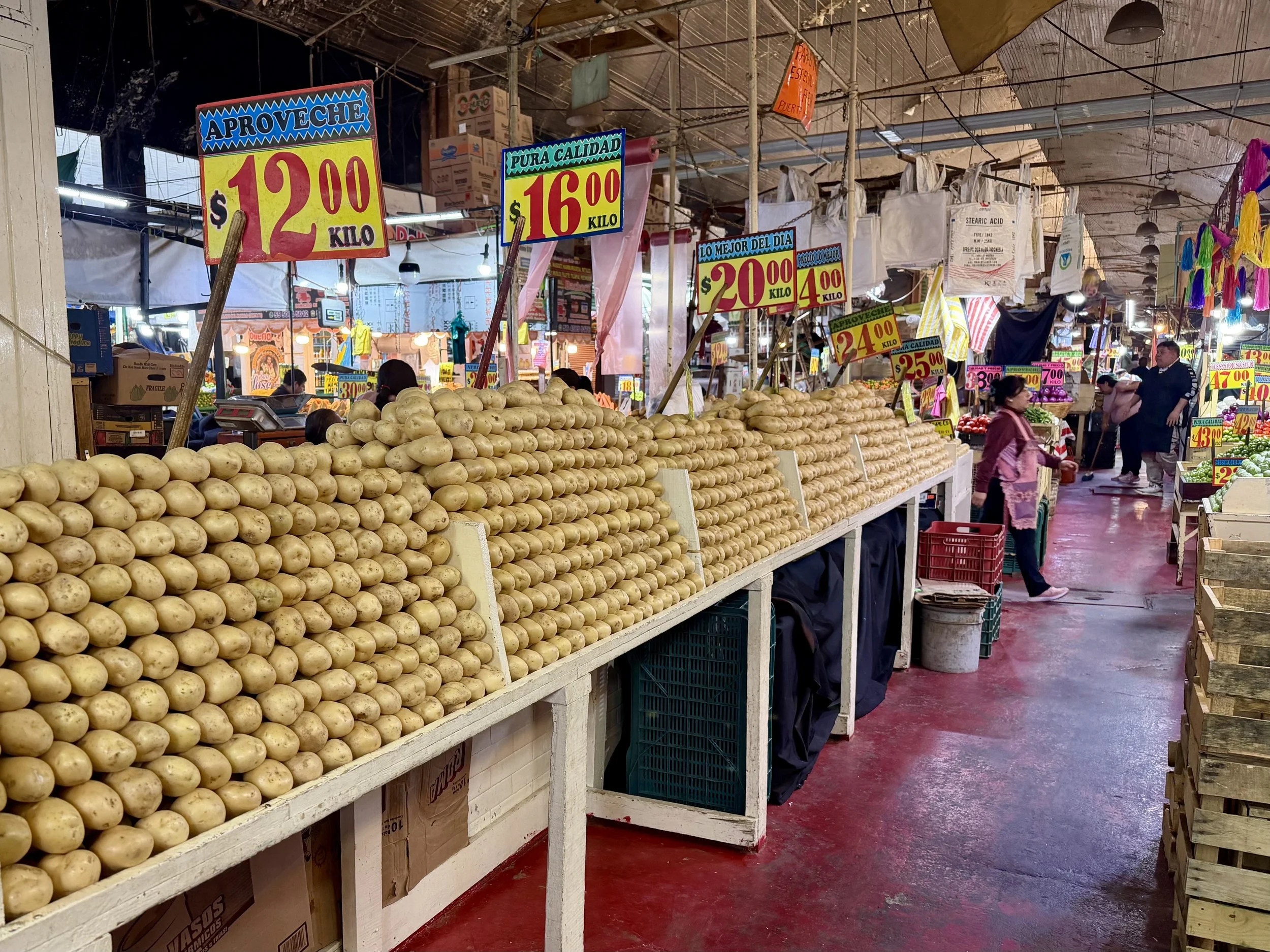
We made our way past many stalls of fresh produce. The market felt more open here - we could see the tall ceiling of the market building. There were mountains of tomatoes and potatoes stacked with impressive precision.
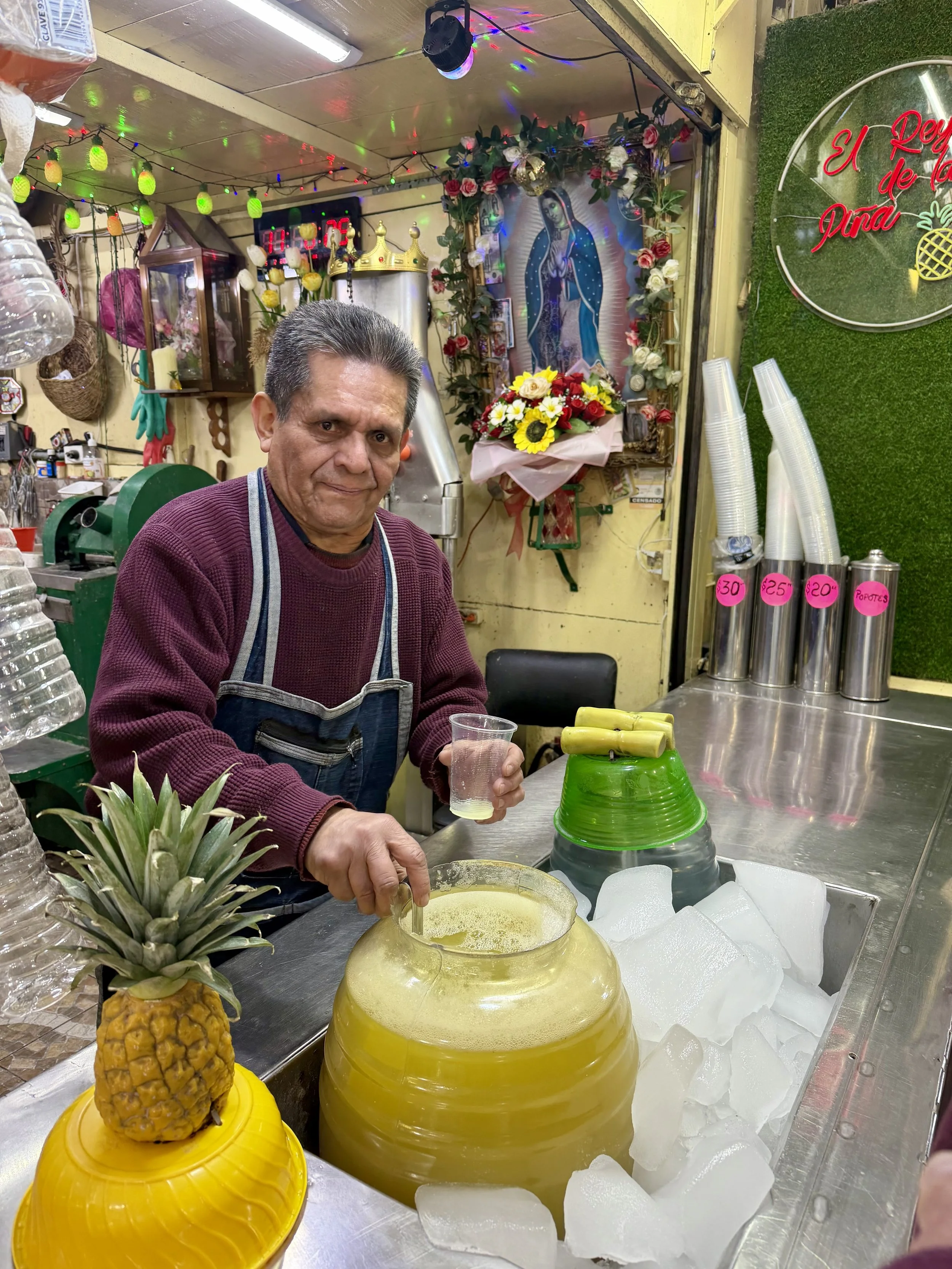
At El Rey de la Piña, we met Jorge, whose father was one of La Merced Market’s original vendors - he started selling juice here 68 years ago! Jorge ladled out glasses of fresh pineapple juice, which was refreshing and tart and absolutely wonderful.
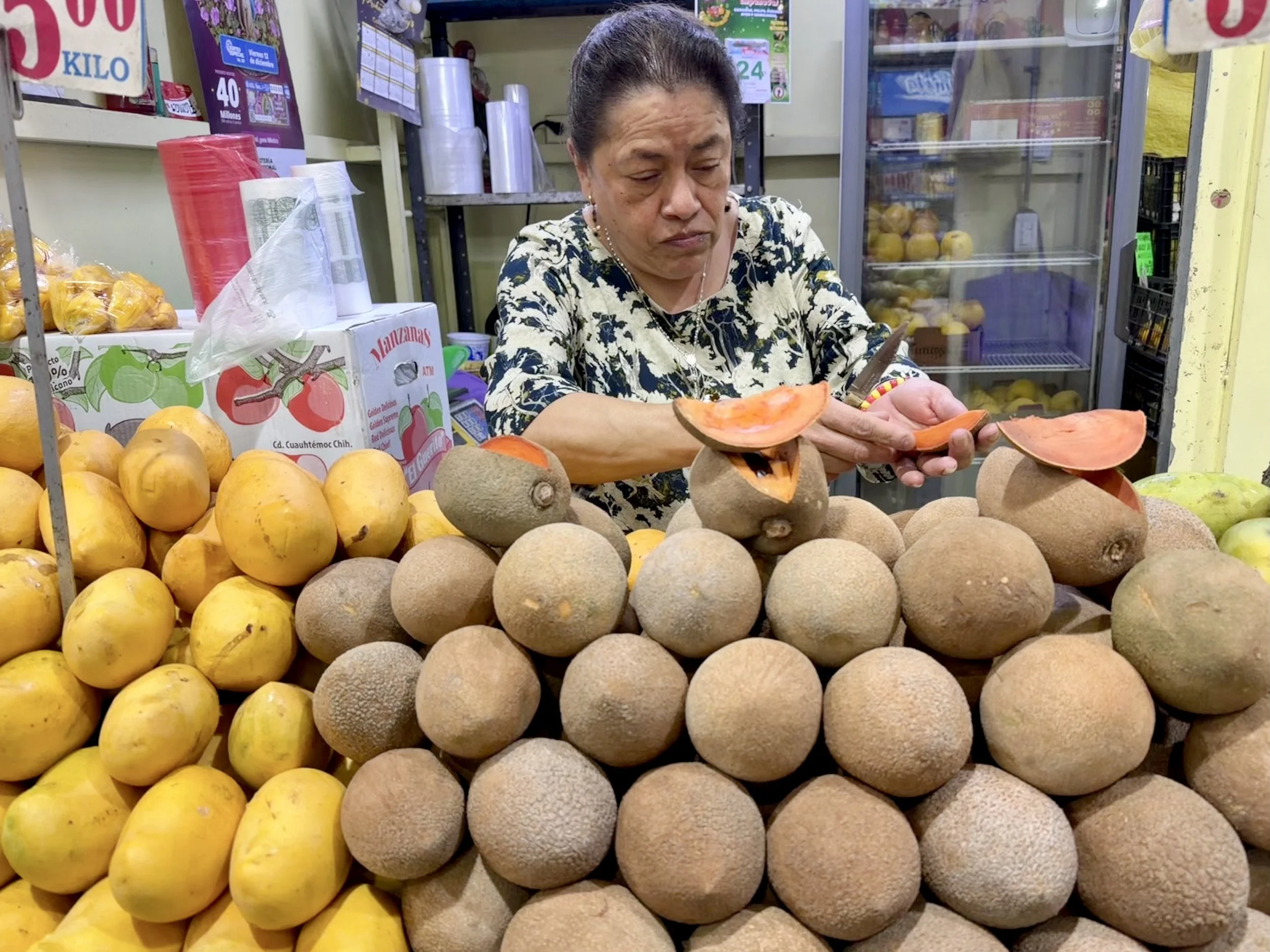
Next, we tasted a couple of fresh fruits. The mango was good: perfectly ripe, silky flesh with no hairs. The magey was new to us; we agreed with Paulina that the flavor was a cross between a banana and a melon. Delicious!
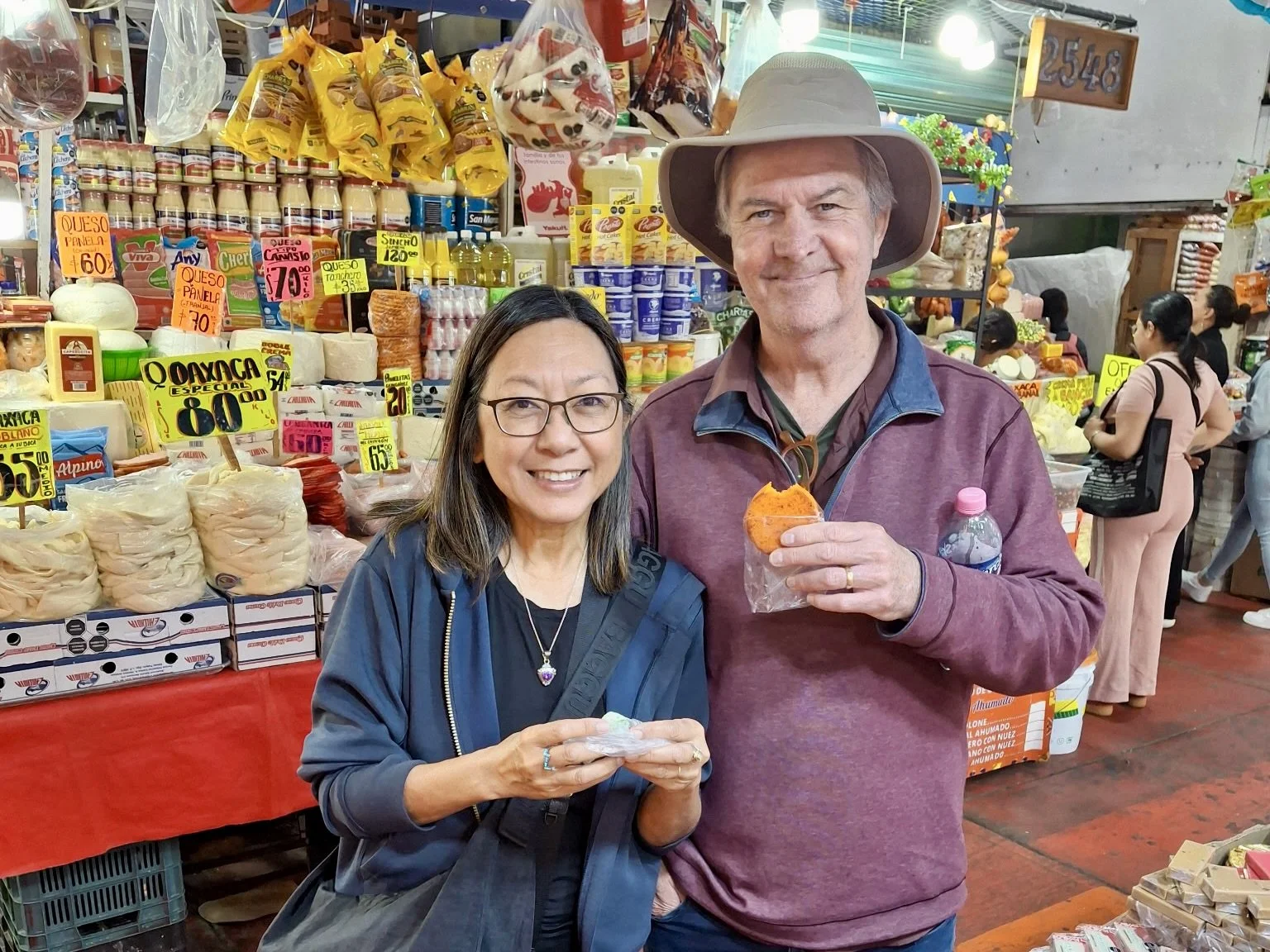
After that, we stopped at a stand piled high with colorful sweets made from candied fruit. We both selected cocadas (coconut candies) - mine was a stuffed lime, and Steve’s was an orange patty. Yummy!
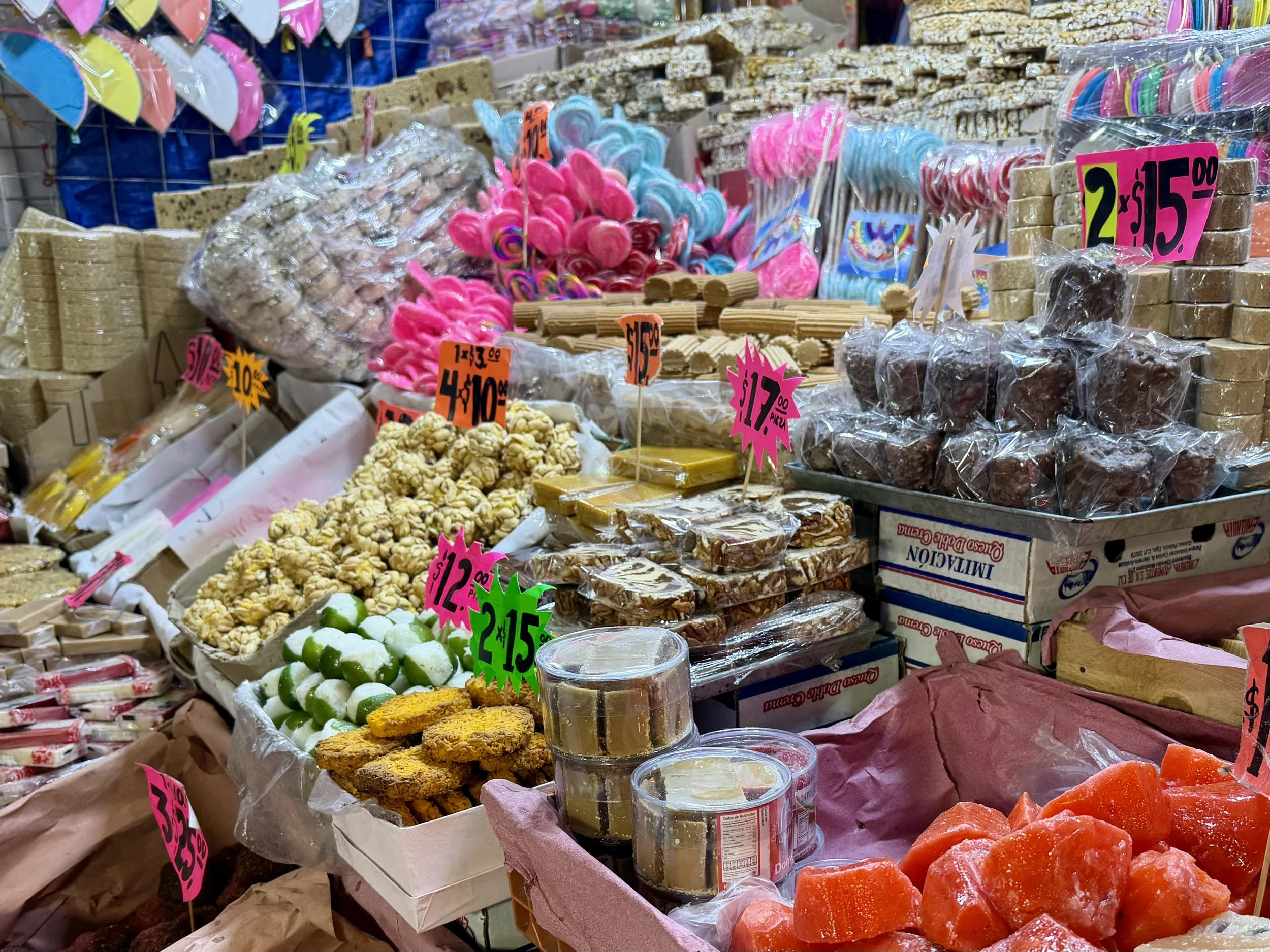
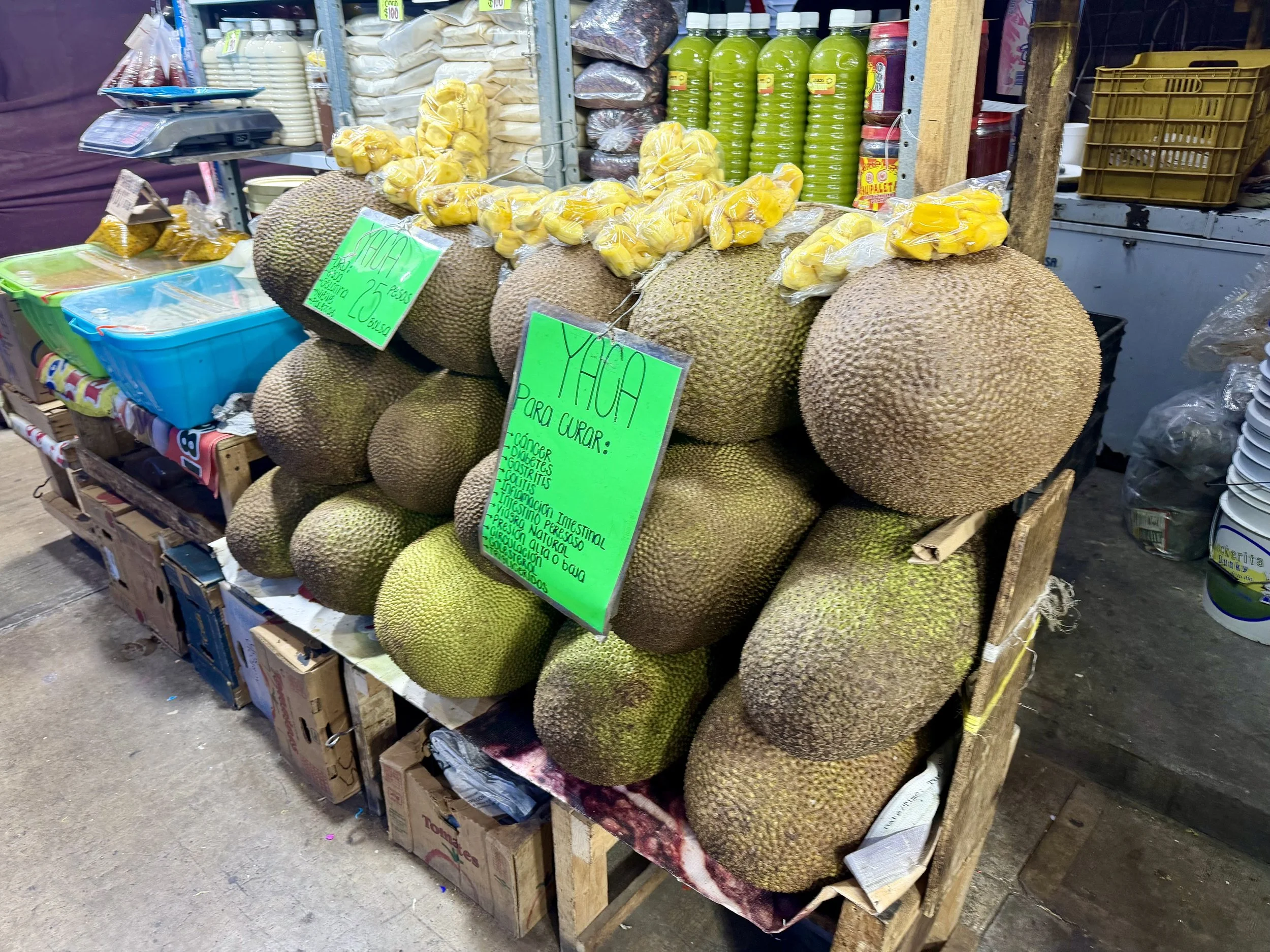
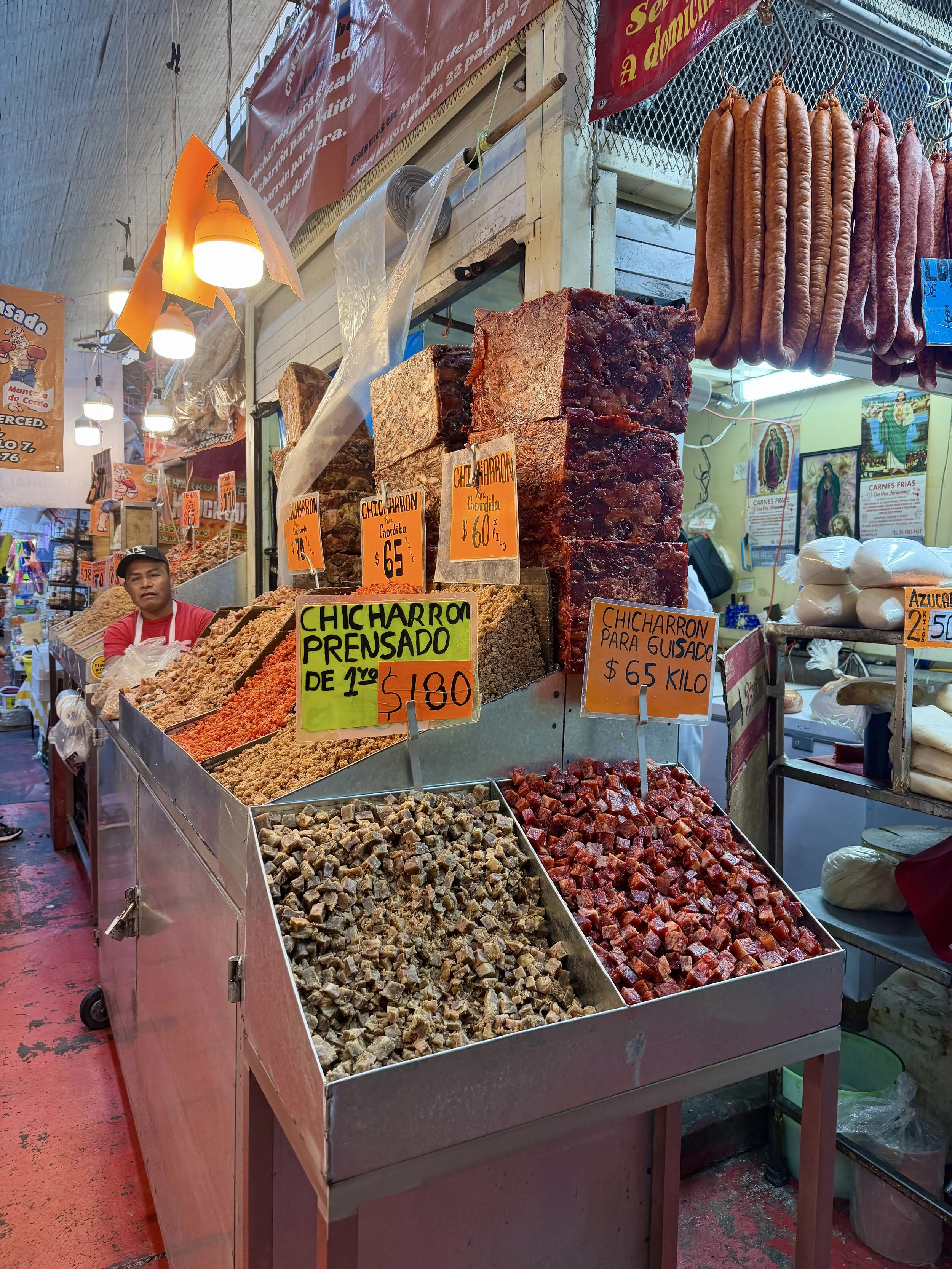
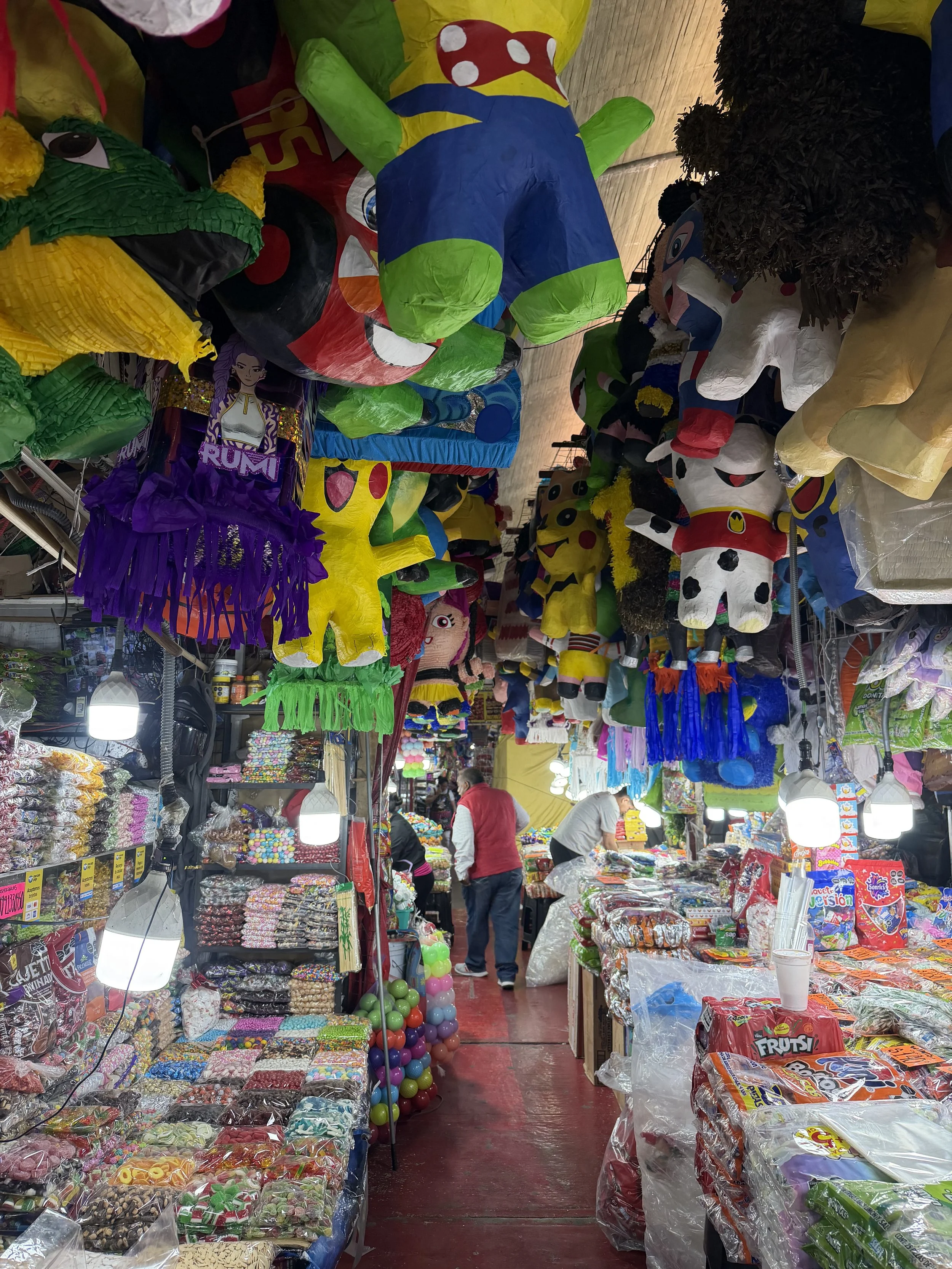
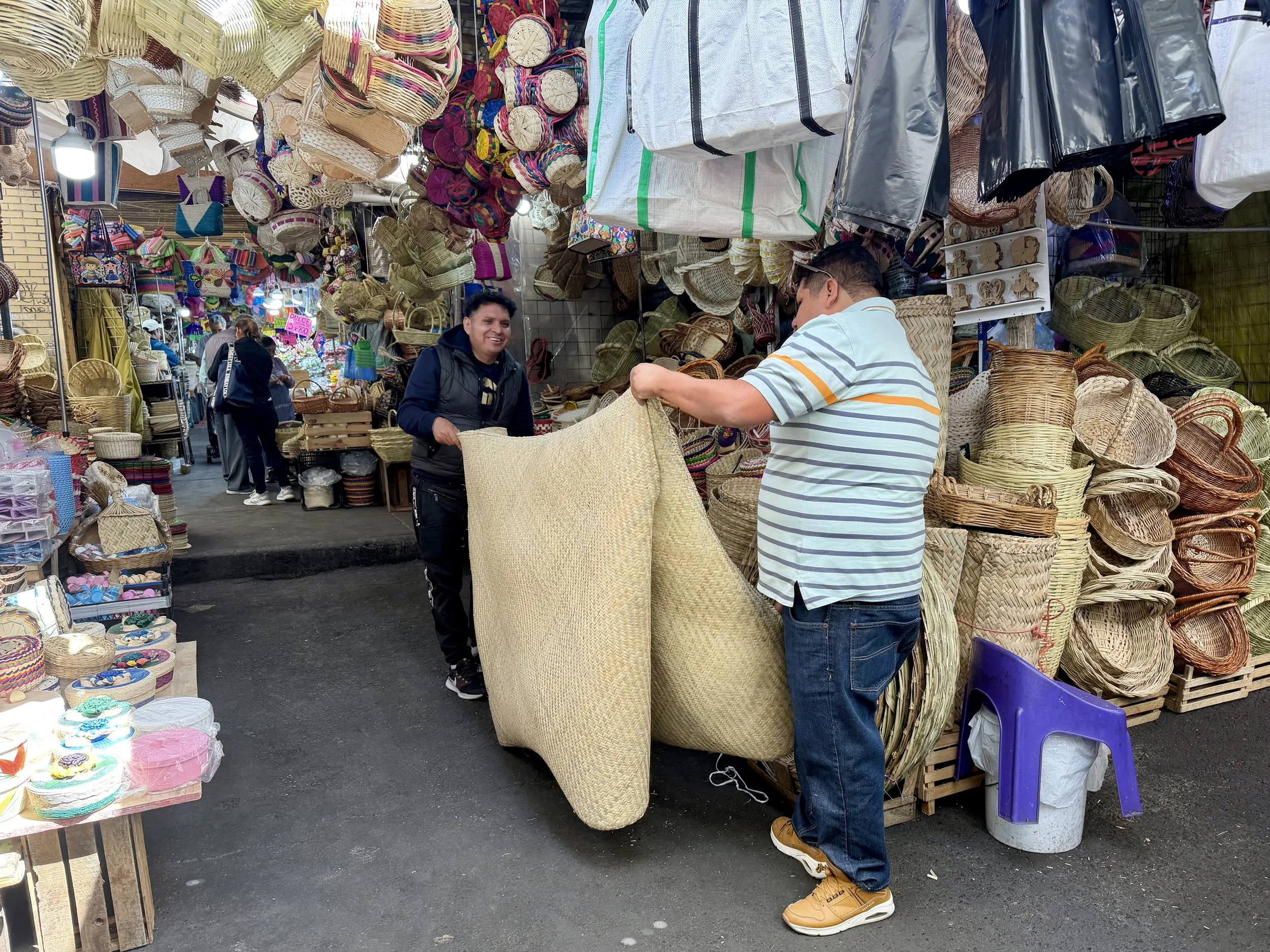
I was curious about a fragrant pile of yaca (jackfruit) and some intriguing red blocks of chicharrón prensado (leftover bits of pork skin and meat, seasoned and pressed). But I had fallen behind and had to run to catch up. Paulina led us briskly through a large section with pińatas and goodies to fill them. Soon we had left the market building and were back outside, where stalls filled the street, selling baskets and cooking implements and much more.
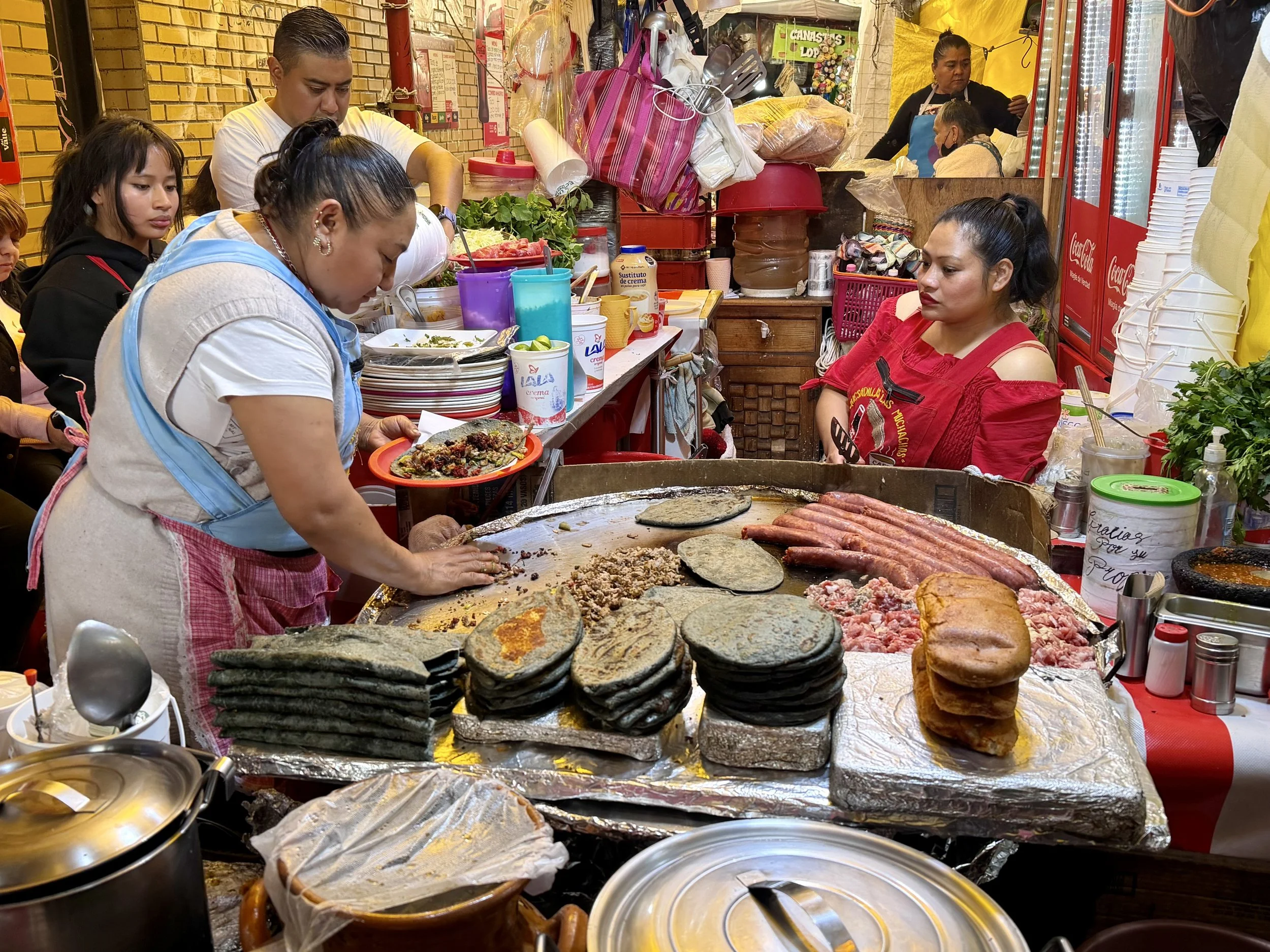
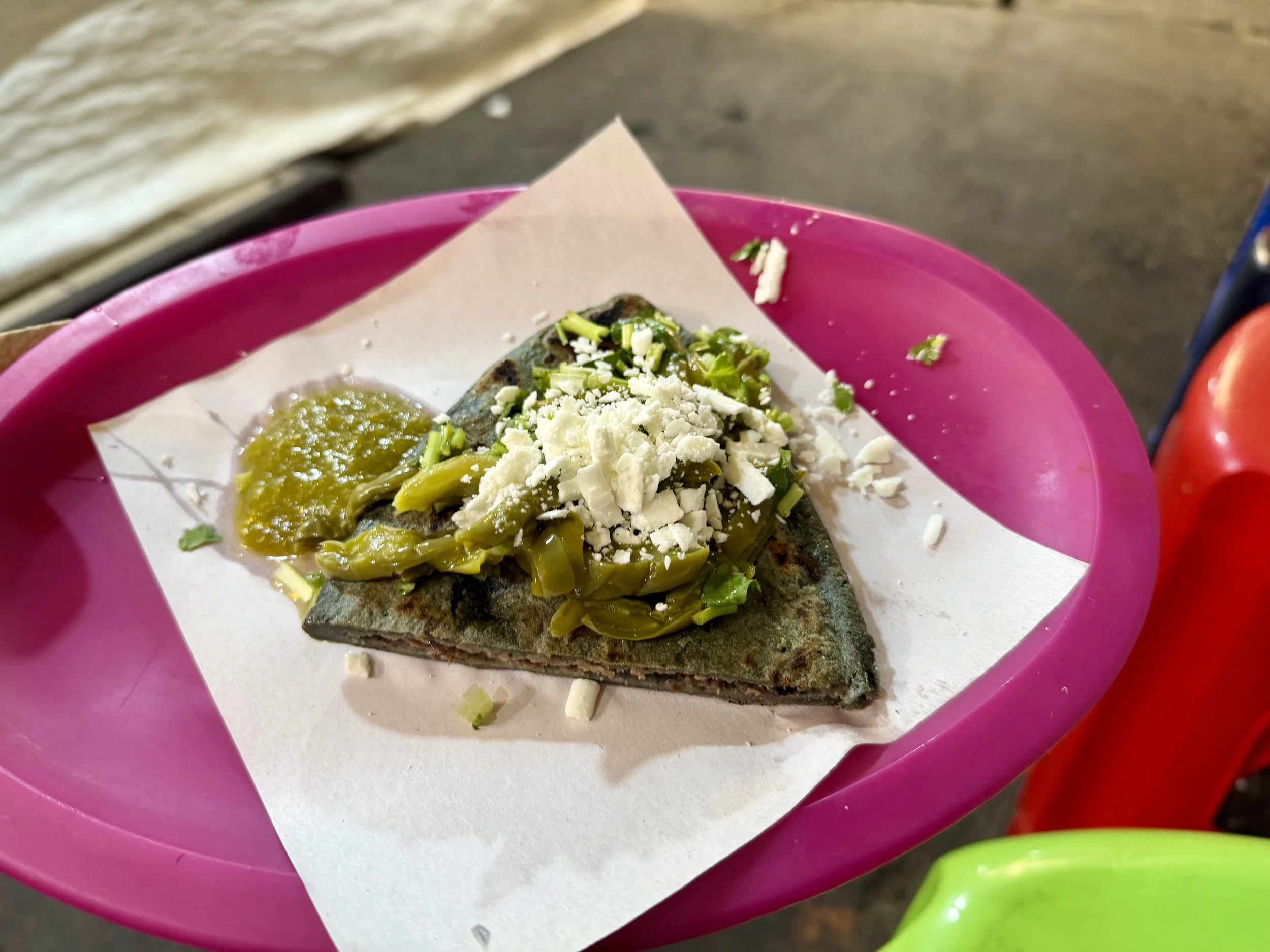
At a stall called Las Muchachas (The Girls), we sat on plastic stools on the side of the narrow street and watched the women prepare tlacoyos on the comal. These were thick blue masa patties stuffed with beans and topped with nopales (cactus paddles) and queso fresco (fresh cheese). The tlacoyo was delicious, but by now I was feeling overly full, in a good way.
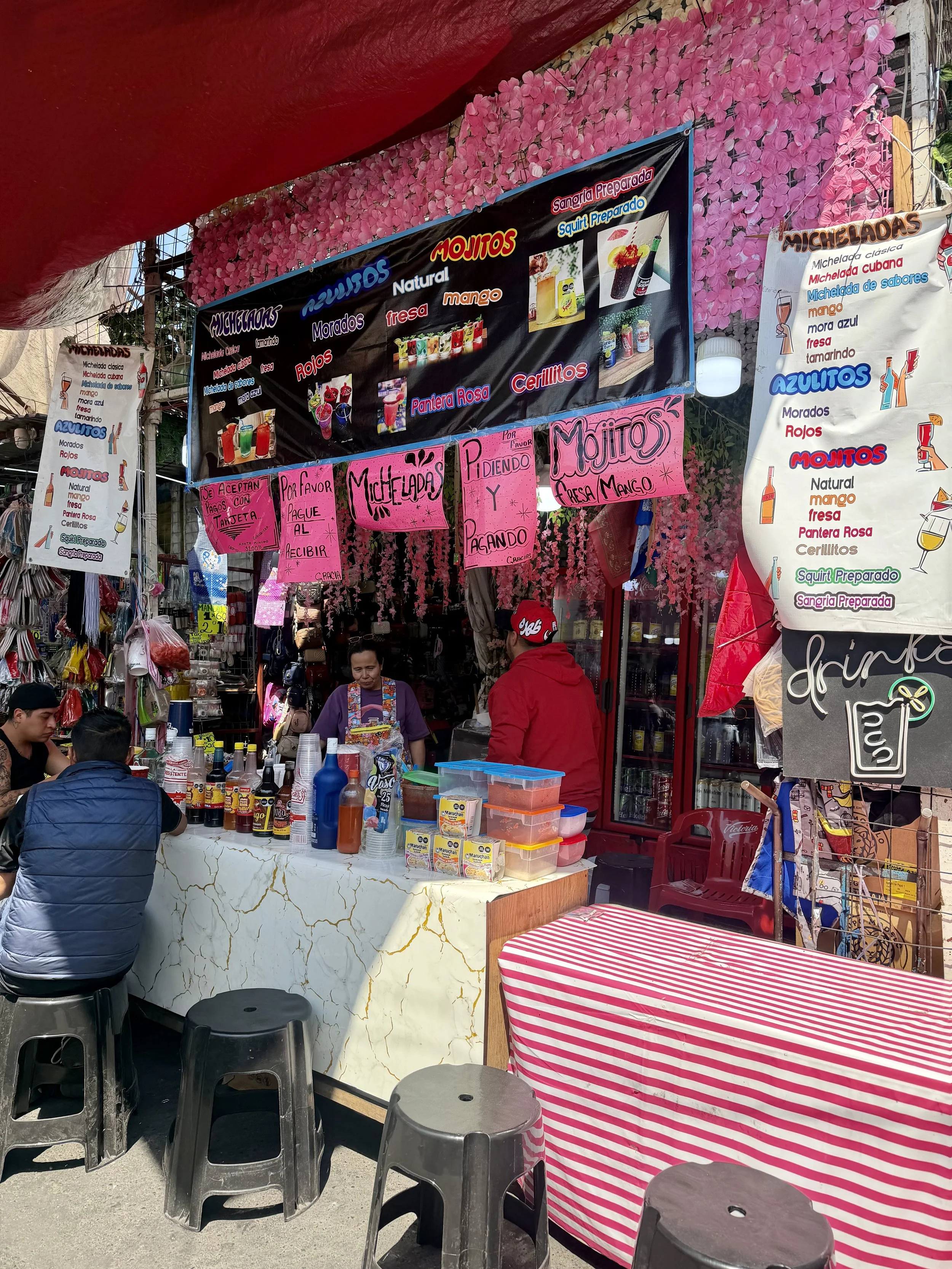
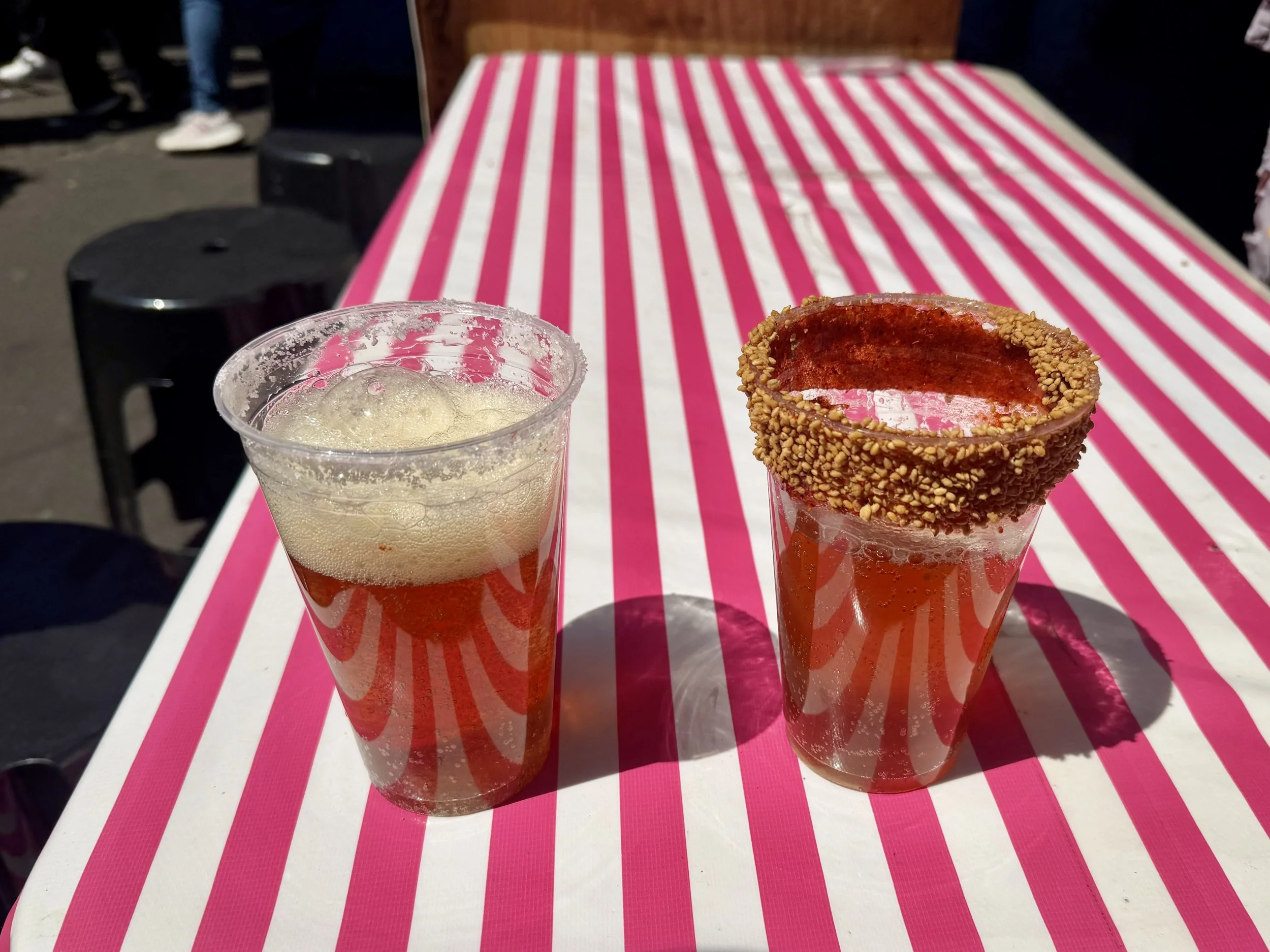
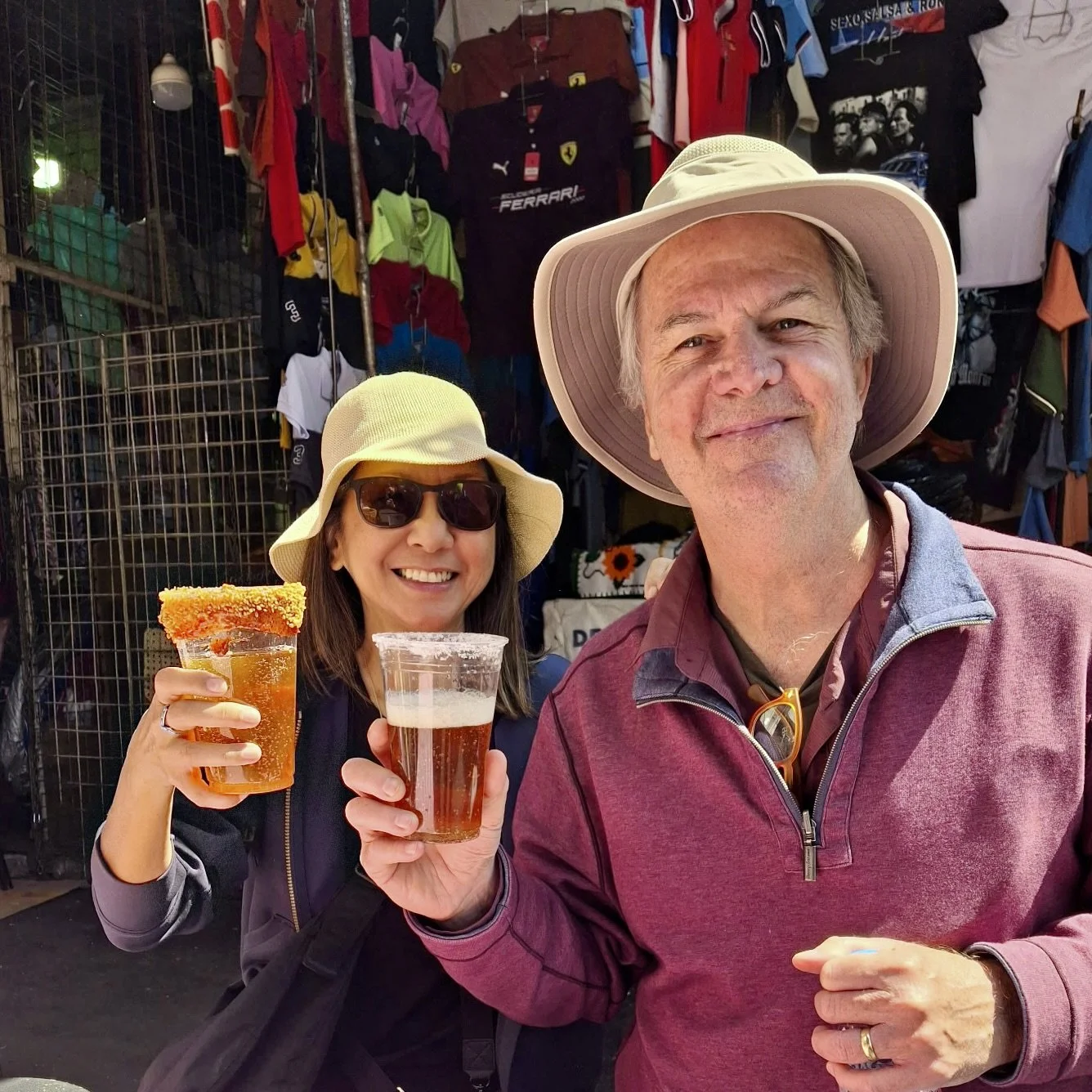
There were still plenty of interesting food vendors out here in the outdoor tianguis. By now the morning chill had gone, and we were out in the hot sun. So it was fitting that our last stop was for cold micheladas (beer cocktails). The CDMX version had no Clamato juice, which was fine with us. We ordered one with a traditional salt rim, and one rimmed with chamoy and sesame seeds. Both Steve and I liked the chamoy best!
La Merced Market was fascinating, a feast for both the eyes and the palate. It was also overwhelming! For us, a guided food tour was definitely the right way to experience it. We’re glad we decided to split one of each dish because there was a LOT of food. Here’s a roundup of what we tasted:
taco al pastor
taco campechano con cecina
quesadilla con flor de calabaza
six different moles
juego de piña
mango y magey
cocadas
tlacoyo con nopales
michelada