Lassen Part 1: The Volcano and the Highway
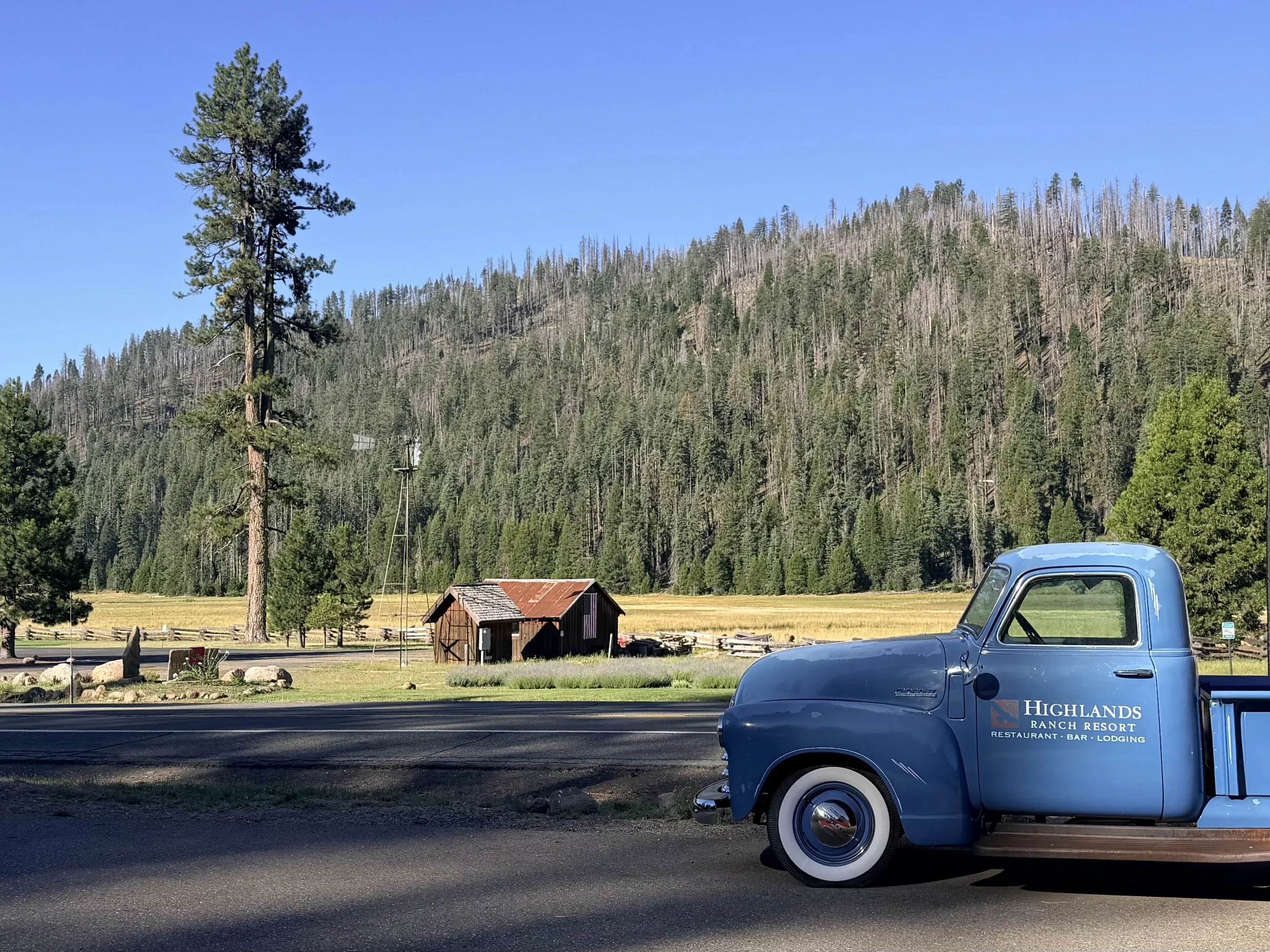
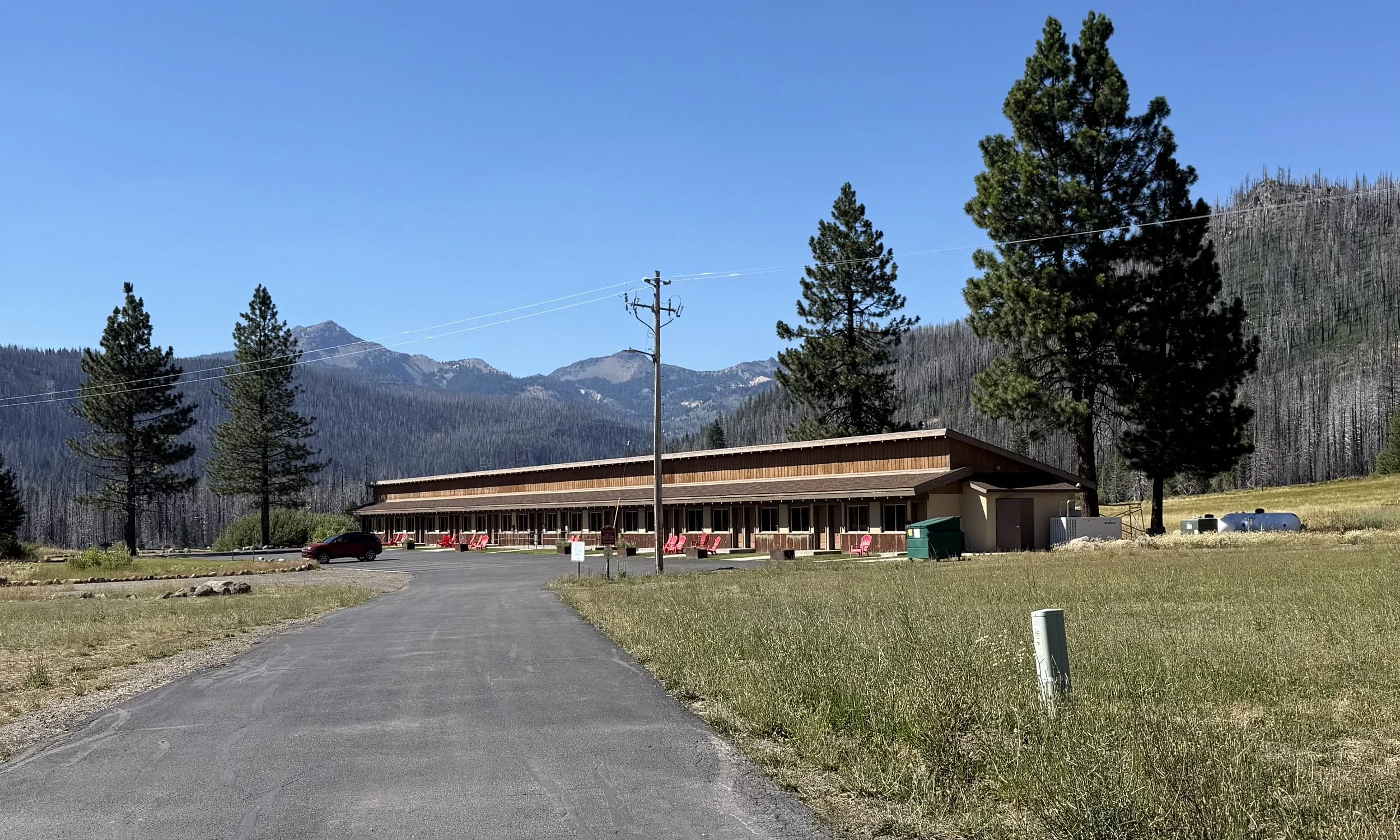
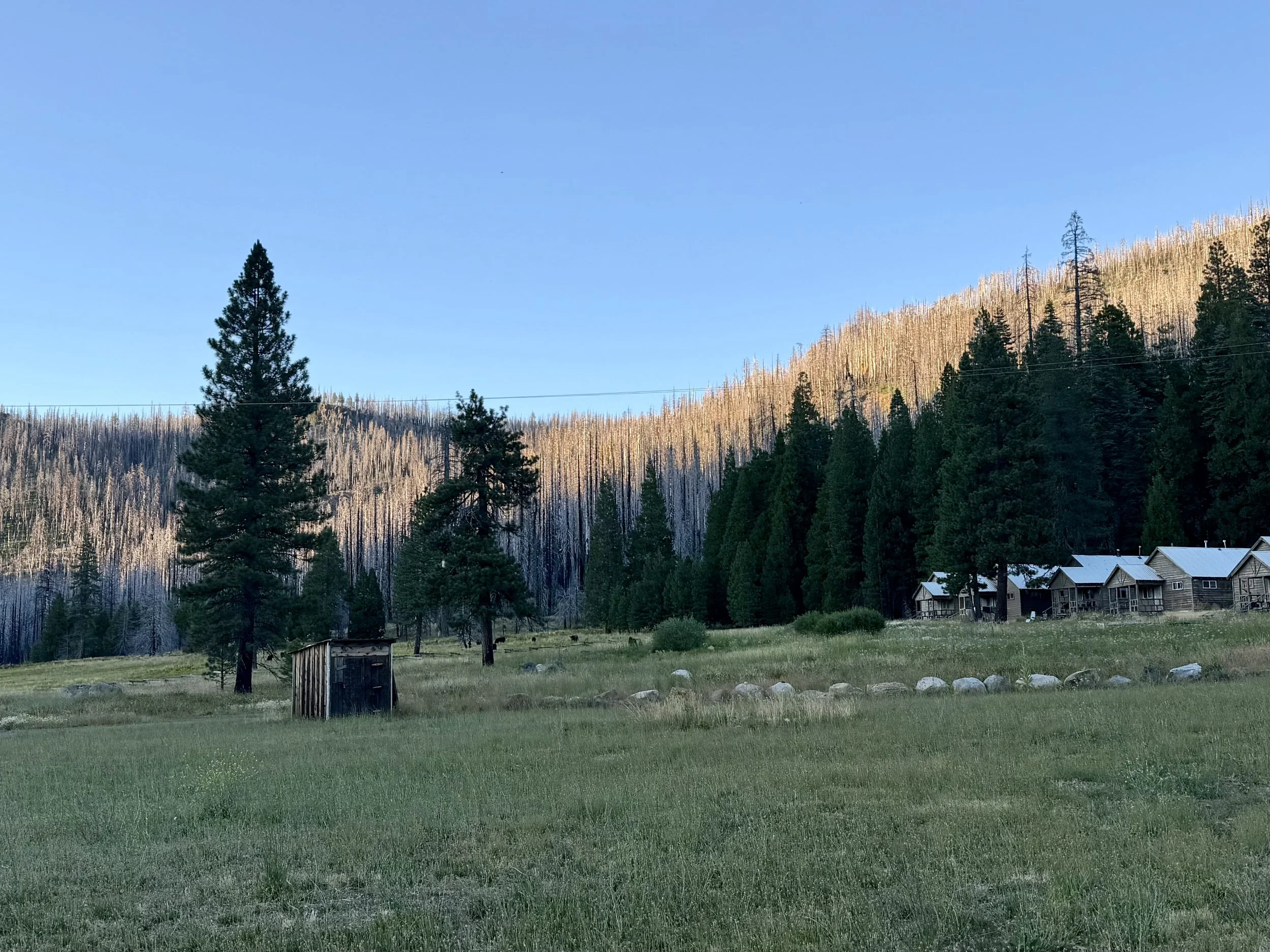
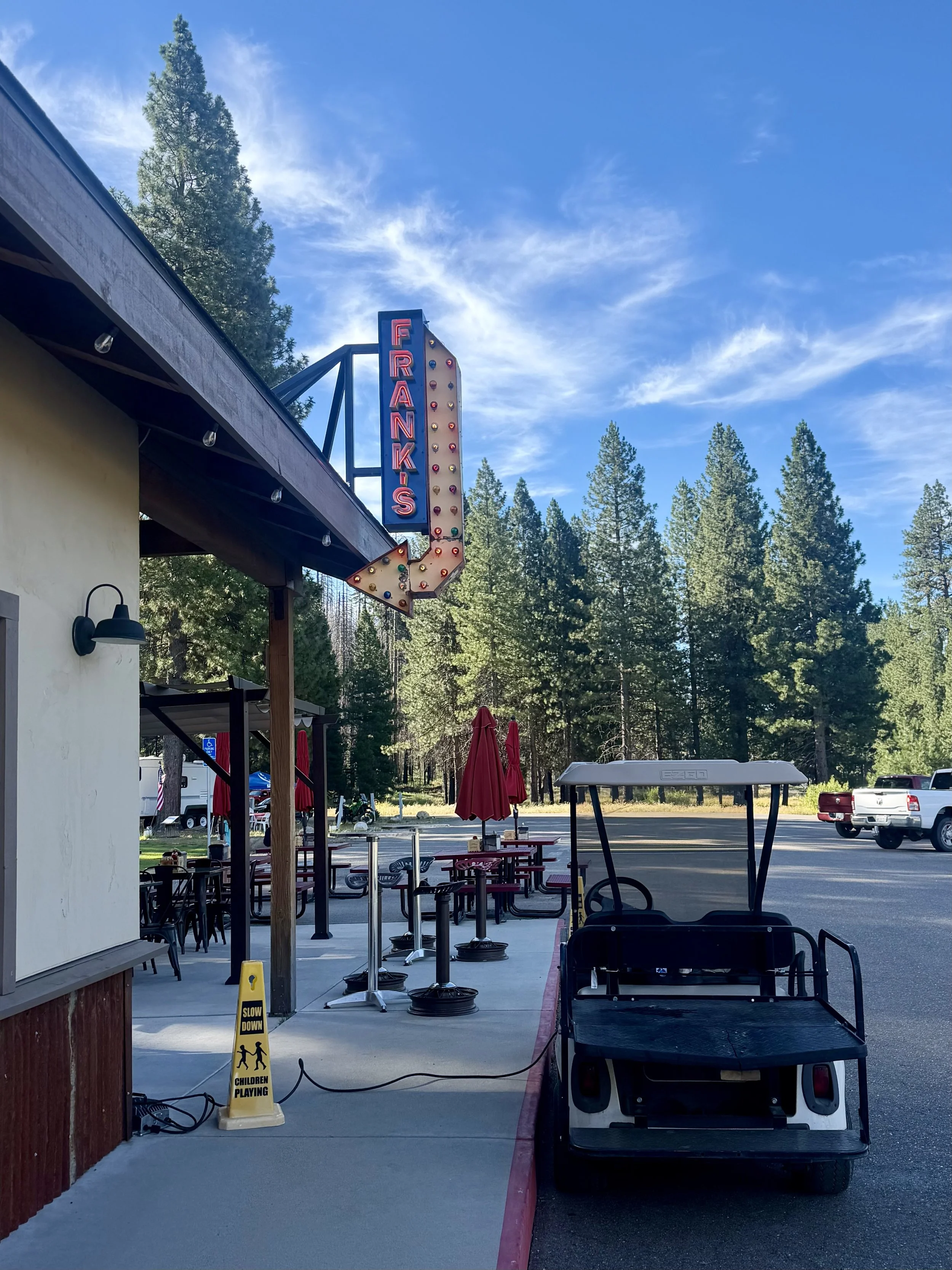
Our home base for exploring Lassen Volcanic National Park was a motor inn near the southwest entrance to the park. It was a simple place, with nice views of a meadow and a mountain, and a folksy restaurant onsite. We started each day sharing an excellent breakfast burrito (bacon, eggs, tater tots, and salsa).
We entered the park in the southwest and made a brief stop at the Visitor Center, on the spot where the ski chalet once stood. (Lassen was a popular ski area from the 1940s through the mid-1990s.) We learned that Lassen Peak is an active “plug dome” volcano. Its last major eruption was in 1915, which is relatively recent in volcano years.
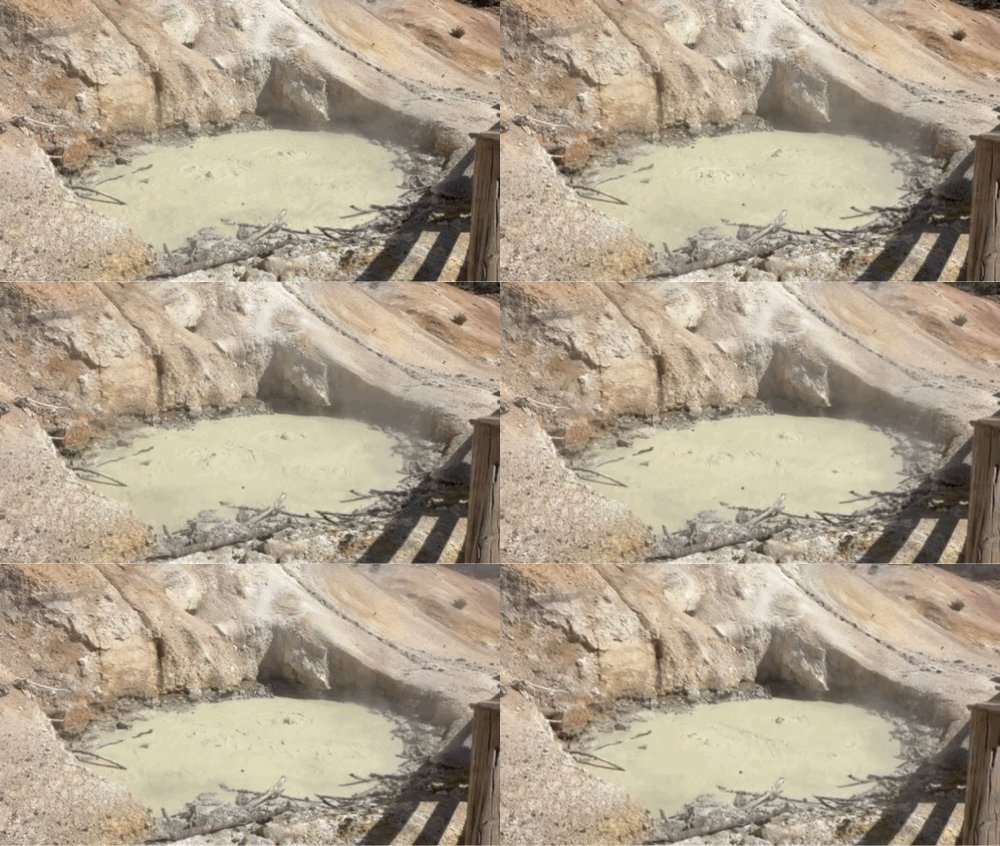
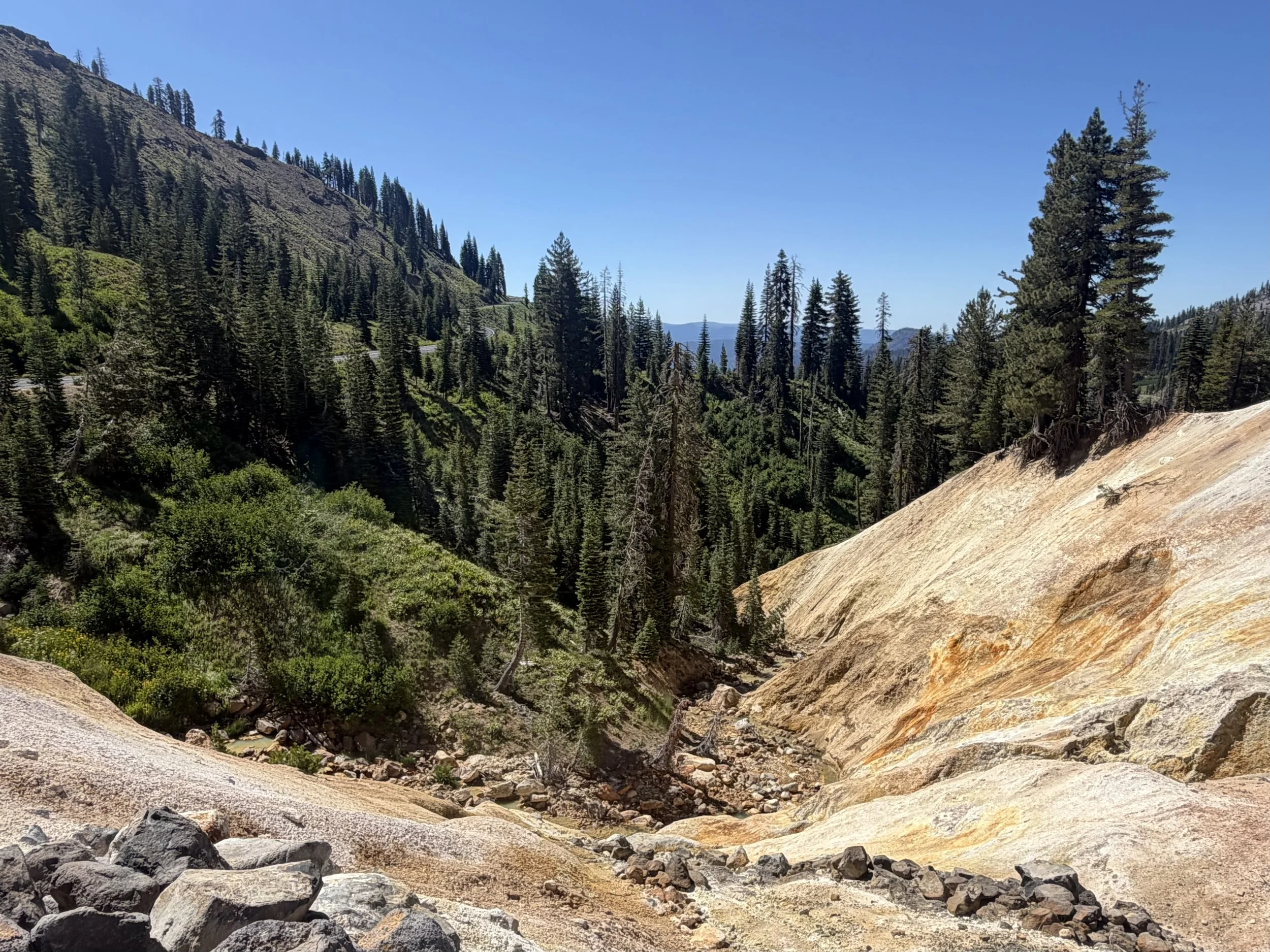
Just past the Visitor Center was Sulphur Works, a hydrothermal area right on the highway. The air smelled of matches and rotten eggs. The ground was colorful with deposits of sulphur and other minerals. Hot clouds rose from fumaroles (steam vents). The mud pots were watery, and boiling vigorously! It was a reminder that about six miles beneath us was the same molten lava that created the surrounding volcanoes.
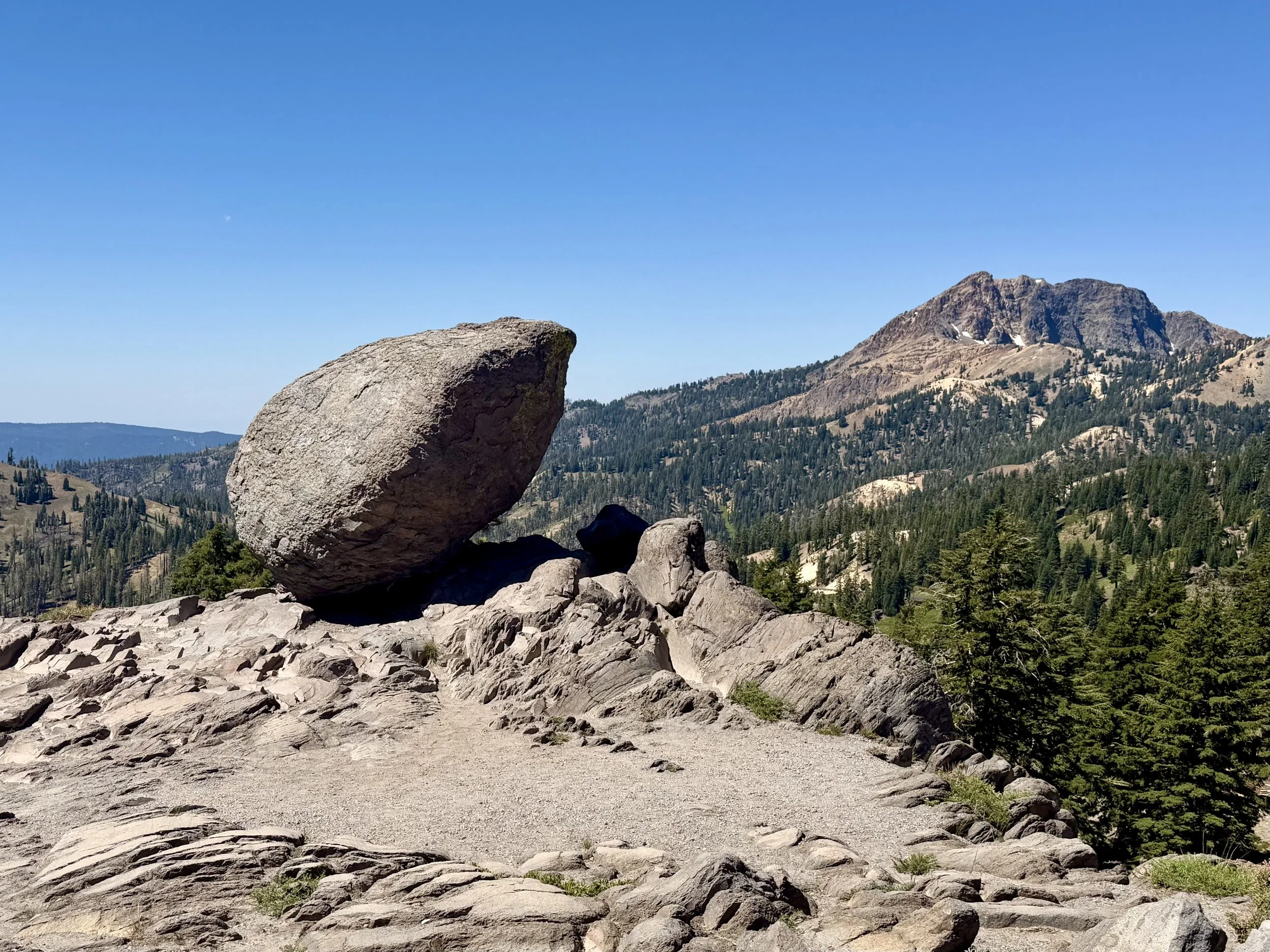
We continued along the park highway, which wound through the park for thirty miles. We used the self-guided audio tour on the National Park Service (NPS) app to learn more about the stops along the highway. Highlights included:
A huge, egg-shaped “glacial erratic” - a boulder carried several miles by a glacier
Brokeoff Mountain, a remnant from a much larger volcano called Tehama
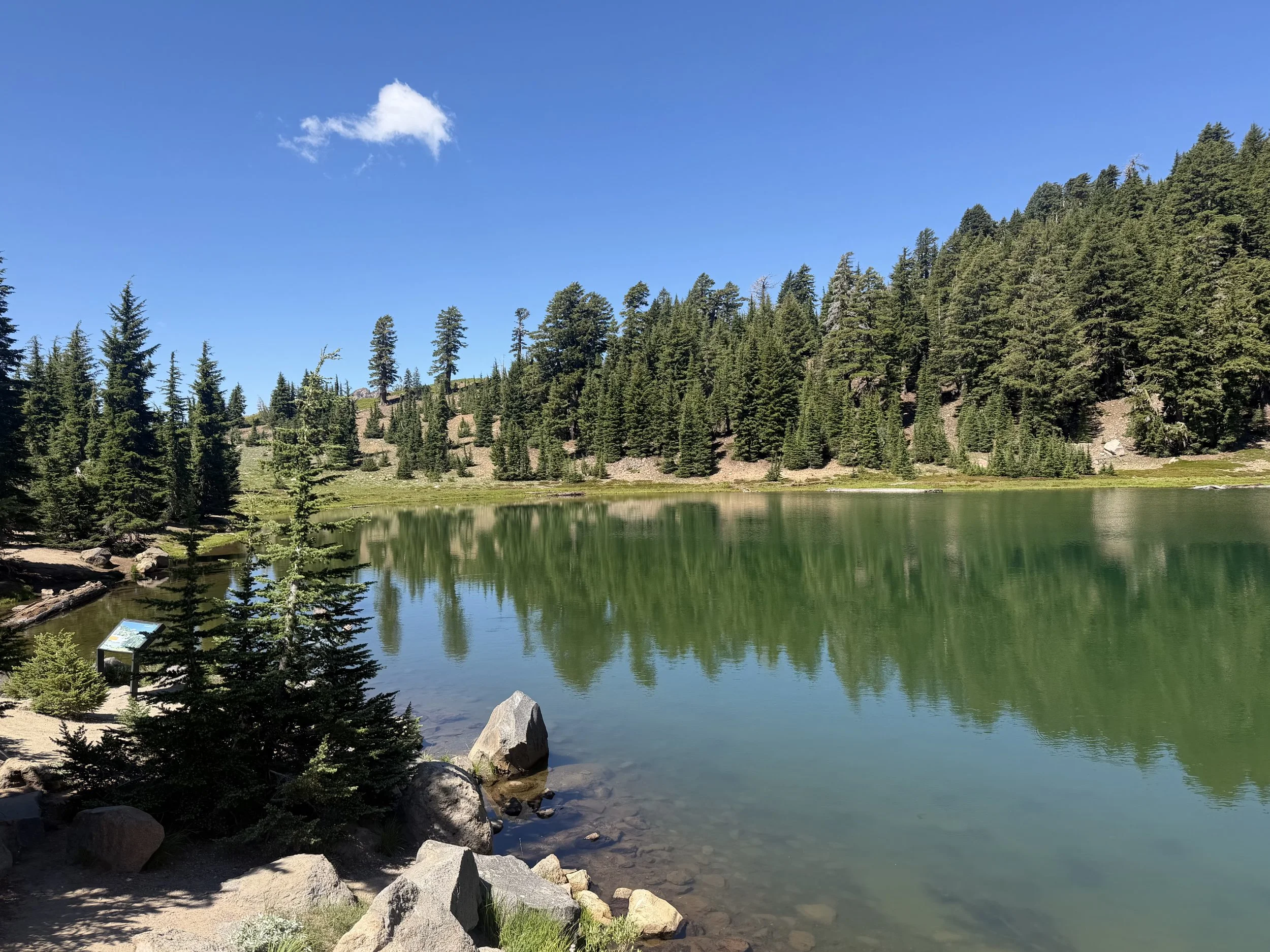
Emerald Lake, shallow and green with algae
Lake Helen, reflecting Lassen Peak in its deep blue water
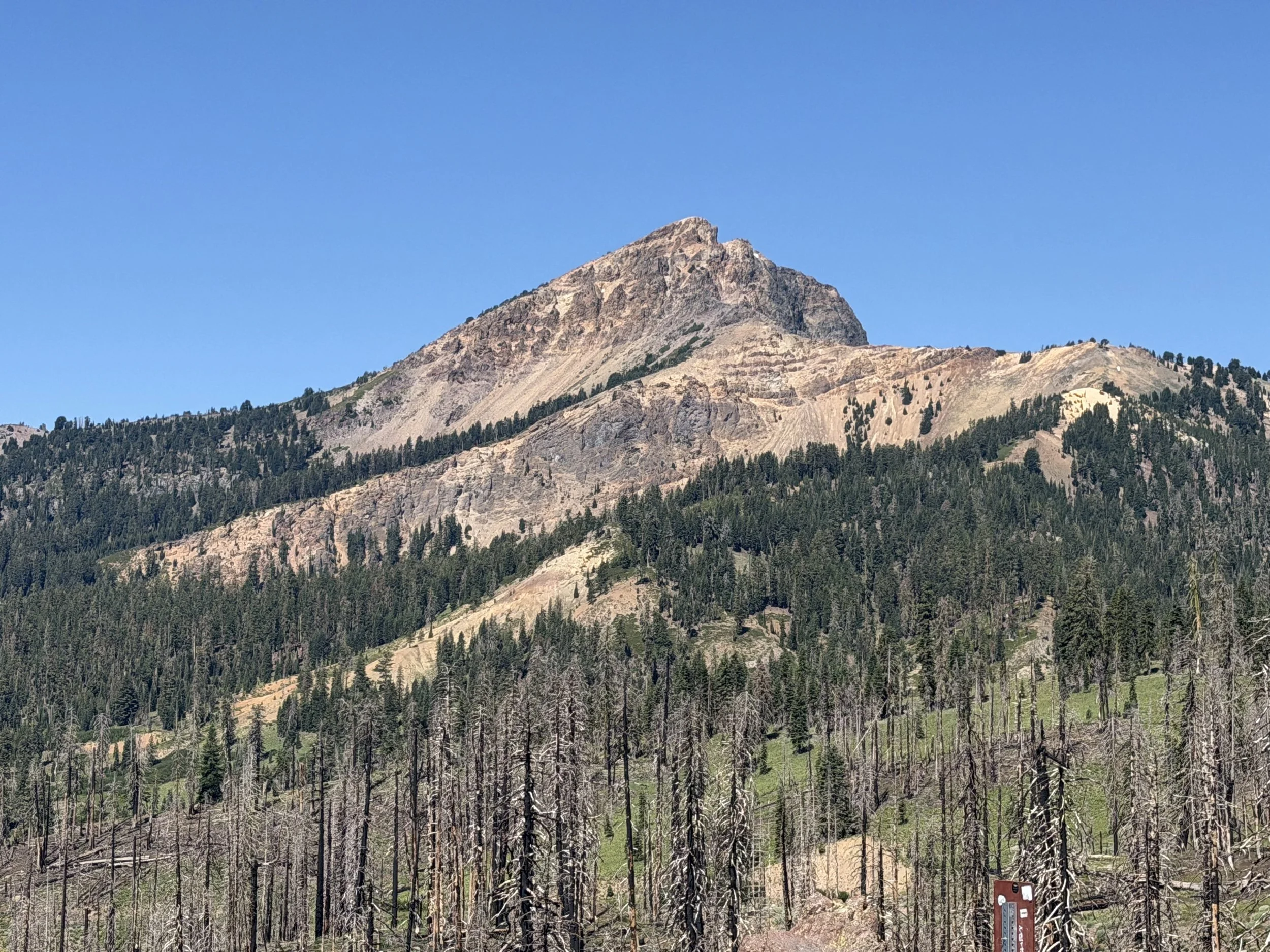
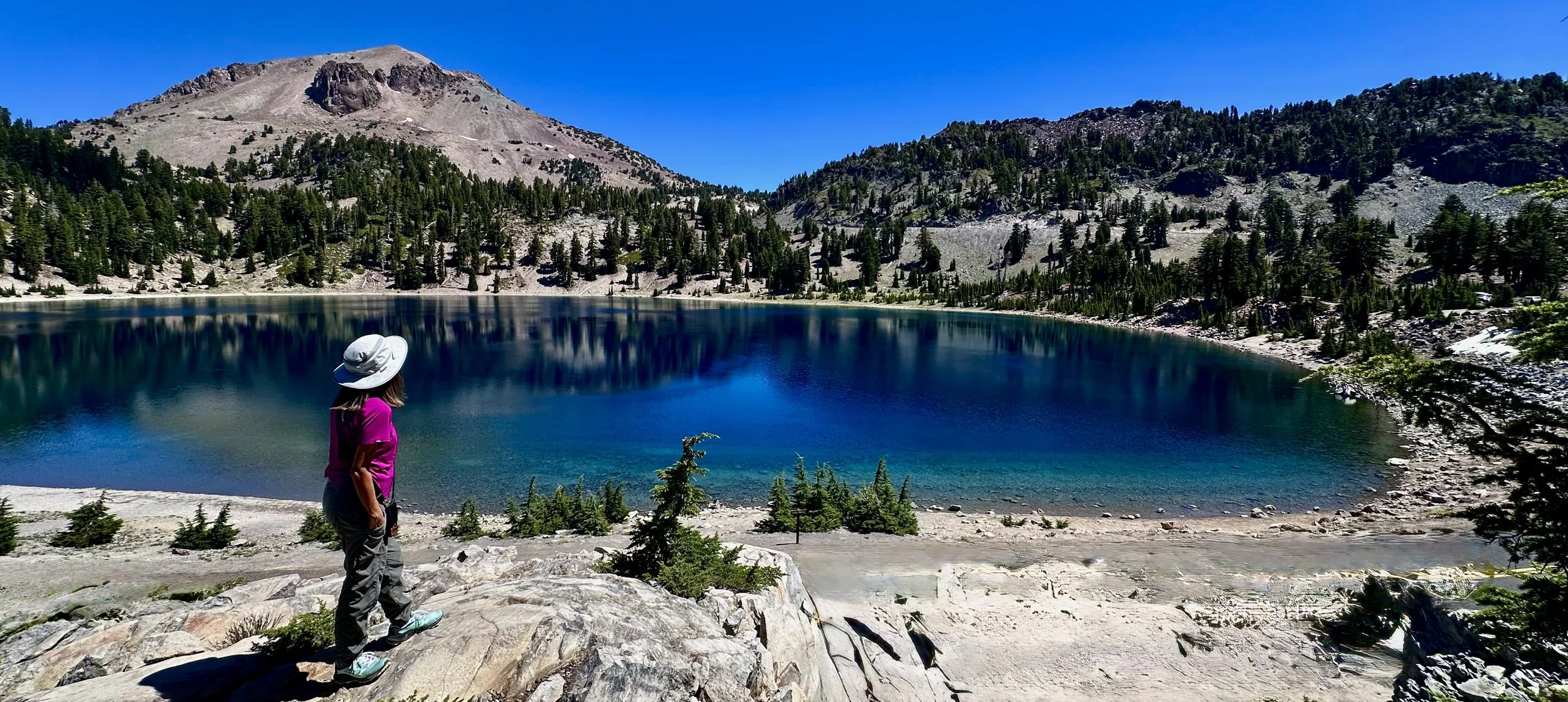
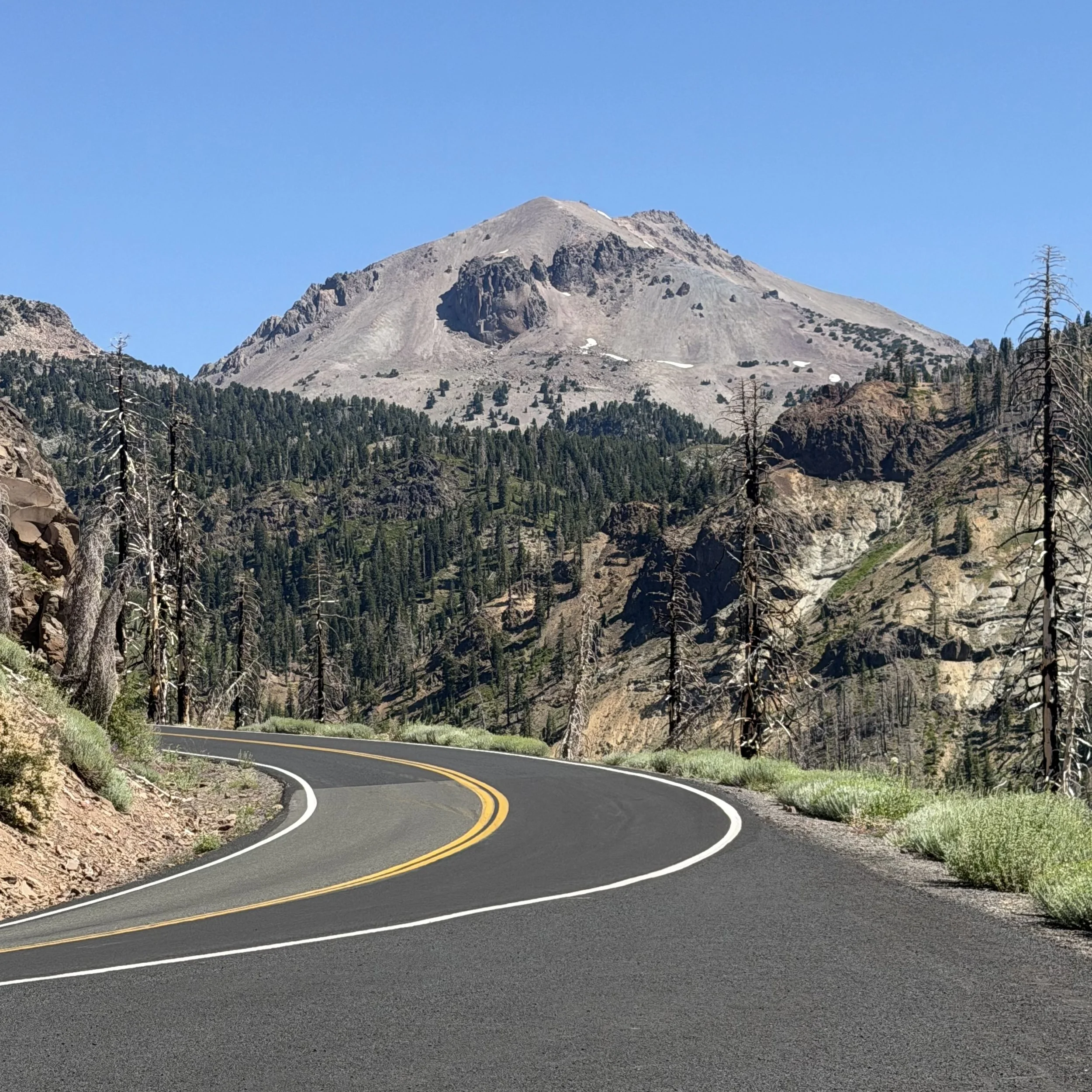
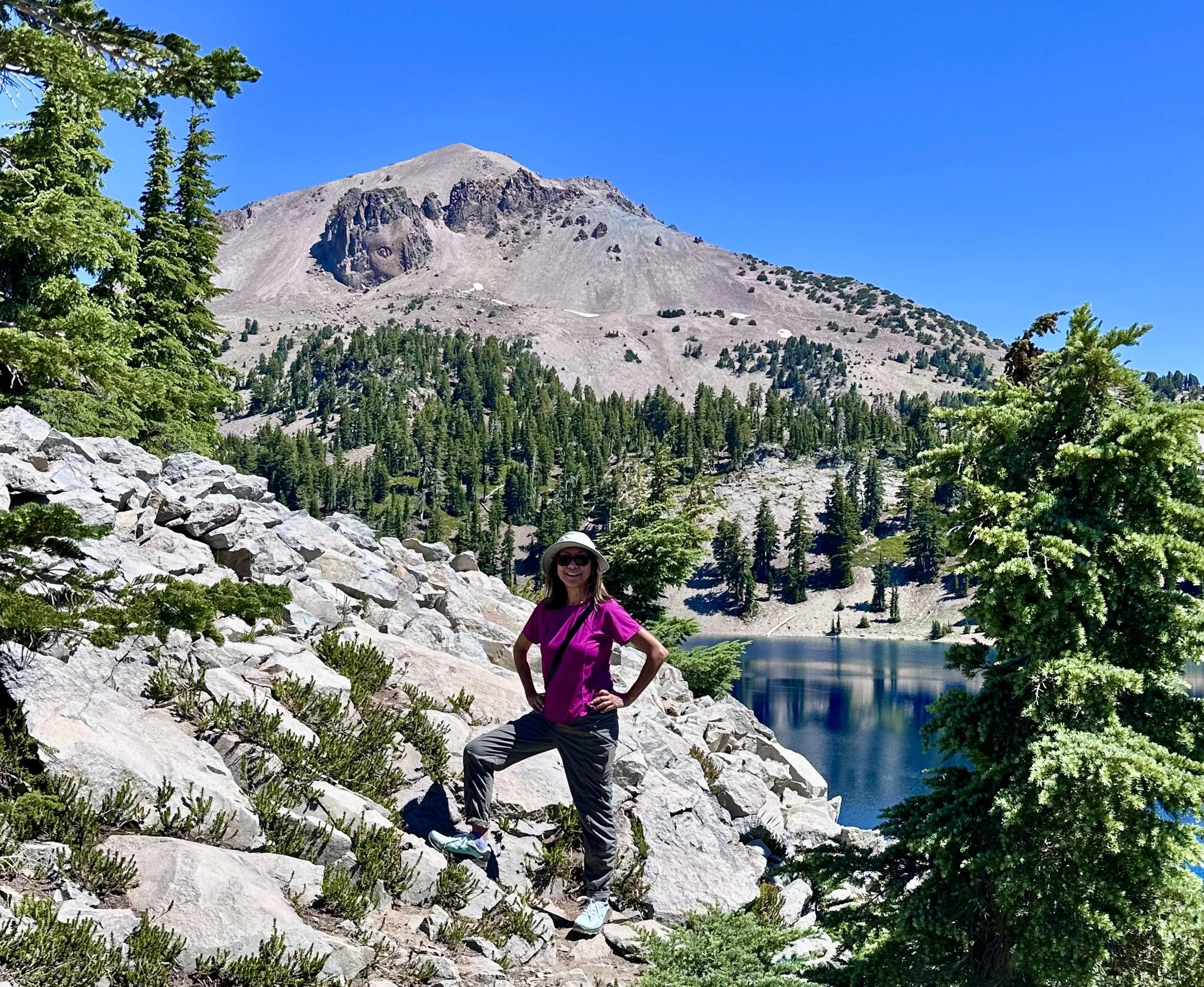
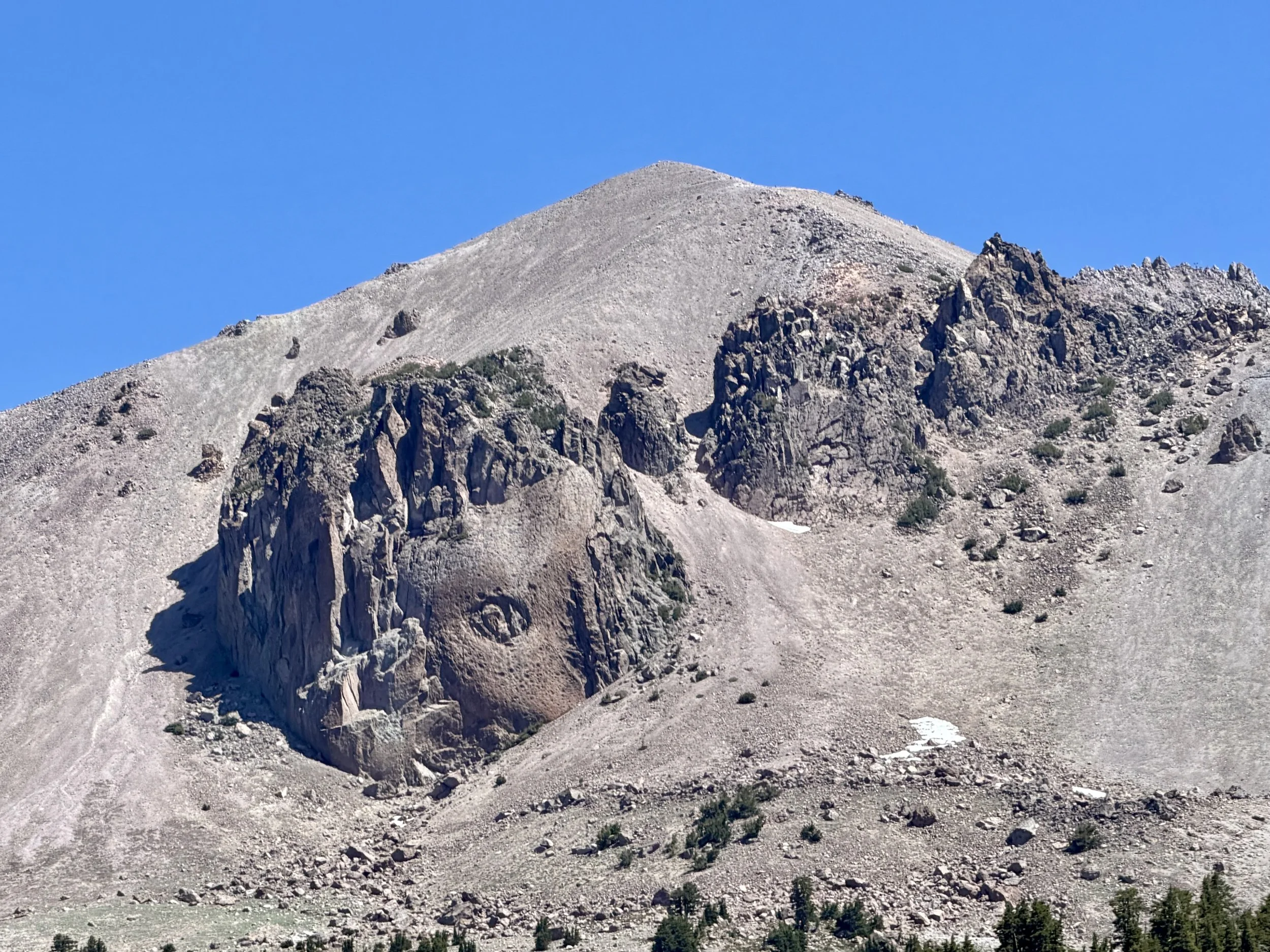
It was fun seeing Lassen Peak from different angles as the road wound around it. With an elevation of 10, 457 feet, it was completely barren and covered in volcanic rock fragments. As we drew closer, we could make out the distinctive “Vulcan’s Eye” on the hardened lava protruding from the side of the mountain.
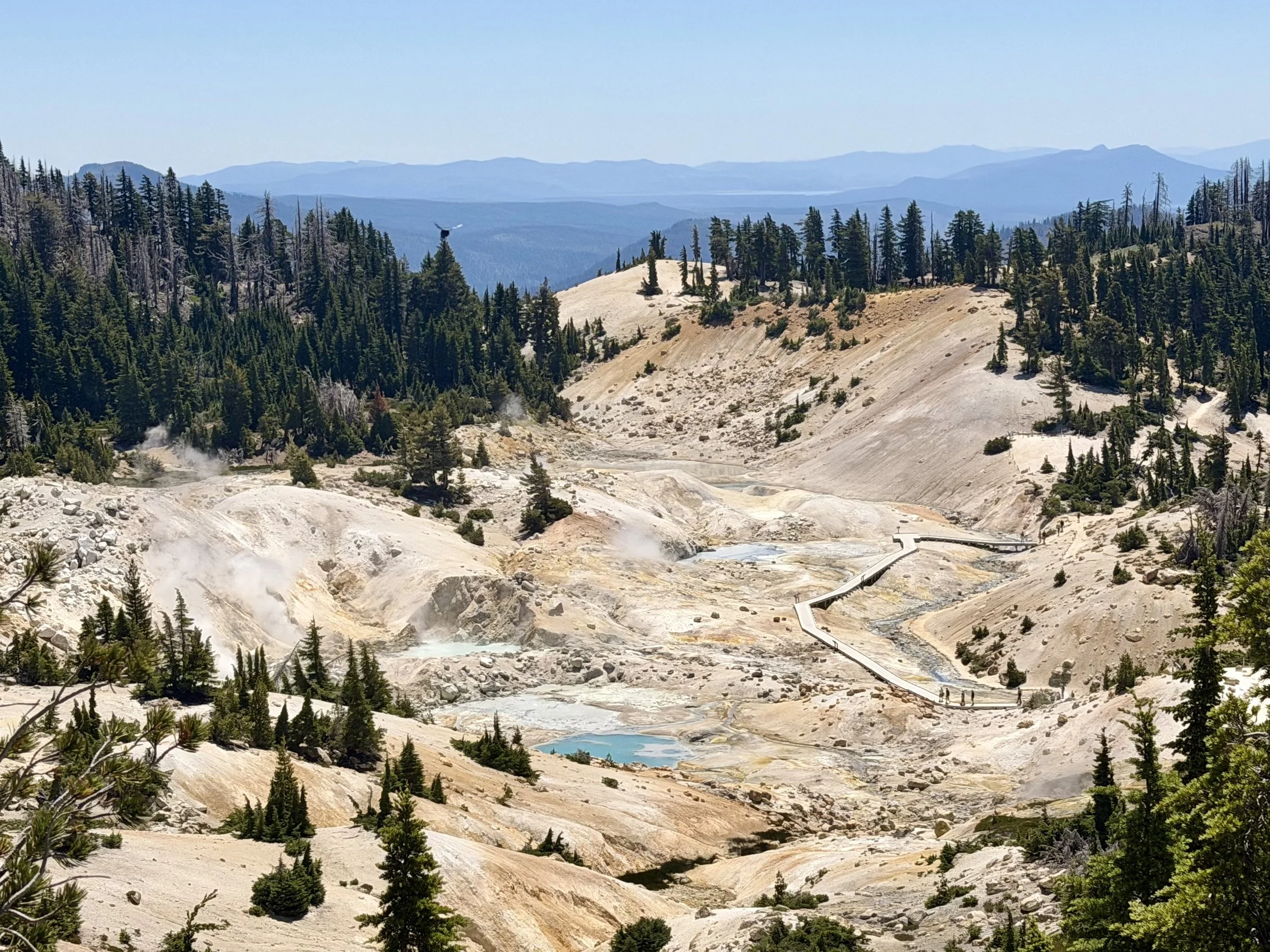
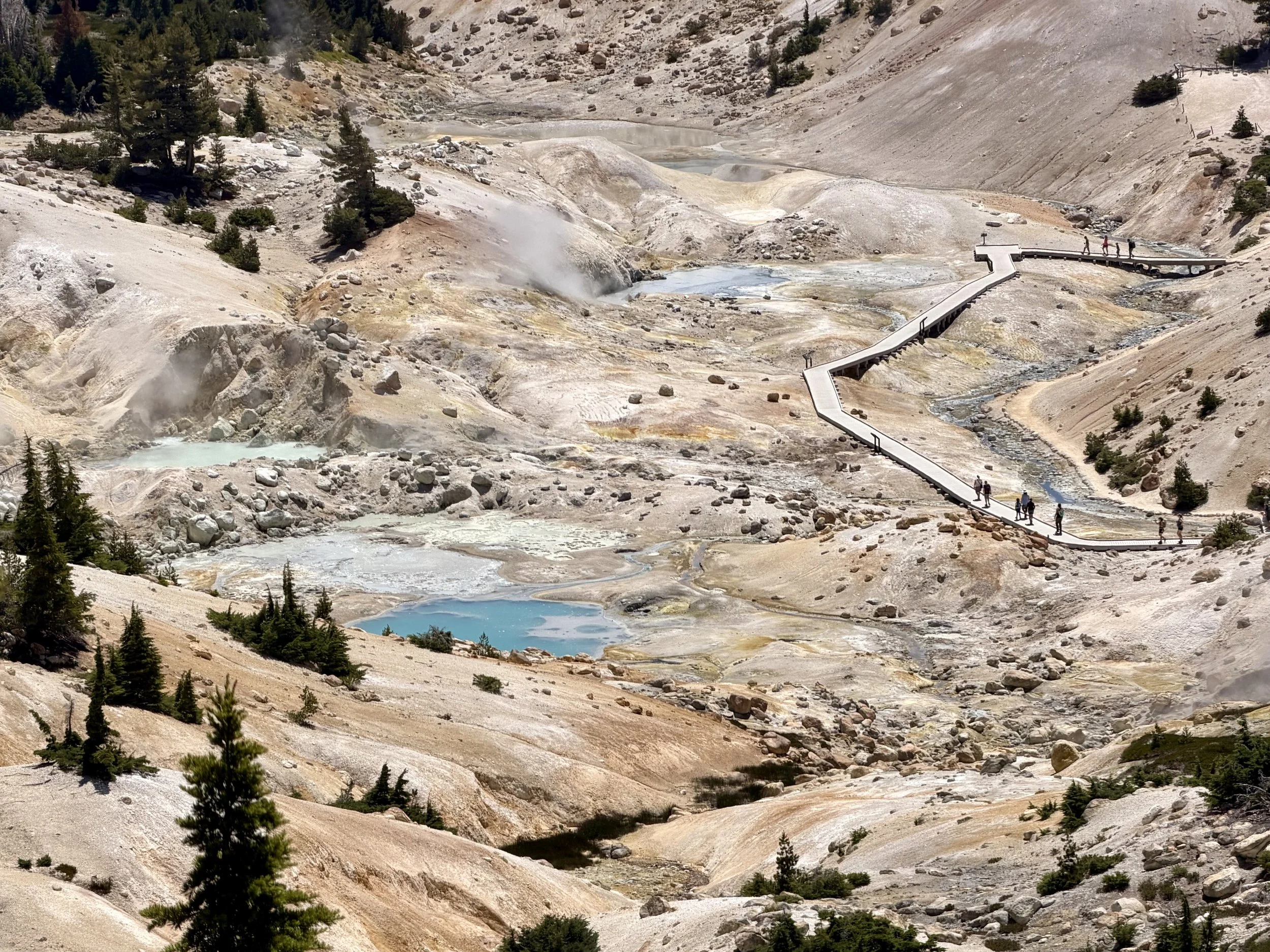
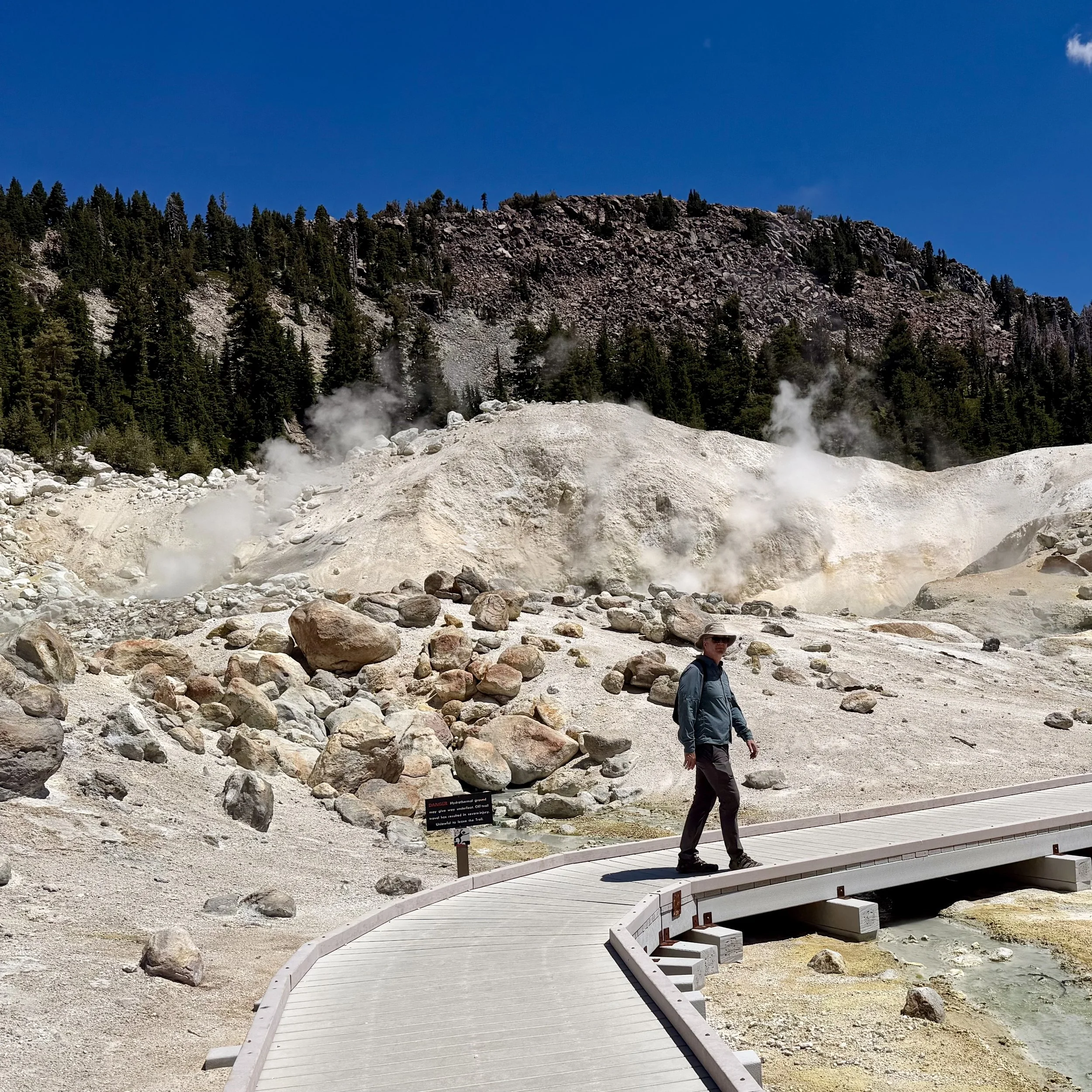
The biggest adventure on this first day at Lassen was hiking to Bumpass Hell, the largest geothermal area in the park. The snowpack (accumulated snow) was low this year, which was fortunate for us. (The trail often stays closed until late July due to snow.)
This area was named after Kendall Vanhook Bumpass (BUMP-uhss), a local cowboy/hunter/prospector who stepped through the thin crust over a boiling mudpot and burned his foot. When he returned to show a newspaper editor the spot he dubbed “Hell,” the unfortunate Mr. Bumpass broke through the crust AGAIN, this time suffering burns so severe that he lost his leg, poor fellow.
Now, a sturdy boardwalk zig-zagged through the geothermal area, with many signs warning visitors to STAY ON THE TRAIL. There were plenty of fumaroles, mud pots, and boiling pools. And they were surprisingly big - we were glad the boardwalk kept us at a safe distance. Bumpass Hell was smelly, steamy, loud, colorful, and lots of fun!
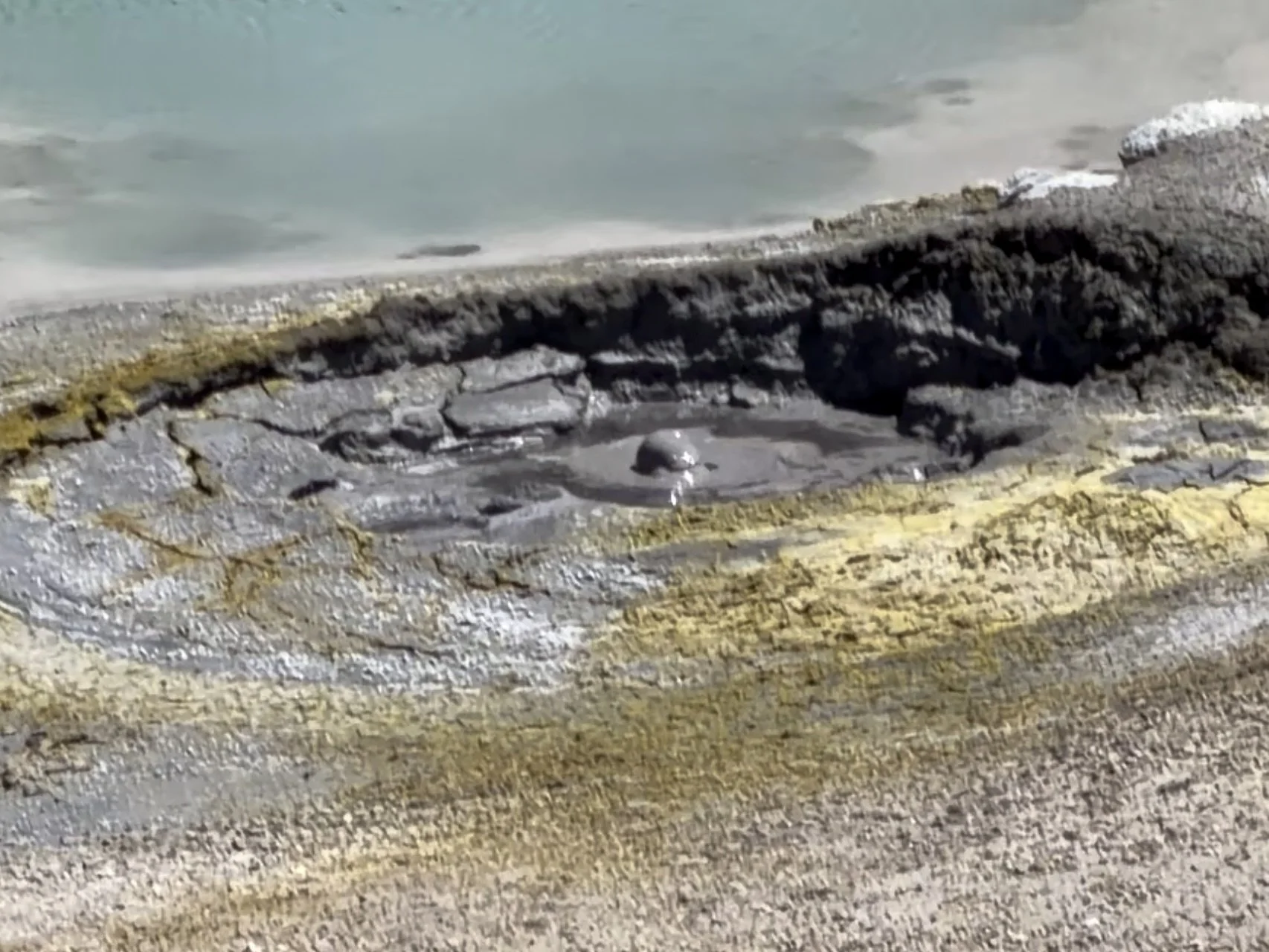
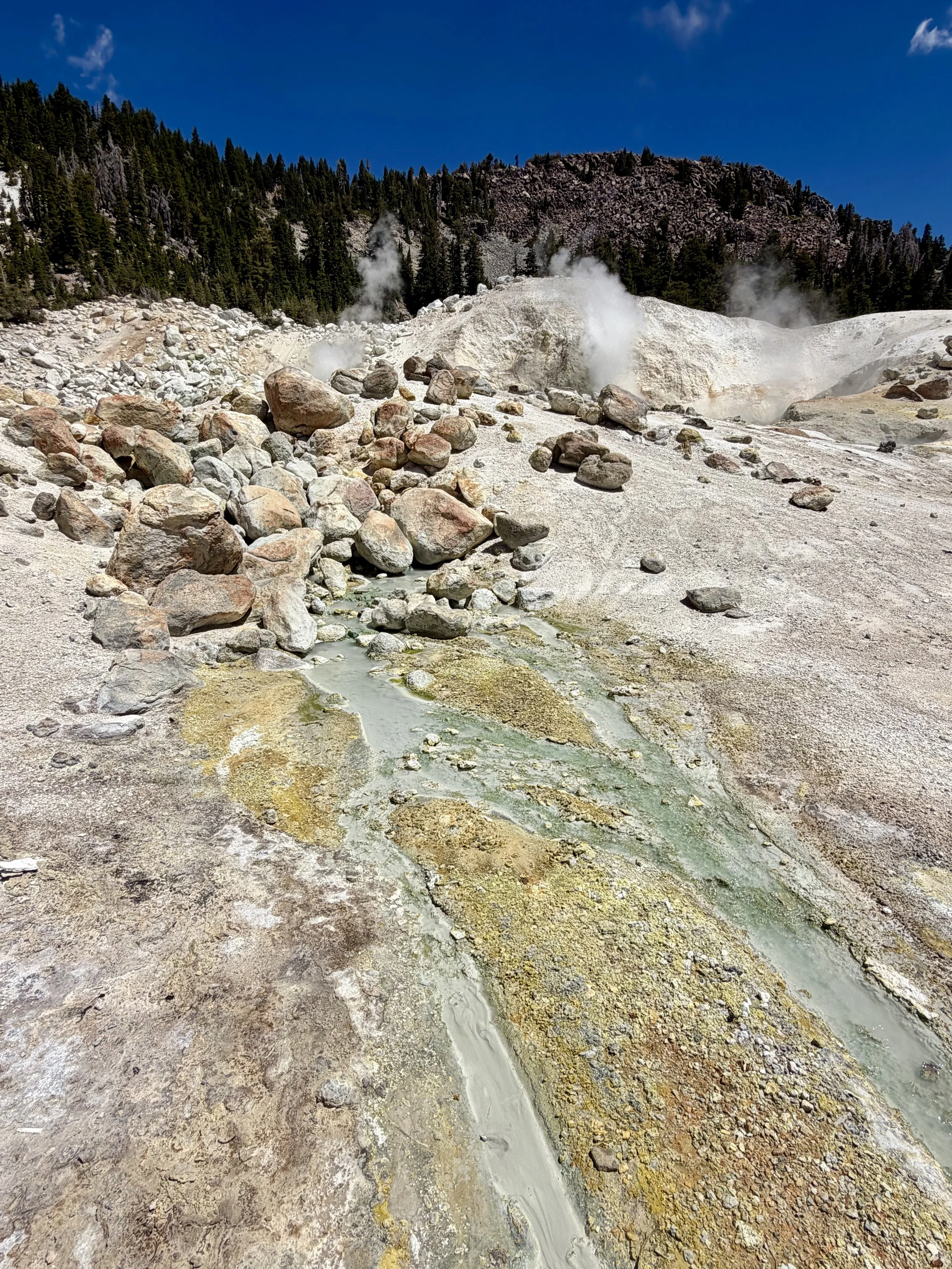
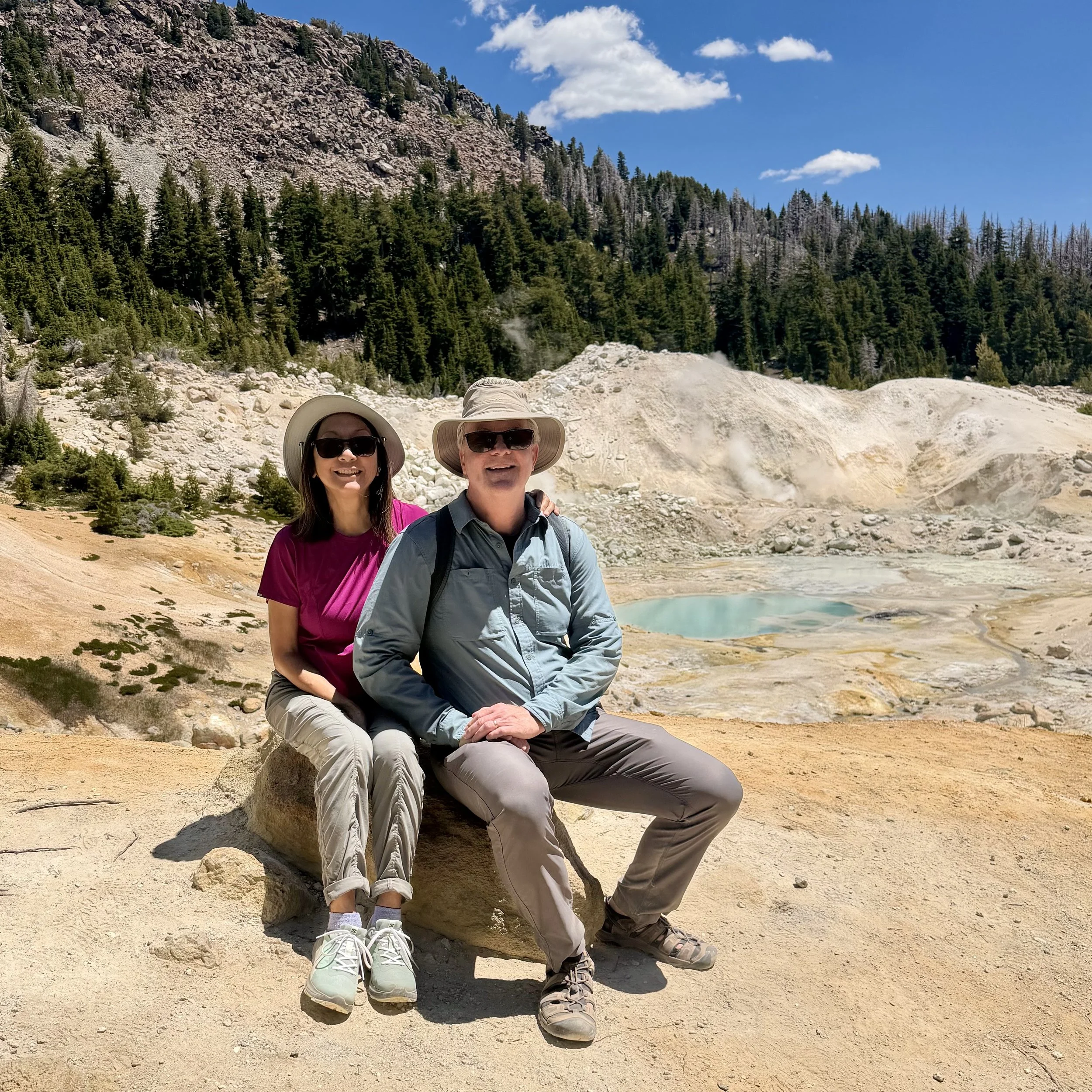
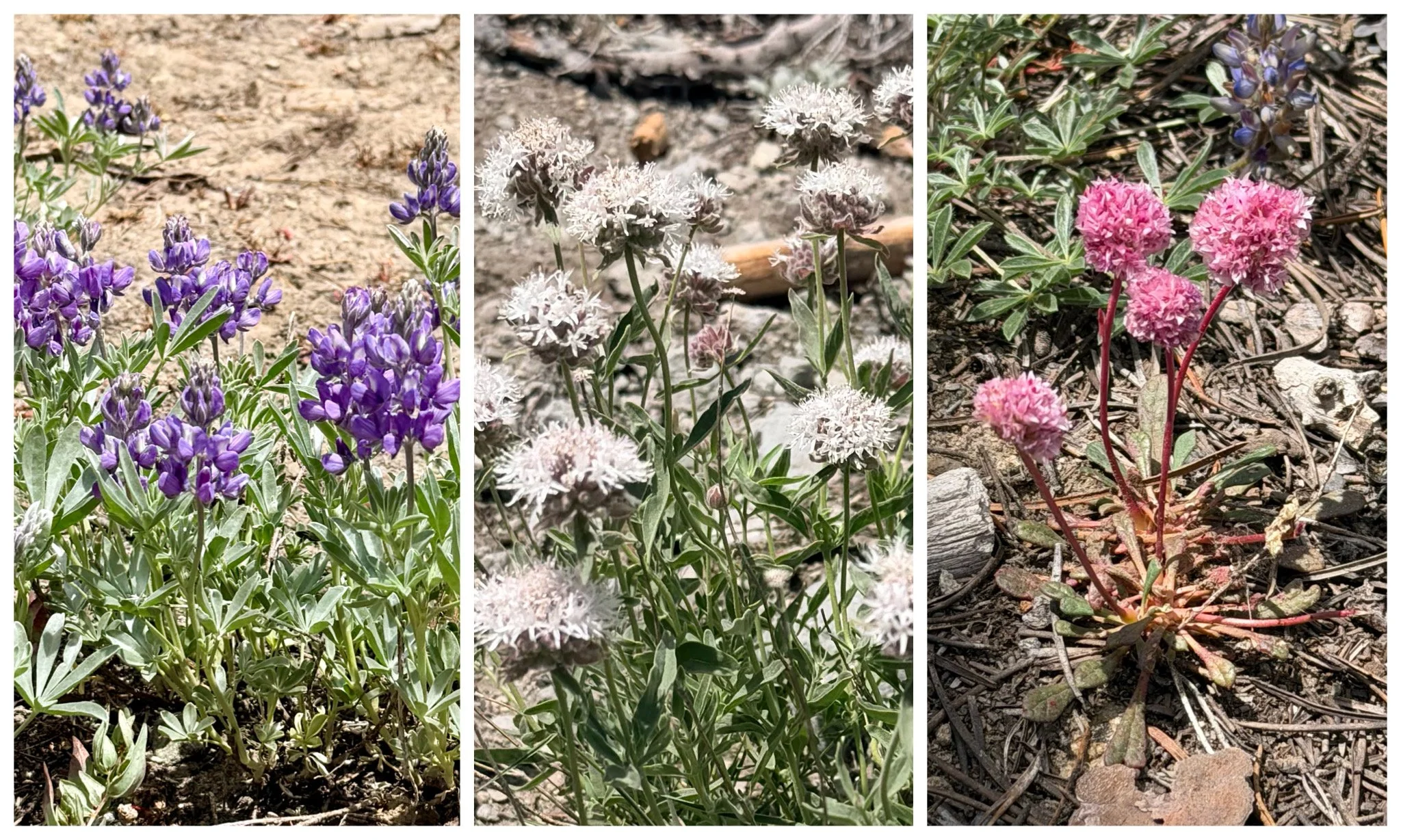
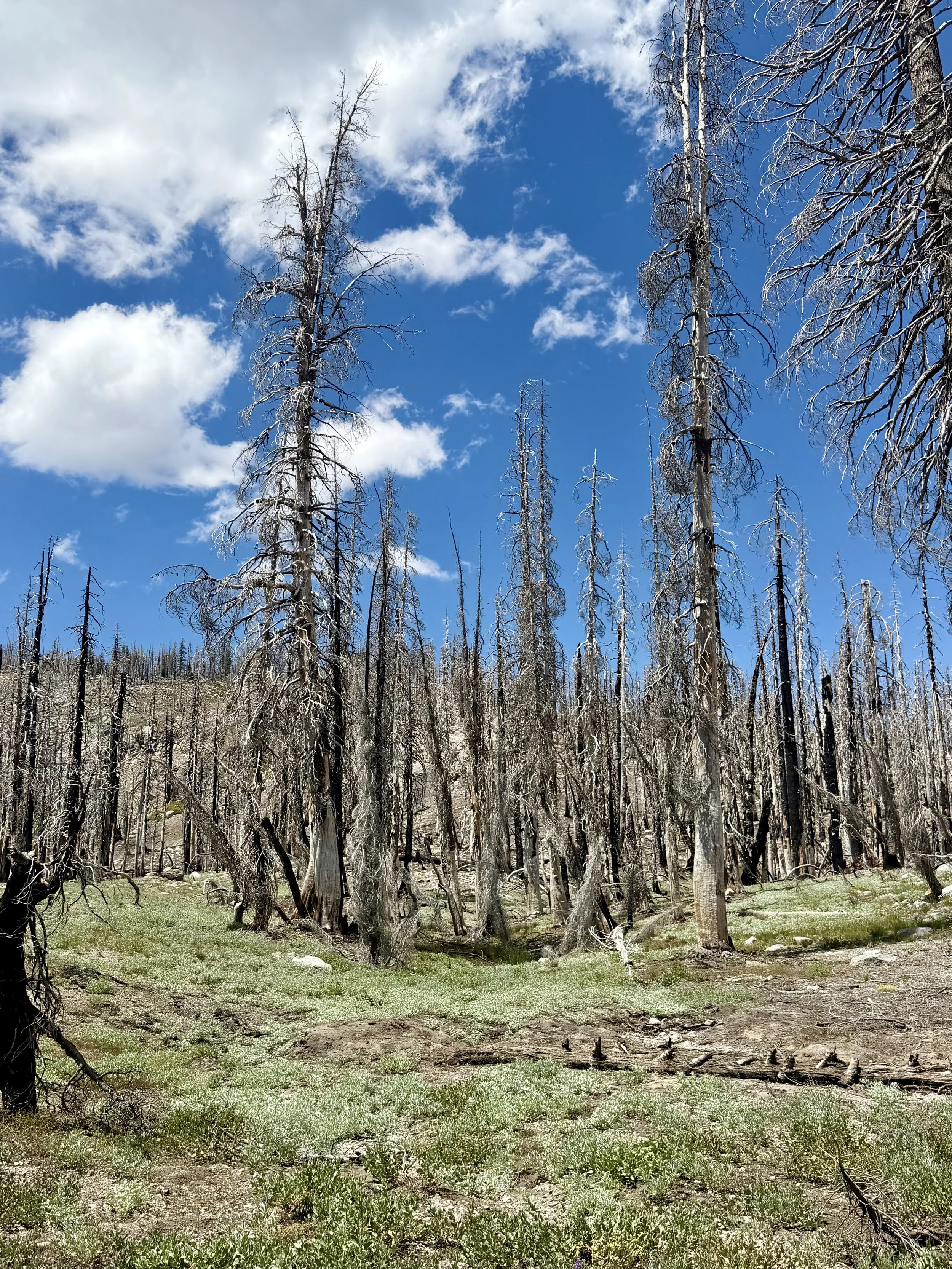
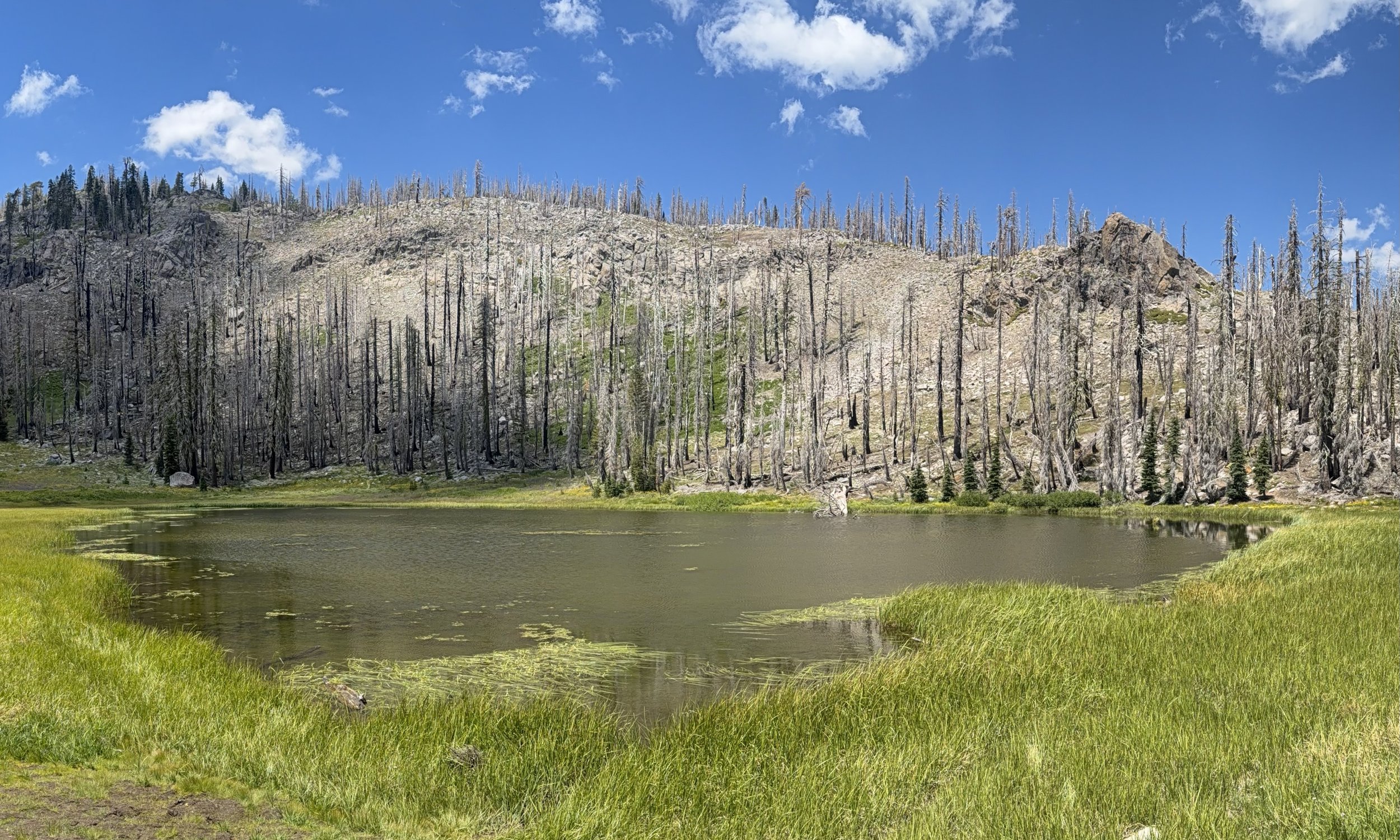
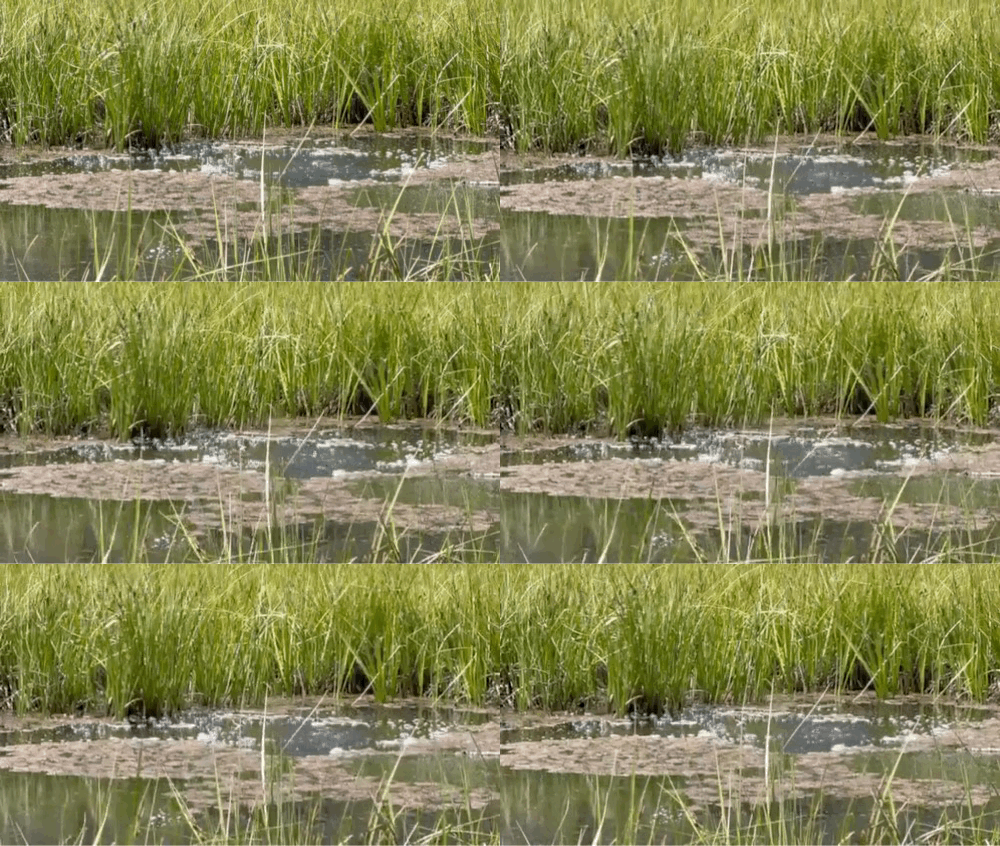
We hiked one more trail that day, through Kings Creek Meadow to Cold Boiling Lake. Along the way we saw a variety of wildflowers - purple lupines, white coyote mint, and pink pussypaws. There were some stands of trees which had been burned by the Dixie Fire of 2021. The lake was small and overgrown with tall grass. A small pool bubbled gently, with no steam; clearly the underground lava had cooled in this part of the park.
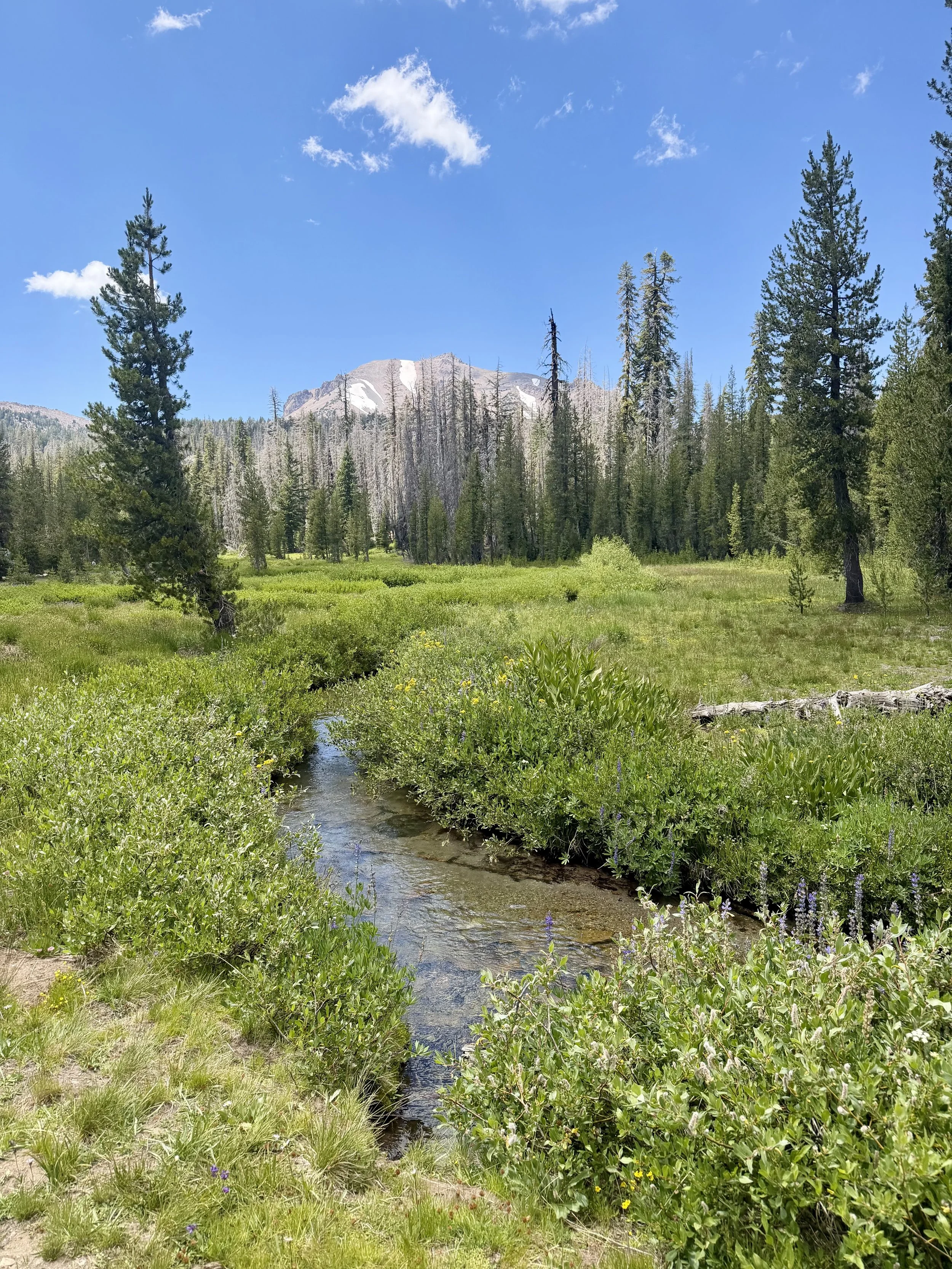
Our two hikes could not have been more different! It was fun to see the diverse landscapes in Lassen NP.