Lassen Part 2: Warner Valley
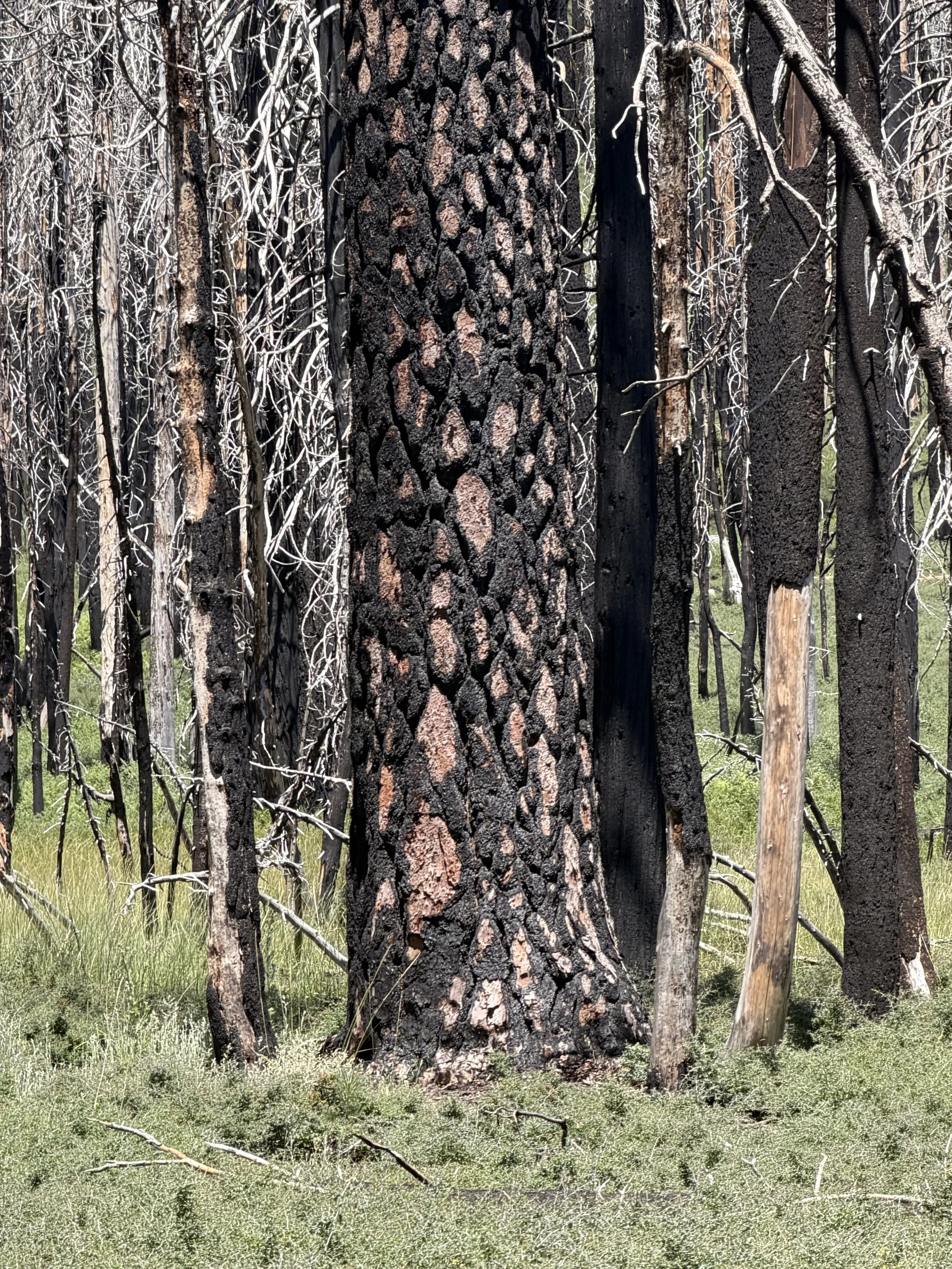
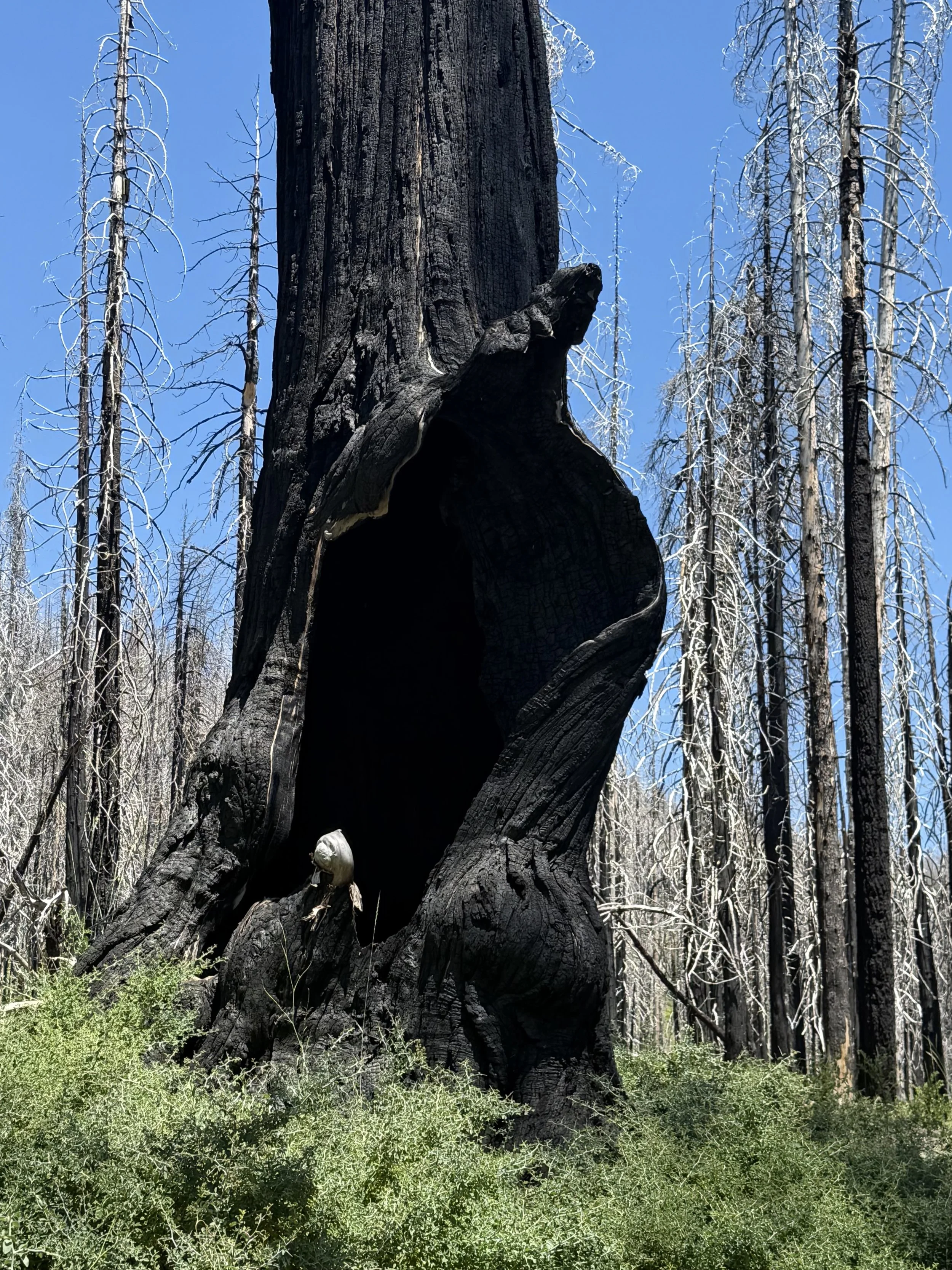
On our second day in Lassen National Park, we decided to visit Warner Valley, near the center of the southern edge of the park. This area had been destroyed by the Dixie Fire in 2021. It was the largest single fire in California history, burning from mid-July to late October, reaching more than 73,000 acres in Lassen and nearly one million acres in total.
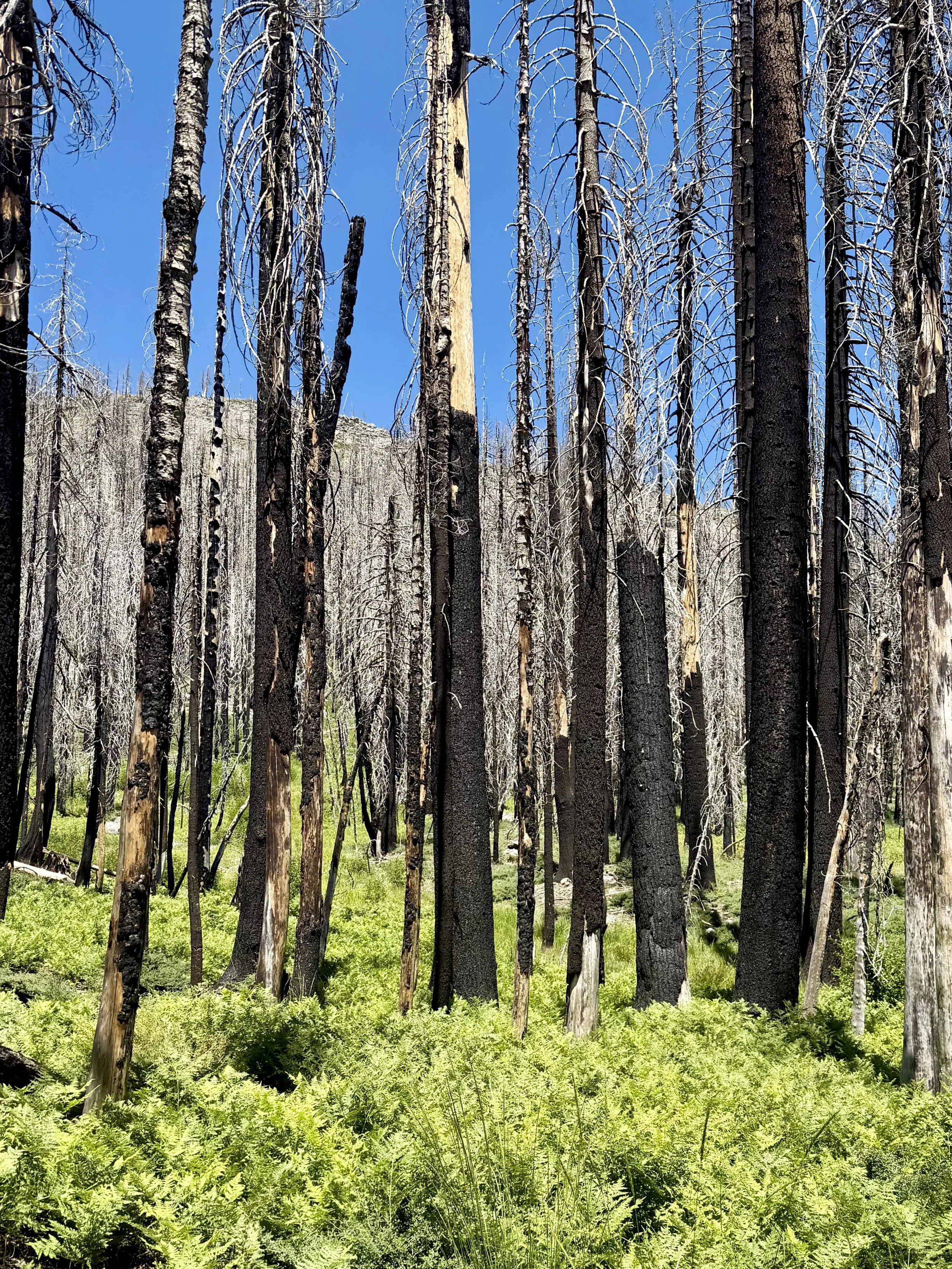
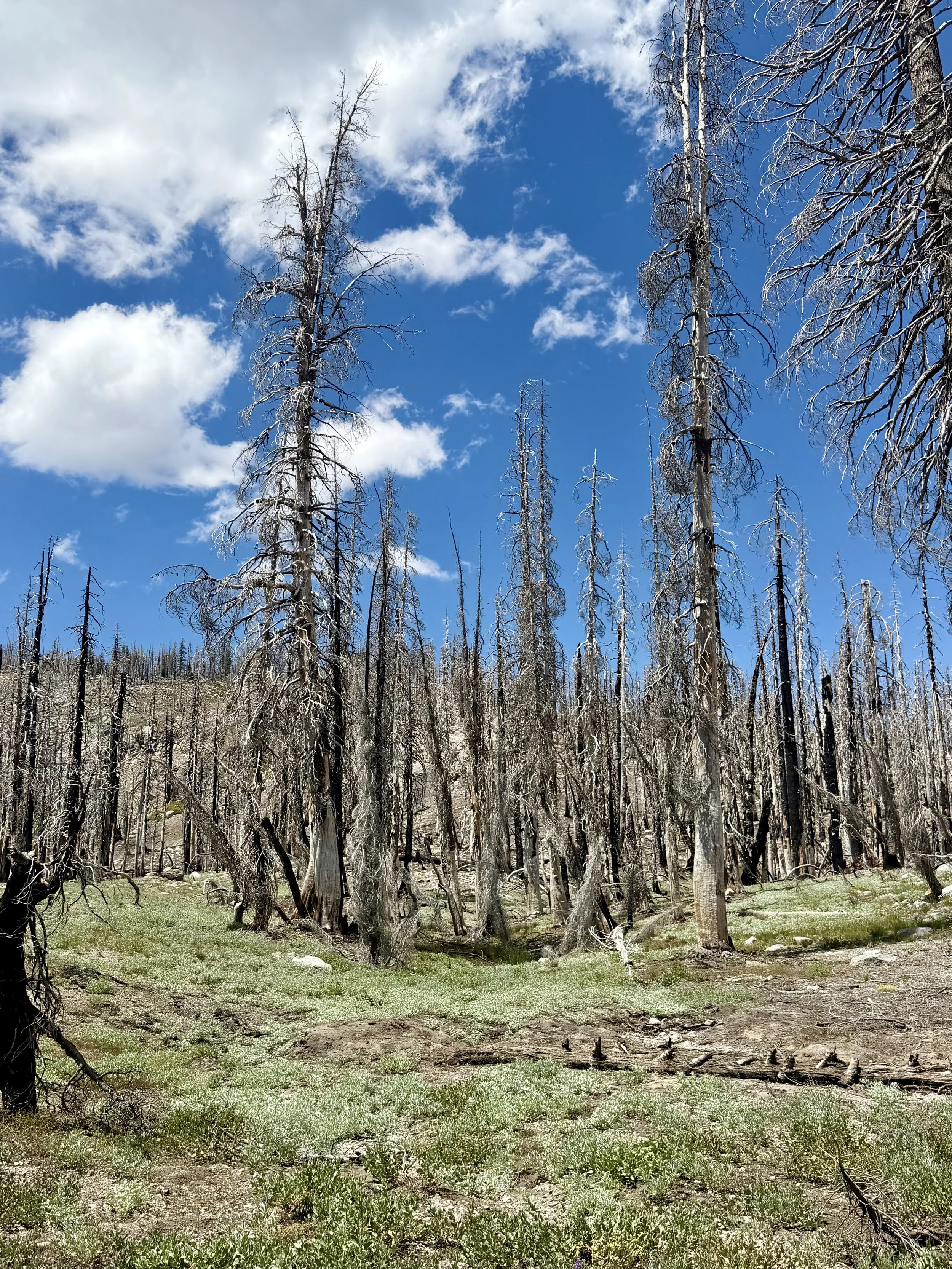
We traveled east through the small town of Chester and then north on a narrow highway into Warner Valley. There were tall, burned trees everywhere - a desolate ghost forest. In the distance was the southeastern side of Lassen Peak, striped with large, permanent snowfields.
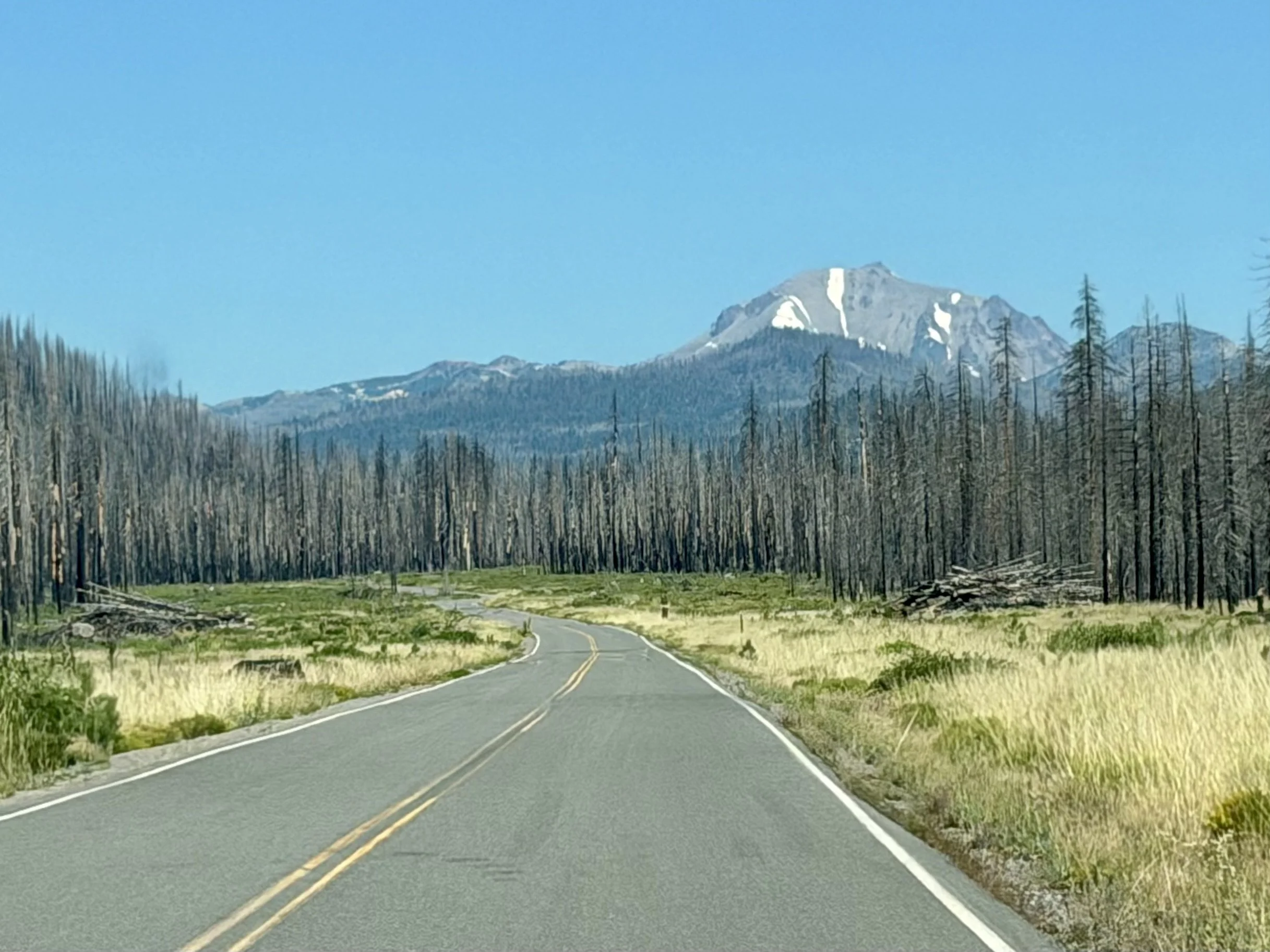
There were some houses sparsely scattered along the road, where small stands of trees had escaped the fire. The six-mile dirt road into the park was winding, narrow, and occasionally steep. We were glad to have a Jeep! We were the only car on the road; this part of the park did not get many visitors.
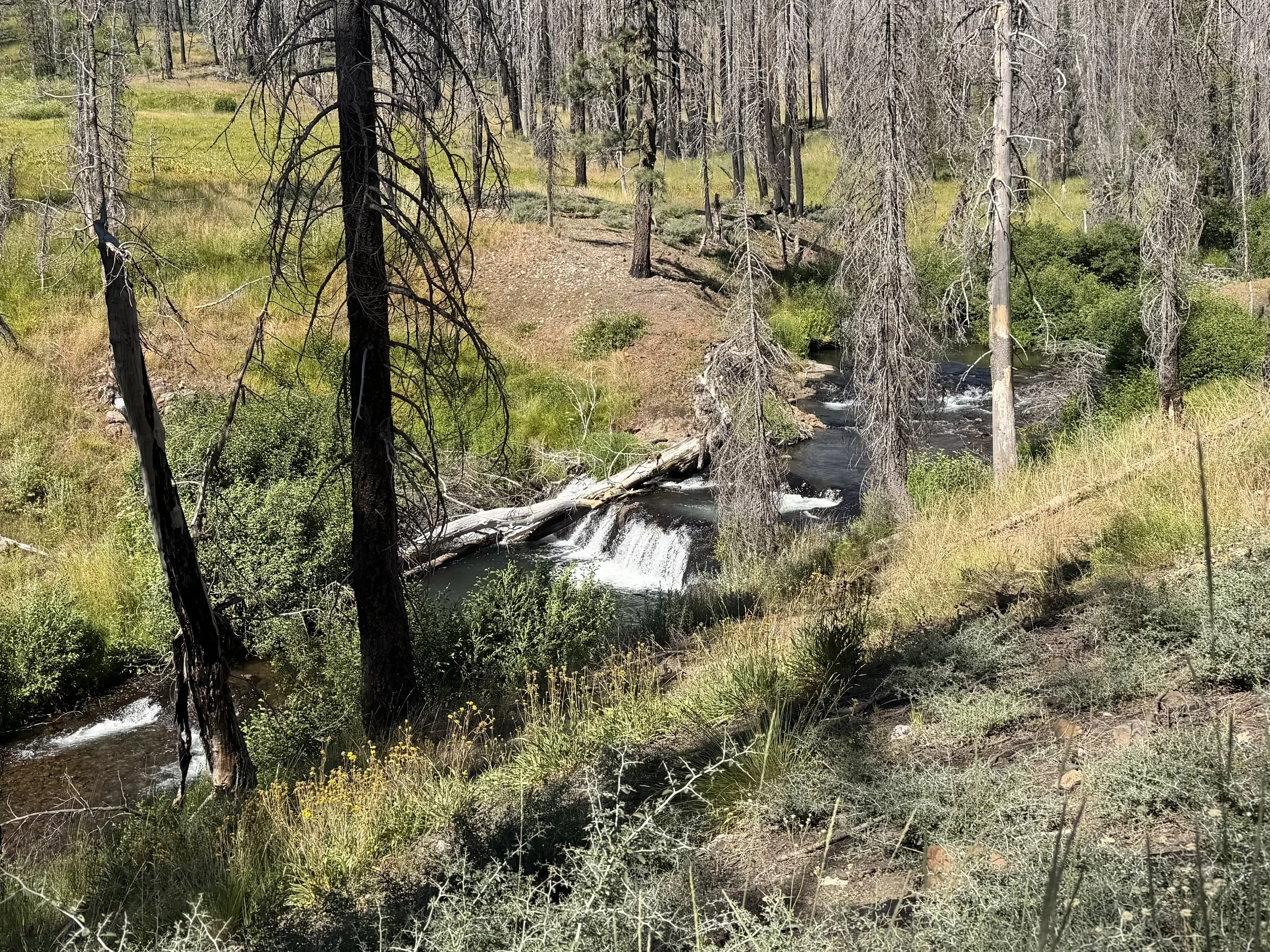
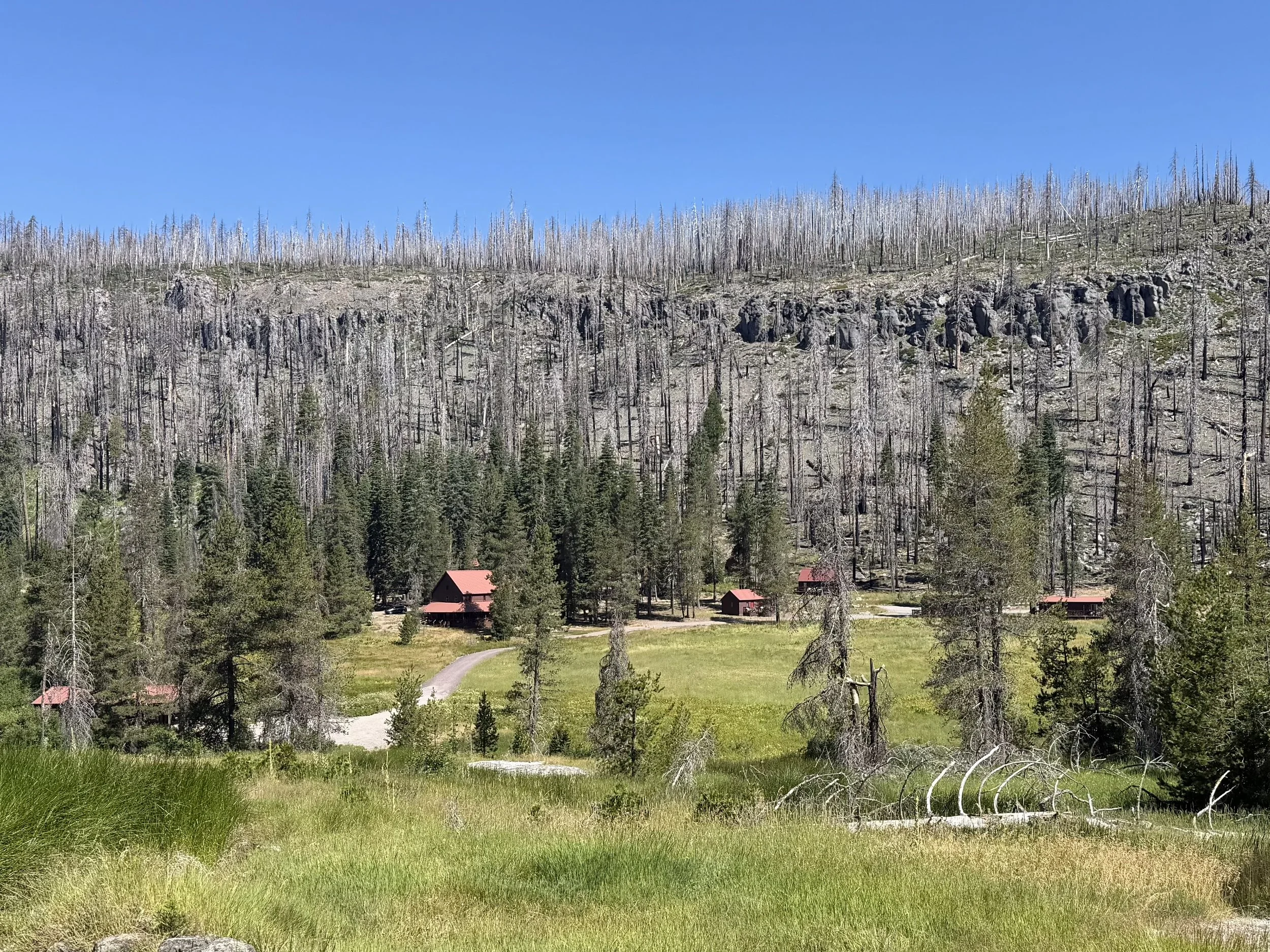
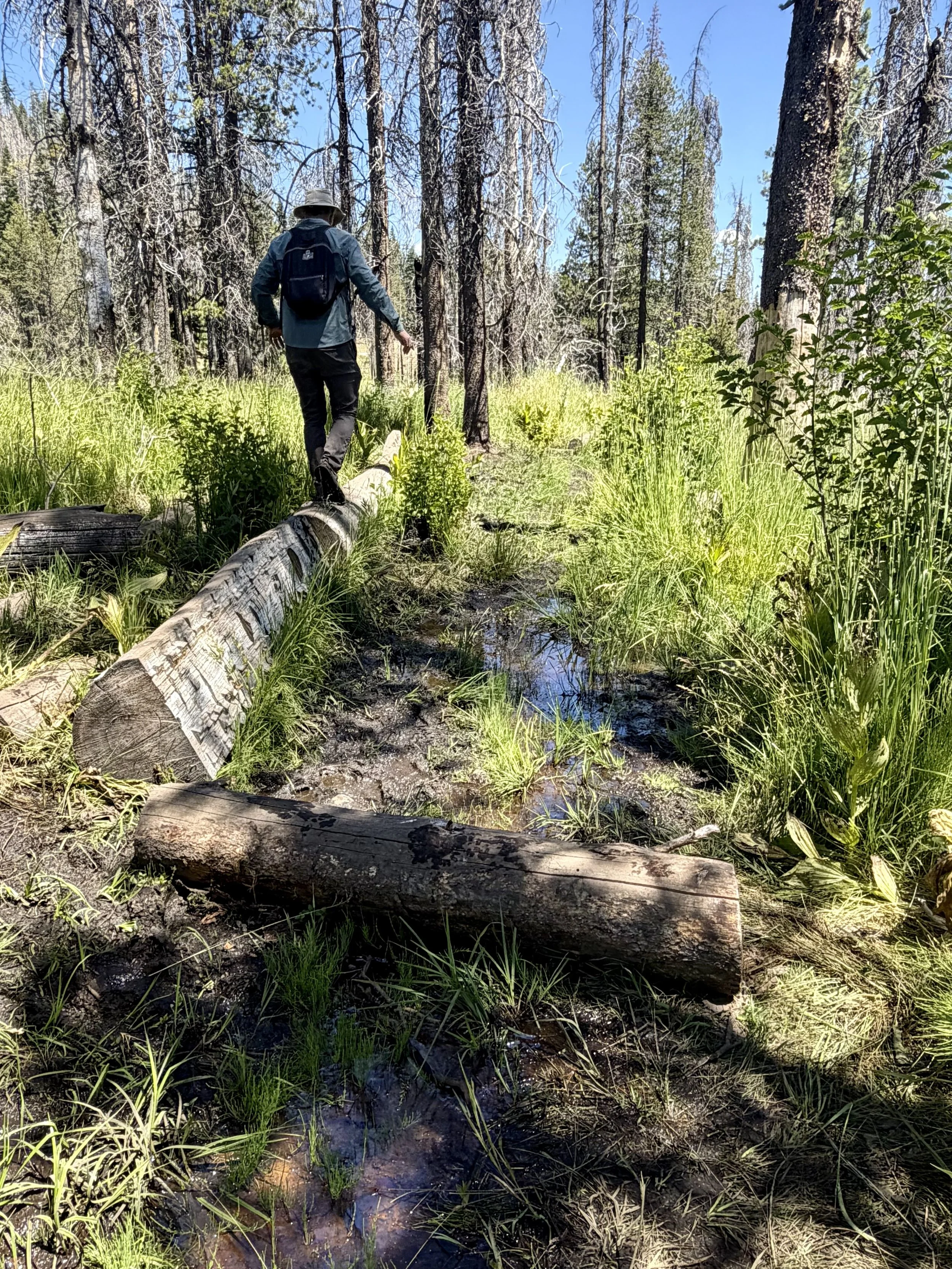
We hiked the Warner Valley trail through a ghost forest, alongside a rushing creek. In the distance we could see the Drakesbad Guest Ranch. The forest bordered a marsh, and there were muddy stretches of the trail that presented interesting choices: hop on small, slippery rocks, balance on a wobbly log, or slosh through the deep mud? I was thankful for my waterproof shoes!
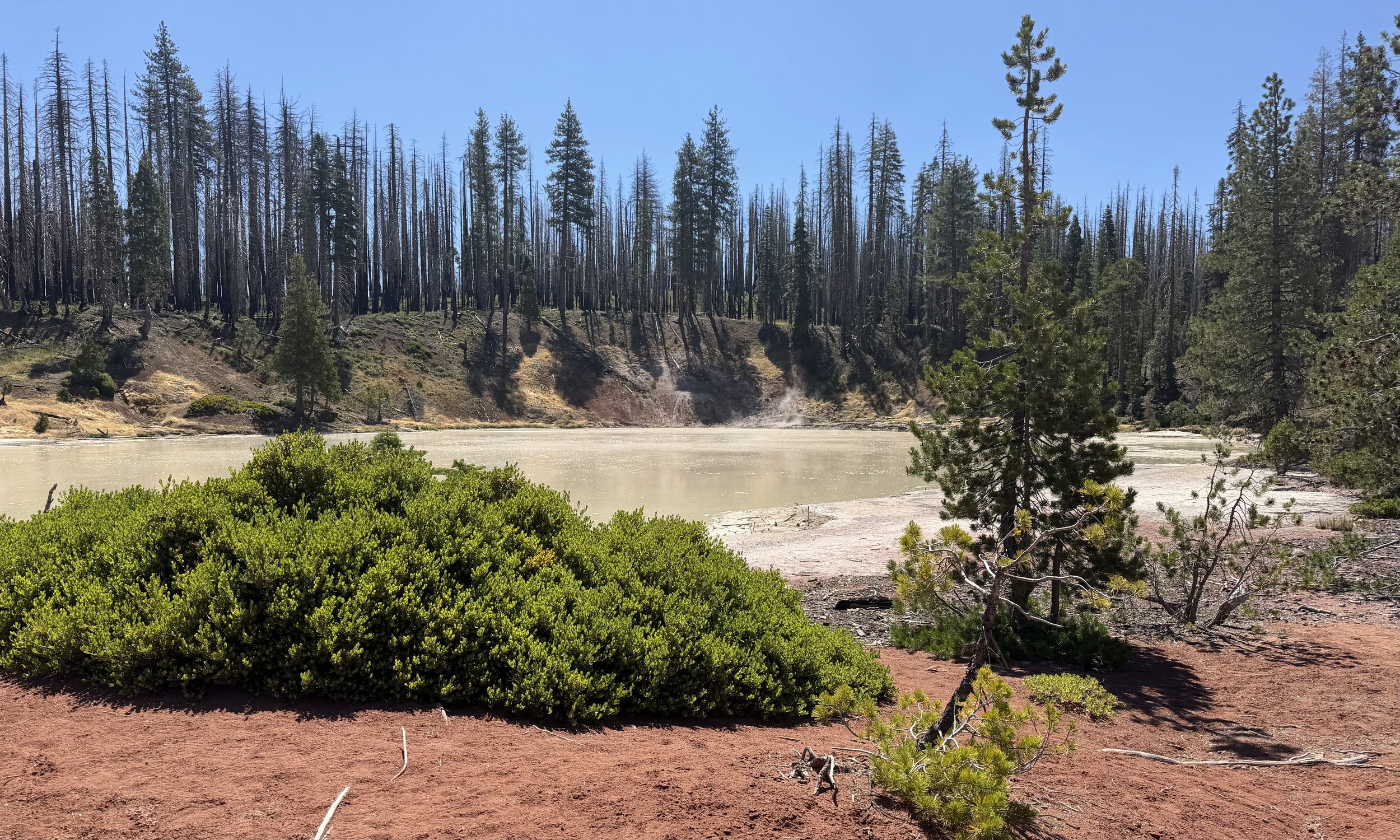
We hiked a spur trail to Boiling Springs Lake. It had just one fumarole, on the shore furthest from where we stood. I cautiously used a stick to test the water temperature on our side of the lake, and it was quite hot. The lake was like a giant sous vide pot! We could feel cool breezes coming down from the mountains and warm air wafting up from the lake. It was a strange and wonderful sensation. Fun fact: we had just walked about 1.2 miles of the Pacific Crest Trail!
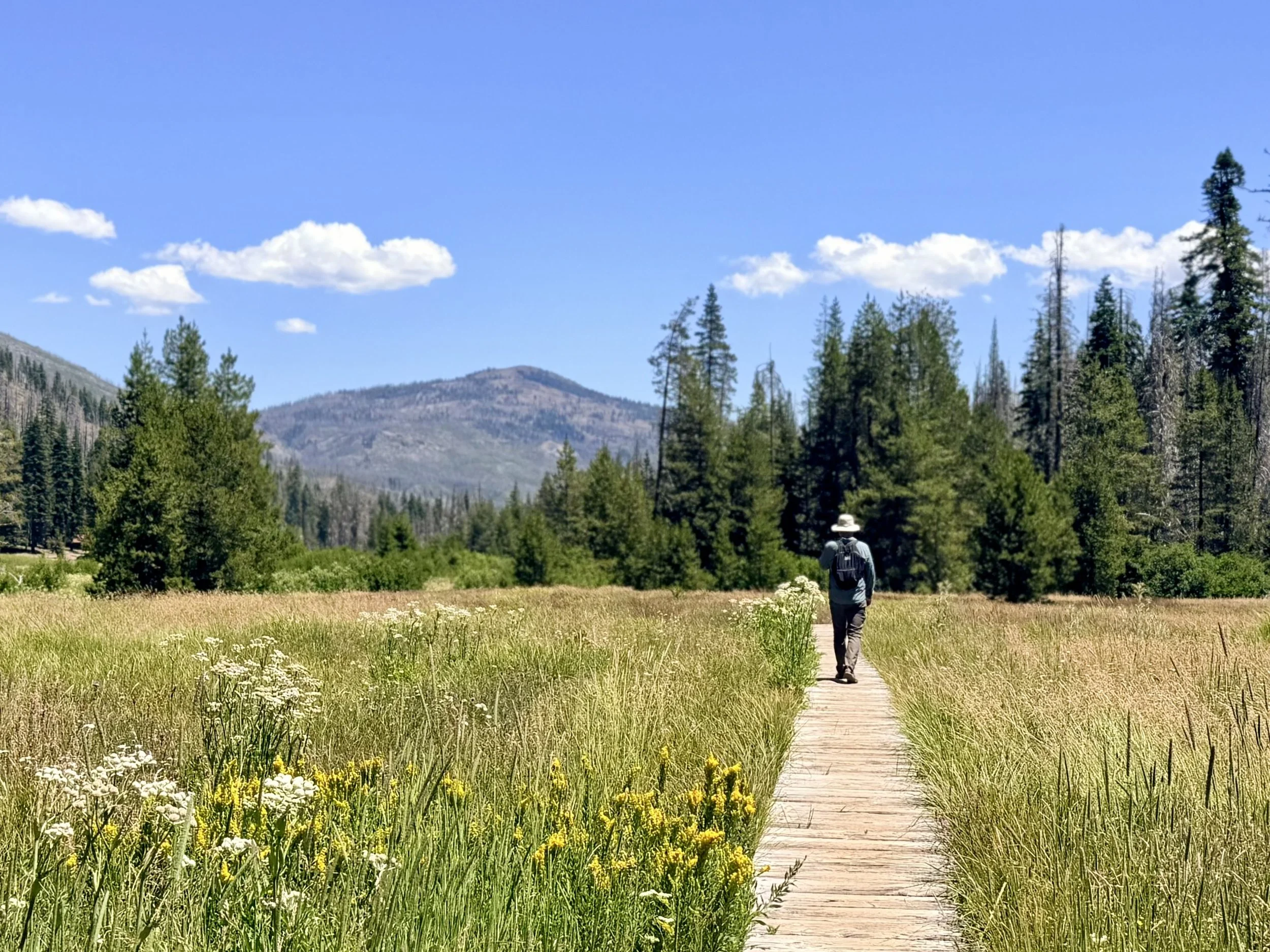
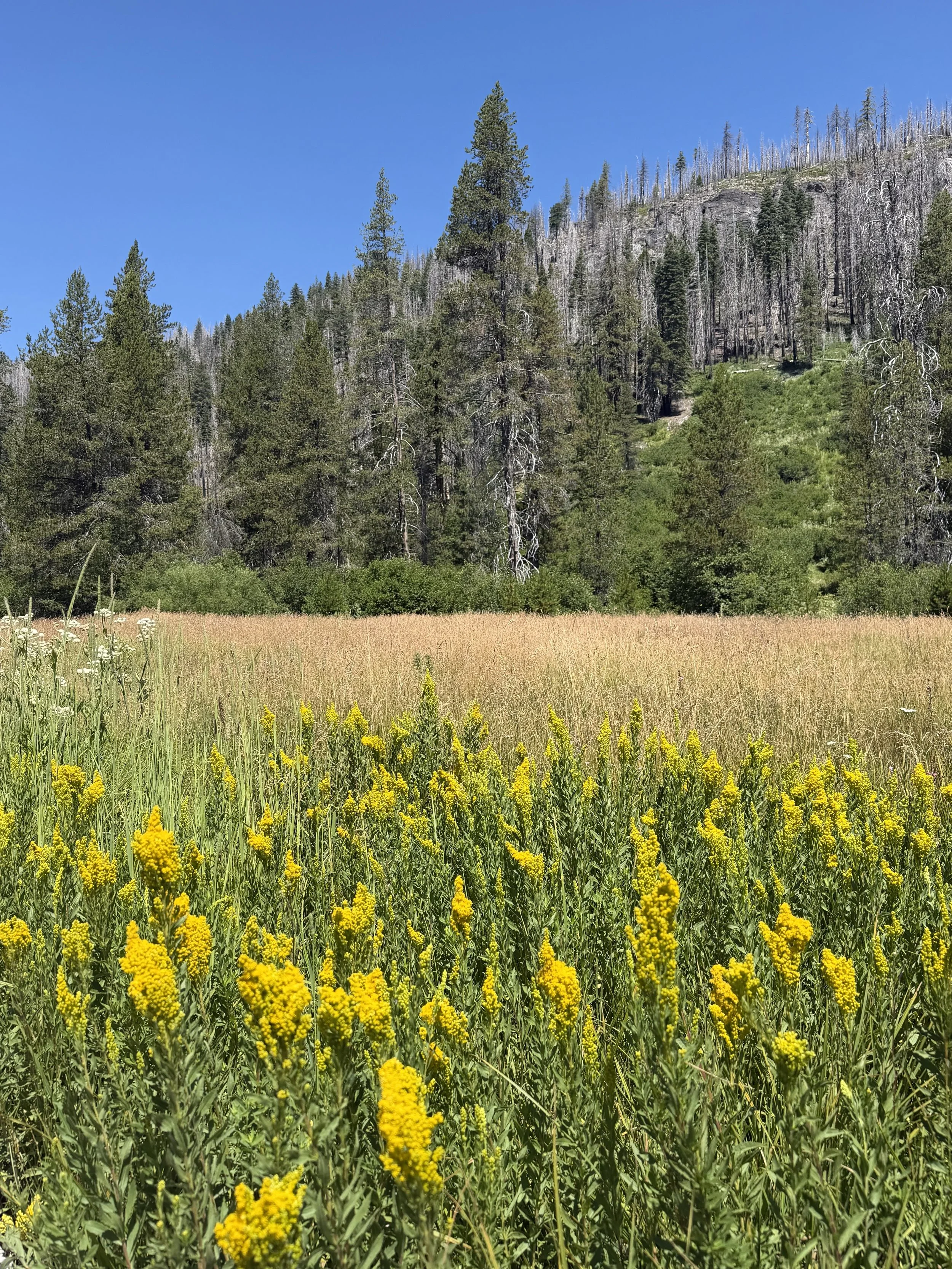
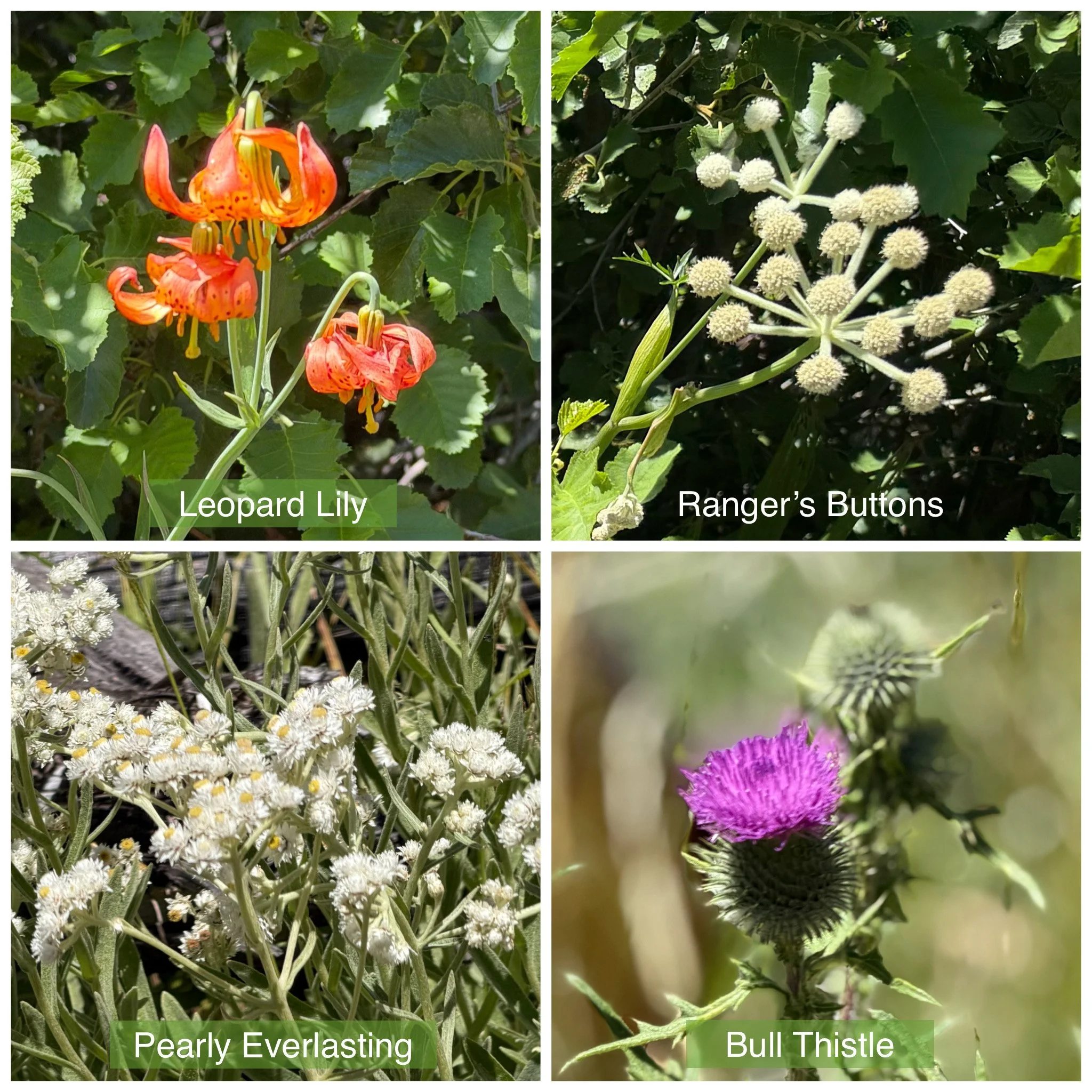
We returned to the main trail and hiked across a huge, beautiful meadow. There were abundant wildflowers along the trail, including curly orange leopard lilies and puffy white ranger’s buttons. Boardwalks kept our shoes mud-free. We had the trail to ourselves, except for a few park staff members working to eradicate the invasive bull thistle.
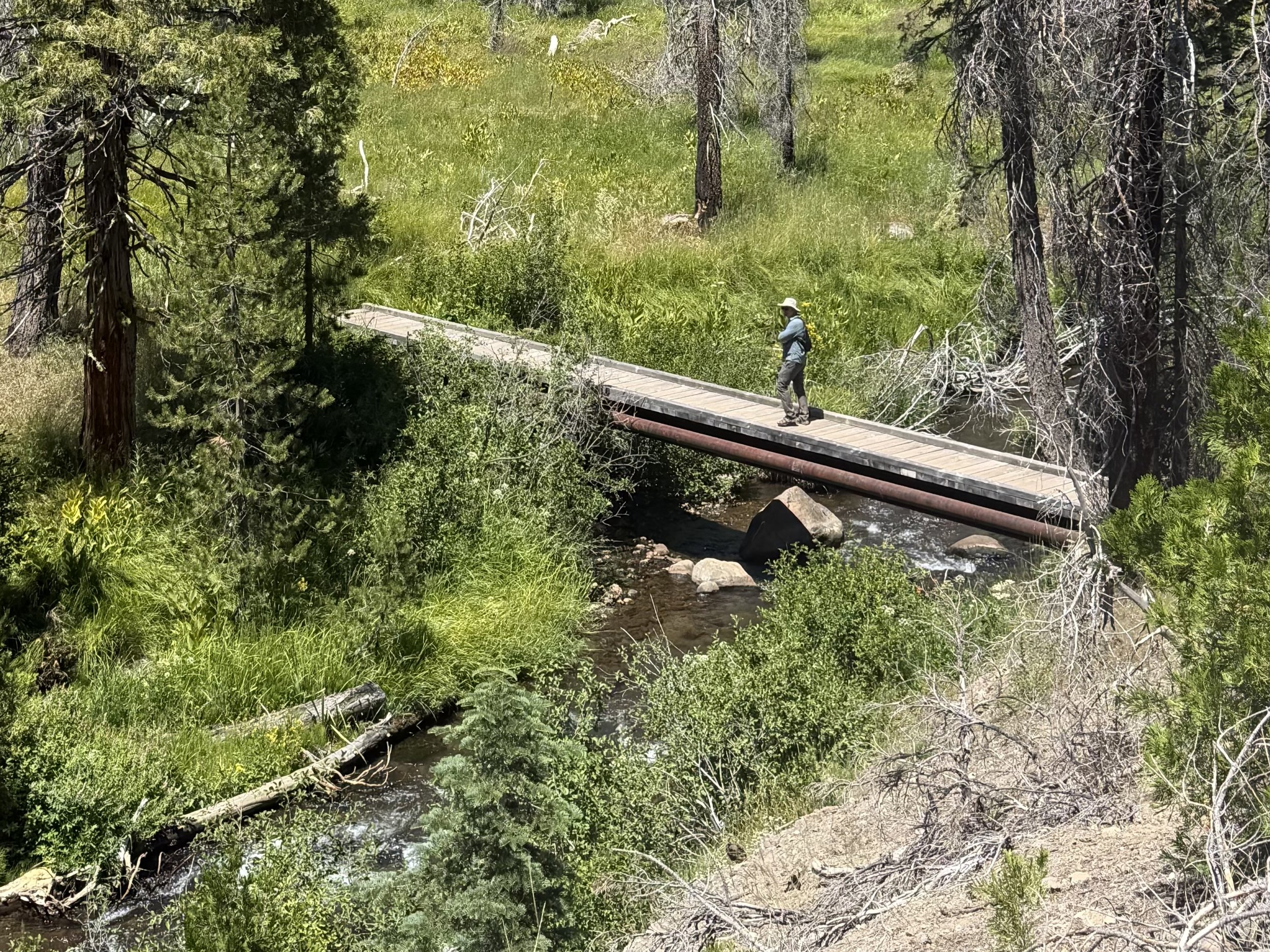
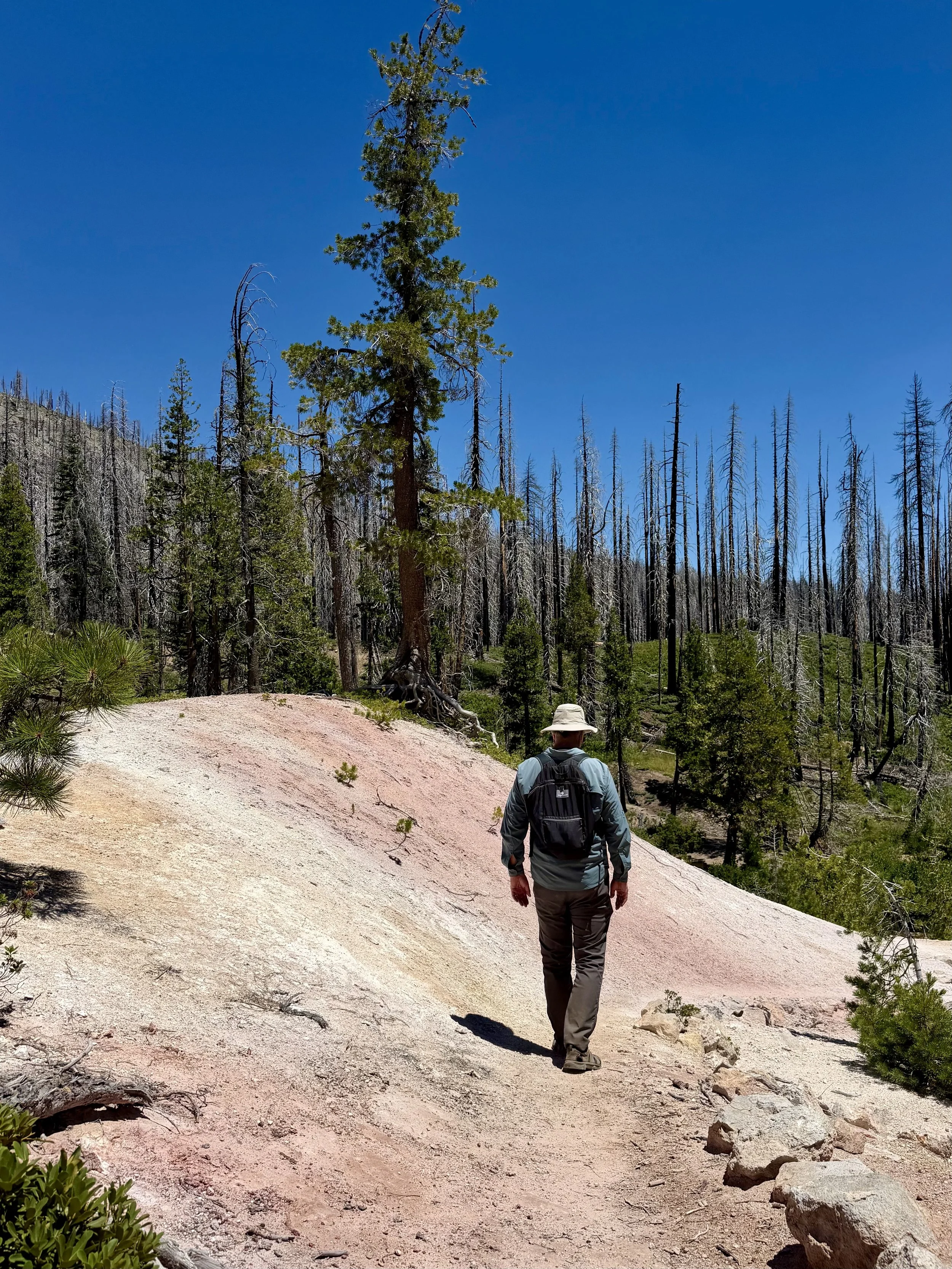
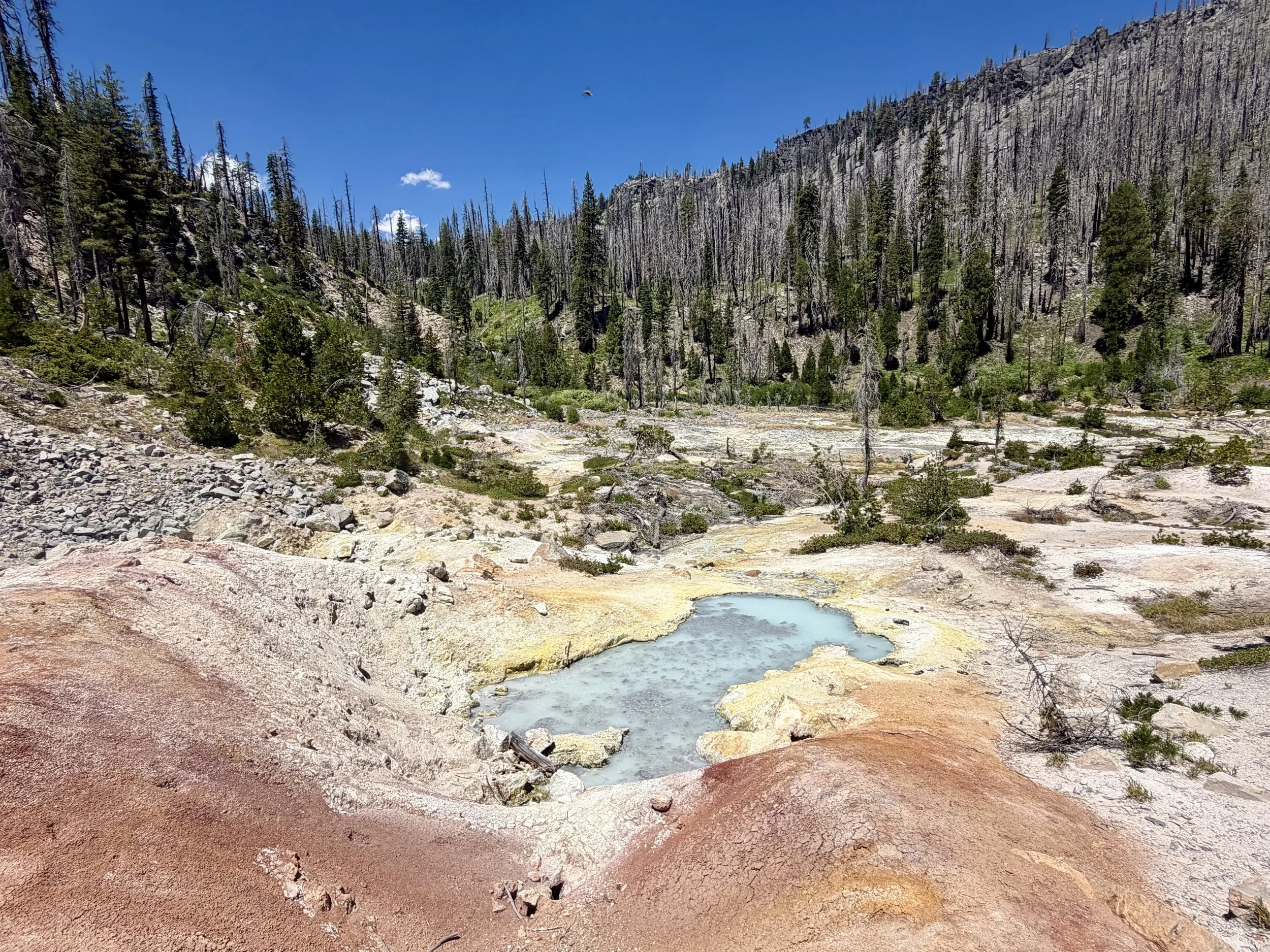
The star attraction of this hike was Devil’s Kitchen, the second largest geothermal area of the park. There was a freshly completed wooden bridge at the entrance, offering a more stable crossing than the lonely log next to it. It was nice to see our park entrance fees being put to good use. Devil’s Kitchen was aptly named; smelly steam rose from dozens of fumaroles, boiling pools bubbled loudly, and the ground was streaked with colors from a variety of minerals. True, the area was not as large or well-paved as Bumpass Hell, but here in Devil’s Kitchen we could get a much closer look at the geothermal features. It was chaotic and wonderful.
Turn up the volume to hear Devil’s Kitchen!
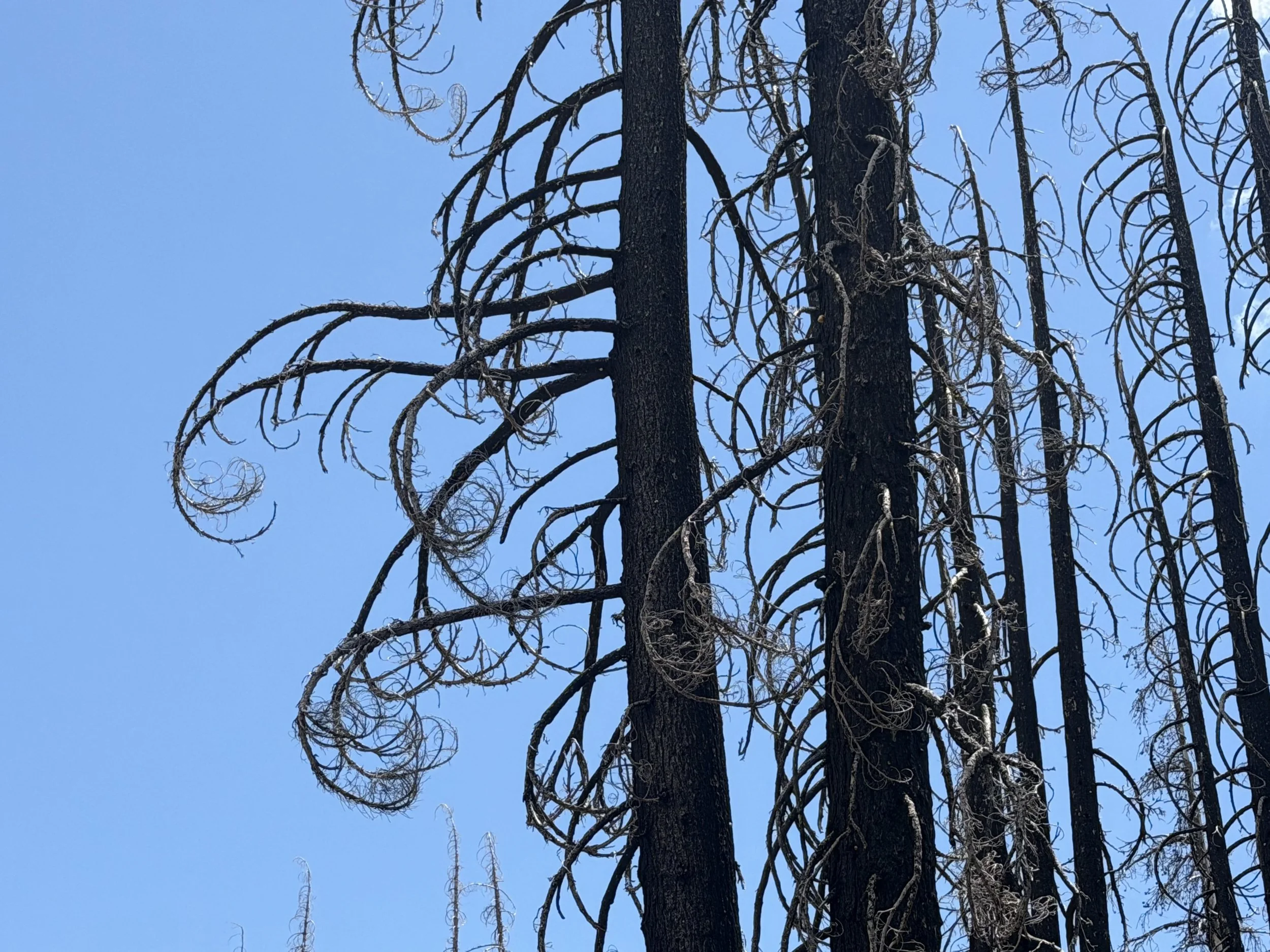
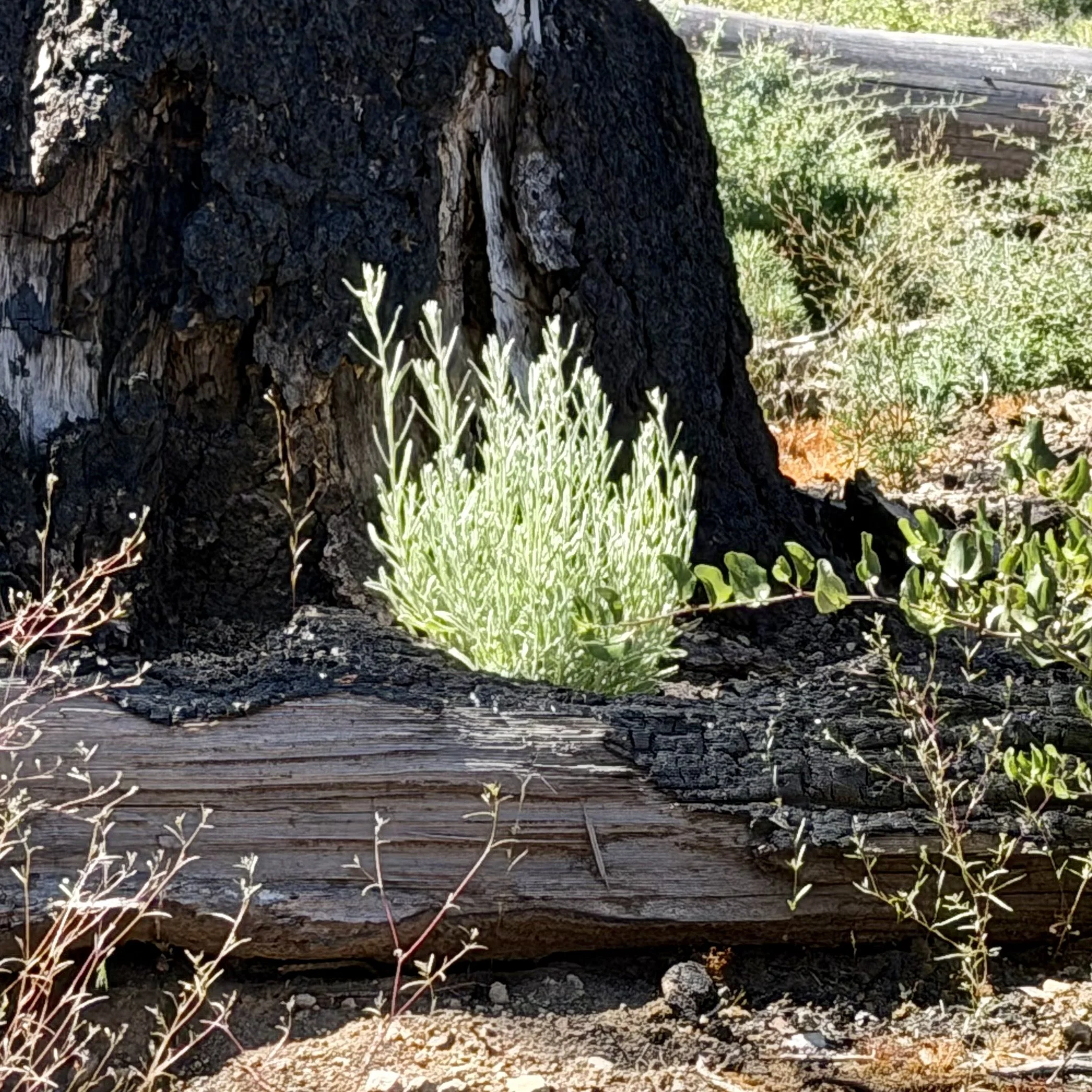
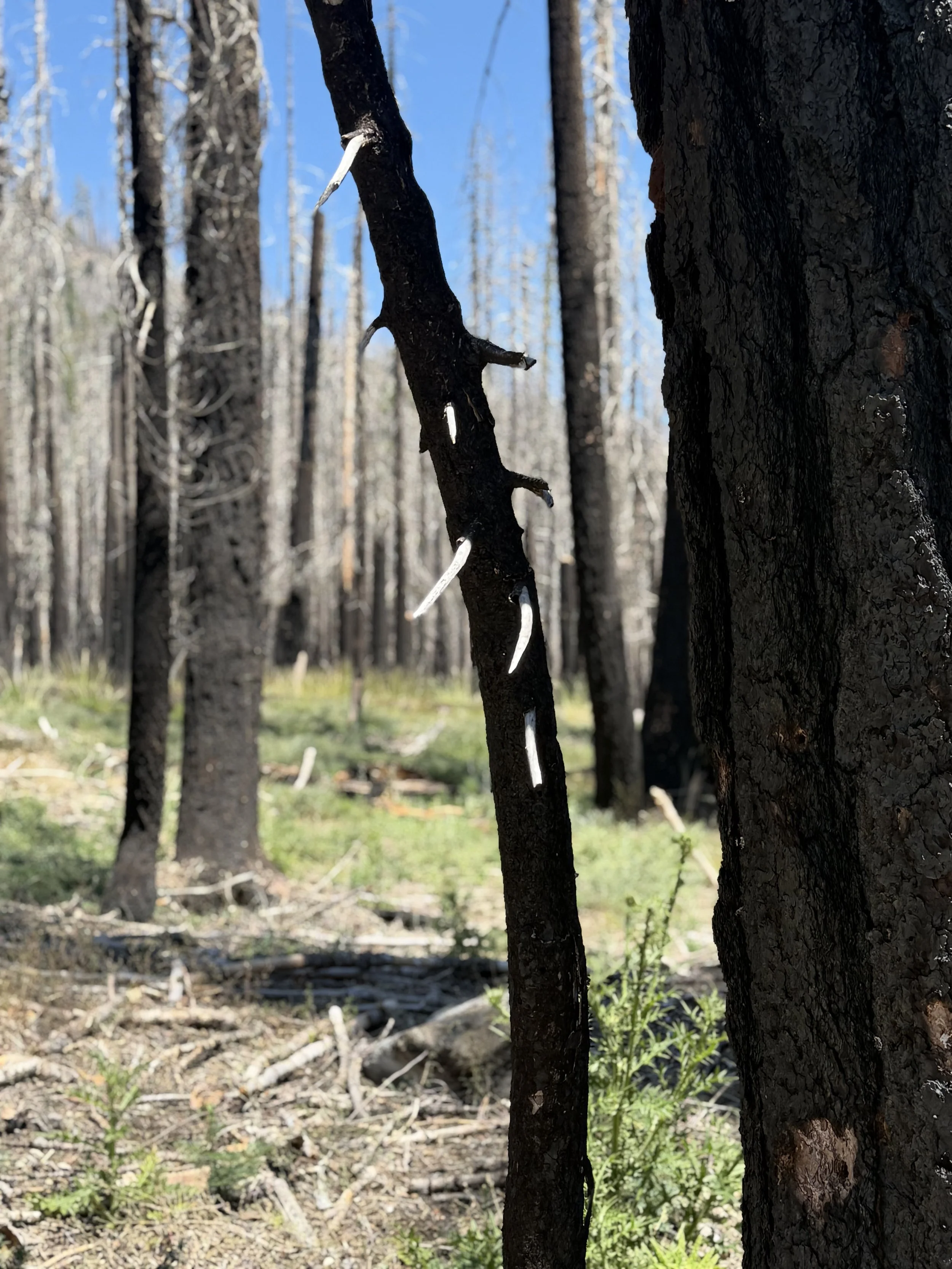
Although this area of Lassen NP had been ravaged by fire, leaving a ghost forest of scorched trees, it was still beautiful. Charred trunks formed dramatic patterns of black and white, with bright green new growth beneath and the vivid blue sky above. Branches had been curled by fire into scrolls that resembled wrought iron. It would be a few generations before the forest returned to its original state. In a place sculpted by volcanoes and glaciers over thousands of years, the fire was just a blip in Lassen’s ever-changing landscape.