Machu Picchu is Peru’s most famous archaeological site, but there are other important ancient sites in the Sacred Valley. Our guide, Pilar, along with a new driver, Valerio, took us to see two of them today.
After a harrowing drive down a steep, narrow, dirt road with no guardrails and plenty of blind curves, we reached the Salineras de Maras (Maras Salt Mines). This network of salt evaporation ponds looked like a patchwork quilt spread out on the mountainside. We were at an elevation of 10,500 feet, and below the quilt we could see the Sacred Valley. These ponds were ancient - people have been extracting salt here the same way for nearly three thousand years!
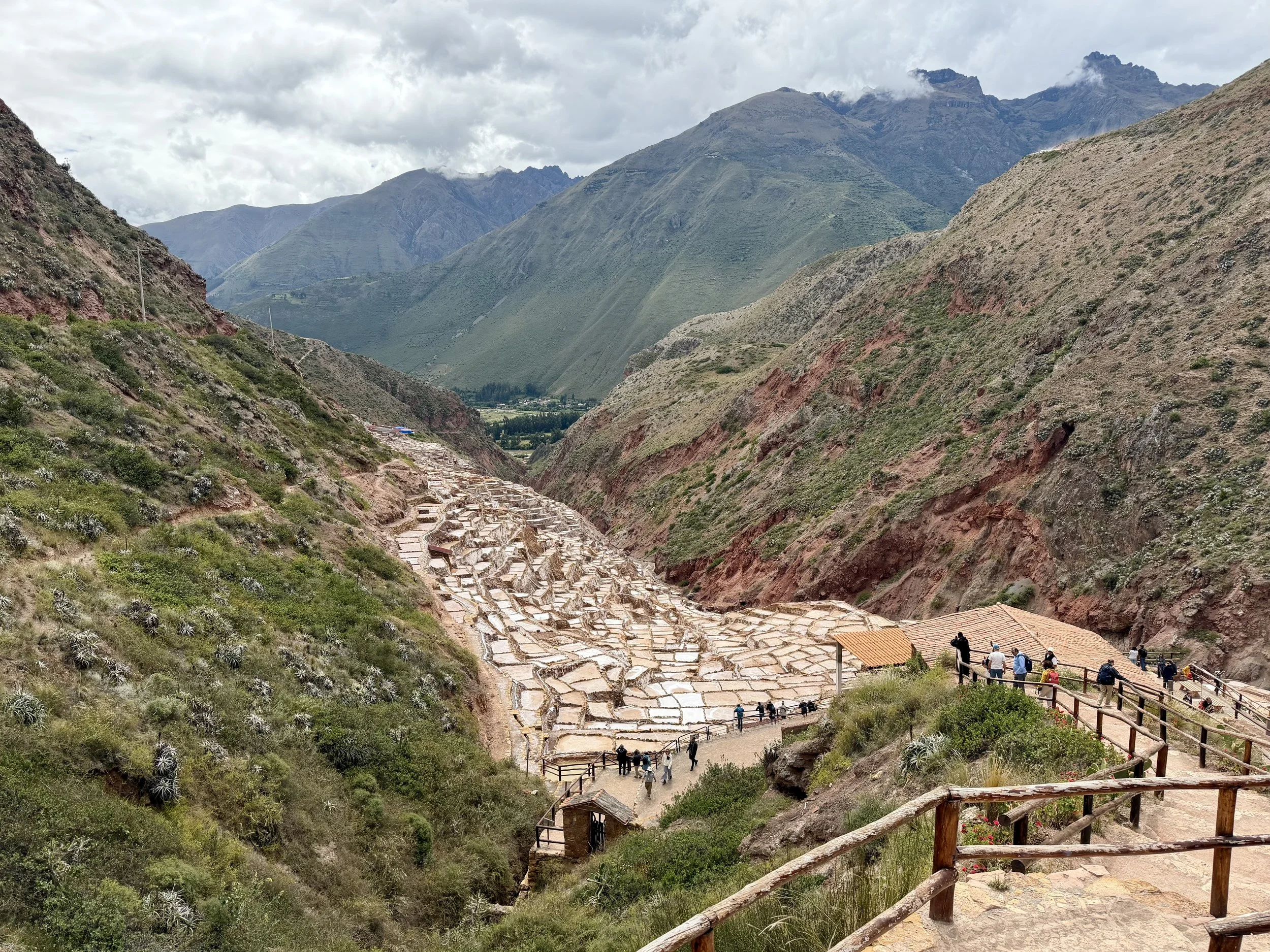
We made our way down a series of steps and platforms to get a closer look. Warm, salty water emerged from a natural spring and was routed through narrow channels to the ponds. The true source of the salty water is a mystery. Pilar’s belief was that millions of yeas ago, when tectonic plates shifted and formed the Andes, marine deposits from the Pacific Ocean were trapped underneath.
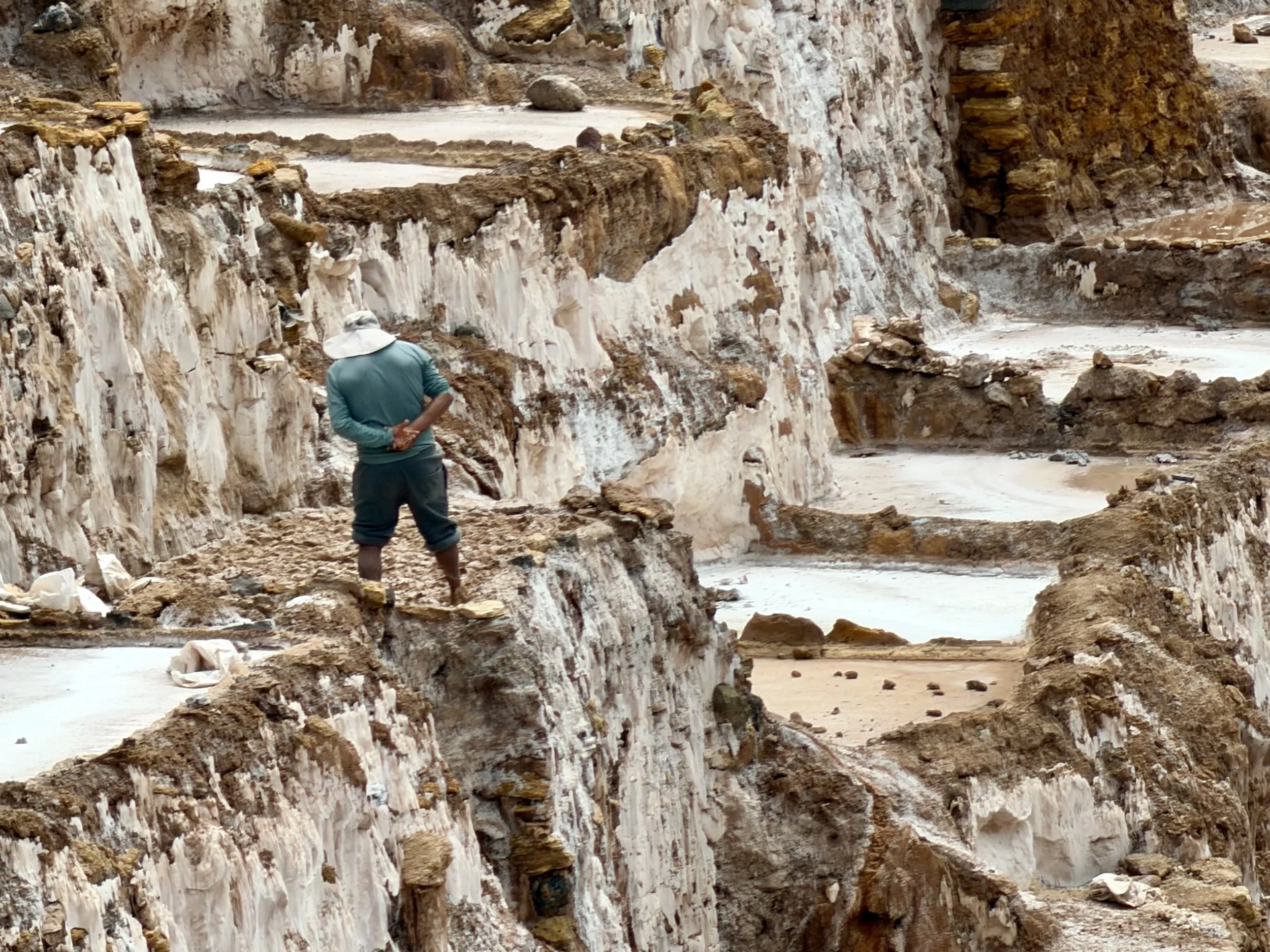
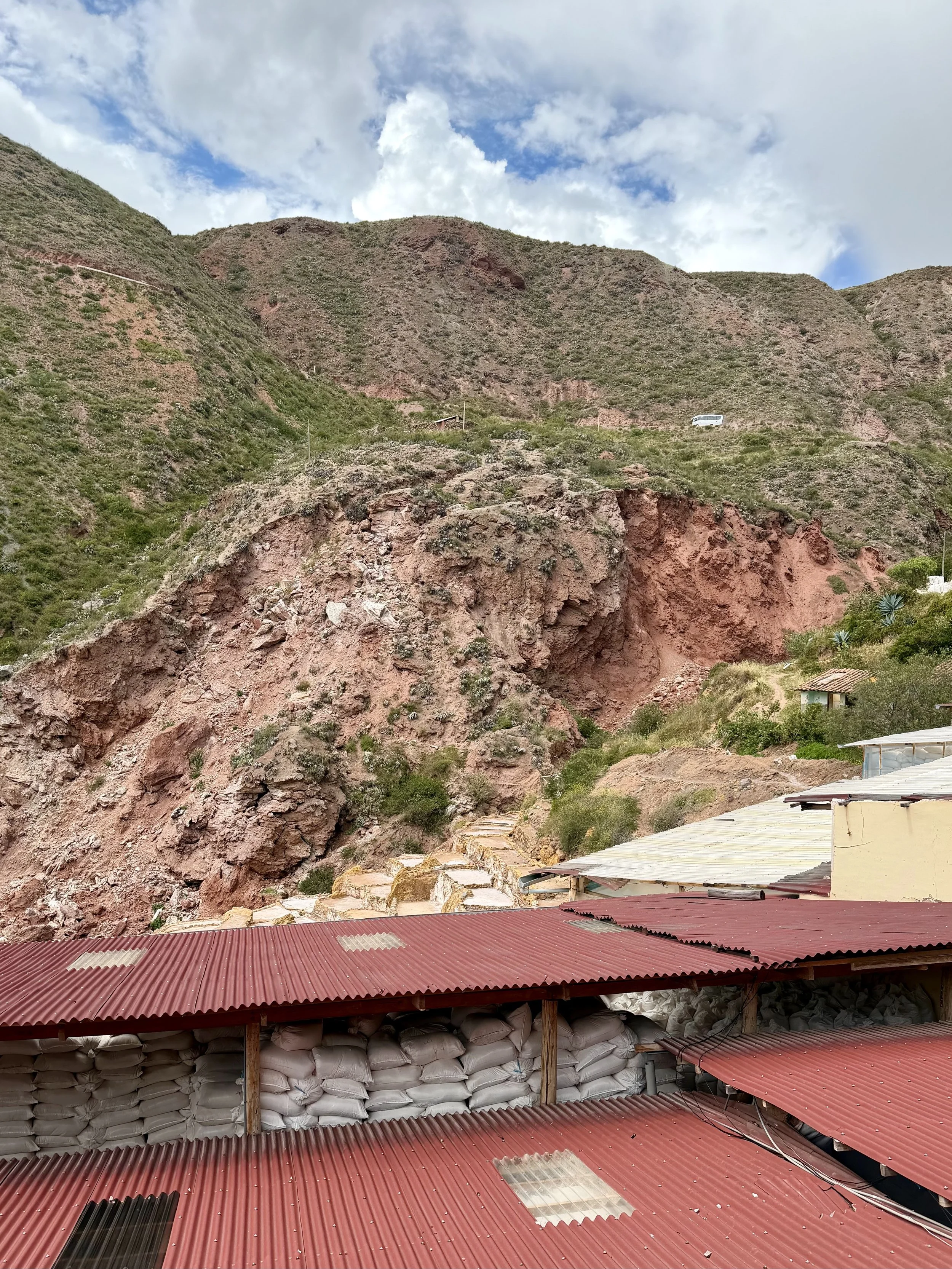
Each shallow pond had a floor of clay and short walls constructed with small stones. The different colors indicated different stages of the evaporation process. Brown ponds were either empty or recently filled with water; beige ponds had started to evaporate; and white ponds had a hard crust of dry salt, ready for harvest. Pilar said that in a few months (late summer), more ponds will be filled with dry salt, in shades of white, yellow, and pink.
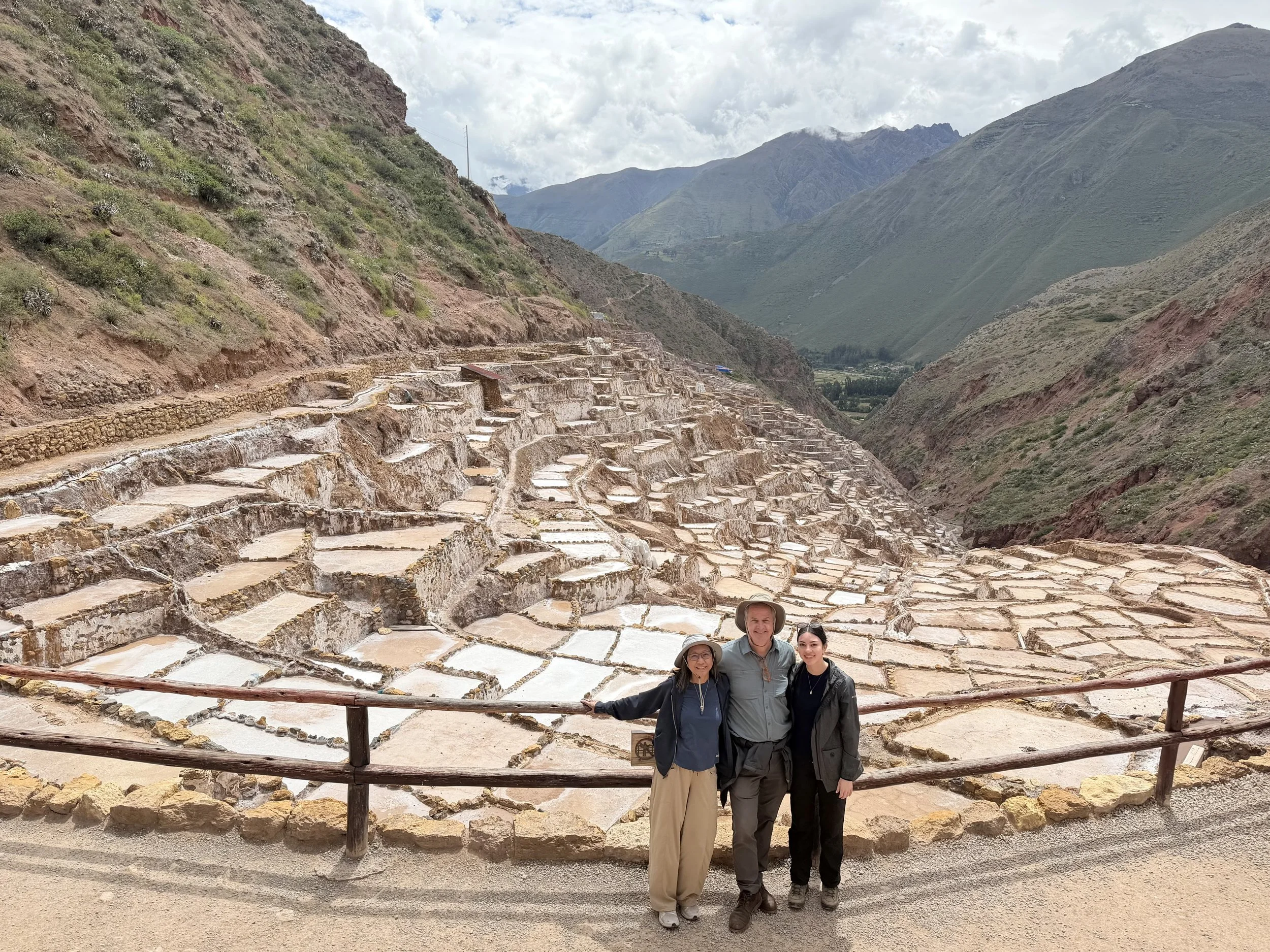
There are about 4,500 salt ponds. They are owned and managed by a cooperative of about 600 local families called Marasal. The salt is harvested monthly, when it is hard and 3-4 inches deep. The workers break up the salt by pounding it with their feet and then scraping it with a wooden pick. Each pond produces about 400 pounds of salt each month. The salt is stored in sacks in open-air warehouses on site. Sales are managed by the company, and profits are shared among all the owners. The community ownership of the ponds and the salt production process are passed down through generations. It is reminiscent of ancient Inca traditions.
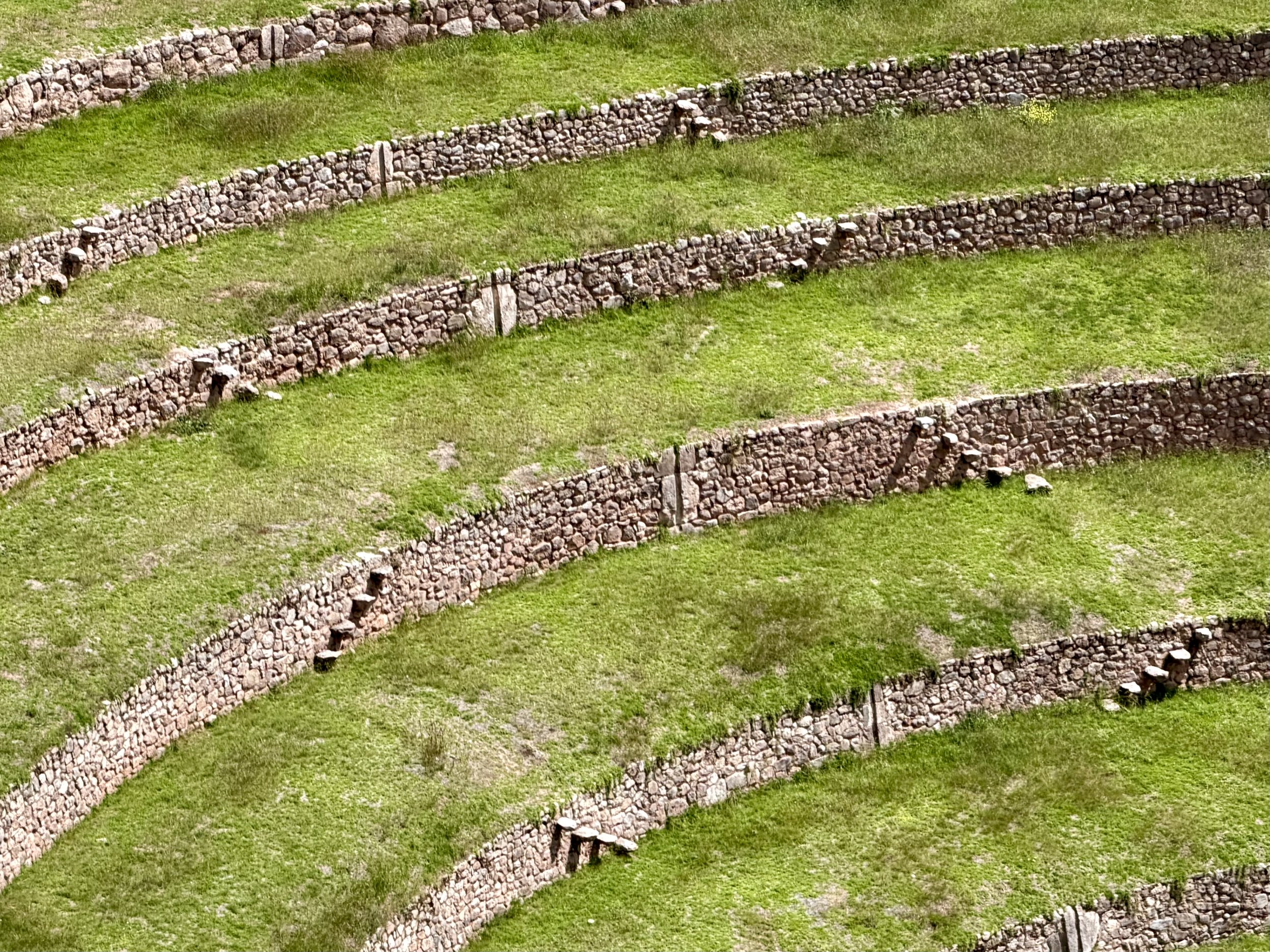
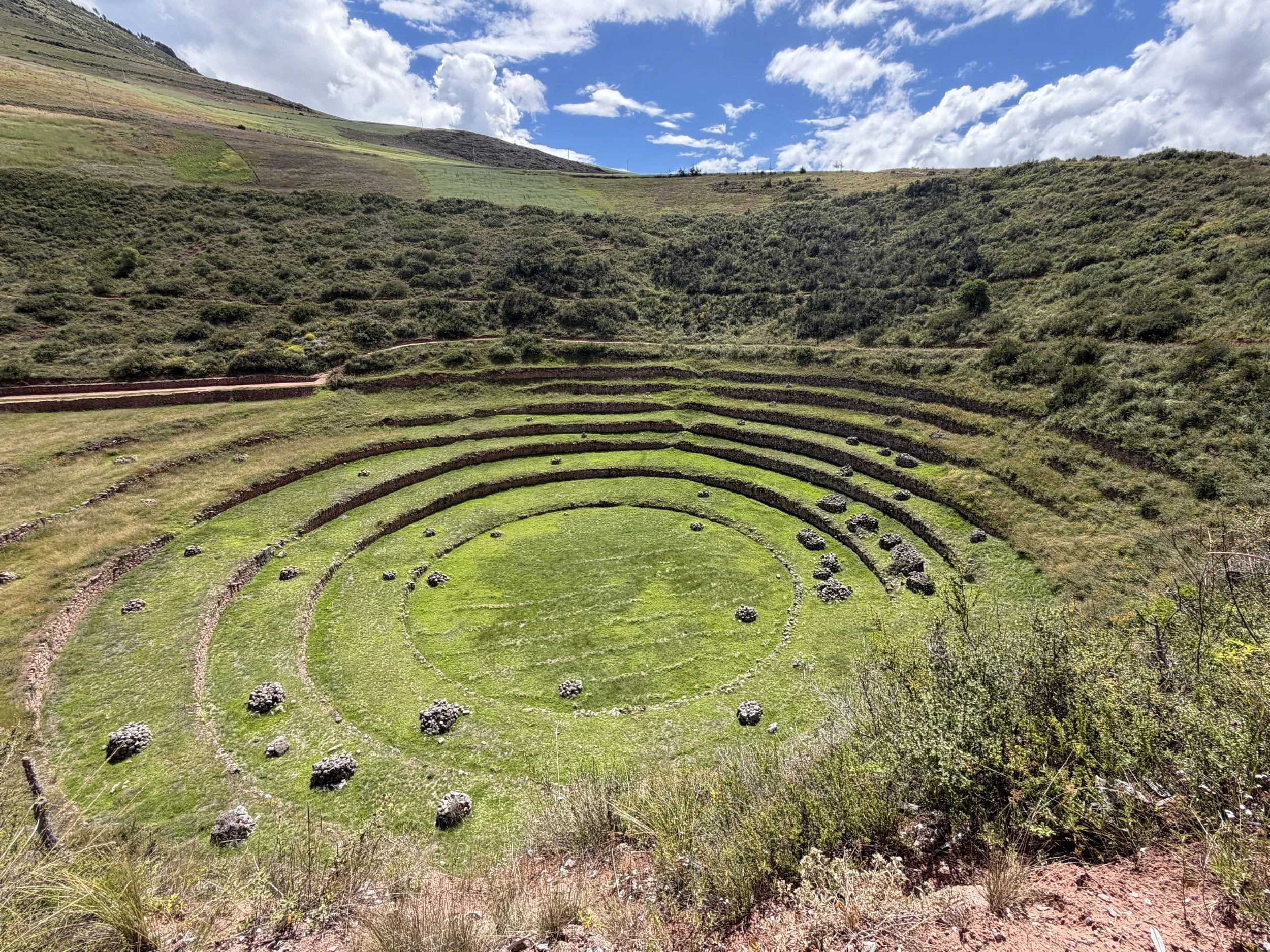
The second ancient site was Moray, on a mountain at 11,500 feet. It was another set of Inca terraces, but these were unusual - perfect, concentric circles forming a deep bowl.
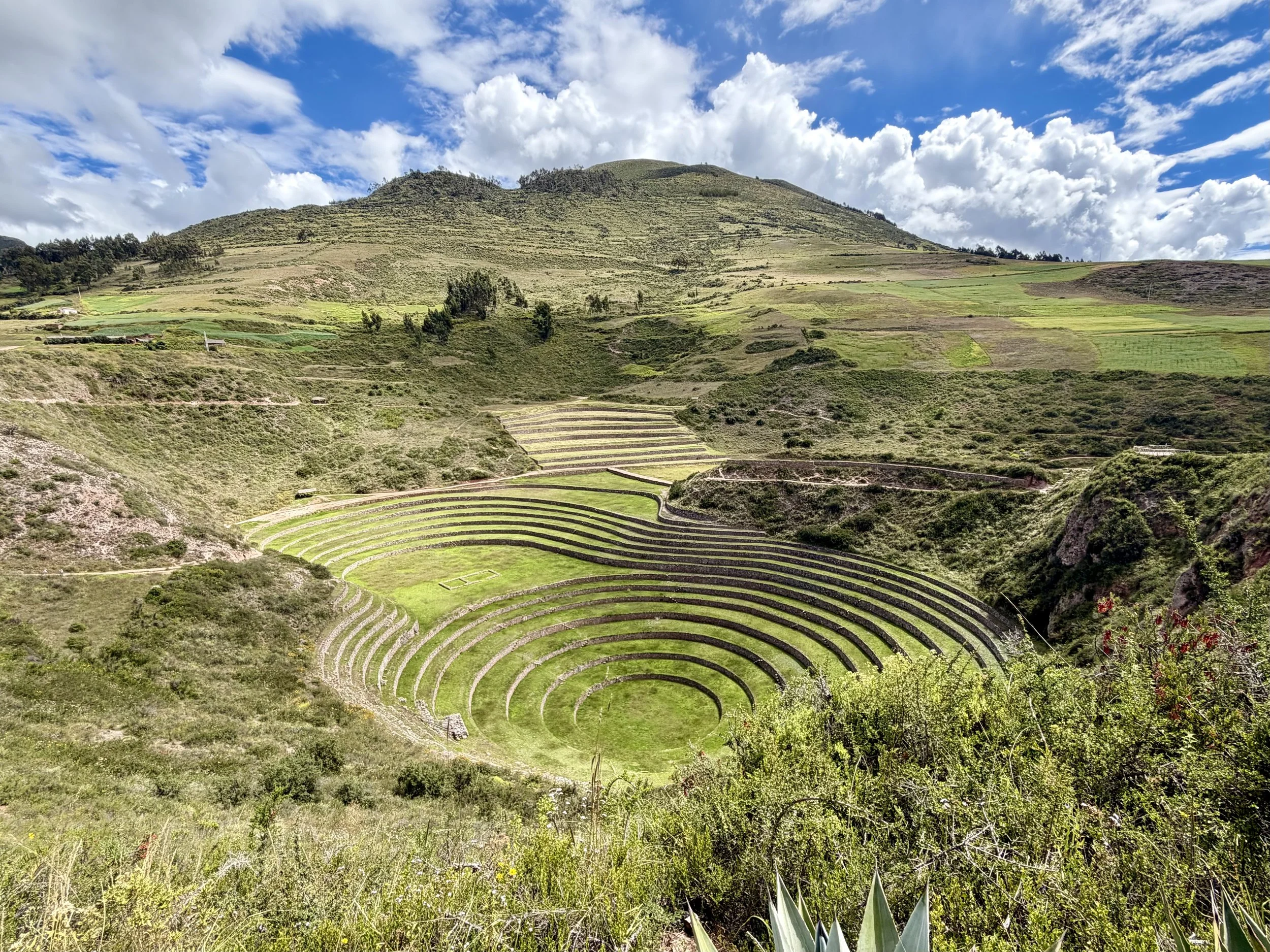
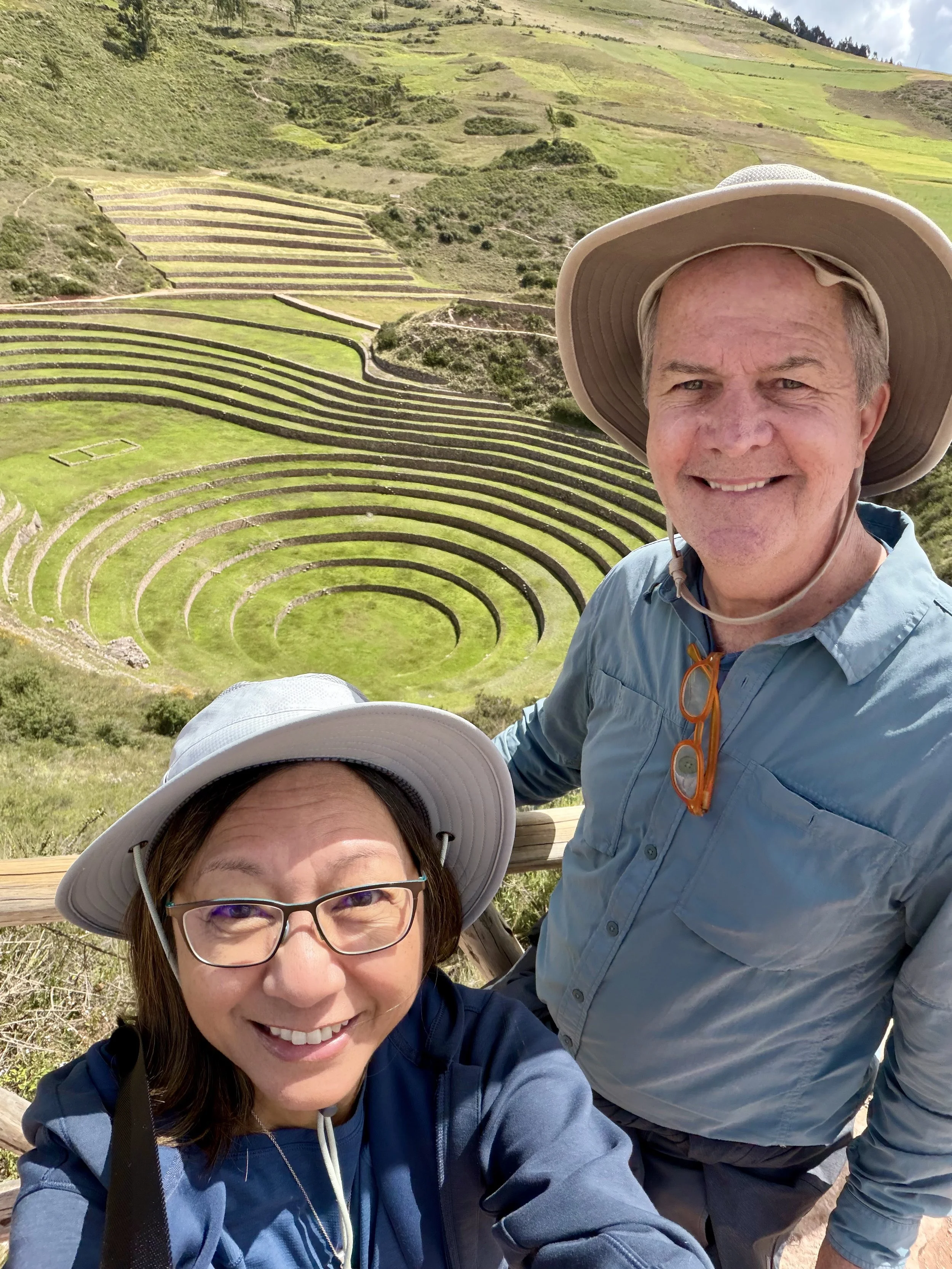
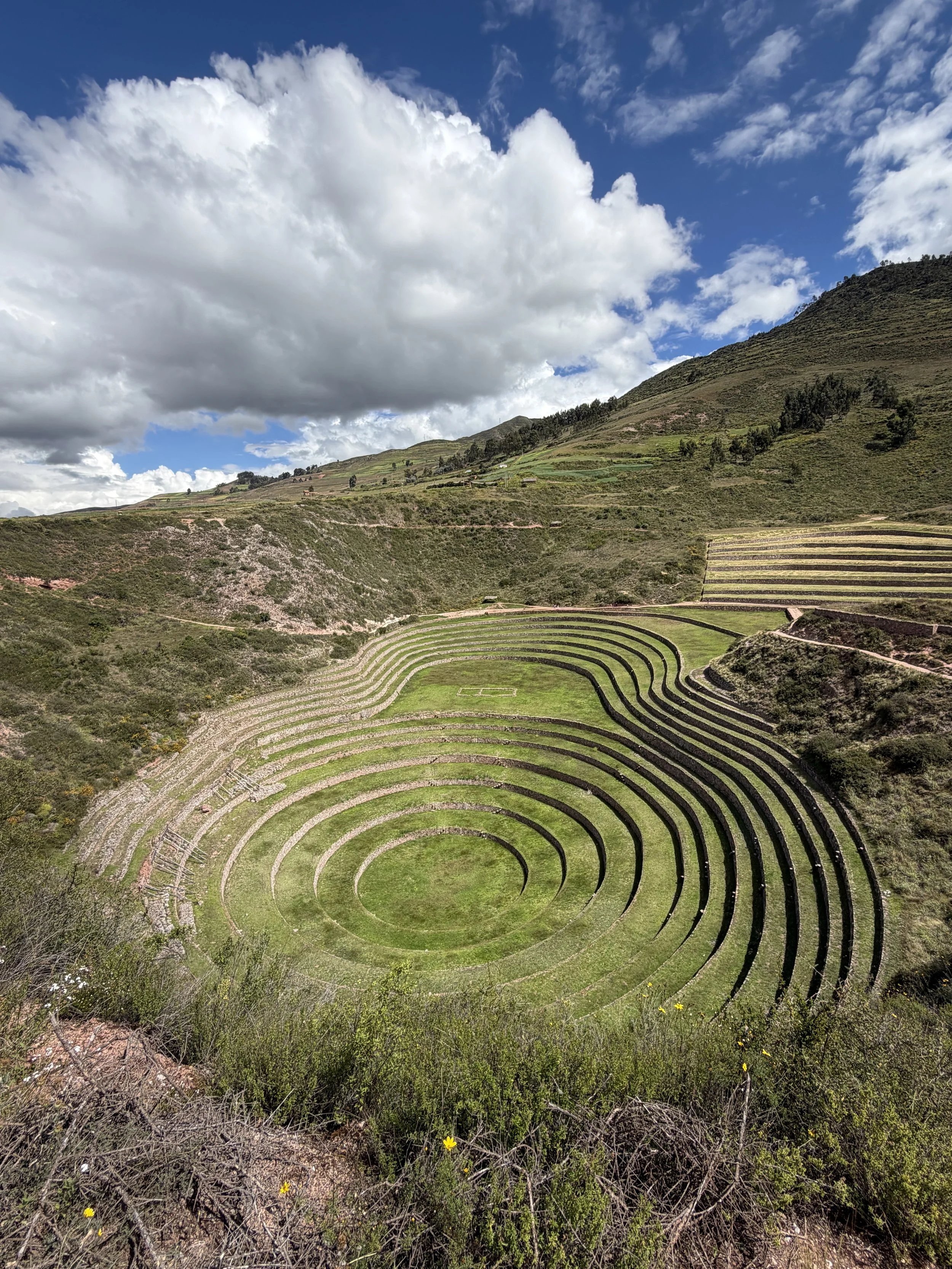
It looked like an amphitheater, but it is believed to be a laboratory for agricultural experiments. A closer look at the bowl revealed steps for climbing between levels, and slits for an ancient irrigation system. There would be a notable difference in temperature between the top and bottom levels of the bowl. Two additional bowls on other parts of the mountain provided more differences in temperature, sun, and wind. The Incas could have used these sites to systematically determine whether crops from lower, warmer regions could grow in the mountains. Ingenious!
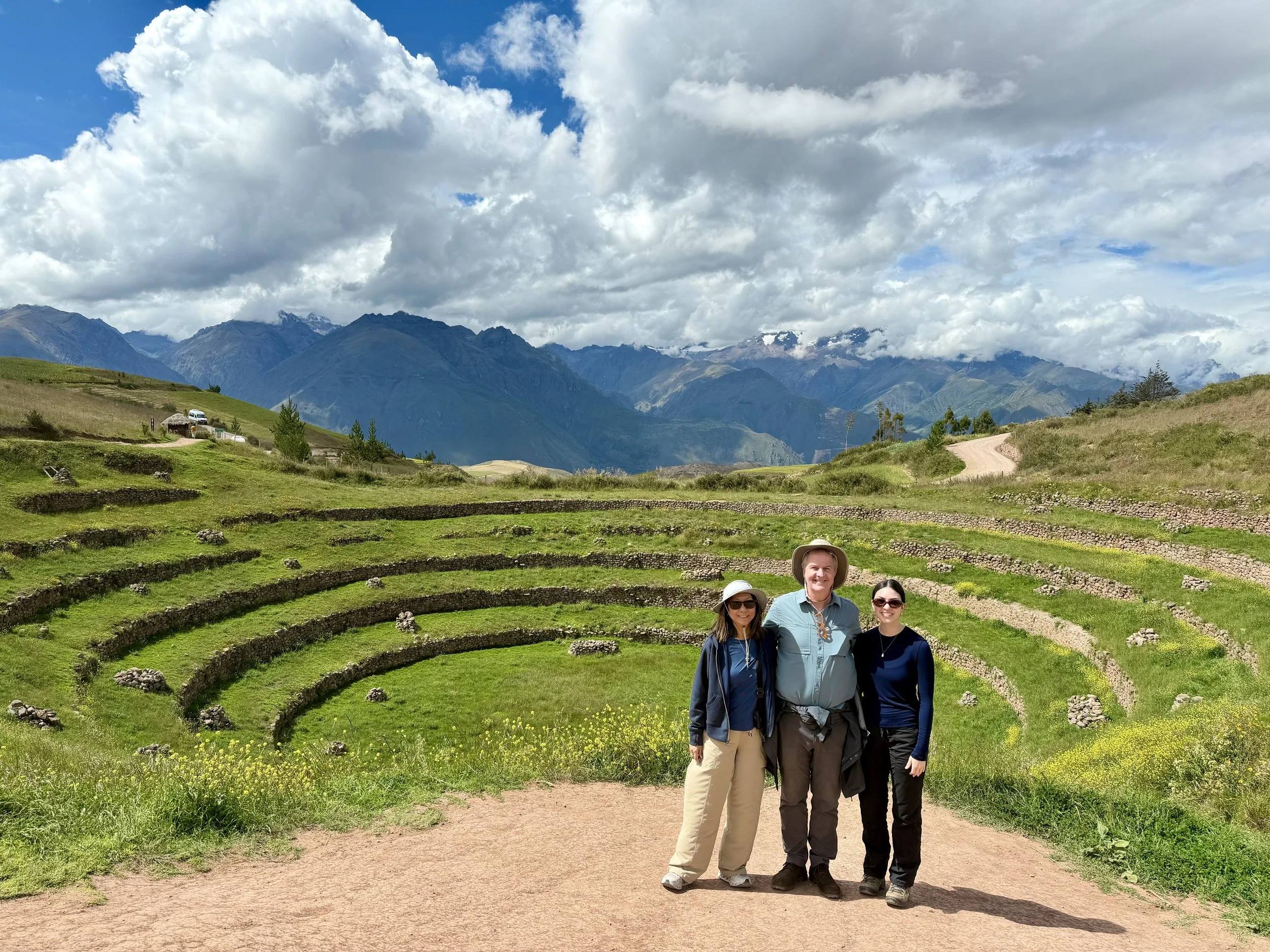
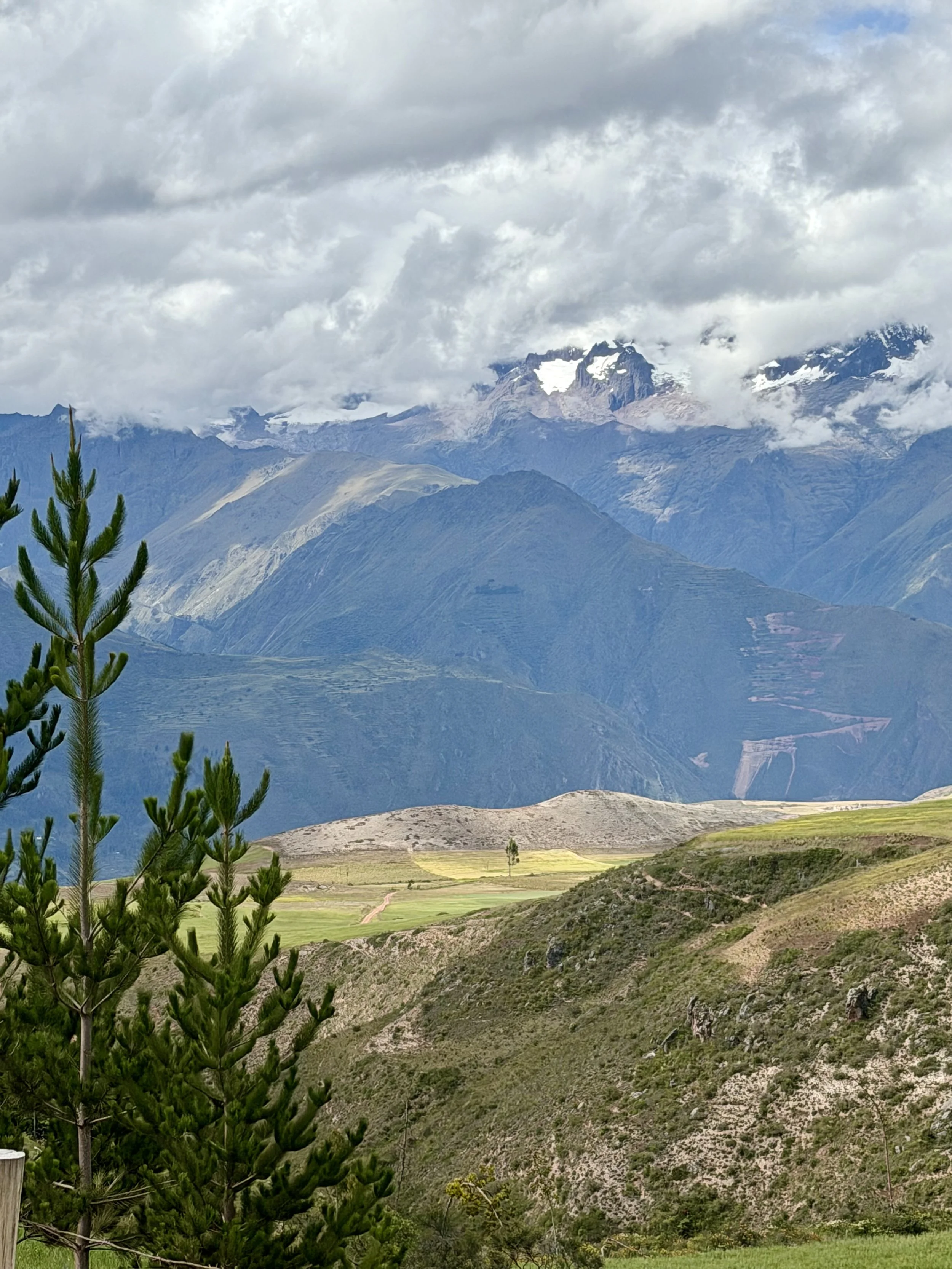
As we left the Moray archaeological site, we could see Chicon Glacier, peeking through the clouds at 18,000 feet. Chicon is melting and shrinking rapidly, and some predict it will disappear by the year 2030.