High above the Sacred Valley, at an elevation of 12,300 feet, is the town of Chinchero, famous for the production of textiles using ancient weaving techniques.
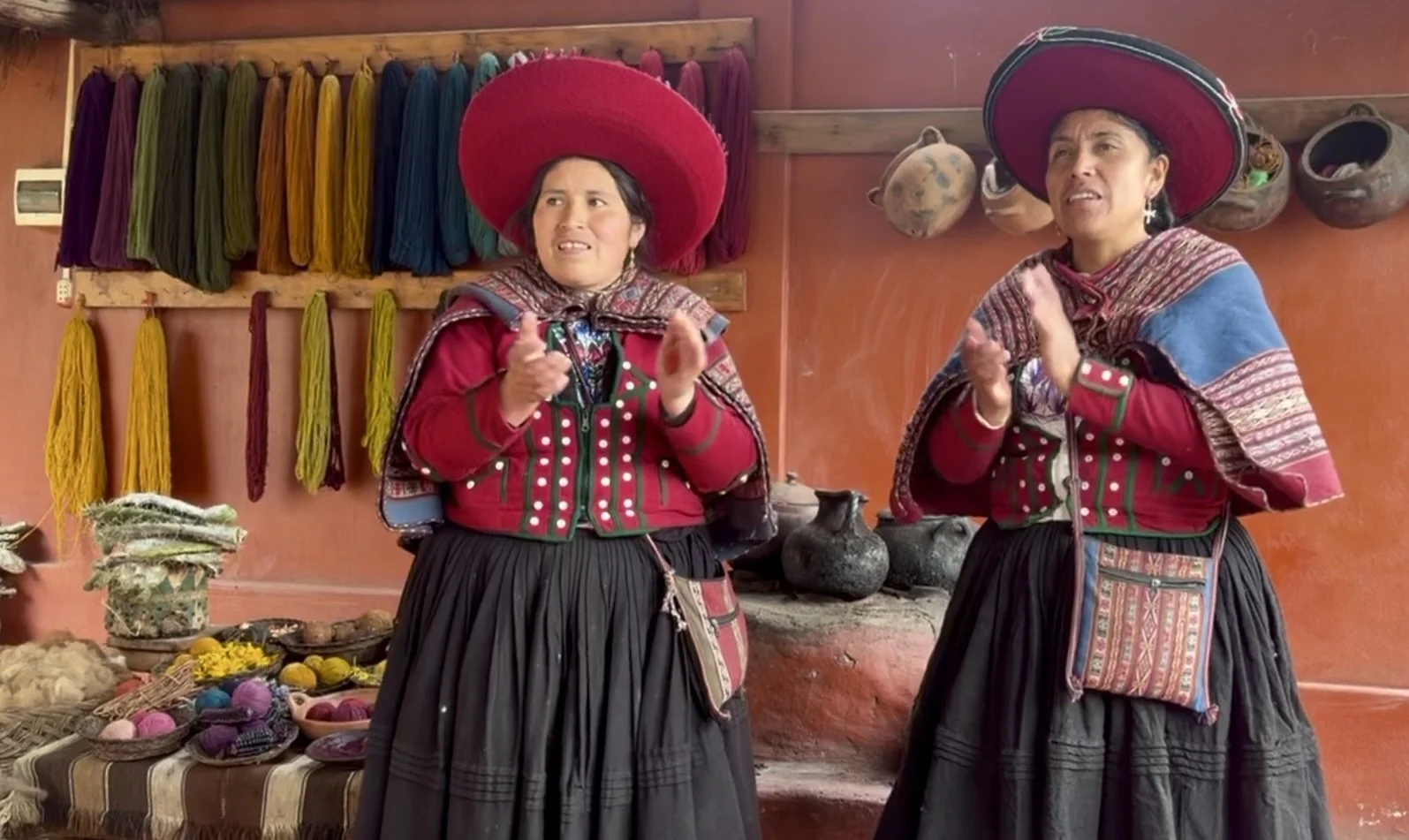
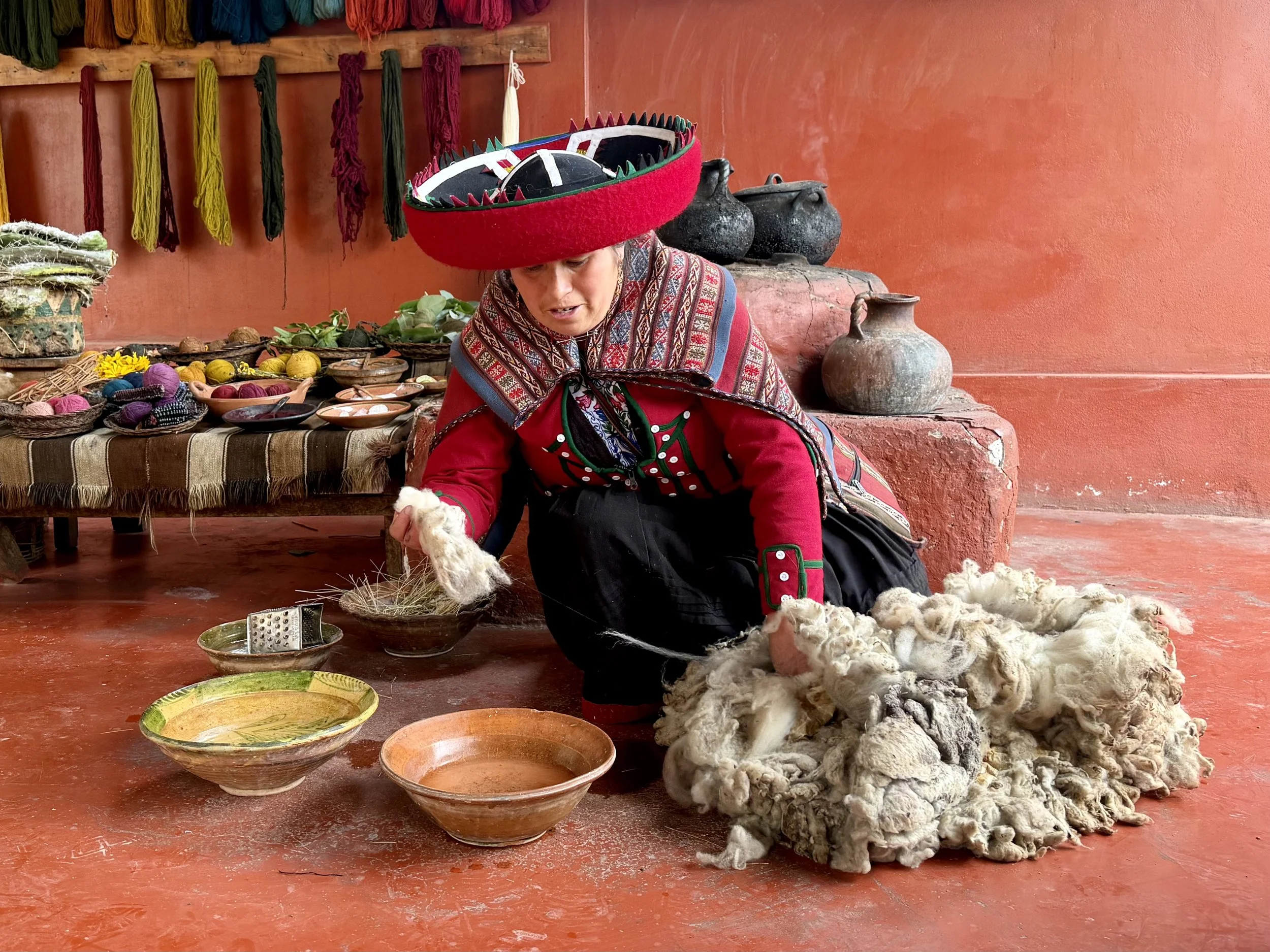
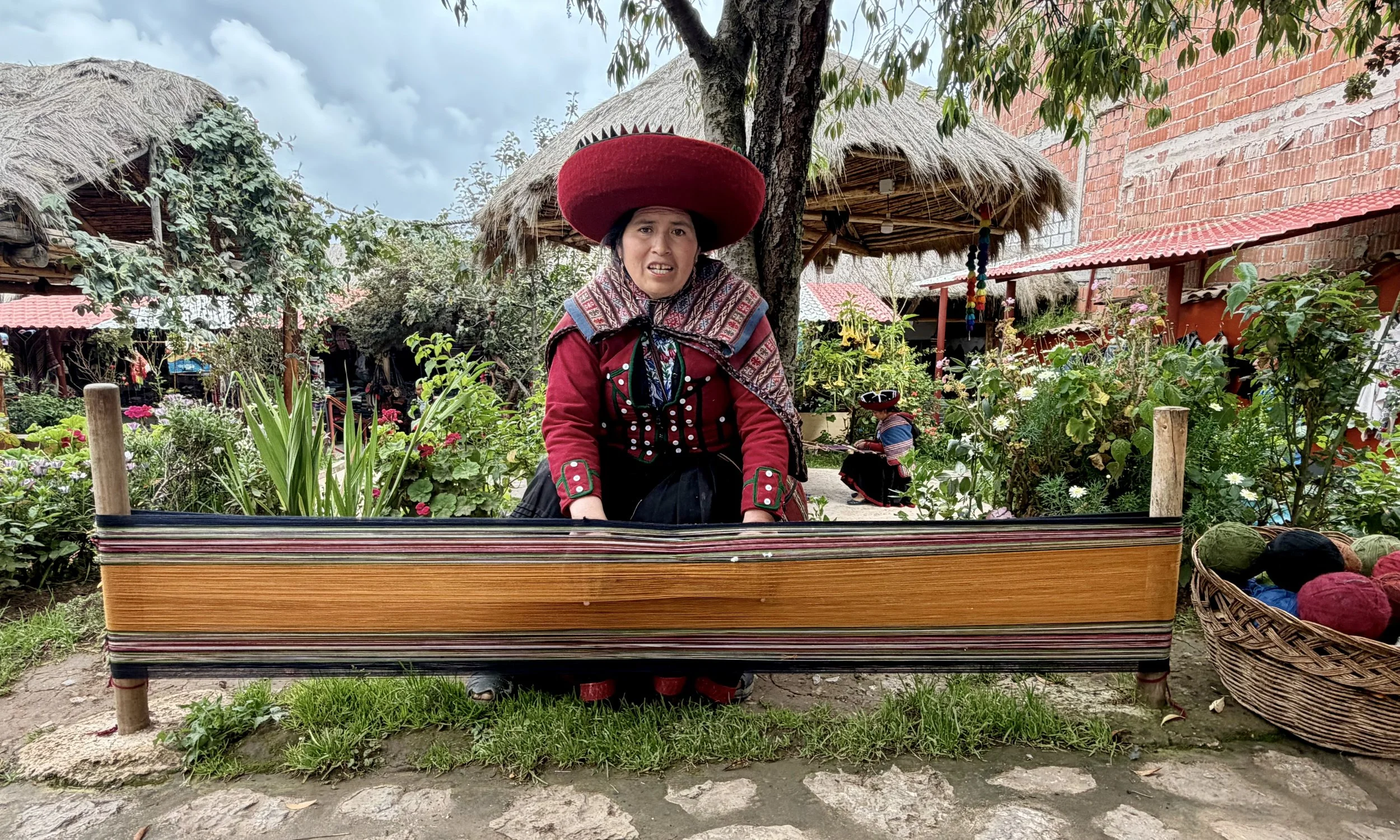
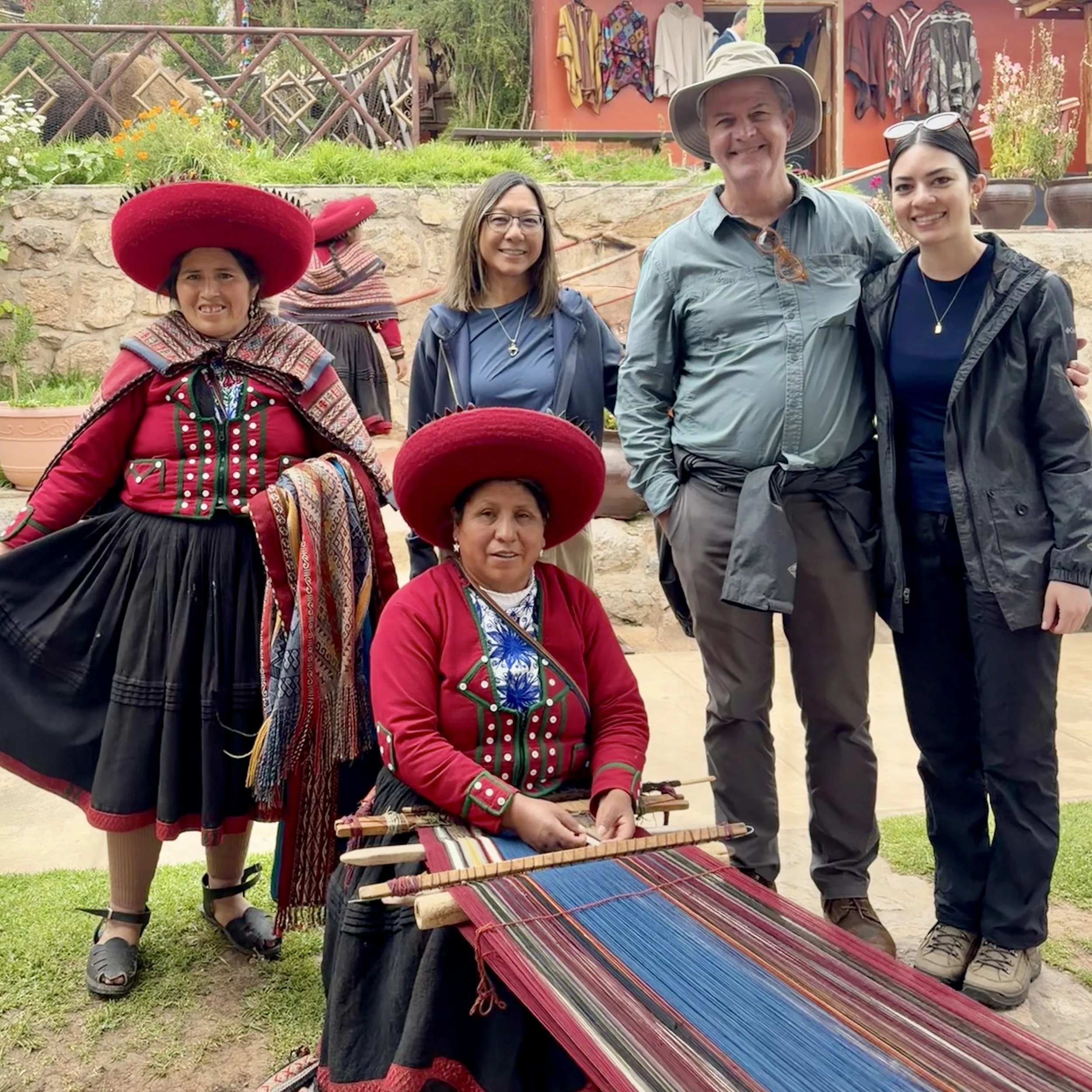
The Andean tradition of weaving has been passed down from mother to daughter for thousands of years. We visited a textile center, where Judith, an experienced weaver in traditional garb, gave us a demonstration of the process. Everything was done by hand, using ancient techniques and natural ingredients.
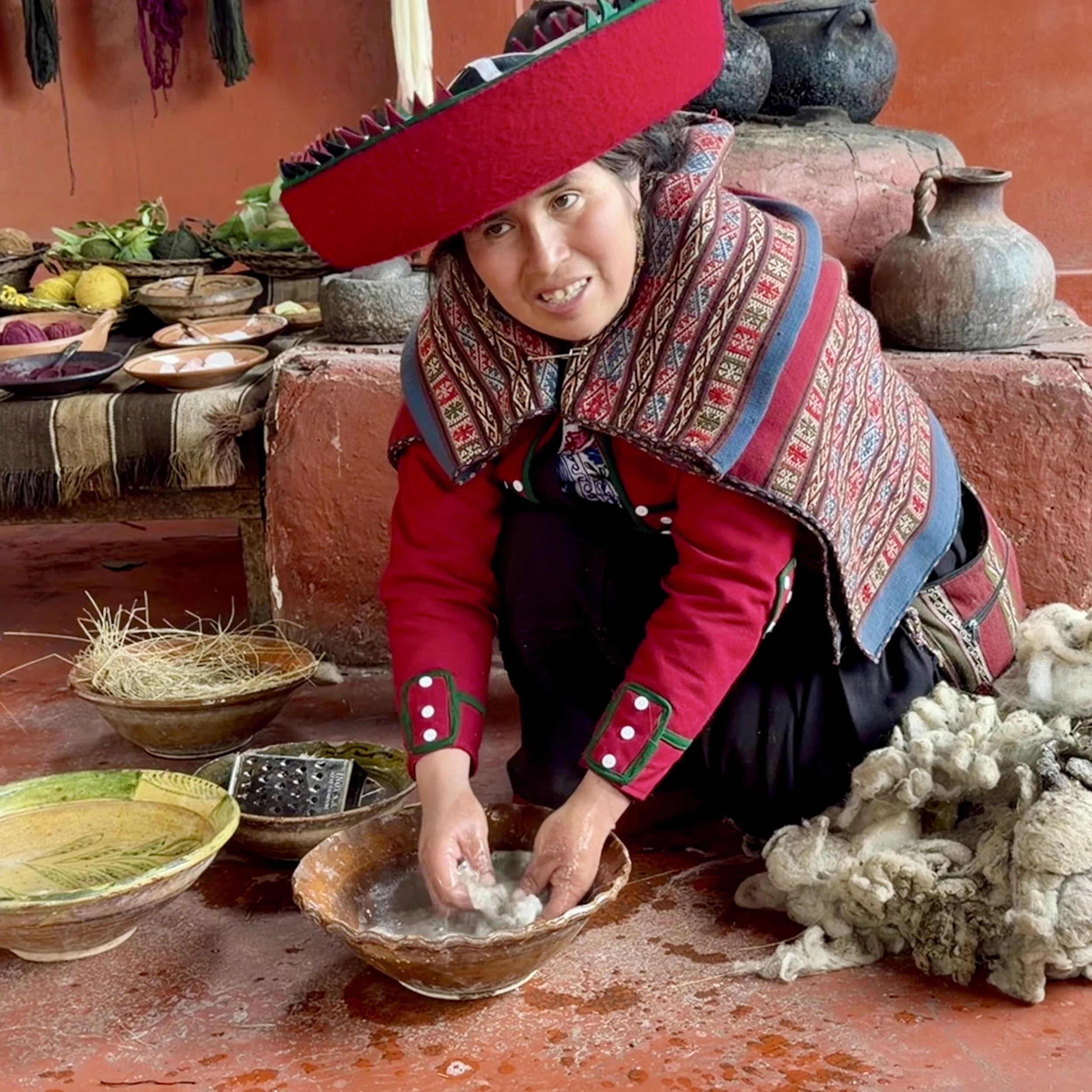
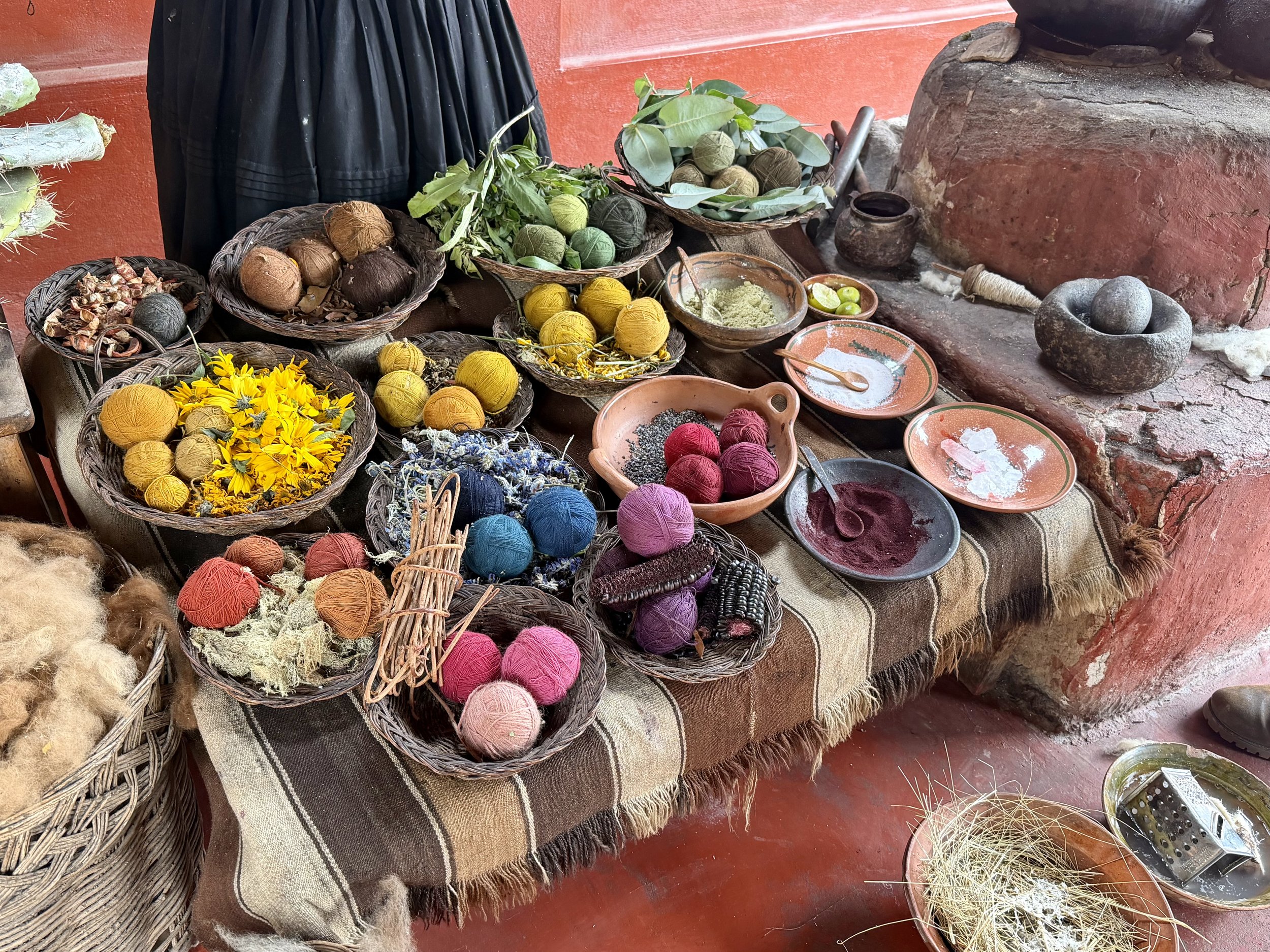
To clean a wad of recently shorn wool, Judith grated satqa root into warm water and strained it with a wad of hay. This formed plenty of suds that almost instantly turned the wool white!
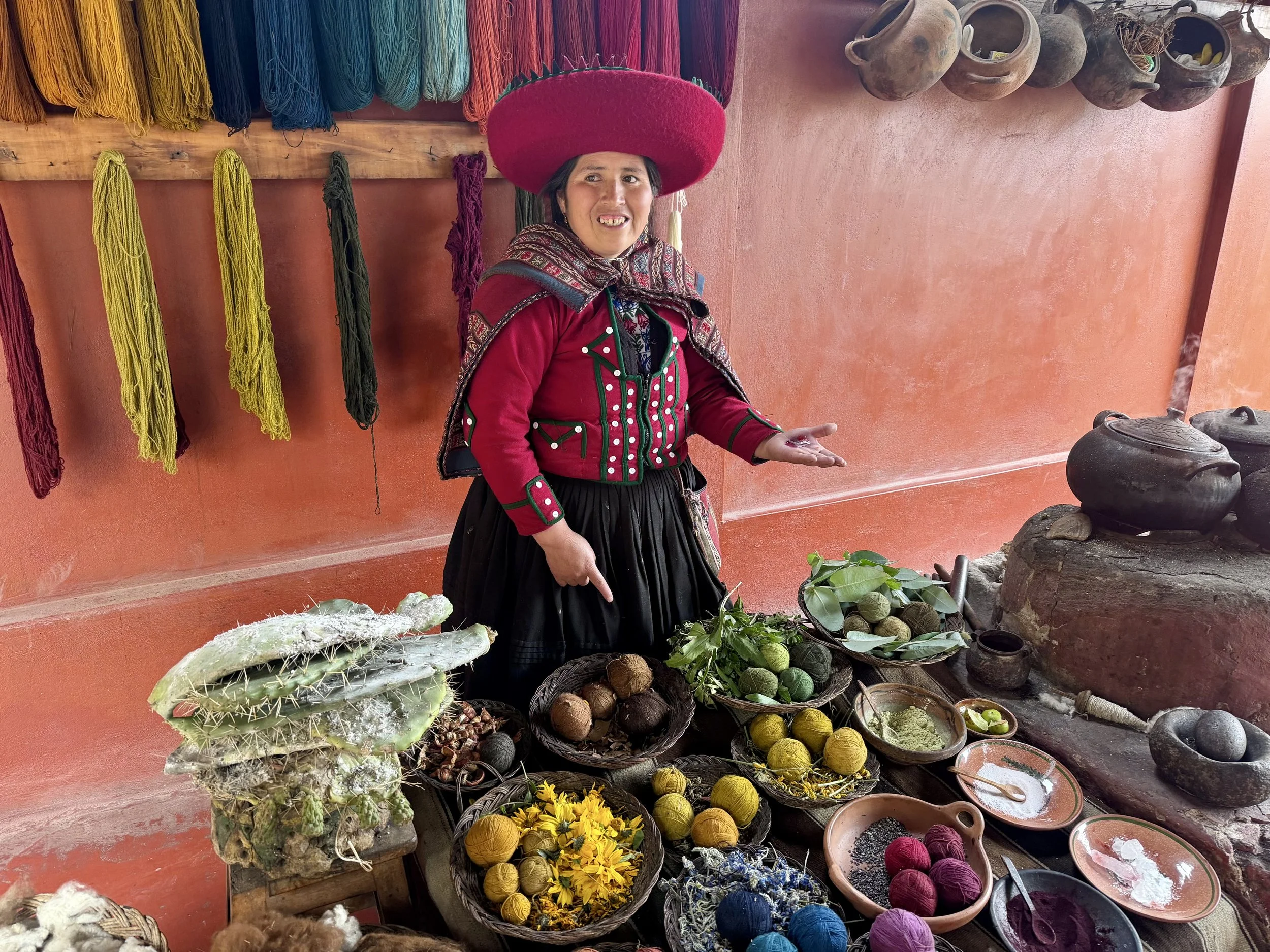
Skeins of hand-spun yarn were boiled with natural dyes - flowers, roots, and berries - to generate surprisingly bright colors. The most fascinating was the cochineal, an insect that Judith scraped off the paddle of a prickly pear cactus. When she crushed the insects in her palm, they stained it red. A drop of lime juice turned the red into orange.
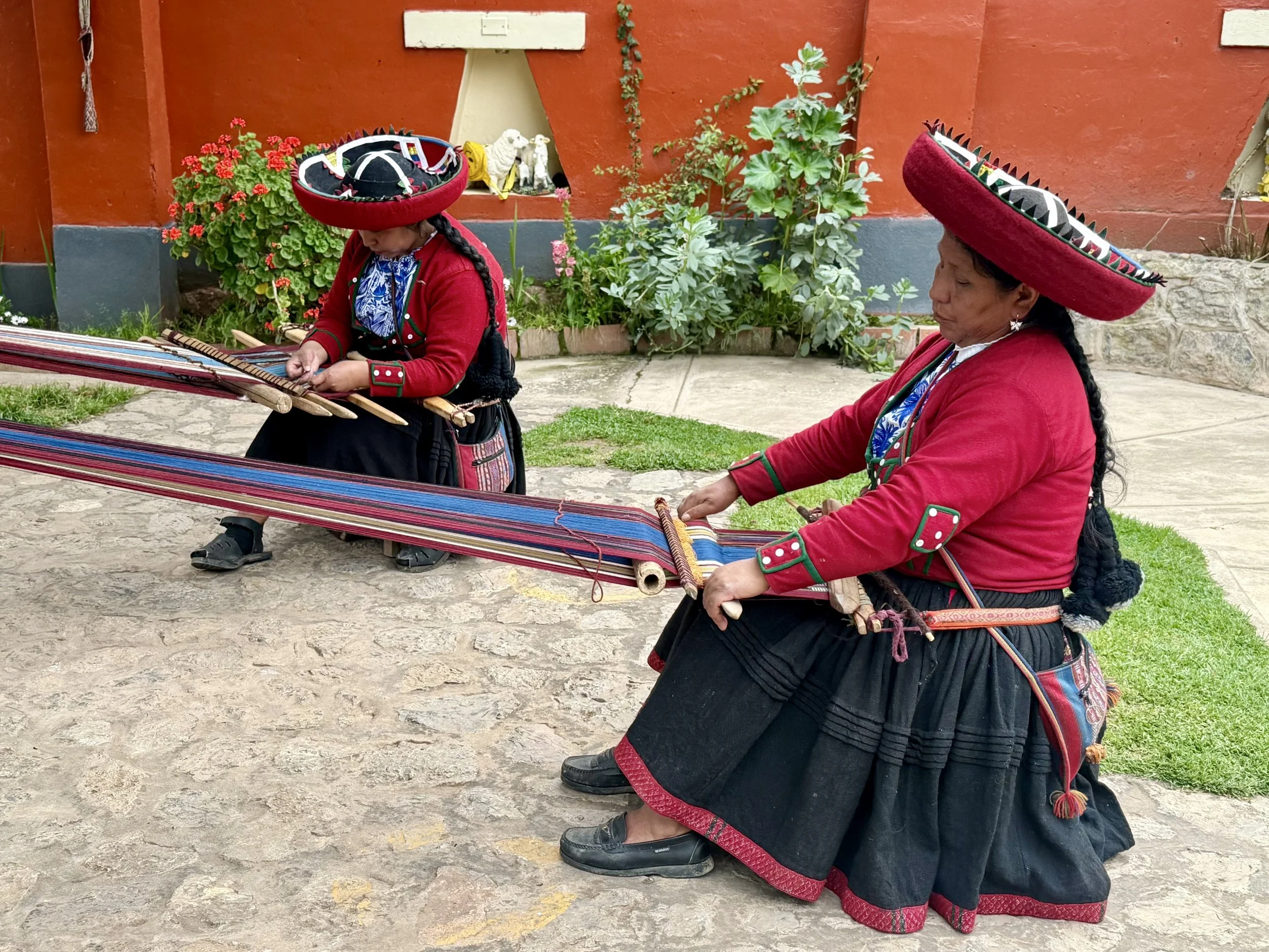
The weaving was done on a loom with one end tied to a tree and the other around the weaver’s waist. A polished alpaca bone was used to push the threads tightly together.
We purchased one of Judith’s projects, a table-runner in natural colors with figures of alpacas and condors, as a memento and to support the continuing tradition of handwoven textiles in Chinchero.
After visiting Maras and Moray, we traveled up the mountain to a rural village for lunch. Members of the community welcomed us with garlands of bright fuchsia cantuta blossoms (the sacred flower of the Incas). The women sang songs in Quechua while the men played flute and drum. We joined them in a simple dance. Then we took turns introducing ourselves, in Spanish.
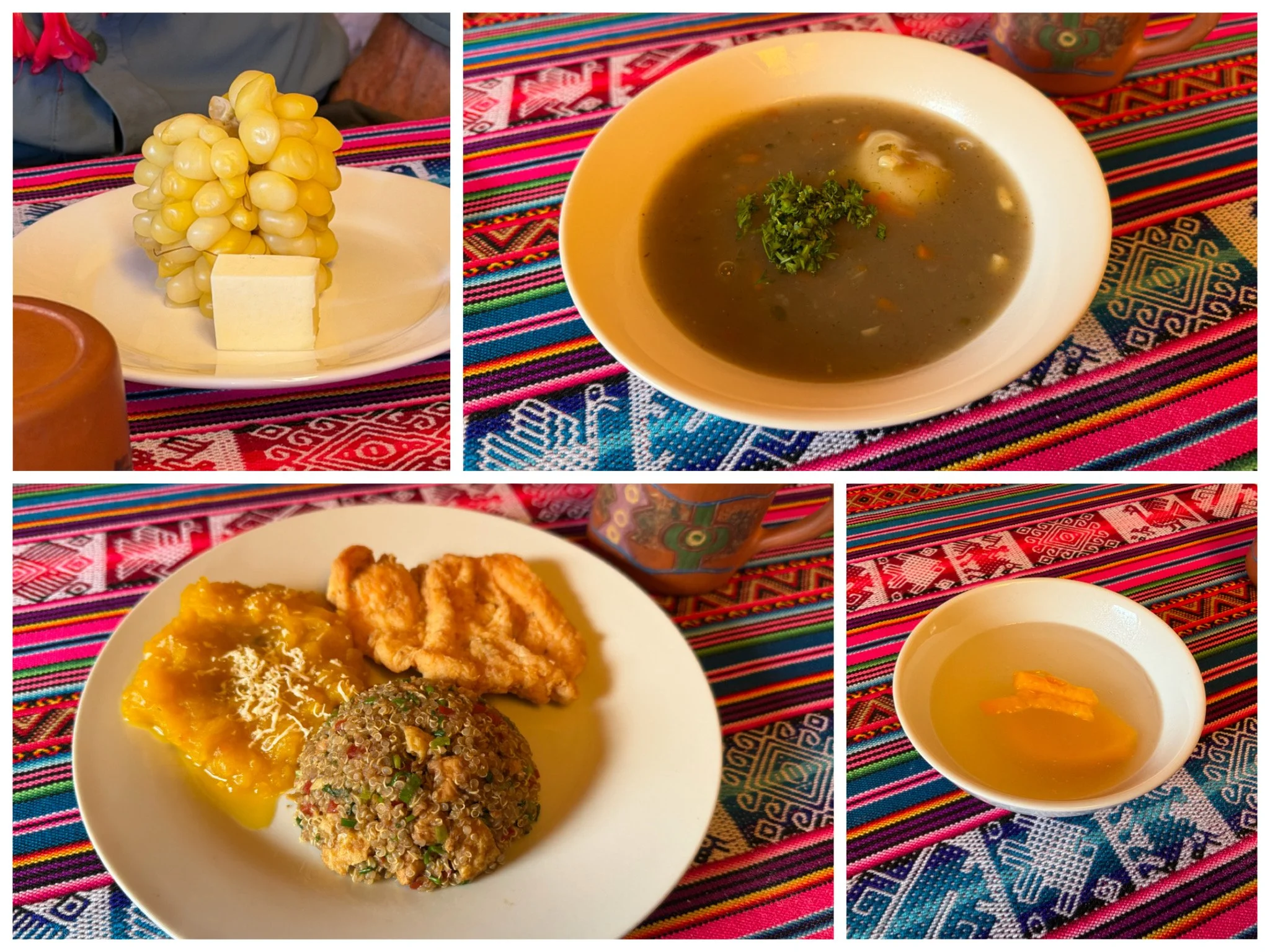
We sat down at a long table, joined by our guide Pilar and our driver Valerio, and enjoyed a four-course lunch of traditional dishes made with local ingredients. Both coca leaves and muna leaves were available for hot tea. The starter was boiled choclo, the large Peruvian corn, served with a locally made cheese. That was followed by lawa de chuño - soup made with dried potatoes and garnished with herbs. The main course was chicken Milanesa, stewed squash, and quinua chaufa (stir-fried quinoa with soy sauce, eggs, and green onions). Dessert was a soft gelatin with sachatomate (tree tomato, or tamarillo), which had a lovely flavor, like a tart peach. After the meal, our host, Maria, thanked us for our visit and showed us some of the textiles she had made.
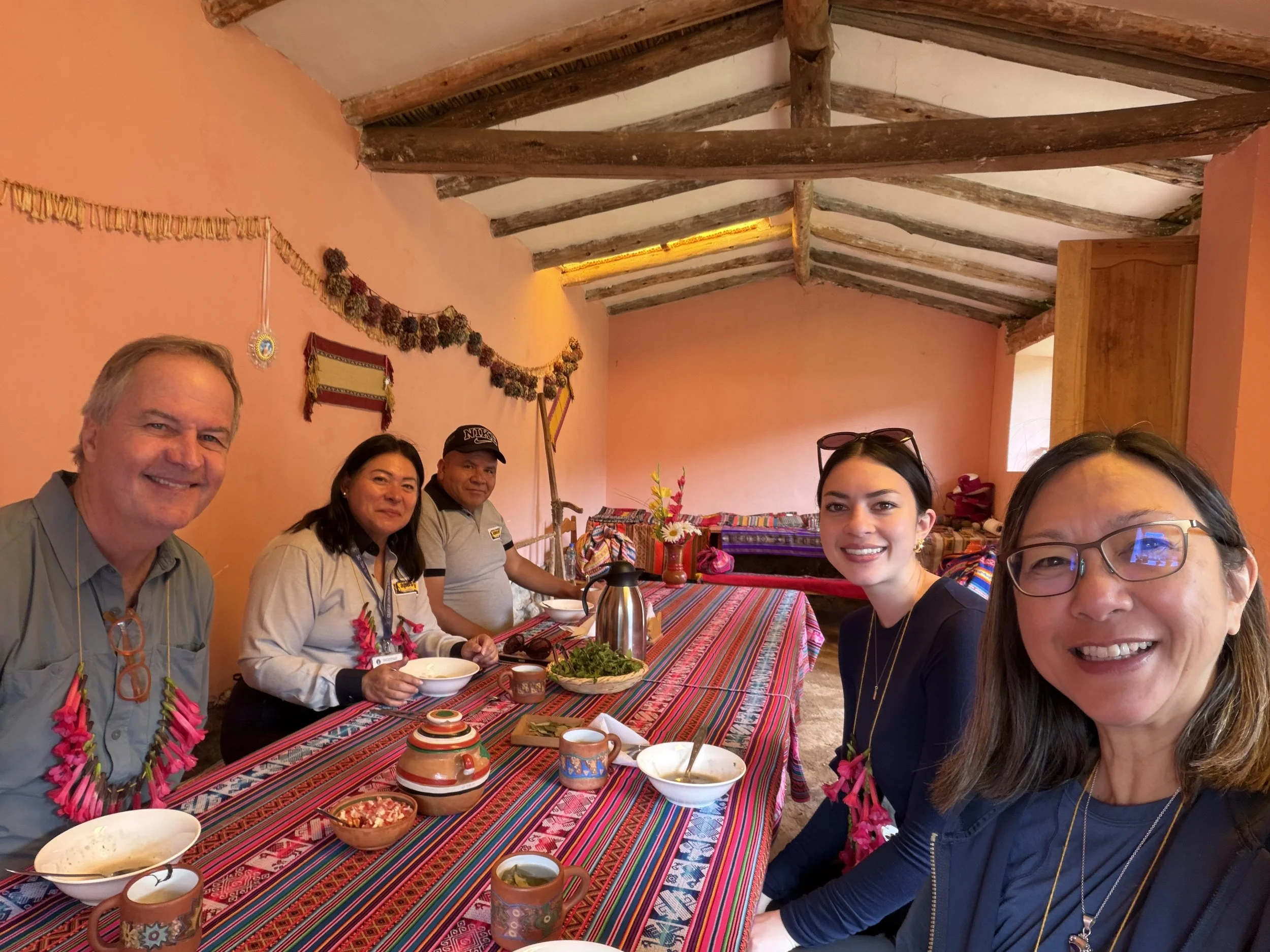
I’m thankful that our tour company, Apus Peru, is supporting rural Andean communities so that visitors like us can meet people who have lived here for generations and experience their authentic musical and culinary traditions.