Özkonak is one of many underground cities in Cappadocia. The details of its history are unclear, but it was probably constructed in the 6th or 7th century by Byzantine Christians hiding from the Arab armies that raided the area on a regular basis.
Togay led us through a series of underground chambers that went progressively deeper. The city was clearly designed for hiding from enemies, often for extended periods. Large niches had been carved into the walls for storage. Ventilation shafts and openings between chambers promoted airflow, and tubes drilled between levels allowed communication. Water was available from underground wells and cisterns. With ten subterranean levels, thousands of people could hide in Özkonak for months! Togay explained that they couldn’t stay underground for longer than three months because they would become ill due to vitamin D deficiency.
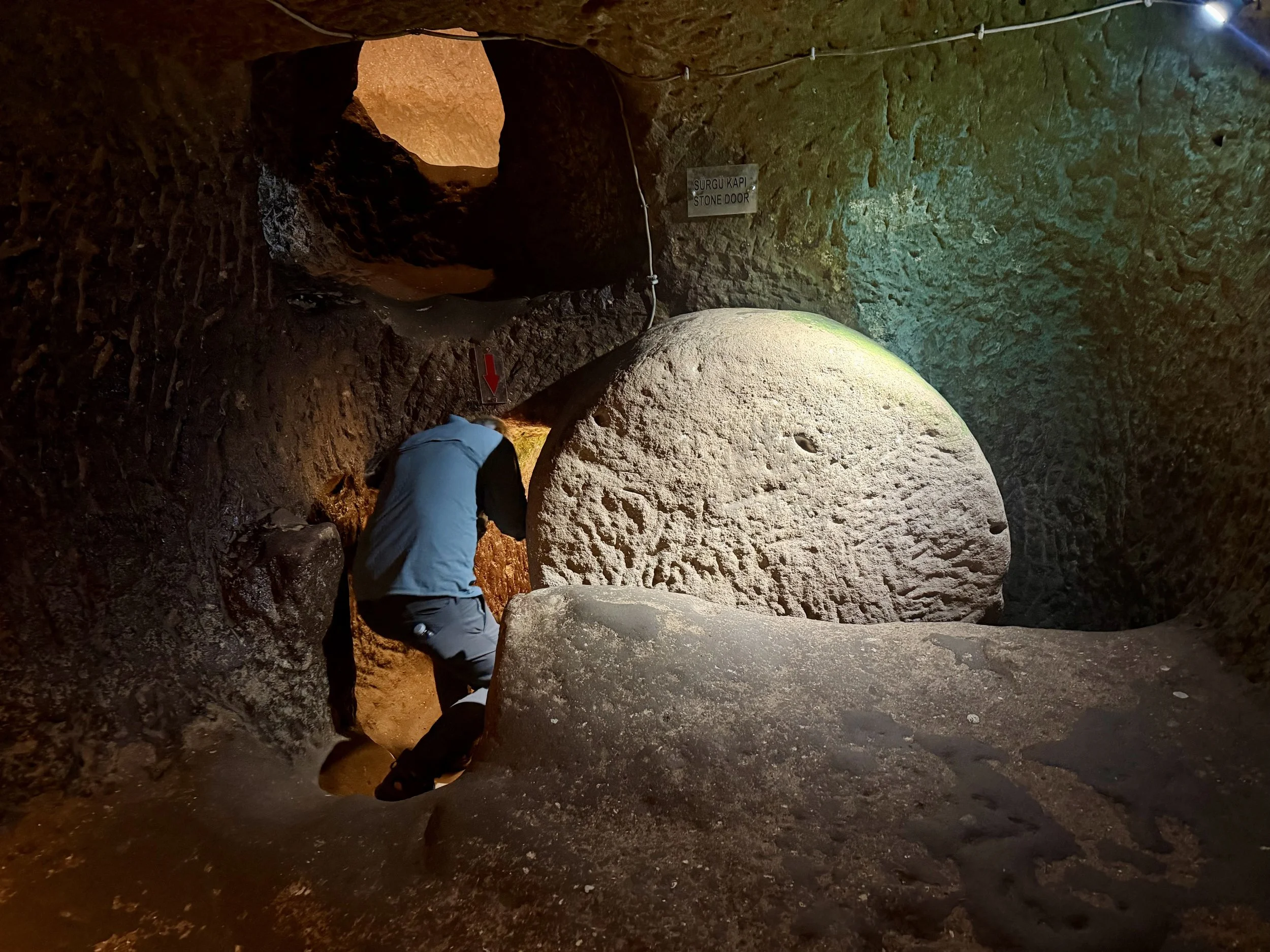
Low doorways could be barricaded using round stone doors.
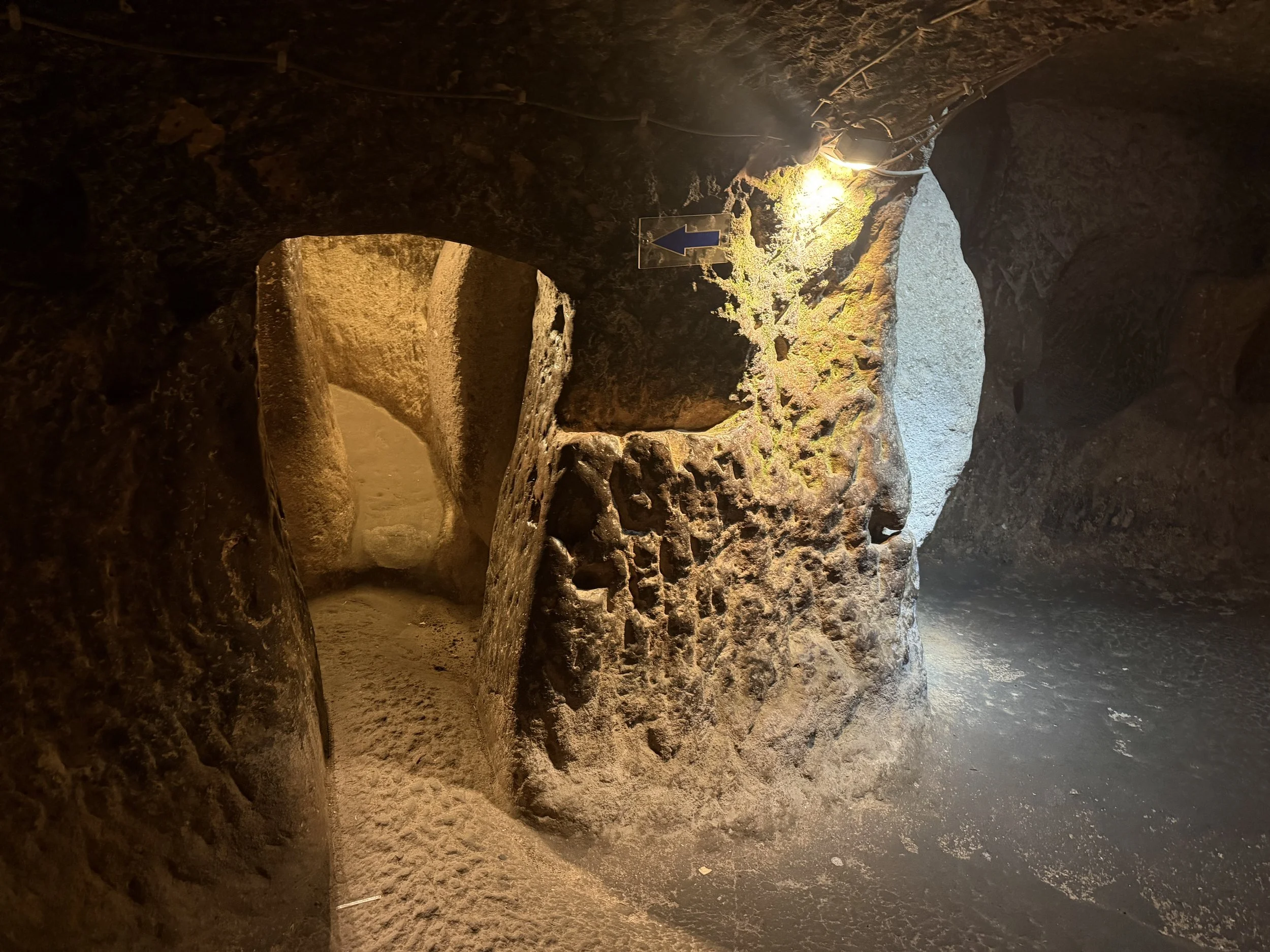
Narrow, winding ramps made enemy access difficult and were easy to defend.
The residents of underground cities probably cooked just once a day, after dark, so that smoke from their fires would not give away their location. Trash, human waste, and even dead bodies would have to be stored underground, at least for a time. It must have been a difficult life.