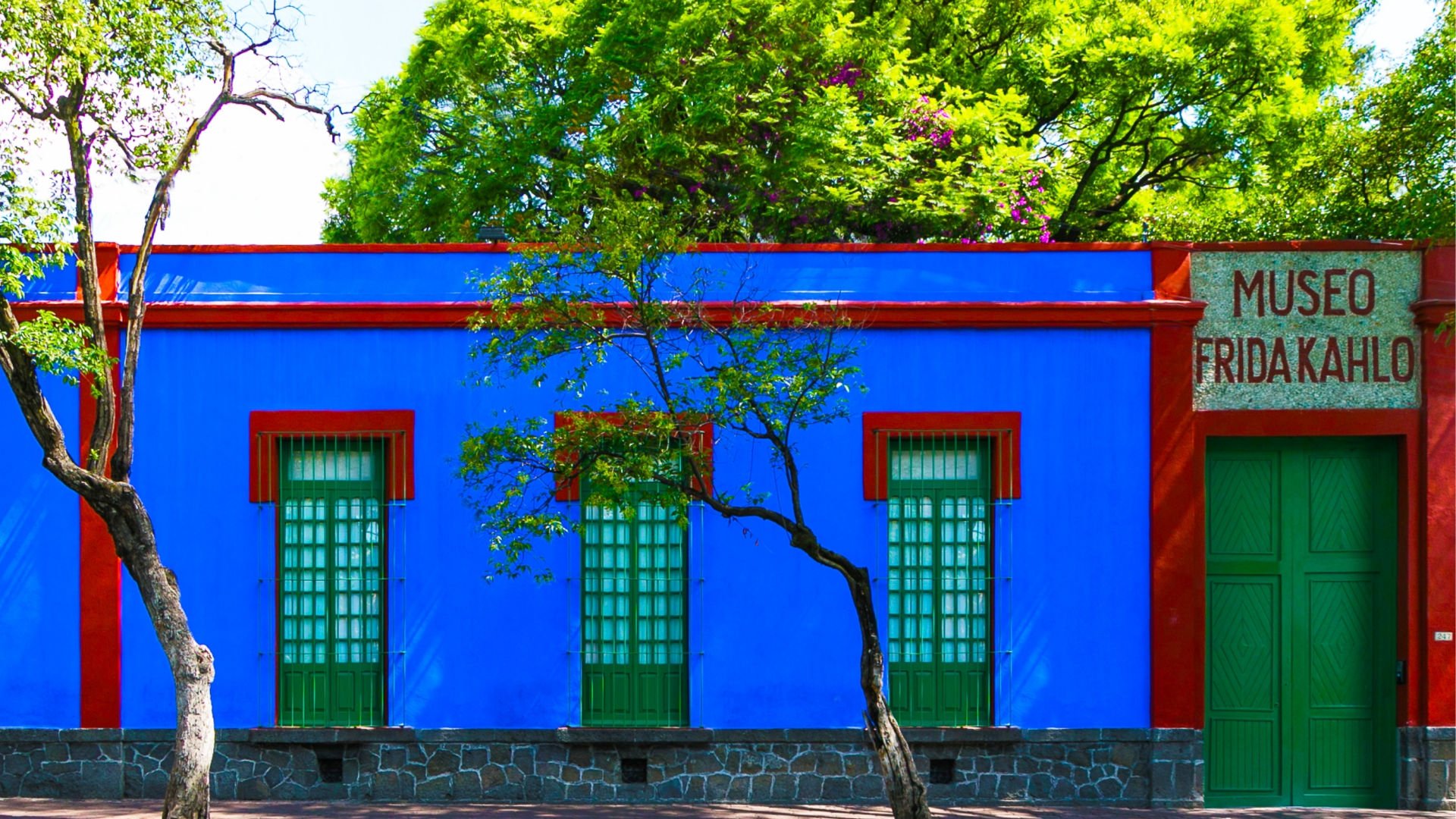
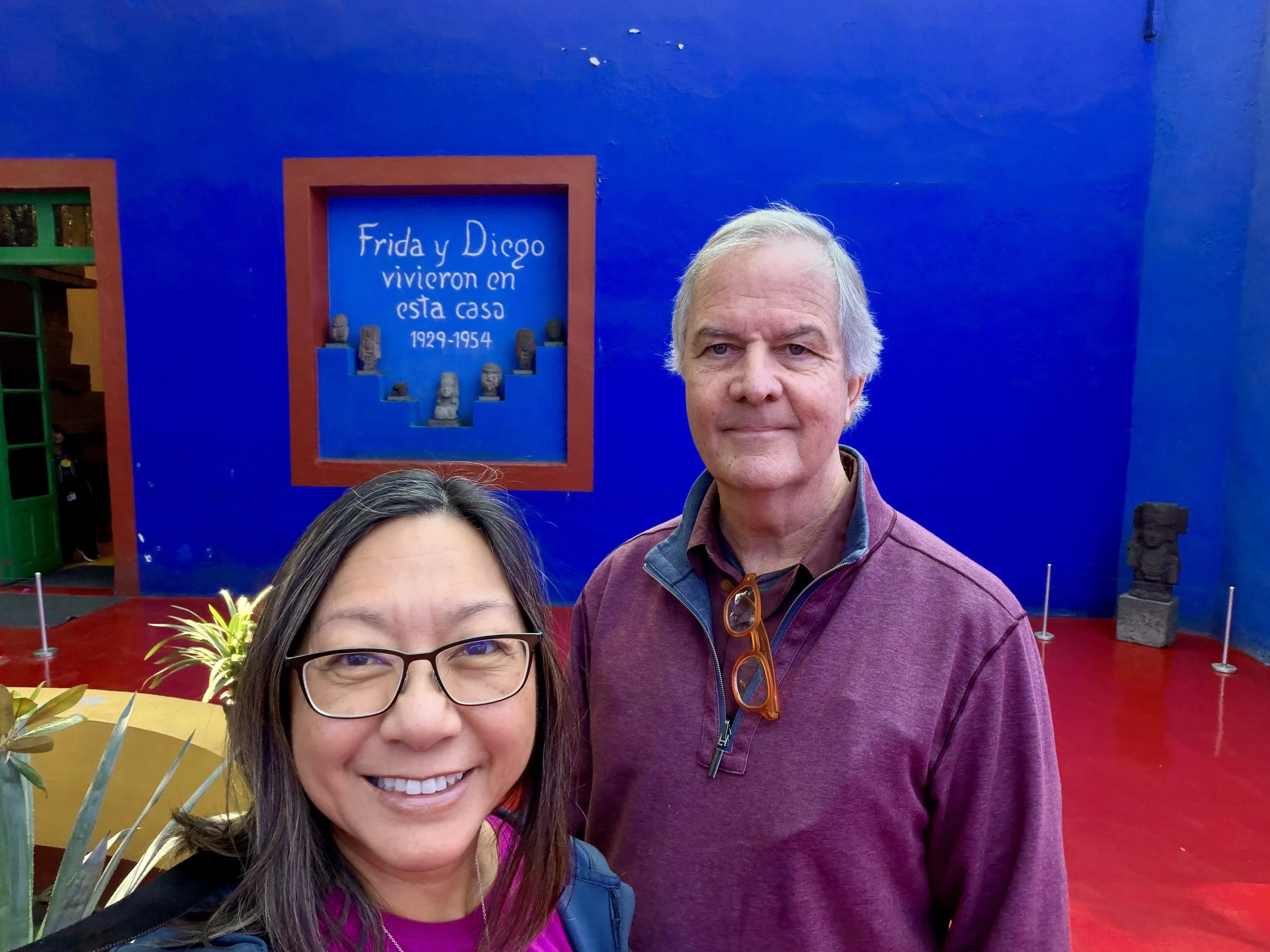
On Thursday we visited Museo Frida Kahlo, also known as La Casa Azul (The Blue House), in the Coyoacán neighborhood of Mexico City. After seeing the house where Diego Rivera was born, in Guanajuato, it was fitting that we should also visit Frida’s house.
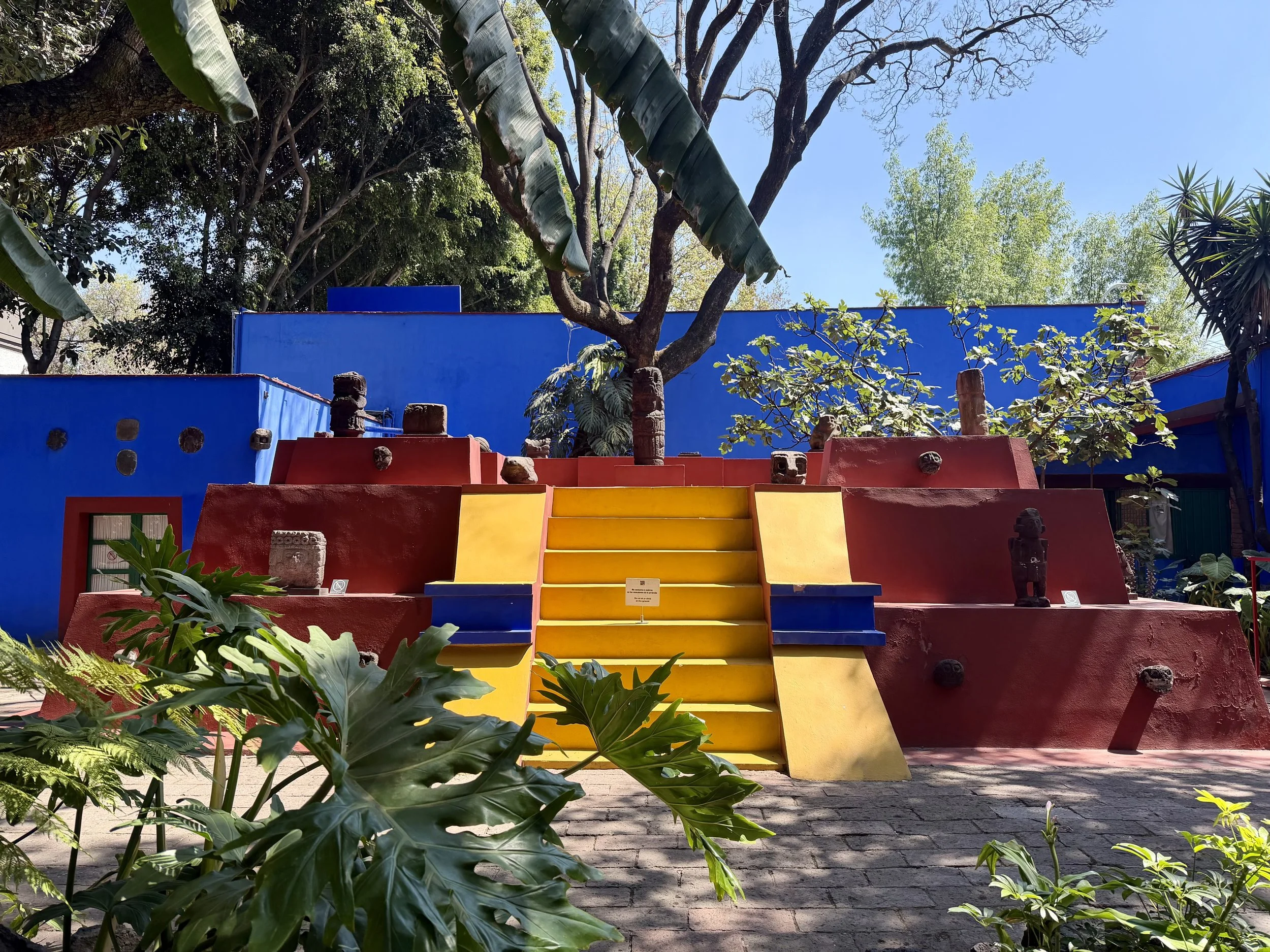
The house’s unmistakeable exterior was an electric cobalt blue, a shaded Frida chose to ward off evil spirits. I expected the blue walls, but I didn’t expect the accents of red and green. The colors really popped in the sunshine!
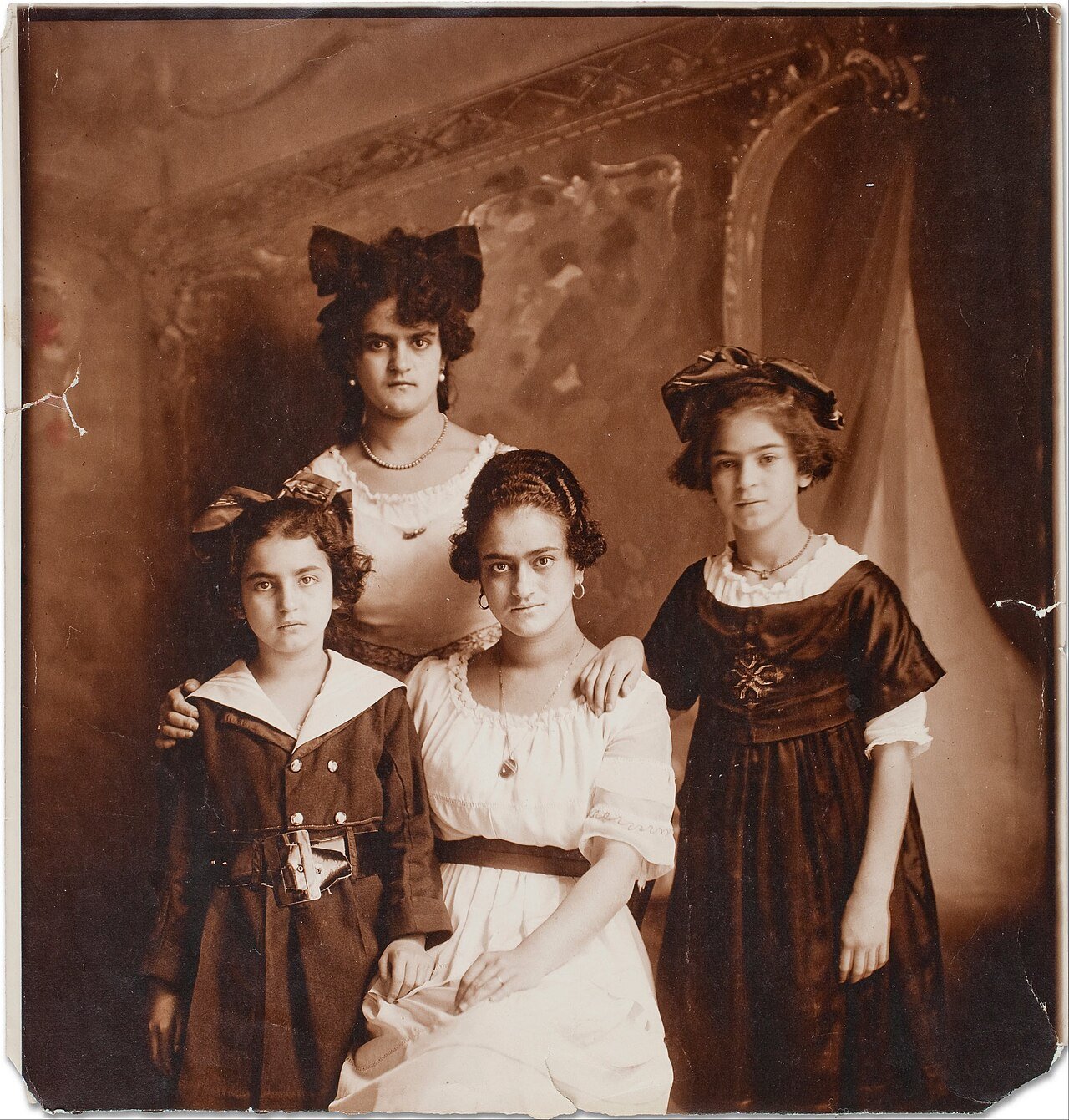
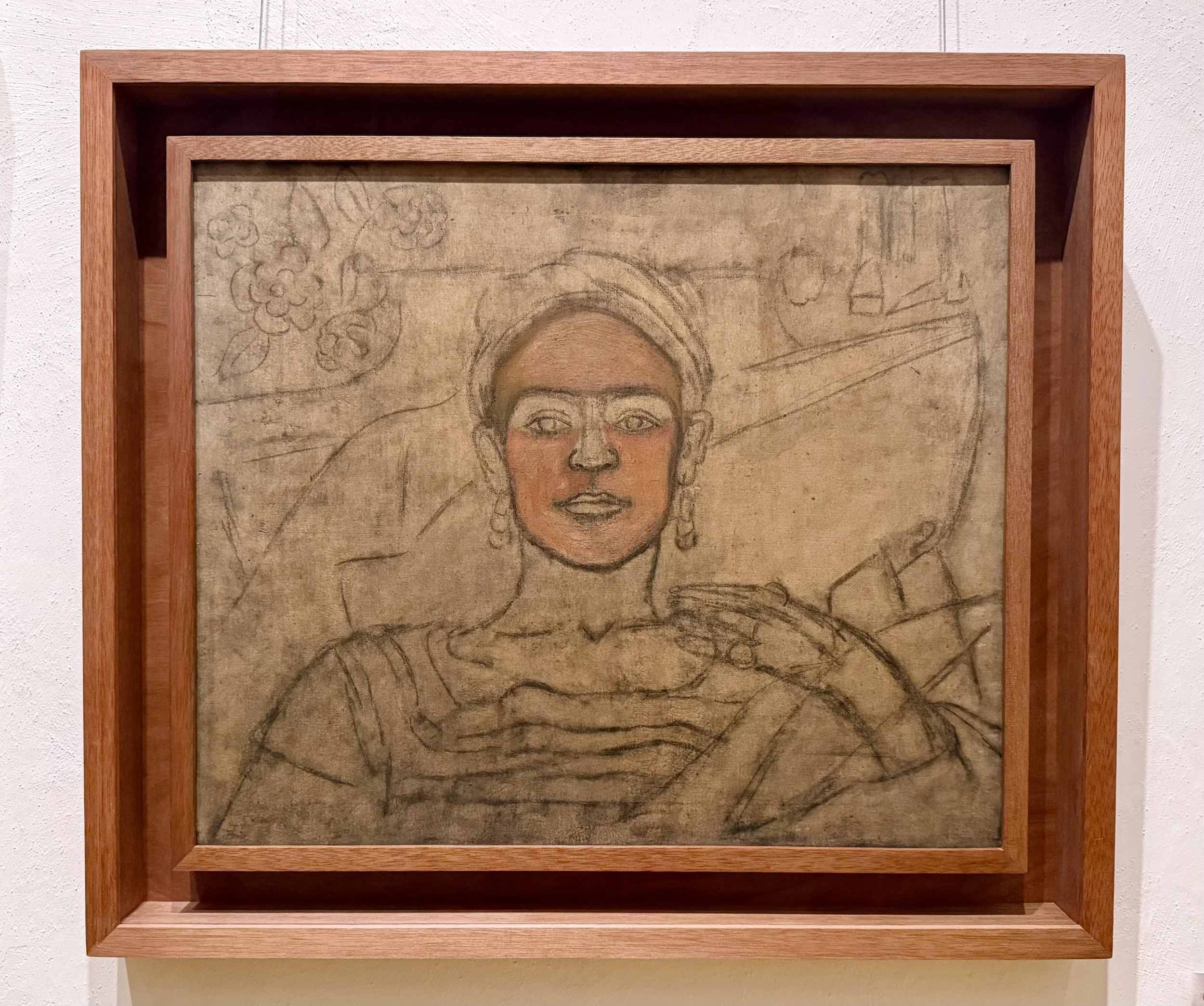
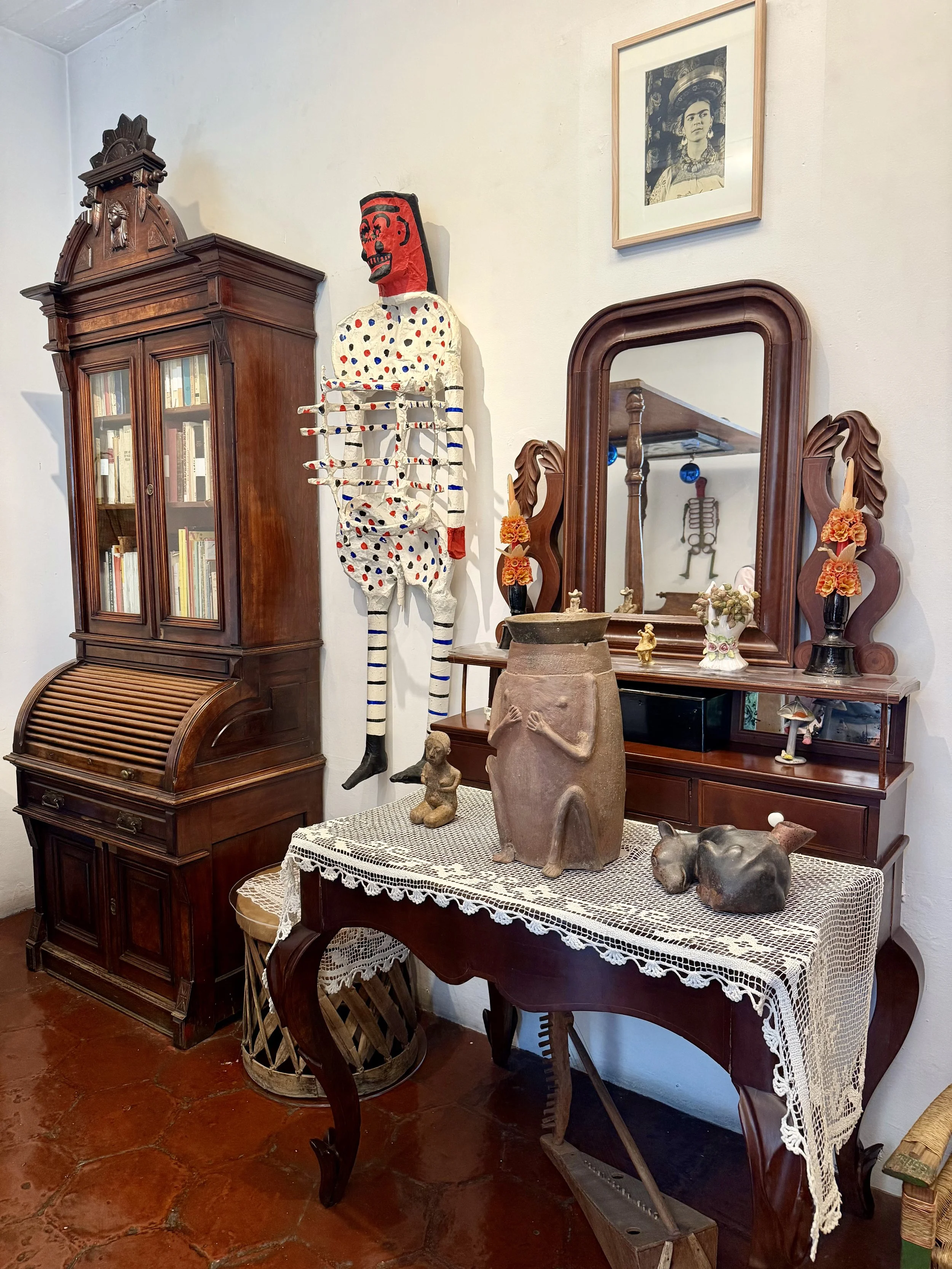
Frida lived at Casa Azul for most of her life. The house is still filled with her personal belongings. The first two rooms displayed art and artifacts on simple plywood stands:
Kahlo family photographs, including several of Frida with her sisters
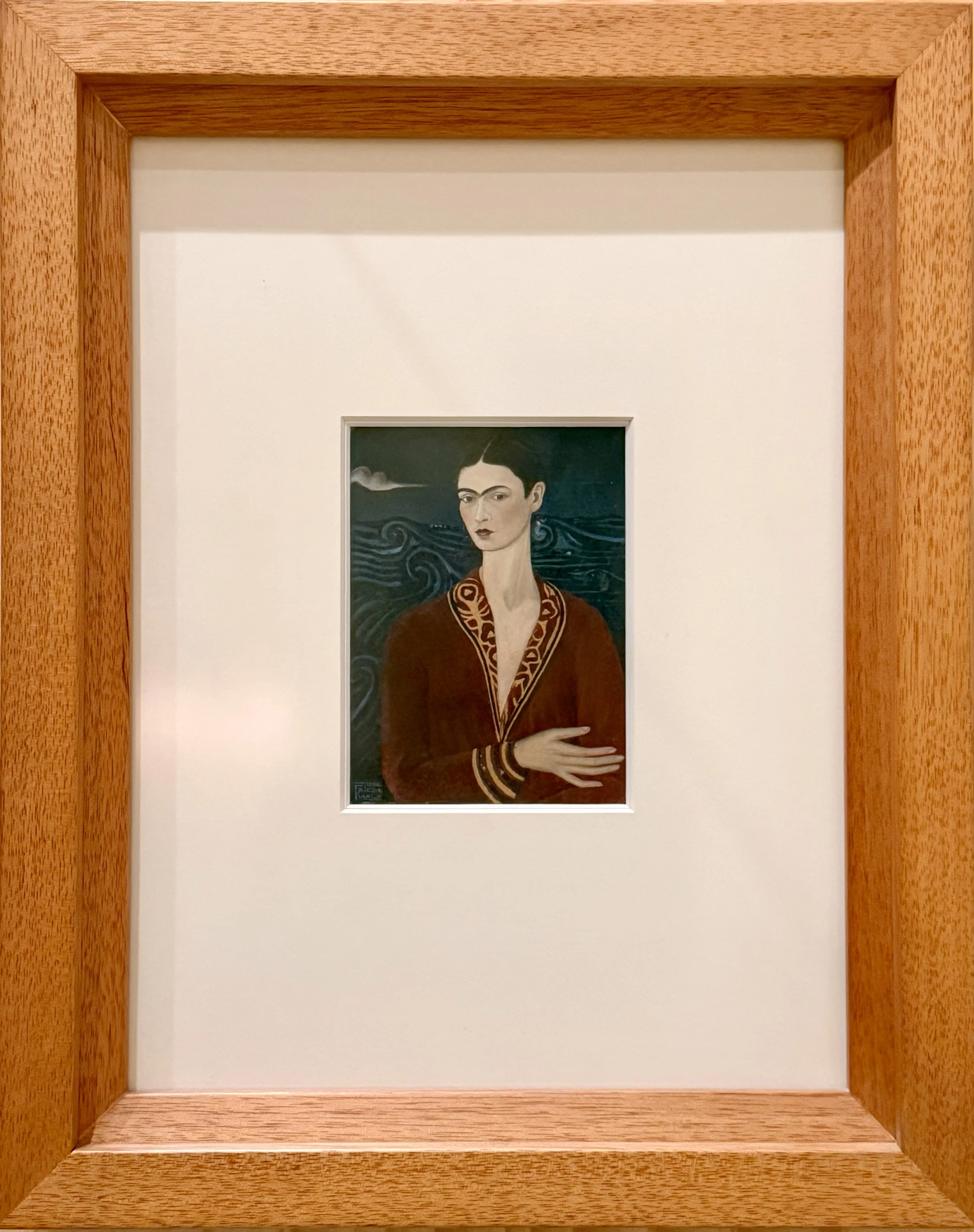
Examples of Frida’s early sketches and self-portraits
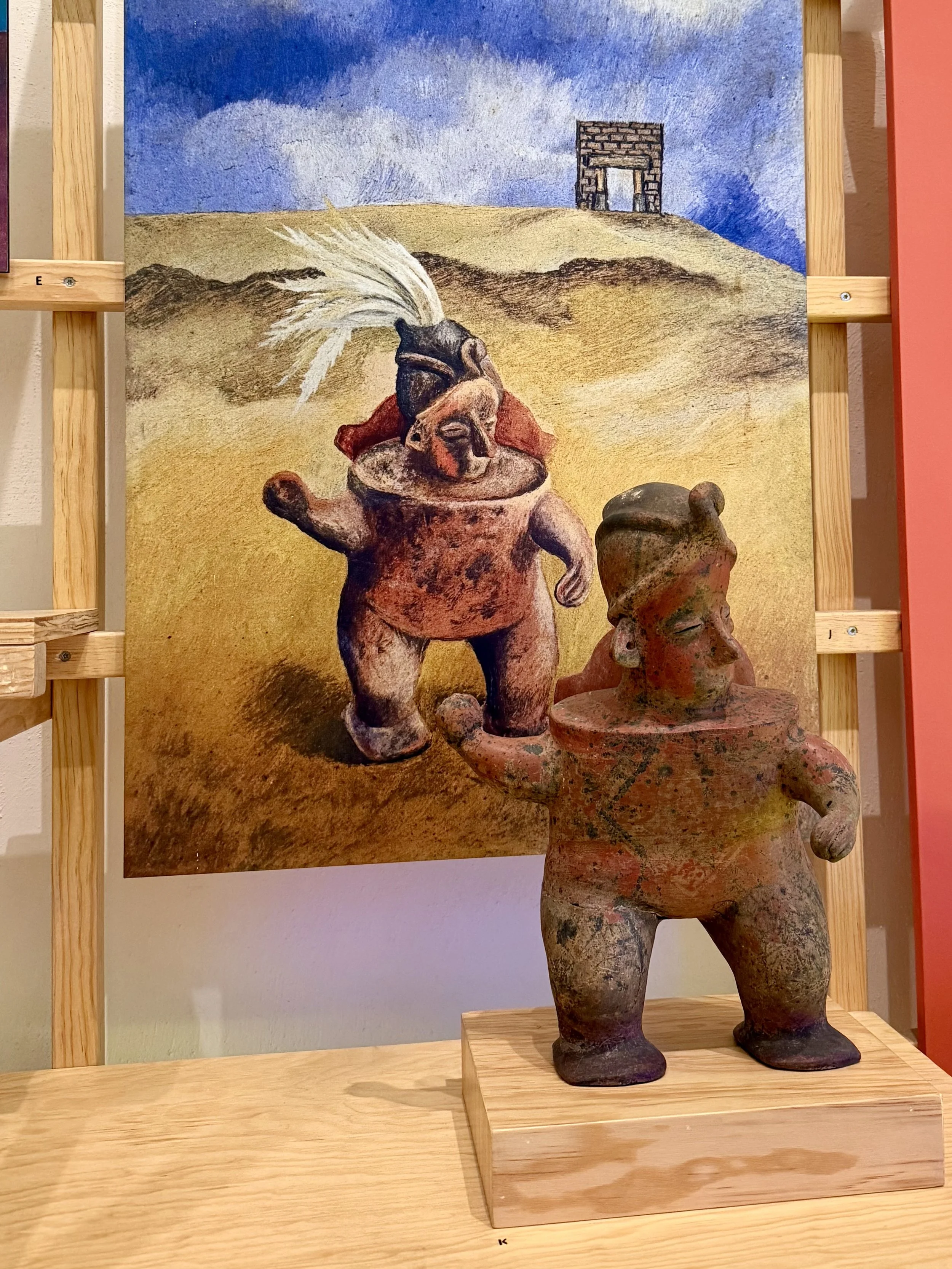
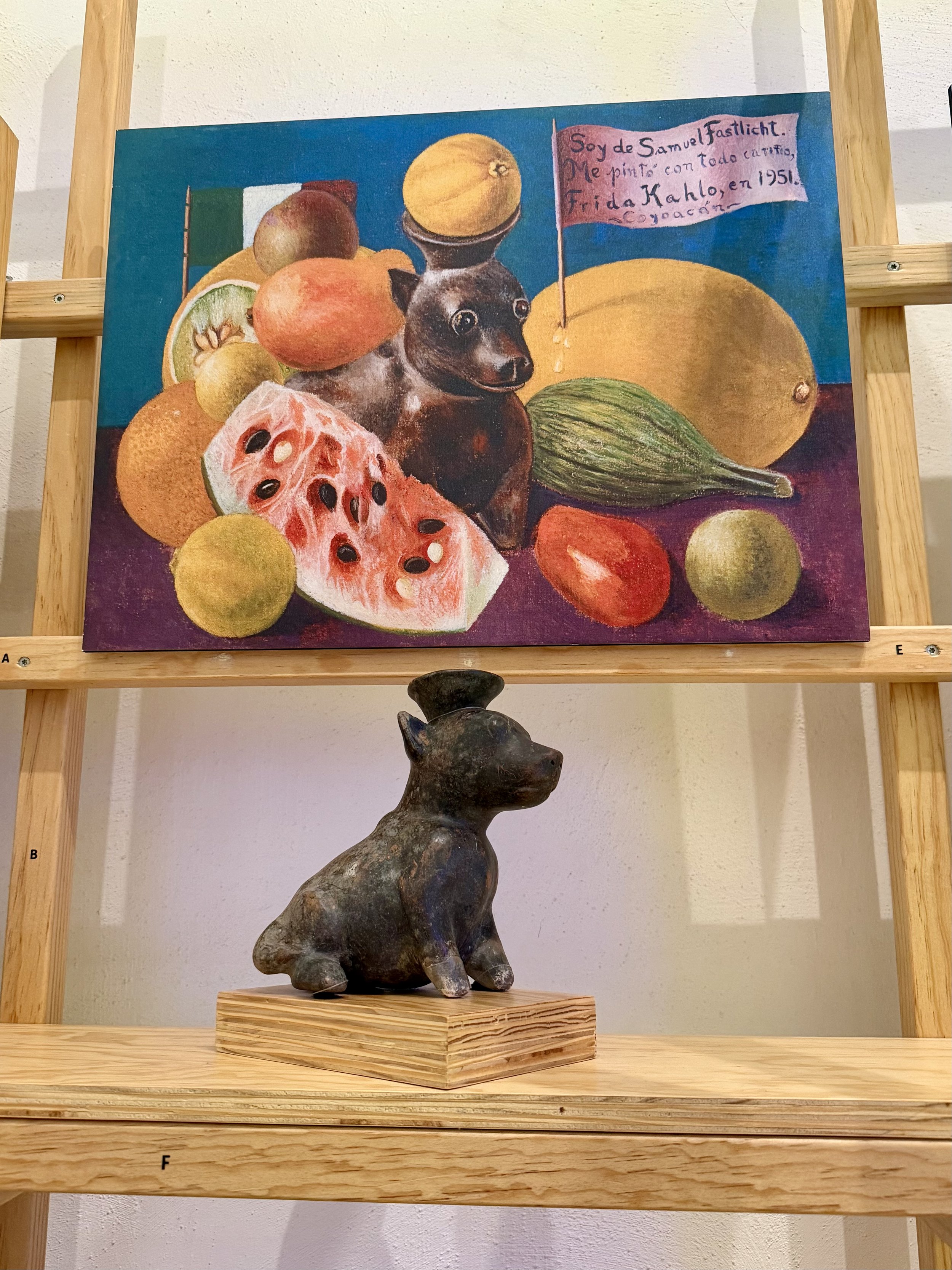
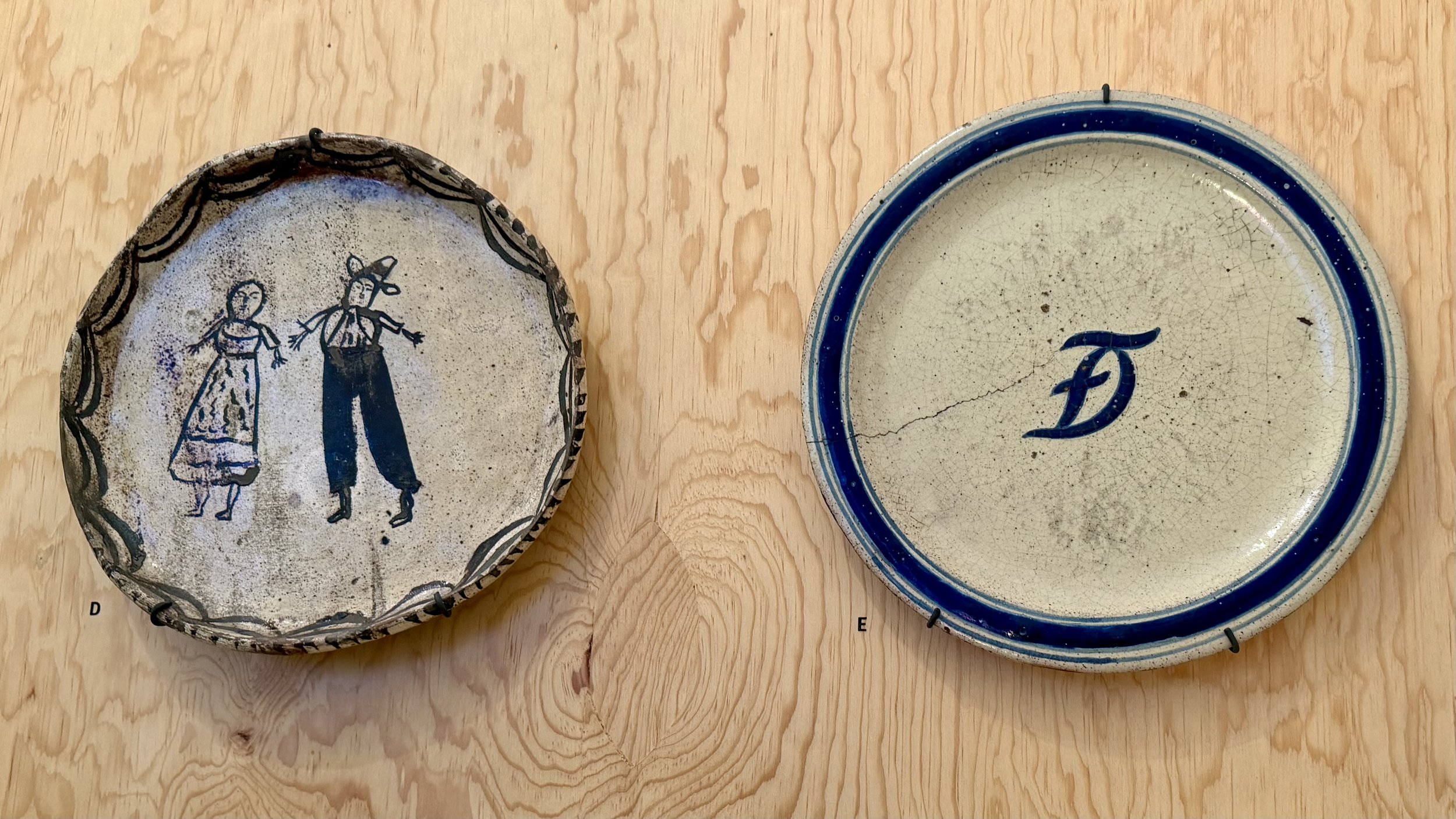
Ceramics from Frida’s collection, which were often included in her paintings.
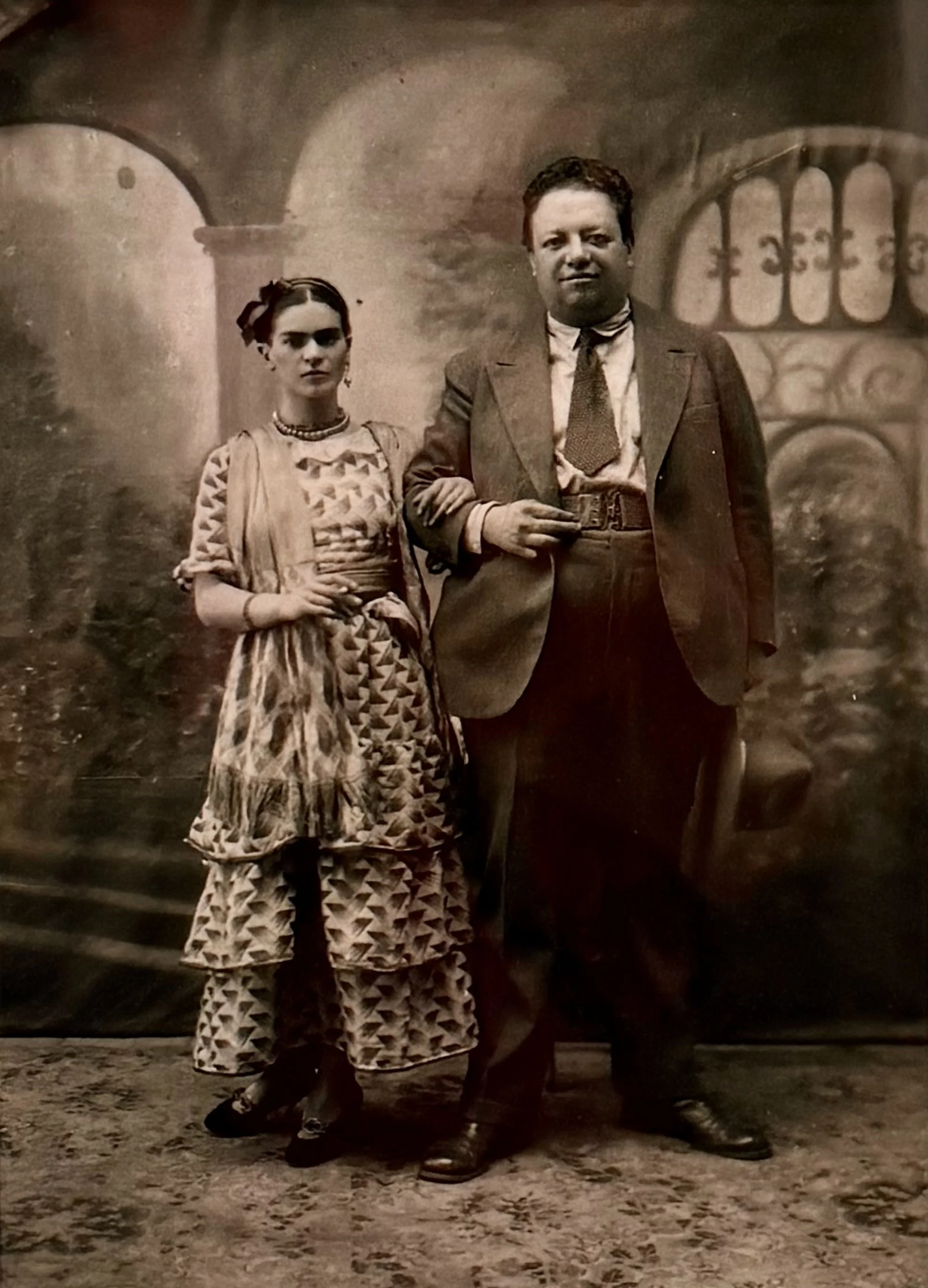
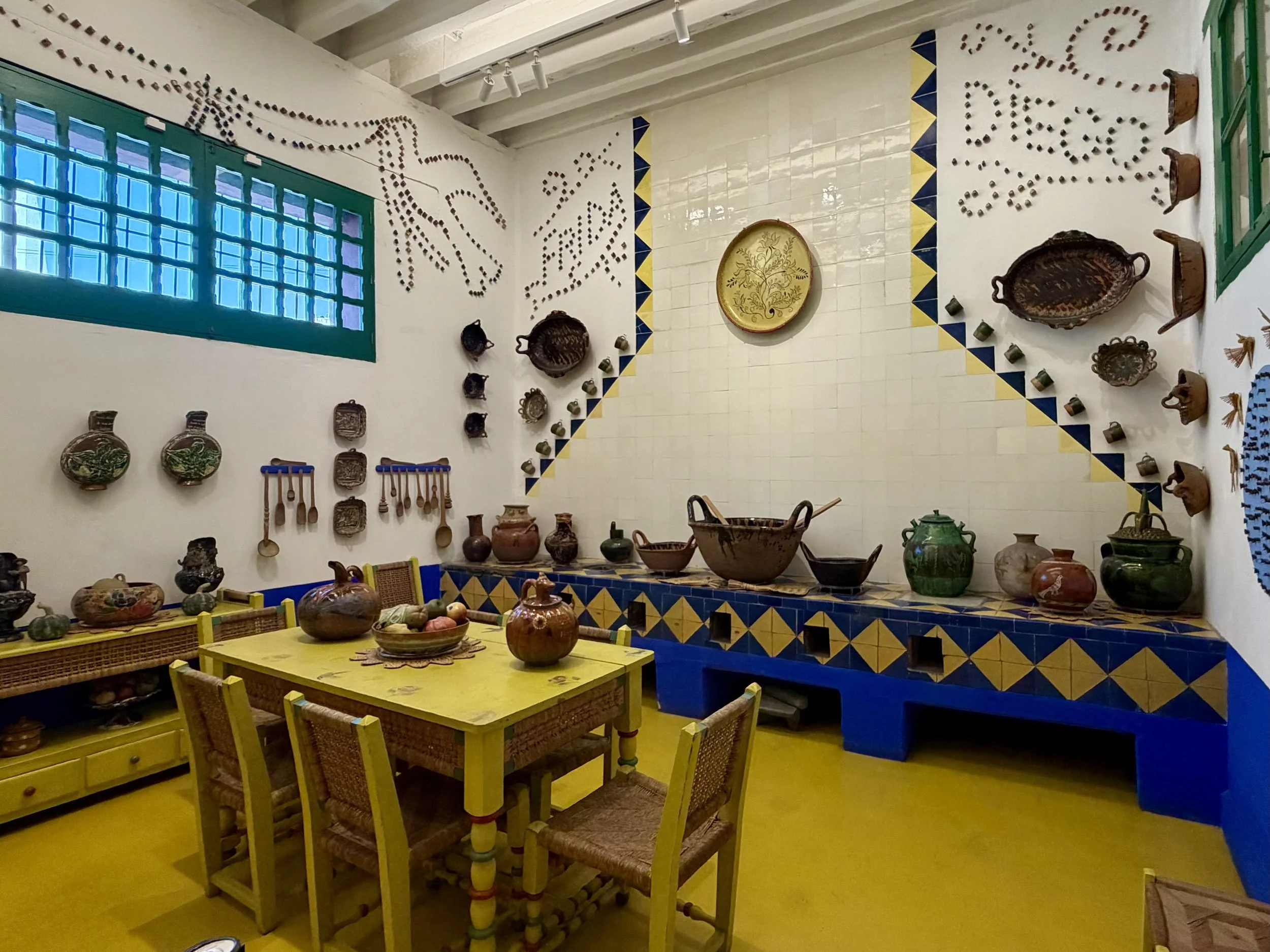
Frida was just 22 when she married 42-year-old Diego Rivera in 1929. The house was filled with items expressing their love, from their names on the wall in the kitchen, to monogrammed dishes with intertwined initials, to their paintings and letters. A home movie playing on loop showed Diego and Frida at Casa Azul: he brings her flowers, and she puts them in her hair; he strokes her cheek, and she kisses his hand.
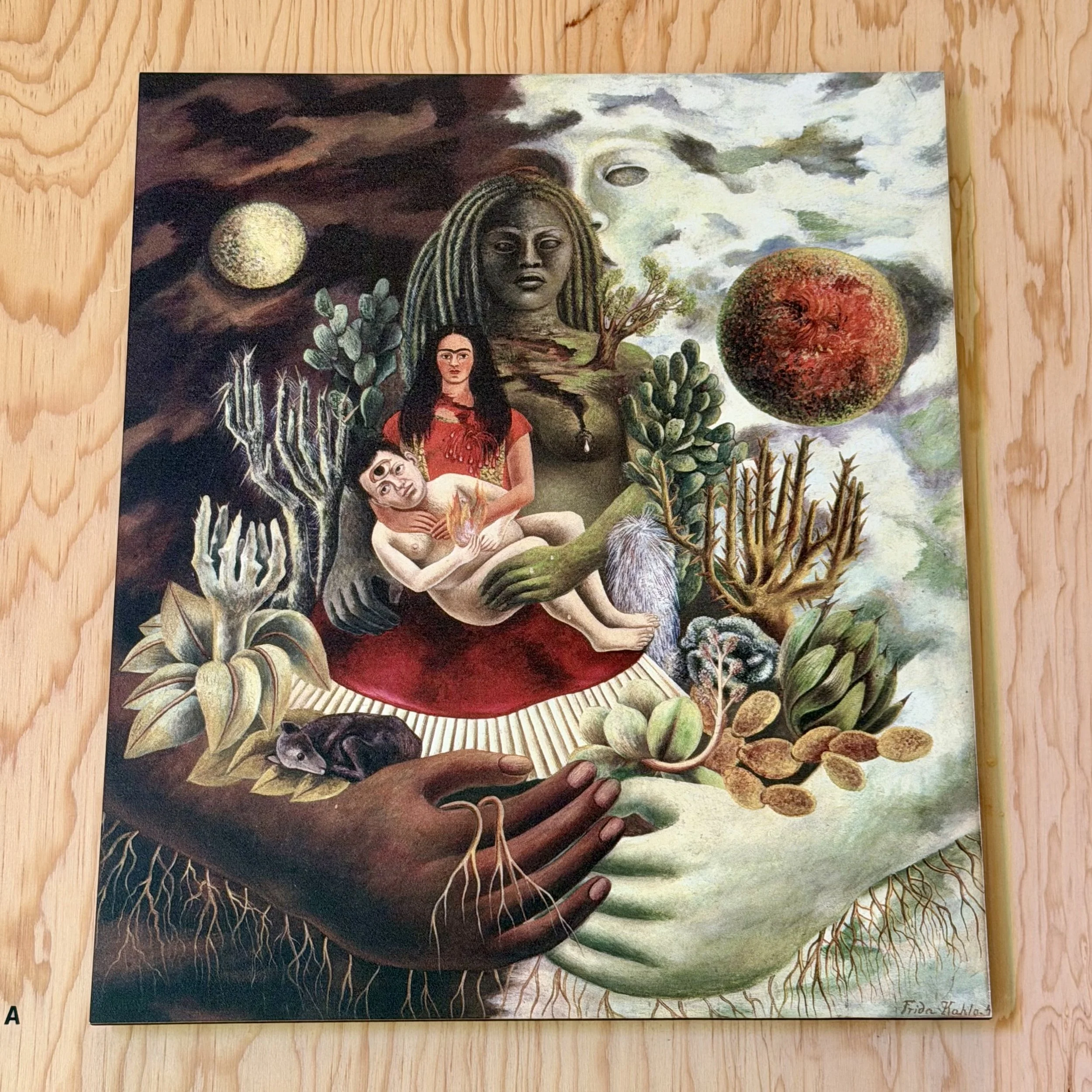
Frida contracted polio at age 6, which affected her right foot. When she was 18, a streetcar hit the bus she was riding home from school, resulting in fractures to her spine, pelvis, and leg. Frida began painting in earnest during her convalescence. She struggled with medical complications and terrible pain for the rest of her life. She also had several miscarriages. Somehow, she channeled all that suffering into her compelling paintings.
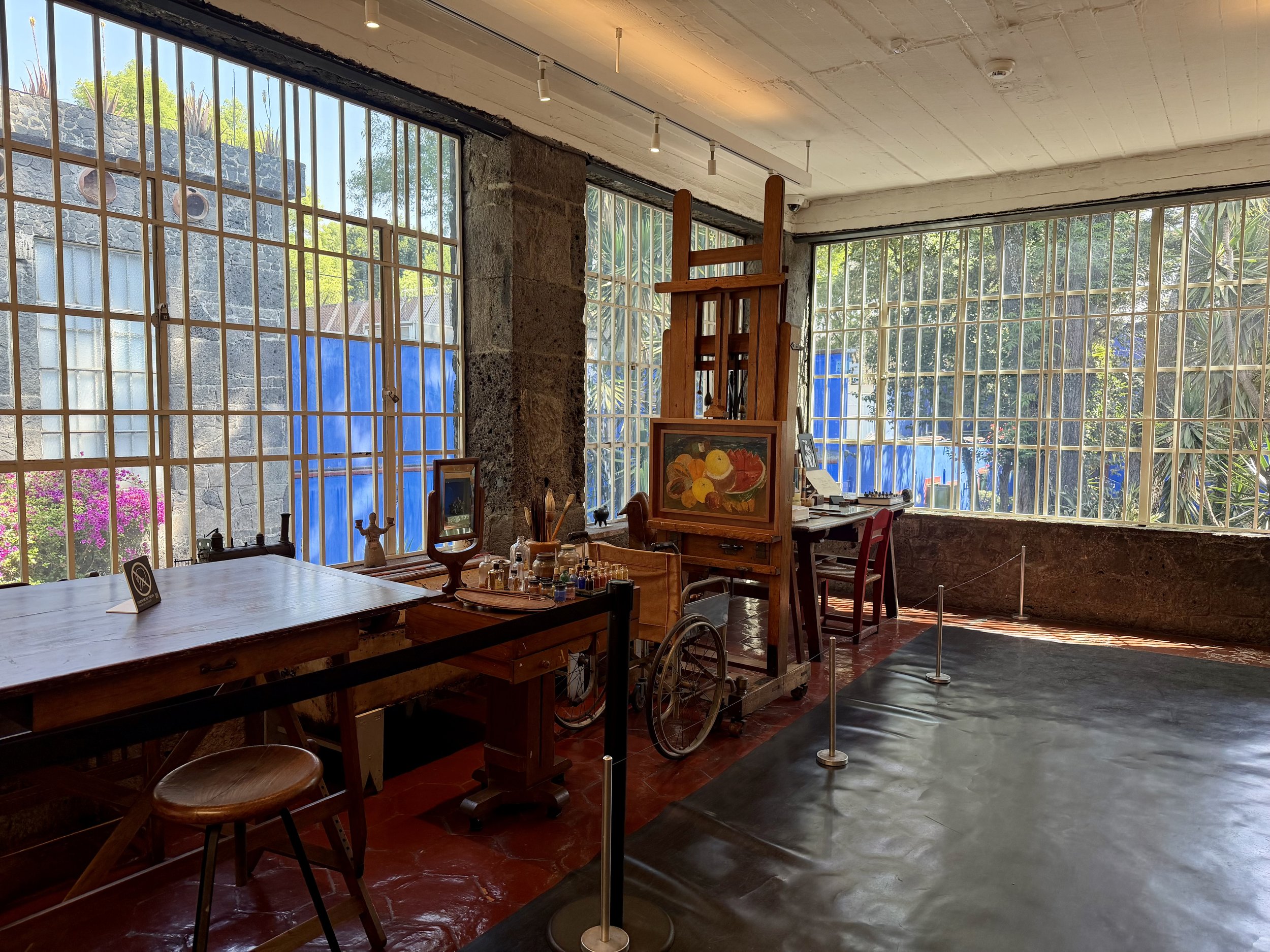
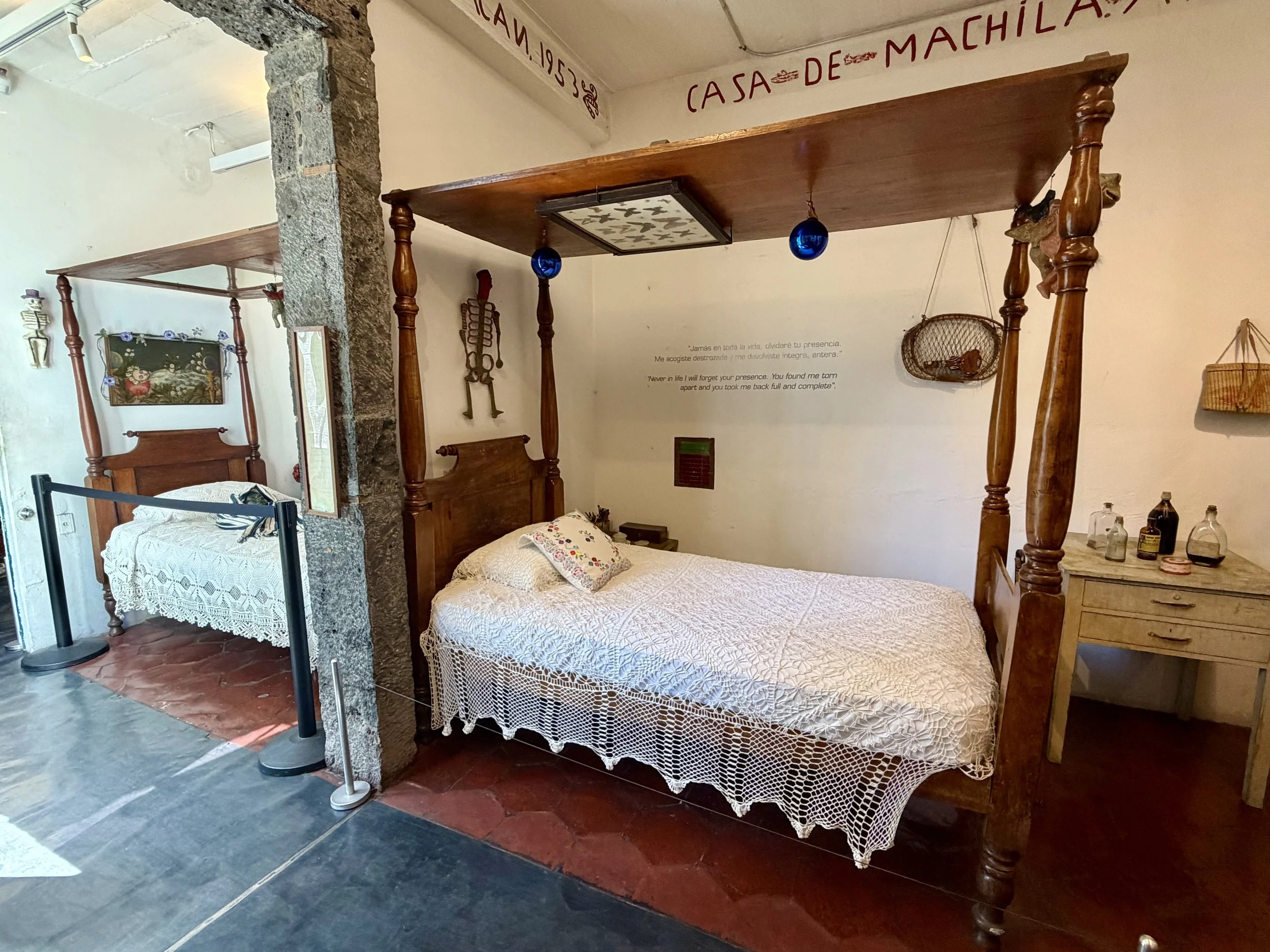
My favorite room in Casa Azul was the studio, lined with bookshelves and flooded with light from huge windows overlooking the garden. Frida’s wheelchair stood in front of an easel. There were two beds nearby, one for daytime with a mirror mounted overhead for her self-portraits, and one for nighttime, surrounded by gifts from her artist friends. Frida died at Casa Azul in 1954.
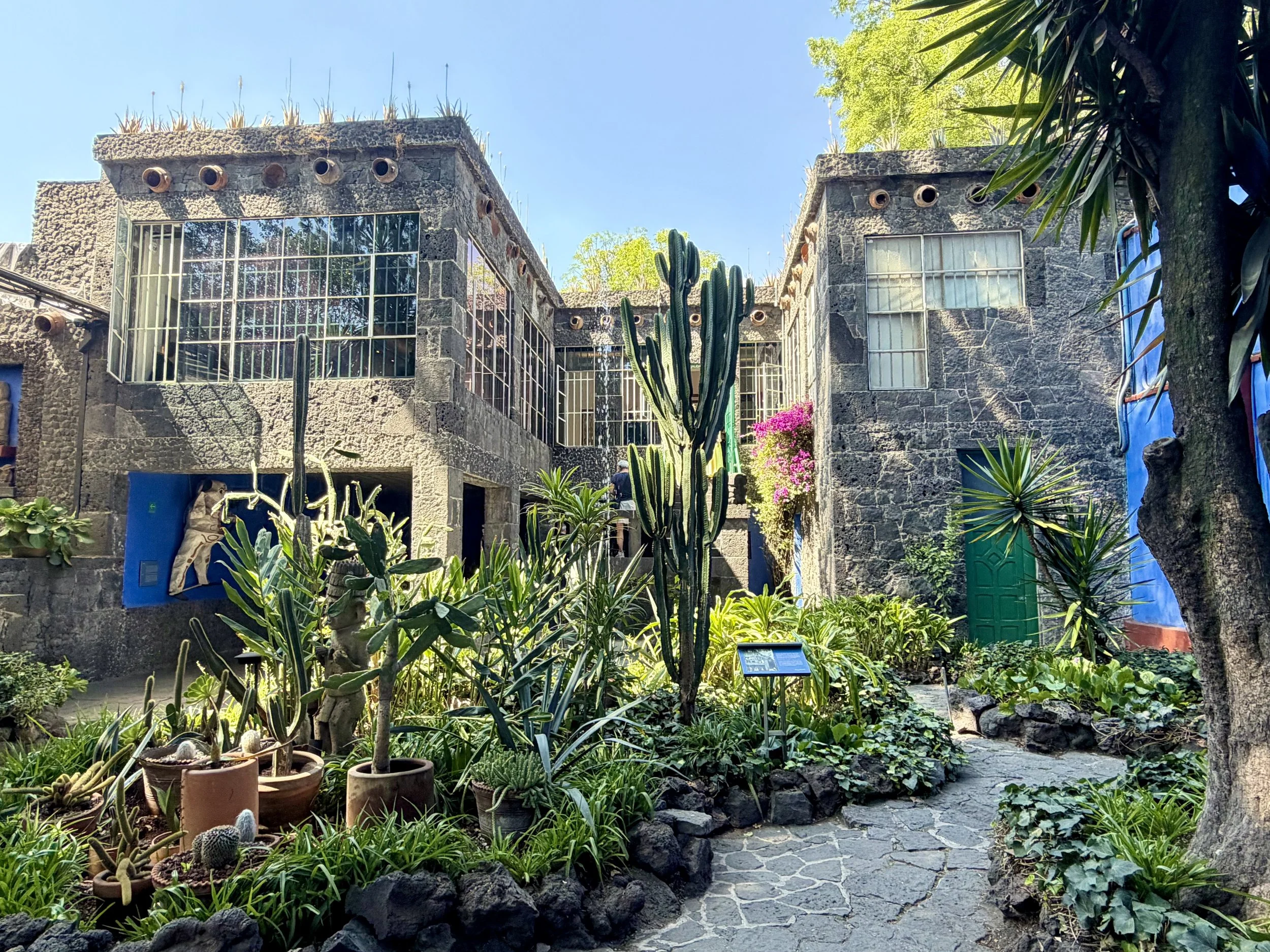
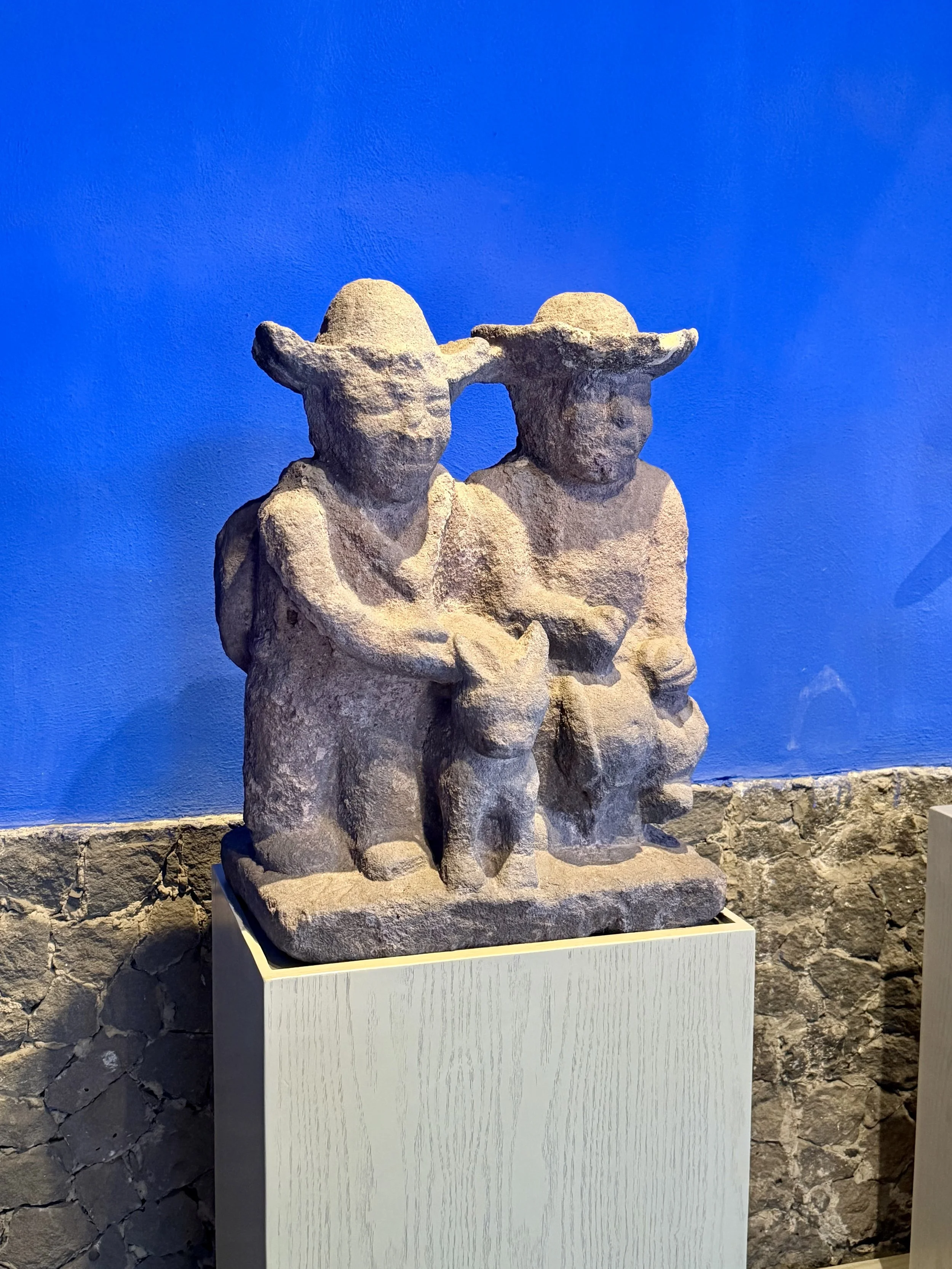
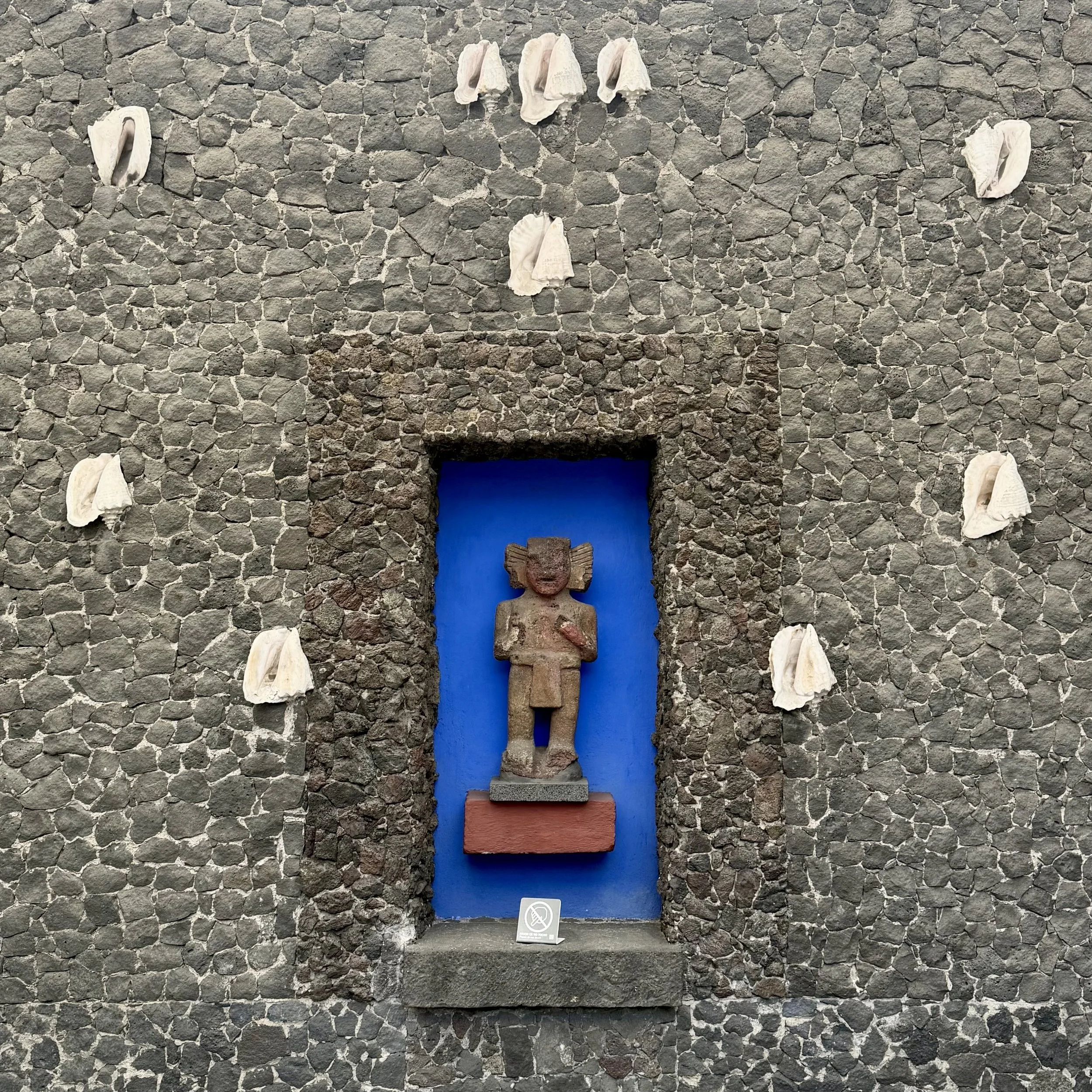
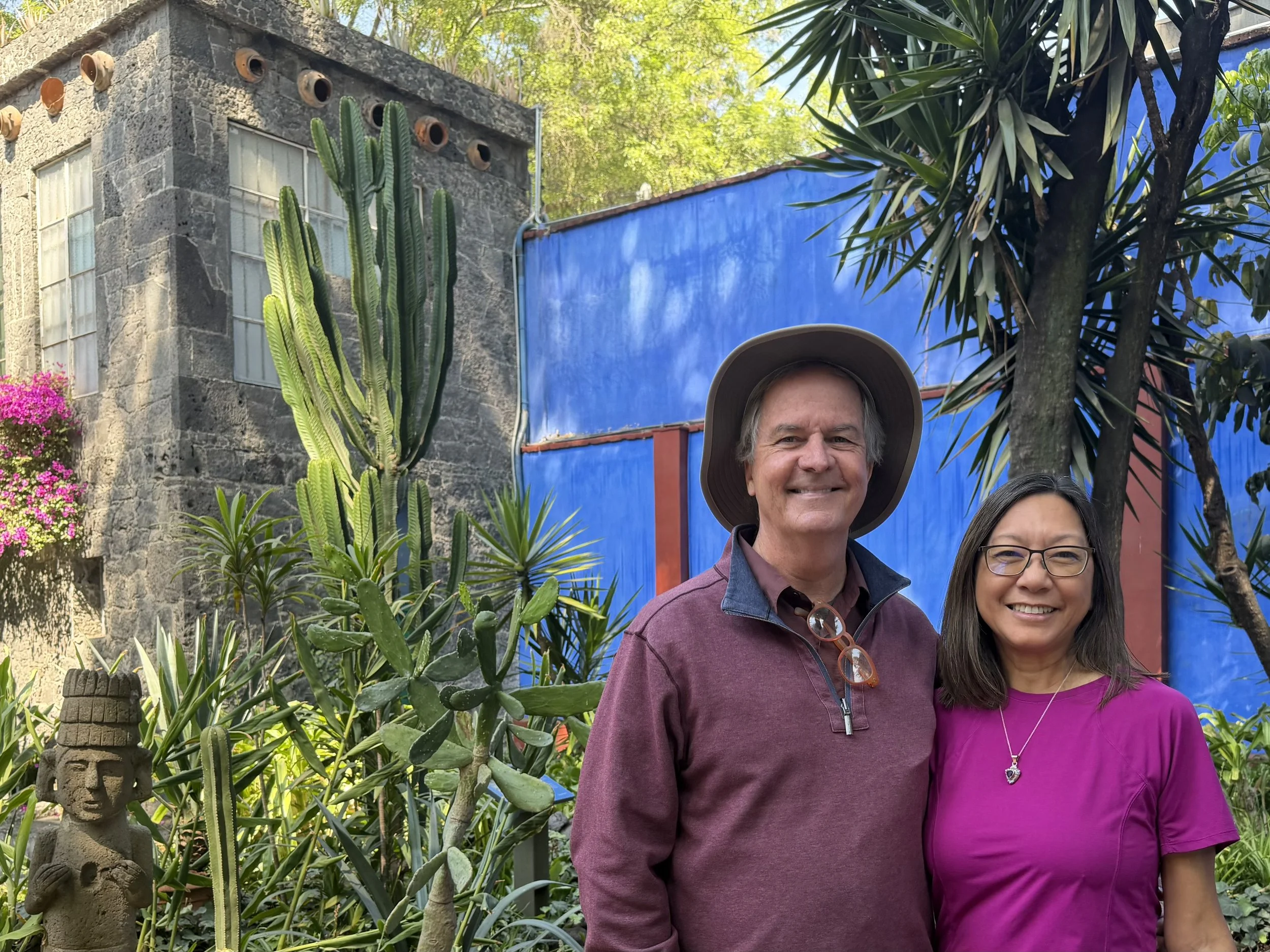
We exited the house into the expansive garden, with lush green trees and plants. There was a collection of distinctive limestone sculptures by noted sculptor Maradonio Magaña, who was discovered by Frida and Diego. (I remember seeing some pieces by Magaña at Frank Lloyd Wright’s Fallingwater, whose owners the Kaufmanns were frequent visitors at Casa Azul.) It was easy to imagine Frida and Diego entertaining their friends in that wonderful garden.
Postscript
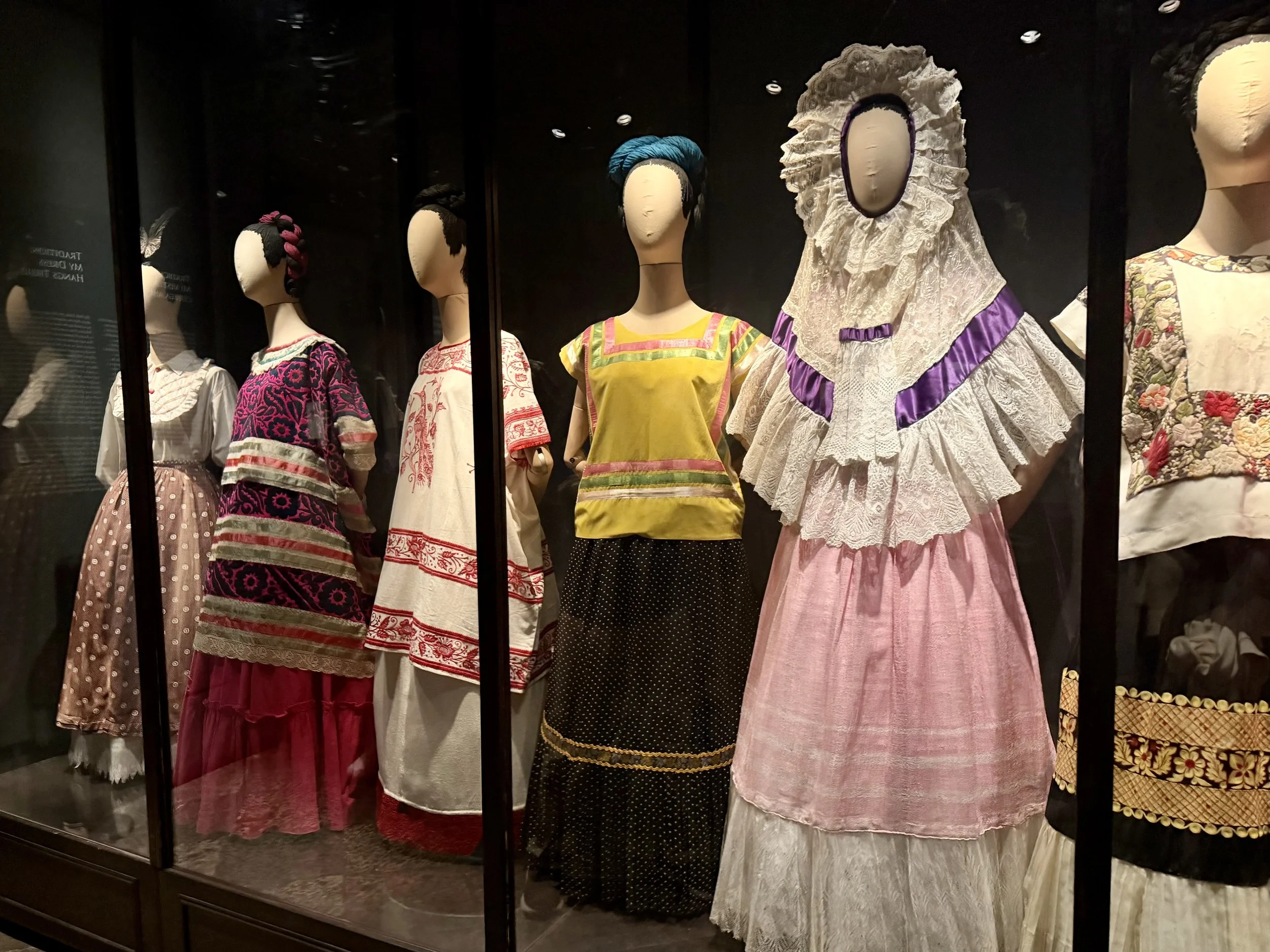
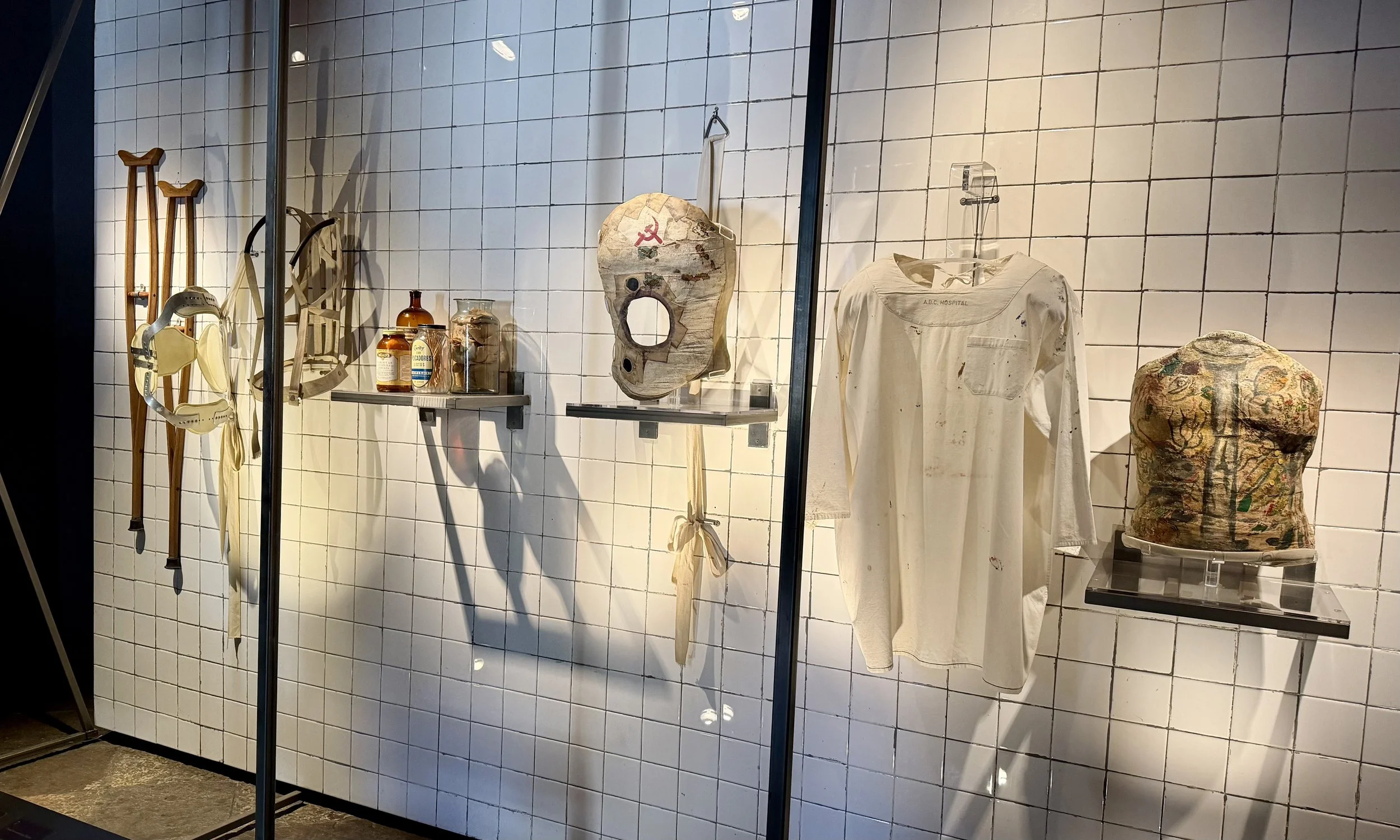
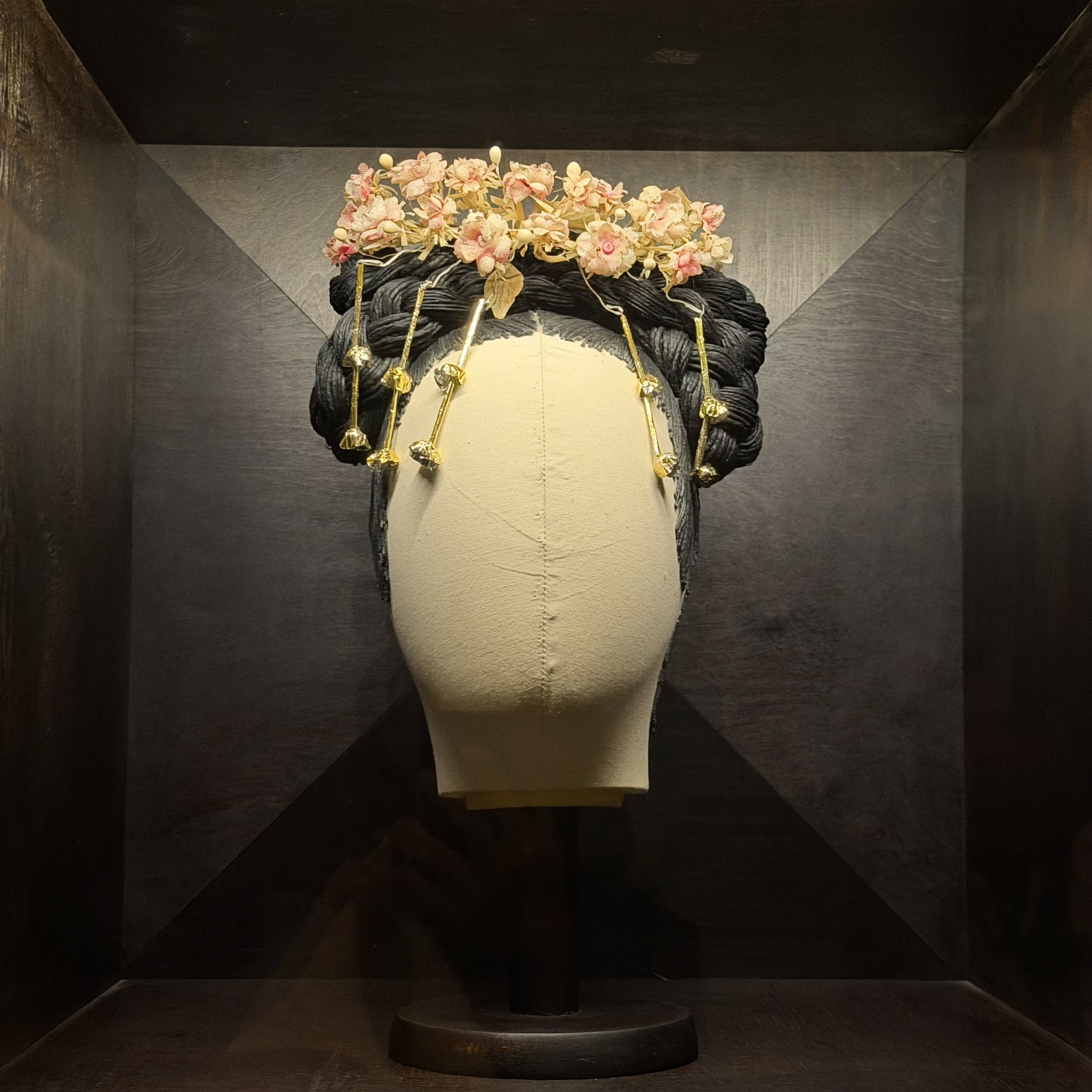
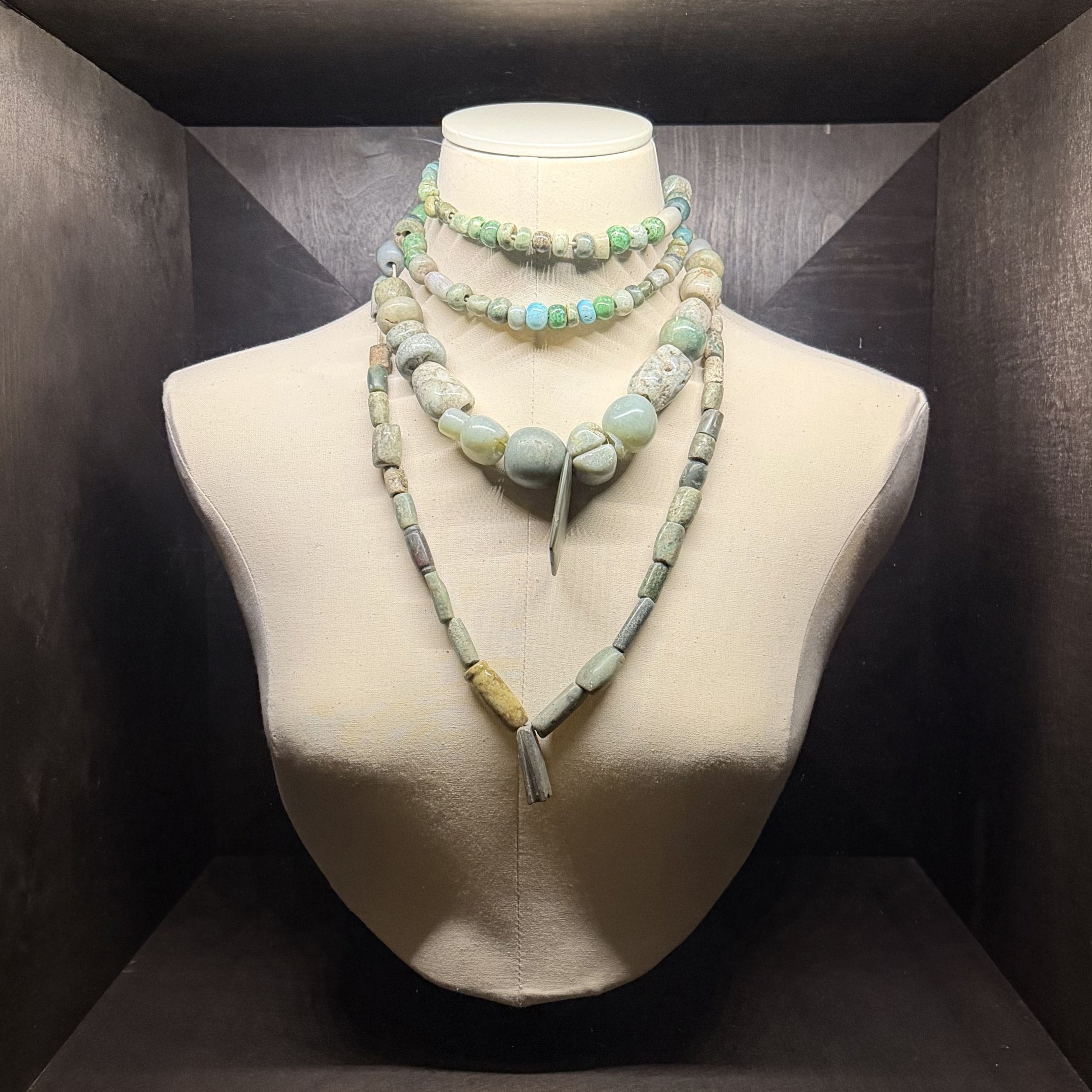
Near the exit there was a permanent exhibit of Frida’s dresses, jewelry, and orthopedic devices, a selection from the more than 300 items discovered in a locked room in Casa Azul fifty years after her death. Her signature Tehuana blouses and skirts were not just an expression of her Mexican identity; they were also practical attire for someone often wearing back and leg braces.