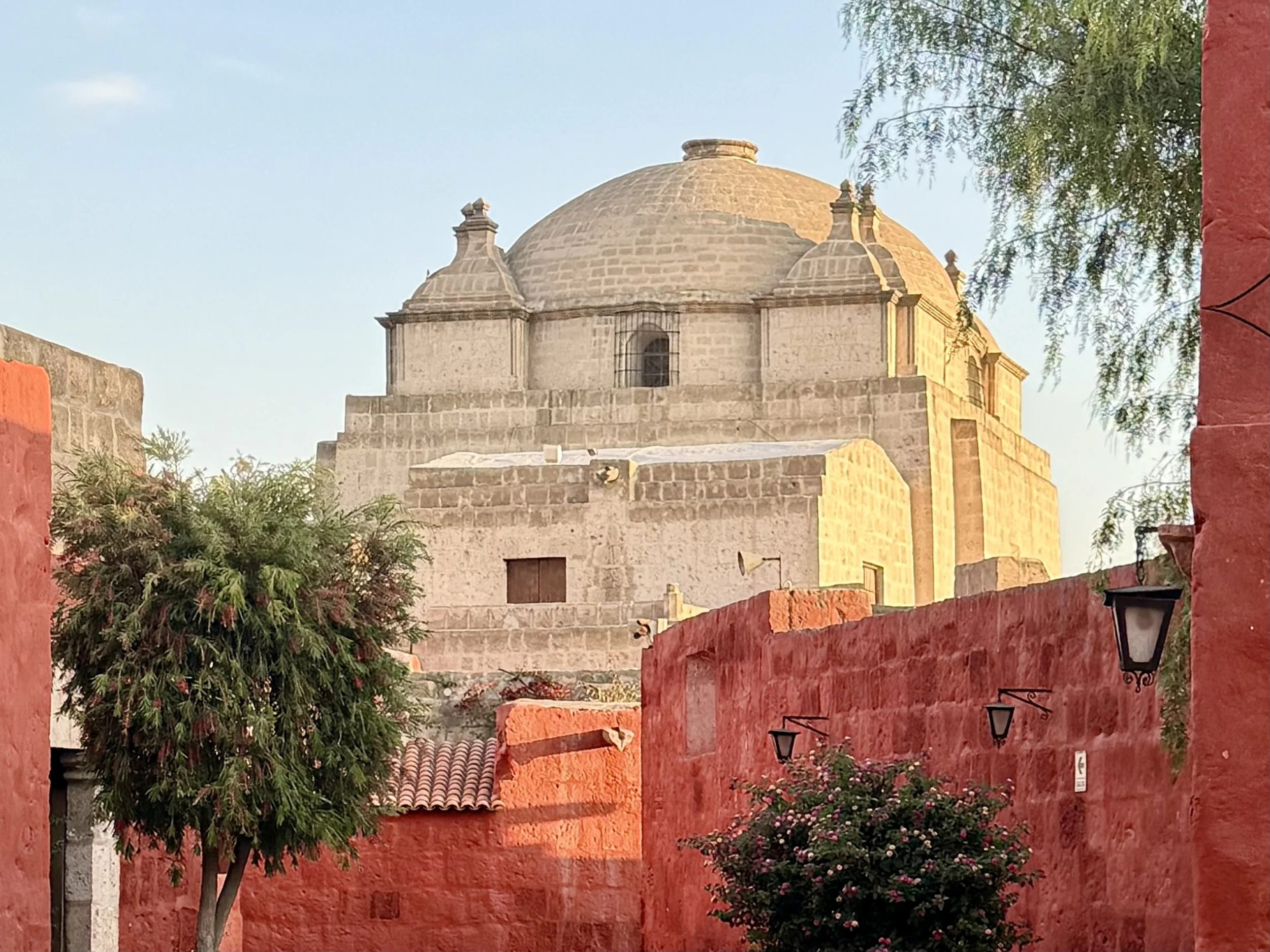
Santa Catalina Monastery
Just a short distance from the Plaza de Armas is a massive and mysterious wall of sillar (volcanic stone) encircling two city blocks. This is the Monasterio de Santa Catalina, which despite being inside the Historical Centre, is completely isolated from it by that wall. We visited the monastery as part of our tour of the Historical Centre with our guide, Slines (ess-lynes).
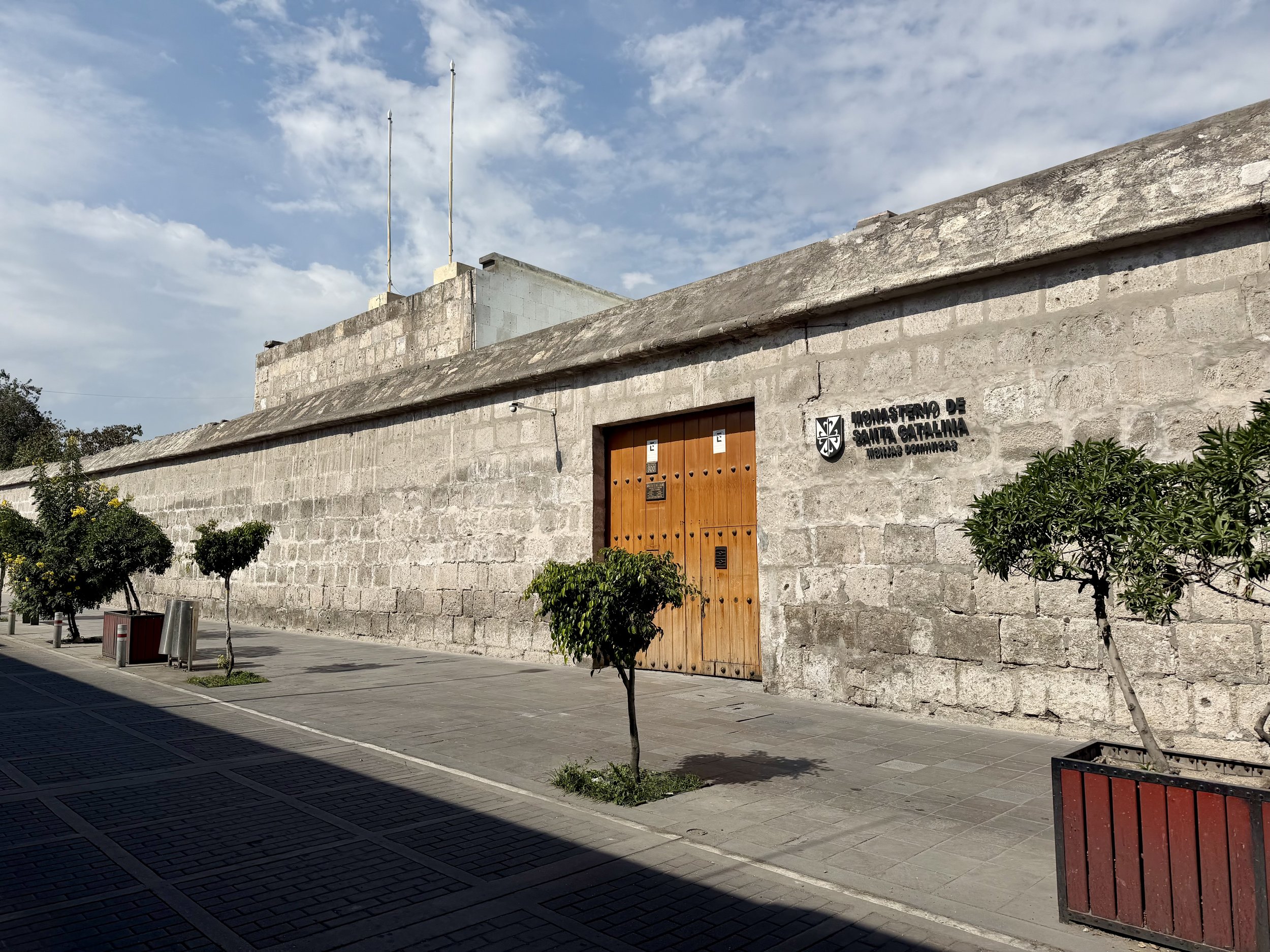
Built in 1579, the monastery was a home for nuns - the Dominican Sisters of the Order of Saint Catherine of Siena. (Slines explained that the words “monastery” and “convent” are interchangeable in Peru.) By the mid-1700s, there were more than 300 nuns and 100 maid servants living at Santa Catalina. It remained closed to the outside world for nearly four hundred years. Finally, with the shrinking population of nuns and the rising cost of upkeep, the monastery opened to the public in 1970.
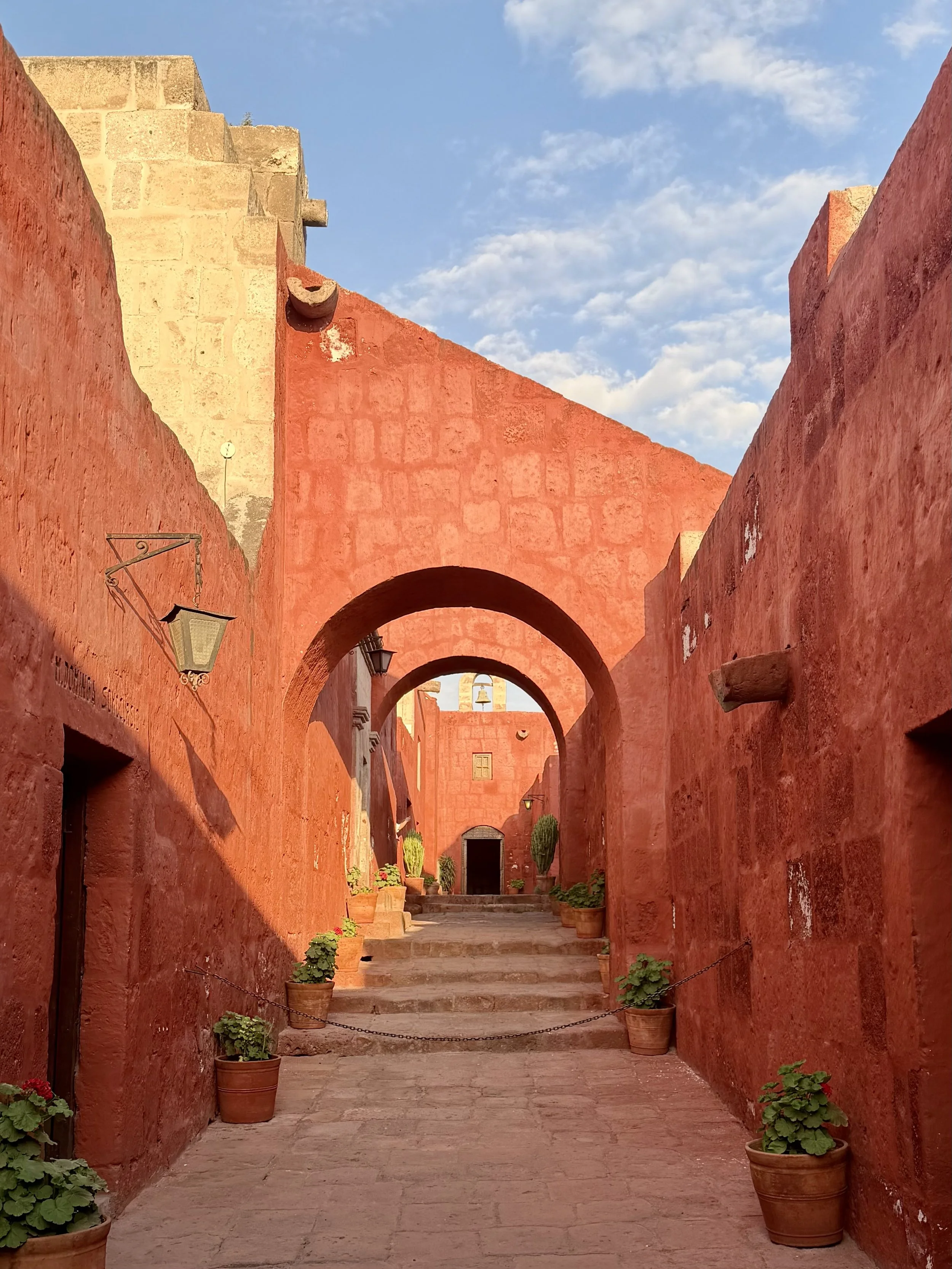
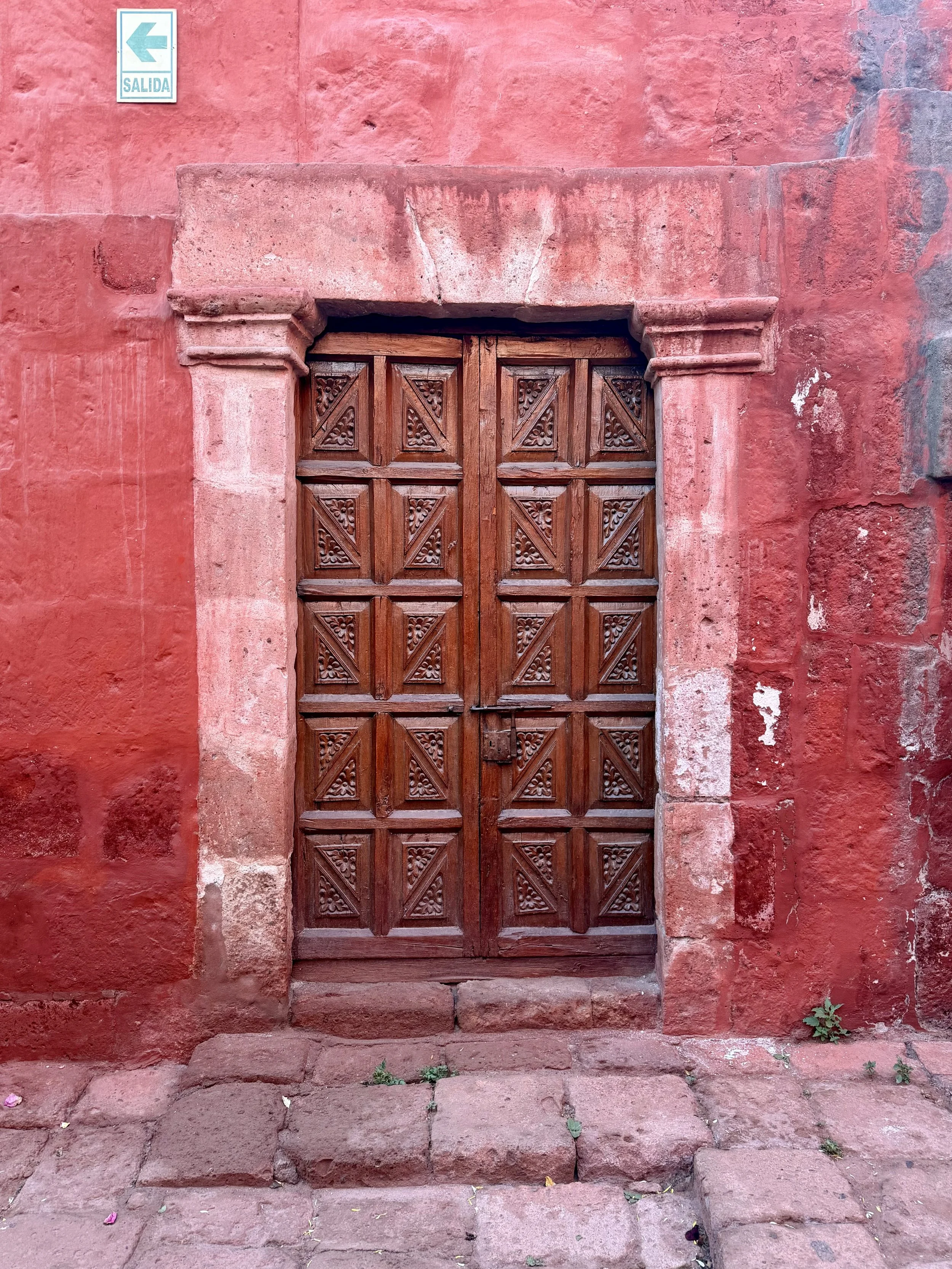
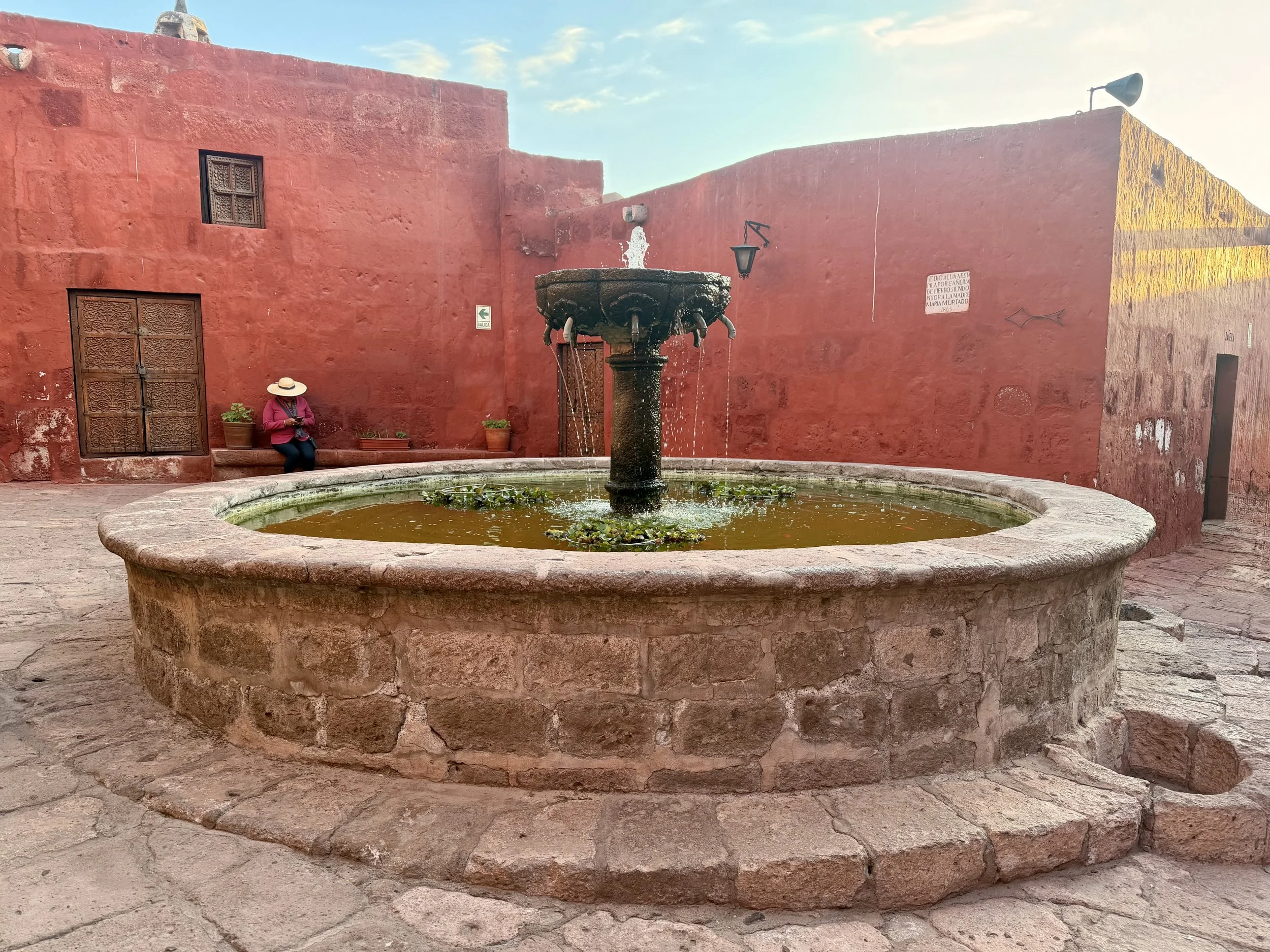
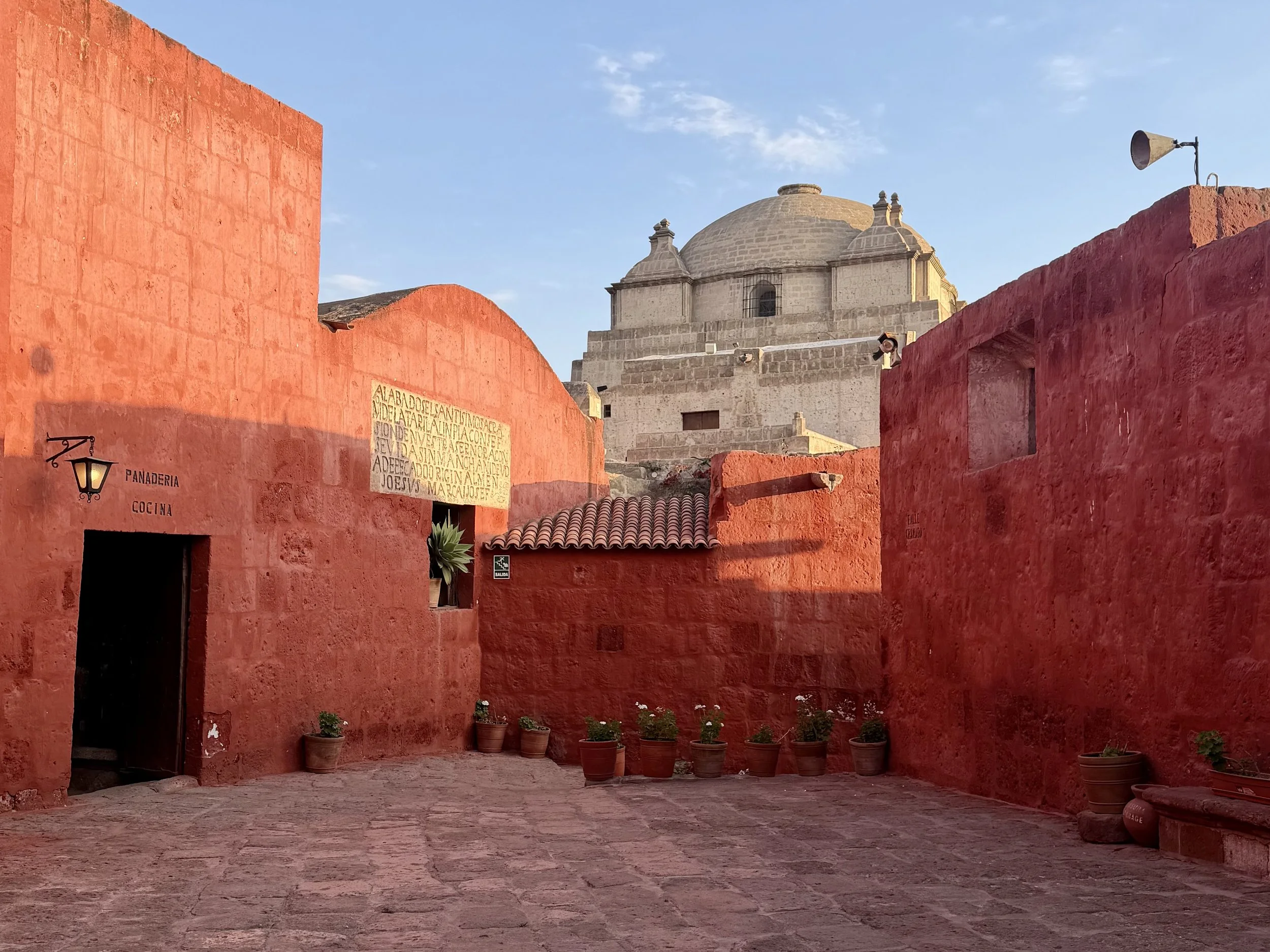
Upon entering, we were immediately struck by the brilliant colors, so different from the somber gray of the exterior wall. The colors seemed to designate different areas of the monastery.
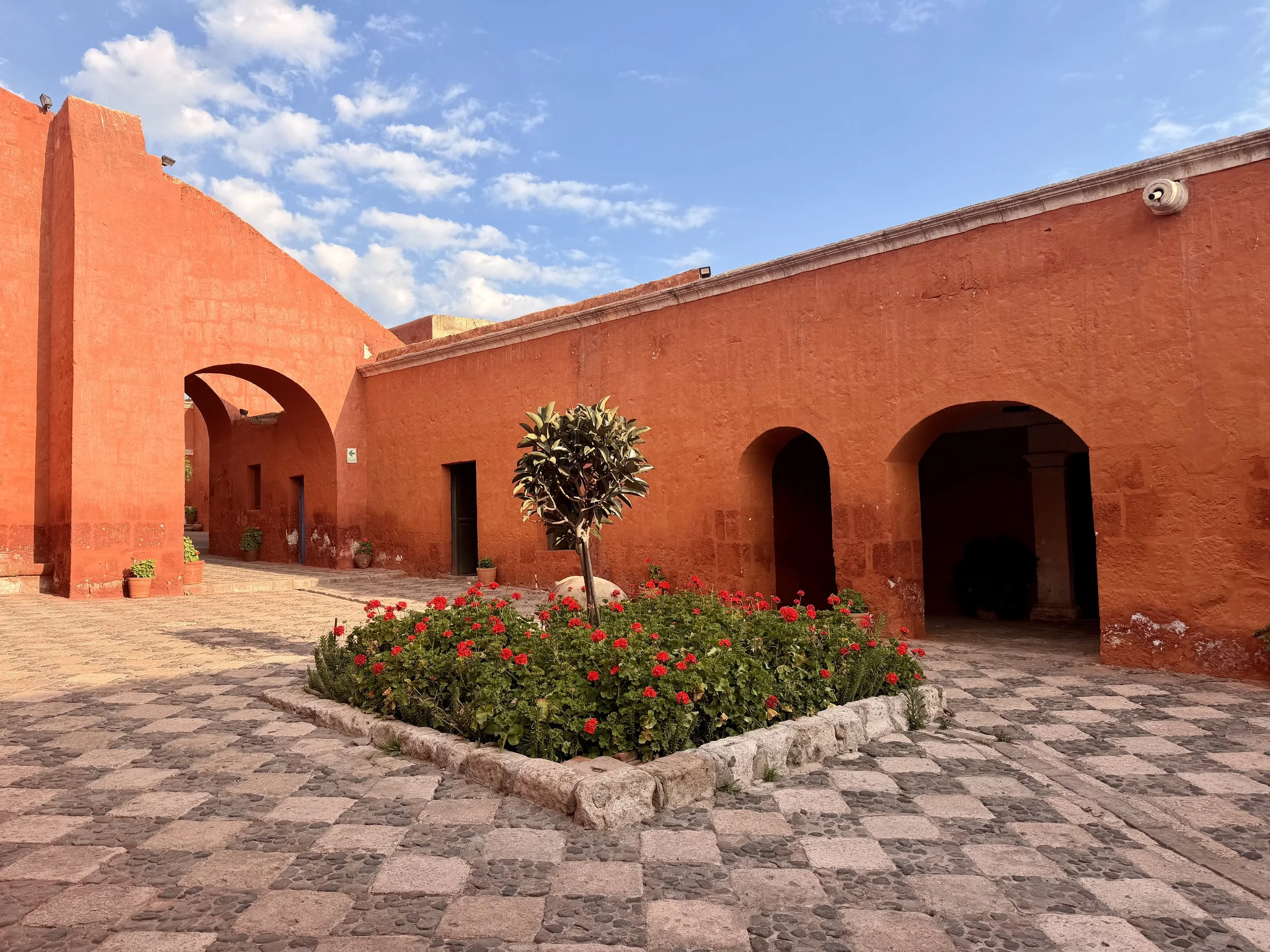
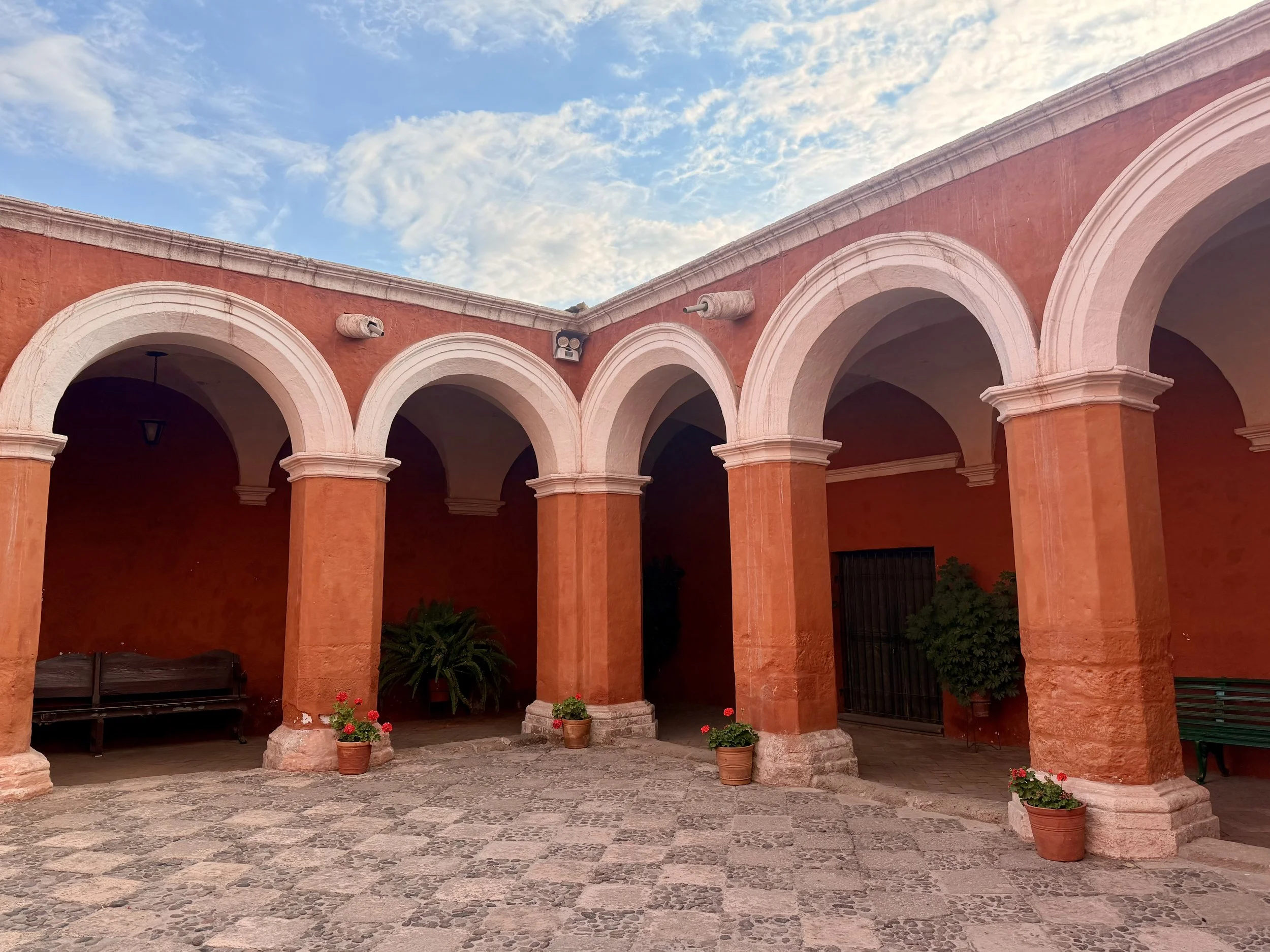
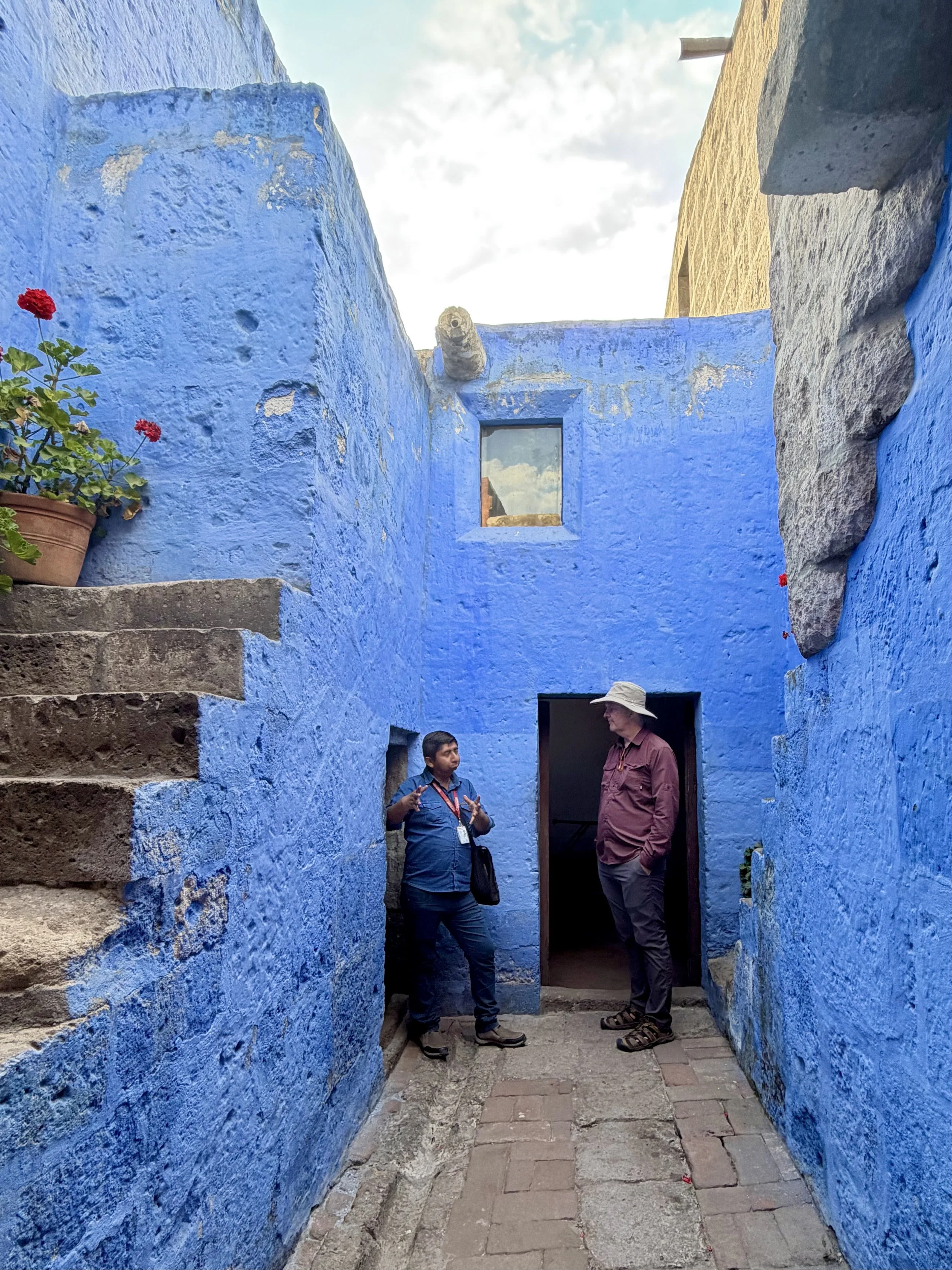
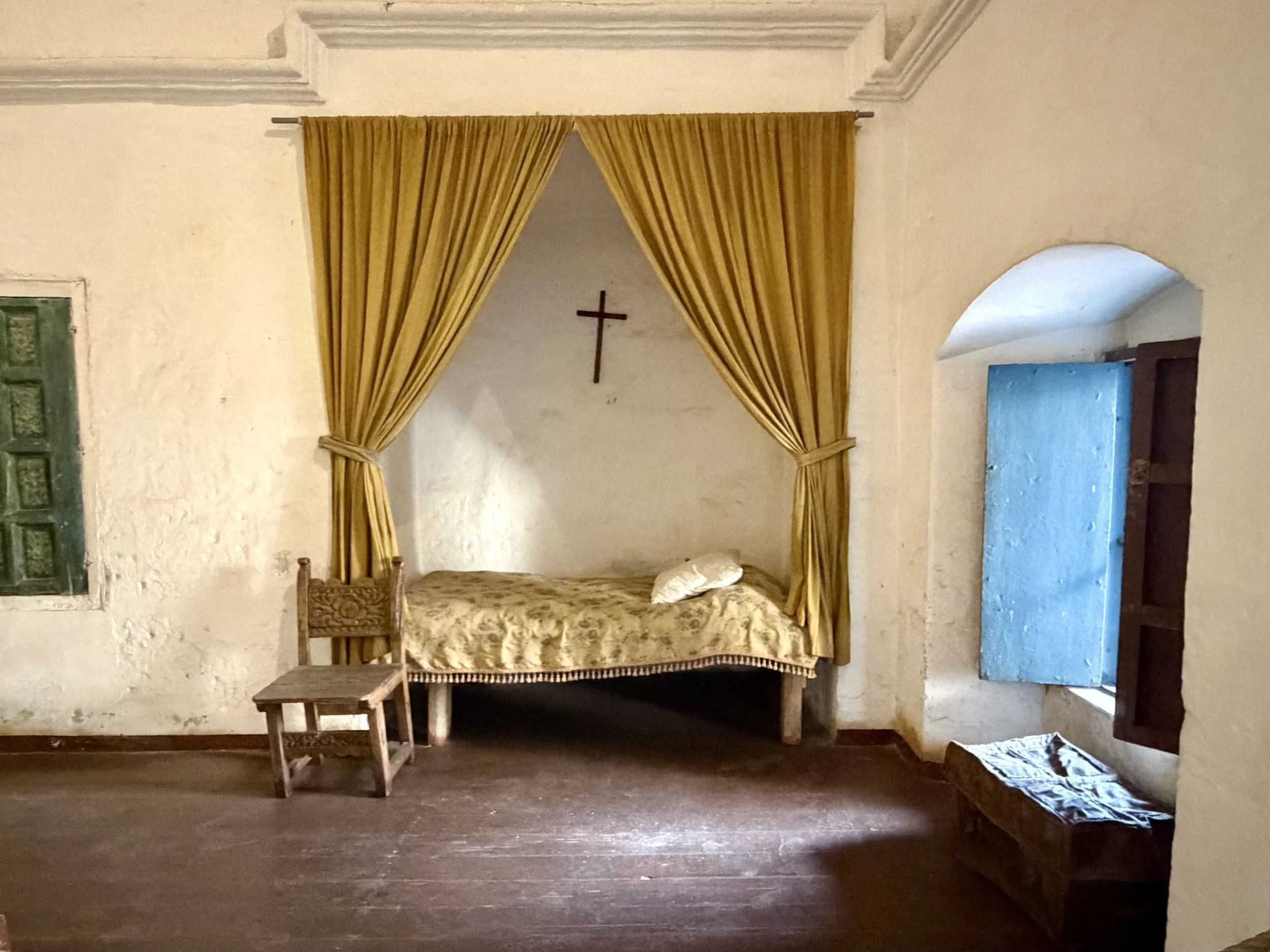
A wealthy Arequipa family might send their daughter to the monastery, along with generous dowry, as an alternative to giving her in marriage. A new arrival at Santa Catalina would wear the all-white habit of a novice and spend a full year inside her room, praying at her altar and studying. Meals would be brought to her and she could communicate with others through the single window.
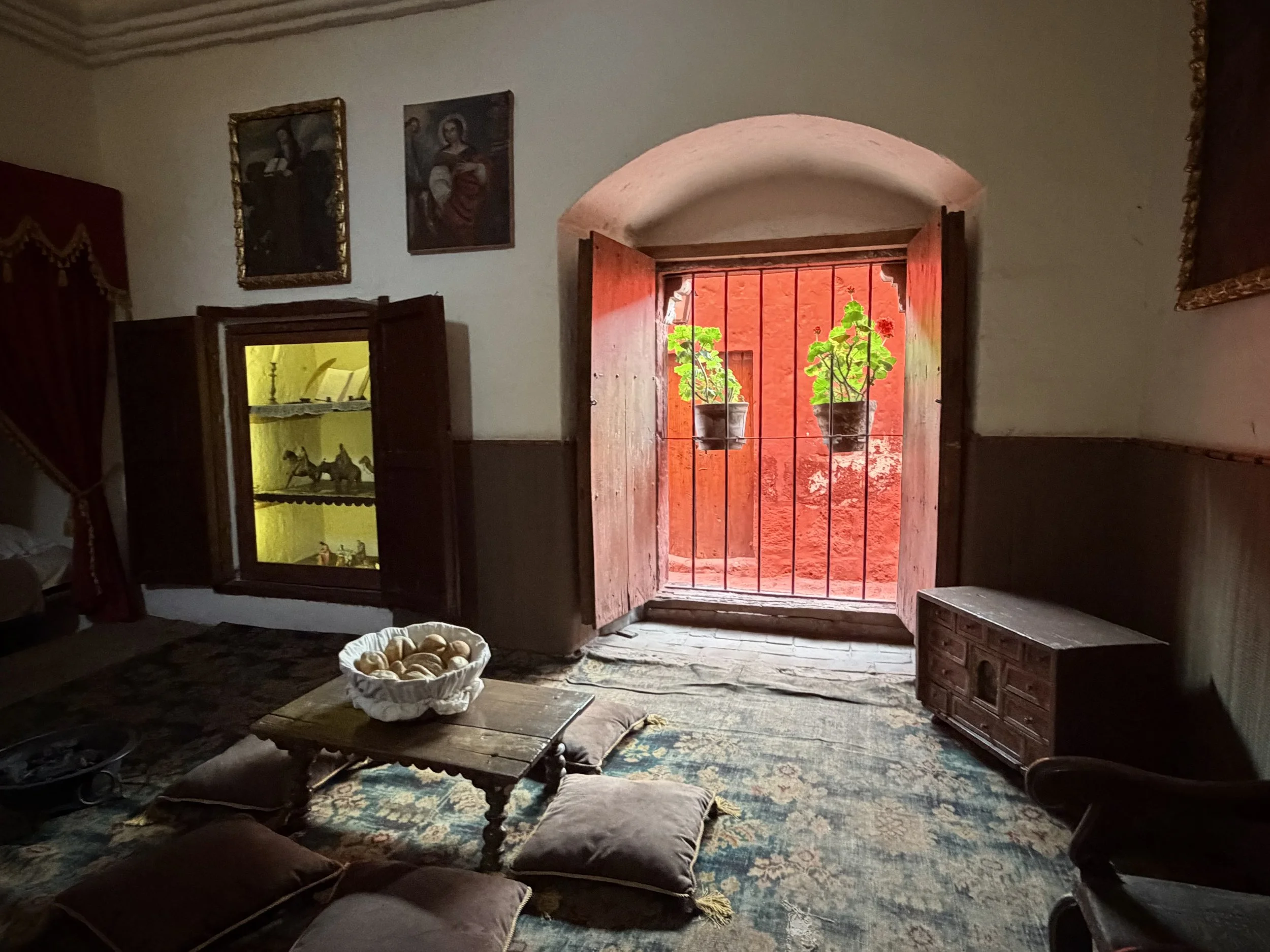
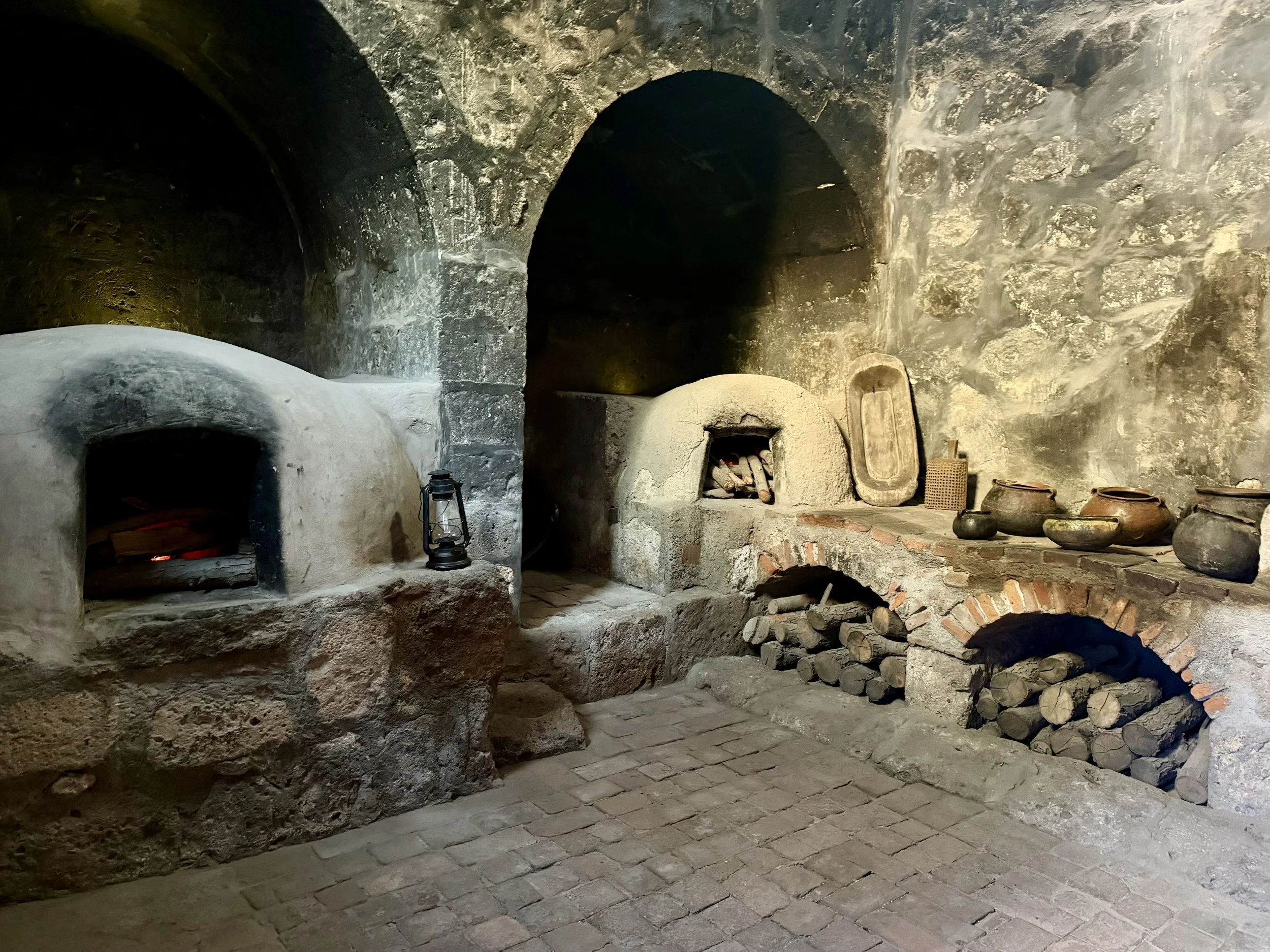
Those who completed their novitiate year took vows and wore black and white habits. They had rooms with space to socialize, and kitchens for preparing food.
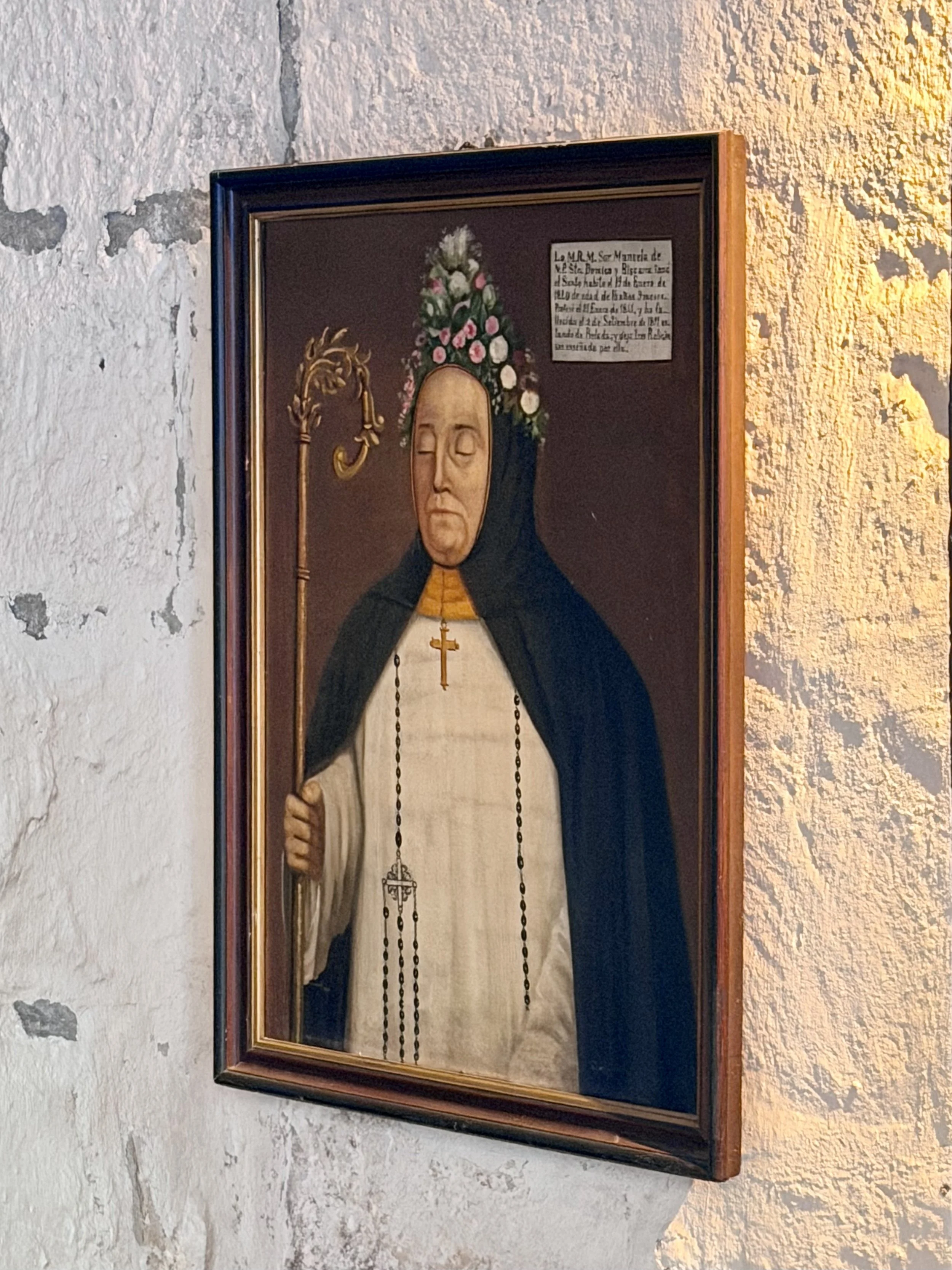
The gallery around the Cloister of the Orange Trees had a beautifully painted vaulted ceiling. A small room labeled “De Profundis” was where a newly deceased nun’s body would lie while her posthumous portrait was painted. (Portraits of living nuns were not permitted.)
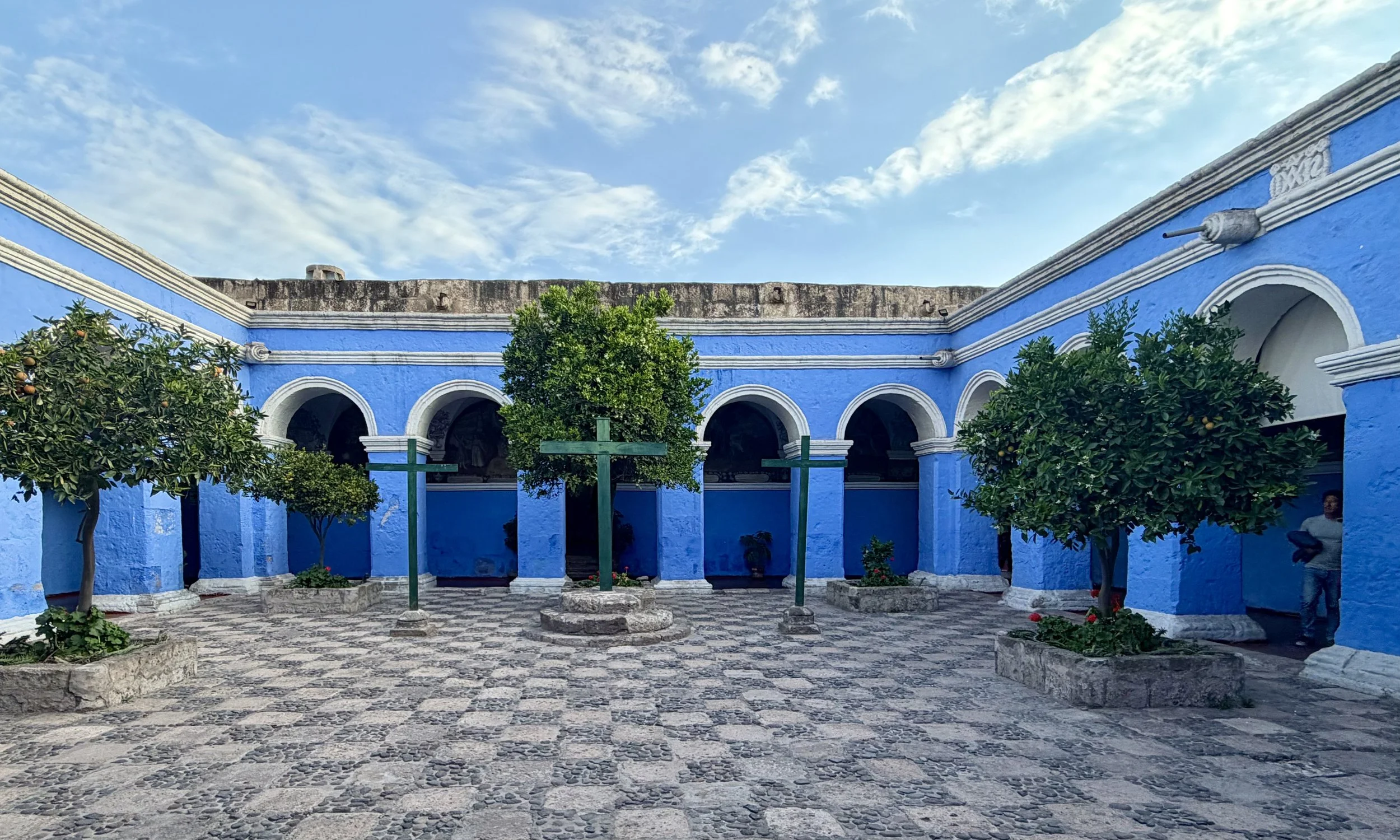
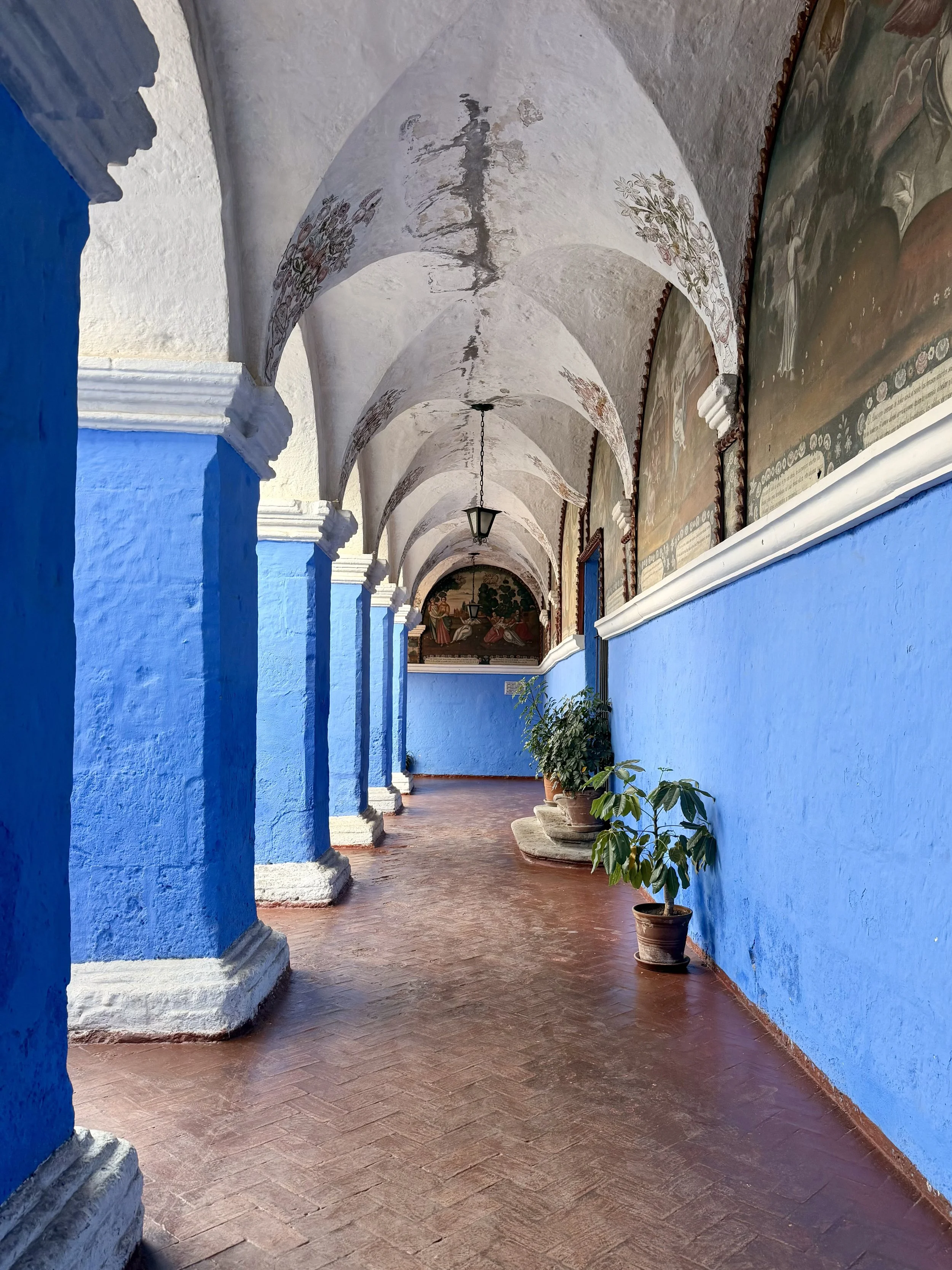
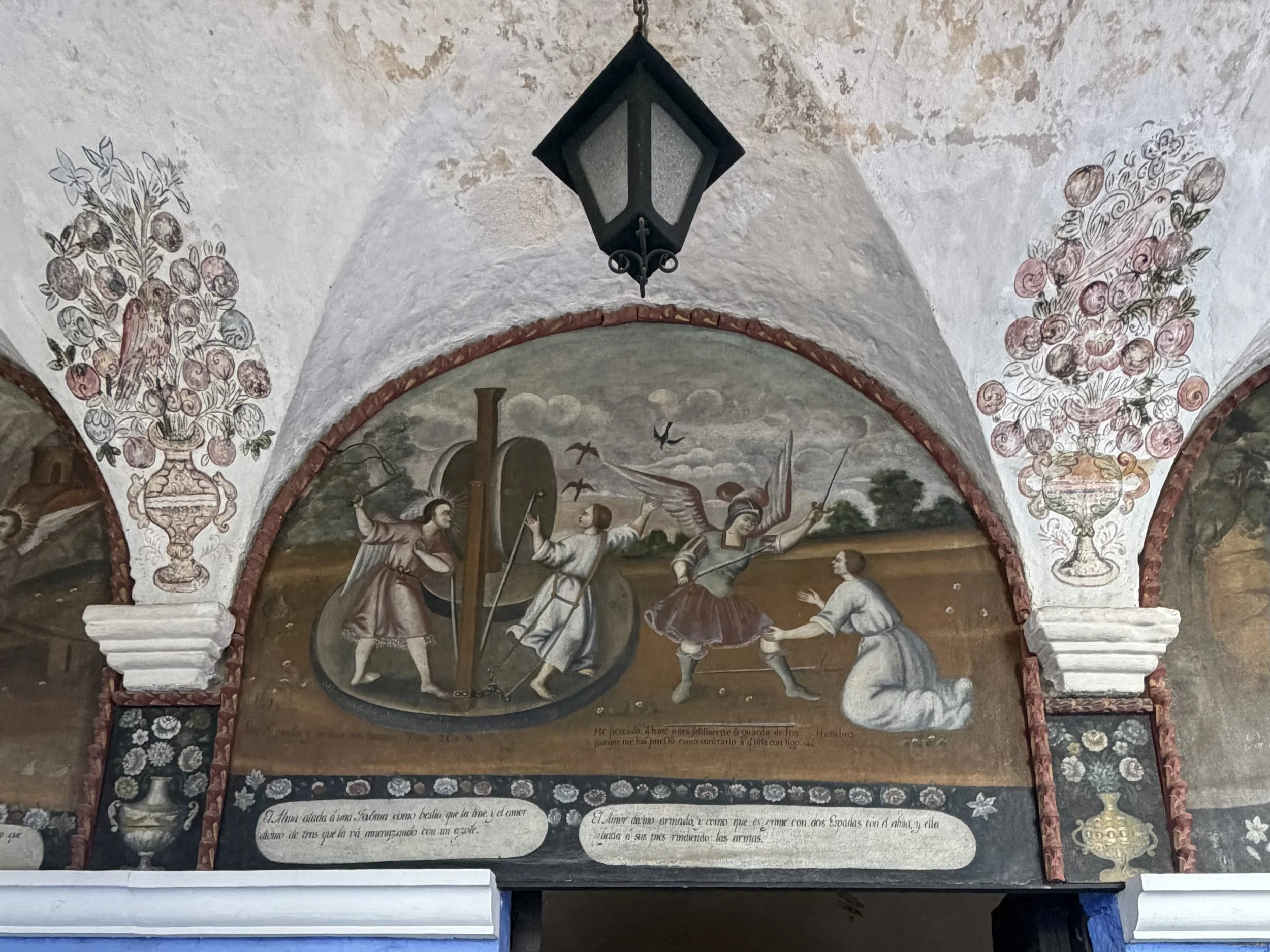
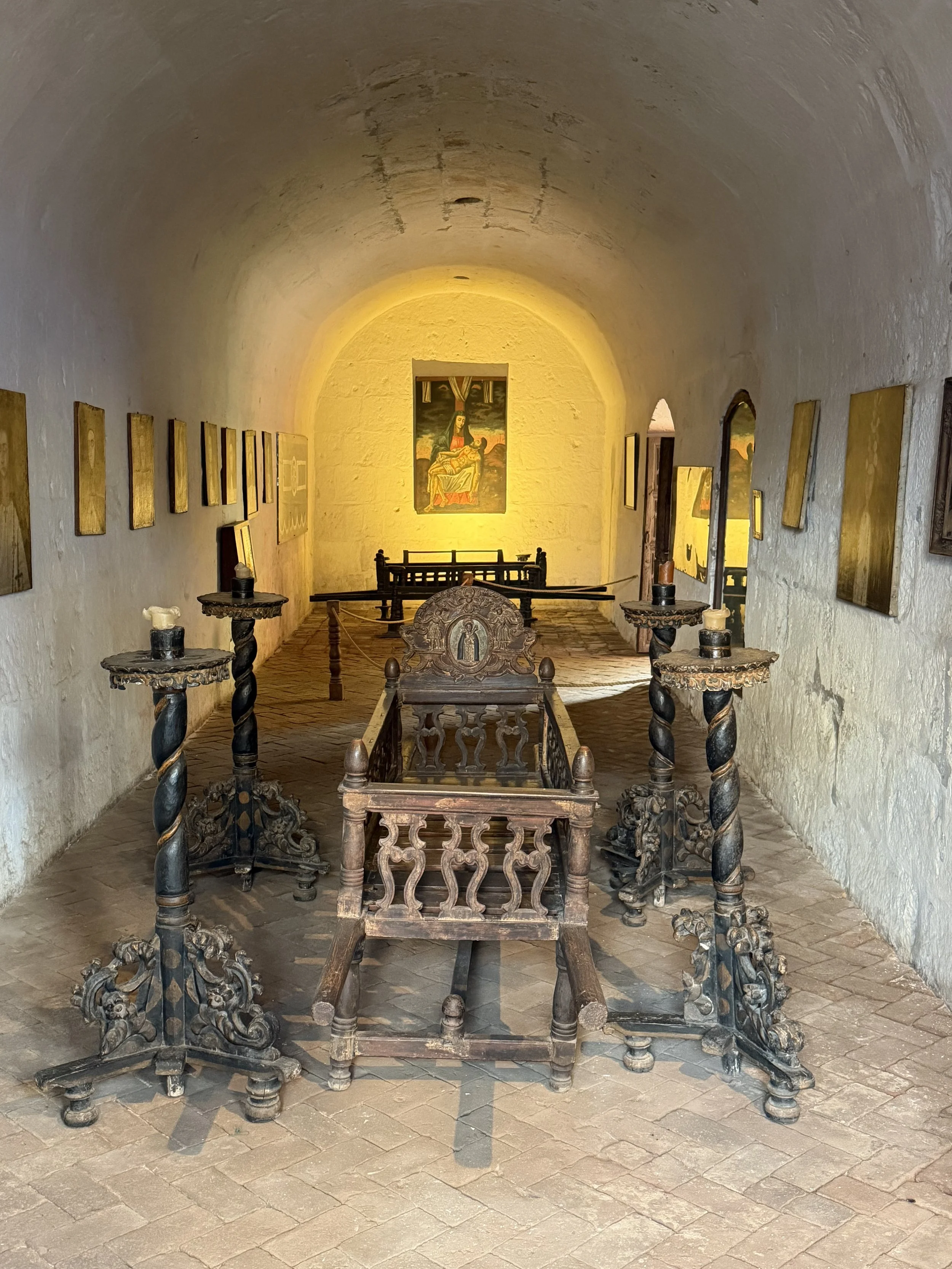
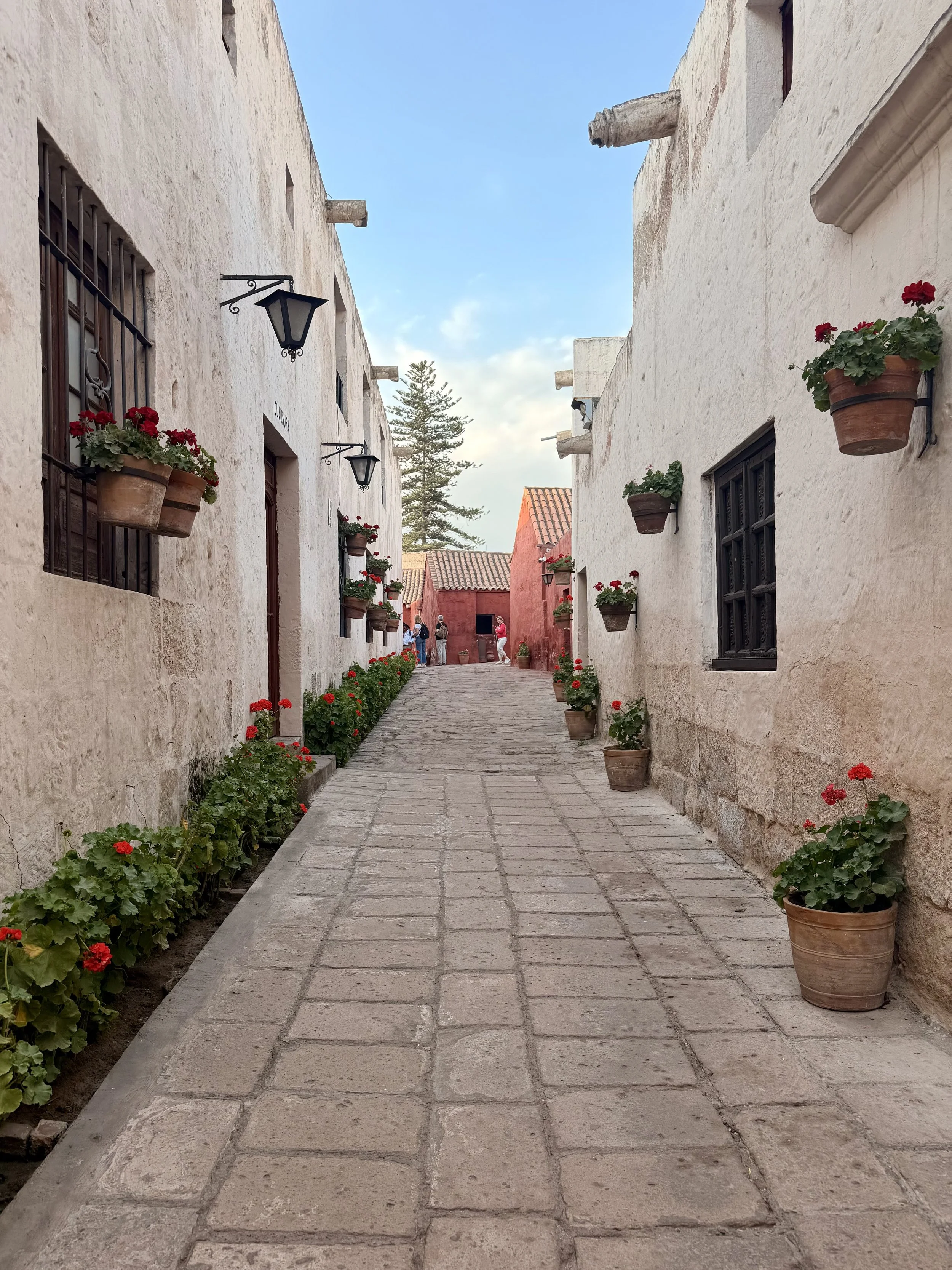
Covering nearly five acres, Santa Catalina was like a small city. We walked down named streets that were lined with residences and led to courtyards of varying shapes and sizes. Some rooms remained closed to the public due to earthquake damage and UNESCO safety regulations. But there were plenty of open rooms to explore. The simplicity of the architecture contributed to the peaceful atmosphere.
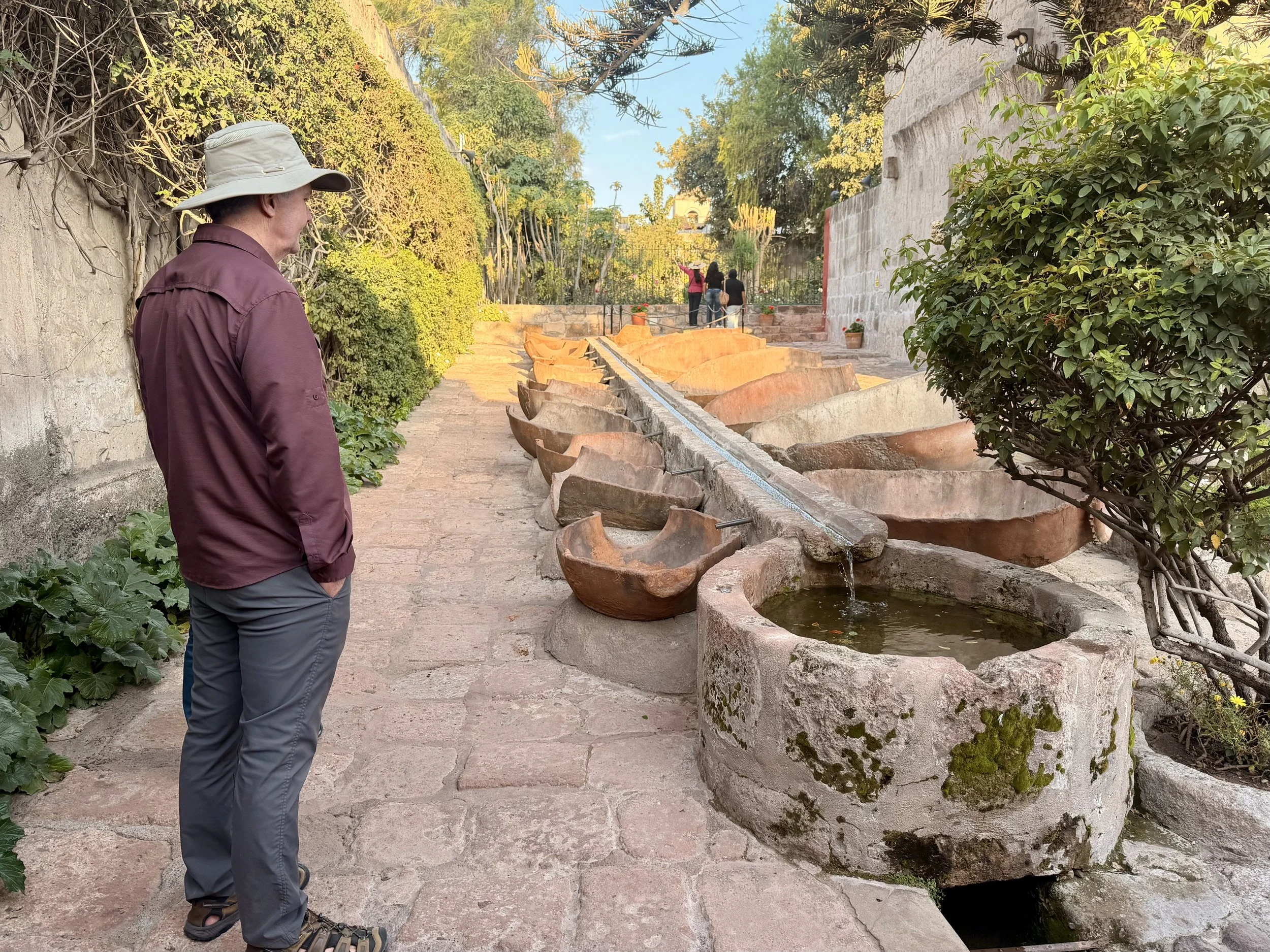
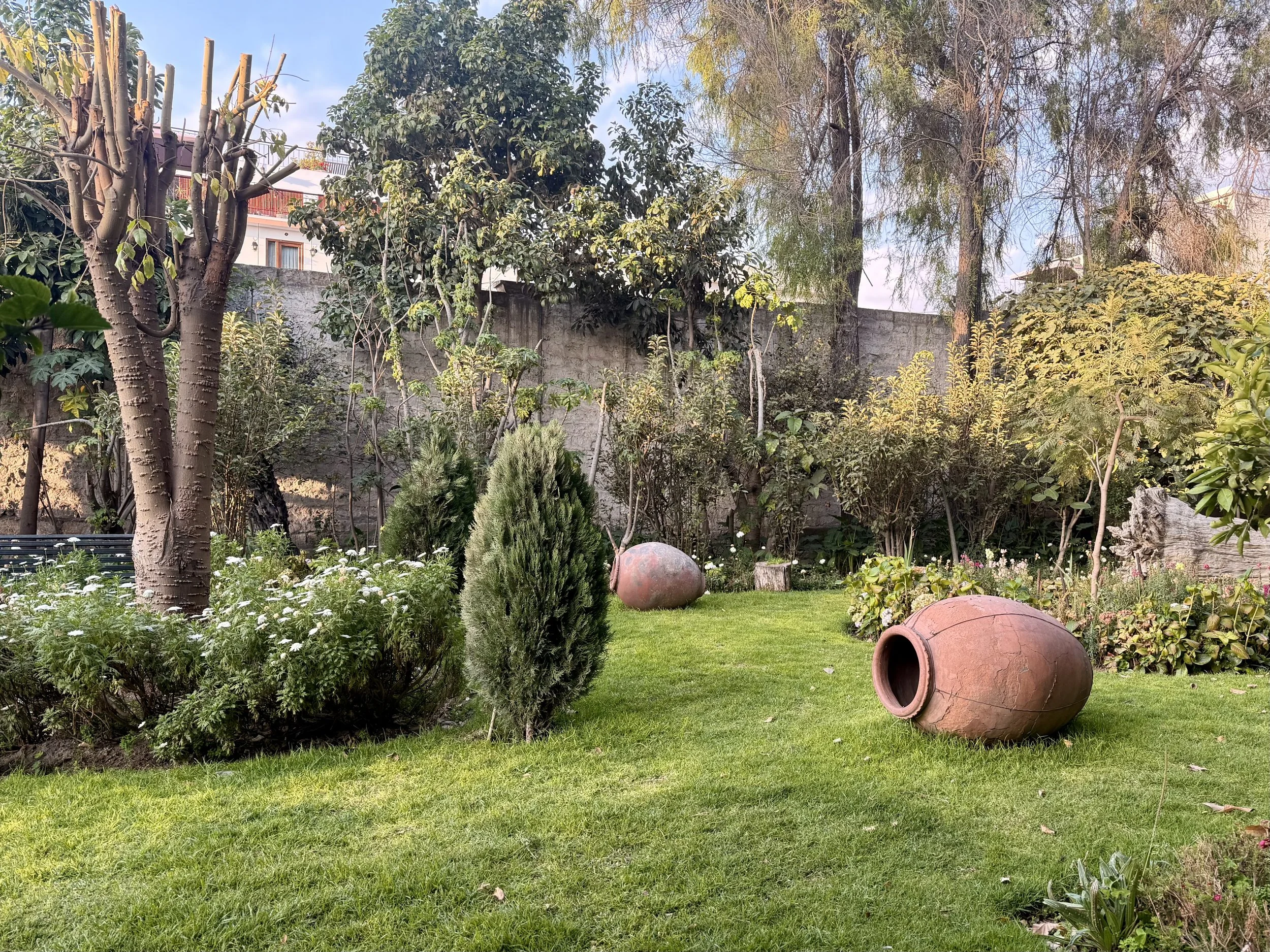
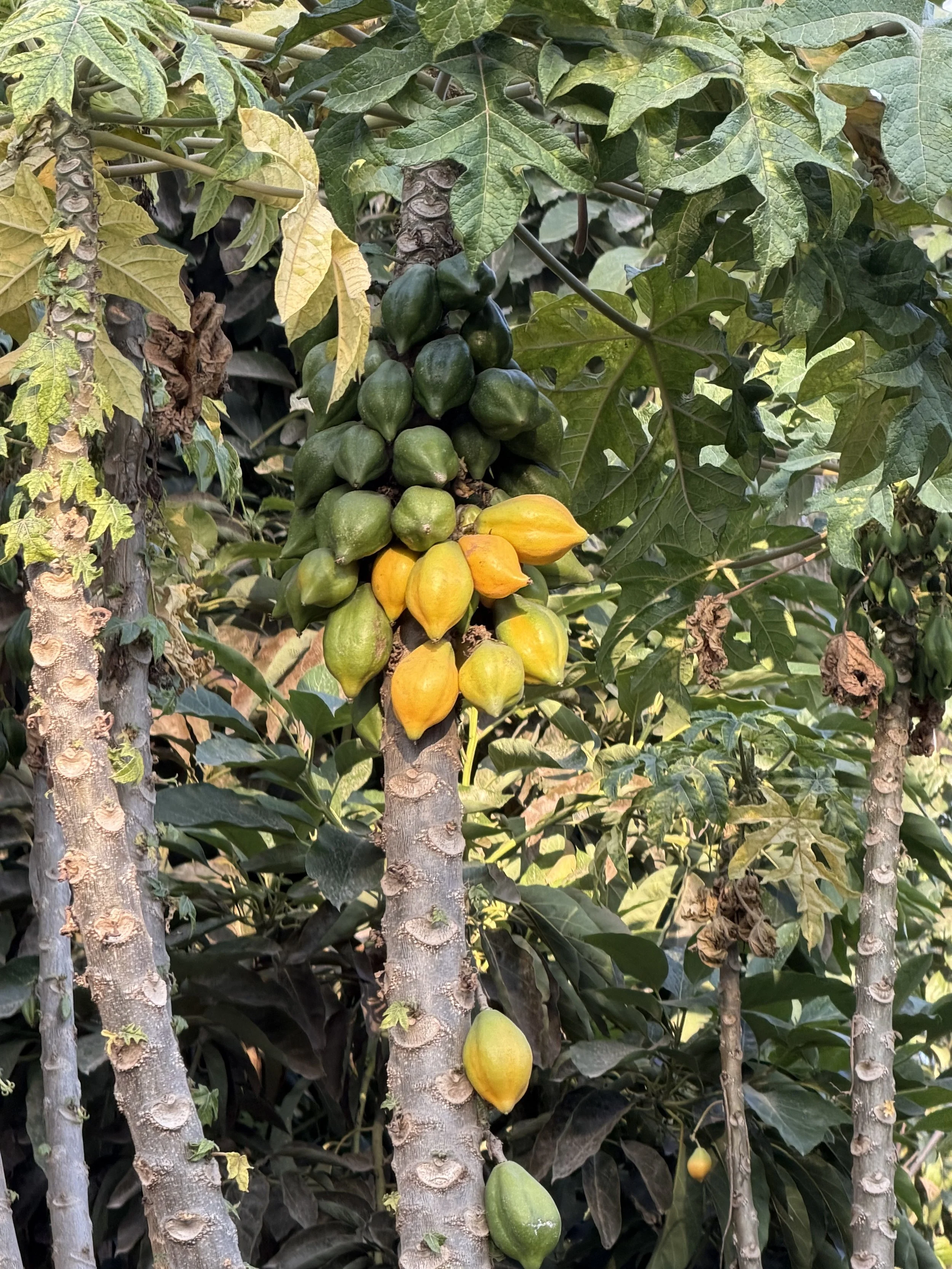
The open-air lavandería (laundry) had large clay wine jars split in half and lined up on either side of a water trough. Holes in the trough made it easy to fill the jars with water. At the far end of the laundry was a peaceful garden with rose bushes, benches, and trees bearing small Arequipan papayas.
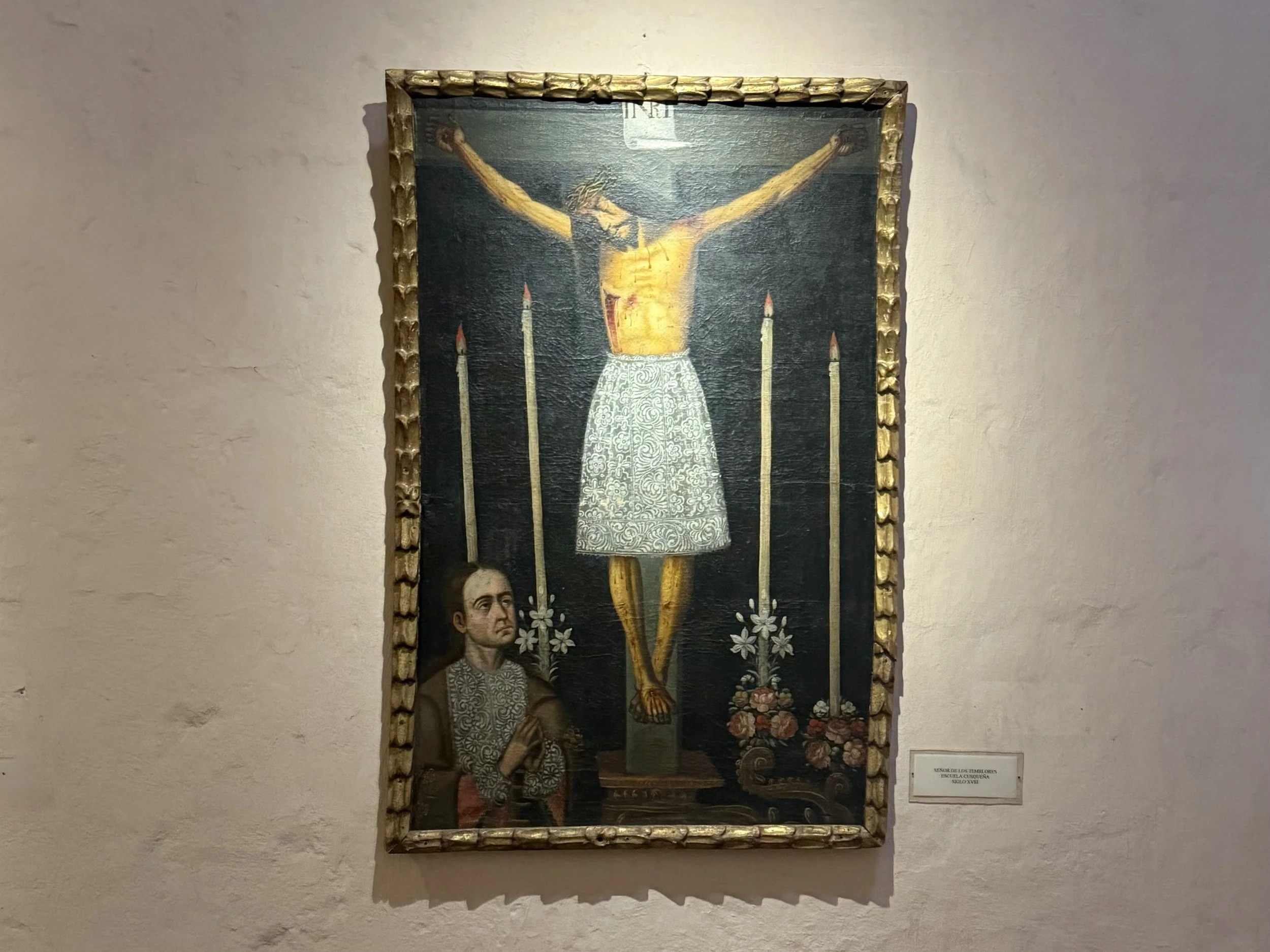
An art gallery displayed about 400 paintings that were discovered throughout the various rooms of the monastery during its restoration. A painting of El Señor de los Temblores (Lord of the Earthquakes) featured the crucified Jesus wearing an Andean-style skirt.
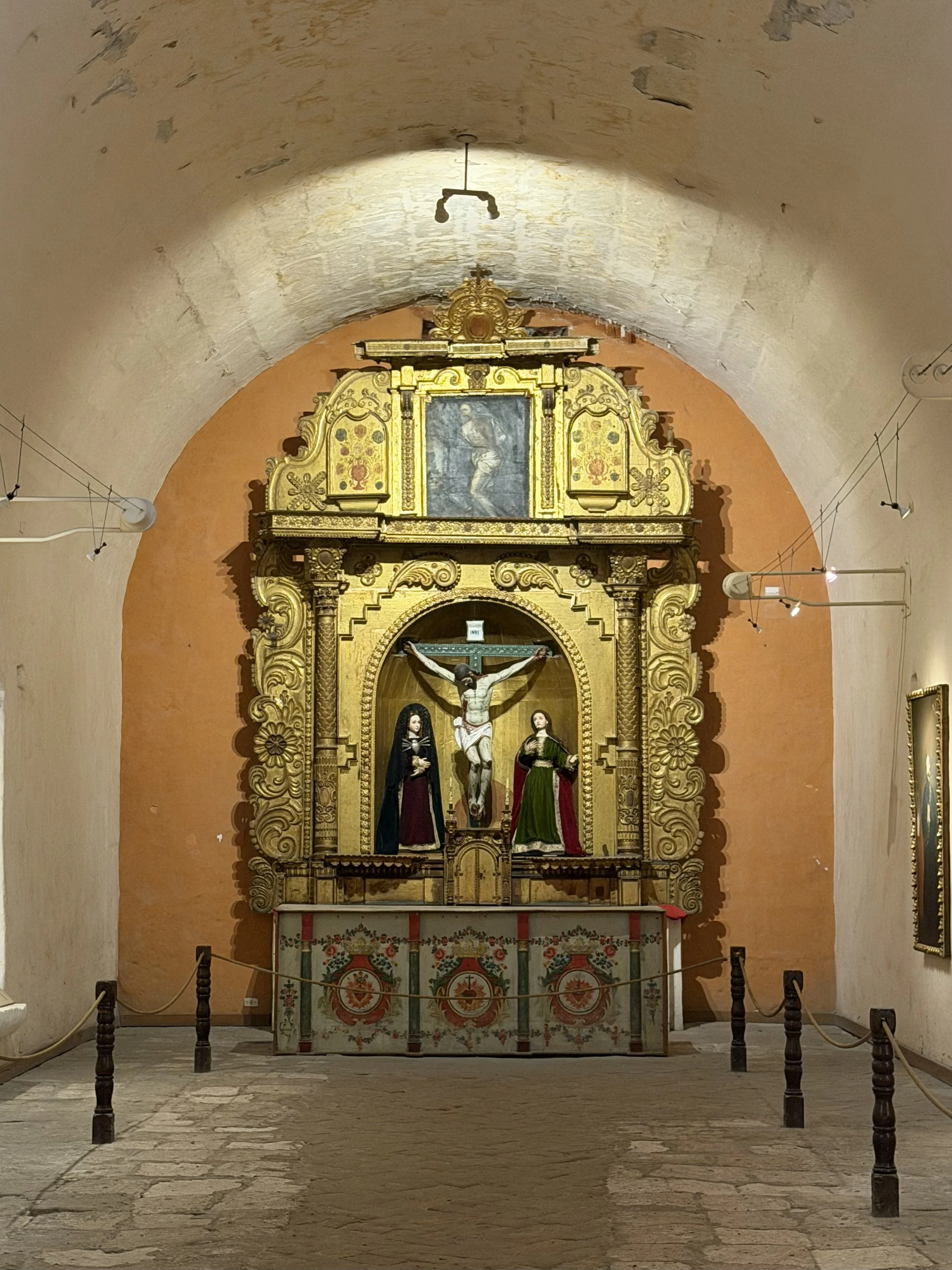
About 16 nuns still live a cloistered life in a private section of the monastery. Early each morning, they walk to the domed church and attend Mass before the gates open to the public. Here’s a wonderful photo essay with more info about the nuns at Santa Catalina: Peruvian Nuns Share Cloistered Life.